braz j infect dis2 0 1 8;2 2(4):328–337
w w w . e l s e v i e r . c o m / l o c a t e / b j i d
The Brazilian Journal of
INFECTIOUS DISEASES
Review article
Inadequate use of antibiotics and increase in
neonatal sepsis caused by resistant bacteria related
to health care assistance: a systematic review
夽
Ana Carolina Bueno Silva
a,∗, Leni Marcia Anchieta
b, Marianna Fischer de Paula Lopes
a,
Roberta Maia de Castro Romanelli
baUniversidade Federal de Minas Gerais, Centro de Pós-Graduac¸ão, Belo Horizonte, MG, Brazil
bUniversidade Federal de Minas Gerais, Departamento de Pediatria, Belo Horizonte, MG, Brazil
a r t i c l e
i n f o
Article history:
Received 21 February 2018 Accepted 18 July 2018
Available online 18 August 2018
Keywords: Sepsis
Drug resistance, microbial Infant, newborn, anti-infective agents
a b s t r a c t
Background:Technologies and life support management have enhanced the survival of preterm infants. The immune system of newborns is immature, which contributes to the occurrence of healthcare-associated infections. The overlap of several conditions with neonatal sepsis and the difficulty of diagnosis and laboratory confirmation during this period result in a tendency to over-treat neonatal sepsis. The use of antimicrobial agents is a risk factor for multidrug-resistant bacterial infections. This work aimed to perform a systematic review of the relationship between inadequate use of antimicrobial agents and increase in neonatal sepsis related to healthcare assistance, due to bacterial resistance.
Methods:Our population, exposition, comparison, outcome and study type was as follows: P: hospitalized neonates with sepsis diagnosis, E: inappropriate use of antimicrobial agents, C: adequate use of antimicrobial agents or no indication of infection, O: resistant bacterial infection, and S: original studies. We performed searches in the PubMed, Scopus, Virtual Health Library (Scielo, LILACS, and MEDLINE), and Embase without limits on time, language, and the references of the articles found. Fourteen studies were included and assessed using the Grading of Recommendations, Assessment, Development, and Evaluation, Newcastle, and the Strengthening the Reporting of Observacional Studies in Epidemiology methodolo-gies.
Results:All studies found were observational and started with a low-quality evidence level in the Grading of Recommendations, Assessment, Development, and Evaluation.
Abbreviations: HAI, healthcare-associated infections; ATM, antimicrobial agents; NNH, Number of patients Needed to Harm; GNB, Gram-negative bacteria; CDC, Centers for Disease Control; OR, odds ratio; ESBL, extended-spectrum-lactamases; KPC, carbapenemase-producingK. pneumonia; VRE, vancomycin-resistantEnterococcus.
夽
Support – Institutional Scholarship of Federal University of Minas Gerais/Fundac¸ão de Amparo a Pesquisa de MInas Gerais (FAPEMIG). ∗ Corresponding author.
E-mail address:[email protected](A.C. Silva). https://doi.org/10.1016/j.bjid.2018.07.009
b r a z j i n f e c t d i s .2 0 1 8;2 2(4):328–337
329
Conclusions:Despite their low-quality evidence, the studies demonstrated the association between inadequate use of antimicrobial agents and increase of neonatal resistant bacterial healthcare-associated infections in neonatal units. However, there is significant difficulty in conducting high-quality studies in this population due to ethical issues tied to randomized trials. Therefore, new studies should be encouraged to recommend adequate treatment of newborns without increasing the risk of healthcare-associated infections by multidrug-resistant bacteria.
© 2018 Sociedade Brasileira de Infectologia. Published by Elsevier Editora Ltda. This is an open access article under the CC BY-NC-ND license (http://creativecommons.org/licenses/
by-nc-nd/4.0/).
Introduction
In recent years, the improvement of technologies for advanced life support applied to prematurity complications resulted in increased survival of preterm infants with earlier gestational
age and low birth weight.1,2Due to immaturity of the immune
system and the need for several invasive procedures, hospital-ized neonates, especially premature infants, are susceptible to healthcare-associated infections (HAI). This is one of the most significant adverse events associated with morbidity and mortality in this age group.1–5
The diagnosis of HAI in newborns is difficult due to the lack of specific symptoms. At this age, HAI commonly shares symptoms with other diseases, such as respiratory distress syndrome, prematurity hypotension, metabolic disorders, and
others.1,6–10 Beginning early treatment is fundamental for
improving the prognosis of these patients. Therefore, treat-ment is initiated before receiving laboratory results, which contributes to the exposure of this population to antimicrobial
agents (ATM), often unnecessary.6–11 Furthermore, the
diffi-culty in obtaining sufficient samples for cultures and the low sensitivity of this test leads many physicians to decide to
con-tinue ATM for treating presumed neonatal sepsis,6,8 which
is up to eight-fold over-treated than confirmed HAI cases, according to some studies.6
The increase of HAI caused by resistant bacteria is a multifactorial issue. Currently, it is a worldwide concern due to the associated high morbidity and mortality and increased hospitals costs.1,3,8,12 The inability of the
pharma-ceutical industry to create new drugs at the same rate as the development of resistance is also an important issue to
consider.3,9–11 The excessive use of ATM, especially
broad-spectrum agents, is already recognized as a key factor for the development of resistance.1,6,7,9,11–16 In recent years,
the emergence of increasingly resistant strains has been observed,2,6,8as demonstrated by clinical trials in adult and
pediatric populations. However, in the neonatal population, there is a lack of studies assessing this association.8,13,17
The aim of this work was to perform a systematic review of the relationship between inadequate use of ATM and increase in neonatal sepsis related to healthcare assistance, due to bacterial resistance. For this review, the attributes considered when selecting the articles were: population, exposition, com-parison, outcome, and study type, according to the acronym PECOS.18,19The definition was as follows: P, neonates with
sep-sis diagnosep-sis in Neonatal Units; E: inappropriate use of ATM; C,
adequate use of ATM or no indication of infection; O, resistant bacterial infection; S, original studies.
Methods
Literature review
The articles were selected using the international guideline outlined by PRISMA, which coordinates the process of
per-forming meta-analyses and systematic reviews.18
The search was carried out without limits on language
or date of the study, using the PubMed, Scopus, Virtual
Health Library (Scielo,LILACs, and MEDLINE) andEmbaseusing the following keywords: “Sepsis,” “Infant, Newborn,” “Anti-Infective Agents,” and “Drug Resistance, Microbial” and their respective Portuguese and Spanish translations up to July 2017. The references from the selected articles were also evaluated and included in the selection if they met the
inclusion criteria. PubMed was searched using the MeSH
terms: (“Sepsis”[MeSH] AND “Infant, Newborn”[MeSH]) AND “Anti-Infective Agents”[MeSH]) AND “Drug Resistance, Micro-bial”[MeSH].
Inclusion and exclusion criteria
Inclusion criteria:All original articles that included patients with late-onset neonatal sepsis with multi-resistant bacteria, who were treated with broad-spectrum ATM, or with inad-equate or prolonged empiric treatment. Additionally, only articles that defined the duration and type of ATM were included.
Exclusion criteria:All articles that included patients with early onset sepsis with multi-resistant bacteria, articles which did not define duration and type of ATM therapy, and arti-cles which considered only risk factors for colonization with multidrug-resistant bacteria.
Some studies that described ATM use but did not comply with the PECOS framework were only used for the discussion section.
Article extraction and data quality evaluation
330
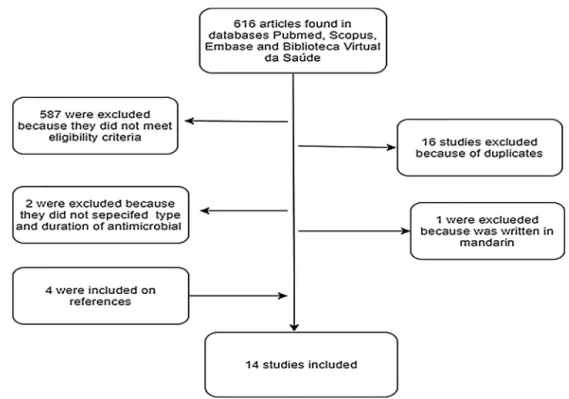
b r a z j i n f e c t d i s .2 0 1 8;2 2(4):328–337Fig. 1 – Diagram of the selection of articles on antimicrobial use and increase of neonatal sepsis related to assistance by resistant bacteria.
Full texts of the selected abstracts were acquired and ana-lyzed by the study type, population, intervention, comparison, and outcome to determine their inclusion.
The Grading of Recommendations, Assessment,
Develop-ment, and Evaluation (GRADE)20–22approach was applied to
evaluate the quality of evidence in the methods and results reported in the studies and summary of findings, as rec-ommended by The Cochrane Collaboration. In the GRADE
system,20–22 randomized trials are considered high-quality
evidence and observational studies are considered low-quality evidence.
The GRADE score can be reduced due to methodological limitations, inconsistencies, inaccuracies, indirect evidence, and published bias. The quality of evidence can increase due to the magnitude of effect, dose response, and control of all plausible confounding factors.20–22
The Newcastle-Ottawa scale was also used to evaluate methodological limitations in each observational study.21–23
Inconsistency was evaluated based on clinical and
method-ological heterogeneity. TheI2parameter was not calculated,
as a meta-analysis was not performed. Inconsistency was assessed through the use of effect measures and confidence intervals.21–23
Assessments of imprecision used the absolute effect (dif-ference between the exposed and non-exposed groups) and were calculated individually for the studies that provided the effect measure. It was calculated as the Number of patients
Needed to Harm (NNH).21–23
The Strengthening the Reporting of Observational Studies in Epidemiology (STROBE) checklist24,25was also used to
eval-uate the methods and descriptions of observational studies. The evaluation of this information was qualitative.
Results
The search ofPubMed,Scopus,Embaseand the Virtual Health
Library resulted in 616 articles. Additionally, the reference analysis resulted in four articles, with a total of 620 arti-cles. Among these, 16 (2.6%) were excluded as duplicates, 587 (94.7%) did not satisfy the inclusion criteria, and two (0.3%) were unclear regarding type and duration of ATM therapy. Of the 15 (2.4%) articles selected, one (0.15%) was excluded because it was only available in Mandarin. The others were evaluated and qualified (Fig. 1).
Among the 14 analyzed articles, all of them were obser-vational studies: 10 prospective cohort and four case-control studies. In this review, there were no randomized trials or interventional studies. Ten studies described the appearance of Gram-negative bacteria (GNB) and four studies attributed the use of ATM to resistant bacterial infection and coloniza-tion. Further details about the studies are available in Table
1.
The review considered evidences of very low quality, as
determined by the GRADE scale.20Table2shows the GRADE
evaluation of all assessed studies.
Discussion
In 2002, the Centers for Disease Control (CDC) started a campaign to prevent antimicrobial resistance with 12 steps, including reinforcing the need for caution when choosing an ATM, using ATM for the shortest duration, and restricting ATM use by culture results.2,6,7,9,13,26,27 Despite the fact that the
braz
j
infect
dis.
2018
;
2
2(4)
:328–337
331
Table 1 – Characteristics of studies considering the use of antibiotics associated with increased occurrence of neonatal sepsis related to resistant bacteria.
First author (year and publication country)
Type of study Population Outcome Results Newcasttle Otawaa Imprecision
(NNH)b
Selection (****)
Outcome (***)
Comparability (**)
Bryan34 Prospective
cohort
Lack of data about the total number of hospitalization.
Evaluation of time and number of GNB infection emergence during the replacement of the antibiotic empiric treatment with gentamicin afterK. pneumoniaeresistant to gentamicin outbreak and the use of cefotaxime as the replaced treatment.
Resistant to 3rd generation cephalosporin GNB appeared faster and seriousness.
** * * –
Calil2 Prospective
cohort
Phase 1: 67 samples from 31 patients. Phase 2: 342 patients. Phase 3: 891 colonizations of 324 patients.
Phase 4: nosocomial infections: 1995: 78; 1996: 74; 1997: 75; 1998: 52; 1999: 57.
Incidence of multidrug resistance considering the period before and after implementation of infection control measures, including restricted use of cefotaxime.
Reduction in the incidence of resistant bacteria infection, from 18 per year to 2 per year, from 1995 to 1999.
*** *** ** NNH = 4.9
Singh33 Prospective
cohort
From 240 colonized by resistantEnterobacteria. 34 developed infection.
Risk factors related to multidrug-resistant Enterobacteriainfection in patients colonized by these bacteria.
At the multivariate analyzes, the prolonged use of antibiotics was considered as a risk factor, with OR: 1.8 (CI 95%: 1.32–2.44).
NNH = 8.3
Flidel-Ramon28
Prospective cohort
Phase 1:
5661 neonates/year. Phase 2:
6255 neonates/year.
Evaluates the reduction of MR-GNB after replacement of cefotaxime to
piperacillin/tazobactam.
Important reduction in incidence of MR-GNB infection.
332
braz
j
infect
dis.
2018
;
2
2(4)
:328–337
– Table 1 (Continued)
First author (year and publication country)
Type of study Population Outcome Results Newcasttle Otawaa Imprecision
(NNH)b
Selection (****)
Outcome (***)
Comparability (**)
Pessoa-Silva15
Prospective cohort
13 ESBL infected patients.
Evaluates risk factors related to ESBL colonization and infection.
Strong relation with infection and colonization OR: 5.19 (CI 95%:1.58–17.08) and presents as a risk factor to colonization the use of
cephalosporin + aminoglycosides. OR: 4.69.
*** *** ** –
Linkin32 Case
control
4 ESBLEnterobacteria infected patients and 6 non-ESBLEnterobacteria infected patients.
Clinical risk factors to develop ESBL infection.
Previous treatment with cephalosporin duration was considered as a risk factor p= 0.2.
** * * –
Crivaro30 Case
control
167 patients, including 100 ESBLK. pneumoniae and/orSerratia marcescensinfection.
Infected and
non-infected patients by GNB producer of ESBL during an outbreak.
Duration of treatment with ampicillin and gentamicin was OR: 1.316 (CI 95%: 1.021–1.695) withp< 0.034.
** * – NNH = 5.1
Huang17 Case
control
22 cases and 17 controls. Risk factors forK. pneumoniaeandE. coli producer of ESBL infection.
OR: 12.8 (CI 95%: 1.1–143.8) to the previous use of 3rd generation cephalosporin.
*** *** ** NNH = 2.3
Abdel-Hady5 Prospective cohort
473 hospital admissions including 138 proved cases of sepsis related to healthcare assistance.
Neonates infected with Klebisiella pneumoniae and neonates infected with ESBLK. pneumoniae.
The use of oxymin-antibiotics had OR: 4.9 (CI 95%: 1.1–21.5) withp< 0.04.
*** *** ** NNH = 3.7
Le31 Prospective
cohort
Phase 1:130 neonates. Phase 2: 120 neonates.
Clinical characteristics after altering the treatment from cefotaxime to trobamycin on empiric treatment to late sepsis.
Significative reduction in ESBL infection. OR: 33.73 (CI 95%: 1.02–1136.2) to the exposure of cephalosporin and an of OR 3.09 (CI 95%: 1.28–7.49) to each additional day using ampicillin and gentamicin and OR: 1.55 (CI 95%: 0.963–2.49) related to the prolonged use of cefotaxime and trobamycin.
*** *** ** NNH = 2.7
Murki14 Prospective
cohort
Phase 1:1046 neonates. Phase 2: 1074 neonates.
Clinical characteristics before and after the restriction of cephalosporin use.
22% reduction in ESBL infection (p= 0.035), 30% cefotaxime resistant infection (p= 0.006) and 27% in ciprofloxacine resistant infection (p= 0.01).
braz
j
infect
dis.
2018
;
2
2(4)
:328–337
333
– Table 1 (Continued)
First author (year and publication country)
Type of study Population Outcome Results Newcasttle Otawaa Imprecision
(NNH)b
Selection (****)
Outcome (***)
Comparability (**)
Landre-Peigne26
Prospective cohort
Phase 1: 125 neonates. Phase 2: 148 neonates.
Evaluates the incidence of multidrug-resistant bacteria’s and antibiotic use after the
implementation of infection control measures.
Despite the suspicious of precocious sepsis, there was a reduction in the treatment number and a significative decrease in the incidence of resistant bacteria (p< 0.001).
*** *** ** NNH = 1.49
Tsai29 Prospective
cohort
70 multidrug resistant GNB infected neonates and 306 infected by other bacteria’s type.
Risk factors to multidrug-resistant GNB infection.
3rd generation cephalosporin, vancomycin/teicoplanin and carbapenem used (p< 0.001); time >48 h to adequate the antibiotic (p< 0.001). In multivariate analyses, 3rd generation cephalosporin use OR: 5.97, OR: 5.97 (CI 95%: 2.37–15.08) and carbapenem OR: 3.60 (CI 95%: 1.26–10.29) were associated with increased risk.
*** *** ** NNH = 2.47
Yusef4 Case
control
35 multidrug-resistant bacteria infected neonates (ESBL, MARSA, KPC and MRAcineto baumannii) and 16 non-infected.
Risk factors to multidrug resistant bacteria.
Previous use of vancomycin and meropenem was considered as a risk factor to KPC and MDR –A. baumannii infection (OR: 0.07).
** ** * NNH = 2.38
The symbol * match the score on each item evaluated from the articles.
GNB, Gram-negative bacteria; OR, Odds Ratio; CI, Confidence intervals; MR, multidrug-resistant; ESBL, producers of extended-spectrum-lactamases; MARSA, Methicillin-resistant Sthaphylococcus aureus; KPC, Klebisiella pneumoniae carbapenemase.
a A study can be awarded a maximum of one star for each numbered item within the selection and exposure categories. A maximum of two stars can be given for comparability. For comparability
the most important factor was HAI by resistant bacteria.
334
b r a z j i n f e c t d i s .2 0 1 8;2 2(4):328–337Table 2 – Summary of studies considering the association of the use of antibiotics and increase occurrence of neonatal sepsis related to resistant bacteria, according to the Grading of Recommendations, Assessment, Development, and Evaluation criteria.
Quality assessment Quality
Studies Study design Methodological bias Inconsistency Indirect evidences Imprecision Publication bias
Healthcare-associated infections by resistant bacteria
14 10 prospective cohort
04 of case–control
No severe limitationa
Severe inconsistencyb
No important indirect evidencec
Severe imprecisiond
No important publication biase
Very lowf
a All the studies were observational, which present a greater risk of bias. Although three studies present methodological limitations, nothing
was considered as serious to downgrade the score in this item.
b Once it was not a meta-analysis,I2was not calculated. The inconsistency was assessed through measures of effect and confidence interval
in seven studies that showed an association between antimicrobial use and increased nosocomial infection by multi-resistant bacteria. One study showed a low inconsistency because the confidence interval crosses the number 1 and other three studies presented very wide confidence intervals.
c Although the studies present different methodological differences between themselves and based on PECO question of the review, no serious
indirect evidence was observed, since the result and the population are the same in all studies.
dThe absolute effect (difference between the exposed and non-exposed groups) was considered and calculated for the studies that presented the
effect measure. The Number of patients Needed to Harm (NNH) was calculated, which presented important variation, suggesting imprecision of the articles.
e Despite the few studies found, an extensive search was conducted in several databases and references of articles studied. Only one study
was excluded by language, but its English summary showed results compatible with the others.
f The GRADE quality of evidence in the review was very low, since it has already begun with a low level evidence once only observational studies
were found.
Cantey7and Patel27presented the applicability of these
guide-lines in a neonatal unit.
Calil et al.2and Landre-Paige et al.26evaluated the efficacy
of the ATM control measures. In a cohort study, Landre-Paige et al.26demonstrated that simple measures, such as
organiza-tion of the nursing staff, hand washing, and development of criteria to guide initiation of empiric treatment for early sepsis, were effective in reducing the incidence of nosocomial infec-tions. The empiric treatment used included ampicillin and gentamicin, but was questionable, because in severe cases, the treatment included ceftazidime, which counters the
rec-ommendations to reduce the use of cephalosporins.2,10,12,16
The same treatment was maintained during the two phases of the study. Landre-Paige et al. have also shown a significant reduction in the prescription of empiric ATM (from 100% to 51%) as well as a meaningful reduction of HAI (from 10.9 to 2.9/1000 patients per day) and resistant bacteria, mostly GNB (from 79% to 12%).
The prospective cohort study conducted by Calil et al.2
eval-uated the impact of periodic training of professionals in a tertiary neonatal unit, including training on the rational use of ATM, hand washing, and the withdraw of ceftriaxone from empiric treatment of early and late sepsis in newborns weight-ing less than 1500 g. This study demonstrated an important reduction in multidrug-resistant bacteria. Evaluating only col-onization by this type of pathogen, they observed an odds ratio (OR) of 2.5 associating the use of ceftriaxone and coloniza-tion by multidrug-resistant bacteria, and observing a greater occurrence during ceftriaxone utilization. While assessing the occurrence of infection by a multidrug-resistant microor-ganism, a decrease from 18 to two infections per year was observed after the implementation of the stewardship pro-gram, although the number of nosocomial multidrug-resistant bacterial infections was low.
In a cohort study, Zingg et al.13also described a reduction of
2.9% per year in the use of ATM, with no increase in mortality. This study observed a low incidence of multidrug-resistant bacterial infections during the study, thus it was not possible to compare data before and after implementation.
In prospective cohort study by Flidel-Rimon et al.28 two
periods were evaluated. In the first period, the incidence of infection by resistantKlebsiella pneumoniaewas assessed after implementation of hand washing training, improvement of sterile technique, and isolation of patients colonized/infected with resistant bacteria. The first period displayed a notable reduction in the incidence of HAI from 12.5 to 5.3 per 1000 patients, but the incidence of infection by resistantK.
pneumo-niaeremained stable at approximately 2.5 per 1000. However,
after modification of the empirical treatment, replacing cef-tazidime with piperacillin/tazobactam, the incidence was reduced from 2.5 to 0.45 per 1000 patients.
In a prospective cohort study, Tsai et al.29 compared
patients infected by GNB that were sensitive or multidrug-resistant to the first choice ATM. Multivariate analyses revealed that previous use of 3rd generation cephalosporin and meropenem and use of vancomycin and meropenem were risk factors associated with infection by multidrug-resistant bacteria. The empiric treatment guidelines in the neonatal unit permitted the use of vancomycin and cefotaxime, both of which are considered broad-spectrum and 2nd line antibiotics by the CDC.7,27
During the review, eight articles evaluated risk fac-tors of infection by GNB producers of extended-spectrum
-lactamases (ESBL). The incidence of these bacteria is
b r a z j i n f e c t d i s .2 0 1 8;2 2(4):328–337
335
In searching for risk factors of infection by resistant GNB, the cohort studies conducted by Abdel-Hady et al.,5Le et al.,31
and Murki et al.14and the case-control study conducted by
Huang et al.17 identified the previous use of 3rd and 4th
generation cephalosporins as risk factors for infections by
ESBL-producing GNB. Abdel-Hady et al.5 observed an OR of
4.9 in the association with previous use of 3rd generation
cephalosporins. In a study by Le et al.,31 previous use of
cephalosporins presented an OR of 33.7, and an OR of 3.09 for each additional day of ampicillin and gentamicin use and an OR of 1.55 associated with prolonged exposure to cefotaxime
and tobramycin. Huang et al.17 demonstrated an OR of 12.8
for the association with the previous use of 3rd generation cephalosporins, and Murki et al.14reported a significant
statis-tical association between previous use of cephalosporins and infection by ESBL-producing GNB.
In a cohort study, Singh et al.33 evaluated patients
col-onized by ESBL-producing GNB who developed infection by this bacteria. A multivariate analysis identified birth weight greater than 1000 g and prolonged exposition to ATM, indepen-dent of the ATM class, as risk factors. In case-control studies, Crivaro et al.30and Linkin et al.32 also identified prolonged
ATM exposure as a risk factor associated with colonization and infection by ESBL-producing GNB. These two studies eval-uated infection associated with previous colonization and had a small sample of multidrug-resistant infections, increasing the risk of study bias. The study by Crivaro et al.23presented
an adequate sample and better methodological quality for evaluating colonization. However, the study by Linkin et al.29
was based on a small sample size and a literature review of risk factors for colonization and infection by ESBL-producing bacteria.
Pessoa-Silva et al.15 conducted a cohort study to
iden-tify risk factors for infection by ESBL-producing bacteria. The authors did not identify previous use of ATM as a risk factor, although the colonization by ESBL-producing bacteria was a risk factor, with an OR of 5.9. In the same study, the authors found that previous use of 3rd generation cephalosporins and aminoglycosides were associated with infection by ESBL-producing GNB, with an OR of 4.6 during the first nine days of hospitalization and an OR of 2.43 after nine days. The authors concluded that previous use of 3rd generation cephalosporins and aminoglycosides are also risk factors for infection by ESBL-producing bacteria.
The oldest publication identified in the present review was a cohort study from the early 1980s conducted by Bryan
et al.34 The study included the replacement of gentamicin
by cefotaxime following an outbreak of gentamicin-resistant K. pneumoniae in a neonatal unit. For 11 years, before the appearance of these resistant bacteria, the first choice of empirical treatment was gentamicin. After eight months of
cefotaxime use, no resistant K. pneumoniae was identified.
However, cefotaxime-resistantEnterobacter cloacaeemerged as
an important pathogen and continued to be prevalent even after the restored use of gentamicin as empiric treatment. Despite the fact that cefotaxime was associated with faster development of resistance, the mortality rate did not increase during the study. This study has several methodological lim-itations, including a small sample size and lack of statistical tests in their analyses. The study conclusion can be explained
by the fact that cefotaxime was a new drug at that time, with the same spectrum to GNB, but with fewer nephrotoxic and ototoxic effects than gentamicin. Spritzer et al.35presented
a similar conclusion in a cohort study evaluating care in a neonatal unit after introduction of cefotaxime for five years. Given the short time it was used in large scale, the capacity of cephalosporins to induce resistance quickly was not known and was proved later.2,10,12,16
The most recent study was conducted by Yusef et al.4This
epidemiological study of the most prevalent microorganisms in a neonatal unit in Jordan compared patients infected by multidrug-resistant and sensitive bacteria. Despite the sta-tistical significance of the association between previous use of meropenem and vancomycin with infection by multidrug-resistant microorganisms, in a multivariate analysis this association was not confirmed. However, when assessing
infections with carbapenemase-producingAcinetobacter
bau-mannii and K. pneumoniae (KPC), the exposure and time of exposure to vancomycin and meropenem presented a strong association (OR = 0.07). One of the most significant biases of this study was the use of empiric treatment of vancomycin and meropenem for late neonatal sepsis, considering their catego-rization as wide spectrum and second-line therapies.7,27
The CDC-recommended restriction on vancomycin use is aimed at preventing the development of
vancomycin-resistant Enterococcus (VRE), which is considered a global
issue because of the high mortality associated with this difficult to treat agent.12,16,36,37 Studies evaluating risk
fac-tors related to VRE infection in neonatal unit care were not found. However, there are studies associating coloniza-tion by these agents, which can be considered a risk factor for infection.2,12,15,16,30,32,33,36 During an outbreak of VRE in
neonatal care units, Iosifidis et al.36and Malik et al.37assessed
risk factors associated with colonization by this microorgan-ism, and identified previous use of ATM, mainly 2nd line agents, such as vancomycin, meropenem and cefepime, as potential risk factors.
Conclusions
Despite the low quality of evidence, the described studies demonstrated an association between inadequate use of ATM and increase of resistant HAI in neonatal units. There is signif-icant difficulty in performing high-quality studies because of ethical issues when conducting randomized trials in this pop-ulation. In addition, there are other factors associated with the occurrence of multidrug-resistant bacterial infections, such as lack of personnel training, inadequate hand washing by the staff, and inadequate sterilization of the materials and asep-tic technique procedures at the units, which may be biases in these studies. Thus, new studies are warranted in order to understand bacterial ATM resistance and propose adequate treatments to improve quality of care for newborns.
Conflicts of interest
336
b r a z j i n f e c t d i s .2 0 1 8;2 2(4):328–337What is known about this topic:
- Neonates’ immune systems are immature, which con-tributes to the occurrence of healthcare-associated infections (HAI).
- Difficulties in the diagnosis of neonatal sepsis leads to a tendency to over-treat neonatal sepsis.
What this study adds:
- Inadequate use of ATM and the increase in neonatal sepsis are related to HAI due to bacterial ATM resis-tance.
- Additional studies should be encouraged to better understand bacterial ATM resistance and propose ade-quate treatments to improve the quality of care for newborns.
r e f e r e n c e s
1. Zea-Vera A, Ochoa TJ. Challenges in the diagnosis and management of neonatal sepsis. J Trop Pediatr. 2015;61:1–13. 2. Calil R, Marba ST, von Nowakonski A, Tresoldi AT. Reduction
in colonization and nosocomial infection by multiresistant bacteria in a neonatal unit after institution of educational measures and restriction in the use of cephalosporins. Am J Infect Control. 2001;29:133–8.
3. Cantey JB, Milstone AM. Bloodstream infections:
epidemiology and resistance. Clin Perinatol. 2015;42:1–16, vii. 4. Yusef D, Shalakhti T, Awad S, Algharaibeh H, Khasawneh W.
Clinical characteristics and epidemiology of sepsis in the neonatal intensive care unit in the era of multi-drug resistant organisms: a retrospective review. Pediatr Neonatol. 2017. 5. Abdel-Hady H, Hawas S, El-Daker M, El-Kady R.
Extended-spectrum beta-lactamase producingKlebsiella pneumoniaein neonatal intensive care unit. J Perinatol. 2008;28:685–90.
6. Patel SJ, Saiman L. Principles and strategies of antimicrobial stewardship in the neonatal intensive care unit. Semin Perinatol. 2012;36:431–6.
7. Cantey JB, Patel SJ. Antimicrobial stewardship in the NICU. Infect Dis Clin North Am. 2014;28:247–61.
8. Ramasethu J, Kawakita T. Antibiotic stewardship in perinatal and neonatal care. Semin Fetal Neonatal Med. 2017;22:278–83. 9. Cailes B, Vergnano S, Kortsalioudaki C, Heath P, Sharland M.
The current and future roles of neonatal infection surveillance programmes in combating antimicrobial resistance. Early Hum Dev. 2015;91:613–8.
10. Tzialla C, Borghesi A, Serra G, Stronati M, Corsello G. Antimicrobial therapy in neonatal intensive care unit. Ital J Pediatr. 2015;41:27.
11. Isaacs D. Unnatural selection: reducing antibiotic resistance in neonatal units. Arch Dis Child Fetal Neonatal Ed. 2006;91:F72–4.
12. Patel SJ, Saiman L. Antibiotic resistance in neonatal intensive care unit pathogens: mechanisms, clinical impact, and prevention including antibiotic stewardship. Clin Perinatol. 2010;37:547–63.
13. Zingg W, Pfister R, Posfay-Barbe KM, Huttner B, Touveneau S, Pittet D. Secular trends in antibiotic use among neonates: 2001–2008. Pediatr Infect Dis J. 2011;30:365–70.
14. Murki S, Jonnala S, Mohammed F, Reddy A. Restriction of cephalosporins and control of extended spectrum
-lactamase producing gram negative bacteria in a neonatal intensive care unit. Indian Pediatr. 2010;47:785–8.
15. Pessoa-Silva CL, Meurer Moreira B, Camara Almeida V, et al. Extended-spectrum beta-lactamase-producingKlebsiella pneumoniaein a neonatal intensive care unit: risk factors for infection and colonization. J Hosp Infect. 2003;53:198–206. 16. Bizzarro MJ, Gallagher PG. Antibiotic-resistant organisms in
the neonatal intensive care unit. Semin Perinatol. 2007;31:26–32.
17. Huang Y, Zhuang S, Du M. Risk factors of nosocomial infection with extended-spectrum beta-lactamase-producing bacteria in a neonatal intensive care unit in China. Infection. 2007;35:339–45.
18. Moher D, Liberati A, Tetzlaff J, Altman DG, The PG. Preferred reporting items for systematic reviews and meta-analyses: the PRISMA statement. PLoS Med. 2009;6. San Francisco, USA. 19. Galvão TF, Pereira MG. Revisões sistemáticas da literatura:
passos para sua elaborac¸ão. Epidemiol Serv Saúde. 2014;23:183–4.
20. Andrews JC, Schunemann HJ, Oxman AD, et al. GRADE guidelines: 15. Going from evidence to
recommendation-determinants of a recommendation’s direction and strength. J Clin Epidemiol. 2013;66:726–35. 21. Brasil. Ministério da Saúde. Secretaria de Ciência
TeIEDdCeTC-GdGdC. Diretrizes metodológicas: Sistema GRADE – manual de graduac¸ão da qualidade da evidência e forc¸a de recomendac¸ão para tomada de decisão em saúde.; Methodological guideline: GRADE System – manual graduation quality of evidence and strength of recommendation for decision making process in health.;
El Sistema GRADE – manual de calidad de la graduación de la evidencia y la fuerza de la recomendación para la toma de decisiones en salud.71-71.
22. Ryan RHS, Available at:
http://cccrg.cochrane.org/author-resources, 2016.
23. Brasil. Ministério da Saúde. Secretaria de Ciência
TeIEDdCeTC-GdGdC. Diretrizes metodológicas: elaborac¸ão de revisão sistemática e metanálise de estudos observacionais comparativos sobre fatores de risco e prognóstico.; Methodological guideline: how to conduct a systematic review and meta-analysis of observational comparative studies of risk factors and prognosis.;
Directriz metodológica: cómo preparar un revisión sistemática y meta-análisis de estudios observacionales comparativos de factores de riesgo y prognóstico.130-130.
24. Malta M, Cardoso LO, Bastos FI, Magnanini MMF, CMFPd Silva. Iniciativa STROBE: subsídios para a comunicac¸ão de estudos observacionais. Rev Saúde Pública. 2010;44:559–65.
25. von Elm E, Altman DG, Egger M, Pocock SJ, Gotzsche PC, Vandenbroucke JP. The Strengthening the Reporting of Observational Studies in Epidemiology (STROBE) statement: guidelines for reporting observational studies. J Clin Epidemiol. 2008;61:344–9.
26. Landre-Peigne C, Ka AS, Peigne V, Bougere J, Seye MN, Imbert P. Efficacy of an infection control programme in reducing nosocomial bloodstream infections in a Senegalese neonatal unit. J Hosp Infect. 2011;79:161–5.
27. Patel SJ, Oshodi A, Prasad P, et al. Antibiotic use in neonatal intensive care units and adherence with Centers for Disease Control and Prevention 12 Step Campaign to Prevent
Antimicrobial Resistance. Pediatr Infect Dis J. 2009;28:1047–51. 28. Flidel-Rimon O, Friedman S, Gradstein S, Bardenstein R,
b r a z j i n f e c t d i s .2 0 1 8;2 2(4):328–337
337
29. Tsai M-H, Chu S-M, Hsu J-F, et al. Risk factors and outcomes for multidrug-resistant Gram-negative bacteremia in the NICU. Pediatrics. 2014;133:e322–9,
http://dx.doi.org/10.1542/peds.2013-1248.
30. Crivaro V, Bagattini M, Salza MF, et al. Risk factors for
extended-spectrum beta-lactamase-producingSerratia
marcescensandKlebsiella pneumoniaeacquisition in a neonatal intensive care unit. J Hosp Infect. 2007;67:135–41.
31. Le J, Nguyen T, Okamoto M, McKamy S, Lieberman JM. Impact of empiric antibiotic use on development of infections caused by extended-spectrum beta-lactamase bacteria in a neonatal intensive care unit. Pediatr Infect Dis J. 2008;27:314–8. 32. Linkin DR, Fishman NO, Patel JB, Merrill JD, Lautenbach E. Risk
factors for extended-spectrum beta-lactamase-producing Enterobacteriaceae in a neonatal intensive care unit. Infect Control Hosp Epidemiol. 2004;25:781–3.
33. Singh N, Patel KM, Léger M-M, et al. Risk of resistant infections with Enterobacteriaceae in hospitalized neonates. Pediatr Infect Dis J. 2002;21:1029–33.
34. Bryan CS, John JF Jr, Pai MS, Austin TL. Gentamicin vs cefotaxime for therapy of neonatal sepsis. Relationship to drug resistance. Am J Dis Child. 1985;139:1086–9.
35. Spritzer R, Kamp HJVD, Dzoljic G, Sauer PJJ. Five years of cefotaxime use in a neonatal intensive care unit. Pediatr Infect Dis J. 1990;9:92–6.
36. Iosifidis E, Evdoridou I, Agakidou E, et al.
Vancomycin-resistant Enterococcus outbreak in a neonatal intensive care unit: epidemiology, molecular analysis and risk factors. Am J Infect Control. 2013;41:857–61.