(1) Centro Estadual de Prevenção e Reabilitação de Deiciências – CEPRED – Salvador, Bahia, Brazil.
(2) Universidade Federal da Bahia – UFBA – Salvador, Bahia, Brazil.
Completion work of Lato Sensu Post Graduate Program in the Course of Speech, Language and Hearing Sciences of the União Metropolitana de Educação e Cultura – UNIME – Lauro de Freitas (BA), Brasil.
Conlict of interest: Nonexistent
Ear canal collapse prevalence and associated
factors among users of a center of prevention
and rehabilitation for disabilities
Elisana Costa Dourado(1)
Ana Paula Corona(2)
Silvia Ferrite(2)
Received on: July 18, 2017 Accepted on: September 21, 2017
Mailing address: Elisana Costa Dourado
Rua das Patativas, 309, Edifício Costa do Imbuí, Apartamento 1002, Imbuí CEP 41720100 – Salvador, Bahia, Brasil E-mail: [email protected]
ABSTRACT
Purpose: to investigate the prevalence of the ear canal collapse when using supra
--aural earphones and to verify if this event is inluenced by sex, age, color of the skin and prominent ear.
Methods: the collapse was assessed by a visual inspection after the positioning of a
detached cushion, pressured against the external ear.
Results: a total of 436 individuals, aged 3 to 97 years, participated in the study. Ear
canal collapse was observed in 11.4% of the subjects, being mostly bilateral (90.0%). The prevalence ranged from 6.3% to 36.6% across age groups. Males, aged 65 years or above and presence of prominent ear were independently identiied as associated factors for the occurrence of ear canal collapse (p<0.05). Despite a higher prevalence for those self-identiied as white skinned when compared to non-whites, the difference was not statistically signiicant.
Conclusion: the ear canal collapse, when supra-aural earphones are used, is more
likely to occur in men, in elderly people, and among those with prominent ears. The prevalence of the event in this population raises the necessity of a careful examination, previous to any evaluation using supra-aural earphones.
INTRODUCTION
Despite technological advances, conventional audiological assessment remains the most widely used among the set of tests available for hearing evaluation. Although apparently simple, its use requires a great deal of care, clinical reasoning, and good judgment in decision making, to avoid errors in the results1,2.
One of the main concerns relates to the possibility of an external acoustic meatus (EAM) collapse when supra-aural headphones are positioned. These headphones exert pressure on the auricular pavilion3-5
that in certain cases, when provoking deformation of its natural anatomical position, promotes EAM closure via constriction of its walls. This phenomenon causes acoustic energy reduction for all airborne sounds4,5, and
consequently diminishes auditory perception, altering the results of threshold tests such as tonal audiometry4-7
or electrophysiological threshold testing8,9. It can
also affect some suprathreshold procedures, such as
contralateral acoustic relex research5. In threshold tone audiometry speciically, the collapse of the external
acoustic meatus can alter airway thresholds, resulting in a spurious conductive component of hearing loss, from 5 to 50 dB, predominantly affecting high frequencies6.
Errors in audiological diagnosis resulting from collapse
interference can be avoided by prior identiication
of vulnerable cases, allowing the use of appropriate techniques to keep the auditory canal open5,6,10-13.
Several studies indicate the elderly to be most prone to the occurrence of the phenomenon10,13-16. Nevertheless, the problem has also been identiied in
other age groups4,5,14,17. The likelihood of EAM collapse
induced by mechanical pressure on the auricular pavilion, is related to individual anatomical charac-teristics. Consequently, the distribution of the event in the population can be differentiated among certain subgroups. This study aimed at investigating the preva-lence of EAM collapse and determining whether the
occurrence of this event is inluenced by factors such
as gender, age, skin color, and protruding ears.
METHODS
This study was examined and approved by the Ethics Committee of the União Metropolitana de Educação e Cultura – UNIME, under n° 175006/2005-21. The study population comprised all individuals who attended from February to May 2006, a scheduled session in one of the evaluation rooms of a state referral center for the prevention and rehabilitation of disabilities. Those equal
to or greater than three years old, without restriction of gender or hearing condition, were eligible, excluding
those with EAM obstruction, aflictions, or malforma -tions of the external ear, except for protruding ears.
All eligible individuals who agreed to participate in the study, through the signing of the Informed Consent form, underwent collapse research, conducted in a standardized way by positioning of a single headphone cushion, Telephonics model 510C017-1, pressed against the auricular pavilion, while respecting the natural conditions of the audiological clinic routine. The cushion was positioned manually by the examiner. The central hole, a space corresponding to the normal earpiece location, allowed visualization of the EAM walls. Collapse was considered to have taken place when complete closure of the acoustic meatus occurred during the procedure. If the walls approached, with a marked reduction of the auditory canal passage, but
without constituting full occlusion, this was classiied
as EAM narrowing. To facilitate visualization, the light source from an otoscope was used.
The covariates analyzed in the study were gender, age, color of the skin, and the presence of protruding
ears. Age was categorized into ive groups: children
(3 to 12 years), adolescents and young adults (13 to 39 years), adults (40 to 64 years), and two categories among the elderly (65 to 74, 75 to 97 years). The color of the skin was categorized by the subjects themselves
as white, brown, mulatto, black, or other; later simpliied
to whites and non-whites. The presence of protruding
ears was deined based on the examiner’s observation,
as an angle greater than 30° between the auricular pavilion and the skull, occurring due to concha increase or lateralization, and/or a lack of adequate folding of the antihelix18.
For analysis, the prevalence of collapse and narrowing was estimated in the study population, and
characteristics related to laterality were identiied. The
distribution of the main event, bilateral EAM collapse, was analyzed according to the categories of covariates. Based on the results obtained from the various age groups, a cut-off point was established to create a
dichotomous variable, aggregating the irst three age
based on conidence intervals (CI) estimated by the
Mantel-Haenszel method for an alpha of 0.05. As a complementary statistic, the p-values for the observed
differences were calculated, adopting p ≤ 0.05 to indicate statistical signiicance. The data were analyzed
using SAS version 8.0.
RESULTS
The inal study population consisted of 436
individuals, aged between 3 and 97 years, mean age 41.3 years (SD = 24.6), mostly female (59.6%) and
non-white (84.2%). A small portion had protruding ears (2.5%). The prevalence of bilateral EAM collapse in this population was estimated at 10.3%, reaching 11.4% when considering also unilateral presentations. Among the 50 individuals with collapse, 90.0% presented with the condition bilaterally. All unilateral presentations were accompanied by contralateral EAM narrowing. The narrowing condition, in turn, was observed in a similar proportion in the population (Table 1). The occurrence of the event was slightly higher for the right ear (11.4%) when compared to the left (10.3%), but this
did not constitute a statistically signiicant difference.
Table 1. Prevalence of collapse and narrowing of the external acoustic meatus when using supra-aural earphones, observed in the study
population (N = 436)
Observed Condition n Prevalence
Bilateral collapse 45 10.3
RE collapse + LE narrowing 5 1.1
LE collapse + RE narrowing 0
--Bilateral narrowing 36 8.3
RE narrowing + normal LE 6 1.4
LE narrowing + normal RE 3 0.7
RE = right ear; LE = left ear
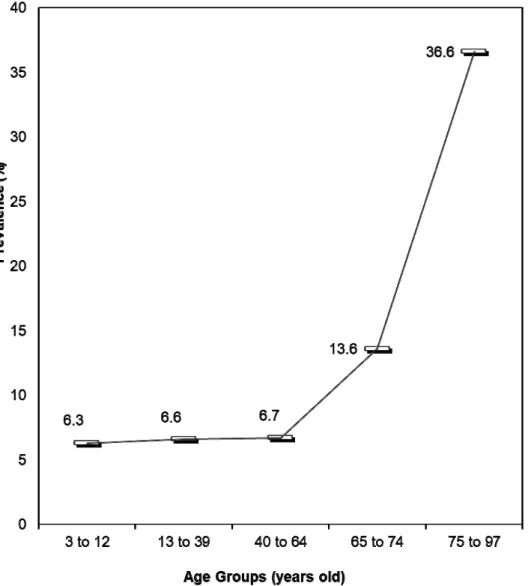
Figure 1 shows the prevalence of bilateral EAM collapse among users, according to age. The
occur-rence of collapse was stable among the irst three
groups, with an increase in prevalence among the elderly, especially in the older age group.
The prevalence of EAM collapse in this population, according to covariate categories, magnitude of
association (PR) and their respective 95% CI, are presented in Table 2. Males, age 65 years or older and
presence of protruding ears were identiied as factors
associated with the occurrence of the event. Although the prevalence of collapse was higher among users who reported white skin, the difference was not
Figure 1. Prevalence of external acoustic meatus collapse, according to age, in the study population (N=436)
Table 2. Prevalence, prevalence ratio and respective conidence intervals for the association between study covariables and external
acoustic meatus collapse in the study population (N = 436)
Variables Prevalence (%) PRa CIb 95%
Sex*
Male 16.5
Female 6.2 2.7 (1.5–4.8)
Age*
3 to 64 years 6.6
65 to 97 years 23.0 3.5 (2.0–6.0)
Skin color
White 14.5
Not white 9.5 1.5 (0.8–2.9)
Prominent ear*
Yes 36.4
No 9.7 3.8 (1.6–8.7)
aPR = prevalence ratio; bCI = conidence interval calculated by the Mantel-Haenszel method;
results of the present study are consistent with both statements. We emphasize that the predominance of
bilateral presentation, identiied in 90% of the cases,
and the narrowing of the contralateral EAM, observed in all unilateral cases, should alert an examiner who
has identiied collapse in the irst ear submitted for
examination.
The analysis of the inluence of age on the occur -rence of EAM collapse in this population revealed a similar prevalence among the three young age groups, consisting of children, adolescents, and adults. However, the likelihood of the event increased progressively for the two elderly groups, reaching more than a third of individuals aged 75 years or older. For
the association analysis, the elderly group (age ≥ 65
years) was compared with the complementary group,
and a statistically signiicant positive association was identiied. The greater chance of occurrence of collapse
in the elderly population corroborates the results of several studies10,13-15,20. A reduction in elasticity of
the external auditory canal due to cutaneous and
cartilaginous laccidity is a plausible explanatory
hypothesis21,22. No greater prevalence among children was identiied, as opposed to previous indings14, which
may be related to the non-inclusion of children under 3 years of age, in the present study.
Contrary to results obtained by other authors13,14,
which did not identify a difference in the occurrence of collapse between genders, this study found a
signiicantly higher prevalence among male users,
calculated as 2.7 times the prevalence found among women. In other words, the occurrence of collapse in males was 170% higher than that observed in females. The explanation is unknown, but may be related to some anatomical features that are more common in males. For example, of the cases with protruding ears in this study, 72.7% were men. It is possible that men generally have a greater angle between the ear and the skull than women, even if it is not so pronounced as to
be classiied as a distinction.
Only eleven subjects in this study presented the characteristic of protruding ears. Hence, it was
possible to verify a statistically signiicant association
with the EAM collapse, and the prevalence ratio (3.8) indicates the strength of this association. We should emphasize that the small size of the group inevitably results in an increase in the CI. A greater likelihood of individuals with protruding ears presenting collapse was also reported in an earlier study10. A greater angle
between the auricular pavilion and the head implies a
DISCUSSION
The results of this study suggest a greater chance of EAM collapse during audiological procedures with supra-aural headphones when the evaluated individuals are men, when they are 65 years of age or older, or when they present protruding ears. Although
no statistical signiicance was obtained, there was
a tendency for the event to occur more often among whites compared to nonwhites.
Some deinitions of EAM collapse include near
approach of the ear canal walls to each other, even without closure of the auditory canal4,6,10,14. A marked
reduction in the canal airway, without occlusion of the
EAM, was deined in this study as “narrowing”. The term “collapse” was restricted to the condition of total occlusion, in agreement with deinitions presented by
other authors4,11. This terminological option is based on
the potential differences between the effects of an EAM collapse and narrowing in the results of audiological exams. It is believed that the occurrence of erroneous results, described in several studies4,7-9,13,17,19,20, derives
predominantly from the complete phenomenon, that is, complete EAM collapse. This is a topic that should continue to be discussed among audiologists, since
a consensus in the deinition is essential for precision
in clinical conduct. A clear distinction between the two conditions would be helpful for research, facilitating comparisons between studies by reducing
method-ological bias in deinition.
The prevalence of bilateral and unilateral collapse among individuals aged 3-97 years, in the study population was 10% and 11%, respectively. Comparison of these values with those presented by other studies is hampered by differences in age composition among
the investigated populations, since age may signii -cantly increase or decrease prevalence13,14,20. Like the
others, this study is not representative of the general population, having as subjects the population who attended an audiological clinic with hearing complaints.
The narrowing condition was identiied in a similar
proportion of the evaluated individuals, as complete collapse. It is possible that people who currently present a marked reduction of the auditory canal may have a greater chance of showing collapse with advancing age. However, only longitudinal studies could test this hypothesis.
As to laterality, previous studies indicate that collapse can occur unilaterally or bilaterally10,14, and there have been no indings suggesting that either
more marked modiication of the natural anatomical
position of the pavilion when supra-aural headphones are positioned, contributing to EAM collapse.
Although the prevalence of the event among white users was 50% higher than among non-whites, the
association was not statistically signiicant and could not be conirmed. It is possible that the use of
self-reported skin color data brought about problems in the
correct classiication of individuals, as the small portion
of whites may have reduced the power of the analysis. Consequently, we recommend that the hypothesis be investigated in new studies conducted with a larger
sample of white individuals, with skin color classiied
by trained personnel. To our knowledge, no previous studies have analyzed the relationship between skin color and EAM collapse.
In identifying an ear that will potentially show collapse during a procedure with supra-aural headphones, the use of a single headphone cushion can be a facilitator, because of the similarity between
the mode of veriication and the examination itself. However, the event can easily be identiied even without the use of instruments, by pressing the ingers
on the auricular pavilion against the mastoid bone without applying force in any other direction, as this would not be consistent with the pressure exerted by the headphones. It is recommended to use a light source such as an otoscope, especially to check the condition in dark-skinned individuals. Several studies describe and quantify the effects of collapse on various types of audiological tests, and indicate strategies for managing the problem, consequently avoiding errors in audiological diagnosis4-7,10,11,13,16,17,19,20,23.
The study presents valuable features such as
differentiation in the operational deinitions of collapse
and narrowing, the use of the single cushion in a standardized procedure for EAM visual inspection, and a suitable sample size for the analysis of factors associated with the studied event. Among the research limitations, the absence of a precise instrument for
protruding ear classiication should be considered,
which may have led to the underestimation of cases by
the identiication of only those with the most prominent
characteristics; the fact that the visual inspection was not subjected to replication by a second observer; and
the self-reporting of skin color, although identiication
by the interviewer is also potentially subject to
classi-ication biases. We recommend that future studies
consider the results presented here, both positive
and negative, as a contribution to the advancement of knowledge in the area.
CONCLUSION
This study presents evidence that EAM collapse, when using supra-aural headphones, is an event with greater prevalence among men, among the elderly, and among those with protruding ears. Even the lowest prevalence estimated in the age groups of the study population suggests that at least one in 20 individuals may present with this condition, in the audiological clinic. Thus, constant attention by professionals to the possibility of collapse is essential to avoid errors in audiological diagnosis, which may in turn result in subsequent inadequate remedies. Consequently, knowledge of the prevalence of this event alerts us to
the need for careful veriication, prior to any assessment
or procedure with supra-aural phones, in all population groups.
REFERENCES
1. Almeida BP, Menezes PDL, Andrade KCLD, Teixeira CF. Positioning of earphones and variations in auditory thresholds. Braz J Otorhinolaryngol. 2015;81(6):642-6.
2. Zwislocki J, Kruger B, Miller JD, Niemoeller AF, Shaw EA, Studebaker G. Earphones in audiometry. J Acoust Soc Am. 1988;83(4):1688-9.
3. Mello LAD, Silva RAMD, Gil D. Test-retest variability in the pure tone audiometry: comparison between two transducers. Audiol. Commun. Res. 2015;20(3):239-45.
4. Sauer RC, Ford CN. Collapse of the ear canal during masking for bone conduction. Am J Otol. 1986;7(1):51-4.
5. Campos CF, Cruz MS, Feniman MR. Colabamento do meato acústico externo: relato de um caso. Pró-Fono R. Atual. Cientif. 2004;16(1):95-100.
6. Toniosso S, Redondo MC, Lopes Filho O. Alterações dos limiares auditivos causados pelo colabamento de meato acústico externo. Rev Bras Otolaringol. 2000;66(6):652-8.
7. Rizo SR. Correcting for ear canal collapse during audiometry. Ear Hear. 1983;4(5):255-7.
9. Hood LJ. Clinical applications of the auditory brainstem response. San Diego: Singular Publishing Group; 1998.
10. Jerger J, Jerger S. Colabamento do conduto auditivo externo. In: Jerger J, Jerger S (orgs). Alterações auditivas: um manual para avaliação clínica. Rio de Janeiro: Atheneu; 1989. p. 29-34. 11. Pearlman RC. Preventing collapsed of external
auditory meatus during audiometry. Arch Otolaryngol. 1975;101(11):686-8.
12. Frazza MM, Caovilla HH, Munhoz MSL, Silva MLG, Ganança MM. Audiometria tonal e vocal. In: Munhoz MSL, Caovilla HH, Silva MLG, Ganança MM (orgs). Audiologia clínica. São Paulo: Atheneu; 2000. p. 49-71.
13. Randolph LJ, Schow RL. Threshold inaccuracies in an elderly clinical population: ear canal collapse as a possible cause. J Speech Hear Res. 1983;26(1):54-8.
14. Campos CF, Cruz MS, Feniman MR. Colabamento do meato acústico externo: ocorrência em pacientes submetidos à avaliação audiológica e otorrinolaringológica no CEDALVI - USP/Bauru. J Bras de Fonoaudiol. 2004;18(5):17-9.
15. Marangoni AT, Scharlach RC, Silveira MRM, Calais LL, Gil D. Insert earphones: application to avoid collapse of the external auditory canal. Rev Soc Bras Fonoaudiol. 2012;17(1):61-5.
16. Oda DTM, Marangoni AT, Gil D. Insertion and supra-aural earphones: audiological assessment in the elderly. Rev. CEFAC. 2014;16(1):31-8.
17. Mohamad A, Algarni M. Bilateral conductive hearing loss due to collapsed ear canals in a 35 years old female. J Otolaryngol ENT Res. 2016;4(4):110. 18. Ribeiro FQ. Otoplastia: revisão da literatura e
descrição de técnica própria. Acta Otorrinolaringol. 2005;23(2):6-14.
19. Mahoney CF, Luxon LM. Misdiagnosis of hearing loss due to ear canal collapse: a repot of two cases. J Laryngol Otol. 1996;110(6):561-6.
20. Schow RL, Goldbaum DE. Collapsed ear canals in the elderly nursing home population. J Speech Hear Disord. 1980;45(2):259-67.
21. Mitre EI. Aspectos otorrinolaringológicos do idoso. In: Suzuki HS (org). Conhecimentos essenciais para atender bem o paciente idoso. São José dos Campos: Pulso; 2003. p. 20-6.
22. Silva APR, Blasca WQ, Lauris JRP, Oliveira JRM. Correlation between the characteristics of
resonance and aging of the external ear. CoDAS. 2014;26(2):112-6.
23. Amaral LKM, Ferreira FHV, Dias FAM. Utilização
de uma manobra especíica para evitar