1. Rheumatology, Instituto Português de Reumatologia, Lisboa, Portugal
2. Biostatistics, Eurotrials – Scientific Consultants, Lisboa, Portugal
3. Medical Department, Roche Portugal, Amadora, Portugal 4. FRAIL Study Group: Filipe Barcelos, José Vaz Pato, Cândida Silva, Manuela Micaelo, Eugenia Simões, Vera Las, Manuela Parente, Ana Assunção Teixeira, Sara Cortes, Rui Leitão, Maria Jesus Mediavilla, Helena Madeira, Cláudia Miguel Miguel Sousa
medicine treatments; 5.7% needed house adaptations; 9.3% needed prosthesis; 5.1% needed permanent home support, 2.9% partial; 31% of the patients re-ferred sick leave because of RA. We estimate that the an-nual mean cost of treating one RA patient in Portugal is about 3.415 €, of which 77.3%, 9.6% and 11.4%, corresponds to direct medical, direct non-medical and indirect cost, respectively. Total cost of the disease increase with disease activity. RA in remission has an ave -rage cost of 2.205 €/patient/year versus 5.634 € in high activity RA.
Conclusions: Results of the FRAIL study allow a bet-ter understanding of the real economic impact of RA for society, which increased very significantly in the last 10 years. If we consider 35 000 patients with RA in Portu -gal, the annual cost would be 119 525 000 € per year. Keywords: Rheumatoid arthritis; Direct costs; Disease burden; Disability; Disease activity; Indirect costs.
INTRODUCTION
Rheumatoid arthritis (RA) is considered the most rele-vant inflammatory rheumatic disease. Estimates for prevalence of RA varies between 0.3 to 1.1% and the majority of patients are in a working age (55%). There-fore its clinical impact is closely related to the economic burden to society1. The occupational participation of
patients with rheumatoid arthritis is reduced when compared to the general population, although less in man (reduction between 16-20%) than in women (reduction between 2537 %). That re(reduction in employa -bility is also associated with the need for adjustments in the workplace related to the disease and/or work specifications both contributing to a reduction in in-come expectations2,3.
The relative risk for an RA patient to be unemployed is 1.2 to 3.4 fold comparing to the general population
Finding Rheumatoid Arthritis Impact on
Life (FRAIL Study): economic burden
ACTA REUMATOL PORT. 2012;37:134-142
Luis Cunha Miranda1, Helena Santos1, Júlia Ferreira1, Paulo Coelho1, Catarina Silva2,
José Saraiva-Ribeiro3on behalf of the FRAIL Study Group4
ABSTRACT
Introduction: The economic impact of rheumatoid arthritis (RA) is related with the costs supported by the society. It is of the utmost importance to estimate the costs of RA in Portugal in order to access its true social impact and improve the clinical management of this disease.
Objectives: To determine the yearly direct and indi-rect costs of RA supported by the society in Portugal. Methods: Observational, cross-sectional study with collection of retrospective data, involving patients with RA, diagnosed accordingly to 1987 American College of Rheumatology (ACR) criteria, independently of di -sease stage, with attendance to a specialist visit between October and December 2009 in a Rheumatology Cli nic in Portugal. Data were obtained through the fulfillment of medical and patient questionnaires. Data being cove red included sociodemographic and clinical characte -ristics and health resources. The societal perspective was considered including direct and indirect costs. Uni-tary costs were obtained from official national sources. Results: The FRAIL study included 353 patients, 84% females, with an average age of 59 (range: 23-85 years). In the previous year: 97.2% of patients had a Rheuma-tology appointment (average: 4) and 35.6% a GP ap-pointments (average: 6); 8.2% were hospitalized at least once, 9.3% had an urgency admission and 41.4% went to the day hospital. Most of the patients (96.0%) were on DMARD; 94.3% performed routine exams; 35.7% had rehabilitation treatments; 21.4% had alternative
and it is closely related to disease duration4.
RA imposes more costs to the society than many other musculoskeletal diseases, with costs represen -ting 2.5% of the GDP in 1992 in the United States with an equivalent impact of a moderate economic depres-sion. We can find similar impact in European coun-tries. In 1998, in Germany and U.K., 12 and 2.3 bil-lion dollars were spent respectively just on RA pa-tients5.
We can divide the social cost of a disease in direct, indirect and intangible costs. Directs costs are related to drugs, diagnostics, medical and other appointments as well as hospital admissions. Indirect costs can be described as costs related to loss of productivity and time in occupational, household and familiar tasks. In-direct costs in RA are responsible for two thirds of the total costs2. Intangible costs are associated with pain
and sufferings of patients because of a disease, which are usually measured by using the reduction in quali-ty of life.
Treatment and management of RA and other in-flammatory rheumatic diseases consume time because daily life tasks take longer in result of pain, stiffness and functional disability. Also the regular medical ap-pointments, exams and the need for physical therapy can limit work performance in these patients. RA pa-tients take 1.15 extra hours to do the same daily ac-tivities mostly spent on the need for more rest time. The time spent for hospital appointments and is in some studies of 1.9 hours and the global reduction of work time is of 11.6%. Co-morbidities as well as di-sease activity and disability are also involved in extra time spent, worse radiological status, poor functional performance, ESR and CRP but also cumulative dama ge all contribute for the loss of occupational and recrea -tional time2.
Besides the deterioration in quality of life of the pa-tients and their families occupational disability has ma-jor impact with direct implications to patients and so-ciety. Several studies demonstrate that rheumatoid arthritis as well as other musculo-skeletal diseases can reduce in 3 to 4 years the work potential, reducing also the potential income of these patients6.
RA is an increasing cause of disability and is respon sible for more than two thirds of patients with disabili -ty (37.6%), with an expectable increase of 21.4 million to 41.4 million of patients by 2030. If eliminated, one in four cases of disability would be prevented7.
The profile of occupational disability in RA is not a constant variable; it rises from 15% in the first year to
20 to 40% in the following three years and achieving 50 to 60% in 10 years of disease. In the later years, the di -sease is still very important with 60 to 70% of occupa-tional disability at 15 years rising to 80% at 20 years and to 90% at 30 years. Globally that impact on working ability is dramatically different from the general popu-lation as well as from other chronic conditions1,3,8-12.
In RA, early diagnosis is crucial because at the end of the first 3 years of the disease the percentage of pa-tients already in retirement is near one third. Therefore, a clear strategy to control RA is also important in or-der to reduce occupational disability. But apart from re-tirement, RA reduces the ability to get an income that is usually 27% and 48% less in man and women with RA in comparison to healthy workers and 40% less than before becoming ill1,8.
OBJECTIVES
The objectives of this study were to estimate direct and indirect costs of RA in a Portuguese RA patient popu-lation and to evaluate its association with functional class status (American College of Rheumatology), disea se activity and disability evaluated by Disease Ac-tivity Score 28 (DAS28) and Health Assessment Ques-tionnaire (HAQ), respectively.
METHODS
STUDy DESIgN
This was an observational cross-sectional study con-ducted in a rheumatology clinic setting, between Oc-tober and December 2009, in Portugal. The main objec tive was to access the impact and annual costs as-sociated with the treatment and management of RA in patients in various stages of the disease. A consent form validated by the centre ethical commission and the Portuguese national data protection entity was signed by the patients that accepted to participate in the study.
PATIENTS
RA patients fulfilling ACR classification criteria, attend-ing a specialist rheumatology clinic in the eight weeks of the recruitment that were older than 18 years and that were willing and able to participate in the study.
DATA COllECTION
-cally designed for this study: a) A questionnaire for the rheumatologist that included ACR functional class sta-tus, DAS28 parameters13, number and type of
radio-logical, laboratory and other complementary exams performed in the previous 12 months as well as pres -cri bed medication; b) A patient self-questionnaire that included socio-demographic data, health resources consumption (medical appointments, hospital admis-sions, hospital emergency admissions and day hospi-tal sessions), non-medical expenses (transportation, rehabilitation programmes, nonconventional medi ci -n e, tech-nical help, a-nd domiciliary support), a-nd days lost due to RA; a validated Portuguese version of the Health Assessment Questionnaire (HAQ)14was
in-cluded in the questionnaire and according to its score (from 0 to 3), patients were classified as mildly dis-abled with a score of 0–1, moderately disdis-abled with a score of 1.01–2, and severely disabled with a score >215; the EuroQol quality of life questionnaire
(EQ-5D) was also applied and utilities were estimated through a regression model16,17. Although the
ques-tionnaire was self-reported, it was supervised by trained staff as a support help.
COSTS
The costs were calculated from the society perspective including direct medical costs (hospitalizations, urgen cy admissions, outpatient visits, exams, drugs, physio -therapy), direct non-medical costs (transportation, home adaptation, domiciliary support, non-conven-tional medicine) and also indirect costs (workdays lost, medical absenteeism related to the disease or to me -dical appointments or similar, workdays lost of the family members to support medical activities). Uni-tary drug costs were extracted from INFARMED IP18
(ambulatory prices) or from the Catalogue of Health Procurement19 (hospital prices). Hospitalizations and
exams were valued at the prices published by the Por-tuguese Health Ministry20. Costs for urgency
admissions, outpatient visits and day hospital were estima -ted by medical speciality based mainly on the Public Finance Report of the National Health Service Hospi-tals21. Whenever necessary, costs were updated for
2010 prices considering an annual inflation rate for Portugal according to UNECE22. All costs were
ex-pressed in 2010 Portuguese euros. The unitary cost for each item is reported in Table I.
A yearly cost was estimated per patient summing the following components: a) drug cost, obtained mul-tiplying the unitary cost of drugs (prescribed by the
rheumatologist) by its daily dose; b) hospitalization, urgency admissions, outpatient visits, day hospital and exams cost, obtained multiplying number of events per year by corresponding unitary cost; c) cost sup-ported by the patient per year regarding rehabilitation, transportation to outpatient visits, domiciliary sup-port, non-conventional medicine, technical help and home adaptations (cost self-reported); d) indirect cost calculated on the basis of the human capital method, through the multiplication of lost work days (by the patient and others in support of the patient) by the mean daily earning extrapolated from the official mean monthly national base gross salary22.
Statistical analysis of the collected data and calcu-lation of costs was performed using IBM SPSS version 16.0.
RESUlTS
A total of 353 patients were included in the study. So-cio-demographic and clinical characteristics are shown in Table II. As expected most of the patients were female with a mean age of 59 years (SD 12.7, ranging from 23 to 85 years old); the majority lived with their spouses and/or children. Approximately one-third of the sam-ple was employed and more than half had the mini-mum school years. Disease duration on average was 8.2 (SD 8.6) years with a mean diagnostic gap of 3 years (time between the first complain and the medi cal diag -nosis). The majority had functional class ACR II to IV and almost two thirds had a moderate or severe disease activity by the DAS 28 score. One in five patients was severely disabled according to HAQ. Mean (SD) utility by HAQ class was estimated in 0.761 (0.177), 0.552 (0.261) and 0.311 (0.343) for mildly, moderately and severely disabled patients, respectively.
Health resource consumption related with direct medical costs is presented in Table I. We find impor-tant to point out that the number of patients attending acute care (emergency room or acute hospitalization) was relatively low, respectively 9.3% and 8.2%. The majority of the patients (97.2%) had a mean of 4 (SD 2) rheumatologist visits and one third (35.6%) had 6 (SD 4) general practitioner visits in one year.
A high percentage of patients (41.4%) had ap-pointments in the day hospital/ biologics clinic, not only for specific evaluations but also for biologic or other intravenous medication treatment (ex. bisphos-phonates). Almost every patient had diagnostic tests
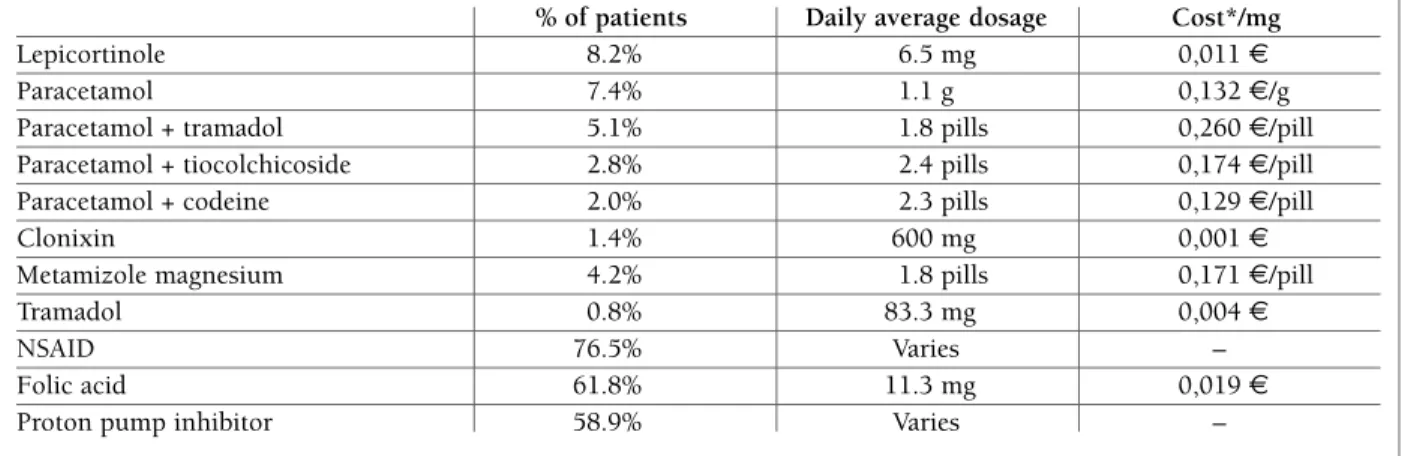
TABlE I. UNITARy COSTS AND CONSUMPTION Of HEAlTH RESOURCES RElATED TO DIRECT MEDICAl COSTS
% of patients Average number/year Unitary cost
Hospitalizations 8.2% 2.0 1.495 € Urgency admission 9.3% 4.1 149 € Outpatient visits General practitioner 36.5% 6.2 32 € Rheumatology 97.2% 4.0 153 € Orthopedics 4.8% 3.5 60 € Physiatrist 7.4% 3.8 157 € Ophthalmology 15.6% 2.9 62 € Endocrinology 2.5% 2.4 107 € Cardiology 8.5% 2.9 118 € Pneumology 1.4% 3.2 152 € Psychiatry 0.9% 2.7 55 € Otorrinolaringologyst 1.4% 2.0 62 € Nutrition 0.8% 4.0 32 € Gynecology 0.3% 2.0 94 € Hematology 0.3% 2.0 201 € Nephrology 0.3% 2.0 123 € Surgery 0.3% 6.0 98 € Podiatry 1.1% 2.5 32 € Day hospital 41.4% 3.7 121 € Exams X-ray 67.4% 4.7 23 € CT 15.3% 1.2 79 € MRI 1.4% 2.8 138 € Bone densitometry 43.1% 1.0 27 € Upper GI endoscopy 2.3% 1.1 39 € Capillaroscopy 3.1% 1.0 21 € Sonography 22.7% 1.3 62 € Blood analysis 87.8% 3.6 26 € Physiotherapy 35.7% – –
% of patients Daily average dosage Cost*/mg Drugs Ledertrexate 73.7% 16 mg/w 0,039 € Hydroxychloroquine 21.8% 301 mg 0,001 € Sulfasalazine 24.4% 1.9 g 0,294 €/g Leflunomide 3.4% 17.5 mg 0,125 € Cyclosporine 1.4% 120 mg 0,014 € Azathioprine 2.5% 50 mg 0,004 € SC/ IM Ledertrexate 8.5% 18.7 mg/w 2,01 € Etarnercept 1.1% 50 mg 2/2 w 4,74 € Adalimumab 2.0% 40 mg 2/2 w 17,88 € Infliximab 0.8% 184 mg 2/2 w 7,09 € Prednisolone 52.4% 6.6 mg 0,009 € Deflazacort 17.6% 6.6 mg 0,103 € Deflazacort generic 5.9% 6.6 mg 0,063 €
(94.3%), mostly blood and urine analysis (87.8%), x-rays (67.4%) and 35.7% had at least a physiothera-py program in the last year. Regarding medication methotrexate was the most frequently prescribed drug (73.7%) followed by prednisolone (52.4%), nonste -roidal anti-inflammatory drugs (NSAIDs) (76.5%) and proton pump inhibitors (58.9%).
Regarding non-medical resources the majority of pa-tients spent money on traveling to the get to the rheumatologist, general practitioner or to the physio-therapy unit. Only a small percentage of patients re-ported expenditures on other non-medical resources (home adaptation, technical aids, home support, and non-conventional medicine).
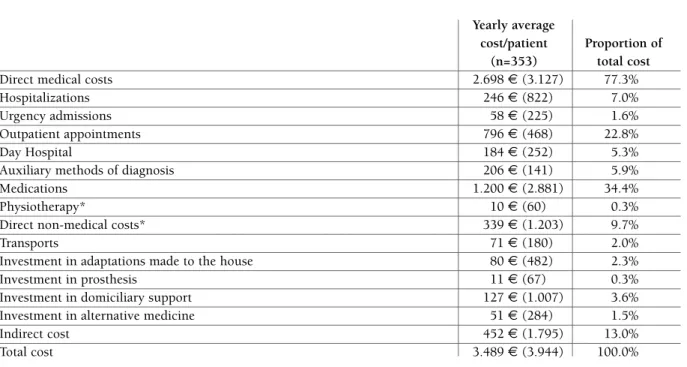
The mean annual cost per patient was 3.498 € (SD 3.944 €), in which 77.3% were direct medical costs (Figure 1). From this expense the most relevant were medication and medical appointments respectively 34.4% and 22.8% of the total of annual cost (Table IV). Figure 2 describe the mean values obtained accor-ding to functional class and disability. There seems to be no direct relation between costs and the ACR functional class. However we can see an increase from class I to II with a decrease from class II to III-IV. Sub-ana lysis of the costs revealed that the indirect costs are responsi-ble for this result because they are relatively low in classes III and IV (due to a lower rate of working pa-tients in this class). When we analyse disea se activity using DAS28, there is an increase in the total costs with
the disease activity. The average cost of a patient in re-mission is 2.205 € versus 5.634 € in a high disease acti vity patient. Regardless of the type of the cost, we can find an almost linear relation between costs and disability evaluated by HAQ. This is very rele vant, with mildly disabled patients spending on avera ge 2.487 €/year and patients with severe disability spending on average 4.773 €/year.
DISCUSSION
In RA, the economic impact can be important even in short term disease duration, which can be even more relevant on the long term due to the chronic and po-tentially disabling character of the disease. A study in the US showed that RA patients could reduce their incomes by 20 000 dollars when compared to age ma-t ching workers11.
As we review the literature we can find a reduction in working capacity as soon as in 2 years with 62% pa-tients with RA with 1,8 years of disease duration suf-fering some degree of disability in work performance, and 42% getting unemployed. Of the patients that still worked 38% had no restrictions, but 75% had to have some work adjustments in the workplace. After 4 years only 10% have the same job with no restrictions or ad-justments. We can see that sick leave is more frequent in the first year of the disease and with a stabilization
Note: Cost of hospitalizations, visits to general practitioner/nutrition/podiatry, exams - Portuguese Health Ministry, Decree n.º 132/2009; cost of urgency admission, other visits, day hospital – Finance Report of Portuguese Hospital 2006; drug costs – INFARMED 2010 and Catalogue of Health Procurement 2010.
*Cost was obtained considering the market drug name referred by the patient.
TABlE I. UNITARy COSTS AND CONSUMPTION Of HEAlTH RESOURCES RElATED TO DIRECT MEDICAl COSTS (continuation)
% of patients Daily average dosage Cost*/mg
Lepicortinole 8.2% 6.5 mg 0,011 €
Paracetamol 7.4% 1.1 g 0,132 €/g
Paracetamol + tramadol 5.1% 1.8 pills 0,260 €/pill Paracetamol + tiocolchicoside 2.8% 2.4 pills 0,174 €/pill Paracetamol + codeine 2.0% 2.3 pills 0,129 €/pill
Clonixin 1.4% 600 mg 0,001 €
Metamizole magnesium 4.2% 1.8 pills 0,171 €/pill
Tramadol 0.8% 83.3 mg 0,004 €
NSAID 76.5% Varies –
Folic acid 61.8% 11.3 mg 0,019 €
of the disease we can achieve a lower incidence of sick leave. An early intervention by a rheumatologist with a more aggressive approach to the disease is related also to a reduction of days on sick leave2,4,5,10,24,25. In our
study several of the possible conclusions are different because of a high diagnostic gap (3 years on average) and the time lost to referral to a rheumatologist.
It is not only the absence from the workplace that in-fluences the work performance of an RA patient, these patients tend to socialise less, to spend less time out-doors, to search less for jobs. There are two barriers that RA patients tend to consider regarding job satis-faction, leaving their house (morning stiffness, ability to do morning tasks) and the need to workplace adaptation both can cause discomfort and can even be res -ponsible for job cessation26.
We can find in the literature that, in opposition to our findings, indirect costs are 2 to 3 times higher than direct cost, but that seems to be changing with the in-troduction with biological drugs in the 90’s and with the use of combination DMARD s11. That can be
par-tially explained by the high level of retired patients that contributes to lower sick leave or disability pension re-lated to RA. In other studies drugs are responsible for 8-24% of the total of medical costs, medical appointments to the rheumatologist to 821% and hospitali -zation 17-88%10,24,25. Drugs are responsible to 6-17%
of direct costs and 2-5% of the total of costs with RA. Our findings report a different view to the role of drug and medical appointments costs in the total of the cost with RA24-26. That can be explained by the different
types of health and social security services as well as the type of patients24-26. We found a high percentage of
re-tired patients, an important diagnostic gap and a low education and with jobs with lower salaries of our group. If we add a universal health system and a state reimbursement on drugs that alone can explain if not totally at least partially the differences obtained with our work.
The amount considered as direct cost from RA dif-fers from study to study and some consider direct costs around $5.425 with indirect costs of $ 9.744 with a to-tal of $15.238 and that amount is very different from our work and from previous Portuguese studies5.
In Portugal, it seems that there has been an increase in the disease cost in the last years. From 1.151€ to 2556.6€ in 2002 to 2966.6€ in 200627-29. However,
different study designs and approach to the costs con-sidered cannot allow a direct comparison of these costs. It is nevertheless expected with inflation and the use of
TABlE II. PATIENTS’ SOCIO-DEMOgRAPHIC AND ClINICAl CHARACTERISTICS
Total (n=353)
Female † 295 (84%)
Age, years 59.3 (12.7)
With whom live †
Alone 54 (15.6%) Relatives / friends 30 (8.7%) Spouse / sons 262 (75.7%) Professional situation † Active 121 (35.6%) Retired 170 (50.0%) Disability Pension 49 (13.9%) Education † No education 26 (7.9%) 1-4 y 168 (51.1%) 5-8 y 33 (10.0%) 9-12 y 80 (24.3%) > 12 y 22 (6.7%) Years in school 6.1 (4.2)
Duration of disease, years 8.2 (8.6)
Delay in diagnosis, years 3.1 (5.0)
ACR functional class †
I 114 (32.4%)
II 216 (61.4%)
III 21 (6.0%)
IV 1 (0.3%)
Rheumatoid factor positive † 262 (75.9%)
Tender joints (physician evaluation) 5.8 (6.8)
(n) (0-28)
Swollen joints (physician evaluation) 2.4 (3.8)
(n) (0-28)
ESR, mm/hr 23.6 (18.4)
CRP, mg/l 1.5 (3.1)
Disease activity by the patient 44.9 (23.1)
(VAS 0-100)
Disease activity score (DAS28, 0-10) 3.9 (1.4)
DAS28 class †
Remission (<2.6) 66 (19.9%) Low disease activity (2.6 - 3.1) 48 (14.5%) Moderate disease activity (3.2 - 5.1) 149 (44.9%) High disease activity (5.2 - 10) 69 (20.8%)
Functional disability score (HAQ, 0-3) 1.3 (0.7)
HAQ class †
Mildly disabled (0 – 1) 114 (32.6%) Moderately disabled (1.01 – 2) 161 (46.0%) Severely disabled (> 2) 75 (21.4%)
Utility (EQ-5D score) 0.57 (0.3)
NOTE: The values presented are averages (standard deviation) except in categorical variables (†) where n (%) are presented
newer and more expensive drugs that the trend for di-rect costs is to increase.
The relation between HAQ score and the cost was also seen in other studies as well as quality of life with an increase of the cost with the worsening of HAQ and short form 12 (SF-12)30.
Gross domestic product (GDP) can influence the im-pact of diseases and RA as well, it is known that in countries with lower GNP the impact of RA is higher and also that there is a tendency for chronic diseases be-fore 65 years occur in people with lower incomes31.
There is no solid way to compare studies on the cost of RA in different countries because of social end economical differences but also because of the methodo -logy of each study. For example in Germany the an nual cost of RA was 21.700 € and in France was 15.600 € with indirect costs respectively 70 and 24%. In a recent review Xie et al found differences in the indirect cost of RA between 60 dollars in Thailand and 32.155 dollars in the US.
Like in our study several other studies link disabili -ty with higher costs of the disease with variations of in-crease between 2 to 5 fold in the cost depending on HAQ score32-37.
Disease activity is also found as a determinant of and increase cost of RA even in early arthritis, and we can see a high increase between moderate and high disease activity38. In our study we consider remission as an
end-point to RA and we proved that patients on remission
can cost less 2.5 fold in comparison to high activity pa-tients witch reinforces the need for an aggressive and patient focussed treatment strategy that as remission or low disease activity as a valid clinical endpoint.
lIMITATIONS
Our study has some limitations that should be high-lighted. The RA patients group was not representative of the Portuguese RA patient’s populations. There were limitations due to low understanding of the question-naire by a minority of the patients. The data on costs of medication, appointments or exams are scarce and
*The values presented are averages (standard deviation). **Resources supported by the patient.
***Considering only active patients.
TABlE III. RESOURCES CONSUMPTION RElATED TO DIRECT NON-MEDICAl COSTS AND INDIRECT COSTS wITHIN THE lAST yEAR
% of Average
patients number/year* Direct non-medical resources paid by the patient**
Travelling expenses to attend outpatient appointments 86.4% Travelling expenses to attend physiatrist treatments 17.0% Investment in adaptations made to the house 5.7%
Investment in prosthesis 9.3%
Investment in domiciliary support 4.5% Investment in alternative medicine 6.5%
Productivity loss
Days of active work lost because of absences/ leaves*** 8.8% 139.8 (133.5) Working active hours lost to attend doctor appointments*** 28.3% 19.3 (20.6) Days of active work lost by the companion (ex. spouse) 16.4% 1.9 (0.3)
Indirect cost(13%)
Direct non-medical cost
(10%)
Direct medical cost
(77%) Indirect cost (13%) Direct non-medical cost (10%) Direct medical cost (77%)
Mean total cost (c) ACRDAS28HAQ
6.0005.0004.0003.0002.0001.000IIIIII-IVModerate disease activity (3.2-5.1)High disease activity(5.2-10)Midly disabled(0-1)Moderatly disabled(1.01-2)Severely disabled(>2)0Remission (<2.6)Low disease activity(2.6-3.1)IndirectDirect non-medicalDirect medical
M ea n to ta l c os t (c )
ACR DAS28 HAQ
6.000 5.000 4.000 3.000 2.000 1.000 I II III -I V M od er at e di se as e ac ti vi ty ( 3. 2-5. 1) H ig h d is ea se a ct iv it y (5 .2 -1 0) M id ly d is ab le d (0 -1 ) M od er at ly d is ab le d (1 .0 1-2) Se ve re ly d is ab le d (> 2) 0 R em is si on ( < 2. 6) Lo w d is ea se a ct iv it y (2 .6 -3 .1 ) Indirect Direct non-medical Direct medical
fIgURE 2.Total average yearly cost per patient by functional
class, disease activity and disability
NOTE: The values are averages (standard deviation) *Only the cost supported by the patient is presented.
TABlE IV. ESTIMATES OBTAINED fOR AVERAgE yEARly COSTS PER PATIENT
Yearly average
cost/patient Proportion of (n=353) total cost
Direct medical costs 2.698 € (3.127) 77.3%
Hospitalizations 246 € (822) 7.0%
Urgency admissions 58 € (225) 1.6%
Outpatient appointments 796 € (468) 22.8%
Day Hospital 184 € (252) 5.3%
Auxiliary methods of diagnosis 206 € (141) 5.9%
Medications 1.200 € (2.881) 34.4%
Physiotherapy* 10 € (60) 0.3%
Direct non-medical costs* 339 € (1.203) 9.7%
Transports 71 € (180) 2.0%
Investment in adaptations made to the house 80 € (482) 2.3%
Investment in prosthesis 11 € (67) 0.3%
Investment in domiciliary support 127 € (1.007) 3.6% Investment in alternative medicine 51 € (284) 1.5%
Indirect cost 452 € (1.795) 13.0%
Total cost 3.489 € (3.944) 100.0%
tion. Several experienced rheumatologists were in-volved and the clinical data was performed by the pa-tients attending rheumatologists.
With our work we tried to prove that there is very re -levant impact of rheumatoid arthritis in our country and that there is solid relationship between disability, disease activity and direct and indirect cost of the disease.
A global strategy to reduce the disease impact on the society has to be focused on the diagnostic gap but also in achieving remission or low disease activity. Our country social network, workplace support, occupa-tional rehabilitation and people life expected income should be consider as a starting point to a strategy that could reduce the large amount of people that reaches specialized care already retired from work. A good net-work of rheumatology hospital departments and the need for early diagnostics can also provide that RA can live healthier and more productive lives.
In this study we can observe that it is relevant to treat patients in order to obtain remission not only for ob-vious clinic purposes but also because overall we are achieving better social and economic results. We should perform the DAS 28 and HAQ, among other possible outcome measures in order to design a strate-gy that can improve our patient’s clinical results but were obtained in several places. Retrospective data is
al-ways based on patient recollection and it is a bias to consider.
However a large population was evaluated and there was a support by investigators regarding data
collec-also can save some of the important economic burden of rheumatoid arthritis.
ACKNOwlEDgMENT
To Julia Ferreira († 23/12/2011) co-author and a vibrant clinical rheumatologist.
CORRESPONDENCE TO Luís Cunha Miranda
Instituto Português de Reumatologia Rua da Beneficência nº 7 1050-034 Lisboa E-mail: [email protected]
REfERENCES
1. Barrett E, Wiles D, Symmons D. The impact of rheumatoid arth-ritis on employment status in early years of disease: UK ba sed Study. Rheumatol 2000; 63: 1403-1409.
2. March L. "What are the costs to society and the potential bene-fits from the effective management of early rheumatoid arthri-tis." Best Pract Res Clin Rheumato 2001; 15(1): 171-185. 3. Yelin E., Epstein C. Work dynamics of the person with
rheu-matoid arthritis. Arthritis Rheum 1987; 30: 507-543. 4. Geuskens G, Hazes A. Consequences of rheumatoid arthritis for
performance on social roles. J Rheumatol 2007; 34: 1248-1260. 5. Pugner K, Holmes D, HiekeK.The costs of rheumatoid arthri-tis: an international long-term view. Sem Arthritis Rheum 2000; 29: 305-320.
6. Lacaille D. Arthritis and employment research: where are we? Where do we need to go? J Rheumatol 2005; 32 (S-72): 42-45. 7. Song J, Dunlop R. Population impact of arthritis on disability
in older adults. Arthritis Rheum 2006; 55(2): 248-255. 8. Jäntti J., Kaarela K, Kautiainen H. Work disability in an
incep-tion cohort of patients with seropositive rheumatoid arthritis: a 20 year study. Rhematol 1999; 38: 1138-1141.
9. Eberhardt K, Nived B, Lindqvist E. Work disability in rheuma-toid arthritis- Development over 15 years and evaluation of pre-dictive factors over time. J Rheumatol 2007; 34(3): 481-487. 10. Shanahan E, Rheumatoid arthritis, disability and the
workpla-ce. Baill Clin Rheumat 1999; 13(4): 675-688.
11. Yelin, E. Work disability in rheumatic diseases. Curr opin rheu-matol 2007; 19: 91-96.
12. Buck P, Allaire J, Vliant T. Vocational rehabilitation in patients with chronic rheumatic diseases: Systematic literature review. Sem Arthritis Rheum 2002; 32(3): 196-192.
13. Disponível em http://www.reuma-nijmegen.nl/www.das-sco-re.nl/index.html. Acessibilidade verificada (Janeiro 2010). 14. Santos RA, Reis P, Rebelo L, Dias FC, Rosa CM, Viana de
Quei-roz M. “Health Assessment Questionnaire” (versão curta): Adap-tação para língua portuguesa e estudo da sua aplicabilidade. Acta Reumatológica Portuguesa 1996; 76: 15-20.
15. Wolfe F, Kleinheksel SM, Cathey MA, Hawley DJ, Spitz PW, Fries JF. The clinical value of the Stanford Health Assessment Ques-tionnaire Functional Disability Index in patients with rheuma-toid arthritis. J Rheumatol 1988; 15(10): 1480-1488. 16. EQ-5D available versions (May 2006). Disponível em
http://www.euroqol.org/. Acessibilidade verificada (Agosto 2006).
17. Dolan P. Modeling valuations for EuroQol health states. Med Care 1997; 35: 1095-1108.
18. Infarmed. Infomed - Medicamentos de uso humano.
Disponí-vel em http://www.infarmed.pt/infomed/inicio.php. Acessibili-dade verificada (Janeiro 2010).
19. ACSS. Catálogo de Aprovisionamento Público. Disponível em http://www.acss.min-saude.pt. Acessibilidade verificada (Janei-ro 2010).
20. Diário da República, 1ª série - N.º21, Portaria n.º 839-A/2009, de 31 de Julho de 2009.
21. Contabilidade Analítica 2005, Hospitais do SNS. Ministério da Saúde, IGIF. Edição 2006.
22. UNECE. Disponível em http://pt.global-rates.com/estatisticas- economicas/inflacao/indice-de-precos-ao-consumidor/ipc/por-tugal.aspx. Acessibilidade verificada (Janeiro 2010).
23. Boletim Estatístico, Dezembro de 2009. Gabinete de Estratégia e Planeamento do Ministério do Trabalho e da Solidariedade Social.
24. Woolf A. Can we reduce the burden of musculoskeletal condi-tions? The European action towards better musculoskeletal health. Best Pract Res Clin Rheum 2007; 21(1): 1-3.
25. Doeglas D, Krol T. Work disability in early rheumatoid arthri-tis. Ann Rheum Dis 1995; 54 : 455-460.
26. Verbruge L. Profile of disability II. Arthritis Rheum 2006; 55(1): 102-113.
27. Branco JC, Nero P, Cruz M, Ribeiro S, Amado Silva J e Grupo do Estudo CESAR. Estudo CESAR custos económicos e sociais da artrite Reumatoide. Custos Indeirectos-. Acta Reum Port 2002; 27: 37-48 (SUP) CL10.
28. Inês L, Reis P, Santos M, et al. O impacto da Artrite Reumatoide custos económicos e incapacidade para o trabalho: um estudo de 146 doentes. Acta Reum Port 2002;27:37-48 (SUP) CL9. 29. Félix J, Soares M, Nero P, et al. Custos da utilização de recursos
na Artrite Reumatoide (CURAR) Acta Reum Port. 2006;31:51-67 (SUP) CL4.
30. Lee K, Chan K, Chan K, Poon P, Lau C. The direct and indirect health care costs and their relationship with HAQ and SF-12 in a cohort of 422 rheumatoid arthritis patients. Ann Rheum Dis 2007;66:275.
31. Sokka T, Kautiainen H, Pincus T, et al. Disparities in rheuma-toid arthritis disease activity according to gross domestic pro-duct in 25 countries in the QUEST-RA database. Ann Rheum Dis 2009; 68: 1666-1672.
32. Hulsemann J, Ruof J, Zeidler H, Mittendorf T. Costs in rheu-matology:results and lessons from the Hannover costing study. Rheumatol Int 2005; 26: 704-711.
33. Kobelt G. Though on health economics in rheumatoid arthri-tis. Ann Rheum Dis 2007; 66 (supl III):35-39.
34. Xie F. The need for standardization: a literature review of indi-rect costs of rheumatoid arthritis and osteoarthritis. Arthritis Rheum 2008; 59: 1027-1033.
35. Michaud K, Messer J, Choi H, Wolfe F. Direct medical costs and their predictors in patients with rheumatoid arthritis: A three--year study 7527 patients. Arthritis Rheum; 48: 2750-2760. 36. Cooper N. Economic burden of rheumatoid arthritis: a
syste-matic review. Rheumatol 2000; 39: 28-33.
37. Huscher D, Merkesdal S, Thiele K, Zeidler H, Schneider M, Zink A. Cost of illness in rheumatoid arthritis, ankylosing spondyli-tis, psoriatic arthritis and systemic lupus erythematousus in Germany. Ann Rheum Dis 2006; 65: 1175-1183.
38. Mora C, González A, Diaz J, Quintana G. Costos directos de la arthritis reumatoide temprana en el primer año de atención: si-mulación de tres situaciones clínicas en un hospital universitao de tercer nivel en Colombia. Biomedical 2009; 29: 43-40.