PAN AMERICAN HEALTH ORGANIZATION WORLD HEALTH ORGANIZATION
SUBCOMMITTEE ON PLANNING AND PROGRAMMING
OF THE EXECUTIVE COMMITTEE
29th Session, 1- 2 December 1997
Provisional Agenda Item 8 SPP297 (Eng.)
7 November 1997 ORIGINAL: SPANISH
HEALTH AND TOURISM
In the context of the evolution of tourism in the Americas during the period 1992-1997, the attached document reiterates its importance for health and the reciprocal relationship between the two sectors, while presenting an account of the main activities carried out by PAHO in compliance with Resolution CE109.R10 of the 109th Executive Committee, approved at the eighth plenary session on 25 June 1992.
Although the description of the activities carried out is framed within the strategic and programmatic orientations of PAHOWHO established by the Governing Bodies for the quadrennium 1995-1998, it should be noted that, given the novelty and complexity of the topic, the responsibility for the work was delegated to the Interprogrammatic Group on Health and Tourism.
CONTENTS
Page
EXECUTIVE SUMMARY 3
1. Tourism and Development 4
1.1 General Trends 4
1.2 Foreign Exchange Receipts 5
1.3 Job Creation 5
2. Health and Tourism in the Context of the Strategic and Programmatic
Orientations, 1999-2002 5
2.1 Communicable Diseases and Zoonoses 7
2.2 Water, Sanitation, and the Environment 8
2.3 Occupational Health 9
2.4 Health Services 9
3. PAHO Activities during 1992-1997 10
3.1 Communicable Diseases and Zoonoses 10
3.2 Education and Research 12
3.3 Health Promotion 12
3.4 Water, Sanitation, and Waste Management 12
3.5 Health Services 14
4. Technical Cooperation Proposal 14
4.1 Formation of Policies, Plans, and Regulations 14
4.2 Public Information and Training 16
4.3 Mobilization of Resources 16
4.4 Research 17
5. Conclusion 18
References 18
Annex 20
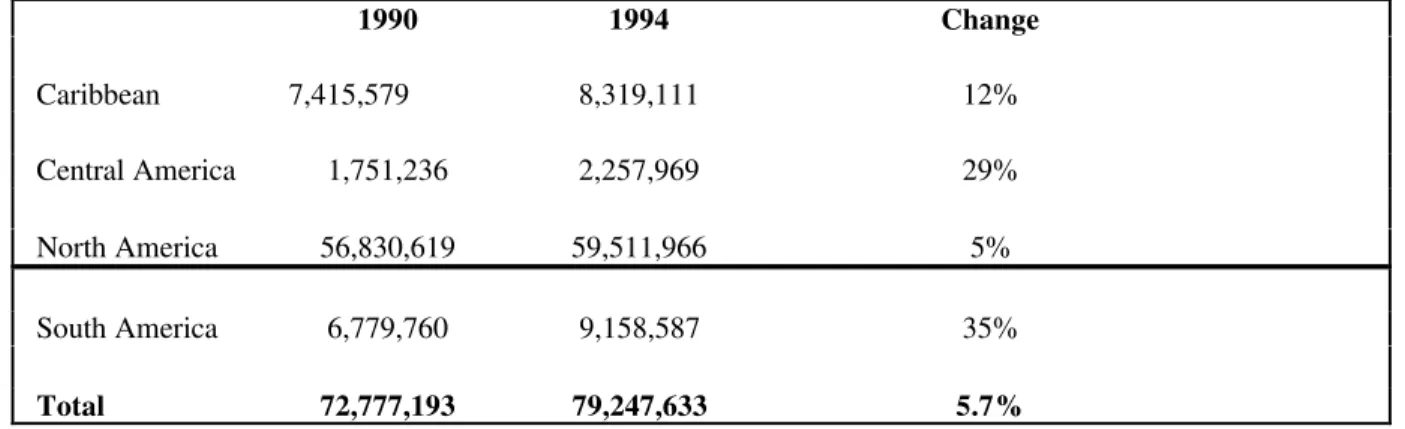
Table 1. Tourist Arrivals and % Change by Subregion of the Americas,
1990 and 1994 20
Table 2, Tourism in the Economy of the Countries of the Americas,
1995 (percentages) 20
EXECUTIVE SUMMARY
Although the pros and the cons of tourism are subject to debate, the fact is that this economic activity represents a rising global trend whose connection with health is well-known. As international travel has become indispensable for business and is increasingly within the economic grasp of significant numbers of people who travel for pleasure, tourism has also become a source of jobs and foreign exchange. While the vast majority of investments and profits (around 90%) are found in the private sector, both their magnitude and stability demand investments in infrastructure, services, and other related areas to boost competitiveness in the tourism industry, absorb the demand generated, and prevent undesirable health and social repercussions.
This situation gives rise to needs that correspond to the mission and scope of action of the health sector, opening the possibility of demonstrating its links with new areas of economic and social importance. While the health sector plays an important role in protecting health and the environment affected by tourism and is fundamental for ensuring the sustainable viability of this activity, there is still much to be done to forge the ties that will enable the countries to profit from its strategic incorporation. To the extent that efforts to foster dialogue and awareness in this area are postponed, a potential means of reducing certain gaps in equity in the Region will be missed .
Within the framework of the strategic and programmatic orientations of PAHOWHO, and with special emphasis on the opportunity tourism provides for highlighting the connection between health and development and reducing equity gaps in the host populations, the trends in international tourism in the Region are summarized below, focusing on the magnitude and economic impact of the phenomenon. The evolution of some regional agencies’ views of view tourism is also discussed.
1.
Tourism and Development
Tourism is understood as “the temporary, discretionary movement of people to destinations outside their normal place of residence, the activities undertaken during their stay in these destinations, and the facilities created for their needs” (1), an operational definition that covers business travelers and people who travel for pleasure, education, medical care, or other reasons. According to the minutes of the meeting of the Free Trade Area of the Americas, held in Santiago, Chile, in October 1997, the tourism sector is looking to become an economic and social development strategy for the Member States, given its capacity to generate employment at little cost and redistribute income.
There are no data to confirm tourism’s contribution to development or the aforementioned redistribution of income, two traits that would be of the greatest significance for health. It should be noted, moreover, that to date only one country in the Region has established coordinated planning at the ministerial level between the health and tourism sectors, while no national projects for assessing the reciprocal impact of health and tourism have been identified. According to a recent report issued by the IDB, financing the tourism sector is not an end in itself but a means of reducing poverty and improving social equity (2). That report points out that the first stage of promoting tourism as a vehicle for international peace and the preservation of cultural traditions was followed by a second, less positive stage that emphasized the negative impact of tourism. In the third stage, the countries were encouraged to develop formulas to respond to the needs of the host communities—for example, instead of mass tourism, ecotourism, and ethnological tourism. The IDB currently recommends scientific study and treatment of the topic (3).
1.1 General Trends
1.2 Foreign Exchange Receipts
In Guatemala, for example, according to the Statistical Section of the Development Department of the Guatemalan Institute of Tourism (INGUAT), the volume of foreign exchange receipts generated by tourism was second only to that of coffee, totaling US$ 1,484 million between 1984 and 1993 (7). In Panama, tourism accounted for 35.9% of export income, which means that it ranked first among exports and represented 3.9% of GDP (8). In Costa Rica, Cuba, and the majority of the Caribbean countries, tourism today ranks first as a source of foreign exchange (9), and in Trinidad and Tobago it represents 15% of GDP compared to the 1.3% of 1970. In Brazil, meanwhile, while tourism is far from being the country’s main export product, it still represents an important source of foreign exchange. In the Region as a whole, the growth of the tourism sector has had a significant impact on the economies.
1.3 Job Creation
2.
Health and Tourism in the Context of the Strategic and
Programmatic Orientations, 1999-2002
The strategic and programmatic orientations (SPO) of PAHO for the period 1999-2002 underscore the persistence of the equity gaps pointed out in the SPO for the previous quadrennium—for example, the deficits in the coverage of water and sanitation services, waste management, epidemiological surveillance, and primary health care. At the same time, countries with deficits of this nature would like to take advantage of the opportunities offered by tourism for job creation, capturing foreign exchange, and developing commercial ties.
International tourism is, so to speak, the in situ export of certain natural resources—including human resources—in which an essential element of what the importer seeks to acquire is the experience of familiarizing himself with the exporter. By crossing geographical borders, however, travelers can unleash a process in which both they and the people they visit cross epidemiological, economic, cultural, and social boundaries. Although investments in infrastructure, health services, safety, and recreational activities for tourist centers are important for ensuring a continuous flow of tourists, serious ethical conflicts can arise if the surrounding population lacks such facilities. Furthermore, ethical and health concerns will coincide markedly if that same population is harmed by the introduction or exacerbation of health and social problems such as environmental pollution or negative changes in individual and group behavior. From a purely practical standpoint, if the purpose of such projects is limited only to “protecting” the tourist from the new environment, these activities would constitute a vain attempt to contain the uncontainable: the contact and interchange that are both the purpose and the vehicle of tourism.
Over the past six years an understanding of the mutual determinants and interests of the tourism and health sectors has evolved. Although tourism emphasizes the benefits derived from employment and is concerned first and foremost with protecting the tourist, this cannot be accomplished without expanding surveillance, research, and the prevention and control of imported diseases, as well as monitoring endemic and emerging diseases, conducting research, controlling risk factors among workers in the tourism sector (both formal and informal), meeting the goal of access to water and sanitation services, expanding these services, and engaging in close and practical collaboration with the business, agricultural, and housing sectors. That is to say that the demands of international tourism are such that they trigger demands for coordination between the activities necessary for the advance of tourism and those intended to improve the health conditions of the neglected sectors of the population.
There are no data on the impact of tourism on environmental conservation. Many countries have voiced concern about the negative pressures generated by tourism on water resources, environmental health, and the conservation of natural resources. Obviously, this pressure is proportional to the per capita volume of visitors and to the geographical extension of the destination area. In certain countries tourism and its impact are a nationwide phenomenon, while for others the impact is strictly local.
In terms of facilitating or exacerbating other health problems such as the prostitution mentioned earlier, violence, substance abuse, and accidents, it appears that such problems derive from and are sometimes an explicit product of tourism. This phenomenon has been noted either formally or anecdotally in all the countries for which information is available. There are other health concerns, however, that are not mentioned in the WTO documents, among them:
- communicable diseases and zoonoses;
- water, sanitation, and the environment;
- occupational health;
- health services.
2.1 Communicable Diseases and Zoonoses
The spread of communicable diseases in tourist areas may be one consequence that affects both the traveler and his destination. Travelers are frequently exposed to communicable diseases, especially when they are unaware of the risks that an unknown environment can pose. Furthermore, some types of tourism, such as ecotourism and sexual tourism, foster contact with infectious agents. Among the most common problems are:
- Diarrheal diseases associated with the quality of water and the environment; the preservation, processing, and handling of food; and the hygiene of the local populace. These form a complex ecosystem where gastrointestinal infections, such as salmonellosis, shigellosis, hepatitis, cholera, cysticercosis, ciguatoxicosis, paralytic shellfish poisoning, and botulism, are shared with visitors.
- Zoonoses such as rabies, leptospirosis, and plague have been a cause for concern in diverse localities and could become constraints to the development of tourism. Exposure to leptospirosis is frequent among travelers interested in aquatic activities.
- The unnecessary use of immunogens due to ignorance about the epidemiological situation in the countries and regions visited. Vaccines are often administered when conditions do not warrant it. In Canada, for example, travelers receive prophylactic treatment against rabies every year when they visit the eastern Caribbean, an area considered rabies-free.
of Legionnaire’s disease have been reported, for example, in some hotels in the Caribbean. To prevent and control these risks, endemic areas must be identified and steps must be taken to improve the local environment.
- Exotic veterinary diseases are increasing due to the spread of exotic infectious agents resulting from the use of animal byproducts to feed domestic stock. The risk is higher in tourist areas because of the abundance of food from a variety countries to satisfy diverse gastronomic tastes. This has resulted in outbreaks of foot-and-mouth disease and African porcine plague that have resulted in huge economic losses.
- Sexually transmitted diseases and AIDS are spreading rapidly in tourist areas, especially in places where sexual tourism is being promoted. It should be noted that roughly 50% of the world’s AIDS cases have been reported in the Americas and that there are some 2.0 to 2.5 million people infected by the human immunodeficiency virus (HIV). While the surveillance and prevention of other sexually transmitted diseases has improved, the prevalence of hepatitis B, syphilis, and chlamydiosis in some countries is troubling.
2.2 Water, Sanitation, and the Environment
The impact of tourism on the environment can be attributed to several factors, among them the lack of adequate planning in terms of land use, natural resources, and water supply; the lack of feasibility and environmental impact assessments prior to the construction of hotels, rest areas, and tourist complexes; and the inadequacy of environmental legislation or the weakness of the mechanisms for monitoring compliance. Since the coverage and the quality of water and sanitation services, the proper treatment and disposal of sewage and wastewater, and the control of vectors, breeding sites, and solid waste are affected by significant changes in population density, serious problems have been observed in tourist areas when resources are used up and the fragile tourist and fishing ecosystems are overburdened, impeding their regeneration (13).
Both tourists and local residents are exposed to the risk of polluted seas and rivers. Tourism promoters, concerned about potential lawsuits, increasingly demand that the selection of future tourist sites include guarantees and protection in this regard.
2.3 Occupational Health
paid. They also tend to live in areas that lack services. This makes them more vulnerable to infections that they subsequently transmit to tourists, chiefly through food handling. In the case of sexual tourism, the probabilities of two-way transmission of venereal diseases and HIV are increasing.
2.4 Health Services
From the standpoint of health systems and services development, the link with tourism can be analyzed in terms of the overburdening of services in the host countries and communities and the quality and efficiency of the services offered to visitors, as well as the interaction between the countries’ health care systems. Emergency care and specialized treatment for elderly tourists or those suffering from certain health conditions tend to be channeled toward services in the private sector, when the services are located reasonably nearby and can provide sufficient and appropriate care. However, these conditions are not always met. Furthermore, the burden placed on emergency services tends be heavier during the tourist season, a phenomenon that affects emergency medical services and public and private blood banks. The studies on accidents in Acapulco, for example, revealed that the high accident rates observed during the height of the tourist season are related to the consumption of alcohol, the high influx of teenagers, the lack of traffic signs, and traffic congestion (15). If the necessary preventive measures are not instituted, this situation can create excessive demand for the limited resources, with consequences for both the host community and the traveler.
Furthermore, while there are currently no reliable data in this regard, the growth of “health tourism” has been substantial. Health tourism includes the movement of patients to countries specializing in certain pathologies and treatments, a concept that is increasingly part of the framework of the international services trade. At the present time, institutional service providers in several countries of the Region have established complex marketing systems in the countries that export the patients, promoting “transnational service packages” that include not only medical care, but transportation from the country of origin, lodging for the patient’s companions and for convalescence, translation services, and support groups.
3.
PAHO Activities during 1992-1997
The work of the interprogrammatic group emphasized the following activities in the priority areas mentioned above:
3.1 Communicable Diseases and Zoonoses
- The Inter-American Conference on Food Protection and Health, in Cancun, Mexico, in November 1992, with 228 participants from governmental and nongovernmental organizations of 22 countries.
- The Tourism Facilitation Forum of Central America, held in August 1996 in Managua, Nicaragua, which called for the congruity of health regulations, the elimination of unnecessary controls, and the preparation of studies on the incidence and prevalence of diseases and pests.
- The 1996 study on microbial contamination of food sold by street vendors, sanitary conditions in food establishments, the habits of street vendors, and consumer attitudes. Several countries organized national committees, while others formed committees to improve the monitoring and sanitary control of food sold on the streets. This has contributed to the organization and development of programs for training street vendors and educating consumers.
- Preparation and distribution of the “Guidelines for the Establishment of Epidemiological Surveillance Systems for Foodborne Diseases and the Investigation of Outbreaks of Toxic Foodborne Infections.” Under the proposed system, the countries report cases and outbreaks to the information and surveillance system for the Americas at the new Pan American Institute for Food Protection and Zoonoses (INPPAZ). This system has already been used to improve the registry of foodborne diseases. PAHO has also provided orientation to the countries on how to investigate cases and outbreaks of foodborne disease.
- Collaboration with the countries in the characterization of areas at risk for plague, variants of the rabies virus, equine encephalitides, Hantavirus pulmonary syndrome, and dengue.
- Development of a methodology for analyzing health risks in tourist areas, in the manner of the SATUR forms 1 and 2, which evaluate local conditions linked with infectious, parasitic, diarrheal, and sexually transmitted diseases, including AIDS, antisocial behavior, and accidents.
- Development of a methodology for analyzing the risk of rabies introduction and protecting human health, done in the Caribbean.
- Emergency simulations for exotic animal diseases in Belize, Costa Rica, Guyana, Jamaica, Panama, and Saint Lucia.
- Collaboration in epidemiological analysis and the selection of strategies and activities to control the outbreak of foot-and-mouth disease in the Galapagos Islands of Ecuador in 1997, as well as certain outbreaks of foodborne disease in several Caribbean hotels.
3.2 Education and Research
- A survey was conducted in collaboration with George Washington University on aspects of health and tourism relevant for training and research in the two sectors.
- An annotated bibliography on Health and Tourism in Teaching and Research was prepared with the Institute of Public Health of Mexico, updated to August 1997;.
- A position paper was prepared for submission to the schools of health and tourismhotel management of the Region.
3.3 Health Promotion
Two background papers were commissioned to explore changing behavioral patterns in tourist areas—especially the excessive consumption of alcoholic beverages.
3.4 Water, Sanitation, and Waste Management
- In 1993 the Health, Environment, and Sustainable Tourism Initiative was launched in collaboration with ECLAC and the Caribbean Tourism Organization to identify critical issues that affect tourism and environmental health. Emphasis was placed on solid and liquid waste disposal, water supply and quality, coastal water quality, air and seaport sanitation, and environmental management.
American States. The second meeting of the consultative group took place in Barbados in June 1997.
- Governments were assisted in organizing workshops involving both private and public sectors to develop a policy framework and project activities to integrate environmental concerns and the sustainability of tourism.
- CAREC developed a set of “Healthy Hotels” guidelines for environmental management in Caribbean hotels by the Caribbean Hotel Association and an award program for the best-managed hotels.
- In conjunction with the Caribbean Environmental Health Institute, training courses were developed for sewage treatment plants in hotels.
3.5 Health Services
- Organization and promotion of health sector participation at the III Hemispheric Conference of Ministers of Trade at the Forum of the Americas, in May 1997.
- Negotiations with the United Nations Conference on Trade and Development (UNCTAD) on a study on the international health services trade in MERCOSUR.
- Establishment of an agreement with the Latin American Integration Association (LAIA) to ensure health sector participation at future meetings of the ministers of tourism.
4.
Technical Cooperation Proposal
Presented below are recommendations for countries that promote local development of tourism or whose citizens are among the travelers. The recommendations are grouped under four main categories: formulation of policies, plans, and regulations; public information and training; mobilization of resources; and research.
4.1 Formation of Policies, Plans, and Regulations
The steering role of the ministries of health is essential, and it must be consolidated as soon as possible, especially in countries where tourism is a major economic activity. The recommendations are:
- to allocate resources, as a percentage of the tax on tourism-generated foreign exchange, for the surveillance, control, and prevention of disease and for research on occupational diseases and risks;
- to give priority to expanding the coverage of water, sanitation, and primary health care services in neighborhoods that are home to workers in the hotel, tourist, food, construction, and handicrafts industries—jobs that are often in the “informal” sector.
4.2 Public Information and Training
A sufficiently concrete information base exists to begin its dissemination, which would be timely given the rapid growth of tourism. The recommendations are:
- to guarantee that the recipients of the information disseminated include representatives of the private sector, such as tourism associations and hotel chains;
- to prepare and disseminate materials to inform the “captive audience” of visiting tourists about attitudes, knowledge, and health promotion practices, with emphasis on those that foster healthy interaction with the host populations;
- to train the necessary health workers to ensure that the inspection of food, hotels, and water and sanitation systems, as well as surveillance and the notification of diseases, can be conducted on an ongoing basis;
- to promote awareness and the use of the existing technical publications on health and tourism; to develop new publications based on research findings and liaison activities; and to create a bibliographic database;
- to draft an educational proposal with contents of mutual interest for the schools of public health and schools for the management and promotion of tourismhospitality;
4.3 Mobilization of Resources
One of the most important functions of the health sector at the present time is to ensure that the health of the host population is considered a priority in policy-making on tourism development. To this end, the recommendations are:
- to forge ties, in the form of agreements at the ministerial level, among the health, tourism, development, economic, and other pertinent sectors in each country, ensuring health sector participation in the feasibility studies and impact assessments of projects to promote tourism;
- to support technical meetings at the regional level with representatives of the health, hospitality, economic, and planning sectors to enable them to share the information and experiences necessary for creating a frame of reference for future activities;
- to speed up integration of environmental protection through the concept of Healthy Hotels and the existing Healthy Municipios strategy (with UNESCO, HABITAT, etc.), using cross-sectoral public information, human resources development, certification of hotel treatment plant operators, and on-site waste disposal;
- to assist the countries in complying with the provisions of free trade agreements, such as NAFTA, MERCOSUR, CARICOM, and FTAA, on the updating and harmonization of standards and regulations to conform to the Codex Alimentarius recommendations aimed at facilitating the international food trade;
- to take advantage of the concentration of people and resources in tourist areas to reduce missed opportunities in the health services with respect to vaccination, primary health care, disaster and emergency preparedness, and the modification of risk behaviors;
- to establish information exchange on the impact on the demand for services produced by changes in the risk profiles, habits, and health practices of tourists and on the demonstration effect of the technologies to which the tourist has access in the host country.
4.4 Research
Given the lack of a regional database on the health implications of tourism, it appears necessary to give priority to this category. However, it should be noted that sufficient practical knowledge is already available to intensify promotional and regulatory activities while the necessary notification infrastructure is being developed. Among the priority research activities are:
- establishing a registry of disease outbreaks in tourist populations and organizing the existing databases in PAHO, utilizing geographical mapping and information techniques that make it possible to identify the pertinent variables and forecast risk;
- studying the necessary guarantees pertaining to the quality of care provided in the health services and their subsequent liability in the event that the care provided leads to malpractice suits;
- studying the topic of common frameworks for transnational health insurance coverage, and characterizing and evaluating the growing supply of specialized or nontraditional treatments to ensure that when attracting tourist patients, wider gaps in equity are not being created;
5.
Conclusion
Given the growing volume of tourism in the Region and its economic importance in some countries, the Subcommittee is requested to analyze the benefits and challenges offered by tourism in order to take advantage of its potential to close the gaps in equity, improve information, control the transmission of emerging and re-emerging diseases, and study and mitigate the environmental impact of this phenomenon. The Members of the Subcommittee are also requested to suggest priority lines of action for the Organization in light of this manifestation of economic globalization.
References
1. Provisional Agenda Item 4.9, Document CE10916, 109th Meeting of the Executive Committee of PAHOWHO.
2. La actuación del Banco Interamericano de Desarrollo en la financiación del sector turismo en América Latina, BID, February 1997.
3. La actuación del Banco Interamericano de Desarrollo en la financiación del sector turismo en América Latina, op. cit.
4. Informe de la Comisión de la Organización Mundial del Turismo para las Américas, Trigésima reunión, Bariloche, Argentina, May 1997
5. Resumen ponencias sectoriales, Foro Empresarial de Servicios del ALCA, Santiago de Chile, Octuber 1997.
6. OMT, op. cit.
7. Guatemala, Desarrollo turístico sustentable hacia el año 2005, Instituto Guatemalteco de Turismo (INGUAT), 1995.
8. Boletín Estadístico de Turismo, 1987-1996, Instituto Panameño de Turismo.
9. Banco Central de Costa Rica; Instituto Costarricense de Turismo, in Economist Intelligence Unit. 2511835, April 1997; Ministro de Turismo Osmany Cienfuegas, 30.VIII.97, reported by Reuters.
10. Personal communication, CPC Barbados, PAHOWHO.
11. Economist Intelligence Unit 2462152, 4XI1996.
12. INGUAT, op. cit.
13. Finkelman J, in Turismo y salud en México, Secretarías de Salud y Turismo, OPSOMS. 1992.
Annex
Table 1. Tourist Arrivals and % Change by Subregion of the Americas, 1990 and 1994
1990 1994 Change
Caribbean 7,415,579 8,319,111 12%
Central America 1,751,236 2,257,969 29%
North America 56,830,619 59,511,966 5%
South America 6,779,760 9,158,587 35%
Total 72,777,193 79,247,633 5.7%
Source: WTO, 1997
Table 2, Tourism in the Economy of the Countries of the Americas, 1995 (percentages)
Exports of Goods Exports of Commercial
GNP Services
Caribbean 14.7 34.4 82.1
Central America 3.4 18.8 35.5
North America 0.9 9.1 31.3
South America 0.9 8.5 49.0
Total 1.1 10.0 36.5
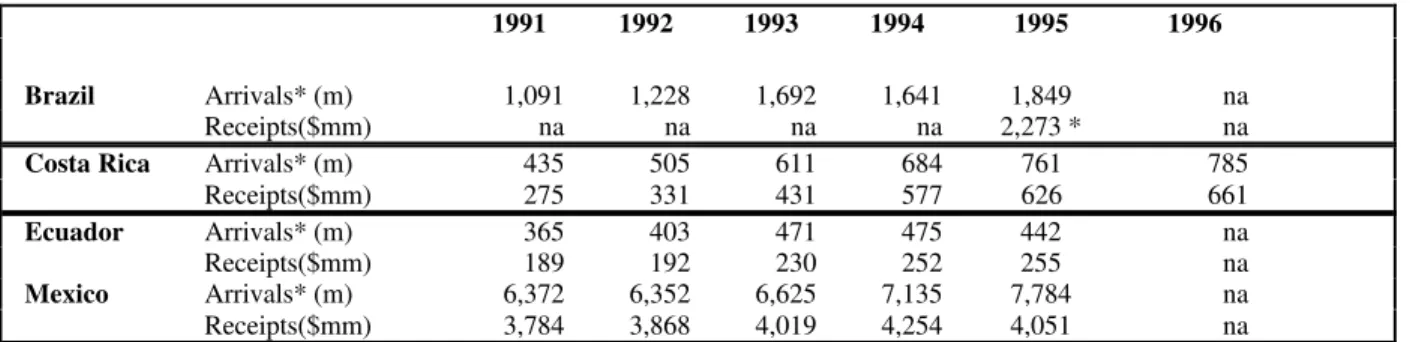
Table 3. Tourism Indicators in Selected Countries
1991 1992 1993 1994 1995 1996
Brazil Arrivals* (m) 1,091 1,228 1,692 1,641 1,849 na
Receipts($mm) na na na na 2,273 * na
Costa Rica Arrivals* (m) 435 505 611 684 761 785
Receipts($mm) 275 331 431 577 626 661
Ecuador Arrivals* (m) 365 403 471 475 442 na
Receipts($mm) 189 192 230 252 255 na
Mexico Arrivals* (m) 6,372 6,352 6,625 7,135 7,784 na
Receipts($mm) 3,784 3,868 4,019 4,254 4,051 na
Source Brazil: Departamento De Polícia Federal-Dpf. * 1996 data
Source Costa Rica: Banco Central de Costa Rica; Instituto Costarricense de Turismo. Source Ecuador: Corporación Ecuatoriana de Turismo (CETUR). Boletín Estadístico; Principales Indicadores Turísticos.