CIÊNCIAS DA VIDA E DA SAÚDE LIFE AND HEALTH SCIENCES
CIENCIAS DE LA VIDA Y LA SALUD
mill
e
nium
69
Millenium, 2(4), 69-77.
A PERCEÇÃO DA QUALIDADE DE VIDA EM PESSOAS COM DEPENDÊNCIA DE DROGAS
PERCEPTION OF QUALITY OF LIFE OF PEOPLE WITH DRUG ADDICTION
LA PERCEPCIÓN DE LA CALIDAD DE VIDA DE LAS PERSONAS CON ADICCIÓN A LAS DROGAS
Ana Célia Santos
1Graça Ferreira Pimenta
2Célia Brito Santos
,21Centro Hospitalar S. João; Escola Superior de Enfermagem do Porto, Porto, Portugal 2Escola Superior de Enfermagem do Porto, Porto, Portugal
Ana Célia Santos - [email protected] | Graça Ferreira Pimenta - [email protected] | Célia Brito Santos - [email protected]
Corresponding Author
Célia Brito Santos
Escola Superior de Enfermagem 4430-702 Vila Nova de Gaia, Portugal [email protected]
RECEIVED: 16th of June, 2017
Santos, A. C., Pimenta, G. F. & Santos, C. B. (2017). Perception of quality of life of people with drug addiction. Millenium, 2(4), 69-77.
m
4
70
RESUMO
Introdução: A toxicodependência afeta a vida de muitas pessoas e os dados estatísticos demonstram a abrangência do
problema, que se inicia, geralmente, em idades precoces e que se mantém ao longo da vida, com implicações na sua saúde e qualidade de vida (QV).
Objetivos: Avaliar a perceção de QV das pessoas com problemáticas aditivas; comparar a perceção de QV entre os dependentes
de drogas ilícitas e os dependentes de álcool; e avaliar se existem diferenças relativamente à perceção de QV, considerando as variáveis sociodemográficas, de saúde e de tratamento.
Métodos: Desenvolveu-se um estudo quantitativo, descritivo e transversal com uma amostra de 108 pessoas, maioritariamente
do sexo masculino, com idade média de 45 anos e baixa escolaridade, com um longo historial de consumo de substâncias, especialmente em policonsumos, com início em idades muito precoces e em tratamento de desabituação no Distrito do Porto. Para avaliar a perceção de QV foi utilizado o Quality of Life Índex (QLI) versão portuguesa de Ferrans & Powers.
Resultados: Os participantes percecionaram a sua QV como positiva, não ficando demonstradas diferenças nessa perceção,
considerando o tipo de dependência química (drogas ilícitas/álcool); os participantes do sexo feminino (p=0,01), não ativos (p=0,006), que viviam sozinhos (p=0,002), com tratamentos de desabituação anteriores (p=0,01), e que mantinham consumos (p=0,001), apresentaram valores inferiores nos scores do QLI global.
Conclusões: Este estudo permitiu avaliar a perceção de QV das pessoas com dependencia de drogas, e identificar grupos com
maior vulnerabilidade, com vista ao planeamento de programas de intervenção mais efetivos.
Palavras-chave: Transtornos relacionados ao uso de substâncias; Alcoolismo; Qualidade de vida
ABSTRACT
Introduction: Drug addiction affects many people’s lives and statistical data demonstrate the extent of the problem, which
usually begins at an early age and is maintained throughout life, with implications for health and quality of life (QOL).
Objectives: To evaluate the perception of QOL of people with addictive problems; to compare the perception of QOL between
the dependents of illicit drugs and alcohol; to evaluate the differences between the perception of QOL in terms of sociodemographic, health and treatment variables.
Methods: A quantitative, descriptive and cross-sectional study was carried out with a sample of 108 people, mostly males, with a
mean age of 45 years and low schooling, with a long history of substance use, especially in poly-consumption, beginning on early ages and undergoing treatment in the District of Porto. To evaluate the perception of QOL, the Quality of Life Index (QLI), Portuguese version, by Ferrans & Powers was used.
Results: Participants perceived their QOL as positive, with no differences according the type of chemical dependence (illicit
drugs/alcohol); Female participants (p=0.01), non-active (p=0.006), who lived alone (p=0.002), had previous treatments (p=0.01), and who continued to consume (p=0.001) presented lower values in the global QLI scores.
Conclusions: The aim of this study was to evaluate the perception of QOL of people with drug dependence, and to identify
groups with greater vulnerability, in order to plan more effective intervention programmes.
Keywords: Substance-related disorders; Alcoholism; Quality of life
RESUMEN
Introducción: La toxicomanía afecta la vida de muchas personas y los datos estadísticos demuestran el alcance del problema, que
se inicia generalmente en edades tempranas y que se mantiene a lo largo de la vida, con implicaciones en su salud e calidad de vida (QV).
Objetivos: Evaluar la percepción de QV de las personas con problemáticas aditivas; comparar la percepción de QV entre los
dependientes de drogas ilícitas y los dependientes de alcohol; y evaluar si existen diferencias en la percepción de QV, considerando las variables sociodemográficas, de salud y de tratamiento.
Métodos: Se desarrolló un estudio cuantitativo, descriptivo y transversal con una muestra de 108 personas, mayoritariamente
del sexo masculino, con edad media de 45 años y baja escolaridad, con un largo historial de consumo de sustancias, especialmente en policonsumos, con inicio en edad muy temprana y en tratamiento de deshabituación en el Distrito de Oporto. Para evaluar la percepción de QV se utilizó el Quality of Life Index (QLI), versión en portugués, de Ferrans & Powers.
Resultados: Los participantes percibieron su QV como positiva. Esta percepción no mostró diferencias significativas,
considerando el tipo de dependencia química (drogas ilícitas / alcohol). Los participantes del sexo femenino (p=0,01), no activos (p=0,006), que vivían solos (p=0,002), con tratamientos de deshabituación anteriores (p=0,01), y que mantenían consumos (p=0,001), presentaron valores inferiores en las puntuaciones del QLI global.
Conclusións: Este estudio permitió evaluar la percepción de QV de las personas con dependencia de drogas, e identificar grupos
con mayor vulnerabilidad, con vistas a la planificación de programas de intervención más efectivos.
Santos, A. C., Pimenta, G. F. & Santos, C. B. (2017).
Perception of quality of life of people with drug addiction. Millenium, 2(4), 69-77.
m
4
71
INTRODUCTION
Drug addiction is a current and worldwide phenomenon that affects people’s lives, their families and the community at large. Global statistics show the extent of the problem, recognizing it as a chronic disease that generally starts at very early ages and persists throughout life (United Nations Office on Drugs and Crime, 2016). The understanding of this issue, whether due to its epidemiological extensiveness, or its clinical importance, is an unavoidable necessity in the sphere of health programmes for drug addiction (APA, 2014). The complexity and breadth of this issue, although highlighted in different theoretical and practical contexts, has not been sufficiently researched in our country.
On par, QOL is recognized as a measurement of important results in terms of decision-making with regards to resources and the creation of specific health intervention programmes, particularly in mental health (Tran et al., 2012). Health professionals who care for people with addictions are increasingly aware of the need to understand better individual perception about the health status and QOL of drug addicts.
In this sense, the aim of this study is to evaluate the perception of QOL of addicts, compare the perception of QOL between participants who are dependent on illicit drugs and alcohol dependents, and to assess whether there are differences in the perception of QOL, considering sociodemographic variables, health and treatment. Its ultimate purpose is to design a health intervention directed more at the real needs of these people.
1. THEORETICAL FRAMEWORK
The prevailing concepts about the biological basis of the abuse of alcohol and other drugs have changed profoundly in recent years (United Nations Office on Drugs and Crime, 2016; WHO, 2014). Recent advances in genetics, molecular biology, behavioural neuropharmacology and brain imaging have dramatically changed our understanding of the process of addiction and relapse. Dependence has been for several years recognized as a chronic disease involving complex interactions between repeated exposure to drugs as well as biological and environmental factors (APA, 2014).
The data from the World Drug Report indicates that one in 20 adults used at least one illicit drug in 2014 (United Nations Office on Drugs and Crime, 2016). With regard to alcohol abuse, it is believed that throughout the world individuals aged 15 or more consume about 6.2 litres of pure alcohol in 2010 (WHO 2014). These studies also indicate that approximately 29 million people worldwide who use drugs suffer from associated comorbidities, thus emphasizing its consequences for health (Teoh, Yee, & Habil, 2016; United Nations Office on Drugs and Crime, 2016). Similarly, the World Health Organization identifies the abuse of alcohol as a primary cause for over 200 disorders described in ICD-10 (WHO, 2014).
In the European Union, specifically in Portugal, alcohol consumption is high, and in 2010 Portuguese people aged 15 or more consumed an average of 12.9 litres of pure alcohol per year (per capita alcohol consumption) with all the family, social and health implications that entails (WHO, 2014). With regard to mortality data, the number of deaths due to drugs in Portugal was eleven people in 2015 alone, with an average age of 48.5 years, and for alcohol abuse, 84 people perished that year with an average age of 67.2 years (INE, 2017).
A progressive physical and psychological dependence is associated with an obsessive and compulsory need to find drugs. This converges with a deterioration of self-concept and the relationship with society, loss of emotional ties and a set of antisocial behaviours, such as theft, aggression or prostitution (APA, 2014).
Treatment of addictions generally requires not only a long-term intervention, but also a multifaceted and multidisciplinary approach. In addition, because drug addiction usually begins in adolescence or early adulthood and its comorbidity with mental illness is common. We need to expand our treatment interventions for this age group for both substance abuse and psychiatric illness (Silveira, Santos & Pereira, 2014).
Identifying the health needs of a population that requires intervention is the first step in a concerted and efficient intervention (Rocha et al., 2013). In this sense, interest in the assessment of QOL has grown substantially in recent years, although the number of studies that evaluate QOL is still small with regards to people who consume drugs and, particularly, studies which use this concept to assess the effectiveness of interventions in health (Maeyer, Vanderplasschen, & Broekaert, 2010; Moreira et al,2013.). These authors also consider that the analysis of this dimension in drug abuse is of particular relevance given the recognized disorder that drugs provoke in the lives of consumers, at the physical, emotional and social level.
The main factors described as being able to influence the perception of QOL are the demographic (such as gender, age and marital status), educational, socio-economic and racial factors (Moreira et al., 2013).
Assessment of QOL provides relevant information on how people have integrated changes secondary to their disease and treatment into their day-to-day lives, providing knowledge about the transition process over time (Meleis, 2007).
This research was developed based on the relevance of the issue along with the need to better identify situations of greater vulnerability among the population studied. Its ultimate purpose is to design a health intervention directed more towards the real needs of this population.
Santos, A. C., Pimenta, G. F. & Santos, C. B. (2017). Perception of quality of life of people with drug addiction. Millenium, 2(4), 69-77.
m
4
72
2. METHODS
This is a quantitative study with a descriptive cross-sectional profile including an overall sample of 108 participants.
2.1 Sample
The non-probabilistic, convenience sampling method was used, with the following study inclusion criteria: dependency on illicit psychoactive substances or dependency on alcohol; being conscious and evenly self-oriented; receiving treatment at health facilities in the district of Porto; agreeing to participate voluntarily in the study.
The sample included 84 males (78%) and 24 females (22%) with an average age of 45 (Min=22 and Max=79 years, SD=10.6), with low level of education (M=7 years of education; SD=3.39) and mostly unemployed (n=62; 57%). Most of the participants lived in the district of Porto and with their immediate families (n=38; 35%), although 20% of the sample lived alone. With regard to health, we must point out that, despite all of them undergoing withdrawal treatment, only 51 (47%) participants reported being sober. A variety of drugs were consumed, including alcohol abuse in isolation (n=20; 19%) or in combination with other drugs, such as heroin, cocaine or cannabis (n=17; 16%) with a range of consumption quantities and methods of administration.
Only 44% of the sample were found to be undergoing their first treatment (n=47); for the majority, this was a new attempt at withdrawal.
As regards the age consumption was initiated, the participants ranged from a minimum of 3 and a maximum of 45 years with a mean age of 18 years (SD=7.1). However, we were able to apprehend alcohol stood out for very early consumption, with 18 participants starting their consumption before 10 years of age. Approximately 76% of the sample (n=82) also mentioned having other diseases associated with addiction, the most common being digestive disorders (n=20; 19%), hepatitis C (n=11; 10%) and respiratory diseases (n=10; 9%).
2.2 Data collection instruments and procedures
The following instruments were used to collect the information:
a. Socio-demographic characterization form for health and treatment, which we constructed, including a set of structured and semi-structured questions;
b. Quality of Life Index (QLI) by Ferrans and Powers (Ferrans, 2005; Ferrans & Powers, 2011): an instrument developed to evaluate QOL of both healthy and unhealthy people. It has been translated and adapted into approximately 20 different languages including Portuguese. Its generic version III was adapted to the Brazilian culture by Kimura and Silva (2009) and to the Portuguese culture in a study of renal transplantation patients by Pinto (1998).
The QLI is composed of four subscales: Health and Functioning (HF) with 13 items, Social and Economic (SE) with 8 items, Psychological and Spiritual (PS) with items 7, and Family (F) with 5 items. It also has an overall measure of QOL (Overall QLI). The scale includes 33 items related to Satisfaction and 33 related to importance. Responses are given on a six-point Likert scale, where 1 is “very dissatisfied” and “not at all important” and 6 is “very satisfied” and “very important.”
The QLI scoring procedure first requires items related to Satisfaction to be recoded in order to centre the zero of the scale. This is obtained by subtracting the value 3.5 from the response to each item pertaining to Satisfaction, resulting in scores of 2.5; -1.5; -0.5; +0.5; +1.5 and + 2.5 for the initial scores from 1 to 6, respectively. Then, the recoded scores for Satisfaction are weighted with Importance by multiplying the recoded value of each item by the raw value obtained in response to Importance (1 to 6). Next, the total QLI score is calculated by adding all of the weighted items answered and dividing by the total number of items answered. The possible variation at this point ranges from -15 to +15. In order to eliminate the negative weighting from the final score, 15 is added to the values obtained, resulting in a total score for the instrument which can range between 0 and 30.
The procedure to calculate the different subscales is similar, considering only the total number of items in the domain being analysed.
The instrument, its scoring instructions and items in each subscale is available on the Internet
(https://qli.org.uic.edu/questionaires/pdf/genericversionIII).
The results are shown in scores ranging from 0 to 30 where higher values correspond to greater “Satisfaction/Importance” without cut-off points being defined (Kimura and Silva, 2009).
The generic QLI - Version III has not been validated in a consistent manner for the study population, which implies a weighted analysis of the results presented herein. Nevertheless, the values of the Cronbach's alpha coefficients for the different subscales presented in this study are acceptable (between 0.60 and 0.80) especially given the small number of items in some subscales (Pais-Ribeiro, 2010). The value of overall fidelity was also acceptable (0.87) and in line with the values in other studies (Ferrans & Powers, 2011; Kimura and Silva, 2009; Pinto, 1998).
In order to collect the data, the potential participants in the sample were referred by a health care professional and contacted by the main researcher after medical consultation. After confirming the inclusion criteria, they were directed to an office, informed about the objectives of the study, the degree of confidentiality, and they were asked if they consented to participate in it. The data collection instrument was then filled in individually or, in the event of difficulties, it was applied as a form by the
Santos, A. C., Pimenta, G. F. & Santos, C. B. (2017).
Perception of quality of life of people with drug addiction. Millenium, 2(4), 69-77.
m
4
73
principal researcher. All the procedures described in the Declaration of Helsinki were taken into account, such as asking for the permission of the instrument’s author, as well as the health facilities.
A database in SPSS, version 22 was created to analyse the data. A descriptive and inferential analysis, was performed and considered p<0.05 the minimum significance. Although normal distribution of data for all variables was not confirmed, we decided to use parametric statistics for the analysis in general, considering the sample was N>30.
3. RESULTS
In order to achieve the first objective, we conducted the analysis on the sample’s perception of QOL as measured by the QLI in each of its subscales and the overall scale, obtaining the results presented in Figure 1.
Figure 1. The mean QOL perception score in the different subscales and the overall scale of people with drug addiction
HF-Health and Functionality; SE-Social and Economic; PS-Psychological and Spiritual; F-Family; Subs. – QLI subscales
The above analysis of the graph allows us to conclude that the sample participants evaluate their QOL as positive (considering the 0-30 score), both overall and evaluated in each of the components. The highest average score is located in the “Family” subscale (M=24.3; SD=4.49) and the lowest is for the “Social and Economic” subscale (M=18.3; SD=4.37).
To reach the second objective and compare the perception of QOL of individuals dependent on illicit drugs and alcohol, we recoded the variable “Drugs consumed before treatment” into three-category variable: “alcohol dependence” (n=37); “Addiction
to other drugs” (n=30); and “alcohol dependence + other drugs” (n=41).
The One-Way ANOVA F-test revealed that there were no statistically significant differences among the three groups, either for the overall QLI (F=2.24; p=0.11), nor in any of the subscales: HF (F=1.21; p=0.30); SE (F=2.82; p=0.06); PS (F=1.91; p=0.15) F (F=1.34; p=0.26).
Finally, and to attain the third objective, we conducted an analysis on the sample’s QOL perception, considering the sociodemographic, health and treatment variables using mean comparison tests (Mann -Whitney U test and ANOVA F-test) and the Pearson r correlation.
Santos, A. C., Pimenta, G. F. & Santos, C. B. (2017). Perception of quality of life of people with drug addiction. Millenium, 2(4), 69-77.
m
4
74
Sociodemographic Variables:
a. Sex
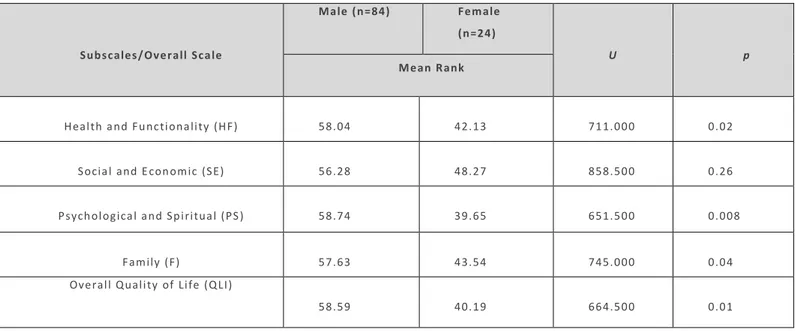
Table 1 - Comparison of the means between the sexes for the subscales and overall QLI scale
Subscales/Overall Sca le Male (n=84) Female (n=24) U p s Mean Rank
Health a nd Fu nctiona lity (HF) 58.04 42.13 711.000 0.02
Socia l and E con omic (SE) 56.28 48.27 858.500 0.26
Psych ologica l a nd Sp iritua l (PS ) 58.74 39.65 651.500 0.008
Family (F) 57.63 43.54 745.000 0.04
Overall Q uality of Life (Q LI)
58.59 40.19 664.500 0.01
Note: DF=1;106
Analysis of the table above show that there are significant differences between men and women in the sample relative to their perception of “Health and Functionality,” “Psychological and Spiritual” life, “Family” life, and even their perception of “Overall QOL,” with higher mean rank values for the former. It is worth noting that this difference is greatest for the “Psychological and Spiritual” subscale.
b. Age and schooling
The results indicate that there is a weak positive, but significant correlation (r=0.20; p=0.04) between age and the “Family” subscale, indicating that older people have greater satisfaction with family.
Conversely, there is a weak negative but significant correlation between education and the “Psychological and Spiritual” subscale (r=-0.22, p=0.02), implying that the higher the level of schooling, the less satisfied participants are with these dimensions of their lives life.
c. Employment status
The difference between the means of the groups, according to their employment status, was significant for the “Family” subscale (F=3.25; p=0.02), for the “Social and Economic” subscale (F=17.91; p =0.000) and for “Overall QOL” (F=4.32; p=0.006). According to the post hoc Scheffe test assessment of the “Overall QOL,” the differences are between the group of “unemployed
and retired” respondents and the group of “employed fulltime” respondents, with the former being lower than the latter. d. Cohabitation
Cohabitation was also shown to interfere with the way the drug dependent individuals perceive their QOL. Statistically significant differences were found in all of the subscales: “Health and Functionality” (F=3.09; p=0.03), “Social and Economic” (F=4.94; p=0.003), “Psychological and Spiritual” (F=3.12; p=0.02), “Family” (F=3.87; p=0.01), and “Overall QOL” (F=5.35;
p=0.002). As regards the assessment of the “Overall QOL,” the post hoc located the differences between the groups of
“immediate family” and “alone” respondents, being more unfavourable for the latter.
Health and Treatment Variables:
a. Age consumption was initiated, duration of sobriety (after starting treatment), number of withdrawal symptoms reported by participants under treatment and number of withdrawal treatments performed previously.
Santos, A. C., Pimenta, G. F. & Santos, C. B. (2017).
Perception of quality of life of people with drug addiction. Millenium, 2(4), 69-77.
m
4
75
As previously mentioned (in characterizing the sample), the participants initiated consumption very early (M=18; SD=7.1) and for the majority (n=61; 56%), this was a new attempt at treatment. Thus, we wanted to see if the age consumption was initiated and the number of treatments previously undergone had any influence on their perception of QOL.
We also tried to apprehend how long they had been sober and which withdrawal symptoms stood, such out as myalgia, sweating, insomnia and vomiting, among others.
Table 2 - Correlation between the duration of sobriety and the number of previous withdrawal of treatment with the subscales and overall QLI
scale
Subscales/Overall Scale Duration of Sobriety
(months)
r (p)
Previous Withdrawal Treatments
r (p)
Health and Functionality (HF) 0.20 (0.03) -0.18 (0.05)
Social and Economic (SE) 0.18 (0.05) -0.19 (0.04)
Psychological and Spiritual (PS) 0.20 (0.04) -0.16 (0.08)
Family (F) 0.07 (0.41) -0.21 (0.03)
Overall Quality of Life (QLI) 0.22 (0.02) -0.23 (0.01)
The age at which consumption was initiated and withdrawal symptoms showed no statistically significant correlations in any of the subscales or the overall scale.
However, the duration of sobriety has a weak positive, but significant correlation, indicating that as the duration of sobriety increases, the score of the perception of “Overall QOL,” “Health and Functionality,” and “Psychological and Spiritual” increases. The number of treatments previously undergone also seems to have a negative influence on the perception of satisfaction with “Social and Economic” life, “Family” life and “Overall QOL.”
b. Situation regarding consumption
We know that despite the data being collected during withdrawal treatment, not all of the participants in this study were sober. Thus, we were curious to see if their situation regarding consumption interfered in how they evaluated their QOL. For this, we created a variable with three categories: “sober” (n=51), “Sporadic consumption (less than once a month)” (n=25), and “daily
consumption” (n=32).
The results indicated a statistically significant difference between the groups for the subscales “Health and Functionality” (F=5.59; p=0.005), “Psychological and Spiritual” (F=7.69; p=0.001) and “Overall QOL” (F=7.74; p=0.001), with a difference located in this last variable between the groups, “sober” and “daily consumption,” being more unfavourable for the latter.
4. DISCUSSION
The participants in this study reflect a national reality of people with high levels of dependence on alcohol and other drugs, often in terms of poly-consumption, that endures over several years and with multiple withdrawal treatments that prove to be ineffective.
Alcohol remains the drug of choice, consumed alone or in combination with others. This could be because it is associated with social acceptance and is considered to be a factor of social participation and interaction (Lomba et al., 2011).
This study demonstrated that more than half of the participants (53%) maintained high levels of consumption of alcohol and other drugs, which indicates a low adherence to treatment. We were also able to apprehend that most participants had already undergone more than one withdrawal treatment, undermining their self-efficacy, their belief in internal locus of control required to resolve the situation, and their volition for new treatments (Moreira et al., 2013).
The study results led us to realize that these people began consumption, particularly of alcohol, very early, in childhood or adolescence. These results are in line with the literature describing early consumption, progressively and concomitantly associated with other drugs (Silveira, Santos & Pereira, 2014). Alcohol use also seems to be associated with emotional issues, including negative emotional states and intra- and interpersonal conflicts, as well as certain cultural factors (APA, 2014).
The assessment of the perception this study’s participants regarding their QOL based on the QLI was very positive overall. It is worth noting, however, that the social and economic component was the one that showed less satisfaction, which was expected, considering the group characteristics. They are mainly unemployed and their livelihood was based on unemployment benefits or social welfare income. These results are consistent with those found by Seabra, Amendoeira and Sá (2013) with a
Santos, A. C., Pimenta, G. F. & Santos, C. B. (2017). Perception of quality of life of people with drug addiction. Millenium, 2(4), 69-77.
m
4
76
similar population. However, in this study the results should be interpreted with some caution since the instrument is not specific for the population studied.
On the other hand, some longitudinal studies indicate that perception of QOL improves over time, especially between three and six months after treatment, decelerating later (Tran et al., 2012). This may be an aspect that at least partly explains this study’s results since the sample is composed of 28 individuals (26%) who had been sober for less than six months and 23 (21% ) for more than six months. Nevertheless, the number of participants who maintained consumption was very high, which undercuts this explanation.
The results of this study also indicated that their perception of QOL was independent of the drug(s) consumed. This finding may be related to the fact that QOL is an individual, multidimensional concept, highly determined not only by physiological factors, but also by psychosocial factors. Although there are drugs with different effects, the process of addiction, tolerance and craving is in essence very similar, which may have determined the effects found.
Women have a lower perception of QOL than men do in virtually all areas of the QLI. These results are concordant with Domingo-Salvany et al. (2010) with young heroin addicts, who were not followed in a withdrawal treatment. In contrast, this research obtained conflicting results with the previous study concerning the education variable. While in that study, schooling favours a better perception of QOL, in our study it is harmful, particularly its psychological and spiritual component. However, the results of other studies (Becker, Curry & Yang, 2011; Domingo-Salvany et al., 2010) correspond with this one, with regard to the participants’ occupation and cohabitation, with the unemployed, pensioners, and those who live alone, presenting a worse perception of QOL.
The results also indicated that the duration of sobriety after treatment favours a better assessment of QOL, particularly in terms of functionality, and the psychological and spiritual component, which is in accordance with a set of studies conducted in this area (Maeyer, Vanderplasschen, & Broekaert, 2010; Tracy et al., 2012; Tran et al., 2012).
Neither the age of initiating consumption nor withdrawal symptoms showed any influence on the perception of QOL. However, the study conducted by Domingo-Salvany et al. (2010) found that the length of time of heroin use, as well as poly-consumption were unfavourable factors for the perception of health and QOL.
Moreover, people who were sober had a more positive perception of their QOL compared to individuals who did not properly managing their therapeutic process and maintained daily consumption of alcohol and/or drugs. Together, the sample exhibited a set of comorbidities, which have been shown in various studies, as conditioning factors for a worse perception of QOL (Tran et al., 2012).
CONCLUSIONS
The profile of people dependent on psychoactive substances recognized in this study, knowledge about how these people evaluate their QOL, and the factors that might influence this perception can determine a change in the current position vis-à-vis the intervention models regarding dependency.
Based on the study results, we can assume that younger women, with a higher level of education, living alone and unemployed or retired, and with a history of withdrawal treatments, have a more vulnerable profile when living with drug addiction. QOL has been recognized as a measurement of important outcomes for decision-making in terms of resources and the creation of specific intervention models.
The results of this study suggest planning a set of systematic and individualized interventions parallel to the standard treatment, including an exercise programme, which has shown positive results (Giesen, Zimmer & Bloch, 2016).
The health intervention within the issue of addiction must focus on patients in their troubled lives rather than on the disease itself, trying to develop holistic and suitable health care management. Providing an answer to the issue and promoting empowerment requires a reorientation of the actions of health professionals. For this, we need to assess the changing requirements and tailor the intervention, supported always by scientific evidence.
It is also up to the community at large to help these people by providing the means to facilitate the complex transition they are experiencing, considering dependence as a chronic disease and not just as an “addiction”. For their part, these people have the responsibility to make decisions and adhere to the therapeutic indications.
ACKNOWLEDGMENTS
Santos, A. C., Pimenta, G. F. & Santos, C. B. (2017).
Perception of quality of life of people with drug addiction. Millenium, 2(4), 69-77.
m
4
77
REFERENCES
American Psychiatric Association. (2014). Manual de diagnóstico e estatística de perturbações mentais: DSM-5 (5ª ed.). Lisboa: Climepsi Editores.
Becker, S. J., Curry, J. F., & Yang, C. (2011). Factors that influence trajectories of change in frequency of substance use and quality of life among adolescents receiving a brief intervention. Journal of Substance Abuse Treatment, 41, 294-304. Domingo-Salvany, A., Brugal, M. T., Barrio, G., González-Saiz, F., Bravo, M. J., Fuente, L., & ITINERE Investigators. (2010). Gender
differences in health related quality of life of young heroin users. Health and Quality of Life Outcomes, 8(145). Retrieved from https://www.ncbi.nlm.nih.gov/pmc/articles/PMC3014889/pdf/1477-7525-8-145.pdf
Ferrans, C. E. (2005). Definitions and conceptual models of quality of life. In J. Lipscomb, C. Gotay, & C. Snyder, Outcomes
assessment in cancer: Measures, methods and applications. Cambridge: University Press.
Ferrans, C. E., & Powers, M. (2011). Quality of life index. Retrieved from http://www.uic.edu/orgs/qli/
Giesen, E. S., Zimmer, P., & Bloch, W. (2016). Effects of an exercise program on physical activity level and quality of life in patients with severe alcohol dependence. Alcoholism Treatment Quarterly, 34(1), 63-78.
Instituto Nacional de Estatística (INE). (2017). Mortalidade por causa de morte relativa a 2015. Retrieved from https://www.ine.pt/xportal/xmain?xpid=INE&xpgid=ine_base_dados
Kimura, M., & Silva, J. V. (2009). Índice de qualidade de vida de Ferrans e Powers. Revista da Escola de Enfermagem da USP,
43(Esp), 1098-1104. Retrieved from http://www.scielo.br/pdf/reeusp/v43nspe/a14v43ns.pdf
Lomba, L., Apóstolo, J., Azeredo, Z., & Mendes, F. (2011). Contextos recreativos nocturnos e consumo de álcool e drogas: Determinantes de comportamentos rodoviários de risco. Revista Toxicodependências, 17(3). Retrieved from http://www.idt.pt/PT/RevistaToxicodependencias/Paginas/Temas.aspx
Maeyer, J., Vanderplasschen, W., & Broekaert, E. (2010) Quality of life among opiate-dependent individuals: A review of the literature. International Journal of Drug Policy, 21, 364-380.
Meleis, A. I. (2007). Theoretical nursing: Development and progress. Philadelphia: Lippincott & Wilkins.
Moreira, T. C., Figueiró, L. R., Fernandes, S., Justo, F. M., Dias, I. R., & Barros, H. M. T., & Ferigolo, M. (2013). Quality of life of users of psychoactive substances, relatives, and non-users assessed using the Whoqol-Bref. Ciência & Saúde Coletiva,
18(7), 1953-1962.
Pais-Ribeiro, J. L. P. (2010). Investigação e avaliação em psicologia e saúde (2ª ed.). Lisboa: Climepsi Editores.
Pinto, C. A. S. (1998). A qualidade de vida dos jovens adultos submetidos a transplante renal na infância (Dissertação de mestrado não publicada). Universidade do Porto, Portugal.
Rocha, B. M. P., Martins, A. I., Pereira, M. M., Santos, P. I., & Mestre, R. E. (2013). Perfil de saúde dos adolescentes de uma cidade no Algarve. Revista de Enfermagem Referência, 3(9), 85-93.
Seabra, P., Amendoeira, J., & Sá, L. (2013). Qualidade de vida e saúde mental em consumidores de drogas: Que relação? Revista
Portuguesa de Enfermagem de Saúde Mental, 9, 21-28. Retrieved from
http://www.scielo.mec.pt/pdf/rpesm/n9/n9a04.pdf
Silveira, E. S., Santos, A. S., & Pereira, G.A. (2014). Consumo de álcool, tabaco e outras drogas entre adolescentes do ensino fundamental de um município brasileiro. Revista de Enfermagem Referência, 4(2), 51-60.
Teoh, J. F., Yee, A., & Habil, M. H. (2016). Psychiatric comorbidity among patients on methadone maintenance therapy and its influence on quality of life. The American Journal on Addictions, 25, 49-55.
Tracy, E. M., Laudet, A. B., Min, M. O., Kim, H., Brown, S., Jun, M. K., & Singer, L. (2012). Prospective patterns and correlates of quality of life among women in substance abuse treatment. Drug and Alcohol Dependence, 124, 242-249. Retrieved from https://ac.els-cdn.com/S0376871612000270/1-s2.0-S0376871612000270-main.pdf?_tid=7230c72a-a38e-11e7-b5ea-00000aacb362&acdnat=1506521965_1a40953eb3b0f0de6d3026dd7d3ac720
Tran, B. X., Ohinmaa, A., Duong, A. T., Do, N. T., Nguyen, L. T., Nguyen, Q. C., & Houston, S. (2012). Changes in drug use are associated with health-related quality of life improvements among methadone maintenance patients with HIV AIDS.
Quality of Life Research, 21(4), 613-623.
United Nations Office on Drugs and Crime. (2016). World drug report: 2016. New York: United Nations. Retrieved from http://www.unodc.org/doc/wdr2016/WORLD_DRUG_REPORT_2016_web.pdf