Sensorial interaction with
packaging and its effect on
purchase intention of a new
body care brand
Duality between offline
and online distribution channels
Filipa Torres Paulo
152114349
Dissertation written under the supervision
of Professors Paulo Romeiro and Wilson Bastos
Dissertation submitted in partial fulfilment of requirements for the MSc in
Business Administration, at the Universidade Católica Portuguesa, May 2017
Abstract
Title of the dissertation: Sensorial interaction with packaging and its effect on purchase
intention of a new body care brand - Duality between offline and online distribution channels
Author: Filipa Torres Paulo
The present thesis addresses the sensorial challenges between offline and online channels in the interaction with new brands’ packaging and its impact on purchase intention. Through different distribution channels, consumers’ interaction with products and consequent purchase outcome, are distinct – on online channel the individual is solely dependent on sight, whereas on offline sensorial interaction allows more dimensions. Therefore, is the online channel a good platform to launch new products?
The above mentioned reasoning was applied to FMCG. Particularly, it was done through the creation of a new body care brand and products with subsequent observational study of participants’ purchase. In order to be able to study the role of senses, one of the developed packaging had multisensory features and the other was a simpler version.
The study was completed on offline and online channels, in collaboration with LERNE, and purchasing settings were made to resemble real retailers. Participants conducted purchases in both offline and online channels and results were studied for significance.
To understand if the paths-of-purchase “offlineàonline” and “onlineàoffline” impacted purchase intention, half of the participants were asked to follow each path.
Ultimately, this thesis was able to demonstrate positive impact of sensorial interaction with packaging on purchase intention. It was also concluded that a new product, in which sensorial aspects are crucial, is more likely to achieve high purchase intention on offline channels rather than online; being that, with statistical significance, the market potential is double for the offline.
Keywords: Sensorial interaction, Multisensory packaging, Packaging, Fast moving consumer
goods, New products, New brand, Bodycare brand, Online Channel, Offline Channel, Purchase intention, Imperfect packaging, Damaged packaging.
Sumário
Título da dissertação: Interacção sensorial com a embalagem e o seu efeito na intenção de
compra de uma nova marca de creme corporal – Dualidade entre canais de distribuição offline e online
Autor: Filipa Torres Paulo
Esta dissertação aborda os desafios sensoriais entre canais offline e online na interação com embalagens de novas marcas; bem como o seu impacto na intenção de compra. Através de diferentes canais de distribuição, a interação dos consumidores com produtos e consequente resultado de compra, são distintos - no canal online o indivíduo está exclusivamente dependente da visão, enquanto a interação sensorial offline permite mais dimensões. Assim, o canal online é uma boa plataforma para lançar novos produtos?
O raciocínio acima foi aplicado a bens de grande consumo através da criação de uma nova marca de creme corporal e com posterior estudo observacional do processo de compra. De forma a estudar o papel dos sentidos, um dos produtos desenvolvidos possuí características multissensoriais sendo o outro uma versão simplificada. O estudo foi concluído em canais offline e online, em colaboração com o LERNE, por forma a assemelhar retalhistas reais. Os participantes realizaram compras em canais offline e online e os resultados foram estudados. Para entender se os caminhos de compra "offlineàonline" e "onlineàoffline" impactaram intenção de compra, metade dos participantes foram convidados a seguir cada caminho. Em última instância, esta tese demonstra o impacto positivo da interação sensorial com a embalagem na intenção de compra. Concluísse também que um novo produto, no qual aspectos sensoriais são cruciais, é mais susceptível de alcançar uma intenção de compra elevada em canais offline do que online; sendo que, com significância estatística, o potencial de mercado é o dobro para o distribuidor offline.
Palavras-chave: Interacção sensorial, Embalagem multissensorial, Embalagem, Bens de
grande consumo, Novos produtos, Nova marca, Marca de creme corporal, Canal online, Canal offline, Intenção de compra, Embalagem imperfeita, Embalagem danificada.
Acknowledgments
Although I am the author of the present dissertation, a great deal of people, each with a singular role, were involved in its creation and contributed significantly to the final result and to my on-going learning process. As so, I would like to take this opportunity to express my gratitude to them.
I would firstly like to express my gratitude to my thesis advisor, Professor Paulo Romeiro, who was extremely supportive and enthusiast through out the entire process and whose relentless effort always pushed me a step further with a critical eye and valuable feedback; and without whom I would certainly not be so proud of the end result. I would also like to thank to Professor Wilson Bastos who took the time to provide me positive feedback and valuable input for improvement.
Also very important for me is to express my sincere appreciation to Professors Rita Coelho do Vale and Isabel Moreira for enabling the usage of LERNE facilities as well as for the availability and interest demonstrated during the study. Furthermore, I would like to acknowledge the readiness of all the members that participated in the development of my study.
Moreover, I would like to thank to my brother-in-law, which conducted the product design necessary for the new product creation, for his time and for bringing to my dissertation a crucial piece. Likewise, I would like to express my appreciation to my friend and colleague Patrícia Marques for her promptness to help and for sharing this experience with me. Besides I would like to address my sincere thanks to my boyfriend for always being a point of support and for driving my ambition.
Lastly, and most importantly, I would like to thank to my parents, which have always propelled and given me the tools to achieve my goals; to express my gratitude to my sister and brother, and to all my family, for giving me the grounds and willingness to accomplish this dissertation, despite how overwhelming the process may be.
Table of Contents
Tables Index ...7
Figures Index ...7
1. Introduction ...8
1.1. Background and Problem Statement ... 8
1.2. Relevance ... 10
1.3. Research Methods ... 10
1.4. Dissertation Outline ... 11
1.5. Problem Statement Model ... 11
2. Literature Review ...13
2.1. Packaging ... 13
2.1.1. Packaging Relevance ... 13
2.1.2. Effective Packaging and Characteristics ... 14
2.1.3. Imperfect Packaging ... 15
2.2. Senses ... 16
2.2.1. Senses importance ... 16
2.3. Purchase Intention and Brand Choice ... 18
2.3.1. Purchase Intention ... 18
2.3.2. Brand Choice and New Brands ... 19
2.4. Distribution Channels ... 20
2.4.1. Offline and Online Channels ... 20
2.5. Conclusions ... 21
3. Methodology ...23
3.1. Data Collection ... 23
3.2. Primary Data ... 23
3.3. Brand and Product Development ... 25
3.4. Research Layout ... 27
3.4.2. Sample ... 28
3.4.3 Structure ... 29
4. Results Analysis ...32
4.1 Descriptive Statistics ... 32
4.2 Data Analysis ... 34
5. Limitations and Conclusions ...42
5.1. Limitations & Future Research ... 42
5.3. Conclusions ... 45
6. References ...48
7. Appendices ...52
Appendix 1 – Observation Grid ... 52
Appendix 2 – Belk Products ... 54
Appendix 3 – Consent Form and Instructions ... 55
Appendix 4 – Participants’ questionnaire 1 ... 57
Appendix 5 - Participants’ questionnaire 2 ... 59
Tables Index
Table 1: Sampling Structure ...24
Table 2: Participants' age distribution ...32
Table 3: Senses used when interaction with multisensory Belk ...33
Table 4: Offline and Online Multisensory Belk purchase on both PoP ...35
Table 5: Offline Multisensory Belk purchase on both PoP ...35
Table 6: Total purchase intent toward multisensory Belk ...36
Table 7: Offline purchase intent toward multisensory Belk increases with multisensory approach ...37
Table 8: Slight vs. Sight + Touch impact on offline purchase intention ...37
Table 9: Sight + Touch vs. Sight + Touch + Smell impact on offline purchase intention ...37
Table 10: Offline and Online Purchase intent: Competitors ...38
Table 11: Brand X's offline and online purchase ...40
Table 12: Total purchases of Brand X vs. Other Brands: Online and Offline comparison ...40
Table 13: Offline purchases of Brand X vs. Other Brands: PoP comparison ...40
Table 14: Purchase Intention: multisensory Belk as second choice ...41
Figures Index
Figure 1: Conceptual Model ...12Figure 2: Belk body care brand: New and Multisensory products ...27
Figure 3: Online Channel ...28
1. Introduction
1.1. Background and Problem Statement
The area of choice for the development of the present dissertation is the role and importance of sensorial interaction on packaging and the consequent impacts on purchase intention. I intend to explore the use of packaging in non-durables since its exterior form (design) remains the most essential characteristic (Bloch 1995). Moreover, the offline and online channels of distribution will also be a key research factor.
The singularity and distinctiveness of a product will appeal to consumers’ attention and therefore influence their behavior whichever are their brand preferences (Yantis 1998; Hoffman 1998). In this rationale it is interesting to approach new brands. Is is also advantageous to perform research on this area since it is possible to eliminate the previous considerations that an individual might have of a brand, which could stand as a barrier when analyzing solely the role of packaging. When considering new brands, the consumer cannot rely on previous brand knowledge, most times lacking the opportunity of experimenting it before purchase. Therefore, the first point of contact is in-store, with the packaging. Having this said, it is also known that, in the majority of cases, the individual tends to focus on the visual perception of packaging rather than on the additional information available (Chandon and Ordabayeva 2009; Chen et al. 2011; Lennard et al. 2001).
Taking the previous into account it is also appealing to contrast this happening in points-of-sale that lack consumers’ physical contact (e.g. online commerce) and therefore, for new brands, miss the first physical point-of-contact.
It is intended, that in this category of FMCG such as in others, the packaging not only fulfils its functional characteristics as it allows brands to break through the clutter, since attractive packaging demands attention (Selame and Koukos 2002). However, there exists an expected and worthy of attention, difference in the role of packaging in offline versus online distribution channels as online commerce grows across all categories, not excluding categories with low product involvement.
What is causing this disparity between distribution channels, and consequently what mainly differs between them, is the form of interaction with products. Whereas in an offline
distribution channel, such as a supermarket, the consumer is able to engage in a multisensory experience in an online channel the scenario might differ. On the latter, sight will be the sense in which the individual will mostly depend upon and, as certain individuals shop solely for the sensorial experience (Holbrook and Hirschman 1982; Sherry 1990), this might or might not change the intentions towards the product. What is acknowledged at the present time, is that product design dimensions - where product form and sensory product attributes are included – can influence consumer behavior, for instance purchase intention (Homburg et al. 2015) and for this reason it raises interest for further research.
In order to narrow this research into a plausible scope of research, it will be performed on the category of body care. This category is deserving of attention since its growth in the European market is considerable attaining a forecast for market value of over $34 billion in 2019. Portugal is within the countries that, although there in an undeniable restrain in consumer spending, is still growing its value (MarketLine). Moreover, this category seems to have potential to the investigation of the role of senses in packaging since a multisensory customer approach to these products seems plausible.
In order to have a clearer understanding of the problem statement addressed on this dissertation, it can be specified as follows:
Sensorial interaction with packaging and its effect on purchase intention of a new body care brand - Duality between offline and online distribution channels
The research questions made to comprehend the above problem statement are the subsequent:
RQ1 – How to choose between brands? Insight on new brands. RQ2 – Is packaging a crucial dimension for purchase intent? RQ3 – How do senses impact purchase?
RQ4 – How do “offline à online” and “online à offline” purchasing paths impact purchase
intention?
RQ5 – Which senses are more relevant when mediating purchase intent through packaging? RQ6 - Can online channels benefit from the disadvantage of not providing other senses?
1.2. Relevance
To the best of my knowledge literature has not yet covered or synthetized the implications of packaging of new brands, when considering the relevance of senses, in purchase intention across different online and offline distribution channels.
Therefore, this research project can be academically relevant in the deepening of knowledge of the relationship between these dimensions.
Regarding managerial relevance, it can also be pertinent since its findings can be used towards a company’ better use of its resources. Understanding that a sensory experience attracts costumers and in that way develop appropriate packaging solutions that are able to perform in traditional channels as well as in the growing online market can be translated in higher actual sales and customer satisfaction. The findings of this research will most likely be accurate to FMCG but some conclusions might also be applied to higher involvement products broadening the scope of the dissertation.
1.3. Research Methods
During this research project it will be collected both primary and secondary data.
Secondary data will be collected by research on past authors literature regarding FMCG, new brands and brand choice, packaging and senses and also offline and online channels of distribution. This data will allow me to better conduct my primary research and will serve as a guide and comparative basis to future findings.
Primary data will be collected in a way to make it possible the comparison of offline and online channels.
Firstly, an experiment intended to test purchase intention of a newly created product for this purpose will be conducted. This experience will allow to grasp the consumer interaction with the product. Together with the LERNE department it will be possible to test the impact of senses through packaging in purchase intent in a setting that resembles the genuine traditional distribution channel while being a controlled environment.
Secondly, with an appropriate time difference, the participants will have the possibility to purchase the same products through an online channel.
In both occasions it will be given a script to the participants in order to conduct the experience - never demanding the purchase but solely putting into consideration of the buyer which products to choose so as to measure purchase intent. Both experiences will be closely monitored.
The collection of data in experiments is beneficial since the results tend to be more candid and therefore lead to realistic results. The disadvantage that surges is that sample can be too small to extrapolate real conclusions.
1.4.Dissertation Outline
This dissertation will comprise a total of five chapters. Chapter 2 presents a Literature Review, it stands as a constructed analysis based on what other authors have previously found and study regarding packaging, new products and brand choice, the importance of senses and also offline and online distribution channels. The referred chapter will aim to follow three research questions stated previously in the present chapter, under the section “Background and Problem Statement”.
Chapter 3 will cover methodology; this will englobe a clarification of the methods used towards the solving of the initial problem statement. This will be done in such way that a reader could, if interested, replicate my process to further analyze worthy aspects.
The penultimate chapter, Results Analysis, will be the chapter in which the findings are exposed. Following the research questions structure and hypothesis, results will be presented based on data analysis.
Lastly, chapter 5 - conclusion. Conclusion will act as the connecting cord between chapter 2 and my research process and results. Additionally, limitations faced during this research, future research and learnings will be addressed.
1.5. Problem Statement Model
To a better understanding of this dissertation’s problem statement, it is essential to clarify its conceptual model.
The following problem statement “Sensorial interaction with packaging and its effect on purchase intention of a new body care brand - Duality between offline and online distribution channels” is represented with three variables; a mediator variable – senses - that is influenced by the independent variable – packaging - and that will affect the dependent variable – purchase intent. This leads the independent variable to have an indirect effect on the dependent variable, being in this case partially mediated as there is no direct impact. The key
assumption is that packaging, in offline or online channels, will impact purchase intention through sensorial interaction. Therefore, the offline or online channels where the packaging is present exert influence on senses availability; as well as senses can explain the connection of packaging (predictor) and purchase intention (outcome).
The following scheme represents the mentioned conceptual mediator model.
2. Literature Review
The following chapter will act as an analysis of existing literature that will help not only to deepen the knowledge about the explored concepts as it will also help in answering to a part of the dissertation’s research questions. Therefore, it plays a crucial role on the obtainment of a plausible conclusion to the initial problem statement.
2.1. Packaging
Whilst the definition of the Oxford dictionary of the concept “packaging” is very brief it comprises two essential characteristics – the materials that are used to safeguard goods; and the arrangement of something in a valuable manner.
For other authors the concept definition is more extensive. Packaging, can be inclusive of all the activities from design to production of the container of said product (Kotler and Keller, 2012). Under the light of the same authors, packaging is also the first object that the consumer faces when initially interacting with a product. It is also used as a marketing tool as it will incite the product’s choice amongst several (Wells et al., 2007) and toward a particular brand (Rundh 2005).
Ampuero and Vila (2006) follow the above rationale considering packaging as a communication and promotion tool but also as a stimulus toward impulsive purchase.
2.1.1. Packaging Relevance
Today, although it has for long been acknowledged, the exterior or design of a product is established as its most important feature (Bloch 1995). Packaging, which is part of the above dimensions – exterior or design – is that crucial because it not only serves practical functions as it plays an equally important role in communication. It should still grant the product’s protection, its competent storage and transportation (Rundh 2005), overall safeguarding the product (Ampuero and Vila, 2006). However, simultaneously, it conveys brand information and product benefits and/or newness (Nijssen 1999), quality (McDaniel and Baker, 1977), appeal (Underwood and Klein, 2002) and aspects concerning health (Wansink et al., 2008). Currently, it undoubtedly acts as a efficient support for marketing (Simmons 1949) as its physical form influences consumer attitudes regarding the product, whilst motivating them to proceed with acquisition (Underwood et al,. 2001).
Packaging also has great importance on advertising since its existence allures customers at the exact point-of-purchase behaving as major advertising media (Twedi 1968). As it is present at
the purchasing-point and it communicates with individuals that may have purchase intentions, we assume that its efficiency is due to being in the right place directed to the right individuals. Also, as nowadays, aesthetics is central across all categories (Holbrook 1980) and packaging is fundamental (Bloch 1995). Having this dimension present (aesthetics), while price and function are constant, the consumer will opt for the product which he considers to possess the higher level of attractiveness.
Four dimensions, that can be seen as packaging functions, will be portrayed beneath.
Firstly, product form can act as an attention catcher for customers (Berkowitz 1987), meaning that it can break through clutter. This can also be applied when considering new products, since product form has the potential to defeat existing competition. It is also said that, the visual attention gained from consumers, concerns objects and not its location (Willingham 2003) and in turn (Wolfe 1998) it is influenced by simple visual qualities - product form. If this form is distinctive, it will invite the attention of consumers for new products (Hoffman 1998) with disregard to brand inclination (Clement 2007).
Secondly, product form is capable of communicating information to consumers and forming first impressions that will influence further features (Berkowitz 1987) helping on the development of, for instance, brand identities and becoming the representation of a favorable or unfavorable connotation concerning the product, for instance, quality (Silayoi and Speece, 2007).
Following, a third dimension that can ignite success is the gratification and stimulus it provides through the interaction with senses.
Lastly the product, and most likely durables, will continue to have impact and some of it can be long-term; as it remains present it benefits from having a pleasant aesthetic (Jones 1991). This understanding of packaging history and importance is crucial as it serves as an explanation of the increased spending of funds on this area as it is seen as an important investment.
2.1.2. Effective Packaging and Characteristics
With the gathered knowledge it is by now understood the importance of packaging but it is not straightforward how exactly it has to be constituted to succeed.
For this matter, (Twedi 1968) considered four assessors that if combined, even if not simultaneously, would constitute effective package.
The author defined that if a package is visible (easy to find amongst other products), informative (a consumer effortlessly identifies what it contains), appealing (naturally
emotionally relatable) and workable (provides its original and practical functionalities) it will be positively evaluated. In this sense of defining relevant product characteristics it is noteworthy of analyzing the existent duality in the perception of a product form.
On one hand, according to Gestalt shape theory, to understand the different parts one must firstly comprehend the whole (Jones 1991). On the other hand, there exists an atomistic perception where the whole is perceived through its different elements (Durgee 1988).
Actually, what is most probable in the case of products is that in a first approximation it is perceived as whole and later, if engagement happens, a more precise view of its individual elements may follow (Bloch 1995).
On the referred first instance of contact with the packaging, some immediate preferences are noticed. Among them is harmony, however excessive order might diminish interest (Holbrook and Zirlin, 1985), and actually a middle ground is found to be preferred as some product form irregularity stimulates the consumer and gains his preference (Jones 1991). On a deeper view it is interesting to analyze which palpable characteristics should the ideal packaging englobe. Regarding size, consumers rarely read information and consequently rely on their visual perceptions (Ordabayeva and Chandon, 2013).
Shape is also an important dimension to consider in packaging since it is a vital tool for brand differentiation (Elliot 1993), therefore crucial for purchase decisions (Sherwood 1999) and impactful on sales and profits (Prince 1994).
Classic and straight shapes are more appealing than curvy or colorful, seizing that the consumer focus on familiarity and reliability (Silayoi and Speece, 2007).
Color is another product characteristic and marketing tool applied on packaging and it is central to brand identity (Abril et al., 2009), must be appealing and coherent with brand personality in order to instigate purchase intention (Labrecque and Milne, 2012) since consumers hold the need of identification with their purchases (Belk 1988).
2.1.3. Imperfect Packaging
A lot of information is already available on what are the effective packaging characteristics that influence consumers, however, “Little attention has been paid, to the phenomenon of packaging imperfection, its impact on consumer behavior, or factors that moderate its potential influence on consumers.” (White et al., 2016). Although this aspect has not been thoroughly considered it is relevant since, in might lead to avoiding purchase of a damaged product or even lead to reject the brand (George 2010). This happening is intuitive due to the fear that the flawed product could carry a risk component for the buyer (White et al., 2016)
and can ultimately lead to brands’ revenue loss (Stuart 2009). In previous studies it has been concluded that even superficial damage performs as a contamination cue that warns the customers to avoid the product. Additionally, it is known that this product avoidance is partially automatic and lacks a rational justification (White et al., 2016). As literature on this topic is not exhaustive, a study was carried during the present dissertation in order to corroborate the above mentioned findings and apply them to the offline versus online distribution channel duality in one utility product.
2.2. Senses
“There are two different meanings of the verb to sense, first, to detect something, and second,
to have a sensation.” (Gibson 1996).
Senses can therefore be channels of sensation or systems for perception, making the individual feel and perceive and ultimately believe on the existence of certain objects.
Sensory product attributes are a constituent of aesthetics as well as a part of symbolism (Homburg et al., 2015). The perception of product form and attractiveness is characterized as aesthetics (Scott and Bloch 2011). Symbolism regards the message a product communicates to the consumer considering his self-image toward himself and others (Belk 1988; Scott and Bloch, 2011). Sensory attributes, being part of these categories, have evidently an impact on product design and are therefore pertinent to approach.
They can be defined as experiential product attributes, meaning that they are non-verbal attributes capable of being experienced by an individual (Brakus et al., 2014). Researchers believe that for success attainment, a product must have sensory characteristics that trigger consumer responsiveness (Bloch 1995).
As senses provide that for perception they allow the individual to perceive these sensory product attributes through sight, hearing, taste, smell and touch.
For the purpose of this dissertation, and as it regards packaging in body care, the focus will be on sight, smell and touch.
2.2.1. Senses importance
Through time, increasing importance has been given to sensory branding. Currently over 35% of Fortune’s 500 brands have already implemented it. Since there is an evident overburden of visual stimuli in consumers’ everyday life, is important that brands explore and optimize the remaining senses that may be already present in packaging. This optimization ought to be
consistent across communications and is intended to engage consumers’ brand preference and create stronger ties.
Sight is a powerful sense since it is the one mediating the first interaction of an individual with a product. The visual impact is the facilitator for the tipping point – the instance when a consumer decides to physically reach for the product, which might end in purchase (Urbany et al., 1996). Through sight the individual can perceive several product features and rapidly decide if the product is deserving of further interest (Then and Delong, 1999).
It has long been studied and verified that touching increases purchase intention toward the product (Peck and Childers, 2003). It has even been studied that when certain individuals are not able to engage in touching during the purchasing experience they experience frustration as they lack product information that would exclusively be conveyed through touch (Peck and Childers, 2003). Following the reasoning, individuals can experience touch in two different ways – as a way of gathering information (instrumental) or as an enjoyable and exploratory experience (hedonic). The first will inform consumer and the latter will cause an affective response. Including a touch element on a package can help consumer positively responding (Peck and Wiggins, 2006) and positively influencing persuasion (McCabe and Nowlis, 2003). Moreover, consumers might even pursue an interaction with a product due to the appealing touch that otherwise, if not present, would not translate into a potential or impulsive purchase (Peck and Childers, 2003).
Smell can be another dimension that engages consumers and that leads to a higher product evaluation. When in presence of consensual sensory stimuli, for instance, a product that has feminine visuals and fragrance, the overall information is treated quicker leading to the higher evaluation referred above (Krishna et al., 2010).
Brands have to engage on a dynamic that provides the customer with a unique product offering in lieu of focusing on functional aspects (Goode et al., 2010) and it can be achieved through experimental analogies. The vehicle to these analogies is the multisensory information that engages consumers’ emotions (Goode et al., 2010) the use of multiple senses is therefore beneficial for brands.
The learnings presented above demonstrate the importance of the presence of senses on packaging and its consequent repercussions on consumer engagement which allowed to answer to the third research question, previously stated on the Introduction chapter.
For further testing is now known that if touch is used as a packaging characteristic in a new body care product it will attract costumers and create a positive approach response.
2.3. Purchase Intention and Brand Choice
Packaging it not solely important on its own, it is important as a vehicle that drives purchase intention and influences decision-making. Following this rationale, it is sound to relate and explore these concepts in detail.
Some scholars have studied the influence of packaging on the purchase decision (Silayoi and Speece, 2007) and others studied the impact of isolated packaging features on purchase behavior (Bloch 1995; Underwood et al., 2001).
These psychological responses, if positive, will lead toward an approach-behavioral response from the consumer (Bloch 1995) from which can result the actual purchase.
2.3.1. Purchase Intention
Purchase intention is defined as a marketing metric, part of customer readiness to buy (Kotler and Keller, 2012), as well as an important indicator of purchase (Chang and Wildt, 1994). It is formed previous to decision-making and it is a translation of quality perceptions. The latter derives from price and product attributes information (Chang and Wildt, 1994).
In turn, online purchase intentions can be defined considering solely the initial intention to purchase from a particular firm or brand, disregarding the previous predisposition to purchase with other companies (Schlosser et al., 2006). In this particular situation, trust is a fundamental building block for purchase intention increase and it is formed, for instance, with a well designed website that serves more than its aesthetics function (Schlosser et al., 2006). To assess purchase intention, commonly made questions are “Would you buy the product?” or “How do you feel about buying this product in the near future?”, following a popular 5-point scale that usually varies from “Definitely will not buy” to “Definitely will buy” (Johnson 1979). These are used in order to measure marketing effectiveness, rather than using the actual behavior (Hoch and Ha 1986).
It is important to consider purchase intention as it has regularly been used in consumer research and it is particularly interesting upon the studying of multisensory product packaging since an appealing product can positively influence this metric (Swinyard 1993). Hence, for the matter of the present dissertation purchase intention revealed as the appropriate metric to apply.
What has been learnt with the above mentioned authors clearly points for the existence of a great and favorable impact of packaging on purchase intention; which answers positively to the second research question of this dissertation.
2.3.2. Brand Choice and New Brands
What is stated on this section can answer to the first research question of the present dissertation and will be helpful in guiding how to develop a new brand and product for the purpose of conducting an experience.
In every purchasing circumstance there are several influencing factors leading to the decision point. During this decision process the consumer runs through several steps – what type of good to purchase; what will be the quantity purchased; when and where to buy; how to buy (traditional versus online, for instance) and finally what brand to choose (Brown 1949). In this dissertation the attention goes directed towards the “how to buy” and towards brand choice. The second has multiple factors and some are particularly worthy of attention– consumers consider the physical brand characteristics and their experience with the brand as well as packaging, product price and a recommendation by friends or experts. Other relevant factor is whether or not it is a novelty (Brown 1949), it can motivate choice since the consumer might have appeal to experience something different, which can lead to changing from the previously used brand (Brown 1949).
On this matter it is important to differentiate in order to be established as a novelty. This is due to the fact that when product design is very similar to existing ones or it is overly exposed, it might diminish the attention from being a novelty even if it has just entered in the market (Bloch 1995). One must comprehend that some product designs are perpetually successful overtime (Papanek 1984; Williams 1981) which will lead consumers to repeatedly prefer them over novelties (Bloch 1995).
Statistics from earlier days show how buying behavior is processed while reinforcing the relevance of packaging; the statistic states that 70% of consumers choose the products to purchase in-store (POPAI 1996) and that “90% make a purchase after only examining the front of the packaging and without having the product in the hand” (Urbany et al., 1996); consumers are also said to spend a small amount of time reading product information or comparing prices (Dickson and Sawyer, 1986; Vanhuele and Drèze, 2002) deciding based on what they see (Folkes and Matta, 2004) and being influenced by distinctive packaging characteristics regardless of brand preference (Clement 2007).
2.4. Distribution Channels
Conventionally, two types of contact with the product have been identified – direct and indirect –, these experiences are defined as such depending on the degree of sensory interaction (Park et al., 2005).
In a direct experience, such as in a traditional distribution channel, the interaction between product and consumer is unmediated, the individual makes use of all his sensory capabilities (sight, smell, touch, hearing and taste) (Gibson 1996). On an indirect experience, for instance advertising, there is typically a representation of physical products; another type of indirect experience is the virtual one, this is also a mediated experience present on online stores where normally the contents can be visualized through product rotation or zoom. The mentioned is of extreme importance on the online channel since customers cannot proceed with physical contact in this limited environment (Park et al., 2005).
It is only though virtual experience and visual presentation that individuals comprehend product functionality and are able to cultivate emotions – “The strong perceptual illusion sought is often referred to as an engaging sense of presence. The word presence immediately suggests that the user will have sensations of being present in an environment, and will perceive objects found there as equally present.” (Biocca and Delaney, 1995).
These differences between distribution channels and between its impact on the individual are of great interest for the present dissertation.
2.4.1. Offline and Online Channels
Across all retail channels it is necessary to cater to customers, meaning fulfilling consumer needs, provide a suitable product assortment and offer an easy-to-go-through experience while being responsive to market changes. This market changes and advancements in several product categories are toward online businesses, which enables expansion and greater reach. Overtime the number of places that allow communication between brand and its consumer has been increasing, these new online communication channels create a new space for the brand to interact with customers (Srinivasan et al., 2016). This is possible since the consumer is ever more wanting the interactions with firms to be simpler, immediate and available at a minor distance.
Some scholars consider that the demand for fast-moving-consumer-goods online is not vast “nobody looks online for toothpaste or paper clips” (Lecinski 2011, 37) and that this distribution channel would be limited mostly to higher involvement categories such as mobile phones, fashion and lifestyle. On the contrary, research has been made in the direction of
acknowledging that FMCG sales in the online market are relevant and growing (Bain & Company). In this category, online is perceived as an evolving channel of distribution that can provide incremental reach to the companies and that can act as a vehicle for sales improvement.
However, and despite the data that shows a growing online market, consumers can experience frustration when they can not pursue with touching as a means of collecting product information (Peck and Childers, 2003). Studies go even further stating the need to touch as a dimension that makes certain products unable to be sold online (Citrin et al., 2003).
This happening is natural on online distribution channels and across categories where the main sense used is sight and all the remaining are left trapped behind a screen.
Given the importance of the stated distribution channels to firms, it is important to eliminate frustration and make the most of the use of online available features that mimic the senses available on the traditional channels. This can be achieved through the earlier mentioned occurrence of presence – it will deliver product information which is recognized as an influencer on purchase intention (Kim and Lennon, 2000) and online sales (Then and Delong, 1999).
Apart from product related consumer concerns due to the lack of physical interaction at the online channels, there is an additional and increasing thoughtfulness that is connected with the overall online purchase process that affects consumers from all levels of experience using the internet (eMarketer 2005; Forrester 2005). This is interesting since it could be thought contrarily, it could easily be supposed that buying online would be simpler as consumers gain experience on this type of purchase. This matter is not so linear since consumer has the notion that online risks might augment overtime (Rust et al., 2002); so as to solve this obstacle trust is key. The referred need to develop costumer trust is not exclusive to new businesses, it is also crucial for established players that usually market on offline channels – the trust that a firm has gained on the offline is not transferred to know-how for the online market, consumers do not expect that firms have the same abilities off and online (Schlosser et al., 2006).
2.5. Conclusions
What can be understood from the above literature is that packaging, part of product design or form, is made after a managerial decision that holds a lot of responsibility since it has great impact.
This impact even influences purchase intention since packaging is a substantially important way of communication at the point-of-purchase. A product which is attractive, and somehow
differentiates from other brands, has great change of being chosen. This attractiveness can be conveyed by the element of newness in a new brand or with an appealing packaging design if it conveys more than only cognitive information but also if it generates an affective response. Affective responses can be generated if the consumer is facing a multisensory product, which can engage individuals through touch, smell and strong visuals (such as color that defines brand personality) and it ultimately motivates purchase.
Products that demand costumer attention, the ones breaking through the clutter and leading to a high purchase intention, usually have a high perceived value. However, some of the packaging features can only be completely understood and properly fulfill their role through the physical contact with the costumer. When the contact is not possible it can lead to a lower perceived value and therefore, a lower purchase intention – this usually happens in online distribution channels. Despite this happening, there are ways to engage consumers online through virtual experience creating a sense of presence that rises purchase intention.
All the interactions mentioned on this literature are important to consider for matters of the study that follows. Understanding these connections enlightens the path to pursue for answering to the initial problem statement and answers to the first three research questions of this dissertation.
RQ1 – How to choose between brands? Insight on new brands. RQ2 – Is packaging a crucial dimension for purchase intent? RQ3 – How do senses impact purchase?
With the gathered knowledge it is now possible to advance with the study of a new body care brand, with a multisensory packaging, through an offline and online distribution channel and to assess its purchase intention.
3. Methodology
3.1. Data Collection
In order to tackle the Research Questions and objectives established in Chapter 1, primary and secondary data collection was conducted during the elaboration of the present dissertation. In a first instance, secondary data was collected and used toward the development of the earlier presented Literature Review. This process was meant to understand packaging, senses, brand choice and purchase intent as well as comprehending the relevant differences between offline and online distribution channels.
After being able to achieve an understanding and knowledge about the concepts included on this dissertation it was crucial to connect them and discover further relevant insights. So as to do so, primary data was collected.
3.2. Primary Data
Primary data collection was made in order to understand the following issues:
- The purchase intention differences on online and offline distribution channels (for RQ4)
- The purchase intention differences when in presence of a new multisensory packaging versus a regular packaging (for RQ5)
- The consumers’ approach response motivators, or the absence of it, towards the new brand (for RQ5)
- How superficially damaged package’s purchase intention differs between offline and online channels (for RQ6)
Primary data was collected with the basis of an observational study (Appendix 1). This experiment was conducted in representation of real-life settings, portraying purchasing processes and intended to test the purchase intention of a newly created brand of body care for females. The decision to pursue an observational study was made taking into consideration the need to understand the interaction through senses with packaging. So as to do so with meaning and validity, physical presence of participants in an experimental setting was necessary to assess the role of senses such as touch and smell. It would not be reasonable to assess sensorial dimensions without actually providing an opportunity for interaction.
Additionally, the method of observation of behaviors rather than solely questioning allows access to people in a real life situation, which translates into more candid and therefore reliable results. The immersion of a participant in the experience and his availability for following questioning offers a chance for in-depth understanding.
Observation of the participants’ behavior was done both on offline and online distribution channels in order to entirely understand differences in purchase intent.
The observation allowed confirmation of the learnings gathered from Literature Review and permitted a further exploring of the combination and interaction of the research variables. Also, to a better understanding of consumer behavior and intentions, face-to-face interviews were conducted during the entire experiment.
40 subjects took part on a purchase both on offline and online channel. 20 of them were firstly in contact with the offline channel and than the online - Group A. While Group B was firstly in contact with the online channel.
Table 1 is helpful to understand the research sampling structure.
Sample Total Participants Phase I Phase II
Group A 20 Offline Online
Group B 20 Online Offline
Table 1: Sampling Structure
This sampling separation of Group A and B was done in order to avoid biased results. In this sense, two existing purchasing paths were tested and results could be gathered from both – “onlineàoffline” and “offlineàonline”. As the present aims to be an observational study, inclusive of both online and offline distribution channels, choosing a unidirectional path-of-purchase could implicate favoring one channel over other, taking therefore biased conclusions and failing to acknowledge the whole reality.
This study, made on the two channels in order to understand the purchase intention differences when in presence of a new multisensory packaging versus a regular competitor packaging, was done with a time interval of one-week. According to the above scheme, phase I represents the first time period of the experience while phase II represents a week after the first experience was performed. This strategy was applied so that participants would not be widely influenced by the previous purchasing experience.
When participating in the study, each participant was asked to purchase a given list of products with no brand or quantity specification, financial boundaries or time limit.
Afore entering into more detail about the study structure, purchasing sites or available products it is important to refer that in both purchasing channels, the participants had the same product offer, prices and characteristics being that the online distributor meant to be an extension of the traditional retailer.
3.3. Brand and Product Development
The purpose of this study was to understand how purchasing intention was mediated by senses on different channels and on a new brand.
In order to make the “new brand” dimension come through, a new brand and product had to be developed. This was done so that consumer bias is eliminated as there are no pre-conceptions about the product. This way the consumer can not infer about price, brand heritage or other product features and will focus solely on the available, and in this case relevant, information – packaging.
As the study entails multisensory packaging dimensions it was necessary to create a product with particular characteristics, for this a designer was hired to develop the product image and labels. The product created in the body care category was a face & body moisturizer. The competing products offered to participants on this category were equally priced.
For the matters of actually understanding if interaction or/and purchase in the distribution channels happened solely due to the presence of a new brand or if it actually was due to the multisensory packaging, two Belk products with slight differences were created. One product was intended to carry only a new brand and the other, carrying the same brand and format, was intended to hold multisensory aspects. The two Belk products were available to be purchased both on the offline and online distribution channels, together with two other face & body moisturizers of the well-known brands Nivea and Johnson & Johnson.
The packaging elements, from what will be from now on mentioned as the multisensory Belk product, are described bellow and categorized by which sense they were intended to motivate on participants.
Sight
The selected package shape was the traditional jar. A jar from a competing brand – Garnier - was cleared of all labels and was used to create Belk. As the brand is already an innovation, the packaging shape was kept classical and reliable since, as known, too much newness can deviate the consumers from purchase. The packaging appears to carry a big quantity of product, which increases purchasing likelihood (Raghubir and Krishna, 1999). Additionally,
when the packaging is easy to perceive and understand, consumers will consider it more attractive (Clement 2007) so the packaging label was made to be simple and clean, only transmitting essential information. It communicates the overall brand impression through color, typography and shape (Masten 1988). As color assists on the establishment of an identity, on the creation of strong relationships and ultimately aids purchase intention, the packaging is light-pink, this way it can be distinguished from its competitors and convey a caring, smooth and feminine message. Also the color used on the label was light green, to evoke a sense of natural ingredients for the skin. The product was named “Belk face & body”, a short name easy to pronounce and memorize and that instantly states its purpose. However, the shape or color of the jar and aesthetics of labeling were not key criteria for the study.
Touch
Multisensory features such as textural elements were added to the packaging and the consumer could feel them from the packaging exterior, on the label, and also by opening the lid. On the outer part of the jar participants could read, on a round pop-out, the words “open & feel”. This pop-out was meant to act as an attention bait to motivate interaction with the product and to bring normality to a behavior that could usually be seen as deviant from the norm. From my store shopping experience, sometimes I see consumers opening a shampoo to smell it before purchasing. This is commonly done but it is often done in a secretive and quick gesture to avoid outside gazes, even less common is to open a jar of moisturizer since they are typically sealed to avoid spillage.
Considering textural elements, softness was used not only because it is a relevant quality in body care, but also because it has been linked with a pleasurable sensory feeling (Peck and Wiggins 2006). With the touch dimension individuals could respond affectively and by the color of the textural patch that was seen when opening the lid, consumers can anticipate the aspect of the product itself.
Smell
The last sense approached in the packaging was smell. To stimulate the sense of smell when opening the lid, consumers would be able to feel the fragrance of the product that was infused on the above mentioned textural soft layer.
Only three of the five senses were used in this study since taste and hearing are not applicable to the chosen product category. Additional product images can be seen on Appendix 2.
3.4. Research Layout
Below it can be found an explanation on how and why the purchasing sites for the experience were determined, both offline and online channels. It can also be seen the criteria used to select the participants, get a deeper understanding of what was asked as well as the structure of the study.
3.4.1. Context
The offline distribution channel experiment was conducted together with CLSBE LERNE during three days that the laboratory was spared for the purpose of the present dissertation. In this setting, that strongly resembles a traditional supermarket, the study benefits from a controlled environment that allows to measure the desired variables as planned and without the impact of externalities, other advantage is the availability of resources for a careful analysis following the experiment – in this case the analysis of video footage allowed for a precise collection of results. For the matters of conducting the experience I estimated an average of 25 minutes per participant plus 5 minutes between participants to rearrange the study settings.
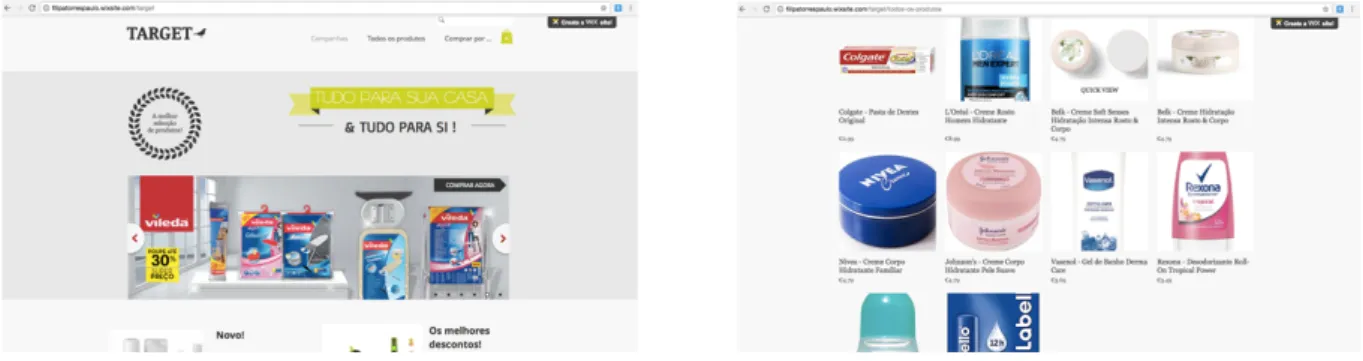
Concerning the online channel, created by me through the platform Wix in order to resemble an accurate online store, it was made to look like an extension of the traditional retailer and an effort was put in order to offer the same products and prices in the categories present in the given shopping list. The channel was made to be user friendly and to effortlessly guide a light user of online shopping platforms through the purchasing process. While conducting the
online purchase, participants were observed and a record of their product choices was done in order to grasp the differences in purchase intention considering the presence of only one vivid sense – sight. For this purchase an estimate of 10 minutes per participant was done; also individuals could choose between performing this stage at CLSBE in LERNE computer area or at other location of their choice.
3.4.2. Sample
As the new product Belk was created specifically for women, the selected participants were female aged between 17 and 60 years old.The segmentation was done so as to ensure that the pool of contributors would englobe individuals that would conventionally purchase this product category and do so on the mentioned distribution channels, in order to minimize invalid results. Also, the sampling meant to be uniform in terms of the participants’ age distribution – thriving to achieve 50% participants aged between 17-34 and 50% between 35 and 60.
The participants were invited by me to be a part of the study under a brief explanation of what was the dissertation’s purpose and what would be required from them. The individuals were not paid or given any form of compensation and they were asked à priori to commit to participate in both phases of the study being that, at least once they had necessarily to travel to CLSBE.
Due to the availability of the LERNE laboratory and schedule constraints of the participants the study could only be carried during 3 days from 9:30 to 14:00 and from 15:00 to 19:00. Assuming that all the participants would perform the online experience outside LERNE and assuming the time is used to its full capacity it would be possible to have 17 participations per day, considering the time estimated per participant, which would make a sampling maximum of 51.
However, as participants could choose to perform the online experience at LERNE the maximum number of participants would probably be less than 17 per day.
3.4.3 Structure
The following intends to explain the study structure so as it could later be replicated. For the purpose of this experiment each participant of both groups received the same materials. The study instructions, consent form (Appendix 3) and questionnaires can be found under the section “Appendices”.
Offline Purchase
Considering a participant of Group A in phase I: After the participant is given the experience’s instructions and respective shopping list, where one of the elements is a body care moisturizer, he is directed to conduct the purchase. Simultaneously his behavior is observed and noted according to an observation grid (Appendix 1). Upon finishing the purchase, participants are asked to answer to a general questionnaire regarding their purchase on the offline distribution channel (Appendix 4).
There are 4 possible and relevant scenarios after concluding the purchase:
1) The participant, for any reason, does not buy a product from the body care category; 2) The participant buys a product from the body care category but does not buy the
“Belk” product;
3) The participant buys the new multisensory “Belk” product; 4) The participant buys the new “Belk” product.
On the first scenario, the participant will be asked questions meant to understand why he did not conclude the purchase.
- If it happened because the participant is not a product consumer and he states that he does not intent to purchase within this category on a near future, his participation will be annulled;
- If the reasons are product related and the respondent mentions dislike for all the brands: further questioning will be made next to the products’ category in the supermarket (Appendix 5);
- If it was because he was not able to find the category, by distraction or mistake it will not be considered as low purchase intention and he will be redirected towards a second aided purchase where he will than buy a product according to his preferences.
On the second, third and forth scenario the consumer will be asked additional questions regarding the chosen product (Appendix 6) in order to assess the differences in purchase intention amongst rival products and to really clarify the impact of packaging and new products as well as physical interaction with it.
Online Purchase
Considering a participant of Group B on phase I of the experiment: After the participant is introduced to the topic of the dissertation he is asked to complete the purchase of the same list as on the offline channel, in the Wix online store. During this period the participant is observed and by the time he completes the purchase he is asked one of two sets of questions:
- If he successfully purchased all the items: Do you usually buy the selected brands on those categories?
Think about your choices on, for example, the toilet paper and body care categories. Can you explain me why you choose that brand instead of other?
- If he did not buy one or more of the items of given list, one being the body care category: Can you explain why you did not buy X and/or Y products?
Superficially Damaged Packaging
As mentioned on the literature review chapter, it is interesting to corroborate the findings on purchase behaviors towards damaged packaging and apply them to the offline and online channels. As so, amongst other items on the list consumers are told to buy an utility product -toilet paper. They had more than one available brands to choose from. Regarding the Pingo Doce brand, one of the packaging units available for sale on the shelf of the offline channel was slightly damaged. It was made assured that the damage was only superficial and did not compromise the quality of the product. When purchasing online the participant has the same product offering as in the traditional channel however the image portrayed of Pingo Doce toilet paper packaging on the platform is not flawed.
Regarding this study one objective was relevant – to know the reasons, if it occurred, that led the participant not to buy the above mentioned brand. Two options could be foreseen – either preference for other brand or the damaged packaging of Pingo Doce impeded purchase of a good unit.
This structure was made in order to be able to respond to the Research Questions 4, 5 and 6 in a simple way through observation and coding of participants’ behavior.
4. Results Analysis
After applying the previous mentioned methodology, the hypotheses were tested and in this section the results of research questions and corresponding research hypotheses will therefore be presented.
4.1 Descriptive Statistics
A total of 42 individuals participated in the observational experiment, from which 40 valid contributions were gathered. Having over 80% (42 out of 51) of the maximum sampling of participants given the LERNE restrictions was extremely satisfactory for the purpose of this study and ideal to address the problem statement in a relatively short space of time and to be replicated in other environments or with other product category in a larger confirmatory study in the future.
As, up to my knowledge, the present study addresses new research hypotheses and holds a certain complexity, it was useful to restrict the sample of participants so as to reduce the standard error and use an observational method in which the commitment and certainty of results is higher in comparison with online surveys or questionnaires. Following the experiment observation, the method of performing 40 face-to-face interviews is similar to performing a complex survey where individuals’ thoughts and behaviors can be more accurately understood and comprehensive information can be gathered gaining therefore more insight.
In Table 2, an age distribution of participants according to actual results is shown.
Age Gap 18 – 32 33 – 47 48 – 62
# Participants (% of total) 15 (37,5%) 12 (30%) 13 (32,5%)
Table 2: Participants' age distribution
Although age is not one of the study elements of this dissertation, for the matters of achieving unbiased results it was important to have a uniform distribution of participants’ age. The obtained age distribution goes as expected upon the design of the study methodology.
Also extremely relevant for further analysis is table 3, which depicts the participants which, in the offline channel, used the three studied senses - sight, touch and smell - to interact with the product multisensory Belk. The following table does not take into account product’s purchase intention as it is purely descriptive of the observations done during the experiment.
Used Sense # Participants % of total
Sight 28 70%
Touch 15 37,5%
Smell 11 27,5%
Table 3: Senses used when interaction with multisensory Belk
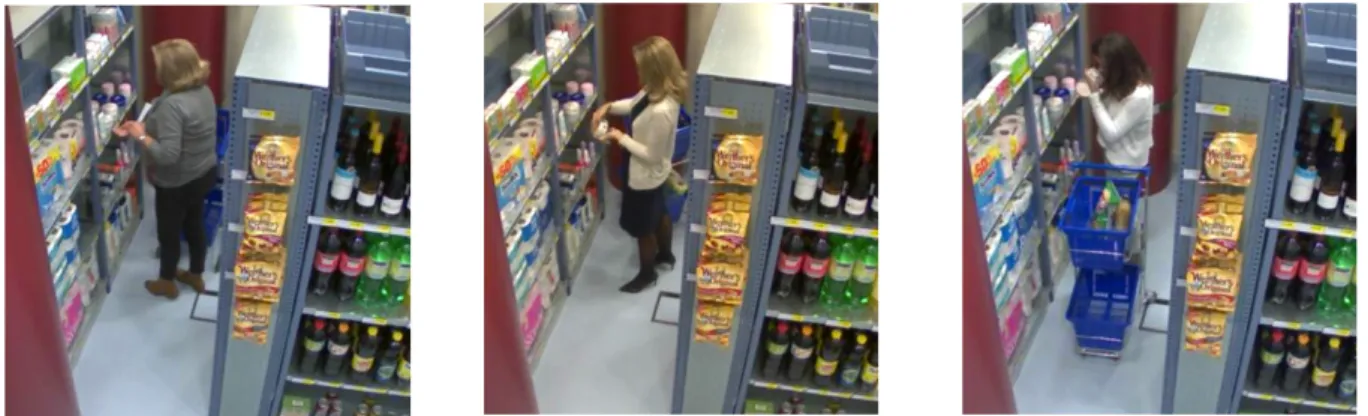
The number of participants which used “sight” refers to the participants which specifically looked at one or more product characteristics without engaging in touch, for example, comparing prices with competitors or observing packaging features. The 11 participants which used “touch” were the ones which grabbed the product to read label information or compare two products and participants that felt external packaging features. Lastly, the number of participants using the sense “smell” were the ones that opened the packaging and smelled the product’s scent. Representation of the above actions can be seen on the video snapshots presented below on figure 4.
Regarding the online channel, where solely the sight dimension can be assessed, 18 out of the total of 40 participants (45%) observed one or more of the product’s characteristics. This includes participants which voiced an opinion about the product when shopping, which opened the quick product view or product specifications page or participants that used the zoom function to better analyze packaging features.
During the experience there were also participants which used the senses “sight” and “touch” with the product new Belk, the sense “smell” was not used in this product since the product was sealed to avoid participants’ confusion. Later, when responding to Research Question 5, the two Belk products will be analyzed regarding their purchase intentions.
Finally, concerning the superficially damaged packaging of Pingo Doce toilet paper, 11 participants (27,5%) noticed the damage. This was assessed by considering the individuals which commented on this factor after the purchasing period and by observing which ones saw, touched or grabbed the product from the shelf.
4.2 Data Analysis
The data and hypotheses’ results presented henceforth are relevant and true for the conducted study and in the context of a universe of 40 individuals. Therefore, the following analysis contains behavioral tendencies that could hereafter be proven to be true or disproved for the representative population. This future quantitative research would act as confirmatory, allowing to extrapolate results from the presented premises.
In order test the hypotheses and assess their statistical significance, Z-tests were conducted - since the sample is greater than 30 - and results will be presented.
RQ 4: How do “offlineàonline” and “onlineàoffline” purchasing paths impact
purchase intention?
Presented data is calculated based on 20 participants per path-of-purchase with purchasing data extracted from observational experiment and questionnaires. For the current research question, the data refers to participants that demonstrated intention of purchase toward multisensory Belk, in offline or online channels.
H1: Offline purchase intent is higher than online purchase intent, indifferently of purchasing
path
H10: Offline purchase intent is equal to online purchase intent, indifferently of purchasing
path
Reading table 4 we can understand that on the offline channel, 30% of participants purchased multisensory Belk on the “offlineàonline” path-of-purchase and that 35% purchased it on the “onlineàoffline” path. Being that, in total, 13 units of the product were sold offline. With the data of the total 20 participants who purchased the product in both channels and by analyzing the table below it is possible to observe that the offline purchase percentage is the highest - 65% against 35% on the online channel.