UNIVERSIDADE DA BEIRA INTERIOR Faculdade de Engenharia
Departamento de Informática
A Sudden Death Prevention
System for Babies
Ângelo Miguel Madeira da Fonseca
Submitted to the University of Beira Interior in applying for the Degree of Master of Science in Informatics Engineering
Supervised by Prof. Dr. Joel José Puga Coelho Rodrigues
Departamento de Informática University of Beira Interior
Covilhã, Portugal http://www.di.ubi.pt
Part of this work has been supported by Instituto de Telecomunicações,
Next Generation Networks and Applications Group (NetGNA), Portugal, by National Funding from the FCT - Fundação para a Ciência e Tecnologia
through the UID/EEA/50008/2013 Project.
i
Acknowledgements
This dissertation represents the end of a long academic career. I know that this section will not do justice to all the people who helped me throughout this difficult and long road, but will emphasize those who contributed most significantly to its success.
First of all I'd like to thank my family, Rui Manuel Teixeira da Fonseca, Aida de Jesus Madeira da Fonseca e Hugo André Madeira da Fonseca, for all the support that they gave me all my life, in particular in this important step. I also want to thank my girlfriend, Maria Figueiredo, for all the support that she gave to me. They were these four people that motivated me when my strengths were down and encouraged me the forces to never give up and take this job until the end.
I would also like to express my gratitude to my supervisor, Professor Doctor Joel José Puga Coelho Rodrigues, whose experience, knowledge, patience and friendship, have contributed to the success of this work and also thank you for the opportunity to once again being able to work together on another project of the research group Next Generation Networks and Applications Research (NetGNA), Telecommunications Institute (IT) of University of Beira Interior (UBI).
Thank the Professor José Moutinho, Professor at the UBI Health Sciences Faculty and medical doctor at “Centro Hospitalar da Cova da Beira”, for sugesting of the topic and all the given support.
Thanks to all my colleagues and members of the NetGNA in particular the great companions and friends, Edgar Horta, Daniel Rodrigues and Fábio Guedes.
I must thank all my friends, who have always supported me and the University of Beira Interior for giving me the opportunity to do my entire academic career in an excellent environment.
iii
Abstract
The growth of the smartphones market share has driven the entry of a large number of new opportunities to launch new applications/mobile tools both by companies but also by individuals’ entities. The prototype solution presented here fits in the increasing emerging of smartphones applications for the health sector.
This dissertation presents a solution to prevent a sudden infant death syndrome. It includes biofeedback monitoring of babies, using body sensors to collect data that will be presented in two different mobile applications: the Main Application and the Client Application. Breathing, temperature, position, and heart rate are used, and placed to the baby’s body.
The Main Application will receive the data collected by the sensors via Bluetooth. This contains a monitoring tool, which parses and transforms raw data to be readable and understandable for users. This application will send the data to a Web service to be stored in a database that supports the entire created solution. The Client Application will consume the data stored in the database every previous second.
Both applications have an important functionality that allows the trigger of alert notifications when an error occurs with the data collected by the sensors and the caregiver is informed with an alert in a short time.
This document describes in detail the whole process done to deploy a prototype that demonstrates and validates the proposed solution and is ready for use.
v
Keywords
Sudden Infant Death Syndrome (SIDS), Infant Death Prevention, Body Sensors, Shimmer, e-Health, Healthcare Application, Biofeedback Monitoring, Android, Mobile.
vii
Contents
Acknowledgements... i
Abstract ... iii
Keywords ... v
Contents ... vii
List of Figures ... xi
List of Tables ... xiii
List of Equations ... xv
Acronyms ... xvii
1.
Introduction ... 1
1.1. Focus ... 1 1.2. Problem Definition ... 5 1.3. Objectives ... 6 1.4. Main Contributions ... 7 1.5. Dissertation Structure ... 82.
Related Work ... 11
2.1. Introduction ... 112.2. Health Sensors for Babies... 17
2.2.1. Heart rate ... 17
2.2.2. Temperature ... 20
2.2.3. Humidity ... 20
2.2.5. Movement ... 22
2.2.6. CO2 ... 24
2.2.7. Others ... 25
2.3. Discussion and Open Issues ... 26
2.4. Conclusion ... 30
3.
Requirement Analysis ... 33
3.1. Introduction ... 33
3.2. Objectives ... 34
3.3. Essential Modeling Requirements ... 35
3.4. Use Cases ... 36 3.5. Class Diagram ... 39 3.6. Activity Diagrams ... 39 3.7. Diagram of Components ... 47 3.8. Entity-Relationship Diagram ... 48 3.9. Used Technologies ... 49 3.10. Conclusion ... 50
4.
Sensors and Devices used on the Prototype ... 51
4.1. Introduction ... 51
4.2. Shimmer Research Platinum ... 52
4.3. Presentation of Sensors ... 53
4.3.1. Shimmer Design ... 54
4.3.2. Temperature Module ... 55
4.3.3. Heart Rate Sensor ... 56
4.4. Devices ... 57
4.5. Conclusion ... 59
5.
Mobile Solution Demonstration ... 61
5.1. Introduction ... 61
5.2. System Architecture ... 62
5.3. Graphical User Interface ... 63
ix
5.3.2. Real-time Data ... 69
5.3.3. History ... 72
5.3.4. Usage Guide ... 72
5.4. Biofeedback Monitoring Toll ... 73
5.5. Anomaly Detection with External Alerts ... 75
5.6. Conclusion ... 78
6.
System Validation and Performance Evaluation ... 79
6.1. Introduction ... 79
6.2. Requirements for Executing the Application ... 80
6.3. Collecting Bio-signals and its Analysis ... 80
6.4. Falls Detection and its Analysis ... 83
6.5. Conclusion ... 84
7.
Conclusions and Future Work ... 87
7.1. Main Conclusions ... 87
7.2. Future Work ... 88
References ... A
Appendix A ... I
Appendix B ... 17
xi
List of Figures
FIGURE 1-INFANT MORTALITY RATES,2010 AND DECLINE 1970-2010[3]. ... 2
FIGURE 2-ILLUSTRATION OF THE SYSTEM ARCHITECTURE FOR PREVENTION AND MONITORING SYSTEM WITH THE THREE TIERS (BODY SENSORS, STORAGE, AND WEB SERVICES)... 4
FIGURE 3-EXAMPLE OF A WIRELESS SENSOR NETWORK. ... 13
FIGURE 4–ILLUSTRATION OF A BODY SENSOR NEWORK. ... 15
FIGURE 5-SENSOR FOR MEASURING HEART RATE WITHOUT THE NEED TO PUT IN SUCTION CONTACT WITH THE SKIN. ... 18
FIGURE 6-BLOCK DIAGRAM OF WIRELESS BSN. ... 18
FIGURE 7–PHOTO OF A SMART JACKET ... 19
FIGURE 8-AIBALL CAMERA (A) AND APPLICATION EXAMPLE WITH HEART RATE MONITORING (B). ... 19
FIGURE 9–PHOTO THE PROTOTYPE OF THE PROPOSED BELT ON A DOLL. ... 20
FIGURE 10–PHOTO OF A SOLUTION THE HUMIDITY SENSOR WITH 1)ARDUINO;2)HUMIDITY SENSOR;3) BLUETOOTH MODULE;4)BATTERY. ... 21
FIGURE 11- SMART WRISTBAND BABY MONITOR. ... 22
FIGURE 12- IBABYGUARD EXAMPLE OF APPLICATION. ... 22
FIGURE 13-OUTLINE OF OPERATION OF BABYPING [33]. ... 23
FIGURE 14-SOLUTION CONCERNING THE IBABY MONITOR WITH CAMERA AND APPLICATION TO YOUR SMARTPHONE (ANDROID OR IOS). ... 23
FIGURE 15- ILLUSTRATION OF A CRIB WITH CO2 SENSORS DEPLOYED AROUND THE BABY.THE SENSORS ARE CONNECTED TO A PROCESSING CIRCUIT BOARD. ... 24
FIGURE 16-MIMO, CLOTHES FOR BABY WITH MULTIPLE SENSORS. ... 25
FIGURE 17-THE BABY'S FAIRY MONITORS BODY TEMPERATURE AND VITAL SIGNS. ... 26
FIGURE 18- SOCK WITH THREE SENSORS (TEMPERATURE, OXYGEN AND HEART RATE). ... 26
FIGURE 19-GENERAL USE CASE WITH THE ACTIVITIES THAT CAN PERFORM IN THE APPLICATION (MA). ... 37
FIGURE 20-GENERAL USE CASE WITH THE ACTIVITIES THAT CAN PERFORM IN THE APPLICATION (CA). ... 38
FIGURE 21-THE COMPONENTS DIAGRAM OF THE ENGINEERED SYSTEM. ... 47
FIGURE 22-REPRESENTATION OF THE ENTITY-RELATIONSHIP DIAGRAM OF THE SYSTEM DATA BASE. ... 48
FIGURE 23-ILLUSTRATION OF THE ANDROID OS ARCHITECTURE. ... 49
FIGURE 24–PHOTO OF A SHIMMER 2RDEVELOPMENT KIT. ... 52
FIGURE 25–ILLUSTRATION OF BODY SENSORS USED ON THE PROPOSED SOLUTION: A) TEMPERATURE SENSOR; B) POSITION SENSOR AND C) RESPIRATION SENSOR. ... 53
FIGURE 26–STRUCTURE SENSOR. ... 54
FIGURE 27–PHOTO OF THE THERMISTOR MA100. ... 55
FIGURE 28–TEMPERATURE SENSOR. ... 56
FIGURE 29–TABLET ASUS TRANSFORMER PRIME TF201. ... 58
FIGURE 31- ILLUSTRATION OF THE SYSTEM ARCHITECTURE FOR PREVENTION AND MONITORING SYSTEM WITH
THE THREE TIERS (BODY SENSORS, STORAGE, AND WEB SERVICES). ... 62
FIGURE 32-HOME SCREEN (MA). ... 63
FIGURE 33-HOME SCREEN (CA). ... 64
FIGURE 34-ALERT INFORMING THE USER THAT THE LOGIN FIELDS ARE EMPTY OR INCORRECT. ... 65
FIGURE 35-REGISTRATION SCREEN (MA). ... 65
FIGURE 36-REGISTRATION SCREEN WITH ALERT INFORMING THE USER THAT ALL FIELDS MUST BE FILLED. .... 66
FIGURE 37-PASSWORD RECOVERY SCREEN. ... 66
FIGURE 38-ALERT TO INFORM THE USER THAT THE ENTERED E-MAIL ADDRESS DOES NOT EXIST. ... 67
FIGURE 39-SCREEN WITH EXISTING FUNCTIONALITY IN MA APPLICATION. ... 67
FIGURE 40-SCREEN WITH EXISTING FUNCTIONALITY IN CA APPLICATION. ... 68
FIGURE 41-LEDS INFORMING THE USER THAT THE SENSORS ARE CONNECTED AND READY TO COLLECT DATA. . 69
FIGURE 42-REAL-TIME DATA SCREEN (MA). ... 69
FIGURE 43-REAL-TIME DATA SCREEN (CA). ... 70
FIGURE 44-CHART WITH DATA COMING FROM THE RESPIRATION SENSOR UNTREATED. ... 71
FIGURE 45-CHART WITH DATA COMING FROM THE POSITION SENSOR UNTREATED. ... 71
FIGURE 46-SCREEN THAT ALLOWS MEASURING THE CARDIAC FREQUENCY. ... 72
FIGURE 47-HISTORY SCREENS. ... 72
FIGURE 48-POSITION OF THE BABY. ... 74
xiii
List of Tables
TABLE I-COMPARISON BETWEEN WSN AND BSN MULTILEVEL. ... 29
TABLE II-USE CASES IDENTIFIED FOR MAIN APPLICATION. ... 37
TABLE III-USE CASES IDENTIFIED FOR CLIENT APPLICATION. ... 38
TABLE IV-DIAGRAM AND DESCRIPTION FOR THE USER REGISTRATION ACTIVITY IN THE SYSTEM. ... 41
TABLE V-DIAGRAM AND DESCRIPTION FOR THE USER AUTHENTICATION ACTIVITY IN THE SYSTEM. ... 42
TABLE VI-DIAGRAM AND DESCRIPTION FOR THE VIEW DATA IN REAL-TIME ACTIVITY IN THE SYSTEM. ... 43
TABLE VII-DIAGRAM AND DESCRIPTION FOR THE VIEW SENSOR DATA ACTIVITY IN THE SYSTEM. ... 44
TABLE VIII-DIAGRAM AND DESCRIPTION FOR THE VIEW HISTORICAL DATA ACTIVITY IN THE SYSTEM. ... 45
TABLE IX-DIAGRAM AND DESCRIPTION FOR THE ALERT NOTIFICATIONS ACTIVITY IN THE SYSTEM. ... 46
TABLE X-MESSAGES SENT IN ALERTS THAT ARE TRIGGERED. ... 77
TABLE XI–FIRST TEST DATA PERFORMED. ... 81
TABLE XII–SECOND TEST DATA PERFORMED. ... 81
TABLE XIII–THIRD TEST DATA PERFORMED. ... 81
TABLE XIV–FOURTH TEST DATA PERFORMED. ... 82
xv
List of Equations
xvii
Acronyms
ADT : Android Developer Tools
BAN : Body Area Network
BCU : Body Central Unit BPM BS BSN BSUs CA CES dB ECG EEG EMG EU GB Ghz GSM GSR HR Hz IDE IEEE IT LED : : : : : : : : : : : : : : : : : : : : :
Beats per Minute Base Station
Body Sensor Network Body Sensor Units Client Application
Consumer Electronics Show Decibel Electrocardiography Electroencephalography Electromyogram European Union Gigabyte Gigahertz
Global System for Mobile Communications Galvanic Skin Response
Heart Rate Hertz
Integrated Development Environment
Institute of Electrical and Electronics Engineers Information Technology
MA MAC address mAh MHz mm NTC PHP QoL RFID RMS SHA1 SHIMMER SIDS SMS SN SQL UML UMTS V WBAN WPAN WS WSN : : : : : : : : : : : : : : : : : : : : : : : Main Application
Media Access Control Address Milliampere hour
Megahertz Millimeter
Negative Temperature Coefficient Personal Home Page
Quality of Life
Radio Frequency Identification Root Mean Square
Secure Hash Algorithm-1
Sensing Health with Intelligence Modularity, Mobility and Experimental Reusability
Sudden Infant Death Syndrome Short Message Service
Sensor Network
Structured Query Language Unified Modeling Language
Universal Mobile Telecommunications System Volt
Wireless Body Area Network Wireless Personal Area Network Web Service
1
1. Introduction
This chapter introduces the topic addressed in this dissertation and describes the work performed to contextualize the concepts and all the difficult processes involved on this proposal. Section 1.1 describes the focus and the main idea of this work, in Section 1.2 is presented the problem definition, while Section 1.3 clarifies the objectives of the solution presented in this document. The main contributions of this work and the corresponding articles are presented in Section 1.4.
This dissertation includes seven chapters where it can be read a brief summary of each in Section 1.5.
1.1. Focus
The sudden infant death syndrome (SIDS) is the leading cause of death of children aged one to 12 months in Western countries. According to the latest statistics, in Europe die each year about 5000 babies victims of this syndrome. The occurrence of SIDS rarely happens in the first month of life, being more frequent between the two and four months age. Between 80% and 9% of the deaths occur between the first and sixth month of life. Five percent of the deaths occur between six and twelve months. After the first year of a baby’s life, sudden death can happen, but with a much smaller probability [1].
About 2300 of the babies in Europe die of SIDS every year [2]. In most countries, infant mortality is low and there is little difference in rates (Figure 1). A small group of countries, however, has infant mortality rates
above five deaths per 1 000 live births. In 2010, rates ranged from a low of less than three deaths per 1 000 live births in Nordic countries (with the exception of Denmark), Portugal, Slovenia and the Czech Republic, up to a high of 9.8 and 9.4 in Romania and Bulgaria respectively, and 13.6 in Turkey. Infant mortality rates were also relatively high (more than six deaths per 1 000 live births) in Serbia and the Former Yugoslav Republic of Macedonia. The average across the 27 EU member states in 2010 was 4.2 deaths per 1 000 live births. Infant mortality rates tend to be higher than the EU average in central European countries, with the exceptions of the Czech Republic and Slovenia, both of which have had consistently lower rates [3].
Figure 1 - Infant mortality rates, 2010 and decline 1970-2010 [3].
The phenomenon also exists in Portugal but it is unknown if it occurs. A Portuguese retrospective study showed an increase in the number of cases from 1974 to 1990, with a decrease from 1992. There was a notorious predominance of male babies, between 1 and 4 months, in the months of December to March, on weekends, at home in periods of sleep and night [4].
This emerging reality presents major challenges and opportunities for new and innovative health care services for this cause that is SIDS. The
3 information technology (IT) has tried to create new and increasingly efficient solutions to foment the prevention and prevent this harsh reality that still haunts the lives of many families worldwide. These solutions aim to provide a better lifestyle for babies, as well as their responsible, making possible that their lives are accompanied in real time, from a distance, without disregarding the well-being, security and preventing major threats, calling the babies to their relatives without having to always be around.
Currently there are already many solutions on the market to prevent SIDS, but they are expensive and incomplete. Since detection sensors and measurement of CO2, crying, video surveillance detection, temperature sensors, sensors for measuring heart rate and breathing. All these innovative technologies allow improvements in prevention and significant improvements in terms of quality of life (QoL), reducing the deaths and increasing monitoring of parents to their babies. These technologies also allow a better and more efficient study on this syndrome continues without concrete explanations.
They are beginning to also appear many solutions with textile sensors embedded in clothes that are more practical and comfortable for babies, but they’re still expensive which makes it impossible for some families to obtain them. Last year were presented several innovative solutions at the Consumer Electronics Show (CES) in Las Vegas, where 2014 are also presented in this document in chapter II.
This type of sensors and solutions are very important, once they help the people who use them by detecting any unusual data and collecting it, and immediately send an automatic text message alert. This is the purpose of the solution: having the baby continuously monitorized, allowing the responsible to know about any suspect data.
This dissertation presents a solution created to provide health monitoring (Illustrated in Figure 2). This proposal considers two applications which together make it possible to observe the vital data of the baby remotely and allows the identification and prevention of greater threats.
Figure 2 - Illustration of the system architecture for prevention and monitoring system with the three tiers (body sensors, storage, and Web services).
This mobile solution can reduce the time of alert and intervention in situations of risk. The relationship between mortality and time delay in treatment is a critical factor because the continuous monitoring of bio-signals promises to improve traditional health in many ways. The health data collected and stored may offer doctors a more complete understanding of health and provide a historical analysis of the parameters collected, as well as a faster response in emergency situations. This solution can be incorporated in two mobile devices such as a smartphone or a tablet, where one of them is the Main Application (MA) and in another the Client Application (CA).
The focus of this application is to make it the most complete application possible and to make it accessible to as many people as possible which makes it possible to save many babies from this unexplained phenomenon and which continues to haunt the lives of many couples throughout the world which is the SIDS.
5
1.2. Problem Definition
Sudden death in babies is something difficult to explain because no one knows its origin in most cases [5]. Sudden death has several causes that can be prevented, but others not, and in certain cases are fatal [6]. There are new challenges to offer a larger and better quality of life for both parents and babies.
Based on this, considering a real scenario using mobile technology, this paper proposes a system that tries to predict and detect situations that evaluate the risk of a baby and alert those are responsible by her/him or even competent authorities. The system emits an alert, in real time, so nannies can react immediately, check the baby state, and intervene if needed. The alert signs are issued through a smartphone or tablet. Body sensors, used for measuring physiological signals from a baby, are connected to the mobile device via Bluetooth and Wi-Fi.
The sensors are attached to the baby body and placed at the crib to have more accurate data for monitoring signals as heart rate, cradle temperature, baby’s position and baby’s breath. The mobile health tool monitors a baby and communicates through Bluetooth with a mobile device, in real time. The mobile devices display the data of each sensor and execute algorithms created to analyse the received biofeedback signals. If any issue with the baby is detected, the system notifies the person responsible by him/her immediately [7].
The document focuses on a methodology for the sudden death prevention in babies based on biofeedback and crib environment monitoring, and data processing using a combination of multiple sensors (heart rate, respiration, temperature, and position).
1.3. Objectives
The main objective of this dissertation is to build service prevention/monitoring for mobile environments, with the integration of body sensors in order to prevent the sudden infant death syndrome. The solution will be deployed on Android OS.
This product offers a consistent and robust solution for mobile health environments, using a system and simple adaptation proposal. The system will provide bio-feedback information via Internet. Also features alert notifications and messages so that the responsible for the baby can handle more quickly if something happens.
In order to achieve this main objective, the following partial objectives were proposed:
Perform a study of the state of the art in mobile health applications, body sensors, and available approaches for interpretation of the babies data collected;
Proposal and implementation of a mobile E-Health solution for the prevention of sudden death of babies for mobile environments;
Creating a dataset with the data collected by the sensors, to serve as a basis of future studies;
Demonstration, performance evaluation and validation of the proposed solution in various mobile devices.
This research hopes to produce two applications, one of them to receive, interpret and show the data collected from the sensors and another one that will serve for the baby’s parents (or other that take care of babies)
7 to follow the at distance. This query is possible because the values are being received and interpreted by the first above-mentioned application and being stored in a database which will support both applications. This database will have two objectives, both supporting both applications and making it possible to have a dataset with data collected to provide data for her studies.
1.4. Main Contributions
This section presents the scientific contribution of this dissertation for the solutions for the prevention of sudden death of babies.
This contribution includes a robust solution, adaptable in infants and of easy interactivity with the users that are responsible for the babies. This solution was thought to make it possible for parents monitoring their babies from a distance and know some of its physiological data through an Android device. It is made up of several boldly sensors of bio-feedback that collect data that will be visible both in the Android device that must be present close to the baby and also through other devices, where these are enough to have an Internet connection and the application developed.
After the data collection by the sensors, they are transferred via Bluetooth and analyzed by the mobile application, stored in the database that was developed to support the solution. This solution will allow having a continuous monitoring of the baby and its physiological data and also for future studies.
A paper with this contribution entitled “A Mobile Healthcare Solution for Ambient Assisted Living Environments”, was presented at the 16th International Conference on e-Health Networking, Applications and Services (IEEE HealthCom 2014), Natal, Brazil, October 15–18, 2014.
1.5. Dissertation Structure
This dissertation is organized in seven chapters, as follows.
This Chapter 1 – Introduction: it presents the scope and motivation behind the work described in this dissertation, and the problem addressed and objectives.
Chapter 2 – Related Work: contains a review of the related literature
addressing available solutions based on mobile sensors for health, in particular for the prevention of sudden death.
Chapter 3 – Requirement Analysis: is dedicated to software
engineering solution developed throughout this work. It contains the analysis of requirements, use cases identifications and discussion of some possible activities to carry out in the applications developed and class diagrams. It also includes the discussion to the components diagram and for modeling and construction support base to the solution.
Chapter 4 – Devices and Sensors Used on the Prototype: it
introduces and discusses all the devices and sensors used on the two prototypes and their relevant technologies, as well as photographs of equipment’s used in the prototypes and their technical specifications.
Chapter 5 – Mobile Solution Demonstration: Here is made a
presentation of the applications built in this dissertation, since the registration and authentication in the same, through the collection of data and your query to the visualization of text messages and notifications that are generated to alert of problems.
Chapter 6 – System Validation and Performance Evaluation: it This
9 the tests, and focuses on the performance validation and evaluation of the solution.
Finally, Chapter 7 – Conclusions and Future Work: it reviews in an argumentative way, all the work developed along this dissertation, considering the conclusions and challenges for future developments.
11
2. Related Work
Before performing any work, being it scientific or not, it is important to know what there is in the market in order not to develop exactly some solutions that already exist. The purpose of this type of work is to improve existing products/solutions, and can be improved the technological, scientific and others.
It is important to present some related work to subject that is being addressed and that is what is done in this chapter. An important reference to keep in mind is that there is a lot of information about some subjects, where sometimes the information becomes obsolete, as the rapid evolution of technologies. However, that’s an excellent point and leads to the development of new technologies, techniques and solutions.
This chapter presents the literature related to solutions for prevention of SIDS. Starting with an introduction in section 2.1, to know the types of networks of existing sensors, already in section 2.2 are presented examples of health sensors. Finally in section 2.3 appears a little conclusion on all the technologies presented here.
2.1. Introduction
Over the years gradually we have heard a lot about sensor networks, whether they are just sensor networks (SN) or wireless sensor networks (WSN). The main characteristics of SN are the sensor, the observer and the phenomenon. The phenomenon is the subject of study which is what will be monitored by the SN, the sensor is the monitoring of the phenomenon that
is being examined and passing information to the observer. But the observer is the end user that wishes to study and get answers about a given phenomenon [8].
The WSN are increasingly a topic of enormous research activity, mainly due to advances in microchip technology. Identified as one of the technologies of the 21st century [9], the WSN are emerging in different research areas such as health, environment, fire prevention, security, military areas, traffic and tourism [8, 10] and have as main characteristics: power consumption restrictions for us using batteries or raising energy, ability to deal with node failures, node mobility, communication failures, scalability for large-scale deployment, ability to resist adverse environmental conditions and ease of use [11].
The WSN are used to monitor the functioning of organs like the heart, to detect the presence of substances that indicate the cause or the emergence of biological problem, either in humans or in animals. In the environment these networks are used to monitor environmental variables such as temperature, precipitation, humidity, gas, etc., in internal places such buildings, houses, etc. , and external locations such as forests, mountains, deserts, oceans, volcanoes, among others.
WSN also are used for the detection of landslides, to detect slight ground movements and changes in various parameters that may occur before or during a slide. Through the data collected, it may be possible to meet the occurrence of landslides long before being actually happen. They are also used for monitoring the quality of water in dams, rivers, lakes and oceans, as well as in underground water reserves. In preventing fires the WSN are used for detection of smoke and fire, whether outdoors or indoors. In the security part they are used for video surveillance, mostly parking. In the military area can detect enemy movements, the presence of dangerous materials or hidden mines. In traffic, they can be used to monitor the traffic on roads such as motorways or main avenues of major cities, so as to be able to see how the traffic by several cities of a country. In order to monitor the air pollution control the wireless sensor networks
13 have been deployed in various cities (Stockholm, London and Brisbane) to monitor the concentration of harmful gases to the citizens.
The WSN are used in other areas of research that were not mentioned here, as for example in psychology, tourism, education, discovery of ecological disasters, among others. This type of network allows you to track, monitor, study, understand and act on a particular phenomenon or event.
Sensor networks have restrictions regarding energy and should possess mechanisms to self-configure to adapt to the environment in which they operate. With regard to traditional networks communication protocols, these must also change in order to adapt to the characteristics of WSN [12].
The sensor networks can be homogeneous or heterogeneous in relation to types, dimensions and functionality of the sensors. During the time of operation of the network, nodes may change in terms of their features, how to act or states. In this sense it is important that there is always a peer-to-peer relationship between sensor nodes [10].
Figure 3 - Example of a wireless sensor network.
This network type is suitable for situations where you can't implement a solution with wires and where they want instant access to
information. Sensor nodes can move along with the observed phenomenon. As an example, we have sensors that are placed on animals to observe their behavior.
The WSN have the typical tasks to determine values of a particular parameter in a given location, detecting the occurrence of events, rate detected objects, trace a given subject, among others and is currently a major challenge and can be quite useful in obtaining information in dangerous environments or difficult to access. The characteristics that provide this type of networks like self-configuring, location, power management mechanisms among others, are also challenges and new opportunities in the area of research.
The continuous monitoring and minimally obstructive of human health through WSN is an innovative solution of great economic and social potential. It allows monitoring the life habits and early detection of abnormalities in anticipation of the emergence of diseases. According to Lymberis (LYMBERIS DITTMAR, 2007), the use of these systems allows to reduce hospital costs by reducing hospitalizations and outpatient procedures unnecessary. Also, the reduction of medical error because the interaction between the patient and the health professional will be available anytime and anywhere.
Currently, these systems are available commercially for catching some physiological information, such as, for example, the heart rate monitoring systems. The doctor accompanying the monitoring of a patient by means of a WSN can at some point, although counteract a predefined energy consumption policy, increase the level of monitoring of electrocardiogram (ECG) because it concluded that the signal captured presented some features that left doubts about the situation of the patient [13].
A body sensor network (BSN) or body area network (BAN), is a network of wireless sensors. The sensors can be connected to other devices through Wireless communication, Bluetooth or radio waves [14, 15, 16 and 17]. In particular, the network consists of several miniaturized body sensor
15 units (BSUs) together with a single body central unit (BCU) [18, 19]. The development of WBAN technology started around 1995 around the idea of using wireless personal area network (WPAN) technologies to implement communications on, near, and around the human body. About six years later, the term came to refer BAN systems where communication is entirely within, on, and in the immediate proximity of the human body. [20, 21] The WBAN system can use WPAN technologies wireless gateways to reach longer ranges.
The rapid growth in physiological sensors, low-power integrated circuits, and wireless communication has enabled a new generation of wireless sensor networks, now used for purposes such as monitoring traffic, crops, infrastructure, and health. The body area network field is an interdisciplinary area which could allow inexpensive and continuous health monitoring with real-time updates of medical records through the Internet. A number of intelligent physiological sensors can be integrated into a wearable wireless body area network, which can be used for computer-assisted rehabilitation or early detection of medical conditions. This area relies on the feasibility of implanting very small biosensors inside the human body that are comfortable and that don't impair normal activities.
The implanted sensors in the human body will collect various physiological changes in order to monitor the patient's health status no matter their location. The information will be transmitted wirelessly to an external processing unit. This device will instantly transmit all information in real time to the doctors throughout the world. If an emergency is detected, the physicians will immediately inform the patient through the computer system by sending appropriate messages or alarms. Currently the level of information provided and energy resources capable of powering the sensors are limiting. While the technology is still in its primitive stage it is being widely researched and once adopted, is expected to be a breakthrough invention in healthcare, leading to concepts like telemedicine and mHealth becoming real.
A typical BAN or BSN requires vital sign monitoring sensors, motion detectors (through accelerometers) to help identify the location of the monitored individual and some form of communication, to transmit vital sign and motion readings to medical practitioners or care givers. A typical body area network kit will consist of sensors, a Processor, a transceiver and a battery. Physiological sensors, such as ECG and SpO2 sensors, have been developed. Other sensors such as a blood pressure sensor, EEG sensor and a PDA for BSN interface are under development [22].
In this session are presented which kinds of sensors that there are babies in the area of health and within each type are shown some of the sensors that are already marketable or prototype. All sensors/solutions are accompanied by applications for computer, Android or iOS, where just install the application corresponding to the product, connect the sensor and view the data on the device.
17
2.2. Health Sensors for Babies
A BSN can be composed of sensor nodes belonging to different classes and in which each node has several types of sensors. In such scenarios it’s important to choose the correct sensor type according to the observer’s needs. There are numerous types of sensors that can be easily applied in people, in this case in infants, such as humidity sensors, temperature, CO2, radioactivity, sound, image, light, movement, vibration and blood pressure. It is important to note that each type of sensor displays energy consumption levels and different monitoring reaches [23].
2.2.1. Heart rate
ECG sensors are used to monitor and measure the electrical activity of the heart. There are various sensors for this purpose, as you can see below.
Electrocardiogram (ECG)
Typical electroencephalogram (EEG) and electrocardiogram (ECG) sensors require conductive gel to ensure low-impedance electrical contact between the sensor and skin, making set-up time-consuming and long-term recording problematic. We present a gel-free, non-contact EEG/ECG sensor with on-board electrode that capacity house with the skin. Active shielding of the high-impedance input significantly reduces noise pickup, and reduces variations in gain as a function of gap distance. The integrated sensor combines amplification, band pass filtering, and analog-to-digital conversion within a 1 inch diameter enclosure. The measured input-referred noise, over 1-100Hz frequency range, is 2μVrms at 0.2mm sensor distance, and 17μVrms at 3.2mm distance. Experiments coupling the sensor to human scalp through hair and to chest through clothing produce clear EEG and ECG recorded signals [24].
Figure 5 - Sensor for measuring heart rate without the need to put in suction contact with the skin.
This sensor the system consists of a set of simple capacitive electrodes manufactured on a standard printed circuit board that can operate through fabric or other insulation. Each electrode provides 46dB of gain over a .7-100Hz bandwidth with a noise level of 3.8V RMS for high quality brain and cardiac recordings. Signals are digitized directly on top of the electrode and transmitted in a digital serial daisy chain, minimizing the number of wires required on the body [25]. The system contains a suite of non-contact ECG electrodes connected along a single daisy chain that carries the analogical and digital signals. A wireless base unit transmits the physiological data to a remote device.
Figure 6 - Block diagram of wireless BSN.
The following is an existing solution to ECG monitoring. This solution is composed of a dress for babies, which has incorporated several electrodes in key points for the measurement of the heart rate of the baby.
The following solution shown is still a prototype and was developed in the Netherlands, Eindhoven University of Technology. The electrodes
19
collect data that are transmitted to a sensor, where it in turn transmits the data to a smartphone or computer via Wireless [26].
Figure 7 – Photo of a smart jacket
Heart Rate Monitor with Camera
There are several applications for measuring the heart rate through cameras. For babies the cameras must be as small as possible given its members are very small and fragile. The following is a camera that can be used for these purposes and that through an application installed in a smartphone gives us the baby's heart rate.
The camera is called AiBall, measures approximately 33 mm and can be connected to the device via Wireless. The application handles the video captured by the camera and through some conversions of color models and calculations can introduce the baby's heart rate [27, 28].
2.2.2. Temperature
There are sensors to monitor the temperature of the baby's body, but also to monitor the temperature of the room where the crib is placed.
The following shows a design of non-invasive neonatal temperature monitoring with wearable sensors. A negative temperature coefficient (NTC) resistor is applied as the temperature sensor due to its accuracy and small size. Conductive textile wires are used to make the sensor integration compatible for a wearable non-invasive monitoring platform, such as a neonatal smart jacket. Location of the sensor, materials and appearance are designed to optimize the functionality, patient comfort and the possibilities for aesthetic features. A prototype belt is built of soft bamboo fabrics with NTC sensor integrated to demonstrate the temperature monitoring [29].
Figure 9 – Photo The prototype of the proposed belt on a doll.
2.2.3. Humidity
The purpose of these sensors is detecting if there is humidity in the body of the baby or through perspiration or in diapers. The sensor below allows parents to remotely check the humidity of the baby's diaper. This solution was implemented with the Arduino and consists of a transmitter and two receivers. Have communication with the computer is done via Bluetooth and the data are presented in the application that was developed for this purpose [30].
21
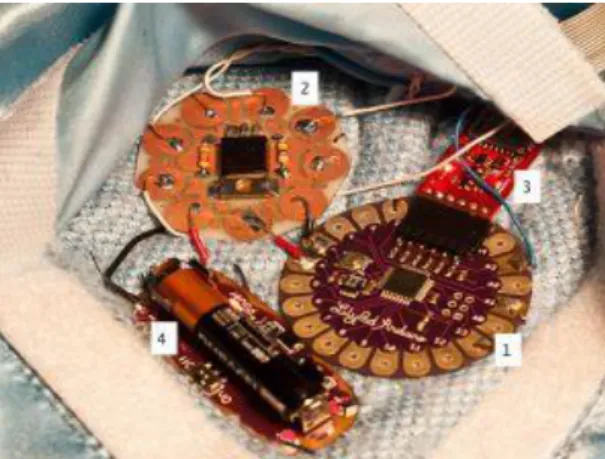
Figure 10 – Photo of a solution the humidity sensor with 1) Arduino; 2) Humidity sensor; 3) Bluetooth module; 4) Battery.
2.2.4. Breathing
Breathing sensors are used to check/monitor the breath of babies. There are many devices for this purpose, but the concept is always the same, the device detects baby's breath, sends the signal to a smartphone or computer and data are shown in the application that is installed on the device.
The Smart Baby Monitor Wristband is a baby monitoring system consists of a pear-shaped device and a bracelet. The pear-shaped device is a monitor that is placed in the baby's crib and that detects and analyzes the sounds the same. If the appliance detects cry, gives a warning to the parents’ smartphone via Bluetooth. The alert bracelet will vibrate and the LED lights will light up. The color of the leds can be programmed to be a faster recognition and effective if it is an emergency or a situation within the normal [31].
Figure 11 - Smart Wristband Baby Monitor.
Another solution is the iBabyGuard, which is a baby sleep monitor, which detects baby's breath, sends the data to a smartphone that contains their application installed and are shown the data in real time about the breath [32].
Figure 12 - iBabyGuard example of application.
There are other solutions to this effect, which are nothing less than devices that detect the baby's cry and send alerts to mobile phones of the parents of the babies, via Bluetooth or Wireless.
2.2.5. Movement
As for the motion sensors, can have multiple strands, but always with the same purpose, to detect if there are movements of the baby and
23 be able to follow the baby in real time without the need to be around. Below are shown examples of devices with this order.
The BabyPing is a camera which is placed next to the crib and captures baby's movements in real time. The sensor is connected to the home network router via Wireless and can be accessed by all users who are connected to the same network. To do this simply install the application that comes with the device on your smartphone and accompany the baby in real time without the need to be in the same Division. The solution also lets you set a password so that only allowed the display to users containing the password [33].
Figure 13 - Outline of operation of BabyPing [33].
The iBaby Monitor is a high resolution camera to capture every angle where the user controlling it with your smartphone and there is no need for an extra receiver [34].
Figure 14 - Solution concerning the iBaby Monitor with camera and application to your smartphone (Android or iOS).
2.2.6. CO2
The system shown below can be used for infants at home or in a hospital nursery room. The system consists of carbon dioxide (CO2) sensors and active Radio Frequency Identification (RFID) technology.
Figure 15 - Illustration of a crib with CO2 sensors deployed around the baby. The sensors are connected to a processing circuit board.
A commercial metal-oxide based CO2 sensor was chosen and characterized in sensitivity, selectivity and humidity dependence. The RFID transmission is accomplished with a wireless module at two different operating frequencies [35, 36].
25
2.2.7. Others
There are also solutions that consist of just a sensor that is able to measure several signals of biofeedback. An example of this is the "Mimo" Intel is a body for those who have embedded sensors that are mirrored connected to a central sensor that connects with the smartphone.
This solution (Mimo) is able to monitor the temperature, breathing, heart activity level and position [37, 38].
Figure 16 - Mimo, clothes for baby with multiple sensors.
The Baby's Fairy is an infant monitoring system that looks over the baby's vital signs. Currently an Indiegogo campaign to raise funds for the project, the Baby's Fairy consists of a wearable wristband and a parent base where a baby's heart rate and body temperature can be monitored for any changes or abnormal signs. Slated to be released in December 2013, parents can be within a range of 30 meters and monitor the baby's status when the wristband is attached to the baby's left wrist. The wristband uses an advanced heart rate sensor as well as a micro resistor to monitor body temperature.
The parent base, which is similar in size to a smartphone, displays live information, including vital sign status, connection strength and battery level, and has an in-built alert system. The Baby's Fairy doesn't require any additional installations or app downloads, and can be used straight out of the box [39].
Figure 17 - The Baby's Fairy Monitors Body Temperature and Vital Signs.
The next solution presented is a sock that is sidewalk to the baby and that has three sensors (temperature, heart rate and oxygen). These sensors are capable of measuring the temperature, oxygen levels and heart rate of the baby [40].
Figure 18 - Sock with three sensors (temperature, oxygen and heart rate).
2.3. Discussion and Open Issues
Miniaturization and tiny devices development brought designing and development industry to create such devices that smaller in size, better processing capabilities, effective memory and architecture. Sensor development put world into new domain that all technological aspect and solution are junked with sensor’s domain. Communication between these tiny devices made Wireless Sensor Network (WSN). WSN has given birth to
27 exciting new applications of several areas of our lives at a broad class level and health caring is one of life–sustaining area.
The key role of sensors in WSNs is; to gather ,process data and make necessary computation from the environment and at last to make active many applications like as support for logistics, habitat monitoring, military operations, health care as well as emergency response. Talking to hardware availability WSN is heterogeneous or homogenous.
Furthermore, WSN classified as hierarchical or distributed roles. The study of WSN has a continuous research interest due to large potential for integrating the computing power of smart devices into everyday’s life. In WSN, data is transmitted over air so many application needs employment of security measures.
Due to different demand and application, sensors designed and developed as per requirements. From last few years the sensors and tiny chips are needed too much in medical area. In medical area patient is focal entity so requirements of sensors architecture directly concern with human body. Human body have distinct characters, properties and dynamic behavior so designing, development and deployment of sensor in this prospective should need special attentions and features. Therefore, miniaturization, lightweight, cost reduction and wearable sensors require in health care system.
When these sensors deployed on patient, hospital monitoring system or in medical care units they form a Wireless Area Network (WAN) and when special on a human body attached these tiny devices then formally called Body Sensor Network (BSN). In BSN sensors used in, on, near or as required to human body in such a way that they gather data, process data, communicate with each other and process indication if integration required and communicate with Base Station (BS). Different architectural setup proposed in BSN to perform communication system however mainly it consists three parts.
Sensors on patient body performing separate network, high memory and processor units called base stations and external network that also contain medical servers. Body sensors placed on patient body just on the body stitching, wearing or hanging them or inside body through surgery or as for monitoring purpose and requirement. These sensors are design for special purpose due to the sensitivity of human body i.e. Heat, Blood Pressure, Sudden react and also side effect of artificial devices to body tissues. Body sensors communicate with BS updating their information.
Base station that is mostly high memory, processor and computational power controls all body sensors and communicate with external network. The external network constitutes medical server at which patient data store. Professionals/Physicians read their report accessing the medical server. Medical server generates reports as per required. Human body comprises of a complex inner milieu that reply to and intent on with its extraneous surroundings but is in a mode “distinguish” and “self-contained”.
Human body milieu is not only on a littler scale but also need a different nature and frequency of monitoring with admiration of special and unusual challenges for BSN than those faced by generic WSN.
Below is shown a table that makes a comparison between WSN and BSN multilevel [41].
29
Table I - Comparison between WSN and BSN multilevel.
Challenges WSN BSN
Node Size
Favorable in smaller size but not limited due to wide and open environment domain.
Permeative monitoring requirement, needed miniaturization capabilities.
Dynamics Exposed to uttermost in weather and noise. Exposed to more predictable milieu but motional domain is a challenge.
Node Function Constitutes many sensors and each perform specific task. Every sensor performs multiple task due to less number of nodes and human body sensitivity.
Data Protection
Security requirement for data transfer is low and easy to implement security solution.
High security required because of information transfer is regards directly to life signs and implementation of security solution is very complex.
Power Demand Power demand is higher but easy to supply. Power demand is lower but difficult to supply.
Access Replication and disposition of sensors is too much easy. Due to implantable scenarios of sensors, replication and disposition is difficult.
Biocompatibi-lity Do not need in many applications. Biocompatibility must consider due to human body sensitivity.
Content Awareness
As mostly sensors are static behavior so this is not too much important.
As human body is too much sensitive for physiological changes so context awareness is very important.
Data Transfer Ratio of loss of data is less due to well defined structure of nodes.
Additional requirements to maintain QoS and perfect data interrogation.
2.4. Conclusion
Sensor Network Solutions for babies are increasing dramatically, both to monitor signs of biofeedback, how to follow up the same, that becomes an advantage in their own security because so they are better protected in some way. About ten years ago it was rare to hear talk of wireless sensors that help in preventing sudden infant death for example, and these days, more and more companies are betting in this business, because we’re walking faster to a technological world.
In this document, were presented just a few of the many sensors and existing solutions on the market, where there is a wide variety of solutions for each type of sensors, but deep down they all do the same, a few more easy, complete and convenient than the others, but it's going to be checking more and more over time.
Every day more and more solutions emerge. Prototypes ready to monitor, control or detect whatever, are environmental disasters, in the case of the environment, the presence of enemies, mines or other objects in the case of military area, in the case of tourism there are WSN to routes where the route is composed of several sensors that give information stations along the route in the case of vehicles and the traffic there are WSN to monitor traffic in avenues just as there are installed on WSN cars where the driver or other passengers in the car can interact with the same. WSN will exist in the near future in all the areas that you can imagine, because the investigation every time is more advanced and with this breakthrough technology will reach all areas and to all corners of the world. However it can be said that the BSN is a branch which emerged from the Wireless Sensor Networks.
This chapter presented a review of the literature regarding a state of the art in SIDS. These technologies, tools, techniques and solutions presented allow doctors and parents make better prevention of possible
31 evils or a hazard to the health of babies and if necessary have a faster intervention.
So after a brief introduction, there were many existing solutions on the market to prevent SIDS.
In the following chapter will be presented all the requirement analysis that was designed to make this dissertation as possible and build the entire solution presented here.
33
3. Requirement Analysis
This chapter focuses on requirement analysis solution developed throughout this Master’s program, mainly using the modeling language that allows presenting a system of standardized form called Unified Modeling Language (UML), which allows helping to structure the phase of development of software and describe what was done.
3.1. Introduction
Planning and modeling software is the most important phase of its life cycle, because it will be fundamental for his good functioning. It treats to identify all theirs requirement, functional and non-functional, the use cases and its main activities. The software should be developed through an object-oriented approach, which makes it possible to determine the structure of the software through classes and the relationships between them.
Beside if the software contains own database for collecting his data, it is also in this phase that it should be modeled and documented the data, for example, by using entity-relationship diagrams. The following section briefly describes the main objectives of software engineering to provide a context to the remaining part of the chapter.
3.2. Objectives
As mentioned in problem definition and objectives, the aim of this dissertation was to develop a mobile solution for Android mobile devices that allows monitoring and prevention of sudden death of babies. This solution must provide the users with the means for monitoring the health of their babies, and at the same time means to prevent sudden death and warn that events occurred.
The idea is to provide users with an easy way to follow their children from a distance, as if they were close to them. This monitoring is achieved through various monitoring sensors that will be near the baby, connected to a smartphone or Android tablet that will be around the baby. This smartphone will receive the data collected by the sensors and offers them for the user to follow the data biofeedback. The users will be able to also make this monitoring any time, anywhere via smartphone, where only need to have an internet connection, and then receive the data collected by the sensors.
The steps mentioned above should be developed, structured and well organized to be simpler to user interaction with the applications. It is important to make an effort in simplification of all the processes involved, since this effort will impact the ease of use of the application, which must be present since the planning phase and software engineering.
Given this general statement about the objectives, it is now possible to identify the general requirements of application.
35
3.3. Essential Modeling Requirements
The requirements’ modeling provides a specification of which requirements must be implemented in the system. They are typically divided into function and non-functional requirements, depending on whether they describe the behavior that the system offers to the user or the conditions in which it must operate, respectively. Function requirements identified for the application developed under this master thesis are listed below:
The system must only provide the data that are intended at this type of user (baby’s data, data from sensors, sensor data collected in real time and historical data of the sensors);
The application is composed of the registration page, authentication, homepage, real-time data and historical data;
The application allows the adding new users;
The application must to be able to encrypt the password for each user to make own registration;
The user may access own area thought the authentication system;
Upon successful authentication the user can see all data that are available.
This whole procedure involves a set operation that interacts with the user. It is important to distinguish the constraints for each entity involved in the system. Thus, system constraints are presented:
Both MA and CA must need to be Wireless connection to the device, so that it is carried out communication with the web
service to the database, to gain access your area and to be able to view the historical data received by sensors.
3.4. Use Cases
Use cases are an automatic activity regularly performed by an actor in the system. The process of identifying uses cases comprises one of the most fundamental tools of software engineering.
The group of uses cases identified for this solution is included in Tables II and III that summarizes the use-case diagrams more detailed in figures 19 and 20.
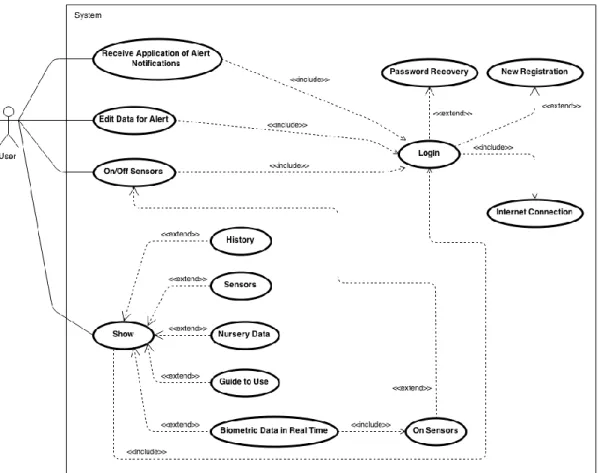
Figure 19 shows the use case diagram of the application that will be to receive, interpret and display sensor data to the user in real-time (MA). Some of the most important details present in the diagram are described below.
The user to view the data collect includes that the sensors are connected. The sensors are connected through the application;
If the data collected by the sensors are abnormal (lower or higher than normal) are sent notifications to the user to inform him of the occurrence;
The user can only edit data regarding alert notifications to be sent, including add, edit or delete phone numbers that associate to your account.
37
Figure 19 - General use case with the activities that can perform in the application (MA).
Table II - Use cases identified for Main Application.
Actors Use Cases Abstract Cases
User
Receive Application of Alert Notifications
Edit Data for Alert On/Off Sensors Show Data
Login in the System
Password Recovery New Registration Internet Connection Show History
Show Sensors Show Nursery Data Show Guide to Use
Show Biometric Data in Real Time On Sensors
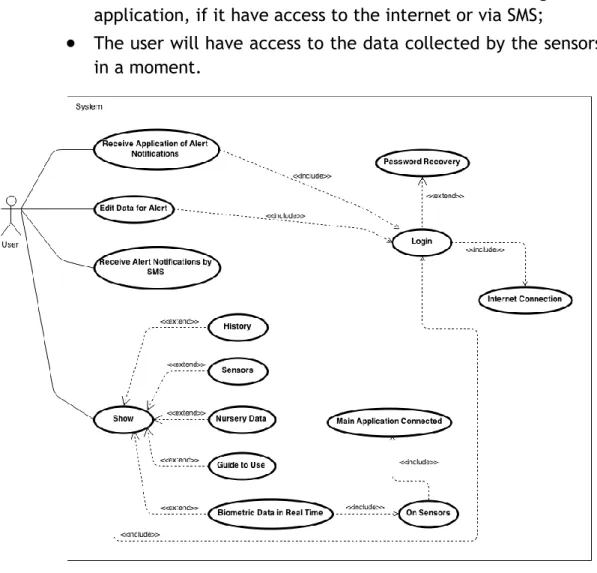
Figure 20 shows the use case diagram of the application that the user can install on own smartphone to be able to monitoring baby from a distance (CA) at anytime and anywhere, provided it have internet access. Some of the most important details of this application are described below.
The user can receive alert notifications through the application, if it have access to the internet or via SMS;
The user will have access to the data collected by the sensors in a moment.Figure 20 - General use case with the activities that can perform in the application (CA).
Table III - Use cases identified for Client Application.
Actors Use Cases Abstract Cases
User
Receive Application of Alert Notifications
Receive Alert Notifications by SMS Edit Data for Alert
Show Data
Login in the System
Password Recovery Internet Connection Show History
Show Sensors Show Nursery Data Show Guide to Use Show Biometric Data in Real Time
On Sensors Main Application Connected
39 In the software engineering process, discussion of some scenarios follows to the identification of the use cases, as is also shown in this document. The scenarios are the paths that can be used to perform a particular activity or task. The following sections will be shown and described some of the most important scenarios of this solution and how they are carried out certain activities and tasks within each scenario.
3.5. Class Diagram
This section discusses the model classes conceded for the development of the proposed solution in this master’s work, having the above mentioned use cases as a base. Two diagrams (Appendix B) are presented, referring to the two applications developed, as was also shown in the above use cases.
The classes present in diagrams capture the most important methods of the system in terms of attributes, operations and actions. With its analysis it can be concluded that it was given a special emphasis on the collection, processing, presentation and warning about the data collected by the sensors.
3.6. Activity Diagrams
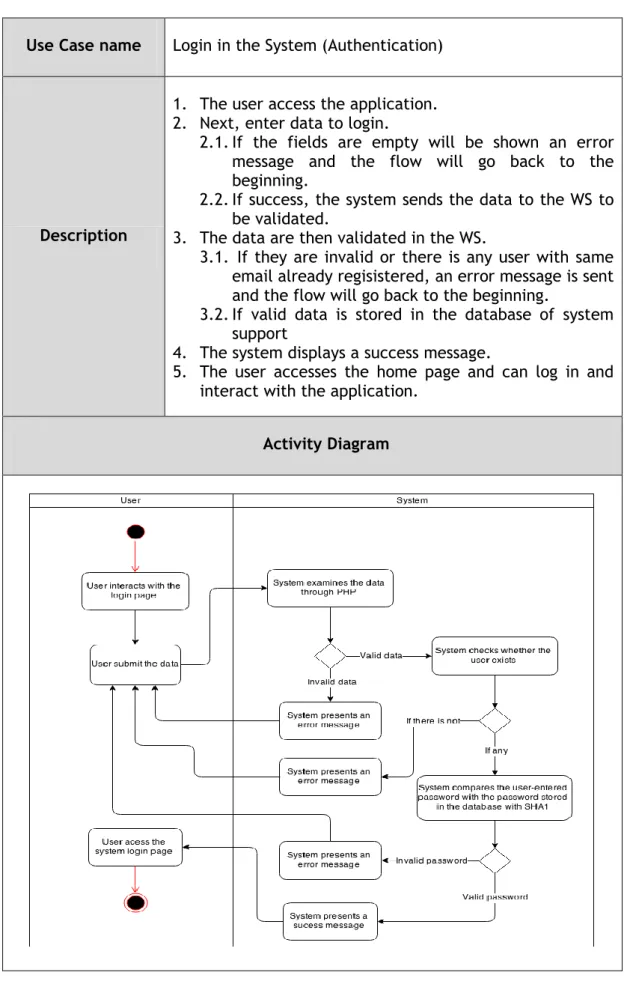
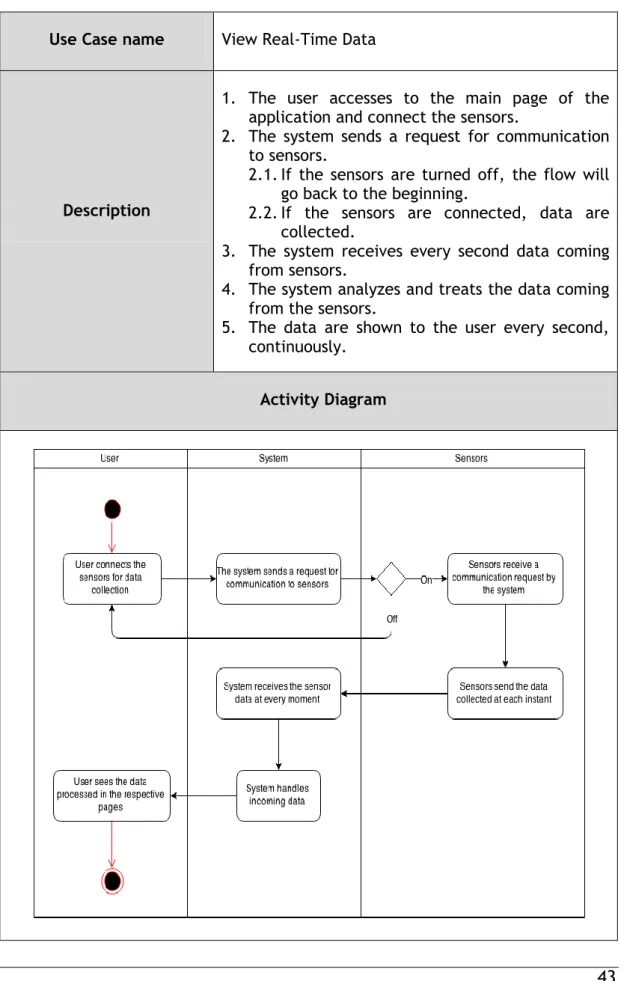
This section includes and discusses some of activity diagrams which allow understanding the workflow of some of the most relevant characteristics of the system. They were drawn from previously identified use cases and feature process like as the registration and login of one user or the collect, processing sensor data viewing. The use cases are based on: (i) Login in the System; (ii) View Real-Time Data; (iii) View Sensor Data; (iv) View Historical Data.
The Table IV describes the interaction between the user and the system during the registration activity (MA). The activity on the user authentication system (MA and CA) is then presented on Table V. In the Table VI describes the activity of the visualization sensor data in real time (MA). In Table VII is described on the activity view of sensor data, but in this case is not in real time, where data have some delay getting application (CA), while in Table VIII is presented the process of viewing historical data (MA and CA). Finally the Table IX describes the firing activity of alert notifications when there are occurrences.
41
Table IV - Diagram and description for the User Registration activity in the system.
Use Case name Login in the System (Registration)
Description
1. The user access the application.
2. Then, enter all the data that are asked in the form. 2.1. If the fields are not filled in will be shown an
error message and the flow will go back to the beginning
2.2. If successful, the system sends the data to the WS to be validated
3. The data are then validated in the WS.
3.1. If they are invalid or there is any user with same email already registered, an error message is sent and the flow will go back to the beginning.
3.2. If valid data is stored in the database of system support.
4. The system displays a success message.
5. The user accesses the home page and can log in and interact with the application.
Table V - Diagram and description for the User Authentication activity in the system.
Use Case name Login in the System (Authentication)
Description
1. The user access the application. 2. Next, enter data to login.
2.1. If the fields are empty will be shown an error message and the flow will go back to the beginning.
2.2. If success, the system sends the data to the WS to be validated.
3. The data are then validated in the WS.
3.1. If they are invalid or there is any user with same email already regisistered, an error message is sent and the flow will go back to the beginning.
3.2. If valid data is stored in the database of system support
4. The system displays a success message.
5. The user accesses the home page and can log in and interact with the application.
43
Table VI - Diagram and description for the View Data in Real-Time activity in the system.
Use Case name View Real-Time Data
Description
1. The user accesses to the main page of the application and connect the sensors.
2. The system sends a request for communication to sensors.
2.1. If the sensors are turned off, the flow will go back to the beginning.
2.2. If the sensors are connected, data are collected.
3. The system receives every second data coming from sensors.
4. The system analyzes and treats the data coming from the sensors.
5. The data are shown to the user every second, continuously.
![Figure 1 - Infant mortality rates, 2010 and decline 1970-2010 [3].](https://thumb-eu.123doks.com/thumbv2/123dok_br/19170507.940977/24.892.155.759.474.844/figure-infant-mortality-rates-decline.webp)