Oncological and functional outcomes of salvage renal
surgery following failed primary intervention for renal cell
carcinoma
_______________________________________________
Fernando G. Abarzua-Cabezas1, Einar Sverrisson1, Robert De La Cruz1, Philippe E. Spiess1, Peter Haddock1, Wade J. Sexton1
1H. Lee Moffitt Cancer Center, Tampa, FL 33612, USA
ABSTRACT ARTICLE INFO
______________________________________________________________ ______________________
Purpose: To assess the oncologic and functional outcomes of salvage renal surgery following failed primary intervention for RCC.
Materials and Methods: We performed a retrospective review of patients who un-derwent surgery for suspected RCC during 2004-2012. We identified 839 patients, 13 of whom required salvage renal surgery. Demographic data was collected for all pa-tients. Intraoperative and postoperative data included ischemic duration, blood loss and perioperative complications. Preoperative and postoperative assessments included abdominal CT or magnetic resonance imaging, chest CT and routine laboratory work. Estimated glomerular filtration rate (eGFR) was calculated according to the Modifica-tion of Diet in Renal Disease equaModifica-tion.
Results: The majority (85%) of the patients were male, with an average age of 64 ye-ars. Ten patients underwent salvage partial nephrectomy while 3 underwent salvage radical nephrectomy. Cryotherapy was the predominant primary failed treatment mo-dality, with 31% of patients undergoing primary open surgery. Pre-operatively, three patients were projected to require permanent post-operative dialysis. In the remaining 10 patients, mean pre- and postoperative serum creatinine and eGFR levels were 1.35 mg/dL and 53.8 mL/min/1.73 m2 compared to 1.43 mg/dL and 46.6 mL/min/1.73 m2, respectively. Mean warm ischemia time in 10 patients was 17.4 min and for all patients, the mean blood loss was 647 mL. The predominant pathological stage was pT1a (8/13; 62%). Negative surgical margins were achieved in all cases. The mean follow-up was 32.9 months (3.5-88 months).
Conclusion: While salvage renal surgery can be challenging, it is feasible and has ade-quate surgical, functional and oncological outcomes.
Key words:
Kidney; General Surgery; Carcinoma, Renal Cell; Salvage Therapy
Int Braz J Urol. 2015; 41: 147-54
_____________________
Submitted for publication: March 17, 2014
_____________________
Accepted after revision: October 10, 2014
INTRODUCTION
The clinical and financial burden of renal cell carcinoma (RCC) is significant, with its in-cidence continuing to rise worldwide during the last three decades. In 2011, there were over 60,000 new cases and 13,000 deaths attributed to RCC in the United States alone (1). This rise in diagnosis is
likely, at least in part, related to the increased de-tection of small asymptomatic renal masses using cross sectional abdominal imaging often for unre-lated abdominal complaints.
treatment options such as radiofrequency ablation and cryotherapy are commonly used (1, 2), there are limited data describing their long-term logic outcomes. In comparison, the positive onco-logic outcome data for radical or partial nephrec-tomy are consistent, established and mature (3, 4). Following surgery, cryoablation and radio-frequency ablation, the rate of local recurrences are approximately 3, 5 and 8%, respectively (5, 6). Importantly, the effective management of these recurrences can be challenging, particularly with the use of repeated ablative modalities that tend to have a higher failure rate (7, 8). An alternate cli-nical approach for the treatment of suspected RCC recurrence is salvage partial nephrectomy (SPN). Repeated salvage procedures can achieve adequa-te functional and oncologic outcomes but are sur-gically challenging and associated with surgical complications (9-11). Currently limited outcome data are available for salvage renal surgery. As such, in the present study we sought to evaluate the functional and oncologic outcomes following salvage renal surgery at a large, urban, tertiary referral center.
MATERIALS AND METHODS
Institutional review board approval was obtained for the purposes of this study. We retros-pectively reviewed the records of 839 patients who underwent surgery for suspected RCC from 2004-2012. From this cohort, we identified 13 patients (1.5%) who underwent salvage renal surgery.
Demographic data was collected for this group of 13 patients. Operative reports and outpa-tient notes were reviewed for intraoperative and pos-toperative data, including ischemic duration, blood loss and perioperative complications. Preoperative and postoperative assessments included abdominal CT or magnetic resonance imaging, chest CT and routine laboratory work. Plain films, bone scans, and brain-imaging studies were performed if indicated for accurate preoperative staging. Estimated glome-rular filtration rate (eGFR) was calculated (in mL/ min/1.73 m2) according to the Modification of Diet
in Renal Disease equation:
eGFR=186(serum creatinine – 1.154)(age-0.203)
For female patients eGFR was multiplied by a factor of 0.742, while for African-American patients an adjustment factor of 1.212 was used.
Local recurrence with inferior vena cava tumor thrombus was present in 3 of our patients, and thrombi were classified according to Nieves and Zincke (level I-IV) (12).
RESULTS
A retrospective review of our institutio-nal kidney cancer database identified 13 patients who underwent salvage renal surgery between 2004-2012. Of these, three of 13 (23%) required a radical nephrectomy. The majority of the pa-tients (11/13; 85%) were male, with an average age of 64 years (Table-1). Cryotherapy was the main primary treatment modality in six of 13 (46%) patients, through an open, percutaneous or laparoscopic approach. In contrast, four of 13 (31%) patients underwent open partial nephrec-tomy as a primary treatment modality (Table-2). In the patients included in the study, 11/13 (84.6%) had clinically diagnosed hypertension. Si-milarly, 3/13 patients (23.1%) were diagnosed as diabetic. Three patients (23.1%) had both hyper-tension and diabetes (Table-3). The predominance of hypertension and diabetes in our patient cohort is reflected in the profile drugs administered to patients (which included antihypertensives, diure-tics, ACE inhibitors, AT1 antagonists, statins and other various agents) (Table-4).
In 12/13 patients (92.3%), recurrence occurred at the same location as the primary tumor (Table-3). In 11/13 patients (84.6%) new primary tumors occurred in the same location as the initial tumor (Table-3).
While of interest, proteinuria was not di-rectly assessed in our study cohort. However, in 10 non-dialysis patients, mean pre- and posto-perative serum creatinine and eGFR levels were 1.35 mg/dL and 53.8 mL/min/1.73m2 compared
to 1.43 mg/dL and 46.6 mL/min/1.73m2,
Table 1 - Summary of patient demographics, clinical data, surgical treatments and pathology.
Mean age (n) 64.2 (13)
Gender (M/F) 11/2
Primary treatment (n) Open partial Nx 4
Open CA (previous partial nephrectomy) 1
Laparoscopic CA 3
Percutaneous CA 2
Percutaneous RFA 2
Hand assisted laparoscopic partial Nx 1
Serum creatinine (mg/mL); (median; range; n=10) Pre-op 1.4 (0.8-2.5)
Post-op 1.4 (0.8-2.6)
eGFR (mL/min/1.73m2); (median; range; n=10) Pre-op 53.9 (41-60)
Post-op 46.7 (15-60)
Tumor stage (n) pT1a 8
pT1b 2
pT3b 3
Grade* (n) 2 2
3 8
Pathology (n) Clear cell 8
Papillary 2
Oncocytoma 2
Fibrosis 1
Negative margins (n) 13
Follow up (months) 32.9
Distant recurrence (n) 1
*Grading data were unavailable for 3 patients due to their final pathology (2 oncocytomas and 1 fibrosis)
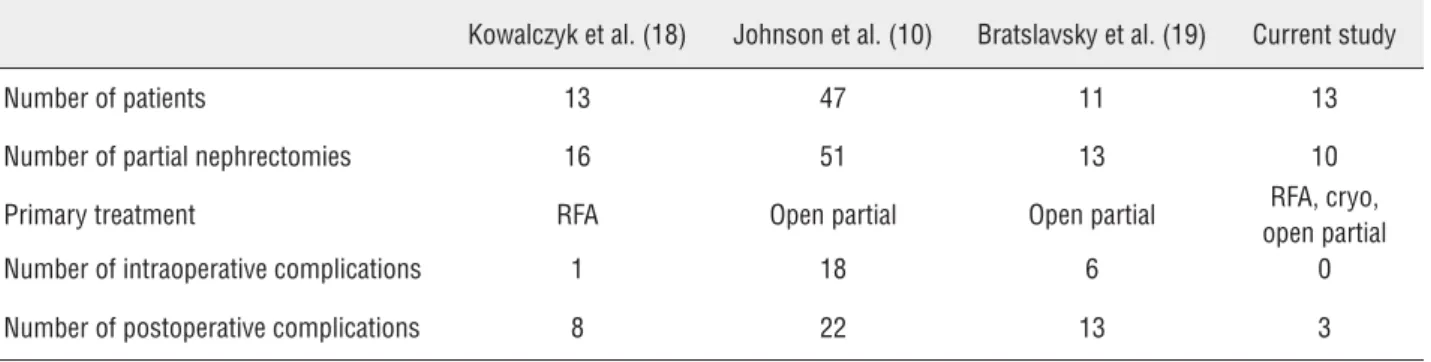
Table 2 - Intra and postoperative complication rates in previously published studies.
Kowalczyk et al. (18) Johnson et al. (10) Bratslavsky et al. (19) Current study
Number of patients 13 47 11 13
Number of partial nephrectomies 16 51 13 10
Primary treatment RFA Open partial Open partial RFA, cryo, open partial Number of intraoperative complications 1 18 6 0
each had a marginal renal function prior to sal-vage surgery and IVC tumor thrombus. A single patient had a solitary kidney.
The predominant pathological stage was pT1a (8/13; 62%), while the predominant histo-logy was clear cell carcinoma with a Fuhrman grade 3 (Table-1). Oncocytoma was reported in 2 cases, while only a single patient had no evi-dence of malignancy in the resected tissue (Ta-ble-1). A negative surgical margin was achieved
in all cases. In our series, three patients pre-sented with inferior vena cava tumor thrombus, level II and III in 1 and 2 patients, respectively.
The mean follow-up was 32.9 months (3.5-88 months) and during this period only 1 patient experienced cancer recurrence 6 months following the salvage procedure. The patient underwent a combination of radiation therapy to a lumbar verte-bral metastasis and tyrosine receptor kinase thera-py. Three of our patients experienced complications
Table 3 - Details of primary treatment, tumor stage, size of relapse, solitary kidney and pathologic stage for individual patients.
Patient Primary treatment
Tumor stage
Tumor size at relapse (cm) Primary tumor location Location of relapse Location of new primaries Solitary kidney Pathologic stage Tumor size at pathology (cm) 1 Laparoscopic cryo
cT1a 3.5 Right Posterior
Upper Pole
Same Same Solitary
(Anatomical)
pT1a NXMX 3.3
2 Laparoscopic
cryo
cT1ab 4.7 Left Anterior
Mid Pole
Same Same Solitary
(Anatomical)
pT1b NXMX 4.7
3 Laparoscopic
cryo
pT1a 2.5 Left Anterior
Mid Pole
Same Same Solitary
(Aantomical)
pT1a NXMX 2.5
4 Renal
cryotherapy
cT1b 6.5 Right Medial
Mid Pole
Same Same Solitary pT1b NXMX 6.5
5 Left partial
nephrectomy
cT1a 4 Left Upper Pole New New Solitary - 4.5
6 Right hand
assisted partial nx
pT1a 4 Right Poster
Lower Pole
Same Same Solitary pT1aNXMX 4.0
7 2 open+cryo pT3bN0Mx 5.5 Right Upper
Pole
Same Same Solitary
(Functional)
PT3c NXMX 5.0
8 RFAx 2 - 3.5 Left
Posterolateral Upper Pole
Same Same Solitary
(Anatomical)
- 3.5
9 right open
partial
pT3bN0Mx 10.5 Right Upper
Pole
Same New Solitary
(Functional)
pT3b N0MX 10.5
10 Right open
partial
pT1aNxMx 1.9 Right Lateral
Upper Pole
Same Same Solitary
(anatomical)
pT1a NXMX 1.3
11 RFA Left pT1aN0Mx 1.5 Left Anterior
Upper Pole
Same Same Multi
(Anatomical)
- 1.3
12 Open partial pT1b 5.5 Right Mid/
Lower Pole
Same Same Solitary
(Anatomical)
pT1bNXMX 6x5.4
13 RFAx2 pT1aN0M0 2.5 Right mid pole
Table 4 - Patient comorbidities and administered drugs.
Patient Hypertension? Diabetes? Drugs administered
1 Yes Yes Aspirin (analgesic), carvedilol (b-blocker), Crestor (statin)
2 Yes Yes Aspirin (analgesic), Furosemide (diuretic), Glimepiride (sulfonylurea antidiabetic), Lupron (gonadotropin-releasing hormone antagonist, Metformin (antidiabetic)
3 Yes No Omeprazole (proton pump inhibitor), metoprolol (b-blocker/antihypertensive), Lisinopril (ACE inhibitor), Fexofenadine (antihistamine), atorvastatin (statin), Amlodipine (Ca channel antagonist - antihypertensive)
4 Yes No Amlodipine (Ca channel antagonist – antihypertensive), Carvedilol (b-blocker), Lisinopril (ACE inhibitor), Simvastatin (statin)
5 Yes No Atacand/HCT (AT1 inhibitor/diuretic), Spiriva (anticholinergic), Symbicort (COPD)
6 Yes Yes Allopurinol (xanthine oxidase inhibitor), Amlodipine (Ca channel antagonist – antihypertensive), Bisoprolol (b-blocker antihypertensive), Pantoprazole (proton pump inhibitor)
7 Yes No Aspirin (analgesic), Lisinopril (ACE inhibitor), Toprol (b-blocker), Simvastatin (statin)
8 No No None
9 Yes No Amlodipine (Ca channel antagonist – antihypertensive)
10 No No Metoprolol (b-blocker antihypertensive), Hydrochlorothiazide (diuretic), Mirtazapine (antidepressant/
antiemtic), Fenofibrate (PPARa activator – cholesterol lowering)
11 Yes No Cardizem (Ca channel antagonist – antihypertensive), Triamterene (potassium sparing diuretic)
12 Yes No Hydrochlorothiazide (diuretic)
13 Yes No Lipitor (statin), Plavix (P2PY12 platelet inhibitor), Lotrel (Ca channel inhibitor – antihypertensive), Toprol (b-blocker), Hydralazine (antihypertensive), Hydrochlorothiazide (diuretic).
including prolonged ileus, cecal volvulus and a urinary fistula. All of the patients were treated conservatively consisting of nasogastric tube de-compression, endoscopic decompression and dou-ble J stent (Figure-1).
DISCUSSION
Partial nephrectomy is currently conside-red the gold standard for the effective manage-ment of small renal masses (SRMs). In contrast, radical nephrectomy is utilized successfully in clinical scenarios in which partial nephrectomy is either not indicated or not possible from a techni-cal perspective. Despite the benefits of partial ne-phrectomy and the equivalent oncologic outcomes
with radical nephrectomy, it remains underused in the treatment of small renal masses.
Ablative procedures are established moda-lities for the treatment of SRMs. A number of pu-blished studies have described excellent oncologic efficacy with ablative techniques during short and intermediate follow-up periods (5). The majority of published studies describing long term data for oncologic control are relatively small with limited follow-up and lack tumor pathologic diagnosis or are population based-studies that lack substantial details regarding patient comorbidities and demo-graphics. However, intermediate oncological ou-tcomes support the use of this strategy (6).
of a solitary kidney, bilateral renal masses or re-nal insufficiency. However, these patients present challenges should they require subsequent surgery due to disease recurrence or new tumors. A recent large meta-analysis by Kunkle et al. demonstrated an increased risk of local recurrence after cryoa-blation and RFA compared to partial nephrectomy (13). Many of these cases of recurrence require additional treatments and repeat ablation is used most commonly. However, repeat ablation may not be advisable due to repeated ablation failures, tumor growth after ablation, large tumor size, di-sease progression, hilar location of a new tumor and proximity of heat sensitive structures. Ano-ther possibility may simply include the unwilling-ness of the patient to undergo the same treatment modality that has failed once already. In these ca-ses, surgical intervention may be required.
There are limited reports describing the feasibility and difficulties of surgery in cases of ablation failure. These surgeries are technically challenging and complicated by severe fibrosis surrounding the previously ablated lesion. Dissec-tions are difficult due to distortion of normal ana-tomical planes and a high rate of pleural injury (14). Karam et al. recently evaluated the feasibili-ty, safety and pathologic, radiologic and
functio-nal outcomes of salvage surgery after prior refunctio-nal mass ablation therapy (15). They concluded that failed renal ablation therapy can be salvaged with partial or radical nephrectomy with good interme-diate outcomes. As a cautionary note, however, they noted that a high rate of adverse events and a requirement for longer follow-up in these patients. As such, patients with multifocal bilateral tumors electing ablative therapy as a primary treatment modality should be aware that new tumors may form in locations not amenable to repeat ablation. In these cases, the challenges involved in salvage surgery are not insignificant.
Barwari et al. (16) recently reviewed the role of different focal treatment modalities in the mana-gement of small renal masses. However, there are li-mited reports of adequate oncological follow-up or standardized assessment of complications (16). The incidence of local recurrence after open surgery or ablative procedures varies depending on the series (5, 8, 16). In the majority of the cases, post ablation recurrences are treated with a repeat ablation proce-dure. However, in selected scenarios, surgery is consi-dered to be an efficacious management option. Such cases include rapid tumor growth following primary treatment, or tumors in unfavorable locations such as the collecting system or the renal hilum.
Recently published data have described the long-term impact on cardiac and renal function in patients who underwent radical nephrectomy rather than nephron sparing procedures (8, 9, 16). Kaushik et al. (17) demonstrated a four-fold increase in the risk of developing stage IV CKD following radical nephrectomy in a univariate and multivariable analysis compared with partial ne-phrectomy following surgery for a benign renal mass (17). In a major clinical study, Johnson de-monstrated an adequate functional outcome with minimal decline in serum creatine and creatini-ne clearance following partial creatini-nephrectomy (10). Furthermore, Weight et al. (11) demonstrated an increased incidence of cardiovascular and renal complications, including chronic kidney disease and a requirement for postoperative dialysis, in patients who underwent radical nephrectomy as compared with nephron sparing surgery (NSS) (11). The health care impact of repeated NSS may be greater compared to undertaking an initial partial nephrectomy, due to the inherent complications of reoperative surgery and associated prolonged hos-pital stay. However, hemodialysis and its associa-ted complications cost approximately $70,000 per year, per patient. As such, reoperative NSS (which is significantly less costly), may be a more cost effective option compared to dialysis (18).
Salvage surgery can be technically chal-lenging and is often associated with significantly higher complication rates when compared with procedures performed in a virgin surgical field. In particular, an increased incidence of injury to ad-jacent organs such as the bowel, spleen, pancreas, liver and diaphragm, has been described (10, 11). Analyses of recurrent disease following thermal ablation have demonstrated that cryoablation is often associated with a significant degree and inci-dence of fibrosis and adhesive scarring around the kidney as compared to radiofrequency ablation, in which this side effect tends to be less extensive (19).
Two of our patients had multiple procedu-res before the salvage procedure including repea-ted open procedures and cryotherapy treatment. However, it did not preclude an increased number of complications.
In our series, three patients experienced significant local progression of their tumors with
IVC involvement and subsequently underwent ra-dical nephrectomy and IVC thrombectomy. Two of the patients had failed initial open renal cryoa-blation and the remaining patient failed an initial complex partial nephrectomy. The finding of such significant disease progression illustrates how im-portant it is for surgeons managing renal tumors to select appropriate therapeutic strategies based on the characteristics of the primary tumor.
Three post-operative complications were managed conservatively. However, no major in-traoperative complications or injuries to any ad-jacent organs were reported. In contrast, in other published studies intraoperative and postoperative complications occurred in approximately 44% of cases (Table-2). Six of our patients received cryo-ablation delivered by different approaches. An increased complication rate in patients previou-sly treated with cryotherapy has been described previously. However, in our study group the in-traoperative complications were significantly less frequent.
Following the salvage renal surgery patho-logy revealed nonmalignant tumors or findings including oncocytoma in two patients and fibrosis in 1 patient. Park and Weight (11, 20) investiga-ted the role of the imaging studies and biopsies in patients who underwent RFA or cryoablation. The authors concluded that for cryoablation, con-trast enhancement was a reliable tool and follow--up biopsies were of low value whereas after RF ablation, radiologic findings were not reliable and follow-up biopsies had an impact on further de-cision making (11, 14). In our series, none of our patients underwent a confirmatory biopsy before the salvage procedure. Surgical decisions were ba-sed on supporting imaging studies.
CONCLUSIONS
Data from this study illustrates that while a re-operation can be challenging, it is both feasible and associated with adequate surgical, functional and oncologic outcomes. While the technically challenging nature of salvage renal procedures following a primary treatment can be associated with an increased frequency of complications, this is not associated with significant renal dysfunc-tion or adverse oncologic outcomes.
ABBREVIATIONS
SRM = Small renal mass
SPN = Salvage partial nephrectomy
RCC = Renal cell carcinoma
eGFR = Estimated glomerular filtration rate
EBL = Estimated blood loss
NSS = Nephron sparing surgery
CONFLICT OF INTEREST
None declared.
REFERENCES
1. Singer EA, Gupta GN, Srinivasan R. Targeted therapeutic strategies for the management of renal cell carcinoma. Curr Opin Oncol. 2012;24:284-90.
2. Weld KJ, Landman J. Comparison of cryoablation, radiofrequency ablation and high-intensity focused ultrasound for treating small renal tumours. BJU Int. 2005;96:1224-9.
3. El Dib R, Touma NJ, Kapoor A. Cryoablation vs radiofrequency ablation for the treatment of renal cell carcinoma: a meta-analysis of case series studies. BJU Int. 2012;110:510-6.
4. Shuch B, Linehan WM, Bratslavsky G. Repeat partial nephrectomy: surgical, functional and oncological outcomes. Curr Opin Urol. 2011;21:368-75.
5. Campbell SC, Novick AC, Belldegrun A, Blute ML, Chow GK, Derweesh IH, et al. Practice Guidelines Committee of the American Urological Association. Guideline for management of the clinical T1 renal mass. J Urol. 2009;182:1271-9.
6. Goel RK, Kaouk JH. Probe ablative treatment for small renal masses: cryoablation vs. radio frequency ablation. Curr Opin Urol. 2008;18:467-73.
7. Nguyen CT, Lane BR, Kaouk JH, Hegarty N, Gill IS, Novick AC, et al. Surgical salvage of renal cell carcinoma recurrence after thermal ablative therapy. J Urol. 2008;180:104-9; discussion 109.
8. Breda A, Anterasian C, Belldegrun A. Management and outcomes of tumor recurrence after focal ablation renal therapy. J Endourol. 2010;24:749-52.
9. Russo P. Oncological outcomes of partial nephrectomy for renal carcinoma greater than 4 cm. Curr Opin Urol. 2011;21:362-7. 10. Johnson A, Sudarshan S, Liu J, Linehan WM, Pinto PA,
Bratslavsky G. Feasibility and outcomes of repeat partial nephrectomy. J Urol. 2008;180:89-93; discussion 93.
11. Weight CJ, Larson BT, Fergany AF, Gao T, Lane BR, Campbell SC, et al. Nephrectomy induced chronic renal insufficiency is associated with increased risk of cardiovascular death and death from any cause in patients with localized cT1b renal masses. J Urol. 2010;183:1317-23.
12. Neves RJ, Zincke H. Surgical treatment of renal cancer with vena cava extension. Br J Urol. 1987;59:390-5.
13. Kunkle DA, Uzzo RG. Cryoablation or radiofrequency ablation of the small renal mass: a meta-analysis. Cancer. 2008;113:2671-80. 14. Kowalczyk KJ, Hooper HB, Linehan WM, Pinto PA, Wood
BJ, Bratslavsky G. Partial nephrectomy after previous radio frequency ablation: the National Câncer Institute experience. J Urol. 2009;182:2158-63.
15. Karam JA, Wood CG, Compton ZR, Rao P, Vikram R, Ahrar K, et al. Salvage surgery after energy ablation for renal masses. BJU Int. 2015;115:74-80.
16. Barwari K, de la Rosette JJMCH, Laguna MP. Focal therapy in renal cell carcinoma: which modality is best? Eur Urol. 2011; 10(Suppl):e52-57.
17. Kaushik D, Kim SP, Childs MA, Lohse CM, Costello BA, Cheville JC, et al. Overall survival and development of stage IV chronic kidney disease in patients undergoing partial and radical nephrectomy for benign renal tumors. Eur Urol. 2013;64:600-6. 18. Liu NW, Khurana K, Sudarshan S, Pinto PA, Linehan WM,
Bratslavsky G. Repeat partial nephrectomy on the solitary kidney: surgical, functional and oncological outcomes. J Urol. 2010;183:1719-24.
19. United States Renal Data System. Excerpts from USRDS 2009 Annual Data Report. U.S. Department of Health and Human Services. The National Institutes of Health, National Institute of Diabetes and Digestive and Kidney Diseases. Am J Kidney Dis. 2010;55(Suppl 1):S1
20. Park S, Strup SE, Saboorian H, Cadeddu JA. No evidence of disease after radiofrequency ablation in delayed nephrectomy specimens. Urology. 2006;68:964-7.