*Corresponding author: H. Almeida. Laboratório de Tecnologia Farmacêutica, Faculdade de Farmácia, Universidade do Porto. Rua de Jorge Viterbo Ferreira n.º 228, 4050-313 – Porto, Portugal. E-mail: [email protected]
A
vol. 48, n. 3, jul./sep., 2012
Comparative study of sustained-release lipid microparticles and
solid dispersions containing ibuprofen
Hugo Almeida
*, Maria Helena Amaral, Paulo Lobão
Pharmaceutical Technology Laboratory, Drug Sciences Department, Faculty of Pharmacy, University of Porto, Portugal
Ibuprofen is one of the most important non-steroidal anti-inlammatory drugs used in the treatment of inlammatory diseases. In its pure state, ibuprofen presents poor physical and mechanical characteristics and its use in solid dosage forms needs the addition of excipients that improve these properties. The selection of the best excipients and the most suitable pharmaceutical dosage form to carry ibuprofen is very important for the industrial success of this drug. Given these factors, lipid microparticles and solid dispersions of ibuprofen with cetyl alcohol, stearic acid, and hydrogenated castor oil were prepared. These formulations were intended to improve the physical and mechanical characteristics and to sustain the release of this drug. Physical mixtures were also prepared with the same ingredients in similar proportions. The solid dispersions of ibuprofen/stearic acid and ibuprofen/hydrogenated castor oil showed the best low characteristics compared with pure ibuprofen. Further, gelatin capsules illed with lipid microparticles and solid dispersions were submitted to dissolution tests in order to study the inluence of the prepared systems in the release proiles of ibuprofen. Prolonged release of ibuprofen was achieved with the lipid microparticles and solid dispersions prepared with the different types of excipients.
Uniterms: Ibuprofen/solid dispersions/release proile. Ibuprofen/lipid microparticles/release proile.
Excipients. Cetyl alcohol. Stearic acid. Hydrogenated castor oil.
O ibuprofeno é um dos antiinlamatórios não esteróides mais utilizados no tratamento de patologias associadas a processos inlamatórios. Este fármaco, quando no seu estado puro, apresenta características físicas e mecânicas pouco satisfatórias e a sua utilização em formas sólidas só é possível se forem adicionados excipientes que permitam melhorar estas propriedades. A seleção dos excipientes ideais e da forma farmacêutica mais adequada para veicular o ibuprofeno é fundamental para o sucesso industrial deste fármaco. Tendo em conta estes fatores, prepararam-se micropartículas lipídicas e dispersões sólidas de ibuprofeno com cada um dos seguintes excipientes: álcool cetílico, ácido esteárico e óleo de rícino hidrogenado. Estas formulações tinham por inalidade melhorar as características físicas e mecânicas e prolongar a liberação deste fármaco. Foram, também, preparadas misturas físicas do ibuprofeno com os mesmos excipientes e nas mesmas proporções. As dispersões sólidas de ibuprofeno/ácido esteárico e as dispersões sólidas de ibuprofeno/óleo de rícino hidrogenado foram aquelas que apresentaram melhores características de escoamento comparativamente com o ibuprofeno puro. Por outro lado, foram preparadas cápsulas de gelatina com as diferentes micropartículas lipídicas e dispersões sólidas e submetidas a ensaios de dissolução com o objetivo de estudar a inluência dos sistemas preparados nos peris de liberação do ibuprofeno. A liberação prolongada do ibuprofeno foi conseguida nas diferentes micropartículas lipídicas e dispersões sólidas preparadas com os diferentes excipientes.
Unitermos: Ibuprofeno/dispersões sólidas/peril de liberação. Ibuprofeno/micropartículas lipídicas/peril
INTRODUCTION
Ibuprofen (IB) is a drug of the non-steroidal
anti-in-lammatory group (NSAIDs), belonging to the sub-group of drugs derived from propionic acid (Oswald, Guimarães, 2001). It is generally well tolerated, but may trigger head -aches, stomach pain, vomiting, diarrhea, stomach, and duodenal ulcers (Brunton et al., 2007). Therefore, there
is a need to minimize these adverse effects and to prolong its anti-inlammatory action.
There are two key strategies to alter the release and subsequent absorption of drugs: one is based on modiica
-tion of the drug, and the other is based on modiica-tion of
the dosage form (Lachman, 2001).
The preparation of solid dispersions is a strategy to change the release and subsequent drug absorption (Chiou,
Riegelman, 1971a). The drug is well dispersed in a matrix
of a material that modiies its release, encapsulated in the
form of particles or compressed to form tablets. For the same purpose, lipid microparticles were prepared using the emulsion/chilling method.
The matrix systems are classiied according to their chemical nature and release mechanism. Hydrophilic ma -trices absorb water and form a gel prior to dissolution (e.g.,
methylcellulose, agar-agar, alginates, and carbomer) and hydrophobic matrices produce porous solid structures in which the drug is dispersed. Hydrophobic matrices include the inert matrices, which are insoluble in gastric juices (e.g., cellulose acetate, ethyl cellulose, etc.), and lipid matrices that undergo erosion, gastric enzyme lipolysis, or solubilization by ionization (e.g., hydrogenated castor oil, stearic acid, and cetyl alcohol). The choice of matrix is very important, because this choice will inluence the ability of the formulation to control the drug release and thereby sustain the therapeutic action over time (Liberal, 2008; Salomen, 1980). Waxes and other related lipidic ma
-terials such as cetyl alcohol, stearic acid, and hydrogenated castor oil form matrices that control the release of drugs by diffusion through pores or by erosion (Rowe et al., 2003).
Solid dispersions
The term “solid dispersion” describes the disper-sion of one or more active substances in a carrier or inert
solid matrix prepared by melting, using solvents, or by a
solvent-melting method (Chiou, Riegelman, 1971b).
Solid dispersions may have several advantages and
pharmaceutical applications, including: the uniform and
homogeneous distribution of small quantities of drug in the solid state; the stabilization of unstable drugs; the disper
-sion of liquid or gaseous compounds; and the production
of prolonged release systems or the increase of drug dis -solution rates.
The combination of a slightly soluble drug in wa -ter with a wa-ter-soluble matrix results in a rapid-release
drug formulation (e.g., solid dispersion of ibuprofen/PEG 4000 or ibuprofen/PEG 8000), can be used to increase the dissolution rate of the drug (Newa, 2008). Another
example is the solid dispersion of ibuprofen in Poloxamer
407 in order to increase the solubility and consequently the dissolution rate of the drug (Newa, 2008). Moreover, the combination of a water-soluble drug with a slightly
water-soluble matrix sustains the drug release from the matrix. The characteristics of drug release can be altered
by changing the ratio between the drug and excipient
(Ford, Rubinstein, 1978).
To disperse a drug in an excipient, several methods can be used, including the solvent method (Ford, 1986),
the fusion method (Sharma, Joshi, 2007; Yi et al., 2008),
the solvent-melting method, as well as freeze- and spray-drying technology (Park et al., 2009).
Lipid microparticles
Microparticles, as seen in solid dispersions, arise
from the need to overcome possible adverse effects and to increase the short half-life of some drugs. The main
advantages are the fact that they present a great biocompat
-ibility, low toxicity, high stability, and improve eficacy, absorption, and bioavailability. They can also facilitate the
administration, masking the organoleptic properties and protecting the drug (Kumar, 2000).
The microparticles have dimensions that can vary
between 1 µm and 1000 µm; however, some authors have considered particles larger than 1 mm as microparticles.
The microparticles can be classiied as reservoirs or matrices. In the irst case, the drug is at the core and is surrounded by a layer or ilm coating, which can be semi-permeable or completely semi-permeable. In the second case, the drug is homogeneously dispersed in a matrix of irregu
-lar geometry and that is sometimes porous. The drug can
be found on the surface of the matrix in direct contact with the external environment. There are several methodologies
for the production of microparticles relecting the physico -chemical properties of the drug in order to maintain their
unique therapeutic properties. However, there are other
factors to take into account such as: the environmental
impact of the process; ease of implementation; availability of equipment and resources; cost; and process eficiency.
The methods for the production of lipid microparticles
in-clude: spray-drying technology (Mahajan, Gattani, 2009);
emulsion/chilling, the solvent method (Soppimath, 2001); the engineering division, luid supercritical (Kang et al., 2008); atomization and modiied atomization; luidized bed (Gouin, 2004); and extrusion.
MATERIAL AND METHODS
Material
Ibuprofen (Lot No. 0507939, Roig Farma, Spain), cetyl alcohol (Lanette 16) (Lot No. S383040010, José M. Vaz Pereira SA, Portugal), stearic acid (Lot No. 062,821, Acofarma, Spain), hydrogenated castor oil (Cutina HR®) (Lot No. CG42720170, José M. Vaz Pereira SA, Portugal),
monosodium phosphate (Lot No. 0194, José M. Vaz Perei
-ra, SA, Portugal), disodium phosphate anhydrous (Lot No. 130470JR, José M. Vaz Pereira, SA, Portugal), propylene glycol (Lot No. VF251920D4, José M. Vaz Pereira, SA, Portugal) and chloroform (Lot No. 7B128128C, Pronolab, José M. Vaz Pereira, SA, Portugal). Gelatin capsules No. 0 (Lot No. 9328900023, Guinama, Spain).
Methods
Preparation of solid dispersions containing ibuprofen Solid dispersions at a 1:2 ratio of ibuprofen/ex -cipient were prepared using the fusion method. This ratio was used to make certain that the excipient contained the ibuprofen, in order to obtain the sustained release of the ibuprofen.
Excipient melting (variable temperature according to the melting point of the excipients) on a hot plate under
stirring was used, followed by addition of ibuprofen to the excipient cast, slow cooling for solidiication of the mass,
and grinding.
Gelatin capsules No. 0 were illed with these solid dispersions (method - capsule illing plate).
Preparation of lipid microparticles containing ibuprofen
Lipid microparticles of 1:2 ibuprofen/excipient ratio were prepared using the emulsion/chilling method. Excipients were melted (variable temperature according to the melting point of the excipients) on a hot plate un-der stirring at 600 rpm (in orun-der to achieve particles with
micrometric size) and ibuprofen was added to the molten excipient. The oil phase was slowly added to a 1.5 % (w/w)
Tween® 80 solution at the same temperature, followed by the quick addition of a mixture of water:propylene glycol
(75:25) at 0 °C, maintaining the agitation at 600 rpm. The
microparticles obtained were iltered and washed with water. Gelatin capsules No. 0 were illed with these lipid
microparticles (method - capsule illing plate).
Preparation of physical mixtures containing ibuprofen Physical mixtures of 1:2 ibuprofen/excipient were also prepared, using a Turbula WAB T2F (Switzerland)
for 15 minutes.
Determination of particle size-distribution
The test was performed in the Retsh AS 200 Digit (Germany), for the dry sieving. Sieves with the following
mesh diameter were chosen: 1000 µm, 500 µm, 355 µm,
180 µm, 125 µm, and 90 µm. Samples were weighed (50 g)
and submitted to a 2.0 mm amplitude vibration, for two
cycles of 5 minutes. Tests were performed in triplicate, and
the results shown are the average of the obtained values.
Determination of flow rate and repose angle
For these tests, a Granulate Flow Tester, Erweka Type: GT / GTB (Germany) was used. A funnel with a
metal tip with a hole of 15 mm and 50 g of solid disper-sions or lipid microparticles were used. The tests were performed in triplicate, with the results shown being the average of the obtained values.
Determination of ibuprofen content using UV-VIS spectrophotometry
For the determination of ibuprofen content in solid dispersions and lipid microparticles, 75 mg of each sample
was dissolved in chloroform (50 mL) and analyzed by UV-VIS spectrophotometry (UV-VIS spectrophotometer JASCO V-650, Japan) at 272 nm. The accuracy, repeat
-ability, speciicity, and linearity of the spectrophotometric method were previously evaluated.
Mass uniformity of capsules
Mass uniformity test of gelatin capsules illed with
the solid dispersions and lipid microparticles was
per-formed. Twenty individually weighed units of capsules
containing solid dispersions or lipid microparticles were taken at random and the average mass was determined.
In vitro dissolution test
For this study, gelatin capsules containing solid dis -persions or lipid microparticles and capsules containing
only pure ibuprofen were used.
Dissolution tests were performed under the follow -ing conditions:
Dissolution apparatus - SOTAX AT7 (Switzerland);
Basket method;
Dissolution liquid - pH 7.4 phosphate buffer solution
(Portuguese Pharmacopoeia VIII);
Dissolution liquid volume - 500 mL; Sample bulk - 10.0 mL;
Collection times - 30, 60, 120, 240, 360, 600 minutes.
Samples were assayed in triplicate in a UV-VIS
spectrophotometer at 272 nm, using pH 7.4 buffer phos-phate solution as a blank.
RESULTS AND DISCUSSION
Determination of particle size-distribution
Figure I show the particle size-distribution of the dif
-ferent solid dispersions. Solid dispersions of ibuprofen in hydrogenated castor oil and stearic acid presented a higher percentage of particles with average size >1000 µm. The solid dispersion of ibuprofen in cetyl alcohol showed a
higher percentage of particles between 500 and 1000 µm.
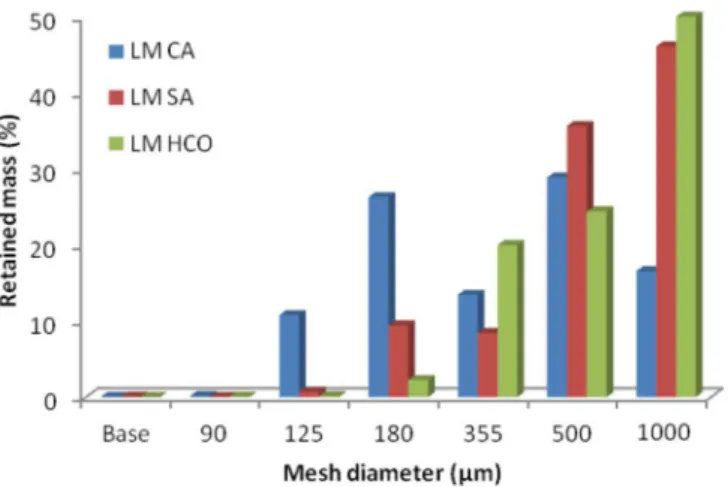
Figure 2 shows the particle size-distribution of the
different lipid microparticles. The lipid microparticles of
ibuprofen in hydrogenated castor oil and stearic acid pre
-sented a higher percentage of particles with average size >1000 µm. The microparticles of cetyl alcohol showed a more heterogeneous size distribution.
Determination of flow rate and repose angle
The pure ibuprofen power did not low. Similarly, physical mixtures of ibuprofen with each excipient did not low. In all cases, the particles of the physical mixtures stayed stuck to the funnel wall.
The solid dispersion of ibuprofen in cetyl alcohol (SD CA) did not show lowability.
On the other hand, the solid dispersion of ibuprofen
in stearic acid (SD SA) showed a lowability of 6.0 ± 0.28 s
and a repose angle of 44.5 ° ± 0.31. The solid dispersion of
ibuprofen in hydrogenated castor oil (SD HCO) presented a lowability of 5.3 ± 0.06 s and a repose angle of 41.9 ° ±
1.22. The higher percentage of smaller particles presented
by cetyl alcohol solid dispersions and also the adhesive forces and/or binding between particles had inluence on its lack of lowability.
None of the lipid microparticles formulated with different excipients presented low characteristics.
Determination of ibuprofen using UV-VIS spectrophotometry
For ibuprofen UV-VIS spectrophotometry determi -nation, several validation parameters were evaluated. The
method showed speciicity, good linearity (coeficient of determination of 0.999), accuracy (101.30% ± 2.55), and repeatability (CV = 0.34%) within the range of concentra
-tions assayed.
Table I presents the content of ibuprofen in the solid
dispersions prepared with the different types of excipients, i.e., cetyl alcohol, stearic acid, and hydrogenated castor oil.
The results of the determination of ibuprofen content in the different solid dispersions showed percentages of
drug around 100% in all cases.
Table II presents the content of ibuprofen in the
lipid microparticles prepared with the different types of excipients, i.e., cetyl alcohol, stearic acid, and hydroge -nated castor oil.
FIGURE 1 – Size distribution of the solid dispersions of
ibuprofen (SD CA- solid dispersions of cetyl alcohol; SD SA -
solid dispersions of stearic acid; SD HCO - solid dispersions
of hydrogenated castor oil).
FIGURE 2 – Size distribution of the lipid microparticles of
ibuprofen (LM CA- lipid microparticles of cetyl alcohol; LM SA - lipid microparticles of stearic acid; LM HCO - lipid
TABLE I – Ibuprofen content in solid dispersions
Solid dispersions % of ibuprofen
SD CA 101.95
SD SA 103.72
SD HCO 98.31
(SD CA- solid dispersions of cetyl alcohol; SD SA - solid dispersions of stearic acid; SD HCO - solid dispersions of hydrogenated castor oil).
TABLE II – Ibuprofen content in lipid microparticles
Lipid microparticles % of ibuprofen
LM CA 92.12
LM SA 81.87
LM HCO 67.56
(LM CA- lipid microparticles of cetyl alcohol; LM SA - lipid microparticles of stearic acid; LM HCO - lipid microparticles of hydrogenated castor oil).
TABLE III – Results of mass uniformity of capsules prepared with ibuprofen and the different solid dispersions
Capsules Average (mg) Maximum Minimum SD CV (%)
IB 415.52 398.43 437.72 11.82 2.85
SD CA 399.08 376.58 419.60 12.21 3.06
SD SA 415.25 401.57 428.23 5.59 1.35
SD HCO 435.64 411.65 453.88 9.04 2.07
(IB – Ibuprofen; SD CA- solid dispersions of cetyl alcohol; SD SA - solid dispersions of stearic acid; SD HCO - solid dispersions of hydrogenated castor oil).
TABLE IV – Results of mass uniformity of capsules illed with ibuprofen and the different lipid microparticles
Capsules Average (mg) Maximum Minimum SD CV (%)
IB 415.52 398.43 437.72 11.82 2.85
LM CA 340.85 320.98 358.45 11.25 3.30
LM SA 393.52 361.71 414.65 15.98 4.06
LM HCO 340.16 306.48 366.20 18.67 5.49
(IB – Ibuprofen; LM CA- lipid microparticles of cetyl alcohol; LM SA - lipid microparticles of stearic acid; LM HCO - lipid microparticles of hydrogenated castor oil).
As can be seen in Table III, the mass of capsules was within the limits of Portuguese Pharmacopoeia VIII.
Table IV show the values of mass uniformity of gela
-tin capsules illed with the different lipid microparticles. From the analysis of the results for uniformity of mass it can be seen that only the masses of capsules containing IB or LM CA (lipid microparticles of cethyl alcohol) remained within the limits speciied by the Por -tuguese Pharmacopoeia.
In vitro dissolution test
After the characterization of capsules, in vitro dis-solution studies were performed. Validation parameters
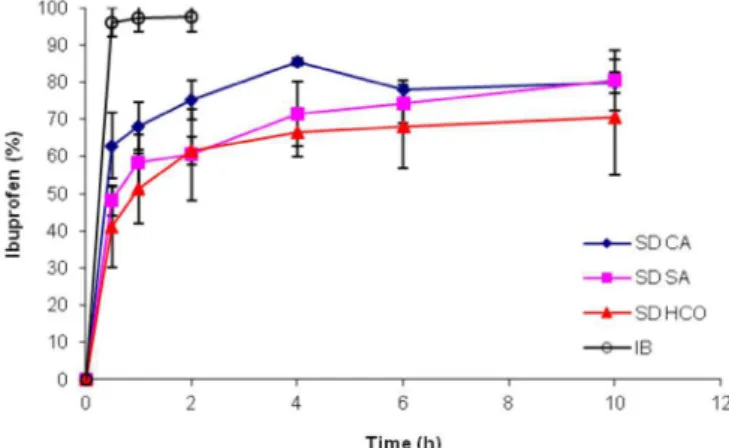
of the method for ibuprofen determination (UV-VIS spectrophotometry) were evaluated. The method showed speciicity, good linearity (coeficient of determination of 0.9994), accuracy (100.43% ± 1.97), and repeatability (CV = 0.18%) within the range of concentrations studied. Figure 3 shows the dissolution proiles of pure ibu
-profen and solid dispersions of this drug in cetyl alcohol, stearic acid, or hydrogenated castor oil contained in gelatin
capsules.
As can be seen in Figure 3, due to its crystalline structure, about 95 % of pure ibuprofen was dissolved in the irst 30 minutes of the dissolution test. Due to the water-in-oil emulsion properties of cetyl alcohol, solid
dispersions of this excipient showed a higher percentage
of ibuprofen released (62.8 %) after 30 minutes, followed by solid dispersions of stearic acid (48.1%), and solid dispersion of hydrogenated castor oil (41.0 %). After
The results of the determination of ibuprofen content in the different lipid microparticles showed different per-centages of drug. Lipid microparticles of stearic acid and
hydrogenated castor oil showed a percentage of ibuprofen below 90%.
Mass uniformity of capsules
10 hours of testing, the amount of ibuprofen released from
the solid dispersions of cetyl alcohol and stearic acid was almost identical (80 %), while the solid dispersion of hy
-drogenated castor oil released 70.5 % of drug. However, the solid dispersion of hydrogenated castor oil showed
a dissolution profile similar to the solid dispersion of stearic acid (Similarity factor = 58.7) (Prista et al., 1996).
Comparing the solid dispersion of cetyl alcohol (SD CA) and the solid dispersion of hydrogenated castor oil (SD HCO), it can be concluded that these two types of solid dispersion presented different proiles (Similarity factor = 40.0) (Prista et al., 1996).
Figure 4 shows the dissolution profiles of pure
ibuprofen and lipid microparticles of the drug in cetyl al
-cohol, stearic acid, and hydrogenated castor oil contained
in gelatin capsules.
As observed in solid dispersions, and due to the
emulsifying properties of cetyl alcohol, lipid micropar -ticles of this excipient have a greater release of drug
dur-ing the irst 30 minutes of testdur-ing. These microparticles released 81.4% of drug within 30 minutes. However the lipid microparticles of stearic acid and hydrogenated cas
-tor oil released only about 40 % of ibuprofen.
The lipid microparticles of cetyl alcohol after 10 hours of testing had a percentage of 97.7% of drug released and the lipid microparticles of stearic acid released 94.5%
of the drug.
Regarding the lipid microparticles of hydrogenated castor oil, they showed only 59.6% of drug dissolved after 10 hours of testing. The microparticles of cetyl alcohol had a dissolution proile different of the microparticles
of stearic acid (f2 = 33.4) and hydrogenated castor oil (f2 = 22.6).
Physical mixtures were not evaluated in terms of dissolution rate because it was expected that this system
would not allow the sustained release of drug.
The presence of lipids appears to affect the crystal
-line organization of ibuprofen. Solid dispersions and solid lipid microparticles were highly in amorphous form, in
contrast to pure ibuprofen, which contributed to a decrease of dissolution/release of this drug. Besides, the sustained
release proiles of solid dispersions and lipid micropar -ticles can be attributed to the entrapment of drug in the lipid matrices.
CONCLUSIONS
The results of this work show that the type of ex -cipients used to prepare solid dispersions and solid lipid
microparticles influence the physical and mechanical properties, as well as the dissolution proiles of ibuprofen.
Solid dispersions of ibuprofen in stearic acid and hydrogenated castor oil showed better low characteristics than pure ibuprofen and the respective physical mixtures.
However, none of the solid lipid microparticles formulated
with different excipients presented low characteristics. Sustained-release of ibuprofen was achieved with
the preparation of solid dispersions and solid lipid
mic-roparticles using cetyl alcohol, stearic acid, and hydroge -nated castor oil.
Due to their emulsifying properties, systems with cetyl alcohol presented higher percentages of ibuprofen released than stearic acid or hydrogenated castor oil. However, solid dispersions of ibuprofen in hydrogenated
FIGURE 3 - Dissolution profiles of solid dispersions of
ibuprofen with different excipients (IB – Ibuprofen; SD CA- solid dispersions of cetyl alcohol; SD SA - solid dispersions of
stearic acid; SD HCO - solid dispersions of hydrogenated
castor oil).
FIGURE 4 - Dissolution profiles of lipid microparticles of
ibuprofen with different excipients (IB – Ibuprofen; LM CA- lipid microparticles of cetyl alcohol; LM SA - lipid
microparticles of stearic acid; LM HCO - lipid microparticles
castor oil showed better low characteristics and a more prolonged release of ibuprofen. These systems are easy to prepare and may lead to the avoidance of frequent drug
administration.
LIST OF ABBREVIATIONS
IB – Ibuprofen
LM CA – Lipid Microparticles of Cetyl Alcohol
LM HCO – Lipid Microparticles of Hydrogenated Castor
Oil
LM SA – Lipid Microparticles of Stearic Acid PEG – Poly(ethylene glycol)
SD CA – Solid Dispersions of Cetyl Alcohol
SD HCO – Solid Dispersions of Hydrogenated Castor Oil SD SA – Solid Dispersions of Stearic Acid
UV-VIS – Ultraviolet-Visible
REFERENCES
BRUNTON, L.L.; LAZO J.S.; PARKER K.L. (Eds.). Goodman & Gilman’s: as bases farmacológicas da terapêutica. 11.ed. Columbus: McGraw-Hill, 2007. p.1821.
CHIOU, W.L.; RIEGELMAN, S. Pharmaceutical applications of solid dispersion systems. Pharm. Acta Helv., v.60, n.9, p.1281-1301, 1971.
FORD, J.L.; RUBINSTEIN, M.H. Phase equilibria and dissolution rates of indomethacin-polyethylene glycol 6000
solid dispersions.Pharm. Acta Helv., v.53, n.11, p.327-332,
1978.
FORD, J.L. The current status of solid dispersions. Pharm. Acta
Helv., v.61, n.3, p.69-88, 1986.
FREITAS, S.; MERKLE, H.P.; GANDER, B. Microencapsulation by solvent extraction/evaporation: reviewing the state of the art of microsphere preparation process technology. J. Control. Release., v.102, n.2, p.313-332, 2005.
GOUIN, S. Microencapsulation: industrial appraisal of existing
technologies and trends. Trends Food Sci. Technol., v.15,
n.7-8, p.330-347, 2004.
KANG, Y.; YIN, G.; OUYANG, P.; HUANG, Z.; YAO, Y.; LIAO, X.; CHEN, A.; PU, X. Preparation of PLLA/PLGA microparticles using solution enhanced dispersion by supercritical luids (SEDS).J. Colloid Interface Sci., v.322, n.1, p.87-94, 2008.
KUMAR, M.N.V. Nano and microparticles as controlled drug delivery devices. J. Pharm. Sci., v.3, n.2, p.234-258, 2000.
LACHMAN, L. Teoria e prática na indústria farmacêutica. 1.ed. Lisboa: Fundação Calouste Gulbenkian, 2001. p.737-738.
LIBERAL, J.P.M. Desenvolvimento e caracterização de comprimidos matriciais de dupla camada contendo Paracetamol. Porto, 2008. p.112.[Dissertation of Master Degree. Faculty of Pharmacy. University of Porto].
MAHAJAN, H.S.; GATTANI, S.G. Gellan gum based microparticles of metoclopromide hydrochloride for intranasal delevery: development and evaluation. Chem. Pharm. Bull., v.57, n.4, p.388-392, 2009.
NEWA M. Preparation and evaluation of immediate release ibuprofen solid dispersions using polyethylene glycol 4000. Biol. Pharm. Bull., v.31, n.5, p.939-945, 2008.
NEWA, M. Enhancement of solubility, dissolution and bioavailability of ibuprofen in solid dispersion systems.
Chem. Pharm. Bull., v.56, n.4, p.569-574, 2008.
NEWA, M. Enhanced dissolution of ibuprofen using solid
dispersion with poloxamer 407. Arch. Pharm. Res., v.31,
n.1, p.1497-1507, 2008.
OSWALD, W.; GUIMARÃES, S. Terapêutica medicamentosa e suas bases farmacológicas. 4.ed. Porto: Porto Editora, 2001. p.1296.
PARK, Y.J.; KWON, R.; QUAN, Q.Z.; OH, D.H; KIM, J.O.; HWANG, M.R.; KOO, Y.B.; WOO, J.S.; YONG, C.S.; CHOI, H.G. Development of novel ibuprofen-loaded solid dispersion with improved bioavailability using aqueous
solution. Arch. Pharm. Res., v.32, n.5, p.767-772, 2009.
ROWE, R.C.; SHESKEY, P.J.; WELLER, P.J. Handbook of pharmaceutical excipients. 4.ed. Washington: The
Pharmaceutical Press, American Pharmaceutical Association, 2003. p.776.
SALOMEN, J.L.; DOELKER, E. Formulation of sustained
release tablets.I. Inert matrices. Pharm. Acta Helv., v.55,
n.7, p.174-182, 1980.
SOPPIMATH, K.S.; KULKARNI, A.R.; AMINABHAVI, T.M. Encapsulation of antihypertensive drugs in cellulose matrix microspheres: characterization and release of microspheres
and tableted microspheres. J. Microencapsul., v.18, n.3,
p.397-409, 2001.
YI, H.G.; CHI, M.H.; KIM, Yo; WOO, J.S.; PARK E. Formulation of a extended release tablet containing
dexibruprofen. Arch. Pharm. Res., v.31, n.12, p.1637-1643,
2008.
Received for publication on 1st November 2011