©Revista Brasileira de Fisioterapia
O
RIGINALA
RTICLEAccuracy of Timed Up and Go Test for screening
risk of falls among community-dwelling elderly
Acurácia do Timed Up and Go Test para rastrear risco de
quedas em idosos da comunidade
Tiago S. Alexandre1, Débora M. Meira2, Natália C. Rico3, Simone K. Mizuta3
Abstract
Objective: To determine the accuracy of the Timed Up and Go Test (TUGT) for screening the risk of falls among community-dwelling elderly individuals. Method: This is a prospective cohort study with a randomly by lots without reposition sample stratified by proportional partition in relation to gender involving 63 community-dwelling elderly individuals. Elderly individuals who reported having Parkinson´s disease, a history of transitory ischemic attack, stroke and with a Mini Mental State Exam lower than the expected for the education level, were on a wheelchair and that reported a single fall in the previous six months were excluded. The TUGT, a mobility test, was the measure of interested and the occurrence of falls was the outcome. The performance of basic activities of daily living (ADL) and instrumental activities of daily living (IADL) was determined through the Older American Resources and Services, and the socio-demographic and clinical data were determined through the use of additional questionnaires. Receiver Operating Characteristic Curves were used to analyze the sensitivity and specificity of the TUGT. Results: Elderly individuals who fell had greater difficulties in ADL and IADL (p<0.01) and a slower performance on the TUGT (p=0.02). No differences were found in socio-demographic and clinical characteristics between fallers and non-fallers. Considering the different sensitivity and specificity, the best predictive value for discriminating elderly individuals who fell was 12.47 seconds [(RR=3.2) 95%CI: 1.3-7.7]. Conclusions: The TUGT proved to be an accurate measure for screening the risk of falls among elderly individuals. Although different from that reported in the international literature, the 12.47 second cutoff point seems to be a better predictive value for Brazilian elderly individuals.
Keywords: elderly; falls; TUGT; sensitivity; specificity; physical therapy.
Resumo
Objetivo: Determinar a acurácia do Timed Up and Go Test (TUGT) para rastrear risco de quedas em idosos da comunidade. Método: Trata-se de um estudo de coorte prospectivo com amostra sorteada aleatoriamente, Trata-sem reposição e estratificada por partilha proporcional em relação ao sexo de 63 idosos da comunidade. Excluíram-se idosos com doença de Parkinson, ataque isquêmico transitório, acidente vascular encefálico, Miniexame do Estado Mental inferior ao considerado normal de acordo com a escolaridade, movimentação exclusiva por cadeira de rodas e relato de uma queda nos seis meses anteriores à primeira entrevista. O TUGT, um teste de mobilidade, foi a medida testada, e o desfecho, a ocorrência de queda. Mensuraram-se atividades básicas (ABVD) e instrumentais de vida diária (AIVD) pela Older American Resources and Services e dados sociodemográficos e clínicos por questionário complementar. Para analisar a sensibilidade e a especificidade do TUGT, utilizou-se a Receiver Operating Characteristic Curves (ROC). Resultados: Os idosos que caíram tinham maior dificuldade na execução de ABVD e AIVD (p<0,01) e desempenho mais lento no TUGT (p=0,02). Quanto às características sociodemográficas e clínicas, não houve diferença entre idosos que caíram e os que não caíram. Considerando as diferentes sensibilidades, especificidades e razões de verossimilhança, o melhor valor preditivo para discriminar idosos que caíram foi 12,47 segundos [(RR=3,2) IC95%: 1,3-7,7]. Conclusão: O TUGT é acurado para rastrear risco de quedas em idosos. O cut-off de 12,47 segundos, embora diferente da literatura internacional, parece ser um melhor valor preditivo para idosos brasileiros.
Palavras-chave: idosos; quedas; TUGT; sensibilidade; especificidade; fisioterapia.
Received: 11/21/2011 – Revised: 03/14/2012 – Accepted: 04/13/2012
1 Department of Epidemiology, Universidade de São Paulo (USP), São Paulo, SP, Brazil
2 Physical Therapy, Speech Pathology and Occupational Therapy Department, USP, São Paulo, SP, Brazil 3 Physical Therapist, São Paulo, SP, Brazil
Introduction
he accelerated ageing of the population worldwide has led to serious public health problem such as falls among elderly
individuals1. In Brazil, the prevalence of falls among the elderly
in 2006 was 36.4% among women and 22.6% among men, whereas the incidence in the period between 2000 and 2006
was 22.7% among women and 14.9% among men2.
here are numerous risk factors for falling in this popu-lation, such as muscle weakness, past history of falls, gait, balance, visual and cognitive impairment, osteoarthritis,
de-pression and age greater than 80 years3. Moreover, the risk of
serious adverse outcomes stemming from a fall, such as a fear of falling, fractures, reduced functionality, frailty, admission to
nursing homes and death, is greater among elderly individuals1.
he updated guidelines of the American and British Geriat-ric Society for the Prevention of Falls recommend the use of a clinical algorithm that establishes a systematic decision-making process in the assessment of the risk of falls and the selection of interventions for elderly individuals who seek healthcare ser-vices. One of the recommendations is the use of the Timed Up
and Go Test (TUGT) for the assessment of gait and balance4. he
TUGT is fast, easy-to-apply and has been validated for screening
the risk of falls among elderly individuals5,6. However, the
valida-tion of the TUGT has not yet been performed for the Brazilian population. While encouraging, the evidence of the TUGT ac-curacy in the identiication of risk of falls among community-dwelling elderly individuals is based on retrospective studies and should therefore be taken with caution.
hus, the aim of the present study was to conduct a pro-spective investigation to determine the accuracy of the TUGT for screening the risk of falls among community-dwelling el-derly individuals.
Method
he sample size calculation was based on a 5% α error,
95% conidence interval (CI) and the prevalence of falls in the
elderly described on a previous study (28.6%)7. he number of
elderly individuals registered with the Family Health Program (FHP) in the city of Taubaté (Sao Paulo, Brazil) was obtained from the Basic Care Information System, which indicated 2149 individuals on November 29, 2007. he sample was stratiied by gender to ensure the representativeness of both genders in accordance with the council’s population.
he inal sample was determined randomly by lots with-out reposition and consisted of 63 individuals (30 men and 33
women aged 60 years or older) registered with the FHP in the city of Taubaté. he inal sample had a sampling fraction of 0.045 and a maximal error of 10.33%.
Six physical therapists were trained to administer the mea-sures under the supervision of a more experienced phusical therapist. Visits to homes were scheduled with the assistance of community health agents from the elderlies’ respective Fam-ily Health Units. When an individual was not found at home on the irst visit, a second visit was scheduled. he home visit involved the reading and signing of the statement of informed consent. Upon agreement to participate, a screening question-naire with the exclusion criteria was administered.
he deinition of falls in the present study was that adopted by the World Health Organization and a report of the Kellogg International Work Group on the Prevention of Elderly Falls. A fall was deined as any event that results in a bodily change that forces an individual to inadvertently land on the ground or a lower level, other than as a consequence of a violent strike, loss
of consciousness, sudden onset paralysis or epileptic seizure8.
Elderly individuals who reported having Parkinson´s dis-ease, with a history of transitory ischemic attack, stroke, and with a Mini Mental State Exam (MMSE) lower than the
recom-mended by Bertolucci et al.9 (<13 for illiterate individuals, <18
for those with up to 8 years of schooling and <26 for those with more than 8 years of schooling), that were on a wheelchair and reported a single fall in the previous six months were excluded from the study.
Among the 63 individuals selected for the sample, 54 re-ported no falls in the previous six months (85.7%) and nine reported more than one fall (14.3%).
A structured questionnaire was administered to register the following socio-demographic and clinical data: age; gender; marital status; schooling/education; self-reported conditions (systemic arterial hypertension, osteoarthritis, osteoporosis and diabetes) and medications. Although the MMSE was an exclusion criterion, the scores of the included elderly were also recorded.
he Portuguese version of the Older Americans Resources and Services (OARS), the Multidimensional Functional
As-sessment Questionnaire (BOMFAQ)10, was employed for the
assessment of functional state. In the validation study, internal consistency of the subscale evaluating basic activities of daily living (ADL) and instrumental activities of daily living (IADL) was 0.91, criterion validity ranged from 0.051 to 0.6 and
repro-ducibility was 1.0011. he BOMFAQ assesses reported
meals, driving and housecleaning). his instrument has three response options: “I have no diiculty”, “I have some diiculty” or “I have a lot of diiculty” in performing the task in ques-tion. For analysis purposes, the responses were dichotomized as “no diiculty” and “diiculty” (uniting both latter options). A greater number of compromised activities denoted worse functional capacity.
Mobility was determined by the performance of the TUGT administered by the researchers in the participant’s home, who wore his/her usual footwear and used gait-assistance device (GAD) if needed. No physical assistance was given throughout the test. After receiving instructions to walk at his/her habitual gait speed, the participant had to seat on a standardized chair (seat 42 centimeters from ground, back 79 centimeters from ground and arm 60 centimeters from ground), with arms and trunk supported. After the verbal command to begin, the evaluator initiated the chronometer as the participant stood up, walked three meters in a straight line, turned 180 degrees, walked back to the chair and sat down again. he clock was stopped only when the participant was seated in the chair with his/her arms and back supported. he time needed to perform the task was recorded in seconds.
Participants were followed for a one-year period, receiving three additional visits from blinded evaluators who asked about the occurrence of falls in the preceding period. he second, third and fourth visits occurred three, six and 12 months following the administration of the TUGT, respectively, with a leeway of three days after the scheduled date. In order to reduce memory bias, the participants received a log at the end of each contact in which they were to record the date, site and circumstances of any falls. he evaluator collected the log at the end of each visit.
hree losses to follow-up occurred throughout the study (one change of address, one abandonment and one death). hus, the inal sample consisted of 60 elderly individuals (29 males and 31 females).
For the statistical analysis, the Shapiro-Wilk test was used to demonstrate that the TUGT and other quantitative variables
did not exhibit normal distribution (p≤0.001). hus, the
Mann-Whitney test was used for the comparison of mean values be-tween the groups of fallers and non-fallers and the chi-square test was used for the analysis of diferences in proportion. he level of signiicance was set at 0.05. Receiver operating char-acteristic (ROC) curves were constructed for the analysis of sensitivity and speciicity. he sensitivity of a test describes how well it correctly identiies subjects with a condition of interest, whereas speciicity indicates the frequency that the
test is negative in the absence of a condition of interest12. he
relative risk of falls and respective CI were calculated based on
the cutof point identiied. he Stata 9® statistical package was
used for the statistical analysis.
Characteristics of Sample Fallers
(n=19)
Non-Fallers (n=41)
Socio-demographic
Age 66.68±5.57
(60-82)
66.36±4.60 (60-75)
Gender (female) 52.63% 51.22%
Marital status (with conjugal life) 47.37% 51.22%
Schooling 1.78±2.37
(0-8)
2.90±3.38 (0-14) Clinical
Systemic arterial hypertension
(yes) 36.84% 60.98%
Osteoarthritis (yes) 31.58% 24.39%
Osteoporosis (yes) 31.58% 12.20%
Diabetes (yes) 15.79% 7.32%
Mini Mental State Examination 23.73±3.70 (15-29)
23.75±4.27 (14 – 29)
Medications in use 1.73±2.35
(0-10)
1.80±1.47 (0 – 5) Functional
Older Americans Resources and Services
4.15±3.38 (0-12)
1.19±1.63* (0 – 6)
Timed Up and Go Test 13.18±2.51
(8.65-18.78)
11.95±2.86* (8-23.02)
Table 1. Association between sample characteristics and occurrence of falls.
Mean±standard deviation; minimum and maximum values between parentheses; n=number of elderly individuals surveyed; *significant difference between fallers and non-fallers (Mann-Whitney; p≤0.05).
his study received approval from the ethics committee of Universidade de Taubaté, Taubaté, SP, Brazil, under process number 105/09.
Results
hroughout the follow-up period, 21 participants (11 women and 10 men) sufered at least one fall. No diferences were found in socio-demographic and clinical characteristics between fallers and non-fallers. he participants who fell had a slower performance on the TUGT (p=0.02) and greater diicul-ties in the performance of ADL and IADL (p<0.01) (Table 1).
value designates the proportion of individuals with less than 12.47 seconds on the TUGT who did not fall during the follow-up period. he risk of falls was 3.2-fold (RR=3.2; 95%CI: 1.3-7.7) greater among those with a performance on the TUGT equal to or greater than 12.47 seconds.
Comparisons of mean age and performance on the TUGT in the groups of fallers and non-fallers were made between the present investigation and studies that determined predictive value for the occurrence of the outcome. For such, the com-parison of means test was employed, using the number of fallers and non-fallers in each study and respective mean and
standard deviation values through the ttesti command of the
Stata 9® statistical program.
he mean ages in the present study for fallers and non-fallers [66.68 (SD=5.57) and 66.36 (SD=4.60), respectively] were lower than those in the study by Shumway-Cook, Brauer and
Woollacott6 [86.2 (SD=6.40) and 78.4 (SD=5.8)], Rose, Jones
and Lucchese13 [78.4 (SD=6.5) and 76.7 (SD=6.2)] and Gunter
et al.14 [one-time fallers 78.27 (SD=5.03), frequent fallers 77.74
(SD=5.28) and non-fallers 75.93 (SD=5.94)]. he diferences in age between the present investigation and other studies were statistically signiicant for both groups (p<0.001).
Regarding the TUGT, elderly fallers performed the test in 22.2 (SD=9.3) seconds in the study by Shumway-Cook, Brauer
and Woollacott6 and 12.3 (SD=3.9) seconds in the study by Rose,
Jones and Lucchese13. One-time fallers performed the test in
8.91 (SD=1.34) seconds and frequent fallers performed the test
in 9.21 (SD=1.31) seconds in the study by Gunter et al.14
Fall-ers in the present study performed the test in 13.18 (SD=2.51) seconds. Non-fallers performed the test in 8.4 (SD=1.7) seconds
in the study by Shumway-Cook, Brauer and Woollacott6, 8.2
(SD=1.8) seconds in the study by Rose, Jones and Lucchese13
7.54 (SD=1.21) seconds in the study by Gunter et al.14 and 11.95
(SD=2.86) seconds in the present study. he diferences in the performance on the TUGT between studies were statistically signiicant in both groups (p<0.001), except between the fallers in the present study and those in the study by Rose, Jones and
Lucchese13 (p=0.18).
Discussion
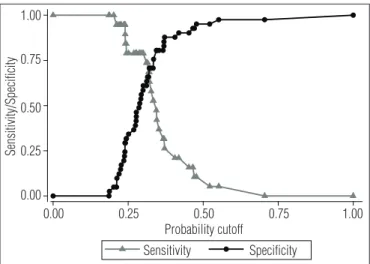
he results presented in this study validate a predictive value of 12.47 seconds on the TUGT as an indicator of the risk of falls among elderly individuals. his cutof point is diferent from values found in the literature.
he knowledge on the prevalence of falls and the pro-portion of men and women in the population of interested allowed the recruitment of a representative sample. his careful planning ensured greater reliability in relation to the sample investigated. he exclusion of individuals that had fallen a single time in the preceding six months maximized the selection of non-fallers and recurrent fallers, thereby eliminating those who may have fallen due to extrinsic fac-tors. his decision was based on arguments in the literature that recurring falls are more predictive and may have more
serious consequences than a single fall15,16. he same method
has been employed in previous studies analyzing the
accu-racy of the TUGT for screening the risk of falls6,13.
he exclusion of individuals with positive screening for cognitive impairment and neurological conditions ensured the inclusion of a less frail sample with no evident postural bal-ance disorders. his exclusion criteria has also been employed
in previous studies6,13 as it allows the identiication of the
pre-dictive value on the TUGT for screening community-dwelling
Figure 1. Relationship between the sensitivity and specificity and the probability cutoff of the TUGT as a predictor of falls among elderly individuals in the population.
1.00
0.75
0.50
0.25
0.00
Sensitivity Specificity Probability cutoff
Sensitivity/Specificity
0.00 0.25 0.50 0.75 1.00
Figure 2. ROC curve of TUGT as predictor of falls among elderly individuals. 1.00
0.75
0.50
Semsitivity
Area under ROC curve = 0.68 (95% CI 0.54 - 0.83). 1 - Specificity 0.25
0.00
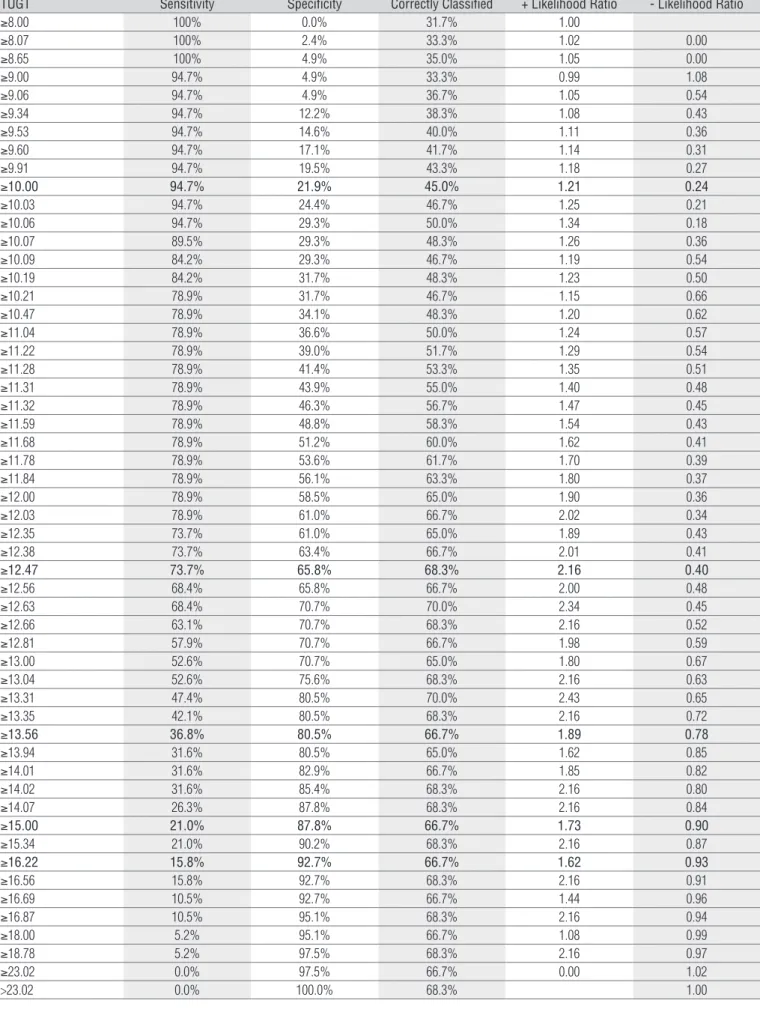
Table 2. Coordinates of ROC curve for determination of predictive cutoff point of falls among 60 elderly individuals treated in basic health care in the city of Taubaté (SP, Brazil).
TUGT Sensitivity Specificity Correctly Classified + Likelihood Ratio - Likelihood Ratio
≥8.00 100% 0.0% 31.7% 1.00
≥8.07 100% 2.4% 33.3% 1.02 0.00
≥8.65 100% 4.9% 35.0% 1.05 0.00
≥9.00 94.7% 4.9% 33.3% 0.99 1.08
≥9.06 94.7% 4.9% 36.7% 1.05 0.54
≥9.34 94.7% 12.2% 38.3% 1.08 0.43
≥9.53 94.7% 14.6% 40.0% 1.11 0.36
≥9.60 94.7% 17.1% 41.7% 1.14 0.31
≥9.91 94.7% 19.5% 43.3% 1.18 0.27
≥10.00 94.7% 21.9% 45.0% 1.21 0.24
≥10.03 94.7% 24.4% 46.7% 1.25 0.21
≥10.06 94.7% 29.3% 50.0% 1.34 0.18
≥10.07 89.5% 29.3% 48.3% 1.26 0.36
≥10.09 84.2% 29.3% 46.7% 1.19 0.54
≥10.19 84.2% 31.7% 48.3% 1.23 0.50
≥10.21 78.9% 31.7% 46.7% 1.15 0.66
≥10.47 78.9% 34.1% 48.3% 1.20 0.62
≥11.04 78.9% 36.6% 50.0% 1.24 0.57
≥11.22 78.9% 39.0% 51.7% 1.29 0.54
≥11.28 78.9% 41.4% 53.3% 1.35 0.51
≥11.31 78.9% 43.9% 55.0% 1.40 0.48
≥11.32 78.9% 46.3% 56.7% 1.47 0.45
≥11.59 78.9% 48.8% 58.3% 1.54 0.43
≥11.68 78.9% 51.2% 60.0% 1.62 0.41
≥11.78 78.9% 53.6% 61.7% 1.70 0.39
≥11.84 78.9% 56.1% 63.3% 1.80 0.37
≥12.00 78.9% 58.5% 65.0% 1.90 0.36
≥12.03 78.9% 61.0% 66.7% 2.02 0.34
≥12.35 73.7% 61.0% 65.0% 1.89 0.43
≥12.38 73.7% 63.4% 66.7% 2.01 0.41
≥12.47 73.7% 65.8% 68.3% 2.16 0.40
≥12.56 68.4% 65.8% 66.7% 2.00 0.48
≥12.63 68.4% 70.7% 70.0% 2.34 0.45
≥12.66 63.1% 70.7% 68.3% 2.16 0.52
≥12.81 57.9% 70.7% 66.7% 1.98 0.59
≥13.00 52.6% 70.7% 65.0% 1.80 0.67
≥13.04 52.6% 75.6% 68.3% 2.16 0.63
≥13.31 47.4% 80.5% 70.0% 2.43 0.65
≥13.35 42.1% 80.5% 68.3% 2.16 0.72
≥13.56 36.8% 80.5% 66.7% 1.89 0.78
≥13.94 31.6% 80.5% 65.0% 1.62 0.85
≥14.01 31.6% 82.9% 66.7% 1.85 0.82
≥14.02 31.6% 85.4% 68.3% 2.16 0.80
≥14.07 26.3% 87.8% 68.3% 2.16 0.84
≥15.00 21.0% 87.8% 66.7% 1.73 0.90
≥15.34 21.0% 90.2% 68.3% 2.16 0.87
≥16.22 15.8% 92.7% 66.7% 1.62 0.93
≥16.56 15.8% 92.7% 68.3% 2.16 0.91
≥16.69 10.5% 92.7% 66.7% 1.44 0.96
≥16.87 10.5% 95.1% 68.3% 2.16 0.94
≥18.00 5.2% 95.1% 66.7% 1.08 0.99
≥18.78 5.2% 97.5% 68.3% 2.16 0.97
≥23.02 0.0% 97.5% 66.7% 0.00 1.02
individuals with no clear postural balance compromise and frailty, but that are known to be under imminent risk of fall-ing. his patient group needs to be identiied in order to ofer timely orientation and preventive strategies.
In the present study, the predictive value of 12.47 sec-onds detected 14 (73.7%) of the 19 individuals who fell in the year following the TUGT. This predictive value is lower than the 13.5 seconds described by Shumway-Cook, Brauer and
Woollacott6 Using the cut off described by Shumway-Cook,
Brauer and Woollacott6, only seven of the 19 individuals who
fell would have been detected (Table 2). This is a 50% lower percentage than that achieved with the predictive value of 12.47 seconds.
If the cutof point of 10 seconds proposed by Rose, Jones
and Lucchese13 had been used, 18 of the 19 individuals having
sufered falls would have been identiied. However, 32 of the 41 individuals who had not fallen would have been mistakenly identiied. hus, the sensitivity of the test would have been in-creased in detriment to its speciicity.
Divergences among cutof points for the risk of falls may be attributed to the diferent study designs employed and the period in which falls were investigated. While the present investigation was a prospective study with a one-year follow-up period, the
studies by Shumway-Cook, Brauer and Woollacott6, Rose, Jones
and Lucchese13 and Gunter et al.14 were retrospective
investiga-tions, the irst of which inquired regarding the occurrence of falls in the six months prior to the administration of the TUGT and the latter two inquired regarding the occurrence of falls in the 12 months prior to the administration of the TUGT.
Another explanation for this divergence appears to be re-lated to the proile of the samples included in each study. here were no diferences in the ages of the groups of fallers and non-fallers in the present investigation or the studies by Rose, Jones
and Lucchese13 and Gunter et al.14. However, in the study by
Shumway-Cook, Brauer and Woollacott6, the mean age of the
group who reported falls in the six months prior to the admin-istration of the TUGT was higher than that of the group of non-fallers. Moreover, it was the highest age range of both fallers and non-fallers among all the studies analyzed.
here were also diferences among the studies in the pro-portion of individuals who used a GAD, indicating distinctions
in the prior risk of falls. According to guidelines1, the risk of
falls is 2.6-fold greater among individuals who use such device.
Among the 15 elderly individuals who reported falls in the
study by Shumway-Cook, Brauer and Woollacott6, 12 used a
GAD. In the study by Rose, Jones and Lucchese13, 32 of the 63
elderly individuals who reported falls used a GAD. In the pres-ent study, only one participant used a GAD.
hus, the more advanced age and the vulnerability to falls in the sample of the study by Shumway-Cook, Brauer and
Woollacott6 could have led to a slower performance on the
TUGT in the group of fallers and, consequently, the higher cutof point reported by the authors. However, despite being older, the elderly individuals in the group of non-fallers in the
study by Rose, Jones and Lucchese13 performed the TUGT
faster than the non-fallers in the present study, while no dif-ference in performance was found among the fallers in the two studies. his may be explained by the instructions given to the participants regarding the test. he present study followed the
recommendation by Podsiadlo and Richardson5 and
partici-pants were instructed to perform the test at their habitual gait speed, whereas the participants in the study by Rose, Jones and
Lucchese13 were instructed to perform the test as quickly as
safely possible. his diference in instruction would explain the faster performance and lower cutof point reported by Rose,
Jones and Lucchese13.
Shimada et al.17 analyzed the capacity of the TUGT to
screen the risk of falls in a one-year retrospective study in-volving Japanese elderly individuals at adult daycare centers, in which the majority of participants exhibited disability and frailty. he higher cutof point of 16 seconds identiied the risk of falls with 53% sensitivity and 63% speciicity. Moreover, those with a performance greater than 16 seconds had a 50% greater chance of sufering falls. In a six-month prospective cohort study involving frail elderly individuals living in long-stay
in-stitutions in Sweden, Nordin et al.18 found that a performance
on the TUGT greater than 15 seconds identiied the risk of falls with 96% sensitivity and 32% speciicity.
herefore, the predictive value of 13.5 seconds may be more indicated for older elderly individuals, whereas 12.47 seconds may be more indicated for younger elderly individuals. Like-wise, a performance greater than 10 seconds may be more rec-ommended when the elderly participant is instructed to walk as fast as safely possible, whereas the 12.47 second cutof point may be more indicated when the test is performed at the indi-vidual’s habitual gait speed. However, a performance of greater than 15 seconds may be recommended to screen the risk of falls among frail elderly individuals.
he results of a meta-analysis conducted by Bohannon19
support the hypothesis that age afects the performance of the test. he authors analyzed 21 studies and identiied refer-ence values for the TUGT with regard to the capacity of this test for measuring mobility among elderly individuals and Falls
TUGT Yes No Total
≥12.47 seconds 14 14 28
<12.47 seconds 5 27 32
Total 19 41 60
concluded that there are diferences in performance between diferent age groups. Elderly individuals between 60 and 69 years of age performed the test in 8.1 seconds (7.1-9.0), those between 70 and 79 years of age performed the test in 9.2 seconds (8.2-10.2) and those between 80 and 99 years of age performed the test in 11.3 seconds (10.0-12.7). Since advance in age reduces gait speed, consequently increasing the time needed to perform the test, it is likely that age also afects the predictive value regarding the risk of falling.
Chiu, Au-Yeung and Lo20 conducted a paired case-control
study to compare four important mobility and balance as-sessment tools: Berg Balance Scale, Tinetti Mobility Score, Elderly Mobility Scale and TUGT. he authors concluded that the TUGT should not be recommended for discriminating between individuals who sufered a single fall and those who sufered no falls, due to its low sensitivity (59% for the 20.1 second cutof point). In the present study, individuals who fell a single time were excluded from the analysis, which impedes the comparison of results between the two studies. Neverthe-less, on the above mentioned study, the mean age of the indi-viduals who reported a single fall (82.12 years; SD=8.19 years) and those who reported multiple falls (82.86 years; SD=6.63 years) was much higher than the age of the participants in the present study.
Haines et al.21 conducted a prospective multi-center study
involving hospitalized patients in Australia at geriatric and rehabilitation hospitals in which the outcome was falls after hospitalization. With a 30 second cutof point, sensitivity was 80% and speciicity was 22%, which led the authors to conclude that the TUGT may not be capable of screening the risk of falls among hospitalized elderly individuals with acute clinical conditions, as falls could be caused by other factors
beyond mobility and balance deicits. hus, the TUGT is more eicacious in screening the risk of falls in community-dwelling elderly individuals.
Methodological issues may be involved in the diferences found in cutof points between the present investigation and
previous studies. While Shumway-Cook, Brauer and Woollacott6
and Rose, Jones and Lucchese13 used logistic regression analysis,
Gunter et al.14 used Wilk’s Lambda analysis and the present
in-vestigation and the studies by Chiu, Au-Yeung and Lo20, Haines
et al.21, Shimada et al.17 and Nordin et al.18 determined the validity
of the predictive value using ROC curves.
An important limitation of the present study was that the sample was not stratiied by age and frailty status. Moreover, the reports of falls are dependent on memory. However, the use of a log to record of falls was designed to minimize memory bias. he exclusion of elderly individuals with neurologic dis-ease and those with a single fall in the previous six months limits the generalization of the results to these patient groups.
he variability in the measure merits particular attention. he cutof point recommended in this study was 12.47 seconds. In clinical practice, the use of a cutof point with two decimal points is unviable and healthcare professionals who administer this test and examine diferent TUGT sensitivity and speciic-ity values will naturally opt for values rounded to the nearest whole second.
In conclusion, the TUGT proved to be an accurate measure for screening the risk of falls among elderly individuals. Al-though diferent from values reported in the international lit-erature, the 12.47 second cut-of seems to be a better predictive value for Brazilian elderly individuals. he TUGT can be used in basic healthcare and in the outpatient network as a screening test for the risk of falls among community-dwelling elderly individuals.
References
1. Guideline for the prevention of falls in older persons. American Geriatrics Society, British Geriatrics Society, and American Academy of Orthopaedic Surgeons Panel on Falls Prevention. J Am Geriatr Soc. 2001;49(5):664-72.
2. Telles ACM. Prevalência, incidência, fatores preditivos e impacto das quedas entre as pessoas idosas no município de São Paulo: uma análise longitudinal. [dissertação]. São Paulo: Escola de Enfermagem, Universidade de São Paulo; 2008.
3. Muir SW, Berg K, Chesworth B, Klar N, Speechley M. Balance impairment as a risk factor for falls in community-dwelling older adults who are high functioning: a prospective study. Phys Ther. 2010;90(3):338-47.
4. Panel on Prevention of Falls in Older Persons, American Geriatrics Society and British Geriatrics Society. Summary of the updated American Geriatrics Society/British Geriatrics Society clinical practice guideline for prevention of falls in older persons. J Am Geriatr Soc. 2011;59(1): 148-57.
5. Podsiadlo D, Richardson S. The timed “Up & Go”: a test of basic functional mobility for frail elderly persons. J Am Geriatr Soc. 1991;39(2):142-8.
6. Shumway-Cook A, Brauer S, Woollacott M. Predicting the probability for falls in community-dwelling older adults using the timed up & go test. Phys Ther. 2000;80(9):896-903. 7. Lebrão ML, Laurenti R. Saúde, bem-estar e envelhecimento: o estudo SABE no Município de São
Paulo. Rev Bras Epidemiol. 2005;8(2):127-41.
8. The prevention of falls in later life. A report of the Kellogg International Work Group on the prevention of falls by the elderly. Dan Med Bull.1987;34 Suppl 4:1-24.
9. Bertolucci PHF, Brucki SMD, Campacci SR, Juliano Y. O mini-exame do estado mental em uma população geral- impacto da escolaridade. Arq Neuropsiquiatr. 1999;52(1):1-7.
10. Blay SL, Ramos LR, Mari JJ. Validity of a Brazilian version of the Older Americans Resources and Services (OARS) mental health screening questionnaire. J Am Geriatr Soc.1988;36(8):687-92. 11. Rodrigues RMC. Validação da versão em português europeu de questionário de avaliação
funcional multidimensional de idosos. Rev Panam Salud Pública. 2008;23(2):109-15. 12. Sackett DL. The rational clinical examination. A primer on the precision and accuracy of the
13. Rose DJ, Jones CJ, Lucchese N. Predicting the probability of falls in community-residing older adults using the 8-Foot Up and Go: a new measure of functional mobility. J Aging Phys Act. 2002;10(4):466-75.
14. Gunter KB, White KN, Hayes WC, Snow CM. Functional mobility discriminates nonfallers from one-time and frequent fallers. J Gerontol A Biol Sci Med Sci. 2000;55(11):M672-6. 15. Chandler JM. Invited commentary. Phys Ther. 2000;76(6):584-5.
16. Nevitt MC, Cummings SR, Kidd S, Black D. Risk factors for recurrent nonsyncopal falls: A prospective study. JAMA. 1989;261(18):2663-8.
17. Shimada H, Suzukawa M, Tiedemann A, Kobayashi K, Yoshida H, Suzuki T. Which neuromuscular or cognitive test is the optimal screening tool to predict falls in frail community-dwelling older people? Gerontology. 2009;55(5):532-8.
18. Nordin E, Lindelöf N, Rosendahl E, Jensen J, Lundin-Olsson L. Prognostic validity of the Timed Up-and-Go Test, a modified Get Up-and-Go Test, staff´s global judgement and fall history in evaluating fall risk in residential care facilities. Age Ageing. 2008;37(4):442-8.
19. Bohannon RW. Reference values for the Timed Up and Go Test: a descriptive meta-analysis. J Geriatr Phys Ther. 2006;29(2):64-8.
20. Chiu AY, Au-Yeung SS, Lo SK. A comparison of four functional tests in discriminating fallers from non-fallers in older people. Disabil Rehabil. 2003;25(1):45-50.