Antige nic stim ulatio n is m o re e fficie nt
than LPS in inducing nitric o xide
pro ductio n by hum an m o no nucle ar
ce lls o n the
in vitro
granulo m a
re actio n in schisto so m iasis
1Departamento de Bioquímica e Imunologia, Instituto de Ciências Biológicas, Universidade Federal de Minas Gerais, Belo Horizonte, MG, Brasil
2Departamento de Medicina Veterinária, Faculdade de Veterinária, Universidade Estadual do Ceará, Fortaleza, CE, Brasil
3Departamento de Biologia, Centro de Ciências da Saúde, Universidade de Fortaleza, Fortaleza, CE, Brasil
D.M. O liveira1,2, D.N. Silva-Teixeira1, R. Araújo-Filho3 and A.M. Goes1
Abstract
Nitric oxide (NO) is an extremely important and versatile messenger in biological systems. It has been identified as a cytotoxic factor in the immune system, presenting anti- or pro-inflammatory properties un-der different circumstances. In murine monocytes and macrophages, stimuli by cytokines or lipopolysaccharide (LPS) are necessary for inducing the immunologic isoform of the enzyme responsible for the high-output production of NO, nitric oxide synthase (iNOS). With respect to human cells, however, LPS seems not to stimulate NO production in the same way. Addressing this issue, we demonstrate here that peripheral blood mononuclear cells (PBMC) obtained from schistosomiasis-infected patients and cultivated with parasite anti-gens in the in vitro granuloma (IVG) reaction produced more nitrite in
the absence of LPS. Thus, LPS-induced nitrite levels are easily detectable, although lower than those detected only with antigenic stimulation. Concomitant addition of LPS and L-N-arginine methyl ester (L-NAME) restored the ability to produce detectable levels of nitrite, which had been lost with L-NAME treatment. In addition, LPS caused a mild decrease of the IVG reaction and its association with L-NAME was responsible for reversal of the L-L-NAME-exacerbating effect on the IVG reaction. These results show that LPS alone is not as good an NO inducer in human cells as it is in rodent cells or cell lines. Moreover, they provide evidence for interactions between LPS and NO inhibitors that require further investigation.
Co rre spo nde nce
A.M. Goes
Departamento de Bioquímica e Imunologia, ICB, UFMG 30161-970 Belo Horizonte, MG Brasil
Fax: + 55-31-441-5963 E-mail: goes@ mono.icb.ufmg.br Presented at the Meeting “NO Brazil, Basic and Clinical Aspects of Nitric O xide”, Foz do Iguaçu, PR, Brazil, March 10-13, 1999. Research supported by CNPq, PRO NEX, CAPES-PICDT, PRPq-UFMG and FAPEMIG.
Received June 17, 1999 Accepted September 8, 1999
Ke y wo rds ·Nitric oxide
·LPS
·Schistosomiasis infection
Intro ductio n
Nitric oxide (NO) is an extremely impor-tant and versatile messenger in biological systems. It has been identified as a cytotoxic factor in the immune system and as an anti-or pro-inflammatanti-ory element under different circumstances (1). Since inflammation is not one single process but a complex series of processes each characterized by different cellular populations, extracellular compo-nents and mediators, a body of evidence is also accumulating to indicate a role for NO as a key mediator of inflammation (1).
The statement that immune cells, includ-ing activated macrophages, monocytes and almost any type of cell can release NO in response to stimuli by cytokines or lipopoly-saccharide (LPS) has long been accepted (2) and not questioned, especially concerning murine models and cell lines (3). However, LPS does not stimulate NO production in human systems, in the same way as it does in rodent cells (4). LPS, which is a constituent of bacterial outer membrane, has been rec-ognized by many investigators as the proto-type macrophage activator (5).
The inducible immunologic isoform of the enzyme responsible for the high-output production of NO, nitric oxide synthase (iNOS), in human monocytes or macrophag-es is most readily observed in patients with infectious or inflammatory diseases. Sus-tained production of NO endows macro-phages with cytostatic or cytotoxic activity against viruses, bacteria, fungi, protozoa, helminths and tumor cells. Although the high-output NO pathway probably evolved to pro-tect the host from infection, suppressive ef-fects on lymphocyte proliferation and dam-age to other normal host cells confer upon iNOS the same protective/destructive dual-ity inherent in every other major component of the immune response (6).
Infection with Schistosoma mansoni in-duces humoral T cell-mediated responses that result in granulomatous inflammatory
disease around the parasite eggs (7). In this sense, it is extremely valid to use the in vitro granuloma (IVG) reaction which mimics an inflammatory response like that seen in schis-tosomiasis. We use peripheral blood mono-nuclear cells (PBMC), obtained from either S. mansoni-infected or non-infected indi-viduals, and stimulate these cells with para-site antigenic preparations conjugated to poly-acrylamide beads (8).
Recently, we have reported that NO inhibi-tion by L-N-arginine methyl ester (L-NAME) acted by exacerbating the IVG reaction (9). This led us to determine whether this effect would persist under additional circumstances. Thus, we tried a second known stimulus, LPS, in order to create a supposedly better environ-ment for NO release, at the same time that we tested the combined effects of L-NAME and LPS on the IVG reaction. Prior to focusing on the exact consequence of added stimulus ver-sus antigenic stimulation during infection on effective in vitro NO release, we determined the ability of an exogenous stimulus (LPS) and of antigenic stimulation (S. mansoni prepara-tions) to induce NO production by human mononuclear cells. The results presented here show that LPS is not a good NO inducer in human cells as it is in rodent cells or cell lines.
Mate rial and Me tho ds
Re age nts
L-NAME and bacterial LPS (phenol-extracted E. coli serotype 0128:B12) were purchased from Sigma Chemical Co. (St. Louis, MO, USA).
Study po pulatio n
Health Foundation (FNS) and Santa Luzia Municipal Health Service. The human sub-ject Ethics Committee of Brazil has approved the patient protocols used throughout this study. Three healthy, uninfected individuals (normal controls) were selected among vol-unteers.
Ce ll pre paratio ns
PBMC were isolated from heparinized blood (20 U/ml heparin) of patients with chronic intestinal schistosomiasis mansoni and uninfected controls by Ficoll diatriazoate density gradient centrifugation (LSM, Orga-non Teknica, Charleston, SC, USA) (11). PBMC were suspended in RPMI 1640 cul-ture medium (Sigma) containing 1.6% L-glutamine, 300 U/ml penicillin, 0.3 mg/ml streptomycin and 10% heat-inactivated hu-man AB+
serum, and then counted on a Neubauer chamber.
S. m anso ni antige ns co njugate d to
po lyacrylam ide be ads
Polyacrylamide beads (PB), 40-60 µm in diameter (Bio-Gel P-4, Bio-Rad, Richmond, CA, USA), were washed in 0.5 M bicarbo-nate buffer as previously described (8). The beads were mixed with 20 mg of S. mansoni antigens obtained from eggs (SEA) and adult worms (SWAP) according to previously scribed techniques (12). Purified protein de-rivative (PPD) from Mycobacterium tuber-culosis was purchased from Connaught Labo-ratories (Ontario, Canada) and was used as a positive control for the IVG reaction, since the Brazilian population is BCG-vaccinated and reacts to PPD, whereas PB alone (not conjugated to any antigen) was the negative control specific for the in vitro reaction.
In vitro granulo m a re actio n
The reaction was carried out utilizing antigen-coated beads as previously described
(12). Briefly, 200 polyacrylamide beads con-jugated (or not) to S. mansoni antigens (PB-SEA and PB-SWAP) or to M. tuberculosis antigen (PB-PPD) were added to the bottom of 96-well tissue culture plates together with 3 x 10⁵
cells/well in distinct rows for each of the four treatments: a) presence of L-NAME (1 mM), b) presence of LPS (1 µg/ml), c) presence of both LPS and L-NAME, and d) none of them, i.e., no addition. The PBMC were cultivated in a final volume of 200 µl of RPMI with 10% heat-inactivated AB+
hu-man serum. Each experimental and control group was set up in triplicate and maintained at 37o
C in a 5% CO2 incubator. Cellular reactivity was determined by morphological observations of cellular migration and ad-herent cell layers surrounding the beads, using a phase-contrast inverted tissue cul-ture microscope (Nikon TMS). Two hun-dred separate determinations of cellular re-activity were made for each experimental group. A numerical score equivalent to the following classification was assigned to each in vitro cell/bead reaction observed: 1) ab-sence of cells binding to the beads; 2) less than 5 cells binding to the beads; 3) more than 5 cells binding to the beads; 4) more than 5 cells binding to the beads accompa-nied by circumoval mononuclear cell migra-tion; 5) adherent cell monolayer attached to the beads accompanied by circumoval mon-onuclear cell migration; 6) multiple cell lay-ers surrounding the beads accompanied by mononuclear cell migration (12).
The total score was then summed and the resultant mean expressed as the granuloma index (GI). Granulomatous reactivity to PB-SEA, PB-SWAP and to a positive control (PB-PPD) was compared to the nonspecific binding of activated macrophages against polyacrylamide beads not conjugated to antigen (PB).
Nitrite de te rm inatio n
meas-urement of NO synthesis, was assayed by a standard Griess reaction adapted to micro-plates (13). The Griess reagent was prepared by mixing equal volumes of sulfanilamide (1.5% in 5% H3PO4) and naphthylethylene diamine dihydrochloride (0.1% in H2O). A volume of 50 µl of this reagent was mixed with 50 µl of tested supernatant and incu-bated at room temperature for 10 min. Ab-sorbance of the chromophore formed was measured at 540 nm using an automated microplate reader (Multiskan MCC/340, Labsystems, Helsinki, Finland). Nitrite con-centrations were calculated by means of a NaNO2 standard curve and data were ex-pressed as µM nitrite (14).
D ata analysis
Data were analyzed statistically by the Student t-test, with the level of significance set at P<0.05.
Re sults
Effe cts o f LPS o n NO re le ase and o n its
inhibitio n by L-NAME
We have previously established that PBMC from S. mansoni-infected and non-infected individuals are able to produce NO when properly stimulated in the IVG microreaction (9). At that time and now, we also inhibited NO production by adding L-NAME to the culture, a fact that exacerbated the IVG reaction, as reported earlier (9). In the present study, we used the same proce-dure to set up the experiments using LPS as a concomitant stimulus, and the data ob-tained are shown in Figure 1 (Panels A and B). Supernatants were periodically analyzed for nitrite determination on the 2nd, 4th, 7th, 10th, 15th and 21st days of culture. There was a general time-dependent increase in the amounts of nitrite detected. Figure 1A shows that nitrite detection in rows with LPS added or in rows without any addition (neither LPS
Figure 1 - Panel A, Effect of LPS on kinetics of NO production by PBM C from schistosomia-sis patients during the in vitro granuloma (IVG) reaction. Cells (3 x 10⁵/w ell) w ere cultivated
w ith polyacrylamide beads coated w ith S. mansoni (PB-SEA and PB-SWAP) or w ith M . tuberculosis (PB-PPD) antigens or not coated w ith any antigen (PB). The results are reported as nitrite concentrations (µM ) as a function of time and represent the mean of N = 10. The standard deviation did not exceed 15% . All experiments w ere carried out in triplicate. P<0.05 w as taken as the limit of significance. Panel B, Inhibition of NO production by L-N-arginine methyl ester (L-NAM E) and its reversal by LPS and kinetics of NO production by PBM C from schistosomiasis patients during the IVG reaction. Cells (3 x 10⁵/w ell) w ere
cultivated w ith PB-SEA, PB-SWAP, PB-PPD or PB alone and w ith L-NAM E (1 mM ) or w ith combined LPS (1 µg/ml) and L-NAM E (1 mM ). The low er lines show the inhibited nitrite release in the presence of only L-NAM E w hile the upper lines show restored nitrite release in presence of both LPS and L-NAM E.
N
it
ri
te
(
µ
M
)
30
25
20
15
10
5
0
0 2 4 6 20 22
Days in culture
PB PB-SEA PB-SWAP PB-PPD PB+LPS PB-SEA+LPS PB-SWAP+LPS PB-PPD+LPS
A
B
N
it
ri
te
(
µ
M
)
30
25
20
15
10
5
0
0 2 4 6 8 10 12 14 16 18 20 22 24
Days in culture w ith L-NAM E PB
PB-SEA PB-SWAP PB-PPD PB+LPS PB-SEA+LPS PB-SWAP+LPS PB-PPD+LPS
G
ra
n
u
lo
m
a
i
n
d
e
x
6.0
5.0
4.0
3.0
2.0
1.0
A
G
ra
n
u
lo
m
a
i
n
d
e
x
6.0
5.0
4.0
3.0
2.0
1.0
PB PB-SEA PB-SWAP PB-PPD
In vitro antigenic stimulation
B
PB PB-SEA PB-SWAP PB-PPD
In vitro antigenic stimulation by the addition of LPS 5.5
4.5
3.5
2.5
1.5
5.5
4.5
3.5
2.5
1.5
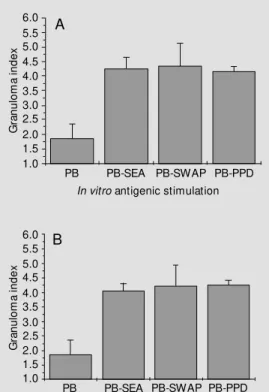
Figure 2 - Panel A, In vitro granu-loma (IVG) reaction of PBM C from schistosomiasis patients. Cells (3 x 10⁵/w ell) w ere
culti-vated w ith polyacrylamide beads coated w ith S. mansoni (PB-SEA and PB-SWAP) or M . tuberculo-sis (PB-PPD) antigens or not coated w ith antigen (PB). The results are expressed as granu-loma index (GI) evaluated on the 7th day of IVG culture and repre-sent the mean ± SD of N = 10. All experiments w ere carried out in triplicate. P<0.05 w as taken as the limit of significance. Panel B, Effect of lipopolysaccharide (LPS) on the IVG reaction of PBM C from schistosomiasis pa-tients. Cells (3 x 10⁵/w ell) w ere
cult ivat ed w it h SEA, PB-SWAP, PB-PPD or PB alone. LPS addition to IVG culture (1 µg/ml) did not significantly change the GI values (as those presented in Figure 2A), but generally there w as a mild decrease in the IVG react ion as show n by low er mean GIs compared to Figure 2A.
nor L-NAME) was not significantly differ-ent, although LPS addition generally led to lower nitrite concentrations. On the other hand, when LPS was added together with L-NAME, this combination restored the ability (lost by L-NAME treatment) of PBMC to release detectable levels of nitrite (Figure 1B). Comparison of NO production between groups with or without LPS showed a de-crease in nitrite levels in the groups with LPS added, whereas in groups with L-NAME added, LPS addition did stimulate NO pro-duction (Figure 1A and B).
LPS stim ulus do e s no t affe ct the IVG
re actio n, but, whe n asso ciate d with L-NAME,
it re ve rse s the IVG-e xace rbating actio n o f
L-NAME
Reactivity of cells (PBMC), from infected and uninfected individuals, cultivated with polyacrylamide beads conjugated to S. man-soni antigens (PB-SEA and PB-SWAP), to M. tuberculosis antigen (PB-PPD) or not conjugated to any antigen (PB alone) is dem-onstrated in Figures 2Aand B and 3A and B. Cells to which only LPS was added (Figure 2B) showed slightly lower GI values than those with no LPS added (Figure 2A). Addi-tion of L-NAME to IVG cultures exacer-bated the IVG reaction as shown by the increase in GI values (Figure 3A). Associa-tion of LPS and L-NAME in culture, as depicted in Figure 3B, produced results simi-lar to those seen in Figure 2A, where neither was added to the culture. This event demon-strates that LPS reverses the IVG-exacerbat-ing property shown by L-NAME.
D iscussio n
The role of the L-arginine/NO pathway in human monocytes and macrophages has been highly debated (4,15). Recent evidence suggests that human monocytes express the inducible form of NOS (iNOS) in response to LPS (16). The active component of
endo-toxin, LPS, stimulates the induction of NOS in macrophages. However, the intracellular mechanisms by which these processes are mediated remain unclear. LPS profoundly affects immune cell function and elicits a non-specific response, particularly in mac-rophages, which represent one of the main cellular targets for LPS. The effects of LPS occur primarily through the induction of a number of new genes, particularly a number of cytokines and chemokines (17). This also includes the stimulated induction of the 130-kDa isoform of iNOS, leading to the subse-quent generation of NO (18). It is interesting to note that LPS or cytokine-stimulated hu-man monocytes/macrophages seemingly fail to produce substantial enzyme activity or the high production of NO which is typically observed in their cellular counterparts of rodents (4,16). Since NO production was not routinely measurable in human PBMC, in-vestigators have used inhibitors of NOS (such as L-NAME and L-NG
functions. Using this approach, many re-ports indicate that NO inhibition might have beneficial and/or deleterious effects on a variety of animal models of inflammatory or infectious diseases (19,20). Although the cytotoxic activities of NO have been exten-sively described, several reports convinc-ingly demonstrate a protective role for NO (21). However, in human pathophysiology, particularly in human monocytes and mac-rophages, the role of NOS remains elusive (15,16). In our own experiments, we have seen that L-NAME addition to IVG culture is responsible for an exacerbation of the IVG reaction which appears to indicate at least an indirect anti-inflammatory role for NO.
With respect to LPS-induced iNOS acti-vation, some investigators have reported that at least 500 ng of LPS per ml is required to induce NO from RAW 264.7 cells, and this amount is reduced to only 500 pg/ml when IFNg is present (22), supporting the view that, even in this system, LPS alone is not so efficient. Yet, this macrophage cell line
(RAW 264.7) undergoes NO-dependent ap-optosis after being stimulated with a combi-nation of LPS plus IFNg, while L-NMMA has been shown to exert cytoprotective and antiapoptotic effects on these cells (19,23). Albeit in our study we did not specifically check the occurrence of apoptosis, there was seemingly no differences in cell viability among the four treatments tested (LPS, L-NAME, LPS plus L-L-NAME, or none of them). Other studies have reported that endotoxin induces a progressive loss of vascular tone which correlates with the expression of a Ca2+
-independent NOS in the vasculature. L-NMMA restores the loss of vessel tone and prevents the hyporesponsiveness to va-soconstrictor agents in endotoxin-treated iso-lated vessels in vitro (24) and, together with L-NAME, has been shown to restore blood pressure in animal models of endotoxin or septic shock (25). These indications of a direct interaction between LPS and L-argi-nine analogues agree with our results, which are consistent with the apparent antagonist effects of LPS and L-NAME in inducing NO production and in exacerbating the IVG re-action. The LPS stimulus clearly interfered with the expected effect of L-NAME on the IVG reaction both in terms of nitrite release and granuloma index values.
It is known that the most effective means of inducing macrophage activation is through combined stimulation with a priming and a triggering agent. Priming agents such as IFNg potentiate the macrophage response to a trig-gering agent like LPS (26). It is assumed that the order in which macrophages encounter immune and inflammatory stimuli can pro-foundly influence the extent to which NO synthesis is induced (26). Under the present conditions, we did not use IFN, but we used antigenic stimulation which turned out to be a potent priming and triggering agent, sup-planting LPS as an inducer of NO produc-tion. Perhaps this was due to the attributes of the model we employ, the IVG reaction which, by itself, constitutes a continuous
G ra n u lo m a i n d e x 6.0 5.0 4.0 3.0 2.0 1.0 A G ra n u lo m a i n d e x 6.0 5.0 4.0 3.0 2.0 1.0
PB PB-SEA PB-SWAP PB-PPD
In vitro antigenic stimulation by the addition of L-NAM E
PB PB-SEA PB-SWAP PB-PPD
In vitro antigenic stimulation by the addition of LPS and L-NAM E
5.5 4.5 3.5 2.5 1.5 5.5 4.5 3.5 2.5 1.5 Figure 3 - Panel A, Effect of
L-N-arginine methyl ester (L-NAM E) in increasing the in vitro loma (IVG) reaction. The granu-loma index (GI), ranging from 1 to 6, is show n as a function of tested antigenic stimulation (PB, PB-SEA, PB-SWAP and PB-PPD) in the presence of L-NAM E (1 mM ). The results are reported as GI evaluated on the 7th day of IVG culture. There w as an evi-dent general increase in GI val-ues for all tested antigens to w hich L-NAM E w as added as com pared t o t he result s ob-tained w ith only LPS, w ith LPS plus L-NAM E or w ithout any ad-dition, as show n in Figures 2A, 2B and 3B. Data are expressed as mean ± SD of N = 10. All experiments w ere carried out in triplicate. P<0.05 w as taken as the limit of significance. Panel B, Effect of combined LPS and L-NAM E on the IVG reaction. The GI, ranging from 1 to 6, is show n as a function of tested antigenic stimulation (PB, SEA, PB-SWAP and PB-PPD) in the con-comitant presence of L-NAM E (1 mM ) and LPS (1 µg/ml). The results are reported as GI evalu-ated on the 7th day of IVG cul-ture. As a w hole, there w as a significant decrease in GI values for all tested antigens, as com-pared to data show n in Figure 3A (w ith only L-NAM E addition), meaning that the exacerbating effect of L-NAM E on the IVG re-action w as reduced by LPS addi-tion in culture.
and progressive immune/inflammatory process. IVG begins with reaction of fresh PBMC and keeps them in differentiation processes in vitro until they become macro-phages, multinucleated giant and epithelioid cells.
A few reports have investigated the acti-vation mechanisms of the NOS or arginase pathway. One probable factor involved is the presence of bacterial antigens. In a recent investigation, LPS from nontoxic or detoxi-fied sources specifically triggered the argin-ase pathway in murine bone marrow-derived macrophages and NOS was induced solely by toxic LPS (27). Another point to be taken into account is the influence of serum factors in culture medium. A recent study reported that LPS had a more dramatic stimulatory effect on NO induction if the levels of serum NO2
-/NO3
preexisting in Corynebacterium parvum-primed mice were reduced by L-NMMA treatment (28). This also suggests an interesting correlation between LPS and NO inhibitors as well as the effect of serum on the stimulatory effect of LPS. In another study, the induction of iNOS by LPS was markedly reduced in the absence of fetal calf serum (FCS) (29). A likely explanation for that event is that some serum factor might be required for the induction of iNOS by LPS. A candidate is LPS-binding protein (LBP) which binds to LPS to form an LBP-LPS complex which then binds to the CD14 re-ceptor on the cell membrane (30). The same study reported that induction of NOS by IFN, however, was enhanced in the absence of FCS. This may be related to a possible nonspecific binding of IFN to plasma pro-teins present in FCS (29). Another study reported that LPS stimulated the induction of NOS in RAW 264.7 macrophages with maximal expression at concentrations of 1-3 µg/ml. This was wholly dependent upon the presence of serum, indicating that serum differentially affected LPS-stimulated NOS induction (31). Such serum factor influence might also represent some of the differences
usually seen in the in vitro NO production between murine and human cells, since FCS and human AB+
serum, respectively, are used. We are not aware of other reports regarding the possible influence of human AB+ serum as seen here for FCS.
We have provided substantial evidence that human cells, when properly stimulated, do produce NO. It should be noted that human macrophages seem to synthesize less NO than those of murine origin, and the biological consequences of this low produc-tion are not yet clear. It has been demon-strated that human mononuclear phagocytes can produce iNOS mRNA and protein and, despite this, their ability to generate NO is very low (32). Furthermore, in the present study we show that LPS and antigenic stim-ulation have different abilities to induce NO production, with results that seem to reduce the effectiveness of LPS as a good stimulus for NO production by human mononuclear cells. In our experiments, LPS did not stimu-late any further release of NO other than that induced by antigenic stimulation.
consis-tently mediates the granulomatous response in an irrefutable, although heterogeneous, way.
Ackno wle dgm e nts
We wish to thank Shauma Gustavson and Celia A. Almeida for technical assistance.
Re fe re nce s
1. Appleton I, Tomlinson A & Willoughby DA (1996). Induction of cyclo-oxygenase and nitric oxide synthase in inflammation. Ad-vances in Pharmacology, 35: 27-78. 2. Green SJ & Nacy CA (1993). Antimicrobial
and im m unopathologic effects of cy-tokine-induced nitric oxide synthesis. Cur-rent Opinion in Infectious Diseases, 6: 384-396.
3. Xie Q-W & Nathan C (1994). The high-output nitric oxide pathw ay: role and regu-lation. Journal of Leukocyte Biology, 56: 576-582.
4. Schneemann M , Schoedon G, Hofer S, Blau N, Guerrero L & Schaffner A (1993). Nitric oxide synthase is not a constituent of the antimicrobial armature of human mononuclear phagocytes. Journal of In-fectious Diseases, 167: 1358-1362. 5. Chen L, Pace JL, Russel SW & M orrison
DC (1996). Altered regulation of inducible nitric oxide synthase expression in macro-phages from senescent mice. Infection and Immunity, 64: 4288-4298.
6. M acM icking J, Xie Q-W & Nathan C (1997). Nitric oxide and macrophage func-tion. Annual Review of Immunology, 15: 323-350.
7. Parra JC, Dought y B, Colley DG & Gazzinelli G (1992). Human schistosomia-sis mansoni: studies on in vitro granu-loma modulation. M emórias do Instituto Osw aldo Cruz,87 (Suppl 5): 79-81. 8. Dougthy BL, Ottesen EA, Nash TE &
Phillips SM (1984). Delayed hypersensi-tivity granuloma formation around Schis-tosoma mansoni eggs in vitro. III. Granu-loma formation and modulation in human schistosomiasis mansoni. Journal of Im-munology, 133: 993-997.
9. Oliveira DM , Silva-Teixeira DN, Carmo SA & Goes AM (1998). Role of nitric oxide on human schistosomiasis mansoni: upregu-lation of in vitro granuloma formation by L-NAM E. Nitric Oxide: Biology and Chem-istry, 2: 57-65.
10. Katz N, Chaves A & Pellegrino J (1972). A simple device for quantitative stool thick-smear technique in schistosomiasis man-soni. Revista do Instituto de M edicina Tropical de São Paulo,14: 397-400. 11. Thorsby G & Bratlier A (1970). A rapid
method for preparation of pure lympho-cyte suspensions. In: Terasaki PI (Editor),
Histocompatibility Testing. Williams and Wilkins, Baltimore, 665-667.
12. Doughty BL, Goes AM & Parra JC (1987). Granulomatous hypersensitivity to Schis-tosoma mansoni egg antigens in human schistosomiasis. I. Granuloma formation and modulation around polyacrylamide antigen-conjugated beads. M emórias do Instituto Osw aldo Cruz, 82: 47-52. 13. Green LC, Wagner DA, Glogow ski J,
Skip-per PL, Wishnok JS & Tannenbaum SR (1982). Analysis of nitrate, nitrite and [15N]nitrate in biological fluids. Analytical
Biochemistry, 126: 131-138.
14. Xiong H, Kaw am ura I, Nishibori T & M itsuyama M (1996). Suppression of IFNg
production from Listeria monocytogenes -specific T cells by endogenously produced nitric oxide. Cellular Immunology, 172: 118-125.
15. Albina JE (1995). On the expression of nitric oxide synthase by human macro-phages: w hy no NO? Journal of Leuko-cyte Biology, 58: 643-646.
16. Weinberg JB, M isukonis M A, Shami PJ, M ason SN, Saulus DL, Dittm an W A, Wood ER, Smith GK, M cDonald B & Bachus KE (1995). Human mononuclear phagocyte inducible nitric oxide synthase (iNOS): analysis of iNOS mRNA, iNOS pro-tein, biopterin, and nitric oxide production by blood monocytes and peritoneal mac-rophages. Blood,86: 1184-1195. 17. Sunderkotter C, Steinbrik K, Goebeler M ,
Bhaidw aj R & Sorg C (1994). M acrophag-es and angiogenacrophag-esis. Journal of Leuko-cyte Biology, 55: 410-422.
18. Schmidt HHW & Walter U (1994). NO at w ork. Cell, 78: 919-925.
19. M uhl H & Dinarello CA (1997). M acro-phage inflammatory protein-1a produc-tion in lipopolysaccharide-stimulated hu-man adherent blood mononuclear cells is inhibited by the nitric oxide synthase NG
-monomethyl-L-arginine. Journal of Immu-nology, 159: 5063-5069.
20. Connor JR, M anning PT, Settle SL, M oore WM , Jerome GM , Webber RK, Tjoeng FS & Currie M G (1995). Suppression of adju-vant-induced arthritis by selective
inhibi-tion of inducible nitric oxide synthase. Eu-ropean Journal of Pharmacology, 273: 15-24.
21. Kroncke K-D, Fehsel K & Kolb-Bachofen V (1995). Inducible nitric oxide synthase and its product nitric oxide, a small molecule w ith complex biological activities. Biologi-cal Chemistry Hoppe-Seyler, 376: 327-343.
22. Sriskandan S, M oyes D, Buttery LK, Wilkinson J, Evans TJ, Polak J & Cohen J (1997). The role of nitric oxide in experi-mental murine sepsis due to pyrogenic exotoxin A-producing Streptococcus pyo-genes. Infection and Immunity, 65: 1767-1772.
23. M essmer UK, Ankarcrona M , Nicotera P & Brune B (1994). P53 expression in nitric oxide-induced apoptosis. FEBS Letters, 355: 23-27.
24. Rees DD (1995). Role of nitric oxide in the vascular dysfunction of septic shock. Bio-chemical Society Transactions, 23: 1025-1029.
25. Rees DD, M onkhouse JE & M oncada S (1996). Inhibitors of NO formation: from organ bath to clinical applications in sep-sis. Proceedings of the Scandinavian Physiological Societ y M eet ing, 10-12 M ay, 1996, Stockholm. Acta Physiologica Scandinavica, 157: 1A-60A.
26. Lorsbach RB, M urphy WJ, Low enstein CJ, Snyder SH & Russel SW (1993). Ex-pression of the nitric oxide synthase gene in mouse macrophages activated for tu-mor cell killing. M olecular basis for the synergy betw een interferon-g and lipo-polysaccharide. Journal of Biological Chemistry, 268: 1908-1913.
27. Corraliza IM , Soler G, Eichmann K & M odolell M (1995). Arginase induction by suppressors of nitric oxide synthesis (IL-4, IL-10 and PGE2) in murine bone mar-row -derived macrophages. Biochemical and Biophysical Research Communica-tions, 206: 667-673.
of Leukocyte Biology, 61: 24-32. 29. Szabó C, Southan GJ, Wood E,
Thiemer-mann C & Vane JR (1994). Inhibition by spermine of the induction of nitric oxide synthase in J774.2 macrophages: require-ment of a serum factor. British Journal of Pharmacology, 112: 355-356.
30. Raetz CRH, Ulevitch RJ, Wright SD, Sibley CH, Ding A & Nathan CF (1991). Gram-negative endotoxin: an extraordinary lipid w ith profound effects on eukaryotic sig-nal transduction. FASEB Journal, 5: 2652-2660.
31. Paul A, Bryant C, Law son M F, Chilvers ER & Plevin R (1997). Dissociation of lipo-polysaccharide-mediated induction of ni-tric oxide synthase and inhibition of DNA synthesis in RAW 264.7 macrophages and rat aortic smooth muscle cells. British Journal of Pharmacology, 120: 1439-1444. 32. Liew FY (1994). Regulation of nitric oxide synthesis in infections and autoimmune diseases. Immunology Letters, 43: 95-98. 33. Reiling N, Ulmer AJ, Duchrow M , Ernst M , Flad H & Hauschildt S (1994). Nitric oxide synthase: mRNA expression of
dif-ferent isoforms in human monocytes/ macrophages. European Journal of Immu-nology, 24: 1941-1945.
34. Colasanti M , Cavalieri E, Persichini T, M ollace V, M ariotto S, Suzuki H & Lauro GM (1997). Bacterial lipopolysaccharide plus interferon-gamma elicit a very fast inhibition of a Ca2+-dependent nitric oxide