Ecotourism potential clients’ perceptions, practices
and motivations– an exploratory study
By
Adrián Coto Couceiro
Master’s Dissertation in Management
Faculdade de Economia da Universidade do Porto
Supervised by:
Prof. Dr. Catarina Judite Morais Delgado Prof. Dr. Cristina Chaves
Biographical Note
Adrián Coto Couceiro was born in A Estrada (Galicia, Spain). After being graduated by Manuel García Barros High School in his hometown, he was awarded by IES A Basella (Vilanova de Arousa, Galicia, Spain) as Senior Technician in Environmental Chemistry.
Later on, he joined Universidade de Santiago de Compostela, finishing his Master Degree in Political Science and Public Management, after doing his specialization in International Relations. He is also Post-Graduated in International Cooperation by Universitat Oberta de Catalunya. After a time working for the Galician Regiona l Government in Consellería de Medio Rural, he joined Universidade do Porto for studying the Master in Management at the Faculty of Economics. He did an internship in App Generation Ltd Porto, and currently is working in the tourism sector.
Acknowledgments
I would like to express my gratitude to my supervisors Profª. Drª. Catarina Delgado and Profª. Drª. Cristina Chaves for their guidance, support and tremendous patience during the elaboration of this dissertation thesis. I would also like to mentio n the commitment Profª. Drª. Catarina Delgado showed in the data collection process.
At the same time, it was essential the support my family, especially my parents, gave me during these last two years, to overcome all the adversities found.
Abstract
Ecotourism is a term coined around three decades ago to define a vigorous component of the tourism industry. Its emergence is linked to the growing concerns about the situation of natural environment and resources in our planet. Ecotourism can be understood as an alternative way of travelling, which implies, at the same time, respect and interaction with natural resources, whilst also promotes the development of local communities.
Tourism is a dominant industry for millions of people all over the world, providing us with a huge amount of jobs and an essential part of global incomes. This sector is experiencing an important increase in its green sector, where ecotourism has emerged as the right method to minimize negative impacts of travelling on the environment, cultural heritage and indigenous population. Ecotourism is growing annually at an unprecedented rate, more than mainstream tourism, thanks to the popularization of a new kind of traveller with both grater environmental sensitivity and awareness.
The purpose of my research is acquiring a picture of travellers´ profiles that are more susceptible to choose an ecotourism product, by considering their attitudes, behaviours and preferences when they are travelling. This research might be useful for the demand side of the industry, in order to provide a better understanding of ecotourism as a system. To achieve this aim, an exploratory research, quantitative in nature, is being conducted with the intention of establishing a comparison between two segments, which are considered as potential ecotourists in accordance with the previous literature examined. The information provided according to their preferences shown after completing the survey, will be important for ecotourism marketers at the time of designing and implementing future marketing campaigns.
Table of contents
1 INTRODUCTION... 1
1.1 OBJECT IVES AND RELEVANCE... 1
1.2 DISSERT ATION ST RUCT URE ... 2
2 LITERATURE REVIEW ... 4
2.1 DEFINITION OF ECOTOURISM... 4
2.2 ECOT OURIST S´ PROFILE... 7
2.3 SUST AINABILITY IN THE TOURISM INDUST RY ... 10
2.4 ECOT OURISM MARKETING ... 13
2.4.1 Ecotourism in the current context...13
2.4.2 Certifications in the ecotourism industry ...15
2.4.3 Mark et segmentation in ecotourism ...20
2.4.4 Seasonality in ecotourism ...23
2.5 CONT ROVERSIES ABOUT ECOT OURISM ... 24
2.6 WILLINGNESS T O PAY A PREMIUM PRICE FOR ECOT OURISM ... 26
3 MET HODOLOGY...29
3.1 INT RODUCTION... 29
3.2 QUEST IONNAIRE DEVELOP MENT... 31
3.3 SAMPLING ST RATEGY ... 34
3.4 DAT A COLLECTION AND ST UDY SITE... 35
4 RES ULTS ...37
4.1 SAMPLE CHARACTERIZATION... 37
4.2 PAST T RAVELLING FOR LEISURE EXPERIENCES ... 40
4.3 PAST ECOTOURISM EXPERIENCES ... 41
4.4 THE ECOT OURISM CONCEPT ... 41
4.5 ECOT OURISM ... 42
4.6 PREFERENCES AND IDEAS ON T RAVELLING... 43
5 DISCUSS ION ...45
6 CONCLUS IONS ...50
7 REFERENCES ...52
List of tables
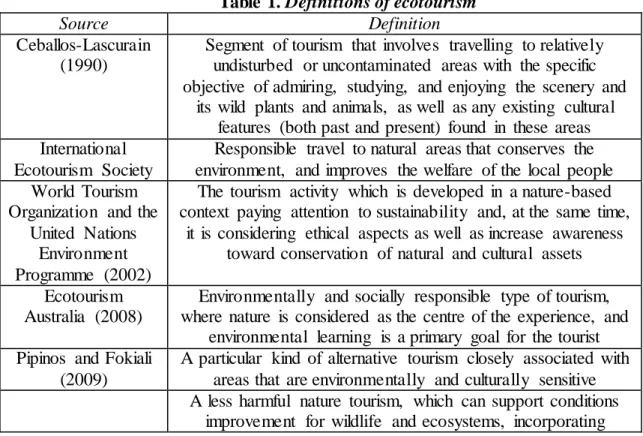
Table 1. Definitions of ecotourism
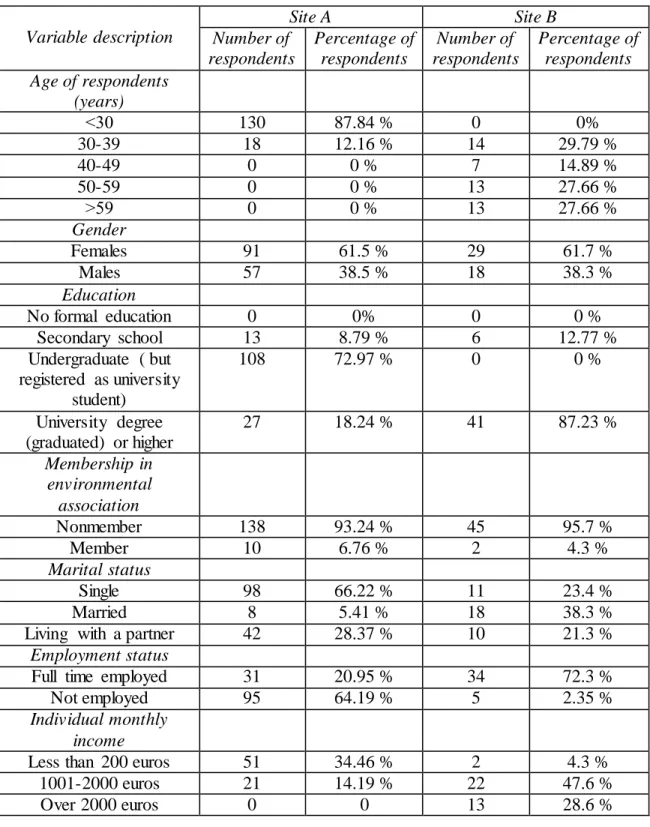
Table 2. Demographic characteristics of the sample
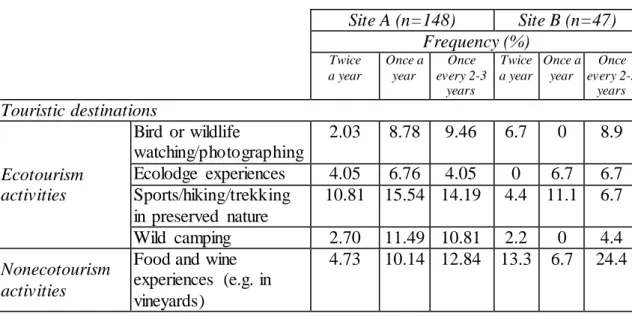
Table 3. Descriptive statistics of visits to certain touristic destinations Table 4. Perceptions about visiting an ecotourism destination
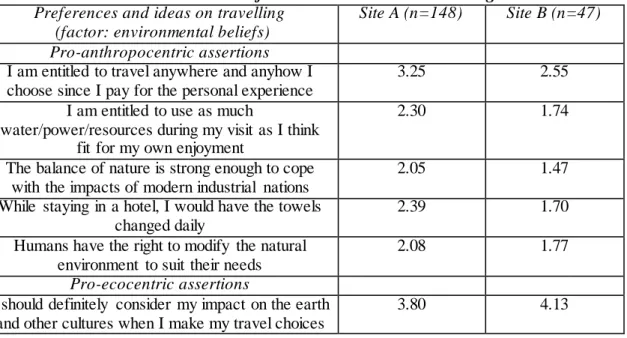
Table 5. Preferences and ideas on travelling
Table 6. Perceptions and habits about environmental issues ANNEXE 1. Ecotourism targets
1 Introduction
1.1 Objectives and relevance
Tourism is a dominant force for millions of people all over the world, providing us with more than 230 million jobs and over 10 percent of the gross domestic product of the planet. Tourism can be seen as a non-permanent transfer of people to different places where they normally live and work, with the purpose of varying their range of daily activities during the time they are at these temporary points (Singh et al., 2016).
Tourism is experiencing an important increase in its green sector, in line with many of the trends of the last twenty years (Juric et al., 2002). Recently, ecotourism has emerged as the right method to minimize the injurious impacts of tourist industry on the environment, cultural heritage and indigenous population. According to its growth perspectives, ecotourism is getting the opportunity of developing a promising market (Wurzinger and Johansson, 2006). It is usually reported as one of the forceful sectors within the tourism activity, providing huge revenues every year, augmenting in parallel with the emergence of a greener segment of tourists (Blangy and Metha, 2006; in Perkins and Brown, 2012). Ecotourism is growing annually at an unprecedented rate, more than mainstream tourism, thanks to the number of travellers looking for this kind of experiences has increased much more than others segments of the industry (Juric et al., 2002). It represents between 5% and 10% of the global travel market place (Castellanos-Verd ugo et al., 2016). Inside this world´s largest economic sector, it is a solid and profitable component. It represents, currently, a robust component of national tourism economies. Countries such as Canada, Costa Rica, Australia and China are a good example, due to their wonderful ecological and landscape diversity are directly contributing to this boom (Donohoe and Neeedham, 2008).
It is considered that 10% of the whole international arrivals are ecotourism (Steele, 1995; in Wurzinger and Johansson, 2006), whilst its annual growth rates had been estimated between 7% and 30% by some authors at the beginning of the 21st century
A new kind of traveller with both bigger natural awareness and commitment and also greater want for nature-based experiences and appreticeship is emerging (Page and Dowling, 2002; in Perkins and Brown, 2012). Ecotourism is seen as a sustainab le development way for areas with important touristic resources, because it not only promotes environment conservation, but also the local economy (Castellanos-Verdugo et al., 2016).
However, there are important doubts about if this growing popularity of ecotourism is due to the increase of concerns about the environment situation (Fennell, 1999; Page and Dowling, 2002; in Wurzinger and Johansson, 2006). Previous research normally states that people have scarce knowledge about ecotourism. This was also detected among tourism students examined by Cini et al. (2015). Connections between ecotourism awareness and survival of ecotourists´ behaviour have not achieved so much attention in the literature (Moghimehfar et al., 2014). Assessing tourists environme nta l values would be vital for a better comprehension of the ecotourist (Sharpley, 2006). Core values are considered as better elements to explain behaviour and choices among a variety of options than beliefs or attitudes, specifically if inherent ethical component is included. Either explicitly or implicitly ecotourism has a engagement with sustainable development, involving leastways ethical factors (Perkins and Brown 2012).
Following Cini et al. (2015), there is an important gap in the literature about studies whose aim is the investigation of individuals´ knowledge of ecotourism, as well as attitudes and intentions about ecotourism. In this study, the perceptions and knowledge on ecotourism of a sample of tourists are analysed, with the purpose of acquiring a picture of traveller s´ profile that are more susceptible to choose an ecotourism product and in order to provide a better understanding of ecotourism as a system. A deeper ecotourism knowledge achieved by visitors will increase a positive perception of the value of the ecotourist site and the positive attitudes towards ecotourism (Castellanos-Verdugo et al., 2015).
1.2
Dissertation structure
This dissertation is structured as follows. A literature review is developed in section 2, covering the definition of ecotourism, ecotourists´ profile, sustainability in the tourism industry, ecotourism marketing (by analysing the following issues: ecotourism in
the current context, certifications in the ecotourism industry, market segmentation in ecotourism, and seasonality in ecotourism), controversies about ecotourism, and willingness to pay a premium price for ecotourism.
In section 3, the methodology used in this study is described, by explaining how the questionnaire was elaborated, which reasons influenced the sampling strategy and the study site chosen, and how the surveys were delivered to collect the necessary data.
Section 4 makes a description of the results obtained, which are discussed in section 5; with the intention of establishing the final conclusions in section 6, in order to provide a perspective of ecotourists´ profiles, which I believe will shed some light on the determination of the segments of customers willing to purchase an ecotourism product.
2 Literature review
When a person joins a nature-based activity, this experience strengthens her/his environmental attitude and biospheric value, increasing, at the same time, own engagement in both general and site-specific environmentally responsible behaviours (Lee and Jan, 2015). A natural environment offers educational and recreational benefits that allow nature-based tourists to appreciate natural sceneries (Ballantyne et al., 2011; in Lee and Jan, 2015).
It is widely accepted the requirement for a more detailed understanding of ecotourists´ environmental commitment, especially when it is supposed a lack of knowledge of ecotourism (Wurzinger and Johansson, 2006), even in the travel industr y and among ecotourism operators (Lew, 1998; in Wurzinger and Johansson, 2006). Although nature-based tourism is getting higher interest and increasing exponentially its revenues every year, there is still a lack of knowledge of people reasons to visit an eco-friendly destination (Prebensen and Lee, 2013). So, it would be capital for tourism planners, ecotourism marketers, and natural area managers to know if ecotourists have different characteristics than other clusters of travellers, in order to implement and develop the right marketing campaigns and frameworks for a long-term (Wurzinger and Johansson, 2006). Around half of the tourists a wetland area receives could be doing ecotourism, because apparently they are visiting a natural area, observing fauna and environment with limited pressure, at the time they learn about nature (Chirgwin and Hughes, 1997; in Wurzinger and Johansson, 2006).
2.1 Definition of ecotourism
Both ecotourists and ecotourism are associated in the literature with a considerable amount of debate (Ashton, 1991, Stafford, 1992; in Juric et al., 2002). At the time of establishing a commonly accepted definition, there is no consensus about a shared one (Donohoe and Needham, 2008). However, “such definitions converge on three key components: nature-based travel, education/interpretation, and sustainability” (Black & Cabtree, 2007; in Bustam et al., 2012, p. 86). Ecotourism can be considered within the typology of nature tourism; once, this last is catalogued as wider concept which includes all the varieties of tourism linked with the environment (Goodwin 1996; in Wurzinger and
Johansson, 2006). But, at the same time, there are some important differences between ecotourism and nature-based tourism, because this last category refers essentially to enjoy and estimate the nature. In contrast, it does not involve tenets such as sustainab le development, ethical values and environmental instruction in the same way that ecotourism does (Cini et al., 2015). Ceballos-Lascurain (1990) (in Juric et al., 2002, p. 259) identified ecotourism “as that segment of tourism that involves travelling to relative ly undisturbed or uncontaminated areas with the specific objective of admiring, studying, and enjoying the scenery and its wild plants and animals, as well as any existing cultura l features (both past and present) found in these areas.” They also said that “the person who practices ecotourism has the opportunity of immersing him or herself in nature in a way that most people cannot enjoy in their routine, urban existences. This person will eventually acquire an awareness and knowledge of the natural environment, together with its cultural aspects, that will convert her/him into somebody keenly involved in conservation issues.”
According to the International Ecotourism Society, ecotourism is defined as “responsible travel to natural areas that conserves the environment, and improves the welfare of the local people" (Bustam et al, 2012, p. 86).
Ecotourism is also defined by the World Tourism Organization (WTO) and the United Nations Environment Programme (UNEP) (2002), as the tourism activity which is developed in a nature-based context paying attention to sustainability and, at the same time, it is considering ethical aspects as well as increase awareness toward conservatio n of natural and cultural assets. Ecotourism should be developed in small-scale, like small groups respecting the carrying capacity of local areas. It should support local people by providing economic benefits and job opportunities. Usually, participants are motivated by the chance of enjoying and learning about nature and local people (Wurzinger and Johansson, 2006). Similarly, ecotourism is described by Ecotourism Australia (2008) as an environmentally and socially responsible type of tourism, where nature is considered as the centre of the experience, and environmental learning is a primary goal for the tourist (Perkins and Brown, 2012). Pipinos and Fokiali (2009) understand ecotourism as a particular kind of alternative tourism closely associated with areas that are environmentally and culturally sensitive. It was developed with the intention of preventing the problems and consequences linked to traditional mass tourism.
Ecotourism is also seen as a less harmful nature tourism, which can support conditions improvement for wildlife and ecosystems, incorporating currently a commit ted attitude towards the environment, environmentally friendly destination management, and an important contribution to the sustainable development of local people (Castellano s -Verdugo et al., 2016). Then, “the current conceptualization of ecotourism emphasizes natural conservation of a tourist site and builds on the environmental knowledge of tourists, as these tourists should keep to local regulations and behave in an environmentally responsible way that implies no harm to the natural environment” (Chiu et al., 2014; in Castellanos-Verdugo et al., 2016, p. 2).
Sustainable tourism is the type of tourism that applies sustainability in any kind of travelling, including, for instance, city tourism or industrial tourism (Andereck and Vogt, 2000; Andriotis and Vaugham, 2003; in Wurzinger and Johansson, 2006). Thus, this term can be applied to all forms of tourism, whilst ecotourism refers solely to tourist experiences in nature (Wight, 2002; in Cini et al. 2015); but, at the same time, the activit y is fulfilling the requirements of sustainable development, understood such as the development that meets the needs of the present without putting in risk the ability of future generations to satisfy their own needs (Bustam et al., 2012).
Table 1. Definitions of ecotourism
Source Definition
Ceballos-Lascurain (1990)
Segment of tourism that involves travelling to relatively undisturbed or uncontaminated areas with the specific objective of admiring, studying, and enjoying the scenery and
its wild plants and animals, as well as any existing cultural features (both past and present) found in these areas International
Ecotourism Society
Responsible travel to natural areas that conserves the environment, and improves the welfare of the local people World Tourism
Organization and the United Nations
Environment Programme (2002)
The tourism activity which is developed in a nature-based context paying attention to sustainability and, at the same time,
it is considering ethical aspects as well as increase awareness toward conservation of natural and cultural assets Ecotourism
Australia (2008)
Environmentally and socially responsible type of tourism, where nature is considered as the centre of the experience, and
environmental learning is a primary goal for the tourist Pipinos and Fokiali
(2009)
A particular kind of alternative tourism closely associated with areas that are environmentally and culturally sensitive A less harmful nature tourism, which can support conditions
Castellanos-Verdugo et al.
(2016)
currently a committed attitude towards the environment, environmentally friendly destination management, and an important contribution to the sustainable development of local
people
2.2 Ecotourists´ profile
Ecotourists are considered as a subset of environmentally friendly tourists that engages in responsible travel which conserves natural environs. They are defined by their interest in nature-based activities, whereas the typology of environmentally friend ly tourists itself can exist across all tourism consumer contexts, as long as we refer to tourists with low environmental footprint at the destination (Dolnicar et al., 2008). Thus, ecotourists are usually more nature oriented than human oriented, and they see clear limits on Earth to sustain growth (Wurzinger and Johansson 2006). The biospheric value orientation seems to be closer to an ecocentric or biospheric perception of the value of nature that recognizes the importance of the well-being of nature for its own sake. Thus, an ecocentric view of nature is considered as a more accurate determiner of pro-environmental behaviour and attitudes than the anthropocentric view (Schultz et al., 2005; in Perkins and Brown, 2012). Ecotourists are not only interested in culture and environmental conservation, but also in wilderness and nature experiences and learning. They have the will of experiencing the nature and environmental conservation, apart from their desire to relax and escape (Juric et al., 2002).
Supposedly, ecotourists are concerned with satiating a belief that the activities they are doing have a positive environmental and social-cultural benefits and, they also would be concerned with achieving a higher social status as a result of their environme nta l awareness (Duffy, 2002; in Donohoe and Needham, 2008).
Attempts to understand and distinguish ecotourism from other tourism activit ie s usually rely on the analysis of its participants. Ecotourists are considered as the ones who are committed to responsible, educational and nature-based travel experiences and to comprehensively researching and organising their trips. Some authors describe this type of tourists as affluent, well educated, well-travelled and also the one who have a relative ly
high income (Epler Wood, 2002; McKercher, 2001; in Donohoe and Needham, 2008). Perkins and Brown (2012) state there is significant evidence of the distinction between the true ecotourist and the mainstream tourist, on the basis of their respective value systems.
It is supposed to be a mistake considering that most ecotourists are anything different from consumers; so, their main target would be the consumption of an ecotourism experience (McKercher 1993; in Juric et al., 2016). The emphasis on nature is the essential common element shared by the compound of ecotourist definitions that Juric et al. (2002) examined. They discard culture as the basis for ecotourism experience, seeing best described these tourists as “someone who, while interested in culture and in protecting the environment, is primarily interested in travelling to experience and learn about wilderness and undisturbed nature” (Juric et al., 2002, p. 260).
Weaver and Lawton (2002) identified two types of ecotourists, so, harder ecotourists would be those characterized by being physically active, making longer trips by travelling in smaller groups to less accessible and more untouched areas, whilst expecting fewer services. Thus, these travellers express more ecocentric attitudes than softer ecotourists, given that this last group shares more similarities with mass tourism in terms of volume, purpose of travel, reliance on an infrastructure of services, and expected guidance. Similarly, Mehmetoglu (2005) points out hard ecotourists as those who are able to show specific information about nature activities; whereas, soft ecotourists integrate a group which shares the characteristic of having a general idea about nature activities in which they are involved.
Following Sharpley (2006), ecotourism participants should not be necessarily categorized as ecotourists, given that there is a complex heterogeneity of motivations to buy an ecotourism package. The reason is the existence of a mixing of so-called true ecotourists with occasional ecotourism consumers who are mainly looking for a new experience, or as a means for acquiring social status (Duffy, 2002; Wheeller, 2005; in Perkins and Brown, 2012) . Thus, true ecotourists could be defined as consumers with a particular interest in experiencing and learning about nature in a direct way with the own commitment to the protection and conservation of natural and cultural environme nts (Sharpley, 2006).
Ecotourists are a relatively small subset of tourists, but representing clear differences from conventional travellers; because they have a strong commitment and interests in the environment and enjoy interacting with nature. However, travel motivations of ecotourists not only differ with usual travellers, but also among the category of ecotourists itself, which has an important component of heterogeneity as a mark of identity (Galley and Clifton, 2003).
The analysis of travellers by their tourism consumption systems allows managers to determine different customer segments on demographics, trip behaviour, activit ie s´ preferences and feedback about satisfaction achieved versus satisfaction expected. Demographic variables might not only play the role of determining variables of travel intention and behaviour, but also perform as qualifying or constraining variables (Kattiyapornpong and Miller, 2008).
There was, in the past, a lack of consensus about which age average is more frequent among ecotourists (White, 2002). This author (White) developed a study about North American ecotourists, finding that experienced ecotourists were normally older (the most repeated segment was between 35 and 54 years old) than conventional tourists (with a highlighted segment from 25 to 44 years old). However, it is argued that younger generation is usually more concerned about environmental issues that their predecessors (Esparon et al., 2014).
According to the gender, both (male and female) are sharing the same interest in the overall range of ecotourism activities. Differences are only found for specific activities, and they are not following a tight pattern, but varying over time (White, 2002). However, some studies conclude that the majority of ecotourists are female (Galley and Clifton, 2003).
Education and income level of experienced ecotourists tends to be much higher than general travellers (White, 2002; Galley and Clifton, 2003); thus, around 82 % were college graduated, although, ecotourism experiences are getting more interest among people with less education (White, 2002).
2.3 Sustainability in the tourism industry
After some decades of studies, two main solutions have emerged to improve the environmental sustainability of local tourism: ecotourism and sustainable tourism. In the field of sustainable tourism, research was mainly focused on supply-side measures and it can be useful for destination management in order to reduce the negative environme nta l side effects of the tourism industry. All the feasible improvement measures detected for sustainable tourism share the common root of being implemented at the destination itself and can therefore being referred to as supply-side measures (Dolnicar and Leisch, 2008). The focus of research has tended to concentrate more intensively on the supply characteristics (Sharpley, 2006). Supply-side measures take the tourists as given and try to modify their behaviour once at their destinations (Dolnicar, 2006), by implement i ng regulations on businesses, capacity restrictions or initiatives to educate tourists and stimulate pro-environmental behaviour (Dolnicar et al., 2008). Deeper investigation of the motivation of the ecotourist would be mandatory for developing a more accurate insight into the demand side of the equation (Dolnicar and Leisch, 2008). Therefore, demand -driven measures were defined such as those ones which identify tourists with a small ecological footprint and try to attract them to a destination instead of taking for granted the kind of tourists who arrives at the destination. These demand-driven approaches might be a valuable extension of the sustainable tourism management framework, because they are in line with the profit maximisation goal of tourism industry and, the demand side is crucial to sustainable tourism management due to consumer demand coerces tourism businesses to achieve eco-certifications (Dolnicar et al., 2008). Perkins and Brown (2012) stated that biospheric values and environmental beliefs are essential predictors either for the preference of green accreditation systems, or for the intention to purchase accredited products in the tourism market. Concerns about one´s personal impact and support for tourism products eco-certifications seem to be remarkable indicators of commitment to responsible and environmentally sensitive tourism.
Meanwhile, ecotourism is oriented to a highly demand-side or demand-drive n concept due to tourists who are interested in a particular type of holidays experience (mostly nature based) are the target. These tourists have important concerns about nature cares and needs, and try to leave a smaller ecological footprint than conventional tourists. This concept is very promising as naturally existing demand (here related with nature
-based tourism) can be very useful for tourism suppliers to match tourism offers. Until now, this demand-driven approach is only collected in the context of ecotourism, and little information is still available about characteristics and behaviours of environmenta ll y friendly tourists (Dolnicar and Leisch, 2008).
Identifying and focusing on tourists with low ecological footprints could be a smart alternative strategy for sustainable destination management approach. Destinat io n managers still do not have clear information about tourists who have low ecologica l footprints (Dolnicar et al., 2008).
Selective marketing is suggested as a strategy to improve environme nta l sustainability at the destination (Inskeep, 1991; in Dolnicar and Leisch, 2008) . New Zealand tourism businesses which offer environmentally friendly travelling are developing products for a new segment of tourists which has these demands and has recently emerged (Ataljevic and Doorne, 2000; in Dolnicar and Leisch, 2008). The term biocentric segments was introduced to define those visitors with highly pro-environme nta l attitudes. This segment would be distinctly profiled with respect to sociodemographics, interest in ecolabels, intended use of ecolabels and willingness to pay a price premium for environment- friendly accommodation (Fairweather et al., 2005; in Dolnicar et al., 2008). Willigness to pay a premium price for ecotourism is not only a matter of humam behaviours are endangering the planet, but also of tourists´ perceptions about conservatio n behaviours (Kazeminia et al., 2016). It is supposed that there are environmentally friend ly tourists in every tourism context, so, they could be actively targeted in order to minimi ze the ecological footprint of tourism (Dolnicar, 2006).
People who usually choose ecotourism-related holidays have differences in motivation and psychology from those who are more interested in mainstream holidays. Thus, travellers who place higher value on the natural environment for its own sake enjoy having a closer interaction with nature and be more interested in ecotourism products (Perkins and Brown, 2012). Usually, nature-based tourists are those who appraise emotional angles of enjoying the natural environment (Pebersen and Lee, 2013). At the same time, managers of nature-based tourism destinations should offer educationa l recreation activities to foster tourists´ biospheric values and environmental attitudes (Lee
and Jan, 2015), because the value of an eco-friendly destination depends on the meaning is offering to the tourists (Pebersen and Lee, 2013).
Following Castellanos-Verdugo et al. (2016), both knowledge of ecotourism and attitudes towards ecotourism are determining the perceived value of the tourist product or destination, which is the key to predict ecotourist satisfaction. Also, by providing a pleasant experience and interaction with the natural environment during an ecotourism activity, companies are improving pro-environmental attitudes and willingness to pay a premium price for this kind of products (Kazeminia et al., 2016).
Environmental values are sustained by individuals regarding the relations hip between individuals and their natural environment, evolving from pure anthropocentric to pure biocentric, and ecocentric. These values highlight the importance of respecting all life forms and natural systems guaranteeing them the same rights than humans have (Lück, 2003; in Lu et al., 2016). Biospheric values influence in a positive and significant way the general environmental responsible behaviour of nature- based tourists, extending our knowledge about tourism and supporting environmentally responsible tourism (Lee and Jan, 2015). On the other hand, preoccupation with material goods might prevent the assumption of environmental values. Thus, those materialistic individuals, who priorit ize acquisition and consumption, usually are less likely to show favourable attitudes and commitment to ecotourism (Lu et al., 2016).
Moghimehfar et al. (2014) studied mountain hikers´ knowledge of ecotourism and ecotourism practices in central Iran. They observed an important difference between behaviour and awareness of ecotourism practice and; also, higher levels of engagement in ecotourism behaviour due to environmental impacts than self-achieved knowledge about ecotourism. These authors believe that this phenomenon could be based both on human emotional affinity or connectivity with nature. At the same time, they did not find significant differences in ecotourism knowledge and behaviour among different education levels, but also their research stated the idea that there is a positive connection between hiking or outdoor recreation experience and knowledge of ecotourism and sustainab le behaviour.
2.4 Ecotourism marketing
2.4.1 Ecotourism in the current context
The internet is providing a new and important electronic commerce system for tourism, and its use for planning leisure travel has become a world-wide tourism trend and the most important industry in terms of electronic commerce or e-commerce volume. In the case of ecotourism, it provides the most important marketing mechanism and the main explanation to its rapid growth (Donohoe & Needham, 2008); where word-of-mouth communication is also an important determiner of tourists´ destination choices, because, sometimes, this kind of interactions in forums and websites are more credible than advertising campaigns (Simpson and Siguaw, 2008). Promotion of tourism on the internet is acquiring a tremendous growth thanks to its convenience, cost-effectiveness, and competitive advantage offered. Internet has become one of the main channels to buy travel companies products, also because it offers essential references from customers who trusted in the same operator before. By observing the way ecotourism companies are positioning themselves on the internet, we can get an accurate perspective about what role ecotourism education is playing in their businesses (Bustam et al., 2012).
However, some authors defend the thesis that most ecotourism companies do not mention or explain properly the sustainability principles on their online promotion (Bustam et al., 2012). Others who also have studied ecotourism, consider that the term itself is being used such as a marketing strategy; by an abuse and misuse of the concept to attract conservation conscious tourists to nature based tourism under the slogan of ecotourism, and usually generating negative environmental and social impacts. Others, due to the lack of a shared ecotourism definition, have showed concerns about the increasing gap between ecotourism theory and practise, leading to the uselessness of the concept. Inconsistency in the definition of ecotourism has not allowed the use of the concept in practical terms. So, the implementation of global and national principles to lead ecotourism activities would be essential to guarantee the successful development of ecotourism locations (Cobbinah, 2015).
Marketing is defined by the American Marketing Association “as an organizatio na l function and set of processes for creating, communicating, and delivering value to
customers and for managing customer relationships in ways that benefit the organizat io n and its stakeholders” (Bustam et al., 2012, p. 89).
But tourism, as a consequence of this definition itself, and ecotourism as the activity included in this wider sector, have a different marketing process compared with other industries. Thus, as long as we can consider tourism products as intangible goods, quality control is not easy to be assessed. Peculiarities are also stressed by the facts that customers should travel to purchase the products, instead of bringing them to the customers, and many activities are involved in a single trip or product (Singh et al., 2016). During the last three decades, the discussion on ecotourism has increased its attention, either in conferences or journals, with the definitional interpretations being broadened to incorporate ethical issues or normative components. Thus, it is fair that ecotourism pursues environmental conservation, local cultures protection and deliver ing benefits to both tourists and host communities (Cobbinah, 2015). Tourists´ arrival works as a drive for other activities, increasing their revenue and diversifying the portfolio of local companies. It has been also defended the viewpoint that, in some locations, ecotourism activity is much more profitable than other activities like agriculture (Singh et al., 2016).
Until recent times, no essential information about ecotourism market demand was achieved. To begin with, many times, travel companies are in charge of determining if a travel activity or location can be considered as an ecotourism experience or, in contrast, a conventional one. However, we should consider, that many ecotourists are not hiring a tour operator services to be involved in an ecotourism experience. On the contrary, they do it by being independent travellers (White, 2002).
The fact of putting in risk the culture and daily habits of local communities should be eradicated as a result of the ecotourism activity, as well as pernicious intentions of overcapacity, which can cause irreparable harm on the environment (Singh et al., 2016).
It is also widely accepted in the literature that while sustainable development remains at the core of ecotourism in developed countries, poverty reduction is the main target in developing countries. Then, we can see how, in some cases, ecotourism is linked to poverty reduction and local development (Cobbinah, 2015). Ecotourism is a singular
kind of tourism which focuses on the improvement of natural environment and provides economic alternatives for local communities (Ban and Ramsaran, 2016).
Cobbinah (2015) has conducted a research about ecotourism in a developing country, Ghana; concluding that ecotourism principles oriented towards achieving social goals in the local community are not usually recognised. He also promotes further collaboration and coordination to clarify and implement the key principles of ecotourism, also at the host community level. Otherwise, feelings like frustration and reluctance could appear in local residents, expanding negative attitudes towards the discipline and damaging its status.
White (2002) stated that many travellers are interested in varied travel experience, namely, trips which include an ecotourism portion during their holidays, but also incorporating nonecotourism experiences into the journey as a whole. So, ecotourism marketers should be smart enough to fullfill the needs of these customers, at the time they should be aware of the incorporation of experienced ecotourists into mainstream markets.
2.4.2 Certifications in the ecotourism industry
A certification scheme represents the guarantee that travel operators respect sustainability, and socio-cultural and economic issues according to the ecotourism tenets, at the time of developing their business activity (Bustam et al., 2012). It is considered as a symbol of high product quality and an indicator of environmental and social respect. In the tourism industry, a certification ensures that a specific product, activity or service satisfies some established rules, deserving the achievement of a logo or seal (Haaland and Aas, 2010); and acting as an essential sustainable tourism management tool (Esparon et al., 2014).
The number of environmental certifications and labels has grown exponentia ll y lately. One of the consequences of this phenomenon is the difficulty of distinguis hi ng among this mixture of eco-accreditations, fact that can be associated with an important lack of credibility (Haaland and Aas, 2010). Proliferation and multiplicity of certificat io n schemes confuse customers. Even for experienced ecotourists is not easy to identify certification logos they see (Esparon et al., 2014). To restore eco-certificatio ns´
functionality, a tighter control and assessment would be requested (Haaland and Aas, 2010).
It is widely accepted that governments should interfere in the regulation of the ecotourism industry (Singh et al., 2016). However, there is the traditional perspective which considers the tourism industry as relatively free from regulations. Establishing a suitable and periodically assessed certification system could mitigate the need for severe regulations, whilst provides the industry with important advantages (Haaland and Aas, 2010). So, matching both the environmental and economic growth objectives would be crucial, especially for developing countries. The implementation of a suitable system of certifications would be the right strategy to ensure sustainability in this sector, because it would help tourist in their decision-making process by identifying those opportunist ic tourism companies which are trying to take advantage from promoting themselves as proper ecotourism providers, whilst they do not care at all about the tenets of this activit y. Although with some exceptions, like Australia, Costa Rica and Sweden, most of the countries do not have an internal standard to award ecotourism certificates (Singh et al., 2016). Thus, Sweden and Australia could be considered as the models where private business and public power have established a clear interaction and collaboration during the phase of certification scheme implementation, evolving afterwards towards a working system run by private organizations. On the other hand, Costa Rica represents the paradigm of assumption of responsibilities by government authorities within this process (Haaland and Aas, 2010). There is also the same lack of consensus in the internatio na l scope, because although there are a large amount of them, none is mandatory and regulated by an official international body, and most of eco-certifications are being awarded by private tourism organizations (Singh et al., 2016).
An ecotourism certificate should ensure that the product or location suits the specific standards required by the industry; given that it is understood as a mark of high product quality and its commitment with the tenets of the activity; including also indicators of social and economic sustainability, besides those that guarantee its environmental engagement (Singh et al., 2016).
Currently, according to the UN World Tourism Organization, 2 of every 3 eco-certificates are not public powers competence, being determined and awarded by private
tourism organizations (Haaland and Aas, 2010). Singh et al. (2016) highlights the obligatoriness of eco-certifications, otherwise, many ecotourism-based companies may opt for not joining the certification scheme. Thus, the implementation of a fair and global certification framework should seek the target of planning, marketing and sustaining a model of ecotourism that guarantees tangible benefits to the four parts included in this interaction: local communities, tourists, environment and the ecotourism businesses. Cultural, social, and behavioural differences are an important barrier to save at the time of implementing a global certification system, so, local and regional particularities should be having into account to ensure a good performance and reception of the process.
By being awarded with an ecotourism certification, companies can get important advantages. On the one hand, normally ecotourism operator will have access either to technical assistance or financing for new technology provided by the certification agency in charge (Bustam et al., 2012).
On the other hand, a suitable certification system is particularly useful for marketing departments, because they can target easily the ideal segment of customers, increasing the chances of fulfilling their needs (Singh et al., 2016); and they are achieving important marketing opportunities as a result of showing themselves as a right certified business, which is easily seen as a sign of quality brand (Bustam et al., 2012). Companies can achieve competitive advantages by showing environmental concerns and supporting conservation causes (Kazeminia et al., 2016). So, a fluid dialectic process between certification agency and tourism industry will revert positively in the sector, preventing also the emergence of the harmful phenomenon of greenwashing (Singh et al., 2016). This is the main treat for the ecotourism certification process, and it has been accentuated by the credibility erosion caused by its lack of external assessment; given that, usually, the same organization is in charge of handling the marketing, the applications for certificat io n and also the responsibility of conceding those awards. This absence of external audit is often justified by its high cost. Also, the structure of the ecotourism industry itself is not helping in this sense, because there are a huge number of small businesses in the market and no legal regulation which rules this scope. So, most of the companies can opt for trying to maximize their sales volume, by using the lax interpretation of the certificat io n scheme in the manner it is providing the biggest amount of profit in the short term; starting, there, a vicious circle which is provoking an extensive damage not only in the certificat io n
system, but also in the industry survival. So, the mentioned example of Australia would be a right mirror to find a solution (Haaland and Aas, 2010).
At the time of considering the applicability of ecotourism certifications is particularly important to check if either customers or local residents are aware about the certification itself, and the advantages and value which are providing them with. Otherwise, the certification could be converted is something totally inoperable. Education is seen as the main weapon to consolidate customers and residents certification awareness. It plays an important role on the ecotourism activity, given that it fosters the empathy with the natural environment and its needs. So, it acts as the guarantee to ensure that sustainability is present as an essential factor in ecotourism, contributing also to increase cognitive awareness about environmental and cultural issues; although it did not achieved the required attention in previous academic research (Bustam et al., 2012).
To ensure the success of the certification process is important to gather a multidisciplinary team in the planning phase. Also this stage should be leaded by an organization proceeding from the tourism industry, namely, with a huge background on how the tourism and travel market is working. Tourism governmental authorities should support the implementation of the certification scheme, but being careful with not taking an excessive role, which could compromise their natural position. Certification systems need to be financially viable by themselves, in order to show a commitment with credibility (Haaland and Aas, 2010); which, respectively, will have a positive impact on the increase of customer loyalty, by focusing on maintaining customer satisfact io n (Esparon et al., 2014). At the same time, criteria must be considered as the most important piece of certifications scheme machinery and it needs to be constantly assessed. So, in a similar manner than the previously mentioned process of planning, gathering an efficie nt and wide squad of professionals is mandatory. Problems can appear either when operating with certificates at different levels or by certificating products or activities instead of the whole company; because if the applicant is getting a single eco-certificate, even the lowest, it can be wrongly used to export the vision that the whole business is certified, claiming again for greenwashing arrival (Haaland and Aas, 2010).
Bustam et al. (2012) argued that environmental education is usually impleme nted by interpretive products, which are characterized by being conducted as a type of
educational effort that reveals the links hidden beyond diverse environmental issues. Thus, interpretation basically operates by simplifying the reality in order to facilita te understanding of environmental, cultural and social themes, at the time that could be considered as a useful tool to explain the advantages and benefits of ecotourism, and to support its sustainability over time. Developing outstanding world-class experiences should be pursued by ecotourism operators to gain competitive advantage in the market (Ban and Ramsaran, 2016).
However, according to Bustam et al. (2012), education is not playing the role it deserves in the process of ecotourism certification. There is no enough attention about education criteria at the time of examining ecotourism providers looking for certificatio ns. In a similar manner, ecotourism certification scheme has not achieved success on creating the customers´ required awareness about its advantages, imperative condition to show its efficiency, which is perceptible through its lack of influence at the time of determining travellers´ preferences. Customers should be educated to distinguish the differe nces between an eco-certified company or destination and a non-eco-certified one (Ban and Ramsaran, 2016). Surprisingly, it is also found, after analysing internet promotion of ecotourism operators, that those non-certified are paying more attention to educationa l issues in their marketing online than the eco-certified ones. Thus, non-certified ecotourism operators show clearer commitment with education and include a more detailed description of the topic on their websites; although, usually, the opposite would be predicted (Bustam et al., 2012).
Travellers not only need to know what a company is offering, but also how an eco-certification is supporting sustainability (Ban and Ramsaran, 2016). Following Bustam et al. (2012), this unexpected lack of commitment with education, showed by certified operators could be explained by the fact that, as I have mentioned before, the certificat io n standards do not consider this issue as one of the most important factors at the time of awarding their candidates. On the other hand, non-certified operators would understand much better the essential role of education on the ecotourism activity, as well as its advantages. This phenomenon would imply a breakdown in the certification system itself, given that communicating education through marketing tools is essential to insert sustainability praxis on the core of ecotourism activity.
2.4.3 Market segmentation in ecotourism
Market segmentation is well-accepted as an essential tool in strategic marketing, because it allows determine needs and preferences of consumer subgroups, which share important characteristics. Basically, this process consists on dividing a heterogeneo us market in different smaller markets which share the same characteristics and, potentiall y, the same product preferences. By doing a deep exam of our market structure we can identify the most attractive market segments to match their potential and needs with the strengths of our company or organization (Dolnicar, 2004). So, detecting different segments existing in the eco-tourism market is the essential first stage to do a successful promotion (Mehmetoglu, 2005). Traditionally, two main approaches have been used to segment consumer populations: a priori and data-driven (a posteriori, post hoc) segmentation. Priori segmentation has represented the foremost method within the tourism industry. However, because of this too widespread utilization, there are important doubts about competitive advantage achieved by this framework implementation (Dolnicar, 2004).
Marketing strategies should attract segments of tourists which are profitable and most feasible to choose their products, having into account the heterogeneity of tourism market. In order to implement a convenient segmentation, each segment has to be accessible, measurable, and substantial (Tkaczynski et al., 2015).
In the marketing field, having a baseline rating of the target market´s ecotourism interest would be useful before preparing marketing programs. Thus, tourist product development could be adapted to the consumer´s preferences determined, in some way, by the consumer´s level of interest in ecotourism (Juric et al., 2002). The purpose of market segmentation is determining visible characteristics of the purchasing behaviour subgroups, which can be predicted and targeted. Usually, a double segmentation is implemented, as follows. The first segment is defined, according to the socially descriptive data available, and compared with a characteristic kind of purchasing behaviour, which will identify the second segment. Superposition between these two segments should be able to be predicted (Johns and Gyimóthy, 2002).
At the time of planning a travel, diverse factors interact between the impressio ns of the destination and own motivations. Among these factors, environmental, cultural and
contextual influences are included. At a micro-level, the final choice would be mix between personality and lifestyle of the individual, whilst macro-level conditions are a consequence of culture influences. Thus, tourists usually select destinations which fullf ill their preferences, by suiting their own picture of the destination. As a result, determinat io n of tourists preferences is an essential part for implementing a right marketing strategy (Prebensen and Lee, 2013), which should be oriented in one or another way depending on inner needs and motivations of travellers (Mehmetoglu, 2005).
Ecotourism managers should figure out which are the more determinant variables to generate word-of-mouth communication, with the intention of targeting efficie nt l y those segments which can impact positively on this channel of communication. This is why, some segments of customers are more willing to promote either a company or a destination by word-of-mouth communication and, also, there is not a homogeneo us behaviour at the time of being influenced by the references provided by others. Ecotouris m products and destinations can achieve competitive advantage if former travellers act as their promoters, launching more credible and trustable messages than expensive advertising campaigns which are designed by marketing departments. Word-of-mouth communication is getting special relevance in the current context, given that one single review on a website, forum,… can be seen by a huge number of potential customers; fostering the power of the internet as one of the most important diffusion channels for ecotourism. Consequently, managers should pay attention to word-of-mouth communication, owing to its close relationship with customer loyalty. Thus, customer satisfaction is a necessary but insufficient condition to strengthen this link (Simpson and Siguaw, 2008).
It is commonly accepted that nature-based tourists and, hence, ecotourists, as a group within the larger cluster of nature-based tourists, do not represent a homogeneo us group. There are different perceptions on environmental issues, according their environmental concerns and attitudes (Prebensen and Lee, 2013). Precisely, this conditio n of heterogeneity among ecotourists is the main reason for demanding the implementat io n of market segmentation, which enables tourism destinations and operators to achieve the required competitive advantage (Dolnicar, 2004). Consequently, due to this heterogeneo us character, ecotourism marketers should focus on market segmentation for two reasons. First, it has the aptitude to determine those segments of customers that can provide the
highest income, so, we are talking about the intention of maximizing financial yield. Secondly, another reason for implementing market segmentation is its usefulness as a tool to discover the ideal visitor types who maximize sustainable yield instead of only financ ia l yield. This motivation is interesting for managers, at the time of defining segments of customers with lower environmental and social footprints and assisting them to maximi ze the positive incidence of tourism (Nickerson et al., 2016).
By doing a psychographic differentiation, Mehmetoglu (2005) classified, in his study, Norwegians nature-travellers in two categories: specialists and generalists. The first group needs little infrastructure and management facilities, adopting their presence to the actual support systems. In contrast, generalists show less ambition, are not too interested in the special characteristics of the location, require a well-developed infrastructure and join relatively big groups of tourists. To sum up, specialist travel mainly for nature, and generalists also for other reasons besides nature, but no differences were found between these two segments according to their respective travel mode, trip expenses or trip satisfaction. Nevertheless, the first distinction between ecotourists specialists and generalists was established according to their respective trip duration; considering specialists those that enroll a recreational activity during more than seven days, and generalists during less than 48 hours (White, 2002). As was stated before in this study, internet is, nowadays, the main marketing tool for ecotourism. Consequently, a website for a nature-based or ecoturist company and destination should have the accurate design to guide each segment of customers to the right place; namely, foreign tourists to specialis t sections, and the domestic (Norwegian) market to generalist contents (Mehmetoglu, 2005).
Prebensen and Lee (2013) found in their research, that social recognition and self-realisation are important motivations for French and British tourists, whilst Swedes and Norwegians are more interested on being in and using the nature; at the time of choosing to visit an eco-friendly destination, testing that motivations for nature-based travelling derives from cultural philosophy, having different meanings depending on the country of origin. Similarly, geographical and cultural remoteness of holiday destination are essential influences on the selection of a nature-based holiday. Among Europeans, longer distances are increasing the feeling of uniqueness, novelty and desire to tell others about own
experiences. On the other hand, closeness is fostering the will of deeper interaction with nature.
2.4.4 Seasonality in ecotourism
Joining activities different from travellers usual lifestyle which provide pleasant feelings, acts as one of the most essential elements at the time of choosing potential holidays destinations. These kinds of activities usually are influenced by temporal factors and, consequently, tourist preferences about these nature-based activities are oriented towards peak seasons. For this reason, tourism marketers should focus on maximizi ng income during this time, in order to be able to make profitable their businesses throughout the year, especially in low season. So, businesses should be adapted in order to be able to live with seasonality, by minimizing its effects with strategies like market diversificat io n and the implementation of alternative products, which can enable to target new market segments during other seasons of the year. Non-seasonal activities are a smart way of attracting tourists on a yearly basis, with the intention of maximizing revenue potential by making viable enterprises and destinations during off-peak periods (Tkaczynski et al., 2015).
Although seasonality is accounted as one of the capital elements of the tourism industry, especially for predicting tourism demand (Tkacynski et al., 2015); there is no huge research about seasonality preference of ecotourism travellers, in spite of, it is clear than either conventional tourists or ecotourists normally prefer to travel in summer months. However, due to the fact ecotourist are more frequent travellers, they are more willing to travel in winter and low season than general tourists; issue which should be taken into account by ecotourism marketers, because it is fostering the industry potential, spreading the season of operations (White, 2002).
By analysing temporal factors, such as seasonality, marketers can achieve greater dose of efficiency, at the time of segmenting their potential customers. Identifying the most attractive activities that one specific destination provides for travellers is one of the main tasks for managers, given that it is conditioning the probability that tourists choose this destination as the one which best satisfies their wants. This is why, is essential to
figure out potential activity preferences before potential travel, allowing to know what is considered as enjoyable and desirable for tourists (Tkaczynski et al., 2015).
2.5 Controversies about ecotourism
One of the major threats for ecotourism is the development of marketing strategies based on the promotion of a vision of sustainability that relies on expanding consumpt io n of green products through a deeply profit orientation leaded by global corporation, a reality confronted itself with the essential meaning of ecotourism (Braun et al., 2015). There are many examples where ecotourism implementation, in the end, benefits external stakeholders instead of local communities (Wang et al., 2016).
There are also two important conceptions about ecotourism which should be distinguished: high-value ecotourism, versus high-volume. Then, high-volume would be the version which is similar to mass tourism in its orientation toward facilitating a large number of tourist experiences, with little focus on interaction or connection with local people. On the other hand, high-value bets for experiences which engage tourists with local communities, pursuing for learning about these local habits and ways of life. So, the purpose of the ecotourism industry should be establishing the right mechanisms to avoid the emergence of the greenwashing phenomenon, which can be associated with very bad impacts for the sustainability of the sector. Thus, it is a potential threat that some multinational corporations can try to take advantage of ecotourism success, by implementing sophisticated marketing strategies; which are removing the differe nces between ecotourism and mass tourism. Also, because of the power and influence of foreign investment, indigenous and non-elite local people are often missing in the first stages of the decision-making process, which is usually essential to determine future development of the process of ecotourism in one specific area. In this sense, tighter governmental regulation would be useful to make sure local communities are getting the part they deserve from benefits generated by ecotourism activity (Braun et al., 2015).
Ecotourism and other sustainable tourism varieties should not be seen as a panacea per se, if they do not pursue clearly the implementation of ethics and values in the tourism sector (Wang et al., 2016). Occasionally, the traditional perception about the economic benefits ecotourism provides to local communities is questioned, because, although
promotes environmental sustainability; ecotourism would foster pre-existing patterns of stratification and economic inequalities (Horton, 2009; in Braun et al., 2015). Other negative impacts that could be blamed to ecotourism are increases in solid waste, disturbances to natural habitats or trail erosion (Stem et al., 2003; Gould and Lewis, 2009; in Braun et al., 2015).
It is said that since the important growth of ecotourism in the 1980s, there is an important gap between its theoretical objectives and its practical materialization. To avoid dysfunctionalities, ecotourism should pay attention to its two main goals, both environmental conservation and promotion of local development. More often than that, in developing countries, it is prioritizing environmental conservation against local development; creating an adverse atmosphere among indigenous people, which is translated in a lack of involvement in ecotourism activities, eroding, there, the core of ecotourism meaning itself. Ecotourism developers must have into account this activit y also should provide opportunities for addressing local development challenges, fostering the local involvement in order to keep a right sustainability perspective (Cobbinah et al., 2015). Likewise, to implement a sustainable ecotourism enterprise, there is a need for a deeper understanding of the cultural politics of governance and participation at the local scope; with the intention of providing livelihood alternatives for an important part of the local population (Wang et al., 2016).
In sum, following Cobbinah et al. (2015), participation by host communities is essential to promote ecotourism success; which can emerge after developing an administrative framework for implementing ecotourism and the establishment of strong relationships among stakeholders. So, implementation of ecotourism, which must be understood as a hard political set of interactions, is closely linked to the creation of a solid administrative framework, oriented towards the solution of stakeholders´ needs in the pursuit of different socio-economic and environmental conservation outcomes.
By having into account political issues and values associated with the execution of ecotourism at the local level, we will achieve a clearer perspective of the guidelines to establish a sustainable model of economic development for unprotected communit ies ; which will require some years of preliminary actions before the final and successful scheme has been materialized (Wang et al., 2016). However, some research considers