short standard
349 base of drop
INFANT MENTAL HEALTH JOURNAL, Vol. 24(4), 349– 364 (2003)
䊚 2003 Michigan Association for Infant Mental Health
Published online in Wiley InterScience (www.interscience.wiley.com). DOI: 10.1002/imhj.10061
DC: 0– 3
MARIA JOSE´ CORDEIRO AND PEDRO CALDEIRA DA SILVA
Hospital de Dona Estefaˆnia
TERESA GOLDSCHMIDT
Hospital de Santa Maria
ABSTRACT: Infancy and early childhood are characterized by a dynamic and ever changing process. Since the beginning of their clinical work at the Infancy Unit, the authors were concerned with individual assess-ment and the questions about the role played by parents as well as by babies in pathology and intervention. In this article, the authors begin with a description of the path that led them to the selection of DC 0–3 as a diagnostic classification system and how this has been instrumental in helping them to better define infant psychopathology and guide them in treatment orientations. Next, they present the results of the application of Axis I and II of DC: 0– 3 in their clinical population in the years 1997, 1998, and 1999. The objectives of this study were to learn more about the distribution of mental disorders in a clinical population up to four years of age. The authors attempted to separate infants at risk for developing psychic disorders from those presenting current psychopathology as well as the possible influence of demographic features on this distribution, to define a target population and design adapted therapeutic measures. The identification of these objectives provides the rationale for the use of a diagnostic tool, like DC: 0– 3, which is essential to plan clinical activity, to evaluate therapeutic efficacy, and to develop specific programs.
RESUMEN: La infancia y los primeros an˜os de la nin˜ez se caracterizan por un proceso dina´mico y de constantes cambios. Desde el comienzo de su trabajo clı´nico en la Seccio´n de Infancia, los autores se preocuparon de la evaluacio´n individual y las preguntas acerca del papel que los padres tienen, ası´ como el papel de los bebe´s en la patologı´a y la intervencio´n. En este estudio, los autores comienzan con una descripcio´n del camino que los llevo´ a la seleccio´n del DC 0-3 como un sistema de clasificacio´n de diagno´stico y co´mo el mismo ha sido esencial para ayudarles a ellos a definir mejor la sicopatologı´a infantil, y a guiarlos en las orientaciones para el tratamiento. Despue´s se presentan los resultados de la aplicacio´n de las categorı´as I y II del DC: 0-3 en sus pacientes clı´nicos en los an˜os 1997, 1998 y 1999. Los objetivos de este estudio fueron los de llegar a conocer ma´s acerca de la distribucio´n de los trastornos mentales dentro de una poblacio´n clı´nica de hasta cuatro an˜os. Intentamos separar los infantes bajo riesgo de desarrollar trastronos sı´quicos de aque´llos que presentaban una sicopatologı´a actual, ası´ como la posible influencia de caracterı´sticas demogra´ficas en esta distribucio´n, con el fin de definir una poblacio´n espe-cı´fica y disen˜ar medidas terape´uticas adaptadas. La identificacio´n de estos objetivos provee las explica-ciones ba´sicas para el uso de una herramienta de diagno´stico como el DC:0-3, la cual es esencial para planear la actividad clı´nica, evaluar la eficacia terape´utica y desarrollar programas especı´ficos.
Direct correspondence to: Maria Jose´ Cordeiro, MD, Departamento de Pedopsiquiatria, Hospital de Dona Estefaˆnia, R. Jacinta Marto, 1150 Lisboa, Portugal; phone: 351 213 59 64 85.
short standard cap height base of text RE´SUME´: La petite enfance est caracte´rise´e par un processus dynanique en mouvement perpe´tuel. Depuis
le de´but de notre travail clinique dans l’Unite´ Infantile, nous nous sommes inquie´te´s de l’e´valuation individuelle et des questions sur le roˆle que jouent les parents tout autant que les be´be´s dans la pathologie et l’intervention. Dans cet article, nous commenc¸ons par une description du chemin qui nous a mene´s a` la se´lection de DC 0-3 en tant que syste`me de classification diagnostique et comment cela nous a aide´s de manie`re cruciale a` mieux de´finir la psychopathologie infantile et a` nous guider vers des orientations de traitement. Ensuite, nous pre´sentons les re´sultats de l’application des axes I et II de DC:0-3 dans notre population clinique dans les anne´es 1997, 1998, et 1999. Les objectifs de cette e´tude e´taient d’approfondir les connaissances sur la distribution des troubles mentaux chez une population clinique aˆge´e de moins de quatre ans. Nous avons essaye´ de se´parer les enfants a` risques de de´velopper des troubles psychiques de ceux pre´sentant une psychopathologie actuelle ainsi que l’influence possible de traits de´mographiques sur cette distribution, de fac¸on a` de´finir une population cible et a` concevoir des mesures the´rapeutiques adapte´es. L’identification de ces objectifs offre une logique pour l’utilisation d’un outil diagnostique comme DC:0-3 qui est essentiel pour plannifier l’activite´ clinique, pour e´valuer l’efficacite´ the´rapeutique et pour de´velopper des programmes spe´cifiques.
ZUSAMMENFASSUNG: Die Kleinkindzeit ist durch einen dynamischen Prozess der A¨ nderungen gekenn-zeichnet. Schon seit dem Beginn der klinischen Arbeit in der Kleinkindabteilung waren die Autoren mit den Fragen der individuellen Untersuchung und zur Rolle der Eltern und der Babys in Pathologie und Intervention konfrontiert. In dieser Arbeit beschreiben die Autoren den Weg, der sie zur Wahl des DC: 0-3 als diagnostischem Klassifikationssystem fu¨hrte und wie dieses System geholfen hat Kleinkind-psychopathologie besser zu definieren und Behandlungsorientierungen zu geben. Als Na¨chstes pra¨sen-tieren sie die Anwendung der Achse I und II des DC: 0-3 auf die Inanspruchnahmepopulation in den Jahren 1997, 1998 und 1999. Das Ziel dieser Studie war es mehr u¨ber die Verteilung der psychischen Sto¨rungen in einer Inanspruchnahmepopulation bis zu vier Jahren zu erfahren. Wir versuchten Kleinkinder mit hohem Risiko eine psychiatrische Sto¨rung zu entwickeln, von denen zu trennen, die eine aktuelle Psychopathologie hatten, als auch die mo¨glichen Einflu¨sse von demographischen Daten auf diese Ver-teilung zu messen, um eine Zielpopulation zu definieren und um angemessene therapeutische Strategien zu entwickeln. Die Identifikation dieser Daten ermo¨glicht das Rational, um ein diagnostisches Werkzeug, wie das DC: 0-3 zu verwenden, das unerla¨sslich ist, um klinische Aktivita¨ten zu planen, therapeutische Effizienz zu u¨berpru¨fen und um spezifische Programme zu entwickeln.
short standard ment. Because of this, a tremendous progress has been made in the last years in the identification
of the social, familial, and parental factors that may enhance development or, on the contrary, may hinder its normal course. In parallel with this, many and varied programs addressing these different problems have been created. In general, they are preventive programs targeting moth-ers or families at risk, and they use different methodologies, following the theoretical concepts of its authors.
Nevertheless, it seems to us that the assessment of the child and his/her disorder is an important aspect of the problem that has been undervalued. This happens not only because a great part of the weight of the psychopathology has been put in mother/father – child relation-ships, but also because clinical elements are easier to get from adults than from babies and young children. Indeed, we think that there are some shortcomings in this kind of procedure.
The Infancy Unit is a program of mental health for mothers and infants and young children up to three years of age whose specific aims are the diagnosis and treatment of mother – child relationship disorders and infant psychopathology. Our theoretical background refers to the psychoanalytical and genetic point of view inspired by the work of authors as Mahler, Bowlby, Winnicott, Lebovici, and Stern. The mother – child psychotherapy model created by Fraiberg and the one developed by Cramer, as well as the Greenspan “floor-time” approach inspire our therapeutic interventions. These interventions combine, whenever necessary, individual ther-apeutic modalities focused on mother, child, or mother – child relationship with family inter-ventions in community settings. The program has a multidisciplinary staff and comprehends clinical, training, and research activities. The multiple and various conditions with which we have been confronted arose many doubts about the nature of infant psychopathology.
Since the beginning of our activity in the Infancy Unit, we were concerned with individual assessment and the questions about the role played by parents as well as by babies in pathology and in intervention. We would like to understand more accurately how interaction was asso-ciated with symptoms in the child and how these symptoms change with eventual shifts in interactive patterns. We were not sure how we should look at certain symptomatic clusters: whether as an actual infant disorder or as a relationship disorder with its effective consequences in future psychopathology.
When all these questions arose, it was obvious that the necessary means to answer those questions were not available, despite the pioneering work of different authors trying to provide a comprehensive framework for the understanding of infant mental health issues from a clinical point of view. These efforts, as they resulted from the experience of single individuals or groups, generally reflected the main clinical and research concerns of these groups, thus pro-viding frameworks lacking in adequate coverage or balance among the proposed disorders:
1. Lourie and Nover (1980) proposed a biaxial system for zero to 18 months of age in
which feeding/eating syndromes comprised almost half of the proposed 14 clinical syndromes.
2. Call’s (1983) monoaxial classification system for infancy included 12 subcategories for
attachment disorders.
3. Kreisler and Cramer (1984) assign a predominant weight to somatic expression in his
short standard cap height base of text
4. Anders’ (1989) proposals for relationship problems and interaction regulation provided
a new foundation for the operationalization of these clinical concepts.
When we learned about DC: 0 – 3, it seemed to us that it could be a very useful instrument to help us in our purposes, and we decided to apply it. In fact, it appeared to provide an adequate and well-balanced coverage of the field of infant psychopathology and relationship problems. Furthermore, it introduced new concepts that proved to be clinically useful. So, diagnostic classification progressively became a regular procedure in our clinical work. It has proved to be extremely important for the systematization of our data and for the clarification of our understanding of infant psychopathology issues (Cordeiro & Caldeira da Silva, 1998).
Our objectives with this study were to better know the distribution of mental disorders in a clinical population up to four years of age attempting to separate infants at risk for developing psychic disorders from infants presenting current psychopathology as well as the possible influence of demographic features on this distribution, to define privileged targets and design adapted therapeutic measures.
The identification of these objectives serves to understand the reasons why a diagnostic tool, like DC: 0 – 3 is essential to plan our clinical activity, to evaluate our therapeutic efficacy and to develop specific programs.
We will present the results of the application of Axis I and II of DC: 0 – 3 in our clinical population in the years 1997, 1998, and 1999.
METHOD AND POPULATION
1. As a first step, we used our usual assessment procedure, which includes an interview
with the parents, observation of the infant and of parent/infant interaction, which are described in detail elsewhere (Cordeiro, 2000).
2. Data collected are organized according to the clinical file in use in our Unit, which is
more adapted to our general clinical practice than the DC: 0 – 3 record file. This is why we decided not to translate and use the latter. It is our conviction that the application of DC: 0 – 3 needs accurate protocols, but they have to be easy to apply in the different services and adapted to different cultures. Very rigid or difficult to apply protocols make DC: 0 – 3 diagnosis impracticable in a clinical perspective.
3. Data are discussed in our group with all professionals of the team, whether they were
involved or not in the assessment phase, and a consensus about a DC: 0 – 3 diagnosis is reached. About half of the cases, namely all in which there were doubts about the diagnosis, were classified in group discussions. The remaining diagnoses were recorded in the file by, or under supervision of, a senior Child Psychiatrist. Some of the advan-tages of the group discussions were the training of the professionals on this subject and the possibility to reach reliability among them. To have a notion of our own reliability as a group, we have outlined comparisons of our results with some other studies in Europe, as those achieved in Paris and Pisa.
4. Socioeconomic status (SES) was determined with the adaptation for Portugal of the
Graffar (1956) schedule. This schedule, which has been used in several studies in different countries, takes into account the years of formal education and profession of the father, sources of income, type of housing and of neighborhood to assign the family to one of 5 SES categories, from 1 — High, to 5 — Low.
5. For this study, we have considered only Axis I and II as well as the scores in the Parent
short standard FIGURE1. Gender distribution.
FIGURE2. Age and gender distribution.
have been systematically applied in all our cases, even though we consider all the axes to be important for a comprehensive diagnosis and therapeutic orientation. A cutoff point at 40 in PIR-GAS was considered to make a diagnosis in Axis II.
6. A codified computer data base was built to allow statistical analysis, with the following
items: age, gender, social-economic status of the family, reasons for referral, origin, and pathways of referral, Axes I and II of DC: 0 – 3.
7. Our sample (n ⫽ 343 cases) includes all children up to 48 months who came for
assessment during the years of 1997, 1998, and 1999.
Following our clinical methodology, we have made a second assessment in 24 cases after a period of treatment of at least six months. This sample is heterogeneous, and it cannot be considered as representative of our population. We will present and discuss some of these data as additional information.
RESULTS
Gender, Age, and SES
The ratio between females and males is 1 to 1.5 (Figure 1). This is rather different from what is usually observed in Mental Health Services for older Children.
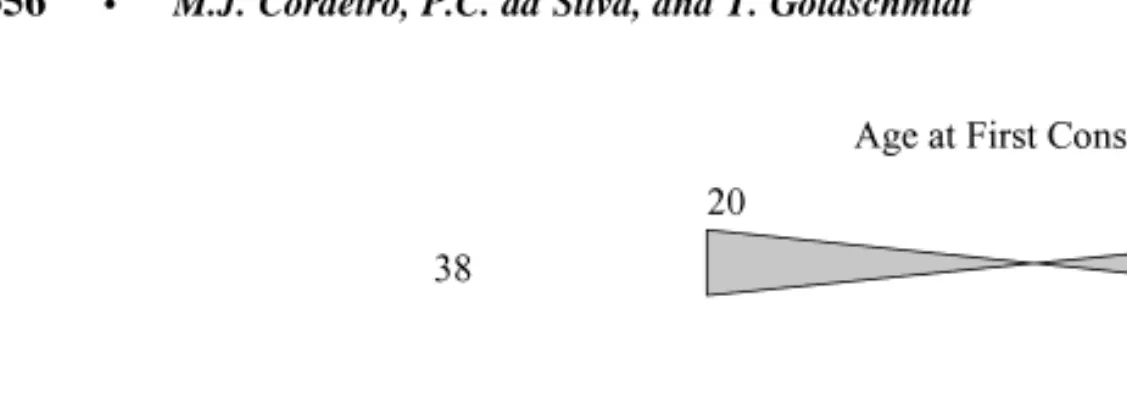
The age at first consultation (Figure 2) has a peak between 24 and 36 months in both males and females. The mean age is 26 months. The difference between males and females increases with age.
short standard cap height base of text
FIGURE3. Socioeconomic statuses.
TABLE 1. Reasons for Referral
Reasons for Referral N %
Behavior problems 107 31.2% Sleeping/eating problems 50 14.6% Environment/parenting problems 48 14.0% Language delay 41 11.9% Assessment 27 7.9% Anxiety manifestations 26 7.6% Socialization problems 24 7.0% Developmental delay 16 4.7% Chronic illness 4 1.2% Total 343 100.1%
The distribution of the population according to their social-economic status has been sys-tematized with the Graffar test (Figure 3).
Reasons and Sources of Referral
Reasons for referral (Table 1) are varied, and range from somatic expression symptoms to expert legal assessments. Behavioral problems (tantrums, instability, aggressivity) correspond to one-third (31.2%) of all cases, followed by sleeping and feeding difficulties (14.6%) and caregiving problems (14.4%). These include psychiatric pathology of the parents, deprivation, marital conflicts, or insufficient parenting.
Medical services are the main source of referral (private practice — 25.8%; hospital pe-diatric services — 24%; and primary health care centers — 21%) corresponding to 72% of the totality of the cases (Figure 4).
short standard FIGURE4. Sources of referral.
TABLE 2. Pathways for Referral: Time Elapsed Between Initial Preoccupation and First Consultation
Age at First Consultation (Months) Mean SD Delay (Months) Mean SD Total (n⫽ 343) 26.9 10.6 11.5 10.1 Always preoccupied (n⫽ 62) 19.8 13.3 — —
More recent preoccupation (n⫽ 281) 29.1 8.6 8.8 6.9
Pathways for Referral
The analysis of the pathways followed by the families between the parents’ initial concerns and the first consultation (Table 2), leads us to the conclusion that the average time between these two moments is 11.5 months. A number of parents (n ⫽ 62) mentioned that they have
always been concerned, with no further specifications, meaning that in these situations the
worry was present at birth. Therefore, the problem of a critical period of vulnerability during development is not an issue for these children.
If we exclude those, the mean age for referral of the remaining group is 29 months and the average time of delay decreases from 11 months to about 9 months, placing the mean age of the onset of symptoms around 20 months, more precisely between 13 and 27 months, if we take into account the standard deviation of the mean delay (Figure 5).
Diagnosis: Axis I
The distribution of the diagnoses of our cases along Axis I is given in Table 3 and Figure 6. All categories are represented, except Gender Identity Disorder and Bereavement Reaction Disorder. The most frequent category is Affect Disorder (n ⫽ 90; 26.2%), followed by “no diagnosis” (n⫽ 80; 23.3%) cases. Multisystem Developmental Disorders (MSDD) prove to be rather frequent (n ⫽ 34; 9.9%). Only in 12.5% (n ⫽ 43) of the cases, the diagnosis has been postponed, indicating that DC: 0 – 3 provides a good coverage of clinical situations and their criteria are well adjusted.
Because we did not systematically apply Axis III, and a significant number of cases (n⫽ 30) presented a Developmental Delay as the main focus of clinical attention, we decided to consider it as an additional category in Axis I.
Analyzing the group of Affect Disorders (Figure 7), we observe that Reactive Attachment/ Deprivation Disorder (RADD) correspond to one third of the group. The rate of depression (11 cases) is surprisingly low, (12 % of affect disorders, 3% of the total).
short standard cap height base of text
FIGURE5. Age at first consultation and symptom onset (in months).
TABLE 3. Diagnostic Distribution in Axis I, DC 0–3
Diagnosis Axis I N % Deferred/unknown 43 12.54% Development delay 30 8.75% Traumatic stress d. 9 2.62% Affect d. 90 26.24% Adjustment d. 19 5.54% Regulatory d. 22 6.41% Sleep d. 6 1.75% Eating d. 10 2.92% MSDD 34 9.91% No diagnosis 80 23.32% Total 343 100.00% Diagnosis: Axis II
In Axis II the most frequent category is “underinvolved relationship” (29.4%) followed by the “no diagnosis” group (13.1%). In a rather high number of cases the diagnoses are missing, probably due to methodological failures (Table 4, Figure 8).
DISCUSSION
The increase of referrals during the third year of life arises some questions, namely about the possible lack of sensitivity of health professionals to infant mental health problems as well as parental motivation to attend psychiatric services for babies and very young children. We can also discuss the problem in terms of the possible existence of a critical period for developing psychic pathology during infancy and early childhood, as we will see in connection with the analysis of the pathways for referral.
The normal SES distribution of our clinical population is a quality indicator of the service, because it shows that it is available to, and is seeked by, everyone, regardless of social and educational status. The weight of psychopathology caused by environmental risk factors linked to lower social-economic status is not represented in our population. This happens because our Unit has not been set up to have strategies of intervention addressed to the specific problems of this population, namely the lack of motivation, the difficulty to use health services and their preference for community and social facilities.
The results concerning the sources of referral show that our Unit is regarded as a special-ized service for referral in the health system. Furthermore, they clearly demonstrate the
im-short standard FIGURE6. Diagnostic distribution in Axis I, DC: 0– 3.
FIGURE7. Diagnostic distribution of Affect Disorders (n⫽ 90).
portance of medical services in the early detection of infant mental health problems, and con-sequently, the relevance of adequate training for increased awareness.
If we consider our population as a sample of young children needing mental health care, the results concerning the pathways for referral and the mean delay between initial concern and consultation, might indicate that there is a sensitive period probably corresponding to an increased vulnerability for pathology. This period is coincident with the developmental shift occurring in the middle of the second year of life and with a change in the way that parents look to their babies. This shift, as it is referred by many authors — Mahler, Pine, and Bergman (1975), Stern (1985), Emde (1989), Greenspan (1992), among others — is characterized by the progressive acquisition by toddlers of new capacities for mental representation, namely of the self, of the objects and of their absence, of affects, as well as new cognitive and communicative abilities, such as language, evocative memory and symbolic play. Sander (2000) and Nahum (2000) also consider, between 14 and 18 months, self-assertion as an adaptive task correspond-ing to a heightened awareness of internal events. At this age, babies have increased their sense of the self and of their body and they are especially aware of separation and of their limitations in their need to control the maternal object and the world. We could, then, propose that from the middle of the second year on, the adaptive tasks shift progressively from an external agency (mother, caregiver) to an internal agency causing an imbalance in the child’s sense of continuity and in the sense of the self. Rigid caregiver responses lacking empathy and contingency do
short standard cap height base of text TABLE 4. Diagnostic Distribution in Axis II, DC 0–3
Axis II N % Deferred/unknown 79 23.03% Nonapplicable 9 2.62% Abusive 11 3.21% Mixed 40 11.66% Angry/hostile 10 2.92% Anxious/tense 33 9.62% Underinvolved 101 29.45% Overinvolved 15 4.37% No diagnosis 45 13.12% Total 343 100.00%
FIGURE8. Diagnostic distribution in Axis II, DC: 0– 3.
not provide for a supportive basis to deal with these evolutive changes and add a risk factor to the child’s vulnerability. Consequently, in this period of life, pathological manifestations would more likely arise.
Among Affect Disorders, RADD is the most prevalent. This can be explained by the fact that a significant number of cases (n⫽ 48; 14% of the total) are referred because of caregiving difficulties (cf. reasons for referral), but also because this diagnosis lacks a more accurate definition. It is not absolutely clear which are the most important criteria for the diagnosis of RADD: caregiving pathology (the presence of actual abuse, multiple caregivers, prolonged separations), or the presence of an abnormal social behavior or both. We probably have swung between these alternatives and the category may be overrepresented. Some of these cases could be diagnosed as Depression. In fact, as we have seen, the rate of depression (11 cases) is surprisingly low (12% of affect disorders, 3% of the total) when compared with the former and with the professionals’ clinical impression.
The studies on attachment carried out by Boris et al. (2000) attempting to separate and to accurately define different types of this disorder will be useful to clarify the diagnosis. If their findings can be added to DC: 0 – 3, we could consider subtypes, as it was done with
short standard FIGURE9. Distribution of three main Axis I diagnostic categories along Graffar levels.
Regulatory Disorders and the system will gain in richness, deepness, and accuracy. The risk is, as it happened before (Call, 1983), to atomize and excessively detail the syndrome, loosing its clinical interest for research sake.
After the descriptive analysis of our data, we tried to clarify the interaction between some of the features of our population and diagnoses. We will present the results of the associations of Axis I diagnoses with social-economic status, and of Axis I and II with age.
Axis I/Graffar
Due to the known significant relationships between social factors and mental health (Greenspan, 1992), we selected and compared the three most frequent diagnoses in Axis I with the Graffar distribution of our population (Figure 9).
Regulatory Disorders are more frequently seen in the higher social levels; we tried to understand this result looking for the association with the sources and pathways of referral, but we found no significative association. Multisystem Developmental Disorders and Affect Dis-orders present a nearly normal distribution along the SES spectrum.
Diagnosis: Axis I and II/Age
Although DC: 0 – 3 takes the dynamics of development into account, the moment of diagnosis corresponds to a transversal cut in an evolutive process. It is important to know how this moment, represented by the age of the child, is associated with the different psychopathological syndromes. In other words, how does the clinician value the symptoms according to age of the infant/toddler at the moment of the first consultation?
In our population, Affect Disorders strongly increase in frequency in the second year of life and continue to be the most frequent category in the following years (Table 5).
The increase in the number of MSDD cases diagnosed after 24 months of age is not surprising, bearing in mind how difficult it is to make such a diagnosis before that age. Reg-ulatory Disorders seem to be easier to recognize in the first year of life and their incidence decrease after 24 months. This seems to agree with the study by DeGangi et al. (2000), in which more than half of the infants with a mild Regulatory Disorder had a normal outcome at age three.
short standard cap height base of text TABLE 5. Distribution of Main Axis I Diagnoses Across Age, in Percentage of the Total for Each Year
Age (Year)
First (%) Second (%) Third (%) Fourth (%)
Affect disorders 2 38 29 22.5
Regulatory disorders 12 7.3 4.7 6.5
MSDD 0 1.5 13 18
Sleep and eating disorders 14 4.3 4 0
FIGURE10. Distribution of the sum of the diagnoses across age.
Summing up all the diagnoses of Axis I, we verify that globally the sum of positive diagnoses strongly increases from the first to the second year, while those of Axis II keep a relatively greater stability (Figure 10).
We also analyzed the cases that did not meet the criteria for a disorder either in Axis I or II (Figure 11).
It is interesting to observe the difference, in the first year of life, between the number of “no diagnosis” cases in Axis I (47%), with those in Axis II (5 %).
If we take into account the importance of Affect Disorders, from the second year on, these data, even though not corresponding to the same children, are coherent with the importance of the impact of persistent disturbed relationships upon the child’s subjective experience through-out development. Moreover, the fact that the number of “no diagnosis” in Axis I decrease their frequency from 47% in the first year of life to 17% at 36 months of age supports the idea that higher levels of psychic organization correspond to more structured and more easily identified clinical situations.
Contrarily to Axis I, the number of cases without a diagnosis in Axis II increases with age. Pathology appears less dependent on a relationship disorder, probably because of the higher degree of internalization of the experience. Also, there is an increased number of Global Developmental Delays diagnosed in the third year of life (n⫽ 19) with no Axis II diagnosis. Underinvolved Relationship Disorders, as we have seen, are the most frequent category in Axis II, and show its higher frequency in the second year of life (Figure 12).
Another interesting fact is the higher frequency of Overinvolved Relationship Disorder in the fourth year. This probably means that the undermining effects of relationships upon the
short standard FIGURE11. Distribution of “no diagnosis” cases across age.
FIGURE12. Distribution of relationship diagnoses across age.
child shift from underregulation in the early ages to overregulation later, when the child needs to test his autonomy, his assertiveness and try new experiences.
In a cultural perspective, what seems rather clear in these results and can be compared with studies in other countries is the high incidence of Underinvolved Relationship. As in other Southern European regions, in Portugal, child upbringing is characterized by parental behaviors of proximity and closeness, facilitating the expression of affects, and late introduction of frus-tration. It probably means that we have a tendency to make a diagnosis of underinvolvement when this pattern of relationship is not present, as well as we may tend to consider that a normal relationship has a pattern of some overinvolvement, more often than in other cultures. This could explain the differences with the study carried out by Gue´deney, Gue´deney, Jacquemin, and Danon (2000), in which Underinvolved Relationship Disorder is less frequent. Affect
short standard cap height base of text TABLE 6. Initial Diagnosis and Follow-up Distribution
Initial Diagnosis (n)
Follow-up
Regulatory D. Affect Dis. MSDD No Diagnosis
Regulatory disorders 15 8 3 1 3
Affect disorders 5 — 3 — 2
MSDD 4 1 — 2 1
Disorders are a very frequent category in our sample, as in the French study quoted above, which is not surprising, given the sensitivity of infants and toddlers to the quality of their experience with caregivers. The very low incidence of Traumatic Stress Disorder in our pop-ulation is related in our opinion to the fact that children in our country are relatively free from urban violence, war, and other catastrophes. Also, the familial culture keeps this protective function, which, naturally does not mean that all children are safe from the exposition to trauma. We are not sure if that also justifies the absence of Bereavement Reaction Disorder or if this absence corresponds to a lack of sensitivity of adults to infant and toddler’s psychic pain in these situations. None of our young children presented a Gender Identity Disorder, and none of the parents presented concerns about that, even though we are aware that some of its man-ifestations can appear very early. We wonder if there is a cultural bias in these results, showing a rather tolerant approach to the infantile sexual manifestations in Europe. One of us, having some training work abroad, found identical results from diagnostic studies in other European countries.
Follow-up Study
The results of this study come from the analysis of 24 cases, belonging to our initial cohort, which were reassessed according to our clinical methodology. Their DC: 0 – 3 diagnostic out-comes were determined after a period of therapeutic intervention, lasting more than six months. The initial diagnoses of the 24 cases in Axis I are shown in Table 6.
In the group of infants with Regulatory Disorders (RD), this diagnosis was kept in eight cases (53.3%). In one case (6.7%) it evolved to a MSDD diagnosis. Three cases (20%) met the criteria for Affect Disorder in the outcome diagnosis. Another three cases (20%) had no diagnosis in the reassessment.
In summary, in our sample of children presenting RD, the cases in which there is a stability of this diagnosis are more frequent than the cases that evolved to others conditions, namely to MSDD. Even with all the questions involved in this issue, namely the age of the first assessment and the existence of the therapeutic intervention, we cannot conclude about the predictive value or RD for other pathologies as in the study of DeGangi, Breiunbauer, Roosevelt, and Greenspan (2000).
The follow-up of the five cases of Affect Disorders show a rather heterogeneous distri-bution of diagnoses and is not conclusive.
In the MSDD Group, two of the four cases also had the same final diagnosis, despite having improved their condition, both attaining pattern C. One case had a final diagnosis of Regulatory Disorder and the other case, a Pattern C case had no diagnosis at follow-up.
These shifts in MSDD Diagnosis indicate that some of these conditions, although belong-ing to a broad range of autistic-like disorders, can, nevertheless, be very responsive to early treatment.
short standard then it is possible to implement screening programs of identification of mental health problems
in primary health care services. This might enable professionals to plan preventive programs specially addressed to the second year of life.
Also, in the secondary prevention field we can plan programs addressed to certain specific pathologies, important enough by its frequency and also by its severity, as MSDD are. That was what we did in our Unit, with success, when it became clear that this pathology had an important weight in our consultation.
Finally, our study points out to the fact that, at least under therapy, the positive changes are rather frequent, and open us the possibilities to help our children to reach better patterns of mental health.
We conclude by the need to pursue in a more systematic way this kind of studies that increase our knowledge in the field of infant psychopathology.
REFERENCES
Anders, F.A. (1989). Clinical syndromes, relationships disturbances and their assessment. In A J. Sa-meroff & R. Emde (Eds.), Relationship disturbances in early childhood (pp. 125– 144). New York: Basic Books.
Boris, N.W., Heller, S.S., Smyke, A.T., Scheeringa, M.S., & Zeanah, C.H. (2000). New approaches to assessing reactive attachment disorders. Workshop. WAIMH’s 7th World Congress: Diversity: Chal-lenges and opportunities in infancy.
Call, J. (1983). Towards a nosology of psychiatric disorders in infancy In J. D. Call, E. Galenson, & R.L. Tyson (Eds.), Frontiers of infant psychiatry (pp. 117– 127). New York: Basic Books.
Cordeiro, M. (2000). Clinical assessment of infant psychopathology: Challenges and methods. In J. Osofsky & H. Fitzgerald (Eds.), WAIMH handbook of infant mental health (Vol. 2). New York: John Wiley & Sons.
Cordeiro, M., & Caldeira da Silva, P. (1998). La classification diagnostique des troubles de la sante´ mentale du nourrisson: Une expe´rience clinique. Devenir, 10, 51– 64.
Degangi, G.A., Breinbauer, C., Roosevelt, J.D., & Greenspan, S. (2000). Prediction of childhood problems at three years in children experiencing disorders of regulation during pregnancy. Infant Mental Health Journal, 21, 156– 175.
Emde, R. (1989). The infant’s relationship experience: Developmental and affective aspects. In A. Sa-meroff & R. Emde (Eds.), Relationship disturbances in early childhood: A developmental approach. New York: Basic Books.
Gue´deney, A., Gue´deney, N., Jacquemin, F., & Danon, G. (2000). A French experience with DC: 0– 3. In Symposium on diagnostic classification. Workshop. WAIMH’s 7th World Congress: Diversity: Challenges and opportunities in infancy.
Graffar, M. (1956). Une me´thode de classification social— Echantillons de population. Courrier, 6, 445– 459.
Greenspan, S.I. (1992). Infancy and early childhood: The practice of clinical assessment and intervention with emotional and developmental challenges. Madison, CT: International Universities Press. Kreisler, L., & Cramer, B. (1983). Infant psychopathology: Guidelines for examination, clinical
group-short standard cap height base of text ings, nosological propositions in J.D. Call, E. Galenson, & R.L. Tyson (Eds.), Frontiers of infant
psychiatry (pp. 129– 135). New York: Basic Books.
Lourie, R., & Nover, R. (1980). Assessment of psychopathology in the first year of life. In S.I. Greenspan & G.H. Pollock (Eds.), The course of life: Vol. I. Infancy (pp. 643– 661). Madison, WI: International University Press.
Mahler, M.S., Pine, F., & Bergman, A. (1975). The psychological birth of the human infant. New York: Basic Books.
Naum, J.P. (2000). An overview of Louis Sander’s contribution to the field of mental health. Infant Mental Health Journal, 21, 29– 41.
Sander, L.W. (2000). Where are we going in the field of infant mental health. Infant Mental Health Journal, 21, 5– 20.
Stern, D. (1985). The interpersonal world of the infant: A view from psychoanalysis and developmental psychology. New York: Basic Books.
Zero-to-Three/National Center for Clinical Infant Programs. (1994). Diagnostic classification of mental and developmental disorders of infancy and early childhood. DC: 0– 3. Arlington, VA: Author.