Accelerating Innovation in Renewable Energy:
Recommendations Based on the Case of Silicon Valley
by
Paulo Filipe Amaral
Master of Science Dissertation in Economics and Environmental Management
Advisor:
Dr. Maria Isabel Rebelo Teixeira Soares
BIOGRAPHICAL SKETCH
Paulo Filipe Amaral was born on February 12, 1983 in California, where he was raised and completed his undergraduate studies in 2004 at California State University, Stanislaus, receiving a Bachelor of Arts degree in Economics and a minor in Portuguese Studies, summa cum laude. Early into the program, and given his passion for the environment, he took an interest in ecological and environmental economics. After a variety of professional experiences, including most recently and after a move to Portugal working as a consultant in the banking sector, he decided to go back to graduate school and further his studies in the field of economics for which he still maintained a keen interest, enrolling in the Master of Economics and Environmental Management program at the School of Economics at the University of Porto.
ACKNOWLEDGEMENTS
First and foremost, I wish to express my gratitude to my advisor, Dr. Maria Isabel Rebelo Teixeira Soares, for her guidance, insightful feedback, and support. However, I am also compelled thank her for her inspiring and truly impressive personal example: her passion, joy, work and life ethics.
I must, of course, thank my parents, José and Lena, as well as my brother Hugo, for their constant and unconditional support and encouragement in every aspect of life, most recently in the writing of this dissertation.
I would like to express my most profound gratitude to Carla Mendes for her friendship, tireless support, encouragement, feedback, advice, proxy, and prodigious example. Without her, it simply would not have been possible.
I also wish to express my deep appreciation to Monica Bernardo, my mephistophelian advocate, for her friendship, encouragement, and text feedback.
I wish to thank my friends and family, with special mention to Hugo ‘Joca’ Amorim, Maria, Amorim, Nelson, and João; also, to Guillermo Méraz for his encouragement, cheer, and for helping me obtain research materials.
Finally, I wish to thank Dr. Jasek-Rysdahl for first cultivating in me a life-long passion for economic thought.
ABSTRACT
Current renewable energy (RE) technologies are insufficient to satisfactorily address the urgent, time-critical concerns of climate change and energy security. Consequently, there has been a surge in global interest in accelerating RE innovation. Yet, substantial problems confront RE innovation. An emerging and highly useful theoretical framework for studying the processes and problems in innovation is innovation systems. This framework emphasizes comparisons between real innovation systems rather than abstract ideals. Many regard Silicon Valley as the quintessential example a high-tech innovation system.
Thus, this dissertation synthesizes new insights and recommendations to overcome the problems confronting RE innovation processes from an examination of the processes and determinants of Silicon Valley’s success. The study demonstrates that Silicon Valley is a valid and relevant example. Lessons underscore the importance of policy stability and consistency throughout the system, funding models appropriately adapted to the stage of innovation, an increase in the number and quality of points of contact between agents in the system, and the complementary roles of the entrepreneur and collaborative collective in an optimized culture for RE innovation.
RESUMO
O estado atual das tecnologias de energia renovável (ER) é inadequado para dar resposta às urgentes preocupações sobre as alterações climáticas e a segurança no abastecimento de energia. Consequentemente, tem havido um aumento no interesse global em acelerar a inovação em ER. No entanto, significativos problemas confrontam o fluxo de inovação em ER. Uma abordagem emergente e altamente útil para estudar os processos e problemas da inovação é sistemas de inovação. Esta abordagem enfatiza comparações entre sistemas de inovação reais ao invés de ideais abstractos. Muitos consideram Silicon Valley o ex-líbris de um sistema de inovação de alta tecnologia.
Assim, a presente dissertação apresenta e produz novas perspetivas e recomendações para superar os problemas que confrontam os processos de inovação em ER, com recurso à examinação dos processos e determinantes do sucesso de Silicon Valley. O estudo demonstra que Silicon Valley é, de facto, um exemplo válido e relevante. As lições retiradas sublinham a importância da estabilidade e consistência de políticas em todo sistema, dos modelos de financiamento adequados ao estado da inovação, do aumento na quantidade e qualidade dos pontos de contacto entre os agentes no sistema, e dos papéis complementares do empreendedor e do coletivo, numa cultura otimizada à inovação em ER.
TABLE OF CONTENTS
1. INTRODUCTION ... 1
2. LITERATURE REVIEW ... 5
2.1 Traditional theories: external economies and agglomeration ... 6
2.2 Modern production-cost approaches ... 8
2.3 Clusters ... 11
2.4 Networks and innovation systems ... 13
3. THE SILICON VALLEY MODEL ... 16
3.1 Foundational factors – Stanford University and the U.S. military ... 18
3.2 Reinforcing forces and characteristics ... 28
3.2.1 Evolving institutions– Venture capital and Law firms ... 30
3.2.2 Networks connect the ecosystem ... 34
3.2.3 Culture ... 35
3.2.4 Spinoff dynamic ... 37
4. RENEWABLE ENERGY INNOVATION ... 40
4.1 Characterization of energy ... 40
4.2 Renewable energy innovation vis-à-vis general technology ... 41
4.3 Problems in renewable innovation and lessons from the Valley ... 42
4.3.1 Lack of stability and consistency in government policy ... 42
4.3.2 Poor funding models appropriate to stage of development ... 44
4.3.3 Market bias towards embeddedness, the ‘Valley of Death’, and externalities ... 46
4.3.4 Knowledge diffusion ... 48
4.3.5 Rules and norms of the innovation system ... 50
5. DISCUSSION & CONCLUSION ... 53
BIBLIOGRAPHY ... 57
ANNEX 1 - Nine characteristics of the innovation systems framework ... 65
INDEX OF FIGURES
Figure 1: Porter's Competitive Diamond Model. ... 12
Figure 2: Silicon Valley and Environs. ... 16
Figure 3: The Silicon Valley Innovation System mid-20th Century. ... 28
INDEX OF TABLES
1. INTRODUCTION
The voracious consumption of fossil-based energy has fueled our global prosperity for more than two centuries, but has also outstripped earth's absorptive capacity, raising the specter of climate change. Crucial to meeting climate change mitigation objectives, while ‘keeping the lights on’, is the development and deployment of renewable energy (RE) to substitute fossil-based energy production. More than timely, it is urgent that we redouble efforts to add to the body of knowledge that might guide and foster conditions for the acceleration of innovation in RE systems.
By the end of 2010, concentrations of CO2-equivalent1 (CO2-eq) had reached 390 ppm,
39% above pre-industrial levels. The IPCC Fourth Assessment Report (2007) concluded that most of this change is “very likely” the result of increases in anthropogenic greenhouse gas (GHG) generation. Baseline scenarios (‘business as usual’) place the rise in mean global temperatures by 2100 to between 1.1°C and 6.4°C over the 1980 to 1999 average (IPCC, 2007b, IPCC 2012). While the long-term consequences of climate change are poorly understood, its projected impact to earth’s biological systems as well as our human economies is sobering. As with most things, the consensus is that the sooner we act, the less costly it will be to meet climate change mitigation objectives and attenuate adverse consequences. To that end, and in order to limit this temperature increase to between 2°C to 2.4°C, GHG concentrations must be stabilized in the range of 445 to 490 ppm CO2-eq (IPCC 2012).
Electricity generation from fossil fuels accounts for a significant portion of these emissions2. Lifecycle GHG emissions from RE technologies are significantly lower than those of fossil fuels, with median values for all RE ranging from 4 to 46 g CO2
1 CO
2-equivalent is a “standard metric for comparing emissions of different GHGs but does not imply the same climate change responses”. “GHGs differ in their warming influence (radiative forcing) on the global climate system due to their different radiative properties and lifetimes in the atmosphere. CO2-eq
emission is the amount of CO2 emission that would cause the same time-integrated radiative forcing, over
a given time horizon… The equivalent CO2 emission is obtained by multiplying the emission of a GHG by
its Global Warming Potential (GWP) for the given time horizon”, often 100 years (IPCC 2007a). 2
For example, total U.S. energy-related emissions of carbon dioxide (CO2) by the electric power sector in
2011 were 2,166 million metric tons, or about 40% of total U.S. energy-related CO2 emissions. Of these
eq/kWh, while those for fossil fuels range from 469 to 1,001 g CO2-eq/kWh (excluding
land use change emissions). Capacity-wise, RE could displace fossil generation, as total global technical potential3 for RE is substantially higher than present and projected global energy demand. Thus, RE possess clear GHG emission mitigating potential4. By substituting much of fossil-based generation capacity with RE, and, furthermore, largely transitioning transportation from combustible fossil fuels to cleanly generated electricity, it is possible for the global economy to transform itself into a low-carbon economy (IPCC 2012). Additionally, while renewables are typically an intermittent energy source, the parameters of production are known such that, as part of a portfolio of strategically placed installations throughout the state (or integrated states) tied into a national (or supranational) grid, RE could offer a reliable source of energy at stable, know factor prices, itself invaluable to business planning and economic growth.
Nevertheless, persuasive reasons for pursuing renewable energy extend well beyond climate change concerns. Indeed, the promise of a “green energy economy” has become itself a political platform, touting economic renewal and job creation “for the 21st century”. The prospect of renewables-derived electricity reducing dependence on oil in transportation – and eventually supplanting it – would significantly lessen exposure to the cost risks inherent in procuring this globally bid-up primary energy from politically unstable regions of the world. This would also, of course, mean reduced currency outflows for importing nations and so an improved current account balance, with that money benefiting the domestic economy. However, for oil exporting countries, this would also help support a responsible management of their exhaustible resources. Additionally, even if GHG mitigation were not an objective, demand for RE is projected to continue to grow. Here also, investing in the innovation of RE technologies
3 Technical potential in this context is “the amount of RE output obtainable by full implementation of demonstrated technologies or practices” (IPCC 2012).
4 Four illustrative IPCC (2012) scenarios “span a range of global cumulative CO
2 savings between 2010
and 2050, from about 220 to 560 Gt CO2 compared to about 1,530 Gt cumulative fossil and industrial
CO2 emissions in the IEA World Energy Outlook 2009 Reference Scenario during the same period”; that
offers a tremendous economic opportunity through the export5 of technology, related services, and manufactured durables.
However, current RE technologies are inadequate to fully meet the challenges and realize the potential benefits (OECD 2011, Bonvillian and Weiss 2009). Innovation6 is needed. Further, the innovation process is time-critical, whether we consider the time
constraint is planetary (climate change mitigation), policy-based (standards), or market-based (first-to-market, competitive advantage). Thus, accelerated innovation is needed. To accelerate innovation in RE, we must understand the processes of innovation itself, where and how it arises, and what problems obstruct its dynamic in RE.
Competitive advantages and innovation capabilities are heavily localized, making the region the appropriate level to study industrial organization and innovation activity (Yu and Jackson 2011). With regard to industrial organization7, Porter’s (1990b) clusters have become a useful reference. As to the specific study of innovation activity, the innovation system (IS) approach is an emerging and highly useful conceptual framework that regards the whole innovation process as systems-oriented, emphasizing the interdependency of the agents involved. This approach also emphasizes empirically based “appreciative” theorizing, rather than formal theories, to ‘capture processes of innovation, their determinants, and some of their consequences in a meaningful way’ (Edquist and Hommen 1999:66).
Silicon Valley is assuredly the world’s preeminent empirical model of an accelerated, effectual, and efficient innovation system / high-tech cluster; innovation that serves as the foundation of a truly dynamic and vibrant regional economy. While many comprehensive and thoughtful efforts have been made to understand the reasons for the success of Silicon Valley – often with the goal of guiding efforts to replicate this success in similar technology clusters – the aim of this dissertation is to examine the Silicon Valley experience for its processes and determinants; for guidance in addressing the problems confronting RE innovation systems, and thereby promote robust RE
5 Most IPCC (2012) RE deployment scenarios show total RE deployment is higher over the long term in
non-Annex I countries than in Annex I countries in most scenarios.
6
Herein, innovation refers to invention implemented; ideas successfully brought to market.
7 Many approaches have evolved to study the dynamic of the regional economy and its innovation
innovation systems with high success probability.
The methodology employed is a qualitative, critical analysis of the Silicon Valley experience – with recourse to the essential concepts in the innovation process, namely the forces of industrial clustering and the framework of innovation systems, and their antecedents – to thus synthesize new insights and recommendations to overcome the problems confronting RE innovation processes; thereby, promoting robust and efficient loci of RE innovation.
The dissertation is organized as follows. Section 2 contextualizes and conceptually equips the discussion with a survey of the literature regarding the progression of thought on the economics of concentrated, specialized regions, their competitiveness, and the innovation activity within them; from Marshallian agglomeration economies through to localized innovation systems. Section 3 explores the factors and characteristics critical to the success of the Silicon Valley innovation system. Section 4 analyzes the systemic problems plaguing RE innovation systems. Section 5 briefly discusses the findings and concludes.
The main conclusion presented is that the Silicon Valley model is indeed relevant and can be looked to for concrete guidance in addressing the systemic problems confronting RE innovation systems. Lessons underscore the importance of policy stability and consistency throughout the system, funding models appropriately adapted to the stage of innovation, an increase in the number and quality of points of contact between agents in the system, and the complementary roles of the entrepreneur and collaborative collective in an optimized culture for RE innovation.
2. LITERATURE REVIEW
At a time when we reflexively raise the efforts of enterprise to a global scale, invoke global value chains, and tout the dissemination of communication technologies as de-leveraging the advantages of physical proximity, the role of nations, let alone regions within nations, may seem comparatively unimportant or surpassed in its timeliness. Nevertheless, in firms’ ceaseless endeavor to innovate, gain and sustain advantage, the role of location is, as Porter (1990b) points out, always crucial. Paul Krugman (1996) likewise centers on the importance of the regional economies, as opposed to national economies or global companies, as the driving centers of economic activity and wealth creation within the global economy – the ‘localization of the world economy’.
Likewise, the process of innovation – especially in high technology – only atypically takes place in isolation. Rather, a myriad of interdependent agents – scientists, researchers, investors, specialized suppliers, producers, etc. – engaging in both market exchanges and non-market knowledge and influence flows, are indispensible to this complex and necessarily concerted activity. Moreover, these exchanges and flows are not unidirectional, but characterized by a multiplicity of learning interactions and feedback loops1. Further, these agents interact in a context of established institutions such as laws, rules, regulations, norms, and shared culture.
The conceptual framework that best captures these systemic processes and relations– and so too provides the best instrument for understanding the problems obstructing innovation dynamics – is the emerging conceptual framework of innovation systems2 (Edquist and Hommen 1999, Saxenian 1994). Highly effective innovation systems are characterized by localization and so are often approached as regional innovation
systems, wherein the process of innovation finds its critical mass of agents (Yu and
Jackson 2011).
While the dissertation most avails itself of the conceptual framework of innovation systems to study the problems confronting RE innovation, antecedent as well as current
1 E.g.: consumers engaging with suppliers on product specifications. 2 Alternatively: systems of innovation.
complementary approaches provide highly useful concepts and insights into the forces and process underpinning economic concentration and the innovative activities therein. The following subsections examine traditional agglomerations economies, through to likewise production-cost driven but more complex modern approaches and clusters, and into networks and systems-oriented frameworks.
2.1 Traditional theories: external economies and agglomeration
Traditionally, regional development and its supporting policies have been approached through the concept of external economies. This consists of looking at the productive factors lying outside the individual firm. These ‘external economies’ are, quite simply, the ‘benefit from sharing the costs of common external resources such as infrastructure and services, skilled labor pools, specialized suppliers, and a common knowledge base’. When these factors of production become concentrated in a given geography, or region, the additional benefits of spatial proximity are referred to as economies of agglomeration. Once established, the presence of external economies creates a self-reinforcing advantage (Saxenian 1994).
When studying modern economic agglomerations we are in essence studying the ancient, primary organizing principle of society: fragmentation and assignment of roles, or, if you will, specialization and division of labor. While the benefits and efficiencies arising from such organization have long been implicitly understood, Adam Smith is, of course, responsible for the first modern, explicitly economic discussion of this organizing principle, and the wealth it produces by virtue of the gains in productivity and economies, or savings. It is also interesting to note, if in passing, that Smith’s characterization of the economic relationship between the city and the country is perhaps more closely aligned to the recent framework of Porter’s (1990b) clusters than were the observations of any other economist for two hundred years (Phelps and Ozawa 2003).
Nevertheless, it was Alfred Marshall through his Principles of Economics published in 1920 that became the ‘father’ of the study of industrial organization by producing the
now-familiar, original trinity of external economies: labor market pooling, inter-firm linkages, and technological spillovers. He explicitly contrasted the “subdivision of functions, or ‘differentiation’” in industry with the “integration” that followed; that is, “a growing intimacy and firmness of the connections between the separate parts of the industrial organism” (Marshall 1920:241). Thus, he distinguished between internal economies within firms, and external economies arising outside the firm from the localization of industry (Ibid. 266).
In his Principles, Marshall first offers a brief historical perspective on the factors of primitive localization3 and then centers on the agglomeration-reinforcing factors of the three external economies. The principal external economy regards labor, for “so great are the advantages which people following the same skilled trade get from near neighbourhood to one another” (Ibid. 271). Access to the pooling and availability of specific, skilled labor is a significant advantage to the employers in that industry. From here we begin to see the ever-greater subdivision of work as “subsidiary trades” grow up to supply “implements and materials” to the primary localized industry4
. Interestingly, he also discusses the advantage of inter-firm mobility5 afforded by a concentration of like labor – greater ease in breaking off existing associations to form new ones.
Within what we may again refer to as the ‘primary’ localized industry, another force is in play, a truly impressive force: innovation. Marshall discusses this process as arising from the ether of the external economy, called ‘technological spillovers’, in the form of non-rival knowledge diffusion. Innovation exists, for in localized industries “the mysteries of the trade become no mysteries; but are as it were in the air” and among the operators of knowledge “inventions and improvements in machinery and processes and the general organization of the business have their merits promptly discussed: if one man starts a new idea, it is taken up by others and combined with suggestions of their
3 Primitive factors include the kinds of resources available in the environment, with family groups
operating a family business linked to these resources morphing into villages operating a village business; and later their establishment by royal patronage in situ or at another desired location.
4 Today these are referred to as specialized, or specialty, suppliers. Their importance in innovation
systems and in the rise of Silicon Valley shall be noted further on. Among the benefits they produce in the system is a lowering of barriers to entry by supplying specialized equipment that would otherwise have to be produced in-house by large, established firms.
own; and thus it becomes the source of further new ideas” (Ibid. 271). The importance of interaction between the operators of knowledge to ‘demystify the mysteries’ is clear, and it is possible to infer the role labor mobility and personal and professional networks or linkages in the diffusion of knowledge, which in turn upgrades the competencies of the whole. Also, Marshall implicitly discusses how “good” and “bad” innovations are distinguished. Peers recognize the value of good, or advantageous, innovations, and select these for adoption. Later, they may themselves become innovators upon selected innovations. Marshall indicates a clearly collaborative innovation process. Ultimately, of course, the merit of innovations is determined by success in the market.
2.2 Modern production-cost approaches
Wood and Parr (2005), in discussing the production-cost forces of agglomeration, describe three classifications: scale, scope, and complexity. Each form of agglomeration economy can be both internal to the firm, or exist as externalities. Within a firm, economies of scale (economies of horizontal integration) refers to the fact that the marginal cost of production decreases as a function of quantity; economies of scope (economies of lateral integration) refers to the fact that the cost of producing two or more products in conjunction within a firm is lower than the cost of producing them in separate firms; economies of complexity (economies of vertical integration) refers to a lower final product production cost to the firm when it itself undertakes the various upstream processes necessary to its production rather than if these were undertaken by other firms, contracted in the market.
External to the firm, scale refers to the Marshallian advantages of skilled labor pooling (e.g.: availability, reduced cost) and possibility of information spillovers; scope refers to when unrelated industries share and benefit from a common infrastructure and access to specialist services not specific to any one industry6; complexity refers to when “firms are linked in input-output terms and co-located so as to form a production complex, this co-location resulting in lower production costs” (Ibid. 3). Running parallel to internal
6 For example, in Silicon Valley and similar clusters, access and costs are ‘shared’ to the key support
agglomeration economies, these external economies of scale, scope, and complexity, when spatially constrained, form the bases of agglomeration economies of the localization, urbanization, and activity-complex types (Parr 2002).
McCann (1995), while still focusing principally on production-cost factors of agglomeration, redirects from Marshallian external economies per se. He identifies four types of spatial costs that together determine the economies or diseconomies of agglomeration for a firm or group of firms: distance-transaction costs (based on the input-output production function, this includes transport/shipping costs, telecommunications costs, and inter-firm executive travel); location-specific factor costs (again, based on factor input costs in the neo-classical production function); hierarchy-coordination costs (the need for face-to-face contact with other firms and/or customers for negotiation and coordination of activities). These costs diminish the savings benefits obtained by locating elsewhere with lower factor costs. McCann specifically cites the electronics industry as a prime example, as property, salary and other factor costs are typically lower outside high-tech agglomerations, but whose benefits are diminished by the spatial costs imposed by locating away from the hub of activity. The final cost is hierarchy-coincidence opportunity costs (the one demand-side factor McCann identifies, which essentially means firm proximity to market). McCann’s distance-transaction costs and location-specific transaction costs drive agglomerations of complexity as described by Parr.
Let us step back slightly with regard to McCann’s third point, hierarchy-coordination costs, and think of agglomeration within the firm itself. According to Ronald Coase’s (1937) milestone work on the nature of firms, economic activity is centered within a firm when the transaction costs of coordinating production through the market are greater than they would be within a firm. Approaching Coase’s concept conversely, the concept of transaction costs has become central to the analysis of economic agglomeration. Co-location reduces inter-firm transaction costs and allows for more steps of the production process to move outside the firm and into the market.
Transaction costs are “the costs associated with the execution of a transaction, including the opportunity cost incurred when an efficiency-enhancing transaction is
prevented” (Milgrom and Roberts 1992:604 in Wood and Parr 2005). Such costs accompany both inter-firm (market) and intra-firm (hierarchy) interactions and include costs associated with determining terms (e.g. price) and costs of coordinating and transmitting information (also termed coordination costs) (Wood and Parr 2005). Hence, economic agglomerations beyond the firm make sense when the economic benefits of reduced inter-firm transaction costs arising from spatial proximity become sufficiently attractive to constitute a determining factor in firm location.
Similarly, Stigler (1951) and more recently Enright (1995) have discussed how the reduced transaction costs associated with the spatial concentration of interrelated economic activities can provide firms with an alternative to reliance on in-firm hierarchical structures7. Enright (1995) cites how firms located within a geographic cluster exhibit lower levels of vertical integration than those lying without. This is primarily due to the increased effectiveness (and reduced cost) of the external coordination mechanisms (e.g.: spot markets) available to firms and their coordinating agents, allowing for a greater variety of organizational forms and mechanisms, leading to at-times indistinct firm boundaries8.
Regarding firm boundaries, Enright (1995) cites the examples of how a single wool textile can pass through five or six firms before it is finished in Prato, Italy, or the hundreds of small firms in Solingen, Germany, that perform a single step in the cutlery production process. Enright also discusses how small, disintegrated firms respond more quickly to incremental changes in technology. Consequently, they are better positioned to take advantage of new technology9. Localization also reduces opportunistic behavior, as the news of such behavior is rapidly spread to other firms who then withdraw from and punish the opportunistic firm10. Increased levels of cooperation among co-located
7 Enright (1995:106) also cites external economies in “access to knowledge of the complex material transformation process and specialized suppliers”, or access to a proficient labor pool and specialized suppliers. He also notes how “in many cases suppliers and equipment manufacturers work closely with their local customers to develop and improve products” and may then “receive exclusive use of the ideas, inputs and equipment, at least for a short period of time”. All of these observations are also true for Silicon Valley.
8
Very much the case in Silicon Valley, with what Saxenian (1994) describes as porous firm boundaries.
9 Very much the case in Silicon Valley, with its hundreds of nimble, specialized suppliers. 10 This factor may be less critical nowadays given the ubiquity of firm information online.
firms are also observed, such as bulk purchasing, joint training programs, and industry-specific infrastructure investments.
Building on McCann and Enright’s emphasis on coordination, or transaction costs, Parr (2002), later joined by Wood and Parr (2005), also discusses the spatial dimension of transaction costs, introducing the concept of transaction space. Transaction space approaches transaction cost from the point of view of socio-economic and institutional heterogeneity as it relates to geographic space. Heterogeneity of transaction space refers to the generally increasing differences in language, culture, law, commerce, and institutions confronting transacting agents. Transaction costs decrease, of course, as we approach perfect homogeneity of transaction space. This encourages agglomeration for functions where transactions are highly complex, requiring effective and frequent face-to-face communication, and where product change is frequent, production runs are short and there is high contract turnover; this is very well illustrated by the high-tech production and innovation processes. Routine, low-complexity functions, supported by improved communication technologies, can relocate to low-cost locations over heterogeneous transaction space. The clear implications of this approach on innovation and innovation policy shall be discussed ahead.
2.3 Clusters
The now-common term cluster, introduced by the celebrated authority on competition Michael Porter in 1990, is essentially a business term for what economists have long referred to as agglomeration economies. Porter (1990b) defines clusters as the amalgam of interconnected firms, suppliers, related industries, and specialized institutions that exist together in a given location. However, Porter distinguishes between the two in that clusters relates the observable phenomena of agglomeration to international competition and strategy.
While Porter generally refers to “national advantage”, he is explicit in that the processes of developing competitive advantage are localized. He underscores the fact that while “true competitive advantage in sophisticated industries arises from the ability to create
and deploy highly specialized knowledge and skills - to deploy labor and capital, and other resources in efficient and imaginative ways”, its development “is a localized process, strongly influenced by local institutions, local values, local culture, local history, and local economic conditions”. Furthermore, whatever of the dimensions of any multi-national enterprise, each must have a home base “from which emanates the impetus, energy, and insight to improve and upgrade” (Porter 1990a:190).
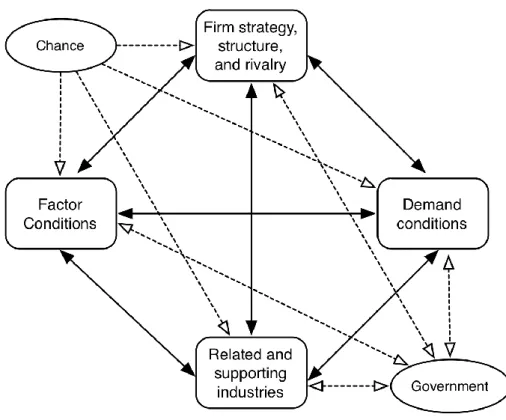
Figure 1: Porter's Competitive Diamond Model.
Source: Porter (1990b).
Porter conceptualizes his framework with his Competitive Diamond Model, which demonstrates the relationships between the four determinants of advantage. These are 1) Factor conditions, 2) Demand conditions, 3) Related and supporting industries, and 4) Firm strategy, structure, and rivalry. Taken together, these determinants create a self-reinforcing system that provides both the resources to operate and the pressures to invest and innovate. To these central determinants, Porter recognizes and adds the not-inconsequential factors of chance and government intervention. Chance is, of course,
any shock to the system outside the power of firms to control, such as “pure invention”, shocks to demand and supply, actions of foreign governments, wars, etc. Government, for its part, can exert positive or negative influence on the diamond in the form of subsidies, capital market policies, education policies, and, of course, as a significant buyer of goods and services. Ultimately, particular industries will succeed when they exist within a challenging environment that forces them to upgrade and increase their advantages progressively over time.
2.4 Networks and innovation systems
Another interesting approach, quite relevant to our analysis of Silicon Valley, has been to study cluster dynamics and success through the lens of human networks. Regional network-based industrial systems are built around horizontal networks of firms. In such networks, producers specialize, deepening their technical capabilities in particular technologies while maintaining close, but not exclusive, relationships with other specialists – suppliers, skilled contract labor, etc. – who for their part also specialize. Repeated interaction between a multiplicity of agents builds shared identities and mutual trust and reinforces community rules and norms, while simultaneously stoking healthy, competitive rivalries that spur innovation (Saxenian 1994).
The network-based approach aligns well with another important current in the analysis of innovation within an agglomeration or cluster: the concept of regional innovation systems, which is simply a regionally focused approach to innovation systems (IS).
Developed by authors such as Edquist and Hommen (1999), on the pioneering work of Freeman on national innovation systems in the late 1980s (Foxon et al 2005) and greatly advanced by Lundvall (Rutten and Boekema 2007), innovation systems is a systems-oriented approach to the process of innovation. The traditional linear view of technological innovation conceives of a unidirectional flow from basic research to commercial applications that satisfy market needs; this is not a very useful approach, as it does not describe what is empirically observable. In contrast, and at its core, systems perspectives emphasize the interdependencies and interactions between users,
producers, and other agents – and their institutional and cultural context – who, through a process of continuous and multilateral engagement in both market exchanges and non-market knowledge and influence flows, together determine the direction and result of innovation. Interactive learning11 and evolutionary theories12 shape the framework.
Many, including the OECD, EC, and current Obama administration, have extensively used this approach to study the performance of an economy’s innovation processes, identify system problems and provide bases for policy action (Foxon et al 2005, Yu and Jackson 2011). The regional innovation systems approach recognizes the critical importance of the spatial proximity of related firms and favorable, homogenous institutional structures for successful, accelerated innovation. This concentration of interdependent agents facilitates knowledge spillovers and stimulates adaptation, learning and creation, making the regional level the most appropriate at which to design and implement policies that promote innovation (Yu and Jackson 2011, Rutten and Boekema 2007).
Innovation systems stresses comparisons between real systems rather than against an abstract, ideal system13. For its holistic and realistic approach to the innovation process, this concept and this empirical comparison approach will be central to this dissertation’s consideration of the problems facing RE. The empirical system that will serve as the basis of comparison is the peerlessly successful innovation system of Silicon Valley, which is characterized by interdependent and densely networked individuals, firms, support institutions, and centers of research, thriving in its uniquely open, entrepreneurial, risk-accepting and failure-tolerating culture.
11
Interactive learning theory emphasizes user-producer interaction in the innovation process. It holds that
price signal communication does not inform producers about user needs not already served by markets.
Non-market, qualitative user inputs are necessary. This is especially true of markets – such as high tech – where products are complex and change rapidly. As we shall see, this certainly characterized the Stanford – Firm and Firm – Military interaction in Silicon Valley. Finally, it is noteworthy that a major concern in the theory is that established “knowledge structures”, originally necessary to the process, can later become sources of inertia and resistance to change (Edquist and Hommen 1999). A similar concern is expressed by Enright (1995) regarding agglomeration economies, and by Negro et al (2012) and Parrish and Foxon (2009) regarding incumbents in energy technologies innovation.
12 Evolutionary theory views technological change as an open-ended and path-dependent process where
certain mechanisms introduce novelties into the system, and other mechanisms then select from the diversity. Technologies that ‘survive’ are “superior in a relative sense, not optimal in an absolute sense, and – contrary to standard economic theory – the system never reaches a state of equilibrium” (Edquist and Hommen 1999:68).
Important efforts to explore the success of Silicon Valley include Saxenian’s (1994) comparison between Silicon Valley and Route 128 in Regional Advantage, the collections of academic essays edited by Kenney (2000) in Understanding Silicon Valley and by Lee et al (2000) in The Silicon Valley Edge, as well as several other academic papers such as Isaak (2009), Sternberg (1996), Wonglimpiyarat (2006), Gray et al (1998), among others.
This literature review has highlighted the forces that promote the spatial concentration of economic activity, and how that concentration of different but related agents is critical to the innovation process. Most approaches are cost-driven, whether they be Marshall’s (1920) agglomeration economies where firms seek to benefit from external economies – the sharing the costs of the external resources of infrastructure and services, skilled labor pools, specialized suppliers, and a common knowledge base; Wood and Parr’s (2005) classification of economies of scale, scope, and complexity; McCann’s (1995) link between distance and transaction costs; or Enright’s (1995) direct relationship between the heterogeneity of transaction space and coordination costs. Porter (1990), of course, helped us appreciate the determinants of advantage and relationships between interconnected agents of economic and innovative activity. These insights – particularly those of Marshall and Enright – taken with those of networked and innovation systems will be useful to both understanding and relating Silicon Valley and RE innovation systems.
3. THE SILICON VALLEY MODEL
Silicon Valley is assuredly the world’s preeminent example of a high-tech innovation system, whose truly vibrant and prosperous1 regional economy is supported by the generation of accelerated, effective, and efficiently produced innovations that disrupt existing markets and create entirely new markets with startling regularity.
Figure 2: Silicon Valley and Environs.
Source: Saxenian (1994).
While the term “Silicon Valley” is sometimes rather loosely employed to refer to an indistinctly delimited portion – or all – of the San Francisco Bay Area, or, variously, its technology industry activities, mindset, lifestyle, work ethic or culture, Silicon Valley
1 Per capita real GDP by Metropolitan Area for Santa Clara – Sunnyvale – San Jose, which corresponds
to Silicon Valley, was $90,959 in 2010 (in chained 2005 dollars), the highest in the nation. The corresponding average of all U.S. Metropolitan Areas was $45,557 (BEA). Moreover, this figure continues to rise (Wonglimpiyarat 2006).
does have a generally accepted – though not formalized – geographic delimitation. Lying along the southwestern portion of San Francisco Bay in Northern California and hemmed in by the Santa Cruz Mountains of the Coastal Ranges to the southwest and the Diablo Range to the northeast, Silicon Valley comprises roughly 1,500 square miles, spreading north from its historic center in Palo Alto to San Mateo County and south to Santa Clara County (Saxenian 1994; Kenney 2000).
While it is a physical, geographic region, the Valley is also an industrial district, in the Marshallian mold, a cluster, in Porter parlance, and an innovation system, in emerging insights; however one chooses to label or approach it. Whatever the choice, the Valley’s edge arises from factors constituting an environment – framework, if thinking functionally, habitat, if thinking biologically – comprehensive in breadth and optimized to detail for innovation, development, and there-upon-built entrepreneurship. The development of this celebrated environment is highly path-dependent – owing to and conditioned by preceding decisions and events – having evolved largely organically over time and through successive waves of technological innovation; though the Valley does, in fact, owe a great deal to certain external interventions – significantly, government contracts, and some key interactions with the established east coast electronics industry. (Henton 2000, Kenney 2000, Lee et al 2000:2-4). Though the Valley’s development owes undeniably to a unique time and context-dependent history that cannot be duplicated, valid and practical lessons can be gleaned from an analysis of this innovation system to address the problems confronting existing RE innovations systems.
As discussed above, the development of the Valley is heavily path-dependent. Thus, we shall break out our analysis of the innovation system into a two-strata model:
1) foundational factors, which are essentially important historical interactions between key institutions and the respective relationships that evolved and initiated the process of agglomeration; and
2) thereupon-built reinforcing forces and characteristics that turbo-charged the Valley’s growth.
If in the foundational stratum we are to reduce the birth of the Valley to two causal factors, they are Stanford University and the United States military in the fist decade of the 20th century. From these, we can abstract the factors knowledge / know-how (and know-how supply) and demand. Further parsing reveals specific reinforcing dynamisms within these factors, such as the supply of basic R&D, a pivotal leader, adult education of firm professionals, and startup firms on the supply side; and massive, exacting, and sophisticated military procurement and policies such as cross-licensing and second-sourcing on the demand side.
Transitioning out of this ‘inception’, we have in the second stratum the reinforcing factors of support institutions, networks, culture, spinoffs / startups, as well as continued firm-university cooperation, and continued military contracts – which largely underwrote and fundamentally shaped the evolving phenomenon of the Valley.
The first stratum is approached in chronological fashion with the second stratum approach evolving to a more point-by-point consideration of factors and characteristics.
3.1 Foundational factors – Stanford University and the U.S. military
When attempting to understand phenomena, we reflexively turn to its etiology in search of original causation to thus parameterize – excluding the preceding considered immaterial – and thereby focus and refine our study. This is an ungrateful process. Nothing spontaneously appears in time without in some way owing to an event before itself. Nevertheless, it is useful in terms of study to – while discussing prologue insofar as it is legitimate and reasonable – identify a ‘beginning’.
If in this foundational stratum we are to reduce the birth of the Valley to two causal factors, they are Stanford University and the United States military in the fist decade of the 20th century. From these, we can abstract the factors know-how and demand, within which further parsing reveals specific reinforcing dynamisms. From this relationship spawned the first firms in what would go on to become the Valley’s backbone and
prototype of accelerated innovation and economic growth based on a close cooperation between Research University, Industry, and Military.
While many traditionally consider the birth of Silicon Valley to be the founding of Shockley Semiconductor in 1956 or the earlier 1939 partnership between William Hewlett and David Packard, it would be more accurate to, as Timothy Sturgeon (2000) argues in his fine early-Valley history, retreat further back in history to the founding of the Federal Telegraph Corporation (FTC) in 1909. This is not only historically correct, but enlightening, as that many of the dynamisms and cultural characteristics credited and associated with the economic success of the Valley were already evident then2.
While the electronics age has its roots in 19th century telegraphy, electrical power, and telephone, the Valley’s electronics roots were in turn-of-the-century radio. In 1909, Cyril Elwell, an electrical engineer recently graduated from Stanford University, acquired the U.S. patent rights for the Poulsen arc for radio speech and telegraphy signal transmission, a technology that produced continuous long radio waves within an atmosphere of hydrogen contained by a strong magnetic field. Elwell then turned to Stanford’s president, David Starr Jordan, and Civil Engineering Department head, C. D. Marx, to finance the startup3, which was to be based in Palo Alto and originally named Poulsen Wireless Telephone and Telegraph. After setting up a small demonstration system, the company took on new financiers from San Francisco, was renamed Federal Telegraph Corporation, and began to provide radiotelegraph services in the Pacific.4 In 1912, Elwell pitched the technology to the Navy, far outperforming the competing East coast-based NESCO firm’s unit. The Navy immediately ordered ten thirty-kilowatt arc
2 These include: the importance of local venture capital; close cooperation between industry and research
universities; emphasis on electronic components, advanced communications equipment and military electronics; high levels of inter-firm cooperation; a fertile and tolerated spin-off dynamic; and a unique “Californian” professional culture (Sturgeon 2000). With regard to the paramount spin-off process, although it is commonly first associated with Fairchild Semiconductor (Klepper 2010, Sternberg 1996), it was actually already very much characteristic of FTC decades earlier.
3 A full thirty years before Stanford Dean Frederick Terman would famously likewise help finance the
startup of former students Hewlett and Packard (Leslie 2000).
4 Notably, arc transmitters were sold to and installed on the fleet of the Pacific Mail Steamship Company,
based in San Francisco, which operated between San Francisco and Los Angeles, California, and transpacific to Australia. While the Pacific service was profitable, overland service lost money due unreliable transmission arising from static interference (Sturgeon 2000). This highlighted the technology’s sea-based strengths, making an approach to the U.S. Navy natural, beginning the Valley’s crucial link to the military.
transmitters for shipboard use. In the period immediately following, the Navy incessantly drove the technology, pushing FTC to develop and supply evermore-powerful transmitters (which it was able to accomplish with the invaluable assistance of the facilities and professors of the Stanford High Voltage Laboratory). With the breakout of World War I, orders surged5 and employment at FTC went from thirty to three hundred (Sturgeon 2000).
Before the Great War even started, the technology that would supplant the arc transmitter and completely revolutionize radio was perfected in the Valley: the vacuum tube6. By 1912, Lee de Forest, a Yale-trained electrical engineer working in the FTC laboratory in Palo Alto, developed vacuum tubes that could be utilized in all three stages of wireless radio communications: signal generation, signal reception, and signal amplification. This technology would “play a role in the electronics industry of the pre-World War II period analogous to that of the transistor during the postwar period: [it] opened vast and unforeseen new market potential by increasing the capability and reliability of electronic systems while radically reducing their costs, power requirements, and size” (Sturgeon 2000:23).
Departing momentarily from the dynamic Research University – Industry – Military, let us shift slightly to the dynamic Industry – Spinoff – Military to underscore the early presence and centrality of spinoff activity in the Valley and the role of the military in that process, before focusing on the overall role of the U.S. military in shaping the Valley. This is not yet the fabled spinoff process of Fairchild Semiconductor in the
5 To illustrate sheer wartime volume at FTC – Shipboard orders included: three hundred two-kilowatt
transmitters for merchant marine ships; thirty-kilowatt transmitters for virtually all Navy battleships, a twenty-kilowatt set for a cruiser, a five-kilowatt set for a collier. Shore station orders included: a dual five-hundred-kilowatt station in Annapolis; a hundred-kilowatt station in Puerto Rico; a two-hundred-kilowatt set in Sayville, Long Island; a two-two-hundred-kilowatt set in San Diego; a transpacific five-hundred-kilowatt chain; thirty-kilowatt sets in Alaska; a chain of smaller stations around the Gulf and Atlantic coasts; a pair of one-thousand-kilowatt transmitters in Bordeaux, France; and various army posts around the country took receipt of twenty and thirty-kilowatt sets (Howeth 1963 in Sturgeon 2000).
6 The vacuum tube was the first terminal device, the heart of all electronic devices. In a
three-terminal device, electric current between two of the three-terminals can be controlled by applying an electric current to the third terminal. This constitutes an electric “on/off” switch. By cascading these switches upon each other, very complicated logic circuits are built up. The vacuum tube was replaced by the solid-state transistor, which was smaller, faster, cheaper, and consumed less power. These transistors were built with semiconductor material. A semiconductor is a material that can act as both a conductor and an insulator, that is, capable of both permitting and inhibiting the flow of electrons. Individual transistors on a circuit were in turn replaced by the integrated circuit, which incorporated myriads of ultra-miniaturized transistors and other components in a circuit onto a single silicon substrate (Haviland 2002).
1950s, which spawned the prodigious “Fairchildren” that included Intel. This is the much earlier spinoff process at FTC. Spinoffs included: Magnavox, formed by three FTC employees in 1910 who developed loudspeaker and microphone equipment used by the U.S. Navy, later turning to industry and finally consumer electronics; Litton Engineering, formed in 1932 by employee Charles Litton, went on to become the industry-regarded reference in vacuum tube production equipment and high-powered vacuum tubes highly sought after by the U.S. military for use in ground-based military radar; and Gerhard Fisher, who invented the first metal detector in his Palo Alto garage in 1928, left to form Fisher Research Laboratories in 1936 (Sturgeon 2000). Early on, the Valley was populated by firms from the countless other examples of spinoff activity from this period, quite often resulting from the incentive to satisfy the military’s voracious and ever more discerning appetite for electronics and aeronautical hardware components through World War II, Korea, the Cold War and the Space Race.
Certainly, the Valley would be unrecognizable today were it not for the U.S. military. The U.S. military became the early, central agent in the innovation process in two capacities: as 1) buyer and as 2) (indirect) supplier of innovation. First, its demand for sophisticated military technologies created a massive, guaranteed, and price insensitive market for the technologies resulting from the various waves of innovation it itself fostered in its second role. In its second and at least as important role, in granting research and development contracts to Stanford University and various independent contracting firms, the U.S. military itself both charted and underwrote the successive waves of innovation to satisfy its own demand for sophisticated new technologies (Sternberg 1996, Gray et al 1998). Routinely, these roles converged on the individual firm, with the military agreeing both R&D contracts and subsequent production contracts with the same firm, guaranteeing the firm a market for the products and technologies it developed. Add to this the incentive of cost-plus contracts virtually eliminating all risk; we understand just how favorable the operating circumstances were for the firms in the Valley (Leslie 2000).
Indeed, military policy lowered barriers to entry for new firms and greatly promoted the diffusion of knowledge in the system. With the aforementioned dual R&D and production contracts, the military offered new firms an inexpensive, low-risk entry into
new fields with attractive prospects for commercial spinoff7 (Leslie 1993). Further, and highly significantly, the military policy of second-sourcing8 its technological products disseminated engineering and manufacturing know-how, upgrading the entire region’s engineering community9, more so still than the cross-licensing of patents10 among firms. Even after the military’s share in the region’s turnover decreased, this practice was adopted by civilian costumers who also wanted to guarantee alternative and competitive supply of components (Saxenian 1994). Thus, “the orders placed by Department of Defense had a deciding influence on the local diffusion of new technological know-how in Silicon Valley” (Sternberg 1996:211-2).
With regard to the first role, as buyer, World War II and especially the first significant conflict of the Cold War, the Korean War, had a dramatic impact on the Valley by increasing demand for electronics products from local firms such as Hewlett-Packard, Litton Industries11, Varian Associates12, Huggins Laboratories13, Lockheed Missiles and
7
To provide a good and representative example, television and radio tube manufacturer Sylvania gained entry into the military market in 1953 with an Army Signal Corps R&D contract to prototype missile countermeasures (originally offered to Stanford, who passed for dearth of resources). Sylvania provided land, a building, and staff, while the army provided equipment and funding. Christened Electronics Defense Laboratories (EDL), the lab was established near Stanford to be close to “prospective Stanford faculty consultants and newly graduated engineers” and “where subcontracts for search receivers, converters, special tubes, and other electronic warfare equipment developed by university researchers could more easily be arranged”; Terman was heavily influential in determining which contractors earned contracts to mass produce Stanford technology. EDL subsequently grew into one of the largest electronics firms in the Valley. It also spawned several spinoffs such as Microwave Physics Laboratory and Microwave Engineering Laboratories in 1956, Reconnaissance Systems Laboratories in 1957, and Electronic Systems Laboratories in 1964 (Leslie 1993:81). Sylvania / EDL is a good and representative example of the tremendous growth and new-firm creation underwritten by government defense contracting, and facilitated by personal networking and the Stanford-Defense nexus.
8 Second-sourcing was a policy that ensured that there was a backup supply of critical military
components, particularly from small, fledgling semiconductor firms. The military required that suppliers share both technical specifications and detailed manufacturing processes with competing suppliers. Many new firms in the 1960s and 1970s started as second sources and went on to grow and develop their own product lines (Saxenian 1994).
9 Significantly, knowledge created under government sponsorship was free and available to all. Thus, new
West Coast firms could work with the newest technologies unconstrained by East Coast patents, as was the case historically (Leslie 1993).
10 Semiconductor firms freely cross-licensed their patents to competitors during the industry’s first three
decades. In the words of Intel founder Robert Noyce: “Without so doing, no firm could be using the latest technology in all areas” (Saxenian 1994:45).
11 Founded in 1932 by Charles Litton, a Stanford graduate of Frederick Terman’s tenure (Saxenian 1994).
It grew dramatically during early war years and was sold in 1953. New management expanded to satisfy military demand. In just three years, selling almost exclusively to the military, they tripled sales (to $6.2 million) and backlog (to $36 million), and quadrupled employment (to 2,115) on demand for products like pulse magnetrons and tunable klystrons for radar, and tunable continuous-wave magnetrons for jamming and missile guidance systems (Leslie 1993).
Space14 – the Valley’s largest single employer for most of its modern history – and many other smaller contractors. Following on from the Korean War, the Valley continued to be fashioned by the assumptions and priorities of Cold War defense policy and the Space Race (Henton 2000; Leslie 1993; Leslie 2000).
Indeed, moving on from the early technologies already discussed and with distinct military applications in radio and radar, even the succeeding technological wave of the integrated circuit – thought to be civilian-oriented – was itself a product of the military’s effort to miniaturize military electronic equipment between 1940 and 1955 (Henton 2000, Sternberg 1996). While integrated circuits would come to have far greater civilian applications than previous technologies, the military, nevertheless, continued to be the primary customer, with its share in the turnover of the Valley’s semiconductor industry lying somewhere between 35% and 40% between the years 1955 and 1963 (Sternberg 1996), buying literally all the integrated circuits produced in 1962 at premium prices (Gray et al 1998), only falling to below half in 1967 (Leslie 2000).
As Sternberg (1996) states, at this inflection point, successful civilian markets opened up and military share gradually reduced, with Gray et al (1998) placing the reduced market share at 10% of all integrated circuit purchases in 1978. Nevertheless, military sales had “moved firms swiftly along the technological learning curve which allowed unit costs to fall low enough to permit them to penetrate industrial and commercial markets” (Gray et al 1998). Sternberg (1996) and Kenney (2000) argue that while government demand was critical to the genesis of the Valley, it became of minor importance thereafter. As Kenney (2000) states: “It is entirely possible that the features 12 In the late 1930s, the Varian brothers invented the klystron tube at Stanford. Again acting the venture
capitalist, the university provided them with $100 in materials and free lab access to develop their technology in exchange for a 50% stake in resulting patents. The klystron became central to central to U.S. antiaircraft and antisubmarine radar during WWII. The university would go on to collect $2 million in royalties. The brothers founded Varian Associates in 1948 (Saxenian 1994). Varian's sales grew from $200,000 in 1949 to $1.5 million two years later to $25 million by the end of the decade, with military tubes accounting for all but a tiny fraction of revenue (Leslie 1993).
13 Founded in 1948 by former Stanford research associate R.A. Huggins to commercialize technologies
developed on his research at Stanford. The firm brought the first travel-wave-tube to market and then expanded with military R&D contracts into other related technologies. By 1961, the firm had turnover of $3.5 million per year (Leslie 1993).
14 Lockheed Missiles and Space established its laboratory in the Stanford Industrial Park in 1956 and
initially important for initiation and early growth can at later stages become much less important or even irrelevant. One example is the dramatic decline in the importance of military spending. Today, increased defense spending might paradoxically raise engineering wage costs and divert intellectual resources from the Valley, thus inhibiting its growth. Another inhibitor is U.S. government control on technology exports, which lead to decreased sales. Thus, a once important activity, defense spending probably has evolved to being a burden rather than an accelerator” (Kenney 2000:9).
While it is certainly true that features initially important to early regional growth can later become irrelevant, Gray et al (1996) argue more persuasively that in this case, while not nearly as central as before, the military’s continued participation in the Valley should not be diminished by researchers, as it continues to be an important player as buyer and indirect supplier of technology15. Indeed, the Valley remains one of the leading recipients of defense contracts in the country, in both total dollars and dollars per worker, and more than four times the national average (Leslie 2000, Gray et al 1998).
While for purposes of simplicity and abstraction we have reduced the first, foundational stratum to Research University (Stanford) and the United States military, it is necessary to introduce at this point the paramount role of Frederick Terman in facilitating non-market knowledge and influence flows between the critical factors of innovation. First as a faculty member, then as dean of the engineering department, and later as president of the university, Terman was an untiring leader, facilitator and advocate in the relationship between the university and industry, the university and the military, and ultimately the military and industry; and he demonstrates the magnitude of impact (a) highly motivated “cross-pollinating” individual(s) can have on an innovation system.
Terman, the son of a prominent Stanford psychologist, had been raised on campus and earned his undergraduate degree there. He went on to MIT to earn his doctorate in
15 Whatever the latter-day market share, it is unquestionable that defense spending created the technology
base for the semiconductor, computer hardware, software, and internet industries (Henton 2000). Further, beyond the continued funding at research universities and associated institutions (such as the Stanford Research Institute), the government funds local national laboratories such as Lawrence Livermore National Laboratory, Lawrence Berkeley National Laboratory, NASA Ames Research Center, and Sandia National Laboratories.
electrical engineering and returned in 1925 as a faculty member of Stanford’s engineering department, whereupon – in the mold of the early cooperation between Stanford and FTC et al, but on another magnitude altogether – he set about to foster close ties between the university and industry. He launched an aggressive, commercially oriented program in radio electronics, arranging for local industry to donate equipment to his labs, and also looked to them for his real-world research problems. To further involve his students in industry and improve their awareness of its problems and potential job opportunities, he arranged field trips to local firms and invited their engineers to give campus seminars (Leslie 2000). Frustrated by the job prospects of new graduates he advocated entrepreneurship to his students16 (Gibbons 2000).
Terman returned to Stanford in 1946 from a wartime post at Harvard’s Radio Research Laboratory with a renewed vision with regards to the role of the university, envisioning greater protagonism for the university in supporting local technology-based industry, and was determined to avail himself of his new and important government contacts to draw military contracts to the region. He redoubled efforts in encouraging promising students and faculty he recruited to the university to become acquainted with the region’s firms and the opportunities these offered. Meanwhile, speaking at industry meetings and though other forms of intense involvement, he encouraged local firms to examine what research being undertaken by Stanford could potentially benefit their businesses (Saxenian 1994).
In his inaugural year back as Dean of the School of Engineering, he wrote: “The West has long dreamed of an indigenous industry of sufficient magnitude to balance its agricultural resources. The war advanced these hopes and brought to the West the beginnings of a great new era of industrialization. A strong and independent industry must… develop its own intellectual resources of science and technology. For industrial activity that depends on imported brains and second-hand ideas cannot hope to be more
16 The most famous example is, of course, most notably when on his encouragement David Packard and
William Hewlett commercialized their audio-oscillator, which Hewlett had designed while working on his master’s thesis (Saxenian 1994). They founded Hewlett Packard in 1939 and Terman even participated as an angel investor (Gibbons 2000) and arranged an additional bank loan to begin production (Saxenian 1994).