Original article
C-reactive protein is not a useful indicator for infection
in surgical intensive care units
Proteína C-reativa não é um marcador útil de infecção em unidade de terapia
intensiva cirúrgica
Domingos Dias Cicarelli
I, Joaquim Edson Vieira
II, Fábio Ely Martins Benseñor
IISurgical Intensive Care Unit, Anesthesia Division, Department of Surgery, Hospital das Clínicas (HC), Faculdade de Medicina da Universidade de São Paulo (FMUSP), São Paulo, Brazil
IMD, PhD. Attending anesthesiologist, Intensive Care Unit, Anesthesia Division, Department of Surgery, Hospital das Clínicas da Faculdade (HC), Faculdade de Medicina da Universi-dade de São Paulo (FMUSP), São Paulo, Brazil.
IIMD, PhD. Attending anesthesiologist, Anesthesia Division, Department of Surgery, Hospital das Clínicas (HC), Faculdade de Medicina da Universidade de São Paulo (FMUSP), São Paulo, Brazil.
ABSTRACT
CONTEXT AND OBJECTIVE: C-reactive protein (CRP) is commonly used as a marker for inlammatory states and for early identiication of infection. This study aimed to investigate CRP as a marker for infection in patients with postoperative septic shock.
DESIGN AND SETTING: Prospective, single-center study, developed in a surgical intensive care unit at Hospital das Clínicas, Faculdade de Medicina da Universidade de São Paulo.
METHODS: This study evaluated 54 patients in the postoperative period, of whom 29 had septic shock (SS group) and 25 had systemic inlammatory response syndrome (SIRS group). All of the patients were monitored over a seven-day period using the Sequential Organ Failure Assessment (SOFA) score
and daily CRP and lactate measurements.
RESULTS: The daily CRP measurements did not differ between the groups. There was no correlation between CRP and lactate levels and the SOFA score in the groups. We observed that the plasma CRP concentrations were high in almost all of the patients. The patients presented an inlammatory state postoperatively in response to surgical aggression. This could explain the elevated CRP measurements, regardless of whether the patient was infected or not.
CONCLUSIONS: This study did not show any correlation between CRP and infection among patients with SIRS and septic shock during the early postoperative period.
RESUMO
CONTEXTO E OBJETIVO: A proteína C reativa (PCR) é muito usada como marcador de estados inlamatórios e na identiicação precoce de infecção. Este estudo teve como proposta investigar a PCR como marcadora de infecção em pacientes em choque séptico no período pós-operatório.
TIPO DE ESTUDO E LOCAL: Estudo prospectivo, monocêntrico, desenvolvido numa unidade de terapia intensiva pós-operatória do Hospital das Clínicas da Faculdade de Medicina da Universidade de São Paulo.
MÉTODOS: Foram avaliados 54 pacientes no pós-operatório, sendo 29 deles com choque séptico (grupo SS) e 25 com síndrome da resposta inlamatória sistêmica (grupo SI). Todos os pacientes foram acompanhados durante sete dias pelo escore SOFA (Sequential Organ Failure Assessment) e com
dosagens diárias de PCR e lactato.
RESULTADOS: As dosagens de PCR não diferiram entre os grupos. Não foi observada correlação entre dosagem de PCR e lactato ou escore SOFA nos grupos estudados. Observamos que as concentrações plasmáticas de PCR estavam elevadas em quase todos os pacientes avaliados. Os pacientes no pós-operatório apresentam estado inlamatório em resposta à agressão cirúrgica, sendo este fato capaz de explicar as dosagens de PCR elevadas,
independentemente de o paciente estar ou não infectado.
CONCLUSÕES: Este estudo não evidenciou correlação entre PCR e infecção nos pacientes com síndrome da resposta inlamatória sistêmica e choque séptico no período pós-operatório precoce.
KEY WORDS: Shock, septic.
C-reactive protein.
Systemic inlammatory response
syndrome. Multiple organ failure.
Lactates.
PALAVRAS-CHAVE: Choque séptico. Proteína C-reativa.
Síndrome de resposta inlamatória sistêmica.
INTRODUCTION
Systemic inlammatory response syndrome (SIRS) is a common event among critically ill patients. Whether accompanied by infection or not, it is frequent postoperatively, particularly in relation to trauma, burns, pancreatitis or pulmonary diseases.1 Conversely, severe sepsis and
septic shock are states of systemic inlammation in response to infec-tious agents that may lead to multiple organ system failure, and these are a frequent cause of postoperative mortality in intensive care units (ICUs).2
he release of inlammatory response mediators over the course of such diseases gives physicians a useful tool for marking the severity of sepsis.3 One of these markers, C-reactive protein (CRP), is produced by
the liver in response to tissue injury or infection. It reaches its maximum serum concentration around 24 hours after the inlammatory process sets in and slowly decreases thereafter.4 Previous studies have presented
doubtful conclusions regarding the eiciency of CRP for diferentiat-ing infection from inlammation, especially durdiferentiat-ing the postoperative period.5,6
OBJECTIVE
Considering the importance of distinguishing inlammatory septic response from non-infective events, this study had the aim of evaluating the role of CRP as a marker for infection in critically ill patients during the postoperative period.
METHODS
his prospective study was performed in the surgical ICU at Hospi-tal das Clínicas (HC), Faculdade de Medicina de São Paulo (FMUSP). After approval by the local ethics committee, patients admitted to the ICU with a diagnosis of SIRS or septic shock (SS) in accordance with the deinitions of the American College of Chest Physicians/Society of Critical Care Medicine Consensus Conference were included.7
In-formed consent was obtained from the patients or from their next of kin.8 Patients under 18 years of age were excluded.
At the time when patients were admitted into the study, their se-verity of illness was assessed according to the Acute Physiology And Chronic Health Evaluation II score (APACHE II).9 hey were also
as-sessed daily by using the Sequential Organ Failure Assessment score (SOFA) for seven consecutive days or until their discharge from the ICU, if this occurred earlier.10,11 C-reactive protein was measured on
a daily basis.
For infection to be diagnosed, clinical signs of SIRS and a deined source of microbiologically conirmed infection (surgical inding) or positive blood, urine, catheter tip or tracheal secretion cultures had to be present.5
he patients received conventional therapy regarding antibiotic reg-imens, serial blood cultures and discharge criteria. he relevant clinical and laboratory tests were conducted daily throughout the study.
Blood samples for CRP measurements were thawed and assayed in batches in an automated analyzer (Behring Nephelometer Analyzer
II, Dade Behring, Marburg, Denmark) for particle-enhanced immu-nonephelometry using commercial kits. he analytical sensitivity and accuracy of the CRP assays was 0.0175 mg/l (coeicient of variation, CV = 7.6%).
Statistical analysis to evaluate changes in variables over the course of the ICU stay was performed by means of two-way analysis of vari-ance (ANOVA). Student’s t-test was used to analyze diferences between groups. P < 0.05 was considered signiicant. he sample size was calcu-lated as 25 patients per group, based on the standard normal deviation for α = 0.05 and β = 0.20.12
RESULTS
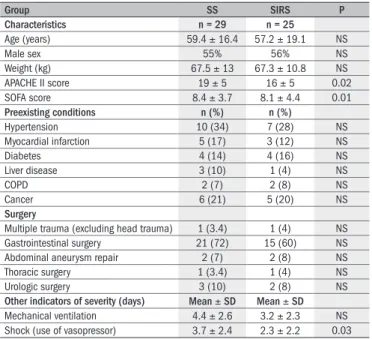
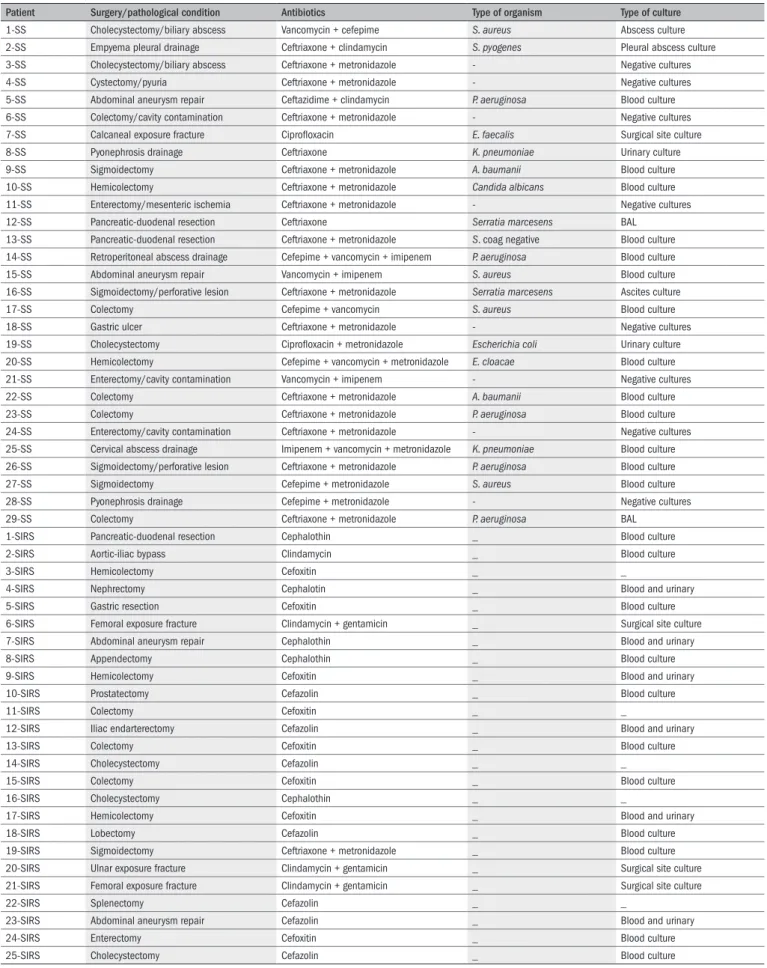
Out of the 59 patients enrolled, 29 formed the SS group and 25 formed the SIRS group. Five patients were excluded after their next of kin withdrew their signed consent. he patients’ characteristics at the time of admission to the study, their prior or preexisting conditions, the type of surgery and the outcome data are presented in Table 1. he microbiological characteristics of both groups are presented in
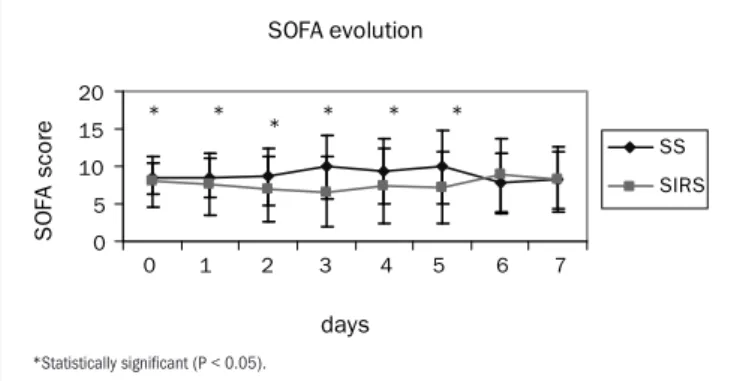
Table 2. he evolution of SOFA scores in the two groups is presented in Figure 1. he daily evolution of CRP in the two groups is presented in
Figure 2. Serum lactate was diferent between groups, as shown in Figure 3.
here was no correlation between CRP and SOFA in either group (r = 0.004; P = 0.99). here was a positive correlation between CRP and lactate in both groups, but without statistical signiicance (r = 0.60; P = 0.15).
he daily evolution of CRP plasma concentrations among patients who died and survivors is presented in Figure 4. he mortality rate over seven days was 38% for the SS group (11 out of 29 patients) and 24% for the SIRS group (six out of 25 patients) (P = 0.28). Over 28 days, the
Table 1. Patient characteristics in the two groups, at the time of admission to the study
Group SS SIRS P
Characteristics n = 29 n = 25
Age (years) 59.4 ± 16.4 57.2 ± 19.1 NS
Male sex 55% 56% NS
Weight (kg) 67.5 ± 13 67.3 ± 10.8 NS
APACHE II score 19 ± 5 16 ± 5 0.02
SOFA score 8.4 ± 3.7 8.1 ± 4.4 0.01
Preexisting conditions n (%) n (%)
Hypertension 10 (34) 7 (28) NS
Myocardial infarction 5 (17) 3 (12) NS
Diabetes 4 (14) 4 (16) NS
Liver disease 3 (10) 1 (4) NS
COPD 2 (7) 2 (8) NS
Cancer 6 (21) 5 (20) NS
Surgery
Multiple trauma (excluding head trauma) 1 (3.4) 1 (4) NS
Gastrointestinal surgery 21 (72) 15 (60) NS
Abdominal aneurysm repair 2 (7) 2 (8) NS
Thoracic surgery 1 (3.4) 1 (4) NS
Urologic surgery 3 (10) 2 (8) NS
Other indicators of severity (days) Mean ± SD Mean ± SD
Mechanical ventilation 4.4 ± 2.6 3.2 ± 2.3 NS
Shock (use of vasopressor) 3.7 ± 2.4 2.3 ± 2.2 0.03
Table 2. Microbiological analysis on patients in the two groups, including surgical procedure performed, antibiotic therapy, etiological infectious agent and source from which the agent was isolated
Patient Surgery/pathological condition Antibiotics Type of organism Type of culture
1-SS Cholecystectomy/biliary abscess Vancomycin + cefepime S. aureus Abscess culture
2-SS Empyema pleural drainage Ceftriaxone + clindamycin S. pyogenes Pleural abscess culture
3-SS Cholecystectomy/biliary abscess Ceftriaxone + metronidazole - Negative cultures
4-SS Cystectomy/pyuria Ceftriaxone + metronidazole - Negative cultures
5-SS Abdominal aneurysm repair Ceftazidime + clindamycin P. aeruginosa Blood culture
6-SS Colectomy/cavity contamination Ceftriaxone + metronidazole - Negative cultures
7-SS Calcaneal exposure fracture Ciproloxacin E. faecalis Surgical site culture
8-SS Pyonephrosis drainage Ceftriaxone K. pneumoniae Urinary culture
9-SS Sigmoidectomy Ceftriaxone + metronidazole A. baumanii Blood culture
10-SS Hemicolectomy Ceftriaxone + metronidazole Candida albicans Blood culture
11-SS Enterectomy/mesenteric ischemia Ceftriaxone + metronidazole - Negative cultures
12-SS Pancreatic-duodenal resection Ceftriaxone Serratia marcesens BAL
13-SS Pancreatic-duodenal resection Ceftriaxone + metronidazole S. coag negative Blood culture
14-SS Retroperitoneal abscess drainage Cefepime + vancomycin + imipenem P. aeruginosa Blood culture
15-SS Abdominal aneurysm repair Vancomycin + imipenem S. aureus Blood culture
16-SS Sigmoidectomy/perforative lesion Ceftriaxone + metronidazole Serratia marcesens Ascites culture
17-SS Colectomy Cefepime + vancomycin S. aureus Blood culture
18-SS Gastric ulcer Ceftriaxone + metronidazole - Negative cultures
19-SS Cholecystectomy Ciproloxacin + metronidazole Escherichia coli Urinary culture
20-SS Hemicolectomy Cefepime + vancomycin + metronidazole E. cloacae Blood culture
21-SS Enterectomy/cavity contamination Vancomycin + imipenem - Negative cultures
22-SS Colectomy Ceftriaxone + metronidazole A. baumanii Blood culture
23-SS Colectomy Ceftriaxone + metronidazole P. aeruginosa Blood culture
24-SS Enterectomy/cavity contamination Ceftriaxone + metronidazole - Negative cultures
25-SS Cervical abscess drainage Imipenem + vancomycin + metronidazole K. pneumoniae Blood culture
26-SS Sigmoidectomy/perforative lesion Ceftriaxone + metronidazole P. aeruginosa Blood culture
27-SS Sigmoidectomy Cefepime + metronidazole S. aureus Blood culture
28-SS Pyonephrosis drainage Cefepime + metronidazole - Negative cultures
29-SS Colectomy Ceftriaxone + metronidazole P. aeruginosa BAL
1-SIRS Pancreatic-duodenal resection Cephalothin _ Blood culture
2-SIRS Aortic-iliac bypass Clindamycin _ Blood culture
3-SIRS Hemicolectomy Cefoxitin _ _
4-SIRS Nephrectomy Cephalotin _ Blood and urinary
5-SIRS Gastric resection Cefoxitin _ Blood culture
6-SIRS Femoral exposure fracture Clindamycin + gentamicin _ Surgical site culture
7-SIRS Abdominal aneurysm repair Cephalothin _ Blood and urinary
8-SIRS Appendectomy Cephalothin _ Blood culture
9-SIRS Hemicolectomy Cefoxitin _ Blood and urinary
10-SIRS Prostatectomy Cefazolin _ Blood culture
11-SIRS Colectomy Cefoxitin _ _
12-SIRS Iliac endarterectomy Cefazolin _ Blood and urinary
13-SIRS Colectomy Cefoxitin _ Blood culture
14-SIRS Cholecystectomy Cefazolin _ _
15-SIRS Colectomy Cefoxitin _ Blood culture
16-SIRS Cholecystectomy Cephalothin _ _
17-SIRS Hemicolectomy Cefoxitin _ Blood and urinary
18-SIRS Lobectomy Cefazolin _ Blood culture
19-SIRS Sigmoidectomy Ceftriaxone + metronidazole _ Blood culture
20-SIRS Ulnar exposure fracture Clindamycin + gentamicin _ Surgical site culture
21-SIRS Femoral exposure fracture Clindamycin + gentamicin _ Surgical site culture
22-SIRS Splenectomy Cefazolin _ _
23-SIRS Abdominal aneurysm repair Cefazolin _ Blood and urinary
24-SIRS Enterectomy Cefoxitin _ Blood culture
25-SIRS Cholecystectomy Cefazolin _ Blood culture
SS = group with septic shock; SIRS = group with systemic inlammatory response syndrome; S. aureus = Staphylococcus aureus, S. pyogenes = Streptococcus pyogenes, P. aeruginosa = Pseudomonas aeruginosa, E. faecalis =
SOFA evolution 0 5 10 15 20
0 1 2 3 4 5 6 7
days S O F A s c o re SS SIRS * * * * * *
Figure 1. Daily evolution of sequential organ failure assessment (SOFA) score among the SS (septic shock) and SIRS (systemic inlammatory response syndrome) groups.
*Statistically signiicant (P < 0.05).
CRP daily values
0 100 200 300 400 days C R P ( m g / d l) SS SIRS
0 1 2 3 4 5 6 7
Figure 2. Mean C-reactive protein (CRP) measurements in the two groups.
SS = group with septic shock; SIRS = group with systemic inlammatory response syndrome; differences were not statistically signiicant in any of the comparisons.
Lactate evolution 0 20 40 60 80 days S e ru m l a c ta te (m g / d l) SS SIRS * * * *
0 1 2 3 4 5 6 7
SS = group with septic shock; SIRS = group with systemic inlammatory response syndrome. *Statistically signiicant (P < 0.05).
Figure 3. Mean serum lactate measurements in the two groups
Serum CRP evolution between patients who died and those who survived
0 200 400 600 days Serum CRP (mg/dl) died survived * * * * *
0 1 2 3 4 5 6 7
*Statistically signiicant (P < 0.05).
Figure 4. Outcome prognosis according to C-reactive protein (CRP) levels.
der septic shock.10 It considered that CRP was a good marker for organ
dysfunction after septic shock had been diagnosed. However, disagree-ing with that report, the results presented here, as well as in previously published results,19,20 did not establish any positive correlation between
CRP and SOFA. mortality rates in the SS and SIRS groups were, respectively, 62% (18
out of 29) and 44% (11 out of 25) (P = 0.17). he SS group presented a seven-day relative risk (RR) of mortality of 1.6 (95% conidence in-terval, CI: 0.99-2.59), in comparison with the SIRS group; the 28-day relative risk of mortality was 1.4 (95% CI: 0.83-2.35).
DISCUSSION
he present study did not show any correlation between CRP and diagnoses of infection among postoperative patients with SIRS and sep-tic shock. Nor did the SOFA score correlate with CRP measurements.
he patterns of cytokine production difer for diferent inlamma-tory conditions, as does the acute-phase response. Acute-phase changes relect the presence and intensity of inlammation. herefore, they have been used as a clinical guide for diagnosis and care. Conversely, serum CRP has been widely used as a marker for inlammation and tissue in-jury, as well as for diagnostic purposes, thereby diferentiating inlam-matory and infectious diseases.13 Previous reports have taken the view
that elevated CRP levels are also associated with adverse outcomes in healthy individuals, as well as in patients with stable angina or acute coronary syndromes.14
Among patients with plasma CRP concentrations higher than 10 mg/dl, 80 to 85% have bacterial infections, according to previous studies.15,16 In this present study, patients from both groups presented
plasma CRP concentrations higher than 10 mg/dl during the seven-day observation period, but no diference between septic shock (infected) and SIRS (non-infected) patients was found, thus contrasting with the results of Gabay et al.16 It is important to stress that Meisner et al.
ob-served that CRP plasma concentrations were postoperatively elevated in almost all patients, regardless of the type of surgery.6 Suprin et al.
observed that CRP was not a valuable indicator of infection in a medi-cal ICU, due to its poor sensitivity and speciicity.15 Ugarte et al.
re-ported that CRP levels were not much higher in infected patients with shock,17 and this was conirmed by the indings presented here. All the
patients studied were in the postoperative period. his fact, also accord-ing to Meisner, could in itself explain the elevated CRP measurements observed, regardless of whether infection was present or not. Hence, CRP cannot be used as a marker for infection in the early postopera-tive period.
Higher CRP levels were observed among the patients in the SIRS group than among those in the SS group. his can be explained by the antibiotic regimens among the septic shock patients. Many patients with SIRS received only prophylactic antibiotic therapy, while septic shock patients received antibiotics during their entire ICU stay. Given that Ventetuolo et al. reported that CRP might be used to follow the re-sponse to antibiotic therapy,18 the septic patients’ response to the
antibi-otic regimen could be the reason for their lower CRP levels.
he diference in CRP concentrations between patients who sur-vived and those who did not agrees with previous reports in which this protein was considered to be a valuable prognostic marker for death among patients with septic shock.5,10
un-he present study had some limitations. un-he diagnosis of infection was based on the presence of positive cultures from blood, urine, catheter or tracheal secretion, or on the presence of a presumed focus of infection in the surgical site. It is known that false-negative cultures are a frequent inding among critically ill patients. hus, some septic patients may be misdiagnosed as presenting SIRS, instead of sepsis. In order to minimize this source of error, patients diagnosed with SIRS who presented any posi-tive culture during the seven-day observation period were excluded.
CONCLUSION
CRP is not a good predictor for infection among patients present-ing septic shock durpresent-ing the early postoperative period.
REFERENCES
1. Cicarelli DD, Benseñor FE, Vieira JE. Effects of single dose of dexamethasone on patients with systemic inlammatory response. Sao Paulo Med J. 2006;124(2):90-5.
2. Luzzani A, Polati E, Dorizzi R, Rungatscher A, Pavan R, Merlini A. Comparison of procalcitonin and C-reactive protein as markers of sepsis. Crit Care Med. 2003;31(6):1737-41. 3. Enguix A, Rey C, Concha A, Medina A, Coto D, Diéguez MA. Comparison of procalcitonin with
C-reactive protein and serum amyloid for the early diagnosis of bacterial sepsis in critically ill neonates and children. Intensive Care Med. 2001;27(1):211-5.
4. Cicarelli LM, Perroni AG, Zugaib M, de Albuquerque PB, Campa A. Maternal and cord blood levels of serum amyloid A, C-reactive protein, tumor necrosis factor-alpha, interleukin-1beta, and interleukin-8 during and after delivery. Mediators Inlamm. 2005;2005(2):96-100. 5. Castelli GP, Pognani C, Cita M, Stuani A, Sgarbi L, Paladini R. Procalcitonin, C-reactive
pro-tein, white blood cells and SOFA score in ICU: diagnosis and monitoring of sepsis. Minerva Anestesiol. 2006;72(1-2):69-80.
6. Meisner M, Tschaikowsky K, Hutzler A, Schick C, Schüttler J. Postoperative plasma concentrations of procalcitonin after different types of surgery. Intensive Care Med. 1998;24(7):680-4.
7. Levy MM, Fink MP, Marshall JC, et al. 2001 SCCM/ESICM/ACCP/ATS/SIS International Sep-sis Deinitions Conference. Intensive Care Med. 2003;29(4):530-8.
8. Reade MC, Young JD. Consent for observational studies in critical care: time to open Pandora’s Box. Anaesthesia. 2003;58(1):1-3.
9. Reny JL, Vuagnat A, Ract C, Benoit MO, Safar M, Fagon JY. Diagnosis and follow-up of infec-tions in intensive care patients: value of C-reactive protein compared with other clinical and biological variables. Crit Care Med. 2002;30(3):529-35.
10. Lobo SM, Lobo FR, Bota DP, et al. C-reactive protein levels correlate with mortality and organ failure in critically ill patients. Chest. 2003;123(6):2043-9.
11. Marshall JC, Vincent JL, Fink MP, et al. Measures, markers, and mediators: toward a staging system for clinical sepsis. A report of the Fifth Toronto Sepsis Roundtable, Toronto, Ontario, Canada, October 25-26, 2000. Crit Care Med. 2003;31(5):1560-7.
12. Hulley SB, Cummings SR. Designing clinical research: an epidemiologic approach. 1st ed. Philadelphia: Williams & Wilkins; 1988.
13. Okino AM, Bürger C, Cardoso JR, Lavado EL, Lotufo PA, Campa A. The acute-phase proteins serum amyloid A and C reactive protein in transudates and exudates. Mediators Inlamm. 2006;2006(1);47297.
14. Kosuge M, Ebina T, Ishikawa T, et al. Serum amyloid A is a better predictor of clinical outco-mes than C-reactive protein in non-ST-segment elevation acute coronary syndrooutco-mes. Circ J. 2007;71(2):186-90.
15. Suprin E, Camus C, Gacouin A, et al. Procalcitonin: a valuable indicator of infection in a medical ICU? Intensive Care Med. 2000;26(9):1232-8.
16. Gabay C, Kushner I. Acute-phase proteins and other systemic responses to inlammation. N Engl J Med. 1999;340(6):448-54.
17. Ugarte H, Silva E, Mercan D, De Mendonça A, Vincent JL. Procalcitonin used as a marker of infection in the intensive care unit. Crit Care Med. 1999;27(3):498-504.
18. Ventetuolo CE, Levy MM. Biomarkers: diagnosis and risk assessment in sepsis. Clin Chest Med. 2008;29(4):591-603, vii.
19. Castelli GP, Pognani C, Meisner M, Stuani A, Bellomi D, Sgarbi L. Procalcitonin and C-reactive protein during systemic inlammatory response syndrome, sepsis and organ dysfunction. Crit Care. 2004;8(4):R234-42.
20. Cicarelli DD, Vieira JE, Benseñor FE. Comparison of C-reactive protein and serum amyloid a protein in septic shock patients. Mediators Inlamm. 2008;2008:631414.
Conlict of interest: Not declared Sources of funding: Not declared Date of irst submission: March 26, 2009 Last received: August 12, 2009 Accepted: December 10, 2009
Address for correspondence: Domingos Dias Cicarelli
Divisão de Anestesia do Instituto Central do Hospital das Clínicas Av. Dr. Enéas de Carvalho Aguiar, 255 — 8o andar
Cerqueira César — São Paulo (SP) — Brasil CEP 05403-900