http://dx.doi.org/10.1590/s2175-97902017000116132
A
r
*Correspondence: A. P. S. Gondim. Departamento de Farmácia. Faculdade de Farmácia, Odontologia e Enfermagem. Universidade Federal do Ceará. Rua
Capitão Francisco Pedro, 1210, Rodolfo Teóilo, 60.430-372, Fortaleza, Ceará, Brasil. E-mail: [email protected]
Factors associated with adherence to immunomodulator treatment
in people with multiple sclerosis
Nair Assunta Antônia Corso Câmara
1, Ana Paula Soares Gondim
2,*1Fortaleza General Hospital, HGF, Fortaleza, Ceará, Brazil, 2Department of Pharmacy, Faculty of Pharmacy, Dentistry and
Nursing, Federal University of Ceará, UFC, Fortaleza, Ceará, Brazil
To determine the association between factors and adherence to immunomodulator treatment in people with multiple sclerosis treated in reference centers. Cross-sectional study conducted with 188 people who used immunomodulators in three reference centers in Ceará from March to July 2012. Adherence was assessed using the Moriskscale and factors were assessed using a questionnaire addressing
socioeconomic and personal characteristics, the disease, the use of immunomodulator and educational
activities. The determination of the association was expressed in crude and adjusted odds ratio with a 95% conidence interval. Adherence rate was 46% and after the logistic regression model the adherence to immunomodulator treatment was positively associated with the following factors: age 18-38 years, time of diagnosis and treatment between 6 and 24 months, 0-3.5 score in the Expanded Disability Status Scale, perception of treatment beneits, intrinsic and extrinsic motivation, phone contact with the doctor and not missing the return visit. This study is important because it allowed to determine the association between factors and adherence to immunomodulator treatment in multiple sclerosis, contributing to
prevention and control actions.
Uniterms: Multiple sclerosis/medication adherence. Multiple sclerosis/treatment. Immunologic factors.
Risk factors.
INTRODUCTION
Medication adherence is essential to the efective treatment of many diseases, particularly the chronic ones (Wolf et al.; 2007; Conn et al., 2016). In people’s lives,
such adherence can positively contribute to slow down the clinical progression of the disease and improve quality of life. In health services, it can reduce hospitalization costs (World Health Organization, 2003; Sokol et al., 2005).
The World Health Organization (2003) defines adherence to treatment as the extent to which a person’s behavior – taking medication, following a diet, and/or executing lifestyle changes - corresponds with agreed recommendations from a health care provider. Some studies show that adherence is inluenced by patient’s behavior and beliefs such as the beneits and the importance given to health in addition to the type of medication administration
and socioeconomic characteristics (Tremlett et al., 2008;
Treadaway et al., 2009; Devonshire et al., 2011;
López-Méndez et al., 2013).
Multiple sclerosis (MS) is a chronic, progressive and disabling inflammatory disorder of the central nervous system (Rio, Comabella, Montalban, 2011)and its treatment includes the continuous use of medications, especially immunomodulators (IM). Given that, adherence to treatment is essential to maximize the beneits of the therapy (Devonshire et al., 2011).
In Brazil, the treatment for MS is provided by the Ministry of Health through the National Health System, also known as the Unified Health System (Sistema Único de Saúde – SUS). Patients must be treated in
This article aims to determine the association between factors and the adherence to immunomodulator treatment in people with multiple sclerosis treated in reference centers.
METHOD
Type of study
Cross-sectional study conducted with people with multiple sclerosis treated in Reference Centers in the state of Ceará, Northeastern Brazil, from April to July 2012.
Research locale
The three Reference Centers for patients with multiple sclerosis of the state of Ceará are run by the SUS and present a proper structure for the diagnosis and treatment of the disease. Two centers are located in the city of Fortaleza, capital of Ceará. One center belongs to a State Hospital and the other is part of the Federal University of Ceará (Universidade Federal do Ceará – UFC). Both
centers receive MS patients from all over the state. The third center is located in the state’s countryside, about 200 km from Fortaleza, and provides care to patients from Northern Ceará. The centers receive an average of 140 patients per month.
Study population
The total population diagnosed with multiple sclerosis or clinically isolated syndrome (CIS) and treated with one of the injectable immunomodulators (intramuscular interferon beta-1a, subcutaneous interferon beta-1a, interferon beta-1b or glatiramer acetate) included 228 people. All these immunomodulators were dispensed free of charge in the pharmacies of the three Reference Centers.
Inclusion criteria were: patients aged over 18 years old diagnosed with MS or CIS treated in the aforementioned centers with one of the injectable immunomodulators for at least six months. Exclusion criteria were: patients treated with other medications rather than immunomodulators.
Variables of the study
The dependent variable was the adherence to treatment with immunomodulators assessed by the Morisky Medication Adherence Scale (MMAS-8) (Morisky et al., 2008). The items regarding the inadequate
use of medication were: forgetting to take the medication; stopping taking the medication on his/her own when feeling better; stopping taking the medication when feeling worse and problems related to the complexity of the therapy - seven questions should be answered negatively and one should be answered positively.
The degree of adherence to the treatment was determined by the scoring of the sum of all correct answers. Patients who scored eight in the MMAS-8 were considered adherent (Morisky et al., 2008).
Independent variables were: socioeconomic characteristics (marital status, education, monthly household income, paid job, economic status); personal characteristics (gender, color, age, intrinsic and extrinsic motivation); aspects related to the disease (time of diagnosis assessed through medical records and rate of disease progression measured through the Expanded Disability Status Scale – EDSS); aspects related to the use of immunomodulators (length of treatment, diiculties to obtain and administer the IM, perception of the benefits of the use of the IM, who administers the IM, lifestyle changes, side efects caused by the medication); educational actions performed in the health care services (information about the disease and its treatment and on how to contact the doctor, and return to scheduled consultations). These variables were collected through self-reported information.
Economic status: it was measured according to the Brazilian Economic Classiication Criteria established by the Brazilian Association of Enterprises and Research (Associação Brasileira de Empresas e Pesquisa) that
takes into account the educational level and the number of consumer goods in the household (Associação Brasileira de Empresas de Pesquisa, 2012).
Intrinsic motivation refers to the patient’s opportunity to control the disease (“avoid” its progression), his/her hope to avoid episodes and get better, and the perception of improvement of the symptoms. Extrinsic motivation refers to an external influence on the use of the medication caused by the family, health care professionals and friends.
Data collection
Statistical method
Data were organized in the SPSS (SPSS Inc., Chicago, USA), version 16.0 and analyzed by the software STATA (STATA Corp LP, College Station, TX 77845, USA), version 11.0. The exploratory analyses of quantitative variables were performed using measures of central tendency (mean and median) and dispersion (standard deviation) to test for normality of proportions. The categorical variables were presented as proportions.
The chi-square test (χ2) was used in the construction of the logistic regression model in which the dependent variable was the adherence to medication treatment and independent variables were the socioeconomic characteristics and characteristics of the disease, - treatment and the ones related to the patient and the health care professional. Statistical signiicance was set at p<0.05. The selection of variables for the construction of the multivariate logistic regression model was based on the automatic selection method (stepwise). The strength of association between the dependent variable and the independent variables was expressed by the value of crude and adjusted Odds Ratio (OR) with a 95% Conidence Interval (CI).
Ethical Aspect
The study followed all the guidelines of -resolution 466/12 established by the National Health Council and was approved by the Ethics Research Committee of the University of Fortaleza under Opinion No. 445/2012.
RESULTS
Participants were 188 people with multiple sclerosis treated in the three Reference Centers of Ceará, which corresponded to 84.1% of the patients registered in the centers; there was a loss of 15.9% (30) of people who did not participate in the study because they had been using the medications for less than six months and also used other medications. Most of the 188 people with multiple sclerosis undergoing treatment were: under 38 years old (45.8%), with a mean age of 38.6 years; women (75.5%); white (84.0%); had a higher education degree (52.7%); and were unemployed (56.9%). Almost half of the patients (45.7%) were married; 59.0% were classiied as belonging to income class A/B with an average household income of R$ 2,214.89 per month (Table I).
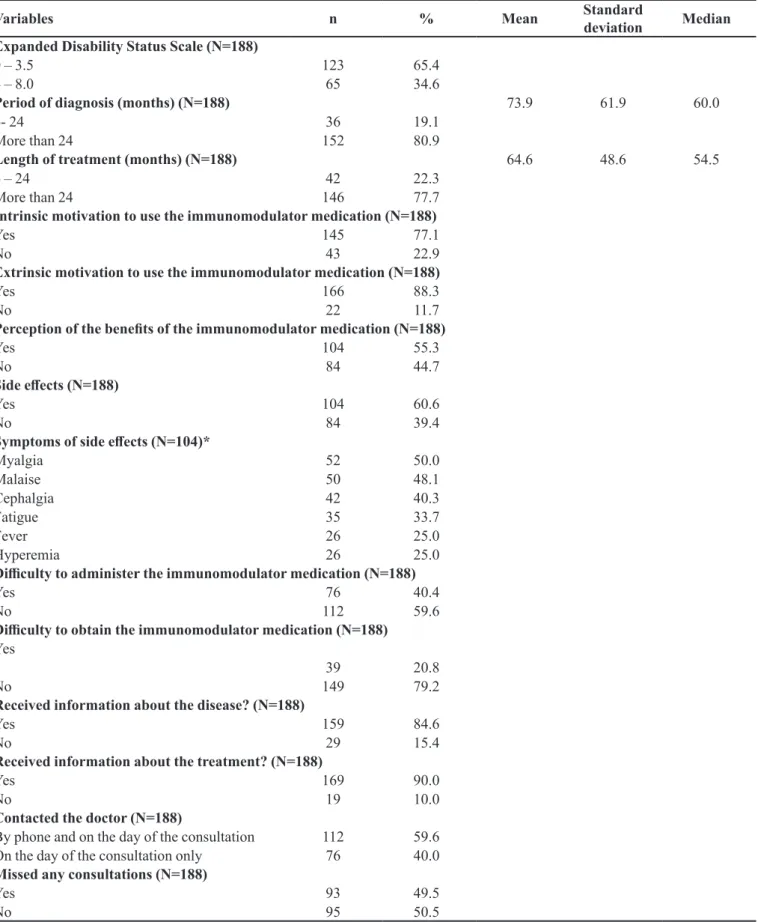
Most patients had an Expanded Disability Status Scale score (EDSS score) below 3.5 (65.4%) and the average time of diagnosis and treatment was 73.9 and
64.6 months, respectively. Most patients feel intrinsically motivated to adhere to the treatment (77.1%) due to: believing that immunomodulator medication avoids the disease progression (77.3%), hoping to avoid episodes (56.9%) and hoping to get better (42.1%). Almost all patients feel extrinsically motivated to adhere to the treatment (88.3%); they are motivated by the family (75.0%) and health care professionals (34.3%). The benefits of immunomodulator medication was recognized by 55.3% of participants, and the main beneits mentioned were: reduction of episodes of MS (70.8%), lighter episodes (38.1%), improvement of incapacity (37.2%) and delayed disease progression (30.1%). Many patients reported side efects associated with the use of immunomodulator medication (60.6%), and the most common were: myalgia (50.0%), malaise (48.1%), cephalgia (40.3%), fatigue (33.7%), fever (25.0%) and hyperemia (25.0%). The diiculty in administering the immunomodulator medication was observed in 59.6% of participants, and 79.2% reported no diiculties in obtaining the medication. Most patients received information about the disease (84.6%) and treatment (90.0%). Still, more than half of patients reported keeping contact with the doctor of the Center on the day of the consultation only (59.6%) and many did not return to medical consultations (49.5%) (Table II).
According to the Morisky Medication Adherence Scale (MMAS), there was an adherence of 46.0% and the main causes for non-adherence were: forgetfulness (64.0%) and discomfort in continuing the treatment because of its complexity (31.0%) (Figure 1).
DISCUSSION
This study aimed to determine the association between factors and adherence to immunomodulator treatment in people with multiple sclerosis treated in reference centers and has identiied an adherence rate of 46% according to the Morisky Medication Adherence Scale (MMAS-8) (Morisky et al., 2008). This value was
lower than the ones found in studies like a multicenter study conducted in Spain health care centers for MS patients using the Morisky & Green scale, which found an adherence rate of 68% (Fernandez et al., 2012).
It is important to say that some of the diferences found in the adherence rates of these studies may be explained by the variables established to deine adherence (Gordis, 1989). Choosing a cross-sectional study allowed
to estimate the proportion of adherence to treatment and its associated factors.
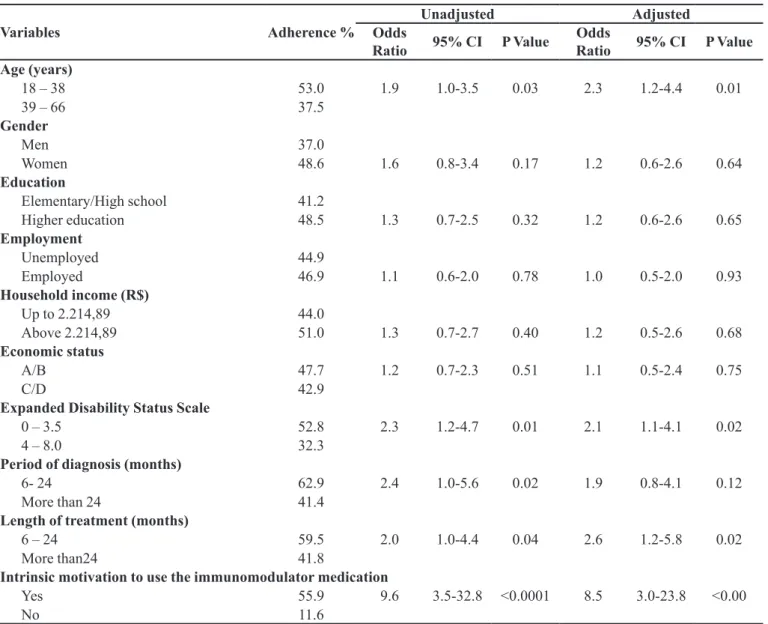
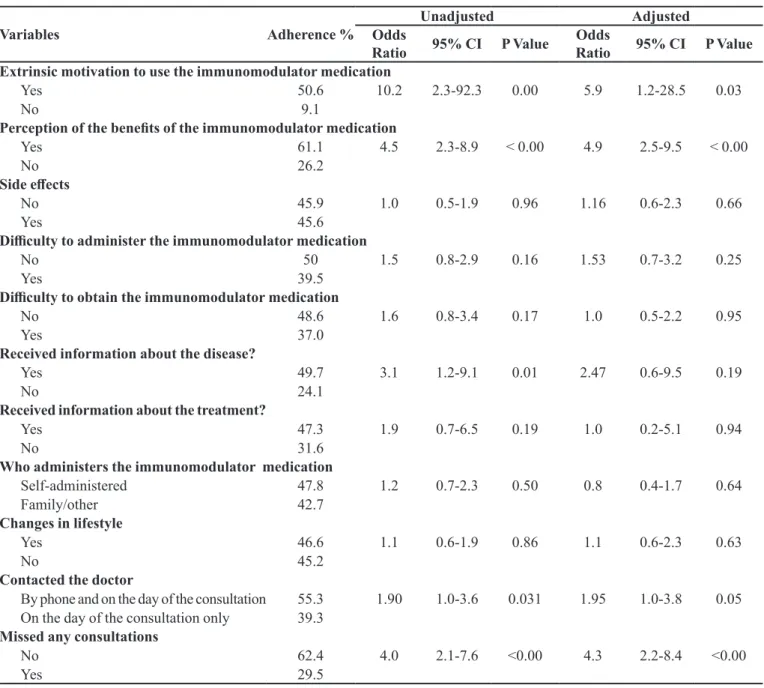
The factors positively associated with adherence identiied in this study were: younger age, shorter period of diagnosis and length of treatment, lower EDSS scores, perception of the beneits of the treatment, intrinsic and extrinsic motivation. Additionally, receiving information about the disease, contacting the doctor more often (by phone, for instance) and not missing the next consultations have contributed to the adherence to treatment.
Non-adherence rate was high and it was identiied that individuals who were not adherent to the treatment intentionally discontinued the therapy. Another reason was the patient’s forgetfulness, which is an unintentional behavior. When it comes to patients with MS, forgetting to take the medication may be associated with alterations TABLE I - Demographic and socioeconomic characteristics of patients with multiple sclerosis receiving care in Reference Centers.
Ceará, 2012
Variables n % Mean Standard
deviation Median Age (years) (N=188)
18-38 100 53.2 38.6 12.5 37.0
39-66 88 45.8
Gender (N=188)
Men 46 24.5
Women 142 75.5
Race/Color (N=185)
White 158 84.0
Pardo 27 14.4
Black 3 1.6
Marital Status (N=188)
Single/Widow(er)/divorced 102 54.3
Married 86 45.7
Education (N=184)
Elementary school/High school 85 45.2
Higher education 99 52.7
Employment (N=171)
Unemployed/retired/disability beneits 107 56.9
Employed 37 19.7
Household income (R$) (N=183)
Up to 2,214.89 134 73.2 5,205.00 6,241.19 3,000.00
Above 2,214.89 49 26.8
Economic status (N=188)
A/B 111 59.0
TABLE II - Aspects related to the disease and treatment of patients with multiple sclerosis receiving care in Reference Centers. Ceará, 2012
Variables n % Mean Standard
deviation Median Expanded Disability Status Scale (N=188)
0 – 3.5 123 65.4
4 – 8.0 65 34.6
Period of diagnosis (months) (N=188) 73.9 61.9 60.0
6- 24 36 19.1
More than 24 152 80.9
Length of treatment (months) (N=188) 64.6 48.6 54.5
6 – 24 42 22.3
More than 24 146 77.7
Intrinsic motivation to use the immunomodulator medication (N=188)
Yes 145 77.1
No 43 22.9
Extrinsic motivation to use the immunomodulator medication (N=188)
Yes 166 88.3
No 22 11.7
Perception of the beneits of the immunomodulator medication (N=188)
Yes 104 55.3
No 84 44.7
Side efects (N=188)
Yes 104 60.6
No 84 39.4
Symptoms of side efects (N=104)*
Myalgia 52 50.0
Malaise 50 48.1
Cephalgia 42 40.3
Fatigue 35 33.7
Fever 26 25.0
Hyperemia 26 25.0
Diiculty to administer the immunomodulator medication (N=188)
Yes 76 40.4
No 112 59.6
Diiculty to obtain the immunomodulator medication (N=188) Yes
39 20.8
No 149 79.2
Received information about the disease? (N=188)
Yes 159 84.6
No 29 15.4
Received information about the treatment? (N=188)
Yes 169 90.0
No 19 10.0
Contacted the doctor (N=188)
By phone and on the day of the consultation 112 59.6
On the day of the consultation only 76 40.0
Missed any consultations (N=188)
Yes 93 49.5
No 95 50.5
in the cognitive function (National Multiple Sclerosis Society, 2006).
Changes in the cognitive function are a very common symptom of MS that afects 62.4% of patients (Fricska-Nagy et al., 2016). Other study has also observed
that the main cause of non-adherence reported by patients with MS was forgetfulness (Devonshire et al., 2011).
It was observed that age (under 39 years old) was statistically significant, corroborating with Fernandez
et al. (2012). It is believed that the disease progression
hinders adherence by older people. According to the World Health Organization (2003), low adherence afects all age groups. However, the prevalence of functional and cognitive impairment in older patients increases the risk of low adherence.
FIGURE 1 - Frequency of positive answers in Morisk 8-item scale
TABLE III – Association between adherence and the variables adjusted in the logistic regression model divided into blocks.
Ceará, 2012
Variables Adherence %
Unadjusted Adjusted
Odds
Ratio 95% CI P Value
Odds
Ratio 95% CI P Value Age (years)
18 – 38 53.0 1.9 1.0-3.5 0.03 2.3 1.2-4.4 0.01
39 – 66 37.5
Gender
Men 37.0
Women 48.6 1.6 0.8-3.4 0.17 1.2 0.6-2.6 0.64
Education
Elementary/High school 41.2
Higher education 48.5 1.3 0.7-2.5 0.32 1.2 0.6-2.6 0.65
Employment
Unemployed 44.9
Employed 46.9 1.1 0.6-2.0 0.78 1.0 0.5-2.0 0.93
Household income (R$)
Up to 2.214,89 44.0
Above 2.214,89 51.0 1.3 0.7-2.7 0.40 1.2 0.5-2.6 0.68
Economic status
A/B 47.7 1.2 0.7-2.3 0.51 1.1 0.5-2.4 0.75
C/D 42.9
Expanded Disability Status Scale
0 – 3.5 52.8 2.3 1.2-4.7 0.01 2.1 1.1-4.1 0.02
4 – 8.0 32.3
Period of diagnosis (months)
6- 24 62.9 2.4 1.0-5.6 0.02 1.9 0.8-4.1 0.12
More than 24 41.4
Length of treatment (months)
6 – 24 59.5 2.0 1.0-4.4 0.04 2.6 1.2-5.8 0.02
More than24 41.8
Intrinsic motivation to use the immunomodulator medication
Yes 55.9 9.6 3.5-32.8 <0.0001 8.5 3.0-23.8 <0.00
Variables Adherence %
Unadjusted Adjusted
Odds
Ratio 95% CI P Value
Odds
Ratio 95% CI P Value Extrinsic motivation to use the immunomodulator medication
Yes 50.6 10.2 2.3-92.3 0.00 5.9 1.2-28.5 0.03
No 9.1
Perception of the beneits of the immunomodulator medication
Yes 61.1 4.5 2.3-8.9 < 0.00 4.9 2.5-9.5 < 0.00
No 26.2
Side efects
No 45.9 1.0 0.5-1.9 0.96 1.16 0.6-2.3 0.66
Yes 45.6
Diiculty to administer the immunomodulator medication
No 50 1.5 0.8-2.9 0.16 1.53 0.7-3.2 0.25
Yes 39.5
Diiculty to obtain the immunomodulator medication
No 48.6 1.6 0.8-3.4 0.17 1.0 0.5-2.2 0.95
Yes 37.0
Received information about the disease?
Yes 49.7 3.1 1.2-9.1 0.01 2.47 0.6-9.5 0.19
No 24.1
Received information about the treatment?
Yes 47.3 1.9 0.7-6.5 0.19 1.0 0.2-5.1 0.94
No 31.6
Who administers the immunomodulator medication
Self-administered 47.8 1.2 0.7-2.3 0.50 0.8 0.4-1.7 0.64
Family/other 42.7
Changes in lifestyle
Yes 46.6 1.1 0.6-1.9 0.86 1.1 0.6-2.3 0.63
No 45.2
Contacted the doctor
By phone and on the day of the consultation 55.3 1.90 1.0-3.6 0.031 1.95 1.0-3.8 0.05
On the day of the consultation only 39.3
Missed any consultations
No 62.4 4.0 2.1-7.6 <0.00 4.3 2.2-8.4 <0.00
Yes 29.5
TABLE III – Association between adherence and the variables adjusted in the logistic regression model divided into blocks. Ceará, 2012 (cont.)
The variables related to the disease suggest that people with lower EDSS scores and shorter periods of diagnosis and length of treatment are more likely to adhere to treatment, corroborating the indings by other authors (Tremlett et al., 2008; Treadaway et al., 2009; Devonshire
et al., 2011). Disease progression and the incapacities
developed hinder adherence because they interfere directly with the administration of the injection. In addition, cognitive impairment can affect patient’s memory and hinder adherence (World Health Organization, 2003; Klauer, Zettl, 2008).
The perception of beneits caused by the use of the immunomodulator is strongly associated with adherence. This is corroborated by other authors (Treadaway et al., 2009; Devonshire et al., 2011) and suggests that the main
cause for adherence to the medication is the hope that it will continue to have a positive impact on MS (Turner et al., 2007).
are focused on the patient and reflect on individual expectations (Leite, Vasconcellos, 2003).
This study also showed an association between intrinsic motivation and adherence to immunomodulator treatment, which is corroborated by other studies (Turner
et al., 2007; Treadaway et al., 2009; Devonshire et al., 2011). One’s behavior in certain situations is based on the occurrence of intrinsic and extrinsic motivation (Reiss, 2012). Regarding MS, the intrinsic factor is the patient’s motivation to control the disease. The study showed that people who received information about the prognosis and treatment were more intrinsically motivated to adhere to treatment (Apóstolo et al., 2007). Therefore, intrinsic
motivation is related to the patient’s opportunity to maintain or improve his/her health status. Hoping to get better and reduce the occurrence of episodes and believing that the medication can prevent the disease progression were the main causes of motivation reported by the participants of this study.
Considering the extrinsic motivation, it was observed that the family support to continue the treatment was associated with adherence, a fact that is also highlighted by other authors (Klauer, Zettl, 2008; Treadaway et al., 2009). However, a comprehensive model of adherence to treatment should not only have patients follow the therapy. It should also keep exogenous influences, especially the family support (Klauer, Zettl, 2008). The family should accompany the person with multiple sclerosis during educational activities as decision-making and the difficulties faced by the person can be overcome with support from the family and their support network through therapeutic groups. There was a positive association between adherence and people who received information about the disease from health care professionals (Mohr et al., 2001; Turner et al., 2007). Information can provide
patients with the opportunity to participate actively in the decisions about his/her treatment. Understanding his/her own health status can make them see medication treatment as a tool to reduce the harms caused by MS (Saunders et al., 2010).
Although immunomodulators are dispensed free of charge in all Reference Centers in the country, it did not have any influence on the increase in adherence to treatment; however, the characteristics of the study population should be highlighted as the high education and income of participants did not have an impact on the increase in the adherence to immunomodulator treatment. This fact is also observed in other studies on the adherence to treatment of chronic conditions, which is probably related to one’s lifestyle rather than being a social inluence (Dias et al., 2011)
Another factor that is associated with adherence is the way the relationship between the patient and the health care professional occurs. In this study, people who contacted their doctors more often (by phone, e-mail and on the day of the consultation) were signiicantly more adherent to the treatment, a finding that has also been observed by Devonshire et al. (2011). The relationship
between the health care professional and the patient can inluence the acceptance of a therapy and the adherence to it (Tremlett et al., 2008).
Coelho et al. (2005) corroborate higher rates of adherence among people who do not miss consultations. Missing medical appointments may reflect people’s diiculty to recognize the importance of the consultation for their health care, leading to the non-adherence to treatment.
A prevalence of white people has been found by studies conducted in Southeastern Brazil (Callegaro et al., 2001; Fragoso, Pereira, 2007). Diferent results were
found in the cities of Recife (Ferreira et al., 2004) and
Fortaleza (Teixeira, 2011), which presented a prevalence of pardos (Portuguese word that refers to mixed-race
people). This study took into account the self-reported skin color. Therefore, its classification was subjective (Pena et al., 2011).
When assessing employment, it could be observed that more than half of patients did not have any paid jobs, which is also corroborated by Fragosoand Pereira (2007). The disease progression and the physical and mental impairment reduce the autonomy of people with MS. These changes lead to unemployment and early retirement (Mitchell et al., 2005). Most patients have
a higher education level, which is above the national educational level - only 20% of Brazilians have a college degree (Arelaro, 2005).
The indings of this study can be helpful to explain factors associated with adherence among patients with MS and warn health care services about the importance of the development of individual and collective strategies to offer educational support through the provision of information about the disease and treatment. Still, it suggests interventions that shall reduce the barriers related to forgetfulness and it encourages the inclusion of the patient’s family in the treatment.
this knowledge, patients can become involved in self-care and have greater autonomy in decision-making regarding the adherence to their treatment. Periodic telephone or face-to-face counseling should be carried out in order to investigate adverse efects and good practices of self-administration of immunomodulators, reinforcing the importance of adherence and encouraging discussion on side effects and difficulties of the treatment. Thus, providing patients with a space for talking and relecting about their doubts is of utmost importance; additionally, it can improve their knowledge about the disease taking into consideration the reality and feelings of each one.
REFERENCES
APÓSTOLO, J.L.A.; VIVEIROS, C.; NUNES, H.I.R.; DOMINGUES, H.R.F. Incerteza da doença e motivação
para o tratamento em diabetes tipo 2. Rev. Lat.-Am. Enferm.,
v.15, n.4, p.575-582, 2007.
ARELARO, L.R.G. O ensino fundamental no Brasil: avanços,
perplexidades e tendências. Educ. Soc., v.26, n.92,
p.1039-1066, 2005.
ASSOCIAÇÃO BRASILEIRA DE EMPRESAS DE
PESQUISA. Critérios de Classiicação Econômica Brasil.
São Paulo: ABEP, 2012. Available from: <http://www.abep. org/criterio-brasil>. Access on: Jun. 22, 2016.
BRASIL. Portaria SAS/MS n.391, de 05 de maio de 2015. Protocolo Clínico e Diretrizes Terapêuticas (PCDT) da
esclerose múltipla. Diário Oicial da União, Brasília, 06
maio 2015. Seção I, p.40.
CALLEGARO, D.; GOLDBAUM, M.; MORAIS, L.; TILBERY, C.P.; MOREIRA, M.A.; GABBA, A.A.; SCAFF, M. The prevalence of multiple sclerosis in the city of São
Paulo, Brazil, 1997. Acta Neurol. Scand., v.104, n.4,
p.208-213, 2001.
COELHO, E.B.; MOISES NETO, M.; PALHARES, R.; CARDOSO, M.C.M.; GELEILETE, T.J.M.; NOBRE, F. Relação entre assiduidade às consultas ambulatoriais e o
controle da pressão arterial em pacientes hipertensos. Arq. Bras. Cardiol., v.85, n.3, p.157-161, 2005.
CONN, V.S.; ENRIQUZ, M.; RUPPAR, T.; CHAN, K.C. Meta-analyses of theory use in medication adherence intervention
research. Am. J. Health Behav., v.40, n.2, p.155-171, 2016.
DEVONSHIRE, V.; LAPIERRE, Y.; MACDONELL, R.; RAMO-TELLO, C.; PATTI, F.; FONTOURA, P.; SUCHET, L.; HYDE, R.; BALLA, I.; FROHMAN, E.M.; KIESEIER, B.C. The Global Adherence Project (GAP): a multicenter observational study on adherence to disease-modifying therapies in patients with relapsing-remitting multiple
sclerosis. Eur. J. Neurol., v.18, n.2, p.69-77, 2011.
DIAS, A.M.; CUNHA, M.; SANTOS, A.; NEVES, A.; PINTO, A.; SILVA, A.; CASTRO, S. Adesão ao regime terapêutico
na doença crônica: revisão da literatura. Millenium, v.40,
p.201‐219, 2011.
FERNANDEZ, O.; AGÜERA, E.; IZQUIERDO, G.; MILLÁN-PASCUAL, J.; TORRENTÀ, L.R.; OLIVA, P.; ARGENTE, J.; BERDEI, Y.; SOLER, J.M.; CARMONA, O.; ERREA, J.M.; FARRÉS, J. Adherence to interferon β-1b treatment
in patients with multiple sclerosis in Spain. Plos One, v.7,
n.5, p.1-7, 2012.
FERREIRA, M.L.B.; MACHADO, M.I.M.; VILELA, M.L.; GUEDES, M.J.; ATAIDE, L.; SANTOS, S.; LAURENTINO, S.G. Epidemiologia de 118 casos de
esclerose múltipla com seguimento de 15 anos no Centro
de Referência do hospital da Restauração de Pernambuco. Arq. Neuro-Psiquiat., v.62, n.4, p.1027-1032, 2004.
FRAGOSO, Y.D.; PEREIRA, M. Prevalence of multiple
sclerosis in the city of Santos, SP. Rev. Bras. Epidemiol.,
v.10, n.4, p.479-482, 2007.
FRICSKA-NAGY, Z.; FÜVESI, J.; RÓZSA, C.; KOMOLY, S.; JAKAB, G.; CSÉPÁNY, T.; JOBBÁGY, Z.; LENCSÉS, G.; VÉCSEI, L.; BENCSIK, K. The effects of fatigue, depression and the level of disability on the health-related quality of life of glatiramer acetate-treated
relapsing-remitting patients with multiple sclerosis in Hungary. Mult.
Scler. Relat. Disord., v.7, p.26-32, 2016.
GORDIS, L. Conceptual and methodological problems in measuring patients compliance. In: HAYNES, R.B. Compliance in health care. Baltimore: Johns Hopkins University, 1989. p.23-45.
KASSER, S.L.; KOSMA, M. Health beliefs and physical
activity behavior in adults with multiple sclerosis. Disabil.
Health J., v.5, n.4, p.261-268, 2012.
LEITE, S.L.; VASCONCELLOS, M.P.C. Adesão à terapêutica medicamentosa: elementos para a discussão de conceitos e
pressupostos adotados na literatura. Cienc. Saude Coletiva,
v.8, n.3, p.775-782, 2003.
LÓPEZ-MÉNDEZ, P.; RÍO, J.; PÉREZ-RICART, A.; TINTORÉ, M.; SASTRE-GARRIGA, J.; CARDONA-PASCUAL, I.; GÓMEZ-DOMINGO, M.R.; MONTALBAN, X. Adhesión terapéutica a tratamiento inmunomodulador de pacientes
con esclerosis múltiple. Rev. Neurol., v.56, n.1, p.8-12, 2013.
MITCHELL, A.; LÉON, J.; GONZALEZ, J.; RIVERA-NAVARRO, J. Quality of life and its assessment in multiple sclerosis: integrating physical and psychological
components of wellbeing. Lancet Neurol., v.4, n.9,
p.556-566, 2005.
MOHR, D.C.; BOUDEWYN, A.C.; LIKOSKY, W.; LEVINE, E.; GOODKIN, D.E. Injectable medication for the treatment of multiple sclerosis: the inluence of self-eicacy expectations and injection anxiety on adherence and ability
to self-inject. Ann. Behav. Med., v.23, n.2, p.125-132, 2001.
MORISKY, D.E.; ANG, A.; KROUSEL-WOOD, M.; WARD, H.J. Predictive validity of a medication adherence measure
in an outpatient setting. J. Clin. Hypertens., v.10, n.5, p.348-354, 2008.
NATIONAL MULTIPLE SCLEROSIS SOCIETY.
Assessment and management of cognitive impairment
in multiple sclerosis. 2006. Available from: <http:// www.nationalmssociety.org/NationalMSSociety/ media/MSNationalFiles/Brochures/Clinical_Bulletin_ Assessment-and-Management-of-Cognitive-Impairment-in-MS.pdf>. Access on: Jun, 22, 2016.
PENA, S.D.J.; DI PIETRO, G.; FUCHSHUBER-MORAES, M.; GENRO, J.P.; HUTZ, M.H.; KEHDY, F.S.G.; KOHLRAUSCH, F.; MAGNO, L.A.V.; MONTENEGRO, R.C.; MORAES, M.O.; MORAES, M.E.A.; MORAES, M.R.; OJOPI, É.B.; PERINI, J.A.; RACCIOPI, C.; RIBEIRO-DOS-SANTOS, Â.K.C.; RIOS-SANTOS, F.; ROMANO-SILVA, M.A.; SORTICA, V.A.; SUAREZ-KURTZ, G. The genomic ancestry of individuals from diferent geographical regions of brazil is more uniform
than expected. Plos One, v.6, n.2, art.e17063, p.1-9, 2011.
REISS, S. Intrinsic and extrinsic motivation. Teach Psychol.,
v.39, n.2, p.152-156, 2012.
RIO, J.; COMABELLA, M.; MONTALBAN, X. Multiple
sclerosis: current treatment algorithms. Curr. Opin. Neurol.,
v.24, n.3, p.230-237, 2011.
SAUNDERS, C.; CAON, C.; SMRTKA, J.; SHOEMAKER, J. Factors that inluence adherence and strategies to maintain adherence to injected therapies for patients with multiple
sclerosis. J. Neurosci. Nurs., v.42, n.5, p.S10-S18, 2010.
SOKOL, M.C.; MCGUIGAN, K.A.; VERBRUGGE, R.R.; EPSTEIN, R.S. Impact of medication adherence on
hospitalization risk and healthcare cost. Med Care, v.43,
n.6, p.521-530, 2005.
TEIXEIRA, C.A.C. Características clínicas e epidemiológica
de 146 pacientes com esclerose múltipla acompanhados na cidade de Fortaleza, CE, Brasil, entre os anos 1979 entre os anos 1979 e 2010. Fortaleza, 2011. 227p. Dissertação de Mestrado- Faculdade de Medicina - Universidade Federal
do Ceará.
TREADAWAY, K.; CUTTER, G.; SALTER, A.; LYNCH, S.; SIMSARIAN, J.; CORBOY, J. Factors that inluence
adherence with disease-modifying therapy in MS. J Neurol,
v.256, n.4, p.568-576, 2009.
TREMLETT, H.; VAN DER MEI, I.; PITTAS, F.; BLIZZARD, L.; PALEY, G.; DWYER, T.; TAYLOR, B.; PONSONBY, A.L. Adherence to the immunomodulatory drugs for multiple sclerosis: contrasting factors afect stopping drug
and missing doses. Pharmacoepidemiol. Drug Saf., v.17, n.6, p.565-576, 2008.
TURNER, A.P.; KIVLAHAN, D.R.; SLOAN, A.P.; HASELKORN, J.K. Predicting ongoing adherence to disease modifying therapies in multiple sclerosis: utility of the health beliefs model. Mult. Scler. J., v.13,
n.9, p.1146-1152, 2007.
WOLF, M.S.; DAVIS, T.C.; OSBORN, C.Y.; SKRIPKAUSKAS, S.; BENNETT, C.L.; MAKOUL, G. Literacy, self-eicacy,
and HIV medication adherence. Patient Educ. Couns., v.65,
n.2, p.253-260, 2007.
WORLD HEALTH ORGANIZATION. WHO. Adherence to
long-term therapies: evidence for action, 2003. Disponível
em: <http://www.who.int/chp/knowledge/publications/ adherence_Section1.pdf>. Acesso em: 22 Jun 2016.
Received for publication on 05th July 2016