Neuropathic pain characteristics
in patients from Curitiba (Brazil)
with spinal cord injury
Janaína Vall1,3, Carlos Mauricio de Castro Costa2,3,
Terezinha de Jesus Teixeira Santos3, Samuel Bovy de Castro Costa3
ABSTRACT
This was a descriptive cross-sectional study on patients with spinal cord injuries living in Curitiba, Paraná, Brazil. The aim was to evaluate the pain characteristics among such patients seen at referral care centers for spinal cord injury patients in Curitiba. A total of 109 adults with spinal cord injury in this city were evaluated regarding the presence of pain, especially neuropathic pain. Neuropathic pain was evaluated using the DN4 questionnaire, a universal instrument that has been translated and validated for Portuguese. A visual analog scale (VAS) was used to evaluate the intensity of pain. The prevalence of pain among these 109 patients was 31.2% (34 patients). The nociceptive pain presented was classified as musculoskeletal pain (nine patients), visceral pain (four patients) and mixed pain (one patient), thus totaling 14 patients (12.8%). Another 20 patients (18.3%) showed symptoms of neuropathic pain and fulfilled the criteria for neuropathic pain with scores greater than 4 out 10 in the DN4 questionnaire. Regarding the characteristics of the patients with neuropathic pain, most of them were male, younger than 40 years of age and paraplegic with incomplete lesions. They had become injured from 1 to more than 5 years earlier. The predominant etiology was gunshot wounds, and the intensity of their pain was high, with VAS scores greater than 5. This study partially corroborates other studies conducted on this subject. Studies of this type are important for understanding the profile of these patients, for the purpose of designing strategies for their rehabilitation, with a focus on the appropriate treatment and management of pain.
Key words: neuropathic pain, spinal cord injury, DN4 questionnaire.
Dor neuropática em pessoas com lesão medular residentes em Curitiba (Brasil)
RESUMO
Estudo transversal descritivo em pacientes com lesão medular que residem em Curitiba, Paraná, Brasil. O objetivo foi avaliar as características da dor em pacientes com lesão medular acompanhados em Centros de Reabilitação de referência na cidade. Os sujeitos envolvidos na pesquisa foram 109 pacientes adultos com lesão medular. Foi avaliada a presença de dor, principalmente dor neuropática, mediante aplicação do Questionário DN4, um instrumento universal traduzido e validado para o português. A Escala Visual Analógica (EVA) também foi usada para avaliar a intensidade da dor. A prevalência de dor nos 109 pacientes avaliados foi de 31,2%, ou seja, 34 pacientes. Destes, nove apresentaram dor nociceptiva classificada como músculo-esquelética, quatro dor visceral e um paciente apresentou dor mista, totalizando 14 pacientes (12,8%). Além disso, 20 pacientes (18,3%) apresentaram dor neuropática, cumprindo os critérios para este tipo de dor com uma contagem superior a 4/10 para o DN4. Sobre as características dos pacientes com dor neuropática, a maioria era do sexo masculino, abaixo de 40 anos, paraplégico com lesão incompleta e tempo de evolução entre um e cinco anos de lesão. A etiologia Correspondence
Janaína Vall Rua José Nicco 105 81200-300 Curitiba PR - Brasil E-mail: [email protected]
Received 19 April 2010
Received in final form 15 June 2010 Accepted 22 June 2010
1PhD in Medical Sciences, MSc in Nursing, Federal University of Ceará. Professor of the UniBrasil. Coordinator of the “Liga
Sem Dor”; 2Full Professor of Physiology/Neurology, Federal University of Ceará; 3Researcher in the Experimental Neurology
predominante foi perfuração por arma de fogo e a intensidade da dor era severa, com EVA superior a cinco. Este estudo confirma parcialmente outros estudos publicados sobre o tema. Pesquisas deste tipo são importantes para entender o perfil destes pacientes com a finalidade de estabelecer estratégias para uma reabilitação com foco no tratamento e manejo adequado da dor.
Palavras-chave: dor neuropática, lesão medular, questionário DN4.
Spinal cord injury not only causes impairment of mo-tor function and loss of or decreased feeling, but also can cause many complications. One of the greatest and most debilitating of these complications is chronic pain, char-acterized mainly by neuropathic pain1-4. his is a sponta-neous pain that occurs mainly in situations of sensory ab-normality, caused by a primary lesion or disease of the pe-ripheral or central nervous system1,5. Difering from noci-ceptive pain, neuropathic pain is more diicult to treat5,6. hus, appropriate handling of neuropathic pain fol-lowing spinal cord injury is very important and neces-sary, since these patients sufer from a common problem and because this pain has a greater impact on everyday activities3,6, besides being a major factor in depression and unemployment3. Many people with chronic pain say that paralysis does not impede them from working and hav-ing an active social life, but that the pain they feel does. Chronic pain is the complication that is most related to lower scores in evaluations of quality of life7-9.
Chronic pain is thus a concern that very many pa-tients with spinal cord injury have, and it directly afects daily activities and hinders the rehabilitation process. Studying this speciic type of pain is therefore of great importance.
he objective of this study was to determine the prev-alence, intensity and patient characteristics of pain, and especially neuropathic pain, among individuals with spi-nal cord injuries in the city of Curitiba, Brazil.
METHOD
A descriptive cross-sectional study was conducted on 109 patients with spinal cord injuries (both traumatic and nontraumatic) who were recruited consecutively and fol-lowed up at diferent referral centers caring for such pa-tients in the city of Curitiba, Paraná, Brazil, during 2008. he inclusion criteria were that the subjects should be pa-tients with spinal cord injuries of traumatic or nontrau-matic origin who complained of pain after the onset of the condition.
Gender, age (years), marital status, schooling and oc-cupation, etiology of and time with the injury (years), neurological status and type of lesion (complete or in-complete, according to the ASIA Impairment Scale, AIS)10 were the independent variables analyzed in this study.
The DN4 questionnaire, which was originally in
Table 1. Demographic and clinical characteristics of the patients with spinal cord injury.
Category
Total
N %
Gender Male
Female 9217 (84.4)(15.6)
Age < 21 21 to 40 41 to 50 ≥51
9 73 14 13
(8.3) (67.0) (12.8) (11.9) Mean 32.88
Standard deviation 11.72 Median 30 Marital status
Single Married Other
44 50 15
(40.4) (45.9) (13.8) Occupation
Not working Working Retired Others
28 22 35 24
(25.7) (20.2) (32.1) (22.0) Schooling
Illiterate Basic education Middle-level education Higher education
11 54 38 6
(10.1) (49.5) (34.9) (5.5) Etiology
Gunshot wound Fall from height Knife wound Traic accident Nontraumatic
49 12 5 36 7
(45.0) (11.0) (4.6) (33.0) (6.4) Neurological status
Paraplegic
Tetraplegic 7930 (72.5)(27.5)
Type of lesion Incomplete
Complete 4366 (39.4)(60.6)
Time with lesion < 1 year 1 to 5 years >5 years
17 55 37
(15.6) (50.5) (33.9) Neuropathic pain
No
Yes 8920 (81.7)(18.3)
Pain location in relation to lesion level
At level Below level Above level
2 18 0
French, was duly translated and validated for Portuguese, and was used to identify non-neuropathic and neuropath-ic pain patients. It consists of 10 items subdivided into two parts: sensory descriptors (seven items) and signs re-lating to the sensory examination (three items)11-13. he presence of neuropathic pain was taken to be the
depen-Table 2. Diagnostic characteristics of neuropathic pain in 20 spinal cord injury patients, according to the DN4 questionnaire criteria.
Patient
number Descriptors Score
1 Burning, tingling, hypoesthesia to touch
and prick
4/10
2 Burning, numbness, hypoesthesia to
touch and prick 4/10
3 Electric shock, pins and needles,
hypoes-thesia to touch and prick 4/10
4 Burning, tingling, hypoesthesia to touch
and prick
4/10
5 Burning, numbness, hypoesthesia to
touch and prick
4/10
6 Burning, tingling, hypoesthesia to touch
and prick 4/10
7 Electric shock, pins and needles,
hypoes-thesia to touch and prick 4/10
8 Electric shock, tingling, hypoesthesia to
touch and prick
4/10
9 Burning, tingling, hypoesthesia to touch
and prick
4/10
10 Burning, numbness, hypoesthesia to
touch and prick 4/10
11 Burning, tingling, hypoesthesia to touch
and prick 4/10
12 Burning, tingling, hypoesthesia to touch
and prick
4/10
13 Electric shock, pins and needles,
hypoes-thesia to touch and prick
4/10
14 Burning, tingling, hypoesthesia to touch
and prick 4/10
15 Burning, tingling, hypoesthesia to touch
and prick 4/10
16 Electric shock, tingling, hypoesthesia to
touch and prick
4/10
17 Burning, tingling, hypoesthesia to touch
and prick
4/10
18 Burning, tingling, hypoesthesia to touch
and prick 4/10
19 Electric shock, pins and needles,
hypoes-thesia to touch and prick 4/10
20 Burning, tingling, hypoesthesia to touch
and prick
4/10
Table 3. Characteristics of the patients with spinal cord injury with symptoms of neuropathic pain.
Characteristics
Neuropathic pain Total %
Gender Male
Female 155 7525
Age <40
>41 155 7525
Marital status Single
Married Other
8 9 3
40 45 15
Occupation Not working
Working Retired Others
4 4 8 4
20 20 40 20
Schooling Illiterate
Basic education Middle-level education Higher education
0 11
8 1
0 55 40 5
Etiology Gunshot wound
Other wounds Traic accidents
11 3 6
55 15 30 Neurological
status
Paraplegic Tetraplegic
14 6
70 30
Type of lesion Incomplete
Complete
16 4
80 20
Time with lesion < 1 year
1 to 5 years > 5 years
3 12
5
15 60 25
Total 20 100
dent variable and needed to reach a score of at least 4 out 10, while non-neuropathic pain presented scores of less than 4 out 10.
he intensity of the pain, in general, was evaluated us-ing a visual analog scale (VAS) of 10 cm in length that was graduated from “0” to “10,” where “0” represented no pain and “10” the most unbearable pain14. For this study, the results were grouped in the following manner: intensity ≤5 (weak to moderate pain) or >5 (strong to intense pain).
he study was approved by the Ethics Committee of the State Department of Health, in Curitiba, and also fol-lowed the guidelines and laws of Brazil15. he patients signed a consent statement.
RESULTS
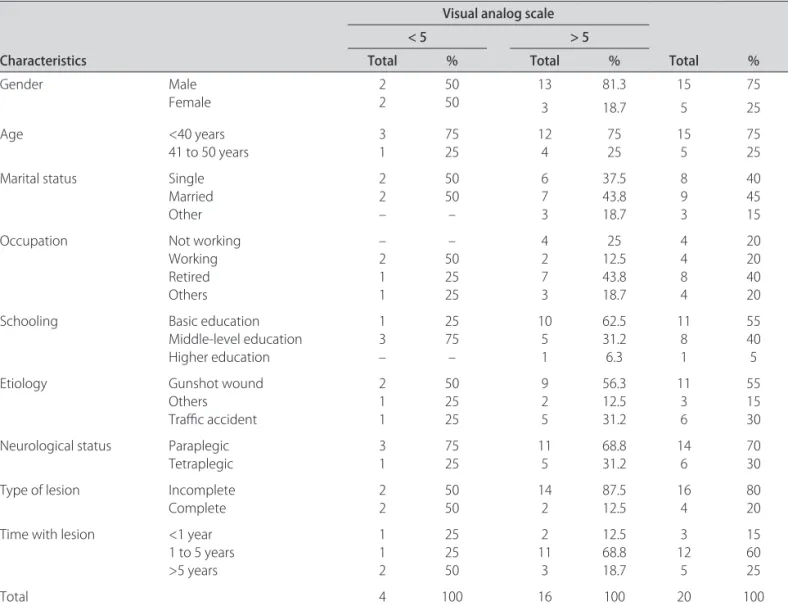
Table 4. Intensity of neuropathic pain, correlated with the demographic and clinical variables studied.
Characteristics
Visual analog scale
Total %
< 5 > 5
Total % Total %
Gender Male
Female
2 2
50 50
13 81.3 15 75
3 18.7 5 25
Age <40 years
41 to 50 years 31 7525 124 7525 155 7525
Marital status Single
Married Other
2 2 –
50 50 –
6 7 3
37.5 43.8 18.7
8 9 3
40 45 15
Occupation Not working
Working Retired Others
– 2 1 1
– 50 25 25
4 2 7 3
25 12.5 43.8 18.7
4 4 8 4
20 20 40 20
Schooling Basic education
Middle-level education Higher education
1 3 –
25 75 –
10 5 1
62.5 31.2 6.3
11 8 1
55 40 5
Etiology Gunshot wound
Others Traic accident
2 1 1
50 25 25
9 2 5
56.3 12.5 31.2
11 3 6
55 15 30
Neurological status Paraplegic
Tetraplegic
3 1
75 25
11 5
68.8 31.2
14 6
70 30
Type of lesion Incomplete
Complete 22 5050 142 87.512.5 164 8020
Time with lesion <1 year
1 to 5 years >5 years
1 1 2
25 25 50
2 11
3
12.5 68.8 18.7
3 12 5
15 60 25
Total 4 100 16 100 20 100
the patients were paraplegic, with complete lesions, and most of them had become injured from one to more than ive years earlier (Table 1).
Pain was present in 34 (31.2%) of the 109 patients evaluated. Among these 34 patients, 14 were classiied as having nociceptive pain such as musculoskeletal pain (nine patients), visceral pain (four patients) and mixed pain (one patient). Neuropathic pain was diagnosed in accordance with the DN4 questionnaire in 20 patients (18.3%) with symptoms suggestive of this, with a score of 4 out 10 in the DN4 questionnaire (Table 2). Among these 20 patients, 18 showed below-level pain, two of them had at-level pain and none had above-level pain.
Table 3 shows the correlation between neuropathic pain and the variables studied. he individuals mostly af-fected were male, younger than 40 years, single or mar-ried, retired, with basic education and paraplegic with incomplete lesion. Most of them had gunshot wounds as the etiology and had become injured from 1 to more than 5 years earlier.
he individuals with these characteristics were the
ones who sufered most with the pain, with scores high-er than 5 on the VAS, thus showing the pain to be strong to intense (Table 4).
DISCUSSION
he prevalence of pain secondary to traumatic and nontraumatic spinal cord injury in this study (31.2%) was not as high as shown by other investigators, possibly due to our small number of patients. Wollaars et al.9 evaluat-ed more than 250 patients and found that the prevalence of pain after spinal cord injury was 77%. Finnerup et al. found that 67% of the individuals with spinal cord injury presented chronic pain16. Ravenscroft et al. also showed that the prevalence of pain after spinal cord injury was 79%3. Siddall and Loeser found a prevalence of 65%6.
another study, three years later, on patients with nontrau-matic spinal cord injuries, the incidence of neuropathic pain in patients with spinal cord injury was 38%18.
Over ive years of studying patients with spinal cord injuries, Werhagen et al. found at-level neuropathic pain in 13% of their patients and below-level pain in 27%, in a total sample of 102 individuals with pain17.
Ullrich et al. evaluated 238 individuals with spi-nal cord injury and did not ind any statistically signii-cant correlation between the prevalence of pain and de-mographic and medical variables, including injury lev-el. However, they noted that tetraplegics tended to feel pain with greater intensity than did paraplegics19. Raven-scroft et al. found statistical signiicance when comparing patients with complete and incomplete lesions and con-cluded that the patients with complete lesions had more pain than the others (p<0.05)3, in contrast to the indings from our study, from which the data demonstrated that the patients with incomplete lesions had greater preva-lence of pain.
Cardenas et al. concluded that pain in general had a prevalence of approximately 80% and also did not ind any diferences in pain intensity between the two genders20. Also, there was no distinction between age groups. How-ever, these authors stated that the prevalence of pain was higher among individuals who were working when the spinal cord injury occurred, those whose education lev-el was higher and the paraplegic individuals, with incom-plete injuries caused by violent acts, thus conirming the data described in the present study, in which individuals with gunshot wounds had a higher prevalence of pain. Despite the high number of patients with gunshot wounds in this local study, these values are not representative of Brazil. Further epidemiological studies are warranted.
he DN4 questionnaire was shown an important in-strument for diagnosing neuropathic pain in spinal cord injury patients, especially in those with incomplete lesions in which other types of pains are also prevalent.
For healthcare professionals to be able to provide ap-propriate pain management following spinal cord injury, investigators need to be aware of this crucial phenomenon.
REFERENCES
1. Budh CN and Osteraker AL. Life satisfaction in individuals with a spinal cord injury and pain. Clin Rehabil 2007;21:89-96.
2. Burchiel KJ and Hsu FP. Pain and spasticity after spinal cord injury. Spine 2001;26:146-160.
3. Ravenscroft A, Ahmed YS, Burnside IG. Chronic pain after SCI. A patient sur-vey. Spinal Cord 2000;38:611-614.
4. Treede RD, Jensen TS, Campbell JN, et al. Neuropathic pain: redeinition and a grading system for clinical and research purposes. Neurology 2008; 70:1630-1635.
5. Eide PK. Pathophysiological mechanisms of central neuropathic pain after spinal cord injury. Spinal Cord 1998;36:601-612.
6. Siddall PJ and Loeser JD. Pain following spinal cord injury. Spinal Cord 2001; 39:63-73.
7. Vall J, Braga VAB, Almeida PC. Dolor neuropático central y su relación con la calidad de vida de una persona portadora de una lesión medular traumáti-ca. Rev Neurol 2006;42:525-529.
8. Vall J, Braga VAB, Almeida PC. Estudo da qualidade de vida em pessoas com lesão medular traumática. Arq Neuropsiquiatr 2006;64:451-455. 9. Wollaars MM, Post MW, Van Asbeck FW, Brand N. Spinal cord injury pain:
the inluence of psychology factors and impact on quality of life. Clin J Pain 2007;23:383-391.
10. Marino RJ, Barros T, Biering-Sorensen F, et al. ASIA Neurological Standards Committee 2002. International Standards for Neurological Classiication of Spinal Cord Injury. J Spinal Cord Med 2003;26(Suppl 1):S50-S56. 11. Bouhassira D, Attal N, Alchaar H, et al. Comparison of pain syndromes
asso-ciated with nervous or somatic lesions and development of a new neuro-pathic pain diagnostic questionnaire (DN4). Pain 2005;114:29-36. 12. Bouhassira D. Dolor Neuropático Cuestionario DN4 para La Detección del
Dolor Neuropático. RID 2007;2:43-44.
13. Ferreira KACL and Teixeira MJ. Tradução e validação da versão brasileira do questionário DN4 para identiicação de dor neuropática. Dor é Coisa Séria 2008;4:26-29.
14. Jensen MP and Karoly P. Self-report scales and procedures for assessing pain in adults. In: Turk DC and Melzack R (Eds.). Handbook of Pain Assess-ment. New York: Guilford Publications; 2001:15-34.
15. Ministério da Saúde (Brasil). Conselho Nacional de Saúde. Resolução n. 196 de 10 de outubro de 1996. Diretrizes e normas regulamentadoras de pes-quisa em seres humanos. Mundo Saúde 1996;21:52-61.
16. Finnerup NB, Johannesen IL, Sindrup SH, Bach FW, Jensen TS. Pain and dysesthesia in patients with spinal cord injury: a postal survey. Spinal Cord 2001;39:256-262.
17. Werhagen L, Budh CN, Hultling C, Molander C. Neuropathic pain after trau-matic spinal cord injury-relations to gender, spinal level, completeness, and age at the time of injury. Spinal Cord 2004;42:665-673.
18. Werhagen L, Hultling C, Molander C. The prevalence of neuropathic pain af-ter non-traumatic spinal cord lesion. Spinal Cord 2007;45:609-615. 19. Ullrich PM, Jensen MP, Loeser JD, Cardenas DD. Pain intensity, pain