J Pediatr (Rio J). 2014;90(4):332---343
www.jped.com.br
REVIEW ARTICLE
Mothers’ perceptions about the nutritional status of
their overweight children: a systematic review
夽
,
夽夽
Caliandra Francescatto
a, Natalia S. Santos
b,
Vanessa F. Coutinho
a, Roberto F. Costa
a,b,∗aUniversidade Gama Filho (UFG), Rio de Janeiro, RJ, Brazil
bEscola de Educac¸ão Física da Universidade Federal do Rio Grande do Sul (ESEF-UFRGS), Porto Alegre, RS, Brazil
Received 9 December 2013; accepted 22 January 2014 Available online 18 April 2014
KEYWORDS Nutritional status; Perception; Mother; Maternal; Parents; Parental
Abstract
Objective: this systematic review aims to explore and describe the studies that have as a primary outcome the identification of mothers’ perception of the nutritional status of their children.
Sources: the PubMed, Embase, LILACS, and SciELO databases were researched, regardless of language or publication date. The terms used for the search, with its variants, were: Nutritional Status, Perception, Mother, Maternal, Parents, Parental.
Summary of the findings: after screening of 167 articles, 41 were selected for full text reading, of which 17 were included in the review and involved the evaluation of the perception of mothers on the nutritional status of 57,700 children and adolescents. The methodological quality of the studies ranged from low to excellent. The proportion of mothers who inadequately perceived the nutritional status of their children was high, and was the most common underestimation for children with overweight or obesity.
Conclusion: despite the increasing prevalence of obesity in pediatric age, mothers have dif-ficulty in properly perceiving the nutritional status of their children, which may compromise referral to treatment programs.
© 2014 Sociedade Brasileira de Pediatria. Published by Elsevier Editora Ltda. All rights reserved.
夽 Please cite this article as: Francescatto C, Santos NS, Coutinho VF, Costa RF. Mothers’ perceptions about the nutritional status of their
overweight children: a systematic review. J Pediatr (Rio J). 2014;90:332---43.
夽夽
Study conducted at the institution Universidade Gama Filho (UGF), Rio de Janeiro, RJ, Brazil.
∗Corresponding author.
E-mail:[email protected] (R.F. Costa).
http://dx.doi.org/10.1016/j.jped.2014.01.009
Perception about the nutritional status of children 333
PALAVRAS-CHAVE Estado nutricional; Percepc¸ão; Mãe; Materno; Pais; Parental
Percepc¸ão de mães sobre o estado nutricional de seus filhos com excesso de peso: revisão sistemática
Resumo
Objetivo: esta revisão sistemática tem por objetivo explorar e descrever os estudos que
apre-sentam como desfecho primário a identificac¸ão da percepc¸ão das mães quanto ao estado
nutricional de seus filhos.
Fonte dos dados: foram utilizadas as bases de dados PubMed, Embase, LILACS e SciELO, sem
distinc¸ão de idioma ou data de publicac¸ão. Os termos utilizados para a busca, com suas
variac¸ões, foram:Nutritional Status, Perception, Mother, Maternal, Parents, Parental.
Síntese dos dados: após triagem dos 167 artigos encontrados, restaram 41 artigos para leitura
do texto completo, sendo incluídos 17 artigos, que envolveram a avaliac¸ão da percepc¸ão de
mães sobre o estado nutricional de 57.700 crianc¸as e adolescentes. A qualidade metodológica
dos artigos variou de baixa a excelente. A proporc¸ão de mães que percebiam inadequadamente
o estado nutricional dos filhos foi elevada, sendo mais comum a subestimativa para crianc¸as
com sobrepeso ou obesidade.
Conclusão: apesar do aumento da prevalência de obesidade em faixas pediátricas, as mães têm dificuldade de perceber adequadamente o estado nutricional de seus filhos, o que pode comprometer o encaminhamento para programas de tratamento.
© 2014 Sociedade Brasileira de Pediatria. Publicado por Elsevier Editora Ltda. Todos os direitos reservados.
Introduction
Obesity is one of the most common non-communicable chronic diseases in childhood, with a tendency to extend into adulthood,1,2resulting in the early onset of other
asso-ciated chronic diseases, such as hypertension, dyslipidemia, and type 2 diabetes, among other cardiometabolic risk factors.3---5
A study conducted in Porto Alegre, state of Rio Grande do Sul, Brazil, demonstrated that obese adolescents from municipal schools had metabolic syndrome prevalence of 51.2% and insulin resistance of 80.1%, very close to the results of other studies performed in Brazil and in other countries.6
The prevalence of excess weight has increased in all age groups in Brazil, similar to what has occurred worldwide. Data from the Family Budget Survey7has demonstrated that
the proportion of obese children has quadrupled in the last 20 years, whereas it has tripled in adolescents during the same period. These findings do not differ significantly from trends observed in developed countries.8,9
Considering that the treatment programs for obesity in childhood and adolescence have not shown significant results,2,10,11 the key point on the fight against this
dis-ease should be prevention, based on an active lifestyle and healthy eating habits.12
Several studies have demonstrated that obesity is a mul-tifactorial disease, showing a strong association with family dynamics; thus, the success of prevention and treatment programs depends on the involvement of the family as a whole.13---15 Hence, the first step is the acknowledgement
by the parents of the nutritional status of their children, identifying excess weight as a health risk.16,17
Not many studies have assessed the mothers’ perception of the nutritional status of their children, and most of them have demonstrated that there is a tendency for the mothers
to underestimate the nutritional status of their children, not recognizing their obese children as such.
This fact deserves much attention, since if the parents, particularly the mother, do not recognize their obese chil-dren as such, they will not be concerned about referring them for treatment, nor will encourage them to change their lifestyle.18
In this sense, this systematic review aimed to investigate and describe the studies that have as primary outcome the identification of mothers’ perception regarding the nutri-tional status of their children.
Methods
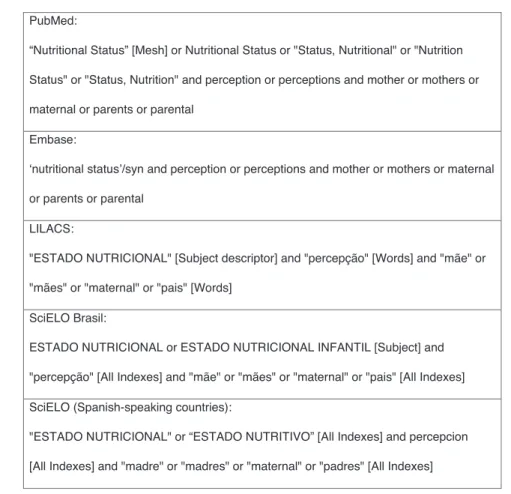
For the literature review of the perception of mothers about the nutritional status of their children the PubMed, Embase, LILACS, and SciELO databases were researched, regardless of language or publication date. The terms used for the search and their variants were: Nutritional Status, Percep-tion, Mother, Maternal, Parents, and Parental, as described in Fig. 1. The terms were adapted to the search engines in each database used.
The inclusion criteria for this review were: articles that investigated the perception of mothers on the nutritional status of their children; studies of children aged between 2 and 19 years where the outcome was the assessment of the difference between the actual nutritional status (classified by body mass index [BMI]) and nutritional status perceived by the mother.
The estimate of nutritional status by BMI can be per-formed with different cutoff points obtained in different studies; the criteria most often reported in the literature are those proposed by the International Obesity Task Force (IOTF),19by the Centers for Disease Control and Prevention
334 Francescatto C et al.
PubMed:
“Nutritional Status” [Mesh] or Nutritional Status or "Status, Nutritional" or "Nutrition
Status" or "Status, Nutrition" and perception or perceptions and mother or mothers or
maternal or parents or parental
Embase:
‘nutritional status’/syn and perception or perceptions and mother or mothers or maternal
or parents or parental
LILACS:
"ESTADO NUTRICIONAL" [Subject descriptor] and "percepção" [Words] and "mãe" or
"mães" or "maternal" or "pais" [Words]
SciELO Brasil:
ESTADO NUTRICIONAL or ESTADO NUTRICIONAL INFANTIL [Subject] and
"percepção" [All Indexes] and "mãe" or "mães" or "maternal" or "pais" [All Indexes]
SciELO (Spanish-speaking countries):
"ESTADO NUTRICIONAL" or “ESTADO NUTRITIVO” [All Indexes] and percepcion
[All Indexes] and "madre" or "madres" or "maternal" or "padres" [All Indexes]
Figure 1 Syntax of the terms used in each database.
The percentile curves used by IOTF for children and ado-lescents aged 2 to 17 years define overweight as≥the 85th
percentile and obesity ≥ the 95th percentile, identifying
these points as similar to the cutoffs used for adults, which are 25 kg/m2 for overweight and 30 kg/m2for obesity. The
cutoffs used by the WHO for children and adolescents aged 2 to 19 years define overweight as≥the 85thpercentile and
obesity as≥the 97thpercentile. The CDC classification for
children and adolescents aged from 2 to 19 years establishes overweight as≥the 85thpercentile and obesity as≥the 95th
percentile.
Some studies used specific cutoffs for the study popula-tion, which differ from the aforementioned criteria.23,24
For studies that assessed the perception of both parents, only the results related to the mother’s perception were extracted.
Exclusion criteria were the presence, in the study sam-ples, of diseases that affect nutritional status, such as eating disorders and genetic syndromes, as well as studies that were aimed at the perception of nutritional status in chil-dren with different types of cancer.
The search was performed by two reviewers, separately, who selected studies first by reading the titles, then by reading the abstracts, and then proceeded to read the full article. In addition to the articles selected from the databases, a review of the references of each selected arti-cle was performed, in order to find studies that were not retrieved in the main article databases. Article eligibility
was independently assessed by two reviewers, and discrep-ancies were resolved jointly by all authors.
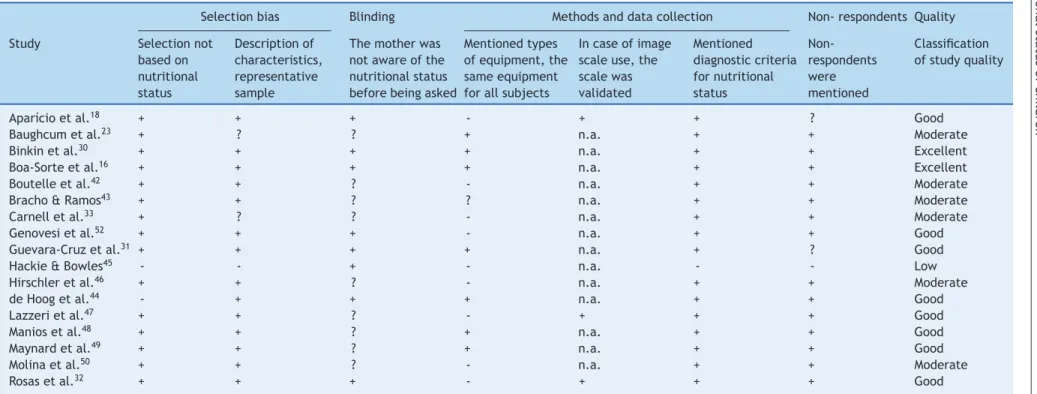
Considering that there is no article quality assessment tool for descriptive and cross-sectional studies, and in order to meet the purpose of this study, a tool adapted by Rietmeijer-Mentink et al.25 was used in this review, which
is based on the Cochrane criterion for the assessment of diagnostic studies (Table 1). Thus, the methodological qual-ity of the articles that included a verbal description of the maternal perception regarding the nutritional status of their children was based on six items; the articles were catego-rized as low (zero to two positive items), moderate (three to four positive items), good (five positive items), and excel-lent quality (six positive items). The quality of the articles that used body image scales was based on seven items; the categorization was similar, except for the good (five to six positive items) and excellent quality (seven positive items) range.
Results
P
erception
about
the
nutritional
status
of
children
335
Table 1 Results of the evaluation of the quality of the articles included in the review.
Selection bias Blinding Methods and data collection Non- respondents Quality
Study Selection not based on nutritional status
Description of characteristics, representative sample
The mother was not aware of the nutritional status before being asked
Mentioned types of equipment, the same equipment for all subjects
In case of image scale use, the scale was validated
Mentioned diagnostic criteria for nutritional status
Non-respondents were mentioned
Classification of study quality
Aparício et al.18 + + + - + + ? Good
Baughcum et al.23 + ? ? + n.a. + + Moderate
Binkin et al.30 + + + + n.a. + + Excellent
Boa-Sorte et al.16 + + + + n.a. + + Excellent
Boutelle et al.42 + + ? - n.a. + + Moderate
Bracho & Ramos43 + + ? ? n.a. + + Moderate
Carnell et al.33 + ? ? - n.a. + + Moderate
Genovesi et al.52 + + + - n.a. + + Good
Guevara-Cruz et al.31 + + + + n.a. + ? Good
Hackie & Bowles45 - - + - n.a. - - Low
Hirschler et al.46 + + ? - n.a. + + Moderate
de Hoog et al.44 - + + + n.a. + + Good
Lazzeri et al.47 + + ? - + + + Good
Manios et al.48 + + ? + n.a. + + Good
Maynard et al.49 + + ? + n.a. + + Good
Molina et al.50 + + ? - n.a. + + Moderate
Rosas et al.32 + + + - + + + Good
336 Francescatto C et al.
Identification
Articles included by references
n=16 Initial search
results n=151
Screening
Abstracts evaluated (removal of duplicates) n=139
Excluded items (irrelevant studies or at least one of the
exclusion criteria met) n=98
Articles excluded after review of full text:
- Did not meet the inclusion criteria (n=6)
- Presence of one or more exclusion criteria (n=5) - Results did not answer the research question (n=4) - Did not use BMI for nutritional status (n=1) - Failure to identify the mother as respondent (n=8)
Eligibility
Full text assessed by eligibility n=41
Inclusion
Articles included in systematic review n=17
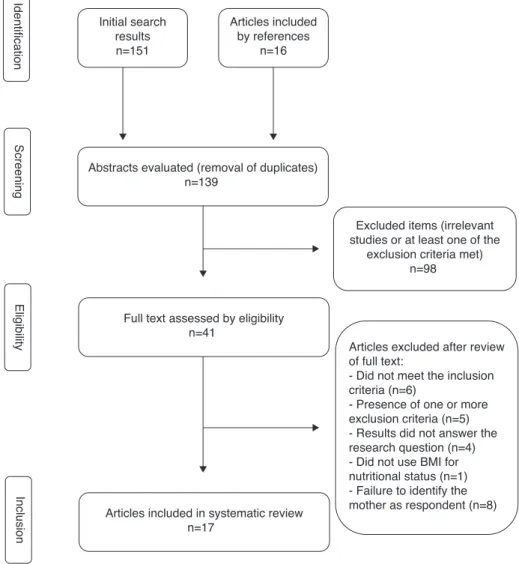
Figure 2 Flowchart of the process of article screening and selection for inclusion in the review.
After applying the exclusion criteria, a total of 17 articles remained in this systematic review (Fig. 2).
The assessment of methodological quality of the articles demonstrated that only one had low quality and two had excellent quality; six were classified as moderate quality and eight as good quality (Table 1).
The description of the articles, including the country of origin, objective, sample characteristics, diagnostic crite-rion used for the nutritional status, and main results are shown in Table 2.
The studies were published between 2000 and 2013. The age of the children ranged from 2 to 19 years, and stud-ies with children aged 2 to 6 years predominated. In total, 57,700 mother-child pairs were part of this review, of which 18,656 children were overweight or obese (32.3%). Obesity was detected in 6,666 children (11.6%). According to the mothers’ perception, only 5,501 children were overweight or obese (9.53%).
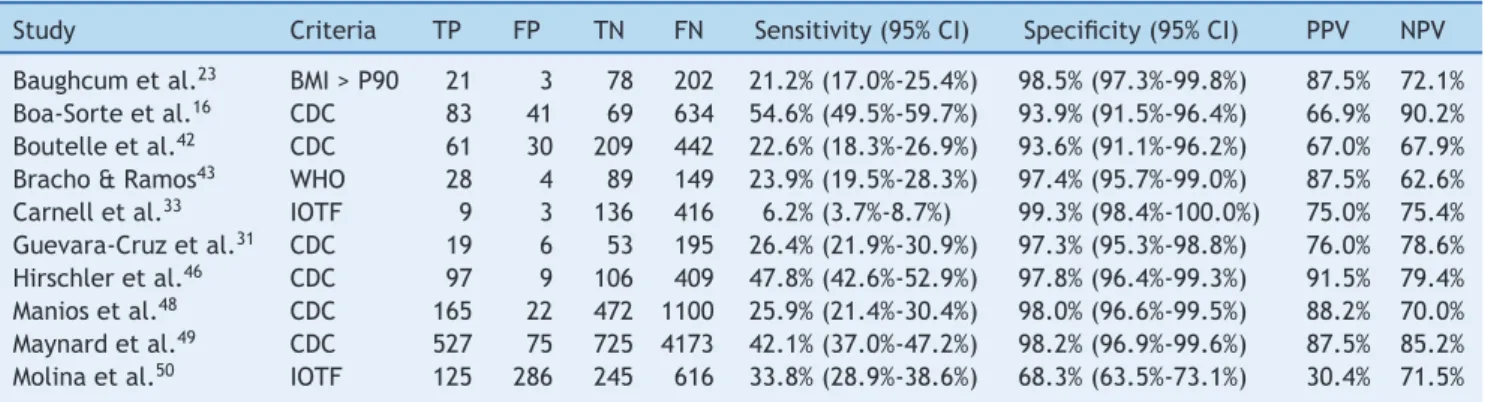
In ten of the 17 articles included in the review, extracted data allowed for the calculations of sensitivity and speci-ficity of mothers’ perception about the nutritional status of their children (Table 3). The sensitivity ranged from 6.2% to 54.6%, indicating low capacity of mothers to perceive
overweight in their children. Specificity was higher than 90.0% for nine of the ten studies, indicating good capacity of mothers to recognize the nutritional status of their children when they had normal weight.
Discussion
This systematic review aimed to explore and describe the studies that had as primary outcome the identification of mothers’ perception about the nutritional status of their children. A total of 57,700 mother-child pairs were part of this review and overweight or obesity was present in 18,656 children (32.3%). As for obesity, it was detected in 6,666 children (11.6%). However, according to the percep-tion of mothers, only 5,501 children were overweight or obese (9.53%).
Other review studies investigated the perception of the mother or of the parents about the nutritional status of their children,26---29but the approaches were different from those
of the present study, making it difficult to establish a parallel with the present results.
Rietmeijer-Mentink et al.25 conducted a comprehensive
P
erception
about
the
nutritional
status
of
children
337
Table 2 Characteristics of studies included in the review.
Study Country Objective Adequate number of participants for this study
Male (%) Age range or mean age
Diagnostic criterion of nutritional status
Main findings
Aparício et al.18 Portugal To identify maternal
perception of preschoolers’ body image
1,424 52.4 3-6 years CDC 67.2% of mothers had a good perception of their children’s NS, but only 0.6% of them perceived their children as obese, while 17.4% of them had this condition.
Baughcum et al.23 United States To verify factors
associated with misperception of overweight of preschool children.
622 n.a. 2-5 years BMI > P90 ---overweight
79% of the mothers did not perceive their overweight children as overweight. Association with low educational level.
Binkin et al.30 Italy To investigate how much
the prevalence of obesity influences the perception of the mother regarding the NS of their children.
37,161 51.0 8-9 years IOTF Mothers correctly perceived the NS in 84% of normal weight, 52% of overweight, and 14% of obese children.
Association with areas of high prevalence of obesity.
Boa-Sorte et al.16 Brazil Describe maternal
perception and self-perception of NS of schoolchildren, and identify factors associated with the error.
827 46 6-19 years CDC The overall concordance was 75.3%, but 45.4% of the mothers
underestimated the NS of the children with excess weight.
Boutelle et al.42 United States To evaluate the accuracy
of maternal perception about the NS of their adolescent children.
675 53 14.6±1.7 years
CDC Correct perception in 60% of mothers, 70.5% underestimation for overweight and 86.2% for obese adolescents. Bracho & Ramos43 Chile To evaluate maternal
perception about the NS of their children.
338
Francescatto
C
et
al.
Table 2 (Continued)
Study Country Objective Adequate number of participants for this study
Male (%) Age range or mean age
Diagnostic criterion of nutritional status
Main findings
Carnell et al.33 United Kingdom To evaluate the accuracy
of parents’ perception about their children’s NS.
533 n.a. 3-5 years IOTF Of the 145 children classified as overweight, only 6% were perceived as such.
Genovesi et al.52 Italy Verify whether maternal
perception of NS and food intake of children is related to the mother’s level of education.
569 47.1 4-10 years IOTF 28.3% of mothers underestimated the NS; 15.2% of mothers had low and 34.9% high level of schooling.
Guevara-Cruz et al.31 Mexico To evaluate maternal
perception of their children’s NS.
273 56.8 8.52±4.12 years
CDC 78% of mothers correctly classified their children’s NS; 37.8% of mothers of children with excess weight classified them as having normal weight. Hackie & Bowles45 United States To evaluate maternal
perception of NS in obese preschoolers.
38 53 2-5 years CDC 61% of mothers did not perceive their obese children as such. Hirschler et al.46 Argentina Determine the
association between overweight and: age, gender and maternal perception.
321 49.8 2-6 years CDC 80% of mothers of children with excess weight did not perceive their children as such.
de Hoog et al.44 Netherlands Determine the ethnic
variation in maternal underestimation of NS in children.
2,769 49.5 5-7 years IOTF 79.1 of mothers of children with excess weight underestimated their NS, with
differences between the ethnic groups studied. Lazzeri et al.47 Italy To evaluate the accuracy
of maternal perception of NS of schoolchildren.
2,835 51 8-9 years IOTF 35% of the mothers underestimated the body habitus of their
P
erception
about
the
nutritional
status
of
children
339
Manios et al.48 Greece To quantify classification
errors of NS in preschoolers by their mothers and to determine the factors associated with the error.
2,287 54 2-5 years CDC 88.3% of the mothers underestimated the NS of their overweight children and 54.5% of obese ones. The results were worse for the male gender, participants in exercise programs, and low maternal schooling.
Maynard et al.49 United States To quantify classification
errors of NS in children by their mothers and to determine the factors associated with the error.
5,500 50 2-11 years CDC Mothers underestimated obesity in 35% of males and 29.2% of females; the results for overweight
underestimation were, respectively, 84.7% and 70.4%.
Molina et al.50 Brazil To verify the
correspondence between the nutritional status of children and maternal perceptions.
1,282 42 7-10 years IOTF 89.5% of mothers underestimated the NS of obese children and 65.9% of overweight children. Gender and ethnicity were associated with poor perception.
Rosas et al.32 Mexico and United
States
Compare the perception of mothers about the NS of Mexican children and from immigrant communities in California.
314 Mexico = 45 California = 47.5
5 years CDC Only 10% of Californian mothers correctly classified their children who were overweight, and 82% of the Mexican mothers correctly classified their children’s NS.
340 Francescatto C et al.
Table 3 Sensitivity and specificity values of maternal perception, calculated based on data provided by the studies.
Study Criteria TP FP TN FN Sensitivity (95% CI) Specificity (95% CI) PPV NPV
Baughcum et al.23 BMI > P90 21 3 78 202 21.2% (17.0%-25.4%) 98.5% (97.3%-99.8%) 87.5% 72.1%
Boa-Sorte et al.16 CDC 83 41 69 634 54.6% (49.5%-59.7%) 93.9% (91.5%-96.4%) 66.9% 90.2%
Boutelle et al.42 CDC 61 30 209 442 22.6% (18.3%-26.9%) 93.6% (91.1%-96.2%) 67.0% 67.9%
Bracho & Ramos43 WHO 28 4 89 149 23.9% (19.5%-28.3%) 97.4% (95.7%-99.0%) 87.5% 62.6%
Carnell et al.33 IOTF 9 3 136 416 6.2% (3.7%-8.7%) 99.3% (98.4%-100.0%) 75.0% 75.4%
Guevara-Cruz et al.31 CDC 19 6 53 195 26.4% (21.9%-30.9%) 97.3% (95.3%-98.8%) 76.0% 78.6%
Hirschler et al.46 CDC 97 9 106 409 47.8% (42.6%-52.9%) 97.8% (96.4%-99.3%) 91.5% 79.4%
Manios et al.48 CDC 165 22 472 1100 25.9% (21.4%-30.4%) 98.0% (96.6%-99.5%) 88.2% 70.0%
Maynard et al.49 CDC 527 75 725 4173 42.1% (37.0%-47.2%) 98.2% (96.9%-99.6%) 87.5% 85.2%
Molina et al.50 IOTF 125 286 245 616 33.8% (28.9%-38.6%) 68.3% (63.5%-73.1%) 30.4% 71.5%
CDC, Centers for Disease Control and Prevention; IOTF, the International Obesity Task Force; WHO, World Health Organization; TP, true positive; FP, false positive; FN, false negative; TN, true negative; 95% CI, 95% confidence interval; PPV, positive predictive value; NPV, negative predictive value.
basis for this review, mainly regarding how to evaluate study quality. The aforementioned study included the assessment of 35,103 children and adolescents, of whom 11,530 were overweight (32.9%). This proportion was very similar to that found in the present review; however, in that study, 7,191 mothers (62.4%) believed their overweight children had nor-mal weight, different from the proportion found in the present study (90.47%). This difference can be explained by the inclusion of recent studies that demonstrated high levels of underestimation of nutritional status.18,30---32
As most studies that aim to identify the perceptions of parents about the nutritional status of their children are limited to the mother’s perception, the present study assessed only the perception of the mother, but a study that addressed the perception of both parents was included, in which it was possible to separate the results related to the mother.33 Several studies could not be included in the
present review, since the results of both parents were shown without distinction.34---41
In the majority of the included studies, the mothers’ perception showed high agreement with the actual nutri-tional status of their children when they had normal weight; however, they tended to significantly underestimate the nutritional status of overweight children.18,23,30,33,42---50 In
studies whose results were stratified for overweight and obesity, it was be observed that a higher proportion of underestimated perception of nutritional status occurs when children are obese.30,42,43,47,50 Only two studies observed
greater underestimation for overweight children; that by Manios et al.,48 with Greek preschool children aged 2 to 5
years, and the study performed in the United States by May-nard et al.,49for the age range from 2 to 11 years. However,
the reading of these studies did not provide an explanation for this divergence.
It would appear that the mothers would have better perception of the nutritional status of overweight and particularly obese children, considering that, as extreme values, the clinical signs are more visually perceptible;51
however, this is not the case, suggesting that many other factors can be involved in the mother’s ability to perceive the nutritional status of their children.
Most studies aimed to investigate the possible factors that lead mothers to incorrectly perceive the nutritional
status of their children. In addition to the excess weight of the children themselves, the factors that have the great-est association with poor perception are low maternal education;18,23,30,30,44,48,52 male children,42,48---50 children’s
age,16,43,49 overweight mother,23,42,43 and ethnicity.44,50
Other factors appeared without repetition, such as the num-ber of children43and the involvement of children in physical
exercise programs.48 In the first case, a larger number of
children indicated greater chance of underestimation of nutritional status. In the second case, the participation of children in physical exercise programs increased the chance of the mother’s underestimation of the nutritional status of children.
The area or environment also appears to influence how the mother sees her children. In the study of Binkin et al.,30
who assessed the mothers’ perception in regions of Italy with low, moderate, and high prevalence of obesity, there was an association with the region; the highest rates of nutritional status underestimation were observed in the region with the highest prevalence of obesity. Similarly, the study by Rosas et al.,32which compared the perceptions of mothers in
Mex-ico with mothers from a community of Mexican immigrants in California, demonstrated that only 10.0% of Californian mothers correctly classified their children as were over-weight, while 82.0% of those who lived in Mexico correctly assessed the nutritional status of their children.
Given the increasing prevalence of obesity worldwide and in all age groups, it is possible that the mothers perceive overweight in their children and adolescents as a normal condition, especially when the whole family is obese, or when excess weight is something recurrent in the community in which they live.
There is no consensus among studies regarding the tool used to assess the mothers’ perceptions. Among the arti-cles included, three used silhouette scales, in which mothers chose the image they believe best represented the body of the children.18,32,47The remaining studies used
question-naires in which mothers marked the alternative that best represented the nutritional status of their children, but the way used to represent the nutritional status also varied between these studies.
Perception about the nutritional status of children 341
mothers’ perception capacity using image scales or ques-tionnaires. However, the study by Lazzeri et al.47 used two
instruments to assess the mothers’ perception, and observed that when the silhouette scale was used, 35.0% of the mothers underestimated the nutritional status of their over-weight children and 53.0%, of their obese children; when using a questionnaire, the underestimation values increased to 59.0% and 87.0% for overweight and obesity, respectively. Another point of divergence between studies that could influence the mothers’ accuracy rate is the diagnostic crite-ria used for nutritional status, since the results obtained by different criteria may be different for the same child or adolescent, as well as studies conducted in different countries.53---57
The most often used criteria for the assessment of nutri-tional status by BMI, stratified by age and gender, are those of the IOTF,19 CDC,20,21 and WHO.22 In the present review,
only one article used a different criterion, defining over-weight for children as BMI > 90thpercentile.23Also, only one
article used the criteria of the WHO,43 whereas the IOTF
criteria appeared in six articles,30,33,44,47,50,52 and the CDC
classification was used in nine.16,18,31,32,42,45,46,48,49
The observation of the results analyzed in this review does not allow for the identification of any trends in the mothers’ perception depending on the diagnostic crite-ria used. No studies comparing the perception of mothers of the nutritional status of their children, determined by different diagnostic criteria were retrieved. However, the meta-analysis by Rietmeijer-Mentink et al.25 demonstrated
that the combination of data from different studies showed no statistically significant differences between the scores of sensitivity for different cutoff points used by the three criteria.
In this sense, in the present study, the sensitivity and specificity of maternal perception about the nutritional sta-tus of their children were calculated for all studies in which the available data made this analysis possible, totaling ten articles (Table 3). Regardless of the diagnostic criteria used, overall, the studies showed high sensitivity and low speci-ficity, or low capacity of the mother to identify the excess weight in their children and good capacity to identify normal weight for those who had it.
It was observed that most studies concentrated the results and discussion on the underestimation of the nutri-tional status, as this appears to be the main problem regarding maternal perception. Moreover, most studies observed a low proportion of mothers who overestimate the nutritional status of their eutrophic or overweight chil-dren. However, in studies that included children with low weight, most mothers perceived their children as having normal weight.
In the study of Binkin et al.,30for 37,590 children
evalu-ated, only 3.2% of mothers overestimated their nutritional status; however, for the 344 children who were underweight, 43.2% of their mothers perceived them as having normal weight. In Brazil, the study by Molina et al.50demonstrated
that 2.7% of the mothers overestimated the nutritional sta-tus of their children, but when the data referred only to those with low weight, the proportion of underestimation was 26.0%.
In this context, the trend of mothers to overestimate the nutritional status of children with low weight also deserves
attention and should be further investigated in studies on this subject.
Considering the quality of the studies reviewed and the results obtained, the present systematic review can con-tribute to the understanding of aspects related to the mothers’ perception about the nutritional status of their children, as well serve as a basis for further studies in this area.
Conclusion
Most studies demonstrated that mothers scarcely perceive the nutritional status of their children, tending to under-estimate it, especially in cases of overweight and obesity. This fact deserves attention, since if the excess weight is not noticed, the child or adolescent will not likely be referred to a treatment program, which may contribute to the increas-ing prevalence of overweight in pediatric populations.
Conflicts of interest
The authors declare no conflicts of interest.
References
1. Herman KM, Craig CL, Gauvin L, Katzmarzyk PT. Tracking of obesity and physical activity from childhood to adulthood: the Physical Activity Longitudinal Study. Int J Pediatr Obes. 2009;4:281---8.
2. Cali AM, Caprio S. Obesity in children and adolescents. J Clin Endocrinol Metab. 2008;93:S31---6.
3. Raitakari OT, Juonala M, Viikari JS. Obesity in childhood and vascular changes in adulthood: insights into the Cardiovascular Risk in Young Finns Study. Int J Obes. 2005;29:S101---4. 4. Nogueira PC, da Costa RF, Cunha JS, Silvestrini L, Fisberg M.
High arterial pressure in school children in Santos - relationship to obesity. Rev Assoc Med Bras. 2007;53:426---32.
5. Ribeiro RC, Coutinho M, Bramorski MA, Giuliano IC, Pavan J. Association of the waist-to-height ratio with cardiovascular risk factors in children and adolescents: the Three Cities Heart Study. Int J Prevent Med. 2010;1:39---49.
6. Costa RF, Santos NS, Goldraich NP, Barski TF, Andrade KS, Kruel LF. Metabolic syndrome in obese adolescents: a compar-ison of three different diagnostic criteria. J Pediatr (Rio J). 2012;88:303---9.
7. BRASIL. Pesquisa de Orc¸amentos Familiares 2008-2009: antropometria e estado nutricional de crianc¸as adolescentes e adultos no Brasil. Rio de Janeiro: IBGE; 2010.
8. de Onis M, Blossner M, Borghi E. Global prevalence and trends of overweight and obesity among preschool children. Am J Clin Nutr. 2010;92:1257---64.
9. Ogden CL, Carroll MD, Kit BK, Flegal KM. Prevalence of obesity in the United States, 2009-2010. NCHS data brief. 2012;82:1---8. 10. Ball K, Crawford D, Owen N. Too fat to exercise? Obesity as a barrier to physical activity. Austr N Zealand J Public Health. 2000;24:331---3.
11. Salmon J, Owen N, Crawford D, Bauman A, Sallis JF. Physi-cal activity and sedentary behavior: a population-based study of barriers, enjoyment, and preference. Health Psychol. 2003;22:178---88.
342 Francescatto C et al.
13. Epstein LH, Paluch RA, Roemmich JN, Beecher MD. Family-based obesity treatment, then and now: twenty-five years of pediatric obesity treatment. Health Psychol. 2007;26:381---91.
14. Kalarchian MA, Levine MD, Arslanian SA, Ewing LJ, Houck PR, Cheng Y, et al. Family-based treatment of severe pedi-atric obesity: randomized, controlled trial. Pediatr. 2009;124: 1060---8.
15. Kitzmann KM, Beech BM. Family-based interventions for pedi-atric obesity: methodological and conceptual challenges from family psychology. J Family Psychol. 2006;20:175---89. 16. Boa-Sorte N, Neri LA, Leite ME, Brito SM, Meirelles AR, Luduvice
FB, et al. Maternal perceptions and self-perception of the nutri-tional status of children and adolescents from private schools. J Pediatr (Rio J). 2007;83:349---56.
17. Etelson D, Brand DA, Patrick PA, Shirali A. Childhood obe-sity: do parents recognize this health risk? Obes Res. 2003;11: 1362---8.
18. Aparicio G, Cunha M, Duarte J, Pereira A, Bonito J, Albuquerque C. Nutritional status in preschool children: current trends of mother’s body perception and concerns. Atencion Primaria. 2013;45:194---200.
19. Cole TJ, Bellizzi MC, Flegal KM, Dietz WH. Establishing a standard definition for child overweight and obesity worldwide: international survey. BMJ. 2000;320:1240---3.
20. Kuczmarski RJ, Ogden CL, Grummer-Strawn LM, Flegal KM, Guo SS, Wei R, et al. CDC growth charts: United States. Adv Data. 2000;8:1---27.
21. Ogden CL, Flegal KM. Changes in terminology for childhood overweight and obesity. Natl Health Stat Report. 2010;25: 1---5.
22. de Onis M, Onyango AW, Borghi E, Siyam A, Nishida C, Siekmann J. Development of a WHO growth reference for school-aged children and adolescents. Bull World Health Organ. 2007;85: 660---7.
23. Baughcum AE, Chamberlin LA, Deeks CM, Powers SW, Whitaker RC. Maternal perceptions of overweight preschool children. Pediatr. 2000;106:1380---6.
24. Jeffery AN, Voss LD, Metcalf BS, Alba S, Wilkin TJ. Parents’ awareness of overweight in themselves and their children: cross sectional study within a cohort (EarlyBird 21). BMJ. 2005;330:23---4.
25. Rietmeijer-Mentink M, Paulis WD, van Middelkoop M, Bindels PJ, van der Wouden JC. Difference between parental percep-tion and actual weight status of children: a systematic review. Matern Child Nutr. 2013;9:3---22.
26. Chuproski P. Mello DFd. Percepc¸ão materna do estado nutri-cional de seus filhos. Rev Nutr. 2009;22:929---36.
27. Tenório AS, Cobayashi F. Obesidade infantil na percepc¸ão dos pais. Rev Paul Pediatr. 2011;29:634---9.
28. Doolen J, Alpert PT, Miller SK. Parental disconnect between perceived and actual weight status of children: a metasynthe-sis of the current research. J Am Academy Nur Pract. 2009;21: 160---6.
29. Towns N, D’Auria J. Parental perceptions of their child’s over-weight: an integrative review of the literature. J Pediatr Nurs. 2009;24:115---30.
30. Binkin N, Spinelli A, Baglio G, Lamberti A. What is com-mon becomes normal: the effect of obesity prevalence on maternal perception. Nutr Metab Cardiovasc Dis. 2013;23: 410---6.
31. Guevara-Cruz M, Serralde-Zuniga AE, Frigolet Vazquez-Vela ME, Blancas Galicia L, Islas-Ortega L. Association between maternal perceptions and actual nutritional status for children in a study group in Mexico. Nutr Hospit. 2012;27:209---12.
32. Rosas LG, Harley KG, Guendelman S, Fernald LC, Mejia F, Eskenazi B. Maternal perception of child weight among Mexi-cans in California and Mexico. Matern Child Health J. 2010;14: 886---94.
33. Carnell S, Edwards C, Croker H, Boniface D, Wardle J. Parental perceptions of overweight in 3-5 y olds. Int J Obes (Lond). 2005;29:353---5.
34. Rudolph H, Bluher S, Falkenberg C, Neef M, Korner A, Wurz J, et al. Perception of body weight status: a case control study of obese and lean children and adolescents and their parents. Obes Facts. 2010;3:83---91.
35. Wald ER, Ewing LJ, Cluss P, Goldstrohm S, Cipriani L, Col-born DK, et al. Parental perception of children’s weight in a paediatric primary care setting. Child Care Health Develop. 2007;33:738---43.
36. Neumark-Sztainer D, Wall M, Story M, van den Berg P. Accu-rate parental classification of overweight adolescents’ weight status: does it matter? Pediatr. 2008;121:e1495---502.
37. Myers S, Vargas Z. Parental perceptions of the preschool obese child. Pediatr Nurs. 2000;26:23---30.
38. Huang JS, Becerra K, Oda T, Walker E, Xu R, Donohue M, et al. Parental ability to discriminate the weight status of children: results of a survey. Pediatr. 2007;120:e112---9.
39. De La OA, Jordan KC, Ortiz K, Moyer-Mileur LJ, Stoddard G, Friedrichs M, et al. Do parents accurately perceive their child’s weight status? J Pediatr Health Care. 2009;23:216---21. 40. Crawford D, Timperio A, Telford A, Salmon J. Parental
con-cerns about childhood obesity and the strategies employed to prevent unhealthy weight gain in children. Publ Health Nutrit. 2006;9:889---95.
41. He M, Evans A. Are parents aware that their children are over-weight or obese? Do they care? Can Family Physic. 2007;53: 1493---9.
42. Boutelle K, Fulkerson JA, Neumark-Sztainer D, Story M. Moth-ers’ perceptions of their adolescents’ weight status: are they accurate? Obes Res. 2004;12:1754---7.
43. Bracho MF, Ramos HE. Maternal view of children nutritional sta-tus: Is it a risk factor for excess bad feeding? Rev Chil Pediatr. 2007;78:20---7.
44. de Hoog ML, Stronks K, van Eijsden M, Gemke RJ, Vrijkotte TG. Ethnic differences in maternal underestimation of offspring’s weight: the ABCD study. Int J Obes (Lond). 2012;36:53---60. 45. Hackie M, Bowles CL. Maternal perception of their overweight
children. Publ Health Nurs (Boston, Mass). 2007;24:538---46. 46. Hirschler V, Gonzalez C, Talgham S, Jadzinsky M. Do mothers
of overweight Argentinean preschool children perceive them as such? Pediatr Diab. 2006;7:201---4.
47. Lazzeri G, Casorelli A, Giallombardo D, Grasso A, Guidoni C, Menoni E, et al. Nutritional surveillance in Tuscany: maternal perception of nutritional status of 8-9 y-old school-children. J Prevent Med Hyg. 2006;47:16---21.
48. Manios Y, Kondaki K, Kourlaba G, Vasilopoulou E, Grammatikaki E. Maternal perceptions of their child’s weight status: the GEN-ESIS study. Publ Health Nutr. 2009;12:1099---105.
49. Maynard LM, Galuska DA, Blanck HM, Serdula MK. Mater-nal perceptions of weight status of children. Pediatr. 2003;111:1226---31.
50. Molina MCB, de Faria CP, Montero P, Cade NV. Correspondence between children’s nutritional status and mothers’ perceptions: a population-based study. Cadern Saude Publ. 2009;25:2285---90. 51. Giacomossi MC, Zanella T. Höfelmann. Percepc¸ão materna do estado nutricional de crianc¸as de creches de cidade do sul do Brasil. Rev Nutr. 2011;24:689---702.
52. Genovesi S, Giussani M, Faini A, Vigorita F, Pieruzzi F, Streppar-ava MG, et al. Maternal perception of excess weight in children: a survey conducted by paediatricians in the province of Milan. Acta Paediatr. 2005;94:747---52.
Perception about the nutritional status of children 343
54. Kovalskys I, Rausch Herscovici C, De Gregorio MJ. Nutritional status of school-aged children of Buenos Aires Argentina: data using three references. J Public Health (Oxf). 2011;33: 403---11.
55. Pelegrini A, Silva DA, Gaya AC, Petroski EL. Comparison of three criteria for overweight and obesity classification in Brazilian adolescents. Nutr J. 2013;12:5.
56. Rito A, Wijnhoven TM, Rutter H, Carvalho MA, Paixao E, Ramos C, et al. Prevalence of obesity among Portuguese children (6-8 years old) using three definition criteria: COSI Portugal, 2008. Pediatr Obes. 2012;7:413---22.