Tooth loss and associated factors in patients with coagulopathies in the State of Paraíba, Brazil
Larycia Vicente Rodrigues
Mayara dos Santos Camêlo Moreira Carla Ramos de Oliveira
Julia Julliêta de Medeiros Eufrásio de Andrade Lima Neto Ana Maria Gondim Valença
Universidade Federal da Paraíba - UFPB, João Pessoa, PB, Brazil
Conlict-of-interest disclosure:
The authors declare no competing inancial interest
Submitted: 9/22/2012 Accepted: 1/8/2013
Corresponding author: Larycia Vicente Rodrigues
Programa de Pós Graduação em Modelos de Decisão e Saúde
Universidade Federal da Paraíba CCEN - Departamento de Estatística Cidade Universitária s/n
58051-900 João Pessoa, PB, Brazil [email protected]
www.rbhh.org or www.scielo.br/rbhh
DOI: 10.5581/1516-8484.20130097
Background: The most common and best known hereditary coagulopathies are hemophilia A and B followed by von Willebrand Disease.
Objective: This study aimed to estimate the prevalence of tooth loss and investigate its association with demographic and socioeconomic data, as well as to discuss self-reported oral morbidity and use of health services by patients with coagulopathies treated in blood centers in Paraíba, Brazil.
Methods: This was a quantitative cross-sectional epidemiological survey. Data was collected in the period from October 2011 to July 2012 by clinical examination and by assessing interviews using a semi-structured questionnaire. The indings were analyzed by descriptive and inferential statistics with the level of signiicance (α) being set at 10%.
Results: One hundred and six, predominantly male (88.8%), patients with coagulopathies were evaluated. The ages ranged from one to 59 years. Most patients were of mixed race (61.3%), most reported family incomes between R$ 501.00 and R$ 1500.00 (49.1%), and most had not completed elementary school (37.1%). Hemophilia A was found in 76.4% of the cases. The prevalence of dental caries among individuals was 50.0% predominantly in the 13- to 19-year-old age range (66.7%). As regards to tooth loss, teeth were missing in 35.1% of the study participants.
Conclusion: Tooth loss is high in this population. Males with severe hemophilia A, those who use luoride and have a good or very good perception about their last dental appointment have a reduced chance of losing their teeth.
Keywords: Tooth loss; Tooth diseases; Blood coagulation disorders; Hemophilia A; Hemophilia B; von Willebrand diseases; Oral health; Logistic models
Introduction
The most common and best known hereditary coagulopathies are hemophilia A and B. These can be classiied as mild (6-50 IU/dL), moderate (1-5 IU/dL) or severe (< 1 IU/dL) depending on the presence or absence of factors VIII and IX(1). Following these diseases is von Willebrand Disease, which is caused by a deiciency of the vWF protein which assists the transport of factor VIII and platelet aggregation(2,3).These bleeding disorders are hemorrhagic conditions resulting from quantitative and/or qualitative deiciencies of one or more coagulation factor.These disorders are present in all ethnic groups and geographic regions but higher prevalences of certain deiciencies are reported in speciic ethnic groups(4,5).
According to studies investigating the dental status of patients with coagulopathies, these individuals tend to neglect their oral health conditions due to fear of severe bleeding which requires hospitalization, either caused by lossing and brushing their teeth at home or by invasive procedures at the dentist’s ofice(1,6). Some diseases as a consequence of not adopting these preventive measures, including dental caries, result in tooth loss. This affects a biological condition – chewing – and a psychological condition – self-esteem – which disturb the daily life of individuals and may cause dificulties in establishing social relationships(7).
The occurrence of tooth loss was observed in a speciic population of patients with hereditary bleeding disorders including hemophilia and von Willebrand Disease in the state of Paraíba, Brazil. Tooth loss should be minimized in this population because, even though extraction is a simple dental procedure, complications can occur when proper care is not taken that may cause death by extensive bleeding. Thus, the present study aimed to estimate the prevalence of tooth loss and investigate its association with demographic and socioeconomic data, as well as to assess self-reported oral morbidity and the use of health services by patients with coagulopathies treated in the state of Paraíba, Brazil.
Methods
This was a cross-sectional, quantitative, epidemiological study of a descriptive and inferential nature(8).
care of patients with coagulopathies in Paraíba, located in the cities of João Pessoa and Campina Grande. Data were collected in the period between October 2011 and July 2012 by a previously trained examiner (inter-examiner Kappa coeficient = 0.96; intra-examiner Kappa coeficient = 0.88) and by two volunteer note takers.
A total of 106 patients with factor-deiciency coagulopathies were selected for convenience from a population of 254 individuals whom looked for dental care. Sample selection was performed regardless of age and gender. All participants signed written informed consent froms after the objectives and the purpose of the study had been duly explained by the researchers. The interviews, recorded on an audio device, were undertaken using a semi-structured questionnaire to investigate demographic and socioeconomic issues, as well as self-reported oral morbidity and the use of healthcare services. In order to assess the oral health status, clinical examinations were performed following biosafety standards using a dental mirror and a World Health Organization (WHO) probe in dental ofices in the blood centers.
Data were tabulated and organized in an Excel 2010 worksheet to facilitate analysis. The variable of interest (outcome), tolerable tooth loss (TTL), was dichotomized as follows: zero was attributed to individuals aged 1-18 years with no tooth loss and also to over 19-year-old individuals who had lost up to two teeth, i.e., 10% of the 20 minimum functional dental elements of an adult population(10). On the other hand, those who did not meet this criterion were attributed one, indicating the presence of tooth loss over the limit tolerated for the corresponding age.
Then a simple logistic regression model was adjusted, with a signiicance level (α) of 10%, for the TTL outcome and each of the independent variables (socioeconomic, demographic, self-reported oral morbidity and use of health services). After analyzing the variables that showed statistically signiicant differences (p-value ≤ 0.10), the respective odds ratio (OR) and conidence interval at a level of 90% were established based on the estimation of the angular coeficient (β) of the model. The use of OR is very important for epidemiological studies because it allows a calculation of the probability of a particular disease to occur when individuals are exposed to determining factors. Hence, it was possible to identify whether the association between the outcome under study and the independent variables had occurred as protective or risk factor, in addition to quantify the intensity of this relationship. Finally, a multivariate analysis was performed using a logistic regression model containing the outcome and the statistically signiicant variables. The statistical program R 2.15.1 was used for the inferential analysis of data(11).
All ethical and legal issues was taken into account following the 196/96 Brazilian Resolution that regulates how to conduct research involving human beings. Thus, this study was submitted to and approved by the Research Ethics Committee of the Hospital Universitário Lauro Wanderley (UFPB) under the number 261/11.
Results
A total of 88.8% (n = 94) of the 106 individuals with coagulopathies were male. The ages ranged between one and 59 years (mean: 23.34). Most participants were of mixed race
Table 1 - Distribution of patients treated in blood centers in the state of Paraíba according to demographic and socioeconomic variables and the
type of coagulopathy
Variable n %
Racial background
White 31 29.24
Black 9 8.50
Oriental
mixed race 65 61.30
Indian 1 0.94
Family income*
Up to R$ 250.00 1 0.94
> R$251 ≤ R$500 6 5.66
> R$501 ≤ R$1500 52 49.06
> R$ 1501 ≤ R$ 2500 16 15.10
> R$ 2501 ≤ R$ 4000 7 6.60
> R$4001 ≤ R$ 9500 13 12.26
> R$ 9500 8 7.55
No information 3 2.83
Schooling
Illiterate 16 15.10
Incomplete elementary school 34 32.07
Complete elementary school 4 3.77
Incomplete high school 9 8.49
Complete high school 24 22.64
Complete higher education 16 15.10
No information 3 2.83
Coagulopathy
Hemophilia A
Mild 36 34.00
Moderate 17 16.03
Severe 26 24.52
With inhibitor 1 0.94
Unclassiied 1 0.94
Hemophilia B
Mild 3 2.83
Moderate 2 1.88
Severe 4 3.77
Von Willebrand disease 15 14.15
Factor VII deiciency 1 0.94
Total 106
*Values expressed in Brazilian reals
(61.32%; n = 65), most had family incomes between R$ 501.00 and R$ 1500.00 (49.06%), and most individuals (37.08%) had not inished elementary school. With regard to the hereditary bleeding disorders, hemophilia A was found in 76.42% (n = 81) of the patients, with 34% (n = 36) of them classiied as mild type A (Table 1).
The prevalence of dental caries among all individuals was 50.00% (n = 53) with the 13- to 19-year-old age range predominating (66.66%; n = 16) (Table 2).
Table 2 - Prevalence of dental caries among patients with coagulopathies treated in the blood centers of João Pessoa and Campina Grande, Paraíba
Age
Total Male Female
n With
caries
Prevalence
(%) n
With caries
Prevalence
(%) n
With caries
Prevalence (%)
1-5 7 4 57.14 7 4 57.14 0 -
-6-12 20 10 50.00 19 9 47.37 1 1 100.00
13-19 24 16 66.66 23 15 65.21 1 1 100.00
20-35 34 13 38.23 27 11 40.74 7 2 28.57
36-59 21 10 47.62 18 10 55.55 3 0 0.00
Total 106 53 50.00 94 49 52.13 12 4 33.33
Table 3 - Distribution of means and standard deviation of the dmft and DMFT indices of patients with coagulopathies treated in blood centers of João Pessoa and Campina Grande, Paraíba
dmft
Age Mean
dmft
Decayed teeth Missing teeth Filled teeth
Mean SD Mean SD Mean SD
1-5 6.00 4.5 3.10 0.00 0.00 1.5 3.00
6-12 1.71 1.14 1.51 0.07 0.26 1.57 1.39
13-19 0.5 1.00 1.41 0.00 0.00 3.00 2.82
20-35 - - -
-36-59 - - -
-DMFT
Age Mean
DMFT
Decayed teeth Missing teeth Filled teeth
Mean SD Mean SD Mean SD
1-5 - - -
-6-12 1.2 1.12 1.45 0.07 0.25 1.6 1.35
13-19 6.36 1.47 1.50 0.26 0.93 4.68 3.91
20-35 11.5 1.14 2.07 3.97 7.12 6.41 4.01
36-59 20.04 2.09 3.01 11.57 8.57 6.38 6.35
Mean number of decayed, missing and illed primary (milk) teeth: dmft; Mean number of decayed, missing and illed permanent teeth: DMFT; SD: Standard deviation
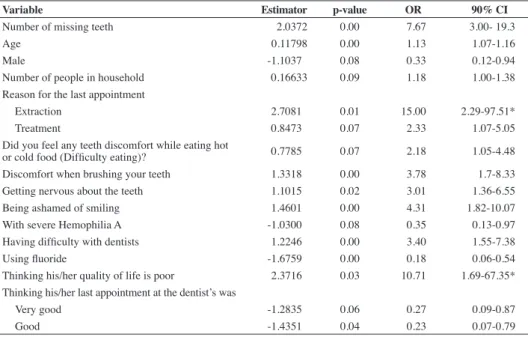
Table 4 - Statistically signiicant variables in the simple logistic regression for tolerable tooth loss and
associated factors
Variable Estimator p-value OR 90% CI
Number of missing teeth 2.0372 0.00 7.67 3.00- 19.3
Age 0.11798 0.00 1.13 1.07-1.16
Male -1.1037 0.08 0.33 0.12-0.94
Number of people in household 0.16633 0.09 1.18 1.00-1.38
Reason for the last appointment
Extraction 2.7081 0.01 15.00 2.29-97.51*
Treatment 0.8473 0.07 2.33 1.07-5.05
Did you feel any teeth discomfort while eating hot
or cold food (Dificulty eating)? 0.7785 0.07 2.18 1.05-4.48 Discomfort when brushing your teeth 1.3318 0.00 3.78 1.7-8.33 Getting nervous about the teeth 1.1015 0.02 3.01 1.36-6.55
Being ashamed of smiling 1.4601 0.00 4.31 1.82-10.07
With severe Hemophilia A -1.0300 0.08 0.35 0.13-0.97 Having dificulty with dentists 1.2246 0.00 3.40 1.55-7.38
Using luoride -1.6759 0.00 0.18 0.06-0.54
Thinking his/her quality of life is poor 2.3716 0.03 10.71 1.69-67.35* Thinking his/her last appointment at the dentist’s was
Very good -1.2835 0.06 0.27 0.09-0.87
Good -1.4351 0.04 0.23 0.07-0.79
The 1- to 5-year-old age range had a mean dmft of 6.00, with the highest mean being for decayed teeth (4.5). The highest mean DMFT values (20.04) were observed among 36- to 59-year-old individuals with missing teeth responsible for the highest value (Table 3).With regard to the variable ‘outcome’, 35.10% (n = 33) had lost more than the TTL. Of the 57 adults, 31 (54.38%) had lost more than two teeth, while of the 37 children and adolescents (up to 18 years), two (5.4%) had already lost at least one tooth. In addition, seven (7.45%) patients had less than 20 functional dental elements, and of these one (1.06%) was edentulous.
The simple logistic regression model showed that being male, having severe hemophilia A, using luoride and having a good or very good perception about the last dental appointment proved to be protective factors. In contrast, the other covariates were found to be risk factors (Table 4).
Discussion
The study population was mostly male, presenting with Hemophilia A. This predominance of the disease in males is due to its sex-linked recessive pattern (X chromosome) and to the fact that the type A of the disease has an incidence of 1:10,000 live births against between 1:40,000 and 1:50,000 for type B(12).Von Willebrand disease affects up to 1% of the world population; studies have shown that it is more prevalent but it is underreported(5,13).
The prevalence of mixed race among patients with coagulopathies in Paraíba can be explained by the signiicant number of the population that states it has this ethnic background (82.2 million). With respect to schooling, in spite of the study population not having completed elementary school, according to the Brazilian Institute of Geography and Statistics (IBGE) there was an increase in access to education among the over 10-year-old population. The percentage of people with no schooling or elementary education decreased from 65.1% to 50.2% and that of people with higher education increased from 4.4% to 7.9%. The average family income among the patients of our study was below the national average but consistent with the reality of the northeastern region. In that same group of over 10-year-old individuals, Brazil had an average family income of R$1202.00. The Northeast has a lower income than the other regions of the country(14).
When one aims to assess tooth loss in a given population, it is necessary to identify the oral health conditions using indices that measure the experience and severity of dental caries. Therefore the dmft and DMFT indices were used, which allow an understanding of the distribution of events in these individuals as well as establishing coping measures to be taken in order to improve their oral health conditions.
It was found that 50% of the sample had dental caries in the present study. The mean dmft and DMFT indices were higher than those of the last Brazilian oral health survey (2010 SB Brazil) of under 5-year-old children (6.00) and for those between 13 and 19 years (6.36). The seriousness of these indings can be perceived when a comparison is made with the general Brazilian population, because the mean dmft of 5-year-old children in Brazil was 2.43 with predominance of decayed teeth; at the age of 12 and for 15- to 19-year-olds the mean DMFT were 2.07 and 4.25, respectively(15).
Similar results to this study were reported by Sudhanshu & Shashikiran (2010) in children with hemophilia, in which 87.19% had tooth decay. In the 11- to 15-year age range the authors found a prevalence of 88.09% and a mean DMFT of 5.67. The similarity in the DMFT values can be attributed to the fact that these studies evaluated the prevalence of caries in a speciic population(16).
A study of 7- to 12-year-old hemophilic children in the city of Recife, Pernambuco, found a mean dmft of 2.00, with 50% being decayed teeth and 34.5% illed teeth. The mean DMFT was 0.67 (52.2% of decayed teeth and the rest illed teeth) (17). In another study carried out in Northern Ireland with 38 hemophiliacs, the population of 2- to 10-year-old children had, on average, 0.13 decayed teeth and a mean dmft of 0.86; in the 7- to 15-year age group none had caries and the DMFT was 0.45. The authors attributed such good oral health conditions on the wealth of the country where the study was conducted, medical support received by the hemophilic patients and the centralization of dental services inside the hospital, so there was a strong emphasis on the prevention of oral cavity diseases(18).
As for the 6- to 12-year age group, there was a mean dmft of 1.71 and a mean DMFT of 1.2, corroborating the results found in the 2010 SB Brazil(15). In contrast, a survey conducted in Egypt that aimed to assess the oral health status of Egyptian children with hemophilia (6-12 years; n = 60) and to implement an oral health education program, showed that the DMFT values for the hemophiliac population were signiicantly higher than those of the non-hemophilic population. In addition, these values were higher than those of hemophilic children in developed countries with the ‘decayed’ component representing the major part of the value. This difference between groups was attributed to the lack of an oral health education and prevention program emphasizing the importance of oral hygiene among hemophiliacs(19).
Regarding tooth loss, the ‘missing tooth’ component was found to be the most expressive in the DMFT index for the 20- to 35-year (3.97) and 36- to 59-year age groups (11.57) with mean scores for the DMFT of 11.5 and 20.04, respectively. This highlights the cumulative pattern of dental caries among patients with coagulopathies in Paraíba. As such, this reality was also identiied in a national epidemiological survey (2010 SB Brazil) in which it was observed that for individuals living in the Northeast aged from 35 to 44 years the missing component accounted for 8.92 of the mean DMFT of 16.62. In the older group analyzed by the SB Brazil (65-74 years), the index increased to 27.20 with missing teeth corresponding to 25.18. It is worth noting that the age groups are different in the two studies, as in the current study, adults were grouped as 20- to 35-year and 36- to 59-year categories, whereas in the national epidemiological survey, adults were grouped in the age range of 35 to 44 years(15). This may explain the lower values recorded for missing teeth for the patients with coagulopathies treated in the referral centers of Paraíba.
coagulopathies and the control group. In spite of the better oral hygiene in patients with coagulopathies, the authors found a mean DMFT of 18(20).
As for the simple logistic regression model, it was found that being male, presenting with severe hemophilia A, using luoride and having a good or very good perception about the last dental appointment are protective factors. These variables decrease the chances of patients with coagulopathies having tooth loss by 3.01-fold, 2.8-3.01-fold, 5.34-3.01-fold, 3.6-fold and 4.2-3.01-fold, respectively.
It is so inferred that the predominance of males is relected by the biological condition of the disease. In a study by Sonbol investigating the prevalence of caries, plaque, gingivitis, enamel diseases and microlora in hemophiliacs, the author found that children with severe hemophilia have a signiicantly lower prevalence of dental caries in comparison with healthy children(21). There have been no reports in the literature about severe hemophilia A behaving as a protective factor for tooth loss. The results of our study may be explained by the fact that individuals with this type of coagulopathy require greater attention, either medical or dental, which make them look for health care more often and are more likely to take care of their health.
Prevention is a key factor for good oral hygiene. Accordingly, luoride was found to be a protective factor in our research; this is clear when one considers the established effect of exposure to luoride products in the prevention of dental caries, as well as the reduced rate of progression in this disease(22). It is important to point out that almost all municipalities in Paraíba do not have luoridation of public water supplies, so the patients in this study were beneited primarily from topical luoride products such as toothpastes. The use of luoridated toothpaste is considered to be the main factor for the signiicant decline in the prevalence of caries in Brazil in recent decades(23).
Regarding whether the last appointment had pleased the patient in a good or very good way, Oliveira et al. assessed the degree of users’ satisfaction in relation to oral health in family health programs. The authors showed that 76.4% of patients attending the service in order to have their problems solved succeeded satisfactorily. Given this, the authors afirm that if their problem is solved, the user will be satisied(24).
An important issue to be discussed refers to the fact that the comprehensive analysis of the determinants for TTL (Table 4) was not statistically signiicant. The explanatory variables, when analyzed separately, were found to be associated with the outcome. However, when these variables were entered into a multivariate model, there was no statistical signiicance; this should be considered a limitation of this study.
It is essential to note that cross-sectional studies are those in which exposure and health statuses of individuals are determined at the same time (simultaneously). As the outcome and other factors are analyzed at the same time, one should consider the possibility of reverse causality and be cautious when interpreting the association between the variables under analysis(25).
Furthermore, cross-sectional studies have limitations especially with respect to temporality: it is necessary to use the individuals’ memory (subjective data) to unveil past facts by means of an interview, but it is dificult to standardize this data gathering process(26).
Nevertheless, cross-sectional studies constitute a good method to detect disease frequency and risk factors. The current research evaluated the oral health status of hemophiliacs treated in blood centers of João Pessoa and Campina Grande, located in the state of Paraíba, identifying which variables were associated with tooth loss in this population.
It is also important to stress that there are few national studies assessing the prevalence of oral diseases in individuals with hemophilia. Accordingly, the present study is the irst to be conducted for this purpose in the state of Paraíba.
Conclusion
The prevalence of tooth loss in patients with coagulopathies is high. Males with severe hemophilia A, using luoride and having a good or very good perception about the last dental appointment have less chances of losing their teeth. In addition, other factors favoring the patients with coagulopathies to lose their teeth are the number of missing teeth, aging, increased number of people in the household, extraction or treatment as the reasons for the last dental appointment, discomfort when eating cold or hot food or when brushing the teeth, getting nervous about the teeth, being ashamed of smiling, having dificulty with dentists, and thinking that their quality of life is poor.
Nowadays, educational and preventive measures in health care have become increasingly easier to plan. This fact is justiied by the robust statistical analyzes applied, such as association and logistic regression tests, as these results provide a more thorough study of the disease process and help in taking relevant decisions as to the outcome of interest and associated factors.
Based on the above, it is suggested that blood centers should undergo restructuring and adopt effective strategies to promote oral health and disease prevention for people with bleeding disorders. This should happen with the active participation of patients to build a program that meets the principles of universality, integrality and equity advocated by the National Healthcare System, thus improving access to dental services and reducing dental caries and tooth loss.
References
1. Kalsi H, Nanayakkara L, Pasi KJ, Bowles L, Hart DP. Acess to primary dental care for patients with inherited bleeding disorders. Haemophilia. 2012;18(4):510-5.
2. Zago AM, Falcão RP, Pasquini R. Hematologia: fundamentos e prática. São Paulo: Atheneu; 2004.
3. Lorenzi T. Manual de hematologia: propedêutica e clínica 4th ed. Rio de Janeiro: Guanabara Koogan; 2006.
4. Brasil. Ministério da Saúde. Secretaria de Atenção à Saúde. Departamento de Atenção Especializada. Manual de atendimento odontológico a pacientes com coagulopatias [Internet]. Brasília: Editora do Ministério da Saúde; 2008. [cited 2013 Jan 2]. Available from: http://bvsms.saude.gov.br/bvs/publicacoes/manual_odontologico_ coagulopatias_hereditarias.pdf
xxx 6. Marques RV, Conde DM, Lopes FF, Alves CM. Atendimento odontológico
em pacientes com Hemoilia e Doença de von Willebrand. Arq Odontol. 2010;46(3):176-80.
7. Ferreira AA, Piuvezam G, Werner CW, Alves MS. A dor e a perda dentária: representações sociais do cuidado à saúde bucal.Ciênc Saúde Coletiva. 2006;11(1):211-8.
8. Lakatos EM, Marconi MA. Fundamentos de metodologia cientíica. 7ª ed. São Paulo: Atlas; 2010.
9. Brasil, Ministério da Saúde. Secretaria de Políticas de Saúde. Departamento de Atenção Básica. Área Técnica de Saúde Bucal. SBBrasil 2010 – Pesquisa Nacional de Saúde Bucal. Manual de calibração de examinadores [Internet]. Brasília: Ministério da Saúde; 2010. [cited 2012 Oct 2]. Available from: http://dab.saude.gov.br/CNSB/sbbrasil/arquivos/ SBBrasil2010_Manual_Calibracao.pdf
10. Narvai PC. Há metas para Saúde Bucal em 2010? Jornal do site Odonto. [Internet]. 2002 [cited 2012 Dec 21];4(52). Available from: http://www. jornaldosite.com.br/arquivo/anteriores/capel/artcapel51.htm
11. The R Project for Statistical Computing [Internet]. WU (Wirtschaftsuniversität Wien); Institute for Statistics and Mathematics ; 2002 [cited 2012 Jan 14]; Available from: http://cran.r-project.org/bin/ windows/base/
12. Brasil. Ministério da Saúde. Secretária de Atenção à Saúde. Departamento de Atenção Especializada. Coordenação-Geral de Sangue e Hemoderivados. Manual de reabilitação em hemoilia [Internet]. Brasília: Ministério da Saúde; 2011. [cited 2012 Jun 21]. Available from: http://bvsms.saude.gov.br/bvs/publicacoes/manual_reabilitacao_ hemoilia.pdf
13. Lillicrap D, James P. Von Willebrand disease: an introduction for the primary care physician [Internet]. Montreal, Canadá: Word Federation of Hemophilia (WFH); 2009. (Treatment of Hemophilia, 47). [cited 2012 Jun 21]. Available from: http://www1.wfh.org/publication/iles/pdf-1204.pdf
14. Portal iG. Último segundo. Censo 2010: 10% mais rico concentram 44,5% da renda dos brasileiros. [Internet] 2011. [citado 2011 nov 16]. Disponível em:<http://ultimosegundo.ig.com.br/brasil/censo-2010-10-mais-ricos-concentram-445-da-renda-dos-brasileiros/n1597368877951. html>. Acesso em: junho/2012.
15. Brasil. Ministério da Saúde. Secretaria de Políticas de Saúde. Departamento de Atenção Básica. SB Brasil 2010 – Pesquisa Nacional de Saúde Bucal: resultados principais [Internet]. Brasília: Ministério da Saúde; 2010 [cited 2013 Jan 3]. Available from: http://bvsms.saude.gov. br/bvs/publicacoes/pesquisa_nacional_saude_bucal.pdf
16. Sudhanshu S., Shashikiran ND. Prevalence of Dental Caries and Treatment Needs Among Hemophilic Children of Kota City, Rajasthan. Ann Ess Dent Andhra Pradesh. 2010;2(2):18-21.
17. Rodrigues MJ, Luna AC, Leal LC, Lira SS, Marques KM. Prevalência de cárie e fatores associados em crianças hemofílicas.Rev. Bras. Hematol Hemoter. 2008;30(2):114-9.
18. Boyd D, Kinirons M. Dental caries experience of children with haemophilia in Northern Ireland. Int J Paediatr Dent. 1997;7(3):149-53. 19. Kabil N, ElAlfy MS, Metwalli N. Evaluation of the oral health situation
of a group of Egyptian haemophilic children and their re-evaluation following an oral hygiene and diet education programme. Haemophilia. 2007;13(3):287-92. Erratum in: Haemophilia. 2011;17(6):979. 20. Ziebolz D, Stühmer C, Hornecker E, Zapf A, Mausberg RF, Chenot JF.
Oral health in adult patients with congenital coagulation disorders – a case control study.Haemophilia. 2011;17(3):527-31.
21. Sonbol H, Pelargidou M, Lucas VS, Gelbier MJ, Mason C, Roberts GJ. Dental health indices and caries-related microlora in children with severe haemophilia. Haemophilia. 2001;7(5):468-74.
22. Truin GJ, van’t Hof MA. Caries prevention by professional luoride gel application on enamel and dentinal lesions in low-caries children. Caries Res. 2005;39(3):236-40.
23. Cury JA, Tenuta LM, Ribeiro CC, Paes Leme AF. The importance of
luoride dentifrices to the current dental caries prevalence in Brazil. Braz Dent J. 2004;15(3):167-74.
24. Oliveira RS, Magalhães BG, Gaspar GS, Rocha RA, Góes PS. Avaliação do grau de satisfação dos usuários nos serviços de saúde bucal da Estratégia de Saúde da Família. Rev Bras Pesq Saúde. 2009;11(4):34-8. 25. Medronho RA, Bloch KV, Luiz RR, Werneck, GL. Epidemiologia. 2nd ed.
São Paulo: Atheneu; 2009.