http://dx.doi.org/10.1590/S1678-9946201759023
(1) Fundação Oswaldo Cruz, Centro de Pesquisa Aggeu Magalhães, Programa de Doutorado em Saúde Pública, Pernambuco, Brazil
(2) Fundação Joaquim Nabuco, Departamento de Pesquisa Social, Pernambuco, Brazil
(3) Universidade Federal de Pernambuco, Programa de Pós-Graduação Integrada em Saúde Coletiva, Pernambuco, Brazil
(4) Secretaria da Saúde de Olinda, Pernambuco, Brazil
(5) Fundação Oswaldo Cruz, Centro de Pesquisa Aggeu Magalhães, Departamento de Parasitologia, Pernambuco, Brazil
(6) Universidade de Pernambuco, Instituto de Ciências Biológicas, Pernambuco, Brazil
Correspondence to: Zulma Medeiros Fundação Oswaldo Cruz, Centro de Pesquisa Aggeu Magalhães, Av. Professor Moraes Rego, s/n, CEP 50670-420, Cidade Universitária, Recife, PE, Brazil.
E-mail: [email protected]
Received: 10 May 2016
Accepted: 31 March 2017
Knowledge, attitudes and perceptions regarding lymphatic filariasis: study on systematic noncompliance with mass drug
administration
Silvia Cabral1, Cristine Bonfim2,3, Rosalira Oliveira2, Paula Oliveira4,5,
Terezinha Guimarães4, Eduardo Brandão5, Ana Maria Aguiar-Santos5, Zulma
Medeiros5,6
ABSTRACT
The aim of this study was to investigate the epidemiological characteristics, antigenic profile, perceptions, attitudes and practices of individuals who have been systematically non-compliant in mass drug administration (MDA) campaigns targeting lymphatic filariasis, in the municipality of Olinda, State of Pernambuco, Northeastern Brazil. A pretested questionnaire was used to obtain information on socioenvironmental demographics, perceptions of lymphatic filariasis and MDA, and reasons for systematic noncompliance with treatment. A rapid immunochromatographic test (ICT) was performed during the survey to screen for filariasis. It was found that the survey subjects knew about filariasis and MDA. Filariasis was identified as a disease (86.2%) and 74.4% associated it with the presence of swelling in the legs. About 80% knew about MDA, and the main source of information was healthcare workers (68.3%). For men the main reasons for systematic noncompliance with MDA were that “the individual had not received the medication” (p=0.03) and for women “the individual either feared experiencing adverse reactions”. According to the ICT, the prevalence of lymphatic filariasis was 2%. The most important causes of systematic noncompliance were not receiving the drug and fear of side-effects. For successful implementation of MDA programs, good planning, educational campaigns promoting the benefits of MDA, adoption of measures to minimize the impact of adverse effects and improvement of drug distribution logistics are needed.
KEYWORDS: Lymphatic filariasis. Control program. Mass drug administration. Systematic
noncompliance.
INTRODUCTION
Lymphatic filariasis (LF) is an endemic neglected disease in tropical and subtropical countries. In view of the human suffering, social stigma and costs associated with LF morbidity, and in response to a specific resolution of the World Health Assembly, the Global Program to Eliminate Lymphatic Filariasis (GPELF) was launched by the World Health Organization (WHO) in 2000, with the objective
of eliminating LF as a public health problem by 20201,2.
The main strategy of GPELF for halting filariasis transmission consists of reducing the level of infection among humans by means of mass drug administration (MDA) using annual single doses of antifilarial drugs over a period of 4 to 6
years3-5. All individuals living in endemic areas, with or without filarial infection,
GPELFs. During the first 13 years (2000-2012) of GPELF, 6.37 billion annual single dose anti-filarial drugs were made available annually, of which 4.45 billion doses were
consumed by the target populations6. This success was due
to the efforts of the donor community, health ministries,
community volunteers, NGOs and research institutions7.
In Brazil, GPELF activities have already achieved two
major goals: elimination of LF in Belém, in the State of
Pará8; and interruption of transmission in Maceió, in the
State of Alagoas9. Despite this progress, LF persists as a
public health problem in municipalities of the Metropolitan
Region of Recife (Olinda, Jaboatão dos Guararapes and
Recife), in the State of Pernambuco10-13. The treatment
regimen adopted in Brazil has consisted of MDA with a
single dose of diethylcarbamazine15.
In Olinda, MDA was started in 2007. The following criteria for implementing MDA were established: 1) local situation of transmissibility (> 1% prevalence
of microfilaremia); and 2) socioenvironmental risk14.
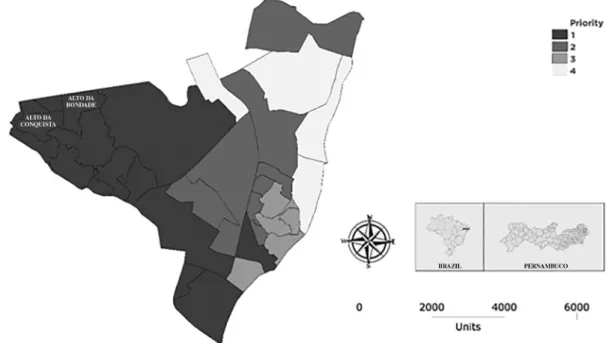
Accordingly, 14 neighborhoods were considered to be priority 1 (high/ medium environmental risk and detection
of transmission) (Figure 1). MDA was started in the Alto
do Sol Nascente district and it followed a strategy of door-to-door supervised treatment16,17.
One challenge within the MDA program has been to achieve and maintain high treatment coverage. Annual MDA carried out at adequate levels of coverage – estimated to be at least 65% of the total population in endemic areas
– should ultimately make elimination possible2. When a
large proportion of the population is not included or refuses
to participate in MDA, a potential parasite reservoir is left
untreated, thus allowing the maintenance of transmission18.
People who are systematically noncompliant with MDA threaten the success of the program, especially in areas
with high baseline infection rates19. Further research to
identify individuals who have never participated in MDA is
needed18. Knowing the individual, social, cultural and health
factors that interfere with MDA coverage and influence systematic noncompliance is important for strengthening the program and increasing the treatment coverage.
The present study investigated the epidemiological characteristics, awareness of lymphatic filariasis and MDA, reasons for systematic noncompliance with treatment and antigenic profile of the population living in the endemic area of interest that did not comply with MDA.
MATERIALS AND METHODS
The municipality of Olinda, Pernambuco, has a total
territorial area of 41 km2 and a population of 377,779
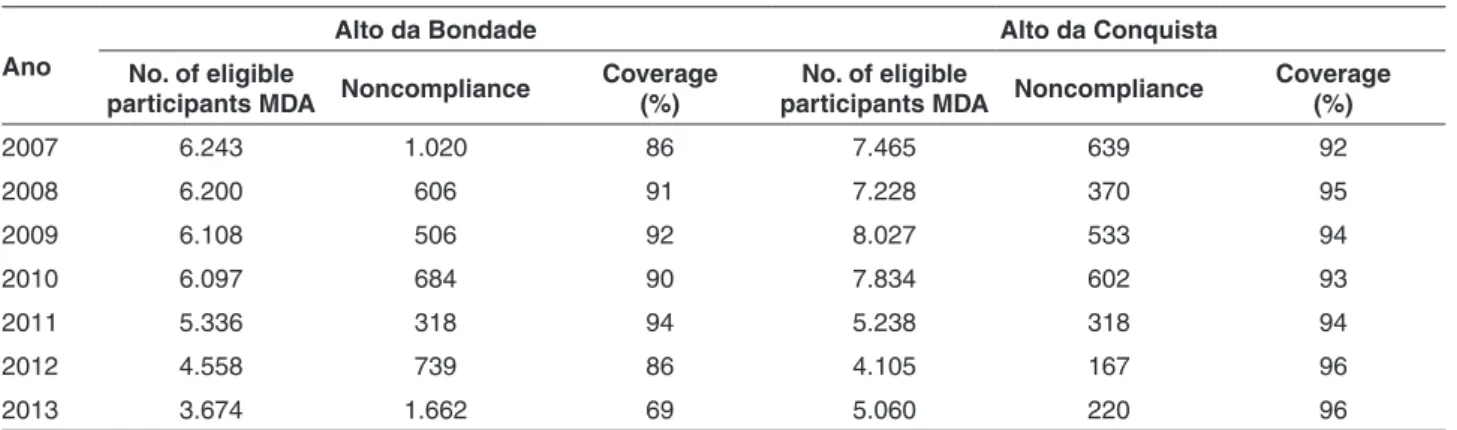
inhabitants. In this municipality, the Alto da Bondade district (8,718 inhabitants) and the Alto da Conquista district (8,104 inhabitants) were chosen because they had high
prevalence of LF14, constituted MDA evaluation units and
had universal Family Health Program coverage. In these
two municipalities MDA was started in 200716and achieved
coverage > 86%17 (Table 1).
The study group comprised individuals who had systematically been noncompliant of the rounds of MDA. A total of 136 individuals were identified through
the MDA database of Olinda’s Health Department, of whom 114 (83.82%) answered the questionnaire. Among those who did not answer the questionnaire, 15 had changed their addresses, two had died and five refused to participate in the study. Among the 114 individuals who answered the questionnaire, 12 refused to undergo the rapid immunochromatographic test (ICT) for LF and were excluded from the study. Thus, a final total of 102 individuals remained in the study.
Home visits were made, and these 102 individuals consented to participate in the project through signing an informed consent statement. They were then given a semi-structured questionnaire with questions on socioenvironmental demographics, LF, MDA and the reasons for systematic noncompliance with treatment. Following this, the ICT was applied to screen for
filariasis20. The test was performed in accordance with
the manufacturer’s instructions and the results were read by specialized technicians 10 minutes later. Among the individuals who tested positive in the antigen assay, 10 mL of venous blood was drawn between 11:00 pm and 01:00 am in order to detect microfilaria by means of the membrane filtration method21.
The data gathered were stored and analyzed using the Epi Info statistics package, version 7 (Centers for Disease Control and Prevention, Atlanta, GA, USA).
This study received prior approval from the institution’s Research Ethics Committee (CAAE 0015.0.095.000-11). LF-positive cases were treated in Olinda’s Health Department.
RESULTS
The prevalence of systematic noncompliance was higher among women than among men (1.7:1). The mean age of the systematically noncompliant individuals was 49 years (range: 7 to 99 years). Regarding marital status, the
largest proportion of the individuals declared that they were married (42.2%). A lack of formal schooling was noted in
16.7% of the population (Table 2).
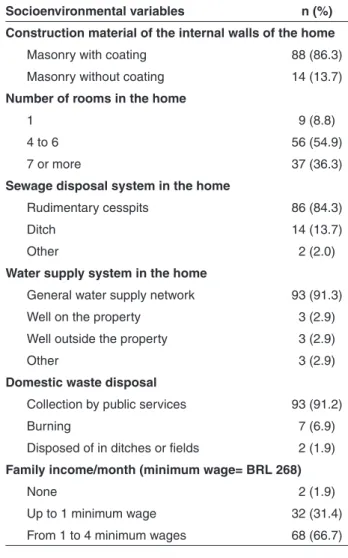
All the homes visited were masonry constructions, of which 86.3% had an external wall coating; 8.8% of the homes consisted of one room. Sewage disposal from 86 (84.3%) of these homes was into a rudimentary cesspit. It should be noted that in the cases of 14 homes (13.7%),
Table 1- Coverage with annual single-dose DEC in Alto da Bondade and Alto da Conquista, Olinda, Brazil
Ano
Alto da Bondade Alto da Conquista
No. of eligible
participants MDA Noncompliance
Coverage (%)
No. of eligible
participants MDA Noncompliance
Coverage (%)
2007 6.243 1.020 86 7.465 639 92
2008 6.200 606 91 7.228 370 95
2009 6.108 506 92 8.027 533 94
2010 6.097 684 90 7.834 602 93
2011 5.336 318 94 5.238 318 94
2012 4.558 739 86 4.105 167 96
2013 3.674 1.662 69 5.060 220 96
Table 2 - Demographic characterization of the systematic
noncompliance population with mass drug administration, Olinda, Brazil
Demographic variables n (%)
Gender
Female 65 (63.7)
Male 37 (36.3)
Age (years)
7 – 14 8 (7.8)
15 – 24 11 (10.8)
25 – 64 53 (52.0)
65 – 99 30 (29.4)
Marital status
Married 43 (42.2)
Single 30 (29.4)
Widowed 19 (18.6)
Separated 10 (9.8)
Educational level
Illiterate 17 (16.7)
Incomplete primary education (years 1-5) 33 (32.4)
Complete primary education (years 1-5) 16 (15.7)
Incomplete primary education (years 6-9) 11 (10.8)
Complete primary education (years 6-9) 2 (1.9)
Incomplete secondary education 5 (4.9)
sewage was discharged directly into ditches. The most prevalent form of water supply in the homes was from the general water supply network. Regarding solid waste disposal, 93 (91.2%) of the interviewees declared that their garbage was collected by the municipal public services. Regarding monthly family income, 33.3% earned up to one
minimum wage (Table 3).
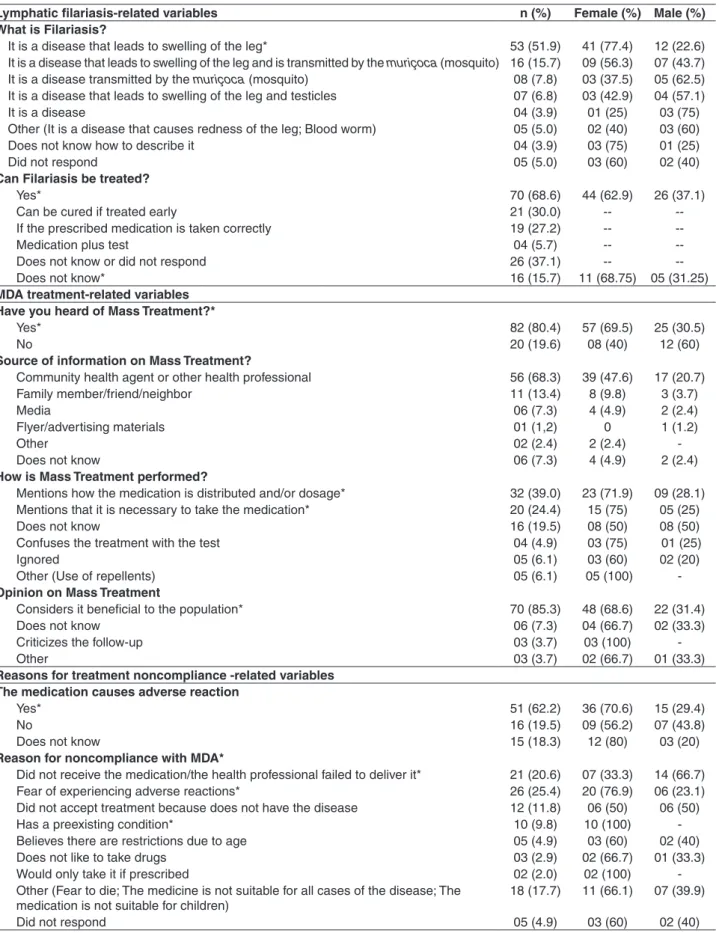
Approximately 90% of the interviewees identified LF as a disease, the majority being women (p>0.05), and 74.4% reported that a swollen leg was the main symptom. Approximately 20% “claimed that LF is transmitted by mosquitoes”, and most women “answered that the disease
can be cured” (p<0.05).Treatment with diethylcarbamazine
was cited by 62.9% of the 70 individuals who claimed that
LF can be cured (Table 4).
Table 4 shows that awareness of MDA was reported by 80.4% of the interviewees, being 69.5% women, “who said that family healthcare professionals were their main source
of information. MDA was perceived to be a drug that is distributed by family healthcare professionals” (39%). The women also considered that “MDA was a positive benefit for the population” (p< 0.05) and “believed that the medication caused adverse reactions” (p< 0.05)
For men the main reasons for systematic noncompliance with MDA were that “the individual had not received the medication” (p< 0.05) and for women “the individual either feared experiencing adverse reactions to diethylcarbamazine” (p< 0.05), and for both sexes “the individual had not taken the drug because he did not have
the disease” (Table 4).
Among the population studied, two cases (one male and one female, aged 13 and 39 years, respectively) tested positive for LF antigens. These cases did not show microfilaremia in the night membrane filtration method.
DISCUSSION
The population that was systematically noncompliant with MDA in the area analyzed was mainly composed of married women with low educational levels. Previous studies have shown that females frequently present lower rates of compliance with MDA. The reasons cited have included pregnancy, lactation and fear of spontaneous abortion, along with domestic situations in which women are prohibited from participating in MDA because of their
husbands’ negative beliefs about it22. This finding indicates
that there is a need for a differentiated approach towards the female population in order to achieve more effective treatment coverage.
LF is considered to be one of the main neglected diseases and is predominantly distributed in areas with poor social
conditions and deficient sanitary infrastructure23. The
results from the present study indicate that, for more than 90% of the population studied, water was supplied and solid waste was collected by public services. However, the sewage disposal system exhibited favorable conditions for Culex quinquefasciatus to breed24. For approximately 85% of the homes, sewage disposal consisted of discharge into rudimentary cesspits, while for 13.7% this was done into open ditches. Studies conducted in the Metropolitan Region of Recife have correlated the endemicity of LF with the population’s social and environmental conditions. Poor environmental conditions were associated with family
income ≤ 268 USD/month in 30% of the cases. Areas with
worse socioenvironmental conditions were at higher risk of exhibiting this parasitosis14,25.
The main tool for eliminating LF in endemic areas is MDA. However, its application is not satisfactory in all endemic countries, given that low compliance with treatment
Table 3 - Socioenvironmental characterization of the systematic noncompliance population with mass drug administration, Olinda, Brazil
Socioenvironmental variables n (%)
Construction material of the internal walls of the home
Masonry with coating 88 (86.3)
Masonry without coating 14 (13.7)
Number of rooms in the home
1 9 (8.8)
4 to 6 56 (54.9)
7 or more 37 (36.3)
Sewage disposal system in the home
Rudimentary cesspits 86 (84.3)
Ditch 14 (13.7)
Other 2 (2.0)
Water supply system in the home
General water supply network 93 (91.3)
Well on the property 3 (2.9)
Well outside the property 3 (2.9)
Other 3 (2.9)
Domestic waste disposal
Collection by public services 93 (91.2)
Burning 7 (6.9)
Disposed of in ditches or fields 2 (1.9)
Family income/month (minimum wage= BRL 268)
None 2 (1.9)
Up to 1 minimum wage 32 (31.4)
Table 4 - Knowledge of lymphatic filariasis and MDA, and reasons for systematicnoncompliance according to sex in Alto da Bondade and Alto da Conquista, Olinda, State of Pernambuco, Brazil
Lymphatic filariasis-related variables n (%) Female (%) Male (%)
What is Filariasis?
It is a disease that leads to swelling of the leg* 53 (51.9) 41 (77.4) 12 (22.6)
It is a disease that leads to swelling of the leg and is transmitted by the muriçoca (mosquito) 16 (15.7) 09 (56.3) 07 (43.7) It is a disease transmitted by the muriçoca (mosquito) 08 (7.8) 03 (37.5) 05 (62.5) It is a disease that leads to swelling of the leg and testicles 07 (6.8) 03 (42.9) 04 (57.1)
It is a disease 04 (3.9) 01 (25) 03 (75)
Other (It is a disease that causes redness of the leg; Blood worm) 05 (5.0) 02 (40) 03 (60)
Does not know how to describe it 04 (3.9) 03 (75) 01 (25)
Did not respond 05 (5.0) 03 (60) 02 (40)
Can Filariasis be treated?
Yes* 70 (68.6) 44 (62.9) 26 (37.1)
Can be cured if treated early 21 (30.0) --
--If the prescribed medication is taken correctly 19 (27.2) --
--Medication plus test 04 (5.7) --
--Does not know or did not respond 26 (37.1) --
--Does not know* 16 (15.7) 11 (68.75) 05 (31.25)
MDA treatment-related variables Have you heard of Mass Treatment?*
Yes* 82 (80.4) 57 (69.5) 25 (30.5)
No 20 (19.6) 08 (40) 12 (60)
Source of information on Mass Treatment?
Community health agent or other health professional 56 (68.3) 39 (47.6) 17 (20.7)
Family member/friend/neighbor 11 (13.4) 8 (9.8) 3 (3.7)
Media 06 (7.3) 4 (4.9) 2 (2.4)
Flyer/advertising materials 01 (1,2) 0 1 (1.2)
Other 02 (2.4) 2 (2.4)
-Does not know 06 (7.3) 4 (4.9) 2 (2.4)
How is Mass Treatment performed?
Mentions how the medication is distributed and/or dosage* 32 (39.0) 23 (71.9) 09 (28.1)
Mentions that it is necessary to take the medication* 20 (24.4) 15 (75) 05 (25)
Does not know 16 (19.5) 08 (50) 08 (50)
Confuses the treatment with the test 04 (4.9) 03 (75) 01 (25)
Ignored 05 (6.1) 03 (60) 02 (20)
Other (Use of repellents) 05 (6.1) 05 (100)
-Opinion on Mass Treatment
Considers it beneficial to the population* 70 (85.3) 48 (68.6) 22 (31.4)
Does not know 06 (7.3) 04 (66.7) 02 (33.3)
Criticizes the follow-up 03 (3.7) 03 (100)
-Other 03 (3.7) 02 (66.7) 01 (33.3)
Reasons for treatment noncompliance -related variables The medication causes adverse reaction
Yes* 51 (62.2) 36 (70.6) 15 (29.4)
No 16 (19.5) 09 (56.2) 07 (43.8)
Does not know 15 (18.3) 12 (80) 03 (20)
Reason for noncompliance with MDA*
Did not receive the medication/the health professional failed to deliver it* 21 (20.6) 07 (33.3) 14 (66.7)
Fear of experiencing adverse reactions* 26 (25.4) 20 (76.9) 06 (23.1)
Did not accept treatment because does not have the disease 12 (11.8) 06 (50) 06 (50)
Has a preexisting condition* 10 (9.8) 10 (100)
-Believes there are restrictions due to age 05 (4.9) 03 (60) 02 (40)
Does not like to take drugs 03 (2.9) 02 (66.7) 01 (33.3)
Would only take it if prescribed 02 (2.0) 02 (100)
-Other (Fear to die; The medicine is not suitable for all cases of the disease; The medication is not suitable for children)
18 (17.7) 11 (66.1) 07 (39.9)
Did not respond 05 (4.9) 03 (60) 02 (40)
is a serious obstacle26. There is no doubt that the success of LF elimination programs depends largely on their capacity for reaching and maintaining high levels of compliance with
MDA27. In this regard, surveys on awareness, attitudes and
practices are considered to be essential for sensitizing the
population regarding disease and the importance of MDA28.
In Brazil, the present study was the first to investigate systematic noncompliance with MDA.
In this study, almost all the individuals studied recognized LF as a disease and were able to describe a symptom. However, despite their knowledge of LF, this did not seem to affect their low compliance with MDA. Studies conducted on populations in endemic areas in India29, Tanzania30 and Malaysia31 revealed that there were individuals with little or no awareness of LF, even though the areas were considered endemic.
In the present study, more than half of the interviewees associated LF with its chronic forms (i.e. “swelling of the leg”, “swelling of the testicles” and “swelling of the leg and testicles”). In endemic areas, popular awareness of the disease is common, especially with regard to chronic clinical LF. However, most people are unaware of the role of
mosquitoes in transmission of this parasitosis32. In Olinda,
Brazil, less than one-fourth of the interviewees were aware
of the role of C. quinquefasciatus in LF transmission.
For control or elimination strategies regarding a given disease to be successful, the population involved firstly needs to be aware of the disease. In the municipality of Olinda, MDA is performed by family healthcare professionals. Most of the interviewees were aware of MDA, and the major sources of information were community health agents or other healthcare professionals. In a study in India, the people who administered the drug were the most important people in MDA programs, and their attitude determined whether compliance would be low. Thus, training and capacity building are essential for increasing compliance
with MDA33. Effective drug delivery strategies and repeated
home visits are needed in order to improve coverage34.
Furthermore, the media (television, radio and flyers and other advertising materials) are also relevant means of communication regarding MDA. Visual and oral media are strategic tools for communication because they can
reach uneducated population segments35. In Brazil, family
healthcare is a model in which the population covered has a relationship of trust with the physicians, nurses and health
agents at the healthcare unit and in home visits36. Thus,
the MDA coverage supported by these professionals is an important model for tackling both LF and other diseases,
such as hypertension and diabetes36.
In the present study, one of the factors correlated with systematic noncompliance with MDA was fear of
occurrence of adverse reactions. Studies conducted in
India29,37-41 and Haiti42have shown that fear of adverse
reactions was the reason for systematic noncompliance that was most cited in the populations studied. In Kenya, adverse reactions experienced after drug consumption also
contributed to low compliance43.
In the present survey, one of the main reasons for systematic noncompliance with MDA consisted of refusal of treatment because of not being ill: the interviewees stated that they did not have the disease and, hence, did not need treatment. Among the many reasons for systematic noncompliance with MDA, one important reason is that individuals do not see any morbidity caused by filariasis, in their immediate surroundings. Currently, because of worldwide efforts over the years, the frequency of individuals exhibiting chronic manifestations, such as elephantiasis and hydrocele, continues to decrease. Hence,
filariasis is becoming less of a reason for societal concern33.
In a study on the population of Jaboatão dos Guararapes,
Medeiros et al.13 reported prevalence rates of 0.07% and
0.78% for elephantiasis and hydrocele, respectively. Another major reason for systematic noncompliance is that drug use is associated only with treatment and
not with prophylaxis33,44,45. Approximately two-thirds of
the infected population remain asymptomatic, and these
individuals might not be aware of the benefits of treatment40.
Albuquerque et al.46 observed a frequency of filariasis of
6.2% in the population of Recife, Brazil. In a study on
9,520 individuals in the municipality of Jaboatão dos
Guararapes, Brazil, 323 were microfilaremic and 199 were
asymptomatic (61.6 %)47.
In the population investigated, two cases tested positive in the ICT and both of them were amicrofilaremic. In the future, these individuals would possibly become microfilaremic if they were not treated. Thus, they would have the capacity to participate in the local transmission cycle, given that the environmental conditions are favorable for C. quinquefasciatus to breed10,25. The impact of MDA is assessed through sentinel and spot-check sites in order to provide program managers with precise information on the evolution of infection, so that decisions can be
made2. However, it should be noted that these ICT-positive
Pre-MDA educational campaigns need to emphasize the message that all individuals who live in endemic areas are at risk of infection and that even asymptomatic individuals
may have become infected40. Campaigns on the importance
of MDA need to aim the demystification of the risk of becoming ill through treatment with diethylcarbamazine. Furthermore, communities need to be made aware of the medication used as well as of the potential adverse reactions, and need to know that healthcare professionals are on standby and are qualified/ trained to treat them. The aim here is to gain the community’s trust and thus increase compliance with MDA.
The present study had the limitation that no assessment was made on the impact of the population that was
systematically noncompliant with MDA, regarding
transmission of the infection. Nonetheless, the lack of previous investigations on this population in Brazil provided the justification for conducting this study, with the aim of contributing to educational campaigns and improving the strategies for drug distribution, and thus increasing the coverage of MDA.
The results of this research recommend the use of different PGELF strategies in Brazil according to the sex of the person who has systematic being noncompliant with MDA, for example, the men should receive home visits for distribution of the drug and women should receive information on the reasons for treatment compliance.
The success of GPELF depends on compliance with MDA and the risks of systematic noncompliance are significant and cannot be ignored. These include the possible appearance of resistance to drugs, the need for additional treatment rounds (with their respective costs) and “campaign fatigue” within the community
and healthcare services48,49. Attention focusing on the
population that is systematically noncompliant with
MDA is crucial for ensuring adequate compliance with treatment and thereby optimizing actions and resources. The results from the present study revealed an evident need for surveillance of this population. Such observations will provide important information for achieving the goal of eliminating LF.
REFERENCES
1. World Health Organization. Global programme to eliminate lymphatic filariasis: progress report, 2013. Wkly Epidemiol Rec. 2014;89:409-18.
2. World Health Organization. Monitoring and epidemiological
assessment of mass drug administration in the global programme to eliminate lymphatic filariasis: a manual for national elimination programmes. Geneva: WHO; 2011.
3. Ottensen EA. The global programme to eliminate filariasis
lymphatic. Parasitol Int. 1998;47 Suppl:23-48.
4. Ottesen EA, Duke BO, Karam M, Behbehani K. Strategies and
tools for the control/elimination of lymphatic filariasis. Bull World Health Organ. 1997;75:491-503.
5. World Health Organization. Global programme to eliminate
lymphatic filariasis. Wkly Epidemiol Rec. 2010;85:365-72.
6. Ramaiah KD, Ottesen EA. Progress and impact of 13 years of
the global programme to eliminate lymphatic filariasis on reducing the burden of filarial disease. PLoS Negl Trop Dis 2014;8:e3319.
7. World Health Organization. Global programme to eliminate
lymphatic filariasis: progress report, 2011. Wkly Epidemiol Rec. 2012;87:346-56.
8. Freitas H, Vieira JB, Braun R, Medeiros Z, Rocha EM,
Aguiar-Santos A, et al. Workshop para avaliação da situação epidemiológica da filariose linfática no Município de Belém, Pará, norte do Brasil. Rev Soc Bras Med Trop. 2008;41:212-6.
9. Simonsen PE, Mwakitalu ME. Urban lymphatic filariasis.
Parasitol Res. 2013;112:35-44.
10. Bonfim C, Netto MJ, Pedroza D, Portugal JL, Medeiros Z. A
socioenvironmental composite index as a tool for identifying urban areas at risk of lymphatic filariasis. Trop Med Int Health.2009;14:877-84.
11. Braga C, Dourado I, Ximenes R, Miranda J, Alexander N.
Bancroftian filariasis in an endemic area of Brazil: differences between genders during puberty. Rev Soc Bras Med Trop. 2005;38:224-8.
12. Fontes G, Leite AB, Lima AR, Freitas H, Ehrenberg JP, Rocha
EM. Lymphatic filariasis in Brazil: epidemiological situation and outlook for elimination. Parasit Vectors. 2012;5:272..
13. Medeiros Z, Bonfim C, Alves A, Oliveira C, Netto MJ,
Aguiar-Santos AM. The epidemiological delimitation of lymphatic filariasis in an endemic area of Brazil, 41 years after the first recorded case. Ann Trop Med Parasitol 2008;102:509-19.
14. Braga C, Ximenes RA, Albuquerque M, Souza WV, Brayner F,
Silva L, et al. Avaliação de indicador sócio-ambiental utilizado no rastreamento de áreas de transmissão de filariose linfática em espaços urbanos. Cad Saúde Pública.2001;17:1211-8.
15. World Health Organization. Integrated preventive chemotherapy
for neglected tropical diseases: estimation of the number of interventions required and delivered, 2009-2010. Wkly Epidemiol Rec. 2012;87:17-27.
16. Olinda. Secretaria Municipal de Saúde. Diretoria de Vigilância
à Saúde. Coordenação Municipal de Doenças Endêmicas. Relatório comparativo dos modelos de tratamento coletivo da filariose em Olinda: Salgadinho e Sítio novo X Alto da Bondade e Alto da Conquista. Olinda: Secretaria Municipal de Saúde; 2008.
17. Rocha A, Marcondes M, Nunes JR, Miranda T, Veiga J, Araújo P,
o Serviço de Referência Nacional em Filarioses. Rev Patol Trop. 2010;39:233-49.
18. Mathieu E, Direny AN, de Rochars MB, Streit TG, Addiss DG,
Lammie PJ. Participation in three consecutive mass drug administrations in Leogane, Haiti. Trop Med Int Health. 2006;11:862–8.
19. El-Setouhy M, Abd Elaziz KM, Helmy H, Farid HA, Kamal HA,
Ramzy RM, et al. The effect of compliance on the impact of mass drug administration for elimination of lymphatic filariasis in Egypt. Am J Trop Med Hyg. 2007;77:1069-73.
20. Weil GJ, Lammie PJ, Weiss N. The ICT filariasis test: a
rapid-format antigen test for diagnosis of bancroftian filariasis. Parasitol Today. 1997;13:401-4.
21. Dennis DT, Kean BH. Isolation of microfilariae: report of a new
method. J Parasitol. 1971;57:1146-7.
22. Talbot JT, Viall A, Direny A, de Rochars MB, Addiss D, Streit T,
et al. Predictors of compliance in mass drug administration for the treatment and prevention of lymphatic filariasis in Leogane, Haiti. Am J Trop Med Hyg. 2008;78:283-8.
23. Streit T, Lafontant JG. Eliminating lymphatic filariasis: a view
from the field. Ann N Y Acad Sci. 2008;1136:53-63.
24. Regis L, Oliveira CM, Silva-Filha MH, Silva SB, Maciel A,
Furtado AF. Efficacy of Bacillus sphaericus in control of the filariasis vector Culex quinquefasciatus in an urban area of Olinda, Brazil. Trans R Soc Trop Med Hyg. 2000;94:488-92.
25. Bonfim C, Alves A, Costa TR, Alencar F, Pedroza D, Portugal
JL, Medeiros Z. Spatial analysis and privation index to identify urban areas with a high risk of lymphatic filariasis. Trop Med Int Health. 2011;16:748-55.
26. Kimura, E. The Global Programme to Eliminate Lymphatic
Filariasis: History and achievements with special reference to annual single-dose treatment with diethylcarbamazine in Samoa and Fiji. Trop Med Health. 2011;39:17-30.
27. Krentel A, Fischer PU, Weil GJ. A review of factors that influence
individual compliance with mass drug administration for elimination of lymphatic filariasis. PLoS Negl Trop Dis. 2013;7:e2447.
28. Mathieu E, Lammie PJ, Radday J, Beach MJ, Streit T, Wendt J,
et al. Factors associated with participation in a campaign of mass treatment against lymphatic filariasis, in Leogane, Haiti. Ann Trop Med Parasitol. 2004;98:703-14.
29. Karmakar PR, Mitra K, Chatterjee A, Jana PK, Bhattacharya S,
Lahiri SK. A study of coverage, compliance and awareness about mass drug administration for elimination of lymphatic filariasis in a district of West Bengal, India. J Vector Borne Dis. 2011;48:101-4.
30. Mwakitalu ME, Malecela MN, Pedersen EM, Mosha FW,
Simonsen PE. Urban lymphatic filariasis in the metropolis of Dar es Salaam, Tanzania. Parasit Vectors. 2013;6:286.
31. Al-Abd NM, Nor ZM, Ahmed A, Al-Adhroey AH, Mansor M,
Kassim M. Lymphatic filariasis in Peninsular Malaysia: a
cross-sectional survey of the knowledge, attitudes, and practices of residents. Parasit Vectors. 2014;7:545.
32. Rath K, Nath N, Shaloumy M, Swain BK, Suchismita M, Babu BV.
Knowledge and perceptions about lymphatic filariasis: a study during the programme to eliminate lymphatic filariasis in an urban community of Orissa, India. Trop Biomed. 2006;23:156-62.
33. Nujum ZT, Remadevi S, Nirmala C, Rajmohanan K, Indu P,
Nair SM. Factors determining noncompliance to mass drug administration for lymphatic filariasis elimination. Trop Parasitol. 2012;2:109-15.
34. Angadi MM, Shashank KJ, Rohith M. Coverage and compliance
of mass drug administration for elimination of lymphatic filariasis in endemic areas of Bagalkot District, Karnataka. Natl J Integr Res Med.2015;6:50-3.
35. Krentel A, Fischer P, Manoempil P, Supali T, Servais G, Ruckert
P. Using knowledge, attitudes and practice (KAP) surveys on lymphatic filariasis to prepare a health promotion campaign for mass drug administration in Alor District, Indonesia. Trop Med Int Health. 2006;11:1731-40.
36. Brasil. Ministério da Saúde. Secretaria de Atenção à Saúde.
Departamento de Atenção Básica. Política Nacional de Atenção Básica. Brasília: Ministério da Saúde; 2012.
37. Aswathy S, Beteena K, Leelamoni K. Mass drug administration
against filariasis in India: perceptions and practices in a rural community in Kerala. Ann Trop Med Parasitol. 2009;103:617-24.
38. Babu BV, Kar SK. Coverage, compliance and some operational
issues of mass drug administration during the programme to eliminate lymphatic filariasis in Orissa, India. Trop Med Int Health. 2004;9:702-9.
39. Babu BV, Mishra SA. Mass drug administration under the
programme to eliminate lymphatic filariasis in Orissa, India: a mixed-methods study to identify factors associated with compliance and non-compliance.Trans R Soc Trop Med Hyg. 2008;102:1207-13.
40. Hussain MA, Sitha AK, Swain S, Kadam S, Pati S. Mass drug
administration for lymphatic filariasis elimination in a coastal state of India: a study on barriers to coverage and compliance. Infect Dis Poverty. 2014;3:31.
41. Waseem A, Dorle AS, Mannapur BS, Vetri S. Coverage and
compliance of mass drug administration for elimination of lymphatic filariasis in Bijapur District, Karnataka. Ann Community Health. 2014;2:6-10.
42. Mathieu E, Direny AN, de RocharsMB, Streit TG, Addiss DG,
Lammie PJ. Participation in three consecutive mass drug administrations in Leogane, Haiti. Trop Med Int Health. 2006;11:862-8.
43. Njomo DW, Amuyunzu MN, Magambo JK, Ngure PK, Njenga
44. Babu BV, Satyanarayana K. Factors responsible for coverage and compliance in mass drug administration during the programme to eliminate lymphatic filariasis in the East Godavari district, South India. Trop Doct. 2003;33:79-82.
45. Ramaiah KD, Das PK, Appavoo NC, Ramu K, Augustin
DJ, Kumar KN, et al. A programme to eliminate lymphatic filariasis in Tamil Nadu State, India: Compliance with annual single dose mass treatment and some related operational aspects. Trop Med Int Health. 2000;5:842-7.
46. Albuquerque MF, Marzochi MC, Sabroza PC, Braga MC, Padilha
T, Silva MC, et al. Bancroftian filariasis in two areas of Recife, Brazil: pre-control observations on infection and disease. Trans R Soc Trop Med Hyg. 1995;89:373-7.
47. Bonfim C, Lessa F, Oliveira C, Evangelista MJ, Espírito Santo M,
Meireles E, et al. The occurrence and distribution of lymphatic filariasis in Greater Metropolitan Recife: the case of an endemic area in Jaboatão dos Guararapes, Pernambuco, Brazil. Cad Saúde Pública. 2003;19:1497-505.
48. Stolk WA, de Vlas SJ, Borsboom GJ, Habbema JD. LYMFASIM,
a simulation model for predicting the impact of lymphatic filariasis control: quantification for African villages. Parasitology. 2008;135:1583-98.
49. Smits HL. Prospects for the control of neglected tropical diseases