Original Article
Artigo Original
Angela Maria de Amorim Carvalho1 Debora Maria Bei-Lopes1 Suelly Cecília Olivan Limongi1
Descritores
Síndrome de Down Desenvolvimento da linguagem Desenvolvimento infantil Criança Linguística Transtornos da linguagem Keywords
Down Syndrome Language development Child development Child Linguistics Language disorders
Correspondence address:
Suelly Cecília Olivan Limongi Rua Cipotânea, 51, Cidade Universitária, São Paulo (SP), Brasil, CEP: 05360-160. E-mail: [email protected]
Received: 06/06/2013
Accepted: 02/05/2014
Study carried out at the Department of Physical Therapy, Speech-Language Pathology/Audiology, and Occupational Therapy, School of Medicine, Universidade de São Paulo – USP – São Paulo (SP), Brazil. (1) School of Medicine, Universidade de São Paulo – USP – São Paulo (SP), Brazil.
Conlict of interests: nothing to declare. ABSTRACT
Purpose: To describe the linguistic performance of Brazilian Portuguese-speaking children with Down syndrome by analyzing their Mean Length Utterance; to compare their performance to that of children with Speciic Language Impairment and Typical Development; and to verify whether children with Down syndrome present developmental language delay or disorder. Method: Participants were 25 children with Down syndrome (Research Group), matched by mental age to a Control Group of typically developing children, and to a Control Group of children with Speciic Language Impairment. Participants were divided into subgroups, according to age range (three, four and ive years). Speech samples were collected for the Research Group, and the Mean Length Utterance was analyzed for morphemes and words.
Results: Differences were observed between the performance of the Research Group and both Control Groups, and the former presented inferior Mean Length Utterance values for all age ranges, characterizing a delay in grammar and general language development. Conclusion: The description of the linguistic abilities of Brazilian Portuguese-speaking children with Down syndrome indicated important grammatical deicits, especially regarding the use of functional words.
RESUMO
Objetivo: Descrever o desempenho linguístico de crianças com síndrome de Down falantes do Português Brasileiro por meio da análise da Extensão Média do Enunciado, comparar esse desempenho ao de crianças com Distúrbio Especíico de Linguagem e com Desenvolvimento Típico e veriicar se as crianças com síndrome de Down apresentam atrasos ou desvios do desenvolvimento linguístico. Método: Participaram do estudo 25 crianças com síndrome de Down (grupo pesquisa), pareadas pela idade mental ao grupo controle de crianças com desenvolvimento típico e ao grupo controle de crianças com Distúrbio Especíico de Linguagem. Os participantes foram divididos em subgrupos de acordo com a faixa etária (três, quatro e cinco anos). Foram colhidas amostras de fala do grupo pesquisa e realizadas análises por meio da Extensão Média do Enunciado medida em morfemas e em palavras. Resultados: Observaram-se diferenças de desempenhos entre o grupo pesquisa e os grupos controle, sendo que o primeiro apresentou valores de Extensão Média do Enunciado inferiores em todas as faixas etárias, o que caracteriza o atraso do desenvolvimento gramatical e linguístico geral. Conclusão: A descrição das habilidades linguísticas de crianças com síndrome de Down falantes do Português Brasileiro apontou para déicits gramaticais importantes, principalmente no que se refere ao uso de palavras funcionais.
Mean length utterance in Brazilian children: a
comparative study between Down syndrome, speciic
language impairment, and typical language development
Extensão média do enunciado em crianças brasileiras: estudo
comparativo entre síndrome de Down, distúrbio especíico de
INTRODUCTION
Populations with Down syndrome (DS), the most frequent chromosome pathology and the most common genetic cause of intellectual deiciency, present great variability in language development. Studies report that these individuals have linguis-tic deicits that are reflected on difficulties with all aspects related to language (phonology, pragmatics, semantics, syntax, and morphology). These difficulties are seen as delays instead of language development disorders. Deficits in expressive language are more marked than in receptive language, particularly in morphosyntax(1-8), which is a
clini-cal marker of language in this population.
With the purpose of explaining and understanding the morphosyntactic difficulties of individuals with DS more clearly, international researchers have conducted increas-ingly more studies in this area. The difficulties presented by these individuals in regard to morphosyntactic aspects are confirmed by researchers who have used the mean length of utterance (MLU) in their studies.
The MLU was proposed as an index to measure and describe the grammatical and morphological development of children undergoing typical development (TD), as well as of those with language impairment(9). This measurement
is conducted based on the analysis of speech samples, and it is used and widely accepted as the most effective tech-nique to be used in quantitative assessments of language development in children, both in research studies and in the clinical sphere. It can be measured through morphemes (MLU-m) or words (MLU-w)(1,7,10-12). In the case of Brazilian
Portuguese (BP), the MLU is measured by adding type-1 grammatical morphemes (GM-1), related to articles, nouns, and verbs, as well as by adding type-2 grammatical mor-phemes (GM-2), related to pronouns, prepositions, and con-junctions. These criteria were proposed on consideration of the linguistic differences between BP and English(10).
BP is a richer and more inflected language than English. In this sense, it is comparable to Italian, a language that is more difficult to be mastered(1,3).
The MLU is also considered an effective and reliable tool to assess the aforementioned aspects in the DS popu-lation(1,13-16). The results of studies in which this tool was
used present frequent omissions of grammatical morphemes as the main morphosyntactic deficit, particularly of func-tional words(1,4,5,13).
A scarcity of studies in which the MLU is considered in children with DS is noticeable in the literature on this topic in Brazil. This may be due to a difficulty to find large and homogeneous samples, to the great variability observed in their language performances, to the lack of standardized tests, and to the lack of knowledge about this tool on the part of speech-language pathologists(6).
The literature presents studies in which the authors com-pare the language performance of children with DS and spe-cific language impairment (SLI)(3,14,16). The researchers point
to similarities between the performances of both populations concerning morphological aspects, as both present poorer
performances than children with TD of the same mental age (MA). They also point to differences, considered sub-tle, in the omission or incorrect production of morphemes. Considering the scarcity of studies with a focus on BP in relation to the language abilities of children with DS that pro-vide parameters for scientiic studies and clinical practice, in this study our purpose was to describe the language develop-ment of children with DS by using the MLU-m, considering GM-1 and GM-2, as well as the MLU-w; to compare the lin-guistic performance of these children to the performances of children with TD and SLI; and to verify whether the children with DS presented delays or disorders in their language devel-opment, based on the children with TD.
METHODS
This study was approved by the ethics committee of the institution in question (protocol number 1004/08). The par-ticipants’ parents or legal guardians signed the Informed Consent form.
Three groups of individuals comprised this study’s sample, each with 25 participants who spoke BP: one study group with children with DS (SG-DS) and two control groups (CG), one control group that counted children with TD (CG-TD), and another with children with SLI (CG-SLI).
The data pertaining to both CG were obtained from a pre-viously conducted study(12), in which the inclusion criteria
were as follows:
1. For the CG-TD: presenting performances adequate to chronological age (CA) in a speech and language triage(17);
having no complaints and no previous submission to any intervention related to the areas of speech-language pathology and audiology, psychology, or neurology; being a speaker of BP exposed only to this language; attending a day-care center subsidized by the city of São Paulo;
2. For the CG-SLI: presenting performances that were poorer than expected for the CA on a speech and lan-guage assessment that addressed vocabulary, phonol-ogy, pragmatics(18), luency, and discursive ability (Frog, where are you?) when orality was suficient; relying on oral language as the predominant mode of communica-tion(19); speaking intelligibly enough so that speech could
be transcribed(20); having normal hearing, conirmed by
an audiological assessment; being under treatment at the Laboratory for Investigation of Language Development and Its Alterations (LIF-DLA) for a period between 6 and 18 months; attending a day-care center subsidized by the city of São Paulo.
We considered the following inclusion criteria for the DS group: 1. Relying on oral language as the predominant mode of
communication, determined by a Test of Pragmatic Language(19);
2. Being in the preoperational stage of cognitive develop-ment, determined by an Assessment of Language and Cognition(21);
3. Speaking intelligibly enough so that enunciation could be transcribed, determined by a Speech and Language Test(20)
and intelligible utterance of at least 50% of the words(22);
4. Presenting simple trisomy karyotype of chromosome 21; 5. Being under speech, language, and audiological treatment
for at least 1 year;
6. Having no comorbidities, such as moderate to severe con-ductive or neurosensory hearing loss; visual deiciency; severe cardiomyopathy that required surgery; and psycho-logical and/or psychiatric conditions;
7. Having undergone physical therapy until achieving inde-pendent and stable gait;
8. Attending a municipal or state preschool or regular school in the state of São Paulo for at least 2 years.
The last ive criteria were obtained from the participants’ medical charts.
In the CG-TD and CG-SLI, the individuals’ age ranged from 3 to 5 years and 11 months of CA. The groups were divided into three subgroups based on age (3, 4, and 5 years). In the SG-DS, the individuals’ age ranged from 5 to 9 years and 11 months of CA. This group was divided in subgroups based on MA, obtained through the application of the Primary Test of Nonverbal Intelligence (PTONI)(23).
It is worth highlighting that we used retrospective data about previously studied populations (TD and SLI) that do not have intellectual disabilities. Thus, the PTONI was used to obtain the MA, necessary when pairing the participants from the CG-TD and the CG-SLI with the purpose of exploring developmental relations among linguistic abilities(24).
We paired each individual in the SG-DS to participants in the CG-TD and CG-SLI according to the MA of the chil-dren with DS and a difference of 1 month and over in relation to the children with DS. We highlight that, in regard to this pairing, the CAs in both CG ranged between 3 and 5 years, which calls for a remark about the CG-SLI. An SLI diag-nosis can only be conducted after 5 years of age in children with a history of a language impairment that persists after language rehabilitation. Up until this age, the best term to designate these children is speciic language alteration, as it is possible that children with language delays will be part of this group(25). However, because the term SLI is used in
the international literature, in the present study the termi-nology SLI will be maintained.
We recorded 30 minutes of interaction between the researcher and each participant. In these sessions, the researcher used materials that enabled symbolic play and that were adequate for the cognitive developmental stage of the participants. The data pertaining to the irst 100 enunciations were recorded after
the irst ive initial minutes of interaction were discarded, as this was considered the child’s period of adaptation to being observed. This resulted in 2.5 thousand enunciations. The criteria used to transcribe and analyze the speech samples to obtain the MLU were the same as those proposed and adopted in previous studies(9,12).
In the statistical analyses, we used a descriptive analysis to obtain the descriptive measures of the variables analyzed (GM-1, GM-2, MLU-m, MLU-w); Kolmogorov–Smirnov test to compare the age ranges and verify data normality; Levene test to observe the homogeneity of the variances; and one-way analyses of variance (ANOVAs) to be compared between the age ranges (3–5 years) in regard to each vari-able (GM-1, GM-2, MLU-m, MLU-w) in each group (TD, SLI, and DS) separately. Tukey’s post hoc test was used in case signiicant differences were found between the groups and age ranges. Mixed ANOVAs were carried out for each age range, separately, to investigate possible differences between the groups. When statistically signiicant differ-ences were found, the analyses were calculated by means of contrasts and graphics with conidence intervals. The level of signiicance adopted was 0.05 (5%).
To ensure the reliability of the analysis of the recorded data related to the SG-DS, we submitted 20% of the speech samples, drawn randomly, to a compatibility analysis performed by two judges, one M.Sc. and one Ph.D. in speech-language pathology and audiology, with experience in lan-guage and children with DS and in the methodology used in this study. Their analyses yielded 85 and 88% of concor-dance, respectively.
RESULTS
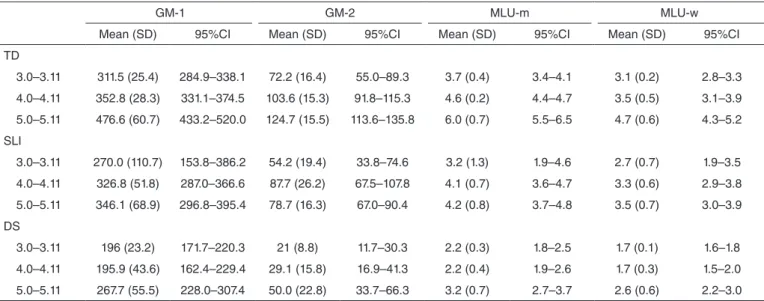
Table 1 displays the descriptive analysis of the variables GM-1, GM-2, MLU-m, and MLU-w in the SG-DS, CG-TD, and CG-SLI.
It is observable that the averages increased as age advanced in the three groups analyzed and that this increase occurred more markedly among the children with TD, who always achieved the highest aver-ages, followed by those with SLI and those with DS, respectively.
An exception to this increase in average as age progresses was observed in the 4-year age range of the SG-DS in regard to the GM-1 and to the MLU-m and MLU-w, which maintained the same average of the 3-year age range. Regarding the GM-2 of the 5-year-old participants of the CG-SLI, we veriied a slight average decrease compared to the 5-year age range ones.
It is also observable that an increase in the average of the variables was always more expressive in the 4- and 5-year age ranges in the SG-DS and CG-TD.
On comparison of the averages among the age ranges of the groups, the 5-year-old participants in the SG-DS presented values close to those obtained by the 3-year-old individuals in the CG-SLI and lower than the 3-year-olds in the CG-TD, in all variables.
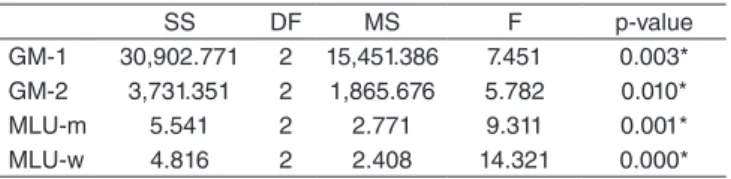
Table 4 shows the comparison between the age ranges (3–5 years) in relation to each variable (GM-1, GM-2, MLU-m, and MLU-w) in the SG-DS.
Statistically signiicant differences were observed among the age ranges in relation to all variables. Tukey’s post hoc test was applied. On the basis of the results for the SG-DS, statis-tically signiicant differences can be observed for all variables between the 3- and 5-year age ranges, and between the 4- and 5-year age ranges (GM-1: 3X5, p=0.016; 4X5, p=0.006; GM-2: 3X5, p=0.013; 4X5, p=0.048; MLU-m: 3X5, p=0.005; 4X5, p=0.003; MLU-w: 3X5, p=0.001; 4X5, p=0.000).
Table 5 displays the comparison among the groups (TD, SLI, and DS) regarding the three age ranges.
Statistically signiicant differences were veriied among the groups (TD, SLI, and DS), which indicates that the values of GM-1, GM-2, MLU-m, and MLU-w vary depending on the group analyzed.
Table 2. Comparison of each variable among the age ranges (3–5 years) in the control group with typical development
SS DF MS F p-value
GM-1 124,294.544 2 62,147.272 31.950 0.000* GM-2 10,361.084 2 5,180.542 21.259 0.000* MLU-m 21.275 2 10.638 38.964 0.000* MLU-w 12.831 2 6.416 23.297 0.000*
*Values with statistical difference (p<0.05) – one-way ANOVA.
Caption: SS = sum of squares; DF = degree of freedom; MS = mean of squares; F = ANOVA value; GM-1 = grammatical morphemes related to articles, nouns, and verbs; GM-2 = grammatical morphemes related to pro-nouns, prepositions, and conjunctions; MLU-m = mean length of utterance in morphemes; MLU-w = mean length of utterance in words
Table 3. Comparison of each variable among the age ranges (3–5 years) in the control group with specific language impairment
SS DF MS F p-value
GM-1 22,206.184 2 11,103.092 1.946 0.167 GM-2 4,158.027 2 2,079.013 4.671 0.020* MLU-m 4.230 2 2.115 2.611 0.096 MLU-w 2.604 2 1.302 3.029 0.069
*Values with statistical difference (p<0.05) – one-way ANOVA.
Caption: SS = sum of squares; DF = degree of freedom; MS = Mean of squares; F = ANOVA value; GM-1 = grammatical morphemes related to articles, nouns, and verbs; GM-2 = grammatical morphemes related to pro-nouns, prepositions, and conjunctions; MLU-m = mean length of utterance in morphemes; MLU-w = mean length of utterance in words
Statistically signiicant differences were veriied between the age ranges for all variables. Tukey’s post hoc test was applied. The results indicate that in the CG-TD, statistically signiicant differences were found concerning GM-1 and MLU-w only between the 3- and 5-year age range (p=0.000 for both variables) and between the 4- and 5-year age range (p=0.000 for both variables). The same occurred in the case of GM-2 and MLU-m in all age ranges (3X4, p=0.003; 3X5, p=0.000; 4X5, p=0.020; and 3X4, p=0.021; 3X5, p=0.000; 4X5, p=0.000, respectively).
Table 3 displays the comparison between the age ranges (3–5 years) in relation to each variable (GM-1, GM-2, MLU-m, and MLU-w) in the CG-SLI.
We observed statistically signiicant differences among the age ranges only in regard to the variable GM-2. Tukey’s post hoc test, calculated only for GM-2, indicates that statistically signiicant differences were veriied only between the 3- and 4-year age ranges (p=0.017).
GM-1 GM-2 MLU-m MLU-w
Mean (SD) 95%CI Mean (SD) 95%CI Mean (SD) 95%CI Mean (SD) 95%CI TD
3.0–3.11 311.5 (25.4) 284.9–338.1 72.2 (16.4) 55.0–89.3 3.7 (0.4) 3.4–4.1 3.1 (0.2) 2.8–3.3 4.0–4.11 352.8 (28.3) 331.1–374.5 103.6 (15.3) 91.8–115.3 4.6 (0.2) 4.4–4.7 3.5 (0.5) 3.1–3.9 5.0–5.11 476.6 (60.7) 433.2–520.0 124.7 (15.5) 113.6–135.8 6.0 (0.7) 5.5–6.5 4.7 (0.6) 4.3–5.2 SLI
3.0–3.11 270.0 (110.7) 153.8–386.2 54.2 (19.4) 33.8–74.6 3.2 (1.3) 1.9–4.6 2.7 (0.7) 1.9–3.5 4.0–4.11 326.8 (51.8) 287.0–366.6 87.7 (26.2) 67.5–107.8 4.1 (0.7) 3.6–4.7 3.3 (0.6) 2.9–3.8 5.0–5.11 346.1 (68.9) 296.8–395.4 78.7 (16.3) 67.0–90.4 4.2 (0.8) 3.7–4.8 3.5 (0.7) 3.0–3.9 DS
3.0–3.11 196 (23.2) 171.7–220.3 21 (8.8) 11.7–30.3 2.2 (0.3) 1.8–2.5 1.7 (0.1) 1.6–1.8 4.0–4.11 195.9 (43.6) 162.4–229.4 29.1 (15.8) 16.9–41.3 2.2 (0.4) 1.9–2.6 1.7 (0.3) 1.5–2.0 5.0–5.11 267.7 (55.5) 228.0–307.4 50.0 (22.8) 33.7–66.3 3.2 (0.7) 2.7–3.7 2.6 (0.6) 2.2–3.0
Table 1. Descriptive analysis of the variables type 1 grammatical morphemes, type 2 grammatical morphemes, mean lenght utterances for morphemes, mean length utterances for words for the study group Down syndrome, control group typical development and control group specific language impairment
DISCUSSION
In studies on language development of children with DS whose authors have used MLU as a way to assess the devel-opment of language skills or as a method to pair groups, the participants are organized by MA, vocabulary, or lexical or morphosyntactic development(1,7,8,13-15). It is worth
high-lighting that these researchers rely on standardized tests, especially for the English language, which does not occur in the case of BP.
In Brazil, studies that approach the language skills of chil-dren with DS through MLU have been initiated, and the irst results point to the eficacy of this tool in the population in question(6,26). As reported in one of these studies(6), the results
obtained in the present study show that MLU-m and MLU-w can be considered reliable and eficacious measures to point out the index to be used to describe the grammar and lan-guage development of children with DS who speak BP. This fact is corroborated by studies conducted on SLI and TD in Brazil(10,12), as well as in other countries(3,15,27,28).
The MLU-m described grammar development because it refers to the use of both GM-1 and GM-2, which occurred not only in relation to an increase in the quantity of words in the participants’ vocabulary, but also to the use of morphemes that indicate their inlection, that is, to morphosyntactic knowledge. As pointed out in the literature, the acquisition of inlectional morphemes is inluenced by aspects such as the frequency with which they occur in the language and environment exposed to the child, the load of semantic information, and phonological structure(1,9-12,29). MLU-w, which
refers to lexical information beyond the grammatical classes of MLU-m (articles, nouns, verbs, pronouns, prepositions,
and conjunctions) and encompasses adverbs, adjectives, numbers, and interjections, fulilled the purpose of describing and comparing the overall language development of the participants(1,10-12,28).
In this study, the children with DS reached averages pertain-ing to the variables GM-1, GM-2, MLU-m, and MLU-w that differentiated them from the participants in the CG and were lower than those of the CG-SLI, which, in turn, also presented lower averages than the CG-TD. The differences among the TD, SLI, and DS groups were conirmed through a compara-tive analysis, which indicated that the values of the variables GM-1, GM-2, MLU-m, and MLU-w varied depending on the group and age range analyzed. Expressive language deicits are shown in DS by an MLU that is poorer than expected, based both on CA and MA, or poorer than that of control individu-als paired by MA(1,3-6,13-15).
The poorer performance of the SG-DS compared to both control groups (TD and SLI) is related to dificulties in regard to the morphosyntactic aspects presented by individuals with DS. Although they acquire GM-1 words (articles, nouns, and verbs), these children have dificulty to acquire and use the necessary inlections, such as morphemes that mark the number, gender, and case of nouns, as well as the tense, per-son, and mood of verbs, in addition to articles. Dificulties in acquisition and use are also veriied in words with more syn-tactic information (GM-2) that work as relational elements, such as pronouns, prepositions, and conjunctions. The less frequent use of these words leads to the production of simple telegraphic sentences(1,6,13).
Studies in the literature corroborate the difficulties shown by the participants with DS in the present study concerning the use of functional words, especially in languages more grammatically complex, highly inflected, and Latin based, which is the case of BP(1,3,6,13).
The findings of this study show that children with DS had poorer performances than those with TD in regard to all variables studied, especially in older ages. As it happens in the Brazilian population with SLI(12), children with DS
experience the establishment of a more persistent gram-matical difficulty to form morphological rules as age pro-gresses. It is considered that children with DS are unable to generalize the knowledge of these rules and the use of lexical items that do not have fixed characteristics, such as pronouns, prepositions, and conjunctions(1,3,6,13).
In two studies carried out with children who spoke English, the authors compared the language skills of chil-dren with DS, TD, and SLI paired by MLU-m(14) and
non-verbal cognitive abilities(16). The results did not yield any
statistically significant differences between the SLI and DS groups, and the performances of both groups were poorer than those of individuals with TD. Despite the similarities, subtle differences were observed, such as, the fact that the children with SLI omitted more verbal inflections, whereas those with DS produced more incorrect forms(16).
Differently than these works, the results of a study carried out with children with DS, SLI, and TD who spoke Italian(3),
paired individually based on MA (ages ranging from 3 years
Table 4. Comparison of each variable among the age ranges (3–5 years) in the study group with Down syndrome
SS DF MS F p-value
GM-1 30,902.771 2 15,451.386 7.451 0.003* GM-2 3,731.351 2 1,865.676 5.782 0.010* MLU-m 5.541 2 2.771 9.311 0.001* MLU-w 4.816 2 2.408 14.321 0.000* *Values with statistical difference (p<0.05) – one-way ANOVA
Caption: SS = sum of squares; DF = degree of freedom; MS = mean of squares; F = ANOVA value; GM-1 = grammatical morphemes related to articles, nouns, and verbs; GM-2 = grammatical morphemes related to pro-nouns, prepositions, and conjunctions; MLU-m = mean length of utterance in morphemes; MLU-w = mean length of utterance in words
Table 5. Comparison of the three age ranges among the groups
Age
range SS DF MS F p-value PO
3 5,543.105 2 2,771.552 7.366 0.006* 0.882 4 17,704.582 2 8,852.291 54.119 0.000* 1.000 5 26,537.62 2 13,268.810 37.516 0.000* 1.000
*Values with statistical difference (p<0.05) – one-way ANOVA
and 8 months to 5 years and 7 months), showed that the chil-dren with DS had poorer performances in morphosyntactic production than those with SLI and those with TD. These indings point to greater differences between the DS and SLI groups than in English language studies. This fact can be explained by the morphosyntactic demands of Italian, which is more complex grammatically and can, therefore, pose more dificulties. These characteristics can show differences in the linguistic proile of children with various pathologies.
In this sense, considering the complexity of BP, as well as of the other Romance languages (French, Italian, Romanian, and Spanish), also highly inflected, it is possible to verify that the children with DS who participated in this study had poorer performances than the individuals with SLI in regard to morphosyntactic abilities, as reported in the lit-erature(4). The more marked difficulty shown by the
chil-dren with DS speakers of BP concerning morphosyntactic aspects, in comparison to those with SLI, can be justified by the fact that the Portuguese language is relatively richer and more grammatically marked compared to English, and it is therefore more difficult to be mastered. This finding has also been reported in studies on children with TD(10)
and SLI(12) whose MLU presented lower values than those
found in studies carried out in English.
It is pointed out in the literature(10) that, as age progresses,
children with TD use grammatical morphemes more fre-quently. They also manipulate and combine linguistic struc-tures more easily and quickly. The same can be observed in regard to DS, but the MA factor cannot be disregarded.
This finding is confirmed by the increase in the aver-ages of the variables GM-1, GM-2, MLU-m, and MLU-w between the 4- and 5-year age ranges, except in regard to GM-2, in which this increase was observed in all age ranges. These data agree with studies conducted abroad(1,3,13) and in
Brazil(6), which report an increase in MLU as individuals
with DS become older.
The indings concerning the CG-TD with Brazilian chil-dren are corroborated by other studies in the international lit-erature(11,28,30). It is worth highlighting that in the 4- and 5-year
age ranges, the increase in the averages of the variables was more marked, except for GM-2, in which the children pre-sented a more evident increase between the 3- and 4-year age ranges. In another study carried out with Brazilian children(10),
the authors state that these individuals use a reduced number of morphemes in their early years. As age progresses, they deal with linguistic structures more easily and quickly. In this sense, the authors of a study with preschool Brazilian children between 2 and 4 years of age veriied an instability in verbal morphology and pointed out that, in regard to the nominal inlection of numbers, productive use occurs at 5 years of age.
Concerning the Brazilian children with SLI, an increase in the averages of the variables according to the progres-sion of age was also observed, more markedly between 3 and 4 years. Concerning the variable GM-2, an increase in average was verified only between 3 and 4 years. An inter-national(28) and a Brazilian study(12) point out the difficulty
of this population to use GM-2 in older ages.
Thus, we observed that the children with DS in this study had more similarities with the CG-DT regarding the more advanced morphosyntactic development in older ages, despite the linguistic gap between both groups, than with the CG-SLI.
In regard to all the variables analyzed (GM-1, GM-2, MLU-m, and MLU-w), in the 5-year age range the values achieved by the SG-DS were close to those found in the 3-year age range of the CG-SLI and lower than the 3-year age range of the CG-TD, which points to more expressive language difficulties in children with DS(1–3).
These difficulties, along with the similar morphosyn-tactic development of the SG-DS and CG-TD, especially when the 4- and 5-year age ranges are compared, indicate language delay, not impairment. It is considered that delays are any similarities between a study group and a control group(s) in terms of overall proficiency or error typology on a language test(28). Although the language delays observed
in the population with DS vary, they follow a characteristic profile(5). These individuals have difficulties to deal
simul-taneously with communicative intention, semantic content, pragmatics, lexical selection, morphosyntactic markers, and speech rules. These results agree with authors who affirm that individuals with DS present language development delays and not impairments(2–6).
In international studies, the focus of researchers is the language development of individuals with DS during child-hood and adolescence(1,3,15). They affirm that the cognitive
deficit present in this population justifies the less frequent use of words that work as relational elements (GM-2). For the authors in question, this fact influences the acquisition and oral expression of these linguistic elements, as they con-sider the importance of cognitive development for language development and its structuration. In this sense, our findings could characterize the linguistic differences between the children in the SG-DS and those in the CG-TD and CG-SLI.
While conducting this study, we carefully considered any factors that could potentially influence the results, to ensure that our purpose, to describe the language develop-ment of children with DS through MLU-m, was fulfilled. Thus, we considered the variables MA, schooling, type of school attended (public), and therapeutic interventions, as described in the criteria for selection of the participants.
CONCLUSION
*AMAC was responsible for data collection, tabulation and analysis, and for writing the article; DBML collaborated with the discussion and inal version of the manuscript; SCOL was responsible for the project, study outline, and overall supervision of the stages of manuscript writing and elaboration.
REFERENCES
1. Vicari S, Caselli MC, Tonucci F. Asynchrony of lexical and morphosyntactic development in children with Down Syndrome. Neuropsychologia. 2000;38(5):634-44.
2. Abbeduto L, Warren SF, Conners FA. Language development in Down syndrome: from the prelinguistic period to the acquisition of literacy. Ment Retard Dev Disabil Res Rev. 2007;13(3):247-61.
3. Caselli MC, Monaco L, Trasciani M, Vicari S. Language in Italian children with Down syndrome and with speciic language impairment. Neuropsychology. 2008;22(1):27-35.
4. Martin GE, Klusek J, Estigarribia B, Roberts JE. Language characteristics of individuals with Down Syndrome. Top Lang Disord. 2009;29(2):112-32. 5. Rondal JA. Spoken language in persons with Down Syndrome: a
life-span perspective. INT-JECSE. 2009;1(2):138-63.
6. Marques SF, Limongi SCO. A extensão média do enunciado (EME) como medida do desenvolvimento de linguagem de crianças com síndrome de Down. J Soc Bras Fonoaudiol. 2011;23(2):152-7.
7. Kover ST, McDuffie A, Abbeduto L, Brown WT. Effects of sampling context on spontaneous expressive language in males with fragile X syndrome or Down syndrome. J Speech Lang Hear Res. 2012;55(4):1022-38.
8. Van Bysterveldt AK, Westerveld MF, Gillon G, Foster-Cohen S. Personal narrative skills of school-aged children with Down syndrome. Int J Lang Commun Disord. 2012;47(1):95-105.
9. Brown R. A first language: the early stages. Cambridge: Harvard University Press, 1973.
10. Araújo K. Aspectos do desempenho gramatical de crianças pré-escolares em desenvolvimento normal de linguagem [dissertação]. São Paulo: Faculdade de Filosoia, Letras e Ciências Humanas da Universidade de São Paulo; 2003.
11. Parker MD, Brorson KA. A comparative study between mean length of utterance in morphemes (MLU-m) and mean length utterance in words (MLU-w). First Language. 2005;25(3):365- 76.
12. Araujo K. Desempenho gramatical de criança em desenvolvimento normal e com distúrbio especíico de linguagem [tese]. São Paulo: Universidade de São Paulo; 2007.
13. Berglund E, Eriksson M, Johansson I. Parental reports of spoken language skills in children with Down syndrome. J Speech Lang Hear Res. 2001;44(1):179-91.
14. Eadie PA, Fey ME, Douglas JM, Parsons CL. Proiles of grammatical morphology and sentence imitation in children with specific language impairment and Down syndrome. J Speech Lang Hear Res. 2002;45(4):720-32.
15. Chapman RS. Language learning in Down syndrome: the speech and language proile compared to adolescents with cognitive impairment of unknown origin. Downs Syndr Res Pract. 2006;10(2):61-6.
16. Laws G, Bishop DV. A comparison of language abilities in adolescents with Down syndrome and children with speciic language impairment. J Speech Lang Hear Res. 2003;46(6):1324-39.
17. Fluharty NB. Fluharty preschool speech and language screening tests. Austin: Pro-Ed, 1978.
18. Andrade CRF, Béi-Lopes DM, Fernandes FDM, Wertzner HF. ABFW: teste de linguagem Infantil nas áreas de fonologia, vocabulário, luência e pragmática. Barueri: Pró-Fono, 2004.
19. Fernandes FDM. Pragmática. In: Andrade CRF, Befi-Lopes DM, Fernandes FDM, Wertzner HF. ABFW – Teste de linguagem infantil nas áreas de fonologia, vocabulário, luência e pragmática. Barueri: Pró-Fono, 2004. p.83-97.
20. Wertzner HF. Fonologia. In: Andrade CRF, Bei-Lopes DM, Fernandes FDM, Wertzner HF. ABFW – Teste de linguagem infantil nas áreas de fonologia, vocabulário, luência e pragmática. Barueri: Pró-Fono. 2004. p.5-40.
21. Limongi SCO, Carvallo RMM, Souza ER. Auditory processing and language in Down syndrome. J Med Speech Lang Pathol. 2000;8(1):27-34.
22. Wertzner HF. Fonologia: desenvolvimento e alterações. In: Ferreira LP, Bei-Lopes DM, Limongi SCO (orgs.). Tratado de Fonoaudiologia. 2ª ed. São Paulo: Editora Roca, 2010. p.281-90.
23. Ehrler DJ, Mcghee RL. Primary Test of Nonverbal Intelligence – PTONI. Texas: Pro-Ed, 2008.
24. Thomas MS, Annaz D, Ansari D, Scerif G, Jarrold C, Karmiloff-Smith A. Using developmental trajectories to understand developmental disorders. J Speech Lang Hear Res. 2009;52(2):336-58.
25. Reed AV. An introduction to children with language disorders. 2a ed. New
York: McMillan, 1994. p.95-116.
26. Araújo K, Muhler LP, Telles P, Surian AC, Bei-Lopes DM, Fernandes FD, et al. Extensão média de enunciados de crianças com distúrbio especíico de linguagem, síndrome de Down e do espectro autístico [resumo]. Rev Soc Bras Fonoaudiol. 2006;Suplemento especial. 27. Leonard LB, Eyer JA, Bedore LM, Grela BG. Three accounts of the
grammatical morpheme difficulties of English-speaking children with specific language impairment. J Speech Lang Hear Res. 1997;40(4):741-53.
28. Rice ML, Redmond SM, Hoffman L. Mean length of utterance in children with speciic language impairment and in younger control children shows concurrent validity and stable and parallel growth trajectories. J Speech Lang Hear Res. 2006;49(4):793-808.
29. Balason DV, Dollaghan CA. Grammatical morphemes production in four-year-old children. J Speech Lang Hear Res. 2002;45(5):961-9. 30. Thordardottir ET. Early lexical and syntactic development in Quebec