Epidemiology of acute kidney injury and chronic
kidney disease in the intensive care unit
INTRODUCTION
Acute kidney injury (AKI) is a serious complication in critically ill patients and is associated with increased morbidity and mortality, increased hospitalization time and care cost, and long-term development of chronic
kidney disease (CKD).(1,2) he overall incidence of AKI in the critical patient
population varies according to the deinition used and the population studied
and ranges from 20% to 50%.(1,2)
Darwin Tejera1, Fernanda Varela1, Daniela Acosta1, Stephanie Figueroa1, Sebastián Benencio1, Cristina Verdaguer1, Mauricio Bertullo1, Federico Verga1, Mario Cancela1
1. Associación Española, Montevideo, Uruguay.
Objective: To describe the
epidemiology of acute kidney injury, its relationship to chronic kidney disease, and the factors associated with its incidence.
Methods: A cohort study and follow-up were conducted in an intensive care unit in Montevideo, Uruguay. We included patients admitted between November 2014 and October 2015 who were older than 15 years of age and who had at least two measurements of serum creatinine. We excluded patients who were hospitalized for less than 48 hours, patients who died at the time of hospitalization, and patients with chronic renal disease who were on hemodialysis or peritoneal dialysis. here were no interventions. Acute kidney injury was deined according to the criteria set forth in Acute Kidney Injury Disease: Improving Global Outcomes, and chronic kidney disease was deined according to the Chronic Kidney Disease Work Group.
Results: We included 401 patients, 56.6% male, median age of 68 years Conflicts of interest: None
Submitted on April 14, 2017 Accepted on June 11, 2017
Corresponding author: Darwin Tejera Associación Española Bulevar Artigas 1515 Montevideo, Uruguay E-mail: [email protected]
Responsible editor: Gilberto Friedman
Epidemiología de la injuria renal aguda y enfermedad renal
crónica en la unidad de cuidados intensivos
ABSTRACT
Keywords: Acute kidney injury/
epidemiology; Critcal care; Renal insuiciency, chronic; Mortality
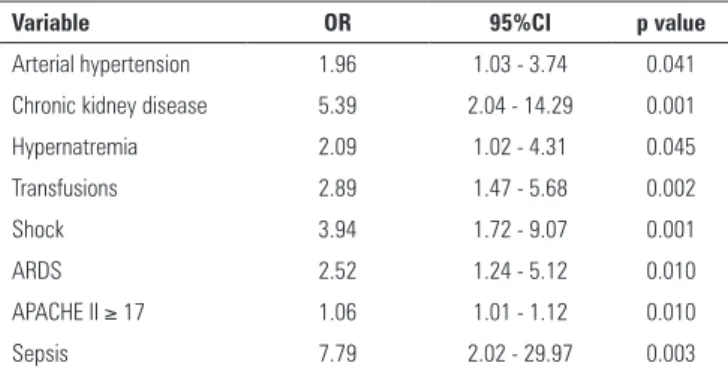
(interquartile range (IQR) 51-79 years). he diagnosis at admission was severe sepsis 36.3%, neurocritical 16.3%, polytrauma 15.2%, and other 32.2%. he incidence of acute kidney injury was 50.1%, and 14.1% of the patients sufered from chronic kidney disease. he incidence of acute septic kidney injury was 75.3%. Mortality in patients with or without acute kidney injury was 41.8% and 14%, respectively (p < 0.001). In the multivariate analysis, the most signiicant variables for acute kidney injury were chronic kidney disease (odds ratio (OR) 5.39, 95%CI 2.04 - 14.29, p = 0.001), shock (OR 3.94, 95%CI 1.72 - 9.07, p = 0.001), and severe sepsis (OR 7.79, 95%CI 2.02 - 29.97, p = 0.003).
Conclusion: he incidence of
acute kidney injury is high mainly in septic patients. Chronic kidney disease was independently associated with the development of acute kidney injury.
In recent years, studies in diferent regions have found that CKD is a strong risk factor for the development of AKI, mainly in septic patients. Currently, CKD is found in 30% of patients who develop AKI in the intensive care unit (ICU).(1,3)
he current diagnosis of AKI is based on the determination of changes in serum creatinine (CrS) and urine output.(4) In the last decade, both the diagnosis and
the classiication of AKI have been standardized according to the criteria set forth in Risk, Injury, Failure, Loss, End-Stage Kidney Disease (RIFLE), Acute Kidney Injury Network (AKIN), and Acute Kidney Injury Kidney
Disease: Improving Global Outcomes (AKI-KDIGO).(3,5)
AKI is an independent risk factor associated with mortality in critically ill patients, mainly as a component of multiple organ dysfunction in patients with severe sepsis.(1,3,6)
he objectives of this study are to evaluate the evolution and mortality of various subgroups of patients with AKI, to analyze the clinical characteristics of septic and non-septic AKI, to determine the incidence of chronic renal failure (CRF) and its relationship to AKI, and to assess factors associated with higher mortality.
METHODS
A prospective, follow-up cohort study was performed at an ICU in the city of Montevideo, Uruguay. We included all patients who entered the ICU during the period from November 2014 to October 2015 who were older than 15 years of age and who had at least two measurements of serum creatinine (CrS). Patients who remained in the ICU for less than 48 hours or who died at that time and patients with CKD who were on hemodialysis or peritoneal dialysis were excluded.
he study was presented to and accepted by the ethics committee of the institution (Asociación Española). Because it was an anonymous study without interventions, the committee did not request informed consent for performing the study. he manuscript was prepared according to the STROBE (Strengthening the Reporting of Observational Studies in Epidemiology) guidelines for
the communication of observational studies.(7)
In the collection of information, variables of interest were included in a pre-established database during ICU admission. hese variables included demographic data (age and sex), personal medical history, use of nephrotoxic drugs in the month prior to admission and during ICU stay, CKD, Acute Physiology and Chronic Health Evaluation
II (APACHE II) score on admission, use of vasopressors and mechanical ventilation, nephrological history (previous AKI, proteinuria, and hematuria), development of AKI in the ICU and need for renal replacement therapy (RRT), creatinine at baseline and on ICU admission, paraclinical examination on admission (blood count, urea, albuminemia, and blood gases), associated ionic alterations during progression, and mortality in the ICU and hospital.
he main variables were deined according to the diagnostic criteria currently set forth in international guidelines. he diagnosis and classiication of AKI was performed according to the AKI-KDIGO criteria, as shown in table 1.(5) he baseline creatinine considered was
the last stable measurement in the patient’s clinical history prior to admission to the ICU. CKD was deined according to CKD-KDIGO criteria and is indicated by the presence of a glomerular iltrate < 60 mL/min/1.73 m2 in the last
three months associated with renal damage markers such as albuminuria, urinary sediment abnormalities, ionic alterations secondary to tubular disorders, abnormal histology, structural alterations in imaging studies, and/or a history of renal transplantation.(8) Patients were
not included in the study if the diagnosis of CKD was uncertain based on analysis of their previous medical histories.
Statistical analysis
Table 1 - Definition and classification of acute kidney injury according to AKI-KDIGO criteria
Definition
1) CrS increase > 0.3 mg/dL in 48 hours.
2) CrS increase > 1.5 from baseline in the last 7 days.
3) Diuresis < 0.5 mL/kg/h for 6 hours.
Classification Serum creatinine Diuresis
Stage 1 Increased CrS > 0.3 mg/dL or CrS 1.5 - 1.9 baseline < 0.5 mL/kg/h for 6 to 12 hours
Stage 2 CrS 2.0 - 2.9 baseline < 0.5 mL/kg/h for > 12 hours
Stage 3 CrS 3 baseline level or need for renal replacement therapy < 0.3 mL/kg/h for > 24 hours or anuria > 12 hours
CrS - serum creatinine.
RESULTS
During the study period, 541 patients were admitted to the ICU; of these, 401 met the inclusion criteria. he median age of the included patients was 68 years (IQR 51 - 79 years) with a range of 18 to 92 years; 56.6% were male. he median APACHE II score at admission was 16 (IQR 11 - 22) and ranged from 2 to 49. he diagnosis at admission to the ICU was as follows: severe sepsis, 36.3%; neurocritical, 16.3%; polytrauma, 15.2%; and other causes, 32.2%. he main co-morbidities were arterial hypertension (50.1%), smoking (27.6%), heart disease (26.3%), neoplasia (20.3%; solid 83.8% and hematologic 16.2%), dyslipidemia (19.8%), and diabetes mellitus (18.6%). Two or more comorbidities were present in 61.7% of the patients. A total of 56 patients (14.1%) were carriers of CKD. Sixteen percent had a prior history of AKI, 12.2% had proteinuria and/or hematuria, and 12.5% had other nephrological pathologies, mainly obstructive (lithiasic or prostatic).
he median number of days spent in the ICU was 3 (IQR 2 - 8), and the median number of days on mechanical ventilation in the population that required ICU stays was 3 (IQR 1 - 9). In patients with and without AKI, the mean ICU stays were 4 days (IQR 2 - 13) and 3 days (IQR 1 - 5), respectively (p < 0.001). he median days on mechanical ventilation in patients with and without AKI were 4 (IQR 2 - 13) and 2 (IQR 1 - 6), respectively (p < 0.001). he overall mortality of the ICU population was 28.1% (n = 112), and hospital mortality was 29.4% (n = 118).
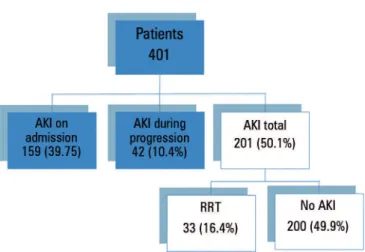
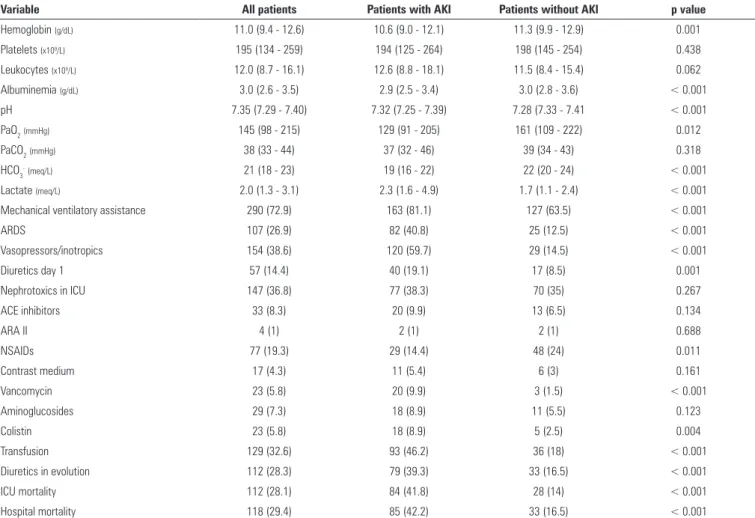
he overall incidence of AKI in the population was 50.1%. Figure 1 shows the general incidence of AKI on admission and during progression in the ICU. he AKI classiication according to AKI-KDIGO criteria was stage I in 37.8% of the patients, stage II in 17.4% of the patients and stage III in 44.8% of the patients. he relationship between mortality and the incidence and classiication of AKI is presented in igure 2. Table 2 shows the general characteristics of patients with and without AKI.
Figure 1 - Incidence of acute kidney injury in the study population.
Figure 2 - Relationship between mortality in the intensive care unit, incidence of acute kidney injury and stage according to AKI-KDIGO. AKI - acute kidney injury. p < 0.001.
In patients diagnosed with severe sepsis, the incidence of AKI was 75.3%. Table 3 compares the characteristics of the patient populations with septic and non-septic AKI.
Table 2 - Clinical characteristics of the population of patients with and without acute kidney injury
Variable All patients Patients with AKI Patients without AKI p value
N (%) 401 (100) 201 (50.1) 200 (49.9)
Age 68 (51 - 79) 72 (60 - 81) 64 (45 - 76) < 0.001
Male 227 (56.6) 113 (56.2) 114 (57) 0.477
APACHE II 16 (11 - 22) 21 (14 - 27) 13 (9 - 17) < 0.001
Arterial hypertension 201 (50.1) 121 (60.2) 79 (39.5) < 0.001
Diabetes mellitus 74 (18.6) 48 (23.8) 26 (13) 0.004
Cardiopathy 104 (26.3) 68 (33.8) 36 (18) < 0.001
Heart failure 56 (14.2) 41 (20.4) 15 (7.5) < 0.001
COPD 30 (7.6) 19 (9.4) 11 (5.5) 0.091
Stroke 39 (9.8) 17 (8.4) 22 (11) 0.250
Obesity 45 (11.4) 31 (15.4) 14 (7) 0.006
Smoking 109 (27.6) 56 (27.8) 52 (26) 0.423
Peripheral vascular disease 16 (4.1) 10 (4.9) 6 (3) 0.222
Alcoholism 37 (9.4) 12 (5.9) 25 (12.5) 0.018
Dyslipidemia 78 (19.8) 35 (17.4) 43 (21.5) 0.195
Hyperuricemia 38 (9.7) 24 (11.9) 14 (7) 0.060
Hepatopathy 17 (4.3) 6 (2.9) 11 (5.5) 0.161
Neoplasia 80 (20.3) 38 (18.9) 42 (21) 0.363
Chronic kidney disease 56 (14.1) 48 (23.8) 8 (4) < 0.001
Previous nephrological pathology 48 (12.2) 36 (17.9) 12 (6) < 0.001
Previous AKI 63 (16) 47 (23.4) 16 (8) < 0.001
Proteinuria and/or hematuria 48 (12.2) 35 (17.4) 13 (6.5) 0.001
Prior nephrotoxics 129 (32.4) 77 (38.3) 52 (26) 0.005
NSAIDs 34 (8.6) 19 (9.4) 15 (7.5) 0.296
ARA II 36 (9.1) 21 (10.4) 15 (7.5) 0.191
ACE inhibitors 48 (12.1) 28 (13.9) 20 (10) 0.141
Contrast media 33 (8.3) 22 (10.9) 11 (5.5) 0.035
Diuretics 33 (8.3) 23 (11.4) 10 (5) 0.013
Aminoglucosides 14 (3.5) 10 (4.9) 4 (2) 0.086
Vancomycin 7 (1.8) 6 (2.9) 1 (0.5) 0.061
Colistin 9 (2.3) 7 (3.4) 2 (1) 0.087
Diagnosis on admission
Sepsis 146 (36.4) 110 (54.7) 36 (18) < 0.001
Neurocritical 65 (16.2) 15 (7.4) 50 (25) < 0.001
Polytrauma 61 (15.2) 18 (8.9) 43 (21.5) < 0.001
Other 129 (32.2) 58 (28.8) 71 (35.5) < 0.001
CrS baseline (mg/dL) 0.88 (0.72 - 1.06) 1.0 (0.81 - 1.20) 0.8 (0.67 - 0.92) < 0.001
CrS admission UTI (mg/dL) 0.98 (0.73 - 1.62) 1.6 (1.10 - 2.80) 0.78 (0.62 - 0.93) < 0.001
Urea (mg/dL) 46 (30 - 79) 77 (46 - 114) 32 (25 - 45) < 0.001
Diuresis (mL) 1300 (800 - 1800) 950 (400 - 1500) 1500 (1200 - 1800) < 0.001
Na+(meq/L) 138 (134 - 141) 138 (133 - 142) 137 (134 - 140) 0.513
K+(meq/L) 3.9 (3.6 - 4.4) 4.1 (3.7 - 4.6) 3.8 (3.5 - 4.1) < 0.001
Ca++ (mmoL/L) 1.10 (1.06 - 1.17) 1.10 (1.03 - 1.15) 1.12 (1.08 - 1.17) 0.001
Cl-(meq/L) 105 (101 - 110) 106 (101 - 111) 104 (100 - 109) 0.012
Glycemia (g/dL) 1.50 (1.19 - 1.87) 1.54 (1.20 - 2.03) 1.50 (1.16 - 1.79) 0.088
Variable All patients Patients with AKI Patients without AKI p value
Hemoglobin (g/dL) 11.0 (9.4 - 12.6) 10.6 (9.0 - 12.1) 11.3 (9.9 - 12.9) 0.001
Platelets (x109/L) 195 (134 - 259) 194 (125 - 264) 198 (145 - 254) 0.438
Leukocytes (x109/L) 12.0 (8.7 - 16.1) 12.6 (8.8 - 18.1) 11.5 (8.4 - 15.4) 0.062
Albuminemia (g/dL) 3.0 (2.6 - 3.5) 2.9 (2.5 - 3.4) 3.0 (2.8 - 3.6) < 0.001
pH 7.35 (7.29 - 7.40) 7.32 (7.25 - 7.39) 7.28 (7.33 - 7.41 < 0.001
PaO2(mmHg) 145 (98 - 215) 129 (91 - 205) 161 (109 - 222) 0.012
PaCO2(mmHg) 38 (33 - 44) 37 (32 - 46) 39 (34 - 43) 0.318
HCO3-(meq/L) 21 (18 - 23) 19 (16 - 22) 22 (20 - 24) < 0.001
Lactate (meq/L) 2.0 (1.3 - 3.1) 2.3 (1.6 - 4.9) 1.7 (1.1 - 2.4) < 0.001
Mechanical ventilatory assistance 290 (72.9) 163 (81.1) 127 (63.5) < 0.001
ARDS 107 (26.9) 82 (40.8) 25 (12.5) < 0.001
Vasopressors/inotropics 154 (38.6) 120 (59.7) 29 (14.5) < 0.001
Diuretics day 1 57 (14.4) 40 (19.1) 17 (8.5) 0.001
Nephrotoxics in ICU 147 (36.8) 77 (38.3) 70 (35) 0.267
ACE inhibitors 33 (8.3) 20 (9.9) 13 (6.5) 0.134
ARA II 4 (1) 2 (1) 2 (1) 0.688
NSAIDs 77 (19.3) 29 (14.4) 48 (24) 0.011
Contrast medium 17 (4.3) 11 (5.4) 6 (3) 0.161
Vancomycin 23 (5.8) 20 (9.9) 3 (1.5) < 0.001
Aminoglucosides 29 (7.3) 18 (8.9) 11 (5.5) 0.123
Colistin 23 (5.8) 18 (8.9) 5 (2.5) 0.004
Transfusion 129 (32.6) 93 (46.2) 36 (18) < 0.001
Diuretics in evolution 112 (28.3) 79 (39.3) 33 (16.5) < 0.001
ICU mortality 112 (28.1) 84 (41.8) 28 (14) < 0.001
Hospital mortality 118 (29.4) 85 (42.2) 33 (16.5) < 0.001
AKI - acute kidney injury; APACHE II - Acute Physiology and Chronic Health Evaluation II; COPD - chronic obstructive pulmonary disease; NSAIDs - non-steroidal anti-inflammatory drugs; ARA II - angiotensin II receptor antagonists; ACE inhibitors - inhibitors of angiotensin-converting enzyme; CrS - serum creatinine; ICU - intensive care unit; Na+ - sodium; K+ - potassium; Ca++ - calcium;
Cl- chloride; pH - concentration of hydrogen ions; PaO
2 - partial arterial oxygen concentration; PaCO2 - partial pressure of carbon dioxide; HcO3 - bicarbonates; ARDS - acute respiratory distress
syndrome. Values are expressed as N (%) and the median (interquartile range). ... continuation
Table 3 - Comparison of patients with acute septic and non-septic kidney injury
Variable Septic AKI Non-septic AKI p value
N 110 91
Age 74 (61 - 82) 70 (57 - 80) 0.292
Male 56 (50.9) 57 (62.6) 0.063
APACHE II 22 (17 - 29) 18 (13 - 24) 0.001
CrS baseline (mg/dL) 1 (0.81 - 1.29) 1 (0.81 - 1.14) 0.883
CrS admission UTI (mg/dL) 1.78 (1.15 - 3.27) 1.52 (1.05 - 2.18) 0.079
Urea (mg/dL) 0.82 (0.56 - 1.22) 0.72 (0.43 - 1.07) 0.56
Diuresis (mL) 800 (300 - 1400) 1100 (500 - 1800) 0.007
Stage I 31 (28.2) 45 (49.5) 0.006
Stage II 20 (18.2) 15 (16.5) 0.006
Stage III 59 (53.6) 31 (34.1) 0.002
RRT 20 (18.1) 13 (14.2) 0.310
Mechanical ventilation 93 (85.3) 70 (76.9) 0.090
Vasopressors 76 (69.1) 40 (44.0) < 0.001
ICU mortality 54 (49.1) 30 (32.9) 0.015
Table 4 - Hydroelectrolytic alterations in patients with and without acute kidney injury
All N (%)
AKI N (%)
No AKI
N (%) p value
Hyponatremia 186 (46.9) 99 (53.2) 87 (46.8) 0.12
Hypernatremia 99 (24.9) 71 (71.7) 28 (28.3) < 0.001
Hyperchloremia 283 (71.1) 161 (56.9) 122 (43.1) < 0.001
Hypocalcemia 234 (59.1) 133 (56.8) 101 (43.2) 0.001
AKI - acute kidney injury.
Table 5 - Multivariate analysis of factors associated with the incidence of acute kidney injury
Variable OR 95%CI p value
Arterial hypertension 1.96 1.03 - 3.74 0.041
Chronic kidney disease 5.39 2.04 - 14.29 0.001
Hypernatremia 2.09 1.02 - 4.31 0.045
Transfusions 2.89 1.47 - 5.68 0.002
Shock 3.94 1.72 - 9.07 0.001
ARDS 2.52 1.24 - 5.12 0.010
APACHE II ≥ 17 1.06 1.01 - 1.12 0.010
Sepsis 7.79 2.02 - 29.97 0.003
OR - odds ratio; CI - confidence interval; ARDS - acute respiratory distress syndrome; APACHE II - Acute Physiology and Chronic Health Evaluation II.
DISCUSSION
Acute kidney injury is a clinical syndrome associated with multiple diseases and pathophysiological mechanisms, including hypoxia, ischemia-reperfusion,
and inlammation, among others.(1) Contemporary
studies using deinitions based on urea and diuresis have generally found minor incidences of AKI. he study by
Uchino et al.,(9) which was conducted in 2000-2001 and
was based on these parameters, reported an incidence of AKI in the ICU of 5.7%.
In our study, the overall incidence of AKI in the ICU was 50.1%. his incidence is similar to that reported in recent studies in which the AKI-KDIGO criteria were also used to deine AKI. However, publications on the epidemiology of AKI report highly variable incidences ranging from 26% to 67%.(1,3,5,9,10) he reported incidence
depends both on the population studied and on the diagnostic criteria used (RIFLE, AKIN, or AKI-KDIGO). A European study of more than 50,000 patients found an incidence of 9% for hospital AKI using the AKI-KDIGO
criteria.(11) he Italian multicenter study by Piccinni et
al., which used the RIFLE criteria, found an incidence of 65.8% for AKI.(12) he work of Zhou et al.,(13) in which
AKI was deined according to the AKIN criteria, found an incidence of 34.1%. he recent multinational study
published by Hoste et al.,(14) in which the AKI-KDIGO
criteria were used, reports that there are signiicant diferences in the incidence and etiology of AKI. he overall incidence reported was 57.3%. In the same study, the incidence of AKI in a subgroup of 244 patients in South America was 53.2%, similar to our results. A recent study conducted in Brazil reported no diference in the prediction of mortality when RIFLE, AKIN, or KDIGO
criteria were used to establish the diagnosis of AKI.(15)
Using the AKI-KDIGO deinition, Srisawat et al. found an incidence of 32% for AKI using CrS as a criterion, with a hospital mortality of 27%.(16)
With respect to the classiication of AKI, the largest group of patients was classiied as stage III (44.8%); stage I and stage II were of lower incidence. his inding can be partially explained by the rapid clinical deterioration of patients who sufer an AKI. In addition, most patients entered the ICU with a diagnosis of AKI (39.7%), and a minor subgroup developed it in the ICU, suggesting that clinical deterioration may be more signiicant and may proceed more rapidly prior to admission.
Table 2 shows that certain variables, including advanced age, APACHE II, and the presence of comorbidities, were signiicantly associated with an increased incidence of AKI. An association between comorbidities and the incidence of AKI was mainly detected for cardiovascular risk factors (arterial hypertension and diabetes mellitus), the presence of heart disease and heart failure, alcoholism, and obesity. he results also show a clear association of the development of AKI with a history of nephrourological pathologies such as CKD, lithiasic and/or tumoral pathology, previous AKI, proteinuria, and/or hematuria and with the use of nephrotoxic drugs, mainly the use of contrast medium and diuretics, both previous to admission and in the ICU. In addition, this association can be explained by a lower functional reserve and an increased risk of AKI in this subgroup of patients. Risk factors such as age, hypovolemia, diabetes mellitus, chronic heart, and respiratory disease are considered to predispose individuals
to the development of AKI.(17)
In the present study, we found a signiicant association between the development of AKI and mortality (Table 2). In addition, mortality was found to be directly related to the classiication of AKI, as shown in igure 2. Previous studies of the epidemiology of AKI showed that the risk
of death increased signiicantly with the level of CrS(10)
and with the stage of progression.(18) he FRAMI study,
an OR of 2.5.(6) Wide variability in outcomes regarding
incidence and mortality is also inluenced by the patients’ prior functional status and by the presence or absence of pathological conditions associated with AKI.(19)
Although the population studied in the present work is heterogeneous, two groups of patients with AKI, septic patients and non-septic patients, can be distinguished, as shown in table 3. he incidence of AKI was signiicantly higher in septic patients than in non-septic patients.
It is known that the development of AKI during sepsis is an independent risk factor associated with higher mortality in critically ill patients.(9) Sepsis and septic shock
are the cause of approximately 50% of cases of AKI in critically ill patients(9), and major surgery ranks second
as a cause in terms of frequency.(19) A study conducted
in Africa also reported that the most common etiology
of AKI was sepsis in 54.9% of cases.(20) Other work in
China reported an incidence of AKI of 54.7% in critically ill patients, with sepsis and septic shock being the most frequent etiology at 49.2%.(21)
In septic AKI, associated mortality rates of 50-60%
have been reported.(22) In our study, we found a crude
mortality rate of 49.1% in septic AKI. In the NEFROINT study, septic AKI had an incidence of 77.8% and a mortality rate of 38%.(12) In septic patients, the results and
evolution of AKI are also inluenced by the therapeutic measures implemented, such as the initial replacement and quality of luids administered, the use of vasopressor drugs, the overload, and accumulated luid balance, among others.(23) In addition, we found that mortality in
septic AKI was signiicantly higher than that in non-septic AKI. In a recent study comparing the clinical features of septic AKI versus non-septic AKI, similar outcomes were reported, with a signiicantly higher mortality in septic than in non-septic AKI.(24) In patients with sepsis, multiple
pathogenic factors such as renal hypoperfusion, altered intrarenal hemodynamics, oxidative stress, inlammation, mitochondrial dysfunction, and others are involved in the
development and progression of AKI.(25) he prognosis of
septic AKI also depends on the degree of recovery of renal
function. In the work of Herrera-Gutierrez et al.,(6) the
total or partial reversibility of AKI in the irst hours of ICU admission was associated with decreased mortality in patients with septic shock.
Ionic alterations such as hyperchloremia, hypocalcemia, and hypernatremia were also associated with an increase in the incidence of AKI, as seen in table 4. Hydroelectrolytic alterations and their magnitudes are also manifestations of the severity of the critical illness and the treatment measures, mainly the administration of luids.
On the other hand, in the presented work, we found that there is a marked relationship between the incidence of AKI and the presence of CKD.
In patients with AKI, a high percentage (16.4%) required implementation of RRT. Mortality was somewhat higher in the group requiring RRT, but the diference was not statistically signiicant. Mortality was associated with the incidence and stage of AKI but not with the requirement for RRT. he observed high incidence of patients with AKI who required RRT can be explained in part by the fact that the study population includes many older individuals and by the severity of the critical illness of the patients in the study; in addition, a large group of the patients in the study were carriers of CKD (14.1%) and therefore had already sufered deterioration in renal function and glomerular iltration and had less functional reserve.
On the other hand, a higher incidence of AKI has been observed during the last decade, and more liberal criteria for the initiation of RRT are applied than were used previously.(14,26) Sepsis and other critical conditions
have been shown to be important risk factors for the
development of AKI requiring RRT.(27) One study in the
United States mentions that despite an increase in the incidence of AKI requiring RRT, hospital mortality in this group of patients has decreased.(28)
Table 5 shows that arterial hypertension, CRF, hypernatremia, transfusions, shock, acute respiratory distress syndrome (ARDS), elevated APACHE II, and sepsis were risk factors associated with a higher incidence of AKI. It is noteworthy that CKD was the variable with the highest percentage of association, which makes it a strong predictor for the development of AKI in critically ill patients. his should be taken into account when administering nephrotoxic drugs and using contrast media. Current strategies for the prevention and management of AKI, including the type of luid used for resuscitation and the timing of RRT onset, have been described, mainly with reference to septic patients with
multiorgan dysfunction and CKD.(29) In addition, risk
factors for perioperative AKI similar to those found in our study have been identiied.(30)
number of patients were recruited, and CrS and diuresis were both considered in the diagnosis of AKI.
Among the limitations of the study are, irst, that it was performed in a single center; second, the demographic characteristics show that it involved a population of elderly patients. his means the results cannot be generalized to all age groups. In addition, we know that the incidence of AKI, as well as its etiology, is inluenced by geographical and socioeconomic factors. Another limitation of this study is that long-term data on the progression of AKI, the need for RRT and mortality were not collected. However, the results are comparable to those reported in a number of publications in which the reported incidence of AKI and the associated mortality are highly variable.
Future perspectives point to the development of speciic methods for the assessment and treatment of critically ill patients. hese methods include adequate monitoring of CKD and diuresis, daily assessment of nephrotoxic drug indications and use, use of balanced crystalloids, and control of potassium supplements with the aim of reducing the incidence of AKI, allowing early diagnosis and improving
the outcomes of patients with AKI in the ICU.(31) New
areas of interest in research that address the prevention and early diagnosis of AKI through nephroprotective drugs and the use of biomarkers of renal damage are currently
being pursued.(32) he implementation of these measures
requires the development of new studies that evaluate the results.
CONCLUSION
he incidence of acute kidney injury in critical patients is high primarily in septic patients. Both the presence of acute kidney injury and its stage are signiicantly associated with higher mortality. he prevalence of chronic kidney disease in critically ill patients is high. Both chronic kidney disease and a history of other renal pathologies are risk factors for the development of acute kidney injury. he requirement for renal replacement therapy was not signiicantly associated with increased mortality in patients with acute kidney injury. he results of this study are similar to those of other studies in our region that have used the same diagnostic criteria.
Objetivo: Describir la epidemiología de la injuria renal aguda, la relación con la enfermedad renal crónica y los factores asociados a su incidencia.
Métodos: Estudio de cohorte y seguimiento en una unidad de terapia intensiva de Montevideo - Uruguay. Se incluyeron pacientes ingresados entre noviembre 2014 a octubre 2015, mayores de 15 años con dos mediciones de creatinina sérica. Se excluyeron pacientes con menos de 48 horas de internación o fallecidos en ese tiempo y portadores de enfermedad renal crónica en hemodiálisis o diálisis peritoneal. No hubo intervenciones. La injuria renal aguda se deinió según criterios Acute Kidney Injury Disease Improving Global Outcomes y la enfermedad renal crónica según Cronic Kidney Disease Work Group.
Resultados: Se incluyeron 401 pacientes, sexo masculino 56,6%, mediana de edad 68 (rango intercuartílico - RIC 51 - 79) años. El diagnóstico al ingreso fue sepsis grave 36,3%,
neurocrítico 16,3%, politrauma 15,2% y otros 32,2%. La incidencia de injuria renal aguda fue de 50,1%. El 14,1% eran portadores de enfermedad renal crónica. La incidencia de injuria renal aguda séptica fue de 75,3%. La mortalidad en los pacientes con o sin injuria renal aguda fue de 41,8 y 14% respectivamente (p < 0,001). En el análisis multivariado las variables de mayor signiicación para la injuria renal aguda fueron enfermedad renal crónica (odds ratio - OR 5,39 IC95% 2,04 - 14,29 p = 0,001), shock (OR 3,94 IC95% 1,72 - 9,07 p = 0,001) y sepsis grave (OR 7,79 IC 95% 2,02 - 29,97 p = 0,003).
Conclusión: La incidencia de injuria renal aguda es elevada principalmente en pacientes sépticos. La enfermedad renal crónica se asoció de forma independiente al desarrollo de injuria renal aguda.
RESUMO
REFERENCES
1. Doi K. Role of kidney injury in sepsis. J Intensive Care. 2016;4:17. 2. Sood MM, Shafer LA, Ho J, Reslerova M, Martinka G, Keenan S, Dial
S, Wood G, Rigatto C, Kumar A; Cooperative Antimicrobial Therapy in SepticShock (CATSS) Database Research Group. Early reversible acute kidney injury is associated with improved survival in septic shock. J Crit Care. 2014;29(5):711-7.
3. Kane-Gill SL, Sileanu FE, Murugan R, Trietley GS, Handler SM, Kellum JA. Risk factors for acute kidney injury in older adults with critical illness: a retrospective cohort study. Am J Kidney Dis. 2015;65(6):860-9. 4. Kellum JA. Diagnostic criteria for acute kidney injury: present and future.
Crit Care Clin. 2015;31(4):621-32.
5. Kidney Disease: Improving Global Outcomes (KDIGO) Acute Kidney Injury Work Group. KDIGO Clinical Practice Guideline for Acute Kidney Injury. Kidney Int Suppl. 2012;2(1):1-138.
6. Herrera-Gutiérrez ME, Seller-Pérez G, Maynar-Moliner J, Sánchez-Izquierdo-Riera JA; Grupo de trabajo “Estado actual del fracaso renal agudo y de las técnicas de reemplazo renal en UCI. Estudio FRAMI. [Epidemiology of acute kidney failure in Spanish ICU. Multicenter prospective study FRAMI]. Med Intensiva. 2006;30(6):260-7. Spanish.
7. von Elm E, Altman DG, Egger M, Pocock SJ, Gotzsche PC, Vandenbroucke JP; STROBE Initiative. The Strengthening the Reporting of Observational Studies in Epidemiology (STROBE) statement: guidelines for reporting observational studies. Lancet. 2007;370(9596):1453-7.
8. Kidney Disease: Improving Global Outcomes (KDIGO) CKD Work Group. KDIGO 2012 Clinical Practice Guideline for the Evaluation and Management of Chronic Kidney Disease. Kidney Int Suppl. 2013;3(1):1-150.
9. Uchino S, Kellum JA, Bellomo R, Doig GS, Morimatsu H, Morgera S, Schetz M, Tan I, Bouman C, Macedo E, Gibney N, Tolwani A, Ronco C; Beginning and Ending Supportive Therapy for the Kidney (BEST Kidney) Investigators. Acute renal failure in critically Ill patients: a multinational, multicenter study. JAMA. 2005;294(7):813-8.
10. Odutayo A, Adhikari NK, Barton J, Burns KE, Friedrich JO, Klein D, et al. Epidemiology of acute kidney injury in Canadian critical care units: a prospective cohort study. Can J Anaesth. 2012;59(10):934-42.
11. Sawhney S, Fluck N, Fraser SD, Marks A, Prescott GJ, Roderick PJ, et al. KDIGO-based acute kidney injury criteria operate differently in hospitals and the community - findings from a large population cohort. Nephrol Dial Transplant. 2016;31(6):922-9.
12. Piccinni P, Cruz DN, Gramaticopolo S, Garzotto F, Dal Santo M, Aneloni G, Rocco M, Alessandri E, Giunta F, Michetti V, Iannuzzi M, Belluomo Anello C, Brienza N, Carlini M, Pelaia P, Gabbanelli V, Ronco C; NEFROINT Investigators. Prospective multicenter study on epidemiology of acute kidney injury in the ICU: a critical care nephrology Italian collaborative effort (NEFROINT). Minerva Anestesiol. 2011;77(11):1072-83.
13. Zhou J, Yang L, Zhang K, Liu Y, Fu P. Risk factors for the prognosis of acute kidney injury under the Acute Kidney Injury Network definition: a retrospective, multicenter study in critically ill patients. Nephrology (Carlton). 2012;17(4):330-7.
14. Hoste EA, Bagshaw SM, Bellomo R, Cely CM, Colman R, Cruz DN, et al. Epidemiology of acute kidney injury in critically ill patients: the multinational AKI-EPI study. Intensive Care Med. 2015;41(8):1411-23.
15. Levi TM, Souza SP, Magalhães JG, Carvalho MS, Cunha AL, Dantas JG, et al. Comparison of the RIFLE, AKIN and KDIGO criteria to predict mortality in critically ill patients. Rev Bras Ter Intensiva. 2013;25(4):290-6. 16. Srisawat N, Sileanu FE, Murugan R, Bellomod R, Calzavacca P, Cartin-Ceba
R, Cruz D, Finn J, Hoste EE, Kashani K, Ronco C, Webb S, Kellum JA; Acute Kidney Injury-6 Study Group. Variation in risk and mortality of acute kidney injury in critically Ill patients: a multicenter study. Am J Nephrol. 2015;41(1):81-8.
17. Nisula S, Kaukonen KM, Vaara ST, Korhonen AM, Poukkanen M, Karlsson S, Haapio M, Inkinen O, Parviainen I, Suojaranta-Ylinen R, Laurila JJ, Tenhunen J, Reinikainen M, Ala-Kokko T, Ruokonen E, Kuitunen A, Pettilä V; FINNAKI Study Group. Incidence, risk factors and 90-day mortality of patients with acute kidney injury in Finnish intensive care units: The FINNAKI study. Intensive Care Med. 2013;39(3):420-8.
18. Mandelbaum T, Scott DJ, Lee J, Mark RG, Malhotra A, Waikar SS, et al. Outcome of critically ill patients with acute kidney injury using the Acute Kidney Injury Network criteria. Crit Care Med. 2011;39(12):2659-64. 19. Rossaint J, Zarbock A. Acute kidney injury: definition, diagnosis and
epidemiology. Minerva Urol Nefrol. 2016;68(1):49-57.
20. Oluseyi A, Ayodeji A, Ayodeji F. Aetiologies and short-term outcomes of acute kidney injury in a tertiary centre in Southwest Nigeria. Ethiop J Health Sci. 2016;26(1):37-44.
21. Shum HP, Kong HH, Chan KC, Yan WW, Chan TM. Septic acute kidney injury in critically ill patients - a single-center study on its incidence, clinical characteristics, and outcome predictors. Ren Fail. 2016;38(5):706-16. 22. Mårtensson J, Bellomo R. Sepsis-induced acute kidney injury. Crit Care
Clin. 2015;31(4):649-60.
23. Honore PM, Jacobs R, Hendrikx I, Bagshaw S, Joannes-Boyau O, Boer W, et al. Prevention and treatment of sepsis-induced acute kidney injury: an update. Ann Intensive Care. 2015;5(1):51.
24. Cruz MG, Dantas JG, Levi TM, Rocha MS, Souza SP, Boa-Sorte N, et al. Septic versus non-septic acute kidney injury in critically ill patients: characteristics and clinical outcomes. Rev Bras Ter Intensiva. 2014;26(4):384-91.
25. Regueira T, Andresen M, Mercado M, Downey P. Fisiopatología de la insuficiencia renal aguda durante la sepsis. Med Intensiva. 2011;35(7):424-32.
26. Oppert M. Timing of renal replacement therapy in acute kidney injury. Minerva Urol Nefrol. 2016;68(1):72-7.
27. Ricci Z, Romagnoli S, Ronco C. Renal Replacement Therapy 2016 [version 1; referees: 4 approved]. http://doi.org/10.12688/f1000research.6935.1 28. Brown JR, Rezaee ME, Hisey WM, Cox KC, Matheny ME, Sarnak MJ.
Reduced mortality associated with acute kidney injury requiring dialysis in the United States. Am J Nephrol. 2016;43(4):261-70.
29. Pakula AM, Skinner RA. Acute kidney injury in the critically ill patient: a current review of the literature. J Intensive Care Med. 2016;31(5):319-24. 30. Goren O, Matot I. Update on perioperative acute kidney injury. Curr Opin
Crit Care. 2016;22(4):370-8.
31. Bagshaw SM. Acute kidney injury care bundles. Nephron. 2015; 131(4):247-51.