• Nenhum resultado encontrado

The effect of diabetes mellitus on the presentation of depression in a primary care population in Saudi Arabia

N/A
N/A
Protected

Academic year: 2021

Share "The effect of diabetes mellitus on the presentation of depression in a primary care population in Saudi Arabia"

Copied!
50
0
0

Texto

(1)

1

THE EFFECT OF DIABETES MELLITUS ON THE PRESENTATION OF

DEPRESSION IN A PRIMARY CARE POPULATION IN SAUDI

ARABIA

DR. ABDULLAH DUKHAIL AL-KHATHAMI,

MBBS, ABFM, FFCM, MSc Med Edu (Cardiff-UK), DTQM,

Diploma PMHC (Nova-Lisbon)

Master's Dissertation to obtain the Master's Degree in Primary Care Mental Health

NOVA Medical School | Faculdade de Ciências Médicas

(2)

2

THE EFFECT OF DIABETES MELLITUS ON THE PRESENTATION OF

DEPRESSION IN A PRIMARY CARE POPULATION IN SAUDI

ARABIA

DR. ABDULLAH DUKHAIL AL-KHATHAMI

Supervisor(s): Professor Lucja Kolkiewicz MRCPsych, IFAPA

Faculty Member International Masters Degree in Primary Care Mental Health

Nova University Lisbon Portugal

Master's Dissertation to obtain the Master's Degree in Primary Care Mental Health

(3)

3

Table of Contents

1. Acknowledgement

……….

5

2. Abstract ……….

6

3. Introduction ………

7

3.1. Study Rationale ………....……….. 10

3.2. Aim ………..………. 10

4. Literature Review ……….…….. 11

4.1. Epidemiology ………..…….. 11

4.2. Correlation Between Depression and Diabetes ……… 12

4.3. Depression and Diabetes Comorbid Burden ……….. 13

4.4. Antidepressant and Diabetes ………..……….

14

4.5. Diagnosis and Management of Depression in a Comorbid Depression

and Diabetes ………....………...

14

4.6. Collaborative Care ……….……….

17

5. Methods ………

19

5.1. Study Setting ………...

19

5.2. Sampling Procedure……….

19

5.3. Depression Assessment ………..………..

19

5.4. Satisfaction Assessment ………..………..

19

5.5. Missed Cases by PHC Doctors……..……….. 20

5.6. Data Collection ………...

20

5.7. Statistical Analysis ……….………..

20

5.8. Ethic Issue ………..

21

6. Results ……….

22

(4)

4

6.2. Table 1: Comparison between depressive cases with and without

diabetes mellitus according to the basic physical and laboratory

findings ……….

23

6.3. Table 2: Effect of DM on depressive patients’ socio-characters ……….

24

6.4. Table 3: Satisfaction level among depressive patients co-morbid with

DM and not comorbid ………

25

6.5. Table 4: Comparison between diagnosed depression and missed

cases as related to diabetes mellitus ………..

26

7. Discussion ……….

27

8. Conclusion ………

30

9. Limitation ………. 30

10. Abbreviation ……….. 31

11. References ………

32

12. Appendix ..……… 41

13. Questionnaire & data sheets – English version………

42

(5)

5

Acknowledgement

Perseverance is an attribute that allows anyone to accomplish a daunting task in life. I

am full of gratitude to Almighty Allah for bestowing me such an attribute; it

ameliorated in transcribing the dream into a real.

I would like to extend my gratitude thanks and appreciation to my supervisor Dr. Lucja

Kolkiewicz for her support and help for production of this work.

Hats off to The Nova University Lisbon Portugal stuff for sponsoring the postgraduate

MSc PMHC program and providing a chance for graduating specialists in the field of

PMHC services.

Special thanks and gratefulness for my brother and mentor Prof. Gabriel Ivbijaro for his

guidance, support, and encouragement my promotion in the field of PMHC.

Finally, a bundle of thanks to my family for enhanced caring and sharing attitude

during intellectual infatuation for this project.

(6)

6

Abstract

Background: Depression is a common disorder with more than 300 million people

worldwide. The comorbidity of depression and diabetes has a high prevalence rate.

Collaborative care in diabetes should include screening for depression and patients

with depression should be screened for diabetes for better patients care outcome.

Objective:

To identify the effect of diabetes mellitus on the depression presentations in

the primary-care centers.

Method: A

case-control study was conducted at 11 PHC centers during April-May, 2017.

Out of 185 patients who fulfill the study criteria, 74 who had depression with

co-morbid with diabetes formed the Case-sample, 111 depressed patients not co-co-morbid

formed the Control sample.

PHQ-9 used as the diagnostic tool for depression. The satisfaction level and patients’

file were assessed and explored the diagnosed and missed cases by the PHC doctors.

Data were analyzed using SPSS version 20. Odds ratios (OR) demonstrated with their

95% confidence intervals (CI) and P–value < 0.05.

Results: Comorbid depression and diabetes have a significantly high mean of TG and

HbA1c. Physical activity and sleep pattern were better among comorbid cases. At the

same time, they were unsatisfied with their care in the PHC centers.

Most of the depressant patients were missed by their PHC doctors (74%), that worse

when the patients had comorbid with diabetes (85%) with significantly different

(p-value=0.005).

Conclusion:

In diabetic patients, depression is mostly missed by the PHC physicians.

Therefore, depression should be predicted in diabetic patients particularly,

uncontrolled diabetes, unsatisfied patients. integrated depression management in

diabetic care is necessary to improve clinical outcomes and reduce the burden of

illness

Keywords: Diabetes, depression, comorbid depression, integrated mental health care, PHC,

Saudi Arabia.

(7)

7

Introduction

Depression is a common disorder, more than 300 million people worldwide are

suffering from depression, according to the World Health Organization

1

. Depression

has a negative economic impact on governments, employers, and households. It

causes a drop in the worldwide productivity, costing the global economy more than $1

trillion, and annual death rate of 800,000 worldwide

1

.

Depression is twice as common in diabetic patients as in the general population, and

co-morbid depression and diabetes are associated with poor outcomes. A recent study

by this author and his collaborators demonstrated that the prevalence of depression

among diabetic patients is 48.7%

(2)

. Depression presents in one of every four people

with type 2 diabetes mellitus and increases the risk of the development of diabetes

and the subsequent risks of hyperglycemia, insulin resistance, and micro- and

macrovascular complications. Conversely, a diagnosis of diabetes increases the risk of

depression incident and its severity

3

.

Co-morbid depression and diabetes have a high prevalence rate

4

. Depression in

diabetic patients increases the risk of developing diabetic complications, disability, and

early mortality. A meta-analysis study was done by de Groot (2001) to test the

strength and consistency of the relationship between depression, and diabetes

complications showed a significant association between depression and a variety of

diabetes

complications;

diabetic

retinopathy,

nephropathy,

neuropathy,

macrovascular complications, and sexual dysfunction

5

.

However, Diabetes is considered as one of the risk factors for depression particularly

among those who are using insulin compared with noninsulin medications

6,7

. The

(8)

8

mortality risk in diabetic patients increased in the presence of depression or anxiety,

and highest for depression

8

.

There is evidence that shows that depression and type 2 diabetes may share the same

biological markers and risk factors such as overactivation of innate immunity leading to

a cytokine-mediated inflammatory response, and potentially through dysregulation of

the hypothalamic-pituitary-adrenal axis

9

. Eventually, understanding of shared origins

of depression and diabetes could offer the potential to treat and improve outcomes of

both disorders simultaneously, which are targets for primary prevention of type

2 diabetes

9

. Other reports show that depression and diabetes mellitus occur together,

approximately twice as frequently as occurring alone

10

and have a bi-directional

association

11,12

.

Other studies show that patients with depression have a 37 % increased risk of

developing diabetes

13

, and depression increases by 15 % in people who have

diabetes

14

. Depression is common among people with diabetes and negatively affects

diabetic control

15

.

Chen et al. (2013) indicated an association for depression predicting the onset of

diabetes

11

. The combination of both disorders worsens the outcome of either

condition. This association also worsens the quality of life, worsens self-management,

increases the incidence of complications, and life expectancy

16

, and the costs of

treatment increase significantly

17

.

The presence of diabetes affects depressive symptom control; the symptoms appear to

be persistent in 73 % of people 12 months after a diabetes occurrence

18

. The relapse

rate for depression is 79 % over a 5-year period

19

. Consequently, depressive episodes

(9)

9

with diabetes are more likely to be persistent and relapse more. In contrast,

depressive symptoms usually last 8–12 weeks when occurs alone

6

. The development of

two or more diabetes complications showing the strongest association with

depression

5,20

. Lin et al. (2004) found that major depression in PHC settings affects the

physical activity, unhealthy diet, and lower adherence to oral hypoglycemic,

antihypertensive, and lipid-lowering medications negatively

21

. Thus, t

he

evidence

recommends the need to have an effective diagnosis and management of depression

in diabetic patients

22

.

The evidence from the literature suggests that health promotion in people with

diabetes should include screening for depression and vise versa

21

. In this study, I will

explore the effects of diabetes mellitus on depressive symptoms in a population of

people attending primary care clinics in Saudi Arabia.

(10)

10

Study Rationale:

PHC/Family doctors need to predict the symptoms of depression among diabetic

patients for early diagnosis and management. Hopefully, the better outcomes of both

depression and diabetes mellitus care. This was supported by recommended by Guo et

al. (2015) that, working on minimizing depressive symptoms may enhance depression

and diabetes adaptation concerning metabolic control and quality of life

23

.

Aim:

To identify the effect of diabetes mellitus on the depression presentations in the

primary-care centers.

(11)

11

Literature Review:

Epidemiology:

A National Health Interview Survey (NHIS) involved 30,022 adults done in the USA and

found that diabetic patients had a high prevalence rate (77.8%) of comorbid major

depression

24

. also they stated that depression and diabetes had higher likelihoods of

functional disability compared with individuals with either diabetes or major

depression alone. It showed those who do not have diabetes and no major depression

(24.5%); major depression (51.3%); diabetes (58.1%). The functional disability is 2.42

(2.10–2.79) for diabetes, 3.00 (95% CI 2.62–3.42) for major depression

24

.

A study conducted by Talbot and Nouwen (2000) concluded that the initial onset of

major depressive disorder seems to be independent of the onset of type 2 diabetes

25

.

Moreover, in both type 1 and type 2 diabetes; diabetes-related psychological and

physiological processes may be involved in the higher recurrence and longer duration

of depressive symptoms

25

. It is estimated that 50% of co-morbid patients remain

undiagnosed and more than that was untreated

26,27

.

Diabetes and depression are highly prevalent condition and have a significant impact

on health outcomes. Both disorders with significant morbidity, mortality, and

healthcare cost. Coexisting depression in diabetic patients is associated with fewer

adherences to treatment, poor metabolic control, higher complication rate, decrease

the quality of life, increased health care use and cost, increased disability and loss

production, and increase the risk of death. Coordinated strategies for clinical care are

necessary to improve clinical outcomes and reduce the burden of illness

28

.

(12)

12

Depressive patients are more likely to be less active, unhealthy diets, which may

contribute to the increased risk of developing type 2 diabetes

29,30

. Presence of

depression among diabetic patients leads to nonadherence to self-care

management

31,32

.

Disrupted sleep patterns are associated with depression

33

, and poor sleep quality and

altered circadian rhythms have been shown to increase insulin resistance and risk of

type 2 diabetes

34

. A meta-analysis showed that depression is weakly associated with

insulin resistance, a potential link to type 2 diabetes incident

35

.

A systematic review study found that, no difference in the rates of depression between

those with undiagnosed diabetes, those with impaired glucose metabolism, and

people with normal glucose metabolism

36

.

Correlation between Depression and Diabetes

There have been many studies examining the relationship between diabetes and

depression and they suggest that the association between depression and diabetes is

bi-directional

37,38

. In type 2 diabetic patients, the rates of depression are higher with

using insulin compared with noninsulin or dietary and lifestyle modification alone

7,39

.

The presence diabetic complications, particularly sexual dysfunction and painful

peripheral neuropathy found to be predictable for depression incidence

5,40

.

Depression and diabetes are associated with the hypothalamic-pituitary adrenal (HPA)

axis dysfunction, which acts as subclinical hypercortisolism, blunted diurnal cortisol

rhythm, or hypocortisolism with impaired glucocorticoid sensitivity, and increased

inflammation

41

. In an extensive epidemiological literature review done by Goodnick

(13)

13

(2001) focused on the biochemistry of diabetes, involved animal and human, explored

the effects of alterations in catecholamines and serotonin on glucose utilization

42

.

Clinical consequences of comorbid depression and diabetes, a cohort study for 13

years completed 1,897 depressive patients were interviewed in 1981, to determine

whether depression is associated with an increased risk for onset of diabetes. It found

major depressive disorder signals increased the risk for onset of type II diabetes, but

not milder forms of depression or other forms of psychiatric disorder (R.R=2.23). This

relation not affected by age, race, sex, socioeconomic status, education, use of health

services, other psychiatric disorders, and body weight. However, there is a possibility

that the treatment for depression led to an earlier diagnosis of diabetes

43

.

Depression and Diabetes Comorbid burden:

The clinical burden of disease, Egede et al. (2002) studied the odds of diagnosed

depression among diabetic patients and its effects on health care use and

expenditures. They found diabetic patients with depression had a significantly higher

outpatient care use as compared without depression (P<0.0001) and had more

prescriptions (P<0.0001), and the total health care expenditures for depressive

patients was 4.5 times higher than that without depression (P<0.0001)

44

.

A study done by Katon et al. (2008) examined the long-term effects on total health

care costs of depression intervention program for diabetic patients’ comorbid

depression at the primary care level. They concluded that patients who had depression

management had improved outcomes and reduced 5-year mean total medical costs

(14)

14

compared with usual care patients. Also, they found that the cost differences were

largely explained by the presence of non-managed depression and comorbidity

45

.

A population-based National Health and Nutrition Examination Survey, was published

in 2005, evaluated the effect of depression on all-cause and coronary heart disease

(CHD) mortality among adults with and without diabetes. It proved that the

coexistence of diabetes and depression is associated with a significantly increased risk

of death from all causes, higher that due to having either diabetes or depression

alone

46

. Egede (2004) proved that coexisting depression in diabetic patients is

associated with significant increases in mean disability bed days, increases the odds of

extended work loss, and extended disability bed days

24

.

Antidepressants and Diabetes

Tricyclic-antidepressants plays a role in increasing of catecholamines which appears to

increase glucose and reducing insulin release and sensitivity to insulin. In contrast, a

selective serotonin reuptake inhibitor (SSRI) increases serotonergic function seems to

increase sensitivity to insulin and reduce plasma glucose

42

. Add to that, SSRI

demonstrated its usefulness in diabetic patients, with weight loss, in a decrease in the

FPG and the HbA1c levels. Lifestyle factors are suggested to have a role in the

comorbidity of depression and diabetes

42

.

Diagnosis and Management of Comorbid Depression and Diabetes

Depression diagnosis requires a validated interview to consider its diagnosis

47,48

. A

quick and cheaper method is needed to screen people in PHC settings

49

. SSRI is the

drug of choice, less cardiotoxic and is safer in overdose, for diabetic patients

50

. When

(15)

15

diabetic patients have an intervention for depression management were more likely to

be well-controlled (HbA1c < 7%) as compared with in comparison with patients in the

usual care group, diabetic without depression intervention

51

. Intervention integrating

treatment of type 2 diabetes and depression becomes necessary and be a core of

diabetic patient care. Such approach was proved to be successful in improving

outcomes in primary care (P<.001)

51

.

Therefore, integrated approach to depression and type 2 diabetes treatments cost

effeteness for its disposition in real practices with competing demands for limited

resources

51

. A reviewed study indicated that there is evidence that suggests

psychosocial interventions particularly CBT with effective in improving depression in

patients with diabetes. However, these interventions are not consistently associated

with improvement in markers of glycemic control (HbA1c levels)

52

.

A systematic review and meta-analysis of psychological therapies to assess their

effectiveness in improving glycaemic control in type 2 diabetes showed the mean

percentage glycosylated hemoglobin was lower in people assigned a psychological

intervention than in the usual care; psychological distress was significantly lower in the

intervention groups. In the interpretation of type 2 diabetes, there are improvements

in long-term glycaemic control and psychological distress

53

.

Another review study done by Hermanns et al. (2013) summarized the importance of

appropriate screening, diagnosis, and treatment of depression in chronic illness,

particularly diabetic patients. They concluded that integrating mental health care

among chronic medical ill patients provides a more objective and holistic evaluation; in

(16)

16

stepped care and collaborative management care models, it improves treatment

outcomes without overwhelming existing resources

54

.

A meta-analysis found that depression was significantly associated with nonadherence

to nonadherence to self-care management and diabetes treatment instructions such

as missed medical appointments, diet, exercise, medication use, glucose monitoring,

and foot care

55

.

Self-assessment questionnaires can dramatically improve depression detection rates.

Complementing such screening with assessments of psychological distress can have an

additional and complementary impact on individual self-care

56,57

. Newly diagnosed

diabetic patients were 30% more likely to have the previous history of depression

compared with people without diabetes. Depression increases the risk of developing

diabetes by 23% in younger adults (20-50 years of age), but not in aged 51 years or

more

58

.

Elderly depressed patients with diabetes when they had depression care management

in PHC, they were less likely to die over a 5-year interval as compared with depressed

diabetic patients who in usual care practices

59

. The risk of depression among diabetic

patients increased in prior depression history and cardiovascular procedures

60

. There is

evidence of depression significantly increases the mortality rate among diabetic

patients. Thus, early depression detection and treatment may improve the health

outcomes

61

.

(17)

17

Collaborative care

Collaborative care showed a significantly better outcome, in depression and diabetes

management and patients’ adherence to treatment instructions, as compared with

usual care. These findings emphasize on applying the collaborative care for diabetic

patients with depression

62

. For that, it could have explained by recognizing the

diagnosis, the management load, and complications occurrence are associated with

depressive symptoms rather than biological mechanisms such as hyperglycemia

6

.

Therefore, considering the psychological burden associated with diabetes diagnosis

need psychosocial support at the diagnosis time

6

. Comorbid depression adversely

affects diabetes outcomes and decreases the quality of life

63

.

In children and adolescents, there is a clearer relationship between depressive

symptoms and poorer glycemic control

37

. Depression, even if mild, is also associated

with premature mortality through a range of physical conditions

61

.

For patients with comorbid physical and mental illness, the UK Disability Rights

Commission (2006) has highlighted the concept of “overshadowing” where healthcare

focus on the mental disorder and fail to provide the care of physical health needs

64

. In

contrast, poorer diabetes care for a patient with mental illness, less likely to screen

diabetes

65

.

Thus, depression and other mental disorders are not diagnosed with diabetes or other

physical illness

66,67

. These types of systematic deficiencies within healthcare systems

may contribute significantly to the poorer health outcomes seen in those with

comorbid diabetes and depression. Combined behavioral and psychotropic depression

(18)

18

with diabetes management in collaboration approach in PHC, improved depressive

symptoms as well as glycemic and blood pressure control

68

. Comorbid diabetes and

depression have increased direct and indirect health care costs

69

.

Such model of care seems to be cost-effective as well as clinically effective, and less

out-patient costs

70-72

, which is lacking worldwide. Work is needed to implement of

comorbid management model to serve comorbid morbidity patient in the PHC

settings

6

. Most health services are poorly equipped to deal with comorbidity and,

therefore, novel care pathways are needed to address this important public health

problem

6

.

Multidisciplinary team approaches to diagnose and manage of depression in PHC

settings that incorporate high-risk cases, and psychotropic medications using a

stepped-care approach shown to be the most effective clinical outcomes and positive

improvements in depression outcomes among diabetic patients

26

.

Therefore, the collaborative management considering mental health and physical

problems in a holistic approach is a cost-effective and reducing the health care

utilization, thus screening for co-morbid depression proves to be cost-saving

54

.

(19)

19

Methods

Study setting:

This case-control study was conducted at the PHC centers (11 centers) in Al-Khobar

city, Saudi Arabia.

Sampling procedure:

Out of the 388 patients invited to participate in this study during April-May, 2017, 368

patients completed the questionnaire with respond rate of (95%). Out of them, 185

patients who fulfill the study criteria; who had depression only or depression comorbid

with diabetes were included in the study. Only 74 patients who had depression with

co-morbid with diabetes, and formed the Case-sample. The rest 111 depressed

patients not co-morbid with diabetes formed the Control sample.

Depression Assessment:

Patient Health Questionnaire-9 (PHQ-9) used as the diagnostic tool for depression

73

. It

was modified from PHQ-8 and has been used in several hundred studies to assess both

mentally and physically ill patients

74

, including studies with patients with diabetes

74

.

PHQ-9 score > 5 was considered as positive for depression.

Satisfaction Assessment:

The satisfaction level among depressive patients was assessed by a direct question

about their satisfaction regarding the care which providing to them in the PHC center

for their condition. The patients' perception was assessed by a 5-scaled question; 1 is

the lowest level, and 5 is the highest satisfaction level.

(20)

20

Missed cases by PHC doctors:

The studied patients' file was reviewed to define the depressant patients who were

diagnosed by their PHC doctors, and those who not diagnosed before. Those who were

not diagnosed and only discovered by the screening tool were considered as missed

cases.

Data collection:

Data collection was a two-stage process:

Stage one: A self-administered questionnaire was completed by participants to gather

socio-demographic information, information about the chronic disease and lifestyle.

All participating patients were asked to complete a PHQ-9

an Arabic version.

There two

trained persons for interpretation and filling the questionnaires for illiterate patients.

Stage Two: The patient medical records/files review for all patients who filled the

questionnaire to obtain information about weight, height, BP, lab tests profile,

complications, and treatments.

Statistical analysis:

Data were entered and analyzed using SPSS version 20. Data were presented as Mean

± SD for quantitative data, and number (N) and percentage (%) for qualitative data.

Student t-test, Chi-square test, biserial correlation were used when appropriate. Odds

ratios (OR) demonstrated with their 95% confidence intervals (CI) and P–value,

considered significant at p-value < 0.05.

(21)

21

Ethic issue:

Administrative permission, as well as Institutional Review Board approvals, were

obtained from the MOH in Eastern Province of Saudi Arabia, and Informed consent

obtained from all participants.

(22)

22

Results

From 388 questionnaires were distributed, 368 were completed and retained with a

response rate of 94.8%, females formed 51.4% (n=189). Out of them, 185 patients

filled the study criteria, depression only or depression comorbid with diabetes. The

case-sample was 74 patients who had depression with co-morbid with diabetes, and

111 depressed patients not co-morbid with diabetes.

Socio-demographic characteristics of the studied sample:

The distribution of the studied sample according to socio-demographic characteristics

demonstrated that there is no significant difference between the case and control

samples. The mean age (± standard deviation) of the studied sample was 44.7 years ±

11.6. More than half of the participants (68.6%) were female. The majority of the

studies sample were married (75.7%). Sixty percent (60%) of the participants had their

own house.

Regarding the education level among the studied sample, 15.1% was illiterate, 30.3%

and 27% were of primary and secondary education respectively, while 27.6% had

university and postgraduate education.

(23)

23

Table (1) shows no difference between depressive cases with and without diabetes

mellitus according to the weight and blood pressure, cholesterol, and vitamin serum D

level. But, the depressive comorbid patients had a significant difference in their

diastolic reading, and LDL level was less than depression without diabetes. That could

be related to diabetic control management i.e. diet and lifestyle modification.

Table (1) Comparison between depressive cases with and without diabetes mellitus

according to the basic physical and laboratory findings, (PHQ-9 score > 5).

Depression

comorbid with DM

(N=74)

Depression

without DM

(N=111)

P-value

Mean ± SD

Mean ± SD

Weight

80.76 ± 16.9

78.84 ± 19.5

0.489

Height

158.07 ±15.7

160.03 ± 12.8

0.355

BMI

31.44 ± 6.8

30.64 ± 9.7

0.541

SBP

125.84 ± 14.9

122.5 ±17.8

0.186

DBP

72.97 ± 8.0

77.15 ± 11.4

0.007

FBG

168.5 ± 67.9

93.82 ± 13.0

<0.0001

HBA1c

8.65 ± 2.1

6.42 ± 5.2

<0.001

TG

164.85 ± 98.3

124.9 ± 44.2

<0.0001

Total cholesterol

186.51 ± 38.2

188.43 ± 35.1

0.724

LDL

105.69 ± 32.7

114.77 ± 33.6

0.07

HDL

46.71 ± 15.4

48.56 ± 10.9

0.341

Vitamin D

17.87 ± 4.2

20.08 ± 10.3

0.082

(24)

24

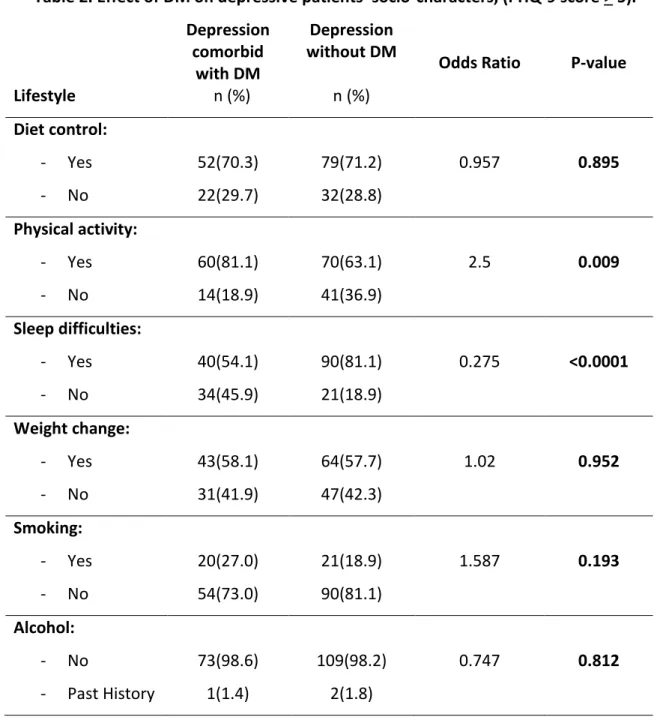
Table-2 demonstrates that the physical activity and sleep pattern is a better

significantly difference among depression comorbid with diabetic comparing without,

p-value= 0.009, <0.0001, respectively. Other habits such diet control, weight change,

smoking, and alcohol intake have no significant difference.

Table 2. Effect of DM on depressive patients’ socio-characters, (PHQ-9 score > 5).

Lifestyle

Depression

comorbid

with DM

n (%)

Depression

without DM

n (%)

Odds Ratio

P-value

Diet control:

- Yes

- No

52(70.3)

22(29.7)

79(71.2)

32(28.8)

0.957

0.895

Physical activity:

- Yes

- No

60(81.1)

14(18.9)

70(63.1)

41(36.9)

2.5

0.009

Sleep difficulties:

- Yes

- No

40(54.1)

34(45.9)

90(81.1)

21(18.9)

0.275

<0.0001

Weight change:

- Yes

- No

43(58.1)

31(41.9)

64(57.7)

47(42.3)

1.02

0.952

Smoking:

- Yes

- No

20(27.0)

54(73.0)

21(18.9)

90(81.1)

1.587

0.193

Alcohol:

- No

- Past History

73(98.6)

1(1.4)

109(98.2)

2(1.8)

0.747

0.812

(25)

25

Table (3) demonstrates that the satisfaction level among depressive patients without

co-morbid diabetes mellitus is significantly high as compared with depressive patients

when they have a comorbid with diabetes, the Odds Ratio=0.268 (CI=0.097-0.742).

Table 3. Satisfaction level among depressive patients co-morbid with DM and not

comorbid, (PHQ-9 score > 5).

Most of the depressant patients (74%) in our sample were missed by their PHC doctors

especially when the patients had comorbid with diabetes (85%). This is reflecting how

the comorbid with diabetes affected worse the doctors’ ability to discover the

depression in PHC centers, as illustrated in table-4.

DM

(N=74)

n (%)

No DM

(N=111)

n (%)

Odds Ratio

P-value

Satisfaction:

- Yes

- No

61 (82.4)

13 (17.6)

105 (94.6)

6 (5.4)

0.268

0.008

(26)

26

Table 4. Comparison between diagnosed and missed depressive patients by PHC

doctors related to the presence of diabetes mellitus, (PHQ-9 score > 5).

Depression

Total

n (%)

DM

n (%)

No DM

n (%)

Odds Ratio

P-value

- Diagnosed by PHC Doctors

- Missed by PHC doctors

48 (26)

137 (74)

11(15)

63(85)

37(33)

74(67)

0.349

0.005

The patients with depression and comorbid with diabetes scored a significantly higher

for the sleep disturbance, feeling tired, loss of concentration, and prefer to die as

compared with depressive patients only, p-value= (0.035), (0.018), (0.005), (0.006)

respectively.

(27)

27

Discussion

This study is the first study, up to known to the author, studied the effect of diabetes

mellitus on the depression presentation in Saudi Arabia.

The socio-demographic characteristics testing supports the accuracy of the case and

selective control process. Where there is no significant difference between the cases

and the control candidates, and the relation between depression alone and presented

with comorbid with diabetes not affected by their age, gender, marital status,

education level, occupation, income, and BMI, it goes consistency with Eaton et al.

(1996) findings

43

.

Table-1 shows no difference between depressive cases with and without diabetes

mellitus according to the weight and blood pressure, cholesterol, and vitamin serum D

level. But, the comorbid depressive patients with diabetes have a significant difference

in their diastolic reading, and LDL levels were less than depression without diabetes.

That could be related to diabetic control management, i.e., diet and lifestyle

modification. However, in our sample the diabetic patients’ comorbid with depression

have a significantly high mean of TG and HbA1c which indicates an uncontrolled DM

related to the presence of depression. This finding is supported by other studies which

showed a strong linear relationship as scored high on the PHQ-9 had higher HbA1c

76,77

.

As approved by Bot et al., (2013) that, a higher HbA1c level indicated more with

comorbid diabetes coexisted with depression

78

. This finding supports the needs for the

integrating treatment of both disorders by PHC doctors for better patient care, which

supported by the Bogner et al., (2012), and the Hermanns et al. (2013) findings

51,54

.

(28)

28

Table-2, both physical activity and sleep pattern are better among diabetic comorbid

with depression comparing. In contrary, sleep disturbance which significant associated

with predicting diabetes, which is concomitant with others studies finding

78-80

.

However, other habits such diet control, weight change, smoking, and alcohol intake

didn’t demonstrate an effect. In general as cited in different studies, depressive

patients are more likely to be less active, unhealthy diets, which may contribute to the

increased risk of developing type 2 diabetes

29,30

. The health education receiving in the

diabetic clinic follow-up could help in improving the physical activity among diabetic

comorbid with depression comparing without combined. Add to that; sleep pattern is

better among comorbid could frequent visit to the diabetic clinic plays a role as a

supportive therapy or consequent effect of physical activity improvement. These

behaviors should be considered in the diabetic clinic education hopefully, would

contribute to the depression management, which was emphasized on applying the

collaborative care for diabetic patients with depression by Huang et al., (2013)

62

.

Table (3) demonstrates that comorbid depression and diabetes were significantly

unsatisfied for their care in the PHC centers. We keep in mind in this study most of the

depressive patients not aware of their diagnosis, only discovered by screening.

Therefore, this finding could be related to the load of the morbidity and the

commitments to the regular follow-up which, could affect adversely on the patients

psychologically. It is supported by Guo et al. (2015) findings that, increase

depressive

symptoms was associated with less patients’

satisfaction

23

.

Biochemistry of

both depression and diabetes

could have a role,

increase the cortisone, and alter the

catecholamines, and serotonin levels

41,42

.

(29)

29

Table-4 Most of the depressant patients among the participants were missed by their

PHC doctors, that worse when the patients had comorbid with diabetes. It is reflecting

how the comorbid with diabetes worse the doctors’ ability to discover the depression

in PHC centers. Such finding was cited in WHO/Wonca Report (2008)

81

, a there high

rate of missed cases of minor mental health such as depression in PHC settings, as goes

with Lawrence et al., (2002), and Frayne et al., (2005) findings

66,67

.

As cited by Silverstein et al., (2015) such findings highlight the need for regular

depression screening and appropriate management for patients, particularly among

chronic physical disorders

82

. Add to that, PHC doctors should be efficiently trained for

mental health care considering the patient's presentations in the PHC settings, not a

psychiatric disorder only, for improving both emotional and metabolic statues

83

.

The patients with depression and comorbid with diabetes scored a significantly higher

for the sleep disturbance, feeling tired, loss of concentration, and prefer to die as

compared with depressive patients only, it consistent with other studies findings

24,40,63

.

In contrary, sleep disturbance which significant associated with predicting depression

and diabetes which, cited by other authours

33,78-80

.

We could conclude from this study integrated depression management in diabetic care

is necessary to improve clinical outcomes and reduce the burden of illness, as found by

other studies

28,51,54,

.

(30)

30

Conclusion

This study demonstrates that the comorbid depression and diabetes have a

significantly high mean of TG and HbA1c. Physical activity and sleep pattern were

better among comorbid cases. However, the satisfaction level is higher among

depressive patients alone.

In diabetic patients, depression is mostly missed by the PHC physicians. Therefore,

depression should be predicted in diabetic patients particularly, uncontrolled diabetes,

unsatisfied patients, and sleep disturbance. The health education in the diabetic clinic

could help in improving the physical activity and sleep disturbance. Therefore,

integrated depression management in diabetic care is necessary to improve the clinical

outcomes and reduce the burden of illness

84

.

Limitation:

This is a case control study with all the limitation of a case control study and does not

prove causation. In addition the limited time and resources I had to complete this

study may have resulted in limiting the sample size and the population base I have

used. However it is still sufficient for me to generalise the findings to other population

samples in Saudi Arabia'

(31)

31

Abbreviations:

BMI

Body mass index

BP

Blood pressure

CBT

Cognitive behavior therapy

CI

Confidence Interval

DBP

Diastolic blood pressure

DM

Diabetes Mellitus

FBG

Fasting blood glucose

HbA1C

Hemoglobin A1C

HDL

High-density lipoprotein

LDL

Low-density lipoprotein

MOH

Ministry of health

NHIS

National Health Interview Survey

PHC

Primary health care

PHQ-9

Patient Health Questionnaire-9

SBP

Systolic blood pressure

SD

Stander deviation

SPSS

Statistical Package for the Social Sciences

SSRI

Selective serotonin reuptake inhibitors

TG

Triglyceride

UK

United Kingdom

USA

United State of America

WHO

World Health Organization

(32)

32

References

1. WHO report, 2017: http://www.who.int/mediacentre/factsheets/fs369/en/

2. AlKhathami AD, Alamin MA, Alqahtani AM, Alsaeed WY, AlKhathami MA,

Al-Dhafeeri AH. Depression and Anxiety among Hypertensive and Diabetic Primary

Health Care Patients: Could sleep disturbance be used as a screening tool for

Depression and Anxiety. Saudi Medical Journal; 2017; 38 (6): 621-28.

3. Semenkovich, K., Brown, M.E., Svrakic, D.M. Patrick J. Lustman P.J. Depression

in Type 2 Diabetes Mellitus: Prevalence, Impact, and Treatment. Drugs (2015)

75(6): 577-87.

4.

Roy T, Lloyd CE. Epidemiology of depression and diabetes: a systematic review. J

Affective Disorder, 2012;142:8-21.

5. de Groot M, Anderson R, Freedland KE, Clouse RE, Lustman PJ. Association of

depression and diabetes complications: a meta-analysis. Psychosomatic Medicine,

2001; 63:619–30.

6. Holt R.I., de Groot M., Golden S.H. Diabetes and Depression. Currant Diabetes

Report, 2014;14(6): 1-17.

7. Li C, Ford ES, Strine TW, Mokdad AH. Prevalence of depression among U.S. adults

with diabetes: findings from the 2006 behavioral risk factor surveillance system.

Diabetes Care. 2008; 31:105–107.

8. Naicker, K., Johnson, J. A., Skogen, J. C., Manuel, D., Overland, S., Sivertsen, B.,

Colman, I. Type 2 Diabetes and Comorbid Symptoms of Depression and Anxiety:

Longitudinal Associations with Mortality Risk. Diabetes Care, 2017; 40: 352-8.

9.

Moulton CD, Pickup JC, Ismail K. The link between depression and diabetes: the

search for shared mechanisms. Lancet Diabetes Endocrinol. 2015;3(6):461-71.

10. Anderson RJ, Freedland KE, Clouse RE, Lustman PJ. The prevalence of comorbid

depression in adults with diabetes: a meta-analysis. Diabetes Care, 2001; 24:1069–

78.

(33)

33

11. Chen P, Chan Y, Chen H, Ko M, Li C. Population-Based Cohort Analyses of the

Bidirectional Relationship between Type 2 Diabetes and Depression. Diabetes

Care, 2013; 36(2): 376-382.

12. American Diabetes Association. Standerds of medical care in diabetes. Diabetes Care.

2017;40(suppl):s4.

13. Knol MJ, Twisk JW, Beekman AT, Heine RJ, Snoek FJ, Pouwer F. Depression as a

risk factor for the onset of type 2 diabetes mellitus. A meta-analysis. Diabetologia.

2006; 49:837–45.

14. Mezuk B, Eaton WW, Albrecht S, Golden SH. Depression and type 2 diabetes

over the lifespan: a meta-analysis. Diabetes Care. 2008; 31:2383–90.

15.

Shirey K, Manyara SM, Atwoli L, Tomlin R, Gakinya B, Cheng S, Kamano

J, Laktabai J, Pastakia S. Symptoms of depression among patients attending

a diabetes care clinic in rural western Kenya. J Clin Transl Endocrinol,2015;

10;2(2):51-4.

16. Holt RI, Katon WJ. Dialogue on diabetes and depression: dealing with the

double burden of comorbidity. J Affect Disorder, 2012; 142:S1–3.

17. Ciechanowski P., Katon W., Russo J. Depression and diabetes: inpact of

depressive symptoms on adherence, function, and costs, 2000; 160(21):3278-3285.

18. Peyrot M, Rubin RR. Persistence of depressive symptoms in diabetic adults.

Diabetes Care. 1999; 22:448–452.

19. Lustman PJ, Griffith LS, Clouse RE. Depression in adults with diabetes. Results of

5-yr follow-up study. Diabetes Care. 1988; 11:605–12.

20. Steenbergen-Weijenburg KM, van Puffelen AL, Horn EK, Nuyen J, van Dam PS,

van Benthem TB, et al. More co-morbid depression in patients with Type 2 diabetes

with multiple complications. An observational study at a specialized outpatient

clinic. Diabetes Med. 2011; 28:86–9.

(34)

34

21. Lin E. H., Katon W., Rutter C., Simon G., et al (2004). Relationship of

Depression and Diabetes Self-Care, Medication Adherence, and Preventive Care.

Diabetes Care; 27(9): 2154-2160.

22. de Groot, M., Crick, K. A., Long, M., Saha, C., Shubrook, J. H. Lifetime Duration

of Depressive Disorders in Patients With Type 2 Diabetes. Diabetes Care, 2016;

39:2174-81.

23.

Guo J, Whittemore R, Jeon S, Grey M, Zhou ZG, He GP, Luo ZQ. Diabetes

self-management, depressive symptoms, metabolic control and satisfaction with

quality of life over time in Chinese youth with type 1 diabetes. Journal of Clinical

Nurse. 2015;24(9-10):1258-68.

24. Egede L.E. Diabetes, Major Depression, and Functional Disability Among U.S.

Adults. Diabetes Care, 2004; 27:421–428.

25. Talbot F., Nouwen P.A. A Review of the Relationship between Depression and

Diabetes in Adults: Is there a link? Diabetes Care, 2000; 23:1556–1562.

26. Katon W.J., Simon G., Russo J., Von K.M., Lin E.H., Ludman E., et al., Quality of

depression care in a population-based sample of patients with diabetes and major

depression. Medical Care, 2004; 42 (12):1222–9.

27. Li C., Ford E.S., Zhao G., Ahluwalia I.B., Pearson W.S., Mokdad A.H. Prevalence

and correlates of undiagnosed depression among U.S. adults with diabetes: the

Behavioral Risk Factor Surveillance System. Diabetes Research and Clinical Practice,

2009;83(2):268–79.

28. Egede L.E., Ellis C. Diabetes and Depression: Global perspectives. Diabetes

Research and Clinical Practice, 2010;87:302-12.

29. McMartin SE, Jacka FN, Colman I. The association between fruit and vegetable

consumption and mental health disorders: evidence from five waves of a national

survey of Canadians. Preventive Medicine. 2013; 56:225–30.

(35)

35

30. Payne ME, Steck SE, George RR, Steffens DC. Fruit, vegetable, and antioxidant

intakes are lower in older adults with depression. J Academic Nutr Diet. 2012;

112:2022–7.

31. McKellar J., Humphreys K., Piette J. Depression increase diabetes symptoms by

complaicating patients’ self-care adherence, 2004;30(3):485-492.

32. Gonzalez JS, Safren SA, Cagliero E, Wexler DJ, Delahanty L, Wittenberg E, et al.

Depression, self-care, and medication adherence in type 2 diabetes: relationships

across the full range of symptom severity. Diabetes Care. 2007; 30:2222–7.

33. Courtet P, Olie E. Circadian dimension and severity of depression. Europe

Neuropsychopharmacol. 2012; 22 (3):476–81.

34. Gangwisch JE. Epidemiological evidence for the links between sleep, circadian

rhythms and metabolism. Obes Rev. 2009;10 (2):37–45.

35. Kan C, Silva N, Golden SH, Rajala U, Timonen M, Stahl D, et al. A systematic

review and metaanalysis of the association between depression and insulin

resistance. Diabetes Care. 2013; 36:480–9.

36. Nouwen A, Nefs G, Caramlau I, Connock M, Winkley K, Lloyd CE, et al.

Prevalence of depression in individuals with impaired glucose metabolism or

undiagnosed diabetes: a systematic review and meta-analysis of the European

Depression in Diabetes (EDID) Research Consortium. Diabetes Care. 2011; 34:752–

62.

37. Reynolds KA, Helgeson VS. Children with diabetes compared with peers:

Depressed? Distressed? A meta-analytic review. Ann Behav Med. 2011; 42:29–41.

38. Golden SH, Lazo M, Carnethon M, Bertoni AG, Schreiner PJ, Diez Roux AV, et al.

Examining a bidirectional association between depressive symptoms and diabetes.

JAMA. 2008; 299:2751–9.

39. Hermanns N, Kulzer B, Krichbaum M, Kubiak T, Haak T. Affective and anxiety

disorders in a German sample of diabetic patients: prevalence, comorbidity and

risk factors. Diabetes Med. 2005; 22:293–300.

(36)

36

40. Kato W., Rutter C., Simon G., Lin E., Ludma E. The association of comorbid

depression with mortality in patients with type 2 diabetes. Diabetes Care,

2005;28(11):2668-2672.

41. Champaneri S, Wand GS, Malhotra SS, Casagrande SS, Golden SH. Biological

basis of depression in adults with diabetes. Currant Diabetic Report, 2010; 10:396–

405.

42. Goodnick P.J. Use of Antidepressants in Treatment of Comorbid Diabetes

Mellitus and Depression as Well as in Diabetic Neuropathy. Annals of Clinical

Psychiatry; 2001, 13(1):31-41.

43. Eaton W.W, Armenian H., Gallo J., Pratt L., Ford D .E. Depression and Risk

for Onset of Type II Diabetes: A prospective population-based study. Diabetes Care,

1996; 19(10):1097-1100.

44. Egede LE, Zheng D, Simpson K. Comorbid depression is associated with

increased health care use and expenditures in individuals with diabetes. Diabetes

Care, 2002; 25:464–70.

45. Katon W.J., Russo J.E., Korff M.V, Lin E., Ludman E., Ciechanowski P.S.

Long-Term Effects on Medical Costs of Improving Depression Outcomes in Patients With

Depression and Diabetes. Diabetes Care, 2008; 31:1155–9.

46. Egede L.E., Nietert P.J, Zheng D. Depression and All-Cause and Coronary Heart

Disease Mortality among Adults with and Without Diabetes. Diabetes Care,

2005;28:1339–45.

47. Robins LN, Wing J, Wittchen HU, Helzer JE, Babor TF, Burk. The Composite

International Diagnostic Interview. An epidemiologic instrument suitable for use in

conjunction with different diagnostic systems and in different cultures. Arch Gen

Psychiatry. 1988; 45:1069–77.

48. Amorim P, Lecrubier Y, Weiller E, Hergueta T, Sheehan D. DSM-IH-R Psychotic

disorders: procedural validity of the Mini International Neuropsychiatric Interview

(37)

37

(MINI). Concordance and causes for discordance with the CIDI. Europe Psychiatry,

1998; 13:26–34.

49. Holt RI, Feltz-Cornelis CM. Key concepts in screening for depression in people

with diabetes. J Affect Disord. 2012; 142:72–9.

50. Serretti A, Mandelli L. Antidepressants and body weight: a comprehensive

review and metaanalysis. Journal Clinical Psychiatry. 2010; 71:1259–72.

51. Bogner H.R, Knashawn H. Morales K.H., de Vries H.F, Cappola A.R. Integrated

Management of Type 2 Diabetes Mellitus and Depression Treatment to Improve

Medication Adherence: A Randomized Controlled Trial. Annals Family Medicine,

2012;10:15-22.

52. Balhara Y.P, Verma R. Management of depression in diabetes: A review of

psycho-social interventions. Journal of Social Health and Diabetes, 2013;1(1):22-6.

53. Ismail K., Winkley K., Rabe-Hesketh S. Systematic review and meta-analysis of

randomised controlled trials of psychological interventions to improve glycaemic

control in patients with type 2 diabetes. Lancet 2004; 363: 1589–97.

54. Hermanns N., Caputo S., Dzidac G, Khunti K., Meneghini L.F., Snoekf F. Review

Screening, evaluation and management of depression in people with diabetes in

primary care. primary care diabetes, 2013;7:1–10.

55. Gonzalez JS, Peyrot M, McCarl LA, Collins EM, Serpa L, Mimiaga MJ, et al.

Depression and diabetes treatment nonadherence: a meta-analysis. Diabetes Care.

2008; 31:2398–403.

56. Fisher L., Glasgow R.E., Strycker L.A. The relationship between diabetes distress

and clinical depression with glycemic control among patients with type 2 diabetes.

Diabetes Care, 2010;33(5):1034–1036.

57. Delahanty L.M, Grant R.W., Wittenberg E., Bosch J.L., Wexler D.J, Cagliero E. et

al. Association of diabetes-related emotional distress with diabetes treatment in

primary care patients with Type 2 diabetes. Diabetic Medicine, 2007; 24 (1):48–54.

(38)

38

58. Brown L.C., Majumdar S., Newman S.C., Johnson J.A. History of Depression

Increases Risk of Type 2 Diabetes in Younger Adults. Diabetes Care, 2005; 28:1063–

7.

59. Bogner H.R., Morales K.H., Post E.P., Bruce M.L. Diabetes, Depression, And

Death: A Randomized Controlled Trial Of A Depression Treatment Program For

Older Adults Based In Primary Care (Prospect). Diabetes Care, 2007; 30(12): 3005–

3010.

60. Katon W., Russo J., Lin E.H, Heckbert S.R., Ciechanowski P., Ludman E.J, Korff

M.V. Depression and Diabetes: Factors Associated with Major Depression at 5-Year

Follow-Up. Psychosomatics, 2009;50(6):570–579.

61. Park M, Katon WJ, Wolf FM. Depression and risk of mortality in individuals with

diabetes: a meta-analysis and systematic review. Gen Hosp Psychiatry. 2013;

35:217–25.

62. Huang Y., Wei X., Wu T., Chen R., Guo A. Collaborative care for patients with

depression and diabetes mellitus: a systematic review and meta-analysis. BMC

Psychiatry 2013, 13:260.

63. Goldney RD, Phillips PJ, Fisher LJ, Wilson DH. Diabetes, depression, and quality

of life: a population study. Diabetes Care. 2004; 27:1066–70.

64. UK Disability Rights Commission. A formal investigation into physical health

inequalities experienced by people with learning difficulties and mental health

problems. London: Disability Rights Commission; 2006. Equal treatment: closing

the gap. 89.

65. Mitchell AJ, Malone D, Doebbeling CC. Quality of medical care for people with

and without comorbid mental illness and substance misuse: systematic review of

comparative studies. Br J Psychiatry. 2009; 194:491–9.

66. Lawrence D, Coghlan R. Health inequalities and the health needs of people with

mental illness. N S W Public Health Bull, 2002; 13:155–8.

(39)

39

67. Frayne SM, Halanych JH, Miller DR, Wang F, Lin H, Pogach L, et al. Disparities in

diabetes care: impact of mental illness. Arch Intern Med. 2005; 165:2631–8.

68. Katon WJ, Lin EH, Von KM, Ciechanowski P, Ludman EJ, Young B, et al.

Collaborative care for patients with depression and chronic illnesses. N Engl Journal

Medicine. 2010; 363:2611–20.

69. Molosankwe I, Patel A, Jose GJ, Knapp M, McDaid D. Economic aspects of the

association between diabetes and depression: a systematic review. Journal Affect

Disorder. 2012; 14:42–55.

70. Simon GE, Katon WJ, Lin EH, Rutter C, Manning WG, Von Korff M, et al.

Cost-effectiveness of systematic depression treatment among people with diabetes

mellitus. Arch Gen Psychiatry. 2007; 64:65–72.

71. Katon W, Unutzer J, Fan MY, Williams JW Jr, Schoenbaum M, Lin EH, et al.

Cost-effectiveness and net benefit of enhanced treatment of depression for older adults

with diabetes and depression. Diabetes Care. 2006; 29:265–70.

72. Hay JW, Katon WJ, Ell K, Lee PJ, Guterman J. Cost effectiveness analysis of

collaborative care management of major depression among low-income,

predominantly Hispanics with diabetes. Value Health. 2012; 15:249–54.

73. Kroenke K, Spitzer RL, Williams JB; The PHQ-9: validity of a brief depression

severity measure. J General Intern Med. 2001;16(9):606-13.

74. Kroenke K, Strine TW, Spitzer RL, Williams JB, Berry JT, Mokdad AH. The PHQ-8

as a measure of current depression in the general population. Journal Affect

Disorder 2009; 114:163–73.

75. Twist K, Stahl D, Amiel SA, Thomas S, Winkley K, Ismail K. Comparison of

depressive symptoms in type 2 diabetes using a two-stage survey

design. Psychosomatic Medicine, 2013;75:791–797.

76. Trief P, PM, Xing D, Foster N, Maahs D, Kittelsrud J, Olson B, Young L, Peters L,

Bergenstal R, Miller K, Beck R, Weinstock R. Depression in Adults in the T1D Exchange

Clinic Registry. Diabetes Care 2014; 37(6): 1563-1572.

(40)

40

77. Ravona-Springer, R., Heymann, A., Schmeidler, J., Moshier, E., Guerrero-Berroa,

E., Soleimani, L., Sano, M., Leroith, D., Preiss, R., Tzukran, R., Silverman, J. M., Beeri,

M. S. Hemoglobin A1c Variability Predicts Symptoms of Depression in Elderly

Individuals With Type 2 Diabetes. Diabetes Care, 2017; 40: 1187-93.

78.

Bot M, Pouwer F, de Jonge P, Tack CJ, Geelhoed-Duijvestijn PH, Snoek FJ.

Differential associations between depressive symptoms and glycaemic control in

outpatients with diabetes. Diabet Med. 2013;30(3):115-122.

79.

Bächle C, Lange K, Stahl-Pehe A, Castillo K, Holl RW, Giani G, Rosenbauer J.

Associations between HbA1c and depressive symptoms in young adults with

early-onset type 1 diabetes. Diabetes Care, 2015;55:48-58.

80. Boyko E, Seelig A, Jacobson I, Hooper T, Smith B, Smith T, Crum-Cianflone N.

Sleep Characteristics, Mental Health, and Diabetes Risk: A prospective study of U.S.

military service members in the Millennium Cohort Study. Diabetes

Care, 2013; 36(10): 3154-3161.

81. WHO/Wonca joint report: Integrating mental health into primary care - a global

perspective. WHO Library Cataloguing-in-Publication Data. Singapore, 2008.

82. Silverstein J, Cheng P, Ruedy K, Kollman C, Beck R, Klingensmith G, Wood J, Willi

S, Bacha F, Lee J, Cengiz E, Redondo M, Tamborlane W. Depressive Symptoms in

Youth with Type 1 or Type 2 Diabetes: Results of the Pediatric Diabetes Consortium

Screening

Assessment

of

Depression

in

Diabetes

Study.

Diabetes

Care, 2015; 38(12): 2341-3.

83. Friis, A. M., Johnson, M. H., Cutfield, R. G., Consedine, N. S. A Randomized

Controlled Trial of a Mindful Self-Compassion Intervention Improves Depression,

Distress, and HbA1c Among Patients With Diabetes. Diabetes Care, 2016;

39:1963-71.

84. Katon WJ, Von Korff M, Lin EH, Simon G, Ludman E, Russo J, et al. The Pathways

Study: a randomized trial of collaborative care in patients with diabetes and

depression. Arch Gen Psychiatry. 2004; 61:1042–9.

(41)

41

Appendix

(42)

42

QUESTIONNAIRE

THE EFFECT OF DIABETES MELLITUS ON THE PRESENTATION OF

DEPRESSION IN A PRIMARY CARE POPULATION IN SAUDI

ARABIA

Instruction

We conduct this research to determine the prevalence and impact of diabetes mellitus

on the depression presentations in Al Khobar PHC clinics. In order to provide

information that contributes to the improvement of the chronic disease case control

and providing an excellent service.

We ask you to agree to join this research, which includes answering the questions of

this questionnaire and see your file to know the type and dosage of treatments and

laboratory analysis.

Your answer will be confidential and will not be viewed by anyone. Your name will not

be written in the questionnaire. The questionnaire will not be retained after analyzing

the information and participating in an optional questionnaire. You are free to stop

answering the questionnaire at any time you like.

Thank you for your contribution

Researcher

Abdullah Al-Khathami

050845821

(43)

43

Date: PHC Name: File No.:

Part one:

Personal Data:

Please insert

)√ in front of your choice

(

1-

Gender Male Female

2-

Marital Status: Married Divorced Widow Single

3-

Age: ……….years

4-

Nationality: Saudi Non-Saudi

4-

Marital Status: Married Divorced Widow Single

5-

Education Level: Illiterate Elementary Intermediate Secondary

University Master PhD

6.

Type of house: 1. Rent... 2. Own ...

7.

Job: 1. Jobless ... 2. House-wife... 3. Student ... 4. Govermental ... 5. Private ...

6. Owen ... 7. Retaired...

8.

Family members No. (...)

9.

Income:

1. less than 3000 SR/M ….. 2. 3000-6000 SR/M ….. 3. 6000-10000 SR/M …… 4.

10000-15000 SR/M ………. 5. More than 15000 SR/M ……..

10.

Diabetes Mellitus / depression

- Are you with diabetes? 1. Yes 2. No

If yes, how many years ago ...

- Have diabetes been controlled? 1. Yes ... 2. No ...

- Determine your commitment to diabetes medication

1. non-compliant ... 2. sometimes ... 3. most often ... 4. very committed ...

- Have you ever been diagnosed with psychiatric disorders?

1. No ... 2. Depression ... 3. other Select ... ...

If you have mental disorders, do you receive any treatment for these disorders other than

this center?

Imagem

Table 2. Effect of DM on depressive patients’ socio-characters, (PHQ-9 score &gt; 5).

Referências

Documentos relacionados

[r]

pode ter de próxima em relação a Saussure; seja pela homologia, seja pela subversão da noção de Estrutura. Vamos nos deter, por um momento, na obra

Ousasse apontar algumas hipóteses para a solução desse problema público a partir do exposto dos autores usados como base para fundamentação teórica, da análise dos dados

O Receptor da Coluna de lavagem está equipado com pratos que melhoram a eficiência da separação das gotas de água dissolvidas no Hexano, obtendo-se 3 correntes de

As doenças mais frequentes com localização na cabeça dos coelhos são a doença dentária adquirida, os abcessos dentários mandibulares ou maxilares, a otite interna e o empiema da

Nosso objetivo foi investigar se mulheres com diabetes, tratadas e não tratadas com insulina, desenvolvem subtipos específicos de câncer de mama, comparadas com mulheres

Taking advantage of the yeast genetic tractability and of the use of isolated intact vacuoles, the effect of acetic acid on vacuole membrane permeabilization and on the