Innovation for Resilience
Editors
Teresa de Noronha
Hugo Pinto
Innovation for Resilience
CIEO
Centro de Investigação sobre o Espaço e as Organizações
Innovation
for Resilience
Editors
Teresa de Noronha
Hugo Pinto
Innovation
for Resilience
Supported by the Portuguese Foundation for Science and Technology (FCT), The Research Centre for Spatial and Organizational Dynamics (CIEO)
Table of Contents
LIST OF FIGURES... 6
LIST OF TABLES... 8
AUTHORS... 9
CHAPTER 1
Resilience for Innovation – A Research Agenda
Hugo Pinto, Teresa de Noronha... 11
CHAPTER 2
The Adaptive Territorial Management - Design a Management System towards a Resilient Urban Development
Luís S. Grave... 17
CHAPTER 3
(Re)Organisation of Public Service Networks in Portugal from the Perspective of Territorial Resilience and Cohesion
Ricardo Tomé, José Afonso Teixeira, Margarida Pereira... 45
CHAPTER 4
Cooperation or Firm-Based Innovation? Evidence from the Portuguese Economy
Sílvia Fernandes, Marisa Cesário, Bruno Jesus, José Monteiro Barata... 77
CHAPTER 5
Innovation towards more Resilient Territories: a Case Study from the Serra da Estrela, Portugal
Carolina Alves, Adélia N. Nunes, Joana Silva... 97
CHAPTER 6
The Uses of Knowledge in the Hospitality Industry: Three Case Studies in the Algarve
Bernadete Dias Sequeira, João Filipe Marques, António Serrano... 125
CHAPTER 7
Bottom-up Initiatives of Economic and Symbolic Innovation in Oporto City Centre
Célia Marisa Fonseca Ferreira, Teresa Sá Marques, Paula Guerra... 149
CHAPTER 8
Technological Learning: Experience Curve as a Resilient Learning Mechanism
List of Figures
CHAPTER 2Figure 1 – Location of urban perimeters under analysis... 19
Figure 2 – Illustration of trends... 21
Figure 3 – Urban occupation in AML... 25
Figure 4 – Graphic average budget trend territorial impact to the LMR 2002-2011... 28
Figure 5 – Diagram of the multi-functionality and integrated assessment of sustainable urban system... 30
Figure 6 – Hierarchicalisation of planning... 33
Figure 7 – Exemplification of the integrated assessment, structure of economical sustainability indicators and its rational descriptors... 38
Figure 8 – Matrix of the core functions of the integrated strategic land management system... 39
Figure 9 – Planning cycles within the adaptive territorial management system... 40
Figure 10 – Structure of balanced indicators for performance assessment... 42
CHAPTER 3 Figure 1 – Response capacity models for a regional economic system... 54
Figure 2 – Evolution of public services in Portugal (1975-2015) - a summarised vision... 57
Figure 3 – Location of public services, by type, in CS1 (2015)... 67
Figure 4 – Location of public services, by type, in CS2 and CS3 (2015)... 68
CHAPTER 4 Figure 1 – Scale and scope of cooperation in the Computer sector... 89
Figure 2 – Scale and scope of cooperation in the Civil engineering sector... 89
Figure 3 – Scale and scope of cooperation in the Retail trade sector... 90
Figure 4 – Scale and scope of cooperation in the Insurance sector... 91
Figure 5 – Scale and scope of cooperation in the R&D sector... 91
Figure 6 – Scale and scope of cooperation in the Health sector... 92
CHAPTER 5 Figure 1 – Location of the municipality of Manteigas and the Penhas Douradas Hotel and Burel Factory... 100
Figure 2 – Process of resilience: interactive elements in mountain rural areas... 103
Figure 3 – Process of resilience: dynamics in creation of resilient territories... 105
Figure 4 – Residence of the population employed in the different business niches of the Casa das Penhas Douradas... 110
Figure 5 – Human and social capital in the process of resilience... 112
Figure 6 – Individuals who intended to remain in the municipality in case of unemployment before being hired by Casa das Penhas Douradas... 115
Figure 7 – Potential situation regarding employment and place of residence in case they were not hired by Casa das Penhas Douradas... 116
Figure 8 – Potential situation regarding unemployment and in case they were not hired by the Casa das Penhas Douradas and unemployment situations prior to hiring... 116
Figure 9 – Territorial networks of the company by type of relationship... 119
Figure 10 – Network elements of Penhas Douradas Hotel and Burel Factory: fields, dynamics and contributions of partnerships... 120
CHAPTER 6 Figure 1 – Encouraging creativity: Group A... 137
Figure 2 – Procedure before a problem (N = 216): Group A... 137
Figure 3 – Stimulate the use of knowledge: Group A... 138
Figure 4 – Encouraging creativity: Group B... 140
Figure 5 – Procedure before a problem (N = 167): Group B... 141
Figure 6 – Stimulate the use of knowledge: Group B... 142
Figure 7 – Encouraging creativity: Group C... 143
Figure 8 – Procedure before a problem (N = 66): Group C... 144
Figure 9 – Stimulate the use of knowledge (N = 65)... 144
CHAPTER 7 Figure 1 – Framework of triple, quadruple and quintuple helix models... 152
Figure 2 – Location of Oporto and its centre... 159
Figure 3 – Old and new economic activity establishments in Oporto city centre... 162
Figure 4 – Homepage of internet pages of bars / nightclubs with cultural activities... 162
Figure 5 – Urban markets in Oporto city centre... 163
CHAPTER 8 Figure 1 – Technological discontinuity ... 174
Figure 2 – Cost of electricity, electricity produced and PR from selected electric technologies installed in the EU, from the year 1980 to the year 1995 (NGCC stands for Natural Gas Combined Cycle)... 176
List of Tables
CHAPTER 3Table 1 – Evolution of public services in recent decades... 47
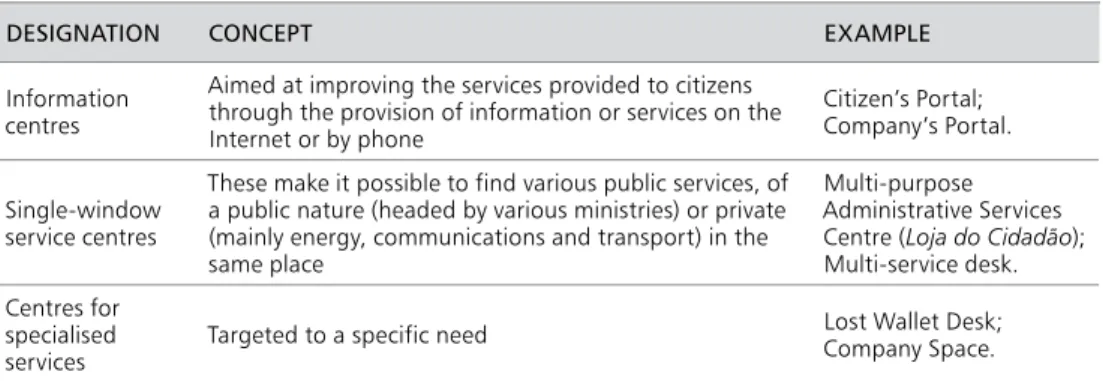
Table 2 – New forms of provision of public services of an administrative nature... 48
Table 3 – Evolution of supply and demand by level of education in Portugal... 58
Table 4 – Evolution of some indicators for the health system in Portugal... 60
Table 5 – Evolution of the number of courts, by type... 61
Table 6 – Public service facilities (no. and %), by service group and by territory type in Mainland Portugal... 64
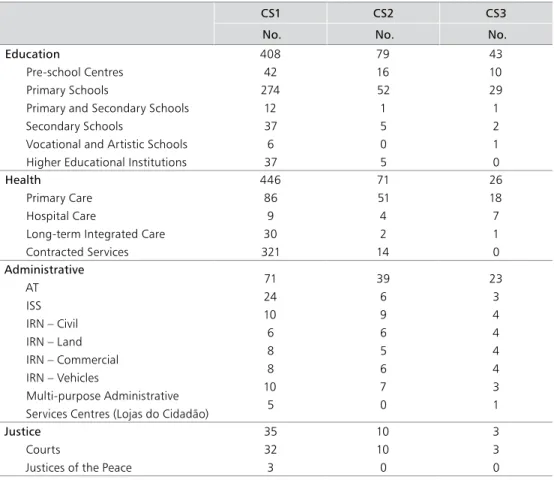
Table 7 – Public services, by service groups and by case study (2015)... 66
Table 8 – Respondents whose household members have used public services in the last two years... 69
CHAPTER 4 Table 1 – Innovation sources... 81
Table 2 – Sample distribution by sector in CIS 2012 instrument... 85
Table 3 – Variables for product/service innovation... 86
Table 4 – Variables for process innovation... 86
Table 5 – Cooperation-based vs firm-based innovation... 87
Table 6 – Cooperation-based vs. firm-based innovation by sector... 88
CHAPTER 5 Table 1 – Sociodemographic comparison of the municipality of Manteigas in 1960 and 2011... 101
Table 2 – Characterization of the population employed in the different business niches of the Casa das Penhas Douradas... 111
Table 3 – Population unemployed or at risk of unemployment immediately prior to being hired by Casa das Penhas Douradas... 113
Table 4 – Residence perspectives for the workers of Casa das Penhas Douradas in case they were not employed there... 114
Table 5 – Perspectives regarding the employment of Casa das Penhas Douradas workers in case they were not working there... 117
CHAPTER 6 Table 1 – Use of knowledge activities... 132
Table 2 – Sample of semi-structured interviews... 133
Table 3 – Stratified sampling of the study... 133
CHAPTER 8 Table 1 – Organisational learning mechanisms... 172
Authors
Adélia N. Nunes
Departament of Geography and Tourism, CEGOT, University of Coimbra
António Serrano
University of Evora
Bernadete Dias Sequeira
CIEO and Faculty of Economics, University of Algarve
João Filipe Marques
CIEO and Faculty of Economics, University of Algarve
Bruno Jesus
Faculty of Economics, University of Algarve
Carolina Alves
Departament of Geography and Tourism, University of Coimbra
Célia Marisa Fonseca Ferreira
CEGOT / Faculty of Letters, University of Porto
Hugo Pinto
CES - Centre for Social Studies, University of Coimbra & Faculty of Economics, University of Algarve
Joana Silva
Departament of Geography and Tourism, University of Coimbra
José Afonso Teixeira
Interdisciplinary Centre for Social Sciences (CICS.NOVA) of the Faculty of Social Sciences and Humanities, University Nova of Lisbon
José Monteiro Barata
ISEG – Lisbon School for Economics and Management, University of Lisbon
Luís S. Grave
Interdisciplinary Centre for Social Sciences (CICS.NOVA) of the Faculty of Social Sciences and Humanities, University Nova of Lisbon
Margarida Pereira
Interdisciplinary Centre for Social Sciences (CICS.NOVA) of the Faculty of Social Sciences and Humanities, University Nova of Lisbon
Marisa Cesário
CIEO and Faculty of Economics, University of Algarve
Paula Guerra
CEGOT / Faculty of Letters & IS–UP – Institute of Sociology / University of Porto; Griffith Centre for Cultural Research / Griffith University / Australia
Ricardo Tomé
Interdisciplinary Centre for Social Sciences (CICS.NOVA) of the Faculty of Social Sciences and Humanities, University Nova of Lisbon
Sílvia Fernandes
CIEO and Faculty of Economics, University of Algarve
Teresa Sá Marques
CEGOT / Faculty of Letters, University of Porto
Teresa de Noronha
CIEO and Faculty of Economics, University of Algarve
Victória del Pino Álvarez
CHAPTER 1
Resilience for Innovation – A Research Agenda
Hugo Pinto
Teresa de Noronha
Introduction
Last decade is characterized by different types of crises and shocks in the socioeconomic systems, creating a turbulent context and calling for a better understanding of what the dynamic perspective of change is. For countries, regions and cities a better understanding of governace urges and calls for action.
Resilience is gaining attention in social sciences, in general, and in regional studies, in particular. The concept has been particularly useful to rethink regional development models in the European Union when integrating the contribution of innovative dynamics in regional strategies and also in considering prevention and planning environmental, socio-economic and technological risks.
Resilience is commonly characterized by having an engineering perspective, if focusing the return to a steady-state equilibrium, and an ecological perspective, if paying more attention to the carrying capacity of the system as it absorbs shocks without losing its properties (Simmie & Martin, 2010). Today’s use of the “resilience” metaphor in social sciences requires careful considerations to avoid frequent fuzzy meanings (Davoudi et al., 2012). The Evolutionary Economic Geography School suggests connecting the concept to ideas that allow reflecting how different socio-economic systems at different scales are able of withstanding, recovering, re-orientating and renewing themselves when confronted with external disruptions or internal systemic failures. In this way resilience is being debated integrating an evolutionary approach (Boschma, 2015) and demonstrating how complex systems adapt and evolve. The vision of complex adaptive systems is very rich as it facilitates to clarify the emergent characteristics at multi-level interactions (Cooke, 2012), uncovering, for example, the mechanisms that enable top-down and bottom-up change linking territories at different levels, with systems and networks, with specific organisations, their behaviours, routines and incentives. It is clear that resilience, and regional resilience in particular, require effective innovation systems (Simmie, 2014) as innovation is a central aspect of the adaptation and adaptability of territories. The micro-determinants of resilience are crucial, connected with the dynamic capabilities of organizations (Teece, 1999).
For resilience consideration, the Public Sector plays a crucial role. The State has a crucial role in the coordination and governance of market exchange and it is central to create the institutional architectures that create advantages in some cases (Hall & Thelen, 2009). The State
is an inducer of innovation and new activities, both by supporting and enforcing new legislation but also by public procurement, acquiring products that stimulate other economic agents (Uyarra et al. 2013).
Organization of the book
This book is a contribution to the debate of resilience applied to the Portuguese case. Organized in eight chapters, several contributions from the Portuguese reality are gathered on topics such as the definition of policies for resilient territories, supply networks of public services, innovation in enterprises. Knowledge management in the tourist industry, resilience in rural areas, urban regeneration strategies, and technological learning as an organizational resilience mechanism are explored as well.
After the introductory chapter, in chapter 2 Luís Grave underlines that the development of complex urban systems is subject to various factors influenced by the objectives of the established territorial policies or urban development agents. There are potential risks and impacts of land use in result of external factors adverse to set goals and desired dynamics. It is necessary to prevent and overcome these harmful effects through adaptive management of land use management able to anticipate and consider preventively, possible future scenarios contraries to set development strategies and set safer development goals or adopting strategic adjustment measures in order to avoid harmful dynamic of the constant balancing of the urban system. How to configure this management is the challenge. As a starting point and basis for this approach, the author found an area on the south bank of the Tagus estuary suffering from a context of stagnation after an abrupt stop of the rapid urban growth that was occurring, induced by construction of the ‘Vasco da Gama Bridge’. From the impacts on land use this chapter went to seek the necessary responses in terms of mechanisms and procedures that should be included in land management so that it can avoid such adverse effects. In the end, it identifies the potential benefits that could result, if applied in the same context, through the proposed adaptive land use management system model.
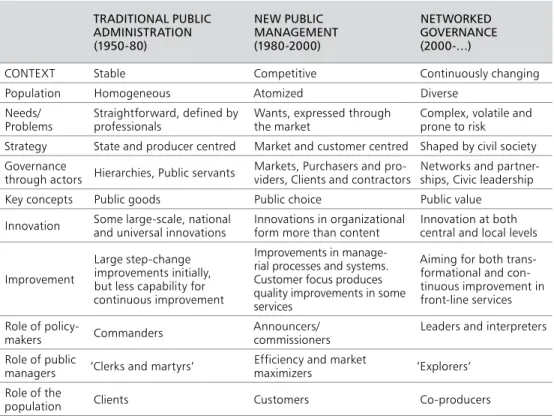
Chapter 3 by Ricardo Tomé, José Afonso Teixeira and Margarida Pereira debates the relevance of public services which due to their universal and inclusive character mitigate social inequalities, foster economic growth and bring populations and territories closer, also making them more resilient and cohesive. In Portugal, after restoring a democratic regime (1974), joining the EEC/EU (1986) and, at a different level, information and communication technological innovation, have contributed to the expansion and modernisation of public services. The extension of compulsory schooling and the opening of access to higher education, the creation of the National Health Service and the democratisation of justice have required expanding the respective networks of facilities, technological innovation and suitable training. Public administrative services have been restructured, formats diversified, technology incorporated and networks integrated. Neoliberalism and the economic and financial crisis (2008) weakened the Welfare State through the sub-contracting of services, rationalisation of resources, defence of contracting models and privatisation. This chapter reflects on the role of public services in territorial resilience and cohesion, showing the changes in the public services for education, health, justice and
administration in Portugal and some reorganization consequences of the crisis. Based on three case studies, it also analyses patterns of the use of services in different geographical contexts (densely urbanised, rural and transition territories).
In chapter 4 Sílvia Fernandes, Marisa Cesário, Bruno Jesus and José Monteiro Barata identify the sectors of the Portuguese economy that most participate in cooperation to innovate and which sources/agents are most used in the process, observed by sector and type of innovation. Using the data from the Community Innovation Survey (CIS-2012), it first appraises the nature of the innovation process in terms of cooperation or firm-based innovation, and then differentiates the results by sector illustrating which cooperation sources/agents are most used (scope) and relative intensity (scale). The results suggest that main innovating sectors in the Portuguese economy are research-based, knowledge-based, and service-based. The external sources/agents most commonly used by the first are universities, suppliers by the second and firms’ group by the third. Private customers are important sources in general, what means that Portuguese firms use customers’ information and market relations for innovation purposes. These results are in line with the fact that Portuguese firms are mainly small and medium-sized (SME) and increasingly focused on services and knowledge.
Carolina Alves, Adélia Nunes and Joana Silva describe the case of Serra da Estrela in chapter 5. As a mountainous area, characterized by low density of population with an eccentric position, remote and associated to physical and natural constraints, the construction of more resilient territories can become a path towards the stimulation of development. The main issue of this work is to understand in what way the fixing of specific business constitutes a structuring element of social and ecological resilience. Through the valorization of human resources and improvement of potentialities of this territory such as local products, environment and landscape, the widening and diversification of the offer arises. However, bottlenecks are still to be considered such as the non-convergence with other local business hinders the creation of a more cohesive, competitive and resilient territory.
Chapter 6, by Bernadete Dias Sequeira, João Filipe Marques and António Serrano, presents some of the main results of a research about knowledge management in the hospitality organisations in the Algarve region. Its main goal is to understand, from a sociological perspective, how hotels create or acquire, retain, share and use their organizational knowledge. A comprehensive model of analysis providing an integrated overview of knowledge management was specially developed for this goal. The model is organized around two analytical axes: the first identifies the main steps of the knowledge management process (creation/acquisition, storage, transfer and use) and the second lists and describes the management practices that facilitate this process. Given that innovation is a very important outcome of knowledge management as a whole, this chapter focus on the last dimension, the use of organizational knowledge. The empirical research consists in three case studies of hotel groups operating in the Algarve, using semi-structured interviews to the hotel’s managing staff and a survey administered to a stratified sample of employees.
In chapter 7, Célia Marisa Fonseca Ferreira, Teresa Sá Marques and Paula Guerra underline that the structure and organization of economy of cities results from both individual actions of many economic agents (individuals, families, business, government institutions, diversified organizations) and from the network of relationships established between them. The authors
used 24 interviews to retail sector business promoters and economic-oriented initiatives developers, carried out during 2015, to understand the motivations, expectations and difficulties involved in opening of business or conducting initiatives, the location factors, the partnerships and institutional support, as well as aspects related to innovation in the city centre of Oporto. This analysis contributes to the studies of bottom-up initiatives in the context of economic development, and thus support the delineation of private sector strategies as well as help to support delineation of public policies.
In the final chapter 8, Teresa Noronha and Victoria Del Pino emphasize the need for going back to the classical methods of considering the savings that repetitive processes introduce in the learning process of firms. Cumulative experience leads to performance improvement and may fill part of the existing knowledge gap based upon the Experience Curve (EC). The Microalgae Production Systems (MPS) was used for this research considering that it is one of the most exciting future-oriented business areas of modern biotechnologies, which have turned into an important global industry, with a diversified field of applications. Thus, the particularities of learning and experience accumulation processes have been used to conclude about the behaviour variations of the EC, by exploring and detecting some applications and misapplications of the concept. The research methodology is based on the case-study of Necton S.A., a pioneer Portuguese firm, dedicated, since 1997, to microalgae cultivation. Prior to this chapter, an in deep research of these authors attempted to understand the technical complexity of microalgae biotechnology. The conclusions emphasized in this chapter confirm that: i) the different MPS follow an experience curve, with progress ratios which are in between the ones determined for manufacturing firms and energy technologies; ii) the learning mechanisms play a similar role through the technologies life-cycle, although the MPS studied are different in technological complexity; and, finally and most important, iii) learning-by-doing is more relevant in early technology stages, learning-by-using appears to be fundamental in the maturity stage, and learning-by-searching is critical to solve particular technical constraints. This perception is very useful in the design of target strategies for innovation under constrains such as financial disruptive or economically lagging environments.
A research agenda
It is expected that different types of shocks, socio-economic, demographic, technological, environmental, financial, will accelerate, uncovering the deficits and structural problems of contemporary society. Resilience can become a critical area of research related to risk management and facilitating the deep comprehension and intervention in a changing environment. The results presented in this book confirm the fast-growing literature in the topic, highlighting three relevant fields for the Resilience research agenda:
• Resilience and innovation - studying how innovation increases at a multi-level perspective the resilience of different systems. This will necessarily include the studies of different national configurations that are more friendly and supportive of innovation (Amable & Lung, 2008), different systems and network configurations that create eco-systems
that are entrepreneurial and enhacers of knowledge production and exchenage (Balland, Suire, & Vicente, 2013), the policies for stimulating a smart specialisation (Foray, David, & Hall, 2011) and the capabilities of firms and other key innovation actors (OECD, 2009). • Resilience and risk – shocks and internal disruptions need to be addressed. The studies
of risk management, especially relevant in urban and territorial physical planning, will include necessarily new dimensions of socio-economic and technological resilience (Alexander, 2013; Allan & Bryant, 2012; Dawley, Pike, & Tomaney, 2010).
• Resilience and territorial renewal – territories are living organisms that develop and grow but may also degenerate and die. Policy-makers and research will pay particular attention to the mechanisms that can increase the life-cycle of specific clusters (Ebbekink & Lagendijk, 2013), that can increase the competitiveness and cohesion of economic base (Bristow, 2010), increase proximity and related variety (Frenken, Van Oort, & Verburg, 2007), and stimulate the factors of uniqueness and that guarantee a long-standing place in the global economy.
The book hopes to contribute to the consolidation of the concept of resilience, both in scientific research and territorial planning. Useful to researchers and students, it supplies a diversified and balanced selection of cases related to management and promotion of territorial development in difficult conditions. Portuguese regional reality exposed and discussed in deep, thus, became a promising field of study per se.
Acknowledgements
The organizers Teresa de Noronha and Hugo Pinto express their appreciation to the contribu-tors of this volume. For the development of his research Hugo Pinto benefits from the support of FCT - Foundation for Science and Technology (SFRH/BPD/84038/2012) funded by POCH (by the European Social Fund) and national resources from the Ministry of Science, Technology and Higher Education. The edition of this book is co-financed by National Funds provided by FCT through project UID/SOC/04020/2013.
References
Alexander, D. E. (2013). Resilience and disaster risk reduction: an etymological journey. Natural Hazards and Earth System Science, 13(11), 2707–2716. doi:10.5194/nhess-13-2707-2013
Allan, P., & Bryant, M. (2012). Resilience as a framework for urbanism and recovery. Journal of Landscape Architecture, 6(2), 37–41.
Amable, B., & Lung, Y. (2008). The European Socio-Economic Models of a Knowledge- based society. Main findings and conclusion. Cahiers Du GREThA, 33(0).
Balland, P.-A., Suire, R., & Vicente, J. (2013). Structural and geographical patterns of knowledge networks in emerging technological standards: evidence from the European GNSS industry. Economics of Innovation and New Technology, 22(1), 47–72. doi:10.1080/10438599.2012.699773
Boschma, R. (2015). Towards an evolutionary perspective on regional resilience. Regional Studies, 49(5), 733–751. doi:10.1080/00343404.2014.959481
Bristow, G. (2010). Resilient regions: re-’place’ing regional competitiveness. Cambridge Journal of Regions, Economy and Society, 3(1), 153–167. doi:10.1093/cjres/rsp030
Cooke, P. (2012). Complex Adaptive Innovation Systems: Relatedness and Transversality in the Evolving Region, Routledge.
Davoudi, S., Shaw, K., Haider, L. J., Quinlan, A. E., Peterson, G. D., Wilkinson, C., … Mcevoy, D. (2012). Resilience: A Bridging Concept or a Dead End? “Reframing” Resilience: Challenges for Planning Theory and Practice Interacting Traps: Resilience Assessment of a Pasture Management System in Northern Afghanistan Urban Resilience: What Does it Mean in Planni. Planning Theory & Practice, 13(2), 299–333.
Dawley, S., Pike, A., & Tomaney, J. (2010). Towards the Resilient Region ?: Policy Activism and Peripheral Region.
Ebbekink, M., & Lagendijk, A. (2013). What’s Next in Researching Cluster Policy: Place-Based Governance for Effective Cluster Policy. European Planning Studies, 21(5), 735–753. doi:10.1080/09654313.2013.734460 Foray, D., David, P. A., & Hall, B. H. (2011). Smart specialization From academic idea to political instrument , the surprising career of a concept and the difficulties involved in its implementation (No. 2011-001). Frenken, K., Van Oort, F., & Verburg, T. (2007). Related Variety, Unrelated Variety and Regional Economic Growth. Regional Studies, 41(5), 685–697. doi:10.1080/00343400601120296
Hall, P. a. P. P. a, & Thelen, K. (2009). Institutional change in varieties of capitalism. Socio-Economic Review, 7(August), 7–34. doi:10.1093/ser/mwn020
OECD. (2009). Innovation in Firms: A Microeconomic Perspective.
Simmie, J. (2014). Regional Economic Resilience: A Schumpeterian Perspective. Raumforschung Und Raumordnung, 72(2), 103–116. doi:10.1007/s13147-014-0274-y
Simmie, J., & Martin, R. L. (2010). The economic resilience of regions: towards an evolutionary approach. Cambridge Journal of Regions, Economy and Society, 3, 27–43.
Teece, D.J. (2009), “Dynamic Capabilities and Strategic Management”, Oxford: Oxford University Press. Uyarra, E., Edler, J., Gee, S., Georghiou, L., Yeow, J. (2013). “Public procurement for innovation: the UK case.” In Public procurement for innovation: the UK casePublic procurement policy for innovation, Springer, 2013. eScholarID:212706
CHAPTER 2
The Adaptive Territorial Management - Design a Management
System towards a Resilient Urban Development
Luís S. Grave
Introduction
The Issue
The urban system is a permanent complex construction, with the aim of conditioning society, its culture and activities more susceptible to various influences and constraints. Induced dynamics occur within its development, determined both by prior planning, and by unforeseen and adverse externalities to thought out plans, leading to instabilities or even processes with a negative tendency. This was the case with the recent economic and financial crisis which resulted in a context of stagnation or even recession for urban development in the consolidated city and the urban space in expansion or consolidation. The findings here are reflected in the following statement of amazement: could it be that nobody foresaw this, and why? It is my belief that it indeed matters that policy in general and spatial planning as governance of cities acquires the capacity to foresee, as far as possible, the distant consequences of its own decisions and the effects of externalities on urban development, that is, that for a sustainable and resilient urban development, this can be carried out using a permanently adapted strategy for a preventive and not merely positivist prospective.
However, the city, from the territorial point of view, consists of an urban system with a complex multifunctionality and structure. Therefore, in order to achieve the aforementioned governance of sustainable and resilient cities, this should be supported by a management system capable of efficiently managing that complexity. However, either due to the inefficiency of its practices or due to the ineffectiveness of its results, it can be seen that territorial management has shown itself unable to anticipate and monitor the mutability of urban systems (forms and functions) induced by actual transformation dynamics. The positivist planning that has lasted has failed, since it is based on policies and instruments managed segmentally and sectorally, where the definition of strategies does not correspond to a prior systematic assessment, as well as the definition of strategies not corresponding to actions undertaken, showing, through the disconnected state of the environment and the functioning urban systems, that it is urgent to have a management system supported by planning based on a prior systematic assessment of the contexts which are the object of management action.
Tagus estuary. This was therefore, another typical case of urban expansion caused by road infrastructure.
The phenomenon of expansion was expected and even desired, so the local municipalities, when developing the respective municipal master plans (MMP), which determined the classification of land use, envisaged large perimeters of areas to be urbanised. The Government established a capital gains tax on the land and real estate markets, justified by the national investment which had occurred. We then saw that the actual administration implemented policies which, supposedly justifiable by local development and public budgetary sustainability, promoted and even focused on stimulating urban expansionism. However, the process of growth and consolidation was still taking place when the global economic crisis occurred and stagnation of that growth occurred with negative reflexes of a varied order on the environmental, economic and financial conditions of a fragmented and unfinished urban space.
The context described can be seen as one of the main case studies relevant to the support framework analysis for the design of the MT system model that has been developed here. To do this it has been necessary to focus observations on the urban centres of Alcochete, Montijo and Pinhal Novo (Fig. 1) which are the closest agglomerations to the first access points from the IP1-A12 (south side of the Vasco da Gama Bridge) and in which the urban boom caused by the new infrastructure was most notable.
Figure 1 – Location of urban perimeters under analysis
Source: Google Maps
Objectives and organizational structure
The growing complexity of urban systems requires approaches which traditional planning has not provided. To respond to the complexity, uncertainty and risks brought about by globalization and technological progress, studies involving the future, scenarios and strategic planning have been seen by some as a viable alternative, increasingly used as creative and cooperative basis for decision making processes (Bina et al., 2014).
Therefore, the challenge is: how to design and operationalize planning/territorial manage-ment instrumanage-ments and processes capable of regulating and managing the developmanage-ment of urban spaces in a balanced and sustainable manner, despite uncertainties and adversities, i.e. resilient urban development?
Our starting point is the impacts, i.e. in spatial planning (SP) in a case study within a context of stagnation after induced accelerated urban growth, for which there is a need to find responses to the resulting challenge faced there. Starting from theories of self-regulated strategic planning, a search for innovative aspects is carried out through a holistic approach, within the fields of planning for uncertainty, the concepts of integrated strategic management and management performance evaluation, applied to sustainable urban planning, seeking concepts and techniques which constitute a territorial management (TM) model endowed with adaptive planning. The conclusion will summarize the benefits which can follow from the proposals developed.
A case of urban stagnation and diseconomy
Contextualization of the case study
Since it joined the European Union (former EEC), Portugal witnessed a huge boost in its infrastructure and territorial facilities. As regards infrastructure, road links improved the most. The only connection of Lisbon with the south of the country was made using the 25 de Abril Bridge, and this needed to be strengthened along with accessibilities to the Lisbon Universal Exhibition, which was held in 1998. As such, the construction of the Vasco da Gama Bridge from the location of Expo 98 completed the second connection of Lisbon to the southern motorway, crossing the south-east sector of the southern side of the metropolitan area, which was then marginal compared to the central element (Lisbon), only connected by river transport routes and with an urban occupation made up of small-sized consolidated urban agglomerations of a somewhat predictable size.
Given the singular circumstances of that situation and the magnitude of the investment, the initiative to construct the Vasco da Gama Bridge was taken significantly in advance and was highly mediatized. This was a time of urban expansion and increasing mobility through individual transportation. So, as was expected, with this new access to that subregion having been implemented, there was an impulse in the market for land and real estate in the urban centres located close to the first local accesses to this new link between the two banks of the
products of urbanised space; (iii) Infrastructure and urbanisation works in general, constructed or under construction, not used or not finished for an indeterminate time; (iv) Structural mismatches in the provision of facilities and functions or services involving collective use – not consolidated in certain urban areas with the facilities built being oversized regarding needs, indefinitely, others without such facilities due to a lack of justification to construct the planned facilities.
Figure 2 – Illustration of trends
(i) (ii)
(iii) (iv)
Legend: (i) undeveloped infrastructure; (ii) detailed planning but without adaptive regulation; (iii) urban expansion without an urban programme adapted to the demographic growth. (iv) buildings indefinitely uncompleted. Source: Own elaboration
What went wrong and why - an overview
Given the stated tendencies, let us now draw conclusions from what has failed, trying to identify probable explanations, especially when dealing with tendencies contradictory to the supposed objectives of the SM public policies and the formal TM system. Thus, the following have failed: (i) the SM and environmental sustainability policies, in the management of the urban This reflection is based on the analysis and confrontation between municipal management
models (instruments and practices) used in different examples of a paradigmatic case study, assessing them and correlating them with the respective effects on spatial management and environmental and economic sustainability. Thus, the relation between the phenomenon of urban growth with different MT practices and the urban action carried out in the urban perimeter of Alcochete, Montijo and Pinhal Novo were observed, seeking to identify the trends, planning, mid-term planning and programming, that formed factors which led to the systemic anomalies which shaped the territory in those economic and financial circumstances.
The trends observed in the case study
Below the evidence identified in the examples analysed will be presented, systematising the trends observed in the MT performance.
Trends in the planning and programming of the urban space: (i) Planning with weak support
concerning vision and strategic weighting; (ii) Over sizing of the space to be urbanised, at the expense of rehabilitation and bridging urbanised spaces – disqualification, fragmentation, dispersion; (iii) The widespread absence of detailed plans and other forms of urban programming; (iv) When partial use was made of PP, as happened in one of the examples analysed, there were notable contrasts in the quality coherence between the spaces developed in a distinct manner; (v) Generalised negligence regarding the financial plans in the territorial management instruments (TMI), particularly more demanding in the UP and PP, generally not present when assessing their economic viability; (vi) Poor use of the land to be urbanised, less than 50%, after 15 years following the approval of the MDP; (vii) The urban growth was as large as close to this
(equal trend in the slowing of the construction space).
Trends in the effects inherent to the control and management practices for urban implementation: (i) Reduced use of programming and urban conciliation mechanisms; (ii)
Reduced use of management methods and urban operation control mechanisms; (iii) Lack of consideration of externalities related to land market trends and urban real estate products; (iv) Indefinitely fragmented urban shape; (v) Structural anomalies in the allocation of facilities and public spaces; (vi) Excess infrastructure, without users, for an indefinite period.
The resulting trends of economic and financial management practices: (i) Absence of
preventive assessment of the economic viability of municipal planning in general, urban plans and operations; (ii) Weak or absent linking between the municipal budget/investment and the municipal territorial management plans; (iii) Mismatch between the structure of the municipal accounting (POCAL) and the structure of the territorial/sectoral management system for urban development, making financial/budgetary control and management more difficult; (iv) Chronic budgetary deficit, with a cyclical dynamic co-related to local authority mandates, motivated by systematised budgetary regulation; (v) Difficulties of budget appropriation aimed at the development of the urban space, in competition with other sectors involving municipal activity, in the financial distribution of activity plans and the municipal budget.
The resulting trends for externalities: (i) Stagnation of urbanisation and construction; (ii)
space where fragmentation and structural incoherence have been seen, as well as excessive consumption of land and negative environmental impacts, both because the new spaces were not consolidated and because the conservation of the consolidated spaces was neglected, resulting in the subsequent deterioration of the urban structures and the environment as well as a lack of coordination and imbalances in collectively used functions or services; (ii) social policies regarding housing and services to the community since the fragility of urban development control left certain constitutional guarantees vulnerable such as the right to housing since access to this was made difficult or impossible for the population due to high prices and frequently inadequate localisation; health and education since suitable appropriation for the respective facilities in situ, with the right capacity and at the right moments, was made more difficult; the right environment and quality of urban life faced with a disconcerting “work site atmosphere” and deterioration of the residential and working spaces; (iii) the economic and financial policies inherent to urban development, thus generating persistent or cyclical situations of both functional and budgetary deseconomy and even that of financial non-sustainability.
The fundamental reasons that we have concluded to be at the basis of these performance failures in the TM system may be summarised as follows: (i) Belief by the regulatory authority that urbanisation can be undertaken through territorial management instruments (TMI) when, in fact, it is mostly undertaken by direct urban operation without prior urban programming; (ii) Reduced use of TMI in detail and in terms of an operating programme, since it is believed that the municipal master plans will be sufficient, without a strategy including a preventive and prospective element and without a programme which considers management techniques and control of the urban growth process; (iii) Despite the TM system establishing and undertaking regular assessment of the state of the territory and the system indicating execution of plans, this has rarely happened. On the other hand, there is a notorious lack of critical assessment regarding the performance of the TM system itself, especially where the complexity of urban systems requires more efficient management, in the cities.
However, based on the same public policies and the same TM system, cases have been observed which show apparently positive results and which have become reference examples, perhaps as a result of best territorial management practices but also counting on the help of favourable circumstances, which demonstrates that the formal system is, indeed, susceptible to personal strategies or attitudes of the actors, that is, it needs to be complemented with a safe guide which reduces the margin of randomness and error in territorial management practices.
The state of spatial planning at the local level
In the tradition of urban management and planning practices, the plans have been limited, in general, to a classification of action and qualification of the urban land, followed by the policy action of use and occupation of land according to urban parameters established in the MDP, not proposing procedures involving systematic programming of urban development as well as controlled and preventive monitoring in the carrying out of this.
On the other hand, although the detailed planning translates into more concrete and objective urban proposals, enabling prior environmental assessment and public participation,
the typical delay and its mandatory format leads to its rejection most of the time, which endows it with an asymmetric or even rare character. It tends to be adopted only to fit in with the construction of a large facility or even a large urban or industrial development, through need to alter the MMP. In this way, planning almost exclusively through the MMP has served mainly to open/classify new areas to be urbanised but not in a way which has been thought out and adjusted to needs, therefore devoid of the progressive phasing of their implementation and remaining dependent on the initiative of their promoters. After having experienced the development and implementation cycle for first-generation MMPs, the reality shows that the MMP is insufficient for territorial and urban management.
Indeed, relating the dynamics and volume of production of urban space through private initiative with the tiny number of municipal urban plans, it can be assumed that urban development is rarely carried out in a coordinated and cohesive manner. Given the lack of the necessary political effort and management planning and proactivity, utilising an integrated vision endowed with a strategy, urban development is confined to the logics and interests of urban agents and land, real estate and financial markets, ending up, sooner or later, with this leading to environmental and functional imbalances and to accentuated systemic financial diseconomies. In fact, it is within this framework that one finds such a state of (lack of) planning and (non) sustainability of the territory. Planning and management of land use cannot be ignored in this structural context, with the risk of questioning its creditability.
The territorial management system and its contradictions
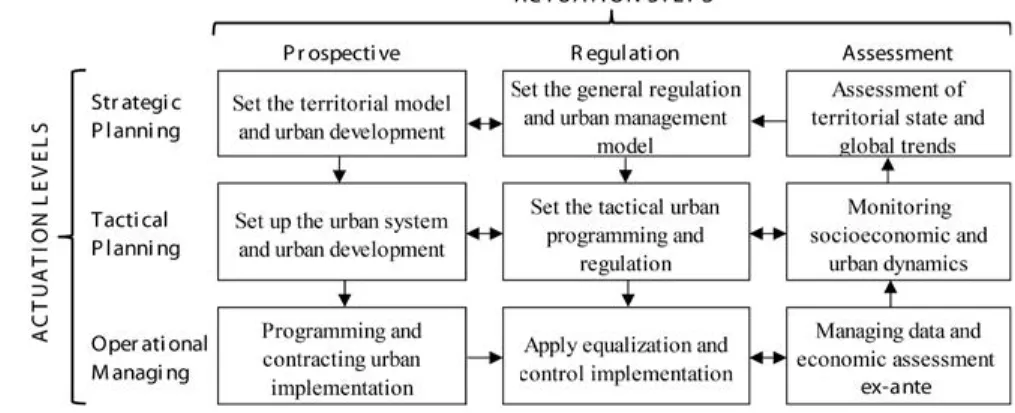
Given the objectives of this approach, I will now summarize the structure of the TM (TMS) system formally established in Portugal regarding municipal intervention, in terms of the territorial management legal system (TMLS). According to the legal framework of the system, we can group the territorial management instruments within the municipal area into three levels, structured in the following manner: (i) At the strategic level: the Municipal Master Plan (MMP), the Urbanisation Plan (UP) and the Territorial Action Programme (TAP), not forgetting the report of the state of spatial planning (RSSP) as an assessment-diagnostic instrument system; (ii) At the level of operative regulation for implementation and for urban programming: the municipal regulation for urbanisation and building (MRUB), the planning and management operative unit (PMOU), the Detailed Plan which can take on various formats, due to its specific or simplified nature, the implementation unit (IU), the urban regeneration programme (URP), etc.; (iii) At the level of implementation: the subdivision operation (SO) and the urban operations (UO) of allotment, urbanisation and building.
For the objective in question, in accordance with Grave (2009) and based on empirical recognition from praxis, we will list some contradictions found between what the legal system establishes for the plans and what in fact happened in practice planning and implementation:
• The TMS establishes that municipal plans must comply with a strategic reference framework and the supramunicipal instruments (PNPOT, PROT, etc.) define strategic or regulatory guidelines that should be included in the municipal plans, but they are not, indefinitely, in conformity with that referenced and poorly define a vision and
development strategy with concrete and well-formulated objectives, nor goals and indicators regarding implementation;
• The TMS lays down that municipal plans should form part of the financial and implementation programme, but the actual TMLS classifies these as elements accompanying the plan, as if they do not form an intrinsic part of the latter, thus ending up having a pro forma nature and so becoming undervalued by agents when drawing these up (promoting body, technical team, monitoring committee) and, furthermore, in their use (land authorities, management team) when implementing the plan;
• The TMS is based on the TMI but urban growth prevails through asymmetric urban operations, even with a large scale and impact, not subject to prior detailed planning or programming, thus making processes quicker and less complicated, which is facilitated by the (lack of) connection between the TMLS and the EULS, making a rule of what should be an exception;
• The TMS provides for the establishment of implementation units as an implementation mechanism for programmed urbanisation but do not concretely and objectively specify their programming requirements and the documental organisation of that instrument, merely laying down that the IU may or should be listed within the UOPG, detailed plan (DP) or in any place, leading to this important instrument not being used;
• The TMS provides for a typology of grounds for refusing intended urban operations but its explanation is reproduced in the plans and ongoing management made based on the vague, non-specific typology contained in the EULS;
• The TMS determines the application of systems involving indicators and the monitoring of the state of the territory (RSSP, network observations, etc.), essential for a more preventive and timely planning, but it is mainly absent and there is no registration and public dissemination of that instrument.
However, the difficulties of territorial planning are felt internationally, even in countries with extensive experience and a sense of innovation in this area. A systematised assessment concerning local territorial planning practices in the United Kingdom (Department for Communities and Local Government, Spatial Plans in Pratice: Supporting the reform of local planning – Final
Report, London, 2008), confirmed this idea and from this some of its conclusions have been
extracted and translated into the following necessities: (i) More plans as instruments to manage change but with a long-term strategic approach; (ii) Plans drawn up and managed based on assessment proven by data and evidence; (iii) Plans drawn up in partnership with and including the greater involvement of stakeholders from the various sectors in the same territorial area; (iv) Suitability recruitment and professional training providing planning professionals with new competences (data, analysis, creativity and facilitation, project management, implementation and assessment); (v) Responsibility for drawing up territorial plans should be attributed to multidisciplinary teams placed in a central position within the local authority and not within one department.
On the need for adaptive territorial management
(Un)regulated urban growth, its (dis)equilibria and (dis)economies
The model of the Fordist industrial city, marked by a compact and solid structure, was reconfigured with the coming of the tertiary sector of the economy, the generalisation of the road infrastructure and the increased degree of motorisation, with two types of urban occupation coexisting, namely one supported by public transportation, favouring a concentration along the routes served and their immediate surroundings, fostering high densities and multi-family typologies; another based on the motor car, encouraging a distended and fragmented occupation, marked by deficient linking of the urban fabric which was not very well structured, with multiple uses and varied typologies. The city limits gradually extended and took on ever more imprecise contours. These dynamics affected the compact consolidated city, the population, employment and functions which went down and also physically deteriorated. Extensive urban occupation demands resources and mobility, while stimulating “urban waste” (early withdrawal from urban fabrics with facilities, and multiplication of new infrastructures which remain indefinitely underused (Pereira, 2009). For that reason, this is challenged in the light of the principles of sustainability.
Figure 3 – Urban occupation in AML
Source: PROT AML, change Proposal 2010
Considering the Lisbon Metropolitan area (LMA) as a paradigmatic example, the 2011 Census showed the continuation of previous trends in the reduction in the number of residents in the city centre and growth in the municipalities of the periphery, along with average ageing in Lisbon and average rejuvenation in the periphery. These trends have occurred for around two decades, as a result of a combination of factors of a varied nature, both in economic and financial terms as well as sociological, but where governance action plays its part. The city of Lisbon has had differentiated growth dynamics within it. The city expanded its administrative limits despite
Compact urban areas Fragmented urban areas
The economic and financial issue
The systems referred to raise a fundamental economic and financial question with territorial impact both from the view of private initiative as well as public initiative. However, it is important here to highlight the perspective of public initiative at the municipal level, since it is the municipal management of the territory that is being discussed here.
The municipal management of the territory and the land market are driving and conditioning factors for the development and the quality of the urban space (Grave, 2000). The urban TM is played out, from the beginning, in the land market. Various authors recognise that the land and speculation related to its value are the main drivers of economic and financial crises. What is certain is that “land prices have been ignored by the economists (...) the fact that the land remains an obscure and insignificant layer in economic theories leads to these not having the capacity to predict depressions caused by real estate bubbles” (Gaffney, 2009: 8), quoted by Henriques (2015: 20).
In fact, the issue of territorial management and dynamics, and in particular the urban economy, has been brushed off in academic discussion and even in TM praxis. This is due to many reasons, with the most direct having to do with the absence or opacity of information (data) which can enable its structured analysis and deeper reasons having to do with the strategies of the intervening agents and regulators since budgetary constraints restrict the freedom of action of the actors in accordance with the interests driving them, which is in full conformity with the neoliberal order of which we form part. However, the context of the current crisis, which stems from a philosophy of tendential economic deregulation and belief in a permanent growth dynamics, has led to the emergence of the principle of economic sustainability.
Despite the scarce information made available, through the possible collection of territorial impact data resulting from municipal budget implementation reports within the LMA, the chart in Fig. 4 was drawn up which represents the evolution of expenditure and net income for territorial impact, in average terms, with the necessary adaptations regarding the way the accounts are structured in line with the Official Plan for Local Administration Accounting (POCAL). In the chart, taking into consideration practices recognised in the area of municipal budgetary management, there is evidence of public knowledge, such as the growing and chronic indebtedness of the municipalities, the recurrent and notorious gap between estimation of revenue and expenses and between the budget and its implementation as well as the recognised absence of integration of investments inherent to the territorial plan proposals in the municipal budget.
Looking at the average budget evolution for territorial impact, sampling considered based on data collected regarding the Lisbon Metropolitan Area, between 2002 and 2011, the following trends or signs can be observed: (i) evolution of the expenditure amount over time, predominantly higher than income, resulting in a chronic budgetary deficit; (ii) evolution of a tendency towards growth, with a drastic reduction in 2006, which is repeated in a less accentuated manner in 2011, signalling an attempted budgetary rebalancing; (iii) the years in which that reduction is observed correspond to the start of political mandates.
not expecting more than just maintaining its 2001 demographic level. The bordering crown and related axes to the north and west of Lisbon along with the southern river arch were the parts of the metropolitan area of Lisbon, from one side and the other of the Tagus estuary, which showed themselves as the cause and effect of the main phenomenon of demographic mobility, which took place within the central nucleus of the metropolitan region.
The accelerated urban growth had, and will have until it attains its utopian consolidation, characteristics of fragmentation and disconnection, congestion in terms of mobility, asymmetries in the allocation and quality of public services and environmental conflicts. It was the crown areas which witnessed the largest population growth in the LMA. On the other hand, the highways formed the determining factor in terms of the available localisation options and, as a result, induced the spatial orientation of urban growth. In Figure 3 it is easy to co-relate the urban growth axes with the major transport infrastructures. The market for the supply of urban products unveiled opportunities brought about by public investments in accessibilities and transport and promoted an offer which ensured a strong appetite for demand.
Along with the public investment in accessibilities, urban promoters played their parts in local accessibilities. However, these promotional initiatives have been random and disconnected within time and space. Hence it is the case that, despite certain efforts at coordination undertaken by each municipality, they are far from achieving full cohesion and, at the intermunicipal level, the disconnection is striking. The actual carrying capacity of the infrastructure and urban service networks, from the accessibilities and public transport to the supply and sanitation networks, inherent to the first stages of growth, was overloaded with the subsequent urban and demographic growths, which was reflected in the increasing congestion, potential breakages or the quantitative and qualitative insufficiency of services. As for networks of amenities and social spaces with a collective use, the investment and construction of which, as a rule, did not come down to the urban promoters, the situation would show itself to be more dramatic and have devastating economic and financial effects.
This phenomenon of tending towards non-sustainability is contrary to social and urban cohesion where, as is natural and expectable, certain areas of the city, due to localised dynamics, have regenerated or even increased their level of quality, generating, in contrast, phenomena of urban segregation. This tends to produce a city made up of an archipelago of urban areas of quality, surrounded by deteriorating or run-down urban areas. As a result of these dynamics from contradictory effects, opposing the trend towards consolidation in the recent city towards the trend regarding the deterioration in the consolidated city, the installation of a scenario of duplication of costs can be seen: the first represents the investment effort in its consolidation of the urban system which is still incomplete; the second represents the investment effort in the recuperation and regeneration of the consolidated urban fabric which has entered into a process of decline. It is easy to conclude that a city, seen as an extended shape, functions as a system of communicating vessels, in which, when load is borne or dynamics are installed in certain parts, the others will react in a contrary sense, since, in an urban system, effects are not uniformly distributed, as they depend on sectors and the governance factor.
Figure 4 – Graphic average budget trend territorial impact to the LMR 2002-2011
Source: compilation by the author
Among the reasons which are recognised as facilitating these tendencies or cycles are: (i) the systematic lack of preventive assessment of economic viability of municipal investments in general and investments earmarked for plans in particular; (ii) the lack of the application of management and control methodologies which ensure a balanced economic and financial performance, particularly a prospective approach for planning activities and budget which takes into account quality information which is sufficiently certain and where the link between planning and territorial impact has to exist; (iii) in order to implement the conditions described above the municipal accounting structure (POCAL) has to be linked and made suitable to the TM sector structures.
Spatial management public policies
This framework of concerns has stimulated the search for alternative urban models which are less predatory on resources (land, energy, landscape, agricultural and forest areas of biodiversity), supported by a more sustainable mobility. The first proposals arose in the USA with the New Urbanism (1980s) and later with the Smart Growth and Low Carbon Cities. In Europe, initiatives have proliferated, associated with Urban Renaissance. In the United Kingdom, a working group set up by the government (Urban Task Force) produced a reference document (Rogers, 1999); in the European Union there have been successive guiding documents - Green Book of the Urban Environment (1990); Aalborg Charter (1994); the Aalborg Commitments (2004), Leipzig Charter (2007), Toledo Declaration (2010), and Cities of Tomorrow (2011). The guidelines recommend urban models based on contention at the expense of expansion, in revaluing the concept of proximity, in multifunctionality and sustainable mobility.
The Framework Law for Spatial and Urban Planning (LBPBOTU) defines principles and objectives in defence of the new urban paradigm. In the same vein, the National Programme
Revenue
for Spatial Planning Policy identifies unplanned urban expansion as one of the problems of spatial planning. In addition, the Regional Plans for Spatial Planning in force take up the fight against urban fragmentation and dispersal, through guidance regarding the applicable norms for municipal plans relating to spatial planning, and, in particular, restricting expansion to needs resulting from economic and social dynamics in ensuring their programming, and promoting the reversal of urban perimeters when justified, and restricting building in rural areas. In fact, the LBOTDU lays down that it is up to the municipalities “to carry out coordinated and programmed implementation of their territorial planning instruments”. This envisages a set of instruments to operationalize plans (Cunha, 2012: 283). However, use of programming tools is not the case. We are led to conclude that the LBPOTU and the TMLS end up having a reduced effect at the municipal level. These regimes were subject to a recent reformulation which emphasised the imperative and restrictive nature of those guidelines but, on the date of publication they had been recently approved or were in the final stages of drawing up most of the MMPs. As a backwash, most of those plans will remain in force until their future revision (10-year period), with the extensive underlying spatial models remaining valid.
It is necessary to discuss the validity of the processes as well as the planning and management instruments in force. It is no longer possible to plan for unrealistic population growth, arguing for oversized urban perimeters, delegating the urbanisation initiative to the holders of the land, and keeping local administration with the passive role of regulatory verification. Given the existing situation, urban development must be guided by three principles: restructuring and improvement of the fragmented city, regeneration and revitalisation of the consolidated city and contention of the emerging city, in line with the sustainability of the urban conjuncture as a whole. But how can this be done?
The management of the complexity of the urban space - which needs
Urban multifunctionality
The city has numerous plans, availability of resources, social and cultural flair, comfort and security, the exchange of goods and services, etc. In the meantime, it has been structured and has become specialised according to living, work, leisure and sociocultural representation. It is spatially segmented and socially stratified. Specialisation has become second nature to urban individuals, a trend that has not stopped growing. As Rossi (1982) mentions, the confirmation of the city is the result of two major systems: that of the city as the product of functional systems creating its architecture and the city as a spatial structure. Guiomar et al. (2007) states the following essential characteristics of the urban phenomenon: morphological – the form of the urban centre; functional – the functions inherent to the urban elements; structural – those relating to the support structure of urban systems. Each part or element does not exist alone but within the global system. Therefore, these elements should not be thought of and managed individually. In short, the urban space is intended to provide, within a structured, efficient and sustainable form, the environmental, social and economic conditions of comfort for its citizens.
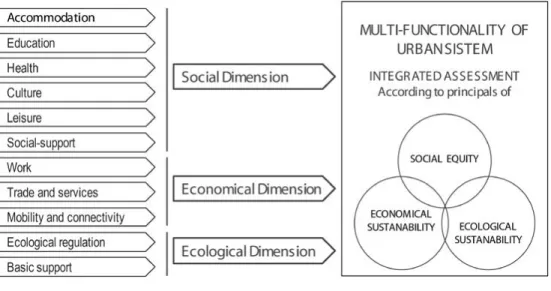
Urban multifunctionality consists of a set of functions housing different functional attributes of the community. Urban functions must be carried out in a harmonized manner and with a view to the balanced and lasting satisfaction of ecological functions and the needs of urban users. They should be organised and structured spatially and functionally as a function of the hierarchisation of the urban system, suitably multicentred and hierarchised. The European Commission (1996) recommends the Principle of urban management - urban management for sustainability is a political process requiring planning and which has an impact on urban management. The process of sustainable urban management requires a series of instruments targeted towards ecological, social and economic aspects seeking to provide the necessary base for their integration. Given this, the TM of complex urban systems should be configured as a function of the sizes in which the fundamental attributes of the urban space are structured. According to Grave and Vale (2014), urban multifunctionality may be summarised according to its social, economic and ecological dimensions, involving the following attributes: (i) Social dimension – shelter, education, health, culture, leisure, social support; (ii) Economic dimension – work, trade and services, mobility and connectivity; (iii) Ecological dimension – regulation,
support (Figure 5). The variables of each attribute of the urban system are determined through the elements (spaces and functional systems) which embody the respective functionalities of qualities considered most determinant for the satisfaction of the needs and social aspirations and ecological contingencies and, therefore, those which are critical for the verification of the respective performance in the systematic strategic assessment procedure.
Figure 5 – Diagram of the multi-functionality and integrated assessment of sustainable urban system
Source: Prepared by the author
The globalization of the economy has strengthened the role of cities in the new knowledge economy and creative economy, implying changes in urban governance and changing
develop-ment priorities, not always compatible with the priorities of social and territorial cohesion (Vale, 2007). In this context, there have been many recommendations and policy directives for sustain-able development as a support for human activities: The Leipzig Charter mentions that “We strongly support the EU’s Sustainable Development Strategy, (...), with the objective of protect-ing, strengthening and further developing our cities. In doing so, all dimensions of sustainable development should be taken into account at the same time and with the same weight. These include economic prosperity, social balance and a healthy environment. (...) In the long run, cit-ies cannot fulfil their function as engines of social progress and economic growth (...) unless we succeed in maintaining social balance within and among them, ensuring their cultural diver-sity and establishing high quality in the fields of urban design, architecture and environment.”
Strategic governance
An urban space is created in five phases: land classification and qualification, availability of land on the market, land restructuring, creation of infrastructure, and building. In the absence of control, this would probably take on another order. This progression in creating urban areas is determinant for the coherence of the urban fabric, although the Administration tends to open/ classify new urban areas without considering needs, not interfering through the programming of its gradual implementation and being dependent on the initiatives of the promoters.
For effective control of urban development, it is not enough to establish the use of the land nor the mechanism for the programming of urban land, always susceptible to degeneration from random external pressure factors. To set the direction of urban growth and prevent the aforementioned randomness, they can play a strategic role in setting up the infrastructure and the tactical location of public investments (Henriques, 1990). Other authors follow this logic of action, such as Pardal et al. (2000), mentioning an active land policy beyond mere urbanisation and supply of constructed spaces depending on the options of promoters and also that the land to be urbanised should be established in coordination with the creation of infrastructures for general services and transport networks defined by the administrative authorities, through concerted actions of urbanism and infrastructures, urban regeneration and environmental infrastructures. It is up to the municipalities, as operative managing authorities for urban development, to take on municipal planning and drive its mediation with socio-economic agents.
Having defined the strategy, the instruments have to be created which, firstly, conceive the structure and urban form with the objectives in mind and, secondly, contain the operative mechanisms that will construct the physical system and gradually and effectively reach those objectives. These mechanisms translate into programming tools (the tactical action), which prevent potential randomness or interests contrary to the publicly defined strategy. Therefore, so that the territorial development takes place within sustainable parameters, both from the overall ecological viewpoint and urban ecology, it is necessary to ensure a controlled urban development where, while preserving freedom and individual interests, collective interests in terms of patrimony, the environment and integration and social coexistence can be ensured. An organizational system for coherent urban development has to be established, supported by a global strategy for the territory which brings together local interests and wishes with the supramunicipal framework.