570
Original Articles
Disability relating to instrumental activities of daily living in the
elderly with rheumatic diseases
Priscila Maria Stolses Bergamo Francisco1 Priscila de Paula Marques¹ Flávia Silva Arbex Borim¹ Sarina Francescato Torres¹ Anita Liberalesso Neri¹
1 Universidade Estadual de Campinas, Faculdade de Ciências Médicas, Programa de pós-graduação em
Gerontologia. Campinas, São Paulo, Brasil. Correspondence
Priscila Maria Stolses Bergamo Francisco [email protected]
Abstract
Objective: to characterize the sociodemographic profile of elderly persons with arthritis/ rheumatism in relation to gender, as well as to estimate the prevalence and factors associated with functional disability for the performance of instrumental activities of daily living (IADL). Method: a cross-sectional population-based study with a sample of
1,136 elderly persons (≥65 years old) from seven Brazilian municipal regions was carried
out. Functional capacity was assessed by the self-reports of the elderly in terms of the performance of IADL, using the Lawton Scale. Differences between the genders, according to sociodemographic variables, were verified by the chi-squared test (p<0.05). The
prevalence of inability to perform IADL was calculated and the independent associations were verified through multiple logistic regression. Results: the mean age was 72.4 years,
79.1% of the sample were women, and 45.9% of the elderly with arthritis/rheumatism
were dependent for the performance of IADL. Differences were observed between the genders in relation to age, marital status, income and household arrangements (p<0.05).
A higher prevalence of disability was observed among older elderly persons, those with no schooling and lower incomes, who lived in multigenerational households and who were frail. In the evaluation of the performance of specific activities, elderly persons with
arthritis/rheumatism had greater difficulty taking medication (OR: 1,90; CI 95%: 1.19
- 3.06), after adjusting for gender and age. Conclusion: associations were found between functional disability and sociodemographic variables and frailty. Independence in daily activities such as those evaluated in this study is one of the primary conditions for the well-being of the elderly, even in conditions of frailty or chronic diseases.
571
INTRODUC TION
The ageing of the Brazilian population in recent
decades, together with changes in epidemiological patterns and structure and social and family behavior, have resulted in new needs, including a restructuring of health and social policies1. The ageing process involves a greater occurrence of chronic diseases2,3 and a higher frequency of functional disability, which is characterized by restrictions in the physical and mental skills required for an individual to maintain their independence and autonomy in the performance of basic activities of daily living as well as activities of greater complexity4
.
The performance of activities of daily living
depends on the general health status and motor
functions of the individual. These are most impaired
in situations of acute adverse health conditions, morbidities, cognitive decline and the occurrence of multiple chronic conditions, which are common among the elderly5. Rheumatic diseases have a greater impact on years of life with disability6.
Rheumatic diseases are defined as health problems that affect the connective tissues, causing harm to the skin, heart, joint structures and periarticular
structures. There are approximately 100 of such
diseases, which are usually chronic and involve pain, joint stiffness and physical disability. Moreover, studies have demonstrated a high prevalence rate of rheumatic diseases in the elderly population2,7,8. Data from the 2008 Brazilian National Household Survey demonstrate prevalence rates of 21.3%, 26.3%
and 31.5% among individuals aged 60 to 69 years,
70 to 79 years and 80 years or older, respectively2. Factors such as the female gender, advanced age, a sedentary lifestyle, excess weight, low socioeconomic status and smoking, among others, are associated with the development of rheumatic diseases9,10,11
.
There are few population-based studies in
Brazilian scientific literature that evaluate functional capacity in elderly persons with specific chronic
diseases. Therefore, the aims of the present study
were to characterize the socio-demographic profile of elderly persons with arthritis and rheumatism, stratified by gender, estimate the prevalence of functional disability in the performance of instrumental activities of daily living, determine the associated factors and compare levels of dependence
for each instrumental activity of daily living among elderly persons with and without rheumatic diseases.
METHODS
The present study was conducted with data from
a study on frailty among the elderly conducted in 2008/2009 (FIBRA network – Network of Studies on Frailty among the Brazilian Elderly). A population-based cross-sectional study was conducted with a
sample of 3478 older adults (≥ 65 years) recruited
from the community, of whom 1136 reported having
a medical diagnosis of arthritic or rheumatism. The
participants were residents of urban areas in six cities: Campinas in the state of São Paulo, Belém in the state of Pará, Parnaíba in the state of Piauí, Campinas Grande in the state of Paraíba, Poços de Caldas in the state of Minas Gerais, Ivoti in the state of Rio Grande do Sul and the subdistrict of Ermelino Matarazzo in the city of São Paulo, which were selected by convenience.
In each location, a number of representative urban census sectors were drawn by simple lottery. For each sector, the population of men and women in three
age groups (65 to 69 years, 70 to 79 years and 80
years or older) sufficient to represent the respective realities was estimated.
The census sectors were visited and the residents
were contacted in their homes by a team of trained interviewers (university students, community health agents and volunteers from religious organizations)12
until the desired samples were obtained, plus 50% to compensate for possible dropouts. The interviews
were held a posteriori at a previously announced
public location. The individuals were provided with
information on the objectives, content, conditions
and ethical aspects of the study. Those who agreed
to participate received a card with the date, time and location of the interview.
572
(except those who used a gait-assistance device), those with localized loss of strength and aphasia stemming from a stroke, those with severe hearing or visual impairment and those in the terminal stage were excluded12
.
The individuals who attended the scheduled
locations again received clarifications regarding the objectives and conditions of the study and signed a free and informed consent form.
Data were collected using a previously tested questionnaire administered by trained interviewers. At the beginning of the interview, all individuals were submitted to the Mini Mental State Examination13,14, the score of which was used to exclude individuals with cognitive impairment suggestive of dementia (cutoff points: 17 for illiterate individuals, 22 for those with one to four years of schooling, 24 for those with five to eight years of schooling and 26 for those with nine or more years of schooling). Based on this criterion, 883 individuals were excluded, leaving a
sample of 2593 older adults who responded to the
items of interest for the present study.
Individuals with rheumatic disease were identified based on the answer to the following question: "Has a doctor told you that you have arthritis or rheumatism?" (yes or no). Functional capacity was evaluated based on self-reports regarding the amount of assistance (none, partial or complete) needed for the performance of instrumental activities of daily living (IADLs) (eight items on the Lawton Scale)15. Individuals who reported requiring partial or complete assistance for one or more activities were classified as dependent.
The following were selected as the independent
variables for the analysis of factors associated with functional capacity:
Socio-demographic characteristics: gender (male or
female), age group (65 to 69; 70 to 74; 75 to 79; ≥
80 years), marital status (married, single/divorced/
widowed), schooling (0, 1 to 4, ≥ 5 years of study),
household income based on the Brazilian monthly minimum wage (MW) at the time of the study (< one MW; one to three times the MW; more than three times the MW) and living arrangement (lives alone, lives only with spouse, lives with descendents, spouse/descendents/other relatives and external/ mixed arrangement).
Care expectations: determined based on the answer to the following question: “If you need help doing any of these activities (IADLs/BADLs), do you have anyone you can rely on?” Based on the possible responses (alone, spouse only, spouse and son/daughter, son/daughter and grandchildren, other relatives/friends/health professional; thisvariable was dichotomized as “no” (alone) or “yes” (other answers).
Perception of self-care: evaluated on a scale with five degrees of intensity (excellent, good, fair, poor and very poor) based on the answer to the following question: “How do you rate the care that you dedicate to your health?”
Indicators of frailty: the five criteria proposed by Fried et al. (2001) were considered16 (unintentional weight loss in previous year, fatigue, weakness, slowness and low level of physical activity). Individuals with three or more components were classified as frail, those with one or two components were classified as pre-frail and those with no components were classified as non-frail.
Self-rated health: determined based on the answer to the following question: “In general, how would you rate your health?” The responses were categorized as
excellent/good and fair/poor/very poor.
The socio-demographic distribution of the older
adults with arthritis or rheumatism was determined based on relative frequencies stratified by gender, and
the differences between the groups were verified. The
comparisons were performed using the chi-squared
test with a 5% significance level. The prevalence
of disability regarding the performance of specific IADLs was estimated according to the presence/ absence of arthritis or rheumatism. Odds ratios (OR)
adjusted for gender and age and respective 95%
confidence intervals (CI) were also calculated.
Crude and adjusted (gender and age) ORs and
respective CIs of 95% were estimated to identify
factors associated with functional capacity in the performance of IADLs in elderly persons with arthritis or rheumatism. Variables with a p-value<0.20 in the simple analysis were incorporated into the
multiple regression model. The backward selection
method was employed and only those variables with
a p-value < 0.05 remained in the final model. The
573
This study was approved by the Human Research
Ethics Committee of the School of Medical Science of the Universidade Estadual de Campinas (certificate number: 208/2007, May 22nd, 2007; certificate
number: 0151.1.146.000-07) and again on December
10th, 2014 (certificate number: 39547014.0.1001.5404).
RESULTS
Among the 1136 elderly persons who reported having a medical diagnosis of arthritis or rheumatism, 79.1% were women, the mean age was 72.4 years
(standard deviation: 5.6 years) and the maximum age was 96 years. A total of 45.9% (95% CI: 41.9 to 49.8%)
of the individuals with arthritis or rheumatism were dependent in the performance of IADLs.
Table 1 displays the socio-demographic
characteristics of the elderly persons with arthritis or rheumatism stratified by gender. A total of 28.7%
of the men and 31.5% of the women were ≥ 75
years of age at the time of the interview and 63.0% of the women were single/divorced/widowed.
The majority had ≤ four years of schooling and a household income ≤ three times MW. Regarding
living arrangements, 6.4% of the men and 16.7% of the women lived alone (p< 0.001).
Table 2 displays the factors associated with
functional disability in the performance of IADLs among the elderly persons with arthritis or
rheumatism. The prevalence of functional disability
was higher among those with no schooling, those with an income less than one MW in comparison
to those with an income ≥3 MW at the time of the
interview, those who lived with a son/daughter or a spouse and son/daughter or other living arrangements and those classified as frail or pre-frail. Regarding
self-rated health, 54.0% of the elderly persons with
arthritis or rheumatism considered their health to be fair, poor or very poor and the prevalence of functional disability was higher in this subgroup
(OR =1.67; 95% CI: 1.18 to 2.36).
Table 1. Socio-demographic characteristics of elderly persons with arthritis or rheumatism; FIBRA study, 2008-2009.
Variables Total Men Women
p
n % n % n %
Age group
65-69 years
70-74 years
75-79 years
80 years or more
421 364 219 132 37.1 32.0 19.3 11.6 84 85 31 37 35.4 35.9 13.1 15.6 337 279 188 95 37.5 31.0 20.9 10.6 0.009 Marital status Married/civil union Single/divorced/widowed 511 624 45.0
55.0 17958 75.524.5 332566 37.063.0
< 0.001
Schooling None 1 - 4 years
≥ 5 years
277 552 356 20.0 48.6 31.4 46 109 82 19.4 46.0 34.6 181 443 274 20.2 49.3 30.5 0.477
Monthly family income < 1 MW*
1 to > 3 times MW
3 to < 5 times MW ≥ 5 times MW
252 498 224 159 22.2 44.0 19.8 14.0 43 97 49 47 18.2 41.1 20.8 19.9 209 401 175 112 23.3 44.7 19.5 12.5 0.017 Living arrangement Alone With spouse With offspring
With spouse and offspring
Other relatives and non-relatives/others 164 219 320 253 170 14.6 19.4 28.4 22.5 15.1 15 75 20 100 25 6.4 31.9 8.5 42.5 10.6 149 144 300 153 145 16.7 16.2 33.7 17.2 16.3 < 0.001
574
Table 2. Prevalence of functional disability in instrumental activities of daily living and associated factors in elderly persons with arthritis/rheumatism; FIBRA study, 2008-2009.
Variables Functional
disability
ORcrude 95% CI ORAdjusted 95% CI
Gender
Male 41.5 1 1
Female 47.1 1.25 0.85 - 1.85 1.30 0.88 - 1.93
Age group
65-69 years 37.4 1 1
70-74 years 47.4 1.50 1.02 - 2.22 1.53 1.03 - 2.26
75-79 years 50.0 1.67 1.07 - 2.61 1.65 1.06 - 2.58
≥ 80 years 62.7 2.81 1.60 - 4.93 2.89 1.64 - 5.10
Marital status
Married/civil union 42.1 1 1
Single/divorced/widowed 48.7 1.30 0.94 - 1.80 1.10 0.77 - 1.56
Schooling
None 67.5 1 1
1 - 4 years 43.2 0.37 0.23 - 0.57 0.38 0.24 - 0.59
≥ 5 years 36.7 0.28 0.17 - 0.45 0.31 0.19 - 0.50
Monthly family income
< 1 MW* 50.3 1 1
1 to < 3 times MW 51.4 1.04 0.70 - 1.56 1.04 0.69 - 1.57
≥ 3 times MW 34.2 0.51 0.33 - 0.80 0.53 0.33 - 0.83
Living arrangement
Alone 34.6 1 1
With spouse 35.0 1.02 0.55 - 1.89 1.24 0.65 - 2.36
With offspring 53.6 2.18 1.26 - 3.78 2.33 1.33 - 4.09
With spouse and offspring/others 48.0 1.74 1.03 - 2.96 2.03 1.18 - 3.52
Care expectations
No 52.1 1 1
Yes 45.9 0.78 0.43 - 1.41 0.82 0.45 - 1.50
Perception of self-care
Very good/good 45.3 1 1
Fair/poor/very poor 46.7 1.06 0.77 - 1.45 1.09 0.79 - 1.51
Frailty
Non-frail 36.1 1 1
Pre-frail 50.0 1.77 1.25 - 2.50 1.70 1.20 - 2.41
Frail 64.3 3.18 1.73 - 5.84 2.94 1.59 - 5.43
Number of chronic diseases
None or one 43.0 1 1
Two or more 47.9 1.22 0.88 - 1.69 1.19 0.85 - 1.65
Self-rated health
Very good/good 41.9 1 1
Fair/poor/very poor 54.0 1.63 1.16 - 2.29 1.67 1.18 – 2.36
575
Table 4. Dependence in instrumental activities of daily living among elderly persons according to the presence/ absence of arthritis or rheumatism; FIBRA study, 2008-2009.
Instrumental activities
Arthritis or rheumatism
p
Yes No ORadjusted 95% CI
n % n %
Using telephone 99 45.6 118 54.4 0.979 0.95 0.70 - 1.28
Using means of transportation 74 45.7 88 54.3 0.941 0.80 0.57 - 1.13
Shopping for groceries 122 52.4 111 47.6 0.019 1.13 0.84 - 1.52
Housework 149 48.4 159 51.6 0.244 1.09 0.83 - 1.42
Preparing meals 68 38.9 107 61.1 0.061 1.15 0.80 - 1.63
Managing money 90 49.5 92 55.5 0.244 1.02 0.74 - 1.42
Taking medications 50 61.0 32 39.0 0.004 1.90 1.19 - 3.06
Source: FIBRA 2008-2009.
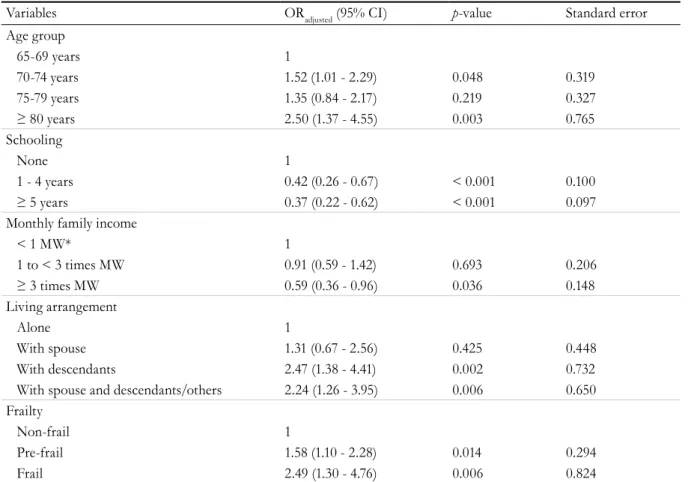
Table 3. Multiple regression analysis for functional disability in instrumental activities of daily living among elderly persons with arthritis/rheumatism; FIBRA study, 2008-2009.
Variables ORadjusted (95% CI) p-value Standard error
Age group
65-69 years 1
70-74 years 1.52 (1.01 - 2.29) 0.048 0.319
75-79 years 1.35 (0.84 - 2.17) 0.219 0.327
≥ 80 years 2.50 (1.37 - 4.55) 0.003 0.765
Schooling
None 1
1 - 4 years 0.42 (0.26 - 0.67) < 0.001 0.100
≥ 5 years 0.37 (0.22 - 0.62) < 0.001 0.097
Monthly family income
< 1 MW* 1
1 to < 3 times MW 0.91 (0.59 - 1.42) 0.693 0.206
≥ 3 times MW 0.59 (0.36 - 0.96) 0.036 0.148
Living arrangement
Alone 1
With spouse 1.31 (0.67 - 2.56) 0.425 0.448
With descendants 2.47 (1.38 - 4.41) 0.002 0.732
With spouse and descendants/others 2.24 (1.26 - 3.95) 0.006 0.650
Frailty
Non-frail 1
Pre-frail 1.58 (1.10 - 2.28) 0.014 0.294
Frail 2.49 (1.30 - 4.76) 0.006 0.824
Source: FIBRA 2008-2009. *Minimum wage.
In the multiple regression analysis, functional disability was more frequent among individuals with lower schooling and income, those who lived with a spouse/descendent or who had other living arrangements and those with some degree of frailty
(Table 3).
Table 4 lists the IADLs on which the elderly
persons were dependent stratified by the presence/ absence of arthritis or rheumatism. A significant difference between groups was found for taking
prescription medications (OR: 1.90; 95% CI: 1.19
576
DISCUSSION
Inequalities were found in the prevalence of functional disability in the performance of IADLs
among elderly persons with rheumatic diseases. There
was a greater rate of disability among those with a poorer socioeconomic status and those classified with some degree of frailty (one or more of the five frailty components). No significant associations were found between functional disability and gender, marital status, care expectations, perception of self-care or morbidities.
Among individuals aged 70 years or older, the disease is more prevalent in women who live alone. Elderly women are more numerous than elderly men, and this difference increases over the years17
.
The predominance of women at more advanced ages
is a result of many factors, including the tendency among women to take better care of themselves and seek medical and/or social care17
. Gender differences in the health of elderly persons reveal that elderly women suffer a greater burden of functional decline18
. Especially with regard to rheumatic diseases, studies report higher prevalence rates of osteoarthritis and rheumatoid arthritis in women8,11
.
The prevalence of disability regarding the
performance of IADLs among elderly persons with arthritis or rheumatism was 46.0% in the present study, demonstrating that nearly half of these individuals had restricted independence in terms of daily activities related to mobility or housework4
. Literature offers little data on the prevalence of functional disability in the performance of IADLs in this subgroup of elderly persons. Chronic inf lammatory joint diseases cause constant, prolonged pain that exerts a considerable impact on the lives of affected individuals, rendering them unable to perform day to day tasks19
. A previous study has identified an association between limited mobility and functional disability in patients with rheumatic disease20
.
In the present study, functional disability was more prevalent among individuals with lower schooling and income as well as those who lived with a spouse and offspring or had other living arrangements. Non-communicable chronic diseases generally have a greater effect on populations
with low schooling and income2,21
, who are more vulnerable and more exposed to risks and have less access to healthcare services2,22,23
.
A previous study involving individuals with rheumatic diseases found an association between low socioeconomic status and a greater prevalence of functional disability24
.The successive accumulation
of social needs throughout the life cycle of the individual, which is reflected in multi-generational living arrangements, exerts a negative influence on adherence to practices of health promotion and disease prevention, with impacts on disease control and functional independence during the ageing process. Inequalities regarding the distribution of income and a low level of economic protection for elderly persons make inequality more severe in this segment of the population.
Frailty is considered a clinical syndrome associated with normal physiological ageing and is described as a clinical state of increased vulnerability expressed as reductions in both compensatory responses and the maintenance of homeostasis in the presence of stressors16
. The greater prevalence of
disability regarding activities of daily living among elderly persons classified as pre-frail or frail in the present study may be related to the high prevalence of pain in the population with arthritis25,26 as well as the frailty syndrome, which predisposes elderly persons to a reduction in muscle mass and a chronic inflammatory state16
.
Differences in age and gender composition were considered in the analysis of functional disability with regard to each specific instrumental activity, as functional decline is a progressive process27 associated with both an increase in disease burden and considerable health differences between ageing men and women. After adjustments for age and gender, a greater prevalence of disability was found among the elderly persons with arthritis or rheumatism in terms
of taking prescription medications. This declared
difficulty and the need for assistance regarding the use of medications should be considered by both health professionals and family members so that they can assist these elderly persons in adhering to medical
treatment. The low level of schooling of elderly
577 Limitations of the present study include the use
of self-reported information and the impossibility of establishing causal relationships due to its cross-sectional design. Irrespective of the health condition evaluated, older populations have a greater likelihood of developing diseases and disabilities than those in locations where the elderly are concentrated in a younger age group27
. However, the present study considered elderly persons residing in the urban areas of seven cities located in the southern, southeastern, northern and northeastern regions of Brazil, with different demographic profiles. Studies addressing basic and advanced activities of daily living can help clarify the impact of rheumatic diseases. Moreover, qualitative approaches can contribute to a better understanding of the difficulties relating to the use of medications.
Independence in the performance of activities of daily living, which are evaluated in the present study, is one of the key conditions for the well-being
of the elderly, even when the individual is frail or suffers from a chronic disease. An individual and social approach is required to create better living conditions in old age, characterized by autonomy and quality of life, as well as interventions for healthy aging, with accessible services focusing on the most vulnerable populations28.
CONCLUSION
The present study found differences in the
prevalence of elderly persons with arthritis or rheumatism based on gender and sociodemographic profile. Associations between functional disability in instrumental activities of daily living and sociodemographic variables and frailty were also identified. When dependence in activities of daily living based on presence of the disease was assessed, there was a difference between the groups in terms of use of medication.
REFERENCES
1. Organização Mundial de Saúde. Relatório mundial de
envelhecimento e saúde. Geneba: OMS; 2015.
2. Barros MBA, Francisco PMSB, Zanchetta LM,
Cesar CLG. Tendências das desigualdades sociais
e demográficas na prevalência de doenças crônicas no Brasil, PNAD: 2003- 2008. Ciênc Saúde Colet.
2011;16(9):3755-68.
3. Instituto Brasileiro de Geografia e Estatística. Pesquisa Nacional de Saúde, 2013 : acesso e utilização dos serviços de saúde, acidentes e violências: Brasil, grandes regiões e unidades da federação. Rio de
Janeiro: IBGE; 2015.
4. Freitas RS, Fernandes MH, Coqueiro RDS, et al. Capacidade funcional e fatores associados em idosos: estudo populacional. Acta Paul Enferm.
2012;25(6):933-9.
5. Costa Filho AM. Contribuiçăo das doenças crônicas na
prevalência da incapacidade para as atividades básicas (ABVD) e instrumentais (AIVD) de vida diária entre idoso brasileiros: Pesquisa Nacional de Saúde (2013) [Dissertação na Internet]. Belo Horizonte: FIOCRUZ; 2016 [acesso em 18 nov. 2018]. Disponível em: http:// www.arca.fiocruz.br/handle/icict/17921
6. Campolina AG, Adami F, Santos JLF, Lebrão ML. A transição de saúde e as mudanças na expectativa de vida saudável da população idosa: possíveis impactos da prevenção de doenças crônicas. Cad Saúde Pública. 2013;29(6):1217-29.
7. Gafvels C, Hagerstrom M, Nordmark B, Wandell P. What predicts negative effects of rheumatoid arthritis?: follow-up two years after diagnosis. Springer Plus. 2014;3(118):1-10.
8. Torres SF. Doenças reumáticas em idosos da comunidade e variáveis associadas: dados do Estudo Fibra [Dissertação]. Campinas: Universidade Estadual de Campinas, Faculdade de Ciências Médicas; 2016.
9. Blay SL, Fillenbaum GG, Andreoli SB, Gastal FL. Prevalence and concomitants of arthritis in the elderly in Rio Grande do Sul, Brazil. PLoS One. 2012;7(9):1-7.
10. Brown EM, Garneau KL, Tsao H, Solomon DH.
DMARD non-use in low-income, elderly rheumatoid arthritis patients: results of 86 structured interviews.
578
11. Costa JO, Almeida AM, Guerra Junior AA, Cherchiglia ML, Andrade EIG, Acurcio FdA.
Treatment of rheumatoid arthritis in the Brazilian
Unified National Health System: expenditures on infliximab compared to synthetic disease-modifying anti-rheumatic drugs, 2003-2006. Cad Saúde Pública.
2014;30(2):283-95.
12. Neri AL, Yassuda MS, Araújo LF, Eulálio MC, Cabral BE, Siqueira MEC, et al. Metodologia e perfil sociodemográfico, cognitivo e de fragilidade de idosos comunitários de sete cidades brasileiras: Estudo FIBRA. Cad SaúdePública. 2013;29(4):778-92.
13. Melo DM, Barbosa AJG. Use of the Mini-Mental State Examination in research on the elderly in Brazil: a
systematic review. Ciênc Saúde Colet [Internet]. 2015 [acesso em 20 nov. 2017];20(12):3865-76. Disponível
em: http://www.scielo.br/scielo.php?script=sci_artte
xt&pid=S1413-81232015001203865
14. Brucki SMD, NitrinI R, Caramelli P, Bertolucci PHF, Okamoto IH. Sugestões para o uso Mini-Exame do Estado Mental no Brasil. Arq Neuropsiquiatr. 2003;61(3B):777-81.
15. Lawton MP, Brody EM. Assessment of older people: self-maintaining and instrumental activities of daily living. Gerontologist. 1969;9(3):179-86.
16. Fried L, Tangen C, Walston J, Newman A, Hirsch C, Gottdiener J, et al. Frailty in older adults: evidence for a phenotype. J Gerontol Ser A Biol Sci Med Sci.
2001;56(3):146-56.
17. Santos DV, Moreira MAA, Cerveny C. Velhice: considerações sobre o envelhecimento: imagens no espelho. Nova Perspect Sist. 2014;23(48):80-94.
18. Campos ACV, Almeida MHM, Campos GV,
Bogutchi TF. Prevalência de incapacidade funcional
por gênero em idosos brasileiros: uma revisão sistemática com metanálise. Rev Bras Geriatr
Gerontol. 2016;19(3):545-59.
19. Santana FS, Nascimento DC, Freitas JPM, Miranda RF, Muniz LF, Santos Neto L, Mota LMH, et al. Avaliação da capacidade funcional em pacientes com artrite reumatoide: implicações para a recomendação de exercícios físicos. Rev Bras Reumatol.
2014;54(5):378-85.
20. Marques WV, Cruz VA, Rego J, Silva NA. Influência das comorbidades na capacidade funcional de pacientes com artrite reumatoide. Rev Bras Reumatol.
2016;56(1):14-21.
21. World Health Organization. Health statistics and information systems: estimates for 2000-2012 [Internet]. Geneva: WHO; 2013? [acesso em 03 nov. 2014]. Disponível em: http://www.who.int/healthinfo/ global_burden_disease/estimates/en/index1.html
22. Malta DC, Bernal RTI, Lima MG, Araújo SSC, Silva MMA, Freitas MIF, et al. Doenças crônicas não transmissíveis e a utilização de serviços de saúde: análise da Pesquisa Nacional de Saúde no Brasil. Rev
Saúde Pública. 2017;51 Supl 1:1-4.
23. Gavasso WC, Beltrame V. Capacidade funcional e morbidades referidas: uma análise comparativa em idosos. Rev Bras Geriatr Gerontol. 2017;20(3):399-409.
24. Callhoff J, Luque Ramos A, Zink A, Hoffmann F,
Albrecht K. The Association of low income with
functional status and disease burden in German patients with rheumatoid arthritis: results of a cross-sectional questionnaire survey based on claims data. J Rheumatol. 2017;44(6):766-72.
25. Andrade FA, Pereira LV, Sousa FA. Pain measurement in the elderly: a review. Rev Latinoam Enferm. 2006;14(2):271-6.
26. World Health Organization. Chronic diseases and health promotion: Chronic rheumatic conditions
[Internet]. Geneva: WHO; 2015 [acesso em 05 jan.
2017]. Disponível em: http://www.who.int/chp/ topics/rheumatic/en/
27. Parayba MI, Crespo CD. Diferenciais sociodemográficos na incapacidade funcional dos idosos no Brasil:
uma análise das informações do censo demográfico [Internet]. In: 16º Encontro Nacional de Estudos Populacionais; 29 de set. - 03 de out. 2008; Caxambu. Caxambu : ABEP; 2008 [acesso em 20 nov 2017]. Diponível em: http://www.abep.org.br/~abeporgb/
publicacoes/index.php/anais/article/viewFile/1765/1725
28. Tesch-Römer C, Hans-Werner Wahl. Toward a more
comprehensive concept of successful aging: disability and care needs. J Gerontol Ser B Psicol Sci Soc Sci. 2017;72(2):310-8.