DEPARTAMENTO DE BIOLOGIA ANIMAL
T
HE
V
ALUE OF
C
OASTAL
L
AGOONS
:
C
ASE
S
TUDY OF
R
ECREATION AT
R
IA DE
A
VEIRO
,
P
ORTUGAL
M
ARIA
I
NÊS
P
EREIRA
C
LARA
Mestrado em Biologia da Conservação
Dissertação orientada por:
Doutora Ana Cristina Florindo de Brito (MARE, FCUL)
Doutora Brenda Joan Dyack (Institute for Applied Ecology, Australia)
A
GRADECIMENTOS
/A
CKNOWLEDGMENTS
A presente tese está assinada por mim, no entanto a sua realização só foi possível graças a
um conjunto de pessoas às quais permito-me agradecer, correndo o risco de me esquecer de
alguém.
Antes de mais, quero agradecer aos meus pais por me conseguirem dar a oportunidade de
estudar todos estes anos e sempre nas melhores condições, sem eles nada disto seria possível.
Por fazerem sempre tudo por nós, por terem criado a pessoa que sou hoje e por me apoiarem
em todas as decisões. Pais, aqui está finalmente a dita cuja, ela existe mesmo! Obrigada por
tudo!
Ainda na família, e porque esta é a mais importante, tenho a agradecer à minha avó Lena
por todo o apoio incondicional, por estar lá sempre, por me fazer engordar e pelas leituras e
correções de Inglês de última hora. Obrigada! Aos meus avós paternos, a avó Jú e o avô
Augusto, os quais admiro muito, por serem quem são, por exigirem uma cópia das habilitações
senão não acreditam e por pedirem uma cópia do paper que submeti ainda que depois tenha
percebido que não sabiam inglês... Escusado será dizer que ficaram delirados com o resumo em
português.
Sem mais demora, quero agradecer imenso à minha orientadora, Dr Ana Brito, sem a qual
esta tese não seria de todo possível. Começo por agradecer a devida orientação constante que
me deu ao longo deste ano, o que pode parecer redundante mas infelizmente existem
demasiados casos onde não existe de todo orientação por parte dos ditos orientadores. Dito isto,
quero agradecer à Ana por toda a ajuda crucial que me deu durante esta etapa, por todo o apoio
logístico, pela disponibilidade, por todas as dicas e comentários, por acreditar no meu trabalho
e na sua potencialidade e por me motivar nas alturas mais difíceis. Foi uma orientadora
impecável que me apoiou sempre, mesmo fora de horas, apesar de todas as implicações da
altura em que foi; resta-me desejar-lhe as maiores felicidades! Tenho ainda muito a agradecer
ao MARE pelo acolhimento, por todos os meios disponibilizados e as ótimas condições de
trabalho que me providenciaram durante todo ano.
Quero também agradecer à minha coorientadora, Dr Brenda Dyack, pela ajuda
indispensável principalmente na parte económica da tese e no paper. Obrigada por todo o
esforço e disponibilidade, mesmo à distância, e por toda a paciência na contribuição do seu
conhecimento. Agradeço por me fazer crer na relevância do trabalho que desenvolvi,
dando-me sempre motivação para continuar e dando-melhorar. Obrigada ainda ao Prof John Rolfe, e à sua
colaboradora Darien Borg, por todo o apoio na construção dos modelos econométricos e pelas
várias revisões do trabalho, conseguindo arranjar tempo para garantir a validade da componente
de resource economics. Toda a sua contribuição (por vezes através de inéditas reuniões de
skype à meia-noite para a Austrália e o Canadá ao mesmo tempo) foi valiosa para a execução
deste estudo e contribuíram ainda para o meu crescimento. Quero agradecer ainda ao João
Guerra, do ICS (Instituto de Ciências Sociais), pela disponibilidade e por toda a contribuição
na parte sociológica da tese.
Passo agora a agradecer à grande Kel Team por estarem sempre presente nos melhores e
nos piores momentos, espero que assim seja por largos anos: Babaloo, 30, Maraiaz, Vanilla,
Denise e Verde. Vocês sabem que são importantes, obrigada por tudo! Quero ainda deixar um
carinho especial a quem efetivamente contribuiu, e muito, na realização desta tese, desde a
recolha de dados, às longas noitadas, às ajudas preciosas na formatação e transposição de dados,
e no apoio inalcançável ao longo de todo o processo. Obrigada do fundo do coração!
Quero também deixar uma palavra ao Henrique Duarte e à Maria Rolão, e Rita, amigos de
‘longa data’ que, apesar de termos percorrido caminhos diferentes, estão lá sempre para tudo o
que precisar e sei que posso contar com eles. Agradeço-vos imenso por isso!
E porque a vida académica não é só trabalho, quero agradecer a todos Turbinados/Mestres
da Arruaça. Vocês tornaram estes anos nos melhores até agora, dificilmente vou esquecer as
nossas arruaças constantes e nem tão cedo vamos ser esquecido pelos sítios onde passamos.
Que continue assim depois desta etapa! E porque o desporto sempre acompanhou a minha vida
académica, quero agradecer às equipas de voleibol e futsal da AEFCL por me proporcionarem
momentos únicos de fortes emoções. Uma palavra especial às minhas meninas do volei que,
ainda que na brincadeira, rogaram pragas à minha tese para que continuasse a jogar com elas
por mais tempo. Às malucas do futsal que mesmo depois de “mandadas para trás” me vieram
recrutar de tal maneira que, devido ao seu grande espírito de equipa, me foi impossível recusar.
Agradeço ainda às ladies da equipa Filipa de Lencastre porque elas me pediram (e aos
treinadores, porque são eles que convocam) e, já agora, pelos ótimos momentos sem os quais a
conclusão desta etapa seria mais difícil. Depois de longas e exaustivas horas de trabalho,
acreditem que os treinos renovam uma pessoa e dão motivação para continuar. Aos
mencionados, peço desculpa pelas olheiras e por terem de levar com o meu mau humor de vez
em quando.
A todos vocês os meus mais sinceros agradecimentos.
The present thesis is signed by me, however, its accomplishment was only made possible thanks to a group of people whom I allow to thank, at the risk of forgetting someone.
First of all, I would like to thank my parents for giving me the opportunity to study all these years and always in the best conditions, without whom it wouldn’t have been possible. For always doing everything for us, for raising the person I am today and for supporting me in all decisions. Mom and dad, here it is finally, it really exists! Thanks for everything!
Still concerning family, and because it is the most important, I have to thank my grandmother Lena for all the unconditional support, for always being there, for feeding me with sweets and for the last minute readings and corrections of English. Thank you! To my paternal grandparents, grandmother Jú and grandfather Augusto, whom I admire very much, because of who they are, because they required a copy of the qualifications otherwise they wouldn’t believe it and for requesting a copy of the paper that
I submitted even though later I realized that they did not know English... Needless to say, they were delirious with the summary in Portuguese.
Without further delay, I want to immensely thank my adviser Dr Ana Brito, without whom this thesis would not have been possible at all. I start by thanking you for the constant guidance you have given me throughout this year, which may seem redundant but unfortunately there are too many cases where there is no guidance from the advisors. That said, I want to thank Ana for all the crucial help she has given me throughout this stage, for all the logistical support, for her availability, for all the tips and comments, for believing in the potentiality of my work and for motivating me during difficult times. She was an impeccable advisor who always supported me, even in late hours, despite all the implications of the timing; I wish you all the best! I still have a lot to thank MARE for the welcoming, for all the means available and the great working conditions that have provided for me all year.
I would also like to thank my co-advisor, Dr Brenda Dyack, for the indispensable help mainly in the economic part of the thesis and in the paper. Thank you for all the effort and availability, even at a distance, and for all the patience in contributing with your knowledge. Thank you for making me believe in the relevance of the work that I have developed, always giving me motivation to continue and to improve. Thanks also to Prof John Rolfe and his collaborator Darien Borg for all the support in the construction of the econometric models and for the various revisions of the work, managing to find time to ensure the validity of the resource economics component. All of their contribution (sometimes through midnight skype meetings to Australia and Canada at the same time) was valuable to the execution of this study and also contributed to my personal growth. I would also like to thank João Guerra, from the ICS (Social Sciences Institute), for the availability and contribution to sociological part of the thesis.
I now thank the great Kel Team for always being present at the best and worst moments, I hope it will be for many years: Babaloo, 30, Maraiaz, Vanilla, Denise and Verde. You know you are important, thank you for everything! I also want to leave a special affection to those who have made a real contribution to this thesis, from the data collection, long working nights, precious help in the formatting and data transposition, and the unreachable support throughout the whole process. Thank you from my heart!
I also want to leave a word to Henrique Duarte and to Maria Rolão, and Rita, of 'long date' friends who, although we have gone different ways, are always there for everything I need and I know I can count on them. Thank you so much for this!
And because academic life is not just work, I want to thank all Turbinados/Mestres da Arruaça. You have made these years the best so far, I will hardly forget our constant “arruaças” and not so soon will we be forgotten by the places we go. May it continue like this after this stage! And because sport has always accompanied my academic life, I want to thank AEFCL's volleyball and futsal teams for providing me unique moments of strong emotions. A special word to my volleyball girls who, even just kidding, “cursed” my thesis so I wouldn’t stop playing with them for more years. To the crazy girls of futsal that even after being "sent back", came to recruit me in such a way that, due to their great team spirit, I was impossible to refuse. I am also grateful to the “ladies” of the Filipa de Lencastre team because they asked me (and to the coaches, because they are the ones calling for the games), for the great moments without which the conclusion of this stage would be more difficult. After long and exhausting working hours, please believe that practices renew a person and give motivation to continue. To everyone, I apologize for the dark circles and for having to deal with my bad mood sometimes.
This work was partially presented in the following scientific meeting:
Clara, I.; Baltranaite, E.; Brito, A.C.; Cristina, S.; Goela, P.; Newton, A.; Povilanskas, R.*; Rolfe, J.; Shirmer, J.; Zacarias, M.; Dyack, B.
International comparison of recreation at coastal lagoons. 1st March – 4th March, 2016
EuroLag (European Coastal Lagoons Symposium)
- vindicating the biological and socioeconomical importance of transitional waters. Murcia, Spain
* Speaker
Part of the following chapters have been prepared for publication in international journals:
II. 1. Visitor Profile
Clara, I.; Guerra, J.; Dyack, B; Brito, A.C. Understanding Recreational Visitor Behavior and Management Implications: a survey on a Portuguese coastal lagoon. In preparation.
II. 2. Economic Valuation
Clara, I.; Dyack, B.; Rolfe, J.; Newton, A.; Borg, D.; Brito, A.C. The Value of Coastal Lagoons: Case Study of Recreation at the Ria de Aveiro, Portugal in comparison to the Coorong, Australia. Journal for
R
ESUMO
As lagoas costeiras são um dos ecossistemas mais produtivos, e ainda assim dos mais ameaçados, do mundo. Estas áreas naturais tem uma forte ligação com a sociedade dado que quase 40% da população humana habita nestas zonas. A degradação destes ecossistemas e dos seus bens e serviços é principalmente devido à sua conversão para uso agrícola, industrial ou residencial, sendo o resultado do aumento populacional e do desenvolvimento económico. Os serviços dos ecossistemas, definidos como os benefícios que as pessoas obtêm destas zonas húmidas, estão a tornar-se cada vez mais vulneráveis, uma vez que o seu valor para o Homem não tem sido corretamente considerado. Cerca de dois-terços dos serviços dos ecossistemas que compõem o capital natural do planeta são derivados do mar e dos biomas costeiros.
A preservação dos ecossistemas e dos seus serviços tem demonstrado uma influência positiva na subsistência e bem-estar das pessoas e, até mesmo, na redução da pobreza. Os recursos naturais são limitados, pelo que uma gestão eficiente dos recursos é crucial. O sucesso dos planos de conservação da natureza, segundo Mangel et al. (1996), envolve a incorporação de conhecimentos das áreas naturais e sociais, sendo que a abordagem dos serviços de ecossistemas é (amplamente) reconhecida como uma ferramenta útil para alcançar esta multidisciplinariedade. Esta perspetiva antropocêntrica aborda a utilidade dos ecossistemas através dos benefícios sociais que estes fornecem e tem tido uma relevância crescente na implementação de políticas de conservação da natureza.
A recreação e o turismo estão entre os serviços das zonas húmidas mais procurados pelas populações, com especial destaque junto às áreas mais urbanizadas. Estes contribuem para a melhoria do bem-estar humano a nível físico e psicológico. Estes serviços de ecossistemas culturais possuem valor de uso direto não-consumível, no entanto, a dificuldade na sua quantificação tem provocado a sua negligência na avaliação de trade-offs monetários entre diferentes opções de gestão. Contudo, os serviços recreativos e turísticos de um ecossistema possuem uma forte relação com a conservação dos recursos naturais do mesmo, tornando-se assim pertinente a sua integração na gestão das áreas naturais. A preservação da natureza permite a realização de atividades recreativas uma vez que providencia o ambiente onde estas atividades se desenvolvem, como é o exemplo da quantidade e qualidade de água necessária para a prática de desportos aquáticos na lagoa. O turismo de natureza, apesar de não tão evidente, pode também contribuir para a conservação do ecossistema. Existem áreas protegidas onde a receita obtida através do ecoturismo é investida em programas de conservação. No entanto existem outros benefícios da recreação e turismo tais como a disponibilização de informação e instalações que promovem a consciencialização e educação ambiental nos seus visitantes que, por sua vez, podem desenvolver atitudes e comportamentos pro-conservacionistas. A relação complexa entre a natureza e o Homem, característica deste tipo de serviços, apela à sinergia das ciências ecológicas e sociais. Assim sendo, os serviços de ecossistemas culturais representam uma importante ferramenta para uma gestão holística dos ecossistemas, através da integração da perspetiva sociológica do envolvimento público e da investigação económica para as avaliações monetárias. O objetivo deste estudo é então verificar a importância da avaliação de serviços de ecossistemas culturais, particularmente o uso recreativo, na gestão de uma lagoa costeira portuguesa, a Ria de Aveiro. Esta investigação multidisciplinar abrange uma abordagem nas áreas da economia, sociologia e ecologia do ecossistema.
Foram aplicados inquéritos em formato de papel diretamente aos utilizadores recreativos da Ria de Aveiro. O inquérito foi adaptado de um estudo australiano com foco idêntico e foi desenhado de
modo a permitir a recolha de informação para as análises sociológicas e económicas. A vantagem da utilização de um inquérito existente é estabelecer uma abordagem metodológica estandardizada passível de ser aplicada e comparada entre diferentes sítios do mundo. A informação recolhida durante dois meses (Agosto e Setembro de 2015) resultou num total de 386 inquéritos completos. Inclui assim uma abordagem sociológica do perfil dos utilizadores recreativos da Ria de Aveiro, através do software estatístico SPSS (23.0), e uma avaliação económica destes serviços de ecossistemas culturais estimando o valor monetário do uso recreativo (uso não-mercantil) com a aplicação de dois métodos de valoração económica: o método de custo de viagem (TCM, travel cost method) e o método de valoração contingente (CVM, contingent valuation method), através do software estatístico STATA (10.0). A área de estudo é a Ria de Aveiro, uma lagoa costeira na região centro de Portugal com uma elevada importância ecológica devido à sua diversidade de habitats e espécies, maioritariamente de aves. A região é considerada uma prioridade de conservação e possui áreas incorporadas na rede Natura 2000, Sítios Ramsar e uma reserva natural. As atividades recreativas e turísticas da zona são serviços de ecossistema bastante requisitados pelos seus visitantes.
As lagoas costeiras são importantes áreas recreativas encontradas por todo o mundo, no entanto raramente possuem informação sobre quem visita, de onde vem, as atividades realizadas, as motivações da visita e as preocupações dos seus visitantes. Deste modo, a abordagem sociológica deste estudo permitiu a recolha da, até então inexistente, informação das características sociodemográficas dos visitantes da Ria de Aveiro, bem como as atividades que praticam, as razões da visita e ainda algumas opiniões pessoais. O perfil sociodemográfico dos visitantes contribui para perceber alguns dos seus comportamentos relativos às atividades e motivos da visita, permitindo refletir sobre a procura e as necessidades das pessoas aquando da visita recreativa. As principais atividades praticadas e razões da visita desta lagoa costeira dependem das características demográficas dos visitantes (tais como idade, sexo, nacionalidade e rendimento), ou seja, diferentes tipos de pessoas têm preferências recreativas diferentes. Os vários municípios envolventes da Ria de Aveiro demonstraram influenciar o tipo de visitante bem como as atividades realizadas, o que indica ser relevante a aplicação de políticas de gestão distintas. De acordo com os inquiridos, a experiência recreativa geral desta área costeira permite principalmente relaxar, entrar em contato com a natureza, socializar, e fazer atividades ao ar livre, turismo urbano e pesca. A elevada preferência de atividades de turismo de natureza, ditas apreciativas, é indicativa de atitudes e comportamentos pró-conservacionistas. Assim, a análise desta informação torna-se bastante útil para o desenvolvimento de estratégias de planeamento e gestão destas áreas de uma forma mais eficiente tendo em conta os seus visitantes. A gestão da área poderá atingir objetivos de conservação através do incentivo da prática destas atividades em detrimento de outras com impactos negativos no ecossistema e através do investimento da consciencialização e educação ambiental.
De modo a evitar a perda e degradação dos ecossistemas, a identificação e a quantificação dos seus serviços tem sido bastante requisitada. Assim, diferentes métodos de atribuição de um valor monetário aos benefícios sociais dos ecossistemas têm ganho recentemente popularidade e aceitação entre os responsáveis por tomadas de decisão. Embora alguns serviços dos ecossistemas, principalmente os de produção, possam ser trocados no mercado por um determinado preço, a maioria dos serviços, incluindo os culturais e de regulação, não são negociados diretamente por um valor monetário. Os serviços de ecossistemas culturais, como é o caso da recreação, necessita de técnicas específicas de valoração para estimar o seu valor “não-mercantil”, permitindo assim traduzir economicamente a sua importância ecológica. Os valores estimados de excedente de consumo obtidos com o método TCM foram cerca de 100 € e 105 € (por adulto e por dia), para a variável de custo de viagem relatada e estimada, respetivamente, e com o método CVM de 53 €, para o valor calculado através da variável de custo de viagem estimada. Estas estimativas fornecem uma contribuição valiosa, garantindo assim que os
serviços culturais de um ecossistema não são negligenciados e que o seu valor possa ser incluído em análises de custo-benefício das decisões de gestão. Os ecossistemas sob políticas de conservação geralmente fornecem vantagens económicas que, na maioria dos casos, são iguais ou maiores do que o custo da conservação.
A proteção da natureza apenas por si só, pelo seu valor intrínseco, não tem sido um argumento de conservação bem-sucedido. A conservação destas áreas costeiras de importância ecológica e recreativa requer estratégias de gestão bem fundamentadas e completas, através de conhecimentos nas áreas biológicas e sociais, devido à forte relação entre a natureza e do Homem. Uma abordagem integrada com participação pública e com a avaliação monetária dos benefícios sociais relacionados com os serviços de ecossistema aumenta a aceitação social das políticas de gestão e, desse modo, tem maior probabilidade de sucesso. Iniciativas políticas para a conservação dos ecossistemas marinhos e costeiros têm vindo a expandir-se a nível internacional, europeu e nacional. Estas têm como objetivo avaliar as condições e tendências dos ecossistemas mundiais e os serviços que prestam, bem como melhorar a base científica para usá-los de forma sustentável através de tomadas de decisão. O presente estudo revela evidências empíricas do serviço recreativo desta lagoa costeira, através do perfil dos visitantes e da avaliação do seu valor económico, que pode ser amplamente utilizado pelos gestores nos processos de tomada de decisão. Assim, fornece uma justificação sociológica e económica da alocação de recursos financeiros para a conservação da natureza.
Palavras-chave: lagoas costeiras, serviços de ecossistemas culturais, perfil de visitante, valoração económica, gestão ambiental
A
BSTRACT
Coastal ecosystems are some of the most productive and yet threatened in the world. A key feature for successful conservation plans includes the integration of natural and social domains of science to improve environmental management strategies. The Ecosystem Services (ES) approach is widely recognized as a useful tool to integrate sociological and economic knowledge in environmental issues. Recreation and tourism are among the most demanded services of coastal lagoons, mostly in more urbanized areas, and have great benefits to physical and psychological human wellbeing. The aim of this study is to combine sociological perspective of public involvement and assess the economic value of this service to evaluate the importance of cultural ecosystem services so as to assist in the management strategies of a Portuguese coastal lagoon, Ria de Aveiro.
The first part of this study was focused on the sociological aspects of recreational services of Ria de Aveiro lagoon and included the assessment of visitor’s sociodemographic characteristics and behaviors, along with their personal interest and opinions. The information gathered here enables the perception of their needs and demands for a recreational site, providing useful information for managers and decision-makers. The main activities undertaken and the reasons for visiting this coastal lagoon are dependent on visitor’s demographics (such as age, gender, nationality and income), i.e. different people have different recreational preferences. The municipalities within Aveiro region were also found to influence the activities and reasons that people chose, meaning that it may require different management strategies. According to respondents, the overall recreational experience of this wetland allows mainly relaxation, contact with nature, outdoor activities, social gathering, urban tourism and fishing. Most activities visitors undertook at this site are appreciative recreation activities (related with nature-tourism) that are considered to have an influence on adopting pro-environmental attitudes and behaviors. Therefore, this information input contributes to a better acknowledge of recreational visitors. Thus, it can enhance management decisions concerning conservation goals by promoting these type of appreciative activities, over others with a negative impact on the ecosystem, and by investing in environmental awareness and education.
The economic valuation of these non-market cultural services enables the translation of their ecological importance into monetary terms. For the appraisal of non-market values, such as the case of recreational use, standard economic valuation techniques, such as travel cost (TCM) and contingent valuation (CVM) methods, have been applied. Estimated values of consumer surplus obtained with the TCM method were between 100€ and 105€ (per adult and per day), and 53€ with the CVM method. This monetary value obtained can be better perceived by scientists, managers, policy makers and all stakeholders, and it can be included in cost-benefit analyses of alternative management options of coastal lagoon (including conservation plans). These estimates provide an important input ensuring that cultural ecosystem services are not disregarded and that their value can be included in management decisions. Ecosystems under conservation policies generally provide economic advantages that, in most cases, are equal to or even greater than the cost of conservation.
The argument for protecting nature because of its intrinsic value hasn’t been successful in achieving conservation goals. Proper management of the ecosystem and its services has an increased social acceptance and thus is more likely to succeed if it is applied using integrated approaches with public involvement and with monetary assessment of social benefits related to the ecosystem services. The current study reveals empirical evidence of the recreational service of this coastal lagoon, by
profiling visitors and assessing its economic value, which can be widely used by managers in decision-making processes. Therefore, it provides a sociological and economic justification of the allocation of financial resources towards nature conservation.
Keywords: coastal lagoons, cultural ecosystem services, visitor profile, economic valuation, environmental management
C
ONTENTS
AGRADECIMENTOS/ACKNOWLEDGMENTS ... I RESUMO ... V ABSTRACT ... VIII ABBREVIATIONS ... XI LIST OF FIGURES AND TABLES ... XII LIST OF APPENDICES ... XIV
I - INTRODUCTION ... 15
I.1THEORETICAL FRAMEWORK ... 15
I.2AIMS AND OBJECTIVES ... 20
I.3THESIS OUTLINE ... 21
I.4STUDY AREA ... 22
I.5SURVEY IMPLEMENTATION ... 23
II – SOCIOLOGICAL AND ECONOMIC APPROACH ... 25
II.1 – VISITOR PROFILE ... 25
II.1.1INTRODUCTION ... 25
II.1.2METHODS ... 26
II.1.3RESULTS ... 28
II.1.4DISCUSSION ... 44
II.1.5CONCLUSION ... 48
II.2 – ECONOMIC VALUATION ... 50
II.2.1INTRODUCTION ... 50
II.2.2TRAVEL COST METHOD (TCM) ... 55
II.2.2.1STATISTICAL FRAMEWORK ... 56
II.2.2.2DATA AND METHODS ... 58
II.2.2.3RESULTS AND DISCUSSION ... 59
II.2.3CONTINGENT VALUATION METHOD (CVM) ... 63
II.2.3.1STATISTICAL FRAMEWORK ... 64
II.2.3.2DATA AND METHODS ... 65
II.2.3.3RESULTS AND DISCUSSION ... 66
II.2.4DISCUSSION ... 67
II.2.5CONCLUSION ... 71
III – GENERAL DISCUSSION ... 73
III.1GENERAL CONSIDERATIONS ... 73
III.2IMPLICATIONS FOR CONSERVATION AND MANAGEMENT ... 74
III.3FINAL REMARKS ... 76
IV - REFERENCES ... 77
A
BBREVIATIONS
AIC
Akaike Information CriteriaAUD
Australian DollarsBIC
Bayesian Information CriteriaCBA
Cost-Benefit AnalysisCI
Confidence IntervalsCIA
Environmental Interpretation CenterCICES
Common International Classification of Ecosystem ServicesCPI
Consumer Price IndexCS
Consumer SurplusCVM
Contingent Valuation MethodDUV
Direct Use ValueEEA
European Environment AgencyES
Ecosystem ServicesESV
Ecosystem Services ValuationEU
European UnionITCM
Individual Travel Cost MethodIUV
Indirect Use ValueMA
Millennium Ecosystem AssessmentNGOs
Non-Governmental OrganizationsNUV
Non-use ValuesOUV
Option Use ValueSCI
Site of Community ImportanceSPA
Special Protection AreaTC
Travel CostTCM
Travel Cost MethodTEEB
The Economics of Ecosystems and BiodiversityTEV
Total Economic ValueUV
Use ValuesWTA
Willingness to AcceptWTP
Willingness to PayL
IST OF
F
IGURES AND
T
ABLES
F
IGURES
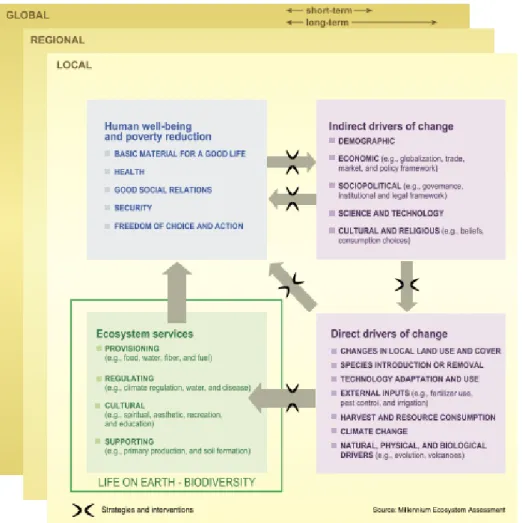
FIGURE 1:THE CONCEPTUAL FRAMEWORK OF THE MILLENNIUM ECOSYSTEM ASSESSMENT (MA,2005). ... 16
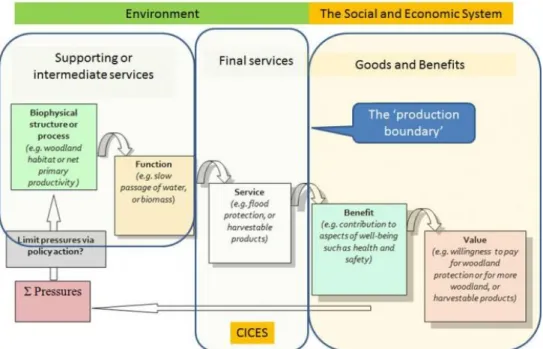
FIGURE 2:THE ECOSYSTEM SERVICE CASCADE.SOURCE:HAINES-YOUNG &POTSCHIN (2013) ... 17
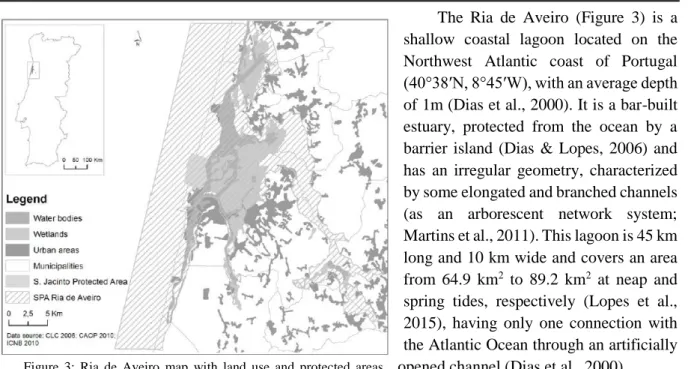
FIGURE 3:RIA DE AVEIRO MAP WITH LAND USE AND PROTECTED AREAS.SOURCE:SOUSA ET AL.(2011)... 22
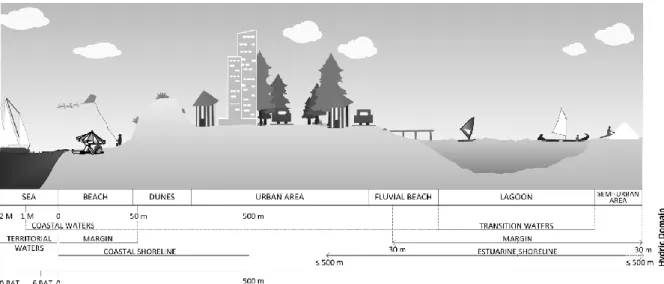
FIGURE 4:MAIN LANDSCAPE USE OF BOTH TERRESTRIAL AND MARINE SPACE OF STUDY AREA.SOURCE:SOUSA ET AL. (2011). ... 23
FIGURE 5:DISTRIBUTION OF VISITOR PERCENTAGES (%) PER AGE GROUPS (YEARS OLD)(A) AND PER CATEGORY OF INCOME PER MONTH (€)(B). ... 29
FIGURE 6:PERCENTAGE OF VISITORS (%) PER CATEGORY OF INCOME (€) PER NATIONALITY (A) AND PER GENDER (B). 29 FIGURE 7:PERCENTAGE OF VISITORS’ CHOICE OF THE CATEGORY THAT EVALUATES THEIR PERSONAL HEALTH. ... 30
FIGURE 8:LIFE SATISFACTION ACCORDING TO CLASS OF INCOME. ... 30
FIGURE 9:PERCENTAGE OF VISITORS DOING EACH TYPE OF VISIT. ... 31
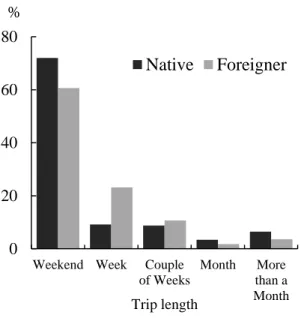
FIGURE 10:TRIP LENGTH ACCORDING TO NATIONALITY. ... 31
FIGURE 11:NUMBER OF VISITS TO RIA DE AVEIRO ... 31
FIGURE 12:NUMBER OF VISITS TO RIA DE AVEIRO ACCORDING TO CHANGES IN ACCESS BETWEEN A DEGRADATION OF 50% TO AN IMPROVEMENT OF 25%. ... 32
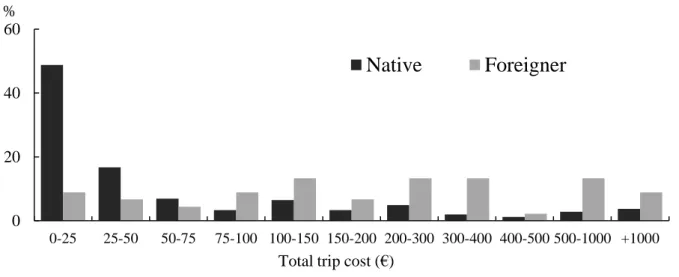
FIGURE 13:TOTAL TRIP COST (€) PER NATIONALITY. ... 32
FIGURE 14:PERCENTAGE OF VISITOR’S MAIN ACTIVITIES PERFORMED IN RIA DE AVEIRO, RANKED IN DESCENDING ORDER. ... 33
FIGURE 15:PERCENTAGE OF VISITOR’S MAIN REASONS TO VISIT RIA DE AVEIRO, RANKED IN DESCENDING ORDER. ... 34
FIGURE 16:OPINION ABOUT CURRENT TRENDS OF ENVIRONMENTAL PROBLEMS AND RECREATIONAL OPPORTUNITIES WHEN COMPARING WITH A FEW YEARS AGO (ONLY PORTUGUESE VISITORS). ... 34
FIGURE 17:ATTITUDINAL QUESTIONS REGARDING TO WATER EXCHANGE THROUGH THE INLETS AND ITS EFFECT ON THE ENVIRONMENT AND RECREATION. ... 35
FIGURE 18:‘RIA DE AVEIRO SPECIAL TO ME’ INDEX ACCORDING TO NATIONALITY (A) AND CLASS OF INCOME (B). ... 36
FIGURE 19:VISITORS PERCENTAGES IN EACH AGE GROUP ACCORDING TO SELECTION OF THE RELAX ACTIVITY. ... 37
FIGURE 20:VISITORS PERCENTAGES OF NATIVES AND NON-NATIVES, ACCORDING TO SELECTION OF TOURISTIC ACTIVITY. ... 37
FIGURE 21:VISITORS PERCENTAGES OF EACH GENDER (A), RETIREMENT STATUS (B), AGE GROUP (C) AND CLASS OF INCOME (D), ACCORDING TO SELECTION OF THE FISHING ACTIVITY. ... 38
FIGURE 23:VISITORS PERCENTAGES OF EACH GENDER (A), AGE GROUP (B), NATIONALITY (C) AND CLASS OF INCOME (D),
ACCORDING TO SELECTION OF THE SOCIAL REASONS. ... 39
FIGURE 24:VISITORS PERCENTAGES PER NATIONALITY, ACCORDING TO SELECTION OF TOURISM REASONS. ... 40
FIGURE 25:VISITORS PERCENTAGES OF EACH AGE GROUP, ACCORDING TO SELECTION OF THE LEISURE ACTIVITIES REASONS. ... 40
FIGURE 26: VISITORS PERCENTAGES OF EACH AGE GROUP, ACCORDING TO THE MUNICIPALITY WHERE THEY WERE APPROACHED. ... 40
FIGURE 27:VISITORS PERCENTAGES OF NATIVES AND FOREIGNERS, ACCORDING TO THE MUNICIPALITY WHERE THEY WERE APPROACHED. ... 41
FIGURE 28: VISITORS PERCENTAGES OF EACH MUNICIPALITY, ACCORDING TO SELECTION OF LAND-BASED NATURE ACTIVITIES (A), TOURISM ACTIVITIES (B), FISHING ACTIVITIES (C) AND RELAXATION ACTIVITIES (D). ... 41
FIGURE 29: VISITORS PERCENTAGES OF EACH MUNICIPALITY, ACCORDING TO SELECTION OF TOURISM REASONS (A), NATURE REASONS (B) AND LEISURE ACTIVITIES REASONS (C). ... 42
FIGURE 30:SPECIAL AREAS WITHIN EACH MUNICIPALITY. ... 42
FIGURE 31:‘RIA DE AVEIRO SPECIAL TO ME’ ÍNDEX WITHIN EACH MUNICIPALITY, IN PERCENTAGE OF RESPONSES. ... 43
FIGURE 32:RELATION BETWEEN THE DEMAND CURVE AND CONSUMER SURPLUS. ... 52
FIGURE 33:COMPONENTS OF TOTAL ECONOMIC VALUE (TEV) OF COASTAL AND MARINE ECOSYSTEMS WITH CATEGORIES, EXAMPLES AND RESPECTIVE ECONOMIC VALUATION METHODS. ... 53
FIGURE 34:ECONOMIC VALUATION TECHNIQUES OF MARKET AND NON-MARKET GOODS. ... 54
FIGURE 35:FREQUENCY OF TRIPS AND REPORTED VISIT COSTS (€) FOR RIA DE AVEIRO ... 60
T
ABLES
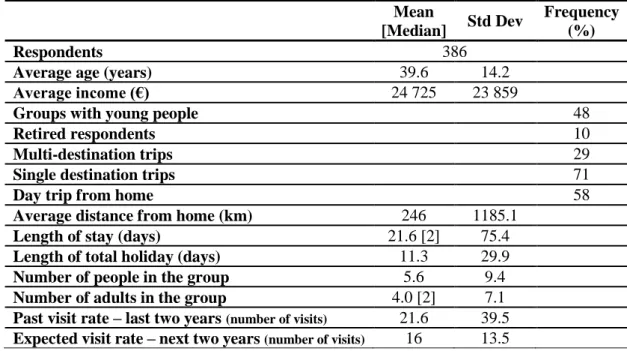
TABLE 1:OVERVIEW OF DESCRIPTIVE STATISTICS OF VISITOR CHARACTERISTICS. ... 28TABLE 2:TRAVEL COST METHOD. ... 61
TABLE 3:CONTINGENT VALUATION METHOD RESULTS ... 66
TABLE 4:SUMMARY OF RECREATION VALUE ESTIMATES WITH THE CALCULATION OF THE TOTAL CONSUMER SURPLUS PER ANNUM (€). ... 70
L
IST OF
A
PPENDICES
APPENDIX 1:QUESTIONNAIRE (ENGLISH VERSION) ... 87
APPENDIX 2:PERCENTAGES OF RESPONSES TO SOME OPINION QUESTIONS ... 988
APPENDIX 3:RESULTS OF POST HOC ANALYSIS WITH WILCOXON SIGNED-RANK TESTS ... 100
APPENDIX 4:RESULTS OF MODEL FITNESS TESTS ... 101
I
-
I
NTRODUCTION
I.1
T
HEORETICAL
F
RAMEWORK
I.1.1 Coastal Lagoons
Coastal lagoons and their wetlands represent one of the Earth’s most productive ecosystems, providing a wide range of ecosystem goods and services essential to life on the planet (Camacho-Valdez et al., 2013; IUCN, 2007; Nunes & Gowdy, 2015). Coastal lagoons are considered ecosystems of key importance to the biosphere given that they are responsible for almost all biogeochemical processes (Sousa et al., 2013), allowing support to a large biological diversity. Nearly 40% of the human population live within 100 kilometers of the coast and these areas are still experiencing growing populations along with exploitation pressures (Willaert, 2014). Despite their proven importance, these coastal systems are some of the most threatened in the world (MA, 2005) and the goods and services they provide are becoming increasingly vulnerable (Agardy, 2010). This is the result of the attempt to respond to growing human needs and economic development (MA, 2005).
Wetlands, including those that are part of coastal lagoons, may be destroyed by pollution, water withdrawal, overharvesting and overexploitation, introduction of invasive alien species and other influences (MA, 2005). However, the main cause of degradation of these ecosystems is their conversion to agricultural, industrial or residential use (Barbier et al., 1997), with half of the world’s wetlands being lost over the past century to physical alterations (UNEP, 2002). One of the main reasons is that wetlands are still treated as though they have little or no value to humans (Sousa et al., 2013), although an estimated two-thirds of the ecosystem services that make up the planet’s natural capital are derived from ocean and coastal biomes (TEEB, 2012).
I.1.2 Conservation Principles
Uncontained human growth and the intensification of resource use are unsustainable because they are inconsistent with a finite system (MA, 2005; TEEB, 2010). However, conservation of all resources and all ecosystems is an unrealistic goal that emphasizes the importance of effective management of the limited natural assets. Furthermore, limited financial capital budgets make it essential to develop an adequate way of prioritizing, or ‘ranking’, options for how best to preserve the environmental resources at regional, national and international levels (Barbier et al., 1997).
Mangel et al. (1996), in a remarkable paper, brought together several “Principles for the Conservation of Wild Living Resources”. They highlight the need to integrate the knowledge and skills from the natural and social sciences into conservation problems. Conservation policies have been failing to include interdisciplinarity in societies where natural ecosystems are highly connected with human populations (Knight et al., 2006). Conservation’s principles also include the importance of “understanding and taking account of the motives, interests, and values of all users and stakeholders”. Therefore, all the relevant disciplines, including biological, economic and social disciplines, must be involved in the appraisal of ecosystem management policy at all stages, from the assessment of the issues, passing the policy implementation, up to the monitoring and evaluation of the policy (Robinson, 2006).
I.1.3 Ecosystem Services Framework
The need for a transdisciplinary research to achieve conservation and sustainability goals has launched the so-called “ecosystem services framework” into environmental management and decision-making processes (Lele et al., 2013; Turner et al., 2008). The Millennium Ecosystem Assessment (MA, 2005) was responsible for the popularization of the concept. It defines Ecosystem Services (ES) as “the functions and products of ecosystems that benefit humans, or yield welfare to society” (see Figure 1). According to the MA (2005), 60% of all ES evaluated are being degraded or used unsustainably.
Figure 1: The conceptual framework of the Millennium Ecosystem Assessment (MA, 2005).
This utilitarian and anthropocentric approach has become widely accepted among government institutions, non-governmental organizations (NGOs), the academic community and the private sector, although it has been a subject of debate among conservation scientists (Ingram et al., 2012). Even if the ultimate objective of the ES approach may not always be biodiversity conservation, it has a major impact as an intermediate tool for that purpose. According to Ingram et al. (2012), there are three main benefits of ecosystem services approaches for biodiversity conservation: the ES approach has the potentiality of informing decision-making and engaging stakeholders who apparently hadn’t conservation interests but, with services in mind, they invest in policies that contribute to ecosystem conservation; the numerous services generated in protected areas (e.g. regulating services) may act as an argument for funding programs and managing these areas specially designed for conservation purposes; lastly, for
non-protected areas that are as important for conservation as the non-protected ones, the wider-accepted importance of ecosystem services may lead to a sustainable management of land and water areas resulting in positive consequences for conservation.
MA (2005) provided a classification for ecosystem services that is globally recognized however, it has some fragilities related to its simplicity. This classification can lead to confusion and different interpretations. The Economics of Ecosystems and Biodiversity project (TEEB, 2010) followed the MA and provided an updated classification, also grouping ecosystem services into four broad categories, though it replaced ‘supporting services’ with ‘habitat or supporting services’, which comprise ‘habitats for species’ and ‘maintenance of genetic diversity’. It proposed a new definition of ecosystem services that consists in “the direct and indirect contributions of ecosystems to human well-being”. TEEB project clarifies a finer distinction between services and benefits and explicitly recognizes that services can benefit people in multiple and indirect ways (TEEB, 2010). More recently, there has been a proposal for a Common International Classification of Ecosystem Services (CICES), developed to support the work of the European Environment Agency (EEA) on Integrated Environmental and Economic Accounting, in which “ecosystems services are defined here as the contributions that ecosystems make to human well-being, and arise from the interaction of biotic and abiotic processes” (Haines-Young & Potschin, 2013). Therefore, it focuses on final services, which are the ‘final’ outputs or products from ecological systems, that is, the things directly consumed or used by people. CICES presents clear distinction between ecological phenomena (functions, processes and structures), their direct and indirect contribution to human welfare (final ecosystem services), and the welfare gains they generate (benefits). Thus, services have social as well as economic value (Figure 2). A standardization in the definition of ecosystem services enables them to be described and measured, and therefore they can be valued, mapped and included in environmental accounting (Haines-Young & Potschin, 2013).
Recently, literature has been widely covering this approach, being increasingly applied in natural resource management and conservation studies (Daily et al., 2009; Goldman et al., 2008; Tallis & Polasky, 2008; Turner & Daily, 2008). Although the approach is grounded on natural sciences, it relies on social appraisal and economic analysis to assess the values attached to the diverse ecosystem services (Atkinson et al., 2012; Fisher et al., 2009). The services’ values generated will then serve as input for the decision-making process and management of areas with conservation concerns (Carpenter et al., 2009; Chan et al., 2006; Daily, 2000; De Groot et al., 2010; Egoh et al., 2007; Goldman et al., 2008).
I.1.4 Coastal Ecosystem Services
The main services provided by marine and coastal ecosystem, following by the MA classification (MA, 2005), are (1) provisioning ES: food (mainly fish and shellfish), fiber, timber, fuel, medicines and other resources; (2) regulating ES: freshwater storage, hydrological balance, climate regulation, erosion control, flood protection, water purification; (3) supporting ES: oxygen production, nutrient cycling and fertility; and (4) cultural ES: recreation, ecotourism, cultural and amenity, aesthetics, education and research (Barbier, 2012; Lopes & Videira, 2013). These ecosystems also have a major role in regulating the fluxes of water, nutrients and organisms between land, rivers and the ocean (Newton et al., 2013). Two of the most important wetland ecosystem services affecting human populations involve fish supply and water availability, being of particular importance in developing countries (Haines-Young & Potschin, 2013). For some rural communities living near wetlands, inland fisheries are the main, and sometimes only, primary source of animal protein to which they have access, contributing to human well-being and poverty alleviation as well (MA, 2005). Many economic activities take place in these coastal ecosystems, of which the major ones include agriculture, aquaculture, fishing, tourism, water sports, shipping, dredging, salt extraction and industrial development (Newton et al., 2013).
The ability of ecosystems to provide sufficient ecosystem services to people not only supports basic human needs, but has also been proved to be beneficial in various aspects of human health and the general feeling of well-being (Fisher et al., 2009). Several studies have reported benefits from physiological to mental and psychological health improvements (see details in Sandifer et al., 2015). These areas are ecologically and economically valuable due to the range of goods and services they provide, but highly vulnerable as well. Therefore, these socio-ecological systems have an important value making it crucial for the conservation of ecosystems and their services (Barbier et al., 2011).
I.1.5 Recreation and Conservation
Recreation and tourism can be considered, instead of cultural ES as proposed by the MA (2005), benefits that derive from cultural ecosystem services (Boyd & Banzhaf, 2007). Recreation and tourism are human activities in which its experience provides nonmaterial benefits to people and they are included in the non-consumptive direct use values of an ecosystem (see details in Figure 33). It is widely accepted that a coastal lagoon has plenty of consumptive uses to offer to human populations, such as fish, shellfish, timber, and so on, however it is the non-consumptive uses that generate most of the social benefits (Costanza et al., 1997). Non-consumptive uses of a wetland involve contact between people and the habitat, and depend on the physical, biological, and geological characteristics of the wetland. Recreation and tourism are a very important component of coastal lagoons’ ecosystems, meaning that people choose to spend their leisure time in these natural areas (Lankia et al., 2015). Outdoor recreation consists in the “experiences that derive from recreation activities in and depending on the natural environment” (Moore & Driver, 2005). When performed away from the home area outdoor recreation is also considered tourism, and more specifically nature-based tourism, or nature tourism. This is in line with the definition of nature-based tourism that includes “the activities of people residing in natural
areas outside their usual environment” (Wolf-Watz et al., 2011). In this matter, there is such a slight distinction between outdoor recreation and nature-based tourism so that it can be disregarded.
In a highly urbanized society as today’s, the urgent demand for natural environments for touristic and recreation activities has been boosting this new industry in many ecosystems (Chiesura, 2004). This new type of nature tourism, emerged in the 70s, in response to the growing need to escape from a hectic lifestyle and to get in contact with nature and local cultures. The demand for this type of service is greater in more urbanized societies where the city life is more stressful and green spaces are scarcer (Chiesura, 2004; Matsuoka & Kaplan, 2008; Yilmaz, et al., 2007).
Tourism has a strong relationship with conservation of the natural assets of an ecosystem and in fact, according to Eagles et al. (2002) ‘protected areas need tourism, and tourism needs protected areas; tourism is always a critical component to consider in the establishment and management of protected areas’. Nonetheless, conservation supports tourism more often than tourism supports conservation (Buckley, 2013). In the case of coastal lagoons, conservation and management of natural resources, such as its flora, fauna and geology, not only improves the physical attractiveness of the environment but it also allows visitors to pursue their recreational activities. Thus recreation is intrinsically dependent on ecological conditions which are themselves the ecosystem services, so that the maintenance of species and habitats diversity becomes highly relevant (Fuller et al., 2007; Naidoo & Adamowicz, 2005; Nyaupande & Poudel, 2011). For example, water sports require certain properties and good quality of the water body (water depth and width, water speed, wind protection, etc.), camping and bushwalking need an adjacent naturalistic land, birdwatching is dependent on a high amount of bird species, fisheries require a high abundance and diversity of fish species (Dyack et al., 2007). Almost all the nature-related activities are dependent on the preservation of the ecosystem and are enhanced by the provision of facilities that provide good quality access, such as trails, paths and information boards. Recreationists, therefore, would be expected to directly benefit from wetlands protection programs.
Nature tourism, although not so evident, may function as a contribution to ecosystem preservation as well. Recreational and tourism opportunities are also co-benefits of nature conservation (Schägner et al., 2016). Sustainable tourism goals intend that some of the profits generated are allocated to the management and protection of habitats and biodiversity. There are some protected areas where tourism revenue raised from entrance and activity charges is invested in the conservation of threatened species, through habitat restoration, anti-poaching efforts and control of invasive species (Buckley et al., 2012; Morrison et al., 2012; Naidoo & Adamowicz, 2005; Steven et al., 2013). Important benefits from recreation and tourism include as well providing access to information and amenities that promote environmental awareness and education in visitors that may develop attitudes towards nature conservation (Nyaupane & Poudel, 2011; Stem et al., 2003).
Recreation and tourism yield numerous relevant benefits to people such as physical exercise, aesthetic experiences, intellectual stimulation, inspiration, reducing stress and depression, improving social relationships, and others also related to physical and psychological well-being (Daniel et al., 2012; Milcu et al., 2013). Health benefits derived from outdoor recreation areas are widely reported (Godbey, 2009). Tourism activities also present a non-trivial economic value to local development by generating employment and marketing for local goods and services (Nyaupane & Poudel, 2011). However, the idea that they are intangible and difficult to quantify has led to a poor characterization and valuation of these benefits (De Groot, 2006; Fletcher et al., 2014; Milcu et al. 2013). The recognition of the importance of these benefits is critical for understanding the link between environment and culture and to assess trade-offs between different management options (Chan et al., 2012; Satz et al., 2013; Schipperijn et al., 2010). Otherwise, the exclusion of cultural values from ecosystems assessments would lead to an underestimation of values for the ecosystem in question and could lead to potential undetermined losses
(Milcu et al., 2013). Thus, having better information about recreational benefits provides input to better land-use planning and presents a strong argument in favor of allocating financial resources towards nature conservation (Balmford et al., 2015; Milcu et al., 2013).
I.1.6 Importance of an Integrated Approach
The complex relationship between nature and people, which is a distinction of recreational benefits, calls for the integration of ecological and social sciences in order to achieve nature conservation goals (Daniel et al., 2012; Endter-Wada et al., 1998; Knight et al., 2006; Pohl, 2005; Pregernig, 2006; Turner et al., 1996). These benefits are an important tool for a holistic management of ecosystems through the synergy of the economic research for economic assessments and the socio-psychological perspective with public involvement (Milcu et al., 2013). By means of engaging people and accounting for social values, recreational benefits have the ability to raise the ES approach to a higher level (Kumar & Kumar, 2008). Therefore, to better appraise recreation and tourism in an ES framework, it is crucial to gather qualitative and quantitative information from social science domains based on an improved cooperation between scientists, policy makers and stakeholders (Daniel et al., 2012).
Sociological information regarding recreational visitors’ characteristics and behaviors provides relevant knowledge of people’s needs and demands (Chiesura, 2004; Schmitz et al., 2007). Policies and management planning that account for public involvement in decision-making processes improves local knowledge and social acceptance, therefore they are more likely to be successful (Endter-Wada et al., 1998; Matsuoka & Kaplan, 2008). The identification and quantification of cultural services in monetary terms is also crucial for the translation of their ecological importance into a common economic currency. This market value allows the assessment of monetary trade-offs between alternative management options in a situation where financial resources are limited. All this information is valuable for management decisions and may contribute to a social and economic justification for the allocation of financial capital to nature conservation.
Detailed explanations of the sociological and economic approaches mentioned above will be further presented in the introductory section of each chapter of this thesis.
I.2
A
IMS AND
O
BJECTIVES
The aim of this study is to combine sociological and economic perspectives to assess the importance of recreational experience, a benefit provided by cultural ecosystem services, so as to assist in the management strategies of a Portuguese coastal lagoon, Ria de Aveiro. This will be achieved by providing evidence of the value of the cultural ecosystem service in Ria de Aveiro lagoon demonstrating the need for conservation of this service and the whole ecosystem. This study will also fill the knowledge gap concerning relevant information about Ria de Aveiro’s visitors profile and the value they assign for the benefits they receive from the recreational experience. This multidisciplinary research encompasses economics, sociology and ecology of the ecosystem.
There are three main questions that drive this research and that are of regional and global interest: 1. How can visitor profiles influence recreational behavior in coastal lagoons?
2. Can non-market value estimates in monetary terms account for cultural ecosystem services and increase our understanding of people’s preferences about values of coastal lagoons?
3. How can such values and findings be used in planning and other management decisions on a local level and for global decisions as well?
I.3
T
HESIS
O
UTLINE
This thesis is organized in three main sections. The first introductory part (I) includes a Theoretical Framework (I.1) approaching some review of the literature relevant for this study, the clarification of the Aims and Objectives (I.2), this Outline (I.3), a characterization of the Study Area (I.4) and a description of the Implementation of the Survey (I.5), since the sampling methodology used is common to the following sections.
The second part, Sociological and Economic Approach (II), is divided in two main sections: Visitor Profile (II.1) and Economic Valuation (II.2). Visitor Profile section provides a sociological approach of the recreational users of Ria de Aveiro and has the classic structure with an introduction (II.1.1), methods (II.1.2), results (II.1.3), discussion (II.1.4) and conclusion (II.1.5). Economic Valuation (II.2) provides an economic assessment of cultural ecosystem services by providing a monetary estimate of the value of recreation (non-market value). This section begins with an introduction (II.2.1) to the economic concepts that form the basis for the valuation methods and, because two techniques were applied, it is divided in: II.2.2 - Travel Cost Method (TCM) and II.2.3 - Contingent Valuation Method (CVM). Each section of the valuation techniques provides an introductory Statistical Framework (II.2.2.1 and II.2.3.1), definition of the Data and Methods (II.2.2.2 and II.2.3.2) and the Results and Discussion of the econometric models obtained (II.2.2.3 and II.2.3.3). After this, a Discussion (II.2.4) about both techniques and economic valuation itself is presented. At the end of this part, a Conclusion (II.2.5) is provided.
A third section (III) provides a general discussion of the whole thesis, starting with some general considerations (III.1), followed by the implications of the results for conservation and management (III.2) and at last, some final remarks (III.3).
I.4
S
TUDY
A
REA
The Ria de Aveiro (Figure 3) is a shallow coastal lagoon located on the Northwest Atlantic coast of Portugal (40°38′N, 8°45′W), with an average depth of 1m (Dias et al., 2000). It is a bar-built estuary, protected from the ocean by a barrier island (Dias & Lopes, 2006) and has an irregular geometry, characterized by some elongated and branched channels (as an arborescent network system; Martins et al., 2011). This lagoon is 45 km long and 10 km wide and covers an area from 64.9 km2 to 89.2 km2 at neap and spring tides, respectively (Lopes et al., 2015), having only one connection with the Atlantic Ocean through an artificially opened channel (Dias et al., 2000).
The coastal lagoon of Ria de Aveiro is a transition area between aquatic and terrestrial systems as well as freshwater and marine systems, integrating urban, natural and semi-natural areas (Figure 4; Sousa et al., 2016). The great diversity in habitats, including seagrasses beds, salt marshes, intertidal mudflats, salt pans, rice fields, coastal dunes, agro-ecosystems, woodlands and freshwater rivers and lakes (Lillebø et al., 2015), are used as nursery areas for many biological groups that include bivalves, crustaceans, fish and birds (Sousa et al., 2013). The Ria de Aveiro is one of the main and biologically more productive wetland area of Portugal (Albuquerque et al., 2009). Due to the vast range of critically relevant habitats and the crucial importance for migratory, rare or vulnerable bird species, Ria de Aveiro site has been considered a priority for conservation in a European context, being incorporated in the Nature 2000 network as a Special Protection Area1 (SPA) and a Site of Community Importance (SCI; Sousa et al., 2016). This region has also a natural reserve (São Jacinto Dunes Nature Reserve), classified by the Portuguese Institute for Nature Conservation and Forests (ICNF), and areas included in Ramsar Sites (Pateira de Fermentelos Lake and Águeda and Cértima Valleys2), in recognition of the international wetland importance under the Ramsar Convention.
1 Code: PTZPE004
2 ID: 2089
Figure 3: Ria de Aveiro map with land use and protected areas. Source: Sousa et al. (2011).
Figure 4: Main landscape use of both terrestrial and marine space of study area. Source: Sousa et al. (2011).
This ecosystem provides a wide range of goods and services. The main services include provisioning services (nutrition; materials; and energy), regulation and maintenance services (e.g. mediation of waste, toxics and other nuisances; mediation of flows) and cultural services (physical and intellectual interactions with biota, ecosystems, and land- /seascapes environmental settings; Sousa et al., 2016). The economic benefits identified in this region are essentially from maritime port activity and fishing, activities such as agriculture and livestock, industry; tourism and recreation are of major importance as well (Lillebø et al., 2011).
I.5
S
URVEY
I
MPLEMENTATION
The questionnaire used in Ria de Aveiro (Appendix 1) was adapted from an Australian one with identical study focus, already put in practice and reported in Rolfe & Dyack (2010). The questionnaire design enabled gathering of information for the sociological and economic analysis approaches applied here to the recreational use of study site. The range of information collected about sociodemographic characteristics of visitors to information about recreational trips and behaviors allowed the characterization of the visitor profile and estimation of the economic value of cultural ecosystem services. The use of an existing survey, but adapted to this site, is important as a way of establishing a standardized survey approach to apply in different sites so as to make them comparable worldwide. Comparability is a major issue in achieving global relevance.
The Australian survey was developed in 2005 using standard techniques designed to determine attributes of the visitors, identify the values of non-market use of current recreational activities and identify the potential changes in non-market use values that might be associated with changes in the level of access to recreation areas, along with the collaboration of various scientists from ecological, social and economic disciplines and local site managers. The original questionnaire was adjusted to suit the Portuguese reality in terms of the questions concerning the geographic localization of the study area and the current ecological situation of Ria de Aveiro. There was a Portuguese, an English and a Spanish version of the questionnaire, which was thought to be the languages most spoken and universal of the site. Copies of the surveys used are provided in Appendix 1.
The survey instrument used to collect information from recreational users was a direct contact, paper-based questionnaire, which was completed by the visitor on his or her own (in groups, one person completed the questionnaire) with pickup shortly after. The bulk of the questions was closed, just
requiring a number, ticking-off a series of options, or a response to an attitudinal scale. The survey approach was to intercept as many visitors as possible at random in different parts of the lagoon and ask them to answer the questionnaire (the sites are illustrated in the first page of the questionnaire). The questionnaire (Appendix 1) was as simple and short as possible given that a range of information was required in order to provide information about:
sociodemographic characteristics of visitors; current visitation rates and patterns;
preferences and attitudes to recreation;
values of current recreational activities (relevant input to be assessed with economic valuation methods);
potential impact of changes in access to recreation areas in the visitation rates. The survey collection phase had the duration of two summer months: August and September of 2015. In order to have a representative sample of the variety of recreational users, numerous sites and time periods were included in the sampling so that small ‘clusters’ of respondents were targeted. For the purpose of getting robust statistical analysis, a large number of responses was collected. The survey was generally well received by the visitors with approximately 25% of refusal rate, mainly due to its length. In total, 386 completed and usable questionnaires were collected. Answers were at first codified and inserted into a database and then analyzed according to the focus.
II
–
S
OCIOLOGICAL AND
E
CONOMIC
A
PPROACH
II.1
–
V
ISITOR
P
ROFILE
II.1.1
I
NTRODUCTION
A prevalent quest of nature conservation is to find a strategy to integrate the increasing demand and pressure for recreation and tourism in natural areas without compromising the ecological integrity of the ecosystem (Gössling, 2002). Many of the sites that engage people for recreation are also characterized for nature conservation interest (Bathe, 2007). This topic has a particular emphasis in coastal areas since coastal ecosystems are often very attractive to visitors and the contact between people and wildlife is frequent (Fearnley et al., 2012). Recreational use and nature conservation have been typically seen as opposing goals, however it is now becoming recognized that there is a utility to visitation of some important ecosystems in achieving conservation goals (Bathe, 2007). Participation in outdoor recreation, especially some ecotourism activities, is assumed to promote environmental awareness leading to pro-conservation attitudes that are thought to predispose people to environmentally responsible behaviors (Eagles, 2002; Lee & Moscardo, 2005; Tarrant & Green, 1999).
In order to use tourism as a tool for conservation purposes, Buckley (2013) acknowledged that a study should be done into the behavior and psychology of tourism visitors of each site. A correct perception of the users of a recreational site is essential not only for the conservation of nature but it is also important for the management of the area. The management of recreational ecosystem services is dependent on how they are perceived by people, so there is a need to take that into consideration for an improved management process (Daily, 2000; Sayan & Karaguzel, 2010). The information collected from visitors is then crucial for improving policies, planning, reporting, researching and real life comparisons, achieving relevance at regional, national and even international levels (Drábková, 2012; Sayan & Karagüzel, 2010; Schmitz et al., 2007). It is then essential to define a standardized manner of collecting data in order to produce information that can be comparable and usable in different areas and over time, and that can and should be available to visitors themselves as well as to the general public.
Understanding visitor characteristics is a main feature of sustainable tourism (Obua & Harding, 1996). The activities people carry out and the reasons motivating them to visit natural areas reflects their demands and the needs they seek to be fulfilled (Chiesura, 2004). Acknowledgement of the visitor profile (sociodemographic characteristics such as age, gender, nationality and income) is essential for the understanding of their inherent demands and needs, which are key variables to assist decision makers in developing planning and management strategies based on evidence and that are compatible with true public needs (Roovers et al., 2002). Policies that account for public involvement and include people’s preferences and opinions are more likely to be successful once they contribute to a rationalized and improved management of the area motivating public support for the protection of ecosystems (Matsuoka & Kaplan, 2008; Milcu et al., 2013).
However, tourism possibly may be paradoxical (Hillery et al., 2001). General exponential growth in tourist and recreational activities may have negative impacts on environmental quality and irreversible damage on natural resources (Goodwin & Swingland, 1996), which subsequently will also have an effect