INTRODUCTION
Article/Artigo
Genetic characterization of rabies virus isolated from bovines and
equines between 2007 and 2008, in the States of São Paulo and
Minas Gerais
Caracterização genética de vírus da raiva isolado de bovinos e equinos entre 2007 e 2008, nos
Estados de São Paulo e Minas Gerais
Carla Isabel Macedo
1, Pedro Carnieli Junior
1, Willian de Oliveira Fahl
1, Jonas Yoshitaka de Oliveira Lima
1,
Rafael de Novaes Oliveira
1, Samira Maria Achkar
1, Juliana Galera Castilho
1, Maria Luiza Carrieri
1and Ivanete Kotait
1ABSTACT
Introduction: Rabies is an acute disease of the central nervous system and is responsible for the deaths of thousands of humans, wild animals and livestock, particularly catle, as well as causing major economic losses. his study describes the genetic characterization of rabies virus
variants that circulate in Desmodus rotundus populations and are transmited to herbivores.
Methods: Fity rabies virus isolates from bovines and equines in the States of São Paulo and Minas Gerais, Brazil, were genetically characterized and compared with sequences retrieved
from GenBank. Results: Two clusters (I and II) with mean nucleotide identities of 99.1 and
97.6% were found. he irst of these contained nearly all the samples analyzed. Lineages from
other Brazilian states grouped in cluster II. Conclusions: Analysis of the amino acid sequences
of the N proteins revealed the existence of genetic markers that may indicate possible variations between geographic regions, although the biologically active regions are conserved within the species over space and time.
Key-words: Rabies virus. Desmodus rotundus. Genetic characterization. Nucleoprotein gene. Catle.
RESUMO
Introdução: A raiva é uma doença aguda do sistema nervoso central e é responsável por mortes de milhares de humanos, animais silvestres e animais de criação – especialmente bovinos – além de causar elevadas perdas econômicas. Este trabalho descreve a caracterização
genética das variantes do vírus da raiva que circulam em populações de Desmodus rotundus e
são transmitidas aos herbívoros. Métodos: Cinquenta isolados de vírus da raiva de bovinos e
equinos provenientes dos Estados de São Paulo e Minas Gerais, Brasil, foram caracterizadas
geneticamente e comparadas com sequências recuperadas do GenBank. Resultados: Dois
clusters, I e II, apresentando identidades médias de nucleotídeos de 99,1 e 97,6%, foram obtidos, sendo o primeiro composto de quase a totalidade das amostras analisadas. Linhagens de outros
estados do Brasil “clustered” no II. Conclusões: A análise das sequências de aminoácidos da
proteína N revelou que existem marcadores genéticos que podem determinar uma possível regionalidade embora as regiões biologicamente ativas apresentem-se conservadas dentro das espécies ao longo do tempo e espaço.
Palavras-chaves: Vírus da raiva. Desmodus rotundus. Caracterização genética. Gene da nucleoproteína. Bovinos.
1. Institute Pasteur, Virology Department. São Paulo, SP. Brazil.
Address to: Drª Carla Isabel Macedo. Virology Department/Instituto Pasteur. Av. Paulista 393, Cerqueira Cezar, 01311-000 São Paulo.
Tel: 55 11 3145-3171; Fax: 55 11 3284-4924.
e-mails: [email protected], [email protected]
Received in 02/09/2009
Accepted in 28/01/2010
Rabies is an acute disease of the central nervous system that has almost worldwide distribution and can afect all mammals. he rabies virus (ABV) belongs to genotype 1 of the genus Lyssavirus in the family
Rhabdoviridae1. Infection by the virus is responsible for the deaths of thousands of humans, wild animals and livestock, particularly bovines, as well as causing major economic losses. In 2007, Brazilian livestock experts calculated that there had been 25,000 cases of bovine rabies in Brazil, when undernotiication and clinical diagnoses were taken into account2. While traditional viral detection methods can monitor the presence of ABV transmited to herbivores, only techniques such as the polymerase chain reaction (PCR) and genetic sequencing can determine whether the virus genetic makeup varies with geographic distribution.
In Latin America, practically all cases of rabies in herbivores are transmited by the hematophagous bat
Desmodus rotundus. Although the virus can be genetically characterized using samples from hematophagous bats, the rate of positive rabies indings in these animals and in non-hematophagous bats in the State of São Paulo is low (1-2%)3,4. Genetic characterization of RABV samples isolated from bovines can provide important information about possible diferences in the genetic lineages of the virus circulating in Desmodus rotundus populations. hese diferences are the result of mutations that occur randomly in diferent geographic regions and over time.
RESULTS METHODS
Samples
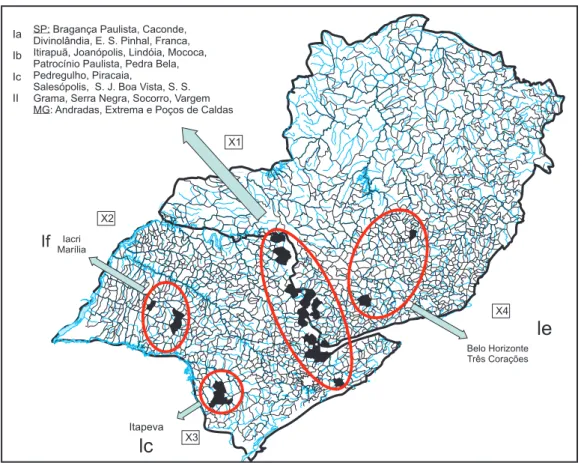
To study the nucleoprotein (N) gene in antigenic variant 3 (AgV3) lineages, which are characteristic of Desmodus rotundus, a total of 50 central nervous system samples (40 from bovines and 10 from equines, GenBank accession numbers GQ160910 to GQ160959) were sequenced genetically (Table 1). hese samples had originated from the states of São Paulo (SP) and Minas Gerais (MG) (Figure 1) in the years 2007 and 2008 and had been sent to the Pasteur Institute of São Paulo to be analyzed for rabies.
Direct immunoluorescence and mouse inoculation test he central nervous system samples were diagnosed positive for rabies by inoculation in mice, as described by Koprowski5, and by the direct immunoluorescence test6 using luorescein isothiocyanate-labeled anti-nucleocapsid polyclonal antibodies.
Reverse transcriptase-polymerase chain reaction, DNA sequencing and phylogenetic analysis
RNA was extracted from the 50 samples using TRizol® reagent (Invitrogen), in accordance with the manufacturer’s instructions. RT-PCR was carried out using the 21G sense ( ATGTA A C A C C TC TA C A ATG) a n d 3 0 4 a n t i s e n s e (TTGACGAAGATCTTGCTCAT)7 primers and the protocol described by Macedo et al8.
he ampliied DNA fragments were puriied with GFX PCR DNA and the Gel Band Puriication kit (Amersham Biosciences™) and subjected to sequencing reactions using sense and antisense primers with the BigDye Terminator v3.1 cycle sequencing kit (Amersham Biosciences™) in accordance with the manufacturer’s instructions. The sequencing was carried out in an Applied Biosystems 3,130 automated DNA sequencer. A 1,320-nucleotide region corresponding to the portion of the nucleoprotein gene located between nucleotides (nt) 30 and 1,350 of the PV strain (GenBank accession number M13215.1) was analyzed. Data from raw sequencing were edited using CHROMAS sotware (version 2.24 © 1998-2004 Technelysium Pty Ltd), and the inal sequences were aligned with sequences present in GenBank (Table 2) by the CLUSTAL/W method using BioEdit sotware9. he alignments were used to build neighbor-joining distance-based DNA phylogenetic trees with the Kimura-2 parameter correction model and 1,000 bootstrap repetitions for statistical support using the Mega 2.1 program10. he nucleotide and amino acid identities were calculated using BioEdit sotware.
TABLE 1- GenBank accession numbers for the sequences of N gene used in this study showing the species from which the AgV3 ABV lineages were isolated, city, state and year in which the sample were obtained.
GenBank number Species Mucicipality State Year
GQ160910 catle Andradas MG 2007 GQ160911 catle Andradas MG 2007 GQ160912 catle Itapeva SP 2007 GQ160913 catle Itirapuã SP 2007 GQ160914 equine Mococa SP 2007 GQ160915 catle Patrocinio Paulista SP 2007 GQ160916 catle Pedra Bela SP 2007 GQ160917 catle Pocos de Caldas MG 2007 GQ160918 catle Pocos de Caldas MG 2007 GQ160919 catle Socorro SP 2007 GQ160920 catle Andradas MG 2008 GQ160921 catle Belo Horizonte MG 2008 GQ160922 equine Braganca Paulista SP 2008 GQ160923 catle Caconde SP 2008 GQ160924 equine Caconde SP 2008 GQ160925 catle Divinolândia SP 2008 GQ160926 catle Espirito Santo do Pinhal SP 2008 GQ160927 catle Extrema MG 2008 GQ160928 catle Extrema MG 2008 GQ160929 catle Extrema MG 2008 GQ160930 equine Extrema MG 2008 GQ160931 equine Franca SP 2008 GQ160932 equine Franca SP 2008 GQ160933 catle Iacri SP 2008 GQ160934 catle Iacri SP 2008 GQ160935 equine Joanopólis SP 2008 GQ160936 catle Lindoia SP 2008 GQ160937 catle Lindoia SP 2008 GQ160938 catle Marilia SP 2008 GQ160939 equine Pedra Bela SP 2008 GQ160940 catle Pedregulho SP 2008 GQ160941 catle Piracaia SP 2008 GQ160942 catle Piracaia SP 2008 GQ160943 catle Salesopolis SP 2008 GQ160944 catle São João da Boa Vista SP 2008 GQ160945 catle São João da Boa Vista SP 2008 GQ160946 catle São Sebastião da Grama SP 2008 GQ160947 catle São Sebastião da Grama SP 2008 GQ160948 catle São Sebastião da Grama SP 2008 GQ160949 equine São Sebastião da Grama SP 2008 GQ160950 catle São Sebastião da Grama SP 2008 GQ160951 catle São Sebastião da Grama SP 2008 GQ160952 catle Serra Negra SP 2008 GQ160953 catle Serra Negra SP 2008 GQ160954 catle Socorro SP 2008 GQ160955 catle Socorro SP 2008 GQ160956 catle Três Corações MG 2008 GQ160957 equine Vargem SP 2008 GQ160958 catle Vargem SP 2008 GQ160959 catle Vargem SP 2008
Direct immunoluorescence and mouse inoculation test All 50 AgV3 ABV lineages used in this study were positive for FAT and MIT.
Phylogenetic analysis
FIGUA 1- Map of the States of São Paulo and Minas Gerais. he cities from which the 50 rabies virus lineages originated are shown grouped into four separate areas - X1, X2, X3 and X4 -identiied by circles. Ia to If: subclusters in cluster I, II: cluster II.
TABLE 2 - GenBank accession numbers for the reference sequences of N gene used in phylogenetic analysis in this study showing the species from which the AgV3 ABV lineages were isolated, municipality, state and year in which the sample were obtained, and bibliographic references.
GenBank number Species Municipality State Year References
AB083803 catle Morrinhos GO 1999 Kobayashi et al8
AB083805 catle São Roque SP 1994 Kobayashi et al8
AB083811 catle Colinas TO 1999 Kobayashi et al8
AB083813 catle Alto Taquari MT 1999 Kobayashi et al8
AB083817 catle Piraju SP 1989 Kobayashi et al8
AB083818 catle Corumbaia GO 1999 Kobayashi et al8
AB201802 Artibeus lituratus Dracena SP 2002 Kobayashi et al8
AB201804 D. rotundus Lindóia SP 2000 Kobayashi et al6
AB297634 D. rotundus Itaperuna RJ 1997 Kobayashi et al6
AB297636 D. rotundus Guarulhos SP 2000 Kobayashi et al6
FJ649082 catle Extrema MG 1999 Carnieli et al1
FJ649085 catle Joanópolis SP 1999 Carnieli et al1
FJ649087 catle Piracaia SP 1999 Carnieli et al1
FJ649092 catle Piracaia SP 1999 Carnieli et al1
FJ649098 catle Joanópolis SP 1999 Carnieli et al1
FJ649103 catle Socorro SP 1999 Carnieli et al1
FJ649115 catle Caconde SP 2000 Carnieli et al1
FJ649138 catle Socorro SP 2000 Carnieli et al1
FJ649142 catle Lindóia SP 2000 Carnieli et al1
FJ649148 catle Pedra Bela SP 2000 Carnieli et al1
FJ649154 catle Bragança Paulista SP 2000 Carnieli et al1
FJ649159 catle Caconde SP 2001 Carnieli et al1
FJ649170 catle Espírito Santo do Pinhal SP 2001 Carnieli et al1
FJ649172 catle Mococa SP 2001 Carnieli et al1
FJ649183 catle Vargem SP 2000 Carnieli et al1
Cluster I, which was made up of sequences from samples that originated in SP and MG and a single sample from Goiânia, State of Goiás, had 99.1% mean nucleotide identity. Subclusters Ia to If had mean identities of more than 99%, and the identities between them ranged from 99 to 99.7%. Cluster II consists of sequences from the States of Goiás (GO), Mato Grosso (MT), Tocantins (TO) and Rio de Janeiro (RJ), as well as some sequences from São Paulo (SP). he mean identity within this cluster was 97.7%, and the mean identity between clusters I and II was 96.8%.
he changes in the nucleotides resulted in few changes in the amino acid (aa) sequences analyzed. Comparison between the predicted sequences of amino acids in the N protein in this study and the putative aa alignments revealed a region that characterized clusters I and II.
The aa identified at the position corresponding to position 50 of the complete coding of the N gene was histidine (H), and it was therefore this amino acid that characterized the sequence in this cluster, with the exception of subcluster If, in which this position was occupied by asparagine (N). Asparagine (N) was also identiied in cluster II at the same position in two sequences from SP (municipalities of São Roque and Mococa) and in the sequences from GO and RJ. In all the other sequences from SP, as well as those from MT and TO, the amino acid serine (S) was identiied at the same position. he amino acids cited above thus represent the genetic markers for clusters I and II (Figure 3).
GQ160946 GQ160918 GQ160947 GQ160948 GQ160945 GQ160949 GQ160951 GQ160926 GQ160950 GQ160923 GQ160925 GQ160944 GQ160917 GQ160924 FJ649172.1 FJ649159.1 GQ160915 GQ160931 GQ160932 FJ649115.1 GQ160920 GQ160910 GQ160911 GQ160919 GQ160936 GQ160937 GQ160954 GQ160955 GQ160952 GQ160953 GQ160916 GQ160942 GQ160912 GQ160935 GQ160939 GQ160941 GQ160922 GQ160958 GQ160959 GQ160929 GQ160928 GQ160930 GQ160927 GQ160957 FJ649138.1 FJ649103.1 FJ649142.1 FJ649183.1 AB201804.1 FJ649148.1 FJ649170.1 FJ649085.1 FJ649154.1 FJ649087.1 FJ649098.1 FJ649092.1 FJ649082.1 GQ160921 GQ160956 GQ160933 GQ160934 GQ160938 AB083803.1 AB201802.1 AB083813.1 GQ160913 GQ160940 AB083811.1 AB297634.1 GQ160914 AB083818.1 AB083805.1 AB083817.1 GQ160943 AB297636.1 99 79 94 99 0.005 Cluster I Cluster II Subcluster Ia Subcluster Ib Subcluster Ic Subcluster Id Subcluster Ie Subcluster If
FIGURE 2 - Neighbor-joining tree constructed with sequences from the N gene of AgV3 ABV lineages isolated from catle and equines in Brazil.
20 30 40 50 60 70 80 90 100
....|....|....|....|....|....|....|....|....|....|....|....|....|....|....|....|....|....| GQ160947 HNQVVSLKPEIIVDQYEYKYPAIKDLKKPSITLGKAPDLHKAYKSILSGMNAAKLDPDDVCSYLAAAMQFFEGSCPEDWTSYGILIARKG . . . FJ649138.1 ... FJ649103.1 ... FJ649142.1 ... FJ649183.1 ...N... AB201804.1 N... FJ649148.1 ... FJ649170.1 ...R... FJ649085.1 ...S...T...L...I... FJ649154.1 ... FJ649092.1 ... FJ649098.1 ... FJ649087.1 ... FJ649082.1 ...N... GQ160921 N... GQ160956 ... GQ160933 ...L...N... GQ160934 ...N... GQ160938 N...N... AB083803.1 N...N... AB201802.1* N...N... AB083813.1* N...S... GQ160913* ...S... GQ160940* N...S... AB083811.1* N...S... AB297634.1* N...E.N... GQ160914* ...N...IE... AB083818.1* N...N... AB083805.1* N...N... AB083817.1* N...R....M...S... GQ160943* ...S... AB297636.1* N...S...
figure presented the same amino acids that the first sequence (GQ160947).
FIGURE 3 - Comparison of the predicted sequences of amino acids in the N protein with the putative amino acid alignments revealed a region corresponding to position 50 that characterized clusters I (Lineages GQ160947 to AB083803.1) and cluster II (Lineages AB201802.1 to AB297636.1 - identiied by *). Sequences not showed in
he regions from aa 358 to 367 in antigenic site I and from aa 359 to 366 in antigenic site IV were conserved, while the region from aa 375 to 383, also in antigenic site IV, contained three mutations: alanine, glutamic acid and threonine at positions 377, 378 and 379, respectively, instead of threonine, aspartic acid and valine, which are found at these positions in the PV.
In addition to the antigenic sites analyzed, the N protein has immunodominant helper T-cell epitopes between aa 404 and 418. In the lineages analyzed here, a mutation (a methionine residue instead of the isoleucine residue present in the PV strain) was found in this region at position 410. he serine residue at position 389, which is phosphorylated ater binding with the viral RNA, was conserved in the lineages analyzed.
DISCUSSION
In this study, we analyzed AgV3 ABV lineages from SP and MG collected in 2007 and 2008. hese lineages were compared with lineages from SP and MG collected between 1999 and 200112 and from SP, RJ, MT, GO and TO collected between 1989 and 200613,14.
Two clusters were identiied in the study (I and II). Cluster I was made up of AgV3 ABV lineages from SP and MG collected between 1999 and 2001 and between 2007 and 2008 and a single lineage from GO collected in 1999. Cluster II consisted of lineages from SP, RJ, MT, GO and TO collected between 1989 and 2000 and four lineages from SP collected between 2007 and 2008.
A high degree of identity between lineages was observed for cluster I (greater than 99%), and cluster II was found to have 97% identity. he mean identity between clusters I and II was 96.8%. hese results are in agreement with data obtained in Latin America by other authors12,14-16, who rarely found more than 2-3% divergence between AgV3 ABV lineages.
We also found that, although the distributions of some clusters overlapped, variations between lineages from diferent geographic regions could be observed, as was the case with subclusters Ie and If. In addition, the lineages used for comparison, which were mostly from other states, segregated into a diferent cluster from the majority of the lineages from SP and MG. his variation with geographic region has also been observed by other authors12,15,17,18.
he analysis on the amino acid sequences of the N protein of the AgV3 ABV lineages studied here revealed that this site provided information that helped diferentiate between the lineages. While the amino acid residue at position 50 in cluster I in almost all lineages was histidine, the amino acids at the same position in the lineages in cluster II were serine or asparagine. Carnieli et al12found diferences in the same site, thus characterizing lineages from distinct areas.
CONFLICT OF INTEREST
he authors declare that there is no conlict of interest.
REFERENCES
Oliveira19, and to a certain extent from a study by Velasco-Villa et al16, who only analyzed the C-terminal region of the N gene.
Epidemiological surveillance using molecular methods such as that described here is very important in planning actions to control rabies. In this study, we analyzed ABV lineages isolated from economically important herbivores. Despite exhibiting genetic markers that could indicate variation with geographic region, these lineages, which were typical of those isolated from the hematophagous bat Desmodus rotundus, had biologically active regions that were conserved within the species over space and time. hese indings may be of beneit when planning actions aimed at regional control of rabies in bovines.
1. Van Regenmortel MHV, Fauquet CM, Bishop DHL, Carstens EB, Estes MK, Lemon SM, et al. Virus Taxonomy: the classiication and nomenclature of viruses. he Seventh Report of the International Commitee on Taxonomy of Viruses. San Diego: Academic Press; 2000.
2. Ministério da Agricultura Pecuária e Abastecimento [Internet]. Coordenação da Raiva dos Herbívoros do Ministério da Agricultura, Pecuária e Abastecimento. [2007] - [cited 2007 Dec 10]. Available from: htpp//www.agricultura.gov.br. 3. Queiroz LH, Carvalho C, Buso DS, Ferrari CIL, Pedro WA. Peril epidemiológico
da raiva na região Noroeste do Estado de São Paulo no período de 1993 a 2007. Rev Soc Bras Med Trop 2009; 42: 9-14.
4. Schefer KC, Carrieri ML, Albas A, Santos CP, Kotait I, Ito FH. Rabies virus in naturally infected bats in the State of São Paulo, Southeastern Brazil. Rev Saude Publica 2007; 41: 389-395.
5. Koprowski H. he mouse inoculation test. In: Meslin FX, Kaplan MM, Koprowski H, editores. Laboratory techniques in rabies. 4t h ed. Geneva: World Health
Organization; 1996. p. 80-87.
6. Dean DJ, Abelseth MK, Atanasiu P. he luorescent antibody test. In: Meslin FX, Kaplan MM, Koprowski H, editores. Laboratory Techniques in rabies. 4t h ed.
World Geneva: Health Organization; 1996. p. 88-95.
7. Orciari LA, Niezgoda M, Hanlon CA, Shaddock JH, Sanderlin JH, Yager PA, et al. Rapid clearance of SAG-2 rabies virus from dogs ater oral vaccination. Vaccine 2001; 19: 4511-4518.
8. Macedo CI, Carnieli Jr P, Brandão PE, Rosa EST, Oliveira RN, Castilho JG, et al. Diagnosis of human rabies cases by polimerase chain reaction of neck-skin samples. Braz J Infect Dis 2006; 10: 341-345.
9. Hall TA. BioEdit: a user-friendly biological sequence alignment editor and analysis program for Windows 95/98/NT. Nucleic Acids Symp Ser 1999; 41: 95-98.
10. Kumar S, Tamura K, Jakobsen IE, Nei M. MEGA 2: molecular evolutionary genetic analysis sotware. In: Evolutionary Genetics Analysis Sotware. Tempe: Arizona State University; 2001.
11. Wunner WH. Rabies. In: Jackson AC, Wunner WH, editors. Rabies. San Diego: Academic Press; 2007. p.23-68.
12. Carnieli Junior P, Castilho JG, Fahl WO, Véras NMC, Timenetsky MCST. Genetic characterization of Rabies virus isolated from catle between 1997 and 2002 in an epizootic area in the state of São Paulo, Brazil. Virus Res 2009; 144: 215-224. 13. Kobayashi Y, Sato G, Kato M, Itou T, Cunha EM, Silva MV, et al. Genetic diversity
of bat rabies viruses in Brazil. Arch Virol 2007; l52: 1995-2004.
14. Kobayashi Y, Sato G, Shoji Y, Sato T, Itou T, Cunha EMC, et al. Molecular epidemiological analysis of bat rabies viruses in Brazil. J Vet Med Sci 2005; 67: 647-652.
15. Ito M, Itou T, Shoji Y, Sakai T, Ito HF, Arai TY, et al. Discrimination between dog-related and vampire bat-related rabies viruses in Brazil by strain-speciic
reverse transcriptase-polymerase chain reaction and restriction fragment length polymorphism analysis. J Clin Virol 2003; 26: 317-330.
16. Velasco-Villa A, Orciari LA, Juarez-Islas V, Gomez-Sierra M, Padilla- Medina I, Flisser A, et al. Molecular diversity of rabies viruses associated with bats in Mexico and other countries of the Americas. J Clin Microbiol 2006; 44: 1697-1710. 17. Kobayashi Y, Ogawa A, Sato G, Sato T, Itou T, Samara SI, et al. Geographical
distribution of vampire bat-related catle rabies in Brazil. J Vet Med Sci 2006; 68: 1097-1100.
18. Kobayashi Y, Sato G, Mochizuki N, Hirano S, Itou T, Carvalho AAB, et al. Molecular and geographic analyses of vampire bat-transmited catle rabies in central Brazil. BMC Vet Res 2008; 4: 44.