Applied Physiology to the Contemporary
Management of the Neonate with Hypoplastic Left
Heart Syndrome
Fernando Antibas Atik Cleveland Clinic Foundation - Cleveland, Ohio - USA
Mailing Address: )HUQDQGR $QWLEDV $WLN ă7KH &OHYHODQG &OLQLF )RXQGDWLRQ ă (XFOLG $YHQXH + &OHYHODQG 2KLR ă 86$
Email: [email protected] 5HFHLYHGLQ$FFHSWHGLQ
The surgical treatment of hypoplastic left heart syndrome is still a challenge. Few selected large volume centers that adopted protocols focused on understanding of post-Norwood pathophysiology have reduced their mortality rates to around 15%. The inherent inefficacy of the parallel circulation in Norwood operation lends itself to problems related to postoperative management of these patients crucially revolving around keeping a balance between systemic blood flow (Qs) and pulmonary blood flow (Qp). This paper describes the physiology of the Norwood principle, the importance of an adequate hemodynamic assessment, to guide the different postoperative management options.
I
NTRODUCTIONHypoplastic left heart syndrome (HLHS) constitutes a spectrum of cardiac anomalies that result in underdevelopment of left-sided heart structures. It is characterized by aortic atresia or severe stenosis with hypoplasia or absence of the left ventricle1. Coarctation of
the aorta is usually the most frequent associated anomaly and it may impede retrograde blood flow to a diminutive ascending aorta. Postnatal survival is dependent on the ductus arteriosus patency and shunting at atrial level. The natural history is almost universally lethal in the first month of life2.
The past decade experienced enormous improvements in the surgical treatment of HLHS. Several current available surgical alternatives have been extensively explored (Table 1). Although multi-institutional studies3
using intention to treat based analyses have demonstrated higher intermediate term survival for patients entered into heart transplantation4, the latter has become less
or equally important than the staged palliative surgical approach. Reasons include shortage of available donors, post-transplant morbidity and limited long-term survival5,6. Most importantly, there have been significant
improvements in the surgical palliation, originally GHVFULEHGE\1RUZRRGLQ7. The progressive decline
in the surgical mortality is a result of multidisciplinary protocols incorporated to the practice of pediatric cardiac surgery8. Despite the initial prohibitive mortality
rates, mastering of surgical and anesthetic techniques and the development of safer cardiopulmonary bypass with adequate myocardial and cerebral protection have made feasible the application of the Norwood principle to HLHS.
Nevertheless, most pediatric heart centers still face poor results in the treatment of this complex malformation. Few selected large volume centers that adopted protocols focused on understanding of post-Norwood physiology have reduced their mortality rates to around 10 to 15%. Greater emphasis is being demanded to achieve
the task of further reduction in this figure that, most would agree, can be obtained by addressing the directives listed on Table 2.
This review article describes the physiologic principles that guide the modern surgical treatment of the neonate with HLHS.
K
EY WORDSCongenital left heart lesions, Congenital heart disease, cyanotic, Univentricular heart, Neonate, Postoperative care
Table 1 – Current surgical alternative options in hypoplastic left heart syndrome
Heart transplantation
Norwood procedure and modifications • Cardiopulmonary bypass options Deep hypothermic circulatory arrest
Hypothermic bypass with selective regional perfusion • Type of arch reconstruction technique
Patch No patch
• Source of pulmonary blood flow Modified Blalock-Taussig shunt
Right ventricle to pulmonary artery conduit
Stenting of the arterial duct and banding of the pulmonary arteries
simulated models support the idea of balancing (Qp) and (Qs) to sustain aerobic milieu that is best possible with adequate systemic oxygen delivery (DO2). Barnea et al12
correlated the DO2 and the Qp/Qs ratio in a mathematical model of the Norwood physiology. They concluded that the DO2 increases proportionately to the Qp/Qs up to a certain point (between 0.7 and 1)13, when starts to decline.
Unfortunately, the deleterious effects of excessive diastolic run off are not limited to coronary malperfusion. Importantly cerebral, renal and splanchnic circulations face the risk of hypoperfusion. Although roughly the adaptive mechanisms usually do not differ between adults and children, some peculiarities should be examined in the latter, which may have relevant implications over the post-operative recovery. Firstly, the oxygen consumption of the child at rest is higher when compared to the adult14.
Profound hypothermia and total circulatory arrest, which has been employed in the majority of centers in the first stage of Norwood operation, have effects in the relationship between oxygen delivery and consumption. Moreover, the metabolic response to stress is more pronounced in children15. Oxygen consumption is independent
of oxygen delivery in a wide range of situations. For example, during periods of low cardiac output, aerobic metabolism is maintained initially because of higher oxygen extraction rate. However, this later mechanism has a limit, which matches an oxygen extraction rate around 50 to 60%, when lactic acidosis develops16,17.
Although not least important, cardiopulmonary bypass may play an aggravating role in this scenario, due to situations of inadequate oxygen delivery, excessive loss of vasomotor tone and altered microcirculation. In addition, regional metabolic requirements may be elevated, closely related to non-homogeneous cooling and re-warming or as a result of failing to provide an adequate oxygen delivery to the tissues. Systemic inflammatory response to cardiopulmonary bypass can be implicated into this issue18. During pediatric cardiopulmonary bypass,
the blood supply to different organs and systems are significantly altered due to redistribution of flow, in hypothermia or normothermia and low-flow or high-flow perfusion. Mesenteric hypoperfusion usually is a consequence of these impaired regional blood flow distributions20. The immediate consequences are altered
intestinal permeability, bacterial translocation, and passage of endotoxins to the systemic circulation21. The
activation of cytokines leads to systemic inflammatory response, one of the trigger mechanisms implicated in the development of multiple organ failure.
Important determinants of Qp and Qs are the pulmonary (PVR) and systemic (SVR) vascular resistances, both of which are frequently susceptible to individual variations in response to cardiopulmonary bypass and deep hypothermic circulatory arrest. This makes a fixed and non-individualized management approach to fit the post-operative needs of all Norwood patients an idealist’s
B
ALANCING THE CIRCULATIONS IN THEN
ORWOOD PHYSIOLOGY:
SECRET OF A SUCCESSFUL POSTOPERATIVE MANAGEMENTPost-Norwood physiology: Why the
challenge?
In assessing the flow-dynamics of fluids, combinations of two important physical equations (Poiseuille’s law and Ohm’s law) provide the variables that are functions of flow as shown on Table 3.
It is safe to reiterate the well-understood principle of physics that relates to electric or hydraulic circuits, when two resistances of different values are connected in parallel, being supplied by a single power source, more flow occurs through the lower resistor. Conceptually similar, though in a more complex manner, is a single ventricle supplying two vascular beds of differing resistances connected by a shunt that will eject more blood flow towards the path of least resistance.This poses problems in the post-operative management of Norwood patients because a high resistance in the systemic bed leads to pulmonary over-circulation, having the so-called “steal phenomenon” in the systemic side. Conversely, if there is higher resistance in the pulmonary vascular bed, there will be adequate systemic perfusion but with poorly oxygenated blood. In either case, there will be a situation of circulatory shock due to tissue anaerobism. The inherent inefficacy of the parallel circulation in Norwood operation lends itself to problems related to postoperative management of these patients crucially revolving around keeping a balance between systemic blood flow (Qs) and pulmonary blood flow (Qp).
Bartram et al11 studied 122 patients who underwent
1RUZRRG RSHUDWLRQ EHWZHHQ DQG DQG pointed out mismatched pulmonary to systemic blood flow as the second most common cause of death next only to coronary related reasons. Clinical experience and
Table 2 – Directives on the surgical treatment of hypoplastic left heart syndrome
• Preoperative stabilization
• Adequate surgical correction
• Better understanding of hemodynamics in postoperative stage I palliation
• Minimizing the inter-procedural attrition
• Protection of Fontan candidacy
Table 3 – Poiseuille’s and Ohm’s laws
R = Pi – Po = 8Șl
4U4
R= Hydraulic resistance; Pi – Po = Inflow to outflow pressure differential; Q = Volume flow; h = Viscosity of the fluid; r = Radius of the tube.
patch that must extend distally beyond ductal tissue. Care must be taken to avoid placing excessive patch material, as this is thought to contribute to early and late arch obstruction, reportedly as high as 20% to 25%24,25. The
third method is direct anastomosis without the use of a homograft augmentation patch as described by Fraser and Mee26, which by report has a low incidence of late arch
obstruction. However, using similar techniques without prosthetic patch material, Ishino et al25 at Birmingham
&KLOGUHQ·V+RVSLWDO8.GHVFULEHGLQDQLQFLGHQFH of aortic arch obstruction of 23% in 120 patients. This figure is identical to the incidences of arch obstruction with the use of exogenous tissue for arch reconstruction in other studies. Concern over left pulmonary artery and left bronchial compression by the no-patch technique has been raised, but the problem has not been recognized clinically as occurring with an increased frequency compared with patch repair techniques.
Until recently, most of the arch reconstructions required an obligatory period of deep hypothermic circulatory arrest. Several studies30,31 evaluating the effects of
prolonged circulatory arrest clearly demonstrated long-term neurologic sequelae32, and acute deleterious effects
on kidneys, liver and intestines due to extended periods of cold global ischemia. More importantly, deep hypothermic circulatory arrest has been reported to cause an increase in pulmonary vascular resistance33-35 postoperatively. In
addition, Tweddell and coworkers36 found that systemic
vascular resistance was also elevated after the Norwood procedure using deep hypothermic circulatory arrest. Moreover, Tokunaga and coworkers37 demonstrated
that sympathetic nerve activity and systemic vascular resistance significantly increased immediately after deep hypothermic circulatory arrest in an animal model.
Imoto and colleagues firstly described the technique of selective regional perfusion through cannulation of the shunt in order to provide antegrade cerebral perfusion, completely avoiding deep hypothermic circulatory arrest. The procedure can be performed with deep hypothermic low-flow40 or moderate hypothermia,
high-flow and low-resistance perfusion41. Pigula and
colleagues42 added cannulation of the descending aorta to
maintain lower-body perfusion. Although no randomized studies supporting the benefits of regional perfusion are available, clinical observations suggest earlier return of renal function and less hemodynamic instability in regionally perfused patients. Although some studies42,43
have provided objective evidence of improved cerebral metabolic activity, there has not been any favorable impact on survival with the use of selective regional perfusion, and experience is still too early to evaluate long-term neurologic outcome.
Although the aforementioned modifications were important contributions, many other technical changes have been introduced to achieve a balance circulation during the early postoperative period, since it is a major determinant in the immediate and the inter-procedural survival. Those modifications have focused on limiting pulmonary blood flow (smaller, longer shunts or shunt dream. Despite the use of best myocardial protection,
neonatal heart usually arrives in the postoperative unit with some degree of myocardial depression. A problem that is commonly due to limited reserve of a neonatal, single, volume loaded, morphological right ventricle.
Modified Norwood: Why the change?
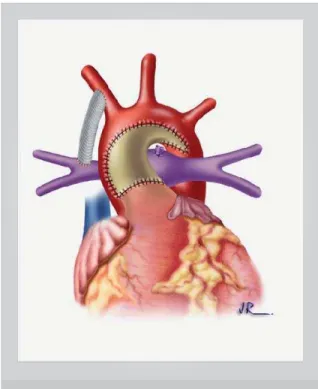
The “classic” Norwood procedure consists of atrial septectomy, reconstruction of ascending aorta and aortic arch, creation of unrestricted pulmonary venous return through a large atrial communication and placement of a systemic to pulmonary shunt (Figure 1). The 15-year experience at the Children’s Hospital in Philadelphia22
with 840 patients having the stage I Norwood have identified as independent predictors of hospital mortality low birth weight (<2.5 kg), operation performed after 2 weeks of age, associated cardiac anomalies, total support time and ECMO support.
Various groups23,24 have identified smaller size of the
ascending aorta (less than 2.5mm) as a significant risk factor for mortality and therefore focused on arriving at the best surgical option to deal with the long and small ascending aorta. In general, three methods of aortic arch reconstruction have been described. The Norwood procedure and its modifications7 and the Lamberti
modification23 involve the use of a homograft patch to
augment the aortic arch. In the Lamberti modification, the proximal aorta and pulmonary artery are transected, and an end-to-end anastomosis is created between the proximal neo-aorta and the augmented proximal arch. Either technique requires placement of an adequate
Fig. 1 – Modified Norwood operation with patch arch reconstruction. The pulmonary blood flow is supplied by a modified Blalock-Taussig shunt.
banding) and improving systemic blood flow44. The
systemic to pulmonary artery shunt size is a very important factor that affects distribution of flow between two parallel circulations, compromising the coronary blood flow during the diastole45. Positron emission tomographic
studies46 of coronary blood flow quantification in
infants after repair of their congenital cardiac defects demonstrated less coronary reserve as compared to adults. Specifically after the Norwood procedure, there is higher resting coronary flow but a lower indexed coronary blood flow to the systemic ventricle than those after a biventriclular repair. This is related to the increased energy requirements of the systemic ventricle demanded to pump through both systemic and pulmonary beds. Qualitative analysis of coronary blood flow47 using trans-esophageal
echocardiography and Doppler flowmetry described coronary flow abnormalities after Norwood operation, when the predominant flow occurs during the systole. Recent attempts to further eliminate the deleterious effects of systemic arterial source of pulmonary blood, by use of a non-valved right ventricle to pulmonary artery conduit is an addition to the surgical armamentarium. The latter will be addressed as a different section, since it represents an important contribution that changed the postoperative hemodynamics and its management protocols.
Prior to discussing various management themes, it is mandatory to be in contact with advances in techniques employed to guide therapy in these neonates.
H
EMODYNAMIC ASSESSMENT INHLHS
Clinical parameters, widely used on a routine basis, were demonstrated to be non-predictive of major adverse events after pediatric cardiac surgery, especially in neonates. The definition of a reliable marker of tissue hypoperfusion has been extremely difficult to be accomplished. Reasons for that rely on limitations of invasive monitoring imposed by patient weight, and certain anatomic features, such as atrial septal defects that can interfere in the accurate measurement of cardiac output, mixed venous oxygen saturation and oxygen delivery and consumption. In addition, few studies
evaluated or included indicators of systemic oxygen delivery in the postoperative management of patients following the Norwood procedure.
Individually, none of the parameters obtained in blood gas analysis are considered important in terms of estimating hemodynamic status. On the other hand, combined parameters can estimate indirectly the oxygen delivery and tissue perfusion50. Oxygen arterial saturation
greater than 80% was proposed to be indicative of pulmonary overcirculation and consequently of systemic hypoperfusion, but did not show reliability in some clinical studies51.
The mixed venous oxygen saturation (SvO2) is generally accepted as an indicator of adequacy of cardiac output and has a strong association with lactic acidosis in intensive care patients52. Considering a stable arterial
content of oxygen and an adequate cellular metabolism, SvO2 higher than 60% means adequate cardiac output. The main advantages of its determination are the capacity in determining both the oxygen delivery and consumption. However, several factors interfere with its values other than the cardiac output, such as the hemoglobin value, arterial oxygen saturation, and the metabolic rate. Since SvO2 represents the mixture of all venous return blood from the organism, the best sampling site should be the pulmonary artery53. Nevertheless, that is not an ideal site
in congenital heart malformations with septal defects, since every left to right shunt may lead to inaccuracy. Others54,55 have validated the SvO
2 determination in the
superior vena cava, close to the right atrium junction. Recently, small oxymetric catheters that are suitable for use in neonates have been developed and safely used. The acquirement of this technology proved to be beneficial in the determination of systemic oxygen delivery after the Norwood procedure56, with a favorable impact on
morbidity and mortality48. The therapeutic management
is guided by the oxymetric data and aimed at achieving adequate systemic oxygen delivery defined as a SvO2 greater than 50%, with a pulmonary to systemic flow ratio nearing unity.
The arteriovenous oxygen content difference (AVDO2) is another parameter that can be used as a marker of tissue perfusion57, and it has been considered as indicative of
a balanced circulation when its values were less than or equal to 5 ml/dl.
Although the identification of lactic acidosis has been suggested as a clinically useful indicator of decreased oxygen delivery, it predictably lags the period of inadequate tissue oxygen delivery. Several studies58-61 examined the
prognostic value of blood lactate after congenital heart operations and they have found conflicting results, but agreed in the power of its serial determination62. Rossi
and coworkers62 postulate that elevated lactate levels
might represent previous hemodynamic compromise, during or before operation, sometimes associated with liver dysfunction. Uncomplicated survivors of Norwood procedure have an elevated lactic acid level in the early postoperative period61. Furthermore, abrupt
life-threatening decreases in the systemic oxygen delivery can occur and lead to death before lactic acid becomes elevated.
of pericardial effusions. Analyzing specifically the postoperative period of Norwood procedure, some clinical situations and anatomic features deserve special attention during the echocardiographic evaluation. Presence of new onset or worsening of tricuspid regurgitation might be early indicators of ventricular dysfunction. The persistence of poor oxygenation should lead to the suspicion of small pulmonary arteries or signs of obstruction or stenosis in the systemic to pulmonary artery shunt. A restrictive atrial septal defect may cause low cardiac output, with persistently elevated left atrial pressures. The presence of residual arch obstruction is another factor that may compromise the cardiac output, and lead to systemic hypoperfusion. Obstruction of left pulmonary artery or left main stem bronchus may be associated with some types of aortic arch reconstruction procedures.
P
OSTOPERATIVEM
ANAGEMENTO
PTIONCurrently there are two schools of thought to achieve this precise balance after the Norwood procedure. It is important to understand that those schools are not static and usually intertwined, in different protocols, according to the institution. The first, primarily uses maneuvers to either manipulate Qp by reduction of minute ventilation and inhalation of hypoxic and/or hypercarbic gas mixtures. The second manipulates Qs by infusions of systemic vasodilators.
Qp manipulation
PVR - The effect of acidosis, hypoxia and hypercarbia on pulmonary vasculature has been well understood. Inducing permissive respiratory acidosis to effectively control Qp and its positive effects on the outcome of hypoplastic left heart patients has been recognized since 0HWKRGVKDYHHYROYHGVLQFHWKHQ,QWKHLQLWLDO period, the aim was to reduce alveolar minute ventilation and increase dead space, leading to carbon dioxide retention. This could be done by reducing respiratory rate, tidal volume or both with high positive end-expiratory pressures and room air inspired oxygen fraction. The almost instantaneous reduction of pulmonary blood flow was an advantage that was utilized by centers striving to improve results in postoperative Norwood cases. On the other hand, some drawbacks of this management have been identified. These hypoventilatory methods led to decreased functional residual capacity, micro-atelectasis and intrapulmonary shunting in the neonate63 resulting
in ventilation-perfusion mismatch, pulmonary venous desaturation and hypoxia. Obviously, deprivation of oxygen is undesirable in the normal course of recovery after cardiopulmonary bypass and circulatory arrest.
Therefore, other ways to induce respiratory acidosis were explored. Increasing the fraction of carbon dioxide (CO2) in the inspired gas was suggested as the alternative method64,65 when the mechanical variables of ventilation
(respiratory rate, tidal volume and positive end expiratory
pressure) are set free from control of PCO2. The advantage of this technique was to achieve elevated PVR without adversely effecting DO2. Addition of higher amounts of CO2 (delivered level of 1-2% or 8-30 mmHg) in the inspired gas is aimed to maintain the paCO2 in the range of 45-50 mmHg66. Although attractive, this strategy was used
in combination with increased minute ventilation.
Theoretically, the increase in minute ventilation would lead to an additional increase in PVR because of a raised mean airway pressure70. The simultaneous downside
of CO2 washout and resultant hypocapnic alkalosis, by higher minute ventilation could be countered by inspired CO2. Bradley et al71 concluded that the inspired CO
2 could
improve DO2 effectively, only if the minute ventilation is kept constant. Hypercarbia poses yet another advantage towards reduction of Qp:Qs ratio in that its systemic vasodilatory effect may increase and redistribute total cardiac output favorably.
However, experimental studies72 showed that the
concentrations of CO2 required in the inspired gas to achieve statistically significant elevation of PVR was H[WUHPHO\KLJKPP+J,WZDVDOVRGHPRQVWUDWHG that there is a significant PVR elevation, when the inspired O2 concentration is reduced. Hence, the logical next step using this principle was to reduce the oxygen content in the breathing gas mixture to less than 21%. This was achieved by addition of nitrogen in the inspired gas. The hypoxic or sub ambient gas therapy was successfully used, keeping the inspired oxygen fraction in the 14 to 20% range73,74.
This protocol should be especially beneficial in some clinical instances such as low birth weight neonates with unusually high PVR, unresponsive to hypoxic gas mixture75. Adversely, these effects were more prominent
in pre-bypass settings in reducing Qp as compared to post-bypass scenario after Norwood repair.
On the other hand, recent studies76 have shown that
high levels of fraction of inspired oxygen can in fact improve mixed venous oxygen saturation and systemic oxygen delivery. Bradley et al76 postulate that protocols
aimed at minimizing the FiO2 and carefully controlling ventilation may not be warranted.
Hematocrit - Increasing viscosity of blood creates inherent resistance to flow according to Poiseuille’s law. This effect is exponentially pronounced with hematocrit values higher than 45% and more evident in high-flow than in low-flow conditions77. Some authors have included
this strategy routinely in the post-operative management
.
Qs manipulation
It has been demonstrated48 that neonates after the
Norwood procedure maintain a higher baseline level of SVR that is also subject to abrupt fluctuations, regardless of cardiopulmonary bypass strategy employed. The minute-to-minute control of systemic vascular resistance
is an amalgam of the influences of the autonomic nervous system by changing the total cross-sectional area of the systemic vascular bed and the local metabolic factors. From the aortic to the venous side, greatest resistance is exerted at the arteriolar level (60%), followed by capillaries & small veins (15% each) and large and mid-sized arteries (10%)78.
The rationale of the use of vasodilators is justified initially by common consequences of cardiopulmonary bypass, such as pulmonary endothelial swelling, interstitial lung edema and microatelectasis, which already keeps the PVR high and further elevations would be unnecessary. In addition, unrecognized pulmonary venous desaturation occurs early after Norwood operation. Moreover,
it is thought that further reduction in alveolar oxygen availability only impairs even more the pulmonary venous saturation, thus hampering DO2.
Reduction in SVR has been achieved by an arteriolar dilator (sodium nitroprusside), an alpha-receptor antagonist (phenoxybenzamine) or chlorpromazine or an inodilator (milrinone). Nitroprusside is a mixed, arterial and venous, vasodilator with nitric oxide related mechanism of action. It has a short half-life and it is easily reversible. The disadvantage of sodium nitroprusside is that it does not tackle the frequent and abrupt changes in SVR.
Phenoxybenzamine blocks irreversibly and non-competitively alpha-adrenergic receptors, leading to more prolonged vasodilatation. Phenoxybenzamine has been advocated by most centers performing neonatal surgery at the onset of CPB. Usually, it can be titrated with the mean arterial pressures, although some groups have advocated continuous infusion of the same in the post-operative period56,80,81. Use of phenoxybenzamine after
the Norwood procedure improves DO2 and induces fixed and balanced Qp:Qs ratio. In this setting any increase in mean arterial pressure with afterload reduction promoted by phenoxybenzamine, reflects in better SvO2. Therefore, no steps need to be taken to reduce FiO2 or manipulate mechanical ventilation. Problems related to excessive vasodilation with the use of phenoxybenzamine have been reported82, which can be countered with judicious use of
vasoconstrictors like nor-epinephrine and vasopressin. Chlorpromazine83, a phenothiazine neuroleptic drug
with significant alpha blocking capabilities has also been successfully used. Choice of inotropic agents has drifted from those having vasoconstrictive properties towards those with vasodilatory properties. In order to reduce the range for pulmonary vascular resistance to fluctuate, pulmonary vasculature can be dilated maximally at weaning from cardiopulmonary bypass with inhaled nitric oxide and high concentration of inspired oxygen as potent pulmonary vasodilators84. Under this condition,
pulmonary blood flow is dependent on systemic to pulmonary shunt adjustments. This completely distinct approach was proposed by Nakano et al41, which simply
taper inhaled nitrous oxide and inspired oxygen fraction as arterial oxygen saturation improved, with continuous infusion of chlorpromazine to keep SVR low. Frequent ventilator manipulation is rarely required.
R
IGHTV
ENTRICLE TOP
ULMONARYA
RTERYC
ONDUIT: T
HED
EFINITIVES
OLUTION?
The right ventricle to pulmonary artery (RV-PA) conduit to reestablish pulmonary blood supply in stage I palliation IRU+/+6ZDVILUVWO\LQWURGXFHGE\1RUZRRGLQ85. At
that time, shunts were excessively large and all patients died either from pulmonary overcirculation or from right ventricular failure. Kishimoto et al86 revived the initial
concept using a xenopericardial valved conduit, which was replaced later by Sano et al87 that used a 4 or 5 mm
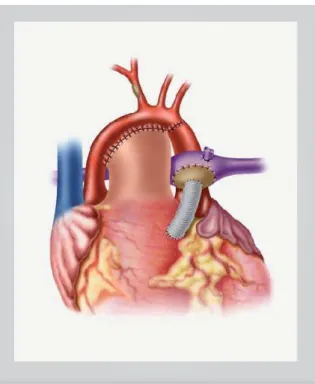
nonvalved PTFE (Figure 2) conduit. Their initial experience ZLWKFRQVHFXWLYHSDWLHQWVDFKLHYHGDQH[FHOOHQW hospital survival. More importantly, placing the pulmonary and systemic circulations in parallel resulted in a more predictable postoperative recovery. The pulmonary bed was neither anymore subjected to nor dependent on diastolic flow, and there should be less change in pulmonary blood flow with pulmonary hypertensive crisis or during resuscitation in the presence of low cardiac output or after a cardiac arrest. No particular Qp and/or Qs manipulation were required postoperatively, maintaining adequate blood oxygenation and higher diastolic pressures. Excellent hemodynamics provided
by this technique was particularly beneficial for low birth weight infants, a subset known to be of higher hospital mortality, usually due to pulmonary overcirculation even with the smallest 3 mm Blalock-Taussig shunt.
The RV-PA conduit became worldwide popular and its results were considered reproducible, consistently
Fig. 2 – Modified Norwood operation without patch arch reconstruction. Neoaorta is formed by the remnant hypoplastic ascending aorta with coronary ostia, the pulmonary trunk and descending aorta distal to arterial duct. A non valved right ventricle to pulmonary artery conduit is the only source of pulmonary blood flow.
improving the mortality rates after the first stage palliation in many centers. However, highly experienced
centers on the modified Norwood have not shown
a favorable impact on hospital survival.
Several nonrandomized studied have compared the
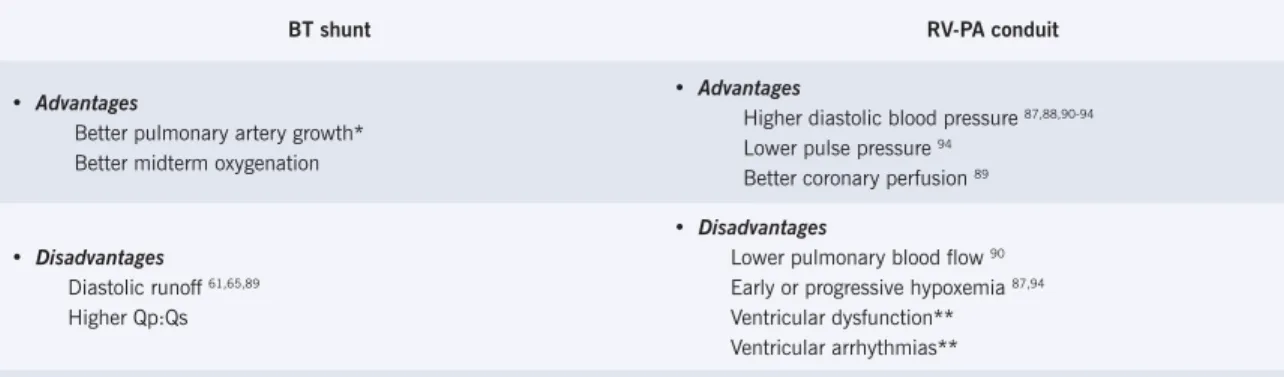
RV-PA conduit and the modified Blalock-Taussig shunt as the source of pulmonary blood flow. Hemodynamic evidences of those studies are summarized in Table 4. In spite of more predictable hemodynamics in the RV-PA conduit group, there were no significant differences in length of intensive care stay, duration of ventilatory support, inotropic use and systemic oxygen delivery.
The RV-PA conduit has potential limitations that need to be further investigated. The effects of a right ventriculotomy are of a great concern, in terms of ventricular failure and trigger of arrhythmias. Current evidences do not support this concept, since ventricular function (dp/dt) during catheterization at 5 months follow-up showed better performance in the RV-PA conduit group, comparing to BT shunt. Moreover, preliminary
systolic ventricular performance by strain Doppler echocardiography suggested a better early ventricular function with the RV-PA conduit group. These findings
were attributed to reduced right ventricular overload because of lower Qp:Qs, as well as improved coronary perfusion due to higher diastolic pressures.
Another potential problem is related to the degree of flow reversal in the nonvalved conduit. Nonetheless, free pulmonary regurgitation seems to be well tolerated over the short term. Likewise every other prosthetic tube in pediatric cardiac surgery, it becomes obstructed with time, particularly within 3 months after surgery. That obligates an earlier second stage, which may be favorable in terms of reducing the interprocedural attrition. At this stage, pulmonary resistance is higher. On the contrary, pulmonary artery growth has been controversially shown to be as good as with
the BT shunt, despite a lower Qp:Qs. Usually, the RV-PA conduit was left open in order to provide an extra source of pulmonary blood flow. Outcomes after the second stage performed earlier support the idea that
the pulmonary blood flow is lower, but enough to
provide good oxygentation without important ventricular loading. That concept is supported by similar outcomes in patients submitted to early (3 months) second stage after the modified Norwood procedure, but expected
more prolonged postoperative recovery. However, Malec et al haven’t found any need for earlier second stage with
the RV-PA conduit, since the lower Qp:Qs ratio ensured good condition for the development of the pulmonary vasculature (more centrally located shunt and pulsatility of forward flow from the pumping ventricle).
S
TENTING OF THEA
RTERIALD
UCT ANDB
ANDING OF THEP
ULMONARYA
RTERIESStenting the arterial duct in combination with pulmonary artery banding and, if necessary, atrial septotomy offers a different approach to palliation of HLHS100. Neoaortic
reconstruction and establishment of a bi-directional cavopulmonary connection can then be performed during a single operation101. Moreover, in selected hypoplastic
left ventricles, in which left ventricular growth can be observed foremost during the postnatal follow-up, the surgical decision made immediately after birth would result in a single ventricle palliation, although in the same patient biventricular repair may have been provided a few months later. In this context, despite multiple left heart obstructive lesions, a biventricular repair is thought to be preferable when possible.
Michel-Behnke et al102 adopted this strategy in 20
patients. Based on their intial experience, they advocate that a newborn with HLHS admitted with prostaglandin E1 infusion with a wide open duct, no ductal narrowing and unrestricted atrial septal defect would be considered for bilateral banding within the first 3 to 5 postnatal days. If a pulmonary run off in consequence of a decrease in pulmonary vascular resistance is observed, this procedure should be performed earlier. Ductal stenting, as well as re-evaluation of the effectiveness of the pulmonary banding would be performed 2 to 3 days before hospital discharge. Then, the prostaglandin infusion is discontinued about 2 hours before catheterization to achieve a smaller and
Table 4 – Advantages and disadvantages of the modified Blalock-Taussig (BT) shunt in comparison with the right ventricle to pulmonary artery (RV-PA) conduit during the modified Norwood procedure
BT shunt RV-PA conduit
• Advantages
Better pulmonary artery growth* Better midterm oxygenation
• Advantages
Higher diastolic blood pressure
Lower pulse pressure
Better coronary perfusion
• Disadvantages
Diastolic runoff
Higher Qp:Qs
• Disadvantages
Lower pulmonary blood flow
Early or progressive hypoxemia
Ventricular dysfunction** Ventricular arrhythmias**
R
EFERENCESnarrower duct, facilitating stent placement and preventing stent dislocation.
A newborn with a restrictive foramen ovale would be catheterized before bilateral banding is provided. In case of any narrowing within the duct, a stent would be placed before the atrial septotomy. Arch reconstruction and bi-directional cavopulmonary connection were performed 3.5 to 6 months later. Bigger structures often allow avoidance of deep hypothermic circulatory arrest by means of cerebral perfusion through the innominate artery. Bidirectional cavopulmonary connection enables unloading the single right ventricle at earlier stage, establishing serial instead of parallel pulmonary and systemic circulations. The postoperative recovery was usually managed with arterial and venous vasodilators and low dose phosphodiesterase inhibitor. The early success UDWHRIWKLVDSSURDFKZDV$GGLWLRQDOO\LWSURYLGHG extended waiting periods for heart transplantation in selected 10% of these patients, in which Norwood pathway was not the preferred choice. This minimizes the development of severe pulmonary hypertension before the transplant, extends safely the waiting time of listed patients and improves the ease of subsequent transplant management103.
However, this technique deserves further investigation with longer follow-up. Potential issues include interprocedural deaths due to heart failure or pulmonary hypertension. Close follow-up is necessary to detect restrictive atrial septal defect, narrowing of the duct, or compromised pulmonary blood flow. In addition, the development of significant aortic coarctation may compromise retrograde blood flow and coronary perfusion.
1. Noonan JA, Nadas AS. The hypoplastic left heart syndrome: an analysis of 101 FDVHV3HGLDWU&OLQ1RUWK$P
2. Hawkins JA, Doty DB. Aortic atresia: morphologic characteristics affecting VXUYLYDODQGRSHUDWLYHSDOOLDWLRQ-7KRUDF&DUGLRYDVF6XUJ
3. Jacobs ML, Blackstone EH, Bailey LL. Intermediate survival in neonates with aortic atresia: a multi-institutional study. The Congenital Heart Surgeons Society. -7KRUDF&DUGLRYDVF6XUJ
4. Bailey LL, Nehlsen-Cannarella SL, Doroshow RW, et al. Cardiac allotransplantation in newborns as therapy for hypoplastic left heart syndrome. 1(QJO-0HG
5. Razzouk AJ, Chinnock RE, Gundry SR, et al. Transplantation as a primary treatment for hypoplastic left heart syndrome: intermediate-term results. Ann 7KRUDF6XUJ
6. Bauer J, Dapper F, Demirakca S, Knothe C, Thul J, Hagel KJ. Perioperative management of pulmonary hypertension after heart transplantation in FKLOGKRRG-+HDUW/XQJ7UDQVSODQW
7. Norwood WI, Lang P, Hansen DD. Physiologic repair of aortic atresia-hypoplastic OHIWKHDUWV\QGURPH1(QJO-0HG
*XLGHOLQHVIRUSHGLDWULFFDUGLRYDVFXODUFHQWHUV3HGLDWULFV 3RLULHU1&'UXPPRQG:HEE--+LVDPRFKL.,PDPXUD0+DUULVRQ$0
Mee RB. Modified Norwood procedure with a high-flow cardiopulmonary bypass strategy results in low mortality without late arch obstruction. J Thorac Cardiovasc Surg 2000; 120:875-84.
10. McGuirk SP, Griselli M, Stumper O, et al. Staged surgical management of hypoplastic left heart syndrome: a single-institution 12-year experience. Heart 2005 (in press).
11. Bartram U, Grunenfelder J, Van Praagh R. Causes of death after the modified 1RUZRRGSURFHGXUHDVWXG\RISRVWPRUWHPFDVHV$QQ7KRUDF6XUJ
12. Barnea O, Santamore WP, Rossi A, Salloum E, Chien S, Austin EH. Estimation of oxygen delivery in newborns with a univentricular circulation. Circulation
13. Austin EH, 3rd. Postoperative management after the Norwood procedure. 6HPLQ7KRUDF&DUGLRYDVF6XUJ3HGLDWU&DUG6XUJ$QQX
14. Lewis RC, Dural AM, Illif A. Standards for basal metabolism in normal infants. -3HGLDWULFV
15. Benzing G, 3rd, Francis PD, Kaplan S, Helmsworth JA, Sperling MA. Glucose and insulin changes in infants and children undergoing hypothermic open-heart VXUJHU\$P-&DUGLRO
16. Lugo G, Arizpe D, Dominguez G, Ramirez M, Tamariz O. Relationship between oxygen consumption and oxygen delivery during anesthesia in high-risk surgical SDWLHQWV&ULW&DUH0HG
17. Shoemaker WC. Oxygen transport and oxygen metabolism in shock and critical illness. Invasive and noninvasive monitoring of circulatory dysfunction and VKRFN&ULW&DUH&OLQ
18. Anand KJ, Hansen DD, Hickey PR. Hormonal-metabolic stress responses in QHRQDWHVXQGHUJRLQJFDUGLDFVXUJHU\$QHVWKHVLRORJ\
C
ONCLUSIONSThe surgical treatment of hypoplastic left heart syndrome is still a challenge. Heart transplantation is a viable alternative to this problem104, and it is influenced
by institutional preferences and donor availability. Continued impairment of right ventricular function, severe tricuspid regurgitation or coronary fistulae leaves heart transplantation as the treatment of choice. Progressive improvements have been achieved in the surgical palliation, mainly based on the refined application of physiology principles. The balance between systemic and pulmonary circulations is the keystone in the successful postoperative management of the modified Norwood procedure. The current literature strongly supports this concept, electing mixed venous oxygen saturation as the best guide of adequate tissue perfusion. The management options vary among several institutions. Both PVR as well SVR manipulations are welcomed, and sometimes should be used in combination. Although dealing with the complex interaction of two circulations in parallel is manageable in most of the cases, sometimes requires excessive teamwork and experience. New technical modifications, such as the right ventricle to pulmonary artery conduit, have been incorporated to surgery in order to lessen the postoperative complications, supporting the idea of a more “physiologic” pathway. The impact of the ventriculotomy on ventricular systolic, diastolic, and electrical function as well as atrioventricular valve function remains to be determined. Current data was not enough to determine any long-term survival benefit. Only the future will tell us the best way to treat hypoplastic left heart syndrome.
Potential Conflict of Interest
No potential conflict of interest relevant to this article was reported
/D]HQE\:'.R:=HODQR-$HWDO(IIHFWVRIWHPSHUDWXUHDQGIORZUDWHRQ regional blood flow and metabolism during cardiopulmonary bypass. Ann 7KRUDF6XUJ
20. Smith EE, Naftel DC, Blackstone EH, Kirklin JW. Microvascular permeability after cardiopulmonary bypass. An experimental study. J Thorac Cardiovasc Surg
21. Rocke DA, Gaffin SL, Wells MT, Koen Y, Brock-Utine JG. Endotoxemia associated ZLWKFDUGLRSXOPRQDU\E\SDVV-7KRUDF&DUGLRYDVF6XUJ
22. Mahle WT, Spray TL, Wernovsky G, Gaynor JW, Clark BJ. Survival after reconstructive surgery for hypoplastic left heart syndrome: a 15-year experience from a single institution. Circulation 2000;102(Suppl.3):III136-41.
23. Waldman JD, Lamberti JJ, George L, et al. Experience with Damus procedure. &LUFXODWLRQ3W,,,
24. Fraisse A, Colan SD, Jonas RA, Gauvreau K, Geva T. Accuracy of echocardiography for detection of aortic arch obstruction after stage I Norwood SURFHGXUH$P+HDUW-3W
25. Ishino K, Stumper O, De Giovanni JJ, et al. The modified Norwood procedure for hypoplastic left heart syndrome. Early to intermediate results of 120 patients with particular reference to aortic arch repair. J Thorac Cardiovasc Surg
26. Fraser CD Jr, Mee RBB. Modified Norwood procedure for hypoplastic left heart V\QGURPH$QQ7KRUDF6XUJ6
27. Meliones JN, Snider AR, Bove EL, Rosenthal A, Rosen DA. Longitudinal results after first-stage palliative surgery for hypoplastic left heart syndrome. Circulation 6XSSO,9
28. Murdison KA, Baffa JM, Farrell PE Jr, et al. Hypoplastic left heart syndrome. Outcome after initial reconstruction and before modified Fontan procedure. &LUFXODWLRQ6XSSO,9
7ZRUHW]N\:0F(OKLQQH\'%%XUFK*+7HLWHO')0RRUH3%DOORRQ arterioplasty of recurrent coarctation after the modified Norwood procedure in infants. Catheter Cardiovasc Interv 2000;50:54-8.
30. Jonas RA. Hypothermia, circulatory arrest, and the pediatric brain. J &DUGLRWKRUDF9DVF$QHVWK
31. Kern JH, Hinton VJ, Nereo NE, et al. Early developmental outcome after the Norwood procedure for hypoplastic left heart syndrome. Pediatrics
32. Wypij D, Newburger JW, Rappaport LA, et al. The effect of duration of deep hypothermic circulatory arrest in infant heart surgery on late neurodevelopment: WKH%RVWRQ&LUFXODWRU\$UUHVW7ULDO-7KRUDF&DUGLRYDVF6XUJ 403.
33. Kirshbom PM, Jacobs MT, Tsui SS, et al. Effects of cardiopulmonary bypass and circulatory arrest on endotheliumdependent vasodilation in the lung. J Thorac &DUGLRYDVF6XUJ
34. Kirshbom PM, Page SO, Jacobs MT, et al. Cardiopulmonary bypass and circulatory arrest increase endothelin-1 production and receptor expression in WKHOXQJ-7KRUDF&DUGLRYDVF6XUJ
35. Nagashima M, Stock U, Nollert G, et al. Effects of cyanosis and hypothermic circulatory arrest on lung function in neonatal lambs. Ann Thorac Surg
36. Tweddell JS, Hoffman GM, Mussatto KA, et al. Improved survival of patients undergoing palliation of hypoplastic left heart syndrome: lessons learned from FRQVHFXWLYHSDWLHQWV&LUFXODWLRQ6XSSO,
37. Tokunaga S, Imaizumi T, Fukae K, et al. Effects of hypothermia during cardiopulmonary bypass and circulatory arrest on sympathetic nerve activity LQUDEELWV&DUGLRYDVF5HV
38. Imoto Y, Kado H, Shiokawa Y, Fukae K, Yasui H. Norwood procedure without FLUFXODWRU\DUUHVW$QQ7KRUDF6XUJ
,PRWR<.DGR+6KLRNDZD<0LQDPL.<DVXL+([SHULHQFHZLWKWKH1RUZRRG SURFHGXUHZLWKRXWFLUFXODWRU\DUUHVW-7KRUDF&DUGLRYDVF6XUJ 82.
40. Pearl JM, Nelson DP, Schwartz SM, Maning P. First-stage palliation for hypoplastic left heart syndrome in the twenty-first century. Ann Thorac Surg 2002; 73:331-40.
41. Nakano T, Kado H, Shiokawa Y, et al. The low resistance strategy for the perioperative management of the Norwood procedure. Ann Thorac Surg 2004;
42. Pigula FA, Nemoto EM, Griffith BP, Siewers RD. Regional low-flow perfusion provides cerebral circulatory support during neonatal aortic arch reconstruction. -7KRUDF&DUGLRYDVF6XUJ
43. Van der Linden J, Astudillo R, Ekroth R, Scallan M, Lincoln C. Cerebral lactate release after circulatory arrest but not after low flow in pediatric heart operations. $QQ7KRUDF6XUJ
44. Jonas RA, Lang P, Hansen D, Hickey P, Castaneda AR. First-stage palliation of hypoplastic left heart syndrome. The importance of coarctation and shunt size. -7KRUDF&DUGLRYDVF6XUJ
45. Migliavacca F, Pennati G, Dubini G, et al. Modeling of the Norwood circulation: effects of shunt size, vascular resistances, and heart rate. Am J Physiol Heart Circ Physiol 2001; 280:H2076-86.
46. Donnelly JP, Raffel DM, Shulkin BL, et al. Resting coronary flow and coronary flow reserve in human infants after repair or palliation of congenital heart defects DVPHDVXUHGE\SRVLWURQHPLVVLRQWRPRJUDSK\-7KRUDF&DUGLRYDVF6XUJ 115:103-10.
47. Fogel MA, Rychik J, Vetter J, Donofrio MT, Jacobs M. Effect of volume unloading surgery on coronary flow dynamics in patients with aortic atresia. J Thorac &DUGLRYDVF6XUJ
48. Tweddell JS, Hoffman GM, Fedderly RT, et al. Patients at risk for low systemic oxygen delivery after the Norwood procedure. Ann Thorac Surg 2000;
7DHHG56FKZDUW]603HDUO-0HWDO8QUHFRJQL]HGSXOPRQDU\YHQRXV desaturation early after Norwood palliation confounds Gp:Gs assessment and FRPSURPLVHVR[\JHQGHOLYHU\&LUFXODWLRQ =LPPHUPDQ-/'HOOLQJHU53%ORRGJDVPRQLWRULQJ&ULW&DUH&OLQ
12:865-74.
51. Kampine JM, Tweddell JS, Hoffman GM. Arterial oxygen saturation (SaO2) does not accurately predict adequacy of systemic oxygen delivery in neonates following Norwood palliation of hypoplastic left heart syndrome. Anesthesiology $
52. Sumimoto T, Takayama Y, Iwasaka T, et al. Mixed venous oxygen saturation as a guide to tissue oxygenation and prognosis in patients with acute myocardial
LQIDUFWLRQ$P+HDUW-53. Kandel G, Aberman A. Mixed venous oxygen saturation. Its role in the DVVHVVPHQWRIWKHFULWLFDOO\LOOSDWLHQW$UFK,QWHUQ0HG
54. Thayssen P, Klarholt E. Relation between caval and pulmonary artery oxygen
VDWXUDWLRQLQFKLOGUHQ%U+HDUW-55. Tahvanainen J, Meretoja O, Nikki P. Can central venous blood replace mixed YHQRXVEORRGVDPSOHV"&ULW&DUH0HG
56. Tweddell JS, Hoffman GM, Fedderly RT, et al. Phenoxybenzamine improves V\VWHPLFR[\JHQGHOLYHU\DIWHUWKH1RUZRRGSURFHGXUH$QQ7KRUDF6XUJ 67:161-7; discussion 167-8.
57. Buheitel G, Scharf J, Hofbeck M, Singer H. Estimation of cardiac index by means of the arterial and the mixed venous oxygen content and pulmonary oxygen uptake determination in the early post-operative period following surgery of FRQJHQLWDOKHDUWGLVHDVH,QWHQVLYH&DUH0HG
58. Hatherill M, Sajjanhar T, Tibby SM, et al. Serum lactate as a predictor of mortality DIWHUSDHGLDWULFFDUGLDFVXUJHU\$UFK'LV&KLOG
&KHLIHW],0.HUQ)+6FKXOPDQ65*UHHOH\:-8QJHUOHLGHU500HOLRQHV-1 Serum lactates correlate with mortality after operations for complex congenital KHDUWGLVHDVH$QQ7KRUDF6XUJ
60. Siegel LB, Dalton HJ, Hertzog JH, Hopkins RA, Hannan RL, Hauser GJ. Initial postoperative serum lactate levels predict survival in children after open heart VXUJHU\,QWHQVLYH&DUH0HG
61. Charpie JR, Dekeon MK, Goldberg CS, Mosca RS, Bove EL, Kulik TJ. Serial blood lactate measurements predict early outcome after neonatal repair or palliation for complex congenital heart disease. J Thorac Cardiovasc Surg 2000; 120:73-80.
62. Rossi AF, Seiden HS, Gross RP, Griepp RB. Oxygen transport in critically ill infants DIWHUFRQJHQLWDOKHDUWRSHUDWLRQV$QQ7KRUDF6XUJ
63. Jobes DR, Nicolson SC, Steven JM, Miller M, Jacobs ML, Norwood WI, Jr. Carbon dioxide prevents pulmonary overcirculation in hypoplastic left heart V\QGURPH$QQ7KRUDF6XUJ
64. Morray JP, Lynn AM, Mansfield PB. Effect of pH and PCO2 on pulmonary and
DQGSXOPRQDU\K\SHUWHQVLRQ-3HGLDWU
65. Rychik J, Gullquist SD, Jacobs ML, Norwood WI. Doppler echocardiographic analysis of flow in the ductus arteriosus of infants with hypoplastic left heart syndrome: relationship of flow patterns to systemic oxygenation and size of LQWHUDWULDOFRPPXQLFDWLRQ-$P6RF(FKRFDUGLRJU
66. Mora GA, Pizarro C, Jacobs ML, Norwood WI. Experimental model of single ventricle. Influence of carbon dioxide on pulmonary vascular dynamics. &LUFXODWLRQ3W,,
67. Weldner PW, Myers JL, Gleason MM, et al. The Norwood operation and subsequent Fontan operation in infants with complex congenital heart disease. -7KRUDF&DUGLRYDVF6XUJ
68. Kanter KR, Miller BE, Cuadrado AG, Vincent RN. Successful application of the Norwood procedure for infants without hypoplastic left heart syndrome. Ann 7KRUDF6XUJ
-DFREV0/5\FKLN-0XUSK\-'1LFROVRQ6&6WHYHQ-01RUZRRG:, Results of Norwood’s operation for lesions other than hypoplastic left heart V\QGURPH-7KRUDF&DUGLRYDVF6XUJ
70. Whittenberger JL, McGregor M, Berglund E, Borst HG. Influence of state of inflation of the lung on pulmonary vascular resistance. J Appl Physiol
71. Bradley SM, Simsic JM, Atz AM. Hemodynamic affects of inspired carbon GLR[LGHDIWHUWKH1RUZRRGSURFHGXUH$QQ7KRUDF6XUJ
72. Riordan CJ, Randsbeck F, Storey JH, Montgomery WD, Santamore WP, Austin EH. Effects of oxygen, positive end-expiratory pressure, and carbon dioxide on oxygen delivery in an animal model of univentricular heart. J Thorac Cardiovasc 6XUJ
73. Day RW, Barton AJ, Pysher TJ, Shaddy RE. Pulmonary vascular resistance RIFKLOGUHQWUHDWHGZLWKQLWURJHQGXULQJHDUO\LQIDQF\$QQ7KRUDF6XUJ 65:1400-4.
74. Shime N, Hashimoto S, Hiramatsu N, Oka T, Kageyama K, Tanaka Y. Hypoxic gas therapy using nitrogen in the preoperative management of neonates with hypoplastic left heart syndrome. Pediatr Crit Care Med 2000;1:38-41.
75. Keidan I, Mishaly D, Berkenstadt H, Perel A. Combining low inspired oxygen and carbon dioxide during mechanical ventilation for the Norwood procedure. Paediatr Anaesth 2003; 13:58-62.
76. Bradley SM, Atz AM, Simsic JM. Redefining the impact of oxygen and hyperventilation after the Norwood procedure. J Thorac Cardiovasc Surg 2004;127:473-80.
77. Nihill MR, McNamura DG, Vick RL. The effects of increased blood viscosity on
SXOPRQDU\YDVFXODUUHVLVWDQFH$P+HDUW-78. McDonald DA. Arterial flow pattern in relation to changes in vascular resistance. -3K\VLRO
+RIIPDQ*07ZHGGHOO-6*KDQD\HP16HWDO$OWHUDWLRQRIWKHFULWLFDO arteriovenous oxygen saturation relationship afterload reduction after the Norwood procedure. J Thorac Cardiovasc Surg 2004;127:738-45.
80. De Oliveira NC, Van Arsdell GS. Practical use of alpha blockade strategy in the management of hypoplastic left heart syndrome following stage one palliation with a Blalock-Taussig shunt. Semin Thorac Cardiovasc Surg Pediatr Card Surg Annu. 2004;7:11-5.
81. De Oliveira NC, Ashburn DA, Khalid F, et al. Prevention of early sudden circulatory collapse after the Norwood operation. Circulation 2004;110(Suppl II): II133-8.
82. O’Blenes SB, Roy N, Konstantinov I, Bohn D, Van Arsdell GS. Vasopressin reversal of phenoxybenzamine-induced hypotension after the Norwood procedure. J Thorac Cardiovasc Surg. 2002;123:1012-3.
83. Imoto Y, Kado H, Masuda M, Yasui H. Effects of chlorpromazine as a systemic vasodilator during cardiopulmonary bypass in neonates. Jpn J Thorac Cardiovasc Surg 2002; 50:241-5.
84. Reddy VM, Liddicoat JR, Fineman JR, et al. Fetal model of single ventricle physiology: hemodynamic effects of oxygen, nitric oxide, carbon dioxide, and KLSR[LDLQWKHHDUO\SRVWQDWDOSHULRG-7KRUDF&DUGLRYDVF6XUJ
85. Norwood WI, Lang P, Castaneda AR, Campbell DN. Experience with operation IRUK\SRSODVWLFOHIWKHDUWV\QGURPH-7KRUDF&DUGLRYDVF6XUJ
86. Kishimoto H, Kawahira Y, Kawata H, Miura T, Iwai S, Mori T. The modified 1RUZRRGSDOOLDWLRQRQWKHEHDWLQJKHDUW-7KRUDF&DUGLRYDVF6XUJ 118:1130-2.
87. Sano S, Ishino K, Kawada M, et al. Right ventricle - pulmonary artery shunt in first-stage palliation of hypoplastic left heart syndrome. J Thorac Cardiovasc Surg 2003; 126:504-10.
88. Azakie A, Martinez D, Sapru A, Fineman J, Teitel D, Karl TR. Impact of right ventricle to pulmonary artery conduit on outcome of the modified Norwood procedure. Ann Thorac Surg 2004; 77:1727-33.
0DKHU.23L]DUUR&*LGGLQJ66HWDO+HPRG\QDPLFSURILOHDIWHUWKH1RUZRRG procedure with right ventricle to pulmonary artery conduit. Circulation 2003; 108:782-4.
0DLU57XO]HU*6DPHV(HWDO5LJKWYHQWULFXODUWRSXOPRQDU\DUWHU\ conduit instead of modified Blalock-Taussig shunt improves postoperative hemodynamics in newborns after the Norwood operation. J Thorac Cardiovasc Surg 2003; 126:1378-84.
0DKOH:7&XDGUDGR$57DP9.+(DUO\H[SHULHQFHZLWKDPRGLILHG1RUZRRG procedure using right ventricle to pulmonary artery conduit. Ann Thorac Surg
3L]DUUR.20DOHF(0DKHU.2HWDO5LJKWYHQWULFOHWRSXOPRQDU\DUWHU\FRQGXLW improves outcome after stage I Norwood for hypoplastic left heart syndrome. Circulation 2003; 108 (Suppl.II):II155-60.
%UDGOH\606LPVLF-00F4XLQQ7&+DELE'06KLUDOL*6$W]$0 Hemodynamic status after the Norwood procedure: a comparison of right ventricle to pulmonary artery connection versus modified Blalock-Taussig shunt. $QQ7KRUDF6XUJ
0DOHF(-DQXV]HZVND..ROF]-0URF]HN75LJKWYHQWULFOHWRSXOPRQDU\ artery shunt versus modified Blalock-Taussig shunt in the Norwood procedure for hypoplastic left heart syndrome - influence on early and late hemodynamic status. Eur J Cardiothorac Surg 2003; 23:728-34.
+XJKHV0/6KHNHUGHPLDQ/6%UL]DUG&33HQQ\'-,PSURYHGHDUO\YHQWULFXODU performance with a right ventricle to pulmonary artery conduit in stage 1 palliation for hypoplastic left heart syndrome: evidence from strain Doppler HFKRFDUGLRJUDSK\+HDUW
9RJHO0$5\FKLN-9HWWHU-HWDO(IIHFWRIYROXPHXQORDGLQJVXJHU\RQFRURQDU\ IORZG\QDPLFVLQSDWLHQWVZLWKDRUWLFDWUHVLD-7KRUDF&DUGLRYDVF6XUJ 113:718-27.
-DQXV]HZVND..ROF]-0URF]HN73URFHOHZVND00DOHF(5LJKWYHQWULFOHWR pulmonary artery shunt and modified Blalock-Taussig shunt in preparation to hemi-Fontan procedure in children with hypoplastic left heart syndrome. Eur J &DUGLRWKRUDF6XUJ
5XPEDOO(00F*XLUN636WXPSHU2HWDO7KH593$FRQGXLWVWLPXODWHV better growth of the pulmonary arteries in hypoplastic left heart syndrome. Eur J Cardiothorac Surg 2005; 27:801-6.
-DTXLVV5'%*XDQD\HP16+RIIPDQ*0HWDO(DUO\FDYRSXOPRQDU\ anastomosis in very young infants after the Norwood procedure: impact on oxygenation, resource utilization and mortality. J Thorac Cardiovasc Surg 2004;
100.Gibbs JL, Wren C, Watterson KG, Hunter S, Hamilton JR. Stenting of the arterial duct combined with banding of the pulmonary arteries and atrial septectomy or septostomy: a new approach to palliation for the hypoplastic left heart
V\QGURPH%U+HDUW-101.Akintuerk H, Michel-Behnke I, Valeske K, et al. Stenting of the arterial duct and banding of the pulmonary arteries. Basis for the combined Norwood stage I and ,,UHSDLULQK\SRSODVWLFOHIWKHDUW&LUFXODWLRQ
102.Michel-Behnke I, Akintuerk H, Marquardt I, et al. Stenting of the ductus arteriosus and banding of the pulmonary arteries: basis for various surgical strategies in newborns with multiple left heart obstructive lesions. Heart.
103.Mitchell MB, Campbell DN, Boucek MM, et al. Mechanical limitation of pulmonary blood flow facilitates heart transplantation in older infants with hypoplastic left heart syndrome. Eur J Cardiothorac Surg. 2003; 23:735-42.
104.Crisant MRK, Naftel DC, Drummond-Webb J, et al. Fate of infants with hypoplastic left heart syndrome listed for cardiac transplantation: a multicenter study. J Heart Lung Transplant 2005; 24:576-82.