S
C
I
E
N
T
I
F
I
C
-T
E
C
H
N
I
C
A
L
Biodegradation of additive PHBV/PP-co-PE films
buried in soil
Barbara Rani-Borges
1, Adriano Uemura Faria
1, Adriana de Campos
2,
Suely Patricia Costa Gonçalves
1and Sandra Mara Martins-Franchetti
1*
1
Polymer Treatment Laboratory – LTP, Biochemistry and Microbiology Department,
Universidade Estadual Paulista – UNESP, Rio Claro, SP, Brazil
2
National Nanotechnology Laboratory for Agriculture – LNNA, Embrapa Instrumentação – EMBRAPA,
São Carlos, SP, Brazil
Abstract
There is considerable concern about the impact plastic materials have on the environment due to their durability and
resistance to degradation. The use of pro-oxidant additives in the polymer ilms could be a viable way to decrease the harmful effects of these discarded materials. In this study, ilms of PHBV/PP-co-PE (80/20 w/w) and PHBV/PP-co-PE/add (80/19/1 w/w/w) (with pro-oxidant additive) were employed to verify the inluence of the additive on the biodegradation of these ilms in the soil. These ilms were obtained by melting the pellets in a press at 180 °C which were buried in soil columns for 3 and 6 months. Some samples were also heated before being buried in soil. The biodegradation is
higher for the additive blend buried for 3 months than for the pre-heated blend. After 6 months the blend buried and
heated/buried was completely degraded in soil. The effect of the additive, on chain oxidation, is more time-dependant
than heat-dependant.
Keywords: biodegradation, additive, blend, PHBV/PP-co-PE, soil.
1. Introduction
The increasing use of polymers by our society has resulted in a large quantities of discarded plastic materials in landfills[1,2]. The polymers are employed as raw material to produce different products, such as soft drink bottles,
supermarket bags, wall paints, toys, kitchenware, pipes, car
dashboards, freezers, tables and many types of daily use items[3]. The inappropriate disposal of these materials is a cause for
concern due to the following main characteristics: they are
resistant to microbial degradation due to their hydrophobicity
and high molecular weight[4-6]. To reduce the impacts of these recalcitrant materials in the environment, researchers are investigating some alternatives, as for example, the production of more degradable polymers, such as the biodegradable
and oxo-biodegradable polymers which are less damaging
to the environment and production blends composed of synthetic and biodegradable polymers[6,7]. Oxo-biodegradable
polymers are synthetic polymers mixed with organic salts (stearate, carbamate) of metals such as cobalt, manganese,
iron, etc[8]. These substances cause polymer chain scission in smaller fragments rich in oxygen groups, leading to a
decrease in molecular weight and these chains used as carbon
source by the microorganisms. According to Scott[9], the
oxo-biodegradable polymers undergo a two-step degradation
process: abiotic – chemical degradation accelerated by a
catalyst, biotic-degradation using microorganisms, which
assimilate the oxidation products.
The principle of oxo-biodegradable polymers is based on the addition of functional chemical groups to the polymer
chain, which enables the material to disintegrate, facilitating
the subsequent microbial biodegradation process[10,11].
Another alternative to minimize the damage caused by plastic disposal is implementing pre-treatment methods as
UV radiation and heat to facilitate the microbial adhesion
in the biodegradation process[12,13].
The most widely used synthetic polymers are polyolefins: PP, PE, which when discarded in the environment have long term durability. These polymers can be mixed (blended) with a biodegradable polymer as poly(hydroxybutirate) (PHB) or poly(hydroxybutirate)-co-valerate (PHBV) and with
pro-oxidant additives to make the material more degradable.
PP and PE are mechanically resistant, non biodegradable thermoplastic resins, widely used in different applications and produce large volumes of waste because of their resistance to microbial attack. These polymers are susceptible to UV
light, oxidation and temperature[14]. Notwithstanding these limitations, they are economically viable cause produce a
copolymer of PP and PE (PP-co-PE)[8,15], a new material
with more flexibility, processability and tenacity[16].
The interest on polymer blends has grown recently
due to the fact these materials match different properties
originating new materials with good mechanical, chemical
and thermal properties. Moreover, the cost to produce blends
is less than the cost to produce new polymers[17-20]. In this
work we used the blend PHBV/PP-co-PE (80:20 w/w), with
a biodegradable and the synthetic copolymer, respectively.
Carashi et al.[19] describe PHB as a natural polymer,
produced by some types of bacteria in adequate culture media,
and with good resistance to water steam and storage stability
polymer, very brittle, and this characteristic is improved
when the PHBV copolymer is used[20].
According to the American Society of Tests and Materials
(ASTM)[21] and the International Organization of Normalization
(ISO)[22] degradation is an irreversible process that results in
the structural modification of the polymer, which causes the
loss of basic properties. This process is directly influenced
by the environmental conditions, such as pH, temperature,
humidity, sun light and microbial composition[23], besides the material structure, its surface area and morphology[24].
Biodegradation involves the microorganisms using the polymer as the sole carbon source, which then generate biofilm on the polymer surface, containing water and extracellular
polymer substances that cause damage and scission of the macromolecular chain in simple molecules[25]. If the biodegradation is complete – mineralization – these simple
molecules degrade in CO2, water and cellular biomass, in
aerobic conditions or CO2, CH4 and biomass in anaerobic
environment[26]. The breaking of polymeric bonds is related
to the enzyme activity of the microorganisms in two ways:
outside or inside of cells, i.e., exo or endo-biodegradation,
respectively, or through a combination of these two ways[26].
The two processes are mediated by enzymes: the hydrolases and oxidases. The first process can break down the polymers by adding water molecules in the polymer chains, and the second one inserts oxygen (peroxide groups) in the chains which are also broken down[20,27].
Biodegradation depends on the polymer composition, molecular weight, crystallinity, presence of functional groups,
type of microorganisms[27-29], therefore there are differences in the degradation stages that different polymers undergo:
PHBV, PP/PE and polymers containing pro-oxidant additives:
➢ PHBV: this polymer contains hydrophilic groups able to interact with water molecules. The hydrolases convert the polymer into carboxyl acid, whereas the
extracellular degradation produces 3-hydroxybutirate
and 3-hydroxyvalerate molecules, which are metabolized inside cells, producing carbon dioxide and water[28].
➢ PP/PE: These polymers are considered inert due to their
hydrophobic characteristics such as high molecular
weight and lack of functional groups to facilitate the
microbial attack[25].
➢ Additive polymer: the oxi-biodegradable plastics undergo
two degradation stages, abiotic and biotic. In the first stage there is a reduction in molecular weight by the
oxidation chains, creating carboxylic acids, alcohols
and ketones. This stage allows the second step: the
chains become more hydrophilic favoring extracellular
enzyme activity and subsequent breakdown of polymer
chains[30,31].
Thus, the objective of this work is to investigate the biodegradation of poly(hydroxybutyrate-co-hidroxyvalerate) (PHBV) blended with polypropylene-co-polyethylene (PP-co-PE), with and without a pro-oxidant additive, through biotreatment in soil columns, using weight loss, scanning electronic microscopy (SEM), Fourier transform infrared (FTIR) and X-ray diffraction (XRD). There are
different factors that affect biodegradability and to the
best of our knowledge, there are a few papers that address biodegradation of PHBV blended with PP-co-PE, with and
without a pro-oxidant additive. The effect of the additive
depends on the biodegradation period and not on the heat pre-treatment.
2. Materials and Methods
2.1 Materials
PHBV with 6.2% of HV and Mϖ650.000 – was supplied by PHB Industrial SA, g/mol. PP-co-PE Mw 220.000 g/mol was supplied by Braskem. The pro-oxidant additive was supplied by RES Brazil LTDA, stated as manganese
dithiocarbamate, impregnated in polyethylene matrix.
2.2 Methods
2.2.1 Films preparation
The blends PHBV/PP-co-PE (80/20w/w) and PHBV/PP-co-PE/add (80/19/1 w/w/w) with pro-oxidant additive were prepared using an internal mixer (Haake Torque Rheometer), 50 rpm, 180 °C for 5 minutes. The blend composition chosen was to investigate how the synthetic copolymer (lower quantity) influences the material degradation. The materials were pressed at 170 °C under
71.3 kgfcm–2 for 3 min to produce films of 5 cm diameter
and 80-100 μm thickness. The films (in duplicate) were sterilized before being placed in soil columns, with 2%
solution of sodium hypochlorite.
2.2.2 Treatments 2.2.2.1 Heat
The films were heated in a vacuum oven (Marconi – MA 030), at 100 °C, for 40 h. The heat treatment was applied for 5 h/day. The films were slowly cooled down inside the oven. Next, they were buried in soil columns.
2.2.2.2 Buried-soil columns
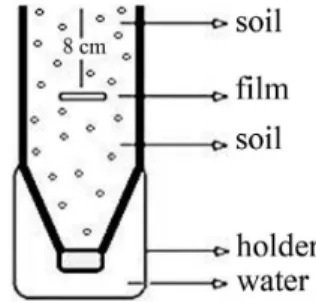
The soil columns were built using 1.5 L of PET bottles with small holes to aerate the soil during the experiment. The the bottle was partially filled with soil, 12 cm at the bottom of the bottle covered with the film, then more soil, 8 cm, was placed over the film (Figure 1). The soil used was collected from the campus of Rio Claro, SP, Brazil, rich in humus, without litter and leaves, sieved with a 2 mm mesh, and initially adjusted to have 60% of humidity[32]. The humidity
was maintained by a water recipient placed under the bottle, allowing the water to rise through capillarity, described by
Campos et al.[33] and shown in Figure 1. The columns were
kept at room temperature for 3 months and 6 months (March and November /2012).
2.2.3 Characterization of the polymers
2.2.3.1 Weight loss
The weight loss was evaluated by the difference in mass before and after the biotreatment, weighed on an analytical balance, CHYO, model JK200.
2.2.3.2 Fourier Transform Infrared (FTIR)
The original (before biological treatment) and biotreated films were analyzed by a Shimadzu IR Prestige 21 FTIR
spectrometer, 16 scans with 4 cm-1 resolution, and range of
4000 to 400 cm–1. To compare the spectra before and after
the soil treatment, each blend spectrum was normalized by
the internal standard at 1460 cm–1, assigned to vibration of
the CH2groups, because this band does not change during
the biodegradation process.
2.2.3.3 X-Ray Diffraction (XRD)
The samples were analyzed by XRD in a Shimadzu LABX-XRD 6000 diffractometer, operating at 30 kV, 30 mA and CuKα (λ 1.5406 Å). The assays were performed at 25 °C, with 2ϴ angles at 10 and 35° (2º/min). Some samples were completely deteriorated after the biodegradation and were not measured.
The crystallinity degrees (Xc) were calculated by the ratio of the crystalline peak and the total area (crystalline + amorphous peaks), using the peak deconvolution method with Origin 7.5 software, using Gauss function to define the
shape of the peaks, after the baseline correction.
2.2.3.4 Scanning Electron Microscopy (SEM)
SEM was used to investigate the surface morphology of
the polymer in order to elucidate the material properties of polymers and behavior of some processes such as: thermal, photo-degradation and biodegradation[34].
The polymer films before and after the heat and
microbial treatments were analyzed by a scanning electron microscope - Zeiss DSM 940-A, using acceleration voltage of 5 kV (ESALQ/USP – Piracicaba, SP).
3. Results and Discussions
After 3 and 6 months the PHBV/PP-co-PE films with and without additive were analyzed to verify morphological
and structural changes, using the methods cited above.
There was a significant weight loss in the blends, which
was higher in the PHBV/PP-co-PE/Add blend (Table 1).
The additive (pro-oxidant), favored the chains scission and biodegradation, but the presence of PHBV was also more
significant to biodegradation.
After 6 months, the blends with additive were not found in the soil columns, just some small pieces of the blend without additive, thus the weight loss was considered to be 100%.
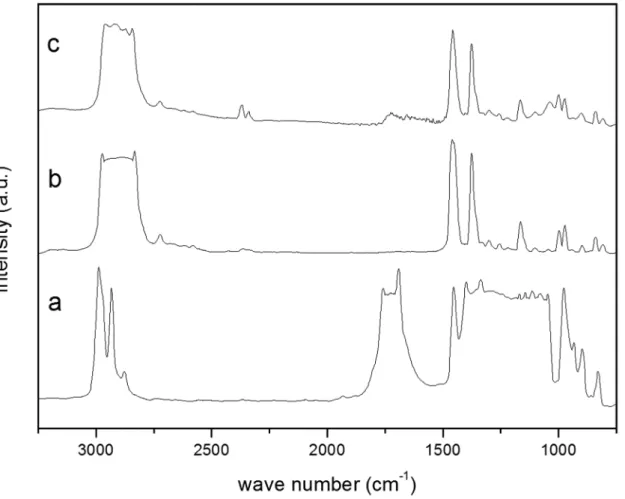
FTIR measurements compare the spectra of the films before and after the heat and soil treatment (Figure 2). These spectra were normalized by an internal standard band
(here called A0) at 1460 cm
–1 (assigned to the PHBV CH
2
deformation, as this band does not change after treatment) and deconvolution applied by the Lorentzian function to adjust the curves and isolate each band with the corresponding
area, from the overlapping bands, increasing the spectrum resolution[35].
Table 2 shows a comparison of carbonyl indices in the amorphous and crystalline phases from the original
and treated spectra, which were calculated by the areas
ratio: AC=O/A0 bands. In the PHBV/ PP-co-PE blend there
was a significant decrease in C=O indices, in both phases: amorphous and crystalline (51% and 57%, respectively), emphasizing that the blend with additive underwent more degradation (83% and 92%, respectively), when compared with the neat samples. In the heated and buried samples there was a synergistic effect in the amorphous phase and the decrease in the C=O was 81%. Considering the two
subsequent treatments, heat/buried, the additive samples
showed the heat effect on the chain structure, before the soil treatment. These results showed that the action of the oxidant additive in the soil biodegradation process was very
efficient, more efficient than the heat/buried degradation, leading to a greater scission of polymer chains, especially in the crystalline phase. This fact suggests that the less
ordered valerate chains of the PHBV located at the edge of the PHB crystal nucleus favors the microbial action, as in the model proposed by Yoshie[36]. Sadi et al.[37] observed
that PHB samples exposed to UV radiation caused several
changes in the material, such as scission and crosslinking
reactions. An initial delay in the biodegradation was also observed, which was related to a thin superficial layer with higher crystallinity of the samples exposed to UV radiation. However, this did not completely inhibit PHB decomposition and as this layer was consumed there was
an improvement in the biodegradation due to the fact that the degraded molecules located underneath this layer did not reorganize themselves into crystals.
The PHBV/ PP-co-PE blends buried for 6 months were measured using the FTIR technique (using very small pieces) and the graphics (in Figure 2) showed that the remaining parts
Table 1. The weight loss of the samples.
Samples Buried Heat/Buried
PHBV 90.1 100
PP-co-PE 0.12 0.23
PHBV/ PP-co-PE 77.0 93.0
PHBV/PP-co-PE/Add 88.0 94.0
Table 2. Comparison carbonyl indices in the amorphous and crystalline phases from the original and treated spectra of blends with and
without additive.
Samples Neat Buried Heat/Buried
PHBV/PP-co-PE Amorphous phase (A 1727/1460) 0.75 0.37 0.14
Crystalline phase (A1716/1460) 0.83 0.36 0.35
PHBV/PP-co-PE/Add Amorphous phase (A1751/1460) 0.66 0.11 0.10
in the samples were principally constituted by the synthetic copolymer, thus the PHBV was almost completely consumed (Figure 2a, b). PHBV/ PP-co-PE and PHBV/ PP-co-PE/add (heat/buried) were not found in the soil. In this period the
additive blend buried in the soil also disappeared. These
samples were considered totally biodegraded.
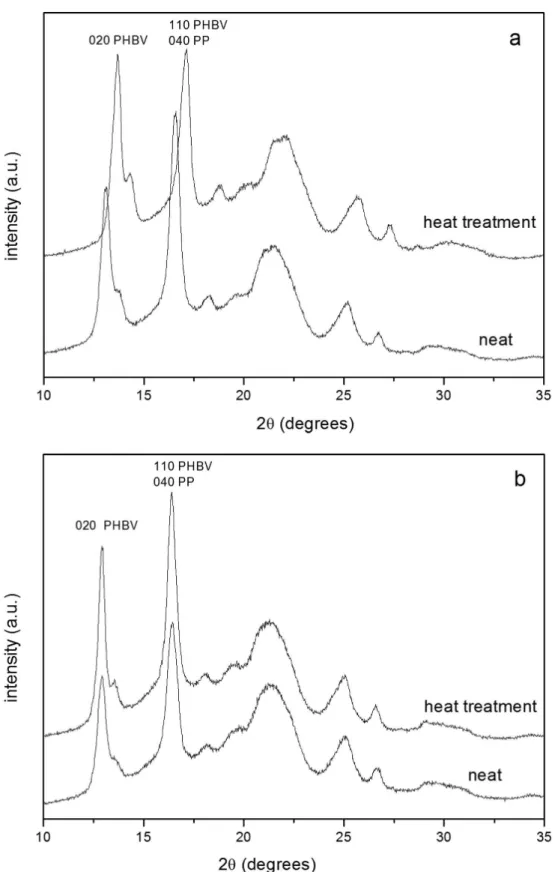
Table 3 shows the crystallinity degrees (Xc) of the polymer films before and after the heat treatment and
Figure 3a, b displays the diffractograms. The heat treatment
caused a crystallinity increase of the blend (4%) and additive blend (12%), causing the annealing. Comparing these two
blends, the crystallinity increased more in the additive
blend than in the blend without additive, due to the fact that more chains break and reorganize. PP-co-PE blend films after heat/microbial treatment were not measured by XRD because they were too deteriorated.
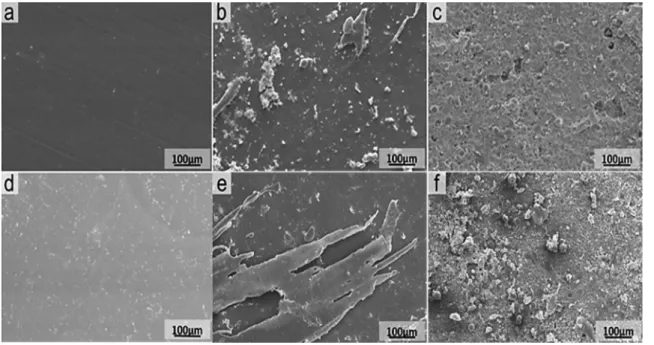
Figure 4 shows the micrographs of PHBV/ PP-co-PE and PHBV/ PP-co-PE/add. These figures clearly show biodegradation on the surface of the samples, without and with additive, such as microbial adhesion and surface delamination of PHBV. The morphological changes in the blends with additive seem to be greater than in those without additive, according to the visual aspect of these
damaged samples.
Figure 2. FTIR measurements comparison of the films before and after the heat and soil treatment. Table 3. Crystallinity degrees (Xc) of the polymer films before and after the heat treatment.
Samples hkl 2θ (°) D (nm) % Xc
PHBV/PP-co-PE-neat (020) PHBV 12.9 2.38 81
(110)PHBV (040)PP 16.4 1.90
PHBV/PP-co-PE-heat (020) PHBV 13.7 2.52 85
(110)PHBV (040)PP 17.0 1.91
PHBV/PP-co-PE/Add – neat (020) PHBV 12.9 2.37 69
(110)PHBV (040)PP 16.4 1.90
PHBV/PP-co-PE/Add –heat (020) PHBV 12.9 2.86 81
Figure 3. (a) Diffractograms of the PHBV/PP-co-PE films before and after the heat treatment; (b) Diffractograms of the PHBV/PP-co-PE/Add
Figure 4. Micrograph of PHBV/ PP-co-PE (a, b, c) and PHBV/ PP-co-PE/add (d, e, f).
4. Conclusions
The PHBV/PP-co-PE blend heat/buried in soil for 3 months underwent significant degradation. In the buried additive blend the biodegradation was higher, i.e., the
additive assisted the oxidation chains.
The PHBV/PP-co-PE blend heat/buried was completely
degraded after 6 months. Moreover, the buried additive
blend was mineralized in the soil. The action mechanism of the additive was not heat-dependant, showing that time was more influential.
5. Acknowledgements
The authors are grateful to Fapesp, CNPq and Capes
for the grants, scholarship, and financial support.
The authors are also grateful to Dr. Marco Aurelio De Paoli from the Chemistry Institute, Unicamp, Campinas, SP, Brazil for his support in using the Haake Torque Rheometer and Dr. José A. M. Agnelli from Department of Materials Engineering, São Carlos Federal University, São Carlos, SP, Brazil for supplying the PHBV.
6. References
1. Coelho, N. S., Almeida, Y. M. B., & Vinhas, G. M. (2008). A
Biodegradabilidade da blenda de PHBV-Amido anfótero na
presença de microrganismos. Polímeros: Ciência e Tecnologia, 18, 270-276. http://dx.doi.org/10.1590/S0104-14282008000300014. 2. Kumar, M., Mohanty, S., Nayak, S. K., & Rahail, M. (2010).
Effect of glycidylmethacrylate (GMA) on the thermal, mechanical and morphological property of biodegradable PLA/PBAT blend
and its nanocomposites. Bioresource Technology, 101(21), 8406-8415. http://dx.doi.org/10.1016/j.biortech.2010.05.075.
PMid:20573502.
3. Gonçalves, S. P. C., & Martins-Franchetti, S. M. (2013).
Respirometric evaluation of the biodegradability of films of
PE-PHBV blends.International Journal of Material Science,
3(2), 54-60.
4. Faria, A. U., & Martins-Franchetti, S. M. (2010). Biodegradação
de filmes de polipropileno (PP), Poli(3-hidroxibutirato) (PHB) e blenda de PP/PHB por microrganismos das águas do Rio
Atibaia. Polímeros: Ciência e Tecnologia, 20(2), 141-147. http://dx.doi.org/10.1590/S0104-14282010005000024. 5. Rosa, D. S., Franco, B. L. M., & Calil, M. G. (2001).
Biodegradabilidade e propriedades mecânicas de novas misturas poliméricas.Polímeros: Ciência e Tecnologia, 11(2), 82-88. http://dx.doi.org/10.1590/S0104-14282001000200010. 6. Rosa, D. S., Chui, Q. S. H., Pantano Filho, R., & Agnelli,
J. A. M. (2002). Avaliação da Biodegradação de
Poli-β-(Hidroxibutirato),Poli-β-(Hidroxibutirato-co-valerato)
ePoli-ε-(caprolactona) em solo compostado.Polímeros: Ciência e
Tecnologia, 12(4), 311-317. http://dx.doi.org/10.1590/S0104-14282002000400015.
7. Silva, L. F., Gómez, J. G. C., Rocha, R. C. S., Taciro, M. K., & Pradella, J. G. C. (2007). Produção biotecnológica de
poli-hidroxialcanoatos para geração de polímeros biodegradáveis no Brasil.Quimica Nova, 30(7), 1732-1743. http://dx.doi. org/10.1590/S0100-40422007000700040.
8. Ojeda, T. F. M., Dalmolin, E., Forte, M., Jacques, R. J. S.,
Bento, F. M., & Camargo, F. A. O. (2009). Abiotic and biotic degradation of oxo-biodegradable polyethylenes. Polymer Degradation & Stability, 94(6), 965-970. http://dx.doi. org/10.1016/j.polymdegradstab.2009.03.011.
9. Scott, G. (2000). Greenpolymers.Polymer Degradation & Stability, 68(1), 1-7.
http://dx.doi.org/10.1016/S0141-3910(99)00182-2.
10. Chiellini, E., Corti, A., & Swift, G. (2003). Biodegradation
of thermally-oxidized, fragmented low-density polyethylenes.
Polymer Degradation & Stability, 81(2), 341-351. http://dx.doi.
org/10.1016/S0141-3910(03)00105-8.
11. Fechine, G. J. M., Santos, J. A. B., & Rabello, M. S. (2006).
12. Guedri, L., Amor, S. B., Gardettec, J. L., Jacqueta, M., &
Rivaton, A. (2005). Lifetime improvement of poly(ethylene
naphthalate) by ZnO adhesive coatings.Polymer Degradation
& Stability, 88(2), 199-205. http://dx.doi.org/10.1016/j. polymdegradstab.2004.05.015.
13. Wilhelm, H. M., & Felisberti, M. I. J. (2002). Reactive compatibilization of maleated polypropylene and
maleatedpoly(styrene-b-butadiene-b-styrene) blends.Journal
of Applied Polymer Science, 86(2), 366-371. http://dx.doi. org/10.1002/app.10977.
14. Coutinho, F. M. B., Mello, I. L., & Santa Maria, L. C. (2003).
Polietileno: Principais tipos, propriedades e aplicações.
Polímeros: Ciência e Tecnologia, 13(1), 1-13. http://dx.doi. org/10.1590/S0104-14282003000100005.
15. Fernandes, L. L., Freitas, C. A., Demarquette, N. R., & Fechine,
G. J. M. (2012). Estudo do efeito do tipo de polipropileno na
fotodegradação da blenda polipropileno/poliestireno de alto
impacto. Polímeros: Ciência e Tecnologia, 22(1), 61-68. http:// dx.doi.org/10.1590/S0104-14282012005000013.
16. Silva, D. F., Araújo, E. M., & Melo, T. J. A. (2012).
Desenvolvimento de blendas de poliamida 6/composto de
borracha reciclada (SBR-R).Revista Eletrônica de Materiais
e Processos, 7(2), 104-110.
17. Chen, J. H., Zhong, J. C., Cai, Y. H., Su, W. B., & Yang, Y.
B. (2007). Morphology and thermal properties in the binary blends of polypropylene-co-ethylene copolymer and isotatic
polypropylene with polyethylene.Polymer, 48(10), 2946-2957. http://dx.doi.org/10.1016/j.polymer.2007.03.037.
18. Pospíšil, J., Horák, Z., Kruliš, Z., Nešpůrek, S., & Kuroda, S.
(1999). Degradation and aging of polymers blends.Polymer
Degradation & Stability, 65, 405-414. http://dx.doi.org/10.1016/
S0141-3910(99)00029-4.
19. Carashi, J. C., Ramos, U. M., & Leão, A. L. (2002). Compósitos
biodegradáveis de polihidroxibutirato (PHB) reforçado com farinha de madeira: propriedades e degradação.Acta Scientiarum,
24(6), 1609-1614. http://dx.doi.org/10.4025/actascitechnol. v24i0.2475.
20. Franchetti, S. M. M., & Marconato, J. C. (2006). Polímeros
biodegradáveis: uma solução parcial para diminuir a quantidade dos resíduos plásticos.Quimica Nova, 29(4), 811-816. http:// dx.doi.org/10.1590/S0100-40422006000400031.
21. American Society for Testing and Materials – ASTM. (1991).
ASTM D883: standard terminology relating to plastics. West
Conshohocken: ASTM.
22. International Organization for Standardization – ISO. (1997)
ISO 846: plastics: determination of behavior under the action of fungi and bacteria: evaluation of the action of microorganisms.
Geneva: ISO.
23. Imam, S. H., Gordon, S. H., Shogren, R. L., Tosteson, T. R.,
Govind, N. S., & Greene, R. V. (1999). Degradation of starch
PHBV bioplastic.Applied and Environmental Microbiology,
65, 431-437. PMid:9925564.
24. Chandra, R., & Rustgi, R. (1998). Biodegradable polymers.
Progress in Polymer Science, 23(7), 1273-1335. http://dx.doi.
org/10.1016/S0079-6700(97)00039-7.
25. Arkatkar, A., Arutchelvi, J., Bhaduri, S., Uppara, P. V., &
Doble, M. (2009). Degradation of unpretreated and thermally
pretreated polypropylene by soil consortia. International Biodeterioration & Biodegradation, 63(1), 106-111. http:// dx.doi.org/10.1016/j.ibiod.2008.06.005.
26. Krzan, A., Hemjinda, S., Miertus, S., Corti, A., & Chiellini,
E. (2006). Standardization and certification in the area of environmentally degradable plastics. Polymer Degradation & Stability, 91(12), 2819-2833. http://dx.doi.org/10.1016/j. polymdegradstab.2006.04.034.
27. Lucas, N., Christophe, B., Belloy, C., Queneudec, M., Silvestre,
F., & Nava-Saucedo, J. E. (2008). Polymer biodegradation: mechanisms and estimation techniques. Chemosphere, 73(4), 429-442. http://dx.doi.org/10.1016/j.chemosphere.2008.06.064.
PMid:18723204.
28. Shah, A. A., Hasan, F., Hameed, A., & Ahmed, S. (2008).
Biological degradation of plastics: a comprehensive review.
Biotechnology Advances, 26(3), 246-265. http://dx.doi. org/10.1016/j.biotechadv.2007.12.005. PMid:18337047. 29. Priyanka, N., & Aschana, T. (2011). Biodegradability of
Polythene and plastics by the help of microorganism: A way
for brighter future. Environmental and Analytical Toxicology,
1, 1-4. http://dx.doi.org/10.4172/2161-0525.1000111. 30. Brito, G. F., Agrawal, P., Araújo, M., & Melo, T. J. A. (2011).
Biopolímeros, polímeros biodegradáveis e polímeros verdes.
Revista Eletrônica de Materiais e Processos, 6(2), 127-139.
31. De Paoli, M. A. (2008). Degradação e estabilização de
polímeros. São Paulo: Editora Artliber.
32. Campos, A., Marconato, J. C., & Martins-Franchetti, S. M.
(2011). Biodegradation of blend films PVA/PVC, PVA/PCL
in soil and soil with landfill leachate.Brazilian Archives of Biology and Technology, 54(6), 1367-1377. http://dx.doi. org/10.1590/S1516-89132011000600024.
33. Campos, A., Marconato, J. C., & Martins-Franchetti, S. M.
(2010). Biodegradação de Filmes de PP/PCL em Solo e Solo
com Chorume.Polímeros: Ciência e Tecnologia, 20(4), 295-300. http://dx.doi.org/10.1590/S0104-14282010005000039.
34. Kaczmarek, H. (1996). Changes of polymer morphology
caused by U.V. irradiation: surface damage polymer.
Polymer Degradation & Stability, 37, 189-194. http://dx.doi.
org/10.1016/0032-3861(96)81086-X.
35. Araújo, S. C., & Kawano, Y. (2001). Espectro Vibracional
no infravermelho próximo dos polímeros poliestireno, poli(Metacrilato de Metila) e policarbonato.Polímeros: Ciência e Tecnologia, 11(4), 213-221. http://dx.doi.org/10.1590/S0104-14282001000400011.
36. Yoshie, N., Saito, M., & Inoue, Y. (2001). Structural Transition
of lamella crystals in a isomorphous copolymer,
poly(3-hydroxybutyrate-co-3-hydroxyvalerate).Macromolecules,
34(26), 8953-8960. http://dx.doi.org/10.1021/ma0113071. 37. Sadi, R. K., Fechine, G. J. M., & Demarquette, N. R. (2010).
Photodegradation of poly(3-hydroxybutyrate).Polymer
Degradation & Stability, 95(12), 2318-2327. http://dx.doi. org/10.1016/j.polymdegradstab.2010.09.003.