Electronic Cigarettes: How to improve performance in the
Portuguese market according to Portuguese consumers’
perception
Consumers’ analysis of attitudes and acceptance as well as preferred
features/characteristics.
Duarte Rodrigues
152116109
Dissertation written under the supervision of Professor Miguel Rita
Dissertation submitted in partial fulfilment of requirements for the
MSc in Management with Specialization in Strategy and
Entrepreneurship, at the Universidade Católica Portuguesa
Abstract
Title: Electronic cigarettes: How to improve performance in the Portuguese market according
to Portuguese consumers’ perception
Author: Duarte Rodrigues
The aim of this dissertation study is to analyze the opportunities of improving the Portuguese electronic cigarettes’ market based on an investigation of electronic cigarette smokers and the reasons which led them to start using these products. An additional investigation was carried out among non-smokers and the traditional cigarette smoker population to understand their perception of electronic cigarettes and to cover all opinions related with the use of this product and consequently of this market.
The outcomes of this dissertation study reveal that ex-traditional tobacco smokers shift from traditional tobacco to electronic cigarettes in order to pursuit a healthier lifestyle. Also, this study exposes features that influence the overall satisfaction of electronic cigarette users and the profile of them, and even considers Dual-Users.
Finally, other tests were made regarding smokers, non-smokers, ex-smokers and users of electronic cigarette that went back to traditional tobacco smoking. The purpose was to gather the most suitable sample and different perceptions.
Resumo
Título: Cigarros Eletrónicos: Como melhorar o mercado português através da perceção de
consumidores portugueses
Autor: Duarte Rodrigues
Este estudo foi feito com o objectivo de analisar as oportunidades de melhoria do mercado português de cigarros electrónicos através da investigação dos hábitos de consumo dos utilizadores de cigarros electrónicos e dos motivos para os usar. Além do mais, foi feita outra investigação considerando não fumadores e fumadores de tabaco tradicional com o objectivo de recolher todas as percepções destes produtos (cigarros eletcrónicos) como do seu mercado.
Os resultados deste estudo revelam que os ex-fumadores de tabaco tradicional mudam para o consumo de cigarros electrónicos com o objectivo de seguir um estilo de vida saudável. Além do mais, este estudo expõe características que influenciam a satisfação global dos utilizadores bem como o sue perfil e considerando também os Dual-Users.
Por último, outros testes foram feitos considerando fumadores, não-fumadores, ex-fumadores e fumadores de tabaco tradicional que já foram utilizadores de cigarros electrónicos. O objectivo desta análise a tantos e diferentes perfis é de obter uma amostra representativa e uma maior variedade de percepções sobre os cigarros electrónicos.
Palavras Chave: Aerosol, Aquecidos Não Queimados, Cigarros Eléctronicos, Liquidos,
Acknowledgements
I would like to thank my tutor, Miguel Fontes Rita, for the months spent helping me develop this master thesis dissertation and for guiding me with his knowledge to make a good job. I would also like to thank Professor Catarina Marques dos Santos, Professor Isabel Moreira and Marta Almeida de Carvalho for their support, help and knowledge given in the final sections of this dissertation.
Lastly, I would like to thank my parents for providing the financial means and supporting me throughout this academic journey which, for the time being, comes to an end with this master thesis dissertation.
Table of Contents Abstract ... 2 Resumo ... 3 Acknowledgements ... 4 List of Tables ... 8 List of Figures ... 10 Chapter 1 - Introduction ... 11 1.1 - Contextual Trends ... 11
1.2 - Problem Statement and Research Questions ... 12
1.3 - Research Methods ... 13
1.4 - Managerial and Academic Relevance ... 14
1.5 - Dissertation Structure ... 14
Chapter 2 - Literature Review ... 15
2.1 - Traditional Cigarettes ... 15
2.2 - Electronic Cigarettes ... 16
2.2.1 - Definition ... 16
2.2.2 - Acceptance ... 17
2.2.2.1 – The Consumer’s profile ... 20
2.2.3 – What is the main purpose of the Electronic cigarette? ... 20
2.2.4. Electronic Liquid Cigarettes... 21
2.2.4.1 – Brief Market Review ... 22
2.4.5 - Electronic Heated-Tobacco Cigarettes ... 23
2.4.5.1 – Brief Market Review ... 24
Chapter 3 - Research Methodology’s... 25
3.1 - Research Method... 25
3.1.1 – Research Guidelines ... 25
3.2 - Research Instruments ... 25
3.2.1 – In-depth interviews and Testimonials (Qualitative research) ... 25
3.2.1.1 - Non-Smokers ... 26
3.2.1.2 – Smokers ... 28
3.2.2 - Online Survey (Quantitative research) ... 31
3.3 – Measurement scales ... 32
Chapter 4 – Analysis of results ... 33
4.1 – Collection ... 33
4.3 – Explorative Analysis... 35
4.3.1 - Descriptive Statistics Non-Smoker Population ... 35
4.3.2 - Descriptive Statistics Smoker Population ... 36
4.3.3 – Hypotheses Testing ... 37
Chapter 5 – Conclusion ... 45
5.1 – Study Validation ... 45
Chapter 6 – Limitations and Future Research ... 47
6.1 – Limitations ... 47 Bibliography ... 50 List of abbreviations... 54 Appendices ... 55 Appendix 1 ... 55 Appendix 2 ... 56 Appendix 3 ... 63 Appendix 4 ... 64 Appendix 5 ... 65 Appendix 6 ... 66 Appendix 7 ... 67 Appendix 8 ... 68 Appendix 9 ... 69 Appendix 10... 70 Appendix 11... 71 Appendix 12... 72 Appendix 13... 73 Appendix 14... 74 Appendix 15... 75 Appendix 16... 76 Appendix 17... 77 Appendix 18... 78 Appendix 19... 79 Appendix 20... 80 Appendix 21... 81 Appendix 22... 82 Appendix 23... 83
List of Tables
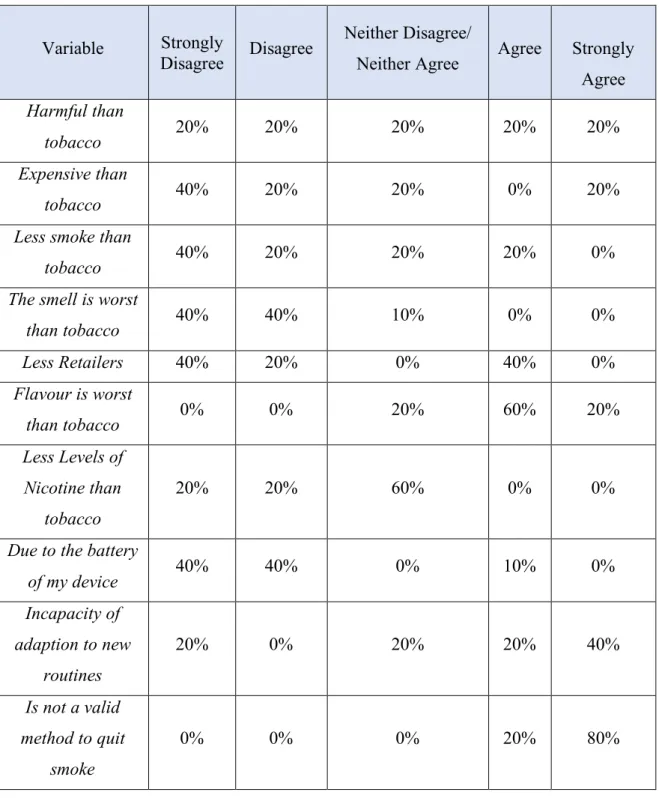
Table 1 – Variable that had influence ex-Electronic Liquid Cigarette to went back to
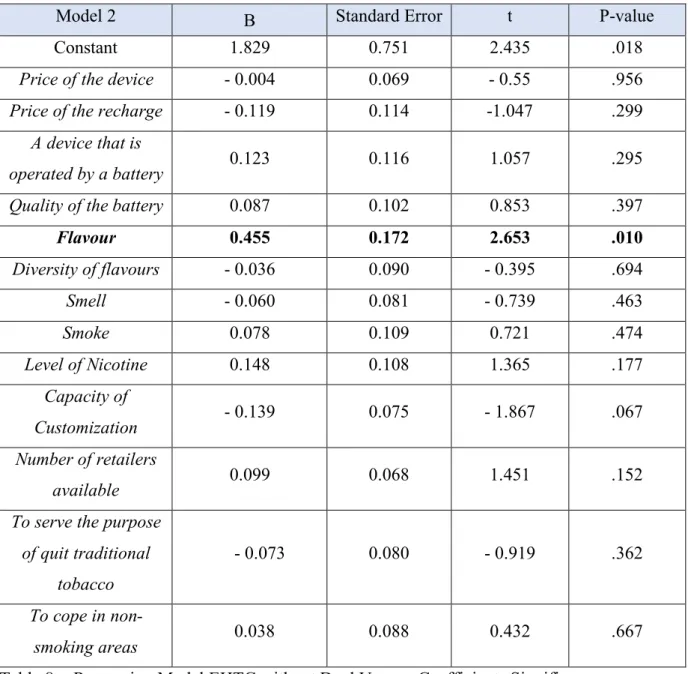
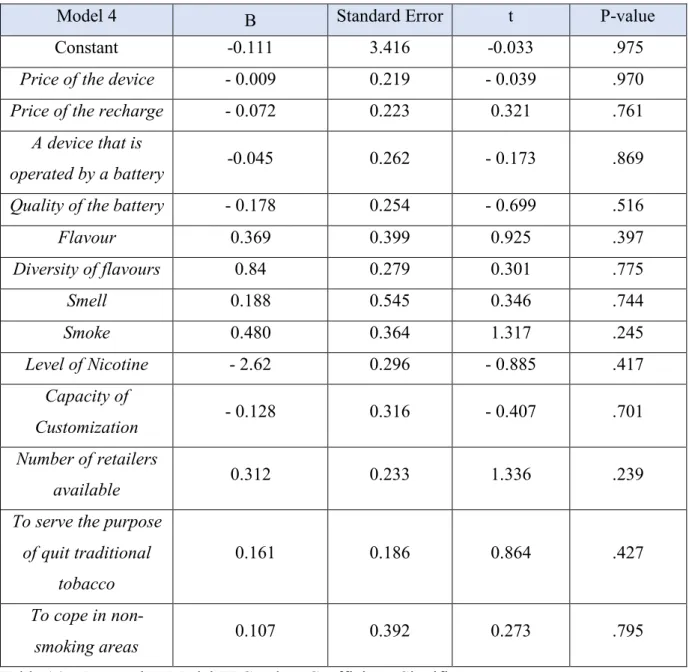
Traditional Cigarette Smoking………..………...62 Table 2 – Variable that had influence ex-Electronic Heated-Tobacco Cigarette to went back to Traditional Cigarette Smoking………..……..………...63 Table 3 - Regression Model EHTC with Dual Users – Multiple Regression Model Summary ………...65 Table 4 - Regression Model EHTC with Dual Users – Multiple Regression Model ANOVA ………...65 Table 5 - Regression Model EHTC with Dual Users – Coefficients Significance………….65 Table 6 - Regression Model EHTC only – Multiple Regression Model Summary………....66 Table 7 - Regression Model EHTC only – Multiple Regression Model ANOVA...66 Table 8 - Regression Model EHTC without Dual Users – Coefficients Significance………66 Table 9 - Regression Model ELC with Dual-Users – Multiple Regression Model Summary67 Table 10 - Regression Model ELC with Dual Users – Multiple Regression Model ANOVA ………..67 Table 11 - Regression Model ELC with Dual Users – Coefficients Significance…………..67 Table 12 - Regression Model ELC only – Multiple Regression Model Summary………….68 Table 13 - Regression Model ELC only – Multiple Regression Model ANOVA…………..68 Table 14 - Regression Model ELC only – Coefficients Significance……….68 Table 15 - Regression Model Dual Users EHTC only – Multiple Regression Model
Summary………..69 Table 16 - Regression Model Dual Users EHTC only – Multiple Regression Model ANOVA ………...69 Table 17 - Regression Model Dual Users EHTC only – Coefficients Significance………...69 Table 18 – Multicollinearity Analysis Model 1 and Multicollinearity Analysis Model 2…...70 Table 19 – Multicollinearity Analysis Model 3 and Multicollinearity Analysis Model 4…...71 Table 20 – Multicollinearity Analysis Model 5……….……..72 Table 21 – Level of Satisfaction (%) by ELC users………...73 Table 22 – Level of Satisfaction (%) by EHTC users………...74 Table 23 – Level of Satisfaction (%) by ELC users and correspondent Dual-Users………...75 Table 24 – Level of Satisfaction (%) by EHTC users and correspondent Dual-Users……....76 Table 25 – Level of Satisfaction (%) by ELC Dual-Users only ………...77
Table 26 – Level of Satisfaction (%) by EHTC Dual-Users only………78
Table 27 - Independent Samples T-test of Hypothesis 3 – ELC users……….79
Table 28 - Group Statistics of Hypothesis 3 – ELC users………...…….79
Table 29 - Independent Samples T-test of Hypothesis 2 – ELC users………...79
Table 30 - Group Statistics of Hypothesis 2 – ELC users………...79
Table 31 - Independent Samples T-test of Hypothesis 4 – ELC users………...79
Table 32 - Group Statistics of Hypothesis 4 – ELC users…………...……….79
Table 33 - ANOVA of Hypothesis 5 – ELC users……….79
Table 34 - Independent Samples T-test of Hypothesis 3 – EHTC users………80
Table 35 - Group Statistics of Hypothesis 3 – EHTC users………..80
Table 36 - Independent Samples T-test of Hypothesis 2 – EHTC users………....80
Table 37 - Group Statistics of Hypothesis 2 – EHTC users………...80
Table 38 - Independent Samples T-test of Hypothesis 4 – EHTC users………80
Table 39 - Group Statistics of Hypothesis 4 – EHTC users………...80
Table 40 - ANOVA of Hypothesis 5 – EHTC users………...80
Table 41 - Independent Samples T-test of Hypothesis 3 – EHTC Dual-Users only…………...81
Table 42 - Group Statistics of Hypothesis 3 – EHTC Dual-Users only………...81
Table 43 - Independent Samples T-test of Hypothesis 2 – EHTC Dual-Users only…………81
Table 44 - Group Statistics of Hypothesis 2 – EHTC Dual-Users only………...81
Table 45 - Independent Samples T-test of Hypothesis 4 – EHTC Dual-Users only………....81
Table 46 - Group Statistics of Hypothesis 4 – EHTC Dual-Users only………...81
List of Figures
Figure 1 – Gender of the of the Sample………...33
Figure 2 – Age of the Sample………..…….34
Figure 3 – Education of the Sample……….34
Figure 4 – Income of the Sample………..………...34
Figure 5 – Smokers VS Non-Smokers………..…...34
Figure 6 – Characterization of the Smokers ………...….34
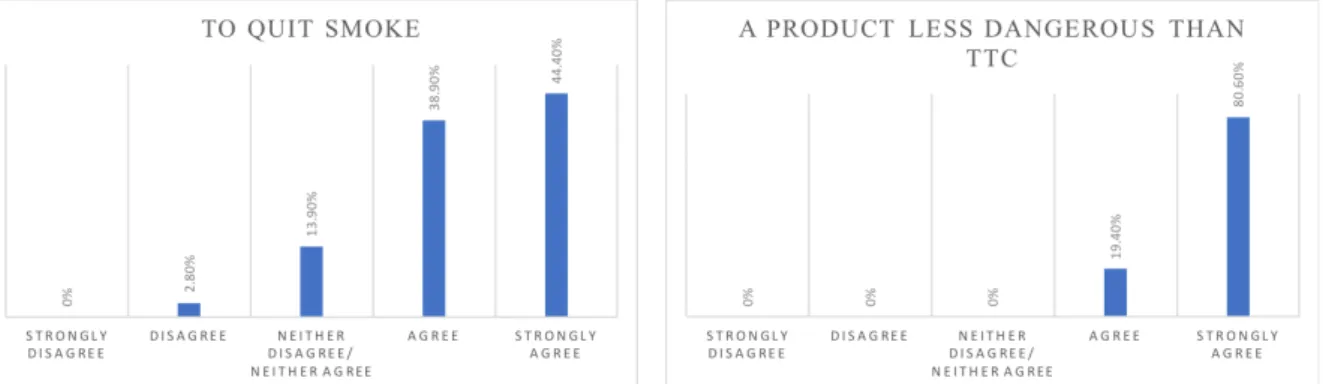
Figure 7 – Life improvement ELC users.………..………...64
Figure 8 – Pursuit of a healthier lifestyle ELC users.………..64
Figure 9 – Quit Smoke ELC users.………..64
Figure 10 – See ELC as less dangerous………...64
Figure 11 – Life improvement EHTC………...64
Figure 12 – Pursuit of a healthier lifestyle EHTC users………..64
Figure 13 – Quit Smoke EHTC users………...64
Figure 14 – See EHTC as less dangerous………64
Figure 15 – Daily consumption of ELC by ELC users only………...82
Figure 16 – Daily consumption of EHTC by EHTC users only………...82
Chapter 1 - Introduction
1.1 - Contextual Trends Pursuit of a healthier lifestyle
Health consciousness was defined by the individual choice to act in order to what is beneficial to their health. Consumers who are health conscious are frequently in the pursuit of methods to improve their well-being and driven to seek a better quality of life, avoiding conducts which could be potentially harmful to their health and well-being. One’s well-being acting as a significant factor to predict a healthy-lifestyle (Ansari & Talan, 2017).
Education plays a fundamental role in the promotion of healthy habits and in the prevention of illnesses. Recently, significant consideration has been given to scrutinizing the fundamentals of health. Personal behaviours, like smoking, may increase or decrease the threat of ill health, those behaviours being summarized as “healthy lifestyles”.
““Healthy environments” consists of the environmental, economic and social conditions that can both impact directly on health, as well as support healthy lifestyles, e.g. by making it more or less easy for an individual to smoke or adopt a healthy diet.” (Nutebeam, 2000).
Consumer’s behaviour
The behaviour of an individual in the process of selecting and purchasing products to fulfil his/her needs and desires is denominated as consumer behaviour (Solomon, Bamossy, Askegaard, & Hogg, 2006).
Consumers are constantly choosing among a wide variety of products and services. In recent years, consumer and purchasing behaviour has become more complex, becoming an important issue for companies, with a huge number of consumers constantly looking for different and more products and services. Nowadays companies invest in learning about the essentials of consumer behaviour (Singh, 2014) as this knowledge plays a significant role when it comes to having a better understanding of the consumer through different products, services, brands and companies.
This dissertation study is focused on electronic cigarettes and its purpose is to improve the Portuguese electronic cigarettes’ market performance based on consumers and non-consumers perceptions of the different types of electronic cigarettes.
1.2 - Problem Statement and Research Questions
The problem that this research aims to solve is the following:
How to improve electronic cigarettes market, for instance:
- How to attract traditional tobacco consumers and persuade them to switch to electronic
cigarettes?
- Which consumer segments are stronger, and which require a new strategy, based on
socio-demographic characteristics?
To address this problem statement in the most suitable way the research questions made were the following:
Research Question 1
- Do consumers of traditional tobacco cigarettes shift from traditional tobacco cigarettes to electronic cigarettes in order to pursue a healthier lifestyle?
This question is made in order to understand the driver that leads traditional tobacco cigarette smokers to switch to electronic cigarettes. The answer to this question lies in understanding if consumers of electronic cigarettes would like to combine their perception of a healthier lifestyle with their addiction to nicotine, by switching to a smoking method that is considered by the majority of the population as having less harmful consequences than traditional tobacco. If the results of this question confirm that consumers switch their smoking method with the aim of pursuing a healthier lifestyle, then this result may influence existing traditional tobacco consumers to switch their smoking method and hence lead to an increase in the number of electronic cigarette customers.
Research Question 2
- What are the features that most influence the overall satisfaction of consumers of electronic cigarettes? (the ones with a higher effect on satisfaction levels)
This question is included in order to understand which features/characteristics of electronic cigarettes bring more or less satisfaction, so that brands and producers understand in which one they need to focus to improve and which ones they need to expose with more impact on non-consumers in order to persuade them to change to the electronic cigarette world. Once again, this question could improve market performance, as its answer could at least represent an opportunity for brands or manufacturers to understand which features of their devices are more pleasing and which are less pleasing, and therefore improve them.
Research Question 3
- What is the profile of electronic cigarette consumers in Portugal?
The final question in this dissertation is made with the purpose of determining the profile of electronic cigarette consumers in Portugal. This information could also contribute to improvements in the electronic cigarette market, with brands and manufacturers benefitting from a better understanding of who are their consumers1 and then work on new ways of
addressing and fulfilling their needs.
1.3 - Research Methods
All primary and secondary data collected was obtained from scientific literature, electronic cigarette websites, in-depth interviews and an online survey. Thus, descriptive and inferential statistics were made with the assistance of SPSS to analyse the data which incorporated the hypotheses formulated and the possible analyses formulated from the previous information combined from literature review and the information collected by the qualitative and quantitative research.
1.4 - Managerial and Academic Relevance
This study aims to bring a new perception of this innovative product in the Portuguese market. It also draws a distinction between electronic cigarettes containing liquid and the electronic device called IQOS, that arrived at Portugal in 2015, which contains actual tobacco leafs. This device had its pilot test in Japan and in Italy and is now available in more than 20 countries, like in Portugal (Kress, 2017) (Rossel, 2018) (ObservadorLab, 2018).
This dissertation study could serve as an example to enrich further studies in other countries. Lastly, this study could contribute for marketers to have a better understanding of Portuguese consumers’ preferences and perceptions and also non-consumers perceptions of this product. Additionally, marketers will recognize which characteristics/features better fulfil the needs of Portuguese users of the different types of electronic cigarettes.
1.5 - Dissertation Structure
This dissertation study consists of six chapters, namely: Introduction to present the topic, and insights, Literature Review where the insights and the hypothesis for the research questions were formulated, Research Methodology presenting the qualitative and quantitative research aligned with the literature review insights. The fourth chapter focuses on Data Analyses where the data collected from the qualitative research will be tested and analysed and the respective results presented, the fifth and the sixth chapters will be the Conclusions and Limitations and
Further Research where data will be discussed, and various suggestions will be made
Chapter 2 - Literature Review
2.1 - Traditional Cigarettes
According to the World Health Organization, in 2016 tobacco was one of the main causes of death (Lusa, 2017). Traditional cigarette smoking is estimated to kill six million people annually around the globe. Current debates are underway concerning the possibility of electronic cigarettes being a means of reducing some of the harmful effects of smoking, as the nicotine found in these is supplied in a less toxic manner. (Braillons, 2016) (Farrimond, 2017) (Anne Y. Oh & Ashutosh Kacker, 2014). Tobacco use remains the single most avoidable cause of disease, disability, and death in the United States of America, affecting more than nine million people. In the case of Portugal and according to the institute of Health Metrics and Evaluation, tobacco consumption was responsible for the death of 11,000 people in 2010 (DGS, 2014).
Along with other substances and products, tobacco remains one of the most addictive products, which means that tobacco products contain substances, like nicotine, that create dependency on the consumer. Nicotine, the toxic oily liquid which is obtained from tobacco plants, is highly correlated with the feeling of pleasure and relaxation. The addiction can be so strong that when users try to give up smoking, they experience withdrawal symptoms originating from the lack of nicotine such as anxiety, irritability, increased appetite, to name but a few (Benowitz, 2008). Smokers say that traditional cigarettes act as stress and appetite suppressors, nicotine being highly correlated to weigh control or weight loss. This is due to the fact that nicotine may lower a person’s insulin level, which in turn lowers appetite and sugar cravings (Kluger, 1996). Throughout times, smoking has been seen as a socialization vehicle with users starting to smoke as a means of socialization, a habit which then leads to nicotine dependency. More than that, we need to have in mind that traditional cigarette smoking consists of a continuous combustion process, meaning that when one smokes not only is nicotine released, but also other harmful chemicals. To add to this and as mentioned in the beginning, traditional tobacco smoking remains the single most avoidable cause of death in the world due to the numerous forms of diseases that this product can provoke in the human being.
2.2 - Electronic Cigarettes
The first electronic cigarette was developed in China in 2003, being introduced in the USA market in 2007. Electronic cigarette awareness among traditional tobacco cigarette smokers had a real boost among the latter, and by 2013 half of these had tried one. This boost was driven by advertising campaigns of these products. As tobacco brands were banned from advertising their products on TV or radio since 1970, when electronic cigarettes were launched in the USA with no FDA restriction, they took this opportunity and aggressively used all the available marketing channels (Hyman & Brown, 2017).
On a different approach, when electronic cigarettes arrived in Europe they were first seen with scepticism, despite the recognition that these devices were aimed at mitigating the major threats of smoking traditional tobacco cigarettes. Nonetheless, health risk concerns remain to be answered (Henkler & Luch, 2014). This said, according to a pan-European survey undertaken in 2012, 12% of the population aged above fifteen have tried electronic cigarettes or other electronic nicotine delivery system (Stoklosa, Drope, & Chaloupka, 2016).
2.2.1 - Definition
Electronic cigarette (known as E-cigarette, or E-cig or Electronic Nicotine Delivery System) is a battery-operated device created with the purpose of delivering nicotine by inhaling the aerosol created. In this dissertation, electronic cigarettes were divided in two types, Electronic Liquid Cigarettes and Electronic Heated-Tobacco Cigarettes. The first one contains an atomizer that converts the contents of a nicotine cartridge, when heated, into a solution rather than smoke, called vapour (aerosol2) which will be inhaled by the user. Instead of burning
tobacco and creating smoke, like traditional tobacco cigarettes, electronic cigarettes heat the liquid and produce an aerosol, which at the same time delivers nicotine. The liquid is used to fill and refill the electronic cigarette, being sold as replaceable cartridges which may either have a similar taste to tobacco or contain other flavours. This type of electronic cigarettes can also be sold as one-use disposable E-cigarettes. These electronic cigarettes may differ in appearance according to the respective brand, type and model, and they can also resemble cigars, pens, tanks or common items (Mastrota, 2017) (Hyman & Brown, 2017).
2 “An aerosol is aerosol is a suspension of fine particles of liquid, solid, or both in gas: both the particulate and gas phases are mixtures of chemical substances in e-cigarette aerosols that is frequently but inaccurately referred to as vapour (a vapour is a substance in the gas phase).” (Mastrota, 2017)
As for the second type, instead of heating the synthetic liquid to create an aerosol, the tobacco leafs are heated instead of burnt. Once again, an important aspect is that smoke only appears when expelled by the user. This second type, the Electronic Heated-Tobacco Cigarette, is not new but it has been tested recently in several countries like Japan or Italy. This device instead of burning the tobacco, heats the tobacco leafs at a lower temperature which still allows the smoker to experience, through an aerosol, the true taste of tobacco without the disadvantages of a traditional tobacco cigarette like the ashes, the smoke and obviously the burning of the tobacco plant (Morris, 2018) (Caputi, Leas, Dredze, Cohen, & Ayers, 2017) (Glantz, 2018).
2.2.2 - Acceptance
Electronic cigarettes became popular due to the fact that they only use nicotine from tobacco plants and, instead of generating smoke, they generate an aerosol that is only released during exhalation (Mastrota, 2017). Additionally, the fact that these devices mimic so well the act of smoking also greatly contributed to the smoking community’s acceptance.
In the case of the adult users, research on electronic cigarettes showed that many of them give significance to the “group experience” provided by electronic cigarettes as well social opportunities to vape. On the other hand, electronic cigarette use is a way of young people develop a “cool” image. It is seen like a socialization tool (Farrimond, 2017) (Schripp, Markewitz, Uhde, & Salthammer, 2013) with studies suggesting that the boom observed among adult electronic cigarette users will be replicated in the young adolescent population. (Mastrota, 2017) (Hyman & Brown, 2017).
Several regimes have already introduced restrictions in the flavour offer in an attempt to make them less attractive and to make the perception of electronic cigarettes more like a traditional tobacco cigarette instead of a NRT. At the same time studies have been showing that the possibility to customise flavours, liquids and nicotine amount is the reason which greatly contributed to the growing popularity of E-cigarettes among the population. (Farrimond, 2017) Vaping brought the common idea that it was healthier than traditional tobacco smoking, bringing along pleasure, a sense of feeling healthier, a feeling of “life improvement”, there being no study available capable of measuring this impact. In order to understand the rapid acceptance of electronic cigarettes, we need to have in mind that electronic cigarettes were developed to mitigate some of the health hazards triggered by smoking traditional tobacco, such as the constant smoke release, whereas in the case of electronic cigarettes an aerosol is released only during exhalation as opposed to continuous smoke release. The fact that
E-cigarettes do not have combustion contributes to users’ perceiving this as a better and safer alternative to traditional tobacco cigarettes. Along with this, users see their healthier benefits like reducing stress, making these devices more exciting and having more reasons to use them. In fact, electronic cigarettes are strongly marketed as lifestyle-choice consumables (Mastrota, 2017) (Farrimond, 2017).
Supporters of electronic cigarettes stimulate the development of the product as a reliable alternative method for giving up traditional tobacco cigarette use because these devices are another nicotine delivery system. Recent studies show that electronic cigarettes are a more natural method to cut down tobacco cigarette consumption because an E-cigarette mimics the act of smoking, like having a break to smoke a cigarette, an object to puff and of course the production of smoke (Anne Y. Oh & Ashutosh Kacker, 2014). Supporters also believe that E-cigarettes have the potential to diminish the thousands of carcinogens found in the smoke released by tobacco smoking, reduce non-smokers’ exposure to second handed smoke, while time satisfying smokers’ nicotine desire (Dawkins, Kimber, Doig, Feyerabend, & Corcoran, 2016).
Scientific evidence states that electronic cigarette consumption is growing, however not changing the health position to a large extent. On a focus group in the USA about electronic cigarettes, a quote was highlighted as a summary of the experience of smoking an E-cigarette as “It’s not smoke, it’s not tar. It’s not 4000 chemicals. Case closed”. In Europe, in the UK for example, a major European reference in tobacco control policy due to their high acceptability of smoking measures and low smoking prevalence, since the future risks are uncertain and unknown, caution or ban have been under the table for discussion and there is still some misunderstanding on how electronic cigarettes are less dangerous as opposed to traditional tobacco smoking. Studies reveal that 40–60% approve that they are less risky and 25% of UK smokers are uncertain if E-cigarettes are in fact less dangerous (Heide Weishaar, 2016). Despite this, in 2016 Public Health England, the executive agency in charge of the nation’s well-being, declared that “E-cigarettes were 95% less harmful than normal cigarettes” (Braillons, 2016) (Farrimond, 2017).
It is in terms of health that the public tends to disagree, with studies leading us on different directions due to the lack of available information. The strong and quick adoption of electronic cigarette use across the globe has split the public in health community. Bell & Keane defend that this is because health positions are nowadays made with basis on moral stances “(…) it is
the dangers stem not merely from the constituents of the products themselves, but the ideological challenge they pose (…)” (Farrimond, 2017).
Despite the global increase in electronic cigarette consumption, the product’s safety is still a mystery because the currently available data is not reliable to enable to generate a study which determines the health impact of electronic cigarettes, so we cannot state the real effects of E-cigarettes, for example, on future cancer. While traditional cigarette smoke contains more toxicants and chemicals than the aerosol of an E-cigarette, again for now it is impossible to state that the aerosol is less harmful for the user. Following the same logical thinking, there is much apprehension concerning non-users’ and the environment’s safety when exposed to the aerosol (Mastrota, 2017) (Anne Y. Oh & Ashutosh Kacker, 2014).
Scientific evidence needs more time to develop and prove itself as a reliable source of information concerning electronic cigarettes, with allegations and regulations currently made with basis on ideology and not on results (Farrimond, 2017). Until now, what is scientifically known is that an E-cigarette or an Electronic Nicotine Delivery System contains propylene glycol, glycerol, flavourings, nicotine and other chemicals, the harm caused to human beings by these combined components not possible to measure at the moment. To add to this, manufacturers of electronic cigarettes claim that their products are constantly undergoing chemical, toxicological and clinical tests and affirm that the chemical exposure from an E-cigarette is lower than the one allowed by the FDA in other situations. Considering this, manufacturers state that their products are safer than traditional tobacco cigarettes (Hyman & Brown, 2017).
Finally, there is also evidence that people prefer to abstain from smoking tobacco cigarettes and instead use electronic cigarettes, as opposed to NRT methods or quitting aids, but in fact a great number of E-cigarette users continue to smoke tobacco cigarettes, calling themselves “Dual-Users”. In fact, studies made in the USA and South Korea revealed that 75% of electronic cigarette smokers still use tobacco cigarettes or tobacco products, thus maintaining their exposure to smoke-related toxicants (Harrell, et al., 2015)(Henkler & Luch, 2014). This has triggered negative considerations about the E-cigarette, because those “Dual-Users” are traditional tobacco cigarette users that use electronic cigarette to cope in non-smoking areas. Another concern posted is the attractiveness for electronic cigarettes for non-smoking youths of electronic cigarettes, who were initially turned off by the consequences of tobacco smoking. They now see these E-cigarettes as an opportunity to be “cool” with less consequences. However, this action could make a non-smoker into a traditional tobacco cigarette smoker or into a nicotine addict after some time (Farrimond, 2017).
2.2.2.1 – The Consumer’s profile
Recent studies have revealed that the use of electronic cigarettes differs on age, gender, economic status and in level of education.
The Electronic Liquid Cigarette have their consumers well distributed among age groups but with special emphasis on the age group “Older” 3, have more females consumers and the users
of this type of product have a higher level of education and a higher income. In the Electronic Heated-Tobacco Cigarette, the group age that consume more is the “Young”, females and the level of education and income of these users is considered high (Dawkins, Turner, Roberts, & Soar, 2013) (Piñeiro, et al., 2016) (Trumbo & Harper, 2016) (Brose, Simonavicius, & Cheeseman, 2018) (Miyazaki & Tabuchi, 2018).
2.2.3 – What is the main purpose of the Electronic cigarette?
After considering the above information, we now come to a topic that needs to be addressed to fully understand the divergence of ideas about electronic cigarettes. There are two sides to this topic, with critics and supporters of E-cigarettes sharing different ideas and opinions about these products. It was based on those ideas that the hypothesis and research questions of this study were developed.
Although this topic is about the purpose of electronic cigarettes, the available literature suggests two different purposes: one, to give up smoking and the other, as a means of attracting new smokers who eventually become addicted to nicotine.
The community has been continuously on disagreement concerning the impact of electronic cigarettes on the cessation of traditional tobacco smoking. On one side, supporters who believe that electronic cigarettes came to minimize the traditional tobacco smoking population, basing their statements in studies that verify the strong effectiveness of tobacco abstinence by using electronic cigarettes compared to the traditional NRT methods. Should this be correct, E-cigarettes could be the one valid alternative to NRT in the field of smoking cessation and a way for tobacco harm reduction (Hyman & Brown, 2017) (Braillons, 2016). Vaping enjoyment plays a crucial role in smoking cessation, some researchers going as far as saying that this activity can be considered as a hobby (Farrimond, 2017).
On the other hand, there are critics complaining about these researches stating that they are incorrect or that they could lead to misinterpretation, because studies confirm that 93% of smokers who tried NRT products went back to traditional tobacco smoking after six months. On the other hand, smokers who never tried an E-cigarette before are more likely to abstain from traditional tobacco cigarettes than the ones who are E-cigarette users. Although they reduced their traditional cigarette consumption, E-cigarette users were no more likely than traditional tobacco smokers to give up smoking for good (Hyman & Brown, 2017). This idea gains strength when the tobacco industry changed its mind and start seeing NRT products as business opportunities instead of seeing them as health threats like they have always been. All this is due to a federal law alteration introduced in 2009, in the USA, which allows tobacco companies to commercialize NRT products. This led the tobacco industry to start producing and marketing their own NRT products to compete with NRT pharmaceutical products, with the ultimate aim of leading the nicotine market. This was known because the documents which were published by the industry show that NRT products were used as a complement of smoking rather than for cessation (Apollonio & Glantz, 2017).
Furthermore, critics are concerned with the youth population’s attraction to electronic cigarettes, saying that all progress made in tobacco control over the last 50 years could be affected (Braillons, 2016). College students say that the enjoyment of Electronic Liquid Cigarette smoking has surpassed the objective of giving up smoking, and that makes perfect sense since we have a variety of flavours, such as fruit or alcohol, which according to critics were designed to attract new customers among the youth population, encouraging them to start vaping. Critics are likewise concerned about the safety of specific flavours (Farrimond, 2017). Once again, we must bear in mind that the information so far collected on the impact of electronic cigarettes in tobacco cigarette smoking cessation is still reduced. For example, in terms of health, we cannot yet confirm that electronic cigarettes contribute to full traditional tobacco cigarette smoking cessation (Hyman & Brown, 2017).
2.2.4. Electronic Liquid Cigarettes
Electronic Liquid Cigarettes were the revolutionary device of this industry by becoming the first type of portable electronic utensil that could replicate the act of smoking. Their popularity rose due to several characteristics that traditional cigarettes could not offer in terms of innovation. Firstly, and as mentioned before, smoke production and the fact of being a less harmful solution; secondly and precisely because this type of electronic cigarette offered the
possibility of having a “tailored” cigarette. A choice for every smoker, like flavours, equipment shape customization, the amount of smoke produced, and nicotine levels of the liquid were a few of the key factors that contributed to the product’s early success. Last, but not least, these cigarettes were strongly seen as an option and viable way to quit smoking, an important point that attracted part of the smoking community to opt for this product.
Being a pioneer product is never easy and along with all the successes and new customers came some criticism and concerns were the new routines and change of habits, like charging of the device, refilling the liquid, the fact that both battery and resistance needed to be switched and be properly maintained. Lastly, after some studies undertaken in the health area, questions about the quality and safety of the liquids started being asked and so the efficacy of these devices in aiding to quit smoking effectively as advertised was not confirmed due to users’ incapacity to quantify their daily smoking amounts.
Other studies reported differences between electronic cigarettes and traditional tobacco cigarettes, like the challenge to obtain nicotine from an E-cigarette due to the differences in the puffing technique which requires practice. A “perfect” electronic cigarette is therefore not yet established because users frequently switch brands, types and generations (Anne Y. Oh & Ashutosh Kacker, 2014).
Since we have been observing a constant development of the E-cigarette, in the future these will be more accurate in the delivery of nicotine doses eradicating the present issues concerning noncompliance or ease of use (Farrimond, 2017) (Hyman & Brown, 2017).
2.2.4.1 – Brief Market Review
In 2018, it is possible to distinguish four types of electronic cigarettes available in the market. There are the disposables ones, similar in shape to traditional tobacco cigarettes and that you can only use once. The other three types are rechargeable, the first-generation type is cigarette shaped, and includes a battery and usually doesn’t have buttons. This has been named as a “closed” system due to the impossibility of being refilled and their privation of customization by the user (previously loaded with cartridges by manufacturer). The second-generation is a pen style, bigger than a cigarette with refillable container and comes with buttons. The last type is called third-generation and consists of a large size tank style, rechargeable with manual switches. The second and the third E-cigarette generation are identified as “open” system because these generations can be refilled with liquids and customized by the user (Jankowski, Brozek, Lawson, Skoczynski, & Zejda, 2016) (Vardavas, et al., 2017).
There are now at least 466 different brands of electronic cigarettes in the market (Blank, et al., 2016).One of the pioneer brands of E-cigarettes was Njoy, founded by Mark Weiss in 2006, a year before the launch of electronic cigarettes in the USA market. While Njoy still preserves its independence from the traditional tobacco industry, Blu another popular E-cigarette brand was bought by Lorillard Tobacco Company in 2012, being divested in 2015 due to the merger of RJ Reynolds and Lorillard Tobacco Company in 2014. This divestment was made to give space to Vuse, the brand launched in 2013 by RJ Reynolds Vapor Company. Another big and popular brand of E-cigarettes owned by traditional tobacco companies is MarkTen, also launched in 2013. MarkTen was launched by Altria Group (bought by Philip Morris) in late 2013, the second tobacco industry company which that year launched its own electronic cigarette brand in the market, and six years before the entrance of E-cigarettes in the USA market (Haardörfer, et al., 2017).
E-cigarette liquids/juices or supply recharges can differ too. These are usually bought in prefilled containers that vary in volume and price from shop to shop and can also be bought online. There are 466 known brands currently available in the market, with the possibility of being filled by more than 7700 flavour categories (Blank, et al., 2016).
Liquids also vary a lot among flavours, the sweet and fruity tastes being the preferred ones among former smokers and youths, while tobacco flavours being preferred by dual users. Nowadays it seems natural for users to switch flavours as they look for the perfect one, sometimes mixing them to create unique tailor-made flavours (Blank, et al., 2016).
2.4.5 - Electronic Heated-Tobacco Cigarettes
I Quit Ordinary Smoking - IQOS from Philip Morris International, this device that heats
tobacco was introduced in the market to revolutionize the way people smoke and to be a viable and less dangerous alternative to traditional tobacco cigarettes. Philip Morris International already states that this will be their focus and they will change their future to a smoke-free company in the future. Philip Morris was able to replicate the feeling of smoking on a device that is loved by the majority of users for its fashionable design. Additionally, and because it is a Philip Morris International product, a trusted multinational that is constantly under watch by health organizations and having invested more than three billion Euros on the development of IQOS, users believe that this product will be a more trusted and controlled product in terms of safety and less dangerous for human beings as opposed to Electronic Liquid Cigarettes (Morris,
2018) (Brose, Simonavicius, & Cheeseman, 2018) (Caputi, Leas, Dredze, Cohen, & Ayers, 2017) (Kress, 2017).
2.4.5.1 – Brief Market Review
In 2018, in Portugal there are more than one type of Electronic Heated-Tobacco Cigarette, but the only one recognized by the individuals of the interviews (next chapter) was IQOS, the model 2.4.
In Portugal, the device IQOS costs 70 Euros, and comes with a 2-year warranty and maintenance included. The price for recharge packs, called HEET’s has a similar price as traditional tobacco packs (4,5€). HEET’s sticks have three flavours available in the market one called Amber - Intense tobacco, the other called Yellow - Less intense tobacco and the last one called Turquoise – with a menthol flavour. Just like in traditional tobacco cigarettes.
In Portugal, IQOS has an online store and in 2018 the brand opened a physical store in Lisbon, 3 Pop Up Stores in the shopping centres, Centro Comercial Amoreiras, Centro Comercial Vasco da Gama and in NorteShopping. HEET’s sticks can be purchased in over 20 Galp Gas Stations across Portugal.
Given that the IQOS is a recent product in the Portuguese market, its points of sale are still reduced in number when compared to traditional tobacco cigarettes retailers. They are already available for sale in a few shopping centers and in gas stations across Portugal. In terms of flavours, it is the opposite of Electronic Liquid Cigarettes with only three types available. As a standard product, it means that the IQOS cannot be customized, the only option for the user lying in selecting the colour of the machine (Morris, 2018).
There are more brands of this type of E-cigarette available in Portugal like the Ploom by PAX but these brands have been sold in Electronic Liquid Stores with a substantial higher price (Vapes, 2018).
Chapter 3 - Research Methodology’s
3.1 - Research Method
A research method is a procedure used to explore and analyse a topic, explaining how you will undertake the research on the subject. This process is driven to find new outcomes of the theme. In this dissertation two primary researches were conducted, one qualitative and the other quantitative with the purpose of understanding the acceptance, barriers and opportunities of electronic cigarettes in the Portuguese market and community.
A quantitative and qualitative studies are both important and distinct in the research process. A quantitative investigation is made with the purpose of having a richer approach on understanding the attitudes and motivations about the topic and a qualitative inquiry serves to quantify the product’s preference, by connecting the findings in the qualitative research vis-à-vis consumers thoughts. (Barnham, 2015).
3.1.1 – Research Guidelines
In order to give an answer to the research questions of this study, in-depth interviews and an online survey were performed to analyse important features of electronic cigarettes, their influence on the satisfaction of the consumer and the profile of the consumer.
3.2 - Research Instruments
3.2.1 – In-depth interviews and Testimonials (Qualitative research)
In order to develop an appropriate qualitative research, 48 individuals were interviewed, as this study is focused on understanding acceptance, barriers and opportunities for electronic cigarettes in the Portuguese market and community. As such, the interviews covered non-smokers and all different types of non-smokers. Besides this, three interviews were previously made to three different stores selling Electronic Liquid Cigarettes and to two Electronic Heated-Tobacco Cigarette (IQOS) salespeople, to understand the different markets, users’ consumption habits with the object of conducting a suitable interview and developing an appropriate market analysis of the product.
In order to fully grasp the subject group of “non-smokers”, it is essential to break it down into different segments:
- Individuals who never smoked in their lives - Individuals who previously smoked but quit
And in order to fully grasp the subject group of “smokers”, it is also essential to break it down into different segments:
- Traditional tobacco cigarettes users only (Never tried an electronic cigarette / Tried and did not like)
- Individuals who tried an electronic cigarette (liquid) and only use these now - Individuals who tried an electronic cigarette (heated) and only use these now
- Individuals who tried an electronic cigarette and are dual users (liquid or heated and traditional tobacco cigarettes)
- Individuals who tried electronic cigarettes and went back to smoking traditional tobacco cigarettes
The interviews were made with the purpose of creating a suitable quantitative method of research in order to have the best possible perception of electronic cigarette acceptance. The questions made can be found in the Appendix 1.
General perception of the two main groups:
3.2.1.1 - Non-Smokers
The non-smoking Portuguese population perspective of electronic cigarettes (liquid and heated) could be considered very positive according to interview results. In general, this is seen as a less harmful and cleaner product than traditional tobacco cigarettes. Non-smokers think that users are in fact becoming more responsible in terms of health by smoking these electronic devices instead of traditional tobacco cigarettes. Also, they think that these products are cleaner than traditional tobacco cigarettes. In the case of Electronic Liquid Cigarettes, as the product has no ashes and no filters to throw on the floor or on the ground of a public space these are much cleaner. In the case of the heated E-cigarette, they still have filters. However, the general public considered them cleaner than traditional cigarettes due to less smoke and no ash.
Another advantage that greatly contributes to E-cigarette acceptance by non-smokers is its smoke. Almost all non-smokers say that E-cigarette smoke is less disturbing, even when present in higher quantity. E-cigarette smoke is considered less harmful than traditional cigarette smoke, being scentless most of the time. When it has smell, non-smokers say that it is better than the smell of tobacco even if it is candy or even if its smell is not so good.
A non-smoker referred:
- “When I go to a closed public place where smoking is allowed, like a bar or a club, I
already know that I my clothes will be smelling of tobacco; it would be amazing if this changed. Also, the fact that I must watch out if people are dancing with cigarettes pointing to me is another issue that I hate about tobacco cigarettes; not only are they harming me with their toxic-filled smoke but sometimes they also burn me…For me, as a non-user I consider e-cigarettes politer than traditional cigarettes”.
The divergence comes in when people smoke electronic cigarettes in non-smoking areas. Some non-users do not mind because it is vapour and not smoke, but for others it is still smoke. If the area has a smoking prohibited sign it applies to traditional tobacco cigarettes but also to every device that creates smoke or aerosol.
Two statements were highlighted in order to understand this point:
- “Smoke is harmful, this is not smoke is vapour. In fact, I don’t know if the vapour hurts
me or not but I am 100% sure that it is less harmful than tobacco smoke. I have no problem in inhaling this vapour, because it is only produced when people are puffing, whereas traditional tobacco cigarette I not only have to take the smoke when they are puffing, but also when they have a cigarette in their hands or resting in an ashtray. Another aspect that I hate in tobacco cigarettes is when people go and smoke outside because smoking is not allowed. At that moment I have two options, either to go with the person and assume that I have to cope with their habit or stay alone for like 10 minutes which is annoying.”
- “If I am in a public place where smoking is allowed I obviously prefer to receive the
smoke that is less harmful (talking about the smoke of the e-cigarette), but if I am in a place where smoking is not allowed I will not tolerate any type of smoke, even if it is less toxic or not.”
Finally, when asked “Do you think that electronic cigarettes could help people quit smoking?” the majority of non-smokers (who never smoked before) said “yes” and a few even said that they would encourage smokers to switch to electronic cigarettes. For the rest of non-smokers (who never smoked before) in general, they will not encourage anyone to smoke but instead just to stop, and when asked “Do you think that electronic cigarettes could help people quit
smoking?” this minority answered “no” or “that is not quitting, it is smoking a less harmful thing” and a few answered saying that “these devices are and will be smoked by the future generation, a tactic used by the tobacco industry to retain and gain more clients, they (the tobacco industry) are the ones who will win the battle against tobacco”.
Of course, former smokers who tried and quit smoking as a result of electronic cigarettes, consider this a valid method to quit smoking.
In terms of differentiating the perception of non-users about Electronic Heated-Tobacco Cigarettes or Electronic Liquid Cigarette is not so different, with non-users that never smoked seeing them as an equal socially acceptable form of smoking, while at the hand non-users who were former smokers seem to perceive heated tobacco as form of “cleaner” smoking and the liquids as a method for quitting smoking.
3.2.1.2 – Smokers
The smoking Portuguese population’s perspective of electronic cigarette acceptance is very clear, but it could be segmented based on the results of the interviews, which enabled to conclude that age is one of the main factors influencing the use of electronic cigarettes. According to these interviews, it was seen that younger people (under 34 years old) prefer electronic heated tobacco cigarettes, called IQOS. As the top selling heated tobacco brand, it is acknowledged by all its users and non-users, users saying that this product is the one that really mimics the traditional tobacco cigarette. Most of them tried this product out of curiosity and not while looking for a healthier smoking option. However, when they try and like the product, they stick to IQOS saying that they have “always acknowledged the harmful effects of
traditional tobacco smoking and by using electronic heated cigarettes they are moving up a step into having a healthier future”. Another point of concern among the younger population
is the money spent on recharges. The price of IQOS recharges is very identical to the price of a pack of traditional tobacco cigarettes. One common thought that could be highlighted is
“Having made an initial 70 Euro investment on the machine, now everything is the same. I spend the same amount of money on recharges that I would normally spend on a pack of
cigarettes”. Regardless of the model and generation, electronic cigarettes require the adoption
of new routines, namely that IQOS users must charge the battery of their devices, purchase their recharges at gas stations and in a few shopping centres. So far, battery charging has not been a problem for heated tobacco cigarette users, and when they forget to charge them or when they die, users say that charging them is quick. If they are really in need for a “break or
a smoke”, sometimes they borrow the machine from co-workers or from a friend to smoke their
own recharge. “It´s just like borrowing a lighter… After my cigarette, I give back the machine
and put mine on charge”. 4 Lastly, the majority of heated tobacco cigarettes users say that they
now smoke more than before in terms of the number of cigarettes, one of the causes being the lower intensity of heated tobacco which leads users to smoke more than what they usually smoke. Most of them smoke traditional tobacco cigarettes in the presence of alcohol, and that could be the main reason why there are more dual users of Electronic Heated-Tobacco Cigarettes in the interviews, than Electronic Liquid Cigarettes and consequently more people returning to traditional tobacco cigarette smoking only.
The older generation (above 34 years old) prefers Electronic Liquid Cigarettes, because on average they have been smoking electronic cigarettes and on average when they started vaping, IQOS was not yet in the market, despite saying that their product “suits the purpose of smoking
and that is enough for them”. Due to the diverse range of available models, generations and
brands the interviewees were not capable of recalling the brand which they normally buy, recharge brand and not even which E-cigarette generation they have in their possession.
- “I really don’t know, I’m used to going to the shop to replace batteries, resistors or buy
nicotine, sometimes I can buy an e-liquid, but usually I buy the liquids online.” - said a
user.
This generation is more concerned about its health, affirming that they are making an investment on their well-being by smoking this product because it has given proof of helping to quit traditional cigarette consumption.
In terms of routines they seem to adapt easier than the young generation, making efforts and improving in order to go along with the product. A question about new routines was made and the answer was “In the beginning it was hard to adapt, but now I have everything under control,
I have two devices, one always with me and the other on my desk at work, a lot of batteries, chargers and liquids scattered around the house, car and office so that I can smoke whenever I want”.
Interviews showed that there are less dual users among Electronic Liquid Cigarette users than among Electronic Heated-Tobacco Cigarette users and consequently there is a higher number of individuals who gave up tobacco cigarette smoking for good.
The perception of electronic heated tobacco cigarette users of Electronic Liquid Cigarettes is very negative. Electronic Heated-Tobacco Cigarette users claim that using this product is not smoking but vaping, and instead of vaping a synthetic liquid whose characteristics have not been scientifically studied in depth, concerning its health dangers and harms, they vape a product controlled by a company that has been in the tobacco industry for a long time.
Another disadvantage lies in the shape of the product itself. For example, IQOS users say that users of electronic liquid tobacco cigarettes are not able to replicate the experience of smoking, saying that it is just another form of nicotine delivery for addicts and not for smokers.
Addiction is another important point, heated tobacco cigarette users saying that Electronic Liquid Cigarette smokers do not know when they should stop smoking. “I have 6 minutes to
smoke my recharge or 14 puffs and when the machine light turns red I know that it is finished, whereas if I was vaping liquid I do not know when to stop” – said an IQOS user.
Lastly, the price is also questioned because it is more expensive than a pack of tobacco
cigarettes and more expensive than Electronic Heated-Tobacco Cigarette recharges.
On the other hand, the perception of Electronic Liquid Cigarette users of heated tobacco cigarettes is negative too, accusing users of electronic heated tobacco cigarette of smoking and not vaping because they are still using tobacco, condemning heated tobacco for being more harmful and defending themselves by saying that they only vape liquids with nicotine. And lastly, they defend that their product is more easily adaptable to fulfil their needs (flavours, level of nicotine, quantity of smoke, among others) and above all that it is a method with given proof in helping to quit smoking.
Also important is to understand the perception of traditional tobacco cigarette users as well as the perception of users who tried electronic cigarettes and went back to traditional tobacco cigarette smoking. Traditional tobacco cigarette users’ perception of electronic cigarette is diverse, in general accusing this product of not being a method for quitting smoking, “If it is
just for the nicotine and they really want to quit smoke then there is plenty of pharmaceutical help like nicotine patches” – said a traditional cigarette smoker. The other common perception
which makes tobacco cigarette users continue smoking is the new routines (recharging batteries, maintenance, among others) and the lack of offer compared to traditional tobacco cigarette. To be more precise and in accordance with the interviews made, there are general and separate critics of Electronic Liquid Cigarettes like “It is not even a cigarette”, “Smoking
a flavour like candy or a dessert is closer to smoking shisha than smoking a cigarette”.
Electronic Heated-Tobacco cigarette receives critics like “It is not powerful enough in terms of
smoke, flavour or nicotine delivery” or that “It smells bad”.
Smokers who tried electronic cigarettes and went back to traditional tobacco smoking have, logically, a negative opinion of the product. One critic of heated tobacco cigarettes made by traditional tobacco consumers of cigarette brands not included in the Philip Morris group is that the “recharges are more expensive than cigarette packs”. Electronic liquid cigarettes are commonly criticised by those who never tried and those who have tried them, former users criticising “the bad quality of the resistors”, “breaks easily” and “sometimes overheats”, opinions that could be important for this study, as this dissertation aims to improve electronic cigarette market performance.
3.2.2 - Online Survey (Quantitative research)
The online survey was the chosen procedure to collect the available data, in this case a questionnaire was made with the purpose of gathering the largest number of responses. A questionnaire is a sequence of questions which have some advantages for instance: quick and not too expensive method of collecting answers, with the possibility of avoiding bias that might occur when questions are asked face-to-face (White, 2000).
Qualitrics was the research software used to develop and deliver the questionnaire. Afterwards,
the questionnaire was sent via e-mail and shared on social media via Facebook and WhatsApp platforms.
Since this study is concerned with the improvement of electronic cigarette market performance, the questionnaire needed to cover as many customers as possible, including current customers, possible future customers and former customers in order to perceive what triggered them to take the decision to start consuming or quit electronic cigarettes. To add to this and to make the electronic cigarette consumer section more relevant, known users (heated or liquid) were contacted via Facebook asking them to fill in the questionnaire.
The questions were made with the output of the literature review combined with the interviews with the purpose of answering the research questions. The ultimate aim was to develop a linear regression model to test the overall satisfaction of electronic cigarettes taking into consideration different features/characteristics.
3.3 – Measurement scales
In this dissertation study, Likert scales have been used, allowing individuals to classify their opinion in the different questions proposed in order to understand the level of concordance with each sentence. Scales like the level of satisfaction (“very dissatisfied” to “very satisfied”) and others were used in order to build the most suitable statistical analysis.
The target of this questionnaire was the Portuguese market and Portuguese consumers, and thus the reason for this questionnaire to be made only in Portuguese.
Chapter 4 – Analysis of results
4.1 – Collection
The survey was online between the 10th and 22nd of March. Qualitrics software was used to
deliver the questionnaire and was possible to observe that 354 started the questionnaire but only 317 finished it, meaning a conclusion rate of almost 90% which is considered acceptable to serve the study’s purpose.
Finally, after the data collection, the data was analysed on SPSS software 23.0.
4.2 – Sample Characterization
To understand the sample and to better analyse their perceptions and opinions, a demographic segmentation was made in order to grasp the data.
In Gender, the sample is characterized by 58.4% of females and 41.6% of males. In Age, the sample is distributed in 46.4% in the ages between 18 and 24, in 23% in the ages between 25 and 34, in 13.6% between the ages of 35 and 44 and the rest of the sample is above 45 years old, representing the remaining 17%. To be aligned with the literature review that mentioned that young and older people have different perceptions about the electronic cigarettes, the sample was segmented in two groups “Young” (18 - 34) and “Older” (35 - 100). Also, these age groups were made aligned with the interviews in order to perform the best possible study. Regarding the Education, the sample have 16.4% of the individuals in a low level of education and the remaining data corresponds to a high level of education5. To add to that, and to mention
that 48.3% has a bachelor’s degree and 33.1% of the sample have a master’s degree as level of education. Considering Income, the vast majority of the sample (71,6%) as an income lower than 1500€ per month.
Finally, 58% of the sample are smokers and 42% are non-smokers. Of those 58%, 10% were only Electronic Liquid Cigarette users, 39% were only Electronic Heated-Tobacco Cigarette users, 38% were only Traditional Tobacco users and the rest of the sample were Dual-Users. (Dual-User with Electronic Liquid Cigarette – 1%, Dual-User with Electronic Heated-Tobacco Cigarette – 12%).6
5 In high level of education were considered - bachelor’s degree, master’s degree, PhD and others 6 Rounded Percentages
Figure 1 – Gender of the Sample Figure 2 – Age of the Sample
Figure 3 – Education of the Sample Figure 4 – Income of the Sample
Figure 5 – Smokers Vs Non-Smokers Figure 6 – Characterization of the Smokers
4.3 – Explorative Analysis
4.3.1 - Descriptive Statistics Non-Smoker Population
The Non-Smoker population is characterized in this sample for having 66% of the population in the “Young” group, for being almost equally distributed in terms of gender, for having 80% with a higher level of education and for their income being less than 1501€ (70.2%). With the data collected it is possible to state that the majority of the Non-Smoker population follows a healthy life-style. 71% of the individuals “agree/strongly agree” when asked the level of concordance with the sentence “Do you consider that you are a person who follow a
healthy life-style”.
Approximately 60% of Non-Smokers, said that electronic cigarettes are the cigarettes more accepted in society and the remaining 40% state that the cigarette most accepted in society is the traditional one.
Several statements7about the electronic cigarette were made to non-smokers in order to
understand their acceptation of this product. To the statement “The electronic cigarette is less
harmful than traditional tobacco to the human health”, 45 % had “agree/strongly agree” and
35 % had respond “neither agree/neither disagree”. When said “There have been an
increasing in electronic cigarette consumers” almost 70% had “agree/strongly agree”. Also,
the smoke and the smell of an electronic cigarette were considered less inconvenient, than the smoke of traditional tobacco, by the Non-Smoker population in 71.6% and in 57.4%
respectively.
Among the Non-Smoker population, 6 individuals state that they would like to try Electronic Liquid Cigarettes and 7 state that they would like to try the Electronic Heated-Tobacco Cigarettes. The reasons were varied among the individuals but most of them would like to try “because I have already tried traditional tobacco and I would like to see if like this electronic
cigarette”. Finally, when asked “if you would be a user of an electronic cigarette if there was any study that proves that electronic cigarettes help in the process of weight loss/ control”
almost 4.8% said that would be and 4.4% didn’t know if they would be a user or not. From the Non-Smoker population, 54 were ex-smokers, 11% left their addiction by shifting from traditional tobacco cigarettes to Electronic Liquid Cigarette. Of those which used this method to quit smoke, 84% had “agree/strongly agree” when asked if the purpose of using
this electronic cigarette was to pursuit a healthier lifestyle, but just 66.7% of those started using this product with the actual purpose of quitting smoke.
When asked if their intentions of quit smoking were due to health problems, the majority of the individuals, had “disagree/ strongly disagree” but if was due to a pursuit of a healthier lifestyle 84% of the answers were “agree/strongly agree”.
Less than 3% used Nicotine Replacement Treatments to quit smoke and there were no
answers of ex-smokers who quit smoking by the use of Electronic Heated-Tobacco Cigarette. 4.3.2 - Descriptive Statistics Smoker Population
Among the Smoker population, which include traditional tobacco cigarette users, electronic cigarette users and Dual-Users, it is possible to state that they also follow a healthier lifestyle. 60.9% of the individuals “agree/strongly agree” when asked the level of concordance with the sentence “Do you consider that you are a person who follow a healthy life-style”. Just 17.7% said that “disagree/strongly disagree” from the sentence.
Starting with traditional tobacco smokers, 36.7% state that they follow a healthier lifestyle and 38.4% state the opposite. This group is characterized by having 65% on the group age “Young”, in terms of gender for being 65% females, for having 73.3% of the individuals with a higher level of education and for having 73.3% with a monthly income lower than 1501€. When asked to this group if they know about electronic cigarettes, they know the both existent types of electronic cigarettes, and after collecting the data was possible to observe, that 78% sate that the smoke of the electronic cigarette is not similar to the smoke provided by the traditional tobacco, also 84% declares that the smell is not identical of the traditional tobacco cigarette and 90% sate that the experience of smoking and E-cigarette is not the same. Although, 47% “agree/strongly agree” that an electronic cigarette is less harmful than the traditional tobacco cigarette and 37% “neither agree/neither disagree”.
Of this group 17% were electronic cigarette users and went back to traditional cigarette smoking. 12% were Electronic Liquid Cigarette users and the main reasons pointed to give up of these devices were “Flavour”, “Battery”, “Incapacity of adaption to new routines” and for not being a valid method “to quit smoke”. The remaining 5% were Electronic Heated-Tobacco Cigarette users, the main reasons to give up of this device were the same except the variable “Battery” (Appendix 3 and 4).
The Electronic Liquid Cigarette smoker’s population is characterized in this sample by gender for being 60% of females, by having 55% of the individuals in the age group “Older”,