2018
FACULDADE DE CIÊNCIAS
DEPARTAMENTO DE QUÍMICA E BIOQUÍMICA
Activation and Conversion of Small Molecules by
Coordination Compounds
Janaína de Cássia Almeida
Mestrado em Química
Especialização em Química
Dissertação orientada por:
Paulo Nuno Martinho
To my mother, Lenita Dias, who always makes me believe in my dreams ♥
v
I would like to thank my supervisor, Dr. Paulo Nuno Martinho, first for the chance to work with him, for all advices, guidance and opportunities. Mainly, for the contribution in my scientific development, ideas and suggestions. Also, for the patience and understanding. It was such a pleasure working with that great human being and I am extremely grateful for the experience of constant learning.
I sincerely thank my co-supervisor, Dr. Sara Realista for the encouragement, for having a lot of patience (yes, I know). Thank for the lessons, the instructions, the contribution in my scientific development. Thanks for the time spent teaching me, the joy, the reprimands, thanks for make me grow. I do not have enough words to express my gratitude! Thanks for everything! You have a special place in my heart.
“The good teacher explains. The superior teacher demonstrates. The great teach inspires.” (William Arthur Ward) And with no doubts, both supervisors have inspired me. You are the best!
I would also like to express my gratitude to Prof. Dr. Maria José Calhorda, for the opportunity of work in inorganic and theoretical group and for attention being given.
I am thankful to Dr. Marta Saraiva for the assistance provided in the laboratory, to Dr. Ana Mourato for the AAS experiments and to Prof. Dr. Ana Maria Rego for the XPS analysis and the consideration given.
Many thanks to all my laboratory colleagues: Ana Elisa, Ana Vicente, Bárbara Oliveira, Mohamed Soliman, Frederico Martins, César Reis, Rafaela Marques, Marcos Bento e Olga Ferreira. You all contribute for the amazing life in this laboratory. Thanks for all contributions and the good energies.
Quero agradecer de coração à minha querida mãe, Lenita Dias, a quem dedico esta tese. Agradeço por me ter transmitido valores essenciais, por desde sempre ter me ensinado grandes lições e acima de tudo por sempre acreditar em mim e no meu potencial. Estou imensamente grata por me ter ensinado a batalhar e a nunca desistir dos meus sonhos! Também agradeço ao meu querido pai, Geraldo Almeida, pelo carinho transmitido.
Many thanks to my friends: Jéssica Sodré, Sofia Milheiro, Tânia Simões, Bianca Gama, Mirian Vaz e Tânia Ferreira for the support, the understanding and your presence in good and bad moments.
A special thanks to my boyfriend Pedro Rocha for all the patience, for giving me strength in the stressfully days and for all the support. Thank you for always believe in me and for make me a better person. You are amazing!
vii
Abstract
Chapter 1 of this master thesis consists of a brief introduction concerning the activation and
conversion of small molecules, specially the carbon dioxide molecule. The class of macrocyclic compounds studied in this thesis is also described, as well as the literature evolution along the years and the most common procedures for their synthesis. A special emphasis can be found on some of the different existing azamacrocycles. Another topic addressed is the ability of macrocycles to encapsulate the carbon dioxide molecule and to reduce this gas photochemically in homogeneous phase. Finally, an example of covalent immobilisation of a cryptate on multi-walled carbon nanotubes is discussed.
During this work ten compounds were synthesised, six new compounds (two ligands and four complexes) and four other compounds already published by our group. The characterisation was performed by nuclear magnetic resonance (NMR), Fourier-transform infrared spectroscopy (FTIR) and elemental analysis (EA) and these techniques showed that the compounds were successfully obtained. The synthesis and characterisation are presented in Chapter 2. Two complexes synthesised during my bachelor’s degree research project are presented in this chapter, as they were further used as catalysts for carbon dioxide photoreduction studies. In general, the yields were satisfactory obtained above 45%.
The covalent immobilisation of C3 on carbon nanotubes was studied and the synthesis and characterisation are described in Chapter 3. Characterisation techniques such as atomic absorption spectroscopy (AAS) and X-ray photoelectron spectroscopy (XPS) were employed to fully characterise all synthetic steps. These revealed that the immobilisation occurred, however large amounts of copper were found in the material due to their use as a catalyst in the last step of the cryptate immobilisation.
CO2 photoreduction studies were performed using nickel(II) and cobalt(II) complexes as catalysts in
homogeneous medium and the results are discussed in Chapter 4. Two different set-ups were used for this purpose. One was composed by three blue LED lights source (λ= 492-455 nm) and the other was composed by a solar light simulator (λ= 400-750 nm). Tests were accomplished with different pairs of photosensitiser/sacrificial donor. To analyse the headspace gases produced, a GC-TCD was used and the liquid phase was first analysed by ionic chromatography, although without success. As an alternative, a qualitative evaluation of the presence of liquid CO2 reduction products was carried out by
a 1H NMR method based on the literature. This showed that among the analysed samples only in two
was detected formic acid.
A heterogeneous photoreduction experiment was also performed using as catalyst the modified carbon nanotube with C3. The gaseous phase was analysed by GC-TCD and only showed H2 as
by-product and no CO2 photoreduction products were observed. Thus, further studies are still needed with
different amounts of catalyst, different systems of PS/SD and solvents.
Finally, in Chapter 5 are presented the main conclusions and future work and in Chapter 6 is found the detailed description of the synthesis and characterisation of all compounds studied.
ix
Resumo
O crescimento populacional a nível mundial tem resultado num aumento das diversas formas de poluição. Neste sentido, a comunidade científica tem revelado um interesse crescente em combater a poluição atmosférica devido ao aumento de gases poluentes tais como CO2, NOx,SO2, CH4, entre outros.
Diversos estudos têm sido realizados numa tentativa de minimizar as emissões e a acumulação de dióxido de carbono na atmosfera, existindo principalmente três estratégias: redução da quantidade de dióxido de carbono produzida, a utilização do dióxido de carbono sob a forma de matéria-prima e o armazenamento desse gás. Diversos investigadores têm procurado novos catalisadores que possuam eficiência e durabilidade e que tenham a capacidade de ativar e/ou converter seletivamente a molécula de CO2.
No âmbito desta tese de mestrado é apresentada, no Capítulo 1, uma breve introdução sobre a ativação e conversão de pequenas moléculas, mais especificamente para a molécula do dióxido de carbono. Neste capítulo, também se encontra a descrição de compostos macrocíclicos (classe de compostos onde se inserem os compostos estudados), o surgimento destes no decorrer da história e as formas mais comuns para a sua síntese. Tendo em conta os compostos estudados nesta tese, é realizada uma discussão mais profunda de alguns azamacrociclos existentes. Outro tema abordado relaciona-se com a encapsulação da molécula de dióxido de carbono em compostos macrociclícos e é descrita a sua redução fotoquímica, em fase homogénea. Por fim, é dada uma pequena discussão sobre a imobilização covalente de compostos em nanotubos de carbono para a sua utilização em catálise heterogénea.
No decorrer do trabalho foram sintetizados dez compostos, seis compostos novos (dois ligandos e quatro complexos) e quatro compostos já publicados pelo nosso grupo. Os ligandos novos sintetizados pertencem à classe de compostos tipo pinça, sendo um de cadeia aberta (L1) e outro um macrociclo (L2). O macrociclo foi complexado com Ni(II) e Co(II) dando origem a dois complexos novos (C1 e
C2, respetivamente). Também foram sintetizados dois criptatos novos de Ni(II) (C3) e Co(II) (C4), com
um grupo funcional C≡H nos anéis aromáticos do criptato. Os quatro compostos sintetizados, anteriormente reportados pelo nosso grupo, são dois criptandos com Br como substituinte nos anéis aromáticos, (L3 e L4) e os seus respetivos criptatos de Ni(II) (C5) e Co(II) (C6). A síntese e caracterização dos compostos é descrita no Capítulo 2. A caracterização foi efetuada por ressonância magnética nuclear (NMR), espetroscopia de infravermelho com transformada de Fourier (FTIR) e análise elementar (EA) e estas técnicas permitiram concluir que as sínteses dos compostos foram bem-sucedidas, tendo-se obtido os compostos pretendidos. De uma forma geral, os rendimentos obtidos foram satisfatórios sendo o seu valor acima dos 45%. Dois complexos sintetizados durante o meu projeto final de licenciatura (C7 e C8) foram utilizados como catalisadores para os estudos de fotorredução do dióxido de carbono.
Com o intuito de fazer um material com um destes compostos para a sua aplicação em catálise heterogénea, foi estudada a imobilização covalente do criptato de níquel(II) (C3) em nanotubos de carbono. A síntese e caracterização deste novo material é descrita no Capítulo 3 onde são discutidas também técnicas de caracterização como espectroscopia de absorção atómica (AAS) e espectroscopia de fotoeletrões de raios-X (XPS). Estas experiências revelaram que a imobilização ocorreu, todavia, grandes quantidades de cobre(II) foram encontradas no material sintetizado devido à sua utilização como catalisador no último passo da reação.
Estudos de fotorredução foram realizados utilizando complexos de níquel(II) e cobalto(II) como catalisadores em meio homogéneo e os resultados são apresentados no Capítulo 4. Para tal foram utilizadas duas montagens diferentes construídas no nosso laboratório para a realização destes ensaios.
x
produtos gasosos foram analisados por GC-TCD. Relativamente aos produtos líquidos utilizou-se a cromatografia iónica para a deteção dos mesmos, porém a utilização desta última técnica não foi bem-sucedida. Como alternativa, realizou-se uma análise qualitativa dos produtos líquidos por ressonância magnética nuclear de protão (1H NMR) tendo como base uma experiência realizada na literatura. Esta
permitiu concluir que das amostras analisadas, apenas duas apresentavam ácido fórmico como produto da fotorredução de CO2.
Os ensaios deveriam ter sido realizados no mínimo três vezes para cada amostra, mas por falta de tempo tal não foi possível. Em regra, os complexos de cobalto(II) apresentaram melhores resultados que os complexos de níquel(II) nos dois sistemas. Para a montagem I, o melhor TONCO foi obtido utilizando
o criptato de cobalto(II) com brometo como substituinte nos anéis aromáticos (C6) como catalisador. De forma geral, para este sistema os valores de seletividade foram bons sendo entre 84-97%. Para a
montagem II, na maior parte dos casos, também se verificou que os complexos de cobalto(II) tinham
melhores resultados comparativamente aos complexos de niquel(II). Mais uma vez, o complexo (C6) demonstrou ser o melhor catalisador dos compostos em estudo, porém com um valor de seletividade para o CO extremamente baixo. Os restantes valores de seletividade para o CO estavam compreendidos entre 43-97%. Neste sistema observou-se a presença de metano no complexo C6, com um valor de TONCH4 e seletividade muito baixos. Mais estudos são necessários para averiguar se os restantes catalisadores também são capazes de produzir este gás. Os criptatos de cobalto(II) com grupos desactivadores como substituinte (Br) (C5 e C6) mostraram ter valores maiores de TONCO e TOFCO em
relação aos com grupos ativadores (C≡CH) e ao com grupo neutro (H). Por outro lado, os criptatos de níquel(II) com grupos ativadores (C≡CH) (C3 e C4) tiveram melhores resultados do que os criptatos com os outros substituintes. Para os macrociclos do tipo pinça os resultados foram semelhantes com melhores resultados de TONCO, TOFCO e ΦCO para o complexo de cobalto(II) do que para o complexo
de níquel(II).
Um trabalho mais aprofundado será necessário para verificar a eficiência e durabilidade dos diferentes catalisadores, como por exemplo, estudos com diferentes concentrações de catalisador e ensaios com um maior tempo de irradiação.
Realizou-se também, um ensaio de fotorredução em fase heterogénea utilizando como catalisador os nanotubos de carbonos imobilizados com o criptato C3, utilizando a montagem I. A fase gasosa analisada por GC-TCD apenas revelou a presença de H2 como subproduto e nenhum produto da
fotoredução do CO2 foi observado. Mais estudos serão necessários com diferentes concentrações de
catalisador, diferentes pares de fotosensibilizador/redutor sacrificial e solventes para se confirmar que este material não dá origem a produtos provenientes da fotorredução do dióxido de carbono.
Por fim, no Capítulo 5 são apresentadas as conclusões e perspetivas do trabalho realizado nesta tese de mestrado e no Capítulo 6 são apresentadas as sínteses completas dos diversos compostos assim como a sua caracterização.
xii
1.4 Photochemical reduction of CO2 ... 10
2. Synthesis and Characterisation ... 15
2.1 Ligands synthesis ... 15 2.1.1 Pincer-like compounds ... 15 2.1.2 Cryptands... 16 2.2 Complexes synthesis ... 17 2.2.1 Pincer-like complexes ... 17 2.2.2 Cryptates ... 17 2.3 Compounds characterisation ... 20
2.3.1 Nuclear magnetic resonance (NMR) ... 20
2.3.1 Fourier-transform infrared spectroscopy (FTIR) ... 23
3. Complex immobilisation on multi-walled carbon nanotubes ... 27
3.1 Characterisation of the modified MWCNT ... 28
3.1.1 Atomic absorption spectroscopy (AAS) ... 28
3.1.2 X-ray photoelectron spectroscopy (XPS) ... 28
4. CO2 photoreduction studies ... 33 5. Conclusions ... 39 6. Experimental ... 43 6.1 Reagents ... 43 6.2 Instrumentation ... 43 6.3 Compounds Synthesis ... 44 6.3.1 Ligands synthesis ... 45 6.3.1 Complexes synthesis ... 49 6.4 MWCNT modification ... 52 7. Bibliography ... 57 8. Annexes ... 63
xiii
List of illustrations
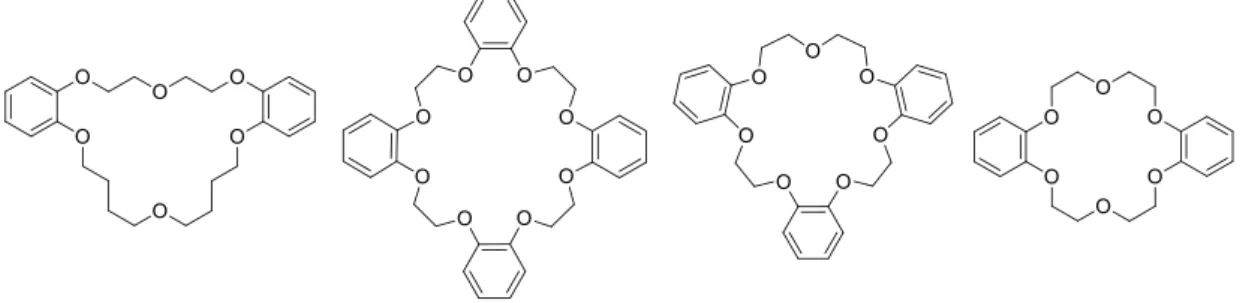
Figure 1.1 – Examples of macrocycles synthesised by Pedersen.5 ... 3
Figure 1.2– Tetraazaquaterene (a) and (b) cyclam. ... 5
Figure 1.3– Examples of azamacrocyclic compounds: a), b) cryptands, c) porphyrin, d) tetraazamacrocycle and e) macrocycle ligand with an NNN-pincer moiety 4,10,12,13 ... 5
Figure 1.4– Examples of cryptates.15,16 ... 5
Figure 1.5– Examples of porphyrin complexes. Adapted from ref.13 ... 6
Figure 1.6 – Clathochelate metal coordination. ... 6
Figure 1.7 – Structure of a pincer ligand. Adapt from ref.18 ... 6
Figure 1.8– NNN-pincer complexes synthesised by Holm and co-workers.12 ... 7
Figure 1.9 – CO2 fixation reactions of the NNN-pincer acyclic complexes synthesised by Holm and co-workers. Adapted from ref.29 ... 7
Figure 1.10– CO2 fixation reactions of the NNN-pincer macrocyclic complex synthesised by Holm and co-workers. Adapted from ref.28 ... 7
Figure 1.11– Structure of NNN-pincer macrocycles synthesised by Kristin research group. Adapted from ref.31 ... 8
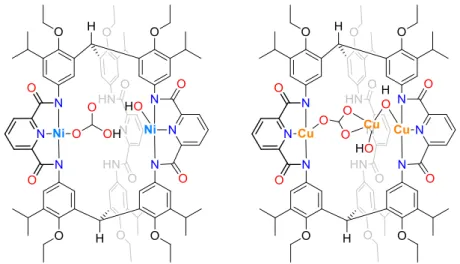
Figure 1.12 – Ni(II) (left) and Cu(II) (right) complexes synthesised by Murray research group.32 ... 8
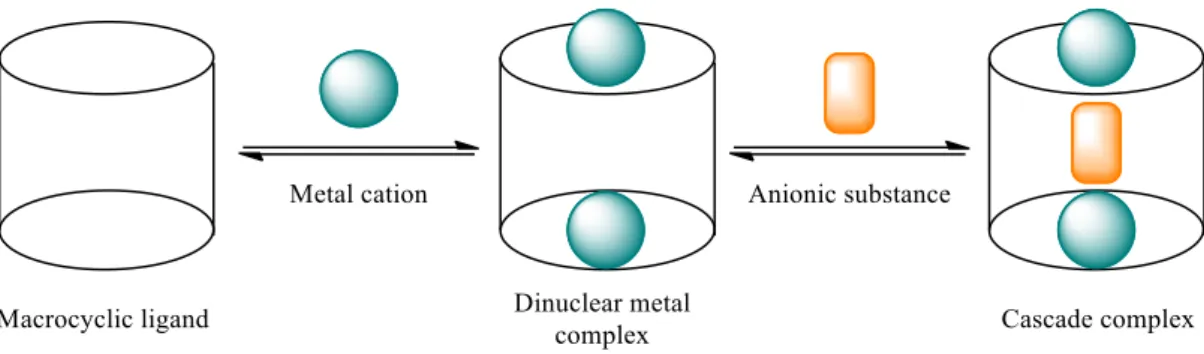
Figure 1.13 – Representation of Lehn’s strategy. Adapted from ref.34 ... 9
Figure 1.14 – Carbonate bridging modes in Jane Nelson’s octazacryptates.33... 9
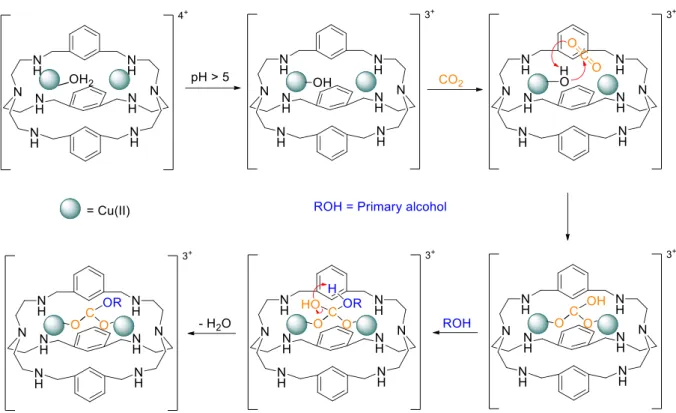
Figure 1.15 – Fixation and esterification of CO2, mechanism proposed for Cu(II) cryptate. Adapted from ref.35 ... 10
Figure 1.16– Examples of photosensitisers (PSs) used for CO2 photoreduction. ... 11
Figure 1.17– Sacrificial donors most used for CO2 photoreduction. ... 12
Figure 2.1 – Structure of Nelson’s cryptand L5 (a) and cryptand L6 (b). ... 16
Figure 2.2 – Comparison of 1H NMR spectra E (red) and L1 (blue). ... 20
Figure 2.3 – HMQC NMR spectrum of the L1, in CDCl3. ... 21
Figure 2.4 – L1 2D HMBC NMR spectrum, in CDCl3. ... 22
Figure 2.5 – 1H-NMR spectrum of ligand L2, in CDCl 3. ... 23
Figure 2.6 – FTIR spectra of the complexes C1 (red) and C2 (blue). ... 23
Figure 2.7 – FTIR spectra of the cryptand L6 (blue) and cryptate C4 (red). ... 24
Figure 3.1 – XPS spectra of CNT1-3 Si 2p, O 1s, N 1s, Ni 2p and Cu 2p regions. ... 29
Figure 4.1 – Complexes used on CO2 photoreduction studies. ... 33
Figure 4.2 – Illustrative figure of the inside of the set-up I (blue LED light, left) and set-up II (solar light simulator, right). ... 33
Figure 4.3 – 1H NMR spectra of the liquid phase when C4 used as catalyst after photoirradiation for 72 h. Before the addition of a drop of HCl in red, 10 min after the addition in green and 1 day after the addition in blue. ... 35 Figure 6.1 – 1H NMR spectrum of E, in CDCl 3. ... 45 Figure 6.2 – 1H NMR spectrum of L1, in CDCl 3. ... 46 Figure 6.3 – 1H NMR spectrum of L2, in CDCl 3. ... 47 Figure 6.4 – 1H NMR spectrum of L3, in CDCl 3. ... 47
Figure 6.5 – 1H NMR spectrum of L4, in MeOD... 48
Figure 6.6 – 1H NMR of [Ru(phen) 3(PF6)2], in DMSO. ... 51
Figure 8.1 – 13C-APT NMR spectrum of L1, in CDCl 3. ... 63
Figure 8.2 – COSY NMR spectrum of L1, in CDCl3... 63
Figure 8.3 – HMQC NMR spectrum of L1 in CDCl3. ... 64
xiv
Tables index
Table 1.1– Equations of CO2 reduction products. ... 10
Table 2.1 – Wavenumber of characteristic bands, 𝛎(cm-1), of the complexes C1-C4. ... 24
Table 3.1 – Ni and Cu amount detected in pristine and modified MWCNT by AAS. ... 28
Table 3.2 – Atomic percentage (%) determined by XPS for CNT3... 30
Table 4.1 – CO2 photoreduction results, for the set-up I, with 6 h experiments.* ... 34
Table 4.2 – CO2 photoreduction results, for set-up II, 72 h experiments.* ... 34
Table 4.3 – CO2 photoreduction result of methane. ... 35
Table 4.4 – Qualitative determination of formic acid in CO2 photoreduction experiments by 1H NMR. ... 35
Index of schemes
Scheme 1.1– Possible pathway leading to cyclic and acyclic products in the synthesis of [18]crown-6. Adapted from ref.10 ... 4Scheme 1.2 – High-dilution synthesis of diaza[18]crown-6. Adapted from ref.10 ... 4
Scheme 1.3 – (a) Reductive and (b) oxidative quenching. Scheme adapted from literature. Adapted from ref.40 ... 11
Scheme 1.4 – Covalent immobilisation of an Fe(III) porphyrin catalyst onto MWCNT. Adapted from ref.41 ... 12
Scheme 2.1 – Synthetic pathway to obtain precursor E. ... 15
Scheme 2.2 – Synthesis of the product of [2+1] condensation, L1. ... 15
Scheme 2.3 – Synthesis of the macrocycle L2. ... 16
Scheme 2.4 – Synthetic pathway to obtain cryptands L3 and L4. ... 16
Scheme 2.5 – Synthesis of complex C1. ... 17
Scheme 2.6 – Synthetic pathway of C2 complexation. ... 17
Scheme 2.7 – Synthesis of the cryptate C3. ... 17
Scheme 2.8 – Synthesis of the cryptate C4. ... 18
Scheme 2.9 – Synthesis of the cryptate C5. ... 18
Scheme 2.10 – Synthesis of the cryptate C6. ... 18
Scheme 2.11 – Synthesis of the cryptate C7. ... 19
Scheme 2.12 – Synthesis of the cryptate C8. ... 19
AAS atomic absorption
Asc ascorbic acid
BIH 1,3-dimethyl-2-phenyl-2,3-dihydro-1H-benzo[d]imidazole
bipy 2,2’ – bipyridine
BNH 1-benzyl-1,4-dihydronicotinamide
Boc tert-butyloxycarbonyl
C.A.C.T.I. Centro de Apoyo Científico y Tecnológico a la Investigación
CAT catalyst
cm-1 wavenumber units
COSY Correlation Spectroscopy
DCM dichloromethane
DFT density functional theory
DMF dimethylformamide
DPA 2,6-Pyridinecarboxylic acid
EA Elemental Analysis
eq equivalent
ESI-MS Electrospray Ionisation Mass Spectroscopy
FTIR Fourier-Transform Infrared Spectroscopy
GC-TCD Gas Chromatography Thermal Conductivity Detector
h-1 per hour
HMBC Heteronuclear Multiple Bond Connectivity
HMQC Heteronuclear Multiple Quantum Coherence
h hour
LED light-emitting diode
MWCN multi-walled carbon nanotubes
NMP N-2-methyl pyrrolidone
NMR nuclear magnetic resonance
phen 1,10-phenantroline
ppm units of NMR chemical shift
ppy phenylpyridine PS photosensitiser r.t room temperature SD sacrificial donor TEA triethylamine TEOA triethanolamine TMEDA tetramethylethylenediamine
TOF turnover number
TON turnover frequency
xvii
TREN tris(2-aminoethyl)-amine
TREN tris(2-aminoethyl)amine
V volt
W watt
XPS X-ray photoelectron spectroscopy
δ chemical shift
δx-x bending vibration of function group X-X
λ wavelength
υ stretching vibration
Chapter 1
3
a sustainable and reversible conversion of energy into chemicals and can operate under homogeneous or heterogeneous media.2
There is a huge concentration of efforts to find new catalysts bearing non-noble metal ions due to their abundance and low-cost. A problem that arises from the use of non-noble metals catalysts is their common low reactivity when compared to the noble-metals catalysts. Metal ions and compounds including macrocyclic complexes have a crucial role in photochemical activation and conversion of small molecules when acting as catalysts.2
This thesis will focus on the activation and conversion of carbon dioxide, which is considered a greenhouse gas and its concentration has been continuously increasing in the atmosphere with dramatic consequences for earth’s delicate synergies. In this line of action, both new earth abundant metal catalysts and other known catalysts were studied for their ability to photoreduce CO2.
1.2 Macrocycles
A macrocycle compound can be described as a cyclic compound with nine or more atoms (including all heteroatoms) and with at least three donor atoms.3 The macrocycles are important and powerful
ligands due to two main reasons: i) they have the capacity to thermodynamically and kinetically stabilise metal complexes and ii) they can mimic important biological systems found in nature, like the porphyrin unit of many metalloproteins.4
In 1967 Pedersen5 reported for the first time the synthesis of thirty three cyclic polyethers
macrocyclic ligands. In Figure 1.1 is some examples of the cyclic polyethers synthesised, some of them formed stable complexes with several cations such as Li+, Na+, K+, Ag(I), Au(I), Hg(I), Hg(II), Tl(I),
Ce(III), Pb(II) and others.
Figure 1.1 – Examples of macrocycles synthesised by Pedersen.5
Important conclusions concerning the conditions for the formation and the factors influencing the stability of these polyether complexes were discovered. These include the relative size of the ion and the size of the cavity in the polyether ring, the tendency of the ion to interact with the solvent molecules, the electrical charge on the ion, the number of oxygen atoms in the polyether ring, among others. In that time, another significant result was the understanding that a stable complex is not formed if the ion is too large to fit in the cavity of the polyether ring.5
4
Afterwards, many other macrocyclic ligands have been synthesised and their properties investigated.6–9 An interesting aspect of these ligands is their ability to coordinate different metal ions,
therefore giving rise to different applications which resulted in increasing their attention along the years. Most importantly, the size of the metal ion and the macrocycle cavity that are crucial for the designing of macrocyclic metal complexes.5
The macrocyclic ligands can be synthesised by two different methods: 1) The metal-ion-template or 2) in high dilution organic chemistry pathway. In Scheme 1.1 is depicted the synthesis of a crown ether using the template method. The synthesis can lead to a polymeric side-product instead of forming the desired crown ether. This difference is related to the ability of K+ to organise the reactants to give a
proper intermediate that is pre-organised to form the crown ether. The NEt3 base is not as efficient to
form this intermediate as KOH and the reaction takes an intermolecular instead of intramolecular pathway. If we wish to induce the formation of a host that is selective for a specific compound, we have to use an ion with similar size as that of the final compound.10 When a suitable template is not formed,
the synthesis of macrocyclic ligands are much more difficult and high-dilution conditions must be employed. In diluted solutions the formation of the cyclic product by intramolecular reactions is more likely to occur (Scheme 1.2).10
Scheme 1.1– Possible pathway leading to cyclic and acyclic products in the synthesis of [18]crown-6. Adapted from ref.10
Scheme 1.2 – High-dilution synthesis of diaza[18]crown-6. Adapted from ref.10
Macrocyclic ligands comprising heteroatoms are important due to increasing their diversity towards different species (cations, anions and neutral molecules). Azamacrocycles contain nitrogen atoms in their structure. Usually these types of ligands are more available for compounds that do not form stable complexes with macrocycles containing oxygen atoms.
The first macrocycle containing amine groups was the tetraazaquaterene, synthesised by Baeyer in 1886 (Figure 1.2(a)). Years later, Alphen reported a new type of cyclic amines: the cyclams (Figure 1.2(b)).11
5
Figure 1.2– Tetraazaquaterene (a) and (b) cyclam.
Throughout the years different azamacrocycles were synthesised. In Figure 1.3 are depicted some examples of azamacrocycles synthesised by several authors.
Figure 1.3– Examples of azamacrocyclic compounds: a), b) cryptands, c) porphyrin,
d) tetraazamacrocycle and e) macrocycle ligand with an NNN-pincer moiety 4,10,12,13
Jean-Marie Lehn, Nobel prize winner in chemistry, introduced in 1969 a new class of macrocycles, the cryptands14 (Figure 1.3(a), (b)). According to IUPAC nomenclature, cryptands are molecular
entities containing cyclic or polycyclic assemblies of three or more binding sites held together by covalent bonds. These structures comprise a molecular cavity that allows the encapsulation of other molecules (guest), including cations, anions or neutral species. When a cryptand coordinates one or several metal cations a cryptate is formed.
After these first reports, a huge diversity of cryptands with different modifications such as multiple bridges have been synthesised, e.g. “soccer ball cryptand” (Figure 1.3(b)).10 Cryptates have also been
synthesised and two examples can be visualised in Figure 1.4.
Figure 1.4– Examples of cryptates.15,16
Another type of very well-known azamacrocycles are porphyrins Figure 1.3(c). This type of ligands have been extensively studied due to their ability to coordinate metal ions yielding complexes with interesting and relevant properties (e.g. heme, chlorophyll and phthalocyanine blue).13 (Figure 1.5).
6
Figure 1.5– Examples of porphyrin complexes. Adapted from ref.13
An example of a macrobicyclic ligand may be viewed as a tetraazamacrocycle spanned by a bis-donor bridge connected to carbon bridgehead atoms as shown in Figure 1.3(d). The metal coordination is represented in Figure 1.6.
Figure 1.6 – Clathochelate metal coordination.
Finally, in Figure 1.3(e) a macrocycle ligand with an NNN-pincer moiety is represented. Pincer ligands gained attention in 1976 when Shaw and co-workers first synthesised this type of compounds.17
The structure of pincer type complexes is based on a metallic centre and a pincer type ligand that comprises donor atoms (D in Figure 1.7) in its structure that are able to coordinate to a metal ion in a tridentate fashion. The name changes according to donor atoms present, for example compounds having phosphorus in their structure are called PCP pincer complexes.18 Therefore several pincer ligands such
as CCC19,20, NCN21,22, PCN23,24, OCO25, SPS26, etc. have been synthesised and studied in different
catalytic applications.
Figure 1.7 – Structure of a pincer ligand. Adapt from ref.18
The Ni-Fe-S enzyme, carbon monoxide dehydrogenase has in its catalytic site (C-cluster) Ni(II)…(HO)-Fe(II) bridge moiety that catalyses the CO + H2O ⇌ CO2 + 2H+ + 2e- reaction. Holm and
co-workers12 saw this as an opportunity to produce a new set of macrocycles and complexes with a
proximal Ni…Cu bridge formation and a pincer binding site. Moreover, changing the aromatic or aliphatic substituents can lead to variable and/or improved properties of the complexes. Two examples of the complexes synthesised can be observed in Figure 1.8.
7
Figure 1.8– NNN-pincer complexes synthesised by Holm and co-workers.12
1.3 Encapsulation of CO
2As previously stated, Holm and co-workers synthesised and studied NNN-pincer acyclic and macrocyclic Ni(II) complexes.27,28 In 2011, they synthesised eleven NNN-pincer Ni(II) complexes with
different substituents such as, Me, Et, Pri, among others (Figure 1.9). Additionally, two macrocyclic
Ni(II) complexes with NNN-pincer moieties were synthesised (Figure 1.10). They found that these complexes react easily and completely with carbon dioxide in DMF solution in a process of CO2 fixation
yielding bicarbonate complexes. The structure of seven complexes, four with -OH and three with -CO3H
were obtained by X-ray diffraction. The reaction mechanism was also proposed based on DFT methods for the R=Pri system. Kinetic studies were performed in the same year29 and thermodynamic studies
were deeply investigated.30 These studies were performed to understand the reaction mechanism.
Figure 1.9 – CO2 fixation reactions of the NNN-pincer acyclic complexes synthesised by Holm and co-workers. Adapted
from ref.29
Figure 1.10– CO2 fixation reactions of the NNN-pincer macrocyclic complex synthesised by Holm and co-workers. Adapted
8
In 2014, Bowman-James and co-workers31 reported a bis(carboxamide) ligand that is able to capture
atmospheric CO2 (confirmed by ESI-MS) and stabilise it in the macrocyclic cavity as a carbamate (N
-CO2) (Figure 1.11).
Figure 1.11– Structure of NNN-pincer macrocycles synthesised by Kristin research group. Adapted from ref.31
Murray and co-workers32 synthesised one ligand with three NNN-pincer moieties. This ligand was
used to synthesise two complexes, one of Ni(II) and a second of Cu(II) (Figure 1.12). The Ni(II) complex shows two metallic centres instead of the expected three metallic centres coordinated to the three pincer moieties. This complex shows a bicarbonate molecule coordinated to one Ni(II) centre and a hydroxide bound to the other Ni(II) centre. This is the only example where both terminal Ni−OH and Ni−OCO2H coexist in the same complex. The authors investigated the CO2 release and realise that the
bicarbonate cannot be released as CO2 either thermally or upon sparging with N2. Similarly to the Ni(II)
complex, the Cu(II) compound (Figure 1.12) shows two metallic centres coordinated to only two NNN-pincer moieties. This third metal centre helps to stabilise a carbonate molecule and two hydroxides that are coordinated to the metal centres. They concluded that the carbonate or bicarbonate was captured from atmospheric CO2.
Figure 1.12 – Ni(II) (left) and Cu(II) (right) complexes synthesised by Murray research group.32
Nelson and co-workers33 synthesised octazacryptates capable of coordinate two metal centres such
as Ni(II), Cu(II), Co(II) and Zn(II), which are based in cascade complexation. This type of complexation was introduced in the literature by Lehn and was denoted as Lehn’s strategy (Figure 1.13) and consists on the anions bridging which allows the coordination of two metal centres.34
9
Figure 1.13 – Representation of Lehn’s strategy. Adapted from ref.34
Additionally, Nelson and co-workers, found that these structures can convert atmospheric CO2 into
carbonates. The encapsulation of CO2 can occur in different bridging modes. In Figure 1.14 are the
bridging modes discovered through X-ray crystallography.
Figure 1.14 – Carbonate bridging modes in Jane Nelson’s octazacryptates.33
The bridging mode depends on the metal ion used and for Cu(II) and Ni(II) complexes a coordination mode anti-anti η1,η1 is observed Figure 1.14(A). For the Zn(II) cryptate a syn-anti µ-η1,η1 bridge mode
B and for the Co(II) complexes D and E bridging modes were observed. The C mode was only observed
for other anions than carbonate or bicarbonate are found between the metal centres.
Nelson’s group also concluded that when methanolic solutions were used, methylcarbonate instead of carbonate was obtained. Later, Lu and co-workers35 studied in more detail the Cu(II) cryptate with
several primary alcohols in the reaction media including methanol, ethanol, propanol, butanol and 1,2-ethanediol. This study produced a mechanism of carbonate monoesters formation (Figure 1.15). First, the coordinated H2O molecule loses a proton and the [Cu2(OH)L]3+ species are obtained. Then, the CO2
carbon atom suffers a nucleophilic attack by OH- and forms the [Cu
2L(µ-O2COH-)]3+ bridged cryptate.
Finally, the primary alcohol attacks the carbon of the bicarbonate and the carbonate monoester is formed by water molecule elimination.
10
Figure 1.15 – Fixation and esterification of CO2, mechanism proposed for Cu(II) cryptate. Adapted from ref.35
1.4 Photochemical reduction of CO
2Recently, the increase of carbon dioxide concentration in the atmosphere has reached a point that results in severe climatic changes due to the greenhouse effect. The scientific community saw in this problem an opportunity to deeply study the chemistry of CO2 conversion. Thus, artificial photosynthesis
methods have been investigated to try to solve the pollution problems and the energy crisis. Artificial photosynthesis is a process capable of reproduce the photosynthesis phenomenon that consist in the production of energy from sunlight.
The reduction of CO2 can produce multiple added value products such as CO, formic acid, methane,
methanol and oxalate, being an attractive way to regenerate renewable fuels and reduce the amount of carbon dioxide in the atmosphere.36–38 The equations with the products resulting from CO
2 reduction are
in Table 1.1.
Table 1.1– Equations of CO2 reduction products.
Reactions E0’ (V) vs SCEa CO2 + 2H+ + 2e- → HCO2H -0.85 CO2 + 2H+ + 2e- → CO + H2O -0.77 CO2 + 8H+ + 8e- → CH4 + 2H2O -0.48 CO2 + 4H+ + 4e- → HCOH + H2O -0.72 CO2 + 6H+ + 6e- → CH3OH + H2O -0.62
a E0’ potentials are reported at pH 7.
Artificial photosynthesis can be performed in heterogeneous or homogeneous media and the work described in this thesis is only devoted to the latter. The photocatalysis reactions can be divided in two types: 1) In type I two different molecules, a photosensitiser (PS, Figure 1.16), and a transition metal catalyst (CAT) work together, 2) In type II one molecule acts at same time as both PS and CAT.39 Both
11
(Scheme 1.3(a) step 2). Finally, as PS is a stronger reductant than PS and PS*, the electron can be donated to the CAT and the original PS state is regenerated and the catalytic cycle restarts (Scheme
1.3(a) step 3). On the other hand in the oxidative quenching (Scheme 1.3(b)), the PS* will react first
with the CAT that directly accepts an electron from PS* (Scheme 1.3(b) step 2) originating PS+ and
CAT•-. This PS+ species will return to its original state due to one-electron transfer from SD (Scheme
1.3(b) step 3).39,40
Scheme 1.3 – (a) Reductive and (b) oxidative quenching. Scheme adapted from literature. Adapted from ref.40
Figure 1.16– Examples of photosensitisers (PSs) used for CO2 photoreduction.
Frequently, different sets of PS/SD (Figure 1.16 and Figure 1.17) are used to ensure that the electron transfer occurs. [Ru(phen)3]2+ isfrequently used with triethanolamine (TEOA) as SD. Derivatives, such
as [Ru(bipy)3)]2+ are usedwith ascorbic acid (Asc), TEOA and
1,3-dimethyl-2-phenyl-2,3-dihydro-1H-benzo[d]iidazole (BIH) as SD. The photosensitisers [Ir(ppy)3]2+, phenazine, 9-anthracenecarbonitrile
(9CNA) and Zn-TPP are commonly used with triethylamine (TEA) as SD. The PS terphenyl can perform with TEA, TEOA and 1-benzyl-1,4-dihydronicotinamide (BNAH).
12
Figure 1.17– Sacrificial donors most used for CO2 photoreduction.
As metal complexes have been used as highly selective catalysts for CO2 photoreduction, strategies
to immobilise them on materials have been applied. Modification of carbon nanotubes has been developed by scientists to attach non- and covalently metal complexes. This immobilisation allows the possibility of carrying out heterogeneous photocatalytic reactions, the advantage compared to homogeneous catalysis being a simple procedure for product/catalyst separation. Robert and co-workers41 reported a MWCNT modification through the diazonium salt of paraphenylmethyl amine
protected by tert-butyloxycarbonyl (Boc) (Scheme 1.4). The diazonium salt was chemically reduced releasing N2 as a covalent bond between the aryl group and the MWCNT is formed. After, the amine
function was deprotected to yield primary amine groups onto the surface that allows covalent attachment of the Fe(III) porphyrin catalyst (Scheme 1.4). The authors performed covalent grafting of the Fe(III) porphyrin catalyst onto MWCNT leading to an efficient electroreduction of CO2 into CO in water with
high selectivity.41
Chapter 2
15
2.5 and Scheme 2.6).
Two new octaazacryptates were also synthesised with Ni(II) (C3 in Scheme 2.7) and Co(II) (C4 in
Scheme 2.8) ions, bearing a C≡H substituent on the aromatic ring of the octaazacryptands. However, the C≡H cryptand (L6) was previously synthesised by Sara Realista during her PhD thesis.42 Finally,
octaazacryptands previously reported by our group having a bromine substituent in the aromatic rings (L3 and L4) and their Ni(II) and Co(II) cryptates (C5 and C6) are synthesised and characterised.
The characterisation of the compounds was performed by nuclear magnetic resonance (NMR) spectroscopy, Fourier-transform infrared spectroscopy (FTIR) and elemental analysis (EA) and will be further discussed in detail.
2.1 Ligands synthesis
2.1.1 Pincer-like compounds
The precursor used for the synthesis of L1 was dimethyl 2,6-pyridine dicarboxylate E, an ester obtained by esterification of 2,6-pyridinedicarboxylic acid (DPA) (Scheme 2.1), using a procedure from literature.43
Rybak-Akimova et al.44 synthesised a macrocycle as result of a [2+2] cyclisation between
2,6-pyridine dicarboxylic acid ester and 1,4,7,10-tetraazadecane. To assure that the by-product [1+1] macrocycle was not obtained, the authors first isolated the [2+1] product (similar to Scheme 2.2) and only afterwards reacted it with 1 equivalent of the desired amine. An analogous procedure was performed to obtain ligand L2. (similar to Scheme 2.3).
Scheme 2.1 – Synthetic pathway to obtain precursor E.
One equivalent of the ester compound was added to 0.27 equivalents of the amine to obtain the [2+1] compound, L1, the pincer-like open chain ligand (Scheme 2.2). The compound was isolated and purified before using it in the following reaction.
16
The condensation to obtain L2 was accomplished by the addition of 1 equivalent of the appropriate amine, 1,4-bis(3-aminopropyl)piperazine, to L1 (Scheme 2.3).
Scheme 2.3 – Synthesis of the macrocycle L2.
2.1.2 Cryptands
The reaction between an aldehyde (or a ketone) and an amine gives an hemiaminal. Hemiaminals of primary amine lose water to form a carbon-nitrogen double bond, an imine function (Schiff Base).45
Reaction of three equivalents of an aldehyde with two equivalents of tris(2-aminoethyl)-amine (TREN) originates a cryptand (L3 in Scheme 2.4).16 The synthesis of L4 (Scheme 2.4), a cryptand with amine
functions, was possible by the reduction Schiff Base, with a specific reducing agent, NaBH3CN.
Jane Nelson et. al.33 synthesised similar compounds but without any type of substituent (L5 in Figure
2.1(a)). To understand the influence of the substituents in the aromatic ring two different groups were
introduced. The first one included an electron withdrawing group, bromide as substituent in the aromatic ring (L3 and L4 Scheme 2.4), the second one is composed by an electron-donating substituent (C≡CH) (L6 in Figure 2.1(b)).
Scheme 2.4 – Synthetic pathway to obtain cryptands L3 and L4.
In Figure 2.1 the structure of the know cryptands L5 and L6 used to synthesise the cryptates (C3,
C4, C7 and C8 Section 2.2.2 Cryptates) and for CO2 photoreduction studies is shown (Chapter 4).
17
Scheme 2.5 – Synthesis of complex C1.
Scheme 2.6 – Synthetic pathway of C2 complexation.
2.2.2 Cryptates
A cryptate can be formed by the addition of a metal salt to a cryptand. The metals are coordinated inside the cage (Scheme 2.7). The synthesis of the complexes C3-C6 are represented in Scheme
2.7-Scheme 2.10.
18
Scheme 2.8 – Synthesis of the cryptate C4.
Scheme 2.9 – Synthesis of the cryptate C5.
19
Scheme 2.11 – Synthesis of the cryptate C7.
20
2.3 Compounds characterisation
The characterisation of the different compounds was accomplished using several techniques such as EA, FTIR and NMR: 1H, COSY, 13C-APT, HMQC and HMBC. The ligands L1 and L2 were analysed
by NMR, the L2 cannot be compared to the respective complexes C1 and C2, by FTIR, because this ligand is extremely hygroscopic and the KBr pallet were not successfully obtained and the data collected. The four complexes C1-C4 of Ni(II) and Co(II) were not analysed by NMR as they are paramagnetic compounds and the NMR technique is more suitable for diamagnetic compounds. They were analysed by FTIR.
Elemental analysis for percentage of nitrogen, carbon and hydrogen atoms was performed at C.A.C.T.I. at the University of Vigo. The values obtained were adjusted with solvent molecules and the differences between the calculate and experimental values were ±0.4% (see Chapter 6-Experimental). Furthermore, high-resolution mass spectrometry will be performed for a more complete characterisation of the complexes.
2.3.1 Nuclear magnetic resonance (NMR)
2.3.1.1 Characterisation of ligand L1
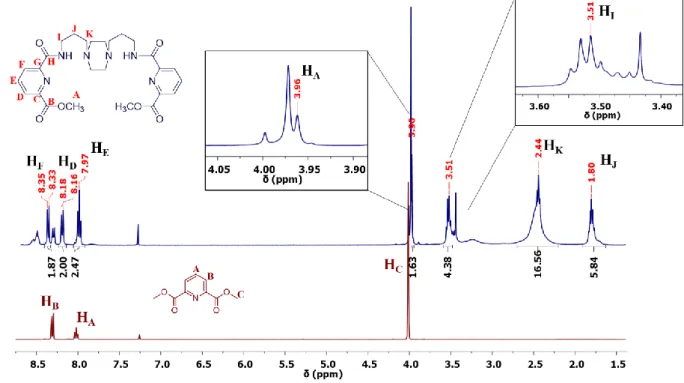
This characterisation technique was used to identify L1 and L2. Figure 2.2 allows comparison of the 1H NMR spectra between E (red) and L1 (blue). Here, it is possible to see a small shift of the protons
signals that could indicate that the reaction occurred. Another feature is the appearance of new protons signals in the aliphatic group's region present between amine functions (HI, HK and HJ). Additionally,
in the aromatic protons region, appears a doublet signal (HD) confirms that the molecule is asymmetric.
Figure 2.2 – Comparison of 1H NMR spectra E (red) and L1 (blue).
In Figure 2.2, it is possible to observe the peaks corresponding to the proton signals of L1. Although the spectrum shows some impurities, these did not interfere with the next step of the synthesis. The signals with the chemical shift (δ/ppm) 8.34 (HF), 8.17 (HD) and 7.97 (HE) in the aromatic proton signals
21
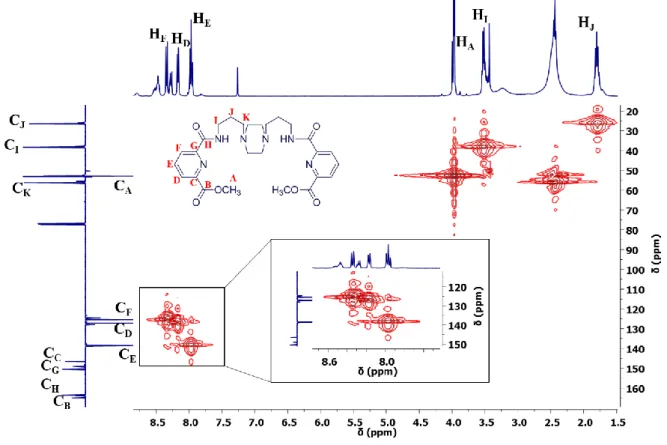
The analysis of the C-APT NMR (Figure 8.1 in Chapter 8 – Annexes) with the 2D HMQC NMR (Figure 2.3) spectra for L1 allowed to match the protons with their respective carbon signal.
The carbon signals attributed have the chemical shift (δ/ppm) 164.97 (CB), 163.54 (CH), 150.52
(CG), 146.48 (CC), 138.45 (CE), 127.14 (CD), 125.46 (CF), 56.29 (CK), 52.89 (CA), 38.34 (CI), 26.42
(CJ).
Figure 2.3 – HMQC NMR spectrum of the L1, in CDCl3.
The L1 2D HMBC NMR spectrum (Figure 2.4) was crucial for the identification of all proton/carbon signals of the molecule. Considering that (HA) proton signal at 3.96 ppm have just one correlation to a
quaternary carbon signal at 164.97 ppm, it is possible to confirm that the latter signal is from CB. This is
confirmed as this carbon (CB) has correlations with the protons signals at 8.17 ppm (HD) and 7.97 ppm
(HE). Then, three quaternary carbons remain unidentified and among these three the only quaternary
carbon which has a correlation with an aliphatic proton signal (HI at 3.51 ppm) is CH at 163.54 ppm.
Additionally, CH has also a correlation with proton signal HF at 8.34 ppm, corroborating the carbon
assignment. The remaining two quaternary carbons are CG at 150.52 ppm and CC at 146.48 ppm. These
are assigned by exclusion, as CG just show one correlation with the proton HE and the CC carbon have
a correlation with the HD and HE.
In the aliphatic region, HMBC NMR spectrum (Figure 2.4) permitted to understand that the proton at 3.51 ppm has a correlation with the carbons signals at 26.42 ppm (CJ) and 56.29 ppm (CK) and as
22
at 2.44 ppm, HK, have a correlation with the carbon signals CJ and CI at 38.34 ppm. Finally, the proton
signal at 1.80 ppm HJ has a correlation to both CI and CK.
Figure 2.4 – L1 2D HMBC NMR spectrum, in CDCl3.
The protons HI, HK, HJ were attributed by HMBC NMR and the 2D COSY NMR spectrum (Figure
8.2 in Chapter 8 – Annexes) was useful to confirm the assignment of these protons because allowed
visualising that the proton signal at 1.80 ppm (HJ) couples with the proton signal HI and HK.
2.3.1.2 Characterisation of L2
In Figure 2.5 is the 1H NMR spectrum of L2 and all spectra were analysed analogously as for L1
(Figure 8.5-Figure 8.8 in Chapter 8 – Annexes). The 1H NMR spectrum shows some impurities that
could explain that the integration of the aliphatic proton signals was different from the expected. The analysis of the aromatic protons signal region shows that the pyridine ring is symmetrical as there are just two proton signals at 8.28 and 7.99 ppm with an integration of 4:2, suggesting the macrocycle formation. In the aliphatic proton region, the proton with a chemical shift of 3.09 ppm is the proton signal of the NH function (this signal does not have a corresponding carbon signal, see Figure 8.7 in
23
Figure 2.5 – 1H-NMR spectrum of ligand L2, in CDCl 3.
2.3.1 Fourier-transform infrared spectroscopy (FTIR)
The FTIR spectra of the complexes C1 and C2 is exhibited in Figure 2.6, the more relevant vibrational bands are shown in Table 2.1. According to literature46 the secondary amides in solid state
display a band in the region of 1570-1515 cm-1, as result of the N–H group bending (δ
N–H). In both
spectra there is a δN–H bending at 1541 cm-1. In the literature47, the C=O stretching (υC=O) vibration mode
for amides appears below 1700 cm-1 and does not reach 1600 cm-1. The complexes C1 and C2 show this
band at 1632 and 1664 cm-1 respectively. The counter anion (perchlorate) vibrational modes appear at
1088 and 624 cm-1 for both complexes.
24
Table 2.1 – Wavenumber of characteristic bands, 𝛎̅(cm-1), of the complexes C1-C4.
Wavenumber (cm-1)
Complexes CH2 N-H C=O (amide) δN-H CO3H ClO4
-C1 2945 2879 2833 3365 1632 1541 - 1088 625 C2 2951 2827 3371 1664 1541 - 1088 625 C3 2917 2877 3273 - - 1672 1090 625 C4 2924 2876 3267 - - 1635 1090 625
The spectra of L6 and C4 are depicted in Figure 2.7 (C3 can be seen in Figure 8.9 in Chapter 8 –
Annexes). According to literature16 two peaks corresponding to the vibrational modes of the counter
anion perchlorate emerge at values between 1018-1122 cm-1 and 621-626 cm-1. For both complexes, the
values observed were 1089 and 624 cm-1. The band corresponding to HCO
3- vibrational mode could be
found at 1672 cm-1 for C3 and at 1635 cm-1 for C4.
Chapter 3
27
diazonium salt, the 4-[(trimethylsilyl)ethynyl]benzene diazonium tetrafluoroborate. It was prepared in two steps, based on a procedure from literature.48,49 In Scheme 3.1 are represented the reactions
performed for C3 immobilisation on MWCNT. The first step of the modification was the graffitiing of 4-[(trimethylsilyl)ethynyl]benzene on MWCNT surface (CNT1). After, the deprotection of the triple bond by removing the trimethylsilyl group using tetrabuthylammonium fluoride was accomplished (CNT2). The complex attachment is done by Glaser coupling between two triple bonds present on both the complex and CNT2 (CNT3, Scheme 3.1).50
28
3.1 Characterisation of the modified MWCNT
The pristine MWCNT and the new modified MWCNT (CNT1, CNT2 and CNT3) were characterised by atomic absorption spectroscopy (AAS) and X-ray photoelectron spectroscopy (XPS). The AAS studies were performed by Dr. Ana Mourato from Faculdade de Ciências da Universidade de Lisboa and XPS analysis by Professor Ana Maria Rego from Instituto Superior Técnico da Universidade de Lisboa.
3.1.1 Atomic absorption spectroscopy (AAS)
Preliminaries qualitative studies of atomic absorption spectroscopy were performed to understand if the immobilisation occurred. The characterisation of the pristine and modified MWCNT by AAS was performed for two different analytes: copper and nickel (Table 3.1). The samples were prepared on different days which results on different calibration curves for each sample interfering in the results obtained. Although mg/kg values were determined, these results are mostly qualitative as to have a quantitative analysis more than one repetition is necessary. Therefore, only the qualitative analysis of analyte variation with MWCNT modification steps will be discussed.
Table 3.1 – Ni and Cu amount detected in pristine and modified MWCNT by AAS. Analyte amount (mg/kg) Entry Samples Cu Ni 1 CNT 36 708 2 CNT1 0 263 3 CNT2 260 327 4 CNT3 54735 2756
Entry 1 represents the analytes detected on MWCNT (CNT in Scheme 3.1). The non-existence of
copper in Entry 2 is not in agreement with the remaining results what could indicate an outlier as the MWCNT already have copper in their composition. The results from Entry 3 to Entry 4 show an increase of the amount of copper that can be explained by the CNT3 synthesis procedure that uses copper chloride as catalyst. As expected the amount of nickel increases considerably in Entry 4, suggesting the immobilisation of the Ni(II) cryptate (C3) on the MWCNT.
3.1.2 X-ray photoelectron spectroscopy (XPS)
The XPS characterisation was accomplished for Si 2p, O 1s, N 1s, Ni 2p and Cu 2p regions in
CNT1-3. The spectra are shown in Figure CNT1-3.1, indicates that the cryptate C3 was immobilised on MWCNT.
The C 1s region analysis was not included in the XPS discussion since in this system, carbon results are not very informative.
In the spectrum for CNT1, a feature at 102 eV corresponding to the Si 2p region (Figure 3.1(a)) is observed, which is consistent with the presence of the trimethylsilyl group. It is possible to fit two peaks corresponding to Si 2p3/2 and Si 2p1/2 at 102.2 and 101.8 eV, respectively.51 This signal is not observed
in the CNT2 spectrum as this material is obtained from the triple bond deprotection reaction on CNT1 that removes the silyl group. As expected, CNT3 does not have any feature in that region. Another important region is the O 1s region at 532 eV (Figure 3.1(b)) where a signal is observed for all three samples, however with higher intensity for CNT3. Additionally, for CNT3 two peaks could be fitted at 532.5 eV, corresponding to the oxygens from the carbonate, CO3 and at 534.9 eV possibly corresponding
29
corresponds to Cu 2p3/2 and the existence of multiplet peaks in the spectra suggest that the copper present
in the samples is Cu(II).56 As shown by AAS, the quantity of Cu(II) in the sample is higher than the
Ni(II) one.
30
This characterisation technique was also used to determine the atomic percentages of the elements on CNT3 (Table 3.2). The ratio N/Ni should be 4 (8/2), however the ratio obtained was 6.01 and this can be explained as the nickel(II) signal is low and the associated error in the area estimation can interfere on this result.
Table 3.2 – Atomic percentage (%) determined by XPS for CNT3.
Atomic % Ratio N/Ni
N 1s 24.01
6.01
O 1s 55.13
Ni 2p 4.00
Chapter 4
33
Figure 4.1 – Complexes used on CO2 photoreduction studies.
Set-up I was composed by a box with a magnetic stirrer, an support for the reactor, three blue LED
lights sources (λ= 492-455 nm) and the experiments were carried out for 6 h (Figure 4.2 on the left). On the other hand, the set-up II with a solar light simulator (λ= 400-750 nm Figure 8.10 in Chapter 8
– Annexes) an experiment time of 72 h (Figure 4.2 on the right). The difference on the experiment
time between both set-ups is related with the energetic power of both lights. Different PS/SD systems were also investigated such as purpurin/triethylamine (TEA), 9-antracenecarbonitrile/TEA, purpurin/BIH, [Ru(phen)3]2(PF6)2/BIH/TEOA, however the results did not reveal any gaseous CO2
reduction product.
Figure 4.2 – Illustrative figure of the inside of the set-up I (blue LED light, left) and set-up II (solar light simulator, right). The CO2 photoreduction ability of the different catalysts used was explored and compared. To
analyse the headspace gases produced a GC-TCD was used (for details see Chapter 6 – Experimental) and the liquid phase was first analysed by ionic chromatography without success. For a qualitative evaluation of the presence of liquid CO2 reduction products, a 1H NMR method based on literature57
was also performed.
All the experiments were performed with 2 µM of catalyst. The experiments should have been carried out at least 3 times each but due to lack of time that was not possible. The results obtained for the
set-up I are shown in Table 4.1 and for set-set-up II in Table 4.2. TON and TOF values were higher for C6
and C2 complexes and lowest values were obtained for C1. All cobalt complexes in this set-up, showed better results for TONCO, TOFCO and ΦCO (equation (1)) when compared to the nickel complexes. The
34
selectivity for CO was higher for C3 (97%) and the lowest result was produced by C1 (84%). In general, all complexes showed good values of selectivity (≥84) for this set-up.
ΦCO =
𝑚𝑜𝑙𝑒𝑠 𝑜𝑓 𝑝𝑟𝑜𝑑𝑢𝑐𝑡𝑠 × 6.022×1023 × 2
𝑖𝑛𝑐𝑖𝑑𝑒𝑛𝑡 𝑛𝑢𝑚𝑏𝑒𝑟 𝑜𝑓 𝑝ℎ𝑜𝑡𝑜𝑛𝑠 × 100% (1)
Table 4.1 – CO2 photoreduction results, for the set-up I, with 6 h experiments.*
Catalyst nCO nH2 COselect. TONCO TOFCO ΦCO (2 µM) (µmol) (µmol) (%) (h-1) (%) C1 1.28 0.07 95 128 21 0.183 C2 11.4 1.26 90 1138 190 1.631 C3 3.18 0.10 97 318 53 0.455 C4 7.27 1.06 87 727 121 1.042 C5 2.80 1.08 96 280 47 0.402 C6 13.36 1.75 88 1336 223 1.915 C7 1.71 0.136 93 170 28 0.244 C8 3.47 0.68 84 347 58 0.497 Without cat. 0 0 0 0 0 0
*Reaction conditions: 4 mL CH3CN: 1 mL H2O, Ru(phen)3(PF6)2 (0.4 mM), TEOA (0.3 M),
LED light (Dimmable Blue LED Spot Light Bulb, 15 W), 6 h experiments, 3.89 × 10¹⁶ photons
per second calculated for this set-up using K3[Fe(C2O4)3] actinometer (Chapter 6 – Experimental).
The results for set-up II, in a similar fashion as for set-up I, showed that the complexes with higher TON and TOF values are the cobalt complexes with exception of C3. Once again, the higher TONCO
value is verified for C6 and C2, and the lowest value for C7. The selectivity values were higher for C3 and C5 (97%) and extremely low for C6 (20%). This selectivity value for C6 (20%) is due to the presence of methane in the gaseous headspace. This catalyst was the only one that showed the presence of methane (Table 4.3) and a deeper investigation is needed to verify if the remaining catalysts can also produce this gas.
Table 4.2 – CO2 photoreduction results, for set-up II, 72 h experiments.*
Catalyst nCO nH2 nCH4 COselect.
TONCO
TOFCO ΦCO
(2 µM) (µmol) (µmol) (µmol) (%) (h-1) (%)
C1 3.12 0.32 - 91 312 4 0.116 C2 7.54 0.91 - 43 754 10 0.281 C3 5.22 0.16 - 97 523 7 0.195 C4 7.27 1.06 - 86 546 8 0.204 C5 4.24 0.14 - 97 424 6 0.158 C6 8.02 31.80 0.50 20 802 11 0.299 C7 2.72 0.35 - 89 272 4 0.102 C8 5.09 4.2 - 55 509 7 0.190 Without cat. 0 0 0 0 0 0
*Reaction conditions: 4 mL CH3CN: 1 mL H2O, Ru(phen)3(PF6)2 (0.4 mM), TEOA (0.3 M), solar light simulator lamp
(Projection lamp, 150 W), 72 h experiments, 1.2457 × 10¹⁶ photons per second calculated for this set-up using K
3[Fe(C2O4)3]
35
is present. In opposition, for the nickel complexes an activating group (C≡CH) produced better results than when the deactivating group (bromide) was present. For the pincer macrocycle complexes the results were similar since the cobalt complex (C2) shows better TONCO, TOFCO and ΦCO values than the
Ni complex (C1).
In addition to gaseous products, the CO2 photoreduction experiments can originate in liquid phase
products, such as formic acid, formaldehyde, among others. To detect whether formic acid is present, an extraction from the liquid phase with D2O and CH2Cl2 was performed. To 2 mL of the solution after
6/72 h of photoirradiation was added 0.8 mL of D2O and after 5 mL of CH2Cl2 was combined creating
a biphasic solution. The aqueous phase was transferred to an NMR tube and one drop of concentrated HCl was added.
In Figure 4.3 is represented the region of the proton shift corresponding to the formic acid proton (HCOOH). This analysis corresponds to C4 liquid products from set-up II. This test was performed for almost all the photoreduction samples and the results are in Table 4.4. The remaining the samples were not studied due to lack of time.
Figure 4.3 – 1H NMR spectra of the liquid phase when C4 used as catalyst after photoirradiation for 72 h. Before the
addition of a drop of HCl in red, 10 min after the addition in green and 1 day after the addition in blue.
Table 4.4 – Qualitative determination of formic acid in CO2 photoreduction experiments by 1H NMR.
Catalysts Set-up I Set -up II
C1 yes no C2 no no C3 no no C4 no yes C5 no - C6 no no C7 - - C8 - -
36
A heterogeneous CO2 photoreduction experiment was performed using CNT3 as catalyst, for set-up
I, with reaction conditions based on the literature.58 The experiment was composed of 2.0 M of
[Ru(phen)3](PF6)2, 0.5 M of TEA and 2 mg of CNT3 in an acetonitrile solution with 5% of H2O. 2 mg
of the CNT3 correspond to approximately 8 M of Ni(II) calculated using the AAS values obtained for
CNT3. However, the gaseous phase was analysed by GC-TCD and only showed H2 as by-product and
no CO2 photoreduction products were observed. Thus, further studies are still needed, with different
amounts of catalyst, different systems of PS/SD and solvents.
Further studies should be carried out to verify the efficiency and durability of the catalysts, such as studies with different concentrations of catalyst and experiments with longer irradiation times.
Chapter 5
39 studies.
To assure that the by-product [1+1] macrocycle was not obtained, first an open-chain ligand was isolated ([2+1] product) and only afterwards reacted it with the desired amine.
For the octaazacryptates, three different ligands were used to synthesise the complexes by changing the substituents on the aromatic rings. Thus, one was modified with an electron withdrawing group (Br), the second was composed by an electron-donating substituent (C≡CH) and the third without any substituent.
The CO2 photoreduction studies were performed in homogeneous medium using two different
set-ups. One was composed by a three blue LED light source (λ= 492-455 nm) and the other was based on a solar light simulator (λ= 400-750 nm). Experiments were performed with different pairs of photosensitiser/sacrificial donor, however only one of these showed the ability to reduce CO2. To
analyse the headspace gaseous products a GC-TCD was used and the liquid phase was first analysed by ionic chromatography, however without success. As an alternative, a qualitative evaluation of the presence of liquid CO2 reduction products was carried out by a 1H NMR method based on literature
procedures and formic acid was detected for only two of the analysed samples.
The macrocyclic complexes containing the NNN-pincer moiety revealed that the cobalt(II) complex produced better TONCO and TOFCO values than the nickel(II) complex with both ups. For both
set-ups, the CO2 photoreduction showed better results for the cobalt(II) cryptate with the electron
withdrawing group (Br). In opposition, for the nickel(II) cryptates the best results were observed when an electron-donating substituent (C≡CH) was present. In general, all cobalt(II) complexes showed better results than the nickel(II) complexes.
A covalent immobilisation of a Ni(II) cryptate on carbon nanotubes was accomplished. The characterisation techniques (AAS and XPS) revealed that the immobilisation occurred, however large amounts of copper(II) in the material were detected. This is due to the use of Cu(I) as a catalyst in the last step of the complex immobilisation. Afterwards, a heterogeneous CO2 photoreduction experiment
was performed using the modified carbon nanotubes as catalyst. The gaseous phase was analysed by GC-TCD and only showed H2 as by-product and no CO2 photoreduction products were observed. Thus,
further studies are still needed, with different amounts of catalyst, different systems of PS/SD and solvents.