Introduction
3-Chloro-2-nitrobenzoic acid is a light-yellow crystalline solid sparingly soluble in water. Its electrolytic dissociation constant is equal to 4.4 · 10-3(25°C) [1]. The compounds of 3-chloro-2-nitrobenzoic acid anion are very little known. A survey of the literature shows that it is possible to find papers on the complexes of vari-ous ligands with some of d block elements [1-4], and also on their salts with zoic acid anion. The salts of 3-chloro-2-nitroben-zoic acid anion were obtained in the solid state
only with the cations: Ca2+ and Ba2+ [4]. 3-Chloro-2-nitrobenzoate of Ca(II) was obtained as trihydrate while that of Ba(II) as tetrahydrate.
Moreover some complexes of transition element cations with various isomers of chloroni-tro- and chloromethoxybenzoic acid anions were also prepared as solids and investigated [5-12]. The 3-chloro-2-nitrobenzoates of Co(II), Ni(II), and Cu(II) have not been obtained so far. Therefore the aim of this work was to prepare them in the solid state and to examine some of their physico-chemical properties including ther-mal stability in air during heating to 523 K, IR
7 Ecl. Quím., São Paulo, 31(4): 7-14, 2006
www.scielo.br/eq
Volume 31, número 4, 2006
Magnetic, thermal and spectral behaviour of
3-chloro-2-nitrobenzoates of Co(II), Ni(II), and Cu(II)
W. Ferenc1*, B. Cristóvão1, J. Sarzynski2and B. Paszkowska1 1Faculty of Chemistry, Maria Curie-Sklodowska University, PL – 20–031, Lublin, Poland
2Institute of Physics, Maria Curie-Sklodowska University, PL – 20–031, Lublin, Poland *Autor for correspondence; e-mail: [email protected]
Abstract: Physico-chemical properties of 3-chloro-2-nitrobenzoates of Co(II), Ni(II) and Cu(II) were synthesized and studied. The complexes were obtained as mono- and dihydrates with a metal ion to ligand ratio of 1 : 2. All analysed 3-chloro-2-nitrobenzoates are polycrystalline compounds with colours depending on the central ions: pink for Co(II), green for Ni(II) and blue for Cu(II) complexes. Their thermal decomposition was studied in the range of 293 – 523 K, because it was found that on heating in air above 523 K 3-chloro-2-nitrobenzoates decompose explosively. Hydrated complexes lose crystallization water molecules in one step and anhydrous compounds are formed. The final products of their decomposition are the oxides of the respective transition metals. From the results it appears that during dehydration process no transformation of nitro group to nitrite takes place. The solubilities of analysed complexes in water at 293 K are of the order of 10-4– 10-2mol / dm3. The magnetic moment values of Co2+, Ni2+ and Cu2+ ions in 3-chloro-2-nitrobenzoates experimentally determined at 76 – 303 K change from 3.67µBto 4.61µBfor Co(II) complex, from 2.15µBto 2.87µB for Ni(II) 3-chloro-2-nitrobenzoate and from 0.26µB to 1.39µB for Cu(II) complex. 3-Chloro-2-nitrobenzoates of Co(II) and Ni(II) follow the Curie-Weiss law. Complex of Cu(II) forms dimer.
Keywords: 3-chloro-2-nitrobenzoates; complexes of Co(II), Ni(II) and Cu(II); IR spectra; magnetic moments; thermal stability.
spectral characterization, X-ray powder investiga-tions, solubility in water at room temperature and magnetic behaviour at 76 – 303 K. Thermal stabil-ity investigations give informations about the process of dehydration. The magnetic susceptibili-ty measurements let study the kinds of the way of coordination of the central ions and the nature of the bonding between central ions and ligands. If the magnetic moment is known, the number of unpaired electrons can be calculated. This may also give information on the oxidation state of the central metal ion of a complex. When the number of unpaired electrons on the ion of complex is known the spin-only moment can be calculated. The deviation of the measured magnetic moment from the spin-only permits the drawing of conclu-sions on the symmetry of the complex in certain cases. The determination of the number of unpaired electrons on the central atom establishes whether the complex investigated is of low or high spin or the ligand form the strong or weak fields.
Experimental details
The 3-chloro-2-nitrobenzoates of Co(II), Ni(II) and Cu(II) were prepared by adding the equivalent quantities of 0.1 M ammonium 3-chloro-2-nitrobenzoate (pH ~ 5) to a hot solution containing the Co(II), Ni(II) and Cu(II) chlorides and crystallizing at 293 K. The solids formed were filtered off, washed with hot water and methanol to remove ammonium ions and dried at 303 K to a constant mass.
The contents of carbon, hydrogen and nitrogen were determined by elemental analysis using a CHN 2400 Perkin Elmer analyser. The content of chlorine was determined by the Schöniger method. The contents of metals were established by ASA method with the use of ASA 880 spectrophotometer (Varian).
Samples for IR spectra measurements were pre-pared as KBr discs.
The thermal stability and decomposition of the complexes were studied in air using a Setsys 16/18 (Setaram) TG, DTG and DSC instrument. The experiments were carried out under air flow in the temperature range of 293 – 523 K. Samples ranging from 5.20 mg (Co), 5.19 mg (Cu) to 5.05 mg (Ni) were heated in Al2O3crucibles.
The thermal stability and decomposition of the prepared chloronitrobenzoates were deter-mined by Paulik-Paulik-Erday Q-1500D deriva-tograph with Derill converter, recording TG, DTG and DTA curves. The measurements were made at a heating rate of 10 K·min-1with a full scale. The samples (100 mg) were heated in plat-inum crucibles in static air to 523 K with a TG
9 Ecl. Quím., São Paulo, 31(4): 7-14, 2006
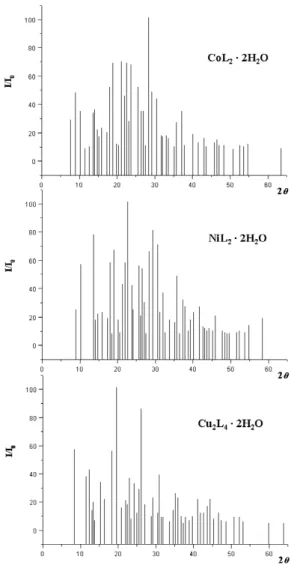
Figure 1. Dependence of I/I0 vs 2θ for Co(II),
Ni(II), and Cu(II) 3-chloro-2-nitrobenzoates.
sensitivity equals to 100 mg, DTG and DTA sen-sitivities were regulated by computer Derill pro-gramme. The products of decomposition were calculated from TG curves and verified by the X-ray diffraction pattern.
The solubilities of 3-chloro-2-nitroben-zoates of Co(II), Ni(II) and Cu(II) in water were measured at 293 K. Saturated solutions of the obtained compounds were prepared under isothermal conditions. The contents of Co(II), Ni(II) and Cu(II) were determined using ASA 880 spectrophotometer (Varian).
Magnetic susceptibilities of polycrys-talline samples of 3-chloro-2-nitrobenzoates of Co(II), Ni(II) and Cu(II) were investigated at 76 – 303 K. The measurements were carried out using the Gouy method with magnetic field strength of 9.9 kOe. Mass changes were obtained from Cahn RM-2 electrobalance. The calibrant employed was Hg[Co(SCN)4] for which the magnetic susceptibility was assumed to be 1.644·10-5 cm3 · g-1. Correction for dia-magnetism of the constituent atoms was
calcu-lated by the use of Pascal′s constants [13, 14]. Magnetic moments were calculated according to Eq. (1):
µeff= 2.83(χMT)1/2 (1)
Results and Discussion
3-Chloro-2-nitrobenzoates of Co(II), Ni(II) and Cu(II) were obtained as polycrystalline solids with a metal ion to ligand mole ratio of 1 : 2 and a general formula M(C7H3O4NCl)2 · nH2O (where M = Co, Ni, Cu and n = 2 for Co and Ni, and n = 1 for Cu), and colours: pink for Co(II), green for Ni(II) and blue for Cu(II) complexes (Table 1).
11 Ecl. Quím., São Paulo, 31(4): 7-14, 2006
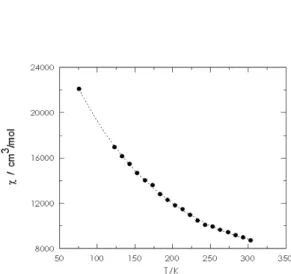
Figure 4.Dependence between magnetic suscepti-bility values vstemperatures for Cu(II) 3-chloro-2-nitrobenzoate.
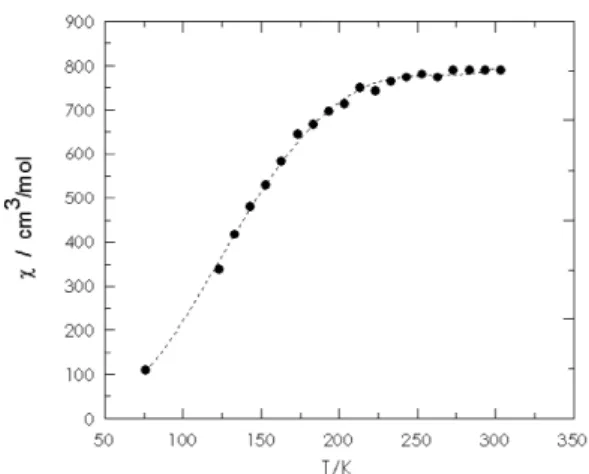
Figure 5.Relationship between magnetic moment
values vs temperatures for Cu(II)
3-chloro-2-nitrobenzoate.
Some of the results of IR spectra analysis are in Table 2. The infrared spectrum of 3-chloro-2-nitrobenzoic acid shows the following absorp-tion bands [15-18]; a strong band of COOH at 1710 cm-1, the bands assigned to asymmetric and symmetric vibrations of NO2group at 1530 cm-1 and 1350 cm-1, the bands of ν(C–C) vibrations at 1610, 1425, 1150 and 1110 cm-1, the bands of ν(C–H) vibrations at 3100, 900 and 810 cm-1, and the bands of ν(C–Cl) stretching vibrations at 730 cm-1. The bands of skeleton vibrations occur at 610 and 560 cm-1[15-18].
In the IR spectra of 3-chloro-2-nitroben-zoates the band at 1710 cm-1disappears, which confirms that no COOH is present in the com-plexes. In these spectra the intense broad absorp-tion bands at 3570 – 3400 cm-1 confirm the pres-ence of crystallization water. The bands arising from asymmetric and symmetric vibrations of COO-group occur at 1610 –1590 cm-1and 1410 – 1400 cm-1, respectively. The bands at 1540 – 1530 cm-1and 1360 –1350 cm-1are assigned to asymmetric and symmetric vibrations of the NO2 group. They are not significantly shifted with respect to those of the parent acid, and thus one must conclude that the NO2group is not coordi-nated to the metal ions. The ν(C–Cl) stretching vibration occurs at 750 – 740 cm-1, and the bands at 530 – 480 cm-1are assigned to the metal-oxy-gen ionic bond. The bands of skeleton vibrations are shifted to lower frequencies (600 and 540 cm -1) compared to those in the acid IR spectrum. The
In order to verify that the prepared com-plexes are not converted to the nitrite isomers (during precipitation or on heating to 523 K), the IR spectra of the hydrates of 3-chloro-2-nitroben-zoates, and of dehydrated complexes, and also of sodium nitrite were recorded. A survey of the lit-erature shows that under the influence of sunlight or with rising the temperature the nitro complex-es may be transformed to the nitrite analogucomplex-es in the endothermic process [21]. It was found that the isomerization of the nitro group may accom-pany the dehydration process of the complex or be connected with the transformation process in its inner sphere [22]. As a monodentate ligand, nitrite ion may be bounded either through a nitro-gen atom forming the nitro complex or through one of the oxygen atoms yielding a nitrite com-plex. The general effect of coordination via nitro-gen is a rise in the frequencies of both νasNO2and νsNO2 compared to the values for free ion ~1328 cm-1 and ~1260 cm-1, respectively [23]. The IR spectra recorded for the hydrated and dehydrated 3-chloro-2-nitrobenzoates of Co(II), Ni(II) and Cu(II) show that the nitro group is not transformed to the nitrite group with rising tem-perature. No bands confirming the isomerization of the nitro group through the oxygen atom are observed [22, 23].
From the X-ray diffraction patterns recorded for the 3-chloro-2-nitrobenzoates of Co(II), Ni(II) and Cu(II) it appears that they are crystalline of low symmetry and large size of the unit cells. They have different crystal structures [24], which have not been determined, because their single crystals have not been obtained so far. It follows from earlier studies on the ther-mal stability of 3-chloro-2-nitrobenzoates of Co(II), Ni(II) and Cu(II) that on heating these complexes are explosively decomposed above 523 K [25, 26]. The thermal stability of 3-chloro-2-nitrobenzoates of Co(II), Ni(II) and Cu(II) was studied in the range of 293 – 523 K. The results reveal that the analysed compounds lose the crys-tallization water in one step at 345 – 395 K. The process is connected with an endothermic effect as shown by the DTA curves [27-29]. The anhy-drous 3-chloro-2-nitrobenzoates are formed above 400 K. The loss in mass calculated from TG curves is about 7.20 % in the case of
dihy-drates and 3.60 % in the case of monohydrate of Cu(II) 3-chloro-2-nitrobenzoate (Table 3). Their theoretical values are 7.25 % and 3.59 %, respec-tively. Considering the temperatures at which the dehydration takes place and the way by which it proceeds it is possible to assume that the water molecules form outer sphere water [29]. The anhydrous complexes of Co(II), Ni(II) and Cu(II) are finally decomposed to the oxides of respec-tive metals: CoO, NiO and CuO, which were identified by IR spectra and X-ray powder dif-fractograms. The products of the final decompo-sitions of chloronitrobenzoates were obtained by roasting the analysed complexes of Co(II), Ni(II) and Cu(II).
The thermogravimetric studies of 3-chloro-2-nitrobenzoates of Co(II), Ni(II) and Cu(II) were carried out with DSC/TG technique at 293 – 523 K (Table 3). The obtained results reveal the complexes to be hydrates containing two or one molecules of water of crystallization depending on the central ion. As example, the TG, DTG and DTA curves of Ni(II) 3-chloro-2-nitrobenzoate are presented in Fig. 2.
The complexes are stable up to 345 – 360 K. Next in the range of 345 – 395 K they dehydrate in one step. The mass losses estimated from TG curves (3.6 – 7.2 %) correspond to the loss from 1 to 2 molecules of water (the theoretical val-ues are equal to 3.59 – 7.25 %) and the energetic effects (∆H = 60.01 – 130.80 kJ · mol-1) accompa-nying these transformation processes confirm the losses of definite numbers of water molecules. The products of dehydration process were also charac-terized by elemental analysis, IR spectra and X-ray powder diffractograms.
The solubilities of 3-chloro-2-nitroben-zoates of Co(II), Ni(II) and Cu(II) in water at 293 K were measured ( Table 3). They are in the order of 10-4 – 10-2 mol · dm-3. The Co(II) 3-chloro-2-nitrobenzoate is the most soluble, while those of Ni(II) and Cu(II) the least soluble salts. From the obtained results it appears that 3-chloro-2-nitrobenzoic acid may be used as an elu-ent for the separation of transition metal ions by ion-exchange chromatography.
The measured values for Co(II) and Ni(II) com-plexes obey the Curie-Weiss law suggesting a weak ferromagnetic interaction (Fig. 3). The mag-netic moment values experimentally determined at 76 – 303 K for Co(II) and Ni(II) compounds change from 3.67 µB(at 76 K) to 4.61 µB(at 303 K) for Co(II) complex and from 2.15µB(at 76 K) to 2.87µB(at 303 K) for Ni(II) 3-chloro-2-nitrobenzoate. These magnetic moment data are very close to the spin – only values for the
respec-tive ions calculated from equation
µeff= [4S (S + 1)]1/2in the absence of the magnet-ic interactions for present spin-system. The mag-netic moment values calculated at room tempera-ture for Co(II), Ni(II) and Cu(II) ions are equal to 3.88 µB, 2.83 µB and 1.73 µB, respectively. For Co(II), Ni(II), and Cu(II) ions the magnetic moment values may be diffrent, than the spin-only worth. In the case of Co(II) compound they are higher than the spin-only value. This difference between measured and calculated data results from a spin-orbital coupling [30]. For Ni(II) and Cu(II) complexes these values are lower. This is due to the fact that the vectors L and S are aligned by the strong field of the heavy atom in opposite direc-tions and this diminishes the resultant magnetic moment. The experimental data suggest that pounds of Co(II) and Ni(II) seem high-spin com-plexes with probably weak ligand fields [31].
The magnetic susceptibility values of 3-chloro-2-nitrobenzaote of Cu(II) increase with ris-ing temperatures suggestris-ing a weak antiferromag-netic interaction (Fig. 4). The magantiferromag-netic moment values experimentally determined change from 0.26µB(at 76 K) to 1.39µB(at 303 K). These val-ues are lower than the d9 spin-only magnetic moment µeff= 1.73µB. Such dependence is a typ-ical behaviour for copper dimer (Table 4, Fig. 5) [31-34]. The magnetic moment values of the Cu(II) complex decrease from 1.39µBat 303 K to 0.26µBat 76 K, as a consequence of depopulation of the excited triplet (S= 1) state. It is well-known that the interaction between two S = 1/2 metal atoms in a dimer leads to two molecular states: a spin singlet (S= 0), and a triplet (S= 1) separated by 2J. The interaction will be antiferromagnetic (J< 0) if S= 0 is the ground state; on the contrary if S = 1 the interaction will be ferromagnetic (J> 0) [35-39].
Conclusion
3-Chloro-2-nitrobenzoates of Co(II), Ni(II) and Cu(II) were characterized by elemen-tal analysis, thermal stability in air, IR spectral data, X-ray powder analysis, solubility in water at 293 K and magnetic properties. The obtained results indicate them to be mono-or dihydrates. Their thermal stability was studied at 293 – 523 K. I twas found that on heating in air above 523 K, they decompose explosively. When heated they dehydrate to form anhydrous salts which next are decomposed to the oxides of the respective metals. The solubility of the analysed compounds in water (at 293 K) is of the order of 10-4 – 10-2mol·dm-3. The measured values of magnetic susceptibilities for Co(II) and Ni(II) complexes obey the Curie-Weiss law, since they decrease with rising temperatures. The obtained µeffvalues of Co(II) and Ni(II) compounds may suggest that they are high-spin complexes with octahedral coordination and the ligands from the weak electrostatic field in coordination sphere of central ion. The magnetic susceptibility of 3-chloro-2-nitrobenzoate of Cu(II) increases with rising temperatures and the magnetic moment values suggest it to be dimer.
Received 25 September 2006 Accepted 17 November 2006
References
[1] A. G. Abd El Wahed, E. M. Nour, S. Teleb, and S. Fahim, J. Therm. Anal. Cal. 76 (2004) 343.
[2] H. Ichudak, Z. Heren, D. Ali Kose, and H. Necefoglu, J. Therm. Anal. Cal. 76 (2004) 837.
[3] H. Olmez, F. Arslan, and H. Ichudak, J. Therm. Anal. Cal. 76 (2004) 793.
[4] Beilsteins Handbuch der organischen Chemie, Bd. IX, Verlag van Julius Springer, Berlin, 1926.
[5] W. Ferenc, and A. Walków-Dziewulska, J. Therm. Anal. Cal. 63 (2001) 309.
[6] W. Ferenc, and B. Bocian, Acta Chim. Hung. 137 (2000) 487.
[7] W. Ferenc, and B. Bocian, J. Therm. Anal. Cal. 62 (2000) 831. [8] W. Ferenc, B. Bocian, and B. Czajka, Acta Chim. Hung. 137 (2000) 659.
[9] B. Bocian, B. Czajka, and W. Ferenc, J. Therm. Anal. Cal. 66 (2001) 729.
[10] B. Czajka, B. Bocian, and W. Ferenc, J. Therm. Anal. Cal. 67 (2002) 631.
[11] B. Bocian, W. Ferenc, J. Serb. Chem. Soc. 8-9 (2002) 605. [12] W. Ferenc, and B. Bocian, J. Therm. Anal. Cal. 74 (2004) 521.
[13] B. N. Figgs, and R. S Nyholm, J. Chem. Soc. (1958) 4190. [14] E. König, Magnetic Properties of Coordination and Organometallic Transition Metal Compounds, Springer Verlag, Berlin, 1966.
[15] K. Nakamoto, Infrared and Raman Spectra of Inorganic and Coordination Compounds, John Wiley and Sons, New York, 1997.
[16] A. K Bridson, Inorganic Spectroscopic Methods, Oxford University Press, New York, 1998.
[17] L. H. Harwood, and P. J McCarthy, Spectroscopy and Structure of Metal Chelate Compounds, John Wiley and Sons, New York, 1968.
[18] N. L. Alpert, W. E. Keiser, and H. A. Szymanski, Infrared Spectroscopy, Polish Scientific Publisher, Warsaw, 1974. [19] R. C. Mehrotra and R. Bohra, Metal Carboxylates, Academic Press, London, 1983.
[20] B. S. Manhas, A. K. Trikha, J. Indian Chem. Soc. 59 (1982) 315.
[21] I. N. Kukuszkin, Koord. Chim. 4 (1972) 1170. [22] D. L. M. Goodgame and M. A. Hitchman, Inorg. Chem. 6 (1967) 813.
[23] W. W. Fee, C. S. Gamer, and I. N. Harrowfield, Inorg. Chem. 6 (1967) 1.
[24] Z. Bojarski, and E. iewka, Structural X-Ray Analysis, Polish Scientific Publisher, Warsaw, 1988.
[25] W. Ferenc, B. Bocian, and K. Kunka, Indian J. Chem. 38 A (1999) 740.
[26] W. Ferenc and B. Bocian, J. Serb. Chem. Soc. 64 (1999) 235.
[27] D. N. Todor, Thermal Analysis of Minerals, Abacus Press, Tunbridge Wells, Kent, 1976.
[28] F. Paulik, Special Trends in Thermal Analysis, Wiley, Chichester, 1995.
[29] A. V. Nikolaev, V. A. Logvinienko, and L. I. Myachina, Thermal Analysis, Vol. 2, Academic Press, New York, 1989. [30] K. Burger, Coordination Chemistry: Experimental Methods,Akadèmiai Kiadó, Budapest, 1973.
[31] J. Mrozinski, M. Janik, and T. Nowakowski, Zeszyty Naukowe Politechniki Slaskiej, 119 (1988) 125.(in Polish) [32] A., Earnshaw, Introduction to Magnetochemistry, Academic Press, London, 1956.
[33] C. O’Connor, Progress in Inorganic Chemistry, Wiley, New York, 1982.
[34] F. A. Keetle, Inorganic Physical Chemistry, Polish Scientific Publisher, Warsaw, 1999.
[35] E. Kokot, and R. L. Martin, Inorg. Chem. 3 (1964) 1306. [36] B. N. Figgis, and R. L. Martin, J. Chem. Soc. (1956) 3837.
[37] C. C. Hadjikostas, G. A. Katsoulos, M. P. Sigalas, C. A Tsipis and J. Mrozinski, Inorg. Chim. Acta, 167 (1990) 165. [38] J. Casanova, G. Alznet, J. Latorre, and J. Borras, Inorg. Chem. 36 (1997) 2052.
[39] O. Kahn, Angew. Chem., Int. Ed. Engl. 24 (1985) 834. ´
´