UNIVERSIDADE DA BEIRA INTERIOR
Ciências
Screening of polyhydroxyalkanoates producing
bacteria isolated from marine ecosystems
Sílvia De Almeida Baptista
Dissertação para obtenção do Grau de Mestre em
Biotecnologia
(2º ciclo de estudos)
Orientador: Prof. Doutor Christophe Roca
Co-orientador: Prof. Doutor Luís Passarinha
"If people feel they understand the world around them, or, probably, even
if they have the conviction that they could understand it if they wanted
to, then and only then are they also able to feel that they can make a
difference through their decisions and activities".
Frank Oppenheimer
To my greatest treasure,
My parents…
ACKNOWLEDGEMENTS
This Thesis would not have been possible without the guidance and the help of several individuals who in one way or another contributed and extended their valuable assistance in the preparation and completion of this study. It is a pleasure to convey my gratitude to them all in my humble acknowledgment.
First and foremost, it gives me immense pleasure and privilege to express deep gratitude to my supervisor Professor Doctor Christophe Roca. I would like to acknowledge him for dedication, perseverance, patience and availability throughout this year, the scientific expertise, as well as the constructive criticisms and suggestions made during the guidance of the work. Above all and the most needed, he provided me with unflinching encouragement and support in various ways whilst allowing me the room to work in my own way, has inspired me to become an independent researcher and helped me realize the power of critical reasoning. Also like to thank him for the moments of laughter and joking and also his worry when I was sad or sick, proving to be a very human and caring person. Without him this thesis would not have been completed or written. One simply could not wish for friendlier supervisor. I am indebted to him more than he knows.
I would like to express my deep gratitude to my co-supervisor Professor Doctor Luís Passarinha, without him this dream wouldn't be possible. I would like to thank not only for the guidance of this work and your advices, but also for the trust placed on me. It was during his classes that my passion for the production area emerged. His involvement with his originality has triggered and nourished my intellectual maturity that I will benefit from, for a long time to come. Your passion, enthusiasm and dedication for what he does are unmatched. He is always ready to help their students and is a very comprehensive person. I am grateful in every possible way.
I am deeply grateful to a Professor Doctor Filomena Freitas, for this immediate availability to guide me in this work. I really appreciate the enthusiastic and calm way how she shared her knowledge, always being willing to fruitful discussions. I still wanted to thank him for his guidance, constructive criticism, while not having been able to also be my official co-supervisor. She also demonstrated what a brilliant and hard-working scientist can accomplish. I wish I had time to learn more from her.
To Universidade da Beira Interior and Professor Doctor João Queiroz, I would like to express my sincere gratitude for his contribution and availability during my academic course.
I would like to thank Professor Doctor Maria Reis from Faculdade das Ciências e Tecnologia da Universidade Nova de Lisboa for his contribution and availability in the development of this research project and for giving me the opportunity of doing the research within the Bioeng research group.
I am very much thankful to Professors Doctors Fernada Domingues, Candida Tomaz and Fani Sousa for flexibility and understanding.
I would also like to express my gratitude to all the people involved in Bioeng research group, in especial Sílvia Antunes, Inês Farinha and Margarida Carvalho for advices and help when I needed; Catarina Almeida and Mónica Carvalho for helping me with the GC analysis and patience. I am grateful for all.
I am also grateful to my brother for constitute a true example for a professional level and my friends for putting up with my bad temper, crying, laughter and happiness over all these years. Nobody exists truly without friends.
I acknowledge my gratitude to Carlos Branco for his love, care and patient.
Finally and more important for me, I would like thankful to my greatest love, my parents. Nothing I write can describe what my parents mean to me and how much are important in my life. I will be eternally grateful for all their sacrifices, patience and support throughout all the last years. I am deeply appreciative for yours presence during the difficult moments, for yours advices and encouragement to believe that it is possible to overcome all the challenges. I love you so much.
RESUMO
Os Polihidroxialcanoatos (PHAs) são biopoliésteres biodegradáveis e termoplásticos ecológicos, que são acumulados sob a forma de materiais de armazenamento de energia em várias bactérias em condições de crescimento limitado e fonte de carbono em excesso. Neste estudo, as bactérias foram isoladas a partir de amostras recolhidas a partir de vários ecossistemas marinhos no arquipélago da Madeira, no Oceano Atlântico e seleccionadas pela sua capacidade de acumular poli-hidroxialcanoatos. Estas amostras foram extraídas do fundo do mar a uma profundidade de 30 e 1,700 metros para se obter uma maior diversidade de microorganismos e, por conseguinte, numa tentativa de obter novas estruturas de PHAs. As estirpes foram directamente isoladas de 612 placas mãe onde as amostras marinhas tinham sido previamente espalhadas. Na totalidade foram isoladas 724 estirpes a partir das placas-mãe, das quais 174 demonstraram resultado positivo durante o screening com o corante Vermelho do Nilo. Todas as estirpes com resultado positivo sintetizaram inclusões intracelulares durante o crescimento em amido como fonte de carbono. Vinte e cinco isolados bacterianos foram testados em cultura de 25 mL com resultados promissores quanto à produção de PHA com armazenamento de 17,71 % para a estirpe MD12-107 e 9,30 % para a estirpe MD12-581. As inclusões foram analisadas através da técnica de cromatografia gasosa como sendo predominantemente poli-β-hidroxibutirato (PHB). A produção a partir das estirpes MD12-107 e MD12-581 foi testada em 100 ml e em bioreactor. Os melhores resultados foram alcançados pela estirpe MD12-581 com um armazenamento de PHA de 15,40% em menos de 6,5 horas, com 5,5 g/L de concentração de biomassa e uma taxa específica de crescimento de 0,24 h-1 quando cultivada num meio contendo 40 g/L de amido, 8 g/L de
extracto de levedura e 4 g/L de peptona durante a produção em bioreactor.
Palavras-chave
Polihidroxialcanoatos, biodegradável, bactérias marinhas, vermelho do Nilo, azul do Nilo, cultura pura.
RESUMO ALARGADO
A descoberta e o isolamento de novos compostos a partir de bactérias marinhas sempre foram estimulados pela indústria farmacêutica em pesquisa de novas entidades químicas. Os microrganismos isolados são cultivados a fim de extrair os metabólitos secundários, que geralmente apresentam interesse terapêutico. Com os métodos de extracção normalmente usados, os compostos de elevado peso molecular, tais como proteínas, polissacáridos ou poliésteres produzidos pelo microorganismo são normalmente descartados. No entanto, os biopolímeros, tais como polihidroxialcanoatos (PHAs), produzido por estes microorganismos apresentam um potencial enorme em termos de aplicações industriais. Com efeito, o PHA é um poliéster biodegradável e trata-se de um polímero de armazenamento de energia produzida pelas células em condições de excesso e limitação de nutrientes e que podem ser usados como materiais termoplásticos e elastómeros. A longo prazo, eles podem substituir os plásticos comuns, produzidos a partir de derivados de combustíveis fósseis.
O objectivo deste estudo visa um isolamento de bactérias a partir de uma colecção de 612 placas mãe e posterior screening para identificar novas estirpes que apresentam capacidade para produzir PHA.
A fase inicial deste estudo passou pelo isolamento de bactérias em meio sólido a partir das placas mãe onde as amostras marinhas tinham sido inicialmente semeadas. O meio utilizado no isolamento designou-se meio A1 e foi constituído por 10 g/L de amido, 2 g/L de peptona, 4 g/L de extracto de levedura. Foram obtidos 724 isolados que posteriormente foram sujeitos ao screening com o corante vermelho do Nilo utilizando um meio com condições de excesso de fonte de carbono e limitação de fonte de azoto, condições ideais para a produção de PHA pelas bactérias. O Meio utilizado nesta fase designou-se de Meio A2 e foi constituído por 20 g/L de amido, 1 g/L de peptona e 2 g/L de extracto de levedura. Após o meio ser autoclavado, foi adicionado o corante lipofílico vermelho do Nilo com uma concentração final de 0.5 µg/mL. Após 72 horas de crescimento, as placas foram visualizadas através de uma lâmpada azul (Safe ImagerTM, Invitrogen) que possibilitou distinguir claramente as bactérias
produtoras de PHA das bactérias não produtoras.
Após o screening, foram escolhidas 25 bactérias que apresentaram sinal de fluorescência mais significativo. Como o corante vermelho do Nilo não é específico para o PHA, permitindo também a coloração de lípidos intracelulares, era necessário conferir que a acumulação de PHA era responsável pelo sinal de fluorescência, e não a acumulação de lípidos.
Foi feito um crescimento em 25 mL em meio líquido e a produção de PHA foi posteriormente analisada por cromatografia gasosa. Nesta fase do estudo, foram identificadas duas estirpes:
Para determinar o máximo de capacidade de acumulação de PHA pelas estirpes MD12-107 e MD12-581, foi feito um crescimento em 100 mL de meio líquido com a mesma proporção de fonte de carbono e azoto do passo anterior. Durante o crescimento em 25 mL em meio líquido, a estirpe MD12-107 revelou-se melhor produtora que a estirpe MD12-581, todavia, durante o crescimento em 100 mL obteve apenas 2,3 % de PHA após 16 horas de crescimento, relativamente à estirpe MD12-581 que produziu 11,1 % de PHA em após 26 horas de crescimento. Nesta fase foram também testados dois meios sintéticos: o meio Marinho Mineral e meio E suplementado de 40 g/L de glucose. No primeiro caso as bactérias não apresentaram crescimento significativo e no segundo caso, a inoculação nem sequer foi possível devido à precipitação de fosfatos quando se adicionou glucose ao meio E.
Numa produção em bioreactor, a estirpe MD12-581 foi testada em meio A2 obtendo 10,23 % de PHA ao fim de 8 horas de crescimento, com uma taxa específica de crescimento de 0.30 h -1.Para aumentar a produção de PHA, a proporção de fonte de carbono e azoto foi alterada.
Foram realizados duplicados para a produção das duas estirpes em meio A3 constituído por 40 g/L de amido, 4 g/L de peptona e 8 g/L de extracto de levedura. No caso da produção de PHA pela estirpe MD12-107, os valores obtidos foram inferiores a 1 % com uma taxa específica de crescimento de 0,18 h-1 e 0,16 h-1. No caso da produção pela estirpe MD12-581 foi obtido um
valor máximo de 15,40 % de PHA após 6,5 horas de crescimento, com uma taxa específica de crescimento de 0,24 h-1; e 5,37 % após 7 horas de crescimento, com uma taxa específica de
ABSTRACT
Polyhydroxyalkanoates (PHAs) are biodegradable polyesters and environmentally friendly thermoplastics, which are accumulated as carbon and energy storage materials in various bacteria in limited growth conditions with excess carbon sources.
In this study, bacteria were isolated from samples taken from various marine ecosystems in the Archipelago of Madeira in the Atlantic Ocean, and screened for their ability to accumulate polyhydroxyalkanoates. These samples were taken from the seabed at depths of 30 and 1,700 meters to obtain a larger diversity of microorganisms and therefore, in an attempt to obtain new structures of PHAs. Strains were directly isolated from 612 mother plates where marine samples had been initially plated. A total of 724 isolates from mother plates were obtained, of which 174 were found PHA-positive using Nile red viable-colony screening. All synthesized intracellular inclusions during growth on starch carbon source. Twenty-five bacterial isolates in 25 mL-scale cultivation were proven promising for PHA production with PHA storage maximum 17.71 % for MD12-107 and 9.30 % for MD12-581 strain. The inclusions were predominantly identified as poly-β-hydroxybutyrate (PHB) using gas chromatography. Strains MD12-107 and MD12-581 were tested in 100 mL-scale and bioreactor cultivation. The best results were achieved with strain MD12-581 accumulated PHA storage 15.40 % in less than 6.5 hours with 5.5 g/L of cell dry weight and a specific growth rate was 0.24 h-1 when grown in
medium containing 40 g/L of starch, 8 g/L of yeast extract and 4 g/L of peptone during batch cultivation.
Keywords
Table of Contents
Chapter I - Introduction
1.1. Plastic and Daily Life ... 1
1.2. Bioplastics ... 1
1.3. Polyhydroxyalkanoates (PHA): characteristics and advantages ... 2
1.4. PHA Extraction, Industrial Production and Applications ... 4
1.5. Strains for PHA production ... 6
1.5.1. PHA production by pure cultures ... 6
1.5.2. PHA production in recombinant Escherichia coli ... 10
1.5.3. PHA synthesis in transgenic plants ... 11
1.5.4. PHA production by mixed cultures ... 11
1.6. Bioproduction Process ... 12
1.7. Methods for quantification and/or detection of PHA and compositional analysis. ... 12
Chapter II- Motivation Chapter III- Materials and methods 3.1. Isolation of microorganisms ... 17
3.2. Primary screening of bacterial isolates for PHA production on solid medium ... 17
3.3. Secondary screening in 25 mL liquid cultivation ... 17
3.4. 100 mL-scale cultivation for growth and PHA determination ... 18
3.5 Bioreactor cultivation ... 19 3.5.1. Medium preparation ... 19 3.5.2. Inocula preparation ... 19 3.5.3. Operating conditions ... 19 3.2. Analytical Methods ... 20 3.2.1. Cell growth ... 20 3.2.2. PHA quantification ... 21
3.2.3. Total organic carbon (TOC) ... 21
3.2.4. Film preparation ... 21
3.2.5. Microscopical analysis ... 22
3.2.5.1. Routine visualization ... 22
3.2.5.2. PHA content visualization ... 22
3.2.5.3. Gram staining preparations ... 22
3.2.6. Calculations ... 22
Chapter IV- Results and Discussion 4.1. Marine bacterial isolates ... 25
4.5. Bioreactor cultivations ... 32
4.5.1. Bioreactor cultivation with Medium A2 ... 32
4.5.1 Bioreactor cultivation with medium A3 ... 34
4.5.1.1. Strain MD12-107: ... 34
4.5.1.2. Strain MD12-581 ... 36
4.7. PHA film ... 37
Chapter V- Conclusion and future work ... 39
Chapter VI- Bibliography ... 41
Chapter VI- Annexes ... 49
Anexx 1- Colony picking of 612 mother plates. ... 49
List of Figures
Figure 1- Bio-based to biodegradable plastics life cycle (copyright: EBA, 2009). ... 2
Figure 2- General structure of polyhydroxyalkanoates. R is alkyl groups (Lee, 1996)... 4
Figure 3- Batch reactor (BioStat® B-Plus, Sartorius) ... 20
Figure 4- Agar plates. Left Mother plate; Right Bacteria isolate. ... 25
Figure 5-Fluorescent Nile red staining on agar plates of isolates 1: MD12-006; 2: MD12-581; 3: MD12-226; 4: MD12-107. ... 27
Figure 6- Fresh samples of MD12-107 and MD12-581 strains with Nile blue solution after 72 hours of incubation (1000x); Left: MD12-107; Right: MD12-581. ... 29
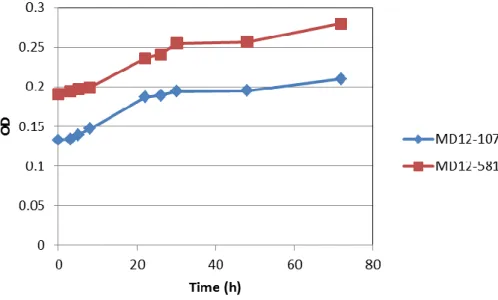
Figure 7- Growth of strains MD12-107 and MD12-581 in Marine Mineral Medium. ... 30
Figure 8- Growth of MD-107 on Medium A2 in 100ml-scale cultivation. ... 31
Figure 9- Growth of MD-581 on Medium A2 in 100ml-scale cultivation. ... 32
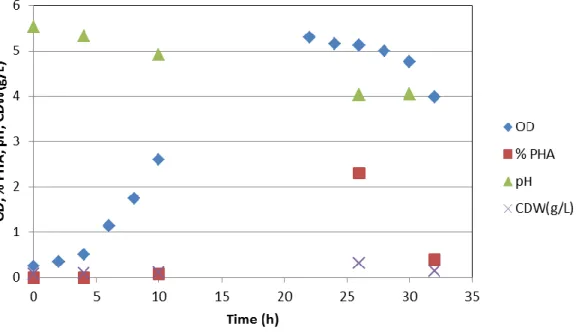
Figure 10- Growth of the Gram-negative MD12-581 with Medium A2 in bioreactor, % PHA, OD and % pO2. ... 33
Figure 11- Growth of Gram-negative MD12-581 with Medium A2 in Bioreactor. ... 33
Figure 12- Growth of Gram-positive MD12-107 strain in Bioreactor with Medium A3. OD, % pO2, % PHA, CDW (g/L) and [Organic Carbon] (ppm). First bioreactor cultivation. ... 34
Figure 13- Growth of Gram-positive MD12-107 strain in Bioreactor with Medium A3. OD, % pO2, % PHA, CDW (g/L) and [Organic Carbon] (ppm). Second bioreactor cultivation. ... 35
Figure 14- Growth of Gram-negative MD12-581 strain in Bioreactor with Medium A3. OD, % pO2, % PHA, CDW (g/L) and [Organic Carbon] (ppm). First bioreactor cultivation. ... 36
Figure 15- Growth of Gram-negative MD12-107 strain in Bioreactor with Medium A3. OD, % pO2, % PHA, CDW (g/L) and [Organic Carbon] (ppm). Second bioreactor cultivation. ... 36
List of Tables
Table 1- Market prices of bio-based polymers and conventional, petroleum-based polymers... 8
Table 2- PHA production using pure microbial cultures grown on refined sugars as substrates or low-cost carbon feedstocks ... 9
Table 3- Constitution of Mineral Marine (Brauman et al, 1971) ... 18
Table 4- Constitution E medium (Adapted from Brandl et al., 1988) ... 18
Table 5- Level of fluorescence intensity of 25 selected strains ... 27
Table 6- PHA storage content, %HB, %HV, cell dry weight and level of fluorescence on plates with Nile Red ... 28
Nomenclature
%PHA – PHA content (% w/w)
CDW – Dry Weight Cell, cell concentration (g/L) DMSO - dimethylsulfoxide
DOC – Dissolved Oxygen Concentration (pO2 (%)) FTIR - Fourier Transmission Infra Red spectroscopy GC – gas chromatography
HA – hydroxyalkanoate HB – hydroxybutyrate
HPLC - High Performance Liquid Chromatography LDPE - low density polyethylene
MCL – medium-chain length MMC - microbial mixed cultures
NMR - Nuclear Magnetic Resonance spectroscopy OD600 – Optical Density at 600 nm
[Organic Carbon]- Organic Carbon concentration (ppm) PHAs – polyhydroxyalkanoates
PHB – polyhydroxybutyrate PHH - polyhydroxyhexanoate P(3HB) – poly(3-hydroxybutyrate) rpm – rotation per minute SCL – short-chain length TOC – total organic carbon UV – ultraviolet
Chapter I - Introduction
1.1. Plastic and Daily Life
Plastics have infiltrated every part of daily life and have basically become indispensable. Because of their versatility and durability, petroleum based plastics have had a variety of both small and large scale uses for over seventy years now (Keshavarz et al., 2010). While they are extremely pliable and can be formed into almost any shape including fibers and thin films, they remain chemically resistant and maintain their durability and strength under a wide range of temperatures (Andrady, 2009; Reddy et al., 2003).
Despite these valuable characteristics, the drawbacks of plastics have become increasingly apparent during the last century. First, plastics are derived from crude oil, a non-renewable energy source that will eventually be depleted. During production, the petroleum-based plastics emit gases considered to be non-environmentally friendly, negatively affecting the global climate (Andrady, 2003). Second, the non-biodegradable nature of plastic wastes has become a cause for environmental concern. These wastes accumulate in landfills and the marine environment if not incinerated. When incinerated, they emit toxic compounds (Suriyamongkol et al., 2007; Reddy et al, 2003). For these reasons, there is special interest in producing plastics from materials able to be eliminated in an “environmentally friendly” way (Gross and Karla, 2002).
1.2. Bioplastics
Thanks to chemical engineering and biotechnology companies, biodegradable plastics are being manufactured using renewable resources and their availability is increasing significantly. For example, starch-based plastics have become an important variety of bioplastics used in the production of biodegradable products and an increase in plastics biodegradability would certainly help to alleviate waste problem of our current society (Kim, 2000).
Bioplastics are materials that contain biopolymers in varying percentages and are moldable when applied with heat and pressure. Therefore, they are a potential alternative option to the above mentioned conventional petroleum based plastics (Queiroz et al., 2009). Both
(PE), polyvinyl chloride (PVC) and polyethylene terephthalate (PET) are able to be manufactured using renewable resources, they remain non-biodegradable, which causes confusion in the plastic market (Razza et al., 2012; Schut, 2008).
Biopolymers can be classified into three groups as follows: polymers extracted directly from biomass, having been modified or not, such as starch or cellulose-based polymers; polymers produced directly by microorganisms in their natural or genetically modified state, exemplified by polyhydroxyalkanoates (PHAs); and polymers obtained with the utilization of bio-intermediaries, produced with renewable raw materials. Examples include: polylactic acid (PLA); polyethylene (BPE), from the polymerization of ethylene produced from bio-ethanol; bio-nylons via diacids from biomass and bio-polyurethanes, incorporating polyols of vegetal origin (Albuquerque, 2009; Queiroz et al., 2009; Reddy et al, 2003)
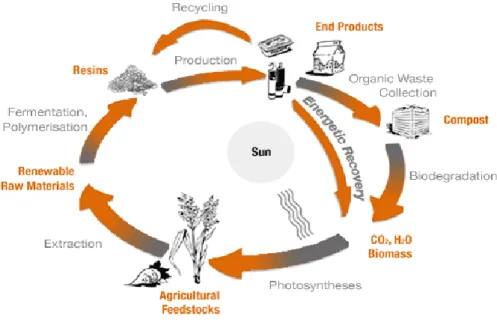
Figure 1- Bio-based to biodegradable plastics life cycle (copyright: EBA, 2009).
1.3. Polyhydroxyalkanoates (PHA): characteristics and
advantages
Biopolymers can be produced by a variety of microorganisms. As mentioned before, bacterial polyhydroxyalkanoates (PHAs) represent a unique family of polymers acting as a carbon/energy store for more than 300 species of Gram-positive and Gram-negative bacteria as well as for a wide range of Archaea (Chansatein et al., 2012; Laycock et al., 2013).
PHAs are biopolyesters that generally consist of 3-, 4-, 5-, and 6-hydroxycarboxylic acids. In the presence of a limited quantity of essential nutrients such as oxygen, phosphorous or nitrogen, they are synthesized intracellularly as insoluble cytoplasmic inclusions in the presence of excess carbon. Since they do not substantially alter its osmotic state, these polymeric materials are able to be stored at high concentrations within the cell (Chansatein et al., 2012; Laycock et al., 2013; Park et al., 2012). As intracellular granules, these polymers can accumulate to levels as high as 90 % of the cell dry weight (Reddy et al., 2003). PHA-producing bacteria have been reported to be found in various environments such as wastewater, industrial waste, municipal waste, soil, compost, hot spring water, fresh water and marine water (Chansatein et al., 2012). Utilization of these economically appealing substrates allows for a sustainable closed cycle process for PHA production and use (Figure 1) (Satoh et al., 1998; Braunegg et al., 1998; Reis et al., 2006). Additionally, PHAs are non-toxic, biocompatible, biodegradable thermoplastics, with a high degree of polymerization, highly crystalline, optically active and isotactic, piezoelectric and insoluble in water (Reddy et al., 2003).
The first PHA to be identified was poly-3-hydroxybutyrate P(3HB), which showed that could be cast into a transparent film by forming intracellular granules in Gram-positive bacterium Bacillus megaterium (Lemoigne, 1926; Laycock et al, 2013; Castilho et al, 2009). This homopolymer is highly crystalline, between 55–80 %, rendering it brittle and giving it little strength to withstand impact. These characteristics limit its uses. The glass transition temperature of P(3HB) is approximately 5ºC and its melting point is approximately 175 ºC (Reis et al., 2003).
Although over 150 different types of hydroxyalkanoate (HA) monomers synthesized by over three hundred different bacterial have been identified since the discovery of P(3HB), it remains the most commonly observed and well-studied PHA (Albuquerque, 2009; Laycock et al., 2013; Steinbuchel and Valentin, 1995). PHAs are essentially composed of monomers of R-(-)-3-hydroxyalkanoic acid. The different types of PHAs are distinguishable by chain size, type of functional group and unsaturated bonds degree (Braunegg et al., 1998; Alves, 2009). Figure 2 represents the general polyhydroxyalkanoate chemical structure.
PHAs are classified into two main groups by their carbon numbers. The two groups with different material properties are short-chain-length (SCL) and medium-chain-length (MCL)-PHAs. SCL-PHAs are composed of monomers having 3 to 5 carbon atoms. They are often crystalline, stiff and brittle in texture and display thermoplastic material properties similar to polypropylene. MCL-PHAs are composed of monomers having 6 to 14 carbon atoms. They present lower crystallinity (20-40 %) and have elastic material properties similar to rubber
hydroxybutyrate backbone (Farinha, 2009; Keshavarz et al. 2010; Lee et al, 1995; Park et al, 2012; Suriyamongkol et al, 2007). The average number of repeating units in each polymer chain can range between 100 and 30,000, resulting in polymer molar masses ranging from 10,000 to 3x10⁶ Da (Albuquerque, 2009; Cranc and Pattel, 2005; Lee, 1996).
Figure 2- General structure of polyhydroxyalkanoates. R is alkyl groups (Lee, 1996).
Biosynthetic polymers can be produced through microbial or plant route. Currently, microbes are considered to be the major source for production of PHAs (Steinbüchel et al., 2003), although they can also be produced in plants (Keshavarz et al., 2010). Production of bioplastics via microbial route requires technical viability and feasibility for a challenging production (Keshavarz et al., 2010).
Due to their varied monomer content, PHAs differ in their physical and chemical characteristics. Types of organisms, media ingredients, fermentation conditions, modes of fermentation (batch, fed-batch, continuous), and recovery are all factors that affect PHA monomer content (Keshavarz et al., 2010).
Exposure to soil, compost, or marine sediment can degrade PHAs. Biodegradation depends on a variety of factors including microbial activity of the environment, the amount of exposed surface area, temperature, pH, polymer composition, as well as crystallinity (Farinha, 2009; Reddy et al., 2003). Biodegradation of PHAs under aerobic conditions results in carbon dioxide and water, while carbon dioxide and methane are produced during degradation in anaerobic conditions. According to studies, 85 % of PHAs can be degraded in seven weeks (Farinha, 2009; Reddy et al., 2003).
1.4. PHA Extraction, Industrial Production and Applications
PHA recovery process contributes significantly to the overall production cost, therefore there is a need to pursuit a simple, low-cost and highly efficient extraction method, environmentally friendly (Dias et al., 2006). The methods used for cell disruption can be divided into chemical, enzymatic, and mechanical processes (Dias et al., 2006).
There are two commonly employed methods of PHA extraction from bacteria. Using solvents such as chloroform, methylene chloride, propylene carbonate and dichloroethane, is the most common method of extraction (Dias et al., 2006). The conventional method is based on the solubility of PHA in chloroform and insolubility in methanol. Unfortunately, this method is neither environmentally friendly nor suitable for mass production. The chloroform extraction method is widely used at the laboratory scale because it allows for high purity without polymer fractionation of the bioplastic (Dias et al., 2006; Suriyamongkol et al., 2007). However, it requires a large amount of solvent which makes this method too costly for large scale processes (Dias et al., 2006). The second method purposely avoids the use of organic solvents. In this method, bacterial cells are treated with a cocktail of enzymes such as proteases, nucleases and lysozymes, and detergents to remove proteins, nucleic acids, and cell walls, while leaving the PHA intact (Suriyamongkol et al., 2007).
Recently, two new methods were discovered during the search for an environmentally friendly and more cost-efficient extraction. They consist in supercritical CO2 extraction and
non-PHA-selective cell mass dissolution by protons, with PHA crystallization (Dias et al., 2006). Supercritical CO2 extraction results in higher final purities and a maximum reported
value of 89 % efficiency in polymer recovery due to the removal of lipid impurities, its main advantage (Dias et al., 2006). The non-PHA-selective cell mass dissolution by protons seems more cost-effective than conventional chemical treatment methods, with recovery efficiency and purity of 95 and 97 %, respectively (Dias et al., 2006).
Production of PHAs at an industrial scale has been achieved using pure culture, either of natural strains such as Alcaligenes latus or Burkholderia sacchari, or recombinant strains of Escherichia coli and Cupriavidus necator. These strains are currently being used to produce four commercial brands of PHA: Biomer®, Nodax®, Biocycle® and Mirel® (for review see Albuquerque, 2009; Lemos et al., 2006).
PHAs have a large variety of uses including packaging, cosmetic containers, shampoo bottles, cardboards and papers, milk cartons and films, moisture, barriers in diapers and sanitary napkins and other personal hygiene materials, pens, combs, bullets, flavor delivery agents in foods, dairy cream substitutes, and bulk chemical production using depolymerised PHA (Keshavarz et al., 2010). Recently, medical uses for PHAs have captured a reasonable amount of attention. These include cardiovascular products, prodrugs, efficacy in nerve and soft tissue repair, dental and maxillofacial treatment, drug delivery, nutrition, orthopedic and urology procedures and wound management (Chen, 2010; Keshavarz et al., 2010).
1.5. Strains for PHA production
1.5.1. PHA production by pure cultures
Since the 1980’s, a considerable amount of research has been devoted to the development of pure microbial culture strategies for the production of PHA by microorganisms at an industrial scale. Approximately 14 companies are currently involved in PHA production with either wild type PHA producers or genetically modified organisms (Chen, 2009). Although many types of PHA have been discovered, only a few of these have been able to be produced at large scale including the homopolymer PHB, copolymer PHB and PHV, and the copolymer of PHB and PHH (polyhydroxyhexanoate). Generally, PHA production by pure microbial culture is performed in batch or fed-batch mode, taking anywhere from 38 to 72 hours for fermentation. In order to attain a high cell density, the microorganisms are pre-cultivated in growth medium. The accumulation of PHA during this period is typically minimal. Once the growth medium is depleted, the growth limiting medium is fed to the microorganisms in order to induce and maximize the PHA content of the biomass (Chen, 2009; Albuquerque, 2009). In other words, growth limiting conditions are imposed in order to induce PHA storage. Subsequently, the microbial cells accumulate PHA until saturation is reached and the fermenter is then discharged. In following, extraction of the intracellular polymer takes place by recovering and disrupting the cells (Albuquerque, 2009).
In recent years, a considerable effort has been made to develop pure culture fermentation strategies for more cost-efficient viable PHA production. Research goals were set, attempting to increase process productivity including maximizing PHA cell content. This in turn increases fermentation productivity and improves PHA recovery yield while maximizing cell growth and polymer production rates (Albuquerque, 2009).
PHA production using pure cultures involves a two-stage batch production process. In the first stage (growth), an inoculum of bacteria is introduced into a sterile solution of trace metal nutrients and a suitable carbon source (Laycock et al., 2013). In the second stage, an essential nutrient (such as N, P or O2) is purposely limited so that PHA accumulation can take
place. The properties of the final polymer depend on at least three factors including the mix of carbon feedstocks fed during accumulation, the metabolic pathways that the bacteria use for the following conversion into precursors, and the substrate specificities of the enzymes involved (Laycock et al., 2013).
The most commonly used wild type strain for production of SCL PHA is R. eutropha. In order to generate PHB or a copolymer of PHB and PHV, this strain is usually fed with glucose or a mixture of glucose and propionate. The maximum PHA content (% w/w) of R. eutropha can
reach 75 % to 80 % of cell dry weight in 48 hours to 60 hours (Chen, 2009). Besides R. eutropha, Alcaligenes latus is also used for SCL PHA production (Biomer, Germany). A. latus can accumulate up to 50 % PHB on glucose or sucrose in 18 hours of growth (Yamane et al., 1996). MCL PHA production by wild type strain on a commercial scale is rare. In addition, Amerononas hydrophila and Pseudomonas oleovorans have also been used for PHB and PHH copolymer production. The maximum PHA contents of these two strains were reported as 50 % and 63 %, respectively (Chen, 2001; Jung, 2001).
Cost analysis of PHA production identified two main factors contributing to high PHA price: high fermentation operating costs and high downstream processing costs (Castilho et al., 2009; Choi and Lee, 1997; Povolo and Romanelli, 2012). The major contributor to fermentation operating costs is the cost of substrate. In almost all instances, substrates used in current industrial processes are refined sugar feedstocks such as glucose, sucrose, and corn which have a high market price (Albuquerque, 2009; Lee, 1996; Madison and Huisman, 1999; Reddy et al., 2003). Compared with the prices of conventional polymers, it is evident that even the most efficient processes will not allow PHAs to compete with petroleum-based polymers on the basis of price so long as expensive substrates such as glucose are used, as can be seen in Table 1 (Castilho et al, 2009). Therefore, it became necessary for genetic/metabolic engineering strategies for PHA production by bacterial fermentation to include the ability to use several inexpensive substrates. These have been attempted mostly at laboratory scale, often with promising results (Albuquerque, 2009; Reddy et al, 2003). Some of the best results obtained using pure microbial cultures fed with low cost feedstocks (starch, sugar molasses, tapioca, and whey) are displayed in Table 2 (Albuquerque, 2009).
Table 1- Market prices of bio-based polymers and conventional, petroleum-based polymers Polymer Market Price Reference
P(3HB) from Biomer (Germany) €12/kg Hänggi (2004) P(3HB-co-3HV) from Metabolix (US) €10–12/kg Crank et al. (2004) Modified starch polymers from Novamont (Italy) €2.5–3.0/kg Crank et al. (2004) Polypropylene (PP) €0.74/kg CMAI Global (2009) High-density polyethylene (HDPE) €0.78/kg CMAI Global (2009) Low-density polyethylene (LDPE) €0.74/kg CMAI Global (2009) Polyvinyl chloride (PVC) €0.72/kg CMAI Global (2009) Polystyrene (PS) €0.70/kg CMAI Global (2009) Polyethyleneterephtalate (PET) €0.81/kg CMAI Global (2008)
Table 2- PHA production using pure microbial cultures grown on refined sugars as substrates or low-cost
carbon feedstocks
Source: adapted from Albuquerque, 2009.
Feedstock Microorganism Fermentation strategy CDW (g/L) PHA content (%) PHA composition Ref Ref in ed S u b st rat es Glucose Cupriavidus necator Fed-batch 281 82 PHB Lee et al.(1999) Sucrose Alcaligenes latus Fed-batch 112 88 PHB Lee et al.(1999) Glucose r Escherichia coli Fed-batch 204 77 PHB Lee et al.(1999) Lo w co st f ee d st oc ks Starch Haloferax mediterranei Batch 10 60 PHB Lillo et al.(1990) Starch Azotobacter chroococcum Fed-batch 54 46 PHB Kim(2000) Molasses Azotobacter vinelandii UWD Fed-batch 33 66 PHB Page et al.(1993) Tapioca Cupriavidus Necator Fed-batch 106 58 PHB Kim et al.(1995) Whey r Escherichia coli Fed-batch 31 80 PHB Kim(2000) Whey r Escherichia coli Fed-batch 55 57 PHB Kim(2000) Whey r Escherichia coli Fed-batch 87 80 PHB Lee et al.(1999) whey r Escherichia coli Fed-batch 83-150 67-80 PHB Lee et al.(2000) Different vegetable oils (5g/L) Cupriavidus necator Shake flask 4.4-5.6 67-80 PHB Lee et al.(2008) Different vegetable oils (5g/L) + Propionic Acid Cupriavidus necator Shake flask 3.6-7,5 74-90 P(HB/HV) Lee et al.(2008)
1.5.2. PHA production in recombinant Escherichia coli
In recent years, both genetic engineering and molecular microbiology techniques have contributed to the enhancement of PHA production in microorganisms. In order to develop optimal recombinant host strains, several mutants with phenotypes in PHA synthesis were characterized. However, little difference in polymer accumulation was achieved due to over-expression of PHA genes in the natural PHA producer. Unfortunately, growth time during fermentation is lengthy for most natural producers, and extraction of polymers from their cells is difficult, making these PHA producers unsuitable for biopolymer production on an industrial scale (Suriymongkol et al, 2007).
Though E. coli does not naturally produce PHA, it is considered to be an appropriate host for generating higher yields of the biopolymer for several reasons including its fast growth rate, high productivity, easy lysis, easily manipulated genome, easy scale up, and well understood genetics and biochemistry. In addition, a wide range of substrates can be used, its PHA production is not tied to natural regulation, and PHA polymerase is absent (Lee, 1997; Li et al., 2006; Sudesh et al, 2000; Suriymongkol et al, 2007).
In 1988, PHA genes were introduced into E. coli for the first time and PHB granules were formed in recombinant E. coli host cells (Slater et al., 1988; Suriymongkol et al., 2007). In order to enhance PHA synthesis, and produce novel PHA, metabolic engineering is being intensely explored. By inserting the genes involved in PHA synthesis from different bacteria into E. coli, it gained the capacity for producing both SCL and MCL PHA. Furthermore, the PHA degradation genes were not transferred into E. coli (Reddy et al., 2003). E. coli ability to utilize various carbon sources, including glucose, sucrose, lactose and xylose, further reducing production cost of PHA by using cheap substrates such as molasses, whey and hemicellulose hydrolysate (Lee and Chang, 1995; Reddy et al., 2003). This strategy can be extended to virtually any bacterium if it possesses metabolic advantages over those currently in use (Reddy et al., 2003). The maximum PHA content from the recombinant E. coli harboring R. eutropha PHA synthesis gene reached up to 90 % of the cell dry weight (Lee and Choi, 1998).
1.5.3. PHA synthesis in transgenic plants
In comparison with bacteria or yeast, crop plants are capable of producing large amounts of a variety of useful chemicals at low cost. In comparison, PHA production in bacteria or yeasts has a costly fermentation process because it requires growth under sterile condition with an external energy source such as electricity (Reddy et al., 2003; Snell and Peoples, 2002). In contrast, PHA production in plant systems is considerably less expensive because the system only relies on water, soil nutrients, atmospheric CO2 and sunlight. The cost of producing
starch and sugar in plants is less than the cost of commodity plastics, so it may be possible to produce PHA at a similar low cost. Unlike the bacterial cell, the plant cell has different subcellular compartments in which PHA synthesis can be metabolically localized (Hanley et al, 2000; Moire et al, 2003). Plants use photosynthetically fixed CO2 and water to generate
the bioplastic, which after disposal is degraded back to CO2 and water, which makes a plant
production system much more environmentally friendly. Synthesis of PHAs in crops is also an excellent way of increasing the value of the crops (Reddy et al., 2003; Somerville and Bonetta, 2001). However, the production of PHA in transgenic plants presents barriers associated with the expression of transgenes and metabolic load on plant growth and the constitutive expression of PHA synthesis genes is still a crucial obstacle (Suriyamongkol et al., 2007).
1.5.4. PHA production by mixed cultures
One proposed way of lowering production costs is PHA production by microbial mixed cultures (MMC) (Dias et al, 2006; Serafim et al, 2008). Costs are reduced by using low value substrates, such as waste or surplus feedstocks, and by eliminating the necessity of reactor sterilization since the culture is able to adapt to various complex waste feedstocks, which reduces fermentation equipment costs (Albuquerque, 2009; Dias et al, 2006; Kim, 2000; Laycock et al, 2013; Reddy et al., 2003; Serafim et al, 2008). Another advantage of MMC processes is based on the fact that these cultures can use a wide variety of complex substrates, even substrates which are rich in nutrients, since PHA storage by mixed culture is not induced by nutrient limitation (Albuquerque, 2009). Mixed cultures are composed of microbial populations of unknown composition, selected by the operational conditions imposed on the open biological system (Albuquerque, 2009).
PHA storage in mixed microbial cultures takes place in systems where the substrate is not continuously available to the microorganisms or in systems where electron donor and
consecutive periods of external substrate accessibility (feast) and unavailability (famine). During the famine phase, the carbon uptake is mainly driven to PHA storage and, to a lesser extent, to biomass growth. Following substrate exhaustion, the stored polymer becomes an accessible source of energy and carbon. The ability to internally store carbon gives these microorganisms a competitive advantage over those that do not have this capacity. Due to this quality, they have become predominant in the system. This enrichment strategy is known as aerobic dynamic feeding (ADF) or feast and famine (Reis et al., 2003; Serafim et al., 2004).
1.6. Bioproduction Process
Currently, there are four methods of producing PHAs: in vitro, via PHA-polymerase catalyzed polymerization; and in vivo with batch, fed-batch and continuous cultures (Zinn et al., 2001). The synthesis of PHA in vivo has been and is still being investigated using batch cultures because batch cultures are easy to handle, and they are suited for growth studies and screenings for potential PHA accumulating organisms. Typically, the medium is designed in such a way that one nutrient limits growth of biomass whiles other nutrients, including the carbon source, are in excess. The experiments are performed within 1-2 days, during which time the cells undergo a progression of growth stages (Zinn et al, 2001). Simultaneously, the cells perceive continuous changes of their environment due to constant change in nutrient concentration caused by the cell metabolism. This method seldom gives an accurate indication of the maximum capacity of the cells to accumulate PHA since cells starved for carbon degrade PHA again (Zinn et al., 2001).
1.7. Methods for quantification and/or detection of PHA and
compositional analysis.
Several techniques are appropriate to detect organisms that are able to synthesize PHA and determine PHA inside intact cells. The lipophilic dyes Sudan black, Nile blue and Nile red are used to stain colonies and to distinguish between PHA-accumulating and non-accumulating strains (Amara, 2008; Spiekermann et al., 1999).
Using Nile blue and Nile red allows for a more specific and sensitive visualization of PHA granules (Serafim et al., 2002). The Nile blue and Nile red are able to penetrate the membrane and stain biopolymer granules in live cells, allowing for the identification of PHA producing bacteria using fluorescence. However, they cannot identify the monomer composition of PHA produced (Spiekermann et al., 1999). The Nile blue is soluble in water
and ethanol while Nile Red has low solubility in water, though it dissolves in most organic solvents (Ostle and Holt, 1982; Greenspan et al., 1985).
Of these screening techniques for isolating potential PHA-producing strains from environmental samples, Nile red fluorescence offers an easy, rapid screening option (Berlanga et al., 2006). The Nile red is introduced directly in the agar medium, resulting in fluorescent colonies of PHA-positive strains that can be observed by UV illumination omitting the microscopic observation step (Tanamool et al., 2011).
Neither the growth of the bacteria nor PHA production was affected by the presence of the solvents and Nile red or Nile blue dyes (Spiekermann et al., 1999).
Gas Chromatographic (GC) analysis of PHA offers measurable information about the total number and concentration of monomers present in the PHA. When used in addition with Mass Spectroscopy, information about the mass and identity of the monomer involved is also obtained (Lee et al., 1997). This method involves simultaneous extraction and methanolysis of PHA, in mild acid or alkaline conditions, to form hydroxyalkanoate methyl esters which are then analyzed by GC (Reetha, 2008). This method can handle small quantities of samples and can be described as rapid, sensitive, and reproducible (Reetha, 2008).
Other methods of analyzing PHA include High Performance Liquid Chromatography (HPLC), Nuclear Magnetic Ressonance spectroscopy (NMR) and Fourier Transmission Infra Red spectroscopy (FTIR) (Reetha, 2008).
Chapter II- Motivation
Synthetic plastics have become one of the most utilized materials over many years because of their versatility and outstanding technical properties including high chemical resistance and elasticity as well as their relatively low production cost, however there has been an increasing concern for the environment over the harmful effects of petrochemical-derived plastic materials, especially because they are not biologically degraded (Zinn et al., 2001; Reddy et al., 2003).
Polyhydroxyalkanoates (PHAs) are polyesters synthesized by a number of microorganisms as an energy reserve material, particularly in the presence of excess carbon and an essential nutrient such as nitrogen or phosphorous is limited (Laycock et al., 2013). PHAs possess properties similar to currently used synthetic thermoplastics and elastomers making them strong candidates for biodegradable polymer material. Upon disposal, they are completely degraded to water and carbon by microorganisms in various environments such as soil, sea and lake water (Lee, 1996).
The objective of this study was to screen for strains with capability of producing innovative PHAs. Although many bacteria can produce PHA when supplied with the suitable growth conditions and carbon substrates, not all bacteria can yield a high production level of PHA. The selection of the best producers was made and optimization of PHA production by the selected microorganisms was performed.
Chapter III- Materials and methods
3.1. Isolation of microorganisms
In this study, bacteria were isolated from samples taken from various marine ecosystems in the Archipelago of Madeira in the Atlantic Ocean, obtained through the Ocean Treasures project. Strains were directly isolated from 1,918 mother plates where marine samples had been initially plated.
The composition of the agar medium used for isolation of the microorganisms was named A1 and contained the following compounds: 10 g/L of starch, 4 g/L of yeast extract, 2 g/L of peptone, 18 g/L of Agar, 750 ml of filtered sea water and 250 ml of Milli Q water. To ensure sterility and total dissolution, the medium was autoclaved at 121ºC for 20 minutes before using. The plates were prepared in a laminar flow chamber to ensure total sterility and prevent contamination of the plates.
3.2. Primary screening of bacterial isolates for PHA production
on solid medium
In order to evaluate the PHA content in cells, the lipophilic dye Nile Red was added directly to the agar medium to a final concentration of 0.5 µg/mL was used. A solution of 5 mg Nile red per 10 mL dimethylsulfoxide (DMSO) was prepared previously.
Medium A2 used for screening of the PHA-producing microorganisms contained the following compounds: 20 g/L of starch, 2 g/L of yeast extract, 1 g/L of peptone, 18 g/L of Agar, 750 ml of filtered sea water and 250 mL of Milli Q water. The medium was autoclaved at 121 ºC for 20 minutes after 500 µL of Nile red solution was added separately to the sterilized medium. Previously isolated colonies were spread on the agar plates. After growth during 72 hours at room temperature, plates were exposed to Blue Light Transilluminator (Safe ImagerTM,
Invitrogen) and PHA positive isolates were seen as orange/yellow fluorescent colonies.
3.3. Secondary screening in 25 mL liquid cultivation
agar). One isolated colony from agar plates was used to inoculate. The inocula were incubated at 28 ºC and 200 rpm. After 120 hours, the bacterial cells were harvested. The biomass was analyzed for PHA content.
3.4. 100 mL-scale cultivation for growth and PHA determination
The 2 strains with the highest PHA content obtained during 25 mL liquid culture were grown in 100 mL liquid culture to determine better growth parameters. Three media were tested: Medium A2, medium E (adapted from Brandl et al., 1988) supplemented with glucose and Mineral Marine Medium (Brauman et al, 1971). Solutions 1 and 2 were autoclaved separately at 121 ºC for 20 minutes.
Table 3- Constitution of Mineral Marine (Brauman et al, 1971)
Mineral Marine medium g/L
Solution 1 NaCl, MgSO4.7H2O; KCl; CaCl2.2H2O; C4H11NO3; NH4Cl K2HPO4.3H2O FeSo4.7H2O. 11.7 12.3 0.75 1.47 6.05 6.65 0.062 0.026 Solution 2 Starch 20
Table 4- Constitution E medium (Adapted from Brandl et al., 1988)
Mineral Marine medium g/L
Solution 1 (NH4)2HPO4 K2HPO4 KH2PO4; MgSO4 Micronutrient 3.3 5.8 3.7 10 ml 1 ml Solution 2 Glucose 20
Inocula were prepared in 25 mL of respective medium using one isolated colony from agar plates and incubated for 17 hours at 28 ºC and 200 rpm. 25 mL of inocula in exponential phase (with 17 hours of incubation time) were added to 100 mL of fresh medium. Cultures were performed in 250 mL shake flasks without pH control at 28 ºC and 200 rpm. The assays were run for 46 hours. 2 mL samples were taken periodically. Optical density was monitored immediately and 1 mL samples were frozen at -20 ºC for further PHA quantification.
3.5 Bioreactor cultivation
3.5.1. Medium preparation
The medium used for inocula preparation in the batch reactor was named A3 and contained the following compounds: 40 g/L of starch, 8 g/L of yeast extract, 4 g/L of peptone, 750 mL of filtered sea water and 250 mL of Milli Q water. The medium was autoclaved at 121 ºC for 30 minutes. The Medium A2 was also tested.
3.5.2. Inocula preparation
One isolated colony from agar plate was used to inoculate 100 mL of medium in a 1 L shake flask. The inocula were incubated 24 hours at 28 ºC and 200 rpm.
3.5.3. Operating conditions
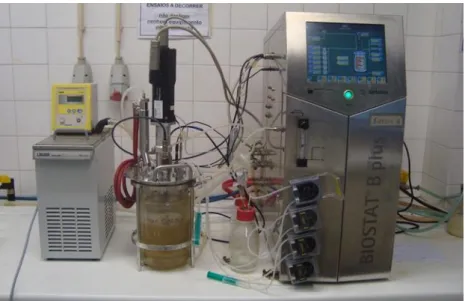
This assay was performed in a 2 L reactor (BioStat® B-Plus, Sartorius) with 2 L of working volume where sterile conditions were maintained (Figure 3). The reactor was operated at 28 ºC. pH was maintained at 7.0±0.05 by automatic addition of 2M HCl and 2M NaOH. The dissolved oxygen inside the bioreactor was maintained above 30 % by manually increasing the agitation speed from 400 rpm to 900 rpm. Air flow rate was maintained at 1 vvm. Foam formation was suppressed by addition of an Antifoam solution (BDH Prolabo – VWR).
100 mL of inoculum in the exponential phase were used to inoculate the bioreactor. 10 mL samples were taken periodically during approximately 12 hours. OD at 600 nm was monitored immediately after sampling. Samples were frozen for further analysis of biomass production, PHB content and total organic carbon quantification.
Figure 3- Batch reactor (BioStat® B-Plus, Sartorius)
3.2. Analytical Methods
3.2.1. Cell growth
Cell growth was monitored by measuring the optical density of 1 mL of sample, at 600 nm (OD600) with a spectrophotometer (Elios α, ThermoSpectronic).
For cell dry weight determination, biomass was collected from 10 or 25 ml of culture broth by centrifugation at 10,000 rpm for 10 minutes. The supernatant was collected for further analysis (see 2.2.3). The pellet was resuspended in 10 or 25 mL of NaCl 0.9 % (w/v) and centrifuged again (10,000 rpm for 10 minutes). After centrifugation, the supernatant was discarded and the pellets were frozen in liquid nitrogen before being lyophilized (Telstar, Cryodos) for 20 hours, at approximately -50 ºC and 0.07 mbar. Cell dry weight (CDW) was defined by the dry weight of cells per L of culture broth.
(Equation 1):
(1)
3.2.2. PHA quantification
PHAs were determined by gas chromatography (GC) using a method adapted from Serafim et al., 2004. After lyophilization, 2-4 mg of biomass was resuspended in 1 mL of a solution of methanol with 20 % sulfuric acid and 1 mL of chloroform containing 0.88 mg/ml of heptadecane (internal standard) to dissolve walls and extract PHA granules. Samples were digested in a thermoblock (AccuBlockTM, Labnet) for 3.5 hours at 100 ºC. After cooling, 1 mL
of distilled water was added. Samples were shaken for 1 minute in vortex. Chloroform phase contains the dissolved PHA was extracted and transferred to a 2 mL vial (0.3nm, Merck) with molecular sieves to remove traces of water. 2 µL of sample were injected in a gas chromatographer equipped with a flame ionization detector (Bruker 430-GC) and a BR-SWax column (60 m, 0.53 mm internal diameter, 1 µm film thickness, Bruker, USA), using helium as carrier gas at 1.0 mL/min. Samples were analyzed under a temperature regime starting at 40 ºC, increasing to 100 ºC at a rate of 20 ºC/min, to 175 ºC at a rate of 3 ºC/min and reaching a final temperature of 220 ºC at a rate of 20 ºC / min for ensuring cleaning of the column after each injection. Injector and detector temperatures were 280 ºC and 230 ºC, respectively. Hydroxybutyrate (HB) and hydroxyvalerate (HV) concentrations were determined through the use of two calibration curves, one for HB and other for HV, using standards (0.1-10 g L-1) of a commercial co-polymer P(HB-HV) (88 %/12 %) (Sigma), and
corrected using heptadecane as internal standard (concentration of approximately 1 g L -1).Standards were processed in the same way as the samples.
3.2.3. Total organic carbon (TOC)
Total Organic Carbon was determined using a Shimadzu TOC automatic analyzer. Calibration curves in the range of 1 to 500 ppm were obtained with potassium hydrogen phthalate standards for total carbon and with sodium hydrogen carbonate standards and sodium carbonate standard for inorganic carbon. For the analysis, liquid samples were unfrozen, and 5 ml of sample was diluted to 5 mL with milliQ water.
3.2.4. Film preparation
Extraction of PHB from the biomass with chloroform is described in Fiorence et al., 2009 with modifications. 4 g of lyophilized biomass was heated in 200 mL of chloroform to a temperature of 65 ºC, under constant stirring, for 2 hours. Then, the cell debris was
3.2.5. Microscopical analysis
3.2.5.1. Routine visualization
For microscopic visualization of fresh samples, a few drops of culture were put in a slide and observed under a microscope in phase contrast (Olympus BX51).
3.2.5.2. PHA content visualization
For visualization of the samples, 1 ml of culture broth was centrifuged at 8,000 rpm for 10 minutes and the supernatant was discarded. Then the pellet was resuspended in 1 mL of sea water and centrifuged again (8,000 rpm for 10 minutes). After centrifugation, the supernatant was discarded and it was added 50 μL of Nile blue solution and 500 μL of sea water was added to the pellet. This pellet was incubated at 40 ºC for 15 minutes for the purpose of cell immobilization. 20 μL were put in a slide and were observed in the same microscope using fluorescent lighting.
3.2.5.3. Gram staining preparations
To know if the samples are gram-positive or gram-negative, a thin smear of the culture was prepared on a glass slide and heat fixed. Primary crystal violet was added for 1 minute. Excess stain was washed off with distilled water. Lugol solution was added for 1 minute. The smear was then rinsed with water and ethanol. The secondary stain, Safranin, was added for 30 seconds. The slide was then washed with water and observed under a light microscope (Olympus BX51).
3.2.6. Calculations
The proportion of PHA monomers was calculated as a percentage of the total polymer produced on a Cmmol.
Assuming that the isolated PHA is a P(HB-co-HV) polymer, the PHA content (% PHA) was determined by Equation 1:
(1) The PHA content (%PHA) was determined by the Equation 2
(2)
Where mPHA is the amount of PHA (mg) and mcells (mg) is the amount of liophylized
biomass in sample.
The specific growth rate (µ) was determined by the equation 3:
(3)
Chapter IV- Results and Discussion
4.1. Marine bacterial isolates
It is evident from various studies (Shrivastav et al., Quillaguamán et al., 2010) that marine environments can be an excellent source of PHA producing bacteria. However, despite the remarkable potential of the marine ecosystems to provide new and interesting strains for the production of polymers, there are only a limited number of marine bacteria with such characteristics (Quillaguamán et al. 2010).
In the present study, bacteria were isolated from samples taken from various marine ecosystems in the Archipelago of Madeira in the Atlantic Ocean. These samples were taken from the seabed at depths of 30 and 1,700 meters to obtain a larger diversity of microorganisms in an attempt to obtain new microorganisms and possibly new structures of PHAs.
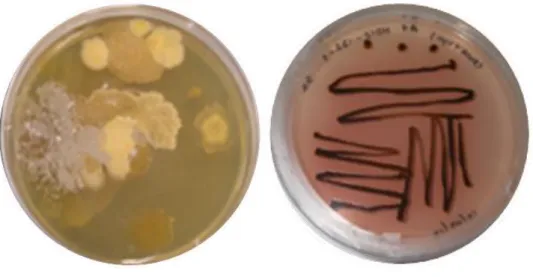
A total of 724 strains were isolated from 612 mother plates where marine samples had been initially plated. All of the strains were successfully grown and pure colonies show different characteristics in morphologies and sizes (see Appendix I). Figure 4 illustrates an example of a mother plate with various colonies and an example with bacteria isolate with one single strain.
4.2. Screening of bacterial isolates for PHA production on solid
medium
The production of PHA by microorganisms depends on the cultivation conditions including substrates and supplements provided. For regulation of their metabolism and for starting the process of carbon uptake and carbon accumulation in the form of granules as an energy reserve, the limitation of an essential nutrient as well as an excess of carbon in the environment in which they develop is necessary (Luengo et al., 2003).
Nile Red was used during this work to develop a simple and highly sensitive staining method to detect PHAs directly in growing bacterial colonies (Spiekermann et al., 1999). It is known that the Nile Red stain emits strong positive orange/yellow fluorescence signals only when it is linked to hydrophobic compounds like PHAs and lipids (Desouky et al., 2007).
During growth, the Nile red diffuses into the cytoplasm and subsequently into the PHA inclusions, colonies of PHA-accumulating strains should fluorescence when the cells were cultivated under conditions permitting PHA accumulation, so, the direct addition of this dye to the medium provides a tool to discriminate between PHA-negative and PHA-positive strains without killing the cells (Spiekermann et al., 1999).
The medium used at this stage contained 20 g/L of starch, 2 g/L of yeast extract and 1 g/L of peptone. The lipophilic dye Nile Red was added directly to the agar medium to a final concentration of 0.5 µg/mL (Shrivatav et al., 2010; Spiekermann et al., 1999).
The 724 isolated strains previously obtained were grown on agar plates containing Nile Red and incubated for 72 hours, time long enough to permit PHA accumulation but avoid PHA reutilization by the cells.
A total of 174 isolate strains from the 724 tested were found to emit a strong orange/yellow fluorescence under Blue Light after growth of 72 hours, suggesting the accumulation of polymer through the lipophilic dye Nile red (see Appendix II). Almost 75% of the isolated strains did not present any fluorescence.
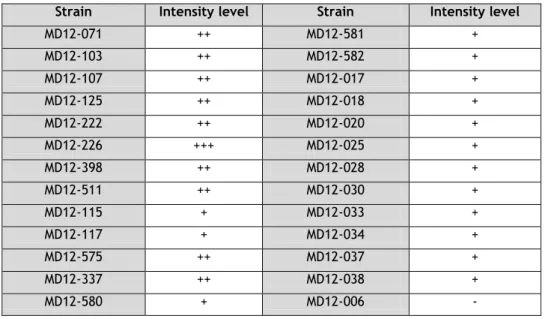
Fluorescence signal was evaluated macroscopically as followed: (+ + +) intense orange fluorescence;
(+ +) bright yellow fluorescence; (+) yellow fluorescence and (-) no fluorescence.
Table 5- Level of fluorescence intensity of 25 selected strains
Bacteria with the most intense fluorescence signal were selected for further studies. Table 5 shows the fluorescence intensity of the 25 strains presenting the strongest fluorescence signal. Figure 5 shows the fluorescence signal emitted by four selected strains.
Figure 5-Fluorescent Nile red staining on agar plates of isolates 1: 006; 2: 581; 3:
MD12-226; 4: MD12-107.
Colonies of PHA-positive strains of MD12-581(+), MD12-107(+ +), MD12-226(+ + +) exhibited a strong fluorescence, whereas the MD12-006 corresponded to a PHA-negative strain without any fluorescence. Isolated colonies of PHA-positive and PHA-negative strains located on the same agar plate were this way clearly distinguished.
Strain Intensity level Strain Intensity level
MD12-071 ++ MD12-581 + MD12-103 ++ MD12-582 + MD12-107 ++ MD12-017 + MD12-125 ++ MD12-018 + MD12-222 ++ MD12-020 + MD12-226 +++ MD12-025 + MD12-398 ++ MD12-028 + MD12-511 ++ MD12-030 + MD12-115 + MD12-033 + MD12-117 + MD12-034 + MD12-575 ++ MD12-037 + MD12-337 ++ MD12-038 + MD12-580 + MD12-006 -
3
4
2
1
As Nile red staining is not specific to PHA but could also bind to hydrophobic polymers such as lipids, and therefore to confirm the content of PHA, these 25 strains were grown in liquid medium for further analysis of PHA content via GC analysis.
4.3. Secondary screening in 25 mL liquid cultivation
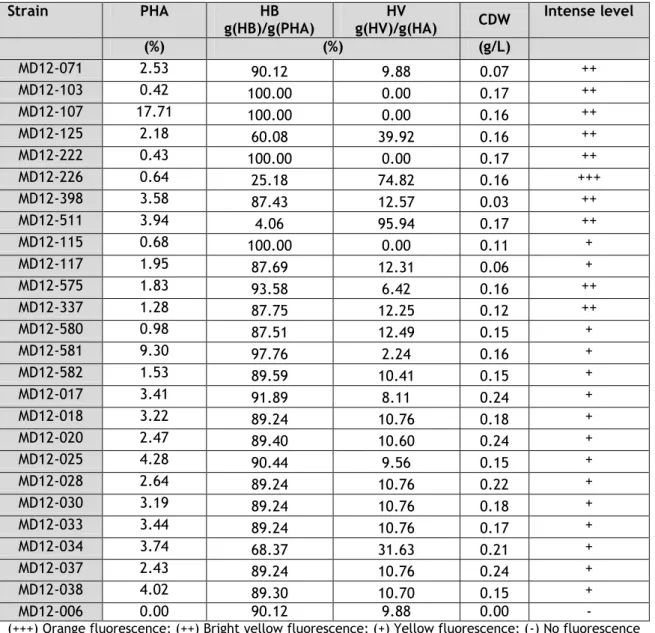
The 25 strains (Table 5) presenting the highest signal on Nile Red plate were grown in 25 mL liquid Medium A2 to assess precisely the production of PHA for further selection of the best PHA producer strain. The medium contained 20 g/L of starch, 2 g/L of yeast extract and 1 g/L of peptone. The inocula were incubated at 28 ºC and 200 rpm. PHA, hydroxybutyrate (HB) and hydroxyvalerate (HV) storage contents and cell dry weight (CDW) for the 25 strains are presented in Table 6.
Table 6- PHA storage content, %HB, %HV, cell dry weight and level of fluorescence on plates with Nile
Red Strain PHA HB g(HB)/g(PHA) HV g(HV)/g(HA) CDW Intense level (%) (%) (g/L) MD12-071 2.53 90.12 9.88 0.07 ++ MD12-103 0.42 100.00 0.00 0.17 ++ MD12-107 17.71 100.00 0.00 0.16 ++ MD12-125 2.18 60.08 39.92 0.16 ++ MD12-222 0.43 100.00 0.00 0.17 ++ MD12-226 0.64 25.18 74.82 0.16 +++ MD12-398 3.58 87.43 12.57 0.03 ++ MD12-511 3.94 4.06 95.94 0.17 ++ MD12-115 0.68 100.00 0.00 0.11 + MD12-117 1.95 87.69 12.31 0.06 + MD12-575 1.83 93.58 6.42 0.16 ++ MD12-337 1.28 87.75 12.25 0.12 ++ MD12-580 0.98 87.51 12.49 0.15 + MD12-581 9.30 97.76 2.24 0.16 + MD12-582 1.53 89.59 10.41 0.15 + MD12-017 3.41 91.89 8.11 0.24 + MD12-018 3.22 89.24 10.76 0.18 + MD12-020 2.47 89.40 10.60 0.24 + MD12-025 4.28 90.44 9.56 0.15 + MD12-028 2.64 89.24 10.76 0.22 + MD12-030 3.19 89.24 10.76 0.18 + MD12-033 3.44 89.24 10.76 0.17 + MD12-034 3.74 68.37 31.63 0.21 + MD12-037 2.43 89.24 10.76 0.24 + MD12-038 4.02 89.30 10.70 0.15 + MD12-006 0.00 90.12 9.88 0.00 -