
Use of innovative active packaging in storage and postharvest quality of fresh strawberries and dehydrated kiwifruit snacks
209
0
0
Texto
(2) Universidade do Algarve. Use of innovative active packaging in storage and postharvest quality of fresh strawberries and dehydrated kiwifruit snacks. Cristino Sousa Dores. Dissertação para obtenção do Grau de Mestre em: Hortofruticultura. Trabalho efetuado sob a orientação de: Professora Doutora Maria Dulce Carlos Antunes Doutora Custódia Maria Luís Gago. 2017.
(3) Título: Use of innovative active packaging in storage and postharvest quality of fresh strawberries and dehydrated kiwifruit snacks. Aluno: 47503. Declaração de autoria. Declaro ser o autor deste trabalho, que é original e inédito. Autores e trabalhos consultados estão devidamente citados no texto e constam da listagem de referências incluída.. Cristino Sousa Dores. © Cristino Sousa Dores. A Universidade do Algarve tem o direito, perpétuo e sem limites geográficos, de arquivar e publicitar este trabalho através de exemplares impressos reproduzidos em papel ou de forma digital, ou por qualquer outro meio conhecido ou que venha a ser inventado, de o divulgar através de repositórios científicos e de admitir a sua cópia e distribuição com objetivos educacionais ou de investigação, não comerciais, desde que seja dado crédito ao autor e editor..
(4)
(5) Agradecimentos/Acknowledgements. À professora Doutora Maria Dulce Carlos Antunes, Orientadora, pela confiança, aposta e disponibilidade depositadas em mim. Pela liderança, exigência e rigor que a distinguem. Por me proporcionar momentos pessoais e académicos inesquecíveis que levarei para sempre comigo.. À Doutora Custódia Maria Luís Gago, Coorientadora, pelo seu tempo, conhecimento, amizade e simpatia. Pelo foco no que realmente importa, pela experiência e orientação e por tornar tudo muito mais fácil.. À Doutora Adriana Cavaco Guerreiro, por se dividir em mil, por tornar possível o impossível, pelo pragmatismo, pela praticabilidade, pela paciência e compreensão, pela amizade, partilha e atenção. Por tudo.. To Anouk Dantuma, for such a good reception, for making me feel like home in that wonderful country which is The Netherlands. For the friendship, teachings, patience and time. Dank u wel.. i.
(6)
(7) Resumo Uma maior consciencialização ambiental e alimentar tem vindo a assolar populações um pouco por todo o mundo. A crescente procura por alimentos frescos e saudáveis, livres de conservantes sintéticos e que ao mesmo tempo que não prejudiquem o meio ambiente, tem sido palavra de ordem dos consumidores. A extrema perecibilidade de produtos frescos, nomeadamente de fruta, leva a que medidas de prevenção sejam tomadas para que a sua qualidade possa ser mantida e prolongada. A correta utilização de técnicas de pós-colheita assume um papel preponderante nesta prevenção, atuando de forma direta na redução da deterioração frutícola. Neste sentido, o tipo de embalagem utilizada na conservação de frutos, é indispensável para um ótimo armazenamento, proteção e distribuição dos mesmos. No entanto, apenas proteção contra choques físicos não é, por si só, suficiente para a manutenção da qualidade da fruta, que poderá sofrer danos relacionados com más técnicas de pós-colheita ou com a ineficácia das embalagens, que deveriam a todo o custo proteger o produto desde o campo até ao consumidor. Como tal, para fazer face a um problema cujo prejuízo pode levar a perdas entre produtor e consumidor na ordem dos 20%, um conceito inovador promete reduzir estas perdas, prolongando o tempo de armazenamento e vida de prateleira ao mesmo tempo que mantém a qualidade dos frutos, o que permite uma maior e melhor disponibilidade do produto. Este conceito dá-se o nome de Embalagens Ativas. Estas embalagens caracterizam-se por, através de aditivos na sua composição, interagirem com o produto no seu interior, aditivos esses que, visam ser food-safe e biodegradáveis, sendo, portanto, uma alternativa viável aos aditivos químicos usualmente utilizados na conservação de frutos. De acordo com estudos anteriores, os óleos essenciais conhecidos pelas suas propriedades antimicrobianas, assim como os alginatos, sais extraídos de algas da classe Phaeophyceae, cujas propriedades de encapsulação, revestimento e absorção da humidade são de elevado interesse, são dois dos aditivos que demonstraram ter sucesso na preservação de pequenos frutos. Assim sendo, a conceção das embalagens ativas utilizadas neste estudo tiveram como base os aditivos anteriormente descritos em concentrações superiores à concentração mínima inibitória (MIC) estabelecidos em trabalhos anteriores. O morango (Fragaria x ananassa), é um dos frutos mais consumidos no mundo inteiro, sendo, portanto, um fruto com grande importância económica. Uma vez que este é um fruto iii.
(8) altamente perecível, com graves problemas de conservação, onde se registam perdas graves, processos alternativos de preservação da qualidade em pós-colheita poderão ser de grande interesse na manutenção da qualidade destes frutos. A procura por produtos alimentares saudáveis diferenciados tem vindo a aumentar, nesse sentido, produtos alternativos vão aos poucos surgindo no mercado. A utilização de snacks de fruta desidratada neste trabalho visa estudar a conservação destes produtos inovadores, tentando tornar o método de preservação por embalagens ativas um método eficaz não só para produtos convencionais assim como para produtos inovadores que sofram de problemas semelhantes de preservação da qualidade em armazenamento. O objetivo deste estudo foi avaliar o efeito de embalagens ativas na preservação da qualidade em pós-colheita de morangos frescos e snacks desidratados de kiwi, tentando perceber qual a concentração mais eficaz de entre as estudadas e perspetivar melhorias na conceção e preservação de frutos utilizando embalagens ativas. Foram realizados 3 ensaios diferentes, utilizando embalagens ativas de diferentes composições. Dos 3 ensaios, um foi feito em snacks desidratados de kiwi (Capítulo III) e os outros dois foram realizados utilizando morangos em fresco (Capítulos IV e V). Este estudo teve início em Arnhem, Holanda, onde em parceria com a empresa Kenniscentrum Papier en Karton (KCPK), foram fabricadas embalagens ativas com o intuito de serem utilizadas num dos ensaios com morangos (Capítulo IV) e noutro com os snacks (Capítulo III). Posteriormente, para além destas, um outro tipo de embalagens, feitas por uma empresa externa foram ainda testadas num terceiro ensaio utilizando morangos (Capítulo V). As embalagens continham na sua composição Alginato (1 e 2%); Alginato (1 e 2%) combinado com compostos de óleos essenciais, Citral e Eugenol (em concentrações correspondentes ao dobro e quadruplo da MIC, que é 0.15 e 0.1% respetivamente); Alginato (1 e 2%) combinado com Glycix (70%) e extratos vegetais. Os ensaios realizados com morangos (Chapter IV e V) foram levados a cabo ao longo de 14 dias, com medições dos parâmetros de qualidade no tempo inicial (0 dias) e ao longo de todo o período de armazenamento, enquanto o ensaio relativo aos snacks de kiwi (Chapter III) durou 4 meses, com medições periódicas mensais. Os parâmetros de qualidade analisados nos ensaios dos morangos foram a cor (L*, a*, b*), firmeza, teor de sólidos solúveis (ºBrix), perda de peso, determinação da carga microbiana (microrganismos aeróbios mesófilos, psicrófilos e fungos e leveduras), antocianinas e avaliação do painel de provadores. No ensaio dos snacks de kiwi, foram medidos a cor (L*, hº, C*), firmeza,. determinação. da. carga. microbiana iv. (microrganismos. aeróbios. mesófilos,.
(9) Enterobacteriaceae e fungos e leveduras), atividade da água (aw) e avaliação por painel de provadores. De um modo geral, não se registaram diferenças significativas entre os vários tipos de tratamentos nas embalagens ativas. No entanto é possível verificar que no caso dos morangos, onde a carga microbiana é um dos parâmetros mais críticos, as embalagens que contêm na sua composição óleos essenciais, apresentam restrições no desenvolvimento de microrganismos, a par de que na fruta desidratada, no último mês de armazenamento o mesmo se verificou para as embalagens testadas em comparação aos tratamentos controlo. No caso dos snacks de kiwi, as embalagens cujas composições continham Alginato 1% demonstraram ser as responsáveis pelos snacks com melhor aparência ao longo dos 4 meses de armazenamento. Este estudo comtempla alguns processos inovadores no que diz respeito ao armazenamento e fabrico de embalagens ativas, e uma vez que o armazenamento e conservação de alimentos é um problema transversal a todos os setores, será de bom senso que no futuro se possam, a partir destes pressupostos, aperfeiçoar estes ou outros processos, no sentido de melhorar a preservação de frutícolas e outros alimentos utilizando embalagens ativas.. Palavras chave: fruta, pós-colheita, embalagens ativas, food-safe, morango, snacks de fruta.. ix.
(10) Abstract The consumers demand for quality is growing, and the only way that the market as to keep up and respond to that demand is to ensure that the consumers get their needs fulfilled. For that, Active packaging(AP) is a concept that could change the paradigm of food preservation. With this work, it was pretended to test the effect of several types of AP, with different formulations, on fresh strawberry fruit (Fragaria x ananassa. cv. Festival) and dehydrated kiwifruit snacks (Actinidia deliciosa cv. Hayward) post-harvest quality. Alginate, essential oils and vegetal extracts were some of the compounds used on the AP composition. Quality parameters analysis were performed by measuring color CIE (L*hºC*) and (L*aºb*), firmness/hardness, soluble solids content(°Brix), weight loss, total anthocyanin content, microbial growth and taste panels. For the dehydrated kiwifruit snacks experiment, through storage, there were no significant differences among active packaging for the most quality parameters studied. Nevertheless, Alginate 1% performed better in terms of appearance as compared to control, and control samples showed slightly higher microbial spoilage after 4 months and appearance decreased from 3 to 4 months. For the strawberries experiments, through storage, there were no significant differences among active packaging for the most quality parameters studied. Nevertheless, the packages with alginate and essential oils combined showed interesting results on restraining the microbiological content and reducing spoilage as compared to control. Further studies are needed to improve these packages.. Keywords: Active packaging, strawberry, kiwifruit, quality, Fragaria x ananassa., Actinidia deliciosa, snacks.. vi.
(11) Aim and chapters The aim of this work was to evaluate the effect of active packages with different formulations on fresh strawberries and Kiwifruit snacks quality through storage. Regarding previous works, were chosen 3 major compounds that could serve the biggest purpose of postharvest quality procedures, keep the freshness and fruit quality for longer periods, improving the shelf-life period. These compounds were the essential oils components known for their antimicrobial effects, Eugenol and Citral, and Sodium Alginate known for his water barrier and moister absorbent properties. Minimum inhibitory concentrations (MIC) for Eugenol and Citral were established in previous works by Guerreiro et al. (2015) as well as the most suitable Alginate concentrations for this kind of experiments. Therefore, the active packages were made by adding to a non-treated paper several combinations of these 3 compounds. Quality parameters analysis were performed by measuring color CIE (L*hº C*) or (L*a* b*), firmness, soluble solids content(°Brix), weight loss, total anthocyanin content, microbial growth and taste panels. Six chapters form this work. Chapter I is focused on some introductory notes through a state-of-art including the mainly themes of this work. Chapter II regards the short term scientific mission (STSM) report resulting from the work done on the production of active packaging that took place on Arnhem, Netherlands, under Kenniscentrum Papier en Karton (KCPK) supervision. On Chapter III, a report about the effect of active packaging on the storage of kiwifruit snacks is presented, showing how an active packaging could influence a dehydrated product quality which are the healthy food new trend. Chapters IV and V report the effect of active packaging on the storage of strawberry fruits, which are among the most consumed fruits worldwide. There is a clear difference between those two chapters that led to their division. The measurements of quality evaluation were the same, however different types of active packages were tested. To finish, Chapter VI ends with a conclusion that synthesized the previous work and future perspectives that could motivate the continuation and the appearing of new related studies.. vii.
(12) Contents Agradecimentos/Acknowledgements ........................................................................................... i Resumo ...................................................................................................................................... iii Abstract ..................................................................................................................................... vi Aim and chapters ...................................................................................................................... vii Chapter I - Introduction ............................................................................................................. 1 1.. Packaging.......................................................................................................... 3. 2.. Active Packaging .............................................................................................. 4. 3.. Use of food-safe and biodegradable compounds .............................................. 7 3.1 Sodium Alginate ............................................................................................ 7 3.2 Essential Oils and their compounds ............................................................... 8 3.2.1 Citral........................................................................................................ 9 3.2.2 Eugenol ................................................................................................... 9 3.3 Glycix ........................................................................................................... 10. 4.. ‘Strawberry Festival ...................................................................................... 10. 5.. ‘Hayward’ Kiwifruit. ...................................................................................... 11. 6.. Dehydrated Fruit Snacks ................................................................................ 13. 7.. Fruit Quality and Postharvest Techniques ...................................................... 14 7.1 Harvest ......................................................................................................... 14 7.2 Strawberry Harvest ...................................................................................... 14 7.3 Kiwifruit Harvest ......................................................................................... 15 7.4 Conservation and Storage ............................................................................ 15. 8.. Quality parameters .......................................................................................... 16 8.1 Color............................................................................................................. 17 8.2 Weight loss ................................................................................................... 18 8.3 Firmness/Crispness ...................................................................................... 18. viii.
(13) 8.4 Total Soluble Solids ..................................................................................... 18 8.5 Microbiology ................................................................................................ 18 8.6 Water activity(aw)......................................................................................... 18 8.7 Anthocyanins ............................................................................................... 19 8.8 Sensory panel ............................................................................................... 19 9.. References ...................................................................................................... 20. Chapter II– Training Report .................................................................................................... 25 Chapter III - The effect of active packaging on the storage of kiwifruit snacks ...................... 45 Chapter IV - The effect of active packaging enriched with Citral, Eugenol and Alginate on the storage of ‘Strawberry Festival’ strawberry fruits .................................................................. 55 Chapter V - The effect of active packaging enriched with vegetal extracts on the storage of ‘Strawberry Festival’ strawberry fruits ................................................................................... 67 Chapter VI – Conclusions and future perspectives .................................................................. 81 Appendix ................................................................................................................................... 86 Appendix I – Poster present at IX International Symposium on Kiwifruit ........... 88 Appendix II - Statistical analysis of chapter III ..................................................... 89 Appendix III - Statistical analysis of chapter IV .................................................. 113 Appendix IV - Statistical analysis of chapter V ................................................... 152. ix.
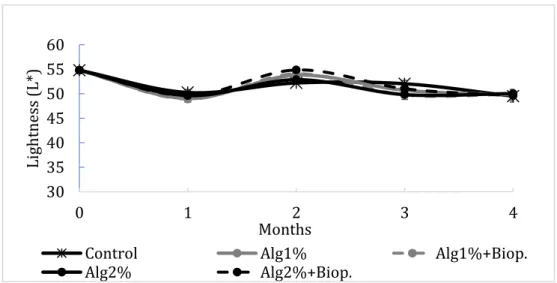
(14) List of Figures Figure 1.1 – Standard strawberry package (Sambrailo Packaging, 2017) ....................... 3 Figure 1.2 – Alternative strawberry paper-board package (Dantuma and Tiesktra, 2016). .......................................................................................................................................... 4 Figure 1.3 – Examples of active packaging used on the present study ............................ 6 Figure 1.4 – Sodium alginate chemical structure (Pawar and Edgar, 2012) ................... 7 Figure 1.5 – Water contact angle with a surface(ARC-FLASH, 2001). .......................... 8 Figure 1.6 - Chemical structures of geranial (trans-citral) and neral (cis-citral). ............ 9 Figure 1.7 - Chemical structures of eugenol. ................................................................. 10 Figure 1.8 – ‘Strawberry Festival’ Strawberry U.S. Patent PP14,739 (FFSP, Inc.,2013). ........................................................................................................................................ 11 Figure 1.9 – ‘Hayward’ Kiwifruit (Spreafico, 2017)...................................................... 12 Figure 1.10 – Kiwifruit dehydrated snacks .................................................................... 13 Figure 1.11 - CIE Lab( L*, a*, b*) color scale (Williams, 2002) .................................... 17 Figure 2.1 - Coating device for coating of a size-press roll, paper or board EP 0674047 A2 (Rantanen,1991). ...................................................................................................... 31 Figure 2.2 – Rod coating method (Dan et al., 2009) ...................................................... 32 Figure 2.3 – Treatments of 120g/m2 that were tested on fruit. ...................................... 40 Figure 3.1- Lightness (L*) color parameter of kiwifruit snacks through 4 months of storage at room temperature (23 ºC). ........................................................................... 51 Figure 3.2 – Hue (h ̊) color parameter of kiwifruit snacks through 4 months of storage at room temperature (23 ºC). ............................................................................................ 58 Figure 3.3 - Chroma (C*) color parameter of kiwifruit snacks through 4 months of storage at room temperature (23ºC). ......................................................................................... 52 Figure 3.4 – Crispness (N) of kiwifruit snacks snacks through 4 months of storage at room temperature (23ºC). ...................................................................................................... 53. x.
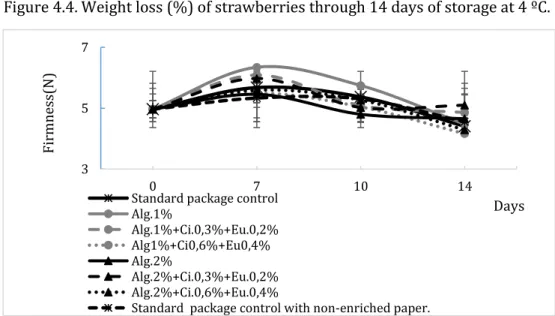
(15) Figure 3.5 - Water activity (aw) of kiwifruit snacks through 4 months of storage at room temperature (23ºC). ...................................................................................................... 53 Figure 3.6 - Molds and Yeasts (Log10 CFU/g) of kiwifruit snacks through 4 months of storage at room temperature (23ºC). ............................................................................ 53 Figure 3.7- Aerobic mesophilic microorganisms Log10 (CFU/g) of kiwifruit snacks ... 54 Figure 3.8 - Initial time taste panel of kiwifruit snacks. ................................................. 54 Figure 3.9 - Appearence of kiwifruti snacks on third and fourth month of storage. ..... 54 Figure 4.1- Lightness (L*) color parameter of strawberries through 14 days of storage at 4 ºC. ................................................................................................................................ 62 Figure 4.2- a* color parameter of strawberries through 14 days of storage at 4 °C. ...... 62 Figure 4.3 - b* color parameter of strawberries through 14 days of storage at 4°C. ..... 63 Figure 4.4 – Weight loss (%) of strawberries through 14 days of storage at 4 ºC. ........ 63 Figure 4.5 – Firmness(N) of strawberries through 14 days of storage at 4 ºC. .............. 63 Figure 4.6 – ̊Brix of strawberries through 14 days of storage at 4 ºC. .......................... 64 Figure 4.7 – Molds and Yeasts Log10 (cfu/g) of strawberries through 14 days of storage at 4 ºC. ............................................................................................................................ 64 Figure 4.8 – Aerobic mesophilic microorganisms Log10(cfu/g) of strawberries through 14 days of storage at 4 ºC. ................................................................................................... 64 Figure 4.9 – Psychrophilic microorganisms Log10(cfu/g) of strawberries through 14 days of storage at 4 ºC. ......................................................................................................... 65 Figure 4.10 - Anthocyanins (mg/g FW Cyanidin 3-glucoside) of strawberries through 14 days of storage at 4 ºC. ................................................................................................... 65 Figure 4.11a- Sensory panel at initial time. ................................................................... 65 Figure 4.11b - Sensory panel after 7 days of storage. ................................................... 66 Figure 4.11c - Apearence after 7 days of storage. .......................................................... 66 Figure 5.1- Lightness (L*) color parameter of strawberries through 14 days of storage at 4 ºC. ................................................................................................................................ 73 Figure 5.2- a* color parameter of strawberries through 14 days of storage at 4 ºC. ...... 74 Figure 5.3- b* color parameter of strawberries through 14 days of storage at 4 ºC. ..... 74 xi.
(16) Figure 5.4 – Weight loss (%) of strawberries through 14 days of storage at 4 ºC. ........ 75 Figure 5.5 – Firmness(N) of strawberries through 14 days of storage at 4 ºC. .............. 75 Figure 5.6 –Total soluble solids ( ̊Brix) of strawberries through 14 days of storage at 4 ºC. ................................................................................................................................... 75 Figure 5.7 – Yeasts and molds Log10 (cfu/g) of strawberries through 14 days of storage at 4 ºC. ................................................................................................................................ 76 Figure 5.8 – Aerobic mesophilic microorganisms Log10(cfu/g) of strawberries through 14 days of storage at 4 ºC. ................................................................................................... 76 Figure 5.9 – Psychrophilic microorganisms Log10(cfu/g) of strawberries through 14 days of storage at 4 ºC. ........................................................................................................... 77 Figure 5.10 – Anthocyanins (mg/g FW Cyanidin 3-glucoside) of. strawberries through. 14 days of storage at 4 ºC. .............................................................................................. 77 Figure 5.11a- Sensory panel at initial time. ................................................................... 78 Figure 5.11b - Sensory panel after 7 days of storage .................................................... 78 Figure 5.11c - Sensory panel after 14 days of storage................................................... 79. List of Tables Table 1.1 - Examples of active packaging applications for use within the food industry(Kerry et al., 2006) .............................................................................................. 5 Table 2.1 – Solutions Viscosities ................................................................................... 30 Table 2.2 – Paper Treatments ........................................................................................ 32 Table 2.3 – Colors codes ................................................................................................ 35. xii.
(17) Chapter I - Introduction. Chapter I - Introduction. 1.
(18)
(19) Chapter I - Introduction 1. Packaging Packaging is defined as enclosing food to protect it from tampering or contamination from physical, chemical and biological sources. Packaging maintains the benefits of food processing after the process is complete, enabling foods to travel safely for long distances from their origin point and still be wholesome at the time of consumption. The primary purpose of food packaging is to protect the food against physical damage, oxygen, water vapor, ultraviolet light, and both chemical and microbiological contamination (Prasad and Kochhar, 2014). Conventional polymers made of petroleum-based raw materials are a widely used packaging for foods. Nowadays, bio-based packaging for foodstuffs becomes increasingly popular, and it is being used as a replacement for conventional polymers (Dukalska et al., 2013). Plastic waste is considered a serious social problem. The market for plastics has increased exponentially to an estimated annual production of 280 million tons in 2011, of which approximated 18.5 million tons, i.e. 39% of the European plastics demand, is used for packaging in Europe (Plastics, 2011). Increased environmental concerns over the use of certain synthetic packaging and coatings in combination with consumer demands for both higher quality and longer shelf life have led to increased interest in alternative packaging materials research (Khwaldia, 2010). Despite in some assays of the present study were used plastic packages exclusively as fruit containers, it is supposed that the active biodegradable paper tested used could replace the plastic containers in the future (Figures 1.1 and 1.2).. Figure 1.1 – Standard strawberry package (Sambrailo Packaging, 2017). 3.
(20) Chapter I - Introduction. Figure 1.2 – Alternative strawberry paper-board package (Dantuma and Tiesktra, 2016).. 2. Active Packaging In response to the dynamic changes in current consumer demand and market trends, the area of Active Packaging is increasing significantly. Unlike traditional packaging, which must be totally inert, active packaging is designed to interact with the contents and/or the surrounding environment. Active packaging refers to the incorporation of additives into packaging systems with the aim of maintaining or extending product quality and shelf-life to meet consumer demands in terms of providing high-quality products that are also fresh and safe. Now, active packaging is mainly used in Asia or the United States, whereas in Europe its use is not widespread yet (Prasad, 2014). Active food-packaging concepts provide some additional functions in comparison with traditional passive packaging materials that are limited to protection of the packaged food product against external influences (Vermeiren et al., 2002). A variety of active packaging techniques are concerned with substances that absorb oxygen, ethylene, moisture, carbon dioxide, flavors/odors and those which release carbon dioxide, antimicrobial agents, antioxidants and flavors (Vermeiren et al., 1999). Examples of active packaging applications are presented in table 1.1.. 4.
(21) Chapter I - Introduction. Table 1.1 - Examples of active packaging applications for use within the food industry(Kerry et al., 2006). Absorbing/scavenging. Oxygen, carbon dioxide, moisture, ethylene, flavors,. properties. taints, UV light. Releasing/emitting. Ethanol, carbon dioxide, antioxidants, preservatives,. properties. Sulphur dioxide, flavors, pesticides. Removing properties. Catalyzing food component removal: lactose, cholesterol. Temperature control. Insulating packaging,. materials,. self-heating. microwave. susceptors. and and. self-cooling modifiers,. temperature-sensitive packaging Microbial. and. quality UV and surface-treated packaging materials. control. Oxidative reactions and contamination by pathogenic microorganisms are among the main factors reducing the shelf life of perishable foods (Portes et al., 2009). Therefore, a search for antimicrobial and antioxidant agents for the prevention and maintenance of food product quality is a major concerning. A promising type of active packaging is the incorporation of antimicrobial substances in food-packaging materials to control undesirable growth of microorganisms on the surface of foods (Vermeiren et al., 2002). The phenome of antimicrobial agent migration from the package into the food is essential to inhibit the growth of microorganisms on the food surface where this growth is critical. The gaseous (volatile) agents can evaporate into the headspace of the packaging system reaching the food. Of course, the release rate of antimicrobial agents should be controlled to match the growth kinetics of the microorganisms. Antimicrobial agents can be incorporated into a packaging system through simple blending with packaging materials, immobilization or coating depending on the characteristics of package system, antimicrobial agent or food product. The blended antimicrobial agents as well as the ones incorporated as coating can migrate into the foods during storage and distribution (Han,2003). Incorporating these agents on the packaging instead of applying them on food (i.e. as edible coatings) has the advantage of these compounds not being in direct contact with the consumed products, resulting on a decrease of additives ingestion by the consumers, who tendentially choose products free of any kind of preservatives.. 5.
(22) Chapter I - Introduction The compounds incorporated in the packaging of this work (Figure. 1.3), are a cross of the blending and coating processes, once the compounds penetrate the paper used on the packaging, interacting with it, at the same time that a layer of antimicrobial agents is formed and stays on the paper structure as an antimicrobial barrier. This process can produce an antimicrobial packaging system, by incorporating the compounds on the ready paper without interfering with the paper producing process itself. This is useful when working with factories and paper mills, using the available resources without affecting their daily production, archiving an important balancing point between research and production, instead of changing their production methods in order to get the desired product, leading sometimes to huge production losses.. Figure 1.3 – Examples of active packaging used on the present study. 6.
(23) Chapter I - Introduction 3. Use of food-safe and biodegradable compounds Nowadays, a healthy lifestyle is becoming highly adopted by people all around the world. The consumers look for products less processed and even the concept of fast-food is changing, in an attempt of keeping up with these requests. Usually, to maintain their quality, a wide range of food products take chemical preservatives on their composition. If in a way, the consumer requires that the products they consume have lesser amounts of chemical preservatives, on the other hand it requires a freshness as they had been prepared at the time (Martins, 2015). As so, it is necessary to find alternate solutions that could preserve the products being food-safe and environmentally-friendly. The active compounds utilized in this work are known for being food-safe and not affecting the nutritional quality parameters (Guerreiro et al., 2016).. 3.1 Sodium Alginate Alginates are natural polysaccharides extracted from brown sea algae (Phaeophyceae), composed of two uronic acids (b-Dmannuronic acid and a-L-guluronic acid) and located in the intracellular matrix as a gel containing sodium, calcium, magnesium, strontium and barium ions (Fig. 1.4). Alginates are known as hydrophilic biopolymers that have a coating function due to its colloidal properties, being resistant to solvents, oil, and grease. They are used for thickening, suspension, gel forming, emulsion stabilizing, and in sizing and/or coating paper to produce surface uniformity (Guerreiro et al., 2016 ; Khwaldia et al., 2010).. Figure 1.4 – Sodium alginate chemical structure (Pawar and Edgar, 2012). 7.
(24) Chapter I - Introduction According to Rhim (2006), paperboard coated with alginate reduce the contact angle of water which indicates an increase in hydrophilicity of the paper and resulting in an increased affinity of the paperboards to water (Fig. 1.5).. Figure 1.5 – Water contact angle with a surface(ARC-FLASH, 2001).. 3.2 Essential Oils and their compounds Essential oils (EOs) and their components, which are naturally occurring antimicrobial agents, are well known for their potencial against pathogenic microorganisms. Many species and herbs exert antimicrobial activity due to their essential oil fractions. EOs are variable mixtures of essential terpenoids, specially monoterpenes (C10) and sesquiterpenes (C15), although diterpenes (C20) may also occur, and of a variety a low molecular-weight aliphatic hydrocarbons, acids, alcohol, aldehydes, phenolic compounds, acyclic esters, or lactones (Khwaldia et al., 2010; Celikel and Kavas, 2008; Guerreiro, 2015). Despite the good results achieved with the incorporation of essential oils compounds into coating formulations, high concentrations of EOs are generally needed to achieve effective antimicrobial activity in direct food applications, which might have a negative impact on flavors and odors of food. Even so, most of the EOs are classified as Generally Recognized as Safe (GRAS) and their use as food preservatives is often limited to flavoring considerations, once the effective antimicrobial doses of EOs compounds may exceed organoleptic acceptable levels (Khwaldia et al., 2010; Celikel and Kavas, 2008; Guerreiro, 2015). Since the chemical composition of plant-derived products, such as EOs, is highly variable, the utilization of the active compound instead of the EOs is a better approach to obtain the desired effects (Guerreiro et al., 2015).. 8.
(25) Chapter I - Introduction 3.2.1 Citral Citral (C10H16O) is a mixture of two isomeric acyclic monoterpene aldehydes: geranial (trans-citral) and neral (cis-citral) (Fig. 1.6). Citral is usually isolated from the essential oil of lemongrass (Katsukawa et al., 2010; Shen et al., 2015), but can also be extracted from citrus fruits and leaves (Apolónio et al., 2014 ; Wuryatmo et al., 2003) and his effects had been widely demonstrated against mould, yeast and bacteria proliferation. The European Commission (Regulation (EC) No 872/2012) also approved citral as flavoring agent in food industry. Although Citral is a widely studied EO compound, the antimicrobial mechanism of action is not completely understood. It is known that, in general, the plasma membrane is the primary site of toxic action of terpenes, but the ultimate mechanisms of growth inhibition, cell injury and inactivation are not totally defined (Somolinos et al., 2010).. Figure 1.6 - Chemical structures of geranial (trans-citral) and neral (cis-citral).. 3.2.2 Eugenol Eugenol (C10H12O2) is a naturally-occurring phenol extracted from buds and leaves of clove and is also the main compound in cinnamon leaf EOs (75-95%) (Fig. 1.7) (Ribes et al., 2016). Previous studies show that eugenol exhibits an excellent fungicidal as well as bactericidal activity against organisms like Escherichia coli, Staphylococcus aureus, Pseudomonas aeruginosa and Listeria monocytogenes. It is suggested that the mode of antimicrobial action of eugenol is through disruption of cytoplasmic membrane, which increases its non-specific permeability (Devi et al., 2010). Eugenol has a very characteristic and intense aroma, and has been long known for its analgesic, local anesthetic and anti-inflammatory effects (Guerreiro, 2015).. 9.
(26) Chapter I - Introduction. Figure 1.7 - Chemical structures of eugenol.. 3.3 Glycix Glycix is a biobased and biodegradable thermoset plastic. Researchers Gadi Rothenberg and Albert Alberts discovered “Glycix” bioplastic by chance while looking for a biofuel. The basic compounds of the polymer are glycerol and citric acid, two substances that are in abundant supply in nature and can be produced from biomass. To obtain the plasticizer properties, the hardness, brittleness, and toughness of Glycix, it is necessary to submit it to moderate temperatures in order to start a cross-linking reaction between glycerol and citric acid (Alberts and Rothenberg, 2017; Materia, 2015).. 4. ‘Strawberry cv. Strawberry Festival The strawberry (Fragaria x ananassa.) is the fruit of the strawberry plant belonging to the Rosacea family. Considered as a "small fruit", it has intense color and distinctive taste, and has always been used for fresh consumption, candy confection, jam, beverages, liqueurs, yogurt, ice cream and even in flavorings and pharmaceuticals. This fruit, fresh or processed, occupies a prominent place in the diet and the traditional cuisine of various countries all over the world (OMAIAA,2011). The world biggest strawberry producer are the United States of America, which annually produce around 30.5% of the world production while in all the European countries is produced around 33.3% (GPP, 2013). ‘Strawberry Festival’ (cultivar used on this study) origin comes from a cross between ‘Rosa Linda’ and ‘Oso Grande’ cultivars. It was selected in 1995 from a field nursery at GCREC-Dover, Florida. ‘Rosa Linda’, a Univ. of Florida cultivar was used as a parent due to 10.
(27) Chapter I - Introduction its high early season yield potential and its desirable fruit shape. ‘Oso Grande’, a Univ. of California cultivar, was used as a parent because of its ability to produce large, firm fruit. ‘Strawberry Festival’ is a short-day cultivar. The average petiole has a length of 120 mm. Average length and breadth of leaflets is 78 and 73 mm for terminal leaflets, respectively, and 69 and 72 mm, respectively, for secondary leaflets. Leaflet margins are crenate and average 21 serrations per terminal leaflet, and 26 per secondary leaflet. The fruit is attached to long pedicels, those of mature primary fruit are 188 to 240 mm long, with branching of the inflorescence usually occurring close to the crown. ‘Strawberry Festival’ fruits are mostly conic shaped. The external color of fully mature fruit is deep red and glossy and internal color is bright red. Currently ‘Strawberry Festival’ is one of the major cultivars grown in west central Florida (Chandler et al., 2000). ‘Strawberry Festival’ is a grower favorite because it has a sturdy bush that is easy to harvest, doesn’t yield huge quantities of fruit on any one date and produces very few cull fruits. It is a supermarket favorite because its fruit are attractive, fit well in standard packages and have a long shelf life (Fig. 1.8). This clone was named ‘Strawberry Festival’ in recognition of the Florida Strawberry Festival, an annual festival in Plant City that celebrates the abundant crop of berries harvested in eastern Hillsborough County during late February and early March (FFSP, Inc.,2013).. Figure 1.8 – ‘Strawberry Festival’ Strawberry U.S. Patent PP14,739 (FFSP, Inc.,2013).. 5. ‘Hayward’ Kiwifruit Kiwifruit are native to the southeast Asia. There are more than 50 species in the genus Actinidia. The most common kiwifruit species grown commercially is Actinidia deliciosa. 11.
(28) Chapter I - Introduction ‘Hayward’, discovered in 1920's and introduced into cultivation in early 1930's, selected by Hayward Wright. ‘Hayward’ kiwifruits are found in supermarkets all around the world (Strik, 2005;Morton, 1987). The kiwifruit plant is a vigorous, woody, twining vine reaching up to 9 m. Its alternate, long-petioled, deciduous leaves are oval to nearly circular, cordate at the base, approximately 7.5-12 of.5 cm long. Young leaves and shoots are coated with red hairs, while mature leaves are dark-green and hairless on the upper surface and downy-white with prominent light-colored veins beneath. ‘Hayward’ cultivar fruits are exceptionally large, broad-oval, with slightly flattened sides with approximately 80-90 grams a fruit (Fig. 1.9). The skin is light greenishbrown with dense, fine, silky hairs while the flesh is light green. The sweet flavor stands out, showing also a good storing quality. The vine is moderately vigorous, usually blooms late and flowers borne singly or, rarely, in pairs. The petals are broad, overlapping, cupped, and the styles more erect than those of other cultivars though they vary from horizontal to vertical (Strik, 2005;Morton, 1987). Kiwi buds enter endodormancy during winter, and a required minimum number of chilling hours for maximum bud break and bloom is needed. Despite ‘Hayward’ cultivar has chilling requirement of over 950 hours for vegetative buds and 1150 hours for optimum flowering, a growing season of about 225 to 240 frost free days is also a special need. Most kiwifruit species should tolerate temperatures down to -12°C but some plants may be damaged at slightly higher temperatures, being temperature the most limiting factor for kiwifruit production (Strik, 2005;Morton, 1987;Wall et al., 2008).. Figure 1.9 – ‘Hayward’ Kiwifruit (Spreafico, 2017). 12.
(29) Chapter I - Introduction 6. Dehydrated Fruit Snacks Dehydration is probably the oldest form of preserving food. The use of dehydrated foods leads to some loss of quality, however, this method allows an extension of the products shelflife with a considerable quality. A dried food product offers the advantage of decreased weight, reducing transportations costs. However, there is often a decrease in the quality of the dried products due to the usual dehydration techniques which require high temperatures during the drying process (Cohen and Yang, 1995). Exposing dehydrated fruits to room temperature conditions causes deterioration of these kind of products, having the package an important role on maintaining quality. The dehydrated kiwifruit snacks have differentiating characteristics that give them a good acceptance by consumers. The confection of the snacks in this study were made according to previous trials where synthetic additives were avoided, being the snacks the most natural as possible (Fig. 1.10). It is expected that through the fruit dehydration process, the snacks to have a crispy and crunchy texture and a more appealing form due to the circular moulding given. These snacks can also be used in the confection of ice creams, yogurts, desserts, cereals and drinks.. Figure 1.10 – Kiwifruit dehydrated snacks. 13.
(30) Chapter I - Introduction 7. Fruit Quality and Postharvest Techniques The fruit market depends largely on the quality presented of his products. Quality is defined as any of the features that classify the degree of excellence or superiority of a product. The quality of fresh horticultural products is a combination of characteristics, attributes, and properties that give value for food and may vary according to the purpose of who sells or buys. Producers are concerned that their commodities have good appearance and few visual defects, but for them a useful cultivar must score high on yield, disease resistance, ease of harvest, and shipping quality. To receivers and market distributors, appearance quality is most important as well as firmness and long storage life. Consumers consider good quality fruits and vegetables to be those that look good, are firm, and offer good flavor and nutritive value (Kader, 2002). Horticultural fresh products quality is influenced by several factors, starting on the handling of fruits and vegetables from harvest till their storage at home. To please all the elements on supply chain, certain post-harvest techniques could be adopted to reduce losses and guarantee that the products reach the final consumer with the desired quality.. 7.1 Harvest The way to harvest fruit can be a differentiating factor between a durable and quality product and a rather desired product. The type of harvest varies in case that fruits are intended for fresh consumption or industrial processing. For fresh consumption, the fruits must be harvested carefully to avoid injury and fruit contamination, if the fruit is intended for industrial processing, must be picked those fruits with small defects and a less desirable appearance (Sousa and Curado, 2005). The physiological maturity of a fruit occurs when it reaches his maximum development and the ability to reach full maturity in the plant or out of it. However, in commercial terms, the harvest may not always be able to be accomplished according to physiological maturity which must be taken into account the market and the time until consumption. As such, commercially, the harvest is performed according to the so-called commercial maturity, instead of physiological maturity (Sousa and Curado, 2005).. 7.2 Strawberry Harvest Strawberries are non-climacteric fruits and are among the most perishable produced items. They are harvested at a point where they are ready to be consumed unlike many other fruits, like kiwifruits, that are harvested at a less sensitive unripen stage and then ripen later.. 14.
(31) Chapter I - Introduction The maturation index for the harvest most used is based on color surface of strawberry and harvest should be done when the fruit has acquired the characteristic color of the cultivar in 2⁄3 or 3⁄4 of the surface if the product is intended for distant markets. If the product is intended for local markets the harvest can be performed when the strawberry provide its characteristic color in the whole fruit. Immediately after harvest, the fruits must be conditioned on the package that will reach the consumer in a way to minimize the handling of strawberries avoiding a decrease in quality (Sousa and Curado, 2005). Once harvested and cut off from its source of water and nutrients, the process of degradation begins, and cooling as soon as possible is imperative to minimize the rate of degradation and maximize strawberry quality and shelf life (CSC,2011). The strawberry harvest should be staggered, in hours of lower heat and with the fruits in the proper state of maturity to meet the market requirements (Sousa, 2005).. 7.3 Kiwifruit Harvest Kiwifruit are climacteric fruits, as so, they could be harvested at a less sensitive unripen stage and then ripened later. When the fruit appears to be firm and showing around 6.5 percent (6.5 °Brix) of Total Soluble solids (TSS) are ready to be harvested. The fruits must be removed quickly from the field due to heat right after harvest, because the fruit can lose water very quickly. After 3 to 4 percent of water loss, fruit may appear shriveled, especially at the stem end. Keep fruit in the shade while awaiting transport, and cool them as quickly as possible must be done to maximize storage life. The harvest must be executed with caution once kiwifruit are easily damaged by rough handling even though they seem quite hard at this stage of maturity (Atkinson et al., 2011; Strik, 2005).. 7.4 Storage Temperature management is the most effective tool for maintaining quality and safety, extending the postharvest- life of fresh horticultural products. It begins with the rapid removal of field heat by initial cooling and continues throughout the cold chain (refrigerated transportation, cold storage at wholesale distribution centers, refrigerated retail display/shelflife and cold storage at home). Management of relative humidity along with temperature is essential in reducing water losses and maintaining quality (Kader, 2013). Exposure of fresh fruit to low O2 and/or elevated CO2 atmospheres within the range tolerated by each commodity reduces their respiration and ethylene production rates what leads. 15.
(32) Chapter I - Introduction to a retardation of senescence. However, the use of some inadequate CA, may be responsible for some physiological disorders on the fruit (Yahia, 2009). Fruits distribution could also be a problem with severe repercussions. The distance between the place of production and the place of consumption could be considerable. Transports with controlled temperature must be used. Some basic precautions must be taken, as pre-cool the transportation cold chambers or limit the amount of products on the chambers to not overload their capacity, as well as maintain the transport clean and drive through the fastest route should be taken into account (Poças, 2001). Strawberries have a relatively high rate of respiration and are highly susceptible to water loss and mechanical damage. They are also susceptible to decay from fungus, specially Botrytis sp. and Rhizopus sp. This all means that strawberries require special attention to all aspects of postharvest handling. The cooling of fruits should be made immediately after harvest. Delays in this process lead to a reduction in the percentage of marketable fruit (CSC, 2011). According to Poças (2001), the ideal conditions of strawberries cold storage are 0±0.5ºC at 90-95% of relative humidity. At these conditions strawberries could be stored up to 7 days. 'Hayward' kiwifruit has an atypical climacteric behaviour. It has an autocatalytic ethylene production during ripening at room temperature but not at temperatures below 10°C(Antunes, 2008). This characteristic allows to take adequate measures for long term storage prolonged, making it possible to commercialize fruits through time, exposing the fruits to ethylene to start the ripening process before shipping to stores. Normally kiwifruits are stored at 0ºC with 90 to 95% of relative humidity in not controlled atmosphere or at same temperature and humidity conditions, but with a controlled atmosphere of 2%O2+5%CO2. On these conditions, kiwifruits could be stored for at least 6 months for not controlled atmosphere and up to 9 months for controlled atmosphere environments, if the atmosphere is ethylene-free (Antunes, 2008).. 8. Quality parameters Quality is not a linear definition, depending in most cases of consumers or markets. However, there is a consensus that factors such as visual appearance, texture, flavor, absence of defects and microbiological contamination are part of a set of attributes, which allows to classify the quality of a product (Guerreiro, 2015).. 16.
(33) Chapter I - Introduction 8.1 Color Measuring the surface color of a fruit give an indication of the ripening stage as well an appearance perception. CIE Lab( L*, a*, b*) scale was settled. The a* parameters is responsible for readings from green (-a*) to red (+a*), b* parameter shows values between blue (-b*) and yellow (+b*) color. L* represents color lightness, going from white (L*=100) to black (L*=0). The calculation of hue angle (h°) and Chroma (C*) can also give a more accurate measure of color. Hue and color saturation (Chroma) values were obtained using the following formulas (Guerreiro, 2015; Martins, 2015; McGuire, 1992):. 𝐻𝑢𝑒. (ℎ∗ ). 𝑏∗ 180 𝑏∗ 180 = 𝑆𝐸 (𝑎 > 0; arctan ( ∗ ) 𝑥 ; arctan ( ∗ ) 𝑥 + 180) 𝑎 3,1416 𝑎 3.1416 ∗. 𝑏∗ 180 𝑏∗ 180 𝑢𝑒 (ℎ ∗)(=)𝑆𝐸 (𝑎 < 0; arctan ( ∗ ) 𝑥 ; arctan ( ∗ ) 𝑥 ) + 180 𝑎 3,1416 𝑎 3.1416 ∗. 𝐶ℎ𝑟𝑜𝑚𝑎(𝐶 ∗) = √(𝑎∗ )2 + (𝑏 ∗ )2. Figure 1.11 - CIE Lab( L*, a*, b*) color scale (Williams, 2002). 17.
(34) Chapter I - Introduction 8.2 Weight loss Water loss is the main reason for weight loss and it is an indicator of fruit desiccation. As so, weight lost was calculated as percentage of initial weight just for the fresh fruit trials, and using the following formula:. 𝑊𝑒𝑖𝑔ℎ𝑡 𝑙𝑜𝑠𝑠 =. 𝑊𝑒𝑖𝑔ℎ𝑡𝑖𝑛𝑖𝑡𝑖𝑎𝑙 − 𝑊𝑒𝑖𝑔ℎ𝑡𝑓𝑖𝑛𝑎𝑙 𝑥100 𝑊𝑒𝑖𝑔ℎ𝑡𝑖𝑛𝑖𝑡𝑖𝑎𝑙. 8.3 Firmness/Crispness Firmness, along with the color, is the first quality parameter checked by consumers. Firmness is a parameter that is based in the strength needed to penetrate the fruit pulp. For nonfresh products, crispness is the texture parameter measured, defined as the necessary strength to break a product. The values are given in Newton(N) and measured using a penetrometer(Martins, 2015).. 8.4 Total Soluble Solids The Total Soluble Solids(TSS) are measured in ºBrix values using a refractometer. TSS is used to obtain the soluble solids content of an aqueous solution (fruit juice), which is an indirect measurement of the sugars content and sweetness of a fruit (Martins, 2015).. 8.5 Microbiology The deterioration of food is mainly caused by microbial agents and oxidative reactions, affecting the products quality. An urgency to find antimicrobial agents and antioxidants for the prevention and maintenance of quality is a current concerning (Barros, 2013). To understand the limits of food acceptance and safety, microbiological analysis are performed, measuring the amount of microbial content in a product expressed by Log10 CFU/g (Colony Forming Unit).. 8.6 Water activity(aw) The free water of a food product is an indicator of quality mainly in dehydrated food products. Free water in products is responsible for the growth of undesirable organisms such as bacteria or fungi. The water activity (aw) provides information regarding the possibility of microbiological growth, giving indications of the stability and durability of a sample and it is a measure of how efficiently the free water present in a product can take part in a reaction. a w is. 18.
(35) Chapter I - Introduction the ratio of the vapor pressure of the water in the substrate (p) to that of pure water at the same temperature (po), calculated by the following formula (Sandulachi, 2010):. 𝑎𝑤 =. 𝑝 𝑝𝑜. 8.7 Anthocyanins Fruit color is a major determinant of quality in red berry fruits and is due to the presence of anthocyanins, a group of water-soluble pigments with antioxidant properties (Patras et al., 2009). Anthocyanin pigments are important to food quality because of their contribution to color and appearance. There is increasing interest in the anthocyanin content of foods once they are related with possible health benefits. Anthocyanin pigment content can also be a useful criterion in quality control and purchase specifications of fruit (Lee et al., 2005). Anthocyanin pigment concentration, expressed as Cyanidin-3-glucoside equivalents, as follows(Guerreiro et al., 2013;Lee et al., 2005): 𝐴 × 𝑀𝑊 × 𝐷𝐹 × 103 𝜀 ×𝑙 A = (A520 nm − A700 nm) pH 1.0 − (A520 nm − A700 nm)pH 4.5 MW = 449.2 g/mol = value of the molecular weight of Cyanidin-3-glucoside DF = dilution factor ε = 26,900 molar extinction coefficient for Cyanidin-3-glucoside, in L × mol − 1 × cm − 1 103= factor for conversion from g to mg l = path length in cm.. 8.8 Sensory panel Sensory panel is a very important indicator of consumer acceptance. Different treatments and storage time could cause an alteration on fruit flavor. Panel members are usually asked to evaluate the appearance, crunchiness, aroma, texture, sweetness, acidity and overall flavor on the base of a 7 point hedonic scale: 1-dislike definitely; 2-dislike; 3-dislike mildly; 4neither like nor dislike; 5-like mildly; 6-like; 7-like definitely. Panel members usually consist of University students and staff members who were trained at the beginning of the experiment. 19.
(36) Chapter I - Introduction to become familiar with the characteristics of the fruit (Guerreiro, 2015; Rojas-Graü et al., 2009).. 9. References Alberts, A.H., and Rothenberg, G. (2017). Plantics-GX: a biodegradable and costeffective thermoset plastic that is 100% plant-based. Faraday Discuss. 202, 111–120. Antunes, M.D. (2008). Colheita e conservação. In Kiwi. Da Produção À Comercialização, pp. 192–203. Apolónio, J., Faleiro, M.L., Miguel, M.G., and Neto, L. (2014). No induction of antimicrobial resistance in Staphylococcus aureus and Listeria monocytogenes during continuous exposure to eugenol and citral. FEMS Microbiol. Lett. 354, 92–101. ARC-FLASH (2001). Thin-film Coating Techinque. flash.com.tw/our_tec2-5-en.htm [Date Accessed: 2017-10-03]. http://www.arc-. Atkinson, R.G., Gunaseelan, K., Wang, M.Y., Luo, L., Wang, T., Norling, C.L., Johnston, S.L., Maddumage, R., Schröder, R., and Schaffer, R.J. (2011). Dissecting the role of climacteric ethylene in kiwifruit (Actinidia chinensis) ripening using a 1-aminocyclopropane1-carboxylic acid oxidase knockdown line. In Journal of Experimental Botany, pp. 3821–3835. Barros, A.C. (2013). Aplicação de embalagens ativas com agentes naturais na preservação de alimentos Aplicação de embalagens ativas com agentes naturais na preservação de alimentos. Universidade do Algarve. CSC - California Strawberry Commission (2011). Maintainig Quality of Fresh Strawberry. Celikel, N., and Kavas, G. (2008). Antimicrobial Properties of Some Essential Oils against Some Pathogenic Microorganisms. Czech J. Food Sci. 26, 174–181. Chandler, C.K., Legard, D.E., and Dunigan, D.D. (2000). “ Strawberry Festival ” Strawberry. Hortscience - Am. Soc. Hortic. Sci. 35, 1366–1367. Cohen, J.S., and Yang, T.C.S. (1995). Progress in food dehydration. Trends Food Sci. Technol. 6, 20–25. Dantuma, A., and Tiesktra, S. (2016). Trends en behoeften in verschillende markten en de papierketen. In Vakblad Voedingsindustrie, p. Devi, K.P., Nisha, S.A., Sakthivel, R., and Pandian, S.K. (2010). Eugenol (an essential oil of clove) acts as an antibacterial agent against Salmonella typhi by disrupting the cellular membrane. J. Ethnopharmacol. 130, 107–115. Dukalska, L., Ungure, E., Augspole, I., Muizniece-Brasava, S., Levkane, V., Tatjana, R., and Krasnova, I. (2013). Evaluation of the Influence of Various Biodegradable Packaging Materials on the Quality and Shelf Life of Different Food Products. Proc. Latv. Univ. Agric. 30, 20–34. FFSP - Florida Foundation Seed Producers Inc. (2013). “Strawberry Festival.” http://www.ffsp.net/varieties/strawberry/strawberry-festival/ [Date Accessed: 2017-10-09] 20.
(37) Chapter I - Introduction GPP - Gabinete de Planeamento e Políticas (2014). Anuário Agrícola (Enigma Previsível). Guerreiro, A.C. (2015). Innovative edible coatings to improve storage of small fruits and fresh-cut Innovative edible coatings to improve storage of small fruits and fresh-cut. Universidade do Algarve. Guerreiro, A.C., Gago, C.M.L., Miguel, M.G.C., and Antunes, M.D.C. (2013). The effect of temperature and film covers on the storage ability of Arbutus unedo L. fresh fruit. Sci. Hortic. (Amsterdam). 159, 96–102. Guerreiro, A.C., Gago, C.M.L., Faleiro, M.L., Miguel, M.G.C., and Antunes, M.D.C. (2015). The effect of alginate-based edible coatings enriched with essential oils constituents on Arbutus unedo L. fresh fruit storage. Postharvest Biol. Technol. 100, 226–233. Guerreiro, A.C., Gago, C.M.L., Miguel, M.G.C., Faleiro, M.L., and Antunes, M.D.C. (2016). The influence of edible coatings enriched with citral and eugenol on the raspberry storage ability, nutritional and sensory quality. Food Packag. Shelf Life 9, 20–28. Kader, A.A. (2013). Postharvest Technology of Horticultural Crops - An Overview from Farm to Fork. J. Appl. Sci. Technol. 1, 1–8. Kader, A. a (2002). Quality and Safety Factors : Definition and Evaluation for Fresh Horticultural Crops. In Postharvest Technology of Horticultural Crops, pp. 279–285. Kerry, J.P., O’Grady, M.N., and Hogan, S.A. (2006). Past, current and potential utilisation of active and intelligent packaging systems for meat and muscle-based products: A review. Meat Sci. 74, 113–130. Khwaldia, K., Arab-Tehrany, E., and Desobry, S. (2010). Biopolymer Coatings on Paper Packaging Materials. Compr. Rev. Food Sci. Food Saf. 9, 82–91. Lee, J., Durst, R.W., and Wrolstad, R.E. (2005). Determination of total monomeric anthocyanin pigment content of fruit juices, beverages, natural colorants, and wines by the pH differential method: Collaborative study. J. AOAC Int. 88, 1269–1278. Materia (2015). Glycix • Materia. https://materia.nl/material/glycix/ [Date Accessed: 2017-09-24] Martins, A. (2015). Innovative edible films to improve storage ability of fresh-cut apple cv. Bravo de Esmolfe. Universidade do Algarve. McGuire, R.G. (1992). Reporting of objective color measurements. HortScience 27, 1254–1255. Morton, J.F. (1987). Kiwifruit. In Fruits of Warm Climates, pp. 293–300. OMAIAA - Observatório dos Mercados Agrícolas e das Importações AgroAlimentares (2011). A Produção e Comercialização do Morango em Portugal. http://www.observatorioagricola.pt/item.asp?id_item=104 [Date Accessed: 2017-10-09] Patras, A., Brunton, N.P., Da Pieve, S., and Butler, F. (2009). Impact of high pressure 21.
(38) Chapter I - Introduction processing on total antioxidant activity, phenolic, ascorbic acid, anthocyanin content and colour of strawberry and blackberry purées. Innov. Food Sci. Emerg. Technol. 10, 308–313. Pawar, S.N., and Edgar, K.J. (2012). Alginate derivatization: A review of chemistry, properties and applications. Biomaterials 33, 3279–3305. Poças, M. de F.F. (2001). Disqual - Manual de Boas Práticas - Morango (Disqual). Portes, E., Gardrat, C., Castellan, A., and Coma, V. (2009). Environmentally friendly films based on chitosan and tetrahydrocurcuminoid derivatives exhibiting antibacterial and antioxidative properties. Carbohydr. Polym. 76, 578–584. Prasad, P., and Kochhar, A. (2014). Active Packaging in Food Industry : A Review. IOSR J. Environ. Sci. Toxicol. Food Technol. 8, 1–7. Rhim, J.. (2006). Water resistance and mechanical properties of biopolymer ( alginate and soy protein ) coated paperboards. LWT- Food Sci. Technol. 39, 806–813. Rojas-Graü, M.A., Oms-Oliu, G., Soliva-Fortuny, R., and Martín-Belloso, O. (2009). The use of packaging techniques to maintain freshness in fresh-cut fruits and vegetables: A review. Int. J. Food Sci. Technol. 44, 875–889. Sambrailo Packaging (2017). Strawberry Packaging | Sambrailo Packaging. http://www.sambrailo.com/products/berries/strawberry-packaging/ [Access in: 2017-10-23] Sandulachi, E. (2010). Water Activity Concept and Its Role in Food Preservation. Water Act. Concept Its Role Food Preserv. 40–48. Somolinos, M., García, D., Condón, S., MacKey, B., and Pagán, R. (2010). Inactivation of Escherichia coli by citral. J. Appl. Microbiol. 108, 1928–1939. Sousa, M.B.S. e, and Curado, T. de F. (2005). Colheita, Pós-colheita, Conservação e Qualidade. In Manual Do Morangueiro, pp. 107–119. Spreafico (2017). Kiwi Hayward. http://www.spreafico.net/Products/Kiwi/KiwiHaiward/ [Date Accessed: 2017-10-11] Strik, B. (2005). Growing Kiwifruit (A Pacific Northwest Extension). Vermeiren, L., Devlieghere, F., Van Beest, M., De Kruijf, N., and Debevere, J. (1999). Developments in the active packaging of foods. Trends Food Sci. Technol. 10, 77–86. Vermeiren, L., Devlieghere, F., and Debevere, J. (2002). Effectiveness of some recent antimicrobial packaging concepts. Food Addit. Contam. 19, 163–171. Wall, C., Dozier, W., Ebel, R.C., Wilkins, B., Woods, F., and Foshee, W. (2008). Vegetative and floral chilling requirements of four new kiwi cultivars of Actinidia chinensis and A. deliciosa. HortScience 43, 644–647. Williams, A. (2002). Graybalance: A key element in color reproduction. http://www.newsandtecharchives.com/issues/2002/02-02/ifra/02-02_greybalance.htm. [Date Accessed: 2017-10-24]. 22.
(39) Chapter I - Introduction Yahia, E.M. (2009). Preface. In Modified and Controlled Atmospheres for the Storage, Transportation, and Packaging of Horticultural Commodities, E.M. Yahia, ed. (CRC press Tailor & Francis Group), pp. IX–XIII.. 23.
(40)
(41) Chapter II – Training Report. Chapter II– Training Report New Product Development – Active packaging development. Supervisors: Dantuma, A.1 &Antunes, M.D.C.2. 1. KCPK, IJsselburcht 3, 6825 BS Arnhem, The Netherlands. Faculdade de Ciências e Tecnologia, Edf. 8, Campus Gambelas, 8005-139 Faro, Portugal,. 2. 25.
(42)
(43) Chapter II – Trainig Report. Contents 1.. Introduction ...................................................................................................................... 28 1.1 Alginate, Essential oils and Glycix .................................................................. 28. 2. Material and Methods .......................................................................................................... 29 2.1 Size press trials................................................................................................. 29 2.1.1. Alginate and Alginate with Essential oils solution preparation ............... 30 2.1.2. Incorporation of the solutions into the paper ........................................... 31 3. Inkjet Printing ...................................................................................................................... 34 3.1 Incorporation of the solutions into the paper ................................................... 35 4. Results and Discussion ......................................................................................................... 36 5. Conclusions & Recommendations for further trials ............................................................ 38 6. References ............................................................................................................................ 40 7. Apendix ................................................................................................................................. 41 I -Weight gain (%) graphics ................................................................................... 41 II -Weight gain (g) graphics ................................................................................... 42 III - Alginate Producer Specifications ................................................................... 44. 27.
(44) Chapter II – Trainig Report. 1. INTRODUCTION The perishability of the fresh horticultural products leads to losses that may reach important and worrying levels. These losses, quantitative and/or qualitative, could involve serious losses for the producer, the merchant and the consumer. Strawberries, fresh or processed, occupy a prominent place in the diet and the traditional cuisine of various countries all over the world. These fruits are among the most perishable produce items, they have a relatively high rate of respiration and are highly susceptible to water loss and mechanical damage. They are also susceptible to decay from fungi and bacteria. This all means that strawberries require special attention to all aspects of postharvest handling. The main reasons for strawberry rejection at the entry of the warehouses were rot, excessive ripeness and logistics -related problems. At stores, rots are the main reasons for rejection and consecutive product returns. At same time, increased environmental concerns over the use of certain synthetic packaging and coatings in combination with consumer demands for both higher quality and longer shelf life have led to increased interest in alternative packaging materials research. Incorporation of antimicrobial agents in coatings to produce active paper packaging materials provides an attractive option for protecting food from microorganism development and spread. The use of biopolymers such as Alginates, Essential oils and Bioplastics known for their water barrier and antimicrobial properties, has been exploited in the preparation of active packaging in order to prolong the storage time and quality of fresh and dehydrated fruits. The work described on this report aim to attend to these important quality and market issues, trying to find a feasible and an economically interesting way to improve fruit storage and shelf-life by creating and testing the effect active packaging on post-harvest fruit quality. 1.1 Alginate, Essential oils and Glycix Alginates, which are extracted from brown seaweeds of the Phaephyceae class, are the salts of alginic acid. Alginates are resistant to solvents, oil, and grease and exhibit interesting film-forming properties (Khwaldia et al., 2010). Mechanical and water barrier properties of paperboards can be modified by biopolymer coatings, and alginate-based films can increase water barrier properties. This barrier is important to preventing the proliferation of microorganisms and the fruit softening by losing water (Rhim, 2004). Alginates show also a good capacity of encapsulation and holding together other compounds what can be an advantage when there is a need to add other compounds to an Alginate solution. Alginates, as opposed to essential oils, can tolerate temperatures up to 28.
(45) Chapter II – Training Report approximately 240ºC (Soares et al., 2004) and combine very easily with water being also able to be dissolved in it. Essential oils and their components, which are naturally occurring antimicrobial agents, are well known for their potency against pathogenic and spoilage microorganisms. The antimicrobial activity of essential oils such as thyme, cinnamon, clove, oregano, and their major components are mainly related to their high small terpenoid and phenolic contents. Despite the good results achieved with the incorporation of essential oils into coating formulations, the major drawback is their strong flavor and odor, which could change the original taste of foods. The implications on sensory characteristics of food products are of great merit for future research (Khwaldia, 2010). Since the chemical composition of plant-derived products, such as essential oils, is highly variable and may involve many compounds, the utilization of single compounds, such as citral and eugenol, instead of essential oils is a better approach to obtain an edible coating with constant characteristics as requested by the market (Guerreiro et al., 2015). Another product, named Glycix, was also used on the active packages manufacturing, this product is a bioplastic that can also improve the water-barrier proprieties of the paper made of glycerol and citric acid, two substances that are in abundant supply and can be produced from biomass, being 100% biodegradable (Materia, 2015). These two types of products are derived from natural sources, food safe and biodegradable, what can be an advantage for using them on food products or be used on all kind food packaging applications. Beside the Alginate and the Essential oils compounds being very easily to obtain in the market, they can be expensive. Depending on the type of Alginates and Essential oils compounds, the prices could vary. 1kg of Alginate can cost around 90€, 100ml of Citral can cost around 32€ and 100ml of Eugenol around 25€ (costumer values in 2016).. 2. MATERIAL AND METHODS 2.1 Size press trials During the October month were done 44 treatments adding Alginate, Essential oils compounds and Glycix to three different types of paper. The paper used on those trials were nontreated regular paper weighting 90g/m2 and 120g/m2 and an oil filter treated paper weighting 165g/m2.. 29.
Imagem




+7




Documentos relacionados
modelo de capacitação de processos de software, desenvolvido pelo SEI (Software Engineering Institute) e patrocinado pelo Departamento de Defesa Americano (DoD), para
In this study, all cheeses presented counts of lac- tic acid bacteria higher than 10 7 cfu g –1 (7.0 log cfu g –1 ) after seven days of cold storage, which is considered the
(teores de vitamina C, antocianinas e compostos fenólicos após o processamento mínimo de morangos Camarosa, Dover e Tudla). A) curve for electrolyte leakage in Camarosa, Dover and
[r]
4.1. Ratificam-se os termos das Condições Gerais que não foram expressamente alterados pela presente Cobertura Adicional... Garantir ao Segurado, até o limite máximo de
How- ever, the materials containing chlorhexidine showed the lowest contamination levels (Greengel, 59 CFU/ g, and Jeltrate Chromatic, 135 CFU/g). Effects of fluoride on the
Number of colony forming units (CFU)/ml blood and CFU/g heart, spleen, liver, head kidney, and gonads from Atlantic cod after intraperitoneal injection of 7.5 x 10 7 CFU of
Although there is much variation within Latin America and the Caribbean, the general situation is one of fairly stable consumption levels, widespread social acceptance of smoking,
