INTRODUCTION
Address to: Dr. Jorg Heukelbach. Deptº de Saúde Comunitária/FM/UFCE. Rua Professor Costa Mendes 1608, Bloco Didáico/5º andar, 60430-140 Fortaleza, CE, Brasil. Phone: 55 85 3366-8045
e-mail: [email protected] Received in 14/05/2012 Accepted in 03/09/2012
Muliple causes of death related to Chagas’ disease
in Brazil, 1999 to 2007
Francisco Rogerlândio Marins-Melo
[1],[2], Alberto Novaes Ramos Junior
[1],
Carlos Henrique Alencar
[1],[2]and Jorg Heukelbach
[1],[3][1]. Departamento de Saúde Comunitária, Faculdade de Medicina, Universidade Federal do Ceará, Fortaleza, CE. [2]. Swiss Tropical and Public Health Insitute, University of Basel, Basel, Switzerland. 3. School of Public Health, Tropical Medicine and Rehabilitaion Sciences, James Cook University, Townsville, Australia.
ABSTRACT
Introducion: Chagas’ disease is a major public health problem in Brazil and needs extensive and reliable informaion to support consistent prevenion and control acions. This study describes the most common causes of death associated with deaths related to Chagas’ disease (underlying or associated cause of death). Methods: Mortality data were obtained from the Mortality Informaion System of the Ministry of Health (approximately 9 million deaths). We analyzed all deaths that occurred in Brazil between 1999 and 2007, where Chagas’ disease was menioned on the death ceriicate as underlying or associated cause (muliple causes of death). Results: There was a total of 53,930 deaths related to Chagas’ disease, 44,543 (82.6%) as underlying cause and 9,387 (17.4%) as associated cause. The main diseases and condiions associated with death by Chagas’ disease as underlying cause included direct complicaions of cardiac involvement, such as conducion disorders/arrhythmias (41.4%) and heart failure (37.7%). Cerebrovascular disease (13.2%), ischemic heart disease (13.2%) and hypertensive diseases (9.3%) were the main underlying causes of deaths in which Chagas’ disease was ideniied as an associated cause. Conclusions:
Cardiovascular diseases were oten associated with deaths related to Chagas’ disease. Informaion from muliple causes of death recorded on death ceriicates allows reconstrucion of the natural history of Chagas’ disease and suggests prevenive and therapeuic potenial measures more adequate and speciics.
Keywords: Chagas’ disease. Mortality. Underlying cause of death. Muliple causes of death. Epidemiology. Brazil.
The World Health Organizaion (WHO) recommends mortality staisics to be presented by the underlying cause of death. This is deined as the disease or injury, which iniiated the cascade of events leading directly to death, or the circumstances of accident or violence that produced fatal injury1. However, especially for infecious and
parasiic diseases, there is a need for more comprehensive informaion on fatal events. Addiionally, there is a clear relevance to consider all causes of death recorded on death ceriicates. These include in addiion to the underlying causes of death the associated causes that increase the risk of complicaions, and other contribuing causes not directly related to the process that led to death. These three groups together are called muliple causes of death2,3.
In Brazil, with signiicant reducion of vector and blood-borne transmission, the number of cases of acute form of Chagas’ disease has been drasically reduced in most endemic areas4. In addiion, both
increased knowledge about the natural history of disease and beter efeciveness of clinical and surgical intervenions, led to the reducion of speciic mortality and increased survival of infected individuals5.
Recent esimates amount to 2 to 3 million individuals infected with the causing agent Trypanosoma cruzi in Brazil6-8. A large proporion of these
cases occurred in old persons, which increases paricularly the risk of
Major Article
associaion non-infecious chronic diseases such as cardiovascular diseases and neoplasms9.
Given this new scenario of morbidity and mortality caused by Chagas’ disease and the associaion with other chronic diseases, it is reasonable to expect that a higher number of causes of death directly or indirectly related to this disease will be observed in the next decades10.
The present naionwide study aimed to describe contribuing causes of death associated with death due to Chagas’ disease.
METHODS
Study design and populaion
We performed a nationwide population-based study using secondary mortality data. We included all deaths in Brazil during the period 1999 to 2007, where Chagas’ disease was recorded in any part of the medical ceriicate of cause of death (underlying or associated cause of death). The underlying cause of death is deined the disease or injury that iniiated the train of morbid events and that led directly to death1,and muliple causes as the set of all causes listed on death
ceriicates without disinct classiicaion (basic, consequenial or contribuing)11.
Chagas’ disease as a cause of death was deined in the presence of any clinical forms included in the category B57 (Chagas’ disease) of the tenth revision of the Internaional Staisical Classiicaion of Diseases and Related Health Problems (ICD-10)1.
Data Source
RESULTS
In Brazil, from 1999 to 2007, there were 53,930 deaths in which Chagas’ disease was menioned as a cause of death, 44,543 (82.6%) as the underlying cause and 9,387 (17.4%) as an associated cause of death. During the observaion period, the mean mortality rate increased by 21.4% (2.8 vs. 3.4 deaths per 100,000 inhabitants), while the increase of mean proporional mortality was 20% (0.5% vs. 0.6%). Chagas’ disease, as the underlying cause, was the fourth leading cause of death (10.8%) of all infecious and parasiic diseases in the period. Ministry of Health. Sistema de Informações sobre Mortalidade data are public domain and can be obtained from the website of the Staisical Department of the Uniied Health System (Departamento de Informáica do Sistema Único de Saúde - DATASUS)12. Sistema de
Informações sobre Mortalidade data sets are based on the death
ceriicates (Declaração de óbito), which consist of standardized forms to be illed out by the physicians in charge13. The death ceriicates
contain demographic and clinical informaion regarding the underlying and muliple causes of death.
We included only deaths from 1999 and later, as a new version of SIM was launched that year, based on a new death ceriicate form13. In this new form, a line was added in part I (line d) upon the
recommendaion of the World Health Organizaion, to enable the declaraion of a larger number of diagnoses and of associated causes of death14.
Data processing and analysis
Data processing has been described in detail previously10. Briely,
we downloaded and processed all 243 mortality data sets from the study period, with about 9 million entries. Field codes from diferent data sets were standardized. We then selected all death ceriicates with Chagas’ disease in any line of the ceriicate as cause of death (both underlying and associated causes). As in many death ceriicates more than one cause was noted per line, we created new variables for diferent causes of death.
Duplicaion of death events was eliminated by idenifying and counting causes in the database. Only one cause was included (category or grouping of ICD-10) if two (or more) causes belonging to this class were recorded in the same death certificate2.
In order to reconstruct the disease process that possibly led to death related to Chagas’ disease, all causes reported on the death ceriicate were analyzed, even ill-deined and those characterized by WHO as modes of death, such as cardiorespiratory arrest and
muliple organ failure1,3.
Data were stored and analyzed using STATA version 11 (Stata Corporaion, College Staion, USA).
Ethical consideraions
The information on deaths related to Chagas’ disease were obtained from computerized databases of the SIM as provided on the website of the DATASUS. This informaion is public domain and has no variables related to the ideniicaion of individuals. Thus, it was not necessary to submit the project to an insituional Ethics Review Board.
due to chronic digesive forms. In 1,097 (2.5%) cases, acute cardiac involvement was menioned, in 1,157 (2.6%) chronic involvement of other organs, and in 281 (0.6%) other clinical forms of the disease (involvement of the nervous system and acute form without cardiac involvement).
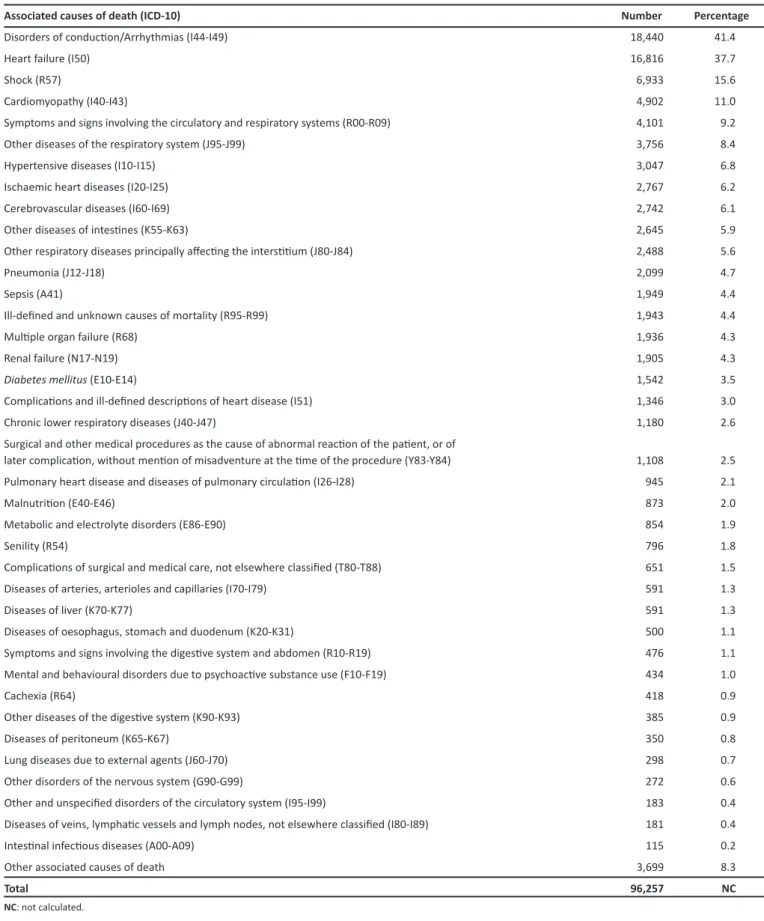
The associated causes of death in those with Chagas’ disease as the underlying cause are presented in Table 1. There was a clear predominance of condiions occurring during the natural history of Chagas’ disease, speciically diseases of the circulatory, respiratory and digesive systems. Direct complicaions of cardiac involvement, especially conducion disorders/arrhythmias and heart failure, were menioned in more than 35% of deaths, followed by shock (15%) (Table 1). The mean number of menions of heart condiions or causes in deaths due to Chagas’ disease as the underlying cause was 1.00 (44,643/44,543) per death ceriicate, while the mean menions for circulatory diseases (Chapter IX - ICD-10) was 1.17 (52,212/44,543).
Interesingly, there was a considerable number of deaths due to complicaions related to medical treatment and surgical procedures (T80-T88 and Y83-Y84), afecing 4% of total deaths due to Chagas’ disease (Table 1).
Regarding contributory causes, there was a predominance of causes of death related to chronic diseases of the circulatory system, namely hypertensive diseases, ischemic heart and cerebrovascular disease (Table 1).
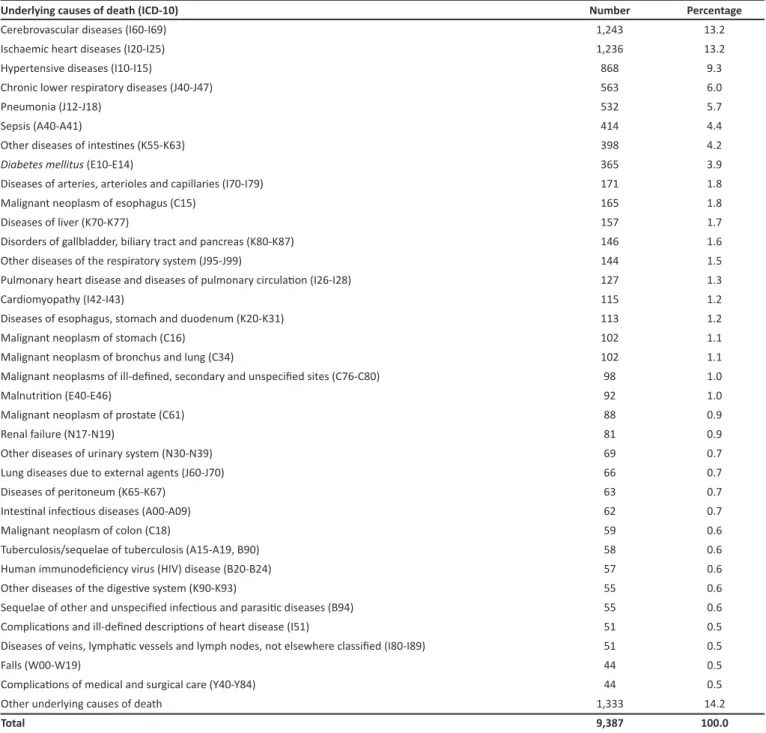
Table 2 details underlying causes of death for deaths in which Chagas’ disease was menioned as an associated cause. Here the patern is slightly diferent. The most common underlying causes were diseases of the circulatory and respiratory systems which reached 59% of deaths in which Chagas’ disease was associated cause, followed by neoplasms and digesive diseases, with 11.6% and 10.6% of deaths, respecively (Table 2). Cerebrovascular diseases, ischemic heart disease and hypertensive diseases were the main underlying causes of death, when Chagas’ disease was ideniied as an associated cause. Chronic pulmonary diseases, paricularly chronic obstrucive pulmonary disease were also an important cause of death (Table 2). Despite the predominance of causes related to the chronic cardiovascular and pulmonary complex, acute infecious diseases such as sepicemia and pneumonia also played an important role as the underlying cause, accouning for 10.1% deaths (Table 2).
DISCUSSION
The present study shows that informaion from muliple causes of death recorded on death ceriicates allowed parial reconstrucion of the natural history and the reconsituion of the morbid process of determining death by Chagas’ disease3. Given the fact that muliple
TABLE 1 -Associated causes of death in those paients with Chagas disease as underlying cause, 1999-2007 (muliple menions possible, Chagas’ disease as associated cause excluded).
Associated causes of death (ICD-10) Number Percentage
Disorders of conducion/Arrhythmias (I44-I49) 18,440 41.4
Heart failure (I50) 16,816 37.7
Shock (R57) 6,933 15.6
Cardiomyopathy (I40-I43) 4,902 11.0
Symptoms and signs involving the circulatory and respiratory systems (R00-R09) 4,101 9.2
Other diseases of the respiratory system (J95-J99) 3,756 8.4
Hypertensive diseases (I10-I15) 3,047 6.8
Ischaemic heart diseases (I20-I25) 2,767 6.2
Cerebrovascular diseases (I60-I69) 2,742 6.1
Other diseases of intesines (K55-K63) 2,645 5.9
Other respiratory diseases principally afecing the intersiium (J80-J84) 2,488 5.6
Pneumonia (J12-J18) 2,099 4.7
Sepsis (A41) 1,949 4.4
Ill-deined and unknown causes of mortality (R95-R99) 1,943 4.4
Muliple organ failure (R68) 1,936 4.3
Renal failure (N17-N19) 1,905 4.3
Diabetes mellitus (E10-E14) 1,542 3.5
Complicaions and ill-deined descripions of heart disease (I51) 1,346 3.0
Chronic lower respiratory diseases (J40-J47) 1,180 2.6
Surgical and other medical procedures as the cause of abnormal reacion of the paient, or of
later complicaion, without menion of misadventure at the ime of the procedure (Y83-Y84) 1,108 2.5
Pulmonary heart disease and diseases of pulmonary circulaion (I26-I28) 945 2.1
Malnutriion (E40-E46) 873 2.0
Metabolic and electrolyte disorders (E86-E90) 854 1.9
Senility (R54) 796 1.8
Complicaions of surgical and medical care, not elsewhere classiied (T80-T88) 651 1.5
Diseases of arteries, arterioles and capillaries (I70-I79) 591 1.3
Diseases of liver (K70-K77) 591 1.3
Diseases of oesophagus, stomach and duodenum (K20-K31) 500 1.1
Symptoms and signs involving the digesive system and abdomen (R10-R19) 476 1.1
Mental and behavioural disorders due to psychoacive substance use (F10-F19) 434 1.0
Cachexia (R64) 418 0.9
Other diseases of the digesive system (K90-K93) 385 0.9
Diseases of peritoneum (K65-K67) 350 0.8
Lung diseases due to external agents (J60-J70) 298 0.7
Other disorders of the nervous system (G90-G99) 272 0.6
Other and unspeciied disorders of the circulatory system (I95-I99) 183 0.4
Diseases of veins, lymphaic vessels and lymph nodes, not elsewhere classiied (I80-I89) 181 0.4
Intesinal infecious diseases (A00-A09) 115 0.2
Other associated causes of death 3,699 8.3
Total 96,257 NC
TABLE 2 - Underlying causes of death on death ceriicates with Chagas disease as an associated cause, Brazil, from 1999 to 2007.
Underlying causes of death (ICD-10) Number Percentage
Cerebrovascular diseases (I60-I69) 1,243 13.2
Ischaemic heart diseases (I20-I25) 1,236 13.2
Hypertensive diseases (I10-I15) 868 9.3
Chronic lower respiratory diseases (J40-J47) 563 6.0
Pneumonia (J12-J18) 532 5.7
Sepsis (A40-A41) 414 4.4
Other diseases of intesines (K55-K63) 398 4.2
Diabetes mellitus (E10-E14) 365 3.9
Diseases of arteries, arterioles and capillaries (I70-I79) 171 1.8
Malignant neoplasm of esophagus (C15) 165 1.8
Diseases of liver (K70-K77) 157 1.7
Disorders of gallbladder, biliary tract and pancreas (K80-K87) 146 1.6
Other diseases of the respiratory system (J95-J99) 144 1.5
Pulmonary heart disease and diseases of pulmonary circulaion (I26-I28) 127 1.3
Cardiomyopathy (I42-I43) 115 1.2
Diseases of esophagus, stomach and duodenum (K20-K31) 113 1.2
Malignant neoplasm of stomach (C16) 102 1.1
Malignant neoplasm of bronchus and lung (C34) 102 1.1
Malignant neoplasms of ill-deined, secondary and unspeciied sites (C76-C80) 98 1.0
Malnutriion (E40-E46) 92 1.0
Malignant neoplasm of prostate (C61) 88 0.9
Renal failure (N17-N19) 81 0.9
Other diseases of urinary system (N30-N39) 69 0.7
Lung diseases due to external agents (J60-J70) 66 0.7
Diseases of peritoneum (K65-K67) 63 0.7
Intesinal infecious diseases (A00-A09) 62 0.7
Malignant neoplasm of colon (C18) 59 0.6
Tuberculosis/sequelae of tuberculosis (A15-A19, B90) 58 0.6
Human immunodeiciency virus (HIV) disease (B20-B24) 57 0.6
Other diseases of the digesive system (K90-K93) 55 0.6
Sequelae of other and unspeciied infecious and parasiic diseases (B94) 55 0.6
Complicaions and ill-deined descripions of heart disease (I51) 51 0.5
Diseases of veins, lymphaic vessels and lymph nodes, not elsewhere classiied (I80-I89) 51 0.5
Falls (W00-W19) 44 0.5
Complicaions of medical and surgical care (Y40-Y84) 44 0.5
Other underlying causes of death 1,333 14.2
Total 9,387 100.0
circulatory system, corroboraing previous studies3,15. Consistent with
the clinical descripions and the predominance of chronic chagasic cardiopathy (CCC) as the main cause of death, cardiac complicaions were the main associated diseases, particularly arrhythmias/ conduction disorders, heart failure and cardiomyopathies. The frequent presence of other associated causes considered terminal, such as shock, pneumonia and sepsis relects the severity of the process related to Chagas’ disease3. The importance of hypertensive
disease and ischemic heart disease as contribuing causes was also evident, similarly to cerebrovascular diseases. This associaion with Chagas’ disease has concerned some invesigators previsouly16-20.
The ideniicaion of underlying causes responsible for the deaths
to Chagas’ disease. Due to the increased survival among paients with Chagas’ disease in recent decades5, there was a greater likelihood of
accumulaion of chronic diseases such as diabetes, atherosclerosis, obesity, cancer and hypertensive diseases3 causing deaths related
to ischemic heart diseases and cerebrovascular diseases as major underlying causes of death, when Chagas’ disease is presented as an associated cause.
Our data also call atenion to cerebrovascular disease, especially ischemic stroke, which is an event oten overlooked and not recognized as a complicaion of Chagas’ disease3,18. Studies have shown that the
failure, mural thrombi, ventricular apical aneurysm, hypertension and cardiac arrhythmias have been shown to be associated with stroke in paients with Chagas’ disease19,21. In a study based on autopsies
performed in a reference hospital in the State of Bahia between 1956 and 2001, cerebral infarcion was reported in 17.5% of autopsies of chagasic paients with heart failure, and complicaions were associated with death in 52% of cases16.
Rassi Jr et al.22 reviewed studies on the causes of deaths and
the frequency of sudden death in different population groups and found that sudden death, cardiac insuiciency and cerebral thromboembolism were the principal causes of death in Chagas’ disease. The highest and lowest frequency of a particular case depended on the characteristics of the study population, with predominance of sudden death in those studies that included outpaients, and heart failure in studies with paients hospitalized for cardiac decompensaion.
In a study from the State of São Paulo, sudden death (including in arrhythmic disorders /conducion disorder) was rarely menioned on death ceriicates, in only 12.8% of deaths3. The high frequency of heart
failure in deaths related to Chagas’ disease suggests poor prognosis for paients with this condiion, which seems to be associated with increased risk of death, as compared to paients with heart failure due to other eiologies23.
The associaion between arterial hypertension and Chagas’ disease in the development of severe cardiac involvement is sill a mater of debate in the literature24,25. In this study, the increase of hypertensive
diseases associated with diabetes mellitus can be attributed to increasing mortality at more advanced ages3. In fact, the prevalence
of cardiovascular causes observed in the study is parially related to the coexistence of chronic Chagas’ disease with the aging process of the populaion9, since cardiovascular diseases are the leading causes
of morbidity and mortality among the elderly26. In this study, most
deaths from Chagas’ disease concerned the elderly and paients with chronic cardiac form of the disease. In addiion to the funcional changes associated with aging of the cardiovascular system, elderly paients were also subject to damage associated with Chagas’ heart disease and other cardiovascular diseases such as arterial hypertension and ischemic heart disease. Consequently, they were more vulnerable to clinical decompensaion or development of lesions in organs such as brain, kidneys or the heart itself, which culminated in death9.
In fact, the predominance of cardiovascular causes observed in the study is linked to coexistence of chronic Chagas’ disease9 with the aging
process of the populaion, since cardiovascular diseases are the leading causes of morbidity and mortality among the elderly26. In addiion, the
frequent associaion of chronic disease causes signiicant demand for health services and medicaions that predispose to numerous risks, whereas the associaion between Chagas’ disease and other chronic diseases may increase mortality and worsen the quality of life of those who ind themselves in this unfavorable condiion26.
A current challenge is to provide assistance, taking into account the harmful efects of a combinaion of Chagas’ disease and other chronic degeneraive diseases9,26. The elderly chagasic paients should receive
priority atenion of health services and social assistance, deserving atenion of public managers and health professionals, in order to minimize morbidity and mortality by Chagas’ disease.
In addiion to cardiovascular disease, there are relevant associaions with respiratory diseases, paricularly chronic obstrucive pulmonary disease (COPD) and pulmonary embolism, digestive diseases and neoplasms. Infectious diseases, particularly sepsis and pneumonia (although this is classiied in the diseases of the respiratory system) also play a role. Intesinal infecious diseases, tuberculosis, mainly by co-infecion with human immunodeiciency virus (HIV), responsible for high mortality among untreated paients may aggravate these condiions27.
Knowledge on the associaions of causes of death as described in our study may assist in the prevenion of joint acion of these diseases, in the determinaion of the deaths for Chagas’ disease.
Interpretaion of results should consider limitaions of the study, such as problems arising from disease noiicaion and data entry28.
Secondary data oten show inconsistencies in the quanity and quality of their informaion3. Deaths may be under-reported, despite the
progress made during the observaion period in terms of SIM coverage and quality of informaion on causes of deaths. The coverage (raio of deaths reported/esimated) also presents variaions between regions in the country, mainly in the North and Northeast regions3.
Similar to underreporing of deaths, the occurrence of deaths from ill-deined causes is also uneven between regions, with worse indicators outside the state capitals, among children <1 years of age, in the poorest populaion strata, and in rural areas. Deaths due to ill-deined causes, rather than idenifying the quality of informaion in the death ceriicate, probably point to deiciencies in access to health services and quality of atenion.
The results of this study show internal consistency and coherence with exising knowledge about Chagas’ disease, as well as being highly representaive, since it included all death ceriicates during the period 1999 to 2007 in Brazil, a country of coninental dimensions.
We conclude that cardiovascular diseases, particularly heart diseases and cerebrovascular diseases, were the most important associated causes of death in those with Chagas’ disease as cause of death. The informaion from all causes of death recorded on death ceriicates allows parial reconstrucion of the natural history of Chagas’ disease and some suggests prevenive measures and adequate and speciic therapeuic. Knowledge of the full range of causes of deaths related to the disease opens new perspecives for the prevenion of deaths and help to guide appropriate care and speciic measures.
The authors declare that there is no conlict of interest.
CONFLICT OF INTEREST
ABSTRACT IN pORTUgUESE
Causas múliplas de morte relacionadas à doença de Chagas no Brasil, 1999 a 2007
REFERENCES
1. Word Health Organizaion. Internaional Staisical Classiicaion of Diseases and Related Health Problems (ICD): 10th Revision. Version 2007: Word Health Organizaion; 2007. [Cited 2010 October 15]. Available from: htp://apps.who. int/classiicaions/icd10/browse/2010/en.
2. Santo AH, Pinheiro CE. Tabulador de causas múliplas de morte. Rev Bras Epidemiol 1999; 2:90-97.
3. Santo AH. Tendência da mortalidade relacionada à doença de Chagas, Estado de São Paulo, Brasil, 1985 a 2006: estudo usando causas múliplas de morte. Rev Panam Salud Publica 2009; 26:299-309.
4. Silveira AC. Os novos desaios e perspecivas futuras do controle. Rev Soc Bras Med Trop 2011; 44:122-124.
5. Ramos Jr AN, Carvalho DM. Doença de Chagas: passado, presente e futuro. Cad Saude Colet 2009;787-794.
6. Word Health Organizaion. Control of Chagas disease (Technical Report Series 905). Geneva: Word Health Organizaion; 2002.
7. Dias JCP. Notas sobre o Trypanosoma cruzi e suas caracterísicas bio-ecológicas, como agente de enfermidades transmiidas por alimentos. Rev Soc Bras Med Trop 2006; 39:370-375.
8. World Health Organizaion. Working to overcome the global impact of neglected tropical diseases: First WHO report on neglected tropical diseases. Geneva: Word Health Organizaion; 2010.
9. Guariento ME, Carrijo CM, Almeida EA, Magna LA. Peril clínico de idosos portadores de doença de Chagas atendidos em serviço de referência. Rev Bras Clin Med 2011; 9:20-24.
10. Marins-Melo FR, Alencar CH, Ramos Jr AN, Heukelbach J Epidemiology of Mortality Related to Chagas’ Disease in Brazil, 1999-2007. PLoS Negl Trop Dis 2012; 6:1508. 11. Laureni RA. Análise da mortalidade por causa básica e por causas múliplas.
Rev Saude Publica 1974; 8:421-435.
12. Ministério da Saúde. Departamento de Informáica do Sistema Único de Saúde [Internet]. Brasília: Ministério da Saúde; 2010. [Cited 2010 October 15]. Available from: htp://tabnet.datasus.gov.br/cgi/sim/dados/cid10_indice.htm.
13. Ministério da Saúde. Manual de procedimentos do sistema de informações sobre mortalidade. Brasília: Ministério da Saúde; 2001.
14. Ishitani LH, França E. Uso das causas múliplas de morte em Saúde Pública. Informe Epidemiológico do SUS 2001; 10:163-175.
15. Wanderley DMV, Litvoc J. Doença de Chagas como causa básica de óbito na região sudeste do Brasil: presença de causas contributárias. Rev Saude Publica 1994; 28:69-75.
16. Aras R, Mata JAM, Mota G, Gomes I, Melo A. Cerebral Infarcion in Autopsies of Chagasic Paients with Heart Failure. Arq Bras Cardiol 2003; 81: 414-416. 17. Paixão LC, Ribeiro AL, Valacio RA, Teixeira AL. Chagas disease: independent risk
factor for stroke. Stroke 2009; 40:3691-3694.
18. Carod-Artal FJ. Stroke: a neglected complicaion of American trypanosomiasis (Chagas’ disease). Trans R Soc Trop Med Hyg 2007; 101:1075-1080.
19. Carod-Artal FJ, Ribeiro LS, Vargas AP. Awareness of stroke risk in chagasic stroke paients. J Neurol Sci 2007; 263:35-39.
20. Lima-Costa MF, Matos DL, Ribeiro ALP. Chagas Disease Predicts 10-Year Stroke Mortality in Community-Dwelling Elderly The Bambuí Cohort Study of Aging. Stroke 2010; 41:2477-2482.
21. Carod-Artal FJ, Vargas AP, Horan RA, Nunes LGN. Chagasic cardiomyopathyis independently associated with ischemic stroke in Chagas disease. Stroke 2005; 36:965-970.
22. Rassi Júnior A, Rassi A, Rassi SG. Predictors of Mortality in Chronic Chagas Disease: A Systemaic Review of. Circulaion 2007; 115:1101-1108.
23. Freitas HF, Chizzola PR, Paes AT, Lima AC, Mansur AJ. Risk straiicaion in a Brazilian hospital-based cohort of 1220 outpaients with heart failure: role of Chagas’ heart disease. Int J Cardiol 2005; 102:239-247.
24. Guariento ME, Orosz JEB, Gonijo JAR. Interação clínica entre molésia de Chagas e hipertensão arterial primária em um serviço de referência ambulatorial. Arq Bras Cardiol 1998; 70:431-434.
25. Gurgel CB, Almeida EA. Frequency of hypertension in paients with chronic Chagas disease and its consequences on the heart: a clinical and pathological study. Arq Bras Cardiol 2007; 89:174-182.
26. Alves RMA, Thomaz RP, Almeida EA, Silva J, Wanderley JS, Guariento ME. Chagas’ disease and ageing: the coexistence of other chronic diseases with Chagas’ disease in elderly paients. Rev Soc Bras Med Trop 2009; 42:622-628.
27. Ministério da Saúde. Recomendações para diagnóstico, tratamento e acompanhamento da co-infecção: Trypanosoma cruzi/vírus da imunodeiciência humana (HIV). Brasília: Secretaria de Vigilância em Saúde; 2007.
28. Drumond JAG, Marcopito LF. Migração interna e a distribuição da mortalidade por doença de Chagas, Brasil, 1981/1998. Cad Saude Publica 2006; 22:2131-2140. (aproximadamente 9 milhões de óbitos). Foram analisados todos os óbitos
ocorridos no Brasil entre 1999 e 2007, nos quais a doença de Chagas foi mencionada na declaração de óbito como causa básica ou associada (causas múliplas de morte). Resultados: Ocorreram 53.930 óbitos relacionados à doença de Chagas, 44.543 (82,6%) como causa básica e 9,387 (17,4%) como causa associada.As principais doenças e condições associadas ao óbito por doença de Chagas como causa básica foram as complicações diretas do envolvimento cardíaco, como os transtornos de condução/arritmias (41,4%) e a insuiciência cardíaca (37,7%). As doenças cerebrovasculares (13,2%), doenças isquêmicas do coração (13,2%) e as doenças hipertensivas (9,3%) foram as principais causas básicas nos óbitos em que a doença de Chagas foi ideniicada como causa associada. Conclusões: As doenças cardiovasculares foram as que mais frequentemente se associaram aos óbitos relacionados à doença de Chagas.As informações relaivas às causas múliplas de morte registradas na declaração de óbito permitem recompor a história natural da doença de Chagas e indicam medidas prevenivas e terapêuicas mais adequadas e especíicas.