Comparative sequence analysis of
the P-, M- and L-coding region of the
measles virus CAM-70 live attenuated
vaccine strain
1
Bio-Manguinhos, Fundação Oswaldo Cruz, Rio de Janeiro, RJ, Brasil
P.R. Santos, M.L.B. Azevedo, M.B.J. Borges, M.S. Freire, J.P. Nascimento and M.T.B. Moraes
Abstract
Measles virus is a highly contagious agent which causes a major health problem in developing countries. The viral genomic RNA is single-stranded, nonsegmented and of negative polarity. Many live attenu-ated vaccines for measles virus have been developed using either the prototype Edmonston strain or other locally isolated measles strains. Despite the diverse geographic origins of the vaccine viruses and the different attenuation methods used, there was remarkable sequence similarity of H, F and N genes among all vaccine strains. CAM-70 is a Japanese measles attenuated vaccine strain widely used in Brazilian children and produced by Bio-Manguinhos since 1982. Previous studies have characterized this vaccine biologically and genomically. Nevertheless, only the F, H and N genes have been sequenced. In the present study we have sequenced the remaining P, M and L genes (approximately 1.6, 1.4 and 6.5 kb, respectively) to complete the genomic characterization of CAM-70 and to assess the extent of genetic relationship between CAM-70 and other current vaccines. These genes were amplified using long-range or standard RT-PCR techniques, and the cDNA was cloned and automatically sequenced using the dideoxy chain-termination method. The sequence analysis comparing previously sequenced genotype A strains with the CAM-70 Bio-Manguinhos strain showed a low divergence among them. However, the CAM-70 strains (CAM-70 Bio-Manguinhos and a recently sequenced CAM-70 submaster seed strain) were assigned to a specific group by phylogenetic analysis using the neighbor-joining method. Information about our product at the genomic level is impor-tant for monitoring vaccination campaigns and for future studies of measles virus attenuation.
Correspondence
M.T.B. Moraes Bio-Manguinhos FIOCRUZ Av. Brasil, 4365 Rio de Janeiro, RJ Brasil
Fax: +55-21-2260-4727 E-mail: [email protected]
Research supported by CAPES, CNPq and Bio-Manguinhos, Fiocruz, Brazil.
Received October 16, 2002 Accepted August 14, 2003
Key words
•Measles virus •Vaccine
•Nucleotide sequence •RNA sequencing
1The measles virus gene sequences reported in the present study have been deposited in GenBank Data Libraries under
Introduction
Measles virus, a member of the Morbilli-virus genus (Paramyxoviridae family), is the causative agent responsible for a highly con-tagious airborne transmissible exanthematic illness that most commonly strikes children. Due to immune suppression, further serious complications causing high morbidity and mortality have been reported around the world (1,2). The genome consists of a single negative strand RNA 15,894 nucleotides long. There are six genes ordered as 3'-leader N, P/C/V, M, F, H, L-5' (3). Measles virus are divided into 21 genotypes (4) based on the C-terminus of the N gene or H gene nucleotide sequences, which are the most variable genes. The major structural poly-peptide is encoded by the N (nucleocapsid) gene. The N protein is essential for introduc-ing the genome into a ribonucleoprotein com-plex that serves as template for transcription, replication and packaging into progeny viri-ons. The P cistron specifies three polypep-tides: P, C and V. The P (phosphoprotein) polypeptide is a subunit of the viral RNA polymerase. P protein also acts as a chaper-one that interacts by regulating the cellular localization of N protein and probably con-tributes to nucleocapsid assembly. The C and V polypeptides are nonstructural pro-teins that are translated from P mRNA by the use of alternative reading frames; C protein is synthesized from a downstream transla-tion start signal, whereas V protein is trans-lated from an edited mRNA that contains an extra G residue. The M gene encodes the matrix protein that lines the inner surface of the viral envelope and participates in virion maturation. The F (fusion) and H (hemag-glutinin) genes encode envelope glycopro-teins that mediate cell surface recognition, membrane fusion, and virus entry. Finally, the L (large) gene encodes the multifunc-tional catalytic subunit of the viral RNA-dependent RNA polymerase (5,6).
The Edmonston strain of measles virus
isolated in cell culture in 1954 (7) became the progenitor for many live attenuated measles vaccines such as Moraten, Schwarz, Zagreb and Edmonston B (8). Several measles strains were also used for the development of measles vaccines in other countries such as Russia, China and Japan. All these attenu-ated strains are used around the world and despite the differences in methods employed for attenuation of the original viruses, which involve various cell culture systems, incuba-tion temperatures, and number of passages, remarkable nucleotide sequence similarity has been found among the strains (9).
A live attenuated vaccine (CAM-70) de-rived from a Japanese isolate has been used in Brazil since 1982. National vaccination campaigns achieved more than 95% cover-age after the Brazilian Measles Eradication Program was established in 1992, although some epidemic outbreaks have occurred af-ter the introduction of the program, mainly in 1997 (2,10). Nevertheless, since Decem-ber 2000 no cases of measles have been reported in Brazil. Efforts towards preven-tion, with an intense vaccination program consisting of mass vaccination and follow-up campaigns (2,11), have contributed strongly to the achievement of this goal.
CAM-70 vaccine was developed in 1970 from the Tanabe strain in Japan by adapta-tion to the chorioallantoic membrane (CAM) of chick embryos (12-15). This vaccine has been produced at Bio-Manguinhos/ FIOCRUZ since the early eighties by a tech-nology transfer from the Biken Institute, Ja-pan.
Bio-Manguinhos (CAM-70 BM) vaccine has not been completely analyzed; only the N, H and F genes were sequenced (9). P and L gene sequences from CAM-70 Kitasato Submaster Seed (CAM-70 KSS) have recently been reported (16).
We report the sequence analysis of the coding region of the P, M and L genes of Brazilian measles live attenuated CAM-70 vaccine, compared to other sequenced vac-cine and wild-type strains of genotype A. For this purpose, plasmidial clones with deter-mined regions of these genes were obtained, sequenced and analyzed.
Material and Methods
Cells and viruses
Vero cells (18) obtained from the Ameri-can Type Culture Collection were cultured in 199 Earle’s medium supplemented with 5% fetal bovine serum and 40 µg/ml gen-tamicin.
The lyophilized CAM-70 vaccine (lot No. 967SB005Z 0897) was supplied in vials containing five doses (Bio-Manguinhos/ FIOCRUZ). The vaccine was obtained through three passages of FMS-7 master seed virus in primary chick embryo fibro-blast cells (19) (Figure 1A and B) and was named CAM-70 BM. The vaccine virus was propagated only once in Vero cells to obtain a stock for RNA production.
RNA preparation, RT-PCR and cloning
Total RNA was extracted from CAM-70 BM-infected Vero cells by the acid guanidi-nium-phenol method (20). Reverse tran-scriptase reactions were performed using M-MLV RT (Promega Corp., Madison, WI, USA) with a specific antisense primer (Table 1) or Superscript one-step RT-PCR (Invitrogen, Carlsbad, CA, USA). For the L gene, two long PCR fragments (about 3.5 kb each) were synthesized using the Elongase
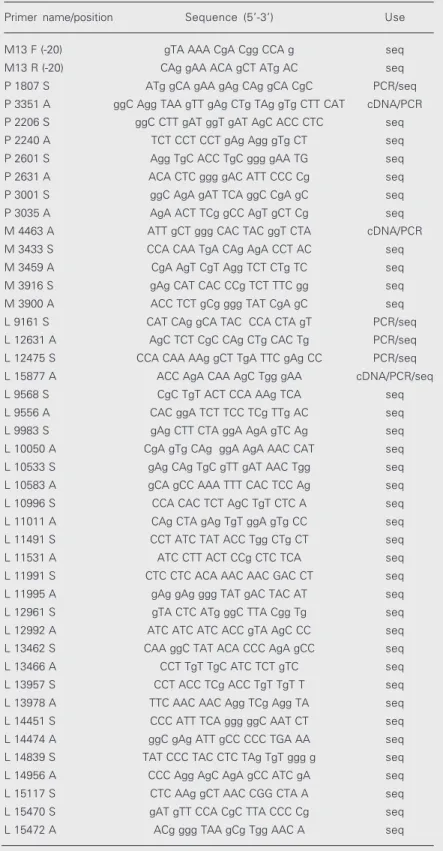
Table 1. Primers used for cDNA, PCR and sequencing (seq) in this study. The primers’ position refers to the complete genome.
Primer name/position Sequence (5'-3') Use
M13 F (-20) gTA AAA CgA Cgg CCA g seq
M13 R (-20) CAg gAA ACA gCT ATg AC seq
P 1807 S ATg gCA gAA gAg CAg gCA CgC PCR/seq P 3351 A ggC Agg TAA gTT gAg CTg TAg gTg CTT CAT cDNA/PCR P 2206 S ggC CTT gAT ggT gAT AgC ACC CTC seq
P 2240 A TCT CCT CCT gAg Agg gTg CT seq
P 2601 S Agg TgC ACC TgC ggg gAA TG seq
P 2631 A ACA CTC ggg gAC ATT CCC Cg seq
P 3001 S ggC AgA gAT TCA ggC CgA gC seq
P 3035 A AgA ACT TCg gCC AgT gCT Cg seq
M 4463 A ATT gCT ggg CAC TAC ggT CTA cDNA/PCR
M 3433 S CCA CAA TgA CAg AgA CCT AC seq
M 3459 A CgA AgT CgT Agg TCT CTg TC seq
M 3916 S gAg CAT CAC CCg TCT TTC gg seq
M 3900 A ACC TCT gCg ggg TAT CgA gC seq
L 9161 S CAT CAg gCA TAC CCA CTA gT PCR/seq L 12631 A AgC TCT CgC CAg CTg CAC Tg PCR/seq L 12475 S CCA CAA AAg gCT TgA TTC gAg CC PCR/seq L 15877 A ACC AgA CAA AgC Tgg gAA cDNA/PCR/seq
L 9568 S CgC TgT ACT CCA AAg TCA seq
L 9556 A CAC ggA TCT TCC TCg TTg AC seq
L 9983 S gAg CTT CTA ggA AgA gTC Ag seq
L 10050 A CgA gTg CAg ggA AgA AAC CAT seq
L 10533 S gAg CAg TgC gTT gAT AAC Tgg seq
L 10583 A gCA gCC AAA TTT CAC TCC Ag seq
L 10996 S CCA CAC TCT AgC TgT CTC A seq
L 11011 A CAg CTA gAg TgT ggA gTg CC seq
L 11491 S CCT ATC TAT ACC Tgg CTg CT seq
L 11531 A ATC CTT ACT CCg CTC TCA seq
L 11991 S CTC CTC ACA AAC AAC GAC CT seq
L 11995 A gAg gAg ggg TAT gAC TAC AT seq
L 12961 S gTA CTC ATg ggC TTA Cgg Tg seq
L 12992 A ATC ATC ATC ACC gTA AgC CC seq
L 13462 S CAA ggC TAT ACA CCC AgA gCC seq
L 13466 A CCT TgT TgC ATC TCT gTC seq
L 13957 S CCT ACC TCg ACC TgT TgT T seq
L 13978 A TTC AAC AAC Agg TCg Agg TA seq
L 14451 S CCC ATT TCA ggg ggC AAT CT seq
L 14474 A ggC gAg ATT gCC CCC TGA AA seq
L 14839 S TAT CCC TAC CTC TAg TgT ggg g seq
L 14956 A CCC Agg AgC AgA gCC ATC gA seq
L 15117 S CTC AAg gCT AAC CGG CTA A seq
L 15470 S gAT gTT CCA CgC TTA CCC Cg seq
L 15472 A ACg ggg TAA gCg Tgg AAC A seq
Enzyme Mix (Invitrogen). All reaction con-ditions followed manufacturer recommen-dations. The amplification products were submitted to 0.8% agarose gel electrophore-sis in 90 mM Tris-borate, 2 mM EDTA buffer and visualized by ethidium bromide staining in order to confirm that fragments were of the correct size (21). The PCR prod-ucts were introduced into pCR2.1 using the TOPO TA cloning kit (Invitrogen) and re-combinant plasmid DNA was purified using the Maxiprep CONCERT kit (Invitrogen).
Sequencing and analysis
Nucleotide sequences were determined by the dideoxy chain-termination method with dye-labeled terminators and T7 DNA polymerase (Applied Biosystems, Foster City, CA, USA) according to manufacturer
instructions, followed by analysis with an ABI Prism 3100 automated sequence appa-ratus (Applied Biosystems). Three plasmidial clones for each gene or cloned portion (L gene) were sequenced to resolve compres-sion or other ambiguities. Nucleotide se-quences were aligned with the CLUSTAL X program version 1.8 (22) and the phylogram was constructed with the Phylogeny Infer-ence Package, version 3.57c (J. Felsenstein and University of Washington, 1995, down-loaded from the address http://evolution. genetics.washington.edu/phylip.html). The neighbor-joining method was applied and previously published nucleotide sequences available at GenBank under accession num-bers AF266286-266290, U03665, AF462047, AF462051 and AF128250-128252 (6,9, 16,17) were used for comparison.
Results
CAM-70 passage history
The CAM-70 measles live attenuated vaccine was developed from the Tanabe iso-late of measles virus by adaptation to the CAM of chick embryos by Ueda and co-workers in 1970 (13,15,23). The data shown in Figure 1A illustrate the passage history of this vaccine at Bio-Manguinhos since 1982 when it was received as a master seed (FMS-7) from the Biken Institute.
Phenogram analysis
The phenograms obtained based on the
Figure 1. A, Passage history of the Tanabe wild-type (wt) strain, the progenitor of the CAM-70 BM vaccine (CAM-70), with the number of passages for each cell type. MK = monkey kidney; HK = human kidney; Cam = amniotic membrane; CAM = chorioallantoic membrane; SPF = specific pathogen free (avian leucosis); CEF = chick embryo fibroblasts. The temperature of incuba-tion was 37ºC, except when indicated. B, Vaccine pro-duction scheme showing the number of passages of the FMS-7 master seed in CEF.
Passage history of CAM-70 vaccine
CAM-70 MK
8 times at 26ºC 12 times
35 times 4 times 2 times 90 times
8 times 3 times
HK
Cam
HK
Cam (SPF)
CAM (SPF)
CEF (SPF)
Plaque cloning
CEF (SPF)
CAM-70 (FMS-7)
MVSF-1
MVSF-2
MVSF-3 (vaccine) lot No. 967SB005Z 0897 Tanabe wt strain
A. Vaccine production
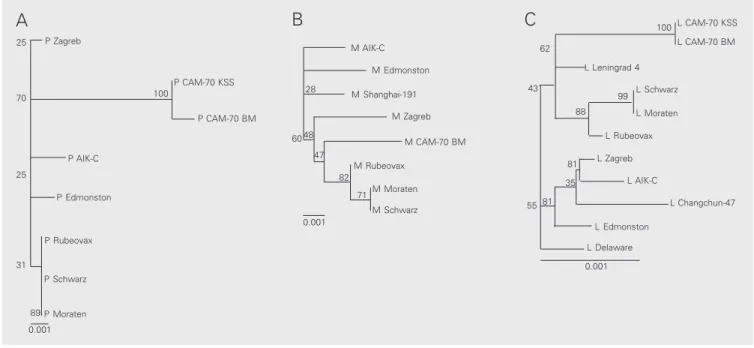
Figure 2. A-C, Unrooted phylograms based on the comparison of phosphoprotein (P), matrix (M) and large (L) gene sequences of available genotype A measles virus, respectively. The sequence alignment was performed using the CLUSTAL X program and the trees were drawn using the programs PUZZLE32, SEQBOOT and DNADIST in the PHYLIP Package. The phylograms were obtained using the TREEVIEW program. The scale indicates 0.1% nucleotide divergence.
P Zagreb
P CAM-70 KSS
P CAM-70 BM
P AIK-C
P Edmonston
P Rubeovax
P Schwarz
P Moraten 0.001 25
70
25
31
89
100
A
M Moraten M Schwarz
M CAM-70 BM M AIK-C
M Edmonston M Shanghai-191
M Zagreb
M Rubeovax
0.001 28
60 48 47
82 71
B
L Leningrad 4 L Schwarz L Moraten L Rubeovax L Zagreb
L AIK-C
L Changchun-47 L Edmonston
L Delaware 0.001
L CAM-70 KSS L CAM-70 BM 62
43 88
99 100
81 35 81 55
C
combined P, M and L nucleotide sequences are presented in Figure 2A-C.
All Edmonston-derived vaccine strains were assigned to one main group and CAM-70 strains to a single group. It was also shown that the CAM-70 BM vaccine was very similar to CAM-70 KSS (16) presenting a similarity of 99 and 100% in P and L genes, respectively.
Despite their similar origin, the non-Edmonston-derived vaccines Changchun-47 and Shanghai-191 were closely similar to the Edmonston wild type but not to the CAM-70 BM vaccine.
P gene nucleotide sequence analysis
Among the gene nucleotide sequences analyzed in this study as well as the strains selected for nucleotide sequence compari-son, the P gene was the most divergent, presenting 12 nucleotide substitutions shared by both the 70 BM vaccine and CAM-70 KSS strains. Two exclusive mutations
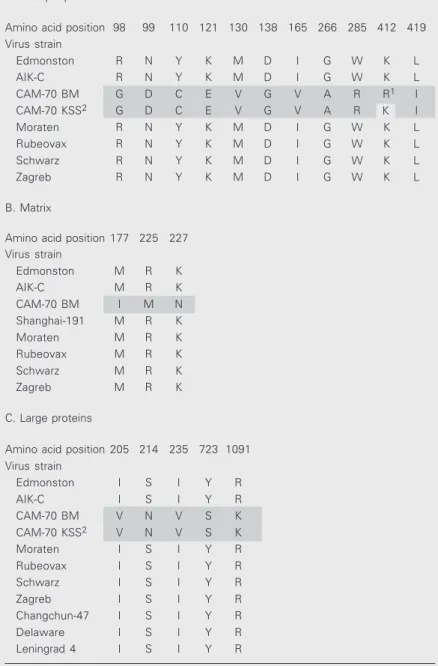
were found only in the CAM-70 BM vac-cine. Eighty-five percent of these nucleotide substitutions resulted in predicted amino acid changes (Table 2A). These changes were not found in Edmonston- or non-Edmonston-derived strains (16).
M gene nucleotide sequence analysis
Exclusive point mutations were found in the CAM-70 BM vaccine nucleotide se-quence, located at genome positions 3968, 4111 and 4118 (Table 2B), two of which represented silent changes. The exception was for mutation at position 4111, which predicted replacement of arginine with me-thionine at amino acid position 225.
Analysis of the L gene nucleotide sequence
The L gene nucleotide sequences of the CAM-70 BM and CAM-70 KSS vaccines were similar and nearly identical to the other measles strains used for nucleotide compar-ison. Exclusive nucleotide substitutions in CAM-70 strains were found at genome posi-tions 9847, 9874, 9936, 11401 and 12505, predicting amino acid changes (Table 2C). Silent changes exclusively occurring in CAM-70 strains were located at positions 12506, 13247 and 14066. None of the changes found in nucleotide sequences of Edmonston- or non-Edmonston-derived strains (9) were shared by CAM-70 strains.
Discussion
Genetic analyses comparing H-, F- and N-coding genes have classified all measles vaccine strains currently used, including CAM-70 BM, as genotype A. The same CAM-70 BM vaccine lot analyzed by Rota and co-workers (9) was used in our study of the remaining genes (P, L and M). It was clearly demonstrated by phenograms ob-tained in previous analyses and corroborated by our study that CAM-70 BM was the most divergent member of genotype A (9).
The CAM-70 BM vaccine was derived from most geographically distant wild-type measles virus among the group of vaccines but this fact is not sufficient to explain its genetic divergence since Changchun-47 and Shanghai-191 vaccine strains, despite their distant origin, were genetically similar to Edmonston wild type.
Measles virus is a monotypic virus con-sidered to be extraordinarily stable in terms of serology and immune response. However, the lack of proofreading of viral RNA-de-pendent RNA polymerase favors the accu-mulation of mutations and could explain the relatively high variability of the CAM-70 BM vaccine.
The adaptation to specific host cells is in Shanghai-191, a non-Edmonston-derived
strain (9). These changes were not found in the CAM-70 BM vaccine nucleotide se-quence.
Table 2. Amino acid alteration of phosphoprotein (A), matrix (B) and large (C) proteins compared to other genotype A strains.
A. Phosphoprotein
Amino acid position 98 99 110 121 130 138 165 266 285 412 419 Virus strain
Edmonston R N Y K M D I G W K L
AIK-C R N Y K M D I G W K L
CAM-70 BM G D C E V G V A R R1 I
CAM-70 KSS2 G D C E V G V A R I
Moraten R N Y K M D I G W K L
Rubeovax R N Y K M D I G W K L
Schwarz R N Y K M D I G W K L
Zagreb R N Y K M D I G W K L
B. Matrix
Amino acid position 177 225 227 Virus strain
Edmonston M R K
AIK-C M R K
CAM-70 BM I M N
Shanghai-191 M R K
Moraten M R K
Rubeovax M R K
Schwarz M R K
Zagreb M R K
C. Large proteins
Amino acid position 205 214 235 723 1091 Virus strain
Edmonston I S I Y R
AIK-C I S I Y R
CAM-70 BM V N V S K
CAM-70 KSS2 V N V S K
Moraten I S I Y R
Rubeovax I S I Y R
Schwarz I S I Y R
Zagreb I S I Y R
Changchun-47 I S I Y R
Delaware I S I Y R
Leningrad 4 I S I Y R
The one-letter amino acid abbreviation is used. The gray boxes refer to substitutions found in both CAM-70 strains.
1Exclusive amino acid substitution in the CAM-70 BM (Bio-Manguinhos) vaccine. 2CAM-70 KSS = Kitasato Submaster Seed.
probably correlated with nucleotide alter-ations (24) or changes in the RNA molecule “quasispecies” (25). It was demonstrated that measles virus isolated from B95a cells was fully pathogenic in Cynomolgus sp monkeys and had lost pathogenicity after adaptation to Vero cells (26). Amino acid changes in the P/C/V, H and L genes were identified during the adaptation process (27). Recently, the fusion induction ability of AIK-C vaccine was investigated (28). Transient expression with plasmids containing F and H protein regions from the AIK-C vaccine and Ed-monston wild type at amino acid position 278 of the F gene demonstrated that leucine was responsible for reduced fusion capabil-ity and that phenylalanine was responsible for extensive cell fusion related to syncy-tium formation (28). Different plaque-form-ing variants have been isolated from wild-type virus or vaccine strains, including CAM-70 BM (29). Strains that do not form plaques but instead lead to the formation of clumps (foci) of infected cells have also been de-scribed (30). The high number of passages of CAM-70 BM in the amniotic cavity of chick embryos (Figure 1A) may have con-tributed to the increased number of nucleo-tide substitutions. Since vaccine strains have unique passage histories, probably each strain may have acquired a specific set of attenuat-ing mutations at different positions in the genome (16).
Despite nucleotide similarity between the CAM-70 KSS and CAM-70 BM vaccine, two exclusive mutations localized on the P gene were found. The difference between these strains may be due to the number of passages. CAM-70 BM was passed three times in chick embryo fibroblasts from FMS-7 during vaccine production while CAM-FMS-70 KSS was passed only once in chick embryo fibroblasts (16).
The most divergent sequences were in the P gene with mutations predicting 11 amino acid replacements along the P tein. The multifunctional polypeptide P
pro-tein is a component of the coiled ribonucleo-protein core which forms the polymerase complex and is implicated in viral RNA encapsidation. It is also responsible for regu-lating the cellular localization of N protein (3,5,31). Thus, nucleotide mutations may affect the chaperone function of P protein and could be associated with the attenuation process of CAM-70 BM. However, we did not find amino acid replacements in NH2 or
COOH portions that could be associated with specific functions of the P protein (32). The CAM-70 BM vaccine P gene-predicted amino acid changes are located along the protein (amino acids 98-419) and nucleotide mutations, up to now, have not been related to loss or increase of infectivity. The original descriptions of the comparison of canine distemper virus with measles virus had al-ready indicated that certain areas of the ge-nome of morbilliviruses have greater plas-ticity than others. Although all six genes of measles virus appear to vary, though to dif-ferent extents, the highest degree of varia-tion is in the C-terminus of the N protein and in the H and P proteins. Therefore, vaccine-specific changes in nucleotide sequences, so far as these can be assessed, do not affect the functionality of the P protein, but reflect genetic variation (33).
We have analyzed the mutations found in the M protein of the CAM-70 BM vaccine by comparison with other vaccines. Most data on nucleotide sequencing for the M gene are available for the close relationship between the numerous mutations in this gene and subacute sclerosing panencephalitis (SSPE) (34,35). The nucleotide changes found in the CAM-70 BM vaccine were not related to published SSPE-derived strain sequences.
protein of the CAM-70 BM vaccine. These amino acid substitutions moderately alter the charge of protein M and since this protein plays an important role in virus maturation we raised the question if they could be impli-cated in less productive viral infections (5). The L gene of CAM-70 vaccine strains proved to be the most conserved gene ana-lyzed in this study. The L protein is of critical importance for transcription and replication and its extreme sensitivity to mutation must be emphasized (16,37).
Sequence alignments of Morbillivirus L protein have revealed two highly variable regions termed hinges. The first (H1) extends from residues 607 to 650 and the second (H2) is between residues 1695 to 1717 (37). We found amino acid substitu-tions in CAM-70 strains at posisubstitu-tions out of these variable regions. However, drastic amino acid substitutions were not found. This observation is in agreement with previ-ous studies in which no variation was ob-served in genotype A measles virus L pro-teins although this was the most variable area of the non-genotype A measles virus L proteins (17,38).
The L protein of measles virus is highly homologous to the polymerases of other nega-tive strand viruses. Poch and co-workers (39) reported highly conserved central blocks among five L proteins of unsegmented nega-tive strand RNA virus. We found a single-amino acid substitution of arginine for lysine at position 1091 in the highly conserved block of CAM-70 strains. However, this sub-stitution did not reflect on the hydrophilicity of the amino acid.
Specific variations have been detected by nucleotide sequencing of ten genotype A measles virus L genes. None of the CAM-70 strain mutations predicting amino acid sub-stitutions were shared with those strains. On the other hand, two exclusive amino acid substitutions in the L gene of a non-genotype A measles virus isolate from Gambia were shared with CAM-70 strains. At position
725, we found a serine where the Gambia isolate had a cysteine and at position 1091 both the Gambia isolate and CAM 70 strains had a lysine (38).
A “vaccine strain signature” based on the Edmonston wild-type progenitor strain was proposed by Parks and co-workers (6). The CAM-70 vaccine strains cannot be consid-ered in this proposition since they are the most divergent among the vaccine strains. Without sequence information for the pro-genitor Tanabe wild-type strain we can only speculate whether nucleotide differences between CAM-70 BM and other vaccines are due to cell passage history or to different origins. The intention of the present study was to acquire genetic information about the vaccine produced at our Institute. Further studies are being conducted in order to relate the mutations found in our vaccine to protein expression and to address the role of these proteins in the attenuation process. The study of molecular characteristics of vaccine strains is of utmost importance for monitoring vac-cine administration in the field. Compara-tive sequence analysis provides tools for assessing the impact of mass vaccination campaigns on the interruption of virus circu-lation and on measles control.
Acknowledgments
References
1. WHO - World Health Organization (2002). Global measles mortality reduction and regional elimination, 2000-2001. Part I. Weekly Epide-miological Record, 77: 49-56.
2. Fundação Nacional de Saúde - FUNASA page. [http://www.funasa. gov.br]. Accessed September 1, 2002.
3. Horikami SM & Moyer SA (1995). Structure, transcription and repli-cation of measles virus. Current Topics in Microbiology and Immu-nology, 191: 35-50.
4. WHO - World Health Organization (2001). Nomenclatures for de-scribing the genetic characteristics of wild-type measles viruses (Update). Weekly Epidemiological Record, 76: 241-247.
5. Griffin DE & Bellini WJ (1996). Measles virus. In: Fields BN, Knipe DM & Howley PM (Editors), Fields Virology. 3rd edn. Lippincott-Raven Publishers, Philadelphia, PA, USA.
6. Parks CL, Lerch RA, Walpita P, Wang H-P, Sidhu MS & Udem SA (2001). Comparison of predicted amino acid sequence of measles virus strains in the Edmonston vaccine lineage. Journal of Virology, 75: 910-920.
7. Enders JF & Peebles TC (1954). Propagation in tissue cultures of cytopathic agents from patients with measles. Experimental Biol-ogy and Medicine, 86: 277-286.
8. Rota JS, Hummel KB, Rota PA & Bellini WJ (1992). Genetic variabil-ity of the glycoprotein genes of current wild-type measles isolates.
Virology, 188: 135-142.
9. Rota JS, Wang ZD, Rota PA & Bellini WJ (1994). Comparison of sequences of the H, F and N coding genes of measles virus vaccine strains. Virus Research, 31: 317-330.
10. Siqueira MM, Silva RC, Cruz C, Oliveira IC, Cunha GMC, Mello M, Rota PA, Bellini WJ & Friedrich F (2001). Genomic characterization of wild-type measles viruses that circulated in different states in Brazil during the 1997 measles epidemic. Journal of Medical Virol-ogy, 63: 299-304.
11. WHO - World Health Organization (2001). Brazil approaches elimina-tion. Measles Bulletin, Issue 6: 2, downloaded from address http:// www.who.int/vaccines-documents/DocsPDF01/mea06e.pdf 12. Isomura S, Morishima T & Nishikawa K (1986). A long term follow
up study of the efficacy of further attenuated live measles vaccine.
Biken Journal, 29: 19-26.
13. Okuno Y, Ueda S, Kurimura T, Susuki N & Yamanishi K (1971). Studies on further attenuated live measles vaccine. Part VII. Devel-opment and evaluation of CAM-70 measles virus vaccine. Biken Journal, 14: 253-258.
14. Sangkawibha N, Tuchinda P, Bukkavesa S, Osatanora F & Okono Y (1971). Comparative study on two further attenuated live measles virus vaccines “CAM” and “Moraten”. Biken Journal, 14: 77-79. 15. Ueda S, Takahashi M, Minekawa Y, Ogino T, Sukuki N, Yamanishi K,
Baba K & Okuno Y (1970). Studies on further attenuated live measles vaccine. Part II. Correlation between the titer of the vaccine, the antibody response and clinical reactions. Biken Journal, 13: 117-120.
16. Bankamp B, Kearney SP, Liu X, Bellini W & Rota PA (2002). Activity of polymerase proteins of vaccine and wild type measles virus strains in a mini-genome replication assay. Journal of Virology, 76: 7073-7081.
17. Bankamp B, Bellini W & Rota PA (1999). Comparison of L proteins of vaccine and wild type measles viruses. Journal of General Virol-ogy, 80: 1617-1625.
18. Rhim JS, Schell K & Creasy B (1969). Biological characteristics and
viral susceptibility of an African green monkey kidney cell line (Vero). Experimental Biology and Medicine, 132: 670-678. 19. Rubim H (1973). Chick embryo cells. In: Kruse PF & Patterson MK
(Editors), Tissue Culture Methods and Application. Academic Press, New York, 119-123.
20. Chomczynski P & Sacchi N (1987). Single-step method of RNA isolation by acid guanidinium thiocyanate-phenol-chloroform extrac-tion. Analytical Biochemistry, 162: 156-159.
21. Sambrook J & Russel DW (2001). Gel electrophoresis of DNA. In: Sambrook J & Russel DW (Editors), Molecular Cloning - A Labora-tory Manual. Vol. 1. 3rd edn. Cold Spring Harbor Laboratory Press, Cold Spring Harbor, NY, USA.
22. Thompson JD, Gibson TJ, Plewniak F, Jeanmougin F & Higgins DG (1997). The CLUSTAL_X windows interface: flexible strategies for multiple sequence alignment aided by quality analysis tools. Nucleic Acids Research, 25: 4876-4882.
23. Ueda S, Takahashi M, Minekawa Y, Ogino T, Sukuki N, Yamanishi K, Baba K & Okuno Y (1970). Studies on further attenuated live measles vaccine. Part I. Adaptation of measles virus to the chorioallantoic membrane of chick embryo and clinical tests on the strain. Biken Journal, 13: 111-116.
24. Kouomou DW & Wild TF (2001). Adaptation of wild-type measles virus to tissue culture. Journal of Virology, 76: 1505-1509. 25. Holland J, Spindler K, Horodyski F, Grabau E, Nichol S & Vandepol S
(1982). Rapid evolution of RNA genomes. Science, 215: 1577-1585. 26. Takeda M, Katio A, Kobune F, Sakata H, Li Y, Shioda T, Sakai Y, Asakawa M & Nagai Y (1998). Measles virus attenuation associated with transcriptional impediment and a few amino acid changes in the polymerase and accessory proteins. Journal of Virology, 72: 8690-8696.
27. Takeuchi KN, Miyajima FK & Tashiro M (2000). Comparative nucleo-tide sequence analyses of the entire genomes of B59a cell-isolated and Vero cell-isolated measles viruses from the same patient. Virus Genes, 20: 253-257.
28. Nakayama T, Komase K, Uzuka R, Hoshi A & Okafuji T (2002). Leucine at position 278 of the AIK-C measles virus vaccine strain fusion protein is responsible for reduced syncytium formation. Jour-nal of General Virology, 82: 2143-2150.
29. Borges MBJ, Mann GF & Freire MS (1996). Biological characteriza-tion of clones derived from the Edmonston strain of measles virus in comparison with Schwarz and CAM-70 vaccine strains. Memó-rias do Instituto Oswaldo Cruz, 97: 507-514.
30. Rima BK, Earle JAP, Baczko K, Rota PA & Bellini WJ (1995). Measles virus strain variations. Current Topics in Microbiology and Immunol-ogy, 191: 65-83.
31. Sedlmeuier R & Neubert WJ (1998). The replicative complex of paramyxoviruses structure and function. Advances in Virus Re-search, 50: 101-139.
32. Harty RN & Palese P (1995). Measles virus phosphoprotein (P) requires the NH2- and COOH-terminal domains for interactions with
the nucleoprotein (N) but only the COOH terminus for interactions with itself. Journal of General Virology, 76: 2863-2867.
33. Rima BK, Earle JAP, Yeo RP, Herlihy L, Baczko K, Ter Meulen V, Carabaña J, Cabalero M, Celma ML & Muñoz RF (1995). Temporal and geographical distribution of measles virus genotypes. Journal of General Virology, 76: 1173-1180.
analysis of measles virus genome derived from SSPE and acute measles patients in Papua, New Guinea. Journal of Medical Virol-ogy, 68: 105-112.
35. Patterson JB, Cornu TI, Redwine J, Dales S, Lewick H, Holz A, Thomas D, Billeter MA & Oldstone MB (2001). Evidence that the hypermutated M protein of a subacute sclerosing panencephalitis measles virus actively contributes to the chronic progressive CNS disease. Virology, 291: 215-225.
36. Wild TF & Buckland R (1995). Functional aspects of envelope-associated measles virus proteins. Current Topics in Microbiology and Immunology, 191: 51-64.
37. McIlhatton MA, Curran MD & Rima BK (1997). Nucleotide sequence
analyses of the large (L) genes of phocine distemper virus and canine distemper virus (corrected sequence). Journal of General Virology, 78: 571-576.
38. Duprex WP, Collins FM & Rima BK (2002). Modulating the function of the measles virus RNA-dependent RNA polymerase by insertion of green fluorescent protein into the open reading frame. Journal of Virology, 76: 7322-7328.