Oxygen uptake, respiratory exchange ratio, or total
distance: a comparison of methods to equalize
exercise volume in Wistar rats
L.S. Paes
1,2, J.P. Borges
1, F.A. Cunha
1, M.G.C. Souza
2, F.Z.G.A. Cyrino
2, D.A. Bottino
2,
E. Bouskela
2and P. Farinatti
1,3 1Laboratório de Atividade Física e Promoc¸ão da Saúde, Instituto de Educac¸ão Física e Desportos,
Universidade do Estado do Rio de Janeiro, Rio de Janeiro, RJ, Brasil 2Laboratório de Pesquisa Clínica e Experimental em Biologia Vascular, Centro Biomédico,
Universidade do Estado do Rio de Janeiro, Rio de Janeiro, RJ, Brasil 3Programa de Pós-Graduac
¸ão em Ciências da Atividade Física, Universidade Salgado de Oliveira, Niterói, RJ, Brasil
Abstract
This study compared strategies to equalize the volume of aerobic exercise performed with different intensities by Wistar rats, based on the distance covered during exercise bouts and energy expenditure (EE, isocaloric sessions) obtained from oxygen uptake (:
VO2) or respiratory exchange ratio (RER). Thirty-three male rats (270.5±12.8 g) underwent maximal exercise tests to
determine:
VO2 reserve ( :
VO2R), being randomly assigned to three groups: moderate-intensity continuous exercise at speed
corresponding to 50%:
VO2R (MIC; n=11); high-intensity continuous exercise at 80% :
VO2R (HIC; n=11); and high-intensity
intermittent exercise (HII; n=11) at 60%:
VO2R (3 min) and 80%VO: 2R (4 min). Exercise duration was calculated individually to
elicit EE of 5 kcal in each session. No difference between groups was found for total running distance (MIC: 801±46, HIC: 734±42, HII: 885±64 m; P=0.13). Total EE measured by RER was systematically underestimated compared to values obtained from:
VO2(HII: 4.5% and MIC: 6.2%, Po0.05). Total EE (calculated from :
VO2), and duration of HIC bouts (2.8 kcal and
30.8±2.2 min) were lower (Po0.0001) than in MIC (4.9 kcal and 64.7±1.8 min) and HII (4.7 kcal and 46.9±2.2 min). Predicted and actual values of total :
VO2, total EE, and duration of isocaloric sessions were similar in MIC and HII (P40.05), which were both higher than in HIC (Po0.0001). In conclusion, the time to achieve a given EE in exercise bouts with different intensities did not correspond to the total distance. Therefore, the volume of aerobic exercise in protocols involving Wistar rats should be equalized using EE rather than total covered distance.
Key words: Energy expenditure; Aerobic exercise; Exercise testing; Metabolism; Fitness
Introduction
Isocaloric exercise bouts aim to equalize the energy expenditure (EE) within aerobic training sessions performed with different intensities (1,2). EE is a surrogate for exercise volume (understood as the interaction between training intensity, duration and frequency) (3,4), and controlling its influence is an important issue in experimental research (2,4). In fact, if the difference between intensities is high enough, exercise sessions performed with a higher intensity might also be considered of greater exercise volume (2,5). This can introduce bias in experiments designed to determine whether a given outcome was produced by exercise intensity or volume. Considering that several benefits of physical training measured by cardiometabolic markers are related to an increase in EE regardless of the intensity of exercise (6–12), exercise bouts should be
designed to be isocaloric in studies investigating the specific effects of training intensity or volume (13–15).
In this context, research comparing different exercise intensities in humans adopted rigorous exercise volume equalization (1). This is usually accomplished by measur-ing the oxygen uptake (:
VO2) during exercise to calculate
EE. On the other hand, the same concern is not present in most experimental studies with rodents, which have adopted less accurate strategies to isolate the effects of exercise intensity (15–20). Actually, the covered running
distance has been primarily used to match the exercise volume across sessions, disregarding differences achieved in EE (16–19,21). Although the assessment of covered
distance allows estimation of the performed work (22), it does not assure that EE (and therefore volume) is similar
Correspondence: P. Farinatti:<[email protected]>
between two exercise sessions or that sessions are isocaloric.
For instance, it is well known that :
VO2 kinetics differ
according to exercise intensity (i.e., moderate, heavy and severe) and duration (23), which can introduce error into the achieved EE, and consequently in the performed exercise volume. In a practical context, the covered distance can be used to calculate the amount of performed work, but does not provide a precise estimation of total energy production during an exercise bout (24). On the other hand, the EE during exercise has been considered a major determinant of health-related effects (4,8,9) and its correct determination seems to be necessary to optimize the cardio-metabolic impact of physical training programs.
Two major strategies have been usually applied to determine the EE during exercise: a) the quantification of total :
VO2 during the exercise bout (4); and b) the
calculation of the corresponding energy equivalent per liter of O2 consumed (kcal/L) from average respiratory exchange ratio (RER) data (25). Both approaches have limitations that might compromise the accuracy of EE calculation during exercise. For instance, the quantifi ca-tion of total:
VO2does not provide a valid representation of
anaerobic EE component (i.e., heavy and severe exer-cises) and may lead to an underestimation of the caloric expenditure and therefore, of the exercise volume (26). On the other hand, although the RER has been used to calculate EE, there is evidence showing that some metabolic carts are limited in ascertaining short-term changes in this variable, which would compromise the estimation of EE during exercise (27). Therefore, a question arises: which approach (e.g., quantification of total :
VO2or RER) should
be applied for a more accurate determination of exercise volume obtained from EE?
To date, no study has examined which method (EE or running distance) would provide a greater accuracy in the equalization of exercise volume and in designing isocaloric exercise bouts for rats. This information would be useful for experiments designed to investigate the specific effects of exercise intensity and volume measuring several out-comes. Therefore, the present study aimed to compare distinct methods for equalizing the volume of aerobic bouts performed with different intensities by Wistar rats. The duration of sessions was calculated based on EE estimated from :
VO2and RER, and the total distance covered during
exercise was measured. It is hypothesized that: a) to calculate the exercise duration using EE, equalizing the volume would be more effective than measuring the total distance covered in running bouts; b) to determine the duration of sessions using the EE obtained from :
VO2would
be more precise than using RER data.
Material and Methods
Thirty-three male Wistar rats (Rattus norvegicus, 270.5±
12.8 g, 12 weeks old, Anilab, Brazil) were kept under a 12-h
light-dark cycle in a temperature-controlled environment (22°C) with free access to water and standard rat chow (Nuvitalt, Brazil). The experiments were performed accord-ing to principles of laboratory animal care (NIH publication No. 86-23, revised 1996) and the protocol was approved by the Ethical Committee of the Universidade do Estado do Rio de Janeiro (#06/2013).
Study design
After assessing the oxygen uptake at rest (:
VO2rest)
and during maximal exercise (:
VO2peak), the animals
were randomly assigned into three exercise groups: a) moderate-intensity continuous exercise (MIC; n=11); b) high-intensity continuous exercise (HIC; n=11), and c) high-intensity interval exercise (HII; n=11). After at least 48 h of the maximal exercise grading test, the rodents underwent the exercise sessions, in a randomized counterbalanced order and within 24-h intervals. The:
VO2,
EE and total covered distance were measured in each exercise condition.
Maximal graded exercise test and aerobic sessions
The :
VO2rest and exercise :
VO2 were determined by
indirect calorimetry via metabolic cart (Oxylett, Panlab Harvard Apparatus, Spain). The gas analyzer was coupled to a treadmill inside a Plexiglas chamber, connected through a tube to an air pump used to maintain the airflow inside the chamber. The airflow was set at 0.5 L/min during the assessment at rest, and 2.0 L/min during maximal exercise, according to the manufacturer’s recommen-dations. Another tube was connected to the gas analyzer, which continuously measured relative concentrations of oxygen (O2) and carbon dioxide (CO2) outflowing from the
chamber (28). The :
VO2 was calculated by a software
(Metabolismt, Panlab Harvard Apparatus), using equa-tions described elsewhere (29). Standard condiequa-tions of temperature, pressure and humidity were kept in all experiments.
The :
VO2rest was assessed during 30 min and the
average of the last 5 min was recorded asfinal result (30). In order to avoid circadian influence, measurements were taken at the beginning of the animal’s dark cycle. Prior to
:
VO2peakassessment, in maximal exercise testing, the rats
underwent adaptation sessions to the treadmill for 3 days,
with speed set at 10 m/min during 10–15 min, as
previously described (31,32). Maximal exercise tests were applied 24–48 h following the adaptation sessions. The
testing protocol consisted of load increments of 5 m/min every 3 min (28), until the rats were no longer able to run. Exhaustion was determined when animals remained at the end of the metabolic chamber, at the shock grid for 5 s.
:
VO2peakcorresponded to the highest :
VO2 obtained during
the maximal exercise test (28).
The target workload during submaximal exercise bouts was calculated using the oxygen uptake reserve (:
VO2R)
method, as previously described (5): :
intensity)(VO: 2peak– :
VO2rest)+ :
VO2rest. The relative
inten-sity was defined according to each group. Animals
assigned to MIC and HIC exercised at speeds corre-sponding to 50 and 80% of VO: 2R, respectively. Exercise
sessions for HII consisted of alternate phases correspond-ing to 60% :
VO2R (3 min) and 80% :
VO2R (4 min). These
exercise protocols were based on previous studies with rats (17,20). Running speeds corresponding to relative intensities were calculated individually, based on :
VO2
obtained during the maximal exercise testing (1).
Calculation of exercise bout duration based on energy expenditure
The duration of isocaloric bouts was calculated as follows: a)first, relative values of:
VO2R (mLkg-1min-1)
were converted to absolute values (L/min); b) the EE was then calculated (kcal/min) assuming an energy equivalent of 5.0 kcal for each liter of O2consumed (27), and c) the time spent to achieve the targeted total EE (set at 5.0 kcal) was calculated by the ratio between total EE and absolute EE corresponding to :
VO2R in each exercise condition
(MIC, HIC and HII) (33).
After establishing the speed and duration of the exercise bouts, animals underwent two exercise sessions, during which :
VO2 and total covered distance were individually
calculated by means of indirect calorimetry system (Panlab Harvard Apparatus). The EE during exercise was deter-mined from the :
VO2 (L) assessed during the isocaloric
exercise bouts (Table 1). The caloric cost of exercise sessions was also calculated using RER, as previously described (19). In this procedure, the EE per liter of O2 consumed (kcal/L) obtained from average RER during the exercise is multiplied by the target :
VO2 (L/min), and this
result is then multiplied by the bout duration to obtain total EE (kcal). Step-by-step procedures to measure the caloric cost of exercise using RER are shown in Table 2.
Statistical analysis
Normal distribution of data was confirmed by the Kolmogorov-Smirnov test and, therefore, results are reported as means±SE. Comparisons for running speed between groups,:
VO2, EE, total distance and duration of
exercise sessions were made using one-way ANOVA followed by Tukeypost hoc. Paired t-tests were used to test differences between estimated and measured out-comes in each exercise group. In all cases significant level was set at Pp0.05, and calculations were performed using the software GraphPad Prism version 5.00 for Windows (GraphPadt, USA).
Results
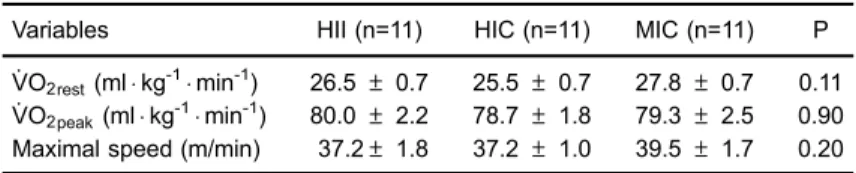
Table 3 exhibits data assessed at rest and during maximal exercise. No significant difference was found between groups forVO: 2rest,
:
VO2peak, and maximal speed
achieved in the maximal exercise testing.
Table 1. Determination of caloric cost of exercise session from : VO2data.
1) Obtain values of :
VO2peak and
:
VO2restfrom the maximal exercise test and at rest, by indirect calorimetry 2) Calculate the target workload using the reserve oxygen uptake (:
VO2R) equation:
:
VO2R = (fraction intensity)(VO: 2peak– : VO2rest)+
: VO2rest 3) Convert relative values of :
VO2R (mLkg-1min-1) to absolute values (L/min) by the formula:
Absolute: VO2R =
:
VO2R (mLkg-1min-1)C1000body weight (kg)
4) Convert absolute:
VO2R (L/min) to absolute EE (kcal/min), by assuming 1 L of O2= 5.0 kcal 5) Set a value of targeted total EE to be achieved in the exercise session (e.g., 5.0 kcal or 5.2 kcal)
6) Calculate bout duration as the ratio between the targeted total EE and absolute EE, which corresponds to the: VO2R in each exercise condition
Bout duration (min) = Targeted total EE (kcal)Cabsolute EE (kcal/min)
:
VO2rest: oxygen uptake at rest;
:
VO2peak: oxygen at maximal exercise;
: VO2R :
:
VO2reserve; RER: respiratory exchange ratio.
Table 2.Determination of caloric cost of exercise session from respiratory exchange ratio (RER) data.
1) The average RER is obtained from a typical exercise session (it cannot be predicted)
2) Corresponding energy equivalent per liter of O2consumed (kcal/L) for RER is identified in a table, previously described [McArdle et al., 2014 (25)]. For example: 0.80 is equal to 4.801 kcal/L
3) The corresponding value of energy equivalent per liter of O2consumed (kcal/L) is multiplied by average target :
VO2, measured from exercise session. For example: 4.801 kcal/L 0.016 L/min = 0.076 kcal/min
4) The values in kcal/min should be multiplied by the duration (min) to obtain caloric cost of session (total EE)
Running speeds for different conditions and groups are shown in Figure 1. MIC and HIC groups exercised at 19.7±0.8 and 29.8±0.8 m/min, respectively, while
running speed in HII ranged between 29.8±1.4 and
22.3±1.0 m/min. Significant differences were found
between speeds performed during exercise in 80%
:
VO2R HII vs 60% :
VO2R HII (Po0.0001), 80% HII vs
50% MIC (Po0.0001), 80% HICvs60% HII (Po0.0001) and 80% HICvs50% MIC (Po0.0001). As expected, no
significant difference was found between 80% :
VO2R HII vs 80% HIC (P=0.59). Figure 2 shows data for running speed multiplied by distance (Figure 2A), and running speed multiplied by exercise duration (Figure 2B). These calculations provide results of intensity (running speed) in combination with volume components (distance or dura-tion). Significant differences were found only in regards to running speedvs distance data (Figure 2A): the product between speed and distance was significantly lower in MIC than in HII (Po0.01) and HIC (Po0.0001).
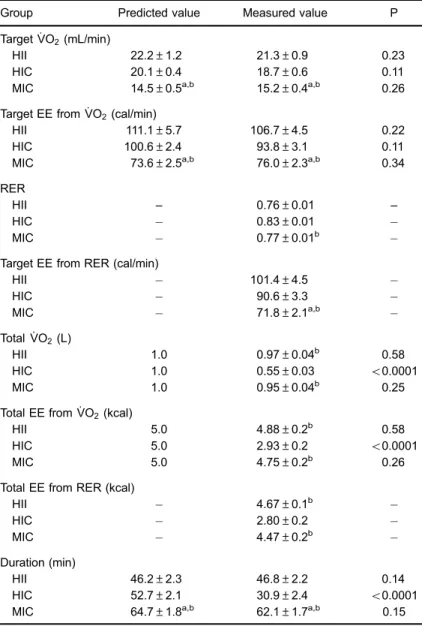
Table 4 reports results for estimated and measured
exercise volume (represented by total EE and :
VO2),
workload (represented by target EE and :
VO2), and
duration. The target work :
VO2 was higher in HII than
MIC (Po0.0001), while no difference was found for
estimated total EE either from :
VO2 (P=0.66) or RER
(P=0.48). On the other hand, total EE (from both:
VO2and
RER) was lower in HIC than in both MIC and HII (Po0.0001). Only HIC exhibited significant discrepancy
between predicted and measured values for total :
VO2
(Po0.0001), total EE (Po0.0001), and duration of exercise bout (Po0.0001).
Table 3. Oxygen uptake at rest (:
VO2rest), at maximal exercise (
:
VO2peak), and maximal speed attained during incremental exercise testing in the studied groups.
Variables HII (n=11) HIC (n=11) MIC (n=11) P
:
VO2rest(mlkg-1min-1) 26.5±0.7 25.5±0.7 27.8±0.7 0.11 :
VO2peak(mlkg-1min-1) 80.0±2.2 78.7±1.8 79.3±2.5 0.90 Maximal speed (m/min) 37.2±1.8 37.2±1.0 39.5±1.7 0.20
Data are reported as means±SE.:
VO2: oxygen uptake; HII: high-intensity interval exercise; HIC: high-intensity continuous exercise; MIC: moderate-intensity continuous exercise. P refers to comparisons between groups (one-way ANOVA).
Figure 1. Running speeds (m/min) for each exercise condition (means±SE).:
VO2R: reserve oxygen uptake; HII: high-intensity interval exercise; HIC: high-intensity continuous exercise; MIC: moderate-intensity continuous exercise. #P
o0.0001, compared to HII (60%:
VO2R); *Po0.0001, compared to MIC (50%: VO2R) (one-way ANOVA followed by Tukeypost hoc).
Despite of the disparities between protocols in
regards to :
VO2 and EE, no significant difference
between groups could be detected for the total distance covered in the exercise sessions (MIC: 801±46 m;HIC:
726±45 m; HII: 885±64 m; P=0.13). The EE during
exercise calculated from:
VO2was higher than calculated
from RER in all groups (Po0.0001). The total EE
calculated from RER was underestimated compared to values obtained from :
VO2 in HII (4.67±0.1 vs 4.88±
0.2 kcal; P=0.04) and MIC (4.47±0.2vs4.75±0.2 kcal;
P=0.02), but not in HIC (2.80±0.2 vs 2.93±0.2 kcal;
P=0.63).
Table 4. Predicted and measured values of oxygen uptake (:
VO2), energy expenditure (EE; target and total), duration of exercise bouts, and respiratory exchange ratio (RER; only measured, n=33).
Group Predicted value Measured value P
Target :
VO2(mL/min)
HII 22.2±1.2 21.3±0.9 0.23
HIC 20.1±0.4 18.7±0.6 0.11
MIC 14.5±0.5a,b 15.2±0.4a,b 0.26
Target EE from :
VO2(cal/min)
HII 111.1±5.7 106.7±4.5 0.22
HIC 100.6±2.4 93.8±3.1 0.11
MIC 73.6±2.5a,b 76.0±2.3a,b 0.34
RER
HII – 0.76±0.01 –
HIC 0.83±0.01
MIC 0.77±0.01b
Target EE from RER (cal/min)
HII 101.4±4.5
HIC 90.6±3.3
MIC 71.8±2.1a,b
Total : VO2(L)
HII 1.0 0.97±0.04b 0.58
HIC 1.0 0.55±0.03 o0.0001
MIC 1.0 0.95±0.04b 0.25
Total EE from :
VO2(kcal)
HII 5.0 4.88±0.2b 0.58
HIC 5.0 2.93±0.2 o0.0001
MIC 5.0 4.75±0.2b 0.26
Total EE from RER (kcal)
HII 4.67±0.1b
HIC 2.80±0.2
MIC 4.47±0.2b
Duration (min)
HII 46.2±2.3 46.8±2.2 0.14
HIC 52.7±2.1 30.9±2.4 o0.0001
MIC 64.7±1.8a,b 62.1±1.7a,b 0.15
HII: high-intensity interval exercise; HIC: high-intensity continuous exercise; MIC: moderate-intensity continuous exercise. RER and Total EE from RER were not predicted, only measured during exercise session. aSigni
ficant difference compared to HII; bsigni
ficant difference compared to HIC (paired
Discussion
The present study compared different methods for equalizing the exercise volume performed with different intensities by Wistar rats. The mainfindings were: a) the exercise performed with different intensities elicited similar total distances, but different EE; b) the EE estimated from
:
VO2was systematically higher than using RER.
Addition-ally, an original strategy to design isocaloric aerobic exercise sessions for rats has been provided, based on procedures often applied in studies with humans (1,4,5).
Our findings demonstrated that although rats in the three intensity groups had covered similar distances during the exercise bouts, HIC did not reach the predicted total EE. Actually, for a given amount of EE (e.g., isocaloric conditions) the distance covered by the animals in HIC was greater than in MIC and HII. It is worth mentioning that early fatigue was more present in HIC than in the other groups. Apparently, the animals were not able to keep the intensity for the time estimated to achieve the predicted EE. On the other hand, due to the higher speed, this fact did not affect the total distance covered during the exercise. In brief, matching the aerobic bouts using the covered distances in this case would over-estimate the EE and therefore the exercise volume. This validates our hypothesis that equalizing the distance during exercise does not necessarily assures that sessions are isocaloric and elicit equal exercise volume, as assumed by prior studies (17,20,21).
The distance covered during running exercise provides only a crude estimate of EE (or performed work) (22). The EE (assessed by:
VO2or RER) reflects more precisely the
metabolic demand, being acknowledged as a better marker of exercise volume (4). It has been shown that animals may cover similar distances during equivalent aerobic exercise duration while exhibiting distinct caloric expenditures due to several factors, such as mechanical efficiency or aerobic capacity (34,35). This is not different in humans, since it is well known that total EE and:
VO2 are not necessarily the
same in subjects that run or walk identical distances (36). Therefore, using covered distance to estimate EE may introduce bias and should be avoided when investigating the specific effects of exercise intensity.
The caloric cost of running in our sample is in agreement with data reported in the classical study by Katch et al. (19) (4.8vs5.2 kcal/h, respectively). That was probably thefirst study demonstrating that EE estimated from RER could be used to equalize the exercise volume within animal research models. Interestingly, subsequent investigations comparing different intensities exercise bouts performed by animals did not take those results into consideration (16,17,20,21,37,38). In this sense, the present study adds to the current knowledge by revisiting the pioneer work by Katch et al. (19) and validating the calculation of EE as a preferential strategy to equalize the volume of aerobic exercise bouts.
Furthermore, our findings suggest that estimating the exercise duration based on EE calculated from :
VO2would
be more adequate than using RER, in the case of Wistar rats. Prior studies have pointed limitations in regards to the use of RER obtained by open-circuit indirect calorimetry to calculate EE in rodents. Factors such as oscillation in the interconversion of macronutrients or lack of stability in pool sizes of CO2and O2make the interpretation of short-term changes in RER difficult (27). In this sense, transient changes in RER particularly present in exercise performed with high intensity and intermittently could be undetected by this system, because of the delay between collection and analysis of the air collected from the chamber (27). The present results concur with this premise, since the EE estimated from RER was significantly lower than values obtained from :
VO2. The RER alone also failed to detect
differences in the metabolic demand induced by HII and MIC (RER: 0.77±0.01 vs 0.76±0.01, P=0.37,
respec-tively; EE: 71.8±2.1 vs 101.4±4.5 cal/min, P=0.0001,
respectively). In brief, the calculation of EE from :
VO2
instead of RER allowed a more precise estimation of the caloric cost of exercise. This information is especially useful in research settings, since the use of :
VO2avoids the need
to submit the rats to extra sessions (two or more), in order to confirm the total EE achieved.
Two methodological approaches have been predomi-nantly applied in the literature to calculate isocaloric exercise sessions (5,33): either using Gross EE or Net EE. Gross EE is defined as the total amount of energy spent during a specific activity, including resting EE; on the other hand, Net EE corresponds to the caloric expenditure specifically induced by the exercise bout, being computed as the difference between Gross EE and resting EE (5,33). Although in humans the use of Net EE is often recommended to avoid overestimation of weight loss induced by exercise programs (5), in the present study we have adopted the Gross EE instead of Net EE. Findings of a pilot study that preceded our experiments (unpublished data) showed that the exercise bout duration was
over-estimated when using Net EE (109% at 50%:
VO2R, and
87% at 80%:
VO2R), therefore underestimating the EE for
a given workload. Gross EE provided a more acceptable and feasible range of durations for the exercise bouts.
The overestimation of exercise duration with Net EE probably occurred due to the fact that rats exhibit higher metabolic rate than humans at rest (B26.5 vs B3.5
mLkg-1min-1, respectively) (26,39) and during exercise
rats, resulting in significant overestimation when calculating the duration of exercise bouts. This overestimation of exercise duration due to the use of Net EE resulted in an error ofB5 kcal added in each session, regardless of the
intensity of exercise (i.e., twice the value provided by Gross EE). Hypothetically, such inherent error in the calculations could have a high impact on exercise prescription and expose the animals to unnecessary risk due to prolonged metabolic demand and physiological stress.
Given the lack of studies investigating how to estimate the duration of isocaloric sessions in rats, our data provide useful information demonstrating that Gross EE (con-verted from target :
VO2R), is a valid and reproducible
strategy to equalize the volume of aerobic exercise. This method represents a viable alternative to accurately predict individual EE during exercise bouts and equalize the amount of training volume in studies with rodents. In practical terms, this means that additional measurements of :
VO2 during the exercise sessions would not be
necessary.
In conclusion, our findings indicate that the exercise volume within aerobic exercise bouts in Wistar rats should
be equalized by using the time to reach a given amount of EE, rather than the total distance covered during exercise sessions. In order to design isocaloric exercise sessions in rats, procedures similar to those adopted in humans appear to be adequate; that is, after measuring maximal
:
VO2and converting a particular relative intensity (% :
VO2)
into kcal/min, the time to achieve a targeted EE can be estimated using the speed corresponding to that intensity. Further research, however, is warranted to verify the reproducibility and precision of these procedures in different rat strains, as well as to investigate their applicability in studies with other animal models.
Acknowledgments
The authors would like to thank Mr. Paulo José Ferreira Lopes and Mr. Claudio Natalino Ribeiro for animal care, and Dr. Jon Arch for the inestimable advice in regards to indirect calorimetry in rodents. This study was partially supported by grants from the CNPq (#309012/ 2010) and FAPERJ #E-26/201.385/2014).
References
1. Cunha FA, Catalao RP, Midgley AW, Gurgel J, Porto F, Farinatti PT. Do the speeds defined by the American College of Sports Medicine metabolic equation for running produce target energy expenditures during isocaloric exercise bouts?
Eur J Appl Physiol 2012; 112: 3019–3026, doi: 10.1007/
s00421-011-2275-7.
2. Swain DP, Franklin BA. Comparison of cardioprotective benefits of vigorous versus moderate intensity aerobic exercise. Am J Cardiol2006; 97: 141–147, doi: 10.1016/ j.amjcard.2005.07.130.
3. Howley ET. Type of activity: resistance, aerobic and leisure versus occupational physical activity.Med Sci Sports Exerc
2001; 33: S364–S369, doi:
10.1097/00005768-200106001-00005.
4. Garber CE, Blissmer B, Deschenes MR, Franklin BA, Lamonte MJ, Lee IM, et al. American College of Sports Medicine position stand. Quantity and quality of exercise for developing and maintaining cardiorespiratory, musculo-skeletal, and neuromotor fitness in apparently healthy adults: guidance for prescribing exercise.Med Sci Sports Exerc2011; 43: 1334–1359, doi: 10.1249/MSS.0b013e318
213fefb.
5. Swain DP. Energy cost calculations for exercise prescription: an update. Sports Med 2000; 30: 17–22, doi: 10.2165/
00007256-200030010-00002.
6. Ades PA, Savage PD, Toth MJ, Harvey-Berino J, Schneider DJ, Bunn JY, et al. High-calorie-expenditure exercise: a new approach to cardiac rehabilitation for overweight coronary patients.Circulation 2009; 119: 2671–2678, doi: 10.1161/
CIRCULATIONAHA.108.834184.
7. Bechara LR, Tanaka LY, Santos AM, Jordao CP, Sousa LG, Bartholomeu T, et al. A single bout of moderate-intensity exercise increases vascular NO bioavailability and attenuates
adrenergic receptor-dependent and -independent vasocon-strictor response in rat aorta.J Smooth Muscle Res2008; 44: 101–111, doi: 10.1540/jsmr.44.101.
8. Dawson EA, Green DJ, Cable NT, Thijssen DH. Effects of acute exercise on flow-mediated dilatation in healthy humans. J Appl Physiol 2013; 115: 1589–1598, doi:
10.1152/japplphysiol.00450.2013.
9. Johnson BD, Padilla J, Wallace JP. The exercise dose affects oxidative stress and brachial artery flow-mediated dilation in trained men.Eur J Appl Physiol2012; 112: 33–42,
doi: 10.1007/s00421-011-1946-8.
10. De Feo P. Is high-intensity exercise better than moderate-intensity exercise for weight loss?Nutr Metab Cardiovasc Dis
2013; 23: 1037–1042, doi: 10.1016/j.numecd.2013.06.002.
11. Kemmler W, Scharf M, Lell M, Petrasek C, von Stengel S. High versus moderate intensity running exercise to impact cardiometabolic risk factors: the randomized controlled RUSH-study. Biomed Res Int 2014; 2014: 843095, doi: 10.1155/2014/843095.
12. Mediano MF, Pinto VL, de Souza Nogueira Sardinha Mendes, Silva GM, Sousa AS. Vigorous exercise in clinical practice: balancing risks and benefits.Med Sci Sports Exerc
2014; 46: 1053, doi: 10.1249/MSS.0000000000000261. 13. Wisloff U, Stoylen A, Loennechen JP, Bruvold M, Rognmo
O, Haram PM, et al. Superior cardiovascular effect of aerobic interval training versus moderate continuous training in heart failure patients: a randomized study. Circulation
2007; 115: 3086–3094, doi: 10.1161/CIRCULATIONAHA. 106.675041.
14. Moholdt T, Madssen E, Rognmo O, Aamot IL. The higher the better? Interval training intensity in coronary heart disease.
J Sci Med Sport2014; 17: 506–510, doi: 10.1016/j.jsams.
15. Rognmo O, Hetland E, Helgerud J, Hoff J, Slordahl SA. High intensity aerobic interval exercise is superior to moderate intensity exercise for increasing aerobic capacity in patients with coronary artery disease.Eur J Cardiovasc Prev Rehabil
2004; 11: 216–222, doi: 10.1097/01.hjr.0000131677.96762.0c.
16. Cortez MY, Torgan CE, Brozinick JT Jr, Ivy JL. Insulin resistance of obese Zucker rats exercise trained at two different intensities.Am J Physiol1991; 261: E613–E619. 17. Haram PM, Kemi OJ, Lee SJ, Bendheim MO, Al-Share QY,
Waldum HL, et al. Aerobic interval training vs. continuous moderate exercise in the metabolic syndrome of rats artificially selected for low aerobic capacity. Cardiovasc Res2009; 81: 723–732, doi: 10.1093/cvr/cvn332.
18. Jendzjowsky NG, DeLorey DS. Short-term exercise training augments sympathetic vasoconstrictor responsiveness and endothelium-dependent vasodilation in resting skeletal muscle. Am J Physiol Regul Integr Comp Physiol 2012; 303: R332–R339, doi: 10.1152/ajpregu.00053.2012.
19. Katch VL, Martin R, Martin J. Effects of exercise intensity on food consumption in the male rat.Am J Clin Nutr1979; 32: 1401–1407.
20. Moreira JB, Bechara LR, Bozi LH, Jannig PR, Monteiro AW, Dourado PM, et al. High- versus moderate-intensity aerobic exercise training effects on skeletal muscle of infarcted rats.
J Appl Physiol 2013; 114: 1029–1041, doi: 10.1152/ japplphysiol.00760.2012.
21. Hafstad AD, Boardman NT, Lund J, Hagve M, Khalid AM, Wisloff U, et al. High intensity interval training alters substrate utilization and reduces oxygen consumption in the heart. J Appl Physiol 2011; 111: 1235–1241, doi:
10.1152/japplphysiol.00594.2011.
22. Willians CA, James DVB, Wilson C. Mathematics and science for exercise and sports: the basics. 1st edn. New York: Routledge; 2008.
23. Xu F, Rhodes EC. Oxygen uptake kinetics during exercise.
Sports Med 1999; 27: 313–327, doi:
10.2165/00007256-199927050-00003.
24. Konhilas JP, Widegren U, Allen DL, Paul AC, Cleary A, Leinwand LA. Loaded wheel running and muscle adaptation in the mouse.Am J Physiol Heart Circ Physiol2005; 289: H455–H465, doi: 10.1152/ajpheart.00085.2005.
25. McArdle WD, Katch FL, Katch VL. Exercise physiology: nutrition, energy, and human performance. 8th edn. Balti-more: Wolters Kluwer; 2014.
26. Scott CB. Contribution of anaerobic energy expenditure to whole body thermogenesis.Nutr Metab 2005; 2: 14, doi: 10.1186/1743-7075-2-14.
27. Arch JR, Hislop D, Wang SJ, Speakman JR. Some mathematical and technical issues in the measurement and interpretation of open-circuit indirect calorimetry in small animals.Int J Obes2006; 30: 1322–1331, doi: 10.1038/sj.
ijo.0803280.
28. Evangelista FS, Martuchi SE, Negrao CE, Brum PC. Loss of resting bradycardia with detraining is associated with intrinsic heart rate changes. Braz J Med Biol Res 2005; 38: 1141–1146, doi: 10.1590/S0100-879X2005000700018.
29. Dominguez JF, Guo L, Carrasco Molnar MA, Ballester EA, Dunphy T, Lund TD, et al. Novel indirect calorimetry technology to analyze metabolism in individual neonatal rodent pups. PLoS One 2009; 4: e6790, doi: 10.1371/ journal.pone.0006790.
30. Brooks GA, White TP. Determination of metabolic and heart rate responses of rats to treadmill exercise. J Appl Physiol Respir Environ Exerc Physiol1978; 45: 1009–1015.
31. Amaral F, Lima NE, Ornelas E, Simardi L, Fonseca FL, Maifrino LB. Effect of different exercise intensities on the pancreas of animals with metabolic syndrome. Diabetes Metab Syndr Obes2015; 8: 115–120, doi: 10.2147/DMSO.
S74436.
32. Bernardi C, Tramontina AC, Nardin P, Biasibetti R, Costa AP, Vizueti AF, et al. Treadmill exercise induces hippocam-pal astroglial alterations in rats. Neural Plast2013; 2013: 709732, doi: 10.1155/2013/709732.
33. Dalleck LC, Borresen EC, Wallenta JT, Zahler KL, Boyd EK. A moderate-intensity exercise program fulfilling the Amer-ican College of Sports Medicine net energy expenditure recommendation improves health outcomes in premeno-pausal women.J Strength Cond Res2008; 22: 256–262, doi: 10.1519/JSC.0b013e31815f9246.
34. Cavagna GA, Kaneko M. Mechanical work and efficiency in level walking and running.J Physiol1977; 268: 467–481,
doi: 10.1113/jphysiol.1977.sp011866.
35. Chappell MA, Garland T Jr, Rezende EL, Gomes FR. Voluntary running in deer mice: speed, distance, energy costs and temperature effects.J Exp Biol2004; 207: 3839–
3854, doi: 10.1242/jeb.01213.
36. Hall C, Figueroa A, Fernhall B, Kanaley JA. Energy expendi-ture of walking and running: comparison with prediction equations.Med Sci Sports Exerc2004; 36: 2128–2134, doi:
10.1249/01.MSS.0000147584.87788.0E.
37. Ballor DL, Poehlman ET. Exercise intensity does not affect depression of resting metabolic rate during severe diet restriction in male Sprague-Dawley rats.J Nutr1993; 123: 1270–1276.
38. Garekani ET, Mohebbi H, Kraemer RR, Fathi R. Exercise training intensity/volume affects plasma and tissue adipo-nectin concentrations in the male rat. Peptides2011; 32: 1008–1012, doi: 10.1016/j.peptides.2011.01.027.
39. Taylor CR, Schmidt-Nielsen K, Raab JL. Scaling of energetic cost of running to body size in mammals. Am J Physiol
1970; 219: 1104–1107.
40. Ring GC, Dupuch GH, Creed J. The effect of voluntary exercise on the resting oxygen consumption of rats.