Resumo
o presente estudo tem por objetivo ana-lisar a legislação de terras do Brasil Impé-rio com base na sua principal lei, a lei de Terras – as condições em que foi forjada, bem como sua influência sobre as terras indígenas do Planalto Meridional. o foco da investigação é a luta do Kaingang Vi-torino Condá por suas terras, a partir de seu encontro político com o Conde de Caxias em 1845, até sua morte em 1870. As ações políticas e diplomáticas dos po-vos originários, que atuavam dentro da legislação e fora dela, se não dominavam totalmente as estratégias jurídicas dos in-vasores de suas terras, tiravam proveito delas em suas possibilidades de interpre-tação, o que permitiu a permanência de linhas de ações com estabelecimento de um espaço onde foi possível criar as pró-ximas gerações e afirmar a continuidade de seu povo.
Palavras-chave: Brasil Império; terras; Kaingang.
Abstract
The aim of the study is to analyze land legislation in Imperial Brazil based on its principal law, the land law, the conditions in which it was forged, as well as its influence over the indigenous lands of the Southern Plateau. The focus of the investigation is the struggle of Kaingang Vitorino Condá for his lands, from his political meeting with the earl of Caxias in 1845, until his death in 1870. Although the political and diplomatic actions of the first people, occurring both within the legislation and outside it, did not totally dominate the judicial strategies of the invaders of their land, took advantage of its possibilities of interpretation, which allowed the permanence of lines of action aimed at establishing a space where it was possible to raise the next generations and ensure the continuity of his people.
Keywords: Imperial Brazil; land; Kaingang.
* Faculdade Capivari de Baixo. Capivari de Baixo, SC, Brasil. [email protected] 1
Indians of the Southern Plateau: the
political and diplomatic struggle of
Kaingang Vitorino Condá (1845-1870)
A Lei de Terras no Brasil Império e os índios do Planalto Meridional: a luta política e diplomática do Kaingang Vitorino Condá (1845-1870)
Almir Antonio de Souza*
In Imperial Brazil the first peoples from the Southern Plateau witnessed the advance of the luso-Brazilian expansion in direction of their lands; along with this came the emergence of settlements and the reduction of their popula-tion to official villages. Despite facing a greater number of adversities found in frontier societies, the indigenous peoples used official government villages (aldeamento) and settlements as a strategy for maintaining their ethnic group and as such the permanence of ethnic frontiers. This strategy was part of the many struggles and frontiers in which these people were engaged (Almeida, 2010).
The investigation presented here will look at the struggles of the Indians of the Southern Plateau to maintain their ancestral lands, through the trajec-tory of their most important leader –Kaingang Vitorino Condá. Between the publication of the 1850 land law and the death of Vitorino Condá in 1870, it is sought to present an overview of land legislation in Imperial Brazil, its de-velopments, and to discuss to what extent the indigenous populations of the Southern Plateau made use of this legislation and its breeches in an attempt to maintain land for the survival of their ethnic groups.
near to the land along the banks of the Chapecó River, remaining there from 1850 onwards (Souza, 2012).
The first part of the article discusses land legislation in the Brazilian empire and its relationship with the indigenous lands of the Southern Plateau, with an emphasis on those belonging to the Kaingang led by Vitorino Condá. After this the politics and diplomacy of Vitorino Condá are analyzed, as well as the way he used them, trying to manipulate the legislation of the empire to safeguard the land of his people. Finally, some reflections are presented on the concrete conditions of the occupation of the southern lands and about the political and diplomatic fights in which the first peoples were involved. The sources used in the paper were found in the Public Archive of the State of São Paulo (Apesp), the National Archive, the Municipal Historical Archive of Guarapuava (AHMG), and the State Department of Public Archives of Paraná (DeAP-PR).2
The empire and the indigenous lands
of the Southern Plateau
From the beginning of the nineteenth century until 1822, the Portuguese government believed that lands that were still unoccupied, or empty, and as such vacant, belonged to the king, with indigenous lands were lands which could be possessed by war of conquest, belonging or passing to belong in this way to the dominion of El Rey. Those who occupied the land were subject to what was understood in ‘Colonial law’ as UtiPossidetis, in other words, the useful possession of land. The king held dominion over all land and properties, as a result distributed in accordance with his will the right of possession, which was called sesmaria or the sesmarial regime of land. However, this land distri-bution regime ceased after 1822. From this moment onwards no further ses-marias were accepted, leading to a period when land occupation was carried out without any legislation regulating it. Moreover, in an empire in which the will of senhores, the owners of plantations and estâncias, was determinant, this legal vacuum still fully met their aspirations (Machado, 2011).
the West of Santa Catarina and Campos de Cima da Serra de São Pedro do Rio Grande do Sul. Now mere occupation was no longer of interest; new condi-tions and new techniques of distributing benefits and lands were needed. Those commanding the settlements which were being formed determined how land was distributed and pasture lands used. Some examples are known, such as that of Antonio da Rocha loures, captain and commandant of Guarapuava who authorized various invasions, amongst them of the sesmaria of Atalaia (granted to the Indians for their government village or aldeamento) and that of Campo do Pinhão; Coronel luciano Carneiro lobo in the freguesia of Castro, and the invasions of the environs of Tibagi; the captain and comman-dant in Palmeira, Domingos Ignácio de Araújo, and Captain Pedro de Siqueira Cortez in Palmas, who usurped from the groups commanded by Kaingang estevão do Nascimento Veri and Vitorino Condá the indigenous lands in Palmas and Chapecó and who easily legalized their possession, since they worked as accomplices of the state apparatus (Souza, 2014).
Furthermore, the vacuum in the legislation did not mean the absence of rules, but rather imposed the norm of the distribution of land by military com-manders, according to the idea that the land belonged to the empire and there-fore to the emperor. From what it appears the force of arms, in other words, military power, was what mediated all these actions. What determined whether possession was legal or illegal was the law of the strongest, a logic which was perpetuated in the terms of a rule at that time seen as natural and based on key principle: the natural owners of the land were those who conquered it, the strong and the mighty, who represented the forces of expansion of the imperial state. land belonged to those able to cope with the invaders. It is clear that, in this state of affairs, the poor and helpless of the empire who occupied the land, whose only strength was that of labor, lacking the resources to demonstrate their natural pseudo-legality, found themselves classified as invaders. Thus, this militarized political system consubstantiated in strength ended up deter-mining who were the legal workers of the land. In any case, strength was on the side of the ranchers, who commanded local politics and justice; who identi-fied themselves as brave posseiros (squatters) and pioneers of colonization, accomplices of the development of the province. The myth which was gener-ated and remained was that the invader posseiro had only one face: that of the small posseiro (Motta, 2008).
the unoccupied lands, and in its first article, following its publication on 18 September 1850, acquisitions of vacant land were prohibited except by pur-chase. In the historiography and sociology this legislation is referred to as the land law, understanding it as a law who basic aim was to protect the interests of the large landholders. It was not an inheritance of colonial times which induced the naturalization of the large landholders, “the existence of the lat-ifúndio and large agricultural exploration do not constitute survivals from the past, but they were continually recreated during the nineteenth century” (Silva, 1996, p. 337). According to lígia osório Silva, the 1850 law did not achieve its basic objectives: the demarcation of vacant land and the discrimination of public and private land, the first step for the implementation of a land policy. As a result its developments almost exclusively benefited large rural landhold-ers (ibid.).
Based on the free labor policy which gained ground in the imperial sphere following the publication of the eusébio de Queiroz law of 4 September 1850 (the same month and year in which the land law was enacted), prohibiting the inter-Atlantic slave trade, the foundations for the colonization of vacant land were prepared, which by priority had to be created based on european immigration into Brazil. This group of laws enacted in September, the month of independence, was not published by coincidence at this time and year; 1850 was a type of foundation year, the beginning of a long period of government. These laws opened the space necessary for the advent of what is understood as the great migration, in which colonies of foreigners proliferated in the occupa-tion of these so-called vacant lands, as stipulated in the land law.
From this perspective, according to the sociologist José de Souza Martins (1986), despite the possibility of conquering lands being legally available to free men, the ascension of free labor actually did not permit a regime of free land. The land law ended up creating, in the vacant lands, captive lands inac-cessible to free men and women who only had their labor force. According to imperial legislation, the process of legitimation of procession was an open space for large landholders-posseiros, but it was a minefield for small posseiros, since the procedures and documentation, requirements and conditions which local government agencies imposed were beyond their possibilities.
recent work has shown that this silence was not absolute, at least in Rio Grande do Sul. According to Cristiano luís Christillino (2011), the estancieiros, espe-cially in the mountain, plateau, and missions regions, used to a large extent land legitimation processes to affirm their possession. The law was in favor of the plantation owners, however, its breeches allowed the possibility of the le-galization of the possession of small landholders, roceiros (very small farmers),
and laborers, once they maintained their habitual dwelling there and produced some effective agricultural crops. However, this poor helpless population, cur-rently understood as caboclos, who only had their labor force in the regions of the plateau and mountains of the province of Santa Catarina, such as Campos Novos, Curitibanos, and lages, did not effectively participate in this exclusion-ary process. The lands which were given to foreign colonists were denied to and usurped from Indians, mestiços (people of mixed race), and the poor in general, who were trying to live on the Southern frontiers (Machado, 2011).
The 1854 land Regulations (Decree 1318) did not change the scenario described above. The rules ordering the legitimation of the so-called vacant lands, occupied by peaceful possession or by sesmaria, were in practice a set of documents including everything from parochial registers to those of civil no-tary offices and bodies such as the General Division of Public land (Repartição Geral das Terras Públicas), with its Public land offices and its Special land Inspectorates. Involved in this structure were engineers, agricultural surveyors, notary officials, parish priests, something difficult for poor farmers, roceiros,
and indigenous peoples to access(Machado, 2011).
which had intensified during the administration of Juan Manuel Rosas, at the same time in which through robberies of plantations – the so-called malones
(Mandrini, 2012), whose principal aim was the theft of cattle – indigenous populations responded to invasions, negotiated the receipt of provisions and the right to remain where they were living (De Jong, 2011). In the Southern Brazilian Plateau, the Kaingang Vitorino Condá demanded the lands he had occupied for most of his life, an extensive region covering the west of the province of Santa Catarina and the Southwest of the province of Paraná.
What is intended from here on is to analyze some of Vitorino Condá’s political and diplomatic mission and to reflect on how indigenous populations faced the problem of holding on to their lands. Moreover, the extent to which these struggles were based on the land law and its regulations, and on a more general policy of the Brazilian imperial government, will also be discussed.
The political and diplomatic struggle of
Kaingang Vitorino Condá for his lands
the so-called “new trail of the [mule] troops of the South,” the road to the Missions regions.
In this task he would be accompanied, in a command function, by Francisco Ferreira da Rocha loures. The two had grown up together in the
freguesia of Guarapuava, one as the son of the commander of the militia com-pany, and the principal commander in the region – Captain Antonio da Rocha loures –, and the other as a settled Indian boy. To be successful the mission had to achieve a safe conduct through indigenous lands. All of the region from the fields of Palmas to the vila of Cruz Alta in the Province of São Pedro do Rio Grande do Sul was still inhabited by indigenous groups hostile by the set-tlers. This safe conduct, allowing the opening of a new trail, and a new stage through Goyo-en, in the so-called Campos de Nonohay, was something which only could be implemented with the help of Vitorino Condá, due to the pres-tige he had with his allies in this region:
Senhor Rocha loures was the most suitable man for this enterprise: because ha-ving lived in his infancy in Guarapuava in the company of his father, Captain Antonio da Rocha loures, effective commander of that place, he met there the Indian Condá, also as a boy, who after removing himself to the woods, became formidable and feared among his peers; and that childhood friendship meant that the Indian offered to accompany him on the expedition, whose danger was foreseen, and the security of the Indian made him treat the danger with scorn, thus he recognized the imperium which the Indian exercised over the other chie-fs, who after presenting themselves with a hostile attitude in the lands of Nono-hay, his voice vouching for his friend was enough to disarm them and they allo-wed his passage; for this and a little of the knowledge which Senhor Rocha had of the Indian language today these savages are less fierce and more peaceful; and His excellency, the earl of Caxias, then President of the Province of Rio Grande do Sul did not have any part in this, only hearing the report of Sr Rocha, took all possible measures to take advantage of what was presented to him, ordering the distribution among the Indians of clothes and tools suitable for their use, as well as many correct measures, so that nowadays they are accommodated and delive-red to the instruction of missionaries; and for this reason those so frequent hor-rendous facts have ceased, which had filled with terror the traders of animals. (Bandeira, 1851, pp. 434-435)
documentation about Palmas and Guarapuava in the Public Archive of São Paulo State), in which it is reported where the opening of the picadão began and ended, crossing the pass of Goyo-en, and departing from the Vila of Cruz Alta, until the meeting in Porto Alegre with the president of the province, the earl of Caxias:
In an edict of this Presidency dated 5 August 1844, I was ordered to open a trail leaving from the freguesia of Ponta Grossa, passing through the lands of Palmas in the direction of the Villa of Cruz Alta, connecting this Province with that of Rio Grande do Sul, with the sum of one conto de reis being given to me for this purpose. I accepted this task, and after three months I left the Villa of Cruz Alta for the trail, and from there I went to Porto Alegre, and due to the solicitations of the President of that Province I was able to obtain from His excellency the earl of Caxias one conto and two hundred thousand reis for this purpose, and on this occasion His excellency gave me various objects to distribute among the Indians of Goyo-en, a commission of high risk which I had to fortune to carry out. (Apesp, 1849)
Furthermore, this long journey which in July 1845 made him leave Ponta Grossa for Porto Alegre, afterwards returning to Palmas, was at the time one of the most difficult tasks. It could take months or years and one’s life was at risk in the attempt. one of these journeys certainly emphasized the ties of al-liance between Condá and Francisco da Rocha loures, who years later, after the creation of the province of Paraná, would hold the position of Director General of Indians. As a result of the political meeting with the earl of Caxias, the aldeamento of Nonohay in the province of São Pedro would come under the responsibility of João Cypriano da Rocha loures, brother of Francisco Ferreira da Rocha loures, who accompanied Condá and Francisco on the ad-venture to Porto Alegre. Vitorino Condá would be named Captain of Indians. In contact with the leaders of the neighboring province of São Pedro, Vitorino Condá who then had dominion over a large indigenous population, lived for a decade in Nonohay, on the lands of the legendary leader of the old Nonohay, and after this period once again retreated to the lands near the Chapecó River.
diplomatic discussions were linked to a vital question for his people: the lands which belonged to them.
In 1865, Condá took a lawsuit in Guarapuava against the invasion of his lands by ranchers (AHMG, 1865). At the end of May 1869, Vitorino Condá, then aged 64, made his final trip to the capital of the province, in order to pres-ent the presidpres-ent with a list of demands from this people, amongst which ap-peared a blacksmith, a teacher, and land to establish themselves on, since they were living on the land of others.3 Condá’s journey to Curitiba was endorsed by the Director of Indians of Palmas, Captain Pedro Ribeiro de Souza, who, in correspondence, notified the journey and determined that they not be pre-vented from continuing to Curitiba.4 Reaching Curitiba two months later, with a group of thirty people, the reception by the government was at first what was usually done on these occasion: accommodation was provided and it was sought to ensure that they returned to their settlements as quickly as a possible. The President of the Province of Paraná did not act differently. In an official letter dated 27 July 1869, he informed the Delegado (head) of the Division of Public lands and Colonization of the Province of Paraná, Candido Rodrigues Soares de Meirelles, of the arrival of the Indians from Condá, accompanied by a guide designated by the Director of Settlement of Palmas, Pedro Ribeiro de Souza, also asking for accommodation and requesting “that the Delegado make them return to Palmas as quick as possible.”5
one form of political action by the first peoples, in light of the situations created by the no-indigenous invasion and occupation, was taking advantage of the duplicities in the legislation itself. Certainly this was involved, principally in the case of Vitorino Condá, who during his trajectory had won prestige and the respect of Indians and non-Indians. Condá, to the contrary of many indig-enous who went to provincial capitals, spoke Portuguese, and not just him, but also many of his lieutenants. Added to this was the fact that they formed a contingent of more than three hundred Indians, counting on the Kaingang population in Palmas under the command of Veri, plus Condá’s own group in Chapecó. He thus made the journey with a group of almost one hundred war-riors, which, given the minuscule military forces operating in Palmas and Guarapuava, was a considerable threat. All of this gave Condá what the major-ity of leaders could not achieve: respect, attention and consent to his demands.6
Condá’s journey to Curitiba mobilized authorities from various spheres, including the Director of Indians, the General Director of Indians, a Judge, the
Paraná, and the Minister of Agriculture, Trade, and Public Works, as will be seen below. Contacts which, as can be imagined, did not always occurred with-out friction.
Initially, the president of the Province, Antonio Augusto da Fonseca, sent the bureaucratic recommendation that the journey of the cacique (chief) Vitorino Condá to Curitiba not be repeated, since this did not serve for cate-chism; however, this reluctance was restricted to the first days of Vitorino Condá’s time in Curitiba. After his possible interviews with the government, from 29 July onwards the president of the Province sent off a series of official letters to diverse authorities.7 To the Delegado of the Division of Public land and the Colonization of the Province of Paraná, Candido Rodrigues Soares de Meirelles, authorized the purchase of objects requested by Cacique Vitorino Condá, once a maximum of 200,000 réis be spent8 – a tiny quantity given the number of indigenous who turned up with Condá. Actually, the objects re-quested by Condá were not much more than gifts, such as glass baubles, some used clothes, and a few tools. In another document, on 31 July 1869 the Minister of Agriculture, Trade, and Public Works, Joaquim Antão Fernandes leão, provided information about the situations of the Indians from Palmas led by Cacique Vitorino Condá. In this document it can be noted that the latter asked for his own lands, a blacksmith, and a teacher. It was requested that measures be taken “to create a settlement for these Indians.”9
From the 1860s onwards, after the implementation of the land law and its Regulations, the indigenous question was no longer under the wing of the Ministry of the empire, as it was now connected to the Ministry of Agriculture, Commerce, and Public Works. Questions related to the catechism and civiliza-tion of the indigenous and military colonies were the charge of the fifth secciviliza-tion of the Ministry, according to the decree published on 29 April 1868. The func-tion, attributed to the offices of the Division of Public land, of regulating the indigenous question was born with the 1850 land law. However, in relation to lands belonging to Indians it exercised little effect, since the only observation about the subject was in Article 12, which stated that the government would reserve among vacant lands those it deemed necessary for the colonization of the indigenous (Brasil, 1850). In other words, indigenous lands did not exist; all land without an owner belonged to the Brazilian empire; all land from the first peoples was seen as such. The empire could decide how to distribute this as it deemed convenient to the Indians.
Reserved Lands
Art. 72. Vacant lands will be reserved for colonization and the settlement of indigenous in districts where there exist savage hordes.
Art. 73. Inspectors and Agricultural Surveyors, when they receive reports of these hordes on vacant lands, which they have to measure, will seek to ascertain their gender and temperament, the probable number of souls which they contain, their facility, or difficulty, for their settlement in villages, and the means of obtaining this; as well as the extent of the land necessary for this.
Art. 74. In light of this information, the Director General will propose to the Imperial Government the reservation of the lands necessary for settlement, and all the measures to obtained.
Art. 75. The lands reserved for the colonization of Indigenous, and to them dis-tributed, are destined for their enjoyment of this; and they cannot be alienated, while the Imperial Government, by special act, will not concede them the full enjoyment of this, or thus permit their state of civilization. (Brasil, 1854, p. 347)
The law and its Regulations brought, for the indigenous populations, a series of difficulties to legally obtain their lands, since there existed, in its wake, a true legal trap, as the condition of the indigenous population was always left in interpretative doubt. While on the one hand, the Indians seen as tame or civilized were not permitted to access settlement lands, on the other hand, in the case of the wild Indians – the so-called ‘savage hordes’– land was for ‘enjoy-ment,’ with its definitive ownership being conditioned upon a certain state of civilization.
The struggles of the first peoples and the classifications, even at times aca-demic, which distinguished them as tame, semi-tame, wild, or friendly Indians, represented a challenge for those to tried to analyze the construction and use of ethnic and national categories, since they were diluted among interest groups consisting of subjects and state bodies charged with administering and operating policies among the indigenous populations. According to Ingrid de Jong and Izabel Missagia, the struggles for these classifications and their mean-ings are not only an academic game but have been “part of the actual processes through which the populations have instrumented and negotiated their place in relation to the colonial and national states” (Missagia; De Jong, 2008, p. 12).
The capacity to maintain the land belonging to the indigenous peoples was distinct in the various regions of the empire. It depended on local authori-ties, “who arbitrated whether the Indians were or were not sufficiently re-so-cialized” (‘civilized’). Also it depended on local circumstances and relations of power, through which “the Indians could have more or less power of influence, counting or not on allies” (Moreira; Almeida, 2012, p. 33). Within the theme of indigenous lands, the president also sent correspondence to Francisco Ferreira da Rocha loures, Director General of the Indians in the Province of Paraná, asking for lands supposedly usurped, according to the Indians under the command of Cacique Vitorino Condá.10 The president of the province of Paraná sent another letter to Pedro Ribeiro de Souza, Director of Indians in Palmas, acknowledging the receipt of his letter about the arrival from Curitiba of the Indians under the command of Vitorino Condá. He also said that that he had already been informed by the imperial government about the latter’s complaints about the demarcation of lands, the request for a teacher and a blacksmith; but added the reprimand of always, stating that Indians should be prohibited from undertaking these journeys, since they did not benefit cate-chism, but rather reinforced their condition as wanderers.11 In the report of his administration, during 1869, he described as follows Condá’s journey to Curitiba:
Indians from Palmas
There appeared in this capital Cacique Victorino Condá with 30 Indians, bringing a letter from the respective director Pedro Ribeiro de Souza, in which he demanded that they be given land, which they did not have, a blacksmith and a schoolmaster.
wrote to the Ministry of Agriculture, asking for measures to be taken about the concession of land, without which the other requests could not be satisfied.
The creation of a school can be done by the Provincial Assembly independent of the intervention of the Governor General and I am convinced that the Assembly would duly meet the interests of the Province if it did this.
These Indians are the most advanced I have seen in the Province, though their state is still that of barbary.
All the most important ones express themselves in Portuguese, which has not happened with the others who have come to this capital, during my administra-tion.12
In response to the questions of the president of the province of Paraná, the Minister of Agriculture ordered that a qualified person be appointed to exercise the functions of a Juiz Comissário (supervisory judge) for the freguesia
of Palmas, in order to measure and demarcate the land for the settlement of the Indians who accompanied Captain Vitorino Condá.13 The president of the province in turn appointed the engineer Antonio Pereira Rebouças Filho to the position of Juiz Comissário of the municipality of Guarapuava (Arquivo Nacional, 1869). He made recommendations that efforts be made to allow the aldeamento of Palmas prosper under the direction of Captain Pedro Ribeiro de Souza. He also ordered Captain Pedro Ribeiro to look nearby for a Brazilian or Portuguese priest to serve as a chaplain and teacher in the settlement.14
From what it appears Vitorino Condá’s list of demands in relation to the demarcation of land and the sending of a teacher was being met. In relation to the blacksmith, Captain Pedro Ribeiro de Souza himself echoed Vitorino Condá’s request, in a letter sent to the Director General of Indians of the Province, while the latter responded that before a blacksmith be sent it was necessary to organize the settlement and transfer it to a more appropriate place.15 In the Report of the President of the Province, Antonio luis Affonso de Carvalho, dated at the beginning of 1870, the events of the mobilization and the struggle for the lands between Palmas and the Chapecó and Uruguai rivers, as a place for the Indians of Vitorino Condá to live, as well as the necessary demarcations of indigenous lands, were also described as follows:
Aldeamento of Palmas
municipality of Guarapuava, is based on the convenient choice of land to distribute to the Indians and the most correct means to use for their permanence. I also asked for information about the best manner of having a priest, and a teacher, and also a blacksmith there, which is much demanded.
elsewhere, I deal with this group which could be used near an important freguesia.
To the juiz commissario, recently nominated I will once again recommend, that he comes to this place to choose, measure, and demarcate the necessary land. These Indians give very significant examples that they want to embrace civilized life. It is convenient that they create a school there. It is a help that the Province can provide and through which perhaps manage to call to the settle-ment some civilized residents, with whom the Indians will have relations, for this a number of 30 came here last year going to the capital, captained by the Cacique Victorino Condá and they carried themselves well.16
According to the government, the Indians commanded by Vitorino Condá carried themselves well, they wanted to embrace civilized life and also deserved a school, a blacksmith; it was advisable therefore to demarcate land for their settlement. But the continuity of these enterprises ended up adrift, since Vitorino Condá died in Chapecó in 1870, at the age of 65. By coincidence, Condá died a year after the beginning of his last journey, on 25 May. His death was notified two months later to the president of the Province by Captain Pedro Ribeiro de Souza.17
so-called ‘presents’ which were distributed by the government, a mechanism of gratification which helped the entrance of some things that were needed, fundamental for the maintenance of the group which remained in Chapecó. The government distributed these and paid for the stay of the group of Condá’s children for the whole time they remained in the capital Curitiba, issuing or-ders to the Delegado of the Division of Public lands to pay for the cost of feeding the 14 Indians from Palmas, as well as expenses with the purchase of gifts and tools.19 once again this sequence of events was reported by the gov-ernment as shown below:
The Cacique Victorino Condá, head of the tame Indians settled in Palmas, and to whom was granted the gratification of 30$000 per month for the good services he carried out, died on 25 May last.
one of his children, accompanied by some companions from his tribe, came to this capital asking for measures to guarantee him the right to the land left by the said cacique, since an individual by the name of Joaquim Jose Gonçalves was trying to possess them.
The municipal judge of orphans of Guarapuava and the Brigadier Director General of Indians gave order that similar abuse not be consented to. The In-dians returned satisfied to the settlement having received some gifts which they have asked for.20
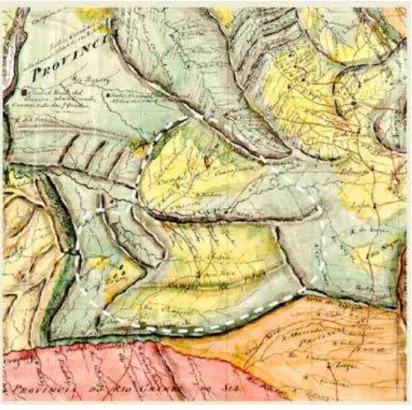
Figure 1 – Province of Paraná in the Empire. Source:
Seção de Mapas do Arquivo Nacional, Rio de Janeiro, RJ. Série 776.2-9G. (Adapted from Spina, 2012).
Final considerations
many cases (or in almost all), the existence of lands which today belong to the Kaingang. The indigenous populations of the nineteenth century were not restricted to those who warred against the empire – the so-called wild Indians, or to an extent independent –, but also encompassed a series of individuals and various communities which constituted society in this period (Moreira, 2010, p. 137). Through the aldeamento policies, some indigenous groups man-aged to survive and maintain their lands, despite all the actions, activities, and numerous expeditions and campaigns against these populations and all the intentions of hunting, imprisonment, and captivity. Village land was for the Indians a good of considerable value, whose function went beyond subsistence; for it there were disputes, conflicts, and negotiations (Almeida, 2011). The recognition of determined territorial spaces such as theirs, in some cases, de-marcated political and diplomatic actions on the part of the indigenous popu-lations of Southern Plateau and, thereby, reveals their protagonism in the History of Brazil.
ReFeReNCeS
AlMeIDA, Maria Regina Celestino de. Os Índios na História do Brasil. Rio de Janeiro: ed. FGV, 2010.
_______. os índios na história: avanços e desafios das abordagens interdisciplinares – a contribuição de John monteiro. História Social, n.25, pp. 19-42, 2º sem. 2013. _______. Tierras y Recursos económicos de las aldeas indígenas de Rio de Janeiro:
conflictos y negociaciones (siglos XVII-XIX). Nuevo Mundo-Mundos Nuevos, 2011. Available at: http://nuevomundo.revues.org/60531.
ARQUIVo NACIoNAl. Nomeação de Engenheiro para o Cargo de Juiz Comissário de Guarapuava – correspondência do Presidente da ProvínciaAntônio Luis Affonso de Carvalho. Rio de Janeiro: ARQUIVo NACIoNAl, Agricultura, SDe, DB, DeP 311, cx. 26, 1869.
ARQUIVo HISTÓRICo MUNICIPAl De GUARAPUAVA (AHMG) – UNICeN-TRo. Correspondências 1865. Paraná: AHMG, Centro de Documentação e Memó-ria – CeDoC/G, cx. 05 nº 37 A.
ARQUIVo PÚBlICo Do eSTADo De SÃo PAUlo (APeSP). Correspondência de Francisco Ferreira da Rocha Loures ao Presidente da Província, em junho de 1849. Seção manuscritos. Ofícios Diversos de Guarapuava (1824-1853). São Paulo: APeSP, cx. 230, pasta 2, documento 35, ordem 1025.
BANDeIRA, José Joaquim Pinto. Notícias da descoberta dos Campos de Palmas. Re-vista do Instituto Histórico e Geográfico Brasileiro, Rio de janeiro: Typografia Uni-versal de laemmert, Tomo 14, pp. 425-438, 1851.
BoCCARA, Guillaume. Mundos Nuevos en las fronteras del Nuevo Mundo. Nuevo Mundo Mundos Nuevos, Debates, 8 fev. 2005. Available at: http://nuevomundo. revues.org/426.
BRASIl. CoNGReSSo. Decreto 1318 de 30 de janeiro de 1854. Manda executar a lei 601 de 18 de setembro de 1850 – lei de Terras e dá regulamento para a sua execu-ção. Coleção das Leis do Império. Tomo 17, parte 2, seção 6ª. Rio de Janeiro: Tipo-grafia Nacional, 1854. p. 347.
BRASIl. CoNGReSSo. lei 601 (lei de Terras), de 18 de setembro de 1850. Dispõe sobre as terras devolutas do Império. Coleção das Leis do Império. Tomo XI, parte I. Rio de janeiro: Tipografia Nacional, 1850. p. 307.
CARVAlHo, José Murilo de. Teatro de sombras: a política imperial. Rio de janeiro: ed. UFRJ; Relume-Dumará, 1996.
CHRISTIllINo, Cristiano luís. Sendo senhor: eu Grilo. A desconstrução das cadeias sucessórias. In: MoTTA, Márcia; SeCReTo, María Verónica (org.) O direito às avessas: por uma história social da propriedade. Guarapuava, PR: ed. Unicentro; Niterói, RJ: eduff, 2011. pp. 193-215.
ColeçÃo das leis do Império. Available at: http://www.2.camara.gov.br.
CUNHA, Manuela Carneiro da. Política indigenista no século XIX. In: _______. (org.) História dos Índios no Brasil. 2.ed. São Paulo: Companhia das letras, 2002. pp. 133-155.
De JoNG, Ingrid.Funcionarios de dos mundos en un espacio liminal: los “indios amigos” en la frontera de Buenos Aires (1856-1866). Revista TEFROS, v.9, pp. 13-27, 2011.
MACHADo, Paulo Pinheiro. A política de terras em Santa Catarina: posse, proprie-dade e legitimação no Planalto Serrano e Meio-oeste no final do Império e início da República (1854-1912). In: SIMPÓSIo NACIoNAl De HISTÓRIA – ANPUH, 26. São Paulo, 2011. Anais..., pp. 456-489.
MANDRINI, Raúl J. La Argentina Aborigen. Buenos Aires: Siglo Veintiuno, 2012. MARTINS, José de Souza. O cativeiro da terra. São Paulo: Hucitec, 1986.
MISSAGIA, Izabel; De JoNG, Ingrid.Presentación del Dossier etnias y Nación en América latina: historia y comparación. Memoria Americana, v.16, n.1, pp. 11-17, 2008.
MoReIRA, Vânia Maria losada. De Índio a Guarda Nacional: Cidadania e Direitos Indígenas no Império (Vila de Itaguaí, 1822-1836). TOPOI, v.11, n.21, pp. 127-142, jul.-dez. 2010.
no espírito Santo (séculos XVIII e XIX). Mundo Agrário, v.13, n.25, pp. 10-38, 2012.
MoTTA, Márcia. Posseiros no oitocentos e a Construção do Mito Invasor no Brasil (1822-1850). In: ZARTH, Paulo; MoTTA, Márcia (org.) Formas de resistência camponesa: visibilidade e diversidade de conflitos ao longo da história. São Paulo: ed. Unesp, 2008. pp. 85-103.
PRoVINCIAl RePoRTeRS. Center for research libraries. Available at: www.crl.uchi-cago.edu/content/provopen.htm/.
SeCReTo, M. V. legislação sobre terras no Brasil do oitocentos: definindo a proprie-dade. Raízes, Campina Grande, v.26, n.1-2, pp. 10-20, jan.-dez. 2007.
SIlVA, lígia osório. Terras devolutas e latifúndio: efeitos da lei de 1850. Campinas: ed. Unicamp, 1996.
SoUZA, Almir Antonio de. Armas, Pólvora e Chumbo: a expansão luso-brasileira e os Índios do Planalto Meridional. Doctoral Dissertation in History – Centro de Filo-sofia e Ciências Humanas, Universidade Federal de Santa Catarina (UFSC). Flo-rianópolis, 2012.
_______. A invasão das terras Kaingang nos campos de Palmas. o processo contra a liderança indígena Vitorino Condá (1839-44). MEDIAÇÕES, londrina, v.19, n.2, pp. 43-61, jul.-dez. 2014.
NoTeS
1 Doctorate in History, Universidade Federal de Santa Catarina (UFSC); Post-Doctorate
from Universidade estadual do Centro-oeste (Unicentro).
2 In addition to the sources cited, the reports of the President of the Province and laws
en-acted during the period were researched in the following sites: University of Chicago, Pro-vincial Reporters, Center for Research libraries, www.crl.uchicago.edu/content/provopen. htm/; Coleção das Leis do Império, Câmara Federal, www.2.camara.gov.br.
3 Correspondence from Pedro Ribeiro de Souza, Director of Aldeamento of Palmas, to the
President of the Province, Antônio Augusto da Fonseca, on 25 May 1869. Fundo Admin-istração Provincial, 307.10, pp. 322-323. Departamento estadual de Arquivo Público do Paraná – DeAP-PR.
4 Ibid.
5 Correspondence from the President of the Province of Paraná, Antônio Augusto da
Fon-seca, to the Delegado of the Division of Public land and Colonization of the Province of Paraná, Cândido Rodrigues Soares de Meirelles, 27 July 1869. Fundo Administração Pro-vincial, C 458, p. 379 – DeAP-PR.
6 Correspondence from José Secundino lopes de Gomensoro, Judge of the Comarca of
er-melino de leão, 17 october 1870. Fundo Administração Provincial, AP 315, pp. 189-190 – DeAP-PR.
7 Correspondence from the President of the Province of Paraná, Antônio Augusto da
Fon-seca, to Pedro Ribeiro de Souza, Director of Aldeamento of Palmas, 26 July 1869. Fundo Administração Provincial, C 458, p. 380 – DeAP-PR.
8 Correspondence from the President of the Province of Paraná, Antônio Augusto da
Fon-seca, to the Delegado of the Division of Public land and Colonization of the Province of Paraná, Cândido Rodrigues Soares de Meirelles, 29 July 1869. Fundo Administração Pro-vincial, C 458, p. 386 – DeAP-PR.
9 Correspondence from the President of the Province of Paraná, Antônio Augusto da
Fon-seca, to the Minister of Agriculture, Trade, and Public Works, Joaquim Antão Fernandes leão, 31 July 1869. Fundo Administração Provincial, AP 308, pp. 64-65 – DeAP-PR.
10 Correspondence from the President of the Province of Paraná, Antônio Augusto da
Fon-seca, to the Director General of the Indians of the Province of Paraná, Francisco Ferreira da Rocha loures, 31 July 1869. Fundo Administração Provincial, C 458, p. 389 – DeAP-PR.
11 Correspondence from the President of the Province of Paraná, Antônio Augusto da
Fon-seca, to Pedro Ribeiro de Souza, Director of Indians of Palmas, 31 July 1869. Fundo Ad-ministração Provincial, C 458, p. 391 – DeAP-PR.
12 Relatório apresentado ao exmo. senhor Vice-Presidente, Dr. Agostinho ermelino de
leão pelo excelentíssimo ex-Presidente Antônio Augusto da Fonseca, 5 de dezembro de 1869, pp. 17-18. Índios. Curitiba, Tipografia de Candido Martins lopes, 1869.
13 Correspondence from the Minister of Agriculture, Trade, and Public Works, Joaquim
Antão Fernandes leão, to the Vice-President of the Province of Paraná, Agostinho er-melino de leão, 30 September 1869. Fundo Administração Provincial, C270, p. 269 – DeAP-PR.
14 letter from the President of the Province of Paraná, Antônio luís Affonso de Carvalho,
to the Director of Indians of Palmas, Pedro Ribeiro de Souza, 10 December 1869. Fundo Administração Provincial, C458, p. 526 – DeAP-PR.
15 letter from Francisco Ferreira da Rocha loures, Director-General of the Indians of the
Province of Paraná Antônio luiz Affonso de Carvalho, on 12 February 1870. Fundo Ad-ministração Provincial, AP 327, p. 182 – DeAP-PR.
16 Relatório apresentado à Assembleia legislativa do Paraná na abertura da 1ª sessão da 9ª
legislatura pelo Presidente Dr. Antônio luiz Affonso de Carvalho, no dia 15 de fevereiro de 1870. Curitiba: Tipografia de Candido Martins lopes, 1871, p. 47.
17 Correspondence from de Pedro Ribeiro de Souza, Diretor do aldeamento de Palmas ao
Vice-Presidente da Província, Agostinho ermelino de leão, 3 de julho de 1870. Fundo Administração Provincial, AP 338327, p. 182 – DeAP-PR.
de leão, to the Director-General of Indians, Francisco Ferreira da Rocha loures, 16 Au-gust 1870. Fundo Administração Provincial, C458, p. 136 – DeAP-PR.
19 Correspondence from the Vice-President of the Province of Paraná, Agostinho ermelino
de leão, to the Delegado of the Division of Public lands, Candido Rodrigues Soares de Meirelles, 19 August 1870. Fundo Administração Provincial, C458, p. 145 – DeAP-PR.
20 Relatório apresentado ao excelentíssimo senhor Presidente Dr. Venâncio Jose de
olivei-ra lisboa pelo exmo. senhor Vice-Presidente, Dr. Agostino ermelino de leão, 24 de dezembro de 1870. Índios. Curitiba: Typographia de Candido Martins lopes, 1871, p. 19.