ORIGIN
AL RESEAR
CH
Efects of two respiratory physiotherapy protocols
on respiratory mechanics and cardiorespiratory
parameters of patients under mechanical ventilation:
a pilot study
Efeitos de dois protocolos de isioterapia respiratória na mecânica respiratória e parâmetros
cardiorrespiratórios de pacientes em ventilação mecânica: estudo piloto
Efectos de dos protocolos de isioterapia respiratoria en la mecánica respiratoria y parámetros
cardiorespiratorios de pacientes en ventilación mecánica: estudio piloto
Fernanda Klose Preuss1, Fernanda Vianna Schmitt2, Janice Cristina Soares3, Isabella Martins de Albuquerque4, Maria Elaine Trevisan4
Study developed at the Adult Intensive Care Unit (ICU), Hospital Universitário de Santa Maria (HUSM) – Santa Maria (RS), Brazil.
1Specialist in Physical and Motor Rehabilitation, Universidade Federal de Santa Maria (UFSM) – Santa Maria (RS), Brazil. 2Department of Health of the State of Rio Grande do Sul.
3Physical therapist, Hospital Universitário de Santa Maria (HUSM) – Santa Maria (RS), Brazil.
4Professor, Department of Physiotherapy and Rehabilitation, Universidade Federal de Santa Maria (UFSM) – Santa Maria (RS), Brazil.
246
ABSTRACT | The aim of the study was to analyze the efects of two respiratory physiotherapy protocols on respiratory mechanics and cardiorespiratory parameters of patients under mechanical ventilation compared to a tracheal aspiration protocol. Pilot study with quasi-experimental design and 50 patients, randomized into GI group (n=16): control group, submitted to tracheal aspiration; GII (n=17): submitted to vibrocompression and tracheal aspiration; GIII (n=17): submitted to vibrocompression, aspiration, and ventilator hyperinlation. The variables analyzed were: heart rate (HR), respiratory rate, systemic blood pressure, peripheral oxygen saturation, static lung compliance, dynamic lung compliance, and airway resistance. These were recorded at three moments: before the procedures (M1), immediately after them (M2), and 15 minutes after them (M3). To compare the efect and analyze the interaction between measurement time and groups, we used Two-Way ANOVA and post hoc Tukey’s test. The efect size was determined by calculating Cohen’s f2 and by statistical analysis using SPSS for Windows (version 20), with a signiicance level of 5%. In the intragroup comparison, no diferences were observed, while in the comparison between groups the variable HR showed diference between GI and GII in M2 (p=0.02). Results suggest that the respiratory physiotherapy protocols evaluated had no favorable efects on respiratory
Mailing address: Maria Elaine Trevisan – Rua Silva Jardim, 2141/701 – CEP 97010-493 – Santa Maria (RS), Brazil. E-mail: [email protected] – Phone: + 55 (55) 3220-8234
Presentation: May 2014 – Accepted for publication: Sept. 2015 – Financing sources: none – Conlicts of interest: nothing to declare – Approved by the Research Ethics Committee under no. 220/812.
mechanics; however, they showed to be safe regarding cardiorespiratory parameters.
Keywords | Physiotherapy Modalities; Respiration, Artiicial; Respiratory Mechanics; Intensive Care Units.
análise estatística pelo programa SPSS para Windows (versão 20), nível de signiicância de 5%. Na comparação intragrupo não foram observadas diferenças, enquanto na comparação entre grupos a variável FC apresentou diferença entre o GI e GII no M2 (p=0,02). Os resultados sugerem que os protocolos de isioterapia respiratória avaliados não promoveram benefícios quanto à mecânica respiratória, entretanto se mostraram seguros em termos de parâmetros cardiorrespiratórios. Descritores | Modalidades de Fisioterapia; Respiração Artiicial; Mecânica Respiratória; Unidades de Terapia Intensiva.
RESUMEN | El objetivo de este estudio fue analizar los efectos de dos protocolos de isioterapia respiratoria en la mecánica respiratoria y parámetros cardiorespiratorios de los pacientes en ventilación mecánica, comparándolos con un protocolo de aspiración traqueal. Estudio piloto con diseño cuasi-experimental con 50 pacientes, randomizados en grupo GI (n=16): grupo control, realizado una aspiración traqueal; GII (n=17): realizado vibrocompresión y aspiración traqueal; GIII (n=17): realizado vibrocompresión, aspiración y hiperinlación por el ventilador mecánico. Las variables analizadas fueron:
frecuencia cardiaca (FC), frecuencia respiratoria, presión arterial sistémica, saturación periférica de oxígeno, complacencia pulmonar estática, complacencia pulmonar dinámica y resistencia de las vías aéreas. Éstas se registraron en tres momentos: antes de los procedimientos (M1), inmediatamente después (M2) y 15 minutos después (M3). Para comparar el efecto y analizar la interacción entre el tiempo de medición y grupos, se utilizó el ANOVA Two-Way y post hoc de Tukey. Se determinó el tamaño del efecto mediante el cálculo f2 de Cohen
y el análisis estadístico por el programa SPSS para Windows (versión 20), nivel de signiicancia del 5%. En la comparación intragrupo no se encontraron diferencias, mientras que en la comparación entre grupos la variable FC presentó diferencia entre el GI y GII en el M2 (p=0,02). Los resultados sugieren que los protocolos de isioterapia respiratoria evaluados no promovieron beneicios en cuanto a la mecánica respiratoria, sin embargo resultaron seguros en términos de parámetros cardiorespiratorios.
Palabras clave | Modalidades de Fisioterapia; Respiración Artiicial; Mecánica Respiratoria; Unidades de Cuidados Intensivos.
INTRODUCTION
Maintenance of airway permeability by endotracheal intubation and institution of mechanical ventilation (MV) are the pillars of therapeutic intensive care and a breakthrough in the treatment of acute respiratory
failure or acutized chronic respiratory failure1. However,
the application of positive pressure on lungs by use of
prosthesis can generate systemic repercussions2 and, as
a result, prolong the length of hospitalization3, as well as
increase the risk of death4. Among these repercussions,
the most frequent are hemodynamic instability and respiratory infections caused by reduction of local defense mechanisms due to the presence of the tube. Moreover, patients under MV may have increased airway resistance impose greater burden to the
respiratory system5.
he evaluation of respiratory mechanics has been
studied in the MV context6,7. A review study8 argues
that there are diferences for the values of Static Compliance (Cst,rs), Dynamic Compliance (Cdyn), and Airway Resistance (Raw) when comparing patients under MV and under spontaneous ventilation.
Currently, physiotherapy has an important role in multi-professional teams assisting critical patients in
most ICUs9,10.
According to Siner11, the advances in respiratory
physiotherapy interventions contribute to reduce the accumulation of bronchial secretions in patients under MV. Physiotherapy procedures that aim to increase the permeability of the airways, optimize oxygenation, and improve respiratory mechanics are widely used in ICUs12,13. Among these procedures, vibrocompression
(VC), manual hyperinlation (MH), and ventilator hyperinlation (VH) are noteworthy.
Evidences of beneits resulting from MH and
VC are referenced in the literature14-17; however, VH
requires further research. Standardization is necessary to achieve the best mode of ventilation for hyperinlation
and consensus regarding application parameters18.
Furthermore, few studies compared VH, a relatively new
technique19, with bronchial hygiene techniques such as
hus, the objective of this study was to analyze the efects of two respiratory physiotherapy protocols on respiratory mechanics and cardiorespiratory parameters of patients under MV, comparing them with a tracheal aspiration protocol.
METHODOLOGY
Pilot study with quasi-experimental, comparative design, conducted in an adult ICU of HUSM. It was approved by the local Ethics Committee under no. 220,812. Family members or guardians signed the Free and Informed Consent Form.
he study included patients of both sexes, aged over 18 years, hospitalized in the ICU, diagnosed with acute respiratory failure or acutized chronic respiratory
failure, under MV (Inter 5-Plus® – Intermed®, São
Paulo, Brazil; SERVOi, Maquet GmbH&Co, KG, Rastatt, Germany) for more than 48 hours, deep to light level of sedation (Richmond Agitation Sedation Scale – RASS), closed tracheal aspiration system, and intubation. We deined as a criterion for respiratory failure: oxygen arterial pressure lower than or equal to 50mmHg or carbon dioxide arterial pressure higher than or equal to 50mmHg, regardless of the
cause20. Patients under mild sedation (RASS-2) and
pressure support ventilation were included provided they showed no asynchrony with the ventilator. Patients submitted to use of tracheostomy tube were excluded; as well as those with: spinal cord injury, hemodynamic instability, acute arrhythmias, fracture of ribs, intracranial hypertension, burns, undrained
pneumothorax, and severe asthma.
We collected demographic and clinical data, as well as cardiovascular, ventilation and respiratory mechanics parameters. he variables measured were: heart rate (HR); mean arterial pressure (MAP), systolic blood pressure; diastolic blood pressure, and peripheral oxygen saturation, in a non-invasive manner by observing the multiparameter monitor DX2022 (Dixtal Biomédica, Manaus, Brazil). Respiratory rate (RR), plateau pressure (Pplat), and peak inspiratory pressure (Ppi) were observed in the mechanical ventilator display.
Cst,rs was obtained by dividing the tidal volume (TV) by Pplat subtracting the value of PEEP; Cdyn was obtained by dividing the TV by Ppi subtracting the value of PEEP; and Raw was obtained by dividing the
diference between the Ppi and Pplat by the inspiratory low.
Variables were collected at three moments: baseline (M1), immediately after the interventions (M2), and 15 minutes after the interventions (M3). Patients were divided into three intervention groups, randomized by simple sortition conducted by a professional independent from the research, using envelopes containing the group to which they would be allocated, namely: Control group (GI) submitted to tracheal aspiration (TA); GII, vibrocompression (VC) maneuver followed by TA; or Group III, VC maneuver followed by TA and ventilator hyperinlation (VH). he protocols were applied by the same physical therapist in the three groups, in the afternoon, and evaluations were conducted by a physical therapist who did not know to which group the patient had been allocated.
In GI, TA was performed as recommended by the
American Association for Respiratory Care21, as many
times as necessary until no more secretion was observed in the suction probe.
In GII, VC was conducted for 10 minutes at the
end of inspiration until the end of expiration22, with the
patient supine and the physical therapist’s hands lat on the rib cage. Next, TA was performed.
In GIII, VC and TA maneuvers were followed by the VH maneuver. his was performed with the increase in pressure or volume, depending on the ventilation
mode in use, in order to achieve 40 cmH20 of Ppi for
10 minutes23.
At the time of application of the protocols, medical and nursing procedures were not carried out.
Sample calculation
Estimated to obtain a signiicance level of 5% (p<0.05) and power of 80% (WinPepi version 10.5). Considering the standard deviation of the variable
Cst,rs of the study by Lemes et al.24, a sample of 23
individuals in each group was calculated.
Statistical analysis
Results presented with mean and standard deviation. Shapiro-Wilk test veriied the normal distribution of the data. Anthropometric variables were compared between groups by one-way ANOVA
and analyze the interaction between measurement time and groups, we used two-way ANOVA and
post hoc Tukey’s test. Efect size was determined by
using Cohen’s f2 for comparison between groups
and classiied as major, moderate, and minor25. We
used the Statistical Package for the Social Sciences (SPSS), version 20, with a level of signiicance of 5% (p<0.05).
RESULTS
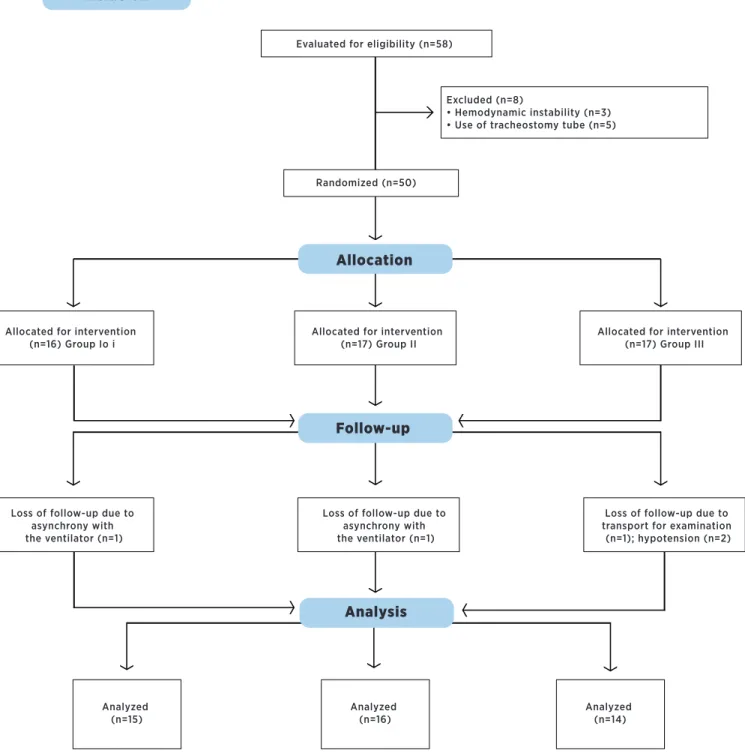
Of the 58 patients eligible for the study, three were excluded because of hemodynamic instability, and ive because of use of tracheostomy tube. he remaining 50 were divided into three groups: GI (n=16), GII (n=17), and GIII (n=17). Subsequently, follow-up was lost for ive patients, so the study was completed with 45 patients (Figure 1).
Follow-up Allocation
Analysis
Evaluated for eligibility (n=58)
Randomized (n=50)
Allocated for intervention (n=16) Group Io i
Loss of follow-up due to asynchrony with the ventilator (n=1)
Loss of follow-up due to asynchrony with the ventilator (n=1)
Analyzed (n=16) Analyzed
(n=15)
Analyzed (n=14)
Loss of follow-up due to transport for examination
(n=1); hypotension (n=2) Allocated for intervention
(n=17) Group II
Allocated for intervention (n=17) Group III Excluded (n=8)
• Hemodynamic instability (n=3) • Use of tracheostomy tube (n=5)
Table 1 shows the characteristics of the sample, and we did not observe diferences between groups.
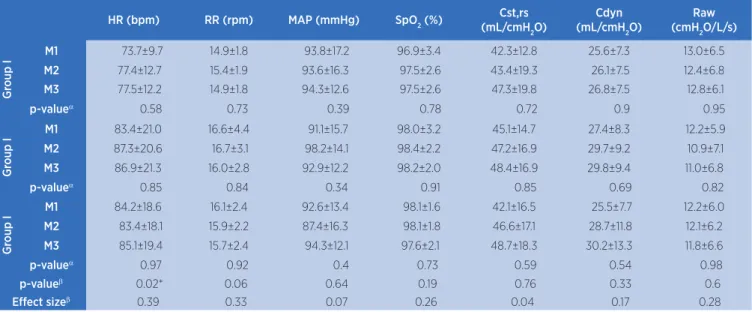
Table 2 shows the cardiorespiratory and respiratory mechanics parameters in the three groups and the intragroup and intergroup comparison. In the
intragroup comparison, no diferences were observed, while in the intergroup comparison variable HR had a diference between GI and GII at M2 (77.4±12.7
→ 87.3±20.6bpm; p=0.02), with major efect size
(Cohen’s f2=0.39).
Table 1. Characterization of the sample
Variables GI (n=15) GII (n=16) GIII (n=14) p
Male, n (%) 10 (66.7) 13 (81.2) 7 (50) 0.19
Age (years) 56.5±15.4 52.3±14.0 58.5±17.0 0.40
MV time (days) 4.3±2.6 6.9±5.4 5.4±4.3 0.51
PEEP (cmH2O) 6.7±1.6 6.6±1.3 7.6±2.9 0.79
FiO2 (%) 48.1±7.7 43.1±6.8 46.8±10.1 0.27
Reason for hospitalization
Surgery, n (%) 4 (26.7) 4 (20.0) 5 (35.7) 0.79
Trauma, n (%) 5 (33.3) 3 (18.8) 1 (7.1) 0.20
Lungs, n (%) 1 (6.7) 5 (31.2) 3 (21.4) 0.22
Nervous system, n (%) 3 (20.0) 2 (12.5) 3 (21.4) 0.78
Infection, n (%) 1 (6.7) 2 (12.5) 2 (14.3) 0.78
Heart, n (%) 1 (6.7) 0 (0) 0 (0) 0.36
Mode of ventilation
PCV, n (%) 12 (80.0) 12 (75.0) 13 (82.2) 0.42
PSV, n (%) 1 (6.7) 1 (6.2) 0 (0.0) 0.62
VCV, n (%) 1 (6.7) 3 (18.8) 1 (7.1) 0.48
Medication
Antibiotic, n (%) 6 (40.0) 7 (43.8) 5 (35.7) 0.90
Sedation, n (%) 15 (100.0) 16 (100.0) 14 (100.0) 0.35
Vasopressor, n (%) 7 (46.7) 5 (31.2) 10 (71.4) 0.08
Corticoid, n (%) 4 (26.7) 8 (50.0) 9 (64.3) 0.12
Values expressed as Mean±SD and percentages. GI: tracheal aspiration; GII: vibrocompression and tracheal aspiration; GIII: vibrocompression, tracheal aspiration, and ventilator hyperinlation; MV: me-chanical ventilation; PEEP: positive end expiratory pressure; FiO2: fraction of inspired oxygen; PCV: pressure controlled ventilation; PSV: pressure support ventilation; VCV: volume controlled ventilation
Table 2. Cardiorespiratory variables, respiratory system compliance variables, and airway resistance variables
HR (bpm) RR (rpm) MAP (mmHg) SpO2 (%) Cst,rs
(mL/cmH2O)
Cdyn (mL/cmH2O)
Raw (cmH2O/L/s)
Gr
oup I
M1 73.7±9.7 14.9±1.8 93.8±17.2 96.9±3.4 42.3±12.8 25.6±7.3 13.0±6.5
M2 77.4±12.7 15.4±1.9 93.6±16.3 97.5±2.6 43.4±19.3 26.1±7.5 12.4±6.8
M3 77.5±12.2 14.9±1.8 94.3±12.6 97.5±2.6 47.3±19.8 26.8±7.5 12.8±6.1
p-valueα 0.58 0.73 0.39 0.78 0.72 0.9 0.95
Gr
oup I
M1 83.4±21.0 16.6±4.4 91.1±15.7 98.0±3.2 45.1±14.7 27.4±8.3 12.2±5.9
M2 87.3±20.6 16.7±3.1 98.2±14.1 98.4±2.2 47.2±16.9 29.7±9.2 10.9±7.1
M3 86.9±21.3 16.0±2.8 92.9±12.2 98.2±2.0 48.4±16.9 29.8±9.4 11.0±6.8
p-valueα 0.85 0.84 0.34 0.91 0.85 0.69 0.82
Gr
oup I
M1 84.2±18.6 16.1±2.4 92.6±13.4 98.1±1.6 42.1±16.5 25.5±7.7 12.2±6.0
M2 83.4±18.1 15.9±2.2 87.4±16.3 98.1±1.8 46.6±17.1 28.7±11.8 12.1±6.2
M3 85.1±19.4 15.7±2.4 94.3±12.1 97.6±2.1 48.7±18.3 30.2±13.3 11.8±6.6
p-valueα 0.97 0.92 0.4 0.73 0.59 0.54 0.98 p-valueβ 0.02* 0.06 0.64 0.19 0.76 0.33 0.6 Efect sizeβ 0.39 0.33 0.07 0.26 0.04 0.17 0.28
αIntragroup comparison. βIntergroup comparison. Values expressed as Mean±SD. HR: heart rate; RR: respiratory rate; MAP: mean arterial pressure; SpO
2: peripheral oxygen saturation; Cst,rs: static
DISCUSSION
Currently, there has been discussion about the safety of the application of respiratory physiotherapy
procedures in critically ill patients16,26,27; however, there
are few studies evaluating their efect on cardiorespiratory parameters. In this study, although HR was diferent between GI and GII at M2, it is emphasized that it was within normal limits and, thus, no clinical relevance was evident on the inding, indicating that the protocols adopted showed to be hemodynamically safe in these patients.
Despite the lack of evidence of the efects of VH combined with VC on cardiorespiratory parameters of critically ill patients, it is important to mention the study
of Castro et al.22, who evaluated the hemodynamic
repercussions of VC in tracheostomy patients, observing that VC promoted reduction in MAP. In
the study of Cerqueira Neto et al.16, it was observed
that VC combined with acceleration of expiratory low (AEF) did not alter the MAP in TBI patients under MV. Hemodynamic variables were maintained during VC and AEF; however, there was an increase in MAP, intracranial pressure, HR, and pulmonary artery pressure during TA. All values returned to baseline levels 10 minutes after the procedure.
In this study, the respiratory mechanics variables did had no change at any of the moments evaluated, suggesting that the protocols, as applied, were not efective to evidence, to date, the recovery of complacencies and the reduction of resistance. Importantly, the values of Cdyn, Cst,rs, and Raw were out of the normal parameters since M1 and remained like this at the other evaluated moments. It is also important to highlight that these indings were evidenced in the intragroup and intergroup comparisons.
Most studies on the efects of bronchial hygiene resources on respiratory mechanics of patients under MV analyzed VH alone or compared to MH, and there are few that analyzed the efects of VH combined with VC maneuvers, as in this study. By comparing VH to
MH, Dennis et al.28 found that there was no diference
in relation to compliance and current volume. However,
a similar study conducted by Berney et al.19 showed
increased pulmonary compliance after application of both hyperinlation techniques. Among the few studies that combined VH with manual bronchial hygiene
techniques, there is the study of Guimarães et al.29, who
used a technique that is similar to VC combined with
hyperinlation using pressure support, observing no improvement in respiratory mechanics.
We consider as limitations of the present study the heterogeneity of the sample in relation to clinical reasons for hospitalization and the impossibility of using methods to quantify the volume of the tracheobronchial secretion eliminated.
hus, our indings should be interpreted with caution. he continuation of the study, to reach the planned sample size, as well as the conduct of randomized clinical trials, may clarify the potential beneits of the interventions analyzed here and commonly used in the clinical practice of respiratory physiotherapy in ICU. At this time, the practical applicability of the research refer to the absence of negative implications regarding the investigated physiotherapy procedures, considering both hemodynamic and cardiorespiratory perspectives, evidence being required as for whether these procedures are favorable to the recovery of complacencies and reduction of airway resistance in patients under MV.
CONCLUSION
he respiratory physiotherapy protocols had no favorable efects on respiratory mechanics; however, they showed to be safe concerning cardiorespiratory parameters and, from this point of view, can be used safely.
REFERENCES
1. Laghi F, Tobin MJ. Indications for mechanical ventilation. In: Tobin, MJ, editor. Principles and Practice of Mechanical Ventilation. 2. New York: MacGraw-Hill Co. 2006:129-62. 2. Carvalho CRR. Ventilator-associated pneumonia. J Bras
Pneumol. 2006;32(4):xx-ii.
3. Esteban A, Anzueto A, Frutos F, Alía I, Stewart TE, Benito S, et al. Characteristics and outcomes in adult patients receiving mechanical ventilation: a 28-day international study. J Am Med Assoc. 2002;287(3):345-55.
4. Esteban A, Frutos-Vivar F, Muriel A, Ferguson ND, Peñuelas O, Abraira V, et al. Evolution of mortality over time in patients receiving mechanical ventilation. Am J Respir Crit Care Med. 2013;188(2):220-30.
5. Smith BK, Gabrielli A, Davenport PW, Martin AD. Efect of training on inspiratory load compensation in weaned and unweaned mechanically ventilated ICU patients. Respir Care. 2014;59(1):22-31.
pressure support ventilation. Middle East J Anaesthesiol. 2014;22(6):573-82.
7. Valentini R, Aquino-Esperanza J, Bonelli I, Maskin P, Setten M, Danze F, et al. Gas exchange and lung mechanics in patients with acute respiratory distress syndrome: comparison of three diferent strategies of positive end expiratory pressure selection. J Crit Care. 2015;30(2):334-40.
8. Henderson WR, Sheel AW. Pulmonary mechanics during mechanical ventilation. Respir Physiol Neurobiol. 2012;180(2-3):162-72.
9. França EET, Ferrari F, Fernandes P, Cavalcanti R, Duarte A, Martinez BP, et al. Fisioterapia em pacientes críticos adultos: recomendações do Departamento de Fisioterapia da Associação de Medicina Intensiva Brasileira. Rev Bras Ter Intensiva. 2012;24(1):6-22.
10. Sommers J, Engelbert RH, Dettling-Ihnenfeldt D, Gosselink R, Spronk PE, Nollet F, et al. Physiotherapy in the intensive care unit: an evidence-based, expert driven, practical statement and rehabilitation recommendations. Clin Rehabil. 2015 Feb 13. [Epub ahead of print]
11. Siner JM. An exogenous cough. Crit CareMed. 2013;41(3):929-30.
12. Castro AA, Calil SR, Freitas SA, Oliveira AB, Porto EF. Chest physiotherapy efectiveness to reduce hospitalization and mechanical ventilation length of stay, pulmonary infection rate and mortality in ICU patients. Respir Med. 2013;107(1):68-74. 13. Naue Wda S, Forgiarini Junior LA, Dias AS, Vieira SR.
Chest compression with a higher level of pressure support ventilation: efects on secretion removal, hemodynamics, and respiratory mechanics in patients on mechanical ventilation. J Bras Pneumol. 2014;40(1):55-60.
14. Jones AY. Secretion movement during manual lung inlation and mechanical ventilation. Respir Physiol Neurobiol. 2002;132(3):321-7.
15. Paulus F, Binnekade JM, Vroom MB, Schultz MJ. Beneits and risks of manual hyperinlation in intubated and mechanically ventilated intensive care unit patients: a systematic review. Crit Care. 2012;16(4):R145.
16. Cerqueira Neto ML, Moura AV, Cerqueira TC, Aquim EE, Reá-Neto A, Oliveira MC, et al. Acute efects of physiotherapeutic respiratory maneuvers in critically ill patients with craniocerebral trauma. Clinics. 2013;68(9):1210-4.
17. Ferreira LL, Valenti VE, Vanderlei LC. Chest physiotherapy on intracranial pressure of critically ill patients admitted to the intensive care unit: a systematic review. Rev Bras Ter Intensiva. 2013;25(4):327-33.
18. Hayes K, Seller D, Webb M, Hodgson CL, Holland AE. Ventilator hyperinlation: a survey of current physiotherapy practice in Australia and New Zealand. N Z J Physiother. 2011;39(3):124-30.
19. Berney S, Denehy L. A comparison of the efects of manual and ventilator hyperinlation on static lung compliance and sputum production in intubated and ventilated intensive care patients. Physiother Res Int. 2002;7(2):100-8.
20. Batista CC, Goldbaum Júnior MA, Sztiler F, Goldim JR, Fritscher CC. Medical futility and respiratory failure: a prospective cohort study. Rev Bras Ter Intensiva. 2007;19(2):151-60. 21. Restrepo RD, Brown JM, Hughes JM. AARC Clinical Practice
Guidelines. Endotracheal suctioning of mechanically ventilated patients with artiicial airways 2010. Respir Care. 2010;55(6):758-64.
22. Castro AAM, Rocha S, Reis C, Leite JRO, Porto EF. Comparação entre as técnicas de vibrocompressão e de aumento do luxo expiratório em pacientes traqueostomizados. Fisioter Pesqui. 2010;17(1):18-23.
23. Dennis D, Jacob WJ, Samuel FD. A survey of the use of ventilator hyperinlation in Australian tertiary intensive care unit. Crit Care Resusc. 2010;12(4):262-8.
24. Lemes DA, Zin WA, Guimarães, FS. Hyperinlation using pressure support ventilation improves secretion clearance and respiratory mechanics in ventilated patients with pulmonary infection: a randomised crossover trial. Aust J Physiother. 2009;55(4):249-54.
25. Lindenau JD, Guimarães LSP. Calculando o tamanho de efeito no SPSS Revista HCPA. 2012;32(3):363-81.
26. Dias CM, Siqueira TM, Faccio TR, Gontijo LC, Salge JA, Volpe MS. Efetividade e segurança da técnica de higiene brônquica: hiperinsulação manual com compressão torácica. Rev Bras Ter Intensiva. 2011;23(2):190-8.
27. Sricharoenchai T, Parker AM, Zanni JM, Nelliot A, Dinglas VD, Needham DM. Safety of physical therapy interventions in critically ill patients: a single-center prospective evaluation of 1110 intensive care unit admissions. J Crit Care. 2014;29(3):395-400.
28. Dennis D, Jacob W, Budgeon C. Ventilator versus manual hyperinlation in clearing sputum in ventilated intensive care unit patients. Anaesth Intensive Care. 2012;40(1):142-9. 29. Lopes AJ, Constantino SS, Lima JC, Canuto P, Menezes