RBCCV 44205-1595 DOI 10.5935/1678-9741.20140111
Comparative trial of the use of antiplatelet and
oral anticoagulant in thrombosis prophylaxis
in patients undergoing total cavopulmonary
operation with extracardiac conduit:
echocardiographic, tomographic, scintigraphic,
clinical and laboratory analysis
Estudo comparativo entre o uso do antiagregante plaquetário e do anticoagulante oral na proilaxia
de trombose em pacientes submetidos à operação cavopulmonar total com tubo extracardíaco: análise
ecocardiográica, angiotomográica, cintilográica, laboratorial e clínica
Cristiane Felix Ximenes Pessotti
1, MD, PhD; Marcelo Biscegli Jatene
2, MD, PhD; Ieda Biscegli Jatene
2,
MD, PhD; Patrícia Marques Oliveira
3, MD; Fabiana Moreira Passos Succi
3, MD; Valeria de Melo
Moreira
3, MD;
Rafael Willain Lopes
2, MD, PhD; Simone Rolim Fernandes Fontes Pedra
2, MD, PhD
1 Instituto do Coração of Hospital das Clínicas da Faculdade de Medicina
of Universidade de São Paulo (InCor-HCFMUSP), São Paulo, SP, Brazil.
2Faculdade de Medicina of Universidade de São Paulo (FMUSP), São Paulo,
SP, Brazil.
3Hospital do Coração, ASS, São Paulo, SP, Brazil.
This study was carried out at Instituto do Coração do Hospital das Clínicas da Faculdade de Medicina da Universidade de São Paulo InCor-HCFMUSP, São Paulo, SP, Brazil.
No inancial support.
Correspondence address: Cristiane Felix Ximenes Pessotti
Instituto do Coração (InCor) of Hospital das Clínicas of Faculdade de Medi-cina of Universidade de São Paulo
Av. Dr. Enéas Carvalho de Aguiar, 44 - Cerqueira César, São Paulo, SP, Brasil – CEP: 05403-000
E-mail: [email protected]
Article received on April 5th, 2014
Article accepted on September 23rd, 2014 Abstract
Objective: To compare the eficacy of aspirin and warfarin for
prophylaxis of thrombosis in patients undergoing total cavopul -monary anastomosis. Evaluate whether coagulation factors (VII, VIII and protein C), clinical data, fenestration or hemodynamic factors, interfere with postoperative thrombosis.
Methods: A prospective, randomized study of 30 patients,
randomized into Group I (Warfarin) and Group II (AAS), underwent total cavopulmonary shunt with extracardiac con -duit, between 2008 and 2011, with follow-up by clinical visits to evaluate side effects and adhesion. Performed transesophageal echocardiography in post operatory time, 3, 6,12 and 24 months;
angiotomography at 6, 12 and 24 months to evaluate changes in the internal tube wall or thrombi and pulmonary scintigraphy to evaluate possible PTE.
Results: Two deaths in group I; 33.3% of patients had throm
-bus (46.7% in Group II). The previous occurrence of throm-bus and low levels of coagulation protein C were the only factors that inluenced the time free of thrombus (P=0.035 and 0.047). Angio -tomographic evaluation: 35.7% in group II presented material accumulation greater than 2 mm (P=0.082). Scintigraphy: two pa -tients had PTE in group II. Five pa-tients had dificulty to comply with the treatment, 4 in group I with INR ranging from 1 to 6.4.
596
becomes solely responsible for the systemic circulation and the systemic venous return is delivered directly to the pulmo-nary arteries. A series of palliative surgery is performed in a staged manner until the inal stage, the total cavopulmonary operation, which is currently performed by the extracardiac conduit interposed between the inferior vena cava and the right pulmonary artery (RPA).
The occurrence of thromboembolic events in the postoper-ative evolution of the total cavopulmonary operation can reach 20%. In a meta-analysis recently published[3], the incidence
of thromboembolism found ranged from 3 to 20%, with dif-ferences related to surgical technique, population considered and accuracy of imaging methods. The demonstration can be given by the formation of venous, arterial or intracardiac thrombosis, leading to death in about 25% of patients, even when they received speciic and immediate treatment[4,5].
The etiology of thrombotic complications in patients un-dergoing the Fontan operation is multifactorial.
Literature reports support the hypothesis that other factors, in addition to venous stasis and low low velocity contributes to thrombus formation. Among them, we could note the presence INTRODUCTION
The univentricular hearts correspond to a group of con-genital heart disease with different anatomical combinations, which culminate in a common feature: a single ventricle is responsible for the systemic and pulmonary circulation. In most cases it is possible to characterize the presence of two distinct ventricles - right and left – when one of them is hy-poplastic and called rudimentary and the other, well-formed, called main camera.
Among the most common anatomical forms is Tricuspid Atresia, in its different presentations, responsible for 0.3 to 5.3% of the congenital heart diseases, present in approximately 0.6 of every 10,000 live births[1]. With regard to the dominant
right ventricle, the main anatomical representation is the hy-poplastic left heart syndrome (HLHS), which represents about 3.8% of the congenital heart diseases, present in approximately 1.8 to 3.65 of 10,000 live births[2].
From the diagnosis in the neonatal period, different surgical approaches can be adopted, according to the anatomical and pathophysiological indings, so that the dominant ventricle
Abbreviations, acronyms and symbols
ASA Acetylsalicylic acid
HLHS Hypoplastic Left Heart Syndrome IPO Immediate postoperative PTE Pulmonary thromboembolism
factor for thrombosis in the postoperative period. Patients using AAS tend to deposit material in the tube wall. The small sample size did not allow to conclude which is the most effective drug in the prevention of thrombosis in this population.
Descriptors: Fontan Procedure. Thrombosis. Warfarin. As
-pirin. Prospective Studies.
Resumo
Objetivo: Comparar a eicácia do AAS e da Varfarina na
proilaxia da trombose em pacientes submetidos a operação cavopulmonar total. Avaliar se fatores de coagulação (VII, VIII e Proteína C), dados clínicos, fenestração ou fatores hemodinâ -micos, interferem na trombose no pós-operatório.
Métodos: Estudo prospectivo e randomizado de 30 pacientes,
randomizados em Grupo I (Varfarina) e Grupo II (AAS), submeti
-dos à derivação cavopulmonar total com tubo extracardíaco, entre 2008 e 2011, com seguimento de dois anos. Foram realizadas consul -tas clínicas que avaliavam efeitos colaterais e aderência. Realizado ecocardiograma transesofágico no pós-operatório imediato, 3, 6,12 e 24 meses; angiotomograia aos 6, 12 e 24 meses de pós-operatório para avaliação de alterações na parede interna do tubo ou trombos e cintilograia pulmonar, para avaliar possível TEP.
Resultados: Dois óbitos no grupo I; 33,3% dos pacientes
apresentaram trombo (46,7% no Grupo II). A ocorrência prévia de trombo e baixos níveis de proteína C da coagulação foram os únicos fatores que inluenciaram no tempo livre de trombo (P=0,035 e 0,047). Avaliação angiotomográfica: 35,7% dos pacientes do grupo II tinham atapeteamento maior que 2 mm (P=0,082). Cintilograia: dois pacientes apresentaram TEP no grupo II. Cinco pacientes tiveram diiculdade de aderência, 4 no grupo I com INR variando de 1 a 6,4.
Conclusão: A ocorrência prévia de trombo é um fator de risco
para trombose no pós-operatório. Pacientes em uso de AAS ten -dem a depósito de material na parede do tubo. O número reduzido da amostra não permitiu concluir qual a droga mais eicaz na prevenção da trombose na população estudada.
Descritores: Técnica de Fontan. Embolia e Trombose. Varfa
of change in coagulations factors such as Protein S, protein C, antithrombin III, factor VII and VIII.
Based on the indings of imbalance between the pro and anticoagulant factors, many studies suggest that these patients maintain resistant to an anticoagulation or hypercoagulable state[3,6].
There is still not a consensus in the literature about the best drug in the prevention of thrombus formation in patients in the postoperative period of total cavopulmonary connection with extracardiac conduit, and the commonly used drugs are acetylsalicylic acid (ASA) and warfarin.
Objectives Primary objectives
1. To compare the eficacy of oral anticoagulants (warfa -rin) and antiplatelet (ASA) for prophylaxis of thrombosis and thromboembolic events in the postoperative period of total cavopulmonary operation with extracardiac conduit.
2. To identify laboratory indings: hematocrit, liver function and coagulation factors in the preoperative and postoperative periods.
3. To identify and compare the viability of different treat-ments, as the clinical features, adhesion, safety and social implications.
Secondary objectives
1. To identify low changes by the extracardiac conduit in children in the postoperative period of total cavopulmonary connection, assessing the occurrence of slow low and/or au -to-contrast, through echocardiographic study series.
2. To identify changes in the internal wall of the extra-cardiac conduit by echocardiographic and angiotomographic serial examinations.
3. To identify the occurrence of subclinical pulmonary em-bolism (PE) by scintigraphy ventilation/pulmonary perfusion.
METHODS
The project was approved by the Coração Hospital Re-search Ethics Committee - Syrian Sanatorium Association, and Research Ethics Committe of the University of São Paulo Medical School (HCFMUSP) - CAPPesq.
This is a prospective randomized study, with a 2-year follow-up, with the inclusion of 30 patients who underwent total cavopulmonary operation with extracardiac conduit in the period between 2008 and 2011. The follow-up was performed in the outpatient sector of the same institution, with consultations and assessments carried out by the researcher in the predetermined periods according to the study protocol.
Inclusion criteria were:
1. Children with heart with univentricular morphology in staged programming, for total cavopulmonary shunt operation.
Exclusion criteria were:
1. Some aspect of anatomical or angiographic features that contraindicated the cavopulmonary operation, including:
a. Main ventricular ejection fraction less than 60%, or signiicant impairment of atrioventricular valve related to the predominant ventricle.
b. Serious anatomical alteration of the pulmonary venous return (untreatable)
c. Anatomy of severely unfavorable pulmonary tree. 2. Inability to perform outpatient treatment;
3. Any medical condition that prevented the randomization, for example, any indication that the patient used necessarily one of the two drugs evaluated, or contraindication to the use of them.
4. Refusal of legal guardian to sign the Post-information Consent
The age during operation was not considered as indica-tion or contraindicaindica-tion factors, being operated children of different ages.
The children, within the routine protocol of the institution, underwent preoperative hemodynamic studies with cardiac catheterization and mean pulmonary artery pressure measure-ments (mPAP).
The preoperative evaluation was consisted of two-dimen-sional color Doppler echocardiogram, electrocardiogram and cardiac catheterization. Once they were eligible for total cavo-pulmonary connection, and signed the informed consent form, patients were randomized to Group I or Group II, following randomization list generated by speciic program.
From this point forward, the child was subjected to evaluation of demographic and clinical characteristics, consisting of history and physical examination, and then evaluated according to the study protocol. Data were re-corded on a follow-up and evaluation form. Depending on the group allocated by randomization, the patient received warfarin (Group I), at an initial dose of 0.1 mg/kg/day; or antiplatelet drug ASA (Group II), at a dose of 10 mg/kg/ day (maximum dose of 100 mg/day). Both were started at the time when the patient was receiving oral medication, and until then, was to use low molecular weight heparin (Enoxaparin) subcutaneously at a dose of 1mg/kg/day, once a day. In the randomized cases appropriate for the use of warfarin, patients were kept in use of subcutaneous heparin until the INR values reached 2-3.
598
period, transesophageal echocardiogram, electrocardiogram and INR control would be performed.The outpatient follow-up began in the 3rd month of the
postoperative period (Phase 3), assessing progress and clinical complications, electrocardiogram, transesophageal echocardiogram and laboratory analysis: INR, hematocrit, liver enzymes and coagulation factors: Protein C, Factor VII and Factor VIII. The evaluation in the 6th month (Phase 4)
was similar to the one in Phase 3, however, angiography of the chest was performed in this moment. In Phase 5 (one year after surgery) we performed an evaluation similar to that in Phase 4, adding ventilation/perfusion pulmonary scintigraphy. The last evaluaiton, two years after surgery, in Phase 6, was identical to that one in Phase 5.
The collection of blood sample was performed by periph-eral puncture. The sample assessment methodology consists of coagulometric method for dosing Factor VII, VIII and PT/ PR/INR, Functional Method for Protein C and dry chemical method for dosing AST, ALT and GGT.
The preoperative echocardiogram was performed by transthoracic two-dimensional color doppler and postoperative examinations by transesophageal routes, Philips IE 33 device (Bathel-Andover), with pediatric probe in children weighing less than 20kg and adult probe in children with weighing greater than or equal to 20 kg, by a single examiner. The evaluation of the conduit was performed in longitudinal and cross-sectional cut, evaluating the low by color low mapping, and Doppler, with the thrombus evaluated by two-dimensional method. The ventricular systolic function was performed by subjective analysis and ventricular diastolic function by plot-ting the pulmonary vein Doppler.
Angiotomography was performed by two radiologists ex-aminers. Iodinated contrast material was applied at a dose of 1.5 ml/kg, and only one acquisition was made during apnea; two minutes after contrast injection, without synchronization with the electrocardiogram.
The ventilation/perfusion scintigraphy was performed after one and two years after surgery. The examinations were performed with the camera licker with two detectors, equipped with a low energy collimator, parallel channels and high resolution.
Pulmonary inhalation tests were performed with radio-aerosol closed system to prevent ambient air contamination, using Tc99m-DTPA. The pictures were taken after 10 minutes of continuous inhalation when it is expected that 10% of the dose inserted into the system to be absorbed into the alveolar space in the lungs. Planar images were acquired with 128 x 128 matrix, with 350.000 counts per projection. The projec-tions were carried out in the anterior, posterior, anterior and posterior oblique and lateral chest incidences.
Perfusion studies were performed with the same equipment, with intravenous administration of albumin macroaggregates, labeled with Tc99m. The children performed forced expiratory
maneuver (Valsalva). The dose was 2-3 mCi, with the number of particles not exceeding 500.000. In case of clinical signs of cyanosis, the number of particles was reduced to a maximum of 100.000. Images were acquired in the same projections of the inhaled study, accumulating 1000k counts per projection.
The interpretation criteria followed standardization scheme as guidelines established by PIODED. The exposure dose for children was about 1 mSv per procedure.
Data were recorded on a follow-up chart being stored and analyzed periodically.
During the follow-up period, when identiied the presence of thrombus or thromboembolic events in patients using ASA, these patients were subjected to speciic treatment. Intrave -nous heparinization and subsequent anticoagulation were performed, and its consequent end of the follow-up period was within the assessment protocol.
Statistical Analysis
Statistical analysis of all information collected in this re-search was initially carried out in a descriptive manner.
For quantitative variables (numerical) some summary measures were calculated, such as mean, median, minimum and maximum values, standard deviation, and one-dimen-sional scatter plot graph was drawn. The qualitative variables (categorized) were analyzed by calculating the absolute and relative frequencies (percentages), besides the construction of bar graphs.
The inferential analyzes used in order to conirm or refute evidence found in the descriptive analysis were:
• Pearson’s chi-square test, Fisher’s exact test or its ex-tension to the study comparing the proiles of the treatment groups, according to gender, diagnosis, irst and second sur -gery, pre-occurence of thrombus, hematocrit, liver function, protein C , factors VII and VIII, ventricular dysfunction, and surgical technique (with or without fenestration of the extra-cardiac conduit);
• Student’s t test for independent samples comparing av-erage levels of pulmonary pressure in the preoperative period between treatment groups;
• Mann-Whitney test when comparing the age of the treatment groups;
• Estimation of the survival curves (Kaplan-Meier) and log-rank test comparing the time (days) free of thrombus, according to treatment group, age, diagnosis, pulmonary pressure before surgery, surgical technique, history of throm-bus, protein C, factor VII and VIII, ventricular dysfunction in every phase, high contrast in every phase after surgery, death and reintervention.
In all the conclusions obtained by means of inferential analyzes, we used a 5% signiicance level.
RESULTS
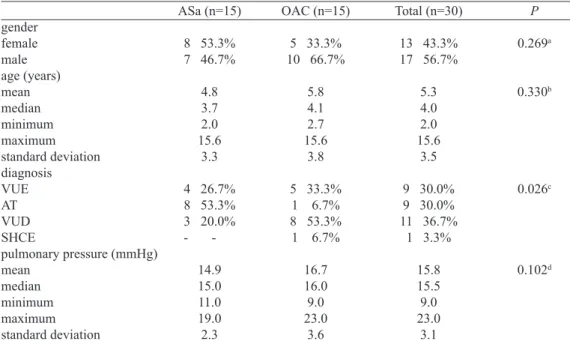
The clinical and demographic characteristics are presented in Table 1.
All procedures were performed with extracardiac PTFE (polytetraluoroethylene) conduit, varying from 16mm to 20mm, and 19 (63.3%) patients underwent surgery with car-diopulmonary bypass (CPB). In cases where it was necessary to correct intracardiac defect or atrioseptostomy, a CPB circuit was installed.
The use of fenestration between the extracardiac conduit and the right atrium was essentially a decision of the surgical team for the worst cases, in which we could note the presence of light changes of the pulmonary tree or borderline pulmonary pressure (16-18 mmHg).
The type of surgical procedure associated with total
cavo-pulmonary connection the with extracardiac conduit is shown in Table 2.
Clinical follow-up
Among the thirty patients treated, six had thrombus forma-tion. Five of these patients had thrombus in the extracardiac conduit and one of them in the inferior vena cava, diagnosed by transesophageal echocardiography in the immediate postopera-tive period (within the irst 10 days after surgery). Among them, four were using ASA and two using OAC. Due to the formation of thrombus, the patient underwent intravenous heparin in ICU and then watched according to the clinical need, the follow-up was then interrupted by the study protocol.
During the follow-up period, there were two deaths, both allocated to the OAC group, not related to the occurrence of thrombus. One patient had died ive months after surgery, before hospital discharge, during the takedown surgery due to Fontan circuit failure. The second child evolved with pro-tein-losing enteropathy, immunosuppression and infectious complications, and opted for fenestrating the conduit, dying in the postoperative period of the fenestration procedure, one year after total cavopulmonary connection.
Table 3 summarizes the occurrence of thrombus from the preoperative period to the 24th month after surgery. By the end
of the follow-up period (24 months postoperatively), ASA group had 46.7% (7/15) of children with thrombus. In OAC group, we observed 20.0% (3/15) children with thrombus, despite
Table 1. Distribution of the general characteristics of children of ASA and OAC groups.
gender female male age (years) mean median minimum maximum standard deviation diagnosis VUE AT VUD SHCE
pulmonary pressure (mmHg) mean
median minimum maximum standard deviation
ASa (n=15)
8 53.3% 7 46.7%
4.8 3.7 2.0 15.6
3.3
4 26.7% 8 53.3% 3 20.0%
-14.9 15.0 11.0 19.0 2.3
OAC (n=15)
5 33.3% 10 66.7%
5.8 4.1 2.7 15.6
3.8
5 33.3% 1 6.7% 8 53.3% 1 6.7%
16.7 16.0 9.0 23.0
3.6
Total (n=30)
13 43.3% 17 56.7%
5.3 4.0 2.0 15.6
3.5
9 30.0% 9 30.0% 11 36.7%
1 3.3%
15.8 15.5 9.0 23.0
3.1
P
0.269a
0.330b
0.026c
0.102d
aChi-square test, bMann-Whitney test, cFisher’s Exact test or its extension, Student’s dt-test for independent
samples
Table 2. Surgical procedure performed on total cavopulmonary anastomosis.
Surgical Procedure
Isolated ECC Fenestrated ECC
ECC and Damus-Kaye-Stansel ECC and Glenn Anastomosis
OAC Group: n(%) 11 (73.33%)
1 (6.66%) 2 (13.33%)
1 (6.66%)
Grupo II: n (%) 12 (80%)
3 (20%) 0 0
600
the difference, it was not statistically signiicant P=0.121. The occurrence of thrombus for the other phases are described in Table 3.In order to investigate the factors that interfere in throm-busis-free-survival time, including the drug used in the prophylaxis (OAC or ASA), the age of total cavopulmonary connection (arbitrarily divided into: less than ive years and greater than ive years), the morphology of single ventricle (VUE or SUVs), the mPAP in the preoperative period (≥ to 18 mmHg), the presence of fenestration, history of thrombus and ventricular dysfunction in every phases during the evaluation; survival curves were constructed, and then, the log-rank test was used.
The results of these tests conirmed that the thrombus free time is not related to the following factors:
• Use of aspirin or OAC (P=0.156) - Figure 1 • Age group (P=0.471);
• Diagnosis (P=0.960),
• mPAP in the preoperative period (P=0.606),
• Fenestration (P=0.477),
• Ventricular dysfunction during preoperative period (P= 0.224) in the immediate postoperative period (P=0.329), three months after surgery (P=0.967), 6 months after surgery (P=0.664), 12-month postoperative period (P=0.458) and 24 months after surgery (P=0.409).
Among all variables analzed, the one that showed main inluence on the occurrence of thrombus in the postoperative course, was the presence of thrombus prior: thrombus free time in children with no history of thrombosis is statistically higher when compared to children with a history of thrombus (P=0.035) Figure 2.
Concerning the coagulation factors, there is a considerable number of patients in each group who already have these changed factors in the preoperative period, mainly Protein C, which is an important anticoagulation factor. Serum Protein C was low in 33% of patients in the ASA group and 40% of the OAC group. However, surprisingly, the number of patients who developed free of thrombus was signiicantly higher
Table 3. Distribution of the occurrence of thrombosis in children of ASA and ACO groups, second phase.
Preoperative period (history of thrombus) present
absent Total
Immediate postoperative period present
absent Total
3 months after surgery present
absent death Total
6 months after surgery present
absent death Total
12 months after surgery present
absent death Total
24 months after surgery present
absent death Total
ASA n % 4 26.7% 11 73.3% 15 100.0%
4 26.7% 11 73.3% 15 100.0%
-11 73.3% -15 100.0%
-11 73.3% -15 100.0%
2 13.3% 9 60.0% -15 100.0%
1 6.7% 8 53.3% -15 100.0%
OAC N % 2 13.3% 13 86.7% 15 100.0%
2 13.3% 13 86.7% 15 100.0%
-12 80.0% 1 6.7% 15 100.0%
-12 80.0% 1 6.7% 15 100.0%
1 6.7% 10 66.7% 2 13.3% 15 100.0%
-10 66.7% 2 13.3% 15 100.0%
Total n % 6 20.0% 24 80.0% 30 100.0%
6 20.0% 24 80.0% 30 100.0%
-23 76.7% 1 3.3% 30 100.0%
-23 76.7% 1 3.3% 30 100.0%
3 10.0% 19 63.3% 2 6.7% 30 100.0%
among individuals with a deicit of this protein in the preop -erative period (P=0.047) than those with normal levels of this anticoagulant factor, at the same moment of the evaluation.
On the other hand, serum factors VII and VIII levels had no inluence on thrombus free time in the postoperative period in patients evaluated with values of P=0.550 and
P=0.329, respectively. The comparison of serum levels of coagulation factors evaluated in the postoperative period can not be considered, as they were under strong inluence of warfarin.
Among patients undergoing outpatient follow-up, ive of them had lack of adherence to treatment and did not use the medication properly. Clinical monitoring was possible exclu-sively due to the researcher’s urgent demand, with the aid of the Institution social assistance service.
Parents justiied the lack of adherence by giving some resons, including: inancial dificulty to pay for transport to attend appointments and check ups. Another reason was the perception of good clinical condition of the child, leading them to judge that the use of medication or any revaluations were not necessary.
Among these ive patients, four were using OAC, and con -sequently, outside the therapeutic range during the follow-up evaluation. Among patients on warfarin, the INR value ranged from 1 to 6.4.
Among the 15 patients who made up this group (OAC) 14 (93.3%) had at least one INR measure out of range during the follow-up period, and two (13.3%) had INR greater than 4, which implies bleeding risk.
The occurrence of slow low through the conduit, with the presence of high contrast in varying degrees, was a relatively common inding in the immediate postoperative period, ive patients in each group (33.33%). However, the occurrence of high contrast in extracardiac conduit, assessed by transe-sophageal echocardiography in the immediate postoperative period, did not interfere in the free development of thrombus (P=0.148).
Fig.1 - Thrombus-free survival curve comparing the ASA group to
the OAC group. Fig.2 - Thrombus-free survival curve comparing patients with history of prior occurrence of thrombus and without occurrence of thrombus.
Fig.3A - Material deposited in the extracardiac conduit - Chest angiotomography image (short axis) performed 6 months after total cavopulmonary connection with extracardiac conduit.
602
Changes in the inner wall of the extracardiac conduit, described as a deposit of low attenuating material visu-alized by chest angiotomography, has been found to be common to both groups since the first angiotomographic evaluation, and can be visualized on the pictures below (Figure 3A and 3B).Fig. 3B - Material deposited in the extracardiac conduit - Chest angiotomography image (long axis) performed 6 months after total cavopulmonary connection with extracardiac conduit. Patient who was using ASA developed with conduit kinking with deposit of large amount of material.
Long axis cuts with material deposited in the conduit bending site (arrow)
Fig. 4 - Pulmonary thromboembolism - Ventilation/perfusion scintigraphy in patient using ASA, performed two years after total cavopulmonary connection with extracardiac conduit, showing pulmonary thromboembolism at the apex of the left lung (segment 11).
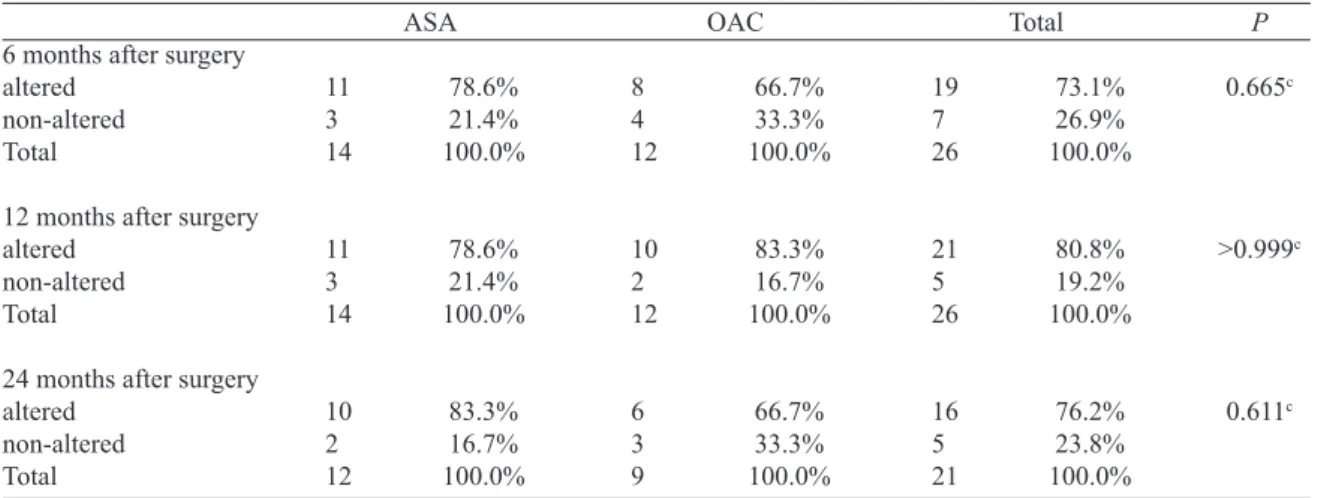
Table 4. Distribution of the results of tomography in children of ASA and ACO groups.
6 months after surgery altered
non-altered Total
12 months after surgery altered
non-altered Total
24 months after surgery altered
non-altered Total
ASA
11 78.6% 3 21.4% 14 100.0%
11 78.6% 3 21.4% 14 100.0%
10 83.3% 2 16.7% 12 100.0%
OAC
8 66.7% 4 33.3% 12 100.0%
10 83.3% 2 16.7% 12 100.0%
6 66.7% 3 33.3% 9 100.0%
Total
19 73.1% 7 26.9% 26 100.0%
21 80.8% 5 19.2% 26 100.0%
16 76.2% 5 23.8% 21 100.0%
cFisher’s Exact test
P
0.665c
>0.999c
0.611c
Table 4 describes the occurrence of material deposited on the wall of the extracardiac conduit, visualized by chest angiotomography.
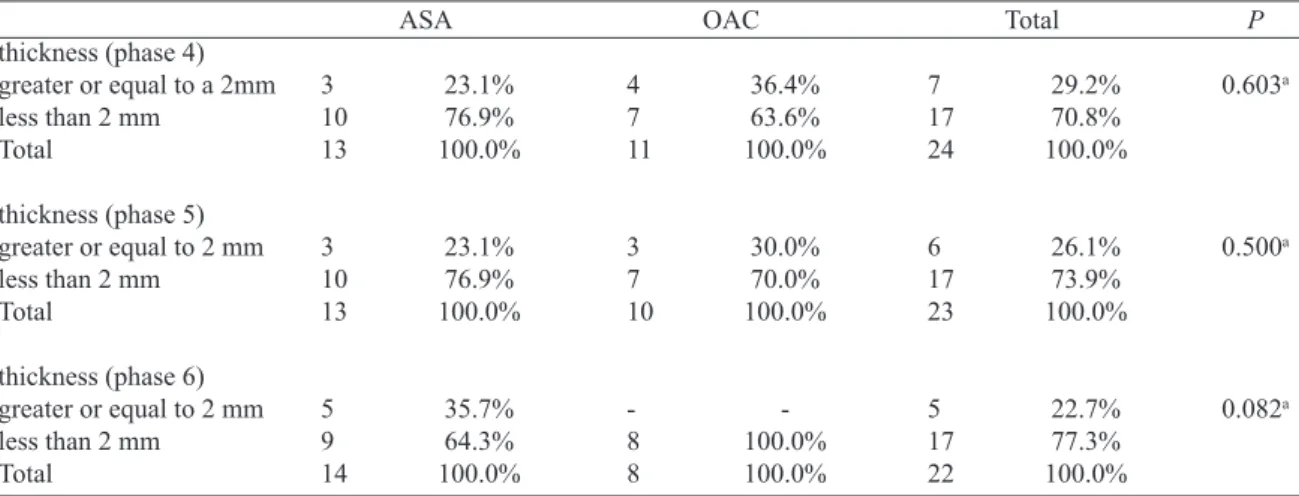
The thickness of the hyperechoic image in question ranged from 0.9 mm to 3.5 mm, with the latter correlating thrombus image to transesophageal echocardiography. Over the postop-erative period, this characteristic was more important in ASA group in which 35.7% had deposited material with thickness greater than 2 mm, as shown in Table 5. None of the patients in the group using OAC presented material thickness that reached this size, with P=0.08.
the Fontan circuit and protein-losing enteropathy, followed by the described diagnostic inding. Comparing the occurrence of PTE in the group using ASA with the group using OAC, there was no statistically signiicant difference (P=0.483).
DISCUSSION
In 2011, Monagle et al.[7] published a multicenter,
prospec-tive, and randomized study, with 111 patients in the postop-erative period of modiied Fontan operation comparing the two primary prophylaxis strategies commonly used: ASA (57 patients) and warfarin (54 patients), with diagnosis of thrombus in 21% of patients using the former and 24% the latter. The patients were assessed by transthoracic and transesophageal echocardiography in the 3rd and 24th months after surgery,
conirming a high incidence of thrombosis, regardless of the strategy used. In 2012, Manlhiot et al.[8] studied the aspects
of thromboembolic complications, and thromboprophylaxis in the three stages of surgical staging of univentricular heart and showed that the use of warfarin, as a prophylaxis, has a signiicant reduction in thrombosis risk when compared to the use of ASA or absence of prophylaxis.
Comparison of the eficacy of the OAC and the antiplatelet agent is an old discussion, and the choice of each drug, as well as their association, have been performed according to the preference and experience of each group. A meta-analysis published in 2011[3] evaluated 20 studies related to the subject,
with samples ranging from 6 to 282 patients. Seven of this researches whose prophylaxis were performed with ASA, three using only the oral anticoagulant, and the remaining ten publications with the application of both, with thromboem-bolism rate ranging from 0 to 16%, which was similar among patients regardless of the strategy used.
The occurrence of thrombosis was more frequent in the
Table 5. Distribution of the thickness of the deposited material of patients in ASA and OAC groups in phases 4, 5 and 6.
thickness (phase 4) greater or equal to a 2mm less than 2 mm
Total
thickness (phase 5) greater or equal to 2 mm less than 2 mm
Total
thickness (phase 6) greater or equal to 2 mm less than 2 mm
Total
ASA
3 23.1% 10 76.9% 13 100.0%
3 23.1% 10 76.9% 13 100.0%
5 35.7% 9 64.3% 14 100.0%
OAC
4 36.4% 7 63.6% 11 100.0%
3 30.0% 7 70.0% 10 100.0%
-8 100.0% 8 100.0%
Total
7 29.2% 17 70.8% 24 100.0%
6 26.1% 17 73.9% 23 100.0%
5 22.7% 17 77.3% 22 100.0%
aaunilateral test comparing proportions
P
0.603a
0.500a
0.082a
irst postoperative evaluation, phase 2. It was when 26.7% of children using ASA and 13.3% of children using warfarin use had the thrombus image diagnosed by transesophageal echocardiography. Data consistent with recent publications have also shown a higher incidence of thrombus in early postoperative period of total cavopulmonary connection (no unanimity about the technique with the extracardiac conduit)[9].
After a 2-year-follow-up period, the total occurrence of thrombosis was 46.7% of patients using ASA and 20% of patients using OAC. Factors such as the age; the mPAP in the preoperative period; the use of fenestration; slow low by extracardiac conduit and single ventricle systolic dysfunction, had no interference in the occurrence of thrombus during the whole follow-up period.
Only the prior history of thrombus showed interference with thrombus formation in the postoperative period. This fact is related to the hypercoagulable state of the children with univentricular heart. Among the pre-stages of total cavopulmo-nary connection, the thrombus occurs either by changing the number, as in the activity of coagulationg factors; by hemody-namic changes and oximetry of the univentricular physiology; which is a relevant subject of important publications over the past few years, and previously discussed in this article[3,6, 8,10].
In both instances mentioned above, the difference in the occurrence of thrombus between the two groups was not statistically signiicant, probably due to the small sample size of this study. It is dificult, however, to ignore the fact that the number of patients who developed thrombi in the group using ASA, is greater than twice the number of patients in the warfarin group.
604
a thrombogenic condition. Just as the deiciency of this coagu -lation factor in the preoperative period of total cavopulmonary connection, also in the postoperative period, several studies have shown such deiciency[3,10] and that there is a gradual reductionin this deiciency with increasing follow-up time[11].
In our sample, 33.3% of patients had protein C in the preoperative evaluation. Among these patients, about 90% were free of thrombus, showing that the Protein C was not a protective factor against the occurrence of thrombus in the preoperative period. However, it is not possible to evaluate the behavior of the coagulation factor in all patients in this sample after surgery, since the patients using warfarin have compromised results.
The safety of using warfarin in pediatric patients is a con-cern for all of us who deal with this type of patient. In 1999, a comprehensive evaluation of 319 children aged 1 month to 18 years of life using warfarin for different reasons, followed up in a anticoagulation center, found important data applicable to the population that we studied[12]:
• Children undergoing Fontan circuit surgery require higher dose of warfarin to achieve an expected INR value;
• There is dificulty in the management of anticoagulation in children younger than 6 years of age, requiring higher doses of warfarin;
• The long time of warfarin necessity overlapping with heparin, thus the INR is within the desired range; need for prolonged periods; more frequent dosing and need for more frequent dose adjustments.
In our sample, ive patients (16.6%) had lack of adher -ence during the follow-up period, and its maintenance was possible only due to the researchers’ insistence and with the aid of the support staff, with four (80%) using warfarin, and consequently, the INR oscillated out of range, with values between 1 and 6.4. Furthermore, in general, in the group using warfarin, 93.3% had at least an INR value below the desired range, which signiicantly increases the risk of thrombosis, as shown in a multicenter prospective study already mentioned, in which, the group taking warfarin during the INR evaluation, had less than 30% with INR greater than 2[7].
Changes in the inner wall of the extracardiac conduit used in total cavopulmonary connection is still being poorly studied, with sparse data in this regard. In our study, during the 2-year-follow-up period, both the number of children with material deposited in the conduit wall was higher in the ASA group (83.3%) and the thickness of the material (which varied throughout the evaluation from 0.9 to 3.5 mm) was higher (more than 2 mm). Images larger than 2 mm were not seen in children using warfarin at this time, with P=0.082; thus, showing a tendency to afirm that the deposit of materials, with increasing follow-up time, is higher in the ASA group. The material described as material accumulation in a recently published study[13] was called large thrombus base, adhered to
the inner wall of the extracardiac conduit in 3 of 10 patients.
The approach and interpretation of the found material, brings up inmportant aspects for discussion, both as regards the size and appearance, thus, tomography may be an important tool in the early diagnosis of the thrombus preventing pulmonary thromboembolism.
The occurrence of subclinical PTE, releasing small emboli to the pulmonary circulation, is a major problem in Fontan physiology, due to the decrease in oxygen saturation and increased pulmonary vascular resistance.
The pulmonary scintigraphy is not routinely performed in patients undergoing total cavopulmonary connection, which makes it dificult to compare. However, PTE was diagnosed in two patients, both using ASA, after one and two years after surgery. Due to the importance of hemodynamic compromise of the Fontan circuit in the presence of pulmonary thromboem-bolism, strategies must be drawn in search of a practical and reliable diagnosis of this alteration, and tomography would be a possible option[13].
The low incidence of heart with univentricular physiology among congenital heart diseases, coupled with mortality in the interstage period, signiicantly limits the number of patients to be added to a prospective and randomized study in the postoperative period of total cavopulmonary connection. The thromboembolic phenomenon in the postoperative period of this procedure is very important, both with regard to a high incidence and mortality.
CONCLUSION
1 - The occurrence of thrombosis was signiicantly higher in the ASA group, however, this difference was not statistically different.
a - when we evaluated all the factors studied in the throm-bosis-free-survival, we noted that the only factors that really affect are the previous occurrence of thrombus (P=0.035) and deiciency of Protein C in the preoperative period (P=0.047).
2 - Hepatic function and coagulation factors:
A - with the exception of Protein C, coagulation factors and liver enzymes showed no interference in the free development of thrombus.
3 - Regarding the viability of the usual prophylaxis for thromboembolism, neither drug led to signiicant side effects and bleeding. None of the children had the drug suspended due to intolerance.
4 - The low rate is reduced by the extracardiac conduit and the occurrence of thrombus was more frequent in patients with slow low, without statistical signiicance.
5 - In the group using ASA, we found a tendency to a higher incidence of thicker material accumulation(greater than 2 mm) compared to the group using OAC (P=0.082).
6 - Subclinical pulmonary thromboembolism occurred in two patients, without any statistically signiicance.
submit-ted to total cavopulmonary connection (Fontan type), should be maintained in the postoperative period, with the use of warfarin. It is necessary to expand the sample numbers of this study to give statistical power to the fact that twice as many children using ASA evolves with thromboembolic phenomena, patients using ASA has more material adhered to the wall of the conduit, reaching a thickness exceeding 2 mm, and are more likely to pulmonary thromboembolism compromising the Fontan circuit, therefore, we suggest that these patients, when they can afford this treatment, should be anticoagulated with the use of warfarin in the postoperative period of total cavopulmonary connection.
Authors' roles & responsibilites
CFXP Study design, data collection, reference search MBJ Study design
IBJ Data collection PMO Data collection FMPS Data collection VMM Data collection RWL Data collection SRFFP Data collection
REFERENCES
1. Cavalcanti CV, Ikari NM, Hazin SMV. Atresia tricúspide. In: Croti UA, Mattos SS, Pinto Jr VC, Aiello VD, eds. Cardiologia e cirurgia cardiovascular Pediátrica. São Paulo: Roca; 2008. p.522-34.
2. Taussig HB, Blalock A. The tetralogy of Fallot; diagnosis and indications for operation; the surgical treatment of the tetralogy of Fallot. Surgery. 1947;21(1):145.
3. Marrone C, Galasso G, Piccolo R, de Leva F, Paladini R, Piscione F, et al. Antiplatelet versus anticoagulation therapy after extracardiac conduit Fontan: a systematic review and meta-analysis. Pediatr Cardiol. 2011;32(1):32-9.
4. Monagle P, Cochrane A, McCrindle B, Benson L, Williams W, Andrew M. Thromboembolic complications after Fontan
procedure: the role of prophylactic anticoagulation. J Thorac Cardiovasc Surg. 1998;115(3):493-8.
5. Rosenthal DN, Friedman AH, Kleinman CS, Kopf GS, Rosenfeld LE, Hellenbrand WE. Thromboembolic complications after Fontan operations. Circulation. 1995;92(9 Suppl):II287-93.
6. Coon PD, Rychik J, Novello RT, Ro PS, Gaynor JW, Spray TL. Thrombus formation after the Fontan operation. Ann Thorac Surg. 2001;71(6):1990-4.
7. Monagle P, Cochrane A, Roberts R, Manlhiot C, Weintraub R, Szechtman B, et al. A multicenter, randomized trial comparing heparin/warfarin and acetylsalicylic acid as primary thromboprophylaxis for 2 years after the Fontan procedure in children. J Am Coll Cardiol. 2011;58(6):645-51.
8. Manlhiot C, Brandão LR, Kwok J, Kegel S, Menjak IB, Carew CL, et al. Thrombotic complications and thromboprophylaxis across all three stages of single ventricle heart palliation. J Pediatr. 2012;161(3):513-9.
9. McCrindle BW, Manlhiot C, Cochrane A, Roberts R, Hughes M, Szechtman B, et al. Factors associated with thrombotic complications after the Fontan procedure: a secondary analysis of a multicenter, randomized trial of primary thromboprophylaxis for 2 years after the Fontan procedure. J Am Coll Cardiol. 2013;61(3):346-53.
10. Odegard KC, Zurakowski D, DiNardo JA, Castro RA, McGowan FX Jr, Neufeld EJ, et al. Prospective longitudinal study of coagulation profiles in children with hypoplastic left heart syndrome from stage I through Fontan completion. J Thoracic Cardiovasc Surg. 2009;137(4):934-41.
11. van Nieuwenhuizen RC, Peters M, Lubbers LJ, Trip MD, Tijssen JG, Mulder BJ. Abnormalities in liver function and coagulation proile following the Fontan procedure. Heart. 1999;82(1):40-6.
12. Streif W, Andrew M, Marzinotto V, Massicotte P, Chan AK, Julian JA, et al. Analysis of warfarin therapy in pediatric patients: a prospective cohort study of 319 patients. Blood. 1999;94(9):3007-14.