Middleware Concerns Using
Aspects
Cristiano Amaral Maffort and Marco Tulio de Oliveira Valente
PUC Minas, Institute of Informatics Anel Rodovirio Km 23,5 - Rua Walter Ianni, 255
31980-110 - Belo Horizonte - MG - Brazil Phone: +55 (31) 3439-5204 [email protected], [email protected]
Abstract
Software engineers often rely on communication mid-dleware platforms to design and implement distributed systems. However, middleware functionality is usually invasive, pervasive and tangled with business-specific concerns. In this paper, we describe an aspect-oriented distributed programming system that encapsulates mid-dleware services provided by Java RMI and Java IDL. The proposed system, called DAJ, handles the basic service provided by such object-oriented middleware platforms, i.e., synchronous remote calls using call by-serialization and call by-remote-reference semantics. The paper documents our experience in using DAJ to modularize middleware concerns from three legacy distributed systems.
Keywords: aspects; separation of concerns; distribu-tion; middleware.
1. I
NTRODUCTIONDuring the last two decades software engineers have often relied on communication middleware platforms to design and implement distributed systems. Middleware platforms, such as CORBA [34], Java RMI [36], and Web Services [1], encapsulate several details inherent to dis-tributed programming, including communication proto-cols, data marshalling and unmarshalling, heterogeneity, service lookup, synchronization, and failure handling. Al-though they shield developers from networking details, middleware systems also require developers to follow their specific code conventions and protocols. For
ex-ample, programmers must deal with middleware specific classes, interfaces, and remote exceptions. Moreover, usually middleware code impacts several classes of dis-tributed systems and forces such classes to handle more than one concern simultaneously. In other words, middle-ware code does not sit only between the network and the distributed application, but it is also spreaded and tangled in the latter [12, 29, 32]. The consequence is that dis-tributed object-based systems do not present expected lev-els of separation of concerns, making such systems more difficult to implement, maintain and evolve.
This paper is a revised and extended version of a pre-vious conference paper describing DAJ (Distribution As-pects in Java), a system designed to insulate middleware from business related code [23]. In order to accomplish its goal, DAJ relies on the synergistic combination of three technologies: aspects [16, 15], domain-specific lan-guages [33, 3], and generative programming [8]. In the proposed system, aspects are used to encapsulate cross-cutting middleware code, domain-specific languages are used to elevate the abstraction level when defining dis-tributed software architectures, and generative program-ming is used to synthesize aspects and other components. Particularly, DAJ includes an aspect-oriented frame-work that encapsulates crosscutting code required by communication middleware. Moreover, DAJ includes a generative tool that specializes abstract aspects from this framework in order to add distribution to a given applica-tion. The current version of the system generates aspects for two native JDK middleware platforms: Java RMI [36] and Java IDL [14]. Java RMI is a middleware often used in the implementation of Java-to-Java distributed applica-tions. Java IDL adds CORBA support to the Java
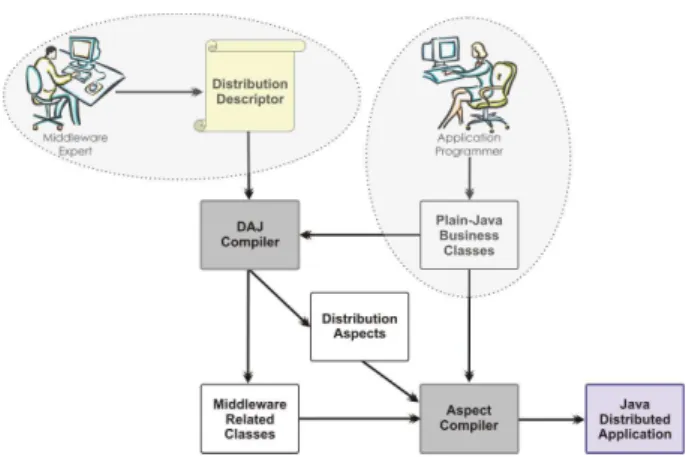
Figure 1. Developing distributed applications using DAJ
form, providing interoperability with distributed systems written in other programming languages.
In DAJ-based applications, business classes do not need to follow particular programming conventions. More specifically, they do not need to extend middleware pre-defined classes, implement remote interfaces or ac-cessor and mutator methods; they also do not need to handle remote exceptions. Instead, a domain-specific lan-guage is used to declare the role that plain Java classes and objects play in a particular distributed system configura-tion. From specifications in such language, called distri-bution descriptors, DAJ generates classes and aspects that modularize the otherwise crosscutting middleware func-tionality. The aspects are generated in AspectJ [15, 19]. Figure 1 summarizes the steps proposed by the system to support the implementation of distributed object-based applications.
DAJ introduces at least two contributions to the con-ventional use of middleware platforms. First, and more important, developers can focus on the functional con-cerns of the system they are building since DAJ automati-cally generates aspects that modularize crosscutting code required by middleware platforms. Second, DAJ users do not need to master details and idiosyncrasies inherent to middleware APIs.
The remaining of this paper is organized as follows. Section 2 presents a motivating example, used in the rest of the paper to describe the DAJ system. Section 3 de-scribes the programming interface that must be followed by DAJ users. Section 4 presents the software architec-ture and the implementation of the DAJ system, focus-ing on the abstract aspects defined by the system and the concrete aspects generated from the information defined in distribution descriptors. Section 5 describes our expe-rience in using DAJ to modularize middleware concerns from three medium-sized distributed systems. This ex-perimental study constitutes the main contribution of this work regarding our first paper about DAJ [23]. Section 6
presents a discussion about the lessons learned in DAJ de-velopment. Section 7 describes related work and Section 8 concludes the paper.
2. S
TOCKW
ATCHERS
YSTEMIn order to describe the DAJ system, we will use in the remaining of this paper a distributed application that pro-vides information about stock prices. The StockWatcher system consists of a remote object that stores the current price of a set of stocks. Clients access this object to up-date the price of a given stock and to subscribe for upup-dates in the price of stocks. In the latter case, the server object uses a callback to notify the client.
Although simple, StockWatcher uses the core abstrac-tions provided by object-oriented middleware systems. It relies on remote calls using call by-serialization and call by-remote-reference semantics when objects are used as parameters. A copy of an object is passed when call by-serialization semantics is specified (also known as object-by-value semantics in CORBA). In this case, there is no relation between the client-side object and the copy that the server uses during the execution of the remote method. On the other hand, when using call by-remote-reference semantics, the remote reference associated with the object is passed as argument of the remote call. During the ex-ecution of the remote method, this reference can be used to callback the object in the client address space.
1: <server id="StockMarketA">
2: <interface>stockwatcher.StockMarket</interface> 3: <class>stockwatcher.StockMarketImpl</class> 4: <protocol>javaidl</protocol>
5: <nameserver>skank.pucminas.br</nameserver> 6: </server>
7: <server id="StockMarketB">
8: <interface>stockwatcher.StockMarket</interface> 9: <class>stockwatcher.StockMarketImpl</class> 10: <protocol>javarmi</protocol>
11: <nameserver>patofu.pucminas.br:1530</nameserver> 12: </server>
13: <remote>
14: <interface>stockwatcher.StockListener</interface> 15: <class>stockwatcher.StockListenerImpl</class> 16: </remote>
17: <serializable>
18: <class>stockwatcher.StockInfo</class> 19: </serializable>
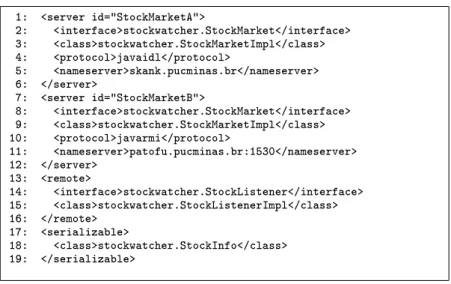
Figure 2. A possible distribution descriptor for the motivating example
We describe next the main interfaces and classes of the system.
Interfaces: The server that stores stock prices imple-ments the following interface:
interface StockMarket { void update(StockInfo info);
void subscribe(String stock,StockListener obj); void unsubscribe(String stock,StockListener obj); StockInfo getStock(String stock)
throws StockNotFoundException; }
Clients publish changes in the price of stocks by call-ing theupdatemethod. The classStockInfois used to store stock prices in a given date and time:
class StockInfo { private String stock; private double value; private String date_time; }
Clients register their interest in notifications of price changes by calling the methodsubscribe, passing the name of the stock they are interested in and a reference to a remote object used by the server to call back the client. Theunsubscribemethod is used to cancel the regis-tration performed bysubscribe. In both methods, the client object that the server calls back must implement the interfaceStockListener:
interface StockListener {
void update(String stock, double value); }
The StockMarket interface also provides the
getStock method used to retrieve the current price of the stock passed as parameter. If the server does handle the requested stock, a remote exception of type
StockNotFoundExceptionis raised.
Implementation: In the implementation of the Stock-Watcher system, the class StockMarketImpl
implements the interfaceStockMarket and the class
StockListenerImpl implements the interface
StockListener. Different from standard object-oriented implementations using Java RMI and Java IDL, the described interfaces and classes do not have any tangled code related to distribution.
3. P
ROGRAMMINGI
NTERFACEThis section describes the DAJ programming inter-face. More specifically, we describe the conventions that developers must follow in order to define distribution de-scriptors and to program client and server modules.
3.1. DISTRIBUTIONDESCRIPTORS
DAJ hides from business classes programming con-ventions demanded by the underlying middleware plat-form. The ultimate goal is to allow developers to focus on the functional requirements of the applications they are building, delegating to the framework the implementa-tion of the aspects related to distribuimplementa-tion concerns. How-ever, developers must define the distributed configuration of their systems using an XML file called distribution de-scriptor.
interfaces, the middleware used to access them, and the host and port number of the naming server where they must be registered1. Such information is specified using aservertag in the distribution descriptor. DAJ users must also define the types that are passed in remote calls using call by-serialization and call by-remote-reference. In the case of types passed by-remote-reference (node
remote), developers must inform their interfaces and classes. In the case of types passed by-serialization (node
serializable), developers must inform their classes.
Example: Figure 2 presents a possible distribution de-scriptor for the StockWatcher system. This dede-scriptor assumes an architecture including two servers: the first uses Java IDL for communication and is registered un-der the name StockMarketA (lines 1 to 6); the sec-ond server uses Java RMI and is registered under the name StockMarketB (lines 7 to 12). Moreover, the descriptor prescribes that in remote calls objects of type
StockListenerare passed by-remote-reference (lines 13 to 16) and objects of typeStockInfoare passed by-serialization (lines 17 to 19).
3.2. CLIENTS
In distributed object-based systems, clients locate remote objects and then perform remote calls using the same syntax of local calls. Clients must use thegetRef
method from the DAJ API to obtain references to server objects configured in a given distribution descriptor. Using such references, clients perform remote calls in a transparent way, i.e., without having any knowledge about the underlying middleware platform.
Example:We show next a fragment of a client module of the StockWatcher system:
1: StockMarket s1,s2; 2: s1= (StockMarket)
3: ServiceLocator.getRef("StockMarketA"); 4: s2= (StockMarket)
5: ServiceLocator.getRef("StockMarketB"); 6: ....
7: StockInfo s;
8: s=new StockInfo("sunw",124.6,"10/04/2007"); 9: s1.update(s);
10: ...
11: StockListener listener= new StockListenerImpl(); 12: s1.subscribe("goog", listener);
13: s2.subscribe("yhoo", listener);
In lines 1 to 5, the client uses thegetRefmethod to obtain references to the servers identified by the names
StockMarketAandStockMarketBin the distribu-tion descriptor presented in Figure 2. Next, the client
1A naming service allows clients to locate objects based on their names. The current implementation of DAJ is compatible with the standard naming servers provided by Java RMI and Java IDL, respectively called rmiregistryandtnameserv.
calls theupdatemethod of the first server passing by-serialization an object of typeStockInfo(lines 7 to 9). Finally, the client subscribes to changes in the price of two stocks (lines 11 to 13). It is worth to mention that in both calls the client informs the same object of type
StockListenerto receive callbacks from the servers. As prescribed by the associated distribution descriptor, the first server will use Java IDL to call back this object and the second server will use Java RMI.
3.3. SERVERS
DAJ generates for each server defined in a distribution descriptor an activation class, i.e., a class with amain
method used to create, activate and register the remote object. This class has the same name of the server with the suffix_Server.
4. A
RCHITECTUREThis section presents the software architecture and the implementation of the DAJ system, focusing on the ab-stract aspects defined by the system and the concrete as-pects generated from the information defined in distri-bution descriptors. We begin the section describing the creation of remote interfaces. Next, we describe aspects used to inject middleware related concerns in business classes, retrieve remote references and activate remote ob-jects. Thus, this section assumes that the reader is familiar with AspectJ syntax and semantics, which includes basic knowledge of abstractions such as join points, pointcuts, advices, and inter-type declarations. Such abstractions are described in details in AspectJ introductory papers [15] or textbooks [19].
4.1. REMOTEINTERFACES
Interfaces that have middleware related concerns tangled in their code are called remote interfaces. From distribution descriptor data, DAJ automatically generates remote interfaces as required by Java RMI and Java IDL. Such interfaces have the same name of their associated business interfaces, but they are created in a different package to avoid name collision.
Java RMI Remote Interfaces: Remote interfaces required by Java RMI are similar to their associ-ated business interfaces, except that they must extend
java.rmi.Remote and their methods must throw
interface StockMarket extends Remote {
void update(StockInfo info) throws RemoteException;
void subscribe(String stock, stockwatcher.rmi.StockListener obj) throws RemoteException; void unsubscribe(String stock, stockwatcher.rmi.StockListener obj) throws RemoteException; StockInfo getStock(String stock) throws StockNotFoundException, RemoteException;
}
Figure 3. Java RMI interface for the motivating example
Another difference between business and remote in-terfaces is related to call by-remote-reference. Suppose that a business interface method has a parameter of a type
Tdeclared as remote in the distribution descriptor. In the remote interface, we must changeTto the type of its as-sociated remote interface. The reason is that Java RMI transmits the stub of the argument when the formal pa-rameter implements aRemoteinterface. Thus, the stub is not compatible for assignment with business types.
Figure 3 presents the remote interface associated to the business interface StockMarket. The presented interface extendsRemote. Moreover, its methods de-clare that they can throwRemoteException. Finally, the type of the parameter objin the subscribeand
unsubscribemethods was replaced by the associated remote interface type.
Java IDL Remote Interfaces: As usual in CORBA-based distributed applications, remote interfaces must be specified in IDL – a neutral language proposed by CORBA to define remote interfaces. Thus, DAJ gener-ates an IDL specification for business types defined in the deployment descriptor of a given system. Moreover, DAJ relies on theidljcompiler that is part of the Java IDL platform to generate classes and interfaces required by CORBA implementations. In object-oriented Java IDL systems, the code of such classes is scattered and tangled in the business classes of the distributed system under de-sign.
Figure 4 shows the interface StockMarketOper-ations, generated by theidljcompiler and that must be implemented by a business class. In this interface, business types have also been replaced by their counter-part remote types, as proposed by DAJ for RMI interfaces.
4.2. REMOTECLASSES
Remote classes are those that result from the in-strumentation of business classes with distribution con-cerns. DAJ makes a distinction between remote classes whose instances are registered in a naming service and those whose instances are not registered in such ser-vice. The former are always specified in aservertag of distribution descriptors. An example is the Stock-MarketImplclass. The latter are declared inremote
tags and are used to create objects that are passed using
call by-remote-reference in remote calls. An example is the classStockListenerImpl.
The remaining of this subsection describes how these two type of remote classes are instrumented with distri-bution code required by Java IDL. The instrumentation required by Java RMI follows the same pattern, and thus is not be presented in this paper.
Classes that can be located using a naming service:As any remote class, such classes must implement the remote interface generated by DAJ. Moreover, for each method in the remote interface with a parameter of typeT, whereT
is a remote interface type, the system inserts a counterpart method in the class. The body of this method just calls the method that expects the business type associated withT.
In order to illustrate, we show the aspect that trans-formsStockMarketImplin a remote class.
1: aspect RemoteStockMarketImpl {
2: declare parents: StockMarketImpl implements 3: StockMarketOperations; 4:
5: public void StockMarketImpl.subscribe( 6: String stock,
7: stockwatcher.idl.StockListener obj) { 8: StockListenerAdapter adapter;
9: adapter= new StockListenerAdapter(obj); 10: subscribe(stock, adapter);
11: } 12: ... 13: }
Lines 2-3 define that the class StockMarket-Impl must implement the remote interface Stock-MarketOperations(described in Section 4.1). Since the subscribe method of this interface expects a remote interface type as parameter, a method with the expected signature is also introduced in the class
StockMarketImpl (lines 5 to 11). This introduc-tion is needed since thesubscribemethod originally available inStockMarketImplexpects a parameter of the typeStockListener(instead of the remote type
stockwatcher.idl.StockListener prescribed by the interfaceStockMarketOperations).
interface StockMarketOperations {
void update(stockwatcher.idl.StockInfo info);
void subscribe(String stock, stockwatcher.idl.StockListener obj); void unsubscribe(String stock, stockwatcher.idl.StockListener obj); stockwatcher.idl.StockInfo getStock(String stock)
throws stockwatcher.idl.StockNotFoundException; }
Figure 4. Java IDL interface for the motivating example
class StockListenerAdapter implements StockListener { stockwatcher.idl.StockListener adaptee;
StockListenerAdapter (
stockwatcher.idl.StockListener adaptee) { this.adaptee= adaptee;
}
public void update(String stock, double value) { adaptee.update(stock,value);
} }
Essentially, this adapter conforms the Stock-Listenerremote interface to its counterpart business interface.
Classes that are not bound to a naming service: In such classes, the same inter-type declarations described previously are applied. Moreover, two new compo-nents are introduced by the associated aspect: a method
export2IDL responsible for the activation of the re-mote object, and a reference refIDL to the stub cre-ated by the activation method provided by Java IDL. The
export2IDLmethod uses the value ofrefIDLto de-cide whether the object needs to be activated or not. If the value isnull, the method activates the object and stores its remote reference inrefIDL.
The following aspect is created by DAJ to transform the business classStockListenerImplinto a remote class.
1: aspect RemoteStockListenerImpl {
2: declare parents: StockListenerImpl implements 3: StockListenerOperations; 4:
5: StockListener StockListenerImpl.refIDL= null; 6:
7: StockListener StockListenerImpl.export2IDL() { 8: // activates remote object using Java IDL API 9: }
10: }
Line 3 defines that the class must implement the
StockListenerOperationsinterface. The remain-der of the aspect introduces inStockListenerImpl
therefIDLfield (line 5) and theexport2IDLmethod (lines 7 to 9).
4.3. OBTAININGREMOTEREFERENCES
As defined in Section 3.2, clients obtain references to server objects by calling thegetRefmethod. The
im-plementation of this method basically retrieves the infor-mation about the requested object from the distribution descriptor and uses this information to perform a lookup operation in the naming server of Java RMI or Java IDL.
However, thegetRefmethod does not return a ref-erence to the stub of the remote object, but to a proxy for this object. This proxy is generated by DAJ and acts as representant for the remote object. The proxy im-plementation assumes the task of activating remote ob-jects when they are passed as arguments of remote calls. In order to support this feature, the proxy relies on the
export2IDLandexport2RMImethods.
The following example presents the proxy returned when the client requests a reference to a server object of the typeStockMarketImpl:
1: class StockMarketProxy implements StockMarket { 2: stockwatcher.idl.StockMarket server;
3: ...
4: void subscribe(String stock, StockListener obj) { 5: stockwatcher.idl.StockListener _obj;
6: _obj= ((StockListenerImpl) obj).export2IDL(); 7: server.subscribe(stock, _obj)
8: }.... 9: }
The proxysubscribemethod exports the object as-sociated with itsobjparameter (line 6) before redirecting the call to the remote object (line 7).
4.4. ACTIVATINGREMOTESERVERS
DAJ generates aspects that are responsible for creat-ing, enabling and registering remote servers, thus remov-ing this concern from business classes. Particularly for Java RMI, the following abstract aspect defines pointcuts and advices for handling these concerns:
1: abstract aspect RMIServer {
2: abstract pointcut ServerMainExecution(); 3: abstract String getServerName();
4: abstract String getRegistry(); 5: abstract Remote getInstance(); 6:
7: void around(): ServerMainExecution() { 8: // code to create, activate, and register 9: // remote objects
10: } 11: }
servers should be created (line 2). The abstract method
getServerName(line 3) returns a string that contains the name under which the object must be registered. The abstract methodgetRegistryreturns the host name of the naming server (line 4). ThegetInstancemethod is a factory method responsible for the creation of remote objects (line 5). The aspect also contains an around
advice associated with the ServerMainExecution
pointcut (lines 7 to 10). This advice contains code to cre-ate, activcre-ate, and register remote objects, by using meth-ods provided by Java RMI.
DAJ also provides an abstract aspect called
CORBAServer, that is similar to the aspect RMI-Server.
Example: The concrete
RMIServerStocketMar-ketB aspect created by DAJ activates and registers an instance of theStockMarketBserver object defined in the distribution descriptor of the StockWatcher system.
aspect RMIServerStockMarketB extends RMIServer { pointcut ServerMainExecution: execution(
public static void ServerStockMarketB.main(..)); String getServerName() {
return "StockMarketB"; }
String getRegistry() {
return "patofu.pucminas.br:1530"; }
Remote getInstance() {
return new StockMarketImpl(); }
}
The information needed to generate this aspect – in-cluding the name of the remote object, the host name of the RMI Registry and the class of the remote object – was retrieved from the distribution descriptor of the Stock-Watcher system.
4.5. EXCEPTIONHANDLING
This section describes how DAJ handles middleware concerns tangled in remote exception classes.
Exception handling in Java IDL: In Java IDL, ex-ceptions must be specified in the IDL signature of re-mote methods. From IDL interfaces, the idlj tool generates classes that represent such exceptions in Java. However, the generated classes present tangled Java IDL code to handle the serialization of the exception, so that it can be propagated from the server to the client ad-dress space. For example, such classes must extend
org.omg.CORBA.UserException.
On the other hand, the StockWatcher system also includes its own plain Java StockNotFound-Exceptionclass:
class StockNotFoundException extends Exception { public StockNotFoundException(String msg) {
super(msg); }
}
Since we do not want to create any explicit middle-ware interference in core classes, DAJ generates an aspect that handles remote exceptions in the client and server sides of distributed applications. This aspect includes an advice that catches business exceptions raised by methods of the StockMarketImpl class and throws an equivalent remote exception. The system then relies on the CORBA layer to propagate remote exceptions to the client side. Another advice catches remote exceptions when they arrive in the client proxy class. This advice then throws an equivalent business exception.
Exception handling in Java RMI: In Java RMI, busi-ness exceptions raised by remote methods are seamlessly propagated to client objects, using the Java built-in se-rialization mechanism. Therefore, there is no dichotomy between business and remote exception classes, as in Java IDL. However, Java RMI requires remote method signa-tures to declare aRemoteExceptionchecked excep-tion, that is used to signal communication failures. In or-der to eliminate the need for handling such exception in the client code, DAJ generates an aspect that transforms it into an unchecked exception.
5. E
XPERIMENTALS
TUDYThis section describes the use of DAJ in the modular-ization of distribution concerns from three applications:
• HealthWatcher: a Web-based information system
used by citizens to register complaints about the san-itary conditions of restaurants and food shops. A first experience on using AspectJ to modularize Java RMI concerns of HealthWatcher has been conducted by Soares, Borba and Laureano [30, 29]. In this pa-per, we have repeated this experience, but using DAJ instead of manually extracting aspects from Heath-Watcher.
• Network Pricing System (NPS): a distributed system
used to update and monitor stock prices. NPS has been originally designed as a text book example of a distributed application using many features provided by the Java IDL middleware platform [20].
• Library: a Java-RMI library management system
In the study, we have initially refactored the original implementation of these systems, in order to remove dis-tribution code from their business classes. Afterwards, we have defined distribution descriptors for the evaluated sys-tems. The tooldajcwas then used to generate aspects including both Java RMI and Java IDL code.
The central idea of the study was to illustrate the abil-ity of the system to handle distribution concerns from real-world applications. Since distribution is widely con-sidered a crosscutting concern and thus a natural candi-date for aspect-oriented approaches [30, 29, 32, 5, 21, 18], we only present information about the number of classes, interfaces and lines of code (LOC) regarding the original and refactored versions of the evaluated systems. Further studies may consider other object-oriented metrics in or-der to better demonstrate the advantages of using aspects for handling distribution.
5.1. HEALTHWATCHER
The object-oriented version of the HealthWatcher system relies on Java RMI for communication. Ta-ble 1 presents quantitative information about the system. HealthWatcher core has 78 classes and 13 interfaces. Dis-tribution concerns, such as service lookup, remote excep-tions and synchronization, are implemented by 4 classes and 2 interfaces. The main modularization drawback of this version of the system is the fact that code related to distribution is tangled in the classes and interfaces of the core.
Classes Interfaces LOC
Core 78 13 4976
Distribution 4 2 153
Total 82 15 5129
Table 1. RMI-based HealthWatcher
DAJ-based HealthWatcher: Initially, a distribution de-scriptor was defined considering a deployment configura-tion employing two servers: one using Java RMI and the other relying on Java IDL. In this deployment descrip-tor, 25 classes designate objects passed by-serialization. HealthWatcher does not use call by-remote-reference.
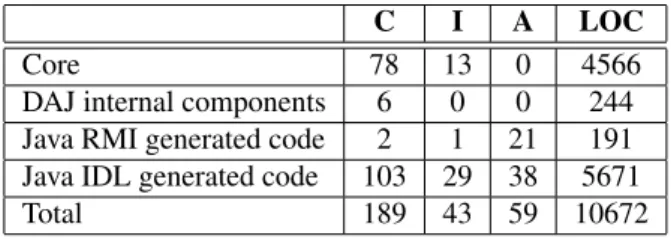
Table 2 summarizes the components generated by the DAJ compiler from the HealthWatcher distribution de-scriptor. The new core of the system – after removing RMI classes and statements – has 410 lines less than the original core. Moreover, the original HealthWatcher has a very rigid architecture, including only one Java RMI server. On the other hand, the DAJ-based system presents a more flexible architecture that supports easily changing the underlying middleware.
It is worth to mention that Java IDL requires the gen-eration of much more code than Java RMI (5671 lines
C I A LOC
Core 78 13 0 4566
DAJ internal components 6 0 0 244
Java RMI generated code 2 1 21 191 Java IDL generated code 103 29 38 5671
Total 189 43 59 10672
Table 2. DAJ-based HealthWatcher (C= Classes; I= Interfaces; A= Aspects)
for Java IDL and only 191 lines for Java RMI). The main reason is that the Java IDL compiler must generate several components that are mandatory in CORBA implementa-tions, including stubs, portable adapters, classes responsi-ble for IDL-to-Java mappings etc. The same difference in the number of lines between the two middleware systems will be observed in the following systems.
5.2. NETWORKPRICINGSYSTEM(NPS)
NPS functionality is very similar to the motivating ex-ample used in this paper. However, we choose to refactor NPS because it was originally implemented using Java IDL and uses many of the features provided by this mid-dleware technology. Table 3 presents information about the original version of the system.
Classes Interfaces LOC
Core 18 1 1279
Distribution 61 14 3138
Total 79 15 4417
Table 3. Java IDL-based NPS
DAJ-based NPS:First, Java IDL code was fully removed from NPS core. In this step, we also needed to incorpo-rate new classes in the core in order to replace classes generated by the Java IDL compiler that have been used in the implementation of functional requirements of the system. This is the case, for example, of classes repre-senting objects that are passed by-serialization in remote calls. Such classes are generated by theidljtool and thus they have methods and fields required by Java IDL programming conventions. After replacingidlj gener-ated classes by plain Java classes, the core was converted into an application that is independent from any middle-ware technology.
em-ployed to access the two NPS server objects. In this way, it was very simple to build versions of NPS based on Java RMI only, on Java IDL only or on both platforms – for example, one server can be configured to use Java RMI and the other one to use Java IDL.
C I A LOC
Core 25 8 0 1210
DAJ internal components 6 0 0 244 Java RMI generated code 7 7 18 355 Java IDL generated code 65 18 15 3744
Total 103 33 33 5553
Table 4. DAJ-based NPS (C= Classes; I= Interfaces; A= Aspects)
5.3. LIBRARYSYSTEM
The original version of the Library system uses Java RMI as the underlying communication infrastructure. Table 5 presents information about this version of the system. As can be observed in this table, the system does not have any class addressing distribution concerns (such as classes denoting remote exceptions). Basically, Library relies only on standard Java RMI classes that however are spreaded and tangled in the core functional-ity of the system.
Classes Interfaces LOC
Core 66 4 4997
Table 5. Java RMI-based Library System
DAJ-based Library: First, we removed all RMI related concerns from the core. We had also to refactor remote method signatures when they include built-in classes from the Java API (such asjava.util.Vector). The rea-son is that such classes are not supported by Java IDL – since Java IDL is a language neutral middleware platform. This restriction required us to implement new collection classes independent from the Java API.
The Library system has three remote servers. The first one handles functionality related to library employ-ees. The second server handles tasks related to reserva-tions, loans and payments. Finally, the last one is used by customers to search the library collection. Moreover, the system has 27 classes describing objects that must be passed in remote calls using call by-serialization. It does not make use of call by-remote-reference.
Table 6 summarizes the components generated by the
dajccompiler from the Library distribution descriptor. It is worth to mention that the new core – including the new collection classes – has 193 more lines of code than the original one. However, this core is fully independent
both from middleware technology and Java API compo-nents. Moreover, by just changing the middleware proto-col in the distribution descriptor we were able to deploy a Java IDL version of the Library System.
C I A LOC
Core 70 5 0 5190
DAJ internal components 6 0 0 244
Java RMI generated code 6 3 26 309 Java IDL generated code 98 32 34 5427
Total 180 40 60 11170
Table 6. DAJ-based Libray (C= Classes; I= Interfaces; A= Aspects)
6. D
ISCUSSIONThis section discusses the solution proposed by DAJ considering the following criteria: separation of con-cerns, usability and flexibility, portability, obliviousness and alternative implementation technologies.
Separation of Concerns: Using DAJ we were able to synthesize aspects and classes that modularize distri-bution concerns in the three evaluated systems. After refactoring, distribution concerns were completely re-moved from the core of these applications. However, we had to replace concrete components generated by Java IDL to components independent from any middleware technology. The same was required when remote method signatures rely on components from the Java API. A core independent from middleware concerns is more simple to understand, test and evolve. Particularly, tests can be performed without considering distribution, which is critical for example to the success of test-driven development.
tackle this problem. A possible solution is to extend the current API of the system, providing methods that allow clients to set up middleware parameters at run-time.
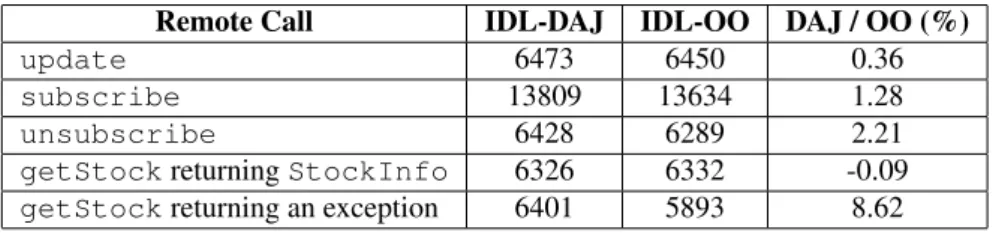
Performance:In order to evaluate the performance of the system, we have measured the time to execute the remote calls included in the StockWatcher system. This system was executed 20 times. In each execution, each remote call of the system was dispatched ten thousand times. We then calculated the average time to perform the dispatched calls considering the sequences of 20 executions. More-over, we have evaluated four versions of StockWatcher: based on Java RMI (using DAJ and using object-oriented code) and on Java IDL (using DAJ and object-oriented code). The results are presented on Tables 7 and 8. We run client and server processes on a Pentium 4 3.2 GHz, 1 GB RAM, Microsoft Windows XP Service Pack 2, JDK 1.6 andajcversion 1.5.4.c.
The experiment demonstrates that DAJ does not impact significantly middleware performance. The per-formance overhead is negligible in most of the measured calls, both for Java RMI and Java IDL versions of the system. The only exception is when the getStock
method raises a StockNotFoundException in the Java IDL-based version of StockWatcher. The perfor-mance overhead in this case is higher than 8%, compared with the original implementation of the system using scattered and tangled OO code. This overhead is due to the need of using aspects to handle such exception both on the server and on the client side of the distributed system, as described in Section 4.5.
Portability:Using DAJ, we were able to deliver versions of the evaluated systems for a different middleware plat-form than the one supported by their original implementa-tion. However, DAJ only provides support for the “lowest common denominator” between Java IDL and Java RMI. Basically, this translates to synchronous remote calls us-ing call by-serialization and call by-remote-reference se-mantics. DAJ does not provide support for example to features available only in CORBA systems, such as asyn-chronous calls, oneway calls, portable interceptors, dy-namic invocation interfaces etc. On the other hand, we envision that the system can be extended to support other CORBA ORBs, besides Java IDL.
Another challenge is to provide support for Web Ser-vices in DAJ. In fact, we have already investigated this is-sue, considering Apache Axis as the middleware platform for supporting Web Services [2]. Basically, we faced two problems. First, Apache Axis generates its own classes for types used in remote service invocations. Such classes contain methods that serializes and deserializes objects according to Web Services standards. Thus, supporting Web Services in DAJ would require several inter-type
declarations to transpose such methods to the classes of the base system. Another challenge is that Web Services do not support call by-remote-reference, since this would require the deployment of an HTTP server in each Web Service client. For this reason, we decided to do not sup-port Web Services in the first DAJ implementation.
In summary, we consider that DAJ is a solution that targets only crosscutting concerns inherent to dis-tributed object architectures. Particularly, we do not ex-pect that the proposed system can handle concerns related to other middleware paradigms, such as service-oriented, message-oriented or event-based.
In the future, we consider that DAJ can be extended to generate code for other programming languages, such as C++ or C#. The only requirement is that aspect extensions for such OO languages become more mature.
Obliviousness:Although DAJ fully insulates middleware code from application components, it is worth to men-tion that DAJ requires client modules to rely on its own
getRef method to retrieve remote references. Thus, it can be argued that DAJ replaces middleware tangling code by its own. However, this degree of tangling is mini-mal and it can be eliminated by creating an extra aspect, as illustrated below for an hypothetical StockWatcher client:
1: class MyClient { 2: StockMarket s1,s2; 3: ....
4: }
5: aspect MyClientDependencyInjection { 6: after(MyClient c):
7: execution(void MyClient.new(..)) && this(s) { 8: c.s1= (StockMarket)
9: ServiceLocator.getRef("StockMarketA"); 10: c.s2= (StockMarket)
11 ServiceLocator.getRef("StockMarketB"); 12: }
13: }
The proposed aspect, as happen in dependency injec-tion frameworks [24, 6], assumes the charge of retrieving and binding remote references to instance variabless1
ands2(lines 8 to 11). In this way, the class has remained oblivious to DAJ concerns.
Alternative Technologies: Instead of aspects, at least two other technologies could have been used to modu-larize distributions concerns required by middleware plat-forms:
• Bytecode manipulation frameworks: Frameworks
Remote Call RMI-DAJ RMI-OO DAJ / OO (%)
update 2767 2698 2.56
subscribe 5901 5803 1.69
unsubscribe 3010 2989 0.70
getStockreturningStockInfo 2631 2648 -0.64
getStockreturning an exception 5089 5045 0.87
Table 7. Average time (in ms) to perform ten thousand remote calls in the Java RMI-based versions of the StockWatcher system (using DAJ and using tangled and spreaded OO code)
Remote Call IDL-DAJ IDL-OO DAJ / OO (%)
update 6473 6450 0.36
subscribe 13809 13634 1.28
unsubscribe 6428 6289 2.21
getStockreturningStockInfo 6326 6332 -0.09
getStockreturning an exception 6401 5893 8.62
Table 8. Average time (in ms) to perform ten thousand remote calls in the Java IDL-based versions of the StockWatcher systems (using DAJ and using tangled and spreaded OO code)
• Model-based Development: As promoted by
model-driven approaches [25], CASE tools can be aug-mented to support the generation of class skele-tons incorporating middleware required code. Such classes can be generated from models, such as UML class and sequence diagrams, or from domain-specific languages. However, this approach usually generates code that is hard to understand and evolve. Moreover, since application logic is embedded in the synthesized class skeletons, it is usually hard to achieve round-trip engineering, i.e., moving back and forth between models and generated code [13].
7. R
ELATEDW
ORKSoares, Borba and Laureano have reported their ex-perience using AspectJ to provide an aspect-oriented im-plementation for the HealthWatcher system [30, 29]. Re-garding their work, DAJ presents at least three contribu-tions:
• DAJ supports modularization both for Java RMI and
Java IDL communication concerns. Supporting Java IDL is important to provide interoperability with clients and servers written in other programming lan-guages. The challenge in this case was to avoid col-lisions and interferences among aspects specific to each middleware system. For example, when the aspects proposed by DAJ require inter-type decla-ration, interface implementation was preferred since Java only supports simple inheritance.
• DAJ supports parameter passing in remote calls
using call by-serialization and call by-remote-reference semantics. Instead, the aspects proposed
by Soares, Borba and Laureano only handle call by-serialization, since this was the only evaluation strat-egy employed in HealthWatcher. However, call by-remote-reference is extensively used in other dis-tributed object-based systems to support the imple-mentation of callbacks [11].
• DAJ is compatible with different software
architec-tures employed in the design of distributed systems. On the other hand, the solution proposed by Soares and colleagues is restricted to the original architec-ture employed by the HealthWatcher system. For example, their solution assumes that there is a sin-gle server object of typeHWFacade. The proposed pointcuts rely on this particular type to capture re-mote calls. For this reason, aspects used in Health-Watcher do not apply for example to clients that ref-erence multiple server objects.
Kulesza et al. have conducted a quantitative study to assess the positive and negative effects of using AOP in the HealthWatcher system [18]. Their study was driven by a suite of metrics for separation of concerns, coupling, cohesion and size. The conclusion is that the AO ver-sion of the system presents better results for almost all the considered metrics. Other works also report the ad-vantages of using aspects to modularize distribution con-cerns [32, 5, 21].
that guides the generation of aspects is just a list of class names, which does not contain information about param-eter passing strategies, naming servers, etc. In their so-lution, call by-remote-reference is applied to all invoca-tion parameters. Certainly, this decision is not adequated when the target of the modularization is an existing dis-tributed application whose semantics depends on call by-serialization. Additionally, using only call by-remote-reference impacts the performance of the system, since the execution of remote methods must call back the client address space to access any argument.
Reflective middleware systems rely on the application of reflection to achieve customizable, open, and adaptive middleware platforms [17]. For example, UIC CORBA supports the concept of personality, that allows users to specialize middleware systems according to the require-ments of a given distributed application or domain [28]. It is possible for example to configure skeletons that sup-port communication with different middleware systems. Pluggable protocols aim to support custom middleware protocol stacks in TAO, a well-known CORBA middle-ware framework [27]. The system targets mainly applica-tions with sensitive time constraints, such as real-time and embedded systems. However, as usual in object-oriented middleware systems, both UIC and TAO require devel-opers to follow their specific programming conventions, which usually lead to code scattering and tangling [22].
Ghosh and colleagues have proposed a middleware transparent approach to support the implementation of distributed systems [12]. Similar to DAJ, they rely on aspects to decouple business concerns from middleware-specific functionality. Moreover, they propose a model-driven approach to distributed systems development. A middleware transparent design (MTD) is a model of the system that do not address middleware concerns. Aspects are weaved to such model to derive a middleware spe-cific design (MSD) that addresses both business and dis-tribution concerns. Accordingly to Model Driven Archi-tecture (MDA) principles [25], a MTD corresponds to a PIM (Platform Independent Model) and a MSD to a PSM (Platform Specific Model). DAJ is a system that imple-ments and puts into practice many principles and ideas proposed by Ghosh and colleagues in their proposal.
Zhang and Jacobsen have quantified the crosscut-ting nature of several features of CORBA based middle-ware [37]. They have measured the scattering degree of features such as portable interceptors, dynamic program-ming invocations, collocation optimizations, and asyn-chronous calls. They have also showed that such features can be modularized using aspect-oriented programming. From this experience, they have proposed the horizon-tal decomposition method [38]. Horizonhorizon-tal decomposi-tion advocates the use of tradidecomposi-tional modularizadecomposi-tion tech-niques, such as vertical decomposition, to implement a
minimal but well-modularized core middleware system. Aspects should then be used to superimpose orthogonal features to this core. They have assessed the effective-ness of their method by re-implementing as aspects cross-cutting features of the original implementation of OR-Bacus [26]. AspectJRMI is another middleware system whose design has been guided by horizontal decompo-sition principles [10]. Colyer et al. have conducted an aspect-oriented refactoring of a large scale middleware product-line [7]. They have identified many crosscutting concerns in the product-line, including homogenous con-cerns (tracing, logging, error analysis and reporting, mon-itoring, and statistics) and heterogeneous concerns (EJB support). Similar to Zhang and Jacobsen, Colyer work aims to modularize crosscutting concerns that are internal to the middleware layer.
In DAJ-based distributed systems, the language em-ployed in the specification of distribution descriptors can be considered as a domain-specific aspect-oriented lan-guage. Recently, some works have proposed the use of domain-specific languages to describe crosscutting con-cerns, since such languages rely on abstractions and vo-cabulary that is closer to the concern they intend to mod-ularize. Moreover, they are less susceptible to critics commonly related to general purpose aspect-oriented guages. For example, many researchers consider that lan-guages such as AspectJ defeats basic software engineer-ing principles, such as modular reasonengineer-ing, parallel devel-opment and encapsulation [35, 31]. Certainly, such critics are less important when using domain-specific aspect lan-guages. It is also worth to mention that the first generation of aspect languages was defined for domain-specific pur-poses, including RIDL (for remote interface specification) and COOL (for coordination and synchronization) [21].
8. C
ONCLUSIONSIn this paper, we have described a system called DAJ that provides middleware independence in distributed, object-oriented systems. For this purpose, DAJ relies on the combination of three technologies: aspects, domain-specific languages and generative programming. DAJ also supports two native, object-oriented JDK middleware platforms: Java RMI and Java IDL. The system modu-larizes the basic service provided by these middleware platforms, i.e. synchronous remote calls using call by-serialization and call by-remote-reference semantics. Par-ticularly, DAJ does not provide support to features avail-able only in CORBA systems, such as asynchronous calls, oneway calls, portable interceptors, dynamic invocation interfaces etc.
HealthWatcher, Network Pricing System, and Library. DAJ was able to modularize middleware code tangled in the business components of these three systems. We have also been able to deploy a new version of the evaluated systems using a different middleware platform than the original one.
As future work, we have plans to investigate the use of DAJ in other distributed systems, including applica-tions designed to rely on DAJ since the design phase. We also have plans to consider other object-oriented metrics in the investigated systems, including metrics that evaluate important software engineering attributes, such as cohesion, coupling and separation of concerns.
Acknowledgments This work has been funded by
FAPEMIG (process CEX-817/05). We would like to thank Sergio Soares for providing the source code of the HealthWatcher system and Mariana Sharp for providing the Library system source code.
R
EFERENCES[1] Gustavo Alonso, Fabio Casati, Harumi Kuno, and Vijay Machiraju.Web Services: Concepts, Architecture and Ap-plications. Springer Verlag, 2004.
[2] Apache Axis. http://ws.apache.org/axis/.
[3] Jon Bentley. Programming pearls: little languages. Com-munications ACM, 29(8):711–721, 1986.
[4] Lionel C. Briand, Yvan Labiche, and Johanne Leduc. To-ward the reverse engineering of UML sequence diagrams for distributed Java software. IEEE Transactions on Soft-ware Engineering, 32(9):642–663, 2006.
[5] Mariano Ceccato and Paolo Tonella. Adding distribution to existing applications by means of aspect oriented pro-gramming. In4th IEEE International Workshop on Source Code Analysis and Manipulation, pages 107–116. IEEE Computer Society, 2004.
[6] Shigeru Chiba and Rei Ishikawa. Aspect-oriented pro-gramming beyond dependency injection. In19th Euro-pean Conference on Object-Oriented Programming, vol-ume 3586 ofLecture Notes in Computer Science, pages 121–143. Springer, 2005.
[7] Adrian Colyer and Andrew Clement. Large-scale AOSD for middleware. In 3rd International Conference on Aspect-Oriented Software Development, pages 56–65. ACM Press, 2004.
[8] Krysztof Czarnecki and Ulrich Eisenecker. Genera-tive Programming: Methods, Tools, and Applications. Addison-Wesley, 2000.
[9] Markus Dahm. Bytecode engeeniering with the BCEL API. Technical report, Freie Universitt - Institut fur In-formatik, 2001.
[10] Marco Tulio de Oliveira Valente, Fabio Tirelo, Di-ana Campos Leao, and Rodrigo Palhares. An aspect-oriented communication middleware system. In Inter-national Symposium on Distributed Objects and Applica-tions, volume 3761 ofLNCS, pages 1115–1132. Springer-Verlag, October 2005.
[11] Frantisek Plasil and Michael Stal. An architectural view of distributed objects and components in CORBA, Java RMI and COM/DCOM. Software Concepts and Tools, 19(1):14–28, 1998.
[12] Sudipto Ghosh, Robert B. France, Devon M. Sim-monds, Abhijit Bare, Brahmila Kamalakar, Roopashree P. Shankar, Gagan Tandon, Peter Vile, and Shuxin Yin. A middleware transparent approach to developing dis-tributed applications. Software Practice and Experience, 35(12):1131–1154, October 2005.
[13] Aniruddha S. Gokhale, Douglas C. Schmidt, Balachandran Natarajan, and Nanbor Wang. Applying model-integrated computing to component middleware and enterprise ap-plications. Communications of the ACM, 45(10):65–70, 2002.
[14] Java IDL. http://java.sun.com/products/jdk/idl.
[15] Gregor Kiczales, Erik Hilsdale, Jim Hugunin, Mik Ker-sten, Jeffrey Palm, and William G. Griswold. An overview of AspectJ. In 15th European Conference on Object-Oriented Programming (ECOOP), volume 2072 ofLNCS, pages 327–355. Springer Verlag, 2001.
[16] Gregor Kiczales, John Lamping, Anurag Mendhekar, Chris Maeda, Cristina Lopes, Jean-Marc Loingtier, and John Irwin. Aspect-oriented programming. In 11th European Conference on Object-Oriented Programming
(ECOOP), volume 1241 of LNCS, pages 220–242.
Springer Verlag, 1997.
[17] Fabio Kon, Fábio Costa, Roy Campbell, and Gordon Blair. The case for reflective middleware.Communications of the ACM, 45(6):33–38, June 2002.
[18] Uirá Kulesza, Cláudio Sant’Anna, Alessandro Garcia, Roberta Coelho, Arndt von Staa, and Carlos José Pereira de Lucena. Quantifying the effects of aspect-oriented pro-gramming: A maintenance study. In22nd IEEE Interna-tional Conference on Software Maintenance, pages 223– 233, 2006.
[19] Ramnivas Laddad. AspectJ in Action Practical Aspect-Oriented Programming. Manning, 2003.
[20] Geoffrey Lewis, Steven Barber, and Ellen Siegel. Pro-gramming with Java IDL. John Wiley & Sons, 1997.
[21] Cristina Videira Lopes. D: A Language Framework for Distributed Programming. PhD thesis, College of Com-puter Science, Northeastern University, December 1997.
[23] Cristiano Amaral Maffort and Marco Tulio de Oliveira Va-lente. Aspectos para construção de aplicações distribuí-das. InXX Simpósio Brasileiro de Engenharia de Soft-ware, pages 271–286, 2006.
[24] Martin Fowler. Inversion of control con-tainers and the dependency injection pattern. http://www.martinfowler.com/articles/injection.html.
[25] OMG Model Driven Architecture.
http://www.omg.org/mda.
[26] Orbacus. http://www.orbacus.com.
[27] Carlos O’Ryan, Fred Kuhns, Douglas C. Schmidt, Ossama Othman, and Jeff Parsons. The design and performance of a pluggable protocols framework for real-time distributed object computing middleware. InInternational Middle-ware Conference, volume 1795 ofLecture Notes in Com-puter Science, pages 372–395. Springer, 2000.
[28] Manuel Román, Fabio Kon, and Roy Campbell. Reflective middleware: From your desk to your hand. Distributed Systems Online, 2(5), July 2001.
[29] Sergio Soares, Paulo Borba, and Eduardo Laureano. Dis-tribution and persistence as aspects.Software Practice and Experience, 36(7):711–759, 2006.
[30] Sergio Soares, Eduardo Laureano, and Paulo Borba. Im-plementing distribution and persistence aspects with As-pectJ. In17th ACM Conference on Object-Oriented pro-gramming systems, languages, and applications, pages 174–190. ACM Press, 2002.
[31] Friedrich Steimann. The paradoxical success of aspect-oriented programming. In 21st Conference on Object-Oriented Programming Systems, Languages, and Applica-tions (OOPSLA), pages 481–497, 2006.
[32] Eli Tilevich, Stephan Urbanski, Yannis Smaragdakis, and Marc Fleury. Aspectizing server-side distribution. In Auto-mated Software Engineering Conference, pages 130–141. IEEE Press, October 2003.
[33] Arie van Deursen, Paul Klint, and Joost Visser. Domain-specific languages: an annotated bibliography.ACM SIG-PLAN Notices, 35(6):26–36, 2000.
[34] Steve Vinoski. CORBA: integrating diverse applications within distributed heterogeneous environments. IEEE Communications Magazine, 14(2), 1997.
[35] Mitchell Wand. Understanding aspects: extended abstract. In8th International Conference on Functional Program-ming, pages 299–300. ACM Press, August 2003.
[36] Ann Wollrath, Roger Riggs, and Jim Waldo:. A distributed object model for the Java system. In2nd Conference on Object-Oriented Technologies & Systems, pages 219–232, 1996.
[37] Charles Zhang and Hans-Arno Jacobsen. Refactoring mid-dleware with aspects.IEEE Transactions Parallel and Dis-tributed Systems, 14(11):1058–1073, 2003.