UNIVERSIDADE DA BEIRA INTERIOR
Sciences
Layer-by-Layer deposition of bioactive
polyelectrolytes with incorporation of
antimicrobial agents as a new strategy to develop
bioactive textiles
Ana Paula de Ascensão Rosa Gomes
Tese para obtenção do Grau de Doutor em
Bioquímica
(3º ciclo de estudos)
Orientadora: Profª. Doutora Isabel Cristina Aguiar de Sousa e Silva
Gouveia
Co-orientadores: Prof. Doutor João F. Mano e Prof. Doutor João
António de Sampaio Rodrigues Queiroz
Dedicatory
To my children Filipe, Ana Sofia and Maria Inês
I would like to thank Fundação para a Ciência e Tecnologia (FCT) for the funding granted concerning the project - PTDC/EBB-BIO/113671/2009 (FCOMP-01-0124-FEDER-014752) Skin2Tex. Also we would like to thank Fundo Europeu de Desenvolvimento Regional (FEDER) through COMPETE – Programa Operacional Factores de Competitividade (POFC) for the co-funding.
Acknowledgements
At the end of my thesis I would like to thank all those people who made this thesis possible and an unforgettable experience for me.
I would like to express the deepest appreciation to my supervisor Professora Doutora Isabel Gouveia, she continually and convincingly conveyed a spirit of adventure in regard to research. Without her guidance, inspiring suggestions and persistent helps this dissertation would not have been possible.
My sincere thanks also goes to my co-supervisor, Professor Doutor João Mano and Professor Doutor João Queiroz, for the support to make this thesis possible.
I want to thank Sónia Sousa for technical help with analyses of contact angle and Engº João Pereira for technical help with antibacterial tests. My very special thanks go to all people that made the lab a great place to work, Marta, Fred, Claudia, Joana, Silvia and João Matos. Last but not least I want to thank my family, especially my parents, my husband and my children, whose constant encouragement and support was crucial for the completion of this thesis.
Thank you
Resumo
Nos últimos anos, o uso de têxteis com capacidade antimicrobiana tem vindo a aumentar significativamente. Compostos sintéticos antimicrobianos utilizados em artigos têxteis são muito eficazes face a uma grande gama de microrganismos. Mas o uso de têxteis antimicrobianos de forma contínua pode levar à resistência bacteriana e sensibilização dos utilizadores, bem como causar problemas ao meio ambiente. Para minimizar estes riscos existe atualmente uma grande procura de têxteis antimicrobianos produzidos com compostos naturais não tóxicos e amigos do ambiente. A baixa incidência de efeitos adversos com origem em compostos naturais relativamente aos compostos sintéticos pode ser explorada como uma alternativa atraente e promissora para aplicações têxteis.
O método de funcionalização por camada sobre camada (Layer-by-Layer, LbL) pode fornecer novos tipos de revestimentos em materiais têxteis. Esta técnica LbL tem ganho uma grande aceitação na investigação académica e a nível industrial. Foi proposta por Decher e seus colaboradores no início dos anos 90 e desde então o seu impacto positivo pode ser comprovado através do crescente número de trabalhos publicados.
Revestimentos por multicamadas de polieletrólitos naturais bioativos tornam-se num processo novo de funcionalização de superfícies. Esta técnica é desenvolvida em meio aquoso e envolve tipicamente a adsorção alternada de polieletrólitos de cargas opostas. A possibilidade de fabricar tais camadas, graças às interações eletrostáticas, permite a funcionalização de superfícies de praticamente qualquer tamanho e forma.
Este conceito não é novo para algumas aplicações como seja a libertação de fármacos, mas é relativamente novo para aplicações têxteis. Na revisão da literatura foram encontrados alguns, mas poucos, trabalhos de investigação relativamente à aplicação do LbL em substratos têxteis naturais, como seja o caso do algodão. O uso de polímeros naturais para obter estas camadas pode auxiliar na resolução de problemas que ocorrem com os polímeros sintéticos. Relativamente aos polímeros naturais mais utilizados encontram-se o quitosano (CH) e o alginato (ALG) que são polissacarídeos bastante conhecidos por serem biocompatíveis, biodegradáveis, antimicrobianos e não tóxicos.
Neste trabalho apresentam-se os resultados sobre a viabilidade e sucesso da deposição de camadas de polieletrólitos de CH e de ALG pela técnica do LbL em fibras de algodão. O revestimento do algodão por multicamadas de CH e ALG é construído através da adsorção de CH de carga positiva e oposta à carga da superfície do algodão, seguida pela adsorção de ALG de carga negativa, ou seja oposta á carga do CH. O substrato de algodão utilizado para a deposição das várias camadas foi pré-tratado antes da deposição dos polieletrólitos, de forma a ativar a sua superfície deixando-a com cargas negativas. A deposição sucessiva das
multicamadas de polieletrolitos foi analisada por 3 técnicas diferentes. Cálculo do ângulo de contacto entre uma gota de água e a superfície da amostra, coloração com um corante catiónico e análise por ATR-FTIR (Fourier Transform Infrared Spectroscopy with Attenuated Total
Reflection). Estas técnicas indicaram que houve uma deposição alternada entre o CH e o ALG e também a presença de ligações eletrostáticas entre as camadas. Ficou assim demonstrado o sucesso na deposição de CH e ALG pela técnica do LbL em substrato têxtil de origem natural, neste caso o algodão.
Com o fim de avaliar a atividade antibacteriana das amostras de algodão funcionalizadas, seguiu-se a norma Japonesa JIS L 1902:2002 para o método do halo (teste qualitativo) e método de absorção (teste quantitativo). Estes testes revelaram um efeito antibacteriano das amostras funcionalizadas, tanto para bactérias positivas (Staphylococcus aureus) como Gram-negativas (Klebsiella pneumoniae). Com estes resultados verificou-se que era possível preparar estruturas com propriedades específicas. Este método permite assim a possibilidade de desenvolver novos produtos têxteis funcionais para aplicações biomédicas, podendo também com este método do LbL obter amostras que tenham um papel no desenvolvimento de um sistema de libertação de fármacos no local pretendido.
As amostras anteriores foram ainda analisadas por microscopia eletrónica de varrimento (Scanning Electron Microscopy, SEM). Esta análise teve como objetivo visualizar o grau do dano sofrido na estrutura das bactérias testadas por ação do CH e ALG. A fase seguinte consistiu em otimizar um método para incorporação de L-cisteína (L-cys), que é um agente antimicrobiano, entre as camadas de CH e ALG depositadas em amostras de algodão pelo método do LbL. Entre os diversos métodos utilizados para incorporar a L-cys, o que melhores resultados produziu foi aquele onde se fez uso da propriedade do ALG em formar gel na presença de cálcio. Verificamos que a L-cys pode ser incorporada diretamente entre as camadas de CH e ALG sem que ocorra qualquer ligação covalente entre a L-cys e os polieletrólitos de CH e ALG. Desta forma o agente bioativo (L-cys) ficou imobilizado sem perder as suas características bioativas e tem como grande vantagem a possibilidade de podermos selecionar outros tipos de agentes bioativos sem a necessidade de nova otimização do método de incorporação. Nestas novas amostras foram analisadas as propriedades antibacterianas para o Staphylococcus aureus e para Klebsiella
pneumoniae segundo a norma já referida anteriormente, e os resultados mostraram um aumento no efeito antibacteriano devido à presença da L-cys.
Por último, a L-cys foi substituída por péptidos antimicrobianos (antimicrobial peptides, AMPs), já que são a nova geração de antimicrobianos. Foram utilizados 4 AMPs de características diferentes. A profundidade em que cada AMPs se encontra incorporado entre as camadas foi determinada por análise de energia dispersiva de raios X (Energy Dispersive X ray, EDS). Para estas últimas amostras foram feitos os testes antibacterianos e analisada a citotoxicidade para o valor das concentrações usadas. Foram também analisadas as curvas de libertação para o exterior dos AMPs incorporados no algodão funcionalizado. Com os resultados obtidos
confirma-se que esta nova funcionalização de algodão revestido com camadas de CH e ALG pela técnica do LbL e com incorporação de AMPs, conduz a bons resultados antimicrobianos e de citotoxicidade, podendo assim estas amostras ser utilizadas na área da saúde, especificamente como compressas.
Palavras-chave
Layer-by-Layer, Agentes antimicrobianos, Têxteis bioactivos, Aplicações biomédicas, compressas.
Abstract
Polyelectrolyte multilayer coatings have become a new and general way to functionalize a variety of materials. Particularly, the Layer-by-Layer (LbL) method is a technique developed for the coating of solid surfaces. The LbL technique presents a unique mean to construct surface coatings that can conform to a variety of biomaterial surfaces and serve as matrices enabling controlled delivery of bioactive molecules from surface. As the deposition process is achieved in aqueous medium, incorporation of active agents is possible since the coatings obtained by LbL are less densely packed and this is advantageous for diffusion through the coating.
The coating is constructed by the alternate adsorption of oppositely charged polyelectrolytes at the surface of the material, easily obtained when it is dipped in polyelectrolyte solutions. A deposition cycle creates a layer, and these cycles can be repeated as often as needed.
This study aims to obtain novel bioactive textiles with potential application as wound-dressings. The biopolymers chosen for the functionalization of cotton (substrate), were chitosan (CH) and alginate (ALG). The multilayer coating of cotton with CH and ALG is constructed by the adsorption of CH and ALG with opposite charge on the surface of cotton substrates. The successive deposition of multilayers of CH and ALG was analyzed by three different techniques. Contact angle between a water droplet and the surface of the sample, cationic dye staining method and analysis by ATR-FTIR (Fourier Transform Infrared spectroscopy with Attenuated
Total Reflection). These techniques showed that there was alternating deposition between CH and ALG and the presence of electrostatic bonds between the layers. In order to evaluate the antibacterial activity of the functionalized cotton, the Japanese standard JIS L 1902:2002 for the halo method (qualitative assay), and the absorption method (quantitative test) were assessed. These tests revealed an antibacterial effect on the functionalized cotton for both Gram-positive bacteria (Staphylococcus aureus) and Gram-negative bacteria (Klebsiella
pneumoniae).
In addition a method was optimized for incorporating L-cysteine (L-cys) between the layers of CH and ALG deposited on cotton samples by the LbL, in order to obtain a better antimicrobial effect. Several strategies were used and the best results were obtained by the method where the ALG turns into a gel in the presence of calcium, since L-cys can be incorporated directly between the layers of CH and ALG without any covalent bond. Thus, the bioactive L-cys agent was immobilized without losing its bioactive characteristics. These new samples were analyzed for the antibacterial activity against Staphylococcus aureus and Klebsiella pneumoniae according with the previously used standard, and the results showed an increase in the antibacterial effect due to the presence of L-cys.
This new coating method has the great advantage to able to select other types of bioactive agents without needing further optimization. In this way, L-Cys was replaced by antimicrobial peptides (AMPs). The reason for the use of AMPs is related with the continuous use of antibiotics xiii
which resulted in multiresistant bacterial strains all over the world. Consequently, there is an urgent need to search for alternatives for antibiotics. The AMPs are the new generation of antimicrobials. Four AMPs of different features were used. The depth in which each AMPs is incorporated between the layers was determined by energy dispersive analysis of X-rays (Energy Dispersive X-ray EDS). Results showed, that all AMPs used have a higher antimicrobial effect when compared with previous samples (with and without L-Cys) for both microorganisms and are non-cytotoxic to normal human dermal fibroblasts at the tested Concentrations. This confirms that this new functionalization approach of cotton coated with layers of CH and ALG by the LbL technique with incorporated AMPs leads to good antibacterial and cytotoxicity results, which make them suitable to be used as wound dressings.
Keywords
Layer-by-Layer, Antimicrobial agentes, Bioactive textiles, Biomedical applications, wound dressing
Thesis Overview
This thesis is structured in four main chapters
The first chapter includes an introduction divided in two sections. One section explains the importance of antimicrobial textiles, the most used antimicrobial agents (synthetic and natural compounds) and a review of antimicrobial activity in textile materials. The second section is presented as a publisher paper review form – Layer-by-Layer assembly as a promising technique for the biofunctionalization of cellulosic fibres with emergent antimicrobial agents. (PAPER I). The second chapter presents the main purpose and the specific goals that were established for the development of this research work.
In the third chapter, the results obtained during this work are presented and discussed in the form of original research papers organized as follows:
PAPER II – Layer-by-Layer Deposition of Antibacterial Polyelectrolytes on Cotton Fibres
PAPER III – Assessment of bacteria-textile interactions using Scanning Electron Microscopy: A study on LbL chitosan/alginate coated cotton.
PAPER IV – Layer-by-Layer deposition of antimicrobial polymers on cellulosic fibers: a new strategy to develop bioactive textiles.
PAPER V – New Biomaterial Based on Cotton with Incorporated Biomolecules.
PAPER VI – Incorporation of antimicrobial peptides on functionalized cotton gauzes for medical applications.
In the fourth chapter is made a general discussion of the results obtained over all paper, concluding remarks about this work and some future work are suggested to complement this study.
xvii
Index
Resumo ... ix Abstract... xiii Thesis Overview ... xv Chapter 1 ... 1 1. Introduction ... 3 1.1 Antimicrobial Textiles ... 31.2 Antimicrobial agents for textiles ... 4
1.3 Evaluation of antimicrobial activity ... 6
1.4 The potential use for antimicrobial textiles ... 8
1.5 References ... 11
Paper I . Layer-by-Layer assembly as a promising technique for the biofunctionalization of cellulosic fibres with emergent antimicrobial agents. ... 15
Chapter 2 ... 35
Aims of the thesis ... 37
Chapter 3 ... 39
Paper II . Layer-by-Layer Deposition of Antibacterial polyelectrolytes on Cotton Fibres .. 41
Paper III . Assessment of bacteria-textile interactions using Scanning Electron Microscopy: A study on LbL chitosan/alginate coated cotton ... 55
Paper IV . Layer-by-Layer deposition of antimicrobial polymers on cellulosic fibers: a new strategy to develop bioactive textiles ... 65
Paper V . New Biomaterial Based on Cotton with Incorporated Biomolecules ... 73
Paper VI . Incorporation of antimicrobial peptides on functionalized cotton gauzes for medical applications ... 85
Chapter 4 ... 121
General discussion of the results ... 123
Conclusion ... 133
List of Scientific publications
Papers included in the thesis resulting from this Doctoral work
PAPER I - Layer-by-Layer assembly as a promising technique for the biofunctionalization ofcellulosic fibres with emergent antimicrobial agents.
Ana P. Gomes, João Mano, João Queiroz, Isabel C. Gouveia (Submitted for publication in Advances in Polymer Science)
PAPER II - Layer-by-Layer Deposition of Antibacterial Polyelectrolytes on Cotton Fibres Ana P. Gomes, João F. Mano, João A. Queiroz, Isabel C. Gouveia
Journal of Polymer Environment. 2012. 20:1084-1094
PAPER III - Assessment of bacteria-textile interactions using Scanning Electron Microscopy: A study on LbL chitosan/alginate coated cotton Ana P. Gomes, João F. Mano, João A. Queiroz, Isabel C. Gouveia
Microscopy: Science, Technology, Applications and Education Microscopy book series. Number 4 Volume 1, pp 286-292 A. Méndez – Vilas and J. Diaz (Eds.) – FORMATEX 2010
PAPER IV - Layer-by-Layer deposition of antimicrobial polymers on cellulosic fibers: a new strategy to develop bioactive textiles
Ana P. Gomes, João F. Mano, João A. Queiroz, Isabel C. Gouveia Polymers advanced technologies. 2013, 24 1005-1010
PAPER V - New Biomaterial Based on Cotton with Incorporated Biomolecules Ana P. Gomes, João F. Mano, João A. Queiroz, Isabel C. Gouveia Journal of Applied Polymer Science. 2014, APP. 40519
PAPER VI - Incorporation of antimicrobial peptides on functionalized cotton gauzes for medical applications.
Ana P. Gomes, João F. Mano, João A. Queiroz, Isabel C. Gouveia
(Submitted for publication in Carbohydrate Polymers, reference CARBOPOL-D-14-02437)
List of Scientific communications
Oral scientific communications of this Doctoral work
Nanobiotechnology for Textiles: Layer-by-Layer deposition of antimicrobial nanolayers on natural fibres
Ana Gomes, João F. Mano, João A. Queiroz, Isabel C. Gouveia NanoSpain, Malaga, 23-26 March 2010
Assessment of bactéria – textile interactions using Scanning Electron Microscopy: A study on Layer-by-Layer chitosan/alginate coated cotton
Ana Gomes, João F. Mano, João A. Queiroz, Isabel C. Gouveia
Simpósio da Unidade de Investigação de Materiais Texteis e Papeleiros. Universidade da Beira Interior, 2010
Layer-by-Layer deposition of natural antimicrobial compounds in natural fibres. Ana Gomes, João F. Mano, João A. Queiroz, Isabel C. Gouveia
International Conference on Engineering. Universidade da Beira Interior, 2011 Designing new antibacterial textiles by Layer-by-Layer assembling of biomolecules Ana Gomes, João F. Mano, João A. Queiroz, Isabel C. Gouveia
European Materials Research Society, E-MRS, 2012
Chapter 1
1. Introduction
1.1 Antimicrobial Textiles
Textiles play an important role in the daily lives of humans. Textile substrates, especially of natural origin, such as cotton, can easily be colonized by microorganisms because they retain oxygen, water, and nutrients required for their growth. The presence of microorganisms in fabrics affects not only the textile properties but also the wearer. These may result in offensive odors, color degradation, cross-infection or transmission of diseases, allergic responses and deterioration of textiles [1]. To combat these adversities it is highly desirable to impart antimicrobial properties to the textile materials. As a consequence, the number of biofunctional textiles with an antimicrobial activity has increased considerably over the last few years.
Antimicrobial textiles were first created to prevent damage to textiles under adverse environmental conditions during their storage or use. In fact, antimicrobial textiles were first used during World War II [2]. Actually, their application is extended to technical cloths, underwear, sportswear, home furnishing and protective clothing in areas with high risk of pathogens infection (hospitals, schools and hotels) [3]. Moreover, the antimicrobial fabrics are nowadays being used as medical devices for prevention, as surgical lab coats, or therapy, as wound dressings [3].
It is extremely important that protective clothing and hospital linen meet the demands for antimicrobial protection. Materials for use in surgery must ensure adequate protection against microorganisms, biological fluids and aerosols, i.e. impermeability for microorganisms in wet and dry atmospheres, and also for air-borne microorganisms. Disease transmission prevention is important for intracorporeal or implantable devices within the human body (vascular grafts and sutures) and for extracorporeal devices such as catheters and hollow fibres for dialyzers [4]. Furthermore, wound dressings also need to prevent infection and promote faster wound healing. Therefore, controlling the undesirable effects of microorganisms on textiles is becoming an important issue, especially within the medical textile industry. Thus, medical products will perhaps be the largest application of antimicrobial textiles [3, 5].
Another very important aspect is related with the abuse of antibiotics that has resulted in the continual emergence of resistant strains of bacteria, further complicating the clearance of infection in cutaneous wounds [6]. Textile materials are one of the main factors for disease transmission and also the need to enhance the quality of people’s life (medical staff, patients, and visitors) have stimulated intensive research and development of antimicrobial textiles [20]. Thus, it is crucial to impart antimicrobial activity to textile materials in order to protect the 3
user from microorganisms contamination. Another aspect of antimicrobial functionalization of textiles is to add a therapeutic value to the material, intended for example, for wound healing [7].
Considering the environment, new antimicrobial textiles must be based on biodegradable molecules, due to the interest to reduce adverse effects on the environment. Among the many polymeric materials available, cellulose fibres are particularly attractive, being naturally occurring, and easy to functionalize [8].
1.2 Antimicrobial agents for textiles
1.2.1 Synthetic compounds
A number of different antimicrobial agents have been employed to impart antimicrobial activity to textile materials. These antimicrobial agents include inorganic salts, organometallics, iodophors, phenols and thiophenols, antibiotics, heterocyclies with anionic groups, nitro compounds, ureas, formaldehyde derivatives, amines [9], silver salts or silver nanoparticles [10], quaternary ammonium salts, triclosan, dyes and regenerable N-halamine compounds [9, 11]. The possible toxic effects produced by some of these agents on human beings are listed in table 1.
Table 1 – Possible toxic effects of some commercially available synthetic antimicrobial agents on human being (adapted from Shahid et al., 2013 [12]).
Synthetic agent Toxic effect Ref.
Quaternary ammonium compounds
Respiratory irritation, nausea, skin and eye irritation
[13] Silver Argyria, contact dermatitis, mucous membrane
irritation
[14] Zinc pyrithione Developmental and neurotoxicity [15]
Synthetic azo dyes Carcinogenic [16]
Triclosan Endocrine disrupter, skin and eye irritation [17]
Most of these agents are toxic to humans and are not environmental friendly [1, 18]. In addition, another big concern is that some of these agents are being increasingly resisted by microbial pathogens [9]. Therefore the role of antimicrobial textile has now become increasingly
demanding and has strengthened the interest in alternative ecofriendly and biodegradable antimicrobial agents.
1.2.2 Natural compounds
To minimize the risks listed in table 1 associated with the application of antimicrobial agents (synthetic compounds), there is a great demand for antimicrobial textiles based on non-toxic and ecofriendly bioactive compounds [19]. Due to the relative lower incidence of adverse reactions of natural products in comparison with synthetic pharmaceuticals, they can be exploited as an attractive ecofriendly alternative for textile applications [20].
Recently, the use of natural biopolymers has been preferred for textile modification, since they have several advantages such as abundant availability, biocompatibility, and biodegradability, and therefore ecological safety [21]. In textiles the incorporation of natural polysaccharides is a new concept which has been introduced in recent years. Table 2 show a brief list of the sources and important characteristics of some natural biopolymers explored on the textile substrates.
Table 2 – Characteristics of some biopolymers used in antimicrobial finishing of textiles, (adapted from Shahid et al., 2013 [12]).
Biopolymer Source Characteristics
Chitosan Crustaceans and fungi
Biocompatible, biodegradable, antimicrobial activity, antistatic activity, non-toxic, chelating property, deodorizing property, film forming ability, chemical reactivity, polyelectrolyte nature, dyeing improvement ability, cost-effectiveness, thickening property, wound healing activity
Cyclodextrin Starch
Ecofriendly nature, inclusion complex forming ability, insecticidal delivery, slow release of fragrances, solubilizing ability, ease of production, cost-effectiveness, chelating activity, drug carrier ability
Sericin Silk worm (Bombyxmori)
Biocompatible, biodegradable, UV resistant, oxidative resistant, moisture retention capacity, antibacterial, gelling property, adhesion ability
Biopolymer Source Characteristics
Alginate Brown sea weeds
High moisture absorbing capacity,
biocompatibility, wound healing ability, gelling property, antibacterial activity
1.3 Evaluation of antimicrobial activity
The antimicrobial agents, synthetic or natural, kill or inhibit the growth of microorganisms. Among these agents are bacteriostatic that inhibit bacterial growth, without killing them. The agents that kill the bacteria are named bactericidal.
In recent years, the industry has grown rapidly and developed to form a new global industry, with Japan, the United States, Europe, China and other countries gradually establishing their own antibacterial standards and guidelines. There are a wide range of methods available to examine the interaction of microorganisms with textiles. Several testing methods are published on the qualitative and quantitative evaluation of antimicrobial activity of textiles. Qualitative test methods are used widely for evaluation of bacteriostatic activity and include procedures such as measurement of the zone of inhibition for evaluation of samples treated with antimicrobials. Quantitative test methods are used to evaluate the bactericidal activity of textile materials by measuring the reduction in bacterial numbers when contacted by test samples under defined conditions. Generally, a typical Gram positive organism, such as
Staphylococcus aureus and a Gram negative organisms such as Klebsiella pneumoniae, are used in the test.
The major in use qualitative tests for evaluation of antimicrobial activity of textile materials are [2]:
• AATCC 147-1998 – antibacterial activity assessment of textile materials. • JIS L 1902-Halo method - testing method for antibacterial activity of textiles,
qualitative test.
• ISO 20645 – textile fabrics – determination of the antibacterial activity – agar plate test.
Quantitative tests for evaluation of antimicrobial activity of textile materials more know are [2, 22]:
• ASTM E2149-01- standard test method for determining the antimicrobial activity of immobilized antimicrobial agents under dynamic contact conditions.
• AATCC 100-1999 - antibacterial finishes on textile materials.
• JIS L 1902-Absorption method - testing method for antibacterial activity of textiles, quantitative test.
• ISO 20743 – textiles- determination of antibacterial activity of antibacterial finished products.
The methods described in AATCC-100, AATCC-147 and JIS L 1902 appears to be the most commonly employed. In the effort to move toward global standardization, the Japanese Standard JIS L 1902 has been revised and harmonized with the European Standard and International Standard EN ISO 20743. This standardization reflects the opinions of multiple countries and will help to promote the development of textile products with antibacterial functions that can be used around the world. In the review of the literature it was found that for the qualitative tests antibacterial AATCC 147 and JIS L 1902-Halo method, no differences were observed between them. Concerning the two quantitative methods, AATCC 100 and JIS L 1902-Absorption method, the results showed that the JIS L 1902 method is more sensitive to the amount of antimicrobial agent than the AATCC 100 test [2, 23].
Therefore in this thesis the antibacterial activity of cotton samples was evaluated using the antibacterial test JIS L 1902:2002, which is recommended by the renowned German test of Hohenstein institute.
1.3.1 Antibacterial test JIS L 1902:2002
The advantages concerning the antibacterial test JIS L 1902:2002 are as follows: the method parameters are more carefully spelled out than an alternative antimicrobial fabric method AATCC 100; this quantitative method is generally reproducible; this method tests are for both bacteriostatic (growth-inhibiting) and bactericidal (bacteria-killing) properties on a given antimicrobial fabric; microbial concentrations are standardized and bacteria are provided with nutrients during the incubation period, which provides them with ample opportunity to grow if the test fabrics are not sufficiently antimicrobial; the method stipulates triplicate experimentation, which helps estimate the precision of the individual tests and increases overall experimental accuracy and the method includes a “pass/fail” criterion for the calculated levels of antimicrobial activity observed in test samples, making determinations of antimicrobial activity less discretionary.
JIS L 1902 was developed in Japan for testing silver-based antimicrobials. It primarily differs from AATCC 100 in that the nutrient level in the inoculums broth is diluted to 1:20. JIS L 1902 also is explicit about calculating results for treated products versus those for untreated controls 7
and calls for testing in triplicate. The low nutrient level for JIS L 1902 biases testing to provide more positive results for antimicrobials such as silver and cationic antimicrobials, which can be neutralized by proteins in the nutrient [24].
In the qualitative method, samples of textiles are placed onto agar plates, which have been inoculated with bacteria and are then incubated under humid conditions at 37ºC for 24 – 48 hours. The intention is that with intimate contact between the textile, the bacteria and the growth medium will result in the inhibition of growth either immediately adjacent to the textile or in an area around the textile. These methods are generally acknowledged as being non quantitative although they could potentially be employed as assays of certain antimicrobial products in the same manner that such techniques are used for some antibiotics. Although these techniques are considered to be unsuitable for quantifying the effect of the antimicrobial effects of treated textiles [2].
In addition to the qualitative tests, it can be provide quantitative data on the effect of treated textiles on bacteria. In this case replicate samples (6 of the control and 3 of the treated) are inoculated with individual bacterial species (Staphylococcus aureus and Klebsiella pneumoniae) suspended in a heavily diluted nutrient medium. The samples are incubated under humid conditions at 37ºC for a specified contact time. Activity is assessed by comparing the size of the initial population in the control with that present following incubation. No neutraliser is employed during cell recovery [2]. This method needs much time to be realized and the procedure is very complex. When the number of samples increases, the complexity also increases.
Quantitative bacterial testing can be used for all antimicrobials. Comparisons can be made between different antimicrobial treatments as well as various treatment levels on the same textile. These methods better simulate real-world conditions than other methods. There are also disadvantages to quantitative tests, the disadvantages are, these tests are long, complex, and expensive, requiring a large number of manipulations to the sample and organisms.
1.4 The potential use for antimicrobial textiles
1.4.1 Wound dressings
Wound dressings should prevent bacteria or toxic materials from entering through the wound site. The skin plays an important role in human body and prevents from being infected by microbes. Skin generally needs to be covered with a dressing immediately after it is damaged. Conventional wound dressings such as bandages, gauze and foam dressing just cover the surface of the wound and absorb tissue exudates. However they cannot provide an appropriate environment for tissue repair and regeneration, as they easily adhere to wound and damage
the new epithelial tissue leading to bleeding. Advanced dressings, including biological and synthetic scaffolds, can provide a physical barrier against secondary infection, as well as a compatible physiological environment [25]. Literature has predominantly investigated metallic nanoparticles, mostly silver [26], as promising antibacterial agent. Silver nanoparticles have historically been the leading candidate because they have a very low minimum inhibitory concentration for most bacteria [26], indicative of their strong antibacterial activity. However, the use of silver is problematic because silver resistance has already been observed in
Pseudomonas aeruginosa and the continued use of silver as an antimicrobial agent will likely lead to increased silver resistance in other microorganisms. Additionally, it has been demonstrated that metallic nanoparticles have multiple organ toxicity [27].
Wound dressings based on alginate (ALG) is well known in literature and retain exudate away from the wound bed, thus preventing harmful proteases from disrupting healing, whilst maintaining a moist environment for improved wound healing. ALG interact with the wound by donating calcium ions to the bed in exchange for sodium ions present in wound exudate, facilitating blood coagulation, thus assisting haemostasis [28].
A major problem is the tendency of dressings to adhere to the wound surface since when the dressing is removed, considerable damage is inflicted on the newly formed epithelium. The gel forming property of ALG helps in removing the dressing without much trauma and reduces the pain experienced by the patient during the change of dressing. It also provides a moist environment that leads to rapid granulation and re-epithelization.
Chitosan (CH) is also known in the wound management field for its haemostatic properties. Further, it also possesses other biological activities and affects macrophage function that helps in faster wound healing [29]. Several different mechanisms for microbial inhibition by CH have been proposed. The most accepted one is the interaction of the positively charged CH with the negatively charged residues at the cell surface of many fungi and bacteria, which causes extensive cell surface modifications and alters cell wall permeability [29, 30]. As a result, CH inhibits the normal metabolism of microorganisms and finally leads to the death of these cells. Systems simultaneously composed of CH and ALG offer the advantages of both materials and can be tailored for several biomedical applications, such as wound dressing and drug delivery systems. According to Paul and Sharma (2004), skin injuries treated with CH-ALG membranes show a substantial decrease in the healing period and minimum scar formation when compared with the use of conventional covers [31].
1.4.2 Wound dressing for drug delivery
Wound infection is the major difficulty in the field of wound care management, because such infection can cause to form exudate, delay the wound healing and facilitate improper collagen deposition [32]. Polymer networks have shown the promise as a way of incorporating antimicrobial agent into polymer such as the antibiotic streptomycin sulphate [25] or tetracycline [30] where the polymer networks act as a carrier for the antibiotics delivery system.
Wound dressings for drug delivery systems containing drugs and growth factors are being researched so that they can be used to improve for difficult wound treatments. Wound dressings that include biological factors, such as growth factors and drug helping wound healing, have been developed in various forms, including aqueous solutions, creams, and ointments [33]. Modern dressings, such as hydrocolloid, hydrogel, ALG, polyurethane foam/film, and silicon gel, are used to deliver the biological factors to the wound sites [34].
These dressings can deliver too therapeutic agents such as antibiotics, vitamins and mineral supplements to the wound site and help in improving wound healing. The polymers that are employed for drug delivery include poly(vinyl pyrrolidone) [35], poly(vinyl alcohol) [36], collagen [37, 38], CH [39, 40] and ALG [31, 41]. In modern wound care practice, drugs such as gentamicin [42], minocycline [43], tetracycline [30, 44, 45], streptomycin [46], silver sulfadiazine [41, 47] are generally used to treat wounds.
Improved wound dressing that provide an inherent antimicrobial effect by eluting germicidal compounds have been developed to respond to problems associated with conventional topical treatments with ointments and creams, usually incorporating silver ions as the active agent. Wang et al. (1985) and Boosalis et al. (1987) have demonstrated significant absorption of silver from large burn wounds treated topically with silver sulfadiazine cream, which may increase the risk of cytotoxicity of the treated tissues [47-49], as already mentioned above that silver ions are highly toxic and may delay burn wound healing if applied indiscriminately to healing tissue areas.
A variety of wound dressings that incorporate active agents are available on the market; they include iodine (Iodosorb by Smith & Nephew), chlorohexidime (Biopatch by J&J), and silver ions (Acticoat by Smith & Nephew, Actisorb by J&J, and Aquacel by ConvaTec.) [50].
Final remarks
Accordingly, the research work presented in this thesis revealed the success of biofunctionalization of cotton with antimicrobial agents of CH and ALG. A durable antimicrobial effect over Staphylococcus aureus and Klebsiella pneumoniae was obtained without
cytotoxicity. In addition, due to the widespread resistance of bacteria to antibiotics, antimicrobial peptides were incorporated into biofunctionalized cotton, as samples candidates for future therapeutic use as wound dressings.
1.5 References
1.
Khan, M.I., et al., Assessment of antimicrobial activity of Catechu and its dyed substrate.
Journal of Cleaner Production, 2011. 19(12): p. 1385-1394.
2.
Askew, P.D., Measuring activity in antimicrobial textiles A critical review. Chimica
Oggi-Chemistry Today, 2009. 27(1): p. 16-20.
3.
Kramer, A., et al., Hygienic relevance and risk assessment of antimicrobial-impregnated
textiles. Curr Probl Dermatol, 2006. 33: p. 78-109.
4.
Vigo Tyrone, L., Antimicrobial Polymers and Fibers: Retrospective and Prospective, in
Bioactive Fibers and Polymers. 2001, American Chemical Society. p. 175-200.
5.
Zilberman, M. and J.J. Elsner, Antibiotic-eluting medical devices for various applications.
Journal of Controlled Release, 2008. 130(3): p. 202-215.
6.
Gibson, A.L., et al., Nonviral human beta defensin-3 expression in a bioengineered
human skin tissue: A therapeutic alternative for infected wounds. Wound Repair and
Regeneration, 2012. 20(3): p. 414-424.
7.
Tijana Ristic, L.F.Z., Simon Strnad, Antimicrobial efficiency of functionalized cellulose
fibres as potential medical textiles. Science against microbial pathogens: communicating current
research and technological advances. 2011: FORMATEX.
8.
Carlmark, A., E. Larsson, and E. Malmstrom, Grafting of cellulose by ring-opening
polymerisation - A review. European Polymer Journal, 2012. 48(10): p. 1646-1659.
9.
Gao, Y. and R. Cranston, Recent advances in antimicrobial treatments of textiles. Textile
Research Journal, 2008. 78(1): p. 60-72.
10.
Kim, S.S., J.E. Park, and J. Lee, Properties and Antimicrobial Efficacy of Cellulose Fiber
Coated with Silver Nanoparticles and 3-Mercaptopropyltrimethoxysilane (3-MPTMS). Journal of
Applied Polymer Science, 2011. 119(4): p. 2261-2267.
11.
Xiao, H. and L. Qian, CHAPTER 4 Water-Soluble Antimicrobial Polymers for Functional
Cellulose Fibres and Hygiene Paper Products, in Polymeric Materials with Antimicrobial Activity:
From Synthesis to Applications. 2014, The Royal Society of Chemistry. p. 75-96.
12.
Shahid-ul-Islam, M. Shahid, and F. Mohammad, Green Chemistry Approaches to Develop
Antimicrobial Textiles Based on Sustainable Biopolymers-A Review. Industrial & Engineering
Chemistry Research, 2013. 52(15): p. 5245-5260.
13.
Lin, G.H.Y. and M. Hemming, Ocular and dermal irritation studies of some quaternary
ammonium compounds. Food and Chemical Toxicology, 1996. 34(2): p. 177-182.
14.
Fisher, N.M., E. Marsh, and R. Lazova, Scar-localized argyria secondary to silver
sulfadiazine cream. Journal of the American Academy of Dermatology, 2003. 49(4): p. 730-732.
15.
Windler, L., M. Height, and B. Nowack, Comparative evaluation of antimicrobials for
textile applications. Environment International, 2013. 53: p. 62-73.
16.
Oh, S.W., et al., Detection of carcinogenic amines from dyestuffs or dyed substrates. Dyes
and Pigments, 1997. 33(2): p. 119-135.
17.
Dann, A.B. and A. Hontela, Triclosan: environmental exposure, toxicity and mechanisms
of action. Journal of Applied Toxicology, 2011. 31(4): p. 285-311.
18.
Rajendran, R., et al., Development of antimicrobial cotton fabrics using herb loaded
nanoparticles. Carbohydrate Polymers, 2013. 91(2): p. 613-617.
19.
Joshi, M., et al., Ecofriendly antimicrobial finishing of textiles using bioactive agents
based on natural products. Indian Journal of Fibre & Textile Research, 2009. 34(3): p. 295-304.
20.
Gouveia, I.C., Nanobiotechnology: A new strategy to develop non-toxic antimicrobial
textiles. Current Research, Technology and Education Topics in Applied Microbiology and
Microbial Biotechnology. 2010, Spain: FORMATEX.
21.
Prashanth, K.V.H. and R.N. Tharanathan, Chitin/chitosan: modifications and their
unlimited application potential - an overview. Trends in Food Science & Technology, 2007. 18(3):
p. 117-131.
22.
Torlak, E., Measurement uncertainty in testing for antimicrobial activity on textile
materials. Accreditation and Quality Assurance, 2008. 13(10): p. 563-566.
23.
Pinho, E., et al., Antimicrobial activity assessment of textiles: standard methods
comparison. Annals of Microbiology, 2011. 61(3): p. 493-498.
24.
Standard, J.I., JIS L 1902 - Testing for antibacterial activity and efficacy on textile
products, 2002: Japanese Industrial Standard.
25.
Song, A.R., A.A. Rane, and K.L. Christman, Antibacterial and cell-adhesive polypeptide
and poly(ethylene glycol) hydrogel as a potential scaffold for wound healing. Acta Biomaterialia,
2012. 8(1): p. 41-50.
26.
Jain, J., et al., Silver nanoparticles in therapeutics: development of an antimicrobial gel
formulation for topical use. Mol Pharm, 2009. 6(5): p. 1388-401.
27.
Silver, S., T. Phung le, and G. Silver, Silver as biocides in burn and wound dressings and
bacterial resistance to silver compounds. J Ind Microbiol Biotechnol, 2006. 33(7): p. 627-34.
28.
Blair, S.D., et al., Clinical-Trial of Calcium Alginate Hemostatic Swabs. British Journal of
Surgery, 1990. 77(5): p. 568-570.
29.
Biagini, G., et al., Morphological-Study of the Capsular Organization around Tissue
Expanders Coated with N-Carboxybutyl Chitosan. Biomaterials, 1991. 12(3): p. 287-291.
30.
Shanmugasundaram, O.L. and R.V.M. Gowda, Development and Characterization of
Bamboo Gauze Fabric Coated with Polymer and Drug for Wound Healing. Fibers and Polymers,
2011. 12(1): p. 15-20.
31.
Rodrigues, A.P., et al., The influence of preparation conditions on the characteristics of
chitosan-alginate dressings for skin lesions. Journal of Applied Polymer Science, 2008. 109(4): p.
2703-2710.
32.
Kumar, P.T.S., et al., Flexible and Microporous Chitosan Hydrogel/Nano ZnO Composite
Bandages for Wound Dressing: In Vitro and In Vivo Evaluation. Acs Applied Materials &
Interfaces, 2012. 4(5): p. 2618-2629.
33.
Reddy, T.T. and A. Takahara, Simultaneous and sequential micro-porous
semi-interpenetrating polymer network hydrogel films for drug delivery and wound dressing
applications. Polymer, 2009. 50(15): p. 3537-3546.
34.
Kim, G.H., et al., Wound Dressings for Wound Healing and Drug Delivery. Tissue
Engineering and Regenerative Medicine, 2011. 8(1): p. 1-7.
35.
Hoffman, A.S., Hydrogels for biomedical applications. Advanced Drug Delivery Reviews,
2002. 54(1): p. 3-12.
36.
Kietzmann, M. and M. Braun, Effects of the zinc oxide and cod liver oil 0containing
ointment Zincojecol (R) in an animal model of wound healing. Deutsche Tierarztliche
Wochenschrift, 2006. 113(9): p. 331-334.
37.
DeFail, A.J., et al., Controlled release of bioactive doxorubicin from microspheres
embedded within gelatin scaffolds. Journal of Biomedical Materials Research Part A, 2006.
79A(4): p. 954-962.
38.
Maeda, M., et al., Sustained release of human growth hormone (hGH) from collagen film
and evaluation of effect on wound healing in db/db mice. Journal of Controlled Release, 2001.
39.
Aoyagi, S., H. Onishi, and Y. Machida, Novel chitosan wound dressing loaded with
minocycline for the treatment of severe burn wounds. International Journal of Pharmaceutics,
2007. 330(1-2): p. 138-145.
40.
Mi, F.L., H.W. Sung, and S.S. Shyu, Drug release from chitosan-alginate complex beads
reinforced by a naturally occurring cross-linking agent. Carbohydrate Polymers, 2002. 48(1): p.
61-72.
41.
Meng, X., et al., Chitosan and alginate polyelectrolyte complex membranes and their
properties for wound dressing application. Journal of Materials Science-Materials in Medicine,
2010. 21(5): p. 1751-1759.
42.
Hwang, M.R., et al., Gentamicin-Loaded Wound Dressing With Polyvinyl Alcohol/Dextran
Hydrogel: Gel Characterization and In Vivo Healing Evaluation. Aaps Pharmscitech, 2010. 11(3):
p. 1092-1103.
43.
Sung, J.H., et al., Gel characterisation and in vivo evaluation of minocycline-loaded
wound dressing with enhanced wound healing using polyvinyl alcohol and chitosan.
International Journal of Pharmaceutics, 2010. 392(1-2): p. 232-240.
44.
Singh, B. and L. Pal, Development of sterculia gum based wound dressings for use in drug
delivery. European Polymer Journal, 2008. 44(10): p. 3222-3230.
45.
Gupta, B., R. Agarwal, and M. Sarwar Alam, Antimicrobial and release study of drug
loaded PVA/PEO/CMC wound dressings. J Mater Sci Mater Med, 2014.
46.
Boateng, J.S., H.V. Pawar, and J. Tetteh, Polyox and carrageenan based composite film
dressing containing anti-microbial and anti-inflammatory drugs for effective wound healing.
International Journal of Pharmaceutics, 2013. 441(1-2): p. 181-191.
47.
Mi, F.L., et al., Control of wound infections using a bilayer chitosan wound dressing with
sustainable antibiotic delivery. Journal of Biomedical Materials Research, 2002. 59(3): p.
438-449.
48.
Wang, X.W., et al., Tissue Deposition of Silver Following Topical Use of Silver Sulfadiazine
in Extensive Burns. Burns, 1985. 11(3): p. 197-201.
49.
Boosalis, M.G., et al., Serum and urinary silver levels in thermal injury patients. Surgery,
1987. 101(1): p. 40-3.
50.
Elsner, J.J., I. Berdicevsky, and M. Zilberman, In vitro microbial inhibition and cellular
response to novel biodegradable composite wound dressings with controlled release of
antibiotics. Acta Biomaterialia, 2011. 7(1): p. 325-336.
15
Paper I
.
Layer-by-Layer assembly as a promising technique
for the biofunctionalization of cellulosic fibres
with emergent antimicrobial agents.
Ana P. Gomes, João Mano, João Queiroz, Isabel C. Gouveia (Submitted for publication in Advances in Polymer Science)
17
Layer-by-Layer assembly as a promising technique for the
biofunctionalization of cellulosic fibres with emergent
antimicrobial agents.
Ana P. Gomes1, João F. Mano2,3, João A. Queiroz4, Isabel C. Gouveia5
1Optical Center and Electron Microscopy Center, University of Beira Interior, 6201-001
Covilhã, Portugal
23B’s Research Group - Biomaterials, Biodegradables and Biomimetics, University of Minho,
Headquarters of the European Institute of Excellence on Tissue Engineering and Regenerative Medicine, AvePark, 4806-909 Taipas, Guimarães, Portugal
3ICVS/3B’s - PT Government Associate Laboratory, Braga/Guimarães, Portugal
4Health Sciences Research Center, University of Beira Interior, 6201-001 Covilhã, Portugal 5R&D Unit of Textile and Paper Materials, Faculty of Engineering, University of Beira Interior,
6201-001 Covilhã, Portugal
E-Mails: [email protected] (A. G.); [email protected] (J. M.); [email protected] (J. Q.);[email protected] (I. G.)
Author to whom correspondence should be addressed; Ana P. Gomes, Optical Center and Electron Microscopy Center, University of Beira Interior, 6201-001 Covilhã, Portugal, Tel.: +351-275319746; Fax: +351-275319830; E-mail: [email protected]
Abstract
Polyelectrolyte multilayer coatings have become a new and general way to functionalize a variety of materials. Particularly the Layer-by-Layer (LbL) method is a technique that allows coating solid surfaces, giving them several functionalities, allowing as well the controlled release of bioactive agents starting from the surface. Presently there is a large number of applications of the LbL technique in various areas, however still little explored in the textile area. In this mini-review we present an overview of LbL on textiles, either synthetic or natural fibres, more specifically on cotton materials to obtain a new bioactive textile with potential application in medical field. We also review the recent progress in the embedding active agents into multilayers obtained from LbL as a novel way to have a “reservoir” where bioactive agents can be loaded between the multilayers for subsequent release.
1. Introduction
1.1 Antimicrobial textiles
The number of functionalized textiles with antimicrobial activity has increased considerably over the last few years. Antimicrobial textiles were first created to prevent damage to textiles under adverse environmental conditions during their storage or use. Textiles are widely used in day-to-day life and there has been a growing need to develop finishes for textiles materials that can offer improved protection to the users from microbes (bacteria, fungi), which can cause numerous problems. Hence there is a pressing need to develop functionalized textiles that are resistant to microbes and these textile substrates can find various applications in the health-care area. Synthetic antimicrobial compounds used in textile articles are very effective against a wide range of microorganisms. But, the continuous use of antimicrobial compounds can lead to bacterial resistance and desensitization of users and cause environmental problems [1-4].
To minimize these risks, there are currently a high demand for antimicrobial textiles produced with non-toxic natural compounds and environmentally friendly. The low incidence of adverse effects on natural compounds in relation to synthetic drugs can be explored as an attractive and promising alternative for textile applications [5-7].
Cotton is the textile substrate more used in the health sector, and is known for its versatility, natural comfort, softness, breathability, and ability to absorb moisture [8], being mainly composed of cellulose fibres [3, 4]. It’s used to make all kinds of clothes, for industrial purposes, as well as in biomedical applications. So due their properties, cotton becomes a potential to be used as wound dressing. Today cotton gauze is still the most commonly used textile for wound dressing in hospitals, however new products have emerged that help wound healing and protects from the entry of bacteria. For exudative wounds, there are a range of absorptive products including various hydrophilic foam dressings, hydrogels and alginates, which can absorb up to 20 times their weight [9]. Also, the cotton is an excellent surface for growth and development of microorganisms, making it an attractive material for the biofunctionalization with antimicrobial agents.
1.2 Current functionalization processes for textile materials
Coating is an important technique to add value to technical textiles and is a way to their functionalization. It is a process in which a polymer layer is applied directly to one or both surfaces of the fabric. Nanotechnology has received special attention by the textile industry through the application of nanotechnology in textiles to attain multifunctional [10] or special19 functions, such as antimicrobial coating with potential use in reducing the risk of microorganism transmission. There are several processes for the application of coating to the textile material depending upon the requirement of the end product. The most significant processes are: sol-gel technique, which is a wet process that is broadly employed in the textile field using a simple pad or dip coating; magnetron sputter coating, which is one of the physical vapour deposition methods, and plasma, which is a suitable technique for modifying the structure and topography of the surface as well as deposing of composites onto the surfaces [11]. These methods have a number of disadvantages, such as: the use of expensive solvents and equipment, several steps need to be followed which makes them relatively complex, under certain conditions it may be necessary to use high temperature and are dependent on the surface topography. With all these disadvantages, new strategies were attempted, in particular the LbL technique that is very attractive due to its simplicity and efficiency. LbL technique is nowadays used to provide coating in textiles surface and a wide range of functionalities have been imparted [12]. The prerequisite for the successful of LbL coating is the presence of a minimal surface charge in the substrate. However the LbL deposition process has not been extensively implemented in textile, particularly in textiles from natural fibres, maybe due to the unique characteristics of natural fibres including the chemical heterogeneity of their surfaces which complicates the application of such coatings.
2. LbL Assembly Technique
LbL is a simple and versatile method which can provide new types of coatings for textile materials. It was proposed by Decher and his collaborators in the early 90s [13] and since then its positive impact can be demonstrated by the growing number of published papers. This technique has been described as being able to cover many kinds of surfaces when they are charged [14].
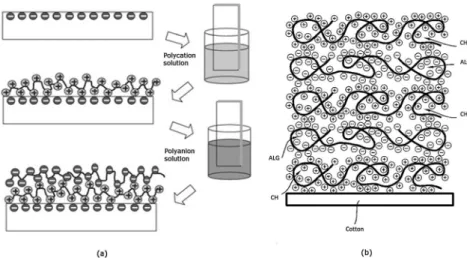
The LbL assembly is a technique of depositing multilayers with controlled architecture and composition performed in aqueous solutions. The electrostatic interaction is the main driving force within the neighbouring layers of polyelectrolyte multilayers. Generally, LbL assembly proceeds as follows: (1) a charged substrate is immersed in a solution of an oppositely charged colloid to adsorb the first monolayer, then (2) a washing cycle follows to remove unbound material and, finally (3) the coated substrate is submerged to deposit a second layer and the multilayered structure is formed [15]. A deposition cycle creates a bilayer, and these cycles can be repeated as often as needed. Therefore, cross-linking is often applied to convert LbL multilayers to surface hydrogel [16]. The number of deposition cycles and the types of polyelectrolytes used in the construction allows full control of the thickness and roughness of the multilayered film [17]. Usually, multi-layered films based on electrostatic interaction tend
to be affected by the environmental conditions, such as, pH, concentration of polyelectrolytes, nature of solvents, ionic strength and pH of solutions [14, 18, 19].
Depositing materials can be selected from a large variety, including small organic molecules, polymers, natural proteins, inorganic clusters, clay particles or colloids. It open´s new possibilities never tested before since it able to combine such a diversity of components in single devices whose architecture and features are controlled. Surface functionality can be controlled directly by choosing appropriate polyelectrolytes. Surface modification results in a multitude of new properties that were previously not associated with the native material (substrate). These changes include modifications of the electrical, optical, magnetic, physicochemical and biological properties of the materials. These multilayer coatings of bioactive natural polyelectrolytes become a new process for biofunctionalizing surfaces. By this technique it is also possible to control the required multilayer thickness, location and sequence of the layers.
One advantage of LbL technique is that the process is inexpensive, relatively fast and simple, it does not require sophisticated equipment and precise stoichiometry, nor does rely on complicated chemical reactions to deposit successive layers [20]. Another advantage to the LbL deposition is the independence of size or shape of the substrate. It means that an LbL assembly can be realized not only on planar substrates, but also on substrates with different shapes. Caruso et al., (1998) have demonstrated LbL deposition on a spherical template. After template dissolution, microcapsules were obtained [21]. So, theoretically the substrate can have any size, shape, topography, or topology, and no stoichiometric control is necessary to maintain surface functionality nor propagation of defects [22].
Another advantage of the LbL technique is that pH can be used as a parameter to adjust the strength of inter-layer bonding and over the required multilayer thickness. The only disadvantage of this technique is the prerequisite for successful LbL coating, consisting of the presence of a minimal surface charge. However, charge can be induced to still facilitate the LbL technique [23].
All knowledge about the LbL was transferred to the field of drug delivery systems allowing the creation of sophisticated delivery systems, such as the production of capsules where the drug is encapsulated inside, in order to be released gradually. A major challenge in drug delivery is to produce controlled, sustained or triggered release systems for small encapsulated drug molecules. These processes can be found in a review article developed by Wohl and Engbersen (2012) [24].
Other research groups have employed the LbL technique to create multilayer coatings of synthetic and natural polyelectrolytes with application in the biomedical field [25]. This multilayers have the characteristic of low packing density, allowing easier diffusion of a bioactive agent through these multilayers. The bioactive agents are incorporated in most cases by embedding through the multilayers, being a recent area that has attracted the attention of
21 researchers, due to the advantage of controlling the incorporation and release of the bioactive agent.
The release of bioactive agents can involve their diffusion from the multilayers. Various parameters such as pH, ionic strength, temperature, light or chemical or electrochemical stimuli have been used to tune release and/or retention of bioactive agents within multilayers. This parameter for release is able to provide the dose of drugs on demand with reduced toxicity and increased efficacy [16].
Using the concept of diffusion from the multilayers, several authors immobilized more than 10 different water soluble proteins into multilayers ensuring the inhibition of protein denaturation [26-28], preservation of the functional characteristics of some compounds showed good results in the incorporation of proteins and drugs between the multilayers by diffusion with subsequent release [29-33].
Studies have emerged, in which bioactive proteins, peptides, hormones, growth factors or drugs could be directly integrated in the LbL architecture without any covalent bonding with a polyelectrolyte, maintaining their native structures and their activities [29, 34-41]. The strategy described in all these papers can be valuable for various drug/bioactive agents. This result opens the route for substrates functionalization by multilayers with embedded bioactive agents, therefore the multilayers can act as a reservoir for bioactive agents and these can be gradually released and controlled.
LbL technique is not new for many applications as shown in a recent review article that analyses exhaustively the potential uses of LbL method in biomedical engineering [42], but it is relative new for textile applications. In recent years, researchers have used the LbL process to modify the surface of textile fabrics to impart or improve upon numerous surface properties including UV protection [43, 44], hydrophobicity/hydrophilicity [45, 46], flame retardancy [47-49] and antimicrobial activity [50-52].
In the present mini-review, our aim is to assess the feasibility of obtaining functionalized cotton samples with antimicrobial properties achieved by the method of LbL with bioactive agents between the layers, and subsequent controlled release. This approach is supported by the work of Caridade et al. (2013) where they studied the production of thick membranes by LbL of chitosan and alginate and the membrane permeability to the bioactive agent [53].
3. LbL in textile materials
The LbL process has been widely used to create multilayer films on various substrates. However, it has not been extensively employed in textile fibres. Textile fibres has some unique challenges for LbL assembly including the chemical heterogeneity of their surfaces as well as their irregular
shapes [54]. Since LbL is a new and innovative method of functionalization of materials, there are presently some works applied to textile fibres, which can be divided in two categories, synthetic and natural fibres.
3.1 LbL in textile materials of synthetic fibres
Synthetic fibres form an important part of textile industry. There are many different kinds of synthetic fibres, but the most used are polyester, polyamide (nylon), polyvinyl alcohol and polypropylene. A great disadvantage of some synthetic fibres is their low hydrophilicity. This affects the processing of LbL because the fibre surface is not easily wetted. Table 1 shows a summary of the state of the art in the last decade referring the use of LbL in textile materials of made of synthetic fibres.
Table 1 shows that the polypropylene is the synthetic textile substrate more used followed by polyester and polyethylene terephthalate (PET). The deposition of several layers gives to the textile several features, but only recent studies have appeared where the objective is to obtain synthetic textiles with antimicrobial properties.
23 Table 1 – State of the art - summary (LbL application in textile materials of synthetic fibres)
Author (year) Substrate Polyelectrolytes Notes
Polowinski, S.
(2005) [55]
Polypropylene PAH/PAA The dyeing technique allows the type of external layers deposited in succession to be identified. LbL method deposits layers of polymeric complexes, not only onto polypropylene, but also onto other textile materials with a smooth surface
Dubas et al.
(2006) [56]
Nylon PDADMAC/anionic scarlet dye The LbL of PDADMAC/anionic scarlet dye has a high dependence with the number of layers, salt concentration, and concentration of chemicals but almost independent on the dipping time.
Polowinski, S. (2007) [57]
Polypropylene
Polyester
PAH/PAA LbL method was used to deposit thin polymeric layers on textile fabrics. A necessary condition for using this method was a smooth surface on the fibres of the fabric.
Jantas et al.
(2007) [58]
Polyester PAA/PVP The surface of fibres in the fabric becomes smoother after depositing PAA/PVP nanolayers.
Polowinski, S. (2007) [59]
Polypropylene PAA/PDAMA/PAH Nanoparticles: Au, Pt, Ag
LbL method is a convenient way of depositing colloidal particles of silver, gold or platinum on textiles
Stawski et al. (2009) [60]
Polypropylene PAH/PAA Deposition of succeeding polyelectrolyte layers fail to provide a complete coverage of the modified surface.
Park et al.
(2009) [61]
Nylon 6 Alginic acid sodium salt and chitosan
The morphology of polyelectrolyte multilayer coated nylon 6 fibres was uniform and smooth. The surface morphology, stiffness, and hydrophilicity of polyelectrolyte multilayer coated nylon 6 fibres can be controlled by regulating the number of polyelectrolyte nanocoating.
Carosio et al. (2011) [48]
PET Silica nanoparticles PET fabrics were coated with silica nanoparticles. This study demonstrates the ability to impart flame retardant behaviour using a water-based, environmentally-friendly protective coating.
Martin et al.
(2013) [62]
Non-woven PET MB/chitosan/polyCD (cyclodextrin polyelectrolyte)
The aim of this work was to develop an antibacterial multilayer coating activated with MB. The authors prepared two types of samples, one with free and another with MB-loaded.
Martin et al.
(2013) [63]
Non-woven PET Chitosan/polyCTR-beta CD (beta cyclodextrin polymer)
In this work it was developed the formation of a multi-layered coating onto PET textile support in order to obtain reservoir and sustained release properties towards bioactive molecules.
PAH-poly(allylamine hydrochloride)PAA-poly(acrylic acid); PDADMAC-poly(diallyldimethylammonium chloride); PVP-poly(vinyl pyrrolidone); PDAMA-poly(diallylamine-co-maleic acid); PDDA-poly(dimethyldiammonium chloride); PET-polyethylene terephthalate;PSS-poly(sodium styrene sulfonate);MB-methylene blu
![Table 1 – Possible toxic effects of some commercially available synthetic antimicrobial agents on human being (adapted from Shahid et al., 2013 [12])](https://thumb-eu.123doks.com/thumbv2/123dok_br/18687678.914952/26.892.109.748.792.1007/possible-effects-commercially-available-synthetic-antimicrobial-adapted-shahid.webp)
![Table 2 – Characteristics of some biopolymers used in antimicrobial finishing of textiles, (adapted from Shahid et al., 2013 [12])](https://thumb-eu.123doks.com/thumbv2/123dok_br/18687678.914952/27.892.146.758.656.1089/table-characteristics-biopolymers-antimicrobial-finishing-textiles-adapted-shahid.webp)