
Muddling through complex contexts: making sense out of a myth
12
0
0
Texto
(2) MUDDLING THROUGH COMPLEX CONTEXTS: MAKING SENSE OUT OF A MYTH When this kind of conflict is maintained unresolved along time, alternative solutions and courses of action can only surface, we contend, if opposing groups are able to “walk on each other’s shoes”, i.e., if they are able to understand what different meanings the policy problem holds for each of them, how each group makes sense of it, and which underlying values and assumptions are at stake. We want to present several evidences that this interactive, face-to-face discussion and learning together about values and assumption did not took place in the case of the Alqueva project. Instead, politicians and experts strove to justify Alqueva, in different points in time, so successfully making use of different narratives that the project was able to muddle through the different complex contexts it faced and became a myth so inextricably impossible to contest, especially by an emerging counter-narrative hold by environmental NGOs. For this matter, we present several evidences that, on the present date, the contentious installed about the Alqueva project is characterized by those two different narratives, defended by two sets of opposing groups of actors. We do not wish to decide who is right or who is wrong. Rather, we wish to call attention to the point that values and assumptions framing narratives are so deeply rooted in people’s way of thinking and acting, that knowledge and information will always run faster through the system than change in values and assumptions can occur, creating a lag between knowledge and action and maintaining the policy problem intractable. The paper has four sections. First, we present the theoretical framework grounding our argumentation. Second, we present a brief description of the historical context needed to understand what the Alqueva project is, how it first appears, its development, and the actual state of implementation of the project. Third, we present the different narratives identified, explicit and inexplicit, and the values and assumptions framing them that took place along time, to justify the need for Alqueva dam to be built in different points in time. Analysis of key information and a review of newspaper’s articles will support most of this research. Finally, we resume our argumentation in order to identify some of the key issues that help cast light on the controversies about the Alqueva project. ANTROPOlógicas, Nº 9, 2005. 99. Idalina Baptista | Lia T. Vasconcelos. 1. Breaking Up Intractable Environmental Policy Problems 1.1. Values and assumptions: redefining problems Environmental policy problems maintained unresolved along time may become quite intractable. While thinking about, deciding or acting on them, policy-relevant actors (such as policy makers, environmentalists, experts, or the public in general) ground their positions and decisions on strong values and assumptions. These values and assumptions are mostly related to cultural and contextual settings of which people are part. These may vary, and in fact they often do, not only in time, but also accordingly with the role a person takes in the policy context. Thus, policy makers may have a different set of ground values and assumptions than environmentalists, or than other experts from other fields (e.g. agriculture, industry, business), or the public in general (Yanow, 2000). Sometimes people can clearly identify these underlying values and assumptions, their meaning, and how they influence their decisions. These factors shape the way they see the world. Most of the time, however, while using them, people are unaware of their existence. Quite often these values and assumptions limit people’s ability to redefine problems, because they get stuck with the initial definition and agreed course of action or solution. Even when society evolves into contexts of growing complexity, where the initial problem definition is no longer adequate, people are reluctant to change their positions or the decisions they have made, of fear of loosing face. People become unable to allow for space in their minds to redefine the problem and reevaluate the solution. Most of the time this happens, not as a result of stubborn determination against change, but because underlying values and assumptions are so entrenched in practice that people find it hard and do not question their validity or usefulness to deal with the new contexts. Rather, people focus in redefining the solutions of the problem instead.. 100. ANTROPOlógicas, Nº 9, 2005.
(3) MUDDLING THROUGH COMPLEX CONTEXTS: MAKING SENSE OUT OF A MYTH. Idalina Baptista | Lia T. Vasconcelos. 1.2. Myths: a sense of irrationality At times, some of these environmental policy problems transmit a sense of irrationality in the explanations they pursue about the solutions or instruments adopted to implement them. Because the ideas they entail can prevail along time, across evolving complex contexts, the problems achieve a sort of mythical standing in society, quite difficult to dismiss. According to Dorfles (1965), a “myth” is always characterized by a certain rational indetermination, as opposed to more rational explanations. The mythical sense hold by such policy problems conceals the set of issues that can and cannot be discussed, or even that may or may not be approached in specific policy contexts. For instance, in water policy contexts, and because water is such a precious asset, no one would dare to present a solution designed with the sole purpose of wasting water, because saving water is one of the most important underlying concerns of water policy (maybe along with water quality too). On the same token, the idea that water running “freely” down a river to the ocean is a waste of resources has made of dam construction an unquestionable water policy instrument.. 1.3. Ideas that prevail In the book edited by Robert B. Reich “The Power of Public Ideas”, Mark Moore explores public policy as “ideas that have power in guiding public action, rather than an abstract set of techniques for developing and testing ideas” (Moore, 1988: 55). He defends that the “ideas that matter” are those that become influential public policies. In analyzing them, he distinguishes two types of properties of an idea: the intellectual properties and the contextual properties. Moore relates the intellectual properties of an idea to the scientific argumentation that hold the public policy as a technically appropriate approach to deal with the problem it was designed for. He states that the intellectual properties of an idea. of how the society should deal with a particular problem, and perhaps even the methods used to produce the idea (Moore, 1988: 78).. The contextual properties of an idea, Moore describes, have to do with the historical, institutional or cultural frameworks that guide and define people’s action in the world. He states that the contextual properties of an idea have to do with how it fits within an ongoing historical discussion of a particular problem and how it accommodates or challenges the current politics of a given issue and the new interests that are advanced or retarded by the idea. (Moore, 1988: 78-79). Moreover, Moore argues that many ideas that become powerful are short on their intellectual properties, pointing out that “it is not clear reasoning or carefully developed and interpreted facts that make ideas convincing” (Moore, 1988: 79). Therefore, we can infer from Moore’s statement that the contextual properties of an idea have a great influential role in making an idea prevail than their intellectual properties (Moore, 1988: 80).. 1.4. Understanding values and assumptions through interpretive policy analysis While analyzing public policy problems, Moore argues, one cannot forget to examine the institutional contexts in which ideas are formulated, debated and implemented (Moore, 1988: 83). On the same token, Dvora Yanow, among several other authors, also argues, although on a different take, that public policy making needs to make use of interpretive policy analysis, which focus on the meanings that policies have for a broad range of policy-relevant publics, including but not limited to clients and potential clients, legislators, cognate agencies (supportive and contesting), implementers (such as implementingagency executives, administrators, and staff), and potential voters. (Yanow, 2000: 8). have to do with the differentiation between ends and means, the quality of the analysis and evidence that lies behind the idea as a normative conception ANTROPOlógicas, Nº 9, 2005. 101. 102. ANTROPOlógicas, Nº 9, 2005.
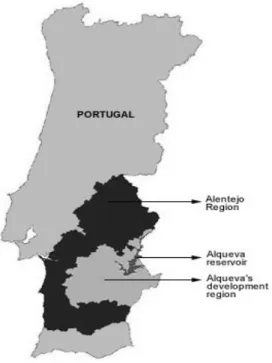
(4) MUDDLING THROUGH COMPLEX CONTEXTS: MAKING SENSE OUT OF A MYTH Moreover, Yanow defends that interpretive policy analysis can help to cast light on “the different ways of seeing, understanding, and doing, based on different prior experiences” the different policy-relevant publics might have (Yanow, 2000: 8). Paralleling Moore’s conceptions, Yanow contends that interpretive policy analysis can help understand the contextual properties of a public policy, rather than evaluating the truth of its intellectual properties. The interpretive analysis is more useful in cases distinguished as wicked problems (Rittel and Weber, 1973), which are characteristic of contexts of higher complexity. The problem of making public decisions in multi-objective contexts, with many players and under increased public scrutiny, is the result of a complex interplay of several factors. The extraordinary scientific and technological developments of recent history provided powerful means of energy transformation, exploitation of natural resources, production of goods, storage, processing and dissemination of knowledge and information, shortening distances and time. The large demographic growth that occurred generated new needs and interconnections due to increased population densities. The associated depletion of natural resources and the approach of “limits of growth” brought new serious restrictions to the decision processes. A larger educated society raised the general understanding of issues and provided a much wider group of people with techniques for analysis, for expressing their points of view and for defending their interests.. Idalina Baptista | Lia T. Vasconcelos canals are also part of the Alqueva project. As a whole, Alqueva’s water will be used for human consumption, hydropower production, tourism and leisure activities, but mainly for intensive irrigation of 110,000 ha (≈ 271,800 acres) in a semi-arid region of Portugal, the Alentejo.. 2. The History of the Alqueva Project. Fig 1 The Alqueva Project. The Alqueva project is the “visible face” of one such type o environmental policy problems: the Portuguese water policy. In fact, the Alqueva project, or simply Alqueva, is a short designation for “Multi-purpose Alqueva Project”, composed of a large dam on the Guadiana River.1 The dam has a height of 152m (≈ 500 ft), a reservoir with a surface area of 25,000 ha (≈ 97 mi2) and a volume of 4,150 thousand m3 (≈ 350 acre-ft). Some smaller dams and some 5,000 Km (≈ 3,100 mi) of 1. The classification of Alqueva dam as a large dam is according to the classification of the World Commission on Dams (WCD, 2000: 11). ANTROPOlógicas, Nº 9, 2005. 103. The reference to the need of having a water reservoir in the region has at least 100 years.2 In 1951, Araújo Correia, a former Minister for the Government of Salazar, made a speech in the National Assembly declaring that. 2. http://www.edia.pt/Empresa_de_Desenvolvimento_e_I/EFMA/Historia/historia.html (accessed on April 7, 2003).. 104. ANTROPOlógicas, Nº 9, 2005.
(5) MUDDLING THROUGH COMPLEX CONTEXTS: MAKING SENSE OUT OF A MYTH the study and the use of our rivers for irrigation, energy and navigation is the basic problem to feed the population, improve its life standards, and to increase the public revenue.3. The first reference to Alqueva appears in 1957, with the development of the “Irrigation Plan of Alentejo Region”, started two years earlier (in 1955) and concluded in 1958, during the Government of Salazar.4 The Irrigation Plan points towards the use of water mainly for agricultural purposes. The first governmental study about the Alqueva dam starts in 1965. Since the Guadiana springs in Spain, and therefore is considered an international river, it is necessary to establish a deal between Portugal and Spain about the use of the water. In 1968, the Portuguese-Spanish International Convention establishes that Portugal should explore the water of the Guadiana, between the subsidiaries of Caia river and Cuncos creek. For this matter, the 1968 Convention already foresees the construction of the Alqueva dam.5 Between 1968 and 1973 several studies are conducted to analyze the economic viability of the project, as well as alternative hydraulic projects for the Guadiana river. In 1973, the Portuguese Electricity Company is charged with the hydraulic development of the river, and in that same year the Government opens a public competition to build the dam.6 However, the events of the 1974’s Portuguese Revolution stop the process, and it is only in 1975 that the project is once again approved by a resolution of the new Council of Ministers, which also indicates several measures regarding energy savings.7 By the end of December 1976, the Government of Prime-Minister Mário Soares8 determines the restart of construction works, as well as the constitution of a Coordination Cabinet for Alqueva, in 1977. 3. http://www.engenharia.com.pt/esxx_investigacao_22.asp?tema=1609 (accessed on April 7, 2003). 4 Sanches (1994: 50-51), cited by Luís (2002). 5 http://www.edia.pt/Empresa_de_Desenvolvimento_e_I/EFMA/Historia/historia.html (accessed on April 7, 2003). 6 Sanches (1994: 58), cited by Luís (2002). 7 http://www.engenharia.com.pt/esxx_investigacao_22.asp?tema=1609 (accessed on April 7, 2003). 8 Member of the Socialist Party. ANTROPOlógicas, Nº 9, 2005. 105. Idalina Baptista | Lia T. Vasconcelos Once again, another setback determines the suspension of construction in 1979. By November 1978, the World Bank issues a negative report on the project, mostly concerning the water prices defined, concluding for the need of more clear studies on its economic viability.9 On October 1980, the Council of Ministers headed by Prime-Minister Sá Carneiro10 issues a resolution determining, once again, the restart of the construction works, nevertheless, determining its focus on water supply for human consumption and hydropower production, setting aside the purpose of using the water of Alqueva for agriculture development of Alentejo. However, Prime-Minister Sá Carneiro dies in a plane crash on December 4, 1980, and the resolution is ignored upon his death.11 On January 1984, again under the Government of Prime-Minister Mário Soares, the Council of Ministers issues a third resolution to re-analyze Alqueva project solely for hydropower production. The state-owned company EDP – Electricity of Portugal – is in charged of conducting the studies and exploring it afterwards, in much the same way it was earlier charged to do so in 1973, under the designation of Portuguese Electricity Company.12 In 1985, the Spanish Government presents its Water Policy Law. In the same year, in Portugal, an Environmental Impact Assessment process for the Alqueva project is initiated, taking three years to be completed (1987). Until then, the analysis of environmental components in public policy where not a commonplace, and it only became a rule when, in 1986, Portugal enters the European Economic Community (EEC), later on designated European Union (EU). By October 1990, Prime-Minister Cavaco Silva13 defends that Alqueva should not only be supported by the Portuguese Government, but also by the EEC. In May 1992, the European Commissary Bruce Millan visits Alqueva and admits the possibility of EEC funding it, if the project proves to be indispensable for the development of the Alentejo region.14 9. Vieira (1992: 12), cited by Luís (2002). Member of Social Democrat Party. 11 http://dossiers.publico.pt/dossier.asp?id=261 (accessed on April 7, 2003). 12 Idem. 13 Member of Social Democrat Party. Cavaco Silva was the Prime-Minister of Portugal for almost 10 years in a row, from November 1985 to October 1995. 14 Ibidem. 10. 106. ANTROPOlógicas, Nº 9, 2005.
(6) MUDDLING THROUGH COMPLEX CONTEXTS: MAKING SENSE OUT OF A MYTH Meantime, an overall evaluation and viability assessment study of a multi-purpose project is initiated in November 1991 under the auspices of EEC, but conducted by a Portuguese-Belgian consortium expert team. By July 1992, after analyzing some 24 alternatives, the consortium team presents a proposal defending the construction of the large dam at its maximum height of 152m (≈ 500 ft), for irrigation purposes, and a smaller dam downstream for water supply to the southern region of Portugal (Algarve) and South of Spain. The EEC approves doubling the financial support to Alqueva project, excluding from the project the hydropower production purpose. Nonetheless, EEC considers that the project, in and of itself, does not preclude this possibility, so it can be retrieved in the future.15 By August 1992, two environmental NGOs, LPN16 and WWF,17 presented a study to the European Investment Bank arguing against Alqueva and defending the construction of a network of smaller dams to be used for water supply to human consumption and to agricultural purposes (but not large irrigation purposes).18 However, in January 1993, a group of Municipalities and some NGOs of the Alentejo region files a petition to the Assembly of Republic demanding for the “urgent completion of Alqueva project”, and Prime-Minister Cavaco Silva makes public the decision to restart the construction of the dam, determining the creation of a Commission for the Constitution of Alqueva Company (CIEA), headed by Adérito Serrão. Later in 1995, CIEA becomes a full company named EDIA (Development and Infrastructure Company of Alqueva).19 During the period of 1994-1995 an integrated environmental impact assessment (IEIA) process is conducted. When the preliminary proposal of the Spanish National Hydrological Plan, dated April 1993, is known in Portugal, several “red alerts” are heard, during the year of 1994,20 as a diversion of the Guadiana river, defended by the Spanish, could put Alqueva at risk. For this reason, the. Idalina Baptista | Lia T. Vasconcelos European Commission (EC) put a condition to advance with financial support to the Alqueva project: an understanding between Portugal and Spain about the water of Guadiana river. Moreover, EC states that the final decision about the financial support is also dependant on the project’s demonstrated economic and environmental viability.21 Following the contestation of Alqueva by LPN and WWF in 1992, other environmental NGOs, both Portuguese and Spanish, continue the protests in 1994, and more intensively in 1995, hoping EU would set back and retreat funding. Quercus (Portugal) considers the IEIA reductionist, implausible and neglecting the negative impacts. Adenex (Spain) presents a complaint to EU alleging the construction of Alqueva is not complying with wildlife species conservation European Directives. LPN (Portugal) argues that the project of Alqueva is ill-structured, unrealistic and megalomaniac. On January 1996, just a few months after gaining elections on October 1995, the recently elected Prime-Minister António Guterres22 approves the fourth resolution of the Council of Ministers stating the “project is to unequivocally advance for construction with or without European funding”.23 The four main water uses are defined as: irrigation, hydropower production, water supply for human consumption, and tourism and leisure purposes. In 1997, EC approves the PEDIZA program to fund the integrated development program of the Alqueva region, which consolidates the EC approval and involvement in the construction of the project. On November 1998, a new Portuguese-Spanish International Convention is signed to protect and manage the sustainable use of international river watersheds, including Gaudiana river, which is effective starting January 2000.24 On January 2001, on the range of the 25,000 ha reservoir area to be flooded, the clearance of all vegetation is determined by the Government as inevitable to assure water quality. Several environmental NGOs organize around a platform called “Movement Level 139”,25 defending that, instead of fully flooding the area up to the level of 152m,. 15. Ibidem. LPN – League for Nature Protection. LPN was the first Portuguese environmental NGO, starting in 1948. 17 WWF – World Wildlife Fund. 18 Ibidem. 19 Ibidem. 20 One of the alerts came from LNEC – the National Laboratory of Civil Engineering. 16. ANTROPOlógicas, Nº 9, 2005. 107. 21. http://www.engenharia.com.pt/esxx_investigacao_22.asp?tema=1609 (accessed April 7, 2003). 22 Member of Socialist Party. 23 http://dossiers.publico.pt/dossier.asp?id=261 (accessed on April 7, 2003). 24 Idem. 25 Movimento cota 139.. 108. on. ANTROPOlógicas, Nº 9, 2005.
(7) MUDDLING THROUGH COMPLEX CONTEXTS: MAKING SENSE OUT OF A MYTH the flooding should be phase off to half just to the level of 139m, preventing more than half of the area to be flooded. Nonetheless, the process of chopping off over one million trees starts on February 2001, not without contestation of environmental NGOs. When the flooding-gates of the Alqueva dam are finally closed, on February 8, 2002, environmental NGOs reassure the fight for phased flooding to level 139m. As we write this paper, on June 2003, the water level at Alqueva dam is 136,21m.26. 3. Different Narratives, Different Facets The previous section illustrates the history of Alqueva, from the first time it is mentioned as part of an irrigation plan in 1957, almost as the “salvation of the nation”, until the day the flooding-gates were closed, in 2002. Some would look at this process as a dream come true, other as the road from cradle to grave. From the history presented, we can foresee four phases, representing four different narratives, or facets. We call the first one the Drought and Famine narrative. When the original Alqueva project was designed in 1957, the main governmental justification at the time was the irrigation purpose. Most of the local and regional population lived on agriculture, drought and famine was the problem to face and Alqueva was the solution. Moreover, the need for a water reservoir in the region was an idea long shared in the country. The second narrative is by us named the Employment and Development narrative. It starts later on, after the Democratic Revolution in 1974, when the local population started abandoning agriculture and exited the countryside to the cities. This trend continuously emptied the region of its labor force and productive activity, and Alqueva was seen as the fix for maintaining people working the land in the region. This idea was shared both by local population and the Portuguese Government. The third narrative starts developing around 1985 and prevails, in our analysis, up until today. We named this narrative the Multi-purpose 26. http://www.edia.pt/Empresa_de_Desenvolvimento_e_I/empresa_de_desenvolvimento_e _i.html (accessed on April 7, 2003). ANTROPOlógicas, Nº 9, 2005. 109. Idalina Baptista | Lia T. Vasconcelos Strategic Reservoir narrative, since there is a significant shift in the political justification when the Spanish Government presents its Water Policy Law in 1985. At this point, the Portuguese Government felt the threat of having the Guadiana river flow greatly reduced, due to a diversion on the water to other watershed in Spain. This narrative encompasses the need to constitute a strategic water reserve against the damming of the water upstream in Spain, a key issue in the water policy negotiations with Spain. Since the 1990’s, this narrative evolved to include the multi-purpose use of the water, also as a justification for it economic viability. From this point of view, this narrative can be said to have evolved from the two previous ones. The last narrative is the Mistake narrative, pursued mostly by environmental NGOs since the 1990’s, but also by growing numbers of individual opinion leaders in recent times. This narrative considers the project megalomaniac, a waste of money, or simply a mistake, not only in environmental terms but also in economic terms. Both the Multi-purpose Strategic Reservoir narrative and the Mistake narrative live up to date, intertwined and conflicting with each other, for they depart from quite different values and assumptions. While the later narrative is defended mainly by environmental NGOs, the first narrative is defended by the Government and EDIA in particular, as well as the population of Alentejo region in general. We will try now to present some evidences of them in the recent debate.. 3.1. Multi-purpose Strategic Reservoir narrative Today, Alqueva is seen as having multiple value-added assets, as stated in the following quote by Carmelo Aires, President of the Regional Coordination Commission of Alentejo: “Alqueva is a project of multiple values. It is irrigation of the fields, it is electricity production, it is water supply for the population (…), and it is tourism and leisure” (February 4, 1992). The agricultural project launched in the 1950’s gave room to a more ambitious multiple use plan since the 1980’s. This idea is implied in the following statement of José Cartaxo, President of the Association of Farmers of Mourão (AAM, 2002): 110. ANTROPOlógicas, Nº 9, 2005.
(8) MUDDLING THROUGH COMPLEX CONTEXTS: MAKING SENSE OUT OF A MYTH. Idalina Baptista | Lia T. Vasconcelos. The Guadiana river will be, during this century, one of the main motors of economic development of the Spanish Province of Extremadura and of the Alentejo region in Portugal, once the perimeter of irrigation of 110 000 ha is concluded.. Moreover, Alqueva represented a huge financial investment, just like President Jorge Sampaio stated: “this is a giant project, in what concerns the country’s investment” (Veiga, 2002). Thus, there were no other comparable alternatives to the Alentejo region: “Anyone in Alentejo having good sense is in favor of Alqueva” (Manuel Mestre, President of the Municipality of Moura, May 5, 1992). Instead of a simple dam project, Alqueva became the only hope for development of local communities, just like the following quote illustrates: “Alqueva should be seen as one of the development tools for Alentejo, where we deposit not only a lot of money, but also a lot o hope” (Serrão, 2000). However, more than these dimensions, Alqueva has imposed itself as an unfulfilled promise to a region of scarce resources unable to offer opportunities to the youngsters who fled away. Several times along its history, the dam was to be built but abandoned afterwards due to lack of funds. These recurring situations contributed to increasing expectations of local communities concerned with their dying region and leaving room for the creation of a myth fed by this permanent unfulfilled wish to have something to invert drainage of life. Alqueva became to be seen as the “salvation” of the region: There are projects that for being claimed for so long, waited for, debated and promised, end up confounding itself with the reality. This is the case of Alqueva, synonym of Alentejo, development and jobs. (Carvalho, 2001). Concerning the recent contestations of environmental groups, this narrative has adapted itself to the sustainability discourse, trying to attract to it the wisdom of expert-based problem solving and decision-making. For instance, EDIA states on its website that to build Alqueva and fill the reservoir up to the 152m level (in contrast with the 139m level defended by the environmentalists) is. an humanized adjustment to natural resources towards its sustainable use and the safeguarding and maintenance of local populations” and that there will be “the concern to make good use of water, in a rational and balanced way.27. 3.2. Mistake narrative The Alqueva project remained uncontested until the day environmentalists dared to challenge it. The environmentalists assumed that role of questioning the effective need for a dam of such proportion, challenging the sustainability of the project: This project is representative of a policy that avoided to debate the unsustainability of the model of urban-tourist development and, in particular, the irrigation project with strong environmental risks and speculative and economic-driven views that target a supply and not a demand water policy. (ONGA, 2001). On the same token, one of the environmental NGOs stated: The Alqueva can only be justified for two reasons: geostrategic (allowing for the negotiable position in relation to Spain) and socio-politic (in an impoverish Alentejo, Alqueva became political indisputable). (GEOTA, 2001). For the environmentalists, the agriculture dimension of the project needs to readapt to The context of retraction of agricultural production in the EU context when PAC introduced a series of limitations and conditioners to production, namely at the environmental level and in a period when the globalization of the world commerce creates also various challenges to agriculture. (ONGA, 2000). According to the statements of Jorge Coelho (member of the Socialist Party) to a national newspaper (Aguiar, 2001), the Alqueva 27. ANTROPOlógicas, Nº 9, 2005. 111. http://www.edia.pt. 112. ANTROPOlógicas, Nº 9, 2005.
(9) MUDDLING THROUGH COMPLEX CONTEXTS: MAKING SENSE OUT OF A MYTH is going to completely transform the existing model of unirrigated cultures strongly based on cereal production and low profit, and will create conditions, through irrigation for the introduction of intensive system of cultures with great margins of profit, giving preference to associated activities to Mediterranean agriculture, in fruit and horticulture, olives, grapes and dry fruits.. The negotiations with Spain are denounced and challenged by the environmentalists considering that key issues were not clarified and that several aspects that should have been debated and decided were thrown to situation of exceptions to be dealt by European Community Law. Referring to the Convention on Cooperation for the Protection and Sustainable Use of the Water of the Portuguese and Spanish Watersheds, one of the environmental leaders considers that this Convention approaches the problem in quite a careless way, tending to accept whatever seemly non conflicting solutions, and treating the conflicts as situations of exception (Ferreira, 1998). One of the issues that deserve greater concern was the level of water quality coming upstream from Spain. A member of CNADS – National Commission of the Environmental and Sustainable Development28 stated that: if at this moment the underground water in Guadiana and Sado rivers region is already strongly polluted (…) with this dam, and with the bad water quality coming upstream from Spain, the ecological system will be destroyed. (Sequeira, 2001). “my question is if Alqueva will ever have water of good quality” (Sequeira, 2002). Moreover, the Spanish Hydrological Plan considers the quality of water as generally good, while Portugal classifies the Guadiana River as highly polluted. Environmental activists considered that if pollution is a fact and considering that the water flow is highly irregular that makes it even more of a serious problem. Environmental NGOs also contested the fact that there was no study of the regime of water flow of the Guadiana River or any study 28. Idalina Baptista | Lia T. Vasconcelos about the efficient use of water for irrigation, claiming that “with all the inefficiency, a future full of uncertainties and a lot of fight is waiting for us” (Melo, 2002). The Movement Level 139 claim that, nowadays, the previous needs that justified the level 152m are not real anymore. They argue that if the need for the water of the Alentejo population exists, than it deserves our profound solidarity (…) but that does not happen with the case of irrigation, since it was never proved that irrigation in those agricultural plots can constitute (…) a viable development alternative. (Movimento Cota 139, 2001). An environmental activist from one of our National Environmental NGOs stated we are going to make a brutal investment in a project that has a limited geographic influence, which will give a short economic regeneration, leaving the remaining of Alentejo abandoned, and watching all its expectations unfulfilled; the social and psychological impact of all this was not even evaluated. (José Manuel Palma, ex-president of QUERCUS, June 4, 1995). The Movement Level 139 (ONGA, 2001) also contends that the economic perspectives are a disaster: “the evolution of the (European) common agriculture (plan), allied with the water price dictated by the new Water Framework Directive, drastically reduces the profit of the investments”, turning useless a great part of the water stored. The Movement Level 139 also stated that if the prices of the water decided in the Council of Ministers (on September 3, 2001) are implemented it means that “we will hardly attain the coverage of all exploration costs by the time we were supposed to fulfill the principle of full recovery of costs, including pollution control costs” (ONGA, 2001). This situation is contrary to the Water Framework Directive, which states: The member-states should have in consideration the principle of recovery of the costs of service of the water, including environmental costs and the resources, taking into account the economic analysis and the «polluter pays» principle.. Governmental advisory board.. ANTROPOlógicas, Nº 9, 2005. 113. 114. ANTROPOlógicas, Nº 9, 2005.
(10) MUDDLING THROUGH COMPLEX CONTEXTS: MAKING SENSE OUT OF A MYTH. Concluding Remarks The evidence presented in the last section attests, above all, that both contending parts have been arguing, attacking and trying to discredit each other from each side of the fence, with no real face-to-face discussion about their underlying values and assumptions. This situation has allowed for debate to center around a quite narrow set of specific water policy issues, such as water quality, water pricing, or reservoir height. Any attempt to discuss a development strategy for the region of Alentejo, taking into account all political, economic, social, ecological and technological dimensions and actors, has stumbled on the mythical and unquestionable promise attached to the project. Neither part has been able to obtain the right credit for its action. On one hand, and despite all efforts to adjust to new requirements of today’s society, EDIA has been unable to adequately address the conflict installed and to get credits for their environmental education and impact amelioration efforts, as well as for the introduction of some participatory processes (e.g. in the process of relocation of the population affected by the rising water level). The reasons for this inability can be twofold: either requirements were more demanding than the solutions offered by EDIA; and/or it was not possible for EDIA to shape, in such a short time, the technical attitude to get adapted to the new requirements of the information society. The latter would have implied EDIA to move from an “ideology of competence”, based exclusively on scientific methods to attain objectives over reality, to a deliberative democracy approach, where the information for the decision is constructed along the decision process and can be reformulated at any stage (Gonçalves, 2003: 165). On the other hand, environmental NGOs were unable to conquer the sympathy of politicians, experts and the general population for its cause. NGOs fought to take part of the process of Alqueva, they got a position at CAIA, the commission installed to follow the implementation of the project, but apart from environmental impact amelioration proposals, their values where seldom integrated on the final solution, as it became evident that the Alqueva dam was be to constructed with fewer changes. As in many other cases of big infrastructure construction, the history of Alqueva project did not leave room for adaptation and revising of the proposal developed by the technicians over the years. This seems to ANTROPOlógicas, Nº 9, 2005. 115. Idalina Baptista | Lia T. Vasconcelos suggest that the technical team responsible for the development of the dam project had a mind frame that could not accept less than their creation, which was better adapted to a surpass society. Alqueva could be one more “white elephant” to be enlisted on Peter Hall’s “planning disasters” (Hall, 1982). In the chapter towards prescription, Hall suggests that “the heart of the problem is to produce scenarios to suggest how events – technological, economic, social, cultural, political – will unfold and interrelate in the future” recurring to “some techniques in the page of futurologists, namely morphological analysis, diffusion times, cross-impact analysis, Delphi techniques. However, as the author states the important point is to accept that no one technique, or even bundle, will provide a substitute for the broad knowledge of social change and the ability to understand how some historical processes influence other processes. (Hall, 1982). What Hall is suggesting is that we should not deny our senses of reality and that we should combine it with all sorts of methodology in an “exploratory and self-critical” way (Hall, 1982). For this, and as proposed by Dryzek, “discursive designs” should be developed, “offering an alternative to the more familiar liberal institutions of the open society” (Dryzek, 1990:22). Only a communicatively rational policy science of participatory democracy, oriented to the public sphere rather than the state, is well placed to reconcile the twin demands of effective social problem solving and democratic principles (…) the quality rather than the quantity of participation is the issue here. (Dryzek, 1990: 23). Moreover, Dryzek contents that the process to democratization has three dimensions we should take into account: franchise, or the expansion of the number of people capable of participating effectively in collective decision; scope, or the need to bring more issues and areas of life under democratic control; and authenticity of the control, or, to be real rather than symbolic, the decision needs to involve the effective participation of autonomous and competent actors (Dryzek, 2000). 116. ANTROPOlógicas, Nº 9, 2005.
(11) MUDDLING THROUGH COMPLEX CONTEXTS: MAKING SENSE OUT OF A MYTH The aim towards participated watershed management defended in the Water Framework Directive may play an important role in providing space for the reformulation of long lasting projects like this that has become a myth along the years. The great amount of uncertainties that characterized the Alqueva project, made some people ask why not to apply the principle of precaution suggesting that: “for Portugal this is a unique occasion for an expanded debate with the participation of the whole society” (Matos, 2002). In fact, today, the decision to construct a large dam hardly is taken at only local or national level. The debate ended up being a local process of cost benefit analysis to become a process in which dams are a focus of global debate about strategies and options of development. (WCD 2000). Idalina Baptista | Lia T. Vasconcelos EDIA (2000). Empreendimento de Fins Múltiplos de Alqueva. Lisboa: Empresa de Desenvolvimento e Infraestruturas de Alqueva. Available online at: www.edia.pt [accessed online on March 18, 2002]. FERREIRA, Francisco. (1998). Separar as águas. In: Inédita [online]. Lisboa. Available online at: http://inedita.com/revistav/vol1/rio.htm [accessed online on December 17, 2001]. GEOTA. (2001): Recursos hídricos [online]. Lisboa: Grupo de Estudos de Ordenamento do Território e Ambiente. Available online at: http://despodata.pt/geota/Foco/Focos%20Antigos/ apa11_14.htm [accessed online on January 03, 2002]. GONÇALVES, Eduarda. (2003). Os Portugueses e a Ciência. Edições Dom Quixote. Lisboa, Portugal. HALL, Peter. (1980). Great Planning Disasters. University of California Press, Berkeley and Los Angeles, California, USA. LUÍS, Sofia. (2002). Proposta de Intervenção Ambiental no Âmbito do Projecto de Fins Múltiplos de Alqueva. Projecto final de Licenciatura em Gestão do Ambiente, Universidade Atlântica. Barcarena, Portugal. MATOS, Rosa (2002). Carta ao Excelentíssimo Senhor Primeiro Ministro [online]. Lisboa: CAIA: ONGA, 4 Fevereiro. Available online at: http://www.lpn.pt/alqueva.htm [accessed online on February 08, 2002].. References. MELO, J. J. (2002). Personal communication of a member of GEOTA and a representative of environmental NGOs on CAIA. Interview conducted by D. Garcia, M.ª Peneda and T. Venceslau. Faculdade de Ciências e Tecnologia, UNL, Lisboa, 21 Fevereiro 2002.. AAM (2002). Mourão: Associação de Agricultores de Mourão, February 8, 2002. Associação de Agricultores do Concelho de Mourão. Available online at: http://www.agroportal.pt/Agros/ agricultura/regadio/legisalqueva.asp [accessed online on March 18, 2002].. MOORE, Mark H. (1988). What Sort of Ideas Become Public Ideas? p. 55–83. In: Robert B. Reich (ed.) The Power of Public Ideas. Ballinger Publishing Company, Cambridge, MA, USA.. AGUIAR, C. (2001). Água: preço justo só em 2009. In: Diário de Notícias, September 10, 2001, pp 3.. MOVIMENTO COTA 139. (2001) 10 Falhas do Empreendimento de Alqueva. Lisboa: Movimento Cota 139. Available online at: http://www.lpn.pt/alqueva.htm [accessed online on February 8, 2002].. CARVALHO, Lino. (2001). Medidas de reestruturação fundiária na área de intervenção do empreendimento de fins múltiplos de Alqueva. In: PCP, Lisboa. Available online at: http://www.pcp.pt/actpol/ temas/agricul/a20010927-1.html [accessed online on March 26, 2002].. ONGA. (2000). Alqueva – as razões da nossa preocupação. Lisboa: QUERCUS, July 21, 2000. Available online at: http://7mares.terravista.pt/quercusporto/comunicados/2000-0721-2.htm [accessed online on May 5, 2002].. DRYZEK, John S. (1990). Discursive Democracy. Politics, Policy, and Political Science. Oxford University Press. Cambridge, New York, USA. (2000). Deliberative Democracy and Beyond: Liberals, Critics, Contestations. Oxford University Press. DORFLES, Gillo. (1965). Novos Ritos, Novos Mitos. Edições 70, Colecção Arte & Comunicação. Lisboa, Portugal.. ANTROPOlógicas, Nº 9, 2005. 117. (2001) Comunicado de Imprensa sobre o ALQUEVA [online]. Lisboa: GEOTA, 8 Janeiro. Available online at: http://despodata.pt/geota/Htmls/Opiniao/Posicoes/2001/01_08_comunicado_de_imprensa_sobre_o_alqueva.html [accessed online on February 20, 2002]. (CEAI – FAPAS – GEOTA – LPN – QUERCUS) RITTEL, H.W.J. & Webber, M.M. (1973). Dilemmas in a General Theory of Planning. In: Policy Sciences, 4, (Amsterdam, Elsevier Scientific Publishing Company). pp.155–169 SEQUEIRA, E.M. (2001). O empreendimento do Alqueva e a gestão sustentada da água na Bacia do Guadiana face à Directiva Quadro da Água. In: Junta de Andalucía: Una Cita. 118. ANTROPOlógicas, Nº 9, 2005.
(12) MUDDLING THROUGH COMPLEX CONTEXTS: MAKING SENSE OUT OF A MYTH Europea com la Nueva Cultura del Agua: La Directiva Marco, II Congreso Ibérico sobre Planificación y Gestión de Aguas, (Zaragoza, Spain). pp.255–267 SERRÃO, A. (2000). Entrevista com I.M. Silva, Alqueva, 30 Novembro. Available online at: http://informacao.siconline.pt/SIC_Article/0,6612,116775,00.html?article_cache=39839840 2.808460798851.125532503902.242 [accessed online on February 21, 2002]. WCD. (2000). Dams and Development: A new framework for decision-making, The Report of the World Commission on Dams (London, Earthscan Publications Ltd). YANOW, D. (2000). Conducting Interpretive Policy Analysis, Qualitative Research Methods Series, vol. 47 (Thousand Oaks, Sage Publication, Inc.). VEIGA, Nuno. (2002). Rega com água de Alqueva começa em Março,.In: Correio da Manhã, 24 Fevereiro 2002, pp. 13.. ANTROPOlógicas, Nº 9, 2005. 119.
(13)
Imagem
Documentos relacionados
Desde que as entidades públicas da Câmara Municipal de Lisboa (CML) e da Junta de Freguesia do Parque das Nações (JFPN) assumiram as competências em matéria de gestão
Ao longo da presente Dissertação de Mestrado, vai-se constatar que existe de facto algo muito forte relativamente ao Sahara, que tem feito com que os vários Reis Marroquinos
O presente estudo teve como objetivo investigar o conhecimento e a utilização de plantas medicinais por moradores do município de Pitangui, MG, no bairro de São
The Economist Intelligence Unit’s Index of Democracy (Economist 2010)sores democracy by the combination of 60 dichotomous and three-points scoring grouped in five units of
The results of gaze fixations will be presented separately in duration and number of fixations, for women and men, according to the various locations where they
Neste trabalho estudou-se esta reacção utilizando uma resina ácida (Amberlyst 15) como catalisador, tendo-se testado várias condições experimentais. Merece destaque: i) a
Prova de que essa “necessidade” não implica forçosamente nenhuma dessas condições mínimas, somente sob as quais podemos dizer que X e Y (i.e.
Through this particular account of the myth, we intend to point out the instances in which Osiris appears as a symbol and try to understand them in the context of
