School of Social Sciences
Department of Social and Organizational Psychology
The Effect of Functional Indispensability in the Succession of Senior Workers
Guilherme Bravo de Macedo Franco
Dissertation submitted as partial requirement to obtain the degree of Master in Intercultural Relations Psychology
Supervisor:
Professor Dr. Miriam Rosa, Postdoctoral Researcher, ISCTE – University Institute of Lisbon
Agradecimentos
Como espelhar ou agradecer o caminho até aqui. É bom ver finalmente este percurso de estudos concluído, algo que já esperava há bastante tempo. Posso finalmente dizer que está feito!
Antes de tudo, tenho de agradecer à minha orientadora, a Professora Miriam Rosa. Não só por todo o apoio ao longo deste ano e durante o meu percurso como estudante, mas por ter sido mais que uma Professora, uma amiga, que me motivou e acalmou em alturas em que perdi o rumo. Muito obrigado, nada disto seria possível sem si.
Depois, a todos os meus diferentes grupos de amigos (porque colocar nome a nome demorava bastante), desde os meus colegas de psicologia em Vila Real, aos meus amigos de Erasmus em Praga, passando pelos meus colegas de mestrado em Lisboa, os meus amigos de Erasmus em Lima e todos os outros que fui conhecendo nas minhas diversas viagens. Mais particularmente, gostaria de agradecer aos meus verdadeiros amigos, a família que eu escolhi: o Jardim da Alegria e os Priminhos de Lisboa. Todos vocês sabem quem são e o quão foram importantes no meu caminho pessoal e profissional. Que possamos durante muitos e longos anos continuar a caminha lado a lado, independentemente da distância que nos separa. Um particular obrigado ao China e à Mariana, que são amigos de tão longa data que eu já não me lembro da vida sem eles.
A toda a minha família, que de uma maneira ou me tem vindo a apoiar e motivar. Um particular obrigado à minha avó, que com toda a sua idade e conhecimento, lembra-se sempre do que o seu neto anda a fazer, dando-me conselhos sábios em cada fase da minha vida. Outro à minha falecida Madrinha, que foi das pessoas mais importantes no meu caminho, estando sempre perto de mim.
da minha vida. Tudo o que faço, tudo o que desejo e todos os meus objetivos são criados por vocês, são feitos para vocês. Tenho um orgulho imenso na família que somos e nas pessoas que vocês são. Nada seria possível sem o suporte que vocês me dão. Um eterno obrigado, estarão sempre comigo, em qualquer lugar que vá.
The fact that we are working for the first time with people from different generations, along with the continuous aging of the population, brings with it intergroup conflicts in the organizational context. This creates ageist responses, not only from young workers, but also from senior workers. One of these responses is the Succession of senior workers over a resource handout for younger people. Therefore, and in order to study this Succession response, we sought to find a variable that would attenuate this perspective, and consequently, attenuate the ageist responses and conflicts between different generations at work. We then set out to explore the effect that the Functional Indispensability of senior workers might have on reducing these responses. Two studies were created, one focused on young workers (N = 150) and another focused on senior workers (N = 19), in which we hypothesized that under a condition of high indispensability, they would support less the Succession of senior workers, in relation to a control condition. For this, an experimental manipulation of the Functional Indispensability variable was made, using an altered news. Additionally, we decided to see to what extent other contextual variables could increase or decrease the relationship between the main variables. The results showed that our initial hypothesis was nulled, and the manipulation did not have the desired effect. However, other additional hypotheses, as well as the correlation between the measure of Functional Indispensability and Succession were corroborated. This is presented and discussed in this study, relating methodological, theoretical and practical issues, in order to contribute to future research on the subject.
Keywords: Ageism, Functional Indispensability, Succession, Relative Ingroup Prototypicality, Work Satisfaction.
O facto de estarmos pela primeira vez a trabalhar com pessoas de diferentes gerações, junto com o envelhecimento contínuo da população, trás consigo conflitos intergrupais no contexto organizacional. Isto trás consigo respostas idadistas, não só por parte dos trabalhadores jovens, mas também por parte dos trabalhadores seniores. Uma dessas respostas é a Sucessão dos trabalhadores seniores em detrimento de uma passagem de recursos para os mais jovens. Assim sendo, e com o intuito de estudar esta resposta de Sucessão, procuramos encontrar uma variável que permitisse atenuar esta perspetiva, e consequentemente, atenuar as respostas idadistas e os conflitos entre diferentes gerações no trabalho. Propusemo-nos então a explorar o efeito que a Indispensabilidade Funcional dos trabalhadores seniores possa ter na redução destas respostas. Foram criados 2 estudos, um focado nos trabalhadores jovens (N=150) e outro focado nos trabalhadores seniores (N=19), em que colocamos como hipótese que numa condição de alta indispensabilidade, estes apoiassem menos a Sucessão dos trabalhadores seniores, em relação a uma outra condição de controlo. Para isto foi feita uma manipulação experimental da variável de Indispensabilidade Funcional, utilizando uma notícia alterada. Adicionalmente, decidimos ver em que medida outras variáveis contextuais poderiam aumentar ou diminuir a relação entre as variáveis principais. Os resultados mostraram que a nossa hipótese inicial é nula, sendo que a manipulação não surtiu o efeito desejado. No entanto, outras hipóteses adicionais, assim como a correlação entre a medida de Indispensabilidade Funcional e Sucessão foram corroboradas. Tal é apresentado e discutido neste estudo, relacionando questões metodológicas, teóricas e práticas, com o intuito de contribuir para pesquisa futura sobre o tema.
Palavras-chave: Idadismo, Indispensabilidade Funcional, Sucessão, Prototipicalidade Endogrupal Relativa, Satisfação no Trabalho.
Chapter 1 ... 1 Introduction ... 1 Chapter 2 ... 4 Theorical Overview ... 4 2.1. Ageism ... 4 2.1.1. Succession ... 12 2.1.2. Functional Indispensability ... 16
2.1.2. Ingroup Projection and RIP ... 18
2.1.3. Contextual Moderating Variables ... 20
2.1.4. The Proposed Studies ... 24
Chapter 3 ... 27
Empirical Studies ... 27
3.1. Study 1 ... 27
3.1.1. Participants ... 27
3.1.2. Design and Procedure ... 28
3.1.3. Dependent measures ... 29
3.1.4. Results ... 33
3.1.5. Discussion ... 41
3.2. Study 2 ... 44
3.2.1. Participants ... 44
3.2.2. Design and Procedure ... 45
3.2.3. Materials ... 45 3.2.4. Results ... 46 Chapter 4 ... 48 General Discussion ... 48 4.1. Future Research ... 52 References ... 57 Attachments ... 74
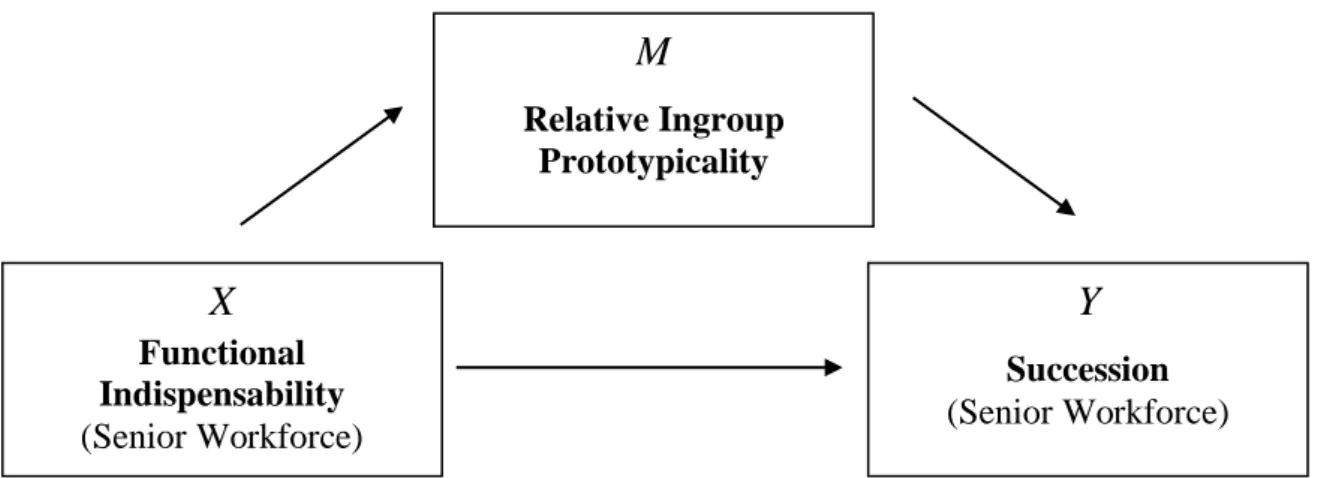
Figure 1: Main investigation model: the effect of Functional Indispensability in Succession.
... 25
Figure 2: Mediation model: Relative Ingroup Prototypicality as a mediator between the relation of Functional Indispensability and Succession... 25
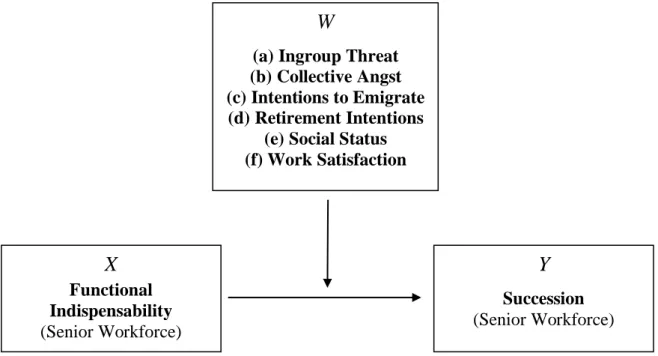
Figure 3: Moderation models: The variables (a), (b), (c), (d), (e) and (f) as moderators between the relation of Functional Indispensability and Succession. ... 26
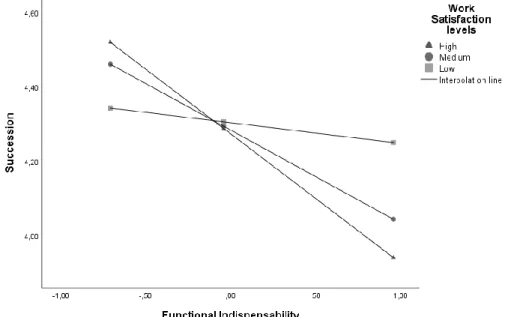
Figure 4: Simple slopes of Moderation of Work Satisfaction between Functional Indispensability and Succession – Study 1. ... 41
Table Índex
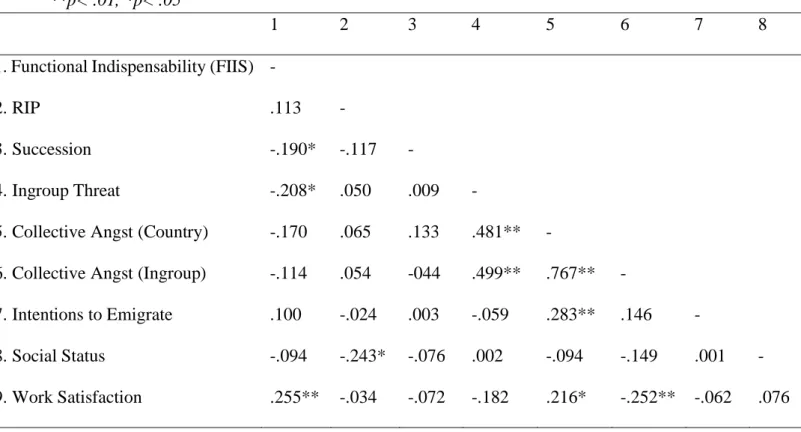
Table 1: Correlation between RIP scale items – Study 1. ... 31Table 2: Correlation between the measured variables – Study 1. ... 36
Table 3: Correlation between RIP scale items – Study 2. ... 46
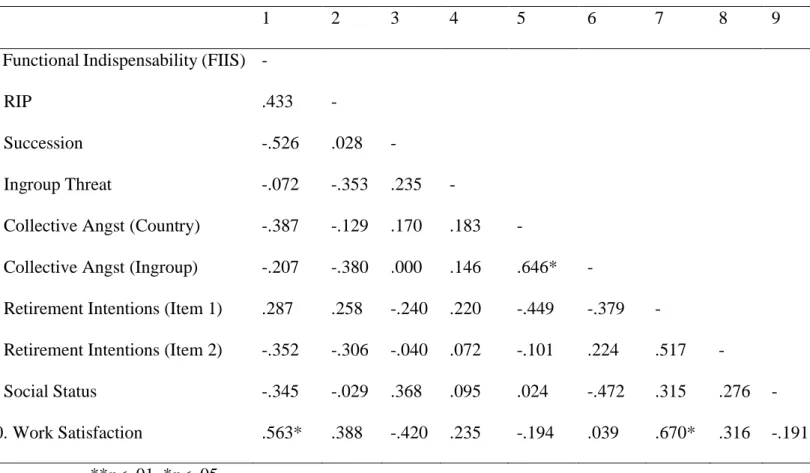
Table 4: Correlation between the measured variables – Study 2. ... 47
Glossary
IG – IngroupOG – Outgroup
RIP – Relative Ingroup Prototypicality SC – Superordinate Category
Ao meu Pai.
PsycINFO Classification Categories and Codes: (3600) Industrial & Organisational Psychology (2900) Social Processes & Social Issue
Chapter 1
Introduction
The older population is growing fast, with estimates projecting that population over 65 years will triple by 2050 (North & Fiske, 2015). In this research project, we aimed at identifying and testing factors that lead to diminish or exacerbate the idea that senior workers fail to pass down, or in the work context case, retire, for a younger workforce to take their place. We examined these factors in both younger and senior workers.
On the beginning of 2009, the EU population was experiencing a very slow growth (EUROSTAT, 2008). Because of three decades of low fertility rates, EU is seeing now its lowest point in relation to births, where, also due to the past economic crisis in 2008-2012, there have been more deaths than births in the continent (Davoudi, Wishardt, & Strange, 2010). This demographic singularity comes principally from a big difference in the emigration (e.g. qualified workforce leaving the country) and immigration rates, and a dropping of the mortality and natality numbers (Alley & Crimmins, 2007). One of its big concerns, in Europe and particularly in Portugal is the effect that ageism might have on the increasing elderly population of the country (Grundy, 1996; Stolnitz, 1996; Watson, 1996). Ageism can be primarily defined as prejudice against somebody based on that person’s or group’s age. Although the young generation perceives ageism more (Marques, 2011), research on the topic shows that this prejudice is more common against older people (Nelson, 2016a). Like the rest of European Union, in Portugal, ageism is one of the most perceived types of discrimination in all ages, independently of the context or situation (Lima, Marques, Batista & Ribeiro, 2010). This demographic structure will definitely have social and economic impacts on a long-term basis from the ageing of the population, and consequently, the workforce (Schalk et al., 2010).
This idea causes concern, not only at a social level, but on a organizational level as well. On this side, and for the first time in history, we have been seeing more than three different
generations of employees working together (Zemke, Raines & Filipczak, 2000), and different generations trying to earn the place and compete for leadership positions (Raines, 1997). With the ageism of the labor force there are consequently effects in the intergroup relations of different age groups within society (Lima et al., 2010). For example, younger workforce may see the senior workforce as obstructing their results (North & Fiske, 2016). This can happen because of delayed retirement, longer lifecycles and better economic certainties, that makes the senior workforce stay longer working than in the past (Campbell, 2003; Carrière & Galarneau, 2011; North & Fiske, 2012; 2016). Moreover, recent social trends suggest a more complex idea, that industrialization can make modernized societies devalue the senior workforce, as tradition and wisdom are substituted by production (Nelson, 2005; Schoenberg & Lewis, 2005). Indeed, despite the demographic trends on the ageism of society, organizations continue to focus their recruitment and development on younger generations. According to a Manpower survey on 2007, less than a third of US employers have implanted strategies to retain senior workers and only 18% have approached to recruit them. This continued focus on a younger generation might have recruitment costs, decreasing productivity outcomes and less retention of workers as a result. Plus, senior workforce leaving or not being engaged might also change the organizations’ culture, know-how and created partnerships (Dychtwald & Baxter, 2007). Also, employers complain that the younger work generation is not so devoted to their jobs, just working the required hours, whereas the traditional work generation is characterized for being hard workers (Jenkins, 2007). For these reasons, it is important to reduce stereotypes and misconceptions about ageism or inter-generational discrimination (North & Fiske, 2012, 2016).
For these reasons, we intend to examine ageist responses between groups at work. The intention is to test how Functional Indispensability, that is, the instrumentality of a group’s contribution to a superordinate desirable outcome (Guerra, António, Deegan & Gaertner, 2013; Guerra, Gaertner, António & Deegan, 2015; Guerra, Rodrigues, Gaertner, Deegan &
António,2016), can have an effect on the view of Succession of a senior workforce, be it, the expectations of younger people about the transmission of desirable resources, which can reflect in departure and retirement responsibilities on a workplace context (North & Fiske, 2012; 2013b; 2016). The idea is to construct a psychosocial viewpoint in order for human resources in organizations to notice the ageist responses and act upon it. With this in mind, we manipulated Functional Indispensability in order to examine its impact on Succession, not only in a younger workforce, as previously done, but also in the senior workforce itself, in order to see the self-perception on their succession “duties”, something that has never been done before, to our knowledge.
The present dissertation encompasses four chapters. In the next chapter, we present a more revised and complete theorical background to all these concepts, as well as some other variables we consider important for understanding the effects of Functional indispensability on Succession - e.g. Relative Ingroup Prototypicality (RIP, Mummendey & Wenzel, 1999), Collective Angst (Shepherd, Fasoli, Pereira & Branscombe, 2018), Job Satisfaction (Lima, Vala & Monteiro, 1994), etc. In Chapter 3, the empirical part of the dissertation will be covered, and in Chapter 4, a general discussion of results will be provided.
Chapter 2
Theorical Overview
In order to start the theorical background of this dissertation, it is important that we explore some major ideas that led us to investigate the Functional Indispensability of older workers in the workplace. The idea behind exploring the effect of Functional Indispensability in the perception of Succession of senior workers came from the fact that it is known that ageism is one of the most impactful types of discrimination at a societal level (Bythway, 2005; Nelson, 2005). Because of this, we decided to start this overview by going back and explore the theories that led to our investigation.
2.1. Ageism
Ageism is one of the key concepts of this research. It was first defined in 1969 as prejudice, stereotypes, discrimination, or general wrong opinions or behavior towards older persons (Butler, 1980). From that point onwards, there have been many definitions and forms of ageism. For example, Butler divided ageism into malignant ageism, or the view of aged persons as insignificant, and benign ageism, be it, the incapacity to deal with elderly people because of fear and anxiety towards this age group. Other authors have defined it in various other ways, but mostly identifying ageism with the association of negative qualities towards older people (Perdue & Gurtman, 1990), or the expression of discrimination, stereotypes, prejudice and attitudes for this group of people (Palmore, 1999).
At work, and although age discrimination has not been the main focus of study within “discrimination” in the workplace (comparing with race or gender, for example) – probably because ageism is one of the most institutionalized and socially accepted types of prejudice (Nelson, 2005) – ageism occurs when decisions are taken (preferences or privileges) based on
age and just age itself, instead of individual meritocracy or professional performance (Bibby, 2008).
Nonetheless, it was not always like this. In fact, in ancient societies, senior people were seen with high regards, and believed to be even divine and chosen by God (Branco & Williamson, 1982). This changed over the course of the years, specially thanks to two major developments. The first was the creation of printing paper, which made people capable of passing information through books and documents innumerous times, being the power of the elderlies, who told stories and kept traditions floating for villages and cultures, redundant (Nelson, 2005). The second development was the industrial revolution (Stearns, 1986). It created two important factors for this changed perspective of the elderly. The first was the fact that families started moving more, in search of jobs that were found in the big cities now. The extended family was, therefore, eradicated, as older people were not as mobile and, consequently, separated from the common household. The second was the creation of extensive manual jobs, for which younger and stronger workers were more capable, thus making older workers less important for society in general, as experience and knowledge were not so significant in this advanced civilization (Nelson, 2005; Sterns, 1986). Adding to this, discoveries in science and medicine in particularly, made life expectancy larger, which made society deal with older population much more, thus, starting to associate negative qualities to this group of people, seen as loads in this new world (Branco & Williamson, 1982; Nelson 2005). This brings us to where we are now, where this group of people is treated more and more negatively, which displays today in very subtle forms (Nelson, 2002; Nelson 2005). For example, Avolio and Barret (1987) showed that, regardless of evidence showing that age does not inhibit performance (e.g. Cleveland & Landy, 1983; McEvoy & Cascio, 1989), older candidates are seen more negatively than young ones, even if they have the same qualifications (North & Fiske, 2012). Other elusive act of age discrimination can be the fact that, generally,
people tend to separate themselves from senior persons, be it, physically – placing older people in retirement homes or avoid places where these people are – or psychological – accentuating characteristics that differ them from other groups (Greenberg, Schimel, & Mertens, 2002; North & Fiske, 2012).
Theory around the concept has been developed in order to understand how it was formed, from history to causal attributions. We will explain next a bit of these causal attributions, trying to find a better comprehension to why does this age discrimination exists.
Rupp, Vodanovich, and Credé (2006) proposed 3 different dimensions of perceived causality for such behavior: (a) locus, (b) stability, and (c) specificity (Abramson, Seligman & Teasdale, 1978; Weiner, Frieze, Kukla, Reed, Rest & Rosenbaum, 1971). The first one, locus (a) was defined as the possibility of something being caused internally, or within the individual, or externally, be it, caused by reasons out of the individual’s control (Weiner, 1979). Stability is related to whether the cause, in this case, of age bias, is constant or variable, be it, stable or unstable (Weiner, 1979). These 2 first dimensions give us 4 possible attributions (e.g. Weiner et al., 1971): 1 – internal/stable (e.g. ability); 2 – internal/unstable (e.g. effort); 3 – external/stable (e.g. difficulty); and 4 – external/unstable (e.g. luck). The third dimension, Specificity, is inserted in the global-specific measurement, so, when we perceive the cause of a behavior as general, independently of the situation, it is said this cause is global, happening in various outcomes (e.g. “I’m not good at sports”). The specific attribution happens when the cause of a behavior is seen as explicit for a determined situation (e.g. “I’m not good at football”). Together, they create the third dimension of causal attributions to age bias (Abramson et al., 1978; Rupp et al., 2006). Research showed that group characteristics (e.g. age or sex) may have an impact on negative attributions given to such group members. For example, when older people miss a day of work to go to the doctor, like everybody else, this “mistake” will be attributed to their age (a characteristic that, in the dimensions mentioned above, is seen
as internal, stable and global). Relating this to a work segment, as we do talk about age bias in the workplace, managers in higher positions of a company may attribute performance or any other errors to the age of the person, a constant, internal and global characteristic, treating them more severely when related to mistakes caused by external, specific and not constant characteristics (e.g. having a problem with the car) (Rupp et al., 2006). Studies have showed that these differences pop up in different employment contexts. Forgetful behavior in older employees, for example, is normally ascribed to internal and constant (stable) causes (Erber & Danker, 1995). Or, as showed by Dedrick and Dobbins (1991), more stable or constant attributions are given to explain performance faults of older workers, as differing from younger workers, where more situation specific and external reasons are used. These findings corroborate the idea that aged bias is caused by attributional propensities (Rupp et al., 2006).
Although the attributions behind ageism or age bias are important to explain the concept, it is crucial to understand ageism as an identity-related phenomenon. Indeed, social identity theory (Hogg & Abram, 1988; Macdonald & Levy, 2016; Tajfel, Turner, Austin & Worchel, 1979; Tajfel & Turner, 1986) explains that people tend to develop their sense of self by membership in relevant groups (e.g. sex, age, work status, occupation…) and that people also behave in different social settings regarding these groups, creating goals and ideas to achieve such identities. Therefore, creating strong connections with these categories of people (e.g. students) can increase and put in motion ideas and actions that will make someone interconnect even more with such group (e.g. students having increased satisfaction as identifying with this group of people, and, therefore, spend more time at university and studying in general, improving their grades), (Macdonald & Levy, 2016). Furthermore, the social identity theory (Tajfel et al., 1979; Tajfel & Turner, 1986), together with the self-categorization theory (Turner, Hogg, Oakes, Reicher & Whetherell, 1987), which trigger the discussion around these concepts – social categorization, social identity and social comparison – explained how this psychosocial
method of categorization is an important psychological process, where our brain focus and retains information from the persons and social groups that we most care about, be it ideas, thoughts, ways of communicating, dress codes (…), sorting them in various categories – dividing the ones we aim to reach, like or want to be part of, and the ones we do not like and want to be detached from. This theory is based on the idea that people, as social beings, have this feeling of belonging to specific groups or social categories, and that, therefore, tend to sort them hierarchically. Even more, and as mentioned above, we also evaluate this groups emotionally, in order to choose our preference between the ones we want to be connected with, and the ones we don’t, something that increases our self-esteem (Laureano, 2016; Tajfel & Turner, 1986).
This is, of course, all related to the idea of age, as we use this category as one of the primordial social categories or groups of people (younger, older, teenagers, millennials, baby boomers…). Age is, together with ethnicity and gender, one of the three most notable social categories (Bythway, 2005; Laureano, 2016; North & Fiske, 2012). However, unlike the other two categories, age is the only one that we all, eventually, fully experience – from being a baby to an elder (North & Fiske, 2013a). The idea of age as a chronological process is more complex that it seems, and it is an indicator of institutional regulations to the individual, that can have real consequences in people’s lives (Bythway, 2005). In fact, the question “How old are you?” is theme to a lot of complications itself, as people tend to lie regarding this topic, in order to overcame age walls – buying alcohol or entering a night club, for example – or even to avoid the age stigma itself. Even more, the constant development of the cosmetic industry is based on having people appearing younger or with a younger skin, thus distorting their chronological age (Bythway, 2005; Miller, 1999). These type of ideas, that come with the thought of people interpreting their own age or their own age group, allows us to understand positive and negative values that different age groups hold. This creates expectations in relation to what is the status
and social responsibilities of each group (Abrams, Russel, Vauclair, & Swift, 2011; Laureano, 2016; Lima, Marques, Batista & Ribeiro, 2010; Marques, 2011). This repartition of age as a social category is used to stimulate stereotypes, prejudice and discrimination towards the various age groups (Bytheway, 2005; Lima et al., 2010; Marques, 2011). However, with the increased lifetime spam, it becomes harder to distinguish exactly what age group or category people are in. For example, in Portugal, with the improvement of health conditions, made the youth be considered until 30 or 35 years old, and the beginning of the elderly age, with retirement, postponed to 66 (INE, 2015; Lima et al., 2010). This causes confusion and posts the question: what is young and what is old?
In fact, age or ageing is a multidimensional process where changes happens on various levels, be it psychologically, physically or biologically, and even socially (Kanfer & Ackerman, 2004; McCarthy, Heraty, Cross & Cleveland, 2014; Schalk et al., 2010). This changes also differ on how they mark each person, as it does not work the same way for people of the same age, neither at the same speed, depending on people’s lifestyle, physical constitution or even work occupation (Ramos, 2010; Kooij, De Lange, Jansen & Dickens, 2008). In this sense, we see that age arrangements can impact someone on a diversity of points connected to our own chronological age (Kooij et al., 2008). According to the same authors, individuals pass through biological and psychological changes, like physical deteriorations or, on another hand, the gain of knowledge and decision-making ability. Furthermore, age categorization includes also the “rules” each age group and person must respect in their own occupation and society, like the antiquity in an organization or the regimentation in relation to the age in their work environment (Kooij et al., 2008). In this sense, we see that age is an important social sign in which people may be consider transiently young or old, depending on a variety of factors, like country and professional group and multiple other different situations (Ramos & Lacomblez, 2008; Laureano, 2016; Teiger, 1995).
This bring us to the idea that this age categorization implies also a social status, being that different age groups have different social status, based on their “oldness”. This social status can be seeing as acomprehension of the rights and duties attributed to oneself by their age group (Harris, 2007; Garstka, Schmitt, Brescombe, & Hummert, 2004). Authors show, both on an international level and in Portugal, that the middle age group is the one who the biggest social status, followed by the elderly and leaving the young age group to the end, especially because of their minor contribution to the labor force (Garstka et al., 2004; Lima et al., 2010). On another side, the social identity theory states that people and groups show a higher belonging feeling to groups with high social status, that comes with positive feelings of self-esteem, in opposition to groups with less social status, that negatively impact the stated self-esteem (Tajfel & Turner, 1986). Having a knowledge of how these age group social status and social categorization works is therefore important to understand the attitudes, duties and rights these have on a societal level (Laureano, 2016; Lima et al., 2010; Marques, 2011). This age categorization, that leads to different forms of age discrimination or ageism, is also seen in more specific contexts like within organizations or at work (Marques, 2011).
Ageism in the workplace has received less research attention, especially in what comes as forms of discrimination and relations between different age groups (Macdonald & Levy, 2016; Marques, 2011; North & Fiske, 2016). As already stated, this happens because ageism is one of the most institutionalized forms of discrimination, practically unnoticed and naturally accepted (Nelson, 2005). One ageism response that shapes relations between different groups is the Succession, from young to old workers, but also possible to see in terms of old workers self-perception (something we will approach in this dissertation). Nowadays, this concept is less associated directly with older workers and more related to age discrimination in general, and in various ages (Duncan & Loretto, 2004). Primarily, the consciousness of what in truth is an “older worker” has become a really broad spectrum. According to the career stages model
proposed by Evans (1986), we can divide age on three main stages. The first one comprises ages between 18 and 30. It is a phase of adaptation to the work occupation functions, and not so much to the organization itself. Evans called this period the Exploration stage. The second period, named the Establishment stage, refers to middle age workers, from 31 to 45 years old. This stage is, as the name says, a chapter of evolution and professional growth, where people create their stability and focus on developing their career. The third career stage, Maturity, happens from 45 years onwards, and is characterized for a stagnation career wide, where employees normally do not progress more professionally. Cron and Slocum (1986) also proposed a fourth stage, called Disengagement, where people begin to pull out from their careers. This stage reprises ages between 40 and 65 years old.
The confusions in the definitions of the various age groups comes because age is a symbolic multidimensional and transactional concept, being that there is no limits or static levels to define a young or old worker (Centeno, 2007). According to the Employers’ Forum on Age (2000), IT personnel responded to a survey where they detached “older workers” as people from 35 years onwards (Department of Education and Employment, 2001). Additionally, and particularly in Portugal, 45-year-old workers used to be considered old workers, a decade ago. However, and like in the example above, Human Resources Management defined the old worker as an employee as young as 35 years old (Centeno, 2007). Across the last years, this definition has been cause for confusion and constant change. For example, in recent literature, North and Fiske (2012) categorized workers between 45 and 65 as semi-old, basing on Neugarten (1974), who distinguished these from old workers (50 to 65 years old) for the first time, being that over 65 years would be the senior people or elderly, relating the expression with the knowledge, capacities and attitudes. This categorization was used in the Succession, Identity and Consumption Theory from North and Fiske, as we will explain further (SIC, North & Fiske, 2013b).
2.1.1. Succession
As we have been stating over the course of this theorical overview, most author’s ageism theories mostly focus on stereotypes, prejudice and discrimination towards the elderly, or older people. This group is often seen as ill, incompetent or irrelevant and both young and old people have negative attitudes to the concept of “elderly”, both implicit and explicit (Greenberg, Schimel & Martens, 2002; North & Fiske, 2013b). Common expressions like “That is not normal for a person of your age” or “Aren’t you too old for that?” show the expectations that age categorization leads to, and that we mentioned earlier (North & Fiske, 2012; 2013a; 2013b). Furthermore, Nelson (2005) showed us, in is review of various ageism theories, that benevolent ageism or pseudo positive attitudes towards old people, together with the typical patronizing language – e.g. being super polite, speak louder and slowly towards older people – is something really common in age discrimination towards this group.
Some ageism theories confront this so called “generational tension” between young and senior groups. One of these approaches is the SIC model – Succession, Identity and Consumption proposed by North and Fiske (2013b). They focus on 3 main predominant domains, although recognizing the existence of others. The first domain, which is also the most important for the development of this dissertation, is the “Transition of Desirable Resources and Positions” or, summing up, Succession. This social generational domain focus on how, due to recent changes in the job market, like late retirement, long unemployment time and increased dismissals from positions (e.g. AARP, 2011; Elmer, 2009), together with the idea or perception that old workers are inflexible and resistant to change and new training, besides having more health problems (Loretto & White, 2006), leads to a perspective, from the young workforce, that the senior workers are in fact limiting their own employment opportunities, which consequently leads to them thinking of the senior workforce negatively (North & Fiske, 2013a; 2013b; 2013c). Moreover, the young age group can also resent the elderly politically a socially,
feeling that they still have much more to live and a future to hold while having less control of most aspects in the society – for example, senior people encompass a growing, powerful, voting alliance (Binstock, 2011) and have, normally, more wealth than the young, being even stereotyped as greedy in the western culture (Covey, 1991; North & Fiske; 2013b). This brings us to where we are now: the point where young workers feel older workers should step back and give them space to thrive on multiple levels (North & Fiske, 2012).
The second domain of the SIC theory is the Identity one. Identity relates to how different age groups “should” act their own age (North & Fiske, 2013b). Researchers affirm that senior people are trying to recreate what they are and how they are seen (Dychtwald, 1999) – supposedly trying to be more like the young age group, trying to adapt. However, social psychologists say that the elderly can face some confrontation from the youth, while trying to pass this generational gap, be it, while trying to look younger (Schoemann & Branscombe, 2010). This happens because the “youngsters” are in fact driven to maintain and create these generational gaps, as these boost not only their autonomy, group and self-esteem, but it also creates in them a sense of defense against future danger (Bytheway, 1995; Greenberg et al., 2002; North & Fiske, 2013b; Tajfel & Turner, 1986).
This direct us to the last of the three domains covered by the SIC - Consumption. It refers to how the older population is entitled to all the social welfares, leaving nothing to the younger generation (North & Fiske, 2013a, 2013b, 2013c). The young age group is, nowadays, confronted with the possibility of not having pensions saving plan or social medical care, while the elderly have them without questioning, leaving the youth feeling these social rights are incorrectly distributed, favoring the older population (Wolf, 2011). Moreover, even children being the double of the elder in the world, government still benefits the last, with 51% of facility expenses (Howard, 2008; Minkler, 1991). With this, comes the worries of social load from the
elderly, which instead causes fear of inconvenience from a growing senior population (North & Fiske, 2013b).
In summary, the SIC theory comes to target ageism responses in intergenerational gaps or between age groups. However, as we mentioned before, in this thesis, our focus will be on the Succession response, be it, the hopes, from the young generation, of the transition of desired resources, which are considered scanty (North & Fiske, 2012; 2013a; 2013b; 2013c). This is, of course, interpreted, by the young generation, as a restriction to their future, and, as such, they intend to control and limit the use and abuse of the resources from other opponent groups, as, for example, the senior population (Fiske & Stevens, 1993; North & Fiske, 2012; 2013c). Therefore, younger generations think that the older ones should step back – or retire – to give the youth space and the above-mentioned resources (North e Fiske, 2012).
In the workplace context, this ageism response becomes of the outmost importance. On one side, the senior workers, or old workforce, have their retirement plans deferred, which leads to more discrimination in the work context. Besides, when fired, this age group suffers from long periods of unemployment, due to their age, precisely (Macdonald & Levy, 2016). One the other hand are the youth, the young workforce that stands today with one of the bigger unemployment rates ever seen, comparing to other age groups. Furthermore, with the older generation’s postponed retirement, they see themselves denied promotion to higher rankings and positions, as well as to social resources, be it, a senior position in a company, a benefit only given to senior workers, their social status diminished… And, even more, the impossibility of being economically independent and establish their own family (Macdonald & Levy, 2016; North & Fiske, 2012; 2013a; 2013b).
It is interesting, however, that although these generational gaps are becoming bigger, there has never been a time in history where collaboration between young and old workers was needed so much, due to the fact that different generations are working together for the first time
(Ramos, 2010; Zemke, Raines & Filipczak, 2000). When young workers expect the senior workers to move on, and leave the labor market, given them natural conditions to succeed, this does not happen, creating generational tensions that, for these reasons, are impossible to flee from (North & Fiske, 2012; 2013a; 2013b; 2013c), which then leads to stereotypes, prejudice and discrimination towards the senior workers.
This stereotyped ageist responses, as already revealed , comes in many forms. Some of which are related to preconceived ideas, like the idea that older workers loose, with time, their capabilities and performance, physically and psychologically. Besides, they are seen as resistant to change, having lack of memory and quickness to do their jobs. More than that, they are seen as incapable to adapt to new trainings and technologies, disregarded as inflexible and uncreative (Finkelstein & Farrel, 2007; Laureano, 2016; Marques, Lima & Novo, 2006). These preconceived ideas then lead to youth workers having attitudes of disrespect towards the senior workers, like excluding them or despising them based on their age group, which creates the absolute need for solutions that join different groups together in a place of integration, respect an open-mindedness (North & Fiske, 2011; 2015; 2016).
Within this view, North and Fiske (2016) did a series of experiments where they planned to access what the response of young workers was when senior workers sullied the standpoint behavior introduced by the SIC approach. They found that when young workers perceived the older ones to “abuse” or violate their supposed conduct, they would start to avoid them, especially when the resources were particularly scarce. Furthermore, they proved that, when measures and policies were taken in order to promote positively the intergenerational relations, such ageist responses were condensed, and young workers started seeing the importance of the senior workers as points of learning and development (Nelson, 2016b).
In this sense, and in order to follow-up on North and Fiske (2016) studies, we propose a variable that can be very important to the decrease of this intergenerational ageism from the
young workers towards the old workers, and as we try to access in this dissertation, from the senior workers perception of themselves. The variable is Functional Indispensability, something that we explain next.
2.1.2. Functional Indispensability
To have a full explanation of this concept, we have to trace back the concept of indispensability to Malinowski, an anthropologist that identified the concept as a vital function, in a community or civilization, that encompasses some task to accomplish (Merton, 1949; Guerra et al., 2016). In social psychology, the concept is considered as relatively new, being first introduced by Tseung-Wong and Verkuyten (2010) as category indispensability: the perception that a group is crucial to define a superordinate group, be it, a larger group. Agreeing with Malinowski, the first definition of the concept was one that referred to all groups being part of a superordinate category (SC), (Guerra et al., 2016). This is based on the perceptions of ingroup and outgroup as groups included in a SC and, as such, crucial elements to defining the social identity of such SC category (Verkuyten & Khan, 2012; Verkuyten, Martinovic & Smeeks, 2014).
Later, an according with research developed by Guerra and colleagues, indispensability comes to relate with opinions and acts of immigrants to their national identity and to the correct functioning of the society where they’re living, being also connected to integrational attitudes from the national citizens of such society and the relations created between these groups. For these reasons, they tried to access how immigrants could be perceived as indispensable or not, not only in terms of definition for the SC, but in terms of their contributions to the economy a social life of the society they are living in. Moreover, the authors added a new perspective where a person or group could be indispensable on a functional level (Guerra et al., 2013; 2015).
This idea comes to social psychology as part of the long study of functional relations between groups, rooted in the superordinate and realistic conflict theory (Sherif, Harvey, White, Hood & Sherif, 1961) and with the work on group motivation gains (Weber & Hertel, 2007). This approach defended that people, working in a team, were sensible to the possibility of their effort being important for the group’s outcome. If they felt they were indispensable for the outcomes of the team, their motivation would increase (Weber & Hertel, 2007).
Guerra et al. (2015) based their view of functional indispensability on the definition of Social Indispensability as one of the ways to be instrumental for the group outcome (Guerra et al., 2015; Hertel, Kerr & Messé, 2000; Weber & Hertel, 2007). That being said, what functional indispensability proposes is that there are different forms of being indispensable to a superordinate group or category. groups seen as indispensable functionally can have a major importance in contributing to a society’s economy, but not being seen as important by that society’s ingroup or national identity (Guerra et al., 2015). Consequently, immigrant groups can be perceived as indispensable identity wise, be it, having crucial social values within the ingroup of a society, contributing for the SC, or functionally, being economically important for the correct running of such society (SC), (Guerra et al., 2015). The concept has been most utilized within ethnic minorities and nationalities. Having this is mind, this present dissertation comes to apply the concept in age-related intergroup relations and within the labor context, being that all over Europe, including Portugal, due to the high unemployment rates, young and senior workers start thinking about their part and contribution to their different groups, be it on an employment basis or even the contribution to national society, health a social security (Guerra et al., 2015). The groups complement each other and differ in terms of their functions, motivations and importance within the organizations they work at. Thus, the exclusion of senior workers of these organizations make the workers lose the experience provided by these people, which creates a lack of knowledge in the young workforce, not sufficient to fight in this
competitive market (Buyens, Van Dijk, Dewilde & De Vos, 2009). Therefore, we see that all group of workers are indispensable for an organization (Ramos, 2010).
The idea of this dissertation is to tie the concept of functional indispensability in the workplace, with the Succession (North & Fiske, 2013a, 2013b, 2013c). More precisely, we aim to test whether the indispensability of senior workers can reduce succession perceptions from the young workforce and explore whether it reduces succession in the senior workforce perceptions as well (self-perception). If the young and senior workers find the senior workers indispensable regarding their functions in the job market, maybe this will affect their attitudes towards the senior workers adaptation and integration, instead of excluding them (Guerra et al., 2015).
Besides, we also considered several complementary variables in this study that may influence or even explain an impact between functional indispensability and succession.
2.1.2. Ingroup Projection and RIP
With ageing rates of population increasing day by day, societies and organizations are becoming more and more diverse (Guerra et al., 2015; Ramos, 2010). This is of the outmost importance, not only because of generational conflicts created, for example, by the distribution of resources between young and senior age groups, but also because of a need to harmonize differences and promote acceptance, tolerance and respect from the young towards the older generation, especially in the workplace context (Dovidio, Gaertner & Saguy, 2007; Hornsey & Hogg, 2000).
Intergroup comparisons between age groups can be biased based on ingroup projection (Mummendey & Wenzel, 1999; Wenzel, Mummendey & Waldzus, 2007), a predisposition in intergroup judgment that generalizes ingroup attributes – in comparison to the outgroup – in order to be more prototypical of a shared SC. Oakes, Haslam and Turner (1998) define
prototypicality as an ideal member of a category, that represents better the category’s identity. This leads to group members overemphasizing the degree to which their ingroup overlaps with the SC prototype, be it, the perception of a growth in their RIP (Mummendey & Wenzel, 1999; Rosa & Waldzus, 2012).
This Ingroup Projection Model stems from the Social Identity Theory and the Self-categorization Theory (Tajfel & Turner, 1986; Turner, Hogg, Oakes, Reicher & Wetherell, 1987). The first suggests that people’s self-esteem and self-concept is a consequence of their social groups’ affiliation and their comparison with other relevant outgroups. The second tells us that the attraction of a group depends on the perceived prototypicality of the ingroup in comparison to relevant outgroups in term of the SC (Rosa & Waldzus, 2012; Tajfel & Turner, 1986; Turner et al., 1987). Intergroup comparisons are ethnocentric, being that the relative prototypicality varies depending on the ingroup, with each ingroup trying to be more prototypical than the compared outgroup (Devos & Banaji, 2005; Ng Tseung-Wong & Verkuyten, 2010; Waldzus et al., 2004; Wenzel et al., 2003).
For example, when young and senior workers compared themselves as part of the shared “workforce” SC, they’ll try to compare each other in several dimensions (kindness, performance, etc). However, due to ingroup projection, ingroup and outgroup will have differences in relation to the prototype created of such SC, evaluating each other negatively (Laureano, 2016; Wenzel et al., 2007).
With this in mind, we decided to add the RIP, or Relative Ingroup Protipicality, as a mediator of the effect of Functional Indispensability on Succession. More precisely, indispensability reduces prototypicality, which then reduces succession.
Moreover, in the next point of this chapter, we will give a small presentation on the contextual variables we mentioned above, that may have an interactional effect on the main relation between Functional Indispensability and Succession.
2.1.3. Contextual Moderating Variables
2.1.3.1. Ingroup Threat
As explained by the Social Identity Theory (Tajfel & Turner, 1986), advantaged groups wish to maintain their prestigious social identity and status, with the intention to gain group self-esteem. Thus, other disadvantageous groups threaten the hegemony of this prestigious social identity from the advantageous groups. This can lead to prejudice towards this disadvantageous groups, resulting in the advantageous groups feeling threatened and other aversive emotions (Esses, Medianu & Lawson, 2013; Outten, Schmitt, Miller & Garcia, 2012; Stephan, Renfro, Esses, Stephan & Martin, 2005; Wohl & Branscombe, 2009). Ingroup Threat comes then as the trigger for different aversive emotions that groups might feel, creating group-based anger, felt towards both the advantageous and disadvantageous group (Gordijn, Wigboldus & Yzerbyt, 2001; Leach, Iyer & Pedersen, 2006). Groups can also feel anxiety and fear, which may then lead to them being uncapable to cope with the ingroup threat (Dumont, Yzerbyt, Wigboldus & Gordijn, 2003; Shepherd, Fasoli, Pereira & Branscombe, 2018). Thus, we propose that the negative effect of functional indispensability on succession will be attenuated if workers feel threatened.
2.1.3.2. Collective Angst
When the ingroup is threatened, people tend to also feel Collective Angst, another group-based emotion (Jetten & Wohl, 2012; Wohl & Branscombe, 2009). Collective angst is closely related to fear, although these feelings can have in fact some distinction (Wohl, Branscombe & Reysen, 2010; Wohl, Giguère, Branscombe & McVicar, 2011). Fear is better linked with a current group danger or threat (Kamans, Otten & Gordijn, 2011; Kuppens & Yzerbyt, 2012). Angst is more connected to the group’s future, and the possibility that it might not exist (Wohl & Branscombe, 2009). Moreover, studies show that both this emotions may
trigger collective action towards the threat in question, being fear more related to an action to undertake such threat and angst in ensuring that the future of the group will continue (Shepherd et al., 2018). In an example related to the study of this dissertation, adapted from Wohl et al., (2010), we can say that if the young workers feel their groups future threatened, they might start creating manifestations and strikes to empower their groups strengths and ensure its future. Thus, we propose that the negative effect of functional indispensability on succession will be attenuated if workers perceive angst.
2.1.3.3. Turnover and Intentions to Emigrate
Literature shows that discrimination perceptions – ageism, for example – lead to turnover intentions from the workers of different organizations. Turnover is then seen as a strategy to escape an employee current situation, be it, a planned behavior to leave such organization (Bothma & Roodt, 2013; Nunes 2015). For example, Bibby (2008) created a model to measure the effects that ageism would have in the turnover intentions. The study, conducted with young and senior engineer professionals in Florida, showed that the young workers felt more age discrimination and that this perception was positively correlated to the young workforce turnover from the organizations. This results shows risk for organizations, as they can lose competent employees and competitive advantage (Bibby, 2008; Nunes, 2015).
The turnover intentions makes one think about the deterioration of the labor market and its instability, in Portugal and Europe in general, which also leads feelings of discrimination, especially from the young workers, which then leads to the highest emigration rates ever seen in our country – reducing the active population of the country and its sustainability (Peixoto, 2012; Nunes, 2015).
With this is mind, an as we will describe further, we decided to see the relation that the “turnover intentions towards the country”, or Intentions to Emigrate could have in the effect of Functional Indispensability on Succession.
2.1.3.4. Retirement Intentions
Following the turnover idea, authors mention the transition in retirement as a form of turnover itself (Adams & Beehr, 1998). However, instead of being just a planned behavior to leave an organization or the current job, it is also about quitting one’s career (Munderlein, Ybema & Koster, 2013). Furthermore, in accordance with the Work Role Attachment theory, retiring implies not just dethatching from a job, but from various work roles, the job, the organization and the career itself. This becomes harder the more one desires to maintain the work role in general, being that leaving it may cause a loss of self-identity (Adams, Prescher, Beehr & Lepisto, 2002; De Coen, Forrier & Sels, 2015). On the other hand, we assume that if a senior worker desires retirement, he/she will support his/her succession. We applied these conceptualizations on our study with the senior workforce, as we will explain further.
2.1.3.5. Social Status
Social status is related to the Social Identity Theory (Tajfel & Turner, 1986) and its proposal that intergroup comparisons are done in search of a positive social identity, leading to discrimination from the ingroup towards the outgroup. Consequently, authors have argued that these intergroup comparisons lead to socio-structural asymmetries, such as group size, power and/or prestige, concepts that are contextual contingencies in social psychology of intergroup behavior and that are underlined in most real-life intergroup relations (Sachdev & Bourhis, 1984; Tajfel, 1972).
In a later study, Sachdev & Bourhis (1985) found that subjects think of dominant groups to have higher status and be in majority in relation to other disadvantageous groups, even if in demographic factors, this is not the case. For example, in South Africa, although white people are, in group numbers, a minority, their power and status are still higher than the black people of the country, due to the apartheid policy. The black end up being ascribed with low status a holding little institutional power in relation to the “dominant minority”.
Because of this reason, and the ones mentioned in the ageism review of this dissertation, we find it important to have Social Status as a concept to take into account when dealing with age discrimination.
2.1.3.6. Work Satisfaction
Work Satisfaction can be defined as an attitude, emotional state or positive evaluation that is connected with the expectancies towards work, its results, and the experiences lived within by an individual (Cunha, Rego, Cunha & Cabral-Cardoso, 2007; Lima et al., 1994). However, many authors have been trying to measure the concept of satisfaction at work through various different models (Gonçalves, 2014).
Firstly, the most commonly known is Maslow’s Pyramid of Needs (1954), which defined satisfaction as an attitude of an individual in order to satisfy their needs, having different hierarchical levels according to the realization, being that work could be inserted at a third level. The second is a model of social context that sees work satisfaction as a stable and permanent attitude, which is based on an evaluation between the work characteristics adjusted to the desires and norms of the groups and the individual as a reference (Korman, 1974).
The third is based on the Values theory proposed by Locke (1976), that relates work values with satisfaction. This relation is created in two fronts, between the difference of what
an individual truly wants and what they get in reality, and the importance given to what the individual desires in different parts of the work (remuneration, stability, etc).
With this in mind and being work satisfaction one of the most studied and important variables in organizational behavior (Cunha et al., 2007), we decided to bring it to the studies developed in this dissertation, as a possible moderator.
2.1.4. The Proposed Studies
To summarize what we have been exposing throughout this theorical review, we have identified a gap in studying intergroup relations, particularly in work concepts and specifically with age, being that there are still a lack of social and work variables to research and take into account when talking about the succession intentions of the senior workforce, and how these intentions could be diminished. Concomitantly, functional indispensability has been studied in national/ethnic intergroup contexts, but not yet applied to age-based groups.
In this sense, we come to follow previous works that have been trying to access such variables and responses (Laureano, 2016), and we proposed to study Functional Indispensability in an organizational context, as a variable that can influence, form the young and senior workforce perspective, the Succession of the last.
In this sense, and for the first time, we propose to study the Succession intention from not only the young workers perspective, but from the senior workers perspective of themselves, creating two different studies that complement each other.
Additionally, we also intend to test the role that several different variables can have in the effect between Functional Indispensability and Succession. These variables are common in social and organizational studies, but some have never been applied to this specific context.
Further, we present our 3 different models used in both studies, one for the main relation between the main variables, other for the mediation created with RIP, and a third for the
moderations done with all the different contextual variables. We also present the 3 hypothesis created for each of these and for both studies as well, designated as seen next:
Hypothesis 1 (H1): Young (Study 1) or senior (Study 2) workers, when confronted with a condition of high indispensability of the senior workers, will support less the Succession of the senior workforce.
Hypothesis 2 (H2): The RIP of young and senior workers will mediate the effect between Functional Indispensability and Succession.
Figure 1: Main investigation model: the effect of Functional Indispensability in Succession.
Figure 2: Mediation model: Relative Ingroup Prototypicality as a mediator between the relation of
Functional Indispensability and Succession.
X
Functional Indispensability (Senior Workforce)Y
Succession (Senior Workforce)X
Functional Indispensability (Senior Workforce)Y
Succession (Senior Workforce)M
Relative Ingroup PrototypicalityChapter 3
Hypothesis 3a (H3a): Ingroup Threat from young and senior workers, moderates (attenuates) the effect of Functional Indispensability on Succession.
Hypothesis 3b (H3b): Collective Angst from young and senior workers, moderates (attenuates) the effect of Functional Indispensability on Succession.
Hypothesis 3c (H3c): Intentions to Emigrate of young workers (Study 1), moderates the effect of Functional Indispensability on Succession (to explore whether it exacerbates or attenuates the effect).
Hypothesis 3d (H3d): Retirement Intentions of senior workers (Study 2), moderates (attenuates) the effect of Functional Indispensability on Succession.
Hypothesis 3e (H3e): Social Status of young and senior workers, moderates the effect of Functional Indispensability on Succession (to explore whether it exacerbates or attenuates the effect).
Hypothesis 3f (H3f): Work Satisfaction of young and senior workers, moderates (exacerbates) the effect of Functional Indispensability on Succession.
Figure 3: Moderation models: The variables (a), (b), (c), (d), (e) and (f) as moderators between the
relation of Functional Indispensability and Succession.
X
Functional Indispensability (Senior Workforce)Y
Succession (Senior Workforce)W
(a) Ingroup Threat (b) Collective Angst (c) Intentions to Emigrate (d) Retirement Intentions
(e) Social Status (f) Work Satisfaction
Chapter 3
Empirical Studies
For this dissertation we designed two field experiments, one that tests the effect of Functional Indispensability on Succession, from the young workforce perception of the senior workers – Study 1 – and a second one that tests the same effects from the senior workforce perception of themselves – Study 2.
3.1. Study 1
3.1.1. Participants
Because we wanted to measure the perception of the young workforce, the participants had to be workers of ages comprised between 18 and 30 (young workforce). These ages are within the range that represent the young workforce, being in the beginning of their professional career (Evans, 2016). We used a non-probabilistic sample, “snowball type” where we included 150 participants (of which there was a sample variety throughout the study, due to missing responses or participants dropping out) of various nationalities, but all Portuguese speakers, as the main instrument of the study, the questionnaire, was also in Portuguese. Forty (40), (26.7%) of them were male and 64 (42.7%) female, being that 46 (30.7%) participants preferred to omit their gender and not answer the question. The participants’ age was comprised between 19 and 30 years old (M=25.79, SD=2.33). In terms of their academic habilitations, 2 (1.3%) of them have basic preparatory studies or corresponding, 13 (8.7%) finished high school or similar, 43 (28.7%) have a bachelor’s degree and 47 (31.3%) have post graduate studies (master’s degree or similar), with 45 (30%) participants deciding to omit their answer to this question. Regarding their professional life, 126 (84%) of the participants were working at the time, 8 (5.3%) were unemployed and 16 (10.7%) had already worked but were not working at the time (e.g. worked
in the past but are currently studying). Because all of the participants had already started their career, we decided to validate them all for the current study as professional workers.
All the data were collected between May and July 2019 and was analyzed with the package SPSS, version 25.
3.1.2. Design and Procedure
For the purpose of this research, we designed an online experimental study on Qualtrics (Provo, UT). First of all, was a small briefing with the ethical informed consent, where we explained in what consisted the study, its duration, and assured the confidentiality of it by asking a question about accepting or not to participate in such study. Negative responses were automatically redirected to the end of the survey page. After the given informed consent, a small message with contacts appeared, and the sociodemographic identification questions followed: age group (<18 years; 18-30 years; 31-54 years; 55-65 years; and >65 years); exact age; and employment condition (yes; not yet or studying; no or worked but now I study; no or unemployed; not anymore or retired). The intention behind this first sociodemographic questions came from the fact mentioned above about the age and employment requirements to participate in this study, as we were only looking for people starting their careers – with ages comprehended between 18 and 30 years old – and already employed. People who did not match this criteria were redirect to a final explanation of the eligibility of the study and a thank you message, followed by the end of the survey. On a second part, some group identification questions were asked in order to define the ingroup and the outgroup for the rest of the study, be it, young workforce and senior workforce. On the third part we used the experimental manipulation adapted from Guerra et al. (2013) in their studies with migrants and the effect of Social and Functional Indispensability. This manipulation was done by adapting two newspaper articles, one for each experimental condition. One of the news, the high functional
indispensability condition, was taken from an online newsflash interview in the Portuguese journal “Público” to José Vieira da Silva, Portuguese Minister of Work, Solidarity and Social Security at the time, where we adapted the title and text to give the idea that the senior labor force was indispensable to the general organization workforce. The other news, the control condition, was also adapted from the same online journal page, “Público”, and is an interview to a nutritionist whom is giving a workshop on healthy eating habits. This news was also altered and intended to have a random subject in order to distract the participants. We were able to randomly sort the news between participants using the Qualtrics software itself, with a between-subjects option design. On a fourth part, we measured all the dependent variables. The survey ends with some final sociodemographic questions – gender, education, nationality, type of job and longevity of professional life – and a complete debriefing explaining the conditions of the study and the manipulation experiment, with the links to the real public news used. Finally, in the debriefing, we explained how we altered the news for the purpose of the study and gave the links to the real online news. The study survey had an estimated duration of 7 to 10 minutes maximum.
3.1.3. Dependent measures
3.1.3.1. Main measures
If not otherwise stated, we used a Likert-type response scale ranging from “1-Totally Disagree” to “7-Totally Agree”
Manipulation check
To check the manipulation, an item was presented asking: “According to the article, to what extent are senior workers indispensable to the workforce?”, to measure the manipulation
check itself. We applied a 7-points Likert scale that ranges from “Not Indispensable” to “Very Indispensable”.
Succession scale
To measure Succession, we adapted the Intergenerational-tension Ageism scale: Succession, Identity and Consumption (SIC), from the works of North and Fiske (2013a). This scale has three dimensions: Succession, Identity and Consumption. However, since for the construction of this research the variable examined was just Succession, only the 8 items corresponding to this variable were used, (example: “Most senior workers do not know when it is time to clear the way for the younger generation”.), (α=.84).
RIP scale
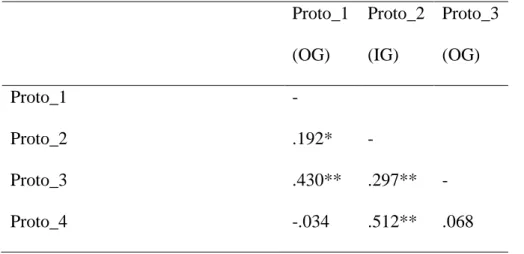
For RIP, a 4-item scale was used. An example item was: “The group I consider most representative of true workers is the group of young workers”. The scale was adapted from Rosa and Waldzus (2012). Two items were directed at the ingroup and the same two items were presented again for the outgroup, and RIP was calculated as the difference between the items on the ingroup and on the outgroup. Although the items targeting the outgroup were correlated, and those targeting the ingroup were also correlated, there was also a positive correlation between item 1 – targeting the outgroup – and item 2 – targeting the ingroup – when this correlation should had been negative. The same happened between item 2 and 3. Besides these items, other items had not a significant correlation too, as we present in Table 1. The measure is, consequently, not reliable, and we can assume this is due to the fact that the items were identical except for referring to ingroup or outgroup, and the participants did not pay attention or read the questions correctly. Nevertheless, we decided to conduct the mediation analyses hypothesized just for formative purposes, as we can’t any conclusions from it.
Table 1: Correlation between RIP scale items – Study 1. Proto_1 (OG) Proto_2 (IG) Proto_3 (OG) Proto_1 - Proto_2 Proto_3 .192* .430** - .297** - Proto_4 -.034 .512** .068 **p< .01, *p< .05 3.1.3.2. Additional measures Functional Indispensability scale
Apart from the manipulation, we decided to measure the construct of Functional Indispensability by adapting the Functional and Identity Indispensability Scale (FIIS), referring to minority ethnic groups, from Guerra et al. (2016). This instrument is structured with a total of 12 items, which are distributed by its two dimensions: Identity Indispensability, consisting of 6 items and the Functional Indispensability, with 6 items as well. However, for the construction of this study, the variable used was the Functional Indispensability, so only the 6 items corresponding to this construct were presented (e.g.: “The future of the job market depends on the contributions of senior workers”), (α=.86).
Ingroup Threat
We used a 3-item scale adapted from Shepherd et al. (2018). And an example question was: “I think the current economic situation poses a threat to young workers”, (α=.86).