UNIVERSIDADE DE LISBOA
FACULDADE DE MEDICINA
A Best Evidence Medical Education (BEME) Systematic Review on the
feasibility, reliability and validity of the Objective Structured Clinical
Examination (OSCE) in undergraduate medical studies.
Madalena Maria Botelho Folque de Mendoça Patrício
Orientador:
Professor Doutor António Vaz Carneiro
Doutoramento em Ciências e Tecnologias da Saúde
Especialidade em Educação e Comunicação em Ciências da Saúde
Todas as afirmações contidas neste trabalho são da exclusiva responsabilidade do candidato, não
cabendo à Faculdade de Medicina da Universidade de Lisboa qualquer responsabilidade
Esta dissertação foi aprovada em reunião do
Conselho Científico da Faculdade de Medicina da
Universidade de Lisboa a 15 de Maio de 2012.
Acknowledgements
Looking back at the whole process I realize that when we undertake this kind of work we do not
progress alone. At the end, when taking a pause to reflect on what was achieved, I have no doubt that
by myself it would have been impossible. The work I am presenting today is the result of different
contributions, where learning was a shared experience between enthusiastic researchers and supporting
staff.
This is why I would like to express my appreciation and gratitude to all those who in different ways
contributed to this dissertation.
My first words go to my supervisor,
Professor António Vaz Carneiro, for his support,
comprehension and example as rigorous researcher, but, above all, for his friendship during all the years
we have been working together, always very demanding in order to make me work to the best of my
ability.
To
Dr. Filipa Fareleira and Dr. Miguel Julião, for their invaluable co-work coding more than one
thousand studies, for their generosity and professionalism during a process which they first joined as
medical students but ended as MDs. Coding and reaching consensus were the most challenging
methodological steps of the whole process, and I will keep forever very good memories of the thought
provoking discussions, with their critical and challenging comments at the various stages of the work.
To
Professor Geoffrey Norman and Professor Meredith Young, co-authors of two articles
integrated in this dissertation, for their valuable support in terms of statistical analysis and idea sharing
for taking the maximum of the study.
To
Professor Alex Haig, for the wonderful support in terms of literature search, namely for his
readiness and efficiency.
To
Sofia Mata and Dr. Manuela Castro, for their high commitment and rigor in obtaining the studies
identified in the search process and constructing the OSCE Reference Manager database.
To
Dr. Rui Fonseca and Dr. Ana Catarina Silva, for creating and supporting the electronic dynamic
database, which allows coding and establishment of consensus on line. My thanks go also to all team of
the
IT Department (FMUL) for their continuous support solving everyday problems and to the
Editorial (AEFML) team for their committed collaboration with graphic work namely to Maria José
Silva for being so graceful with successive reviews of the text.
To
Dr. Isabel Aguiar and Dr. Antónia Ferreira for their support and friendship during all these years.
To the whole team of the Institute of Introduction to Medicine,
Professor António Barbosa, Dr.
António Pais de Lacerda, Dr. Miguel Barbosa and Dr. Miguel Andrade for creating the
conditions to make the pursuit of this work possible.
To
Professor Rui Victorino, for the strong support to this work.
To
Professor João Carlos Gomes-Pedro, for his great contribution to Medical Education in Portugal
and
for inviting me to join the Department of Medical Education at the time of its creation in 1985,
To
Professor Maria de Lourdes Levy, a special word of admiration for her personality and her
approach to life which greatly influenced my personal and professional development.
To
Professor Henrique Bicha Castelo for his support and incentive to this work.
To
Professor Ronal Harden, for his advice and stimulating discussions. I will never forget our
inspiring and sustained shared thinking dialogues.
To Professor Tom Hayes, an old friend since the time of his collaboration with the FMUL in the
context of the first Master Course on Medical Education, for his supportive and challenging feedback
which so much enriched the discussion
.
To Professor Katherine Boursicot, for her generosity when taking the time to review the OSCE
papers, an area of her major interest.
To
Dr. Ana Ramos, for facilitating my thinking and communication in a second language and for
being always available when I needed her support.
To my sister
Assunção, for her continuous support, stimulus and critical reflection and above all for
her sensible and pragmatic approach bringing me back to reality when my dreams were too high.
To my daughter
Madalena for her creativity, criticism, and companionship, helping me to find practical
and theoretical solutions by looking at problems from different perspectives.
To all those friends who during these years kept me motivated by saying ‘
Go on Madalena … You must
finish your thesis!” Among them let me mention,
Professors Amália Vaz Guedes, António
Castanheira Dinis, António Levy, Carlota Saldanha, Jacinto Monteiro, João Lobo Antunes,
Joaquim Figueiredo Lima, José Melo Cristino, José Ducla Soares, José Pereira Miguel, Lincoln
Justo da Silva, Mário G. Lopes, Paulo Costa and Paulo Leal Filipe for their constant support and
positive expectations about this work.
Finally to my friends, my family and especially my close family -
Luís, Pedro, João, Maria, Madalena
and
Alexandre for their unconditional support, comprehension and patience when I was unavailable.
All of you in many different ways have been determinant in encouraging and helping the pursuit of this
work.
Finally I want to mention two persons who are no longer among us…
Professor José Guilherme Jordão, whose tragic disappearance means an irreplaceable loss for
Medicine, for the Faculty, for his friends and family. He supported this systematic review since the very
beginning, joining the team as a coder. José Guilherme was a great friend and one of the persons I
most admire for his personal and professional qualities. His example remained as a continuous
incentive during all these years while I missed his support and guidance.
My father, who was always present during my work. His character, rigor, loyalty, professionalism and
exigency were landmarks in the difficult route of this dissertation, where I sometimes felt crossing a
desert. I miss him every day and, specially, today because he would love to be among us.
ABSTRACT
Title – A Best Evidence Medical Education (BEME) Systematic Review on the feasibility, reliability
and validity of the Objective Structured Clinical Examination (OSCE) in undergraduate medical
studies.
Introduction – As the so called ‘traditional methods’ showed problems namely in terms of
psychometric criteria, in 1975 Harden et al. introduced the OSCE, as an attempt to solve the multiple
criticisms concerning assessment of clinical competencies. Consisting of multiple objective ‘stations’
designed to assess a range of clinical or practical skills under similar circumstances (same assessment,
same patients, and same examiners), the OSCE has been used exponentially all over the world.
Objectives – To produce scientific evidence about the OSCE suitability to assess learning outcomes
in undergraduate medical studies, i.e. to what extent is the OSCE a feasible, reliable, valid, fair and
acceptable method of assessment with educational impact, when used to assess learning outcomes in
undergraduate medical education?
Methods – The BEME methodology was applied by two independent coders, who scrutinized
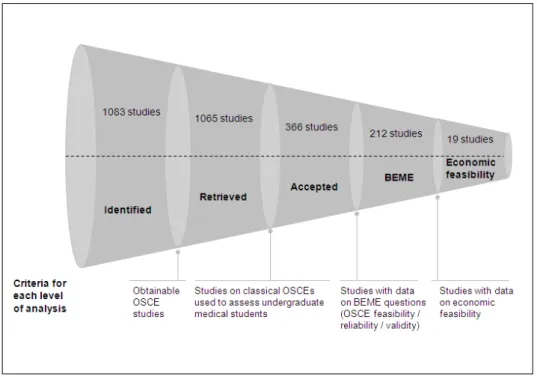
literature from 1975 until 2009. One thousand and sixty five studies were analysed.
Results – The evidence points to the OSCE as a feasible approach to the assessment of clinical
competence for use in different cultural and geographical contexts. It can assess a wide range of
learning outcomes in different specialties and disciplines for formative or summative purposes. It
may be used to assess students, a curriculum or an educational intervention in the different phases of
education and in different health care professions. The study suggests that one reason for the
wide-scale adoption of the OSCE is its inherent flexibility in terms of the number of students that can be
assessed, the number of examiners included, the type of patients represented (including standardised
patients) and the format of the examination itself, including the length of the examination, the
number and the duration of stations as well as its capacity in terms of the tasks to be requested from
students.
Previous concerns regarding reliability of the exam when using, for example, standardized patients
(instead of examiners) and global ratings (instead of checklists) were not confirmed in our study.
Results point to the OSCE as a fair, acceptable, relevant and satisfactory exam, well received by
students and teachers, as well as examiners and patients, who perceived the OSCE as an exam
capable of educational impact with a steering effect on learning and teaching. Evidence was also
found on face content validity, with the more exigent design corresponding to stations sampled
against blueprinting and course objectives, incorporating contributions from other teachers and other
experts, with final decisions on content being reached through consensus meetings.
The OSCE, because of its unique benefits, is recommended in spite of, in some circumstances, being
expensive to administer. Alternative forms were found to reduce OSCE costs and transparent
categories are needed to report direct
vs. indirect costs. A higher quality of reports is desirable,
namely in terms of economic viability, for this information to support schools when they decide on
the OSCE implementation.
Conclusions – Although we must be aware of the possibility of a bias in the results - since the
tendency is to publish more the stories of success than negative ones - the evidence that we
produced helps to understand why, already a decade ago, Norman (2002) stated ‘
the objective structured
clinical examination, with its multiple samples of performance, has come to dominate performance assessment’.
RESUMO
Título – Uma Revisão Sistemática da BEME (Melhor Evidência em Educação Médica) sobre a
exequibilidade, fiabilidade e validade do Exame Clínico Objectivo e Estruturado (
OSCE, Objective
Structured Clinical Examination) em educação médica pré-graduada.
Introdução – Como os métodos de avaliação ‘tradicionais’ apresentavam problemas, sobretudo a nível
dos critérios psicométricos, em 1975, Harden et al. introduziram o OSCE para tentar resolver as
múltiplas críticas relativas à avaliação clínica. Construído com base em múltiplas ‘estações’ objectivas,
concebidas para avaliar uma série de competências clínicas ou práticas em circunstâncias análogas
(mesma avaliação, mesmos pacientes, mesmos examinadores, mesma duração), o OSCE tem tido uma
utilização crescente em todo o mundo.
Objectivos – Produzir evidência científica quanto à capacidade do OSCE enquanto método adequado
para avaliar os resultados da aprendizagem ou, por outras palavras, até que ponto é o OSCE um
método de avaliação exequível, fiável, válido, justo, aceitável e com impacto educacional, quando usado
para avaliar competências em educação médica pré-graduada?’
Métodos – A metodologia da BEME foi aplicada por dois avaliadores independentes, que analisaram a
literatura de 1975 até ao final de 2008. Foram codificados 1065 dos 1085 estudos identificados.
Resultados – A evidência aponta para o OSCE como sendo um método exequível para a avaliação das
competências clínicas, que pode ser usado em diferentes contextos culturais e geográficos. O OSCE é
capaz de avaliar uma vasta gama de resultados de aprendizagem em diferentes especialidades e disciplinas,
com fins formativos ou sumativos. Pode ser usado para avaliar estudantes, um currículo ou uma
intervenção educacional, em diferentes fases de ensino, numa enorme variedade de profissões na área da
saúde. O estudo sugere que uma das principais razões para a adopção deste método em larga escala é a
sua inerente flexibilidade em termos do número de alunos que podem ser avaliados, número de
examinadores, tipo dos pacientes (incluindo pacientes normalizados), bem como o seu formato, incluindo
a duração do exame, o número e duração das estações bem como as suas potencialidades em termos de
tarefas a serem exigidas aos alunos. Preocupações anteriores sobre a fiabilidade do OSCE não foram
confirmadas neste estudo quando se utilizam pacientes normalizados (em vez de peritos) e escalas de
classificação global (em vez de listas de verificação). Os resultados sugerem o OSCE como um exame
justo, relevante e recebido com satisfação por alunos e docentes bem como examinadores e pacientes que
reconhecem o impacto do OSCE na aprendizagem e no ensino. A evidência aponta ainda para a ‘validade
de face e de conteúdo’ do OSCE, onde o formato mais exigente pressupõe a selecção das estações com
base em
blueprinting e objectivos do curso, com contributos de outros docentes e outros especialistas e
com as decisões sobre o conteúdo final a serem alcançadas através de reuniões de consenso.
A utilização de OSCE é recomendada devido aos seus benefícios únicos apesar, de em algumas
circunstâncias, ser um exame dispendioso. Foram identificadas formas alternativas para reduzir os
custos do OSCE e são necessárias categorias transparente que permitam descrever quais os custos
directos
vs. indirectos. É desejável uma maior qualidade dos estudos primários, nomeadamente em
termos da viabilidade económica do OSCE, para que esta informação possa apoiar as escolas médicas
quando estas se encontram no difícil processo de decisão quanto à implementação deste método de
avaliação.
Conclusões – Embora tenhamos que ter em conta a possibilidade de algum enviesamento nos
resultados, uma vez que a tendência é de publicar estudos de sucesso, a evidência apurada ajuda a
perceber porque é que há 10 anos atrás Norman (2002) afirmava que
‘o exame clínico objectivo estruturado,
com os seus múltiplos formatos de desempenhos, veio para dominar a avaliação de desempenhos’.
Table of Contents
OUTLINE OF DISSERTATION
...21
CHAPTER 1
Introduction to the systematic review. Setting the scene
...25
Background
...27
Aim of the study and instrumental objectives
...29
Examining the quality of BEME methodology and of OSCE reports
...29
Methods
...29
Establishment of a working Systematic Review Group
...30
Framing the research question(s)
...30
Defining inclusion/exclusion criteria
...30
Developing a search strategy
...31
Retrieving the material under analysis
...31
Developing an OSCE Reference Manager database
...31
Developing an OSCE electronic database
...32
Coders’ training and pilot phase
...32
Analysing and coding of primary studies
...32
Establishment of consensus
...32
Analysing data
...33
Discussion and Synthesis
...33
Conclusions and application to practice
...33
References
...33
CHAPTER 2
Examining BEME as a trustful mean to produce evidence on OSCE. Comparing Cochrane Reviews
with BEME reviews
...35
Abstract
...37
Practice Points
...37
Introduction
...37
The Definition of Causality in Clinical Medicine
...38
Causality in Medical Education
...40
Cochrane Reviews
...41
Best Evidence Medical Education Reviews
...41
Step 1 – Formulating an educational relevant question
...42
Step 2 – Search and selection of studies to be included in the review
...42
Step 3 – Codification and critical appraisal of evidence
...42
Step 4 – Synthesis of the evidence
...42
Step 5 – Practical application of the results
...43
Discussion
...43
Notes on Contributors
...44
CHAPTER 3
Examining the quality of the OSCE primary study reports. A proposal for a comprehensive checklist
to improve reporting of OSCE
...47
Abstract
...49
Practice Points
...49
Introduction
...49
Methods
...50
Study objectives
...50
Working group
...50
Search Process
...50
Codifying process – OSCE online database
...50
Purpose of OSCE in report
...50
Results
...50
Methodological difficulties in terms of reporting OSCEs
...50
Problem I - Data Missing
...50
Problem II: Inconsistent Data
...52
Heterogeneity in reporting on validity, reliability and feasibility
...52
Validity
...52
Reliability
...52
Feasibility
...53
Lack of a standardized vocabulary in reporting
...54
Statistical issues
...54
Lack of structure within reporting
...57
Discussion
...57
Conclusions
...57
Notes on Contributors
...57
References
...57
Appendix 1
...58
Appendix 2
...61
CHAPTER 4
Evidence on technical and economic feasibility. Is the OSCE a feasible method for assessing
undergraduate medical students?
...63
Abstract
...65
Practice Points
...65
Introduction
...65
Methods
...66
Criteria for inclusion
...66
Coding of papers
...68
Results
...68
Evidence on technical feasibility
...68
Evidence based on all retrieved studies
...68
OSCE publications
...68
Different cultures and contexts
...68
Multi-professional Settings
...69
Phases of Education
...69
Evidence based on all studies with data on the research questions
...69
Stage of curriculum
...69
OSCE purpose
...70
Type of exam
...70
Feedback
...70
Learning Outcomes
...70
Subject areas
...70
Students
...70
OSCE design and time
...71
Recording and scoring (ratings)
...71
Examiners
...72
Staff and patients
...72
Evidence on economic feasibility
...73
Evidence based on all studies reporting data on OSCE costs and/or time
...73
Discussion
...76
Acknowledgement
...77
Notes on Contributors
...78
References
...78
Appendices
...79
Appendix 1. BEME Methodology
...79
Appendix 2. OSCE studies included in the systematic review
...79
Appendix 3. OSCE electronic coding sheet
...79
CHAPTER 5
Evidence on OSCE assessment criteria. Is the OSCE meeting the requirements for a
good
assessment tool?
...81
Abstract
...83
Practice Points
...83
Introduction
...83
Methods
...84
Results
...85
Reliability
...85
Inter-station reliability
...85
Reliability of global ratings compared to station-specific checklists
...85
Reliability of expert examiners compared to standardized patients evaluators
...85
Inter-rater reliability
...86
Predicted overall reliability with varying station number
...86
Validity
...88
Validity against criterion measure (concurrent validity)
...88
Face/content validity
...88
OSCE Fairness
...89
OSCE Acceptability
...91
OSCE Relevance
...91
Satisfaction with OSCE
...93
OSCE Educational impact
...95
Steering effect on learning
...95
Steering effect on teaching
...97
Discussion
...99
Evidence on OSCE reliability
...99
Evidence on OSCE validity
...99
Evidence on OSCE fairness
...99
Evidence on OSCE acceptability
...99
Evidence on OSCE educational impact
...99
Conclusions
...102
Acknowledgement
...102
Notes on Contributors
...103
References
...103
Appendices
...107
Appendix 1. Studies contributing to reliability
...107
Appendix 2. Studies contributing to validity
...107
Appendix 3. Major difficulties when reporting reliability and validity
...108
CHAPTER 6
Concluding remarks
...109
Summary of the BEMER process: from questions to results
...111
Evidence on OSCE technical feasibility
...111
Evidence on OSCE economic feasibility
...111
Evidence on OSCE reliability
...112
Evidence on OSCE validity
...112
Evidence on OSCE fairness
...112
Evidence on OSCE acceptability
...112
Evidence on OSCE impact on learning and teaching
...112
Critical appraisal of the BEMER
...113
How pertinent was the educational research question?
...113
How exhaustive was the process of localizing and selecting the evidence?
...113
How rigorous was the critical appraisal of the evidence?
...113
Examining the quality of BEME as a credible approach to obtain evidence
...113
Examining the quality of primary studies in which the evidence is based
...114
Examining the quality of data analysis to extract the evidence
...114
How trustworthy was the integration of findings with educational judgment?
...115
How comprehensive was the transfer of evidence to induce changes in practice?
...115
Final considerations on BEMER
...115
Limitations of the study
...116
OSCE: The way forward
...117
OSCE as an ‘authentic exam’
...117
OSCE as an ‘assessment for learning’, not just ‘assessment of learning’
...117
OSCE as an ‘exam with wide applicability’
...118
OSCE as a ‘response to the continuum of education’
...118
OSCE as a ‘feasibility exam used in a wide range of contexts’
...118
OSCE as a ‘flexible exam contributing to teachers ownership’
...118
OCSE as an ‘exam capable of assessing professionalization in a global world’
...118
OCSE as an ‘exam where new technologies will bring new improvements’
...118
OCSE as an ‘exam where students will be used as examiners’
...118
OSCE as an ‘overall assessment’
...119
OSCE as an ‘exam contributing to research in medical education’
...119
References
...119
ANNEXES
...121
Appendix 1. BEME methodology
...123
Appendix 2. References of OSCE papers regarding this BEMER
...127
List of Tables
CHAPTER 2
Table 1. Evidence of causality between factor and effect
...39
CHAPTER 3
Table 1. Purpose of OSCE in report
...51
Table 2. Areas where information is missing
...52
Table 3. Evidence for validity
...53
Table 4. Evidence for realibility
...53
Table 5. Evidence for feasibility
...54
Table 6. Comprehensive checklist for reporting OSCE studies
...55
CHAPTER 4
...73
Table 1. OSCE costs
...75
Table 2. Proposals to decrease OSCE costs
CHAPTER 5
...86
Table 1. Inter-station reliability
...87
Table 2. Effect of context variables on inter-station examiner/checklist reliability
...87
Table 3. Inter-rater Reliability
...88
Table 4. Validity against criterion measure
...89
Table 5. Station design
...90
Table 6. OSCE fairness
...92
Table 7. OSCE Relevance
...94
Table 8. Satisfaction regarding the OSCE
...96
Table 9. OSCE steering effect on learning
...97
Table 10. OSCE educational value
...98
Table 11. OSCE steering effect on teaching
...100
Table 12. Comparison the reliability results
CHAPTER 6
...116
List of figures
CHAPTER 1
Figure 1. Miller’s pyramid (1990)
...28
CHAPTER 2
Figure 1. A parallel-group randomized controlled trial
...39
Figure 2. Confounding variables
...41
CHAPTER 4
Figure 1. Criteria and number of studies per level of analysis
...67
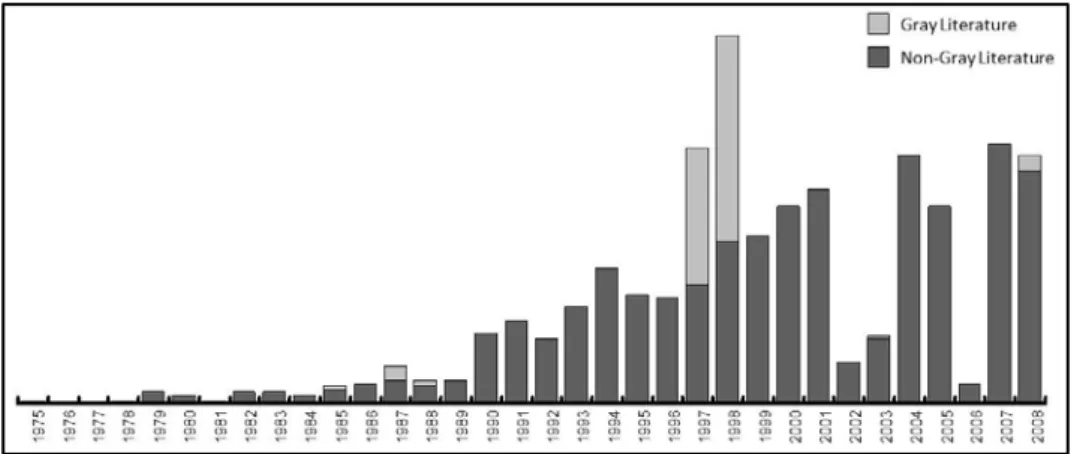
Figure 2. Number of OSCE publications per year
...68
Figure 3. Publications and date of first publication per continent
...69
Figure 4. Distribution of OSCE exams per number of students
...71
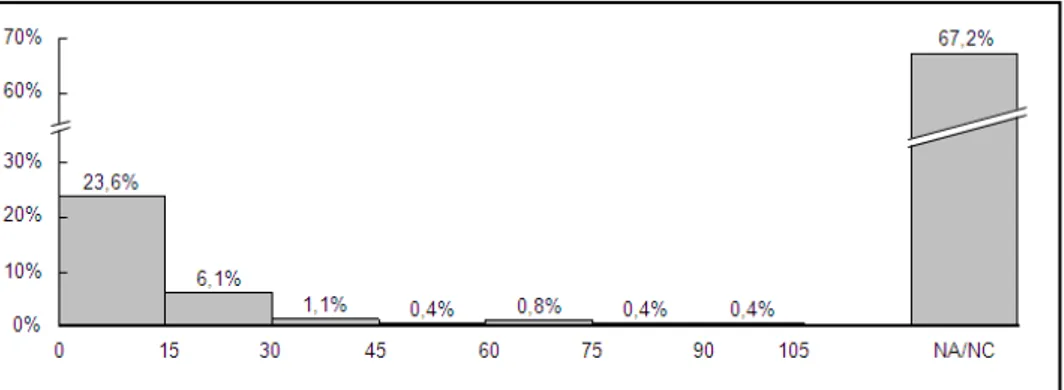
Figure 5. Distribution of OSCE exams per OSCE total duration in minutes
...71
Figure 6. Distribution of OSCE exams per station time in minutes
...72
Figure 7. Distribution of OSCE exams per number of examiners
...72
Figure 8. Distribution of OSCE exams per number of simulated patients
...72
CHAPTER 5
Figure 1. Expected overall reliability vs. number of stations
...87
List of Appendices
CHAPTER 3
Appendix 1. Studies included in the BEME Systematic Review used for this study
...58
Appendix 2. Studies not included in the OSCE Systematic Review
...61
CHAPTER 4
Appendix 1. BEME methodology
...79
Appendix 2. OSCE papers included in the systematic review
...79
Appendix 3. OSCE electronic coding sheet
...79
CHAPTER 5
Appendix 1. Studies contributing to reliability
...107
Appendix 2. Studies contributing to validity
...107
23
A Best Evidence Medical Education (BEME) Systematic Review
on the feasibility, reliability and validity of the Objective
Structured Clinical Examination (OSCE) in undergraduate
medical studies.
Outline of Dissertation
The dissertation concerning a Best Evidence Medical Education systematic review (BEMER) on the
feasibility, reliability and validity of the OSCE (Objective Structured Clinical Examination) in
undergraduate medical studies is structured in six chapters. The contents for each chapter are presented
below.
CHAPTER 1 – Introduction to the BEMER systematic review. Setting the scene
CHAPTER 2 – Examining BEME as a trustful mean to produce evidence. Comparing Cochrane
Reviews with BEME reviews
The results of this chapter are reported in a paper published in Medical Teacher
:
Patricio M, Carneiro AV. (2012)
. Systematic reviews of evidence in medical education and clinical medicine: is the
nature of evidence similar? Medical Teacher 34: 474-482.
CHAPTER 3 – Examining the quality of the OSCE primary study reports. A proposal for a
comprehensive checklist to improve reporting of OSCE
The results of this chapter are reported in a paper published in Medical Teacher
:
Patricio M, Julião M, Fareleira F, Young M, Norman G, Carneiro AV. (2009)
. 'A comprehensive checklist for
reporting the use of OSCEs', Medical Teacher 31: 112-124
CHAPTER 4 – Evidence on technical and economic feasibility. Is the OSCE a feasible method for
assessing undergraduate medical students?
The results of this chapter are reported in a paper accepted for publication in Medical Teacher
:
Patricio, M, Julião M, Fareleira F, Carneiro AV.
Is the OSCE a feasible tool for accessing competencies in
undergraduate medical education? Evidence from a BEME systematic review.
CHAPTER 5 – Evidence on OSCE assessment criteria. Is the OSCE meeting the requirements for
assessment in undergraduate medical education?
The results of this chapter are reported in a paper submitted to Medical Teacher:
Patricio, M, Julião M, Fareleira F, Young M, Norman G, Carneiro AV.
Is the OSCE a reliable and valid tool
for assessing to assess competencies in undergraduate medical education? Evidence from a BEME systematic review.
CHAPTER 6 – Concluding remarks
ANNEXES
CHAPTER 1
Introduction to the systematic review
Introduction
CHAPTER 1
27
A Best Evidence Medical Education (BEME) Systematic Review
on the feasibility, reliability and validity of the Objective
Structured Clinical Examination (OSCE) in undergraduate
medical studies.
Introduction to the systematic review
Setting the scene
Background
Assessment is a topic highly regarded in the medical education community. This is understandably so
because its multifaceted nature: ‘
it drives and stimulates learning, provides information on educational efficacy to
institutions and teachers, and protects patients’ (Norcini et al. 2011). Assessment is a crucial factor in medical
education due to its role in the certification of students’ competencies, with subsequent short and
long-term consequences for students’ progress. For Rowtree (1987), the consequences of a rigorous
assessment are the most important throughout the educational process, and this is why ‘
assessment may
motivate or destroy a student’.
Students are aware of this importance and, already in 1971, Snyder stated that ‘
students do what they
know they will be asked to do and do nothing if they know they will not be assessed’. The recognition of the
importance of assessment explains why Newble et al. (1994) stated that ‘
to invest in assessment is the same
as to invest in education’. Many studies confirm the impact of assessment in the learning-teaching process,
namely in the complex interaction between ‘curriculum in paper’, ‘curriculum in action’ and ‘curriculum
experienced by the students’ (Grant & Gales 1989).
Due to this central role, more accountability is needed and great pressure is put on medical schools
regarding the use of assessment methods. Among them the ‘assessment of clinical competences’ is
probably the most difficult area, because it must guaranty that graduates acquired the necessary
knowledge, skills and attitudes needed for future professional practice. During the last decades we
witnessed intense debates on clinical assessment, because unfortunately there is not one ‘best
assessment’ and all approaches present problems and limitations.
The major difficulties with ‘traditional methods’ (long cases, short cases, oral examinations, etc.)
relate to psychometric criteria - namely in terms of reliability and validity of the assessment method
(examiner variation, unstructured marking, random content, etc.). This is a major problem in the
assessment area and new approaches have been developed.
Given the aforementioned problems, in 1975, Harden et al. introduced the Objective Structured
Clinical Examination (OSCE) as an attempt to solve them. The OSCE consists of multiple ‘objective
stations’ designed to assess a range of clinical skills under similar circumstances (standardized
assessment, standardized patients, standardized examiners and standardized duration).
Throughout 37 years, the OSCE has been widely used to assess multiple competencies, for different
purposes, in a range of professional bodies from all phases of education and, to our knowledge, no
other method of teaching or assessment has known such a great impact in medical education. Soon it
was considered the principal method to assess clinical learning outcomes, recognized as an important
contribution for the well known problems associated with assessment of clinical competences.
The two features that made the OSCE an important tool in the assessment toolkit relate to its
structure that was designed to increase the reliability and validity of the clinical assessment. To achieve
higher reliability (capacity of the exam to present reproducible scores) the format is highly
CHAPTER 1
Introduction
28
standardized, with candidates performing the same assignment in each station, marked through the
same scoring tool, by the same examiner, or different examiners in different stations (multiple
independent assessments), interact and examine the same patient in each station, under the same timing
scale. For the achievement of higher validity (capacity of the exam to measure what it is supposed to
measure) the OSCE requests demonstration of skills, with stations supposed to be blueprinted and
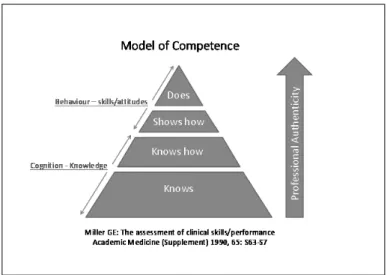
sampled according to course objectives. In an OSCE exam the candidates are assessed at the ‘Shows
How’ level purposed by Miller in 1990 (Figure 1). They must demonstrate they have acquired the skills
they are supposed to master, which is also an indicator of OSCE validity.
Figure 1. Miller’s pyramid (1990).
Another important and interesting characteristic of the OSCE relates to its flexibility i.e. the capacity
of being practicable for multiple purposes, for different types of exams, with different designs to
accommodate high and low number of students, at different timings, testing a different range of
learning outcomes, and using real/simulated patients and examiners with different backgrounds
(teachers, experts, patients, students, to name a few).
Due to its structure, the OSCE meets the requirements for ‘best practice in assessment’, because: 1)
it clarifies the purpose of the exam, 2) it defines what is to be tested, 3) it selects appropriate tasks, 4) it
addresses practical and technical issues of administration and scoring, and 5) it sets standards for
performance, as defined by Newble et al. (1994).
Independently of their use, expansion and success, all assessment methods must be evaluated. Also,
medical schools are requested to comply with standardisation criteria. Previously, requirements were
focused in the feasibility, reliability and validity of the assessment tools but in recent years the
importance of further criteria that relates to the closer relationship between assessment and teaching
has been added. Examples of those additional requirements were found in literature for example:
•
van der Vleuten in 1996 proposed we should also look at impact on future learning and practice,
acceptability to learners and faculty, and costs.
•
The 14th Ottawa Conference in 2010 - a meeting fully dedicated to the Assessment of
Competence in Medicine and the Healthcare Professions – outlined as additional criteria
educational effect, catalytic effect, and acceptability (Norcini et al. 2011).
•
The General Medical Council in 2011 set out the specific requirements: educational impact, cost
effectiveness, acceptability and defensibility.
Introduction
CHAPTER 1
29
At a time when decisions in medical education should not be based only in personal opinions, a new
attitude demanding a specific culture to make teachers critically analyse their own practice is needed, as
suggested by Davies & Crombie in 2003, who stated that
‘the systematic reviews are essential because we never
know as much as we think we know’.
This need for evidence also applies to the use of OSCEs namely on how the exam is meeting the
assessment criteria requirements because independently of their use, expansion and success, all
assessment methods must be evaluated.
This was why a Best Evidence Medical Education
Review (BEMER)
(http://www.bemecollaboration.org), was undertaken at the Centre for Evidence Based Medicine
(CEMBE) of the Faculty of Medicine of the University of Lisbon, to comprehensively look at the
OSCE assessment criteria i.e. at its feasibility, reliability, validity, fairness, acceptability and educational
impact. This dissertation reports on the process and results of this BEMER.
Aim of the study and instrumental objectives
The aim of the study was to analyse scientific evidence about the OSCE, by means of a BEMER, on
its suitability to assess learning outcomes in undergraduate medical studies (and only these).
Two instrumental objectives were defined:
•
To characterize OSCE technical and economic feasibility
•
To gather evidence on the reliability, validity, fairness, acceptability and educational impact of the
OSCE.
Examining the quality of BEME methodology and of OSCE reports
The BEME systematic review approach was examined to identify if it would be a trustful mean to
produce evidence on the OSCE. Additionally, the quality of primary studies was examined after
reviewing the initial 400 studies. The objective of these critical analyses was to appraise the quality of
the evidence we would obtain in the context of this BEME systematic review.
The results of the appraisal process are reported in two papers already published and included in:
•
Chapter 2 - Examining BEME a trustful mean to produce evidence on OSCE. Comparing
Cochrane Reviews with BEME reviews:
Patricio M, Carneiro AV. (2012) ‘
Systematic reviews of evidence in medical education and clinical medicine: is
the nature of evidence similar? Medical Teacher 34: 474-482.
•
Chapter 3 - Examining the quality of OSCE reports reviews:
Patricio, M, Julião M, Fareleira F, Young M, Norman G, Carneiro AV. (2009)
‘A comprehensive
checklist for reporting the use of OSCEs’. Medical Teacher 31:112-124.
Methods
BEME methodology - as described in the BEME protocol (www.bemecollaboration.org) was
undertaken based on the following steps:
(1) Establishment of a working Systematic Review Group
(2) Framing the research question(s)
(3) Defining inclusion/exclusion criteria
(4) Developing a search strategy
CHAPTER 1
Introduction
30
(6) Developing an OSCE Reference Manager database
(7) Developing an OSCE electronic database
(8) Coders’ training and pilot phase
(9) Analysing and coding of primary studies
(10) Establishment of consensus
(11) Analysing data
(12) Discussion and synthesis
(13) Conclusions and application to practice
1. Establishment of a working Systematic Review Group
A working group in Lisbon was constituted by the coordinator (a MD-PhD and MSc in Medical
Education), a research director (Educationalist and MSc in Medical Education - also acting as a coder),
two coders (final-year medical students) and two administrative assistants.
Included in the team there was two international consultants: a PhD from the Department of
Clinical Epidemiology and Biostatistics at McMaster University, Canada, and a PhD from the Centre
for Medical Education at McGill University, Canada.
2. Framing the research question(s)
Whether the OSCE is feasible, reliable and valid as a method of assessment of learning outcomes in
undergraduate medical studies were the initial research questions for this BEME Systematic Review.
Later, due to current educational developments, other questions were added concerning new
assessment criteria requirements, introduced by the GMC in 2011: fairness, acceptability (i.e. OSCE
relevance and satisfaction with the OSCE) and educational impact (i.e. OSCE capacity of steering
learning and teaching).
3. Defining inclusion/exclusion criteria
Only English studies reporting on ‘classical OSCE exams’ performed in undergraduate medical
education were included in the study. Therefore the following primary studies were excluded:
• Non undergraduate studies
• Non medical studies
• Non English studies
• Non ‘classical’ OSCEs
• Non primary studies
• OSCE studies for teaching students
• OSCE studies for training teachers.
A study was coded ‘non-classical’ when it did not conform in general terms with the classical
approach of the OSCE, as described by Harden et al. in 1975. Among them we found studies where
the candidate was a ‘team’ or ‘group’ instead of an individual - for example, TOSCE (Singleton et al.
1999), G-OSCE (Hill et al. 1994), GOSCE (Elliot et al. 1994; Fields et al. 1995; Vooijs et al. 1997),
GOSPE (Biran 1991), when assessment was based on video instead of direct observation, for example
VIPSCE (Shallaly & Ali 2004), OSVE (Humphris & Kaney 2000), where exams had only written
stations (Akici et al. 2004), where exams were only peer-rated (Geddes & Crowe 1998) and
‘non-classical’ formats, for example OSCEs with only one or two stations (van Dalen et al. 2001; Robins et
al. 2001). ‘Non-classical’ studies were excluded, to avoid a bias when calculating the reliability of the
OSCE.
Introduction
CHAPTER 1
31
Secondary studies were excluded because systematic reviews must be based on primary studies only.
Also excluded were studies where OSCEs’ objectives were ‘to teach students or train teachers’, because
the objective of this BEMER concerns the feasibility, reliability and validity of the OSCE when
implemented for assessing learning outcomes.
Long case exams and OSLERs which appear as a result of the search were also excluded from
analysis.
4. Developing a search strategy
Literature was searched by a BEME information scientist, from 1975 (date of the first publication on
the OSCE) until the end of 2008. All identified references were inserted into a Reference Manager
database.
Two different phases were considered:
•
Phase I - Literature search from 1975 to end of 2001
We started with the OSCE database material published by Harden et al. in 2003, which covered the
OSCE literature from 1975 till the end of 2001. The 712 references were identified through:
- Electronic search of medical, educational & related databases
- Hand search on 6 key medical education journals
- Search of TIMELIT reference database
- Search of Gray Literature (for example the Proceedings of Ottawa Conference)
- Search on specialised literature collections, at the Medical Education Centre, University of
Dundee.
The key journals selected for searching were: Academic Medicine, Medical Education, Medical Teacher,
Teaching & Learning in Medicine, Advances in Health Sciences Education and Education for Health.
•
Phase II - Literature Search from 2002 to the end of 2008
Previous search was updated until the end of 2008 by the same BEME information scientist who
made the initial search. These references were electronically identified (electronic searches have
improved considerably since the initial run and there was no need to repeat the intensive hand
searches labour) and TIMELIT (used in phase I) was abandoned later.
The key words used in both phases were base terms which were tested and adapted: ‘OSCE’,
‘OSPE’, ‘GOSPE’, ‘objective structured clinical exam$’, ‘objective structured practical exam$’,
‘structured clinical exam$’, ‘structured clinical interview$’ (the truncation symbolic $ is fairly generic
and is used to pick up all alternative endings).
5. Retrieving the material under analysis
When a reference was identified the process of retrieving the paper started immediately. This was easier
in Phase I because the papers were sent by the Medical Education Centre at the University of Dundee.
For Phase II the process was more difficult: the majority was obtained through the libraries of the
University of Lisbon and the University of Columbia. Finally, the editors of journals of non-retrieved
papers were also approached to obtain missing papers.
6. Developing an OSCE Reference Manager database
An OSCE Reference Manager database was created to include the list of identified references. The
objective was to facilitate a quick identification of a study through its author(s), date, journal, title, etc.,
and the insertion of references in publications.
The software Reference Manager is one of the most reliable databases management programs
available to the academic world and has the advantage to be compatible with most bibliographic
databases. All elements of the working team were trained in its development and use.
CHAPTER 1
Introduction
32
7. Developing an OSCE electronic database
A new ‘online database’ (Lotus software) was developed, since the existing BEME coding sheet was not
applicable in our systematic review. Items for the new coding sheet were defined by the whole team
according to research questions. Literature was blueprinted and the new database served as a coding
sheet supporting coding and establishment of consensus on line. The database was structured upon
four main sections: 1) information on publication, 2) background of OSCE exam, 3) results on OSCE
feasibility, reliability and validity, and 4) study problems, solutions and conclusions, each of them
including several fields. Full description of this software is presented in Chapter 4.
One of the most important characteristics of the new OSCE database was its dynamic structure i.e.
a structure, which could be modified during the coding process by adding or reformulating a field.
Moreover, the majority of the fields were ‘open fields’ which could be fed by new items when they
show up during the coding process. These features were extremely important since when a systematic
review starts its impossible for researchers to have the full picture of what is under investigation.
Fields such as ‘existence of a previous pilot’, ‘number of sub-stations under analysis’, ‘sub-sample of
students under analysis’, ‘total number of students in the course’, ‘relevance’, ‘fairness’, are examples of
fields inserted later during the coding process. They implied a second review of the papers analysed
until that date. In what concerns the number of options within the same field, we found, for instance,
266 different types of OSCE aims, 273 Institutions responsible for OSCE publications and 45 different
stations organized in 156 different combinations (depending on the studies).
These are just some examples showing that it would be extremely difficult to code such a complex
exam with the traditional paper based coding sheet, as the fields of the coding sheet are defined before
the coding process starts.
This new database allowed independent coding by each coder and establishing of consensus online.
8. Coders’ training and pilot phase
Two coders were trained by the research director in the BEMER systematic methodology. Background
literature was made available to them and several meetings took place to discuss the process of coding
and how to reach consensus.
After the initial ‘theoretical training period’, a ‘pilot phase’ started concerning the coding of the first
75 papers. During the ‘pilot phase’ each paper was reviewed and inserted in the database by each
independent coder. A discussion followed to justify each decision, before consensus was established
leading to the coding of a ‘consensus record’.
9. Analysing and coding of primary studies
Each paper was coded by two independent reviewers. As already stated, the new electronic OSCE
database was used to support coding.
10. Establishment of consensus
A ‘consensus meeting’ occurred after independent coding of a certain number of records (usually no
more than twenty) was made. Consensus was reached by comparing the classification of the two
coders and as a result of the discussion a ‘consensus record’ was created for each record in the online
OSCE database. Consensus could be achieved face to face or electronically.
Disagreements were discussed until consensus was achieved. When disagreements occurred, a
discussion took place and, frequently, this implied the coders had to reread the paper before consensus
could be established at the next session. During the pilot phase the establishment of consensus for a
single paper could easily take more than one hour. Progressively the time allocated to establish
consensus diminished and within an hour it was possible to code 4-6 papers depending on its complexity.
Consistency among coders was established throughout the process excluding the pilot phase (see
results in Chapters 3, 4 and 5).
Introduction
CHAPTER 1
33
11. Analysing data
The procedures for data analysis were determined by each research question. For detailed information
on the different levels of analysis see Chapters 3, 4, and 5. The analysis was supported by the
Department of Clinical Epidemiology and Biostatistics at McMaster University and the Centre for
Medical Education & Department of Medicine, McGill University, both in Canada.
12. Discussion and Synthesis
The discussion and synthesis of results was done in the context of each research question, involving
the whole team. Results are presented in Chapters 3, 4, and 5.
13. Conclusions and application to practice
Conclusions were established in order to facilitate the transfer of results into practice when taking into
account the limitations of the study.
References
Akici A, Kalaca S, Goren MZ, Akkan AG, Karaalp A, Demir D, Ugurlu U, Oktay S. 2004. Comparison of
rational pharmacotherapy decision-making competence of general practitioners with intern doctors
European Journal of Clinical Pharmacology 60(2):75-82.
BEME: Best Evidence Medical Education. Retrieved May 1, 2012. Available from:
http://www.bemecollaboration.org
Biran LA. 1991. Self-assessment and learning through GOSCE (group objective structured examination).
Medical Education 25(6):475-479.
Davies Ht, Crombie IK. 2003. What is a systematic review? Evidence Based Medicine 1(5):1-7.
Elliot DL, Fields SA, Keenan TL, Jaffe AC, Toffler WL. 1994. Use of a group objective structured clinical
examination with first-year medical students. Academic Medicine 69(12):990-992.
Fields SA, Toffler WL, Elliot DL. 1995. Principles of clinical medicine: an interdisciplinary integrated 2-year
longitudinal course. Medical Education 29(1):53-57.
Geddes EL, Crowe J. 1998. Peer-Related Objective Structured Clinical Examination. Physiotherapy Canada
50(4): 269-275.
General Medical Council. 2011. Assessment in undergraduate Education. Advice supplementary to Tomorrow’s
Doctors (2009). Retrieved May 1, 2012. Available from:
http://www.gmc-uk.org/Assessment_in_undergraduate_web.pdf_38514111.pdf
Grant J, Gales R. 1989. Changing medical education. Medical Education 23: 252-257.
Harden RM, Stevenson M, Downie WW, Wilson GM. 1975. Assessment of clinical competence using objective
structured examination. British Medical Journal 1:447-451.
Harden V and Harden RM, AMEE 2003, Dundee, UK: Association for Medical Education in Europe (AMEE).
Hill DA, Guinea AI, McCarthy WH. 1994. Formative assessment: a student perspective. Medical Education
28(5):394-399.
Humphris GM, Kaney S. The objective structured video exam for assessment of communication skills. 2000.
Medical Education 34(11):939-945.
Miller GE. 1990. The assessment of Clinical skills/performance. Academic Medicine 65:S63-S67.
Newble D, Dauphinee D, Macdonald M, Mulholland H, Dawson B, Page G, Swanson D, Thomson A, van der
Vleuten C. 1994. Guidelines for assessing clinical competence. Teaching and Learning in Medicine 6:3 213-220.
Norcini J, Anderson B, Bollela V, Burch V, Costa MJ, Duvivier R, Galbraith R, Hays R, Kent A, Perrott V,
Roberts T. 2011. Criteria for good assessment: Consensus statement and recommendations from the
Ottawa 2010 Conference. Medical Education 33:206-214.
CHAPTER 1
Introduction
34
Robins LS, White CB, Alexander GL, Gruppen LD, Grum CM. 2001. Assessing medical students' awareness of
and sensitivity to diverse health beliefs using a standardized patient station. Academic Medicine 76(1):76-80.
Rowntree D. 1987. Assessing students: how shall we know them? London: Kogan Page.
Singleton A, Smith F, Harris T, Ross-Harper R, Hilton S. 1999. An evaluation of the Team Objective Structured
Clinical Examination (TOSCE) Medical Education 33;1:34-41.
van Dalen J, Bartholomeus P, Kerkhofs E, Lulofs R, van Thiel J, Rethans JJ, Scherpbier A, van der Vleuten C.
2001. Teaching and assessing communication skills in Maastricht: the first twenty years Medical Teacher
23(39):245-251.
van der Vleuten CPM. 1996.The assessment of professional competence: developments, research and practical
implications. Advances Health Sciences Education 1:41-67.
Vooijs MEEC, Scherpbier A, van Dalen J, Ramsay G, Kootstra G. 1997. Group objective structured clinical
examination in an Inter-European accident and emergency course. Education for Health 10(1):69-78.
Shallaly GH, Ali EA. 2004. Use of Video-Projected Structured Clinical Examination (ViPSCE) instead of the
traditional oral (VIVA) examination in the assessment of final year medical students. Education for Health
17(1):17-26.
CHAPTER 2
Examining BEME as a trustful mean to produce
evidence on OSCE. Comparing Cochrane Reviews
with BEME reviews
Examining BEME
CHAPTER 2
CHAPTER 2
Examining BEME
Examining BEME
CHAPTER 2
CHAPTER 2
Examining BEME
Examining BEME
CHAPTER 2
CHAPTER 2
Examining BEME
Examining BEME
CHAPTER 2
CHAPTER 2
Examining BEME
Examining BEME
CHAPTER 2
CHAPTER 3
Examining the quality of the OSCE primary study reports
A proposal for a comprehensive checklist to improve
reporting of OSCE
Examining primary studies
CHAPTER 3
CHAPTER 3
Examining primary studies
Examining primary studies
CHAPTER 3
CHAPTER 3
Examining primary studies
Examining primary studies
CHAPTER 3
CHAPTER 3
Examining primary studies
Examining primary studies
CHAPTER 3
CHAPTER 3
Examining primary studies
Examining primary studies
CHAPTER 3
CHAPTER 3
Examining primary studies
Examining primary studies
CHAPTER 3
CHAPTER 3
Examining primary studies
Examining primary studies
CHAPTER 3
CHAPTER 4
Evidence on technical and economic feasibility.
Is the OSCE a feasible method for assessing
undergraduate medical students?
Evidence on OSCE feasibility
CHAPTER 4
65
Practice Points
• OSCE appears to be a feasible way to assess to
assess students, a curriculum or an educational
intervention, in a variety of learning outcomes
and a range of contexts and formats, for formative
and summative purposes
• OSCE flexibility is one of its major advantages
and a reason for adoption
• The OSCE, because of its unique benefits, is
recommended in spite of, in some circumstances,
being expensive to administer
• Evidence suggests alternative ways to decrease costs
• Transparent categories for reporting OSCE
direct and indirect costs are needed
• Editors should request OSCE reports with
information on technical and economic viability
to support schools’ decisions on OSCE
Implementation.
Is the OSCE a feasible tool for assessing competencies in
undergraduate Medical Education? Evidence from a BEME
Systematic Review
MADALENA PATRÍCIO, MIGUEL JULIÃO, FILIPA FARELEIRA & ANTÓNIO VAZ CARNEIRO
Faculty of Medicine of the University of Lisbon