Original Article (short paper)
Socio-demographic factors influences on
guardians’ perception of Developmental
Coordination Disorder among Brazilian
schoolchildren
Jorge Lopes Cavalcante Neto1,2*, Tatiana de Oliveira Sato1, Eloisa Tudella1 1Universidade Federal de São Carlos, UFSCar, Graduate Program in Physical Therapy, São
Car-los, SP, Brazil;2Universidade do Estado da Bahia, UNEB, Campus IV, Jacobina, BA, Brazil
Abstract – Aim: The objective of this study was to identify socio-demographic factors that are associated with the guardians’ perception of developmental coordination disorder among schoolchildren from seven to ten years old. Methods: The parents/guardians of 361 children completed the Developmental Coordination Disorder Questionnaire (DCDQ) and a demographic questionnaire in this cross-sectional study. The univariate relationship between the DCDQ and
socio-demographic factors was tested by the chi-square test. The odds ratio (OR) with 95% confidence interval was calculated. Socio-demographic variables with p≤0.20 were included in the logistic regression analysis. Results: The child’s age (B =
0.40; OR = 1.49; p <0.01) and the guardian undergoing treatment for illness (B = 0.97; OR = 2.65; p = 0.02) were retained in the final regression model. Conclusion: Thus, increasing children’s’ age and guardians undergoing treatment for illness increased the guardians’perception of developmental coordination disorder.
Keywords: motor skills disorder, socioeconomic factors, maternal behavior, children disorders, maternal health.
Introduction
Developmental coordination disorder (DCD) have a significant
impact on school life and daily activities1 because it impair motor
coordination. DCD is recognized by the American Psychiatric Association2, through its Diagnostic and Statistical Manual of
Mental Disorders – Fifth edition (DSM-5).
DCD involves a complex set of features that makes it a chal-lenge to identify3,4. Children with DCD may present challenges
in tasks which requires fine motor skills or global coordination
ability, or in many cases, a combination of both2. Children with
DCD tend to be more introspective, insecure, anxious and par-ticipate less in physical and recreational activities5–7.
There are four diagnostic criteria for DCD identification according DSM-5: A – motor performance significantly lower than expected for age; B – motor impairment interfering with activities of daily living, school and leisure; C – these implica
-tions have emerged in the early stages of child development; and D – these motor impairments do not show a deficit related to
intellectual or visual impairment or neurological disorders resulting from cerebral paralysis, muscular dystrophy or any other medical condition2.
In order to make an effective identification of DCD, specific
diagnostic instruments are commonly used in the literature, such as the Movement Assessment Battery for Children – Second edition(MABC-2), which is considered the gold standard as-sessment for the diagnosis8.However, access to this instrument
is not always possible, especially in developing countries, due to the costs of the equipment and evaluators training, which
justifies the use of more affordable instruments that, at the same
time, might offer similar screening accuracy for children with indications of DCD.
The Developmental Coordination Disorder Question-naire (DCDQ) allows the screening of children based on the guardians’ perception concerning the children motor behavior. The application of DCDQ makes it possibletoprovide potential indicators of DCD, which can provide early care and follow-up referral to further evaluations9. This questionnaire has shown
good psychometric properties, with a Cronbach’s alpha coefficient of 0.94, a sensitivity of 85% and a specificity of 71%10.
Valida-tion and transcultural adaptaValida-tion of the DCDQ has been carried out in several countries11–14,including Brazil15.
Taking into account that the DCDQ is a screening ques-tionnaire based on the guardian’s perception, it is relevant to investigate whether there is relationship between the guardian’s
perception and the socio-demographic context of the families; and, whether there is any factor that influences the perception
of DCD among guardians of school-aged children.
Other studies have already identified the level of the mother’s
schooling, family income, type of housing, among other variables, to be associated with the risk of impairment in the child devel-opment16,17. The child’s motor development should be viewed through the interrelationship between the individual,the en-vironment and the task18, thus the socio-economic factors are
essential in this field.
Considering the relevance of sociodemographic factors on the children development as well as assuming the importance of investigate potential variables associated with the perception of DCD among schoolchildren guardians, we formulated this research question: Are there sociodemographic factors related to the parents’ perception about Developmental Coordination Disorder in their children?
of Developmental Coordination Disorder by parents/guardians among schoolchildren from seven to ten years old.
Methods
Study design
This is a cross-sectional study carried out in public and private schools in the city of São Carlos, São Paulo, Brazil.
Local and Target population
The target group of this study consisted of school-aged chil-dren from seven to ten years from São Carlos. This age group was chosen because it is the school age period, when children are beginning to deal with more complex motor activities, both inside and outside of the school.For the selection of the target group, a prior survey was conducted in the Municipal and State Education boards of São Carlos, about the quantity of public and private schools in the city, that covered child enrollment in this age group.The survey revealed a total of 43 schools, 19
public and 24 private.
Ten schools, located within a 10km radius from the
University were visited, seven public and three were private.Of this total, four schools authorized the research, three in the public and one in the private sector. Each school was visited by the researchers and during these visits the objectives of the research were explained, with a view to securing from the school managers/coordinators, access for the researchers to the schools in order to collect data. These ten schools were chosen for convenience, aiming to optimize the data collection and minimize the transport costs.
Inclusion/exclusion
The study included children of both sexes, aged from seven to ten years old, who were enrolled in one of the participant schools, whose parents had signed the Informed Consent Form (ICF).
The study excluded children whose returned questionnaires were incomplete or illegible. Children with disabilities, autism or
learning deficits were also excluded, based on the teacher report.
Variables and instruments
Developmental Coordination Disorder (DCD) – To screen for DCD, the Brazilian version15 of the Developmental Coordination
DisorderQuestionnaire (DCDQ) was used. DCDQ is a validated questionnaire to identify children with DCD through parental reporting, via the completion of 15 items and is based on a
Likert scale that ranges from one to five. The DCDQ score enables the classification of the child motor behavior compared
to a peer of the same age.The classification is provided by the
sum of the scores to each question, scores < 46 are considered
positive, for children with five to seven years and 11 months, <55, for eight to nine years and 11 months, and <57 for 10 to
15 years and six months15. The term ‘perception’ was used due
the authors agreed that is the best understanding concerning the
classification given by DCDQ, since this questionnaire evalu -ate children’s motor impairments under their parents report. In other words, the DCDQ is enabling to access how parents are able to perceive motor delays in their children.
Socio-demographic factors – To evaluate socio-demographic factors we used a questionnaire developed for this study,
contain-ing 40 questions (20 closed). This questionnaire was developed
to assess the potential sociodemographic factors regarding to the family context. This socio-demographic questionnaire was previously tested in a pilot study to verify its feasibility.
Regarding the characteristics of the parents/guardians, the following questions entered into the analysis:
• Sex: male or female;
• Conjugal status: withor without maritallife;
• Schooling: completed elementary school, completed
high school, completed university degree;
• Number of rooms in the house: ≤4rooms or > 4 rooms; • Religion: Catholic, Protestant, Spiritist, Candombl
é, other;
• Self-reported health perception: very bad, bad, fair,
good or very good;
• Monthly income: ≤ 2 minimum wages (MW), 3 to 5 MW, ≤ 5 MW. The MW was R$ 880 in Brazil in 2016.
In addition,dichotomous answers (yes or no) wereconsidered
for the following variables: receive benefits from the government,
undertaking paid work, undertaking physical exercise, suffering from any illness, undergoing treatment for the illness, having any food restriction, use of controlled drug, use of alcohol, use of tobacco, use of other drugs.
Regarding the characteristics of the children, the following
questions were identified and entered into the analysis:
• Age: seven, eight, nine or ten;
• Housing type: owner, renting, borrowed, donated,others;
• Number of residents in the home:≤4people or > 4;
• Health perception: very bad, bad, fair, good or very good;
As in the case of the parents/guardians, some dichotomous variables were included: having food restriction, use of controlled drug, living with the biological father.
Procedures
The researchers undertook a preliminary survey of the number of existing elementary schools in the São Carlos, through the data from the State and Municipal Education boards, available
on the official websites and directly at the headquarters of these
Following the school approval, contacts were made in the classrooms with each teacher, and the nature and procedures of the study were explained to the students. TheDCDQ and socio-demographic questionnaires were handed out, together with two copies of the consent form ina sealed envelope to each child so that they could be taken home for the parent/guardian to complete and sign. One week after the material had been distributed, the researchers returned to the schools to collect the questionnaires.
Out of 863 questionnaires handed out in four schools, 509 (59%) returned, of which 361 (42%) were fully completed, along with
the signed consent form. Only the fully completed questionnaires were used for tabulation and data analysis.
Ethical aspects
The study followed the ethical recommendations applied to human research, which is consistent with the principles of the Declaration of Helsinki.The research project was ap-proved by the Research Ethics Committee of the Federal University of São Carlos (CEP/UFSCar), with Protocol
num-ber: 47091115000005504.All children’s guardianssigned the Informed Consent Form (ICF).
Statistical analysis
A descriptive analysis was initially undertaken.For univariate
analysis, the chi square test was applied with a 5% significance level and an odds ratio (OR) with 95% confidence interval, taking
the DCDQ asthedependent variable and socio-demographic factors as the independent variables.The independent variables
with p ≤ 0.20 values in the univariate analysis were included in the logistic regression analysis. The 0.2 level is a conservative
value that include all potentially predictors.
A binary logistic regression model wasapplied, with stepwise method to include the socio-demographic variables that might account for the DCDQ score.All analyses were performed using
SPSS version 20.0 software for Windows.
Results
Among the respondents, 103 children were screened as
positive for DCD, which represents 28.5% of the 361 children
included in the study. The mean age of the children was 7.97 (SD=0.95) years and the mean age of the guardians was 35.75
(SD=9.12) years. In most cases, the person responsible for the
information collected was the child’s mother (78.67%).
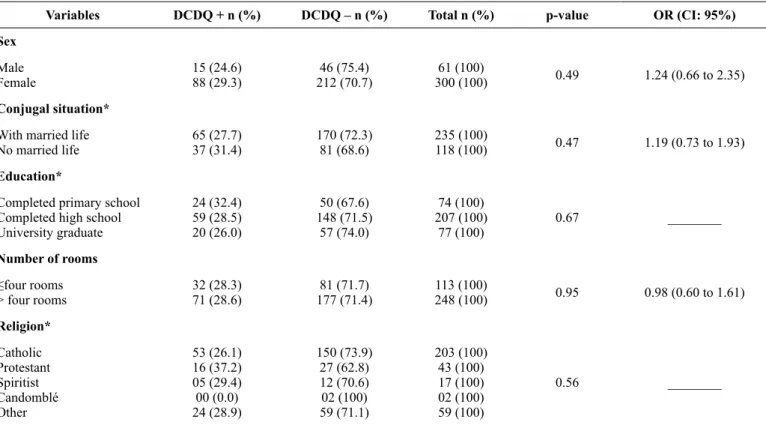
Table 1 shows the univariate analysis of the guardians’
char-acteristics according to the DCDQ classification. A significant association was found between DCDQ classification and the guardian physical exercise and treatment for a medical condition;
indicating that physically active guardians and the ones that receive treatment are more aware to the signs of DCD among their child.
Table 2 highlights the univariate analysis of the characteristics
of children according to the DCDQ classification. A significant
association was observed between the child’s age and the DCDQ perception, indicating that the DCD signs were more frequent among older schoolchildren.
Table 1 – Parents/guardians socio-demographic factors between children classified as DCDQ positive (DCDQ+) and DCDQ negative (DCDQ -) Variables DCDQ + n (%) DCDQ – n (%) Total n (%) p-value OR (CI: 95%)
Sex
Male Female
15 (24.6) 88 (29.3)
46 (75.4)
212 (70.7) 300 (100)61 (100) 0.49 1.24 (0.66 to 2.35)
Conjugal situation* With married life No married life
65 (27.7)
37 (31.4) 170 (72.3)81 (68.6)
235 (100)
118 (100) 0.47 1.19 (0.73 to 1.93)
Education*
Completed primary school Completed high school University graduate
24 (32.4) 59 (28.5) 20 (26.0)
50 (67.6) 148 (71.5)
57 (74.0)
74 (100) 207 (100)
77 (100) 0.67 ________
Number of rooms ≤four rooms > four rooms
32 (28.3)
71 (28.6) 177 (71.4)81 (71.7) 248 (100)113 (100) 0.95 0.98 (0.60 to 1.61) Religion*
Catholic Protestant Spiritist Candomblé Other
53 (26.1) 16 (37.2) 05 (29.4) 00 (0.0) 24 (28.9)
150 (73.9) 27 (62.8) 12 (70.6) 02 (100) 59 (71.1)
203 (100) 43 (100) 17 (100) 02 (100) 59 (100)
Monthly income
Up to two salaries Between three-five salaries Over five salaries
62 (31.8) 27 (22.7) 14 (29.8)
133 (68.2) 92 (77.3) 33 (70.2)
195 (100) 119 (100)
47 (100) 0.21 ________
Receives government benefits*
Yes No
10 (34.5)
87 (28.5) 218 (71.5)19 (65.5) 305 (100)29 (100) 0.50 1.31 (0.59 to 2.95) Work activity*
Yes No
13 (26.0)
81 (31.0) 180 (69.0)37 (74.0) 261 (100)50 (100) 0.47 1.28 (0.64 to 2.53) Self-reported health perception *
Very poor Bad Fair Good Very good
01 (50.0) 03 (50.0) 22 (40.7) 55 (27.2) 20 (23.3)
01 (50.0) 03 (50.0) 32 (59.3) 147 (72.8)
66 (76.7)
02 (100) 06 (100) 54 (100) 202 (100)
86 (100)
0.13 _________
Undertakes exercise*
Yes No
33 (22.3) 69 (33.8)
115 (77.7) 135 (66.2)
148 (100)
204 (100) <0.01 1.78 (1.09 to 2.88)
Disease has*
Yes No
13 (68.4)
62 (44.9) 06 (31.6)76 (55.1) 138 (100)19 (100) 0.06 2.65 (0.95 to 7.39)
Treatment for disease*
Yes No
18 (50.0)
80 (25.5) 234 (74.5)18 (50.0) 314 (100)36 (100) <0.01 2.92 (1.45 to 5.89) Has food restriction*
Yes No
09 (42.9)
94 (28.0) 242 (72.0)12 (57.1) 335 (100)21 (100) 0.15 1.93 (0.78 to 4.73) Uses prescription drugs*
Yes No
15 (42.9)
88 (27.1) 237 (72.9)20 (57.1) 325 (100)35 (100) 0.05 2.02 (0.99 to 4.12) Alcohol use*
Yes No
07 (58.3)
67 (46.5) 05 (41.7)77 (53.5) 144 (100)12 (100) 0.43 1.60 (0.48 to 5.30)
Smoker*
Yes No
12 (38.7)
87 (27.2) 233 (72.8)19 (61.3) 320 (100)31 (100) 0.17 1.69 (0.78 to 3.63) Use of other drugs*
Yes No
00 (0.0)
103 (28.8) 255 (71.2)01 (100) 358 (100)01 (100) 1.00 _________
*data did not analysed with total sample
Table 2 - Positive or negative characterization of children based on the DCDQ classification
Variables DCDQ + n (%) DCDQ – n (%) Total n (%) p-value OR (CI: 95%)
Sex
Male Female
55 (30.1)
Table 3 presents the results from the logistic regression
model. The significant variables were parent/guardian being treated for illness and the child’s age. The R
2 found in the final
model was 0.07.
Table 3 - Final model of binary Logistic regression of factors associated with DCD by DCDQ
Likelihood of associated factors B Exp (B) p-value Constant -2 log
Final model -4.287 329.045
Treatment informant disease 0.974 2.650 0.02
Child’s age 0.397 1.488 <0.01
Age*
Seven years Eight years Nine years 10 years
23 (16.3) 46 (40.7) 25 (32.9) 09 (32.1)
118 (83.7) 67 (59.3) 51 (67.1) 19 (67.9)
141 (100) 113 (100) 76 (100) 28 (100)
< 0.01 _________
Food restriction*
Yes No
08 (42.1)
94 (27.8) 244 (72.2)11 (57.9) 338 (100)19 (100) 0.18 1.88 (0.73 to 4.83)
Prescription drug use*
Yes No
08 (32.0)
92 (28.0) 237 (72.0)17 (68.0) 329 (100)25 (100) 0.66 1.21 (0.50 to 2.90)
Lives with biological father*
Yes No
77 (29.3)
24 (26.7) 186 (73.3)66 (70.7) 263 (100)90 (100) 0.63 0.87 (0.51 to 1.50)
Type of housing of the child*
Own Leased Borrowed Donation Others
69 (28.0) 21 (24.4) 06 (46.2) 00 (0.0) 05 (71.4)
177 (72.0) 65 (75.6) 07 (53.8) 01 (100) 02 (28.6)
246 (100) 86 (100) 13 (100) 01 (100) 07 (100)
0.05 _________
Number of residents in child’s home ≤ four people
> four people
79 (30.9)
24 (22.9) 177 (69.1)81 (77.1) 256 (100)105 (100) 0.12 0.66 (0.39 to 1.12) Child health*
Bad Fair Good Very good
00 (0.0) 04 (66.7) 49 (31.4) 48 (26.2)
01 (100) 02 (33.3) 107 (68.6) 135 (73.8)
01 (100) 06 (100) 156 (100) 183 (100)
0.13 _________
*Data did not analysed with total sample
Discussion
This study aimed to identify socio-demographic factors that are associated with the guardians’ perception of DCD among schoolchildren from seven to ten years old. Before explore the associated socio-demographic variables, it seems relevant to discuss the DCD prevalence found in this study. Primarily, because DCDQ is a parent-report measure and not a formal diagnosis for DCD. The screening performed by DCDQ is only one step composing the diagnostic criteria for DCD recommend
by literature2. Indeed, this criterion is recommended to detect
potential children who have risk for motor coordination problems regarding to DCD19. Further, Brazilians studies concerning the
prevalence of DCD by DCDQ are scarce, which prevent a deeper
discussion of this finding. Valentini, Clark and Whitall20 found a
prevalence of 18% of Brazilian children with probable DCD by DCDQ. Likewise, Campbell, Missiuna and Vaillancourt21 found
20% of school-aged children with probable DCD through the
high considering the known global prevalence (5-6%) of DCD in school-aged children22,23 when all recommend diagnostic
criteria are followed2.
Considering the relevance of additional support in DCD
identification provided by DCDQ as well as the unclear evidence
about prevalence of DCD in Brazil, sociodemographic variables investigated in this study indicate a promising way to clarify the understanding of high indicative of DCD in Brazilian children. Following this argument, study conducted in Brazil20 identified the socioeconomic status as the strongest variable associated with motor impairment in children with probable DCD. In contrast to the Brazilian study20 and other studies16,22,24, in this study, the issue of family income was not associated with increased the guardians perception of DCD. However, among the variables analyzed in this study the child’s age and the guardians undergo-ing treatment for illness were associated with higher chances of perceiving signs of DCD through the DCDQ, according to the perceptions of these parents/guardians.
Guardians of older children more frequently perceived the characteristics of motor impairment through the DCDQ, characteristics that may be related to more sedentary habits of
children. Although the present study did not specifically inves -tigate maturational issues in children (e.g., bone and sexual age) and levels of physical activity, it may be inferred that among older children (nine and ten years), exposure to many different motor skills would be more common, and consequently, changes in the coordination of movements would become more notice-able. This accounts for the fact that parents notice indicators of
DCD more commonly. Similarly, Valentini, Clark and Whitall20
also found more risk of DCD in older children (9-10 years old),
which support the maturational issues addressed in this study.
The first years of a child’s life are crucial for their poten -tial to be stimulated so that a whole variety of motor skills may be further developed at later ages18. Studies have reported that early
maturational processes in boys seem to promote the reduction in their levels of physical activity25,26. In addition, the effect of
maturation establishes different relationships in levels of physical activity in different age groups27, which could indicate a possible explanation of why DCD indicators in older children were most commonly perceived by their parents/guardians in this study.
The parents/guardians which seek health treatment showed greater awareness of indicators of DCD in their child through
DCDQ. We may infer that by looking for health assistance for
themselves, they are more prone to concern about the limita-tions and weaknesses that could harm their health and quality of life. Consequently, they become more sensitive to perceive changes and/or impairments in the motor functions of their children. Recent studies have shown that the family environ-ment with regards child care can be a determining factor in the greater risk for children of preschool age to present DCD28,29.
It is important to highlight that this study used the DCDQ, a tool to identify children with DCD, based on the perception of their parents/guardians. Even though the parents’ reports involve subjective aspects (parental characteristics), objective compo-nents were considered, such as the characteristics and behavior
of the child, which is shown to reflects real characteristics of
children30. Furthermore, these components may provide useful
data for evaluations and diagnoses of children, such as the
iden-tification of motor changes, arising from the parental perception
that may indicate DCD, as through the DCDQ, for example. Therefore, this study found that the DCDQ, together with
a socio-demographic questionnaire enable to find interesting
results. Thus, the use of the DCDQ together with socio-demo-graphic factors may satisfy more completely the requirements for DCD diagnosis2. Coupled with the fact that broad participation
in daily life activities is closely related to the healthy develop-ment of school children31, it is fundamental to explore the family
context of children with DCD to better understand this process.
Although the logistic regression model was insufficient to
account for the associations with DCD in children aged seven to ten years old, the results of this study may help to gain a better understanding of the role of parents in determining children’s habits. Parents may limit their children, accounting of their own feelings of limitation with practical activities32, or
avoid-ing exposavoid-ing their children to practical situations they consider complex, Then, the parents of children with DCD may limit the participation of their children, with the intent of protecting them from exposure to embarrassing and intimidating situations33.
Further, variables related to maternal care, such as greater health concerns, such as undergoing treatment when suffering an illness were more strongly associated with increased
percep-tion of DCD through the DCDQ. This finding provides support
to previous observations on the impact of maternal health to increase the risk of children DCD. Different factors related to maternal health could constitute the etiology of DCD34. Given the design of this study, it is not possible to explain the causal relationship between the associated variables. However, the results of this study may help future longitudinal studies to bet-ter explain the etiology of DCD, including mabet-ternal variables in their investigations.
On the other hand, the high prevalence of DCD encountered by means of the DCDQ (28.5%) differs from other studies22,23,
which, together with the fact that it was not possible to investigate
the types and specificities of the diseases nor the treatments, may
account for the weak logistic regression model found in this study. Another issue is the guardians’ health perception, since
the classification very bad, bad, fair, good or very good were arbitrarily assigned. However, this classification type has often
been used in the literature35 and supports investigations based
on self-reporting of participants. In addition, our finding were
based on parents report instead of children motor assessment,
which does not allow us to affirm that it is a DCD identification,
but only a indicative based on the parents’ perception.
Conclusion
The child’s age and the guardian undergoing treatment were associated with increased perception of DCD signs among schoolchildren. However, the explained variance was
low (7%), indicating that other potentially relevant factors
References
1. Mimouni-Bloch A, Tsadok-Cohen M, Bart O. Motor Difficulties and Their Effect on Participation in School-Aged Children. J Child Neurol. 2016;31(11):1290–1295. doi:10.1177/0883073816653783 2. American Psychiatric Association. Diagnostic and Statistical
Manual of Mental Disorders. American Psychiatric Association; 2013. http://psychiatryonline.org/doi/book/10.1176/appi. books.9780890425596. doi:10.1176/appi.books.9780890425596 3. Smits-Engelsman B, Schoemaker M, Delabastita T, Hoskens
J, Geuze R. Diagnostic criteria for DCD: Past and future. Hum Mov Sci. 2015;42:293–306. http://www.ncbi.nlm.nih.gov/ pubmed/25843305. doi:10.1016/j.humov.2015.03.010
4. Missiuna C, Pollock N, Egan M, DeLaat D, Gaines R, Soucie H. Enabling Occupation through Facilitating the Diagnosis of Developmental Coordination Disorder. Can J Occup Ther. 2008;75(1):26–34. doi:10.2182/cjot.07.012
5. Rivard L, Missiuna C, Mccauley D, Cairney J. Descriptive and factor analysis of the Developmental Coordination Disorder Questionnaire (DCDQ’07) in a population-based sample of children with and without Developmental Coordination Disorder. Child Care Health Dev. 2014;40(1):42–49. doi:10.1111/j.1365-2214.2012.01425.x
6. Cairney J, Rigoli D, Piek J. Developmental coordination disorder and internalizing problems in children: The environmental stress hypothesis elaborated. Dev. Rev. 2013;33(3):224–238. https:// www.sciencedirect.com/science/article/pii/S0273229713000221. doi:10.1016/J.DR.2013.07.002
7. Waszczuk MA, Leonard HC, Hill EL, Rowe R, Gregory AM. Coordination difficulty and internalizing symptoms in adults: A twin/sibling study. Psychiatry Res. 2016;239:1–8. doi:10.1016/j. psychres.2016.02.044
8. Henderson SE, Sugden DA, Barnett A. Movement Assessment Battery for Children – Second Edition. 2007.
9. Caravale B, Baldi S, Capone L, Presaghi F, Balottin U, Zoppello M. Psychometric properties of the Italian version of the Developmental Coordination Disorder Questionnaire (DCDQ-Italian). Res Dev Disabil. 2015;36:543–550. http://www.ncbi. nlm.nih.gov/pubmed/25462515. doi:10.1016/j.ridd.2014.10.035 10. Wilson BN, Crawford SG, Green D, Roberts G, Aylott A, Kaplan
BJ. Psychometric properties of the revised Developmental Coordination Disorder Questionnaire. Phys Occup Ther Pediatr. 2009;29(2):182–202. doi:10.1080/01942630902784761 11. Traub RB-I, Levi AW-, Parush S. Validity and Reliability of the
Developmental Coordination Disorder Questionnaire for school-aged children in Israel. IJOT: The Israeli Journal of Occupational Therapy. 2005;14:85–93. https://www.jstor.org/stable/23468919. doi:10.2307/23468919
12. Tseng MH, Fu CP, Wilson BN, Hu FC. Psychometric properties of a Chinese version of the Developmental Coordination Disorder Questionnaire in community-based children. Res Dev Disabil. 2010;31(1):33–45. doi:10.1016/j.ridd.2009.07.018
13. Schoemaker MM, Flapper B, Verheij NP, Wilson BN, Reinders-Messelink HA, de Kloet A. Evaluation of the Developmental Coordination Disorder Questionnaire as a screening instru-ment. Dev Med Child Neurol. 2006;48(8):668. doi:10.1017/ S001216220600140X
14. Kennedy-Behr A, Wilson B, Rodger S, Mickan S. Cross-Cultural Adaptation of the Developmental Coordination Disorder Questionnaire 2007 for German-Speaking Countries: DCDQ-G. Neuropediatrics. 2013;44(5):245–251. http://www.ncbi.nlm.nih. gov/pubmed/23716299. doi:10.1055/s-0033-1347936
15. Prado MSS, Magalhães LC, Wilson BN. Cross-cultural adapta -tion of the developmental coordina-tion disorder ques-tionnaire for brazilian children. Rev Bras Fisioter. 2009;13(3):236–243. 16. Prinsloo A, Pienaar A. Prevalence of developmental co-ordination
disorder and influences of physical activity levels and body composition on the children of farm workers: Flagh-study. Afr J Phys Health Educ Recreat Dance. 2003;9(1). doi:10.4314/ ajpherd.v9i1.46318
17. Segal R, Mandich A, Polatajko H, Cook JV. Stigma and its man-agement: a pilot study of parental perceptions of the experiences of children with developmental coordination disorder. Am J Occup Ther. 56(4):422–8.
18. Levac D, DeMatteo C. Bridging the gap between theory and practice: Dynamic systems theory as a framework for un-derstanding and promoting recovery of function in children and youth with acquired brain injuries. Physiother Theory Pract. 2009;25(8):544–554. http://www.ncbi.nlm.nih.gov/ pubmed/19925262. doi:10.3109/09593980802667888
19. Wilson BN, Crawford SG. Administration manual for DCDQ’07 with psychometric properties. 2010.
20. Valentini NC, Clark JE, Whitall J. Developmental co-ordination disorder in socially disadvantaged Brazilian children. Child Care Health Dev. 2015;41(6):970–979. doi:10.1111/cch.12219 21. Campbell WN, Missiuna C, Vaillancourt T. Peer victimization
and depression in children with and without motor coordination difficulties. Psychol. Sch. 2012;49(4):328–341. doi:10.1002/ pits.21600
22. Lingam R, Hunt L, Golding J, Jongmans M, Emond A. Prevalence of Developmental Coordination Disorder Using the DSM-IV at 7 Years of Age: A UK Population-Based Study. Pediatrics. 2009;123(4):e693–e700. http://www.ncbi.nlm.nih.gov/ pubmed/19336359. doi:10.1542/peds.2008-1770
23. Girish S, Raja K, Kamath A. Prevalence of developmental coor -dination disorder among mainstream school children in India. J Pediatr Rehabil Med. 2016;9(2):107–116. http://www.ncbi.nlm. nih.gov/pubmed/27285803. doi:10.3233/PRM-160371 24. Engel-Yeger B, Hanna Kasis A. The relationship be
-tween Developmental Co-ordination Disorders, child’s perceived self-efficacy and preference to participate in daily activities. Child Care Health Dev. 2010;36(5):670–7. http://doi.wiley.com/10.1111/j.1365-2214.2010.01073.x. doi:10.1111/j.1365-2214.2010.01073.x
25. Romon M, Lafay L, Bresson JL, Oppert J-M, Borys J-M, Kettaneh A, Charles M-A. Relationships between physical activity and plasma leptin levels in healthy children: the Fleurbaix–Laventie Ville Santé II Study. Int J Obes. 2004;28(10):1227–1232. doi:10.1038/sj.ijo.0802725
http://journals.sagepub.com/doi/pdf/10.2466/10.PMS.120v13x0. doi:10.2466/10.PMS.120v13x0
27. Cumming SP, Sherar LB, Esliger DW, Riddoch CJ, Malina RM. Concurrent and prospective associations among biological matu-ration, and physical activity at 11 and 13 years of age. Scand J Med Sci Sports. 2014;24(1):e20–e28. http://www.ncbi.nlm.nih. gov/pubmed/24102894. doi:10.1111/sms.12103
28. Hua J, Meng W, Wu Z, Zhang L, Gu G, Zhu L. Prenatal and perinatal risk factors for developmental coordination disorder in children. Zhonghua liu xing bing xue za zhi = Zhonghua liux-ingbingxue zazhi. 2014;35(3):250–4. http://www.ncbi.nlm.nih. gov/pubmed/24831620
29. Hua J, Meng W, Wu Z, Zhang L, Gu G, Zhu L. Environmental factors associated with developmental coordination disorder in preschool children in urban area of Suzhou city. Zhonghua er ke za zhi = Chinese journal of pediatrics. 2014;52(8):590–5. http:// www.ncbi.nlm.nih.gov/pubmed/25224236
30. Manczak EM, Mangelsdorf SC, McAdams DP, Wong MS, Schoppe-Sullivan S, Brown GL. Autobiographical memories of childhood and sources of subjectivity in parents’ percep-tions of infant temperament. Infant Behav Dev. 2016;44:77–85. http://www.ncbi.nlm.nih.gov/pubmed/27322679. doi:10.1016/j. infbeh.2016.06.001
31. Rosenberg L, Bart O, Ratzon NZ, Jarus T. Personal and Environmental Factors Predict Participation of Children With and Without Mild Developmental Disabilities. J Child Fam Stud. 2013;22(5):658–671. doi:10.1007/s10826-012-9619-8
32. Rubin, KH & Stewart S. Social withdraw. In: Mash, EJ & Barkley R, editor. Child psychopathology. New York: Guilford; 1996. p. 277–307.
33. Jarus T, Lourie-Gelberg Y, Engel-Yeger B, Bart O. Participation patterns of school-aged children with and without DCD. Res Dev
Disabil. 2011;32(4):1323–1331. http://www.ncbi.nlm.nih.gov/ pubmed/21324639. doi:10.1016/j.ridd.2011.01.033
34. Hua J, Gu G, Jiang P, Zhang L, Zhu L, Meng W. The prenatal, perinatal and neonatal risk factors for children’s developmental coordination disorder: A population study in mainland China. Res Dev Disabil. 2014;35(3):619–625. doi:10.1016/j.ridd.2014.01.001 35. Morás Borges A, Santos G, Andréia Kummer J, Fior L, Dal Molin
V, Mara Wibelinger L. Self-perceived health in elderly living in a city in Rio Grande do Sul state. Rev. Bras. Geriatr. Gerontol. 2014;17(1):79–86.
Acknowledgements
We would like to thank all the schools that have authorized this research and all
parents who voluntarily participated in this study.
This study was supported by São Paulo Research Foundation (FAPESP), grant
2015/24291-0.
Corresponding author
Jorge Cavalcante Lopes Neto
Rodovia Washington Luís, 310, São Carlos, São Paulo.
E-mail: [email protected]
Orcid: http://orcid.org/0000-0002-8396-2410
Manuscript received on January 22, 2018 Manuscript accepted on March 14, 2018