Repositório ISCTE-IUL
Deposited in Repositório ISCTE-IUL:2019-05-25
Deposited version:
Post-print
Peer-review status of attached file:
Peer-reviewed
Citation for published item:
Loureiro, S. M. C., Guerreiro, J., Eloy, S., Langaro, D. & Panchapakesan, P. (2019). Understanding the use of Virtual Reality in Marketing: a text mining-based review. Journal of Business Research. 100, 514-530
Further information on publisher's website:
10.1016/j.jbusres.2018.10.055
Publisher's copyright statement:
This is the peer reviewed version of the following article: Loureiro, S. M. C., Guerreiro, J., Eloy, S., Langaro, D. & Panchapakesan, P. (2019). Understanding the use of Virtual Reality in Marketing: a text mining-based review. Journal of Business Research. 100, 514-530, which has been published in final form at https://dx.doi.org/10.1016/j.jbusres.2018.10.055. This article may be used for non-commercial purposes in accordance with the Publisher's Terms and Conditions for self-archiving.
Use policy
Creative Commons CC BY 4.0
The full-text may be used and/or reproduced, and given to third parties in any format or medium, without prior permission or charge, for personal research or study, educational, or not-for-profit purposes provided that:
• a full bibliographic reference is made to the original source • a link is made to the metadata record in the Repository • the full-text is not changed in any way
The full-text must not be sold in any format or medium without the formal permission of the copyright holders. Serviços de Informação e Documentação, Instituto Universitário de Lisboa (ISCTE-IUL)
Av. das Forças Armadas, Edifício II, 1649-026 Lisboa Portugal Phone: +(351) 217 903 024 | e-mail: [email protected]
1
POST-PRINT VERSION
Loureiro, S. M. C., Guerreiro, J., Eloy, S., Langaro, D., & Panchapakesan, P. (2018).
Understanding the use of Virtual Reality in Marketing: A text mining-based review. Journal of
Business Research.
--
Understanding the use of Virtual Reality in Marketing: a text mining-based review
Abstract
The current study intends to highlight the most relevant studies in simulated realities with special attention to VR and marketing, showing how studies have evolved over time and discussing the findings. A text-mining approach using a Bayesian statistical topic model called latent Dirichlet allocation is employed to conduct a comprehensive analysis of 150 articles from 115 journals, all indexed in Web of Science.
The findings reveal seven relevant topics, as well as the number of articles published over time, the authors most cited in VR papers and the leading journals in each topic. The article also provides theoretical and practical implications and suggestions for further research.
Keywords: virtual reality; simulated realities; marketing; text mining.
1. Introduction
Virtual environments have flourished in the last decade as a way to elicit new and exciting consumer experiences as technological innovation allowed marketers to use such advancements in commercial applications. The total market size worldwide for virtual environments (particularly virtual and augmented reality) is expected to move from 27 billion U.S. dollars in 2018 to 209.2 billion U.S. dollars in 2022 (Statista, 2018), thus showing that there are new market opportunities to be explored.
Research on applied virtual reality (VR) dates back to the 1990s with the work of relevant authors such as Milgram, Takemura, Utsumi and Kishino (1994), Brooks (1999),
2 Slater and Wilbur (1997) and Steuer (1992). Milgram et al. (1994, p. 283) propose a taxonomy to differentiate the technologies available for experiencing combinations of reality and virtuality and describe VR as the environment “in which the participant-observer is totally immersed in a completely synthetic world, which may or may not mimic the properties of a real-world environment”. From the applications of VR envisaged by Brooks in the 1990s (1999) as a vehicle for simulation and entertainment, the range of acceptance and use of VR has enlarged considerably and now includes, for example, tourism (e.g., Abergel et al., 2016; Jeng et al., 2017; Yeh et al., 2017), retailing (e.g., Evans & Wurster 1999; Krasonikolakis et al., 2014) and medical and educational issues (e.g., Abboudi et al., 2012; Abboudi et al., 2013).
Several studies show that the product/brand stimuli can come from consumers´ experiences in virtual reality (e.g., Verhagen et al., 2014; Bigné et al., 2016; Yeh et al., 2017) with concepts such as attachment, engagement and identity being induced by virtual objects (e.g., Koles & Nagy, 2012; Nagy & Koles, 2014; Grewal, Roggeveen & Nordfalt, 2017), as well as purchase behaviours (Krasonikolakis et al., 2014). Thus, studies on this field tend to apply the S(stimuli)-O(organism)-R(response) framework (Eroglu, Machleit & Davis, 2003; Roschk, Loureiro & Breitsohl, 2017). This framework represents the stimuli (as atmospheric cues) influencing consumers’ emotional and cognitive states (organism), which, in turn, result in approach or avoidance behaviour (e.g., intention to stay, revisit, purchase or not).
The extended adoption of VR technologies is promoting economic growth and creating new opportunities (e.g., Verhagen et al., 2014; Grewal et al., 2017). As these technologies evolve, they tend to increasingly influence marketing and business decisions. This trend leads to a call for studies revealing the state-of-the-art of research on VR. Yet, in this context a critical literature review reveals a shortage of studies on
3 applications and use of VR. Indeed, few studies of this type exist, related to areas such as gaming (Makri & Vlachopoulos, 2017), medicine (van Bennekom, Koning & Denys, 2017; Howard, 2017) and education (Hainey, Connolly, Boyle, Wilson & Razak, 2016). As far as we know, no article has focused directly on applications relevant to marketing. Thus, the present study attempts to: (i) highlight the most relevant studies on simulated realities with special attention to VR and marketing; (ii) show how studies have evolved over time and (ii) discuss the main findings. To address these objectives, 150 articles from 115 journals were analysed using text-mining approach.
The first contribution of the current study is to derive and present the seven most relevant topics which classify the discussion related to VR and marketing around common themes, providing a structured morphology of the existing literature and revealing main authors and journals. As the second contribution, we provide an overview of the literature on simulated realities with special attention to VR applications in marketing. As a third contribution, we propose a research agenda for future studies making use of VR technologies in the field of marketing.
The current study is divided in six main sections. The second section gives an overview of the concepts and techniques related to simulated realities, namely the Virtuality Reality continuum with a special focus on Virtual Reality. The method used to collect and analyse the data is described in the third section, followed by a section where we present the results of the analysis undertaken with the data obtained. Overall discussion, conclusions and implications on the use of VR in marketing appear in the last two sections.
4
2. Overview of simulated realities 2.1 Conceptualization
The ability to simulate different forms of reality through technology has opened up new forms of interacting with the world and created a new set of possibilities for brands. The simulation of reality allows users and consumers to access real-time information in several ways. From the broad spectrum of the Reality-Virtuality continuum as stated by Milgram et al. (1994) three types of technological solutions are being increasingly presented to consumers: (1) Virtual Reality, (2) Augmented Reality, (3) Spatial Augmented Reality.
A Virtual Reality (VR) environment is a completely synthetic world that may or may not mimic the real world and in which the participant is immersed (Milgram et al., 1994). The real environment and the VR are at the opposite ends of the Reality-Virtuality continuum where other types of combinations of virtuality and reality exist. Augmented Reality (AR) relates purely virtual environments to purely real environments. In AR, the observer sees the real world and also sees virtual objects overlaid on the real world, usually by wearing see-through displays (Bimber & Raskar, 2005). Spatial Augmented Reality (SAR) is a type of AR that can be used in areas where traditional AR is not possible, for instance, on large surfaces such as spatially-aligned wall projections (also commonly named 3D video mapping). Augmented Virtuality (AV) exists when in a totally virtual environment some real objects are overlaid. An example of this AV is when a projection of the real person is overlaid on a virtual environment. Within this spectrum, Mixed Reality environments (MR) are those where real and virtual objects coexist in a single display in different types of combination (Milgram et al., 1994).
AR has seen a boom in commercial applications in the last decade, particularly since smartphones have new technologies embedded in each device such as GPS (Global
5 Positioning System) and have become ubiquitous as a means of searching for information. This growth allowed AR to become used in developing applications in many different sectors such as medicine, architecture, retailing and the tourism marketing industry (e.g., Bui, 2000; Grewal et al., 2017). SAR has all the advantages of AR as well as enabling the augmentation of real scale scene elements without the need of in-between devices allowing consumers to see 3D virtual environments that are in sync with their physical environment, letting them feel as if the new stimuli are in fact real (Roo & Hachet, 2017). Some of the products that we now experience as physical ones may one day become virtual products displayed using SAR in a way that consumers might think they are really interacting with a physical product.
Despite the important uses of AR and SAR technology, its technology is based on the physical environment and sometimes consumers need to be transported to a new setting where they can experiment what it would be like to be there enjoying a specific service or using a specific product. In such cases, an immersive simulated reality, such as those allowed by Virtual Reality (VR) technologies, has played an important role in engaging consumers in new and exciting experiences. VR has been used successfully in various fields of study such as architectural planning (Schnabel et al., 2001; Dorta & Pérez 2006), rehabilitation medicine and health (Gourlay et al., 2000; Rizzo et al., 2011), military applications (Manojlovich et al., 2003), industrial applications (Wang & Li, 2004) and commerce (Krasonikolakis et al., 2014; van Herpen et al., 2016), among others.
2.2 Technology and Immersion
Definitions of VR vary between those concentrating on the technological apparatus, specifying hardware varieties and flavours, and those related to the human experience, focusing on the concept of presence (Steuer, 1992). Immersive VR refers to the construction of a virtual world where users feel immersed as if they were part of the
6 virtual environment. VR interfaces are diverse, ranging from movable devices such as VR headsets consisting of head-mounted glasses with a screen in front of the eyes, to non-movable ones such as specially designed rooms with multiple large screens. Several types of Head Mounted Displays (HDM) have been developed over the years and most now have stereoscopic displays, tracking systems and a wide field of vision. By having gyroscopes and accelerometers, these devices can recognize the user’s position and therefore position the scene according to that information.
Fixed devices like large VR screen-based systems have been developed and used in several areas of knowledge. The CAVE (Cave Automatic Virtual Environment), a fully immersive VR system, is normally a cubic room where, on all the walls except one, stereoscopic images are projected, allowing the user, wearing stereoscopic glasses, to feel they are experiencing a real world. Smaller devices, such as just one big flat screen, a composition of smaller screens, curved screens, hemispheric screens and other types, allow VR experiences with lower levels of immersion.
The ability to present users with (virtual) reality at a full scale is an advantage of a VR system compared to displaying digital content in other types of devices such as computer screens. Besides this type of visualization, several immersive VR sets have dynamic binaural sound. As well as normal interaction via mouse, keyboard and game devices, interaction with the VR system is possible via gestures (3D position trackers measure body motion and act accordingly) and speech. Although not as well developed, immersive VR can also allow unique forms of physical or quasi-physical interaction when using haptic systems such as data gloves with tracking sensors (Mizell et al., 2002).
Unlike VR techniques, AR and SAR “generate images somewhere on the optical path in between the observer’s eyes and the physical object to be augmented” (Bimber & Raskar 2005, p. 71). In AR the observer sees the real world through some kind of
Head-7 Mounted Display (HMD) or video screen and virtual objects are overlaid on the real world. Users can experience AR through a direct vision device like a head-mounted see-through device (e.g., Hololens, other AR glasses and retinal displays), or an indirect vision display like a hand-held see-through display (e.g., tablets and smartphones). Both types of devices have a limited field of vision which does not provide the user with a complete view of the reality that is augmented or a full sense of presence. SAR is completely detached from the users, allowing them to have free hands, eyes and head and can assume different techniques as explained by Bimber and Raskar (2005), such as screen-based video see-through displays, spatial optical see-through displays and projection-based spatial displays. Projector-based spatial displays project images directly on the surfaces of a physical object and usually take advantage of the volumes of that object. These projections can be performed by static, steerable and multiple projectors and may be based on static or video digital content, with or without stereoscopy.
With VE, the notions of immersion and sense of presence were introduced. These notions are intrinsically related because greater immersion is commonly related to a stronger sense of presence as well as the opposite. Immersion relates to what the system delivers from a technical perspective and can be objectively measured, while presence relates to the human experience of the given environment.
Immersion is a VE system’s ability to deliver an inclusive (where the physical reality is shut out), extensive (concerning the inclusion of sensory modalities), surrounding (how panoramic the VR is) and vivid (resolution, fidelity, variety of energy) illusion of reality to the senses of a human participant (Slater & Wilbur, 1997). VE can be fully immersive (e.g., CAVE, HDM with a wide field of vision), semi-immersive (e.g. stereoscopic powerwall) and non-immersive (e.g., desktops). The sense of presence is the extent to which the observer feels present within the display scene (Milgram et al., 1994) and can
8 be assessed as individuals’ propensity to respond to virtually generated sensory data as if they were real (Sanchez-Vives & Slater, 2005).
2.3 VR and consumers’ experience
Different mixed reality equipment enables different levels of immersion and sense of presence, which can be measured to assess the effectiveness of the impact they cause in users (Slater et al., 1994; Witmer & Singer, 1998). Examples of these differences are influenced by the hardware used, e.g. monitor-based are exocentric or non-immersive, large screens are semi-immersive environments and CAVE facilities and HDM are considered to be fully-immersive environments. Other complementary equipment such as datagloves, tracking systems, sensors like Kinect and 3D sound increase the sense of presence and enables a richer interaction between the VE and users, augmenting their engagement
Steuer (1992) discusses how vividness and interactivity are complementary and the more vivid and interactive a VE is the higher sense of presence it creates. Although a higher sense of presence enables a closer relation with the VE, Steuer refers to the work of McLuhan (1964) where the author states that an extremely high vivid VE can also have the negative impact of decreasing the ability to interact with it and therefore decrease the engagement between consumers and VE.
VR has been extensively used in areas where consumers are the main target. For tourism, Guttentag (2010) argues that the acceptance of VR as a substitute of reality will be determined by tourists’ attitudes toward authenticity and their motivations and constraints. According to the author, different technology-driven experiences, considering interactivity, authenticity and realism, may produce different behaviours in consumers and this is an area in need of further research. Although the visual stimulus is the most present and, for most users, the most relevant, research has been done to measure
9 how other audio, tactile, olfactory and taste stimuli have an impact on users’ behaviours (Dinh et al., 1999; Iwata et al., 2004; Gutierrez, Thalmann & Vexo, 2008; Chandrasekera & Souza, 2015).
3. Method
3.1 Text Mining approach
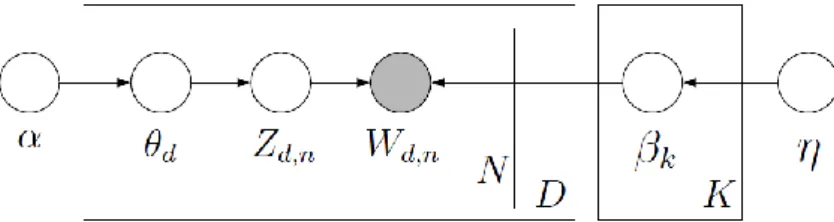
The current study employs a statistical topic model called latent Dirichlet allocation (LDA) to find latent topics in the literature review. LDA has been widely used to reveal latent topics in text using scholarly literature documents, and it is based on Latent Semantic Indexing (LSI) and probabilistic Latent Semantic Indexing (pLSI) algorithms (Deerwester et al., 1990; Hofmann, 1999). First presented by Blei et al. (2003), LDA has recently been shown to accurately group discussions into correlated words to allow researchers to conduct a literature analysis guided by such a structure (Choi et al., 2017; Moro et al., 2017; Amado et al., 2017; Moro et al., 2015, Griffiths & Steyvers, 2004). LDA uses a hierarchical Bayesian analysis which follows a generative process that assumes topics derive from a Dirichlet distribution over words and each document comes from a distribution over topics. LDA is a mixed-membership model where each word may belong to multiple topics which is an advantage over single-membership clustering. LDA models calculate the subsequent probability of each word belonging to a given topic, which allows researchers to order such words according to their correlation with the topic. A second step is usually to make a profile of each topic given their most correlated terms to find the underlying discussion. In the same way, LDA also presents subsequent probabilities of each document belonging to each topic, thus allowing researchers to find the most discussed topics in each paper (Blei et al., 2003).
10 Figure 1 shows the generative process followed by LDA, in which (1) for each topic K, it draws a distribution over words such as, 𝛽⃗𝑘𝐷𝑖𝑟𝑣(𝜂), (2) for each document D, it draws a vector of topic proportions such as, 𝜃⃗𝑑 ~ 𝐷𝑖𝑟 (𝛼⃗), (3) for each word, it draws a topic assignment 𝑍𝑑,𝑛~ 𝑀𝑢𝑙𝑡(𝜃⃗𝑑), 𝑍𝑑,𝑛∈ {1 … . 𝐾} and a word such as 𝑊𝑑,𝑛~ 𝑀𝑢𝑙𝑡(𝛽⃗𝑧𝑑,𝑛), 𝑊𝑑,𝑛 ∈ {1 … . 𝑉} (Blei & Lafferty, 2009)
.
INSERT Figure 1. ABOUT HERE
Due to the effort needed to compute the distribution over words, approximate inference techniques are often used to optimize such computation, such as collapsed variational inference (Teh, Newman & Welling, 2007), expectation propagation (Minka & Lafferty, 2002), and Gibbs sampling (Griffiths & Steyvers, 2004). Gibbs sampling is a Markov Chain Monte Carlo algorithm and was used in the current paper due to its convergence and performance capabilities.
To reveal topics in textual information, text mining steps have to be taken to prepare the data for use by LDA. The first step is to define the corpora in a raw format without any formatting. Words are usually converted to lower spaces and white spaces and numbers are removed from each corpus (Meyer, Hornik & Feinerer, 2008). A final transformation requires all auxiliary terms called stopwords (e.g., terms such as “the”, “as”, that”), or any words in the domain of study to be eliminated (Delen & Crossland, 2008). The group of treated documents are then used to form a document-term-matrix (DTM) that counts the frequencies of each term per document and is later reduced by using penalty functions to reduce outliers (Blei & Lafferty, 2009; Meyer et al., 2008; Delen & Crossland, 2008). LDA models are then applied to the DTM to reveal latent topics.
11 A first query with the term “VIRTUAL REALITY” was performed in Web of Science (WOS) and revealed 12.534 articles on the subject of VR. However, a closer look at WOS categories reveal that most of them belong to Computer Science, Engineering, Medical and other fields not related to Marketing. Thus, we performed a second search on WOS for latent topics related to VR and Marketing issues with the query expressed in the text below. The search process was conducted for words in the title, abstract and keywords. The terms of the query were selected based on Marketing functions (supported on the conceptualization of Marketing and Marketing research of American Marketing Association) that may be impacted by VR (AMA, 2013). Some of the words were followed by a wildcard to account for multiple possible terms under the root word.
TS=("VIRTUAL REALITY" AND (MARKETING OR "CONSUMER BEHAVIOR" OR "CONSUMER BEHAVIOUR" OR ADVERTIS* OR BRAND* OR "SUPPLY CHAIN" OR PRIC* OR "SOCIAL MEDIA" OR SERVICE*))
Results from the query were filtered to return only papers in English in peer-review journals. A first look at the dispersion of the papers among many different journals shows that although the query is focused on marketing terms, papers appeared in a very wide range of journals. The 617 papers that complied with these criteria were then filtered according to a systematic literature review because most of them still were not focused on Marketing itself but mainly on Computer Science and Medical topics. Figure 2 shows the dispersion of the most frequent categories of WOS in the 617 papers collected.
INSERT Figure 2. ABOUT HERE
The systematic analysis process follows the three major criteria: validity (how accurate is the study and information presented in articles to treat what we intend to investigate, that is, VR in marketing); reliability (the consistency and the degree of replication of the results and the possibility to generalize); credibility (with regard to articles published in well-reputed journals worldwide); integrity (regarded as how reliable
12 the research is and if it adopts, or not, precision in the selected research process) (Nill & Schibrowsky, 2007; Moher, Liberati, Tetzlaff, Altman & Altman, 2009). After systematic analysis of the titles, keywords, abstracts and text of each paper, a final set of 150 papers were selected for deeper content analysis. During the process, two researchers independently identified potentially relevant articles and conflicts between researchers were subsequently discussed to achieve the final set of papers. Conflicts between researchers were subsequently discussed, such that agreement was > 0.85 (Cohen’s Kappa coefficient). Figure 3 shows the process used for selecting the final set of papers and Figure 4 shows the dispersion of these papers over time.
The first papers extracted date back to 1994 (Williams, 1994; Cernousek 1994) while the last paper collected was published in 2018 (Markopoulos & Hosanagar, 2018). Figure 4 also shows the mean 5-year JCR impact factor (5Y-IF) of journals that published those papers in each year group. An interesting effect shows that the impact of the papers published on the topic has been increasing linearly but the mean 5Y-IF has dropped since 2015. A possible explanation may be that as the number of papers increases so does the dispersion of the number of journals publishing them. Since 2015, papers on VR in Marketing have been published in 51 different journals, while in 2010-2014 only 29 journals published such papers, 26 in 2005-2009, 13 in 2000-2004, 12 in 1995-1999 and only 2 in 1990-1995. While until 2015 those papers were published in higher ranked journals, since then they have started to be published in lower 5Y-IF journals as well.
INSERT Figure 3. ABOUT HERE INSERT Figure 4. ABOUT HERE
The paper abstracts were extracted and transformed according to the best practices in text-mining analysis (Guerreiro et al., 2016). R was used to convert text into a
13 structured document-term matrix using “tm” and “topicmodels” library. All text was converted to lower case and the corpus was stripped from whitespaces, punctuation and numbers. English stopwords and core keywords such as “virtual”, “reality” and “virtual reality” were removed from text. Although such terms are frequent in the text, they may jeopardize the cohesion of the topics given their high frequency overall (Guerreiro et al., 2016). A final tokenization was performed on the text so that individual or co-occurring terms (n-grams depending on the prefix, gram means a set of co-occurring words within a given window and when computing the n-grams we typically move one word forward) were chosen. Single term (unigrams) and two-term (bigrams) n-grams were selected for analysis. The document-term matrix was treated for sparsity and revealed a total of 2125
n-grams over 150 documents.
In order to group latent topics discussed in the literature according to co-occurrence of words, latent Dirichelet allocation (LDA) topic models using Gibbs sampling method (Griffiths &Steyvers, 2004; Cao et al., 2009; Geman & Geman, 1984) was used. Regarding selection of the K number of topics that could best represent the underlying groups of discussions in the papers, a set of possible LDA models were developed with K=2 topics to K=60 topics. Figure 5 shows the results for each LDA model. Measures for choosing the best K were derived from the work of Griffiths and Steyvers (2004) and Cao et al. (2009).
INSERT Figure 5. ABOUT HERE
According to Guerreiro et al. (2016), the ideal number of clusters/topics is attained when the variability explained does not change significantly by adding more clusters. A small number of topics produce topics that are too general, while a big number of topics may reduce the interpretability of the results (Pavlinek & Podgorelec, 2017). The number of optimal topics (K) was selected when there was a more negative likelihood after the
14 model first stabilized its variability and just before the log-likelihood started to increase again. Using Cao et al. (2009) and Griffiths and Steyvers (2004) measures, 7 topics is where this effect occurs. Selecting fewer than 7 topics would reduce explained variability sharply and a higher K could add little to the explained variability.
3.3 Topic modelling
The LDA model was run using the Gibbs sampling method with 2,000 iterations (Griffiths & Steyvers (2004). A burn-in period (samples from the beginning of the Markov chain that are often discarded due to poor accuracy) of 4,000 iterations was used. After applying this model, the most correlated terms with each topic were obtained. Table 1 shows the seven topics after being labelled according to the most frequent noun terms within each topic. The table 1 also presents the four journals most correlated with each topic along with their 5Y-IF and a list of the three papers most correlated with each topic.
INSERT Table 1. ABOUT HERE
Results show that most topics are aligned with VR issues stemming from the query used to collect the papers. The number of papers per topic was classified according to the subsequent probability of each paper belonging to each topic. The papers were classified as belonging to the topic they were most correlated with. Figure 6 shows that the topic with most papers is Experiential Marketing (31 papers), the second topic groups discussions around Manufacturing and New Product Development (29 papers), the third most frequent topic discusses Virtual Setting (23 papers) and the fourth topic uses terms around Interaction (21 papers).
INSERT Figure 6. ABOUT HERE
A final analysis revealed that a total of 7145 references were cited from the 150 original papers. Table 2 shows the most referenced papers and the journal they were
15 published in, which reveals the sources most frequently used when discussing VR in the field of Marketing.
INSERT Table 2. ABOUT HERE
4. Results
T1. VIRTUAL SETTING. This topic aggregates studies that explore virtual settings
using the technology of VR. Concerns about how the store setting can influence customers’ emotions and response have been a fruitful research stream, since Mehrabian and Russell’s model (1974). Donovan and Rossiter (1982) are the first to use the S(stimuli)–O(organism)–R(response) framework in a retail context. When applied in a retail setting, the stimuli are operationalized as atmospheric cues, organism as consumers’ emotional and cognitive states (e.g., pleasure, arousal and dominance), and response as approach/avoidance behaviours (e.g., satisfaction, purchase, visit, recommendation or patronage intention) (Fiore, Yah & Yoh 2000; Grewal et al., 2003; Doucé, Lieve & Janssens, 2013). The stimuli entered consumers’ minds in a traditional retail environment (Eroglu et al., 2001, 2003), but also in the online context (e.g., Dailey, 2004; Griffith, 2005; Kim, Fiore & Lee, 2007). However, the online environment lacks some factors of the offline environment, such as temperature, odour, texture or people (Loureiro & Roschk, 2014; Roschk et al., 2017). These same factors may become stimuli for virtual reality settings, with the evolution of the technology. For instance, Hassouneh and Brengman’s (2011) study involves fragrance, where bubbles float around the avatar’s head making other avatars aware of the virtual existence of the fragrance.
Near the end of the first decade of 21th century, studies on virtual commerce in the virtual reality setting become more frequent (e.g., Vrechopoulos, Apostolou & Koutsiouris, 2009; Wasko, Teigland, Leidner & Jarvenpaa, 2011). Through VR technology, the store interior has been analysed in terms of its influence on consumers’
16 shopping behaviour for real-life and virtual products (Domina, Lee & MacGillivray, 2012; Hassouneh & Brengman 2015), and on in-world branding opportunities (Hassouneh & Brengman, 2011; Muzellec, Lynn & Lambkin, 2012).
The virtual store setting could be a representation of fashion retail, furniture retail, but also a supermarket, a restaurant or other place at a certain destination, like a museum or hotel (e.g., Hwang, Yoon & Bendle, 2012; Dad, Davies & Rehman, 2016; Mazursky & Vinitzky, 2005; Waterlander, Jiang, Steenhuis & Mhurchu, 2015; Kim & Krishnan, 2015; Krasonikolakis, Vrechopoulos, Pouloudi & Dimitriadis, 2018). In virtual stores, researchers tend to study mainly the ambient conditions (e.g., colours, décor, lighting, background music), space (e.g., layout, equipment, furniture), artefacts (e.g., symbols, style décor), information provided, and the social component (e.g., crowd, employees, customers, avatars).
Giving some examples, Krasonikolakis, Vrechopoulos & Pouloudi (2014) find that core store features and security and privacy are the most important store selection factors in virtual environments and that sales in virtual worlds are predicted by the frequency of visiting and the time spent within such stores. Dad, Davies and Rehman (2016) propose a framework to explore the effect of 3D virtual reality retail stores' environment cues (physical, social, socially symbolic and natural dimensions) on shoppers' behaviour. Dad, Rehman, Kear and Davies (2018) focus their empirical study on the effect of music (atmospheric cue) in 3D virtual retail stores on shoppers' emotions and behaviour. Van Herpen, van den Broek, van Trijp and Yu (2016) highlight that virtual reality can improve realism in responses to shelf allocation. Consumers tended to buy more products and spend more money (on biscuits and fruit & vegetables), bought more national brands, and responded more strongly to price promotions in virtual reality settings than in the physical store. Krasonikolakis et al. (2018), however, change the focus
17 of the stimulus to the virtual layout of the store and explore the influence on enjoyment, entertainment, ease of navigation, customer experience and purchase intentions.
Other studies are more devoted to the relationship between atmospherics and AIDA (attention, interest, desire and action) or crowding and customers’ responses (e.g., Hwang, Yoon & Bendle, 2012; Yeh, Wang, Li & Lin, 2017). Mazursky and Vinitzky, (2005) are concerned with consumer search processes, providing support for the importance of shopping duration, number of brands examined, and the search sequence. In line with Mazursky and Vinitzky (2005), Kim and Krishnan (2015) focus their attention on consumers’ uncertainty about subjective product quality in the consumer search processes, finding that consumers do not buy expensive products online if there is a high degree of product uncertainty, even when they have accumulated much online shopping experience. Yet, Waterlander et al. (2015) claim that consumer search patterns and processes in virtual settings are comparable to those in real life, which contradicts to some extent the study by van Herpen et al. (2016).
Overall, virtual setting studies tend to be experiments, where the sample size ranges from 100 to 200 participants (e.g., Waterlander et al., 2015; Yeh et al., 2017; Dad et al., 2018). Data are treated using statistics like t-student test, ANOVA, ANCOVA or multiple regressions (e.g. Krasonikolakis et al., 2014; Waterlander et al., 2015; Yeh et al., 2017; Dad et al., 2018). More recently, researchers have started to use structural equations and the sample size tends to rise, ranging between 300 and 400 (e.g., Krasonikolakis et al., 2018). In addition to the small sample size, participants are usually undergraduate or graduate students, which hinders generalization (about 80%)
T2. MANUFACTURING & NEW PRODUCT DEVELOPMENT. VR is being
increasingly used in the manufacturing field to develop new projects in stage-gate processes and in interactions with customers and suppliers (Sethi & Iqbal, 2008).
Stage-18 gate projects divide the new product development process into a set of discrete and identifiable stages (e.g., preliminary investigation, concept development and testing, business plan development, product development, testing and validation, full production, and market launch) (Cooper, 2001). The objective at each gate is to allow projects that adequately satisfy screening criteria (operationalized in the form of a standard checklist or scorecards) to proceed further. Thus, projects that do not fulfil the criteria must be recycled or set aside. The interface with marketing and consumers usually occurs in the first stages (when the new ideas emerge) and later at the prototype stage before launching on the market. Here, VR can help greatly in the interaction with consumers and even with other stakeholders. Indeed, VR allows simulation of real processes and products for different purposes, for instance, staff training, prototype design, manufacturing optimization and marketing (Choi & Cheung, 2008; Bae & Leem, 2014), meeting market demands (Duffy & Salvendy, 2000; Souza, Sacco & Porto, 2006), by increasing product quality and giving a faster response to the market (Manesh, Schaefer & Hashemipour, 2011), and reducing uncertainty about consumer acceptance (Rosenberger & Dechernatony, 1995).
VR is also applied to teleoperation of real processes in dangerous environments or in micro and macro scale manufacturing. However, VR is not only applied to radical innovation, as it can reduce time and costs in incremental innovation, shorten the product innovation cycle, and lead to increases in product quality, helping industry to reduce the time-to-market and contributing to the joint process with consumers and even other stakeholders (e.g., Souza, Sacco & Porto, 2006; Hoffmann, Stefani & Patel, 2006). Through simulations, assessment and modification of a product design, VR can contribute to improving the development process of new products in an iterative process reducing
19 the manufacturing and material costs of prototypes (particularly in the automotive industry) (Choi & Cheung, 2008; Lawson et al., 2016).
These articles present techniques for new product development (NPD), suggestions for production planning processes with stakeholder cooperation, development of prototyping systems, or simulation modelling to be used to explore how sales practice influences adoption decisions, customer satisfaction and the ultimate evolution of the market (e.g., Swann, 2001; Mujber, Szecsi & Hashmi, 2005; Souza et al., 2006; Lawson et al., 2016). Therefore, the studies provide the conditions for evaluating products and prototypes in realistic virtual space, showing the interface between manufacturing and the marketing process, but they do not show experiments, surveys or other qualitative or quantitative research usually employed in marketing research, for example, focus groups and interviews.
T3. GAZE TRACKING AND SERVICE CONFIGURATION. This topic comprises
studies related to the use of VR to develop service configuration, reduce uncertainty in the buying decision process and the use of gaze tracking (Markopoulos & Hosanagar, 2018). Gaze tracking (or eye tracking) is the process of electronically locating the point of a person's gaze or following and recording the movement of the point of gaze, which can be done through methods involving attachments to the eye or using the images of the eye taken without any physical contact (e.g., Rojas, Contero, Bartomeu & Guixeres, 2015; Arabadzhiyska, Tursun, Myszkowski, Seidel & Didyk, 2017; Mompean, Aragon, Prieto & Artal, 2018). Eye movement data provide a detailed reflection of cognitive information processing in many different kinds of displays visualized by participants (e.g., products packaged in a virtual scenario, virtual bottles, colours and hills in a virtual scenario of a landscape, information in yellow pages) (e.g., Lohse, 1997). With this process, researchers have access to information from the point of view of participants at every
20 single captured moment of time. The information gathered allows researchers to reconstruct the chronology of the customer-product relationship and contributes to understanding consumers’ buying-decision process (Katicic, Häfner & Ovtcharova, 2015).
By working with gaze tracking in VR, any type of simulated environment can be designed, where visual stimuli and research scenarios can be easily and quickly repeated - all in a timely, cost-efficient manner. For instance, using these tools Bigné, Llinares and Torrecilla (2016) point out that the key driver of additional brand choices is the time buyers spend on the first choice, showing that the allocation of less time to the first-choice triggers additional purchases within the product category and, therefore, increases sales. In another study, Rojas et al. (2015) prepare a photographic and a virtual representation of a beer bottle to be analysed by consumers. Eye-tracking analysis confirms that the orientation of the bottle and how it is presented also affect consumer perception.
VR with eye-tracking could even be used to develop service configuration in an online setting. Several studies present different modules to perform product analysis and provide decision-making information. Thus, users can configure and virtually experience the products that they want to purchase on any client workstation (Choi, Kang, Bae & Cho, 2001). Consumers can also contribute to service configuration (e.g., service conditions, security, typology of the service) using adapted modules allowing them to organize the service elements (e.g., Wang, Chai & Qi, 2011; Fang, Zhang, Sensoy & Magnenat-Thalmann, 2014; Zhang, Zhao & Gupta, 2018).
The studies belonging to this set of articles tend to use experiments as a process to test the technology developed to aggregate VR and gaze tracking. The sample size tends to be up to 100, students are the preferred participants, and descriptive statistics are used (e.g., means, percentages) (about 80%) (e.g., Rojas, Contero, Bartomeu & Guixeres,
21 2015; Arabadzhiyska, Tursun, Myszkowski, Seidel & Didyk, 2017; Mompean, Aragon, Prieto & Artal, 2018).
T4. INTERACTION. Studies on this topic are devoted to the value of VR in the
relationship between company/brands and partners (particular consumers) where interaction processes are developed, which may lead us to value creation or simply co-creation (e.g., Scholz & Smith, 2016; Jung & tom Dieck, 2017). Recently, co-co-creation has become an important concept in marketing. Indeed, co-creation is about joint creation of value by the company and the customer, joint problem definition and problem solving, and creates an experience environment in which consumers can have active dialogue and co-construct personalized experiences (Prahalad & Ramaswamy, 2004a; Prahalad & Ramaswamy, 2004b).
Following this conceptualization, Jung and tom Dieck (2017) propose a value co-creation framework through examining the opportunities of implementing augmented reality, virtual reality and 3D printing into the visitor experience at cultural heritage places. In their case-study approach, the authors suggest that the effective use of multiple technologies in the context of cultural heritage places (which could be extended to other contexts) contributes to the co-creation of value for both cultural heritage organizations, during the visitors’ pre-visit, onsite and post-visit experience.
When evaluating the influence of VR on the relationship process, some authors point to mental workload as an intrinsic influencing characteristic (e.g., Glacer, 1997; Arafa, 2017; Scholz & Smith, 2016). This idea is proposed by Glacer (1997), with the author claiming this aspect as an important barrier to VR expansion. Later, this idea is further developed by Zhao et al. (2017), who regard it as gender-related, with males presenting significantly higher mental workload than females, due to men being more
22 focused on the product’s characteristics and therefore driven by rational thinking, demanding more mental availability than females.
Overall, the studies in this group combine conceptual propositions (e.g., Arafa, 2017; Jung & tom Dieck, 2017) with experimental designs and case studies (with sample sizes less than 100) (e.g., Zhao et al., 2017) with no VR plug-ins adopted.
T5. EXPERIENTIAL MARKETING. Overall, this topic joins studies exploring how
VR can improve and transform consumers’ experience (e.g., Li & Meshkova, 2013; Verhagen et al., 2014; Van Kerrebroeck, Brengman & Willems, 2017; Leanza, 2017). For instance, Li and Meshkova (2013) examine whether the increased realism of a virtual store compared to pictorial (2D) stimuli elicits consumer behaviour that is more in line with behaviour in a physical store. The results indicate that VR can improve realism in responses to shelf allocation, which seems to make these tools promising for use in the retail context.
In this topic, some studies employ the term telepresence, meaning that VR evokes the sensation of presence, which comprises interactivity and vividness (Steuer, 1992; Cummings & Bailenson, 2016). The first represents the extent to which users can modify the form and content of an environment in real time (Steuer, 1992); Cummings & Bailenson, 2016). Vividness refers to the quality of the images and the sense of movement in the surroundings (Coyle & Thorson, 2001; Cheng et al., 2014). The last component tends to be the one most examined in the studies on this topic, which follows the perspective of Cheng et al. (2014), who suggest that the influential power of vividness is three times more than that of interactivity. The research by Hyun and O’Keefe (2012) is an example of the use of the concept of telepresence. They investigate how telepresence influences perceived destination image. The article describes the use of telepresence in producing a model of destination image formation. Thus, the study concludes that (i)
23 whereas previous research shows that travel information directly influences the formation of image without a mediator, telepresence can act as a mediator in online environments, (ii) the presence of varied Web-mediated information can have a positive influence on telepresence, and indirectly lead to a positive virtual destination image. In another study by Panic et al. (2011) on the impact of an interactive television public-service announcement (PSA) containing an anti-speeding message on feelings of telepresence and behavioural intention, it is indicated that when the threat levels of the programme and the PSA are both either low or high, exposure to the threatening information in the DAL (dedicated advertising location) does not generate a significantly higher feeling of telepresence. However, when a low-threat programme is followed by a high-threat PSA, the threat level of the DAL has a positive effect on telepresence. Finally, there is a positive effect of telepresence on the behavioural intention to reduce speeding, which is partly mediated by the viewer's perceived efficacy of following the recommended behaviour. These studies show that the virtual environment is as effective as real-life situations and hence could be used for successful manipulation of consumer behaviour.
Regarding the concept of vividness, we can highlight three studies where the concept is used as a mediator between stimuli and response. Thus, vividness in commercial websites is associated with more positive and more enduring attitudes towards the website and the advertising and indirectly elicits a positive effect on brand attitude, which stimulates consumers' purchase intentions (Cauberghe, Geuens & De Pelsmacker, 2011; Van Kerrebroeck et al., 2017). The virtual experience conducted by Shen and Khalifa (2012) reveals that vividness has a significant effect on buying impulses over and above traditional marketing/product stimuli.
These studies tend to use real scenarios (films representing places, stores, destinations) which are visualized using VR equipment (e.g., Oculus Rift, HTC Vive,
24 Google Cardboard, Samsung Gear VR), particularly since 2014 when this equipment became more accessible in the market. Although most studies (about 80%) tend to use graduate and undergraduate students, particularly those that develop experiments with a sample size between 100 and 200 (e.g., Panic et al., 2011; Cauberghe et al., 2011), when using real scenarios, the sample tends to be above 300 (e.g., Hyun & O'Keefe, 2012; Cheng et al., 2014). They tend to be quantitative studies where the most common statistical techniques are t-test, ANOVA, ANCOVA and structural equations. Finally, it is worth noting that we have found a study whose participants are elderly (Jeng et al., 2017). In the study, each elderly respondent experienced the activities (leisure activities in VR) for ten weeks. The findings show that experience value is not only able to effectively predict behavioural intentions (including purchases and ongoing participation), but it is also a mediating variable in the relationship between experience quality and behavioural intentions.
T6. VR APPLICATIONS. This topic comprises studies that explore applications of VR,
where the use algorithms like avatars (as human representation in virtual setting) are the most analysed (about 60%). An avatar represents an electronic presence of the user inside the virtual world, resembling a real human being (Dad, Davies & Kear, 2016) and behaving as such while interacting with others (Kim, Kim & Cho, 2011; Suh, Kim & Suh, 2011). The business applications of avatars in marketing are of various types with individuals trading virtual items in flagship stores, being exposed to virtual advertising (billboards and multimedia) and event sponsorship. Marketing research is also presented as an important application, with companies using virtual worlds to observe the attitudes and motivations of their residents and implementing product testing and co-creation of virtual and real products.
25 As the use of the virtual world evolves, Finch and Yang (2016) focus the discussion around the intellectual property of user-generated content (UGC) created in entertainment and games VR platforms. In these contexts, the discussion on intellectual property emerges as platforms commercially explore content that is developed by their users, including avatars. The authors analyse various court decisions and find no clear jurisprudence established, proposing that future studies evolve on that matter.
The effectiveness of avatars in performing their various applications is largely associated with the level of self-congruity and functional congruity perceived by the user, with users reacting more positively in situations where they perceive similarity to the characters (Suh, Kim & Suh, 2011). The need for robust similarity and accurate real-time visualization imposes various technical challenges related to image capturing, with the reconstructed 3D models often lacking sharpness and definition (Anton, Kurillo & Bajcsy, 2018). In order to deliver a more accurate experience, the adoption of head mounted displays (HMD) involves the recommended inclusion of augmented context-based interactions, combining stories, visuals and sounds for a richer experience, as opposed to a virtual reality environment that simply replicates the existing real world (Kang, 2018). Finally, these studies tend to be conceptual and describe how new algorithms and systems may improve and complement the use of VR in different activities, such as online marketing, multimedia experience in VR retailing or the use of augmented information in immersive virtual reality environments (e.g., Finch and Yang, 2016; Anton, Kurillo & Bajcsy, 2018).
T7. COMMUNICATION & SOCIAL MEDIA. Studies on this topic are mostly
focused on the use of VR in media communications, exploring it in relation to future perspectives associated with social media platforms (Kane, 2017; Lytras et al., 2015; Lytras et al., 2017) and its use in advertising.
26 Regarding the effects of VR on social media, there is a common understanding of its potential to transform the social interactions occurring on these online platforms, with a clear reconfiguration of traditional concepts and conversion among virtual and physical contexts (e.g. Klischewski, 2014; Lyntras et al., 2015). However, no shared vision seems to exist yet on how this conversion will take place, with multiple formats occurring (e.g., VR dedicated channels on You tube). The changes in social media and advertising imply that from a technological point of view the immersive and wearable technologies have their adoption increased (Lyntras et al., 2015). This perspective implies that the barriers associated with financial costs and user experience could be addressed properly in the future, with head-mounted displays, shutter glasses and cyber gloves expanding their adoption (Thrush & Bodary, 2000).
Regarding the use of VR in advertising, studies focus on comparing the effects of traditional brand communications with VR brand communications. The findings support the positive effects of VR-enhanced approaches on purchase intentions (Verhagen et al., 2014; Li, Daugherty & Biocca, 2002; Suh & Lee, 2005), with the mediating effects associated with brand knowledge (Suh & Lee, 2005; Mitra, Raymond & Hopkins, 2008) and brand attitude (Li, Daugherty & Biocca, 2002; Suh & Lee, 2005; Dobrowolski et al., 2014) resulting from the increased affective dimension of the VR brand experience.
These results are of particular relevance for experience-based products´ attributes (those that require users to touch or feel) which have very limited inspection prior to purchase in traditional brand communications (Li, Daugherty & Biocca, 2002; Jiang & Benbasat, 2004). In the context of VR communications, consumers enjoy a more visual and functional control (Jiang & Benbasat, 2004), which allows better inspection of products, with positive effects on diagnosticity (consumers’ ability to diagnose the product attributes prior to purchase) and on the flow experienced as a result of visual and
27 functional interactivity and vividness (Li, Daugherty & Biocca,2002; Jiang & Benbasat, 2004).
Concerning product diagnosticity, Li, Daugherty and Biocca (2002) attribute the positive effects of VR to the illusion of presence which creates new virtual product cues. The reasoning behind this is that the new cues virtually created compensate at least partially for the absence of the physical cues traditionally used in purchase decisions. As an example, the decision on a leather jacket is influenced by the visual inspection consumers can enjoy as they zoom in and out, inspecting the material’s quality based on its brightness, fitting and colours instead of its touch (Li, Daugherty & Biocca, 2002). This understanding is supported by other studies that associate the positive effects of VR communications with perceived product tangibility resulting from consumers´ cognitive access to extended product cues (Verhagen et al., 2014).
In sum, the articles included in this topic highlight conceptual contributions and experimental designs, with the VR technologies tested being limited to 3D image rotation (Li, Daugherty & Biocca, 2002; Suh & Lee, 2005; Verhagen et al., 2014) and sound animation (Mitra, Raymond & Hopkins, 2008; Dobrowolski et al., 2014). Few studies (about 10%) use VR plug-ins (Suh & Lee, 2005; Dobrowolski et al., 2014).
5. Overall discussion
Virtual reality has been a technique employed by practitioners and academics to plan, develop and communicate new and existent products (e.g., goods, services, places, destinations, packages) or brands (Mujber et al., 2005; Guttentag, 2010; Cheng & Wang, 2011; Shen & Khalifa, 2012; Bae & Leem, 2014; Dad et al., 2016; Ketelaar et al., 2017). When considering the whole group of articles published in journals belonging to Web of Science (WOS) and using VR as the featured technology, we see that most of them (over
28 90%) deal with the VR equipment or software and related technologies, medical issues and training, geographical information system (GIS), following by pilot training, education, and gaming. Indeed, one of the first applications of VR and related technologies is the incorporation of computer-based virtual reality technology in medical education (e.g., surgical training) (e.g., Wexner et al., 2009; White et al., 2010; Abboudi et al., 2013). VR has been successfully employed in training surgeons, and VR simulators aid progression along the learning curve for this rapidly developing surgical technique within a safe training environment. Thus, users with disabilities may benefit from using VR, as can elderly users, as Jeng et al. (2017) find in their study of leisure activities.
Although still not directly related to marketing, studies in geographical information systems are also prolific in operating a local government's landscape and urban planning activities via a website. Implementing GIS systems helps build a more realistic landscape and urban planning models and facilitates the location of streets, tours, museums and other attractions or facilities for both residents and tourists (Rau & Cheng, 2013). Close to this issue we can also find studies on the use of VR to assist students in their learning process (Freina & Ott, 2015; Hainey et al., 2016). Finally, we also find a mixed group of articles presenting studies where gamification (the application of typical elements of game playing (e.g. point scoring, competition with others, rules of play) to other areas of activity) is incorporated in VR and used to be more captivating for students (Hainey et al., 2016; Makri & Vlachopoulos, 2017). As the use of VR technologies in gaming evolves, the importance of image quality (Rau & Cheng, 2013) ergonomics, computational speed (Rau & Cheng, 2013) and costs (Torrente et al., 2014) emerges.
The studies connecting marketing issues and VR are still scarce when compared to all those on VR extracted from Web of Science (WOS). To date, journals considered as top tier in the marketing field (for instance, on the ABS list 2018) (Harzing, 2018) have
29 not been prolific in publishing studies about the use of VR and related techniques in marketing. Even so, we point out Grewal et al.’s (2017) article which gives a very brief glimpse of VR and AR in retail. They claim that VR and AR is a promising area that is just beginning to take shape.
Consistent with the seminal theories on marketing, proposed and communicated by Kotler (1967), Howard and Sheth (1969) or Sheth (1973), we can trace the roots of studies on VR connected to marketing. Therefore, consumer buying-behaviour and consumer decision-making work as a process leading marketeers, researchers and practitioners to continuously discuss how to design, plan and manage the process whereby consumers go from pre-purchase and purchase to post-purchase stages.
Starting with the pre-purchase stage, marketing academics consider all consumers experience the firm/brand before purchase, for instance: searching for information about alternative products/brands through advertising and all forms of marketing communication, acknowledging the reputation and credibility of the firm/brand and evaluating alternatives (e.g., Pieters, Baumgartner & Allen 1995; Baek, Kim & Yu, 2010; Swoboda, Berg & Schramm-Klein, 2013). Thus, VR technology can contribute to promoting brand/firms acting as advertising, simulating the product/package, testing products (e.g., virtual car test drive) and collaborating in the process of developing new products. Connected to these themes we find the topics of communication and social media (e.g., Huhn et al., 2011), manufacturing and new product development - particularly in the process of launching the new product (e.g., Choi, Jo, Lee & Do Noh, 2010) or VR applications (e.g., Dad et al., 2016). In sum, all marketing communication that allows consumers to visualize products through VR and related technologies contributes to a more vivid representation of the advertising, enriching consumers’ imagination and eliciting more positive attitudes. However, the pre-purchase phase can
30 also include other stakeholders. During the process of developing new products, VR technology can be used not only by potential consumers, but also by potential suppliers and distributors in the supply chain.
More and more brands are using VR in their communication campaigns. For example, hotels and destinations, by allowing the place to be visited at home (e.g., Marriott International, Thomas Cook or Shangri-La hotels & resort) or the automobile industry by providing VR test drives (e.g., Volvo) (Stott, 2018; Shangri-la, 2018; Marriott, 2018).
Purchase encompasses all relationships and interactions consumers establish with brands/firms. We find this same idea of relationship and exchange at the core of the definition of marketing provided by AMA (2013). Thus, marketing models studying how brands control the marketing-mix elements (e.g., attributes of product/service, price, sales force, information and convenience) and how they affect consumer satisfaction and loyalty have received great attention in the marketing literature (e.g., Bitner, 1992; Baker et al. 2002; Dorotic, Bijmolt & Verhoef, 2012; Roschket al., 2017) in general and in studies integrating VR technology in the marketing context (e.g., Li & Meshkova, 2013; Dad et al., 2016; van Herpen et al., 2016; Bigné et al., 2016; Van Kerrebroeck et al., 2017).
Integrated in this stream of research we can point out two of the most prominent topics in terms of the number of papers: virtual setting and experiential marketing. Although studies on the topic of gaze tracking and service configuration are still scarce, this topic is also associated with the purchase phase. As presented before, VR with gaze-tracking can leverage the insights gathered from studies on atmospheric cues in virtual worlds and the experience provided, by following-up eye movement. This process
31 complements traditional surveys measuring constructs like satisfaction, brand choice or enjoyment.
One example of a company using VR simulating the purchase phase is Carrefour, which creates virtual environments in which consumers can visualize the various products on offer (Carrefour, 2016). Other cases are IKEA (2018), where customers can organize and re-organize the layout and design of a room or TESCO Pele (2018), a store devoted to football merchandise.
The third stage includes customers’ interactions and exchanges with brands after the actual purchase. Traditionally, here we may consider consumption, engagement, post-purchase services, service recovery, repost-purchase or customer engagement processes (e.g., through brand communities, online reviewers) (e.g., Kelley & Davis 1994; Bolton 1998; Hollebeek, Glynn & Brodie, 2014). Regarding the traditional issues studied in this stage, we may claim that neither academics nor practitioners have paid the same attention as they did to the last two phases. This is particularly true for VR in the marketing context. Nevertheless, some elements of this post-purchase phase exist in some studies in the topic of interaction. For instance, when approaching the co-creation process which can occur in the first stages of developing a new product, but also when brand and consumers continuously cooperate and interact in improving the product (e.g., Jung & tom Dieck, 2017). In this vein, future research could analyse how VR technology could contribute to service recovery or engagement processes.
Overall, when considering the whole set of studies analysed on VR in marketing, we can highlight four major gaps: (i) a lack of studies devoted to the post-purchase phase and in the second place the studies associated to the pre-purchase phase, (ii) no studies examining how consumers’ past experience can influence their decision-making process and consumption behaviour, (iii) the majority of studies using graduate and undergraduate
32 students to participant in experiments and surveys, which is not representative of other consumers, (iv) sample size is usually less than 200 for studies that develop artificial virtual settings (without a real existence) and higher in the case of real films about a landscape, a hotel or a store which researchers ask participants to visualize using VR technology, (v) although Second Life (SL) is one of the most mature virtual worlds (VWs), we find only four studies conducting experiments in this scenario.
6. Conclusions and implications
The results of a text-mining approach provide seven topics for VR in the marketing context. We identified the number of articles published over time, the authors who published most frequently and the leading journals in each topic.
Overall, the findings reveal that the seven topics can be allocated to three major phases in the process of the relationship between firms/brands and stakeholders, particularly consumers. We claim that the pre-purchase phase can include the topics of communication and social media, manufacturing and new product development and VR applications. In this stage, we recognize that VR has been used very often in manufacturing, in projects to design and market-test new products and incrementally improve existent ones. This type of technology is particularly important in the automotive industry in the interface between suppliers and customers, as well as in virtual test driving.
In the purchase phase, two of the most prolific topics emerge -virtual setting and experiential marketing - and the topic with the lowest number of papers called gaze tracking and service configuration. To date, the post-purchase phase has not been the focus of researchers who investigate the association of VR with the marketing context. However, as explained, interaction is the topic the most related to this phase.
33 Finally, two sectors stand out as the most studied: tourism (hospitality and cultural contexts) and retailing. Here, in hospitality and cultural contexts, VR has interesting applications, emerging as a threat to the travel industry, as a means of reducing the negative impacts of tourism and as a marketing tool that helps to increase a destination’s appeal. Senses such as sight, sound, touch, smell and taste could be integrated in VR experiences to increase the feeling of being in the place and creating a desire in tourists to visit those places in the future. In the hospitality industry, experiments have used the virtual servicescape to analyse the effect of stimuli on consumers’ emotional state and their behaviour or brand preference and choice process. Serious leisure contexts (e.g., museums) are conducting visitors through virtual worlds and experiences, where the feeling is of travelling to the past. Retailing is also using virtual settings to simulate stores (e.g., supermarkets), where products can be selected and purchased using mobile applications. The way marketers are communicating and promoting products/services and brands is another field undergoing major transformation.
6.1 Managerial implications
The current study offers insights for managers. First, VR contributes to creating stimuli to enhance the customer experience from evaluation and decision-making to actual purchase and repurchase intentions. Consumers can participate in the process of developing new products from the beginning of the project until testing the products/service before purchase. Along this process, they can make suggestions and point out negative issues in joint co-creation with companies.
Managers should also be more active in setting up virtual flagship stores in virtual worlds for promotion purposes by sponsoring an event or through press releases of their activities in virtual worlds. Tourism organizations should not remain outside virtual worlds. They need to be more active in promoting different destinations by means of
34 developing 3D cities, hotels and destinations on virtual islands simulated to the real world’s tourist destinations.
Second, Small and Medium Enterprises (SME) can benefit from virtual worlds by utilizing virtual magazines and newspapers as an alternative to real ones. This virtual world and platforms are more interactive than traditional communication tools and contribute to customer engagement with the brand and the company. In internal communications, online platforms and virtual worlds can facilitate meetings between partners and employees living in different parts of the world.
Finally, in marketing courses, VR can help lecturers and students to integrate theory and practical experiences, by simulating real marketing situations, setting up real scenarios and providing countless activities for experimental learning. Branding and advertising projects for undergraduate and graduate students can be developed using VR techniques. This new marketing tool can be used in both face-to-face and distance learning courses.
6.2 Future research
Based on the studies analysed, we suggest five main avenues for further research. First, foundation theories. S-O-R framework has been employed as the core theoretical foundation for studies. However, in the future, researchers may consider other theories and theoretical frameworks as a support for their studies. For instance, although a few studies in VR and not necessarily VR in marketing use TAM (Technology Acceptance Model), the number of studies is scarce, and researchers may want to consider going further and adapting the UTAUT (Unified Theory of Acceptance and Use of Technology) model and extensions (e.g., Venkatesh et al., 2003). Another traditional theory in marketing is the Theory of Planned Behaviour, which links consumers’ beliefs and behaviours. Thus, beliefs regarding VR technology and the experience provided may be