High-tech innovations can have significant societal impact when successfully commercialized, but commercializing high-tech is challenging. Therefore, this thesis examines the high-tech commercialization process from the perspective of the 2020s.
Introduction
Background
However, the total amount of in-depth research could be more extensive, and the topic requires regular re-examination due to the changing nature of high technology (Mohr et al. 2010). It is important to get a new up-to-date view of the subject, and therefore this thesis further studies the commercialization process of high technology.
Research objective and research questions
Many of the high tech commercialization studies that are 10 to 25 years old start to become somewhat outdated when examined from the current perspective. Therefore, this research focuses on both internal and external commercialization means of high technology companies, and also emphasizes the internationalization aspect of the commercialization of high technology.
Research structure and methodology
The study provides an up-to-date overview of the international commercialization process of high-tech products and services in the 2020s. The results of the thesis can contribute to the development of commercialization services in the area.
Literature review
High technology
- Defining high technology
- Innovation
- Innovation strategy
The three main characteristics of high technology are (1) the incorporation of sophisticated technology, (2) an average short product life cycle, and (3) the integration of innovation (Viardot 2004). In the previous chapter, it was stated that innovation is an essential characteristic of high technology (e.g. Mohr et al. 2010; Gbadegeshin 2019).
Commercialization
- Significance, definition, and background
- Opportunity recognition and development
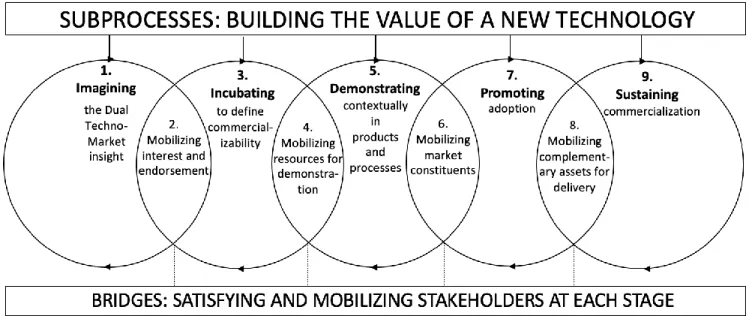
- Commercialization process
- Recognized challenges and suggested solutions
The external dimension of the commercialization process plays a crucial role in improving the overall process. A central element in terms of the external dimension of the commercialization process are the innovation ecosystems that facilitate open innovation.
Internationalization
- Internationalization theories and models
- Network theory
- Born globals
Some of the most recognized early theories are The Uppsala Model and The Innovation Model. Such companies have been referred to by many names during the last 2-3 decades, but the most common and recently used name is born globals (Groen et al. 2015). While in the case of traditional sequential international model the differences between business conditions across countries can hinder the process of internationalization for born globalists, the innovative nature of the company's products reduces the.
The question of what export percentage is considered significant is subject to interpretation based on e.g. the origin of the company.
Theoretical implications
However, based on the observations of internationalization theories, the global model and the innate network theory contain clear links to the commercialization of high technology. However, the process of internationalization and commercialization in the context of high technology are related to each other. This can provide new perspective for the theory of international high technology commercialization process.
Theories of high technology commercialization process, born globals and network theory should be studied together in an attempt to find linkages that can streamline the commercialization process of high technology.
Research methodology
Research design
For all the above reasons, the case study research method fits well in the context of this thesis. As the research question form in the case study methodology was clarified during the process, the preliminary research questions 1 and 2 were changed from "what" to "how" and "why". Eriksson and Kovalainen distinguish two approaches to case study research that pursue different goals, objectives, and targets: intensive and comprehensive case studies.
In this thesis, the research approach as a large-scale case study fits the context better because it has five case companies and aims to find general insights and solutions related to the challenges of the high-tech commercialization process.
Data collection
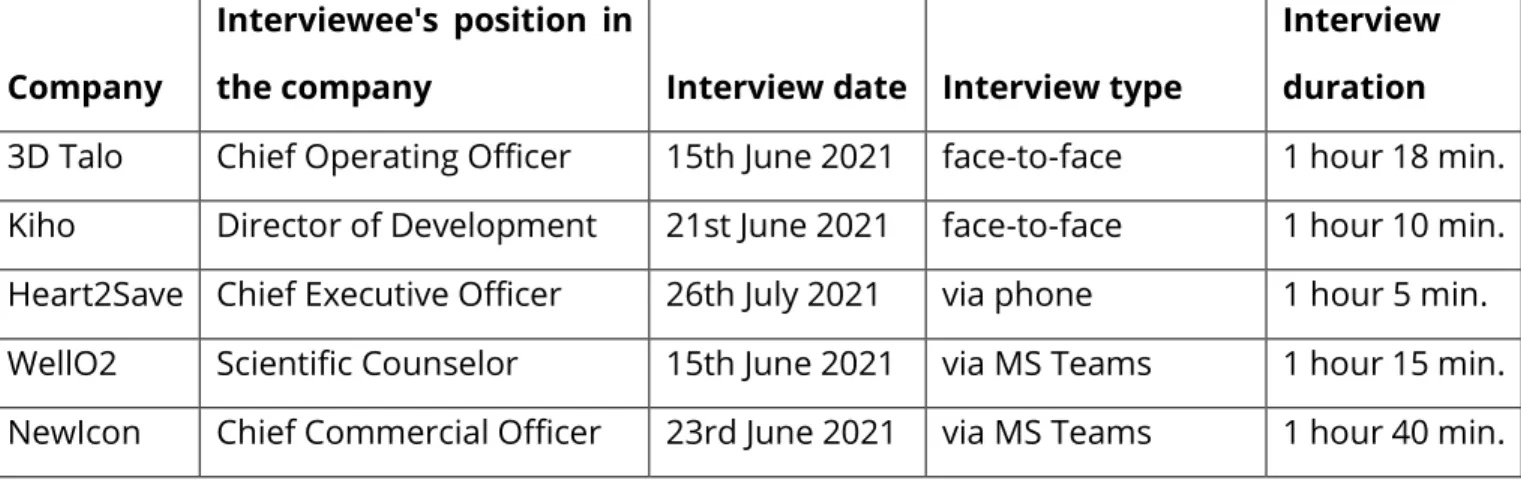
The interviewees from the companies were selected by considering who would have knowledge about the commercialization process in the company and could therefore contribute value to the research. A total of seven companies were therefore interviewed for the study, with the aim of getting four to five companies to agree to the interview. The questions were categorized in the interview guide according to the themes of the research questions, namely 'commercialization process', 'problems' and 'solutions from internal and external sources'.
None of the interviewees preferred to remain anonymous, and therefore the company names appear in the survey.
Data analysis method
Eriksson and Kovalainen also discuss that in the case study, data analysis begins very early in the research and in practice data collection and data analysis are rarely clearly separated from each other. When four of the five interviews had been conducted, the raw transcripts were reviewed again with the aim of gathering findings, recognizing similarities and differences between responses and thereby uncovering recurring patterns and connections related to the research questions. In other words, the notes from the interview responses were grouped into three frameworks based on the themes of the research questions to facilitate finding patterns and similarities that would answer the research questions.
Finally, the discoveries regarding the research questions were finalized and a conclusive summary of the empirical research and the findings was done.
Empirical analysis and its results
North Savo business area
In addition, the University of Eastern Finland, Savonia University of Applied Sciences, Sakky Consortium and other operators in the Savilahti region are increasingly investing in the development of entrepreneurship education and commercialization of innovation services. We have done a project with the UEF department of pharmacology, which was a task that we paid for. The results of the thesis can contribute to the development of the regional commercialization services.
Introduction of case companies
- Case Company A: 3D Talo
- Case Company B: Kiho
- Case Company C: Heart2Save
- Case Company D: WellO2
- Case Company E: NewIcon
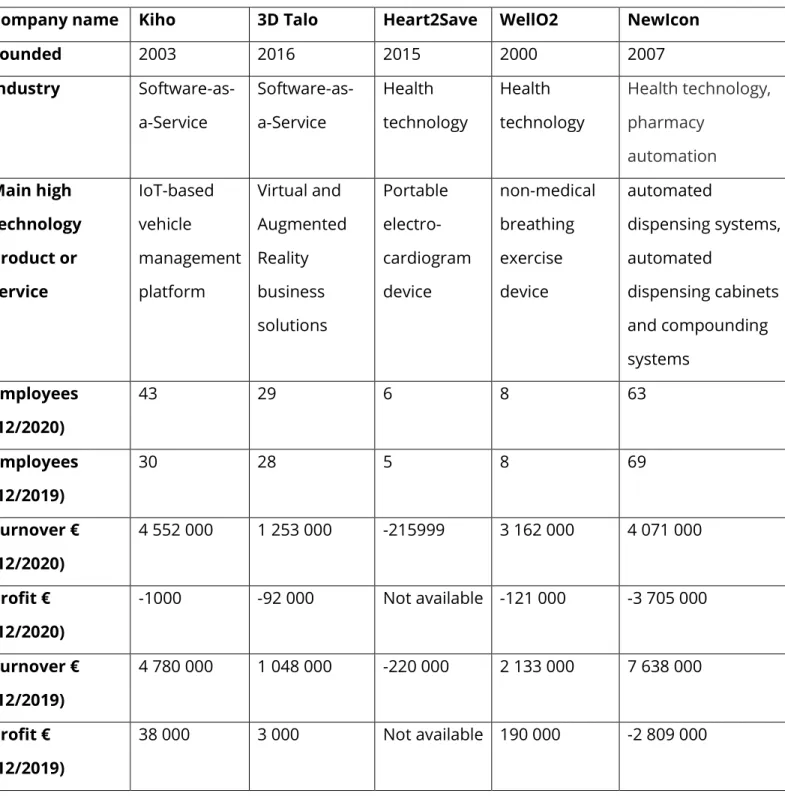
- Overview of the case companies
Currently, in addition to Finland, they also have customers in the US and are conducting market research for further expansion. In the early stages there was clarifying the idea, searching for it, doing science and generally showing that the idea works at all.” (Jäntti, interview 2021). The purpose of the device is to detect irregular activities in the user's heart such as arrhythmia, inform the user about the danger and thus save lives.
Therefore, it is safe to also associate NewIcon as a small company in the context of this research.
Cross-case analysis
- Findings regarding research question 1
- Findings regarding research question 2
- Findings regarding research question 3
Interviewees stressed that such research should be done early in product development. Often companies also need references and tailor-made marketing because of cultural differences, for example. Risk assessment, quality requirements and obtaining certifications should be considered even earlier in the process.
Since intellectual property rights can be used as a tool for commercialization (See Chapter 2.2.1.), the interviewees were asked whether they have used their IPR for commercialization.
Summary of the results
- Discussion on research question 1
- Discussion on research question 2
- Discussion on research question 3
According to the research, the process of high-tech commercialization in the 2020s does not differ much from the way it was perceived in the previous research described in Chapter 2.2. According to the research, a central attribute in the high-tech commercialization process in the 2020s is sustainable customer presence. The interviews offered some suggestions that shed light on research question 2 "why problems appear in the process of international high-tech commercialization in the 2020s?".
In addition, according to research it can be beneficial if the other company or one of the companies in a group is larger than the others.
Conclusive remarks
What made the research interesting was that the case companies were relatively diverse, although they all produce high-tech products. An expected result was that most of the interviewees did not recognize the commercialization process and its phases in the ways described in the research theory. It was fascinating to note how closely previous studies correlated with up-to-date empirical research.
Finally, it was first and foremost surprising how interesting and captivating the empirical research was in general.
Final discussion and conclusions
Summary of the research
The companies in the case were found with the help of the staff of the North Savo Business Center, who suggested the companies of their stakeholders. We asked seven companies with the goal of obtaining the consent of 4-5 companies and in the end representatives of five companies showed interest. The interviews took place in June and July 2021 in person or remotely and were transcribed in the following days.
After that, the results of the interviews were categorized according to the three themes of the research questions (“commercialization process”, “problems” and “solutions from internal and external sources”).
Key discoveries and their significance
Regarding RQ2, several problems occur throughout the commercialization process and possible reasons for the challenges are divided into internal and external factors in the research. By far the most intriguing discoveries of the research were those found between the real research questions: what are the real problems regarding commercialization process and the practical guidelines to solve the challenges. It can be carefully suggested that the research produced three relatively new and central findings about the commercialization process of high technology in the 2020s: (1) constant presence of customers, (2) flexible commercialization, and (3) multiple commercialization process tracks.
The research did not achieve its objectives in that it did not examine the internationalization aspect of the commercialization process as much as originally intended.
Critical assessment
2020s, and more commercialization processes were also brought up by interviewees, but received little if any attention in the theory gathered for the literature review. But it achieved its goals in the sense that it provided satisfactory answers to the research questions, confirmed previous findings regarding the commercialization process, its challenges and solutions, and contributed some fresh perspectives that can be used in future research on the topic and in actual commercialization. activities. The topic should have been delimited more rigorously from the beginning of the research, but at the beginning, delimitation seemed to limit the topic too much.
A topic that seemed too narrow in the beginning (e.g. digitization's impact on commercialization process) later appeared just sufficiently defined.
Limitations
Furthermore, the simplification of the commercialization process in the interviews to three parts slightly disrupted the connection between the empirical research and the literature review, because the covered theories do not recognize the commercialization process as a simple three-stage process. This caused slight mixing of phases between each other in a way that e.g. according to one interviewed brochure production and sales take place in the middle phase of the process and in another company the same activities take place in the end phase. An option would have been to leave the phases completely out of the interviews, but it was logical to ask, "what happens after the pre-described phases" or "what happens in the final phase".
It is also possible that relevant previous research remained unreported in the literature review, and therefore the research should be considered a narrow, incomplete overview of the topic.
Theoretical implications
It is also possible that relevant previous research remained unreported in the literature review, and therefore the research should be considered a narrow, incomplete overview of the topic. eel. 1990; Moreover, related to previous research, the study was able to contribute a few potentially significant findings that were not discussed in the literature review covered, which also generated several suggestions for further research on the topic. Therefore, the idea of flexible commercialization appears as a potential new concept to study in the unpredictable.
Furthermore, overlapping phases of the commercialization process are mentioned in the theory discussed (e.g. Pellikka & Virtanen 2009), but the interviewees highlighted the idea of actual multiple tracks of the commercialization process, which elevates the idea of overlapping phases higher to become a theoretical concept. .
Managerial implications
Suggestions for future research
Scenario planning of high tech companies: how companies prepare contingency plans for different outcomes in different phases of commercialization. In addition, additional research is needed to better understand the possibilities of how companies can cope with the rapid changes and unpredictability of the commercialization of high technology in the 1920s. The company's internationalization process – a model of knowledge development and increasing obligations in the foreign market.
The commercialization process of high technologies - Case studies of high technologies from ICT, cleantech and life science industries.