Mechanical recycling
Depending on the applied use of the recycled material, stabilizers and other additives (pigments) are added during processing. Thorough cleaning and washing of the waste plastic removes most of these components from the bottles. Chain extenders such as glycidyl ethers are used to increase the molecular weight of the plastic melt by elongating and/or branching the polymer backbone.5,35,36.
Incineration for energy production
These changes even at low conversion rates significantly lower the melt viscosity and fracture behavior.10 Although the changes in lateral groups mostly affect the optical and electrical properties resulting from the formation of chromophore groups. Nevertheless, mechanical recycling is one of the most economically favorable ways to recycle thermoplastic polymer waste. According to the Waste Incineration Directive of the European Union†, incineration plants are required to reduce their effects on the environment and human health from possible pollutants to air, soil, surface and groundwater.
Chemical recycling
The end products are therefore fully compatible with standard internal combustion engines, regardless of the plastic raw material. Another advantage of the KDV process is the mild reaction conditions compared to pyrolysis.12. The partial oxidation of the mixture allows for an exothermic reaction to occur which generates sufficient heat for thermal cracking to occur.
The solvolysis of PET
- Solvolysis methods
- Mechanism and reaction kinetics
- Catalysts
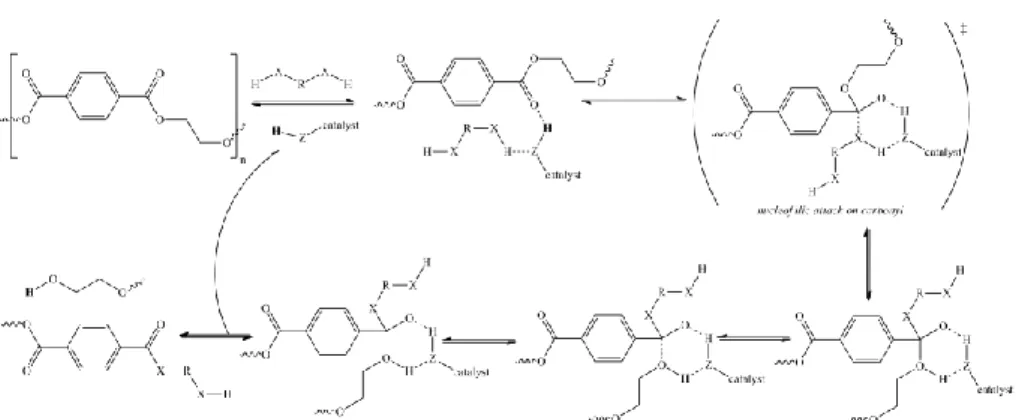
Terephthalic acid precipitates from the reaction mixture and it can be easily filtered at the end of the reaction. The hydrogen atom in the reagent molecule (~XH) connects to the nucleophilic atom in the catalyst molecule. Troevs experiments showed a significant difference in the glycolysis of the fiber and bottle grade PET.
Application in cross-linked systems
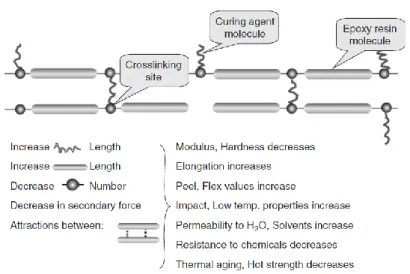
- The connection between structure and properties
- The effect on reaction kinetics and conversion
Since cross-linking and formation occur simultaneously, the conversion (α) of the cross-linking reaction significantly affects the properties of the final product. The achievable properties, the reaction kinetics of the cross-linking reaction essentially depend on the curing parameters (Figure 1.13 b TTT diagram of a. The dependence of the reaction rate can be divided into two distinct regimes in all cross-linked systems.
Scope
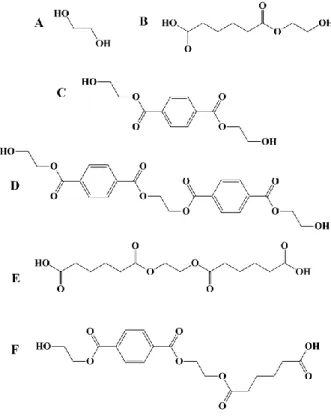
According to the acidolysis mechanism (Figure 2.2), the possible eliminations of the reaction are terephthalic acid and ethylene glycol. The residual (∆𝐻𝑟𝑒𝑠) and total (∆𝐻𝑡𝑜𝑡𝑎𝑙) heats of reaction (see below) were used to calculate the conversion (α) of the cure. The characteristic end group (-Ph-COO-CH2-CH2-OH) rocking vibrations of PET at 720 cm-1 disappeared in the aminolysis products. The 1:1 reaction mixture was very viscous at the reaction temperature and the reaction was difficult to handle.
- Experimental
- Materials
- PET solvolysis
- Chain extension
- Characterization
- Results and discussion
- Characterization of solvolysis products
- Chain extension of PET solvolysis products
- Composting
- Conclusions
- References
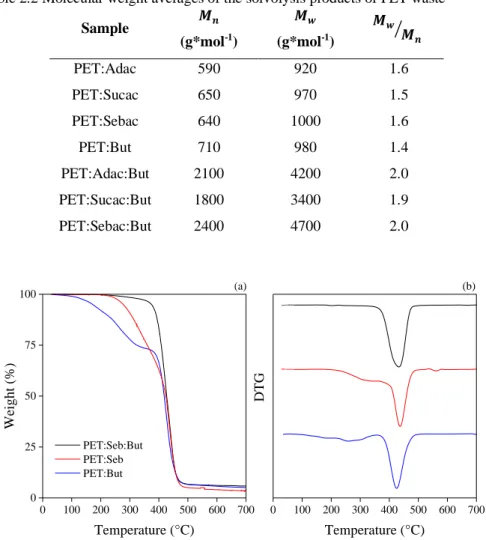
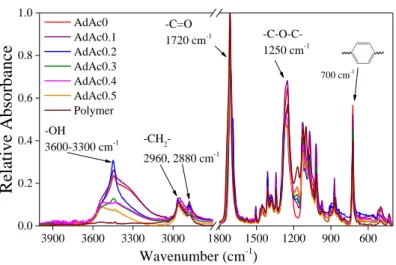
The equilibrium of the reaction can be pushed towards the monomer production by increasing the ratio of the used alcoholic reagent such as ethylene glycol, propylene glycol or methanol.1–9 The production of the so-called by-products of this reaction dimers, or oligomers cannot be evaded , their relationship can only be minimized. The ratio of the reagents was stoichiometric, calculated to the total functional group content (total hydroxide + total carboxyl content). The FTIR spectra of the solvolysis products with sebacic acid and/or 1,4-butanediol are presented in Figure 2.3.

53
Experimental
- Materials
- Depolymerization of PET
- One-pot synthesis of saturated random polyester
- One-pot synthesis of unsaturated random polyester
- Preparation and moulding of unsaturated resins
- Characterization
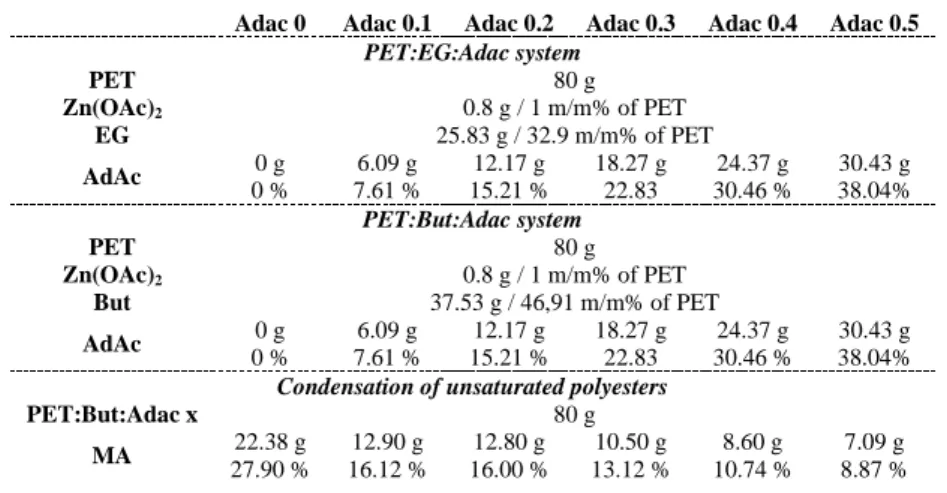
The reactions were followed with the temperature of the distillation apparatus fitted to the reactor. At the end of the reaction, the reaction mixture was poured into an alumina pan. The depolymerization part of the one-pot reaction was performed as previously explained.
After the end of the 4-hour long isothermal depolymerization period, the reaction mixture was cooled to 110-120°C. At the end of the reaction, the reaction mixture was poured into an alumina pan. After the end of the 4 hour long isothermal depolymerization period, the reaction mixture was cooled to 110-120°C.
An Ubbelohde type capillary viscometer was used to compare the intrinsic viscosity of the depolymerization and the polymerization reaction products. Bruker Tensor 27 FTIR spectrometer (ATR, 28 scans) was used to characterize the general molecular structure of the depolymerization and the polymer samples. PerkinElmer DSC 7 was used to determine the glass transition temperature and crystallinity of the samples.
PerkinElmer DMA was used to characterize the glass transition and viscoelastic properties of unsaturated crosslinked resin samples.
Results and discussion
- Functional group analysis and solution viscosity measurements
- Molecular structure identification
- Thermal properties
- Unsaturated resin characterization
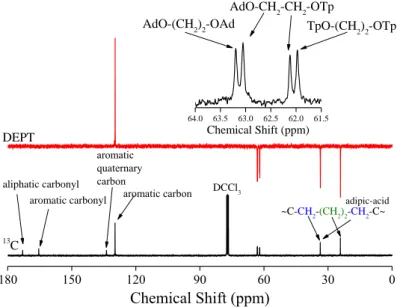
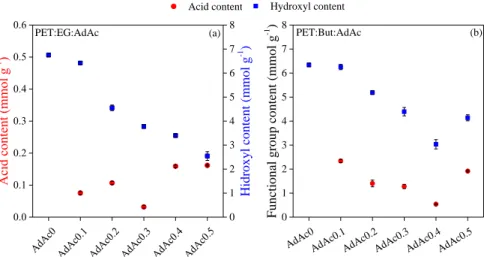
A slight increase is observed for the PET:EG:AdAc series and a slight decrease for the PET:But:AdAc series. 2D correlative measurements on a single-pot polymer product were used for complete peak assignment of the depolymerization (PET:EG:AdAc) series of 1H spectra. The slightly increasing trend of the Tp-CH2-CH2-Tp linkage indicates that the use of adipic acid caused a setback in the depolymerization step.
The quantitative analysis of the PET:EG:AdAc reaction series clearly indicates that the depolymerization with ethylene glycol and the condensation with adipic acid can occur in the same system. The 1H NMR spectra of PET:But:AdAc0.5 differed significantly from the rest of the series. The thermal stability of the samples in the depolymerization series was significantly affected by the amount of adipic acid used during the depolymerization step (Figure 3.13).
The peaks attributed to such components became progressively smoother on the DTG curves as the ratio of the adipic acid was increased. The intensity of the peaks at 1258 cm-1, 1099 cm-1 and 1020 cm-1 is also present in the depolymerization and the polycondensation product. 50 As an increase in molecular weight in the function of the adipic acid ratio, the crosslink density in the function the utilized amount of adipic acid must decrease.
The maximum of the tanδ functions shifted to lower temperatures with the increasing ratio of the adipic acid.
Conclusions
75
- Experimental
- Materials
- Aminolysis of PET with IPD
- Reaction product characterization
- Test specimen preparation and characterization
- Results and discussion
- Aminolysis product characterization
- IPD and Product characterization with NMR
- Cross-linker system design, solubility calculations
- Cross-linking characterization
- Thermomechanical analysis
- Mechanical properties
- Conclusions
- References
A PerkinElmer DSC7 (PerkinElmer, Waltham, USA) was used to measure the exothermic crosslinking enthalpy and glass transition temperature (Tg) of the mixtures. The general molecular structure of the reaction product was determined by FTIR spectroscopy (Figure 4.4). Due to the similarity of the amine groups on the IPD and the reaction product, a similar reaction rate is expected.
The significant decrease between the 0-5% points clearly shows the catalytic effect of the aminolysis product. The presence of longer terephthalamide diamines resulted in the decrease of the glass transition temperature. Due to the increasing initial viscosity of the resin systems, degassing became less efficient.
Crosslinker solutions of the aminolysis product with IPD were prepared (0-50% by weight) and used to cure the epoxy resins. The curing of the epoxy resin was characterized by isothermal DSC (at 90 °C) and rotational viscometry (at 50 °C) measurements. The heat of reaction was found to increase with the concentration of the crosslinker solution.
The mechanical properties at room temperature showed no significant change with the concentration of the crosslinker solutions.

Experimental
- Materials
- Aminolysis of PET with IPD
- Characterization of oligo-terephthalamides
- Epoxi preparation and characterization
- Quantum chemical computation
Results and discussion
- Oligo-terephthalamides characterization
- Molecular structure characterization of the aminolysis products
- Cross-linkers effect on gelation and glass transition
- Epoxy crosslinking kinetics characterization
- Catalytic effect of amides studied with computational chemistry
Conclusions
Experimental
- Materials
- Sample preparation
- Synthesis of Poly(ester amide)s
- Characterization
In the first step, 1 mole of adipic acid and 1 mole of amino alcohol were weighed out and reacted in an inert argon atmosphere without a catalyst. For the second step, 0.02 mol of catalyst (ZrO 2 ) was added and the reactor was equipped with a vacuum device. The viscous melt at the end of the reaction was poured into an aluminum pan.
A standard titration method was used to measure the acid and amine content in the produced poly(ester amides). 3 parallel samples and one blank sample were titrated with a 0.1 M NaOH solution in methanol in the presence of the phenolphthalein indicator to determine the acid content. 3 parallel samples and one blank were titrated with 0.1 M HCl solution in the presence of methyl orange to determine the amine content.
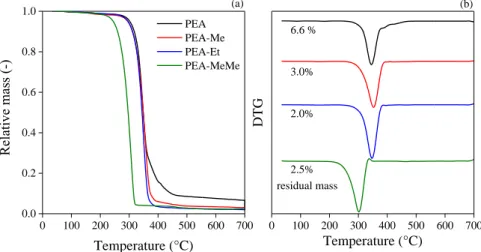
A calibration curve of PEG1000 was used to determine the hydroxyl values of the poly(ester amide). An evaporative light scattering detector (ELS-1000 Polymer Laboratories) was used with PS equal molar mass calibration. Perkin Elmer TGA 6 was used to determine the thermal stability of poly(ester amide) in 9-10 mg samples under nitrogen purge.
Perkin Elmer DSC7 was used to measure the glass transition temperature (Tg) and the crystallinity on 3-4 mg samples in purge of nitrogen.
Results and discussion
- Functional group analysis, molecular weight and degradation
- Molecular structure identification
- Thermal properties and crystalinity
The onset of thermal degradation was determined at 5 m/m% mass loss of the measured sample on the TGA curve. FTIR spectroscopy was used to generally identify the ester-amide structure of the polymers produced. 1H, 13C, 1H-15N HMBC NMR measurements were made to determine the molecular structure of the poly(esteramides).
The chemical shift of the 4th peak was surprisingly found to be higher than that of the 1st peak. The integrated areas of the designated peaks in Figure 6.7 were divided by the total area of the 4 peaks. Because of the statistical nature of the reaction, any combination of these sequences can occur along the backbone.
The steric blocking effect of substituents can significantly reduce the amount of hydrogen bonds between chains. The Hoffman-Weeks model was used to determine the equilibrium melting temperature (Figure 6.11 b) of the three phases36. Phases CF-I and CF-III had a clear increasing trend, and CF-II had a decreasing trend of crystallization temperature.
The intensity of the first peak at 60 °C was significantly reduced, and the half width at half maximum was doubled.
Conclusions
Our findings suggested that the molecular weight of the terephthalamides produced can be tailored to the ratio of isophoronediamine used for the aminolysis, while leaving no residual ester groups. The effects of the terephthalamides on curing were investigated by rotational viscometry and DSC reaction kinetics studies. The reaction rate constants decreased with decreasing concentration and increasing molecular weight of the terephthalamides in the crosslinking solutions.
At higher curing temperatures, the modified models hardly differed from the results of the classical Kamal-Sourour equation. The increasing content of residual functional groups and the decreasing molecular weight of the poly(esteramides) suggested a dampening effect on the polycondensation of the small substituents. Increasing the ratio of the diacid components during the depolymerization step resulted in the production of higher molar weight oligomers.
Thus, the crosslinking density and glass transition temperature of crosslinked unsaturated polyester resins are reduced. Decreasing the ratio of amine reagent used during PET aminolysis could be used to deliberately increase the molecular weight of terephthalamides produced. The glass transition temperature and crosslink density of the epoxy resin sample decrease with increasing molecular weight and concentration of terephthalamides.
Computational chemistry studies showed that the catalytic activity of terephthalamides is in the same order of magnitude as phenols.