Republic of Moldova: Preparation of the First Biennial Transparency Report to the United Nations Framework Convention on Climate Change
Part I: Project Information GEF ID
10962 Project Type EA
Type of Trust Fund GET
CBIT CBIT No Project Title
Republic of Moldova: Preparation of the First Biennial Transparency Report to the United Nations Framework Convention on Climate Change
Countries Moldova Agency(ies) UNEP
Other Executing Partner(s)
Public Institution ?Environmental Projects Implementation Unit?, Ministry of Environment of the Republic of Moldova.
Executing Partner Type Government
GEF Focal Area Climate Change Taxonomy
Focal Areas, Climate Change, United Nations Framework Convention on Climate Change, Paris Agreement, Enabling Activities, Influencing models, Strengthen institutional capacity and decision-making, Stakeholders, Local Communities, Type of Engagement, Participation, Information Dissemination, Consultation, Private Sector, Civil Society, Communications, Awareness Raising, Indigenous Peoples, Gender Equality, Gender results areas, Knowledge Generation and Exchange, Capacity Development, Capacity, Knowledge and Research, Knowledge Exchange, Knowledge Generation, Training, Workshop
Sector
Enabling Activity Rio Markers
Climate Change Mitigation Climate Change Mitigation 2 Climate Change Adaptation Climate Change Adaptation 1
Type of Reports Submissio n Date
Expected Implementation Start
Expected Completion Date
Expected Report
Submission to Convention UNFCCC Biennial
Transparency Report (BTR)
4/6/2022 8/1/2022 3/31/2025 12/31/2024
Duration 32In Months Agency Fee($) 45,980.00
A. FOCAL/NON-FOCAL AREA ELEMENTS
Objectives/Programs Trust Fund GEF Amount($) Co-Fin Amount($)
CCM-EA GET 484,000.00
Total Project Cost($) 484,000.00 0.00
B. Project description summary
Project Objective
To support the Republic of Moldova prepare and submit its First Biennial Transparency Report that comply with the United Nations Framework Convention on Climate Change and the Paris Agreement reporting requirements while responding to its national development goals.
Project
Component Expected
Outcomes Expected
Outputs GEF Project
Financing($) Confirmed Co- Financing($) 1.
Preparation of Republic of Moldova?s First Biennial Transparency Report (BTR1)
1.1. The Republic of Moldova updates tools and approaches to meet its BTR1 reporting requirements under the Paris Agreement
1.1.1 BTR1 for the Republic of Moldova prepared and submitted to UNFCCC by 31 December 2024.
430,000.00
1.1.2. A self- assessment and stocktakin g exercise for
preparation of
subsequent BTRs completed.
10,000.00
Sub Total ($) 440,000.00 0.00
Project Management Cost (PMC)
44,000.00
Sub Total($) 44,000.00 0.00
Project Management Cost (PMC)
Total Project Cost($) 484,000.00 0.00
Please provide justification
C. Source of Co-Financing for the Project by Name and by Type Sources of Co-
financing Name of Co-
financier Type of Co-
financing Investment
Mobilized Amount($)
Total Co-Financing($) Describe how any "Investment Mobilized" was identified
N/A
D. GEF Financing Resources Requested by Agency, Country and Programming of Funds Agenc
y Trus
t Fun d
Countr
y Focal
Area Programmin
g of Funds Amount($
) Fee($) Total($)
UNEP GET Moldov
a Climat
e Chang e
CC Set-Aside 484,000 45,980 529,980.0
0
Total Gef Resources($) 484,000.0
0 45,980.0
0 529,980.0
0
Part II. Enabling Activity Justification
A. ENABLING ACTIVITY BACKGROUND AND CONTEXT
Provide brief information about projects implemented since a country became party to the convention and results achieved
The Ministry of Environment (MoEN) of the Republic of Moldova (RM) is the state authority vested with the power to develop and promote policies and strategies addressing environment protection and climate change as well as natural resources. The MoEN, on behalf of the Government is responsible for implementation of international environment treaties to which the Republic of Moldova is a Party to (including the United Nations Framework Convention on Climate Change, signed by the Republic of Moldova on June 12, 1992, ratified by the Parliament on 16 March 1995, as well as the Kyoto Protocol, ratified by the Republic of Moldova on 13 February 2003, and the Paris Agreement, ratified by the Parliament of the Republic of Moldova on 4 May 2017. The position of the UNFCCC National Focal Point is held by the Head of Air and Climate Change Policies Department within the Ministry of Environment of the Republic of Moldova.
The Republic of Moldova has prepared and submitted four national communications and three biennial update reports, which included the National GHG Inventories. The first GHG Inventory of the RM for the period 1990-1998, was developed during the 1997-2000 period under the UNDP-GEF Project
?Republic of Moldova: Enabling Activities for the Preparation of the First National Communication to the UNFCCC?, and was reported as part of the First National Communication (NC1) of the Republic of Moldova to the UNFCCC and made available on 13 November 2000 at the COP 6 (Hague, 2000).
The UNDP-GEF Project ?Climate Change: Enabling Activity (Phase II)?, implemented within 2001- 2002 periods had the aim to strengthen and maintain the in-country capacity for realization and transfer of the technologies required for abatement and adaptation to climate change. Through this project, the
?Technology Needs and Development Priorities Report? was prepared (submitted to the UNFCCC Secretariat and UNDP/GEF in 2002).
The UNDP-GEF Project ?National Self-Assessment of Capacity Building Needs? was implemented between 2003-2005 period and it aimed at improving coordination and integration of actions undertaken under the three Rio Conventions ? the United Nations Framework Convention on Climate Change (UNFCCC), the Convention on Biodiversity (CBD) and the Convention on Combating Desertification (CCD). The project was designed to reinforce the synergetic effect of these Conventions, thus contributing to a long-term sustainable development of the country. The project identified priorities, needs and constraints for capacity building at national level and a ?Report on National Capacity Self-Assessment? and ?Action Plan for Capacity Building to Implement the Rio de Janeiro Conventions under the 2006-2010 period? (2005) was prepared under this project.
The UNDP-GEF Regional Project ?Capacity Building for Improving the Quality of Greenhouse Gas Inventories (Europe/CIS region) was implemented between 2003-2006 period and it covered 12
countries from Eastern Europe and CIS region, including the Republic of Moldova. The project was built on the expertise gained during the preparation of NC1. By strengthening institutional capacity to prepare inventories and establishing a trained, sustainable inventory team, the project helped the Republic of Moldova to reduce uncertainties and improve the quality of inventories for the Second National Communications (NC2). This, in turn allowed the Republic of Moldova to improve national strategies for reducing greenhouse gas emissions. In the period October 2005 - April 2009, the National GHG Inventory of the Republic of Moldova for the period 1990-2005 was developed in the frame of UNEP-GEF Project ?Republic of Moldova: Enabling Activities for the Preparation of the Second National Communication to the UNFCCC?, and reported as part of the ?Second National Communication of the Republic of Moldova to the UNFCCC?. A separate publication entitled
?National Inventory Report: 1990-2005, Greenhouse Gas Sources and Sinks in the Republic of Moldova?, was submitted to UNFCCC Secretariat on 27 January 2010.
UNDP Moldova implemented in 2009 the Project ?National Human Development Report 2009?. The Report discussed adaptation options and their potential synergies with the overarching development goals of the country. It provided an assessment of climate change impacts in the country, a comprehensive policy analysis, and recommendations on how to manage and minimize the negative impacts, maximize beneficial opportunities and avert their implications for human development. The Report was instrumental in the policy debate on climate change in the Republic of Moldova, areas where actions were needed in terms of adaption to climate change were highlighted in the report and the implications for sectoral and cross-sectoral development policies explained. It also convincingly demonstrated best practices and the experience of other countries in addressing some of the issues of concern presented in the Report.
The EU TACIS Regional Project ?Sustainable Integrated Land Use of the Eurasian Steppe? was implemented in the Republic of Moldova within 2007-2009 period. A case study was carried out on assessing the potential to reduce the greenhouse gas emissions from the agricultural soils in the steppe zone of the Republic of Moldova by promoting alternative agricultural technologies that focused on enhancing the carbon accumulation and storing process in these types of soils. For this purpose, it improved the greenhouse gas emissions evaluation methodology used while compiling the NC1 of the RM to the UNFCCC. A long-term polygon was also set up, where research was initiated in 2008/2009 and was continued in the following 5 years. These were undertaken in conformity with two alternative scenarios, based on the assessments made in a farm situated in the southern part of the Republic of Moldova (Cahul district) revealed that these measures may ensure a reduction in humus losses from 1.48 t/ha (baseline scenario) to 0.29 t/ha (intermediary scenario) and 0.22 t/ha (optimal scenario).
The EU TACIS Regional Project ?Support for Kyoto Protocol Implementation? (Armenia, Azerbaijan, Belarus, Georgia, Moldova, Kazakhstan, Kyrgyzstan, Russia, Tajikistan, Turkmenistan, Uzbekistan and Ukraine) was implemented in 2008-2012 periods in the RM. The key objectives of the project were: promoting the energy efficiency activities and broader use of flexible Kyoto Protocol mechanisms; adoption of the climate change mitigation and adaptation strategies; and local capacity strengthening and public awareness-raising. These objectives were achieved through two main types of activities: (i) review by key experts of certain specialized reports on the problems regarding the UNFCCC and Kyoto Protocol in the participating countries and (ii) organization of seminars where the
representatives of the countries involved in the Project implementation were acquainted with those Reports made available afterwards for dissemination at national level.
The UNECE Regional Project ?Energy Efficiency Investment Project Development for Climate Change Mitigation? was implemented in 2008-2012 in twelve countries of the region (Albania, Belarus, Bosnia and Herzegovina, Bulgaria, Croatia, Kazakhstan, Moldova, Romania, Russia, Serbia, Macedonia and Ukraine). The project focused on funding of the investments in energy efficiency activities to mitigate the climate change in twelve countries of South-Eastern and Eastern Europe and Central Asia. The Project promoted the emergence of a market to the extent in which it would be possible to identify, develop, fund and implement local sustainable projects with focus on energy efficiency and use of renewable energy sources. The specific project objectives included: identification, development, funding and implementation of the energy efficiency investment projects at energy consumer or supplier level as well as projects focusing on the use of renewable energy sources to realize the environmental, human health and institutional priorities; strengthening of the energy efficiency and renewable energy policies in the participating countries, assistance to local and central public authorities in the promotion of economic, institutional and regulatory reforms necessary to attract the investments in the energy efficiency and renewable energy projects; promotion of the opportunities for commercial banks and private businesses to invest in the energy efficiency and renewable energy projects via establishment of new public or private investment funds or financial mechanisms.
The EU FP7 PROMITHEAS-4 Regional Project ?Knowledge transfer and research needs for preparing mitigation/adaptation policy portfolios? was implemented 2010-2013. The aim of the project was to develop policy portfolios of mitigation/adaptation actions and the prioritization of research needs and gaps for twelve countries (Albania, Armenia, Azerbaijan, Bulgaria, Estonia, Kazakhstan, Moldova, Romania, Russian Federation, Serbia, Turkey and Ukraine).
In October 2010, Republic of Moldova initiated the UNEP-GEF Project ?Republic of Moldova:
Enabling Activities for the Preparation of the Third National Communication (NC3) under the UNFCCC?. Under this project, the NC3 of the Republic of Moldova to the UNFCCC was developed alongside the ?National Inventory Report: 1990-2010 of Greenhouse Gas Sources and Sinks in the Republic of Moldova?. The NIR for 1990-2010 period was submitted to the UNFCCC on 21 November 2013, while the NC3 on 20 January 2014.
The UNEP Riso Centre on Energy, Climate and Sustainable Development (URC) Project ?Technology Needs Assessments? was implemented within the 2011-2013 periods. The purpose of this project was to assist the Republic of Moldova to identify and analyze priority technology needs, which could form the basis for a portfolio of environmentally sound technology projects and programmes to facilitate the transfer of, and access to, the ESTs and know-how in the implementation of Article 4.5 of the UNFCCC Convention. The overall objective of the TNA Project comprised of mitigation and adaptation technology needs assessment, activities associated with sector and technology prioritization and encouraging the creation of enabling environment for the transfer of environmentally sound technologies. The Project also aimed at identifying barriers hindering the acquisition, deployment, and diffusion of prioritized technologies and developing Technology Action Plans (TAP) specifying activities and enabling frameworks to overcome the barriers and to facilitate the transfer, adoption, and
diffusion of selected technologies. The Multi-Criteria Decision Analysis (MCDA) methodological approach, used in the TNA Project for conducting the sectors and technologies evaluation, have been used further for NAMAs prioritization process.
In 2012 the US Agency for International Development (USAID) invited the Republic of Moldova to join the US Government?s Regional Enhancing Capacity for Low Emissions Development Strategies (EC-LEDS) Programme (2012-2015). The beneficiary central public authorities (Ministry of Economy and Ministry of Environment) identified three areas for the Republic of Moldova?s engagement on EC- LEDS: (i) Strategic Energy and Low Emissions Development Planning: collaboration to be focused on use of the energy models (e.g., MARKAL/TIMES) developed with USAID assistance to evaluate and improve the Republic of Moldova?s strategies, programmes and action plans for energy sector; (ii) GHG Inventory and Data Collection: collaboration to be focused on strengthening the process of data collection for National GHG Inventory and Energy Balances; also, assistance was made available to develop regulations necessary to improve the GHG inventory data collection process and to provide necessary training in data collection and measurements; and (iii) Local Low Emissions Development:
collaboration to be focused on developing programs to address the enabling environment for low emissions planning and project implementation at the national and local levels as well as on developing and implementing local energy efficiency plans and practices, and improve planning to attract capital investments. On the ground level the practical activities were initiated in the Republic of Moldova in May 2013 and were completed in June 2014.
The EU funded Project ?Moldova Energy and Biomass?, implemented by UNDP within 2011-2018 years, including phase I (2011-2014) with a total budget of 14.56 million Euro and phase II (2015- 2018) with a total budget of 9.46 million Euro, aimed to contribute to a more secure, competitive and sustainable energy production in the Republic of Moldova from biomass sources, the most readily available renewable energy source in the country. The project increased the use of energy from biomass sources, thus contributing to both, a more secure, competitive and sustainable energy production and local development. The target communities produce their own energy, which resulted in the creation of new businesses and jobs, and not least, in a better protection of our environment for future generations.
The UNDP Global Project ?Low-Emission Capacity Building Project ? Republic of Moldova?
(hereafter referred to as LECBP), implemented within the 2013-2016 periods, had three main objectives, focused on strengthening the national capacities to: (i) develop greenhouse gas inventory management systems; (ii) formulate Nationally Appropriate Mitigation Actions (NAMAs) and Low- Emission Development Strategies (LEDS) in the context of national development; and (iii) design MRV systems to support implementation and evaluation of NAMAs and LEDS. Under the LECBP it has been developed the draft Governmental Decision on establishing the National System for Monitoring and Reporting (NSMR) GHG Emissions and Other Information Relevant to Climate Change (approved by the Government on 26 December 2018); also, based on the US EPA Template Workbook ?Developing a National GHG Inventory System?, it has been developed the ?Report on the National GHG Inventory System of the Republic of Moldova ? 2016?, submitted on 5 April 2016 to the UNFCCC as a technical annex of the BUR2 of the RM under the UNFCCC; there were organized a range of targeted training workshops provided to the national institutions and their inventory experts, specifically in the Energy and LULUCF sectors; it has been developed the draft LEDS of the Republic
of Moldova until 2030 and the Action Plan for its implementation (approved by the Government on 30.12.2016); also, a comprehensive list of Nationally Appropriate Mitigation Actions were identified for Energy, Transport, Buildings, Industry, Agriculture, LULUCF and Waste sectors, prioritized by applying Multi-Criteria Decision Analysis (MCDA), from which there were developed 12 full NAMA proposals, which have been registered in 2017 in the UNFCCC?s NAMA Register.
The ADA/UNDP Project ?Supporting Moldova?s National Climate Change Adaptation Planning Process? (NAP-1), implemented within 2013-2017 periods aimed to ensure that the Republic of Moldova has a system and capacities in place for medium to long term adaptation planning and budgeting contributing to reduced vulnerability of the population and key sectors to the impacts of climate change by supporting Moldova to put in place its National Adaptation Plan process contributing to and building upon existing development planning strategies and processes and to implement priority adaptation actions. The project objectives were as following: (i) support RM in putting in place its National Adaptation Planning (NAP-1) process building upon existing development planning strategies and processes and contributing to the implementation of priority adaptation actions;
(ii) develop the institutional and policy framework for medium to long-term gender-sensitive adaptation planning and budgeting; (iii) strengthen the institutional and technical capacities for iterative development of comprehensive NAP; and (iv) implementation of adaptation interventions in priority sectors, including demonstration projects at the local level and catalyze their replication and extension.
The GEF/UNDP Project ?ESCO Moldova?, implemented within 2014-2018 periods, has the objective to create a functioning, sustainable and effective ESCO market in the Republic of Moldova by converting existing energy service provider companies into ESCO companies, as the basis for scaling up mitigation efforts in the whole municipal building sector in the country, leading to CO2 emission reductions by implementing energy performance contracts. The main results of the ESCO project in the Republic of Moldova were as following: (i) awareness about the ESCO mechanism increased; (ii) 10 companies to provide ESCO services identified and trained; (iii) a financing mechanism ready to finance ESCO projects was established; (iv) 20 buildings screened and preselected for project implementation; (v) 10 investment grade audits performed and cases prepared for public procurement procedures; and (vi) a template of Energy Performance Contract prepared, presented and endorsed with the major stakeholders.
In April 2014, Republic of Moldova initiated the UNEP-GEF Project ?Republic of Moldova: Enabling Activities for the Preparation of Fourth National Communications (NC4) and First Biennial Update Report (BUR1) under the United Nations Framework Convention on Climate Change?. Under this project, the BUR1 of the Republic of Moldova to the UNFCCC was developed alongside with two technical annexes: the ?National Inventory Report: 1990-2013 of Greenhouse Gas Sources and Sinks in the Republic of Moldova? and the ?National Inventory System Report ? 2015?. The BUR1 of the Republic of Moldova with two technical annexes was submitted to UNFCCC on 5 April 2016. Under the same project, the ?Forth National Communication (NC4) of the Republic of Moldova to the UNFCCC? was developed alongside the ?National Inventory Report: 1990-2015 of Greenhouse Gas Sources and Sinks in the Republic of Moldova?. The NIR for 1990-2015 period was submitted to the UNFCCC on 29 December 2017, while the NC4 was submitted on 9 February 2018.
The technical analysis of the First Biennial Update Report of the RM to the UNFCCC undertaken by the technical expert team took place between 19 and 23 of September 2016, with the summary report being published by the Secretariat on the UNFCCC web page on February 20, 2017[1]1. The Facilitative Sharing of Views (FSV) among Parties on the BUR1 content and the results of technical analysis was carried out during the 3rd FSV workshop, organized by the UNFCCC Secretariat on 15th of May 2017 in Bonn, Germany[2]2 .
The UNEP-GEF Project ?Republic of Moldova: Enabling Activities for the Preparation of Second Biennial Update Report (BUR2) under the United Nations Framework Convention on Climate Change (UNFCCC)? was initiated in February 2017. Under respective project, the BUR2 of the Republic of Moldova to the UNFCCC was developed alongside with two technical annexes: the ?National Inventory Report: 1990-2016 of Greenhouse Gas Sources and Sinks in the Republic of Moldova? and the ?National Inventory System Report ? 2018?. The BUR2 of the Republic of Moldova was submitted to UNFCCC on 27 December 2018, concomitantly the two technical annexes were submitted to the UNFCCC as following: the ?National Inventory Report: 1990-2016 of Greenhouse Gas Sources and Sinks in the Republic of Moldova? on 24 January 2019, while the ?National Inventory System Report ? 2018? on 26 February 2019.
The technical analysis of the Second Biennial Update Report (BUR2) of the Republic of Moldova to the UNFCCC, by the team of technical experts took place between the 27th and 31st of May 2019, the summary report being published on the Secretariat of the UNFCCC web page on October 28th, 2019[3]3. Facilitative Sharing of Views (FSV) among Parties on the BUR2 content and results of technical analysis was carried out during the 9th FSV workshop, organized by the UNFCCC Secretariat between 24 and 27 November 2020[4]4.
The technical analysis of the BUR1 and BUR2 of the Republic of Moldova by the teams of technical experts gave the country the opportunity to enhance its reporting under the UNFCCC, as well as better prioritize the country needs. The Project Management Units of respective projects use this process for highlighting the needs for national authorities in charge with various aspects related to climate change at the national and local levels. This process provided also the opportunity to highlight to high-level decision factors the relevance of enhancing the institutional arrangements needed for ensuring a timely, transparent and complete reporting, and for establishing an effective instrument to monitor the undertaken actions and assess the progress regarding compliance with the economy-wide mitigation targets. As result, the following regulatory acts have been approved with reference to the reporting process and domestic MRV system: (1) Government Decision No. 1277 dated 26.12.2018 on establishing and functioning of National System for Monitoring and Reporting (NSMR) greenhouse gas emissions and other information relevant to climate change; and (2) the Government Decision No.
444 dated 01.07.2020 on establishing the mechanism for coordinating activities in the climate change area. In addition, the Environment Agency was created by GD No. 549 dated 13.06.2018, being
responsible for NSMR implementation in the Republic of Moldova. The ICA process highlighted also the importance of institutional memory, knowledge and specific expertise, and that of maintaining the core expertise in the national institutions involved in the reporting process.
The UNDP Project ?HCFC Phase-Out Management Plan? (second stage) was implemented within 2017-2021. The project aims to support the Government of the Republic of Moldova to develop its national plan with medium and long-term actions to honor the obligations it has assumed as a signatory of the Montreal Protocol. The project supports RM in the implementation of the Phasing out Scheme for HCFCs for 2016-2040 and the Action Plan for its Implementation in 2016-2020 (Governmental Decision No. 856 as of 13 July 2016). The project had two objectives: (i) support for the Republic of Moldova in the implementation of the National HCFC Program for the period 2016-2040 and the Action Plan for its implementation in 2016-2020 to meet its HCFC reduction targets by 2020 ? 35%
reduction in HCFC consumption at the base level; and (ii) implementing new ?ozone-friendly?
technology and technological support for the refrigeration and air conditioning sector by purchasing equipment / tools and demonstrating new technologies (natural refrigerants) in the commercial sector.
The GCF Project ?Support to the Republic of Moldova in establishment and strengthening the National Designated Authority (NDA), development of strategic framework, and preparation of country programme? (hereafter referred to as Readiness and Preparatory Support Project or RPSP), implemented within the period December 2017 ? March 2020, was focused on building the knowledge and capacity of the Ministry of Environment staff on GCF operation in order to fulfill its NDA role, coordinate across stakeholders and facilitate effective consultation and communication; respectively on organizing events to engage stakeholders in identifying priorities for collaboration with GCF and produce the GCF Country Program document aligned with initial guidance from the Fund.
The UNDP/GEF Project ?Moldova Sustainable Green Cities? is ongoing within 2018-2022 periods and has the objective to catalyze investments in low carbon green urban development based on integrated urban planning approach by encouraging innovation, participatory planning and partnerships between a variety of public and private sector entities. As a vehicle for this, the project supports the design, launching, and establishment of the Green City Lab to become the leading knowledge management and networking platform, clearing house, an inter-mediator of finance and a source of innovations and expertise to catalyze sustainable low carbon green city development in the Republic of Moldova with a mission to transform Chisinau and other urban centers in the Republic of Moldova into modern green and smart European cities with improved quality of life for their citizens, while also demonstrating opportunities for sustainable economic growth. The project has two objectives: (i) catalyze investments in low carbon green urban development by an integrated urban planning approach and by encouraging innovation; and (ii) participatory planning and partnerships with a variety of public and private sector entities.
The UNDP/ADA Project ?Promotion of climate change and disaster risk reduction solution in the water and civil protection sectors for enhanced rural resilience? is ongoing within 2019-2022 periods and has the objective to increase resilience and adaptive capacities of rural communities to climate change and disasters through improved water storage infrastructures and disaster risk reduction measures. The expected result of the project are to: (1) create an enabling environment for local resilient livelihoods through improved climate-sensitive planning and climate-smart agriculture approaches at community
level to increase water availability for agricultural livelihoods and protect from floods; (2) enhance local disaster risk reduction capacities in a decentralized manner through establishment of capacitated community-based rescue and firefighting brigades with access to resources for response and recovery needs.
The EU-funded Project ?EU4Climate? is ongoing within 2019-2022 periods and helps governments in the six EU Eastern Partner (EaP) countries Armenia, Azerbaijan, Belarus, Georgia, the Republic of Moldova and Ukraine to take action against climate change. The project has three main objectives: (I) to contribute to climate change mitigation and adaptation and to the development towards a low- emissions and climate-resilient economy in line with the 2015 Paris Agreement on Climate Change in all six EU EaP countries; (II) to assist EU EaP countries to integrate the low-emissions and climate resilience objectives into development policies and plans, to improve and consolidate climate policies and legislative alignment; (III) to limit climate change impact on citizens lives and make them more resilient to it. The expected project results are as following: (1) Updated Nationally Determined Contributions and their submission to the United Nations Framework Convention on Climate Change (UNFCCC); (2) At political and technical levels, improved inter-institutional awareness and coordination on the Paris Agreement with the corresponding national commitments; (3) Strengthened MRV systems, with countries getting on track with Paris Agreement transparency requirements; (4) Advanced alignment with EU climate acquis as provided by bilateral agreements with EU and in the context of Energy Community Treaty on climate matters that are not covered by the EU4Energy programme; (5) Developed sectoral guidelines for the implementation of the Paris Agreement in each of the Eastern Partnership Countries; (6) Increased mobilization of climate finance (potential Neighbourhood Investment Platform (NIP)/National Indicative Programme (NIP) proposals and domestic resources); and (6) Adoption of national and sectoral adaptation plans.
The UNDP Project ?Sustainable and Resilient Communities through Women Empowerment? is ongoing within 2020-2023 periods and have the objective to build inclusive sustainable and resilient communities and create an enabling environment for women?s economic, social and educational empowerment. The expected project results are as follows: (1) sustainable, climate resilient and environmentally-sound livelihoods defined and local capacities & knowledge on environment, climate change and gender enhanced and implemented successfully; (2) NGOs capacities to provide expertise to Local Public Authorities (LPAs) and women in the field of resilience to climate change, sustainable development and gender mainstreaming enhanced; (3) environment-friendly and climate resilient practices and projects implemented by women headed households, women agri-producers and communities; (4) sustainable and climate resilient practices and business models disseminated and replicated.
The UNDP/GCF Project ?Advancing Moldova?s National Climate Change Adaptation Planning (phase 2)? (NAP-2) is ongoing within the 2020-2024 periods and has the objective to support the Government of Moldova in advancing the second cycle of its iterative national adaptation planning process. The project aims to address the barriers to prioritization of national investments in Climate Change Adaptation (CCA), and to increase the availability of human and financial capacity for the implementation of the priority actions identified during the NAP-1, and those that will emerge under this NAP-2 initiative. The project objective will be achieved through three outcomes that relate to
strengthening national capacities for mainstreaming CCA considerations: Outcome 1 focuses on strengthening the national steering mechanisms for CCA; Outcome 2 supports improvements to long- term CCA capacity to plan and implement adaptation actions; and Outcome 3, focuses on continuous improvements to adaptation related financing, implementation and monitoring systems. The expected results of the project are as follows: (1) National Climate Change Adaptation Strategy updated with the NAP-2 overarching goal and sector-specific adaptation objectives articulated in the Climate Change Adaptation Action Plans of health and forestry sectors, and in the development action plans of the transport, energy and building sectors; (2) monitoring and evaluation system with improved data analysis to support decision making developed; (3) Climate Change Adaptation Capacity Development Plan updated and adopted by the five key sectors; (4) climate change information and knowledge management portal that supports the NAP-2 process and mainstreaming of climate change adaptation considerations launched; (5) adaptation plans for seven district towns developed; (6) technology roadmap for each key sector (transport, energy, water, forestry and health) developed based on Technology Needs Assessment; (7) 5 investment project ideas developed to be submitted to Green Climate Fund.
Following the submission of the NC4 to the UNFCCC on 9 February 2018, the Republic of Moldova initiated the UNEP-GEF Project ?Republic of Moldova: Enabling Activities for the Preparation of Fifth National Communications (NC5) under the United Nations Framework Convention on Climate Change?. The NC5 project is part of the umbrella programme for preparation of NCs and BURs that comprised of 13 countries, which was approved by the GEF in May 2019. After the approval, the Republic of Moldova initiated the preparation of NC5 in July 2019 and the NC5 is expected to be completed and submitted to the UNFCCC by October 2022, alongside its technical annex ? ?National Inventory Report: 1990-2020 of Greenhouse Gas Sources and Sinks in the Republic of Moldova?.
In January 2020, Republic of Moldova initiated the UNEP-GEF Project ?Republic of Moldova:
Enabling Activities for the Preparation of Third Biennial Update Report (BUR3) under the United Nations Framework Convention on Climate Change (UNFCCC)?. Under respective project, the BUR3 of the Republic of Moldova to the UNFCCC was developed alongside with two technical annexes: the
?National Inventory Report: 1990-2019 of Greenhouse Gas Sources and Sinks in the Republic of Moldova? and the ?National Inventory System Report ? 2021?. The BUR3 of the Republic of Moldova with two technical annexes was officially submitted to the UNFCCC by the Ministry of Environment of the Republic of Moldova on 21st December 2021. The quality of these reports has improved over time as experts get to better understand the application of tools and methodologies as recommended by the Intergovernmental Panel on Climate Change (IPCC) and UNFCCC.
In the context of the enhanced transparency framework (ETF), countries are expected to track and report progress towards achieving their NDCs, and communicate adaptation actions, including good practices, priorities, needs and gaps, in order to inform the global stock-take under Article 14 of the Paris Agreement. It is to be mentioned that the Paris Agreement (2015) was signed by the Prime Minister of the Republic of Moldova in New York on September 21, 2016 and was subsequently ratified by the Parliament through Law No. 78 from 04.05.2017 for the ratification of the Paris Agreement (Official Monitor No. 162-170 from 26.05.2017).
On 25 September 2015, the Republic of Moldova officially declared its Intended Nationally Determined Contribution and associated information to facilitate clarity, transparency and understanding in relation to the provisions of Decisions 1/CP.19 and 1/CP.20. Accordingly, the Republic of Moldova has committed to achieve by 2030 the unconditional target of reducing GHG emissions by 64-67% compared to the level recorded in the reference year (1990) and to make every effort to reduce GHG emissions by 67% as compared to 1990. The reduction commitment could be conditionally increased to around 78%, according to the global agreement, which addresses important issues such as the provision of low-cost financial resources, technology transfer and technical cooperation, access to all of these to an extent appropriate to the challenges of global climate change.
GHG emission reduction targets have been set in an emissions budget, covering the period from 1 January 2021 to 31 December 2030. GHG emission reduction targets, set in the Intended Nationally Determined Contribution of the Republic of Moldova, were subsequently officially approved at national level by Government Decision no. 1470 of 30.12.2016 on approval of the Low Emission Development Strategy of the Republic of Moldova until 2030 and the Action Plan for its implementation.
On 4th March 2020, the Republic of Moldova presented to the UNFCCC Secretariat the Updated Nationally Determined Contribution[5]5. According to this, the Republic of Moldova is committed to achieve by 2030 more ambitious targets of reducing GHG emissions. Thus, the unconditional target is to increase GHG reduction from 64-67% to 70% as compared to the level recorded in the reference year (1990), and the conditional target is to increase accordingly from 78% to about 88% as compared to the level recorded in 1990. The new targets for reducing GHG emissions are to be introduced in the Low Emission Development Programme by 2030 and the Action Plan for its implementation; to be considered and approved by the Government by end of 2021 year.
The BTR1 project will ensure coordination with ongoing and planned initiatives (see Table 1 below) to avoid duplication of efforts, maximize impact and ensure resource efficiency.
Table 1: Relevant baseline initiatives Name of the
Project/Program
Implementing
Organization Donor Implementation period
Project Goals/
Content
Relation/relevance to BTR1 Project
Name of the
Project/Program Implementing
Organization Donor Implementation period
Project Goals/
Content Relation/relevance to BTR1 Project
Republic of Moldova:
Enabling
Activities for the Preparation of Fifth National Communications
under the
UNFCCC
UNEP GEF 2019-2022
The goal of the NC5 project is to assist the Republic of Moldova in mainstreaming and integration of climate change consideration into national and sectorial
development policies by giving continuity to the institutional and technical
capacity strengthening process, partly initiated and sustained by the National
Communications.
The objective of the project is to prepare and submit the Republic of Moldova?s Fifth National
Communication to fulfil its obligations to the UNFCCC, as per their obligations under Articles 4.1 and 12.1 of the UNFCCC.
The project implemented as per requirements of the UNFCCC for NCs based on Decision 17/CP.8
?Guidelines for the preparation of NCs from Parties not included in Annex I to the Convention?.
The project might provide inputs and information related to national inventory report of anthropogenic emissions by sources and removals by sinks of greenhouse gases, information necessary to track progress made in implementing and achieving
nationally determined
contributions under Article 4 of the Paris Agreement, information related to climate change impacts and adaptation under Article 7 of the Paris Agreement, as well as information on financial, technology
development and transfer and capacity-building support needed and received under Articles 9?11 of the Paris Agreement
Name of the
Project/Program Implementing
Organization Donor Implementation period
Project Goals/
Content Relation/relevance to BTR1 Project
EU4Climate UNDP EU 2019-2022
The project has three main objectives: (I) to contribute to climate change mitigation and adaptation and to the development towards a low- emissions and climate-resilient economy in line with the 2015 Paris Agreement on Climate Change in all six
EU EaP
countries; (II) to assist EU EaP countries to integrate the low- emissions and climate resilience objectives into development policies and plans, to improve and consolidate climate policies and legislative alignment; (III) to limit climate change impact on citizens lives and make them more resilient to it.
The project might provide inputs and information related to tracking progress
made in
implementing and achieving
nationally determined
contributions under Article 4 of the Paris Agreement
Name of the
Project/Program Implementing
Organization Donor Implementation period
Project Goals/
Content Relation/relevance to BTR1 Project
Advancing Moldova?s National Climate Change
Adaptation Planning (phase 2)? (NAP-2)
UNDP GCF 2020-2024
The project has the objective to support the Government in advancing the second cycle of its iterative national
adaptation planning process.
The project aims to address the barriers to prioritization of national
investments in Climate Change Adaptation (CCA), and to increase the availability of
human and
financial capacity
for the
implementation of the priority actions identified during the NAP- 1, and those that will emerge under this NAP-2 initiative.
The project objective will be achieved through three outcomes that relate to strengthening national
capacities for mainstreaming CCA
considerations:
Outcome 1
focuses on strengthening the national steering mechanisms for CCA; Outcome 2 supports
improvements to long-term CCA capacity to plan and implement adaptation actions; and Outcome 3, focuses on continuous improvements to adaptation related financing, implementation and monitoring systems.
The project might provide inputs and information related to climate change impacts and adaptation under Article 7 of the Paris Agreement.
[1] <http://unfccc.int/files/national_reports/non-
annex_i_parties/biennial_update_reports/submitted_burs/application/pdf/mda.pdf>
[2] The conclusions of the 3rd FSV seminar regarding the BUR1 of the RM under the UNFCCC and the results of the technical assessment are available on the web page:
<http://unfccc.int/files/national_reports/non-
annex_i_parties/ica/facilitative_sharing_of_views/application/pdf/20170529_mda_v04.pdf>; RM?s presentation at the 3rd FSV seminar is available on: <http://unfccc.int/files/national_reports/non- annex_i_parties/ica/facilitative_sharing_of_views/application/pdf/moldova_fsv_workshop_presentatio n_15.05.2017.pdf>, and the video recording of the presentation and the interventions of the Parties are available on: <https://www.youtube.com/playlist?list=PL-m2oy1bnLzpmdRpG2pTBzUeOH3qrXlZt>
[3] <https://unfccc.int/sites/default/files/resource/tasr2_2019_MDA.pdf>, <https://unfccc.int/ICA- cycle2>
[4] The conclusions of the 9th FSV seminar regarding the BUR2 of the RM under the UNFCCC and the results of the technical assessment are available on the web page: <https://unfccc.int/ICA-cycle2>, including the RM?s presentation at the 9th FSV seminar and the video recording of the presentation and the interventions of the Parties.
[5] <https://www4.unfccc.int/sites/NDCStaging/Pages/All.aspx>
B. ENABLING ACTIVITY GOALS, OBJECTIVES, AND ACTIVITIES
The proposal should briefly justify and describe the project framework. Identify also key stakeholders involved in the project including the private sector, civil society
organizations, local and indigenous communities, and their respective roles, as applicable. Describe also how the gender equality and women?s empowerment are considered in project design and implementation
The immediate objective of the project is to support the Republic of Moldova to prepare and submit its first biennial transparency report (BTR1) that comply with the United Nations Framework Convention on climate Change (UNFCCC) and the Paris Agreement reporting requirements while responding to its national development goals.
Article 13 of the Paris Agreement establishes an enhanced transparency framework for action and support, and states that support shall be provided to developing country Parties for its implementation and for the building of transparency-related capacity of developing country Parties on a continuous basis[1]. The Conference of the Parties serving as the meeting of the Parties to the Paris Agreement at the third part of its first session (CMA 1.3) adopted the modalities, procedures and guidelines for the transparency framework for action and support[2]. The CMA decided that Parties shall submit their first biennial transparency report (BTR) and national inventory report, if submitted as a stand-alone
report, in accordance with these modalities, procedures and guidelines, at the latest by 31 December 2024 and that the least developed country (LDC) Parties and small island developing States (SIDS) may submit this information at their discretion.
The Conference of the Parties serving as the meeting of the Parties to the Paris Agreement (CMA) urged and requested the Global Environment Facility (GEF), as an operating entity of the Financial Mechanism, to support developing country Parties in preparing their first and subsequent BTRs. The CMA also encouraged the GEF to consider options for improving the efficiency of the process for providing support for reporting under Article 13, in particular for addressing the challenges in the application process, including by potentially providing an avenue for Parties to apply for funding for more than one report through the same application in each replenishment period. The CMA urged the GEF and its implementing and executing agencies and encouraged the GEF Council to consider options for improving the efficiency of the process for providing support for reporting under Article 13, including through better streamlining of the processes related to applications, implementation plans and signing of grant agreements.
At CMA 2, Parties reiterated their request to the GEF to adequately support developing countries Parties in preparing their first and subsequent BTR under its seventh replenishment (GEF-7) and through its replenishment cycles[3]. This information document has been prepared in response to the decisions taken at CMA 1 and CMA 2 for the preparation of BTR by developing country Parties to the Paris Agreement. Two informal consultations on financial support for BTRs were held in June 18, 2020 and in November 17, 2020, with participation of national government representatives, members from the Consultative Group of Experts (CGE), the United Nations Framework Convention on Climate Change (UNFCCC) Secretariat, and relevant GEF Implementing Agencies. Discussions from these informal consultations[4] helped inform the development of the modalities for supporting the first BTR presented in the ?Information Note of the Financing of Biennial transparency reports for Developing Country Parties to the Paris Agreement? (GEF/C.59/Inf.19 dated 23 November 2020).
The Republic of Moldova?s BTR1 project proposal is in accordance with GEF-7 Climate Change Focal Area Strategy (2018-2022), which aims to support developing countries to make transformational shifts towards low emission and climate-resilient development pathways.
To achieve this goal, the Strategy continues to emphasize three fundamental objectives: (1) promote innovation and technology transfer for sustainable energy breakthroughs; (2) demonstrate mitigation options with systemic impacts; and (3) foster enabling conditions for mainstreaming mitigation concerns into sustainable development strategies, under which GEF continues to provide resources to non-Annex I countries to prepare NCs, BURs and BTRs to comply with Convention obligations in line with COP/CMA guidance.
The project outcome is as follows:
1.1. The Republic of Moldova updates tools and approaches to meet its BTR1 reporting requirements under the Paris Agreement.
The project outputs are:
1.1.1. BTR1 of the Republic of Moldova prepared and submitted to UNFCCC, by 31 December 2024.
1.1.2. A self-assessment and stocktaking exercise for preparation of subsequent BTRs completed.
Stakeholder Analysis and Participation in the BTR1 Project Implementation Key Stakeholders? Involvement:
Relevant stakeholders will participate and contribute to the BTR1 development process. Stakeholders representing key governmental organizations, academic institutions, education and research
institutions, private sector and environmental NGOs with mandates relevant to the UNFCCC, have been envisaged as participants during the stakeholder consultations undertaken under the project proposal development process. The stakeholders involved in BTR1 project implementation have been grouped based on the level of involvement and areas of expertise. Thus, the representatives of the following Central Public Authorities (Governmental Ministries), Central Public Administrations (agencies, services, bureaus and offices), academia, education and research institutions, private sector and civil society institutions have manifested interest to:
? Participate in the overall coordination process of the BTR1 Project, inclusive through a well- defined quality assurance, quality control and verification system;
? Provide relevant activity data to be used in the planned assessments (e.g. national inventory of anthropogenic emissions by sources and removals by sinks of greenhouse gases; tracking progress made in implementing and achieving nationally determined contributions under Article 4 of the Paris Agreement; providing information related to climate change impacts and adaptation under Article 7 of the Paris Agreement; providing information on financial, technology development and transfer and capacity-building support needed and received under Articles 9?11 of the Paris Agreement, etc.);
? Participate in the climate change awareness activities.
The stakeholders identified include:
? Specialized Central Public Authorities:
o Ministry of Environment (MoEN),
o Ministry of Regional Development and Infrastructure (MoRDI), o Ministry of Agriculture and Food Industry (MoAFI),
o Ministry of Economy (MoEC), o Ministry of Finance (MoF), o Ministry of Health (MoH),
o Ministry of Education and Research (MoER), o Ministry of Defense (MoD).
? Public Authorities Subordinated to Ministries:
o Environmental Agency;
o Inspectorate for Environmental Protection;
o Moldsilva Agency;
o State Hydrometeorological Service;
o Customs Service;
o Civil Aeronautical Authority;
o Naval Agency of the Republic of Moldova.
? Central Public Authorities:
o National Bureau for Statistics;
o Agency for Land Relations and Cadaster;
o Agency for Medicines and Medical Devices;
o Public Services Agency;
o National Agency for Food Safety.
? Academia, Research and Education Institutions:
o Institute of Ecology and Geography (IEG), o Institute of Power Engineering (IPE),
o Institute of Pedology, Agrochemistry and Soil Protection ?N. Dimo? (IPASP);
o Institute of Scientific and Practical Animal Husbandry and Veterinary Medicine in Biotechnology (ISPAHVM);
o National Institute for Economic Research of the Ministry of Education and Research.
o Technical University of Moldova (TUM), o State Agrarian University of Moldova (SAUM).
? Companies and Enterprises:
o Forestry-Didactic Enterprise ?Forestry Research and Management Institute? (subordinated to
?Moldsilva? Agency);
o State Enterprise ?State Road Administration?;
o State Enterprise ?Moldovan Railways?;
o State Enterprise ?Ungheni River Harbor?;
o State Enterprise ?Molovata Ferry?;
o State Enterprise ?Chisinau Glass Factory?, Chisinau;
o State Enterprise ?Moldelectrica?, Chisinau;
o Joint Stock Company ?RED-NORD?, Balti;
o Joint Stock Company ?TERMOELECTRICA?, Chisinau;
o Joint Stock Company ?CET-Nord?, Balti;
o Joint Stock Company ?Moldovagaz?;
o ?Macon SA?, Chisinau,
o ?Ciment Moldova Lafarge S.A.?, Rezina;
o Municipal Enterprise ?Autosalubritate?, Chisinau;
o ?Glass Container Company? J.S.C., Chisinau.
? Industry Associations:
o Public Association of Refrigerating Engineers in the Republic of Moldova.
? Civil society organizations:
o Environmental Movement of the Republic of Moldova (NGO), o National Environment Center (NGO),
o Regional Environment Center (REC Moldova) (NGO), o Public Association ?BIOS? (NGO),
o Women Public Association for Environment Protection and Sustainable Development (NGO), o Association of Journalists for Environment and Ecological Tourism (NGO).
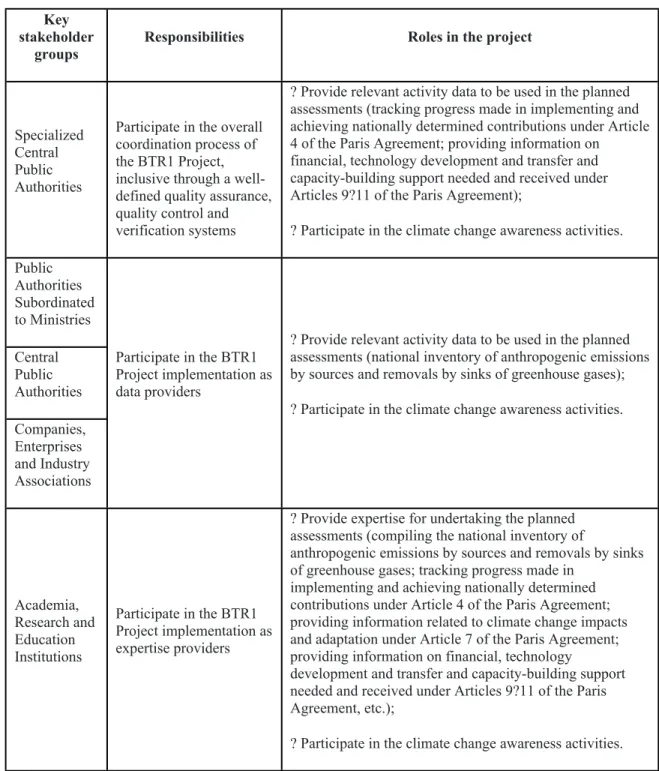
Table 2 below presents the key stakeholders and description of their engagement in the preparation and implementation of the BTR1 project.
Table 2: The key stakeholders and brief description of their engagement in the project design and implementation.
Key stakeholder
groups Responsibilities Roles in the project
Specialized Central Public Authorities
Participate in the overall coordination process of the BTR1 Project, inclusive through a well- defined quality assurance, quality control and verification systems
? Provide relevant activity data to be used in the planned assessments (tracking progress made in implementing and achieving nationally determined contributions under Article 4 of the Paris Agreement; providing information on financial, technology development and transfer and capacity-building support needed and received under Articles 9?11 of the Paris Agreement);
? Participate in the climate change awareness activities.
Public Authorities Subordinated to Ministries Central Public Authorities Companies, Enterprises and Industry Associations
Participate in the BTR1 Project implementation as data providers
? Provide relevant activity data to be used in the planned assessments (national inventory of anthropogenic emissions by sources and removals by sinks of greenhouse gases);
? Participate in the climate change awareness activities.
Academia, Research and Education Institutions
Participate in the BTR1 Project implementation as expertise providers
? Provide expertise for undertaking the planned assessments (compiling the national inventory of
anthropogenic emissions by sources and removals by sinks of greenhouse gases; tracking progress made in
implementing and achieving nationally determined contributions under Article 4 of the Paris Agreement;
providing information related to climate change impacts and adaptation under Article 7 of the Paris Agreement;
providing information on financial, technology
development and transfer and capacity-building support needed and received under Articles 9?11 of the Paris Agreement, etc.);
? Participate in the climate change awareness activities.
Key stakeholder
groups Responsibilities Roles in the project
Civil society organizations
Participate in the monitoring and evaluation of the BTR1 project implementation
? Participate in the climate change awareness activities.
Gender Dimension:
The implementation of BTR1 project will take into consideration gender issues, it is suggested that country level women?s networks that can help to better incorporate gender concerns into climate change strategies and decision-making will be identified. Further, opportunities to incorporate into project designs local knowledge that strengthens the roles of women will also be identified. It is worth mentioning that consistent with the policies of the Ministry of Labor and Social Protection (MoLSP), relating to the promotion of women into decision-making processes, women are actively involved in climate change related activities in the Republic of Moldova, not only as bene?ciaries but also as indispensable partners in the climate change decision-making. The project will put an emphasis on understanding how the unique social and economic roles played by women is crucial to the effective implementation of sectoral and national projects and programs to adapt and to mitigate climate change in the Republic of Moldova. Although the role of women in the climate change adaptation actions is better understood in the Republic of Moldova, the role of women in climate change mitigation strategies has received relatively little attention until this moment. This is because programs to address GHG mitigation issues have been perceived to be rather technical or scienti?c in nature. However, attempts would be made during the project implementation to clearly identify ways and means of engaging women in mitigation actions implementation in the Republic of Moldova.
Internationally[5] and nationally[6]6 it is recognized that climate change adaptation and mitigation is essential for the protection of well-being and the achievement of continuous progress in sustainable development. Climate change affects all members of society, but its impact may be different on men and women. Respectively, it is important to understand and capitalize on gender issues when considering climate change adaptation and/or mitigation measures, including GHG emissions reduction, given the different roles and responsibilities, consumption patterns of women and men in society.
Scientific evidence shows that man-made climate change is now responsible for a large proportion of extreme weather events around the world.[7]7 Climate change affects the entire population of all countries, however women, girls, men and boys are affected differently by climate change and disasters, with many women and girls facing greater risks, tasks and impacts.[8]8 The European
Parliament?s resolution on women, gender equality and climate justice recognizes that men and women experience the impact of climate change differently and calls on the EU to fund both adaptation to climate change and the mitigation of its gender-adaptive effects.[9]9 The impact of climate change addresses the combined factors of natural hazards and human vulnerability. These vulnerabilities take the form of physical exposure, socio-economic vulnerability, limited capacity to reduce and cope with vulnerability/risk of climate change.
Women and men have different life and work experiences, perceive and identify differently the risks related to health, activity and life in the context of climate change. The capacities to reduce vulnerability and risks are determined by several factors: poverty, social class, education, age, ethnicity and gender norms/relations, etc. Given that climate change has a stronger impact on marginalized groups, women and girls are most at risk, with higher rates of morbidity, mortality and economic impact, due to their reduced resilience to climate risks. For example, in the case of natural hazards, women are at higher risk of injury or death due to physical condition. In the case of climatic hazards, their impact can have detrimental consequences on reproductive health. In the case of these hazards, for example, it should be borne in mind that water from wells (in cases of contamination) is used by women in greater proportions, so the degree of exposure to this risk is higher. And in the case of all types of hazards, the probability of social conflicts increases, which often mainly affects women and girls, especially from vulnerable groups.
It should be reiterated that gender equality is fundamental to achieving sustainable development, as recognized by the Sustainable Development Goals (SDGs) - explicitly in SDG 5 on Achieving Gender Equality and Empowering All Women and Girls, but also as a precondition to achieve other SDGs, from education, health, decent work to tackling climate change. By actively involving both women and men in all sectors of society, countries can realize the potential of all citizens and make the transition to more resilient societies, including truly sustainable low-carbon ones. For example, women often play a central role in sectors where emissions can be substantially reduced along with the benefits of development, such as the efficient use of household energy, supporting income-generating activities and targeting low-emission products consumption patterns. At the same time, highlighting women as active members of society and promoting their participation in new/non-traditional climate-related jobs, for example as technicians and entrepreneurs in the field of renewable energy, refrigeration and air conditioning and so on, they can contribute to poverty reduction and economic growth.
Studies show that equal involvement of women and men in decision-making processes has a positive impact on business and investment performance in general, as evidenced by the better performance of companies with more women on their board in terms of return on investment, sales and own equity.[10]10 Similarly, studies show that groups with a mixed representation of women and men tend to be more innovative and make better decisions, especially for tasks with greater complexity. A better representation of women in teams offers a greater diversity of points of view, respectively a better collection of ideas and relevant decision-making.
In the context of international standards, given that gender equality can contribute to BTR1 project implementation, respectively, to increasing the effectiveness of climate change initiatives[11]11, it is recommended to focus efforts on the following dimensions:
? Improving the sustainability of the climate strategies, programmes and initiatives design and implementation by ensuring the full and active participation of women and men, including in decision- making;
? Inclusion of the gender dimension in actions targeting core sectors with a high share of greenhouse gas emissions;
? Identifying and providing solutions to lift women and men out of poverty;
? Understanding how differentiated consumption patterns of women and men affect their carbon footprint[12]12, contributing to the carbon emissions reduction;
? Encouraging women to be equal to men in order to capitalize on energy-efficient technologies in agriculture and households, solar energy, sustainable agricultural land management practices, etc.;
? Collecting gender-disaggregated data to estimate the social and gender impact of climate strategies, programmes and initiatives.
Therefore, the inclusion of gender dimension[13]13 at the design, implementation, monitoring and evaluation stages of climate strategies, programmes and initiatives is an important precondition for an efficient process. On the other hand, the impact of low-emission development strategies and programmes on gender equality should be mentioned as well. Respective documents can contribute to improving gender equality issues by creating equal opportunities for women to benefit from improved services and conditions (including transport and infrastructure, access to water and accessible and efficient energy services, etc.) and by promoting revenue generation opportunities.
The Government of the Republic of Moldova, have recognized in nationally approved documents that women are not only affected differently by climate change, but can contribute differently to climate change adaptation/mitigation actions. Respectively, all climate strategies, programmes and initiatives that exploit the potential of men and women to reduce emissions in various sectors, keeping in mind and taking into account their social roles and responsibilities, will not only contribute to climate change mitigation, they can also provide access to services and income opportunities that can alleviate gender inequalities. At the same time, respective climate strategies, programmes and initiatives can have a positive gender impact if they also include measures that give women equal access to developing new skills, finance and technology, health, education, decision-making and sales markets, etc.; if they support women?s entrepreneurship in low-emission development; and by reducing unequal social
burdens (in the context of traditional labor division in the family/household), for which women are predominantly responsible.
Thus, it might be concluded that capitalizing on the gender dimension in all climate strategies, programmes and initiatives, including BTR1 project, is important not only from the political correctness perspective (achieving international standards), but also as a practical necessity.
[1] Paris Agreement to the United Nations Framework Convention on Climate Change, Dec. 12, 2015, T.I.A.S. No. 16-1104.
[2] Contained in the annex to Decision 18/CMA.1.
[3] Decision 7/CMA.2.
[4] GEF, 2020: Event: Informal Consultation Meeting on Financial Support for Biennial Transparency Reports under the Paris Climate Agreement and Event: Second Informal Consultation on Financial Support for Biennial Transparency Reports.
[5]<https://sustainabledevelopment.un.org/post2015/transformingourworld >
[6]The National Strategy for Adaptation to Climate Change by 2020 and the Action Plan for its implementation, approved by the Government Decision no. 1009 of 10.12.2014
[7]S. Hassol et al., ?(Un) Natural Disasters: Communicating Linkages Between Extreme Events and Climate Change?, WMO Bulletin 65 (2), 2016.
[8]<https://tbinternet.ohchr.org/Treaties/CEDAW/Shared%20Documents/1_Global/CEDAW_C_GC_3 7_8642_E.pdf >
[9]European Parliament resolution of 16 January 2018 on women, gender equality and climate justice (2017/2086 (INI)) <https://www.europarl.europa.eu/doceo/document/TA-8-2018-0005_EN.html >
[10]Carter, NM and Wagner, HM (2011) The bottom line: Corporate performance and women?s representation on boards (2004?2008). New York: Catalyst.
[11]Low Emission Development Strategies Global Partnership. Promote gender equality. To realize the benefits of low emission development / LEDS in Practice, June 2016.
<https://www.climatelinks.org/resources/leds-practice-promote-gender-equality-realize-benefits-low- emission-development >
[12]The amount of carbon dioxide and other carbon compounds emitted due to the consumption of fossil fuels by a particular person, group, etc.